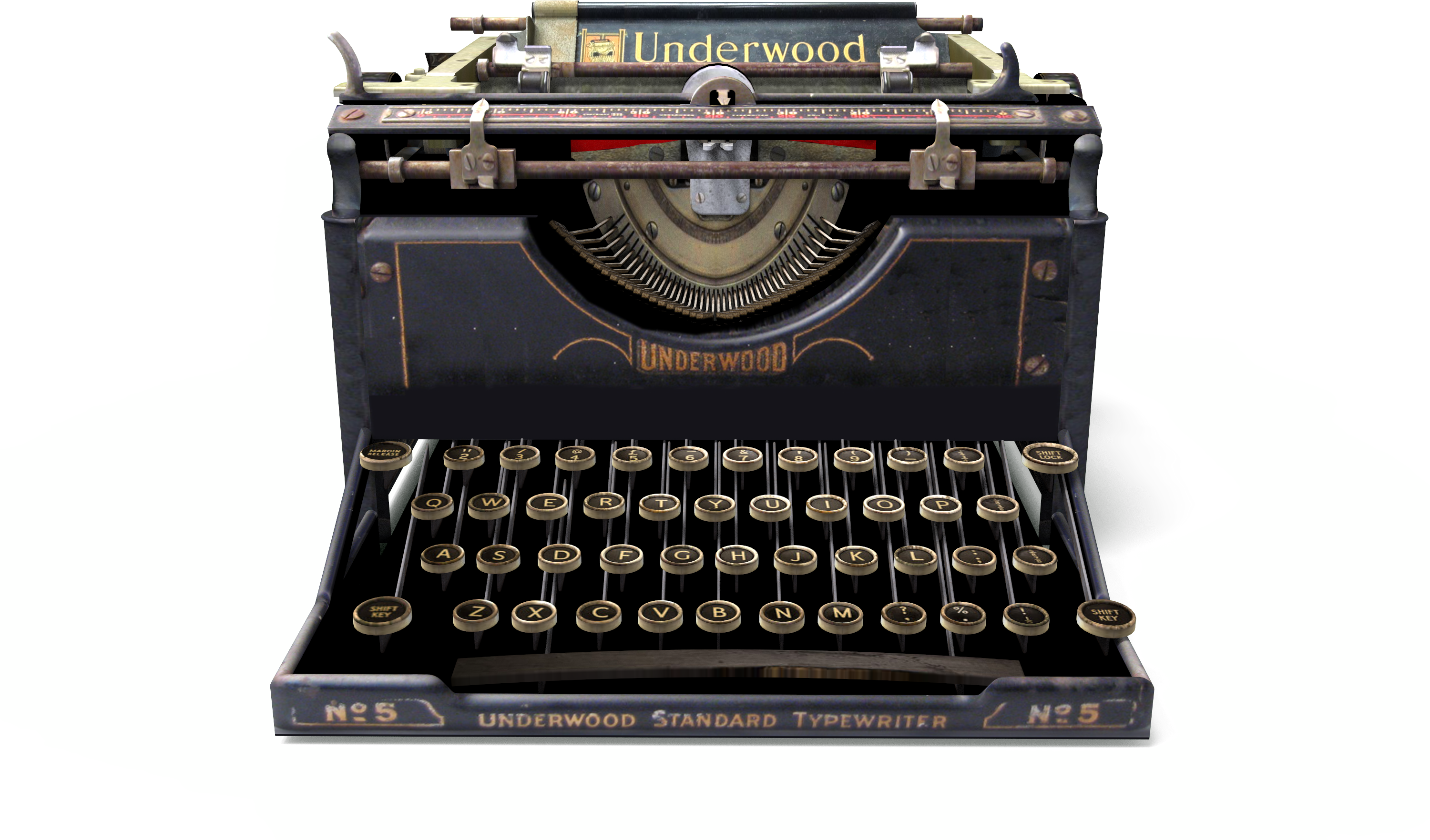
“Must not touch the preciousss…”

Wormwoodania today…

“‘The Lost Tragedy’ by Denis Mackail, is a gently humorous piece (which was very much his style) set in a London second-hand bookshop. The narrator says: “Mr Bunstable’s book-shop represents a type of establishment which has pretty well disappeared from our modern cities. [It is a ‘dusty, labyrinthine bookshop, with teetering piles of titles everywhere’] As all who have considered the subject must agree, the principal object of any book-seller is to obstruct, as far as possible, the sale of books…”

Yes, I’ve often thought something similar about librarians as well.

State of Fantasy, 1977-2011

Yesterday I stumbled across Dave Cesarano’s 15,000-word catch-up overview of epic/high fantasy from 1977 to 2011. I found it usefully informative, as someone who hasn’t taken much notice of newly-published epic fantasy books since Thomas Covenant t’wuz a lad, and who thus welcomed hearing a fan’s succinct plainly-spoken overview of how it all turned out.

It turned out badly, it seems. On the one hand, a cadre of sour Tolkien-haters racing ever-downwards into despair, gore, rape and angst, all chasing an adolescent’s shallow idea of what “edgy” and “realism” is meant to look like. On the other hand, waves of badly-written lacklustre Tolkien pastiches, foaming out to ever-wider lengths at the behest of cynical publishers. And in between the two, the slowly widening chasm of tone-deaf political axe-grinders.

That’s the impression that I came away from Cesarano’s essay with, anyway. Possibly there are other weightier surveys of the epic fantasy novels of the period, akin to Joshi’s sweeping critical take on the history of recent weird fiction. Though I don’t know of any offhand.

But if Cesarano’s fan-viewpoint is to be trusted, and I’ve no reason to doubt his sincerity, then evidently I didn’t miss much in terms of the big post-Covenant works. Except perhaps for Tad Williams’s Memory, Sorrow & Thorn series (though he’s on record was wanting to infuse leftist “politics” into the genre), and some Marion Zimmer Bradley. Elsewhere I hear good things about Ardath Mayhar’s first Dunsany-like book How the Gods Wove in Kyrannon, and her later Crazy Quilt: The Best Short Stories. Also Jon Brunner’s The Compleat Traveller in Black (1986) and David Gemmell’s debut novel Legend (1984). If I’d have heard about those in the mid 80s, rather than the gloomy-but-worthily ‘grown up’ Thomas Covenant books, which eventually killed my interest, then I might still be reading fantasy.

Anyway, here are the links for Cesarano’s “The State of Fantasy Since 1977”. Keep in mind that he’s talking about epic fantasy novels here, and is not straying off into short-stories, anthologies, fantasy-steampunk, schoolboy wizards etc.

Introduction: The State of Fantasy in 1977.

1. Fantasy: 1977-1989. (If you’re short of time, just start with “1982”).

2. Fantasy: 1990 – 2000. The Age of the Doorstops and Gimmicks.

3. Fantasy: 1999 to 2011. Disillusionment and Nihilism.

Conclusion: Fantasy: 1977 to 2011. Wrapping It All Up.

Conan the Swordsman collection in audio

Added to my R.E. Howard audio books listings page, which is a page of free Conan readings listed in their story-world chronological order:


There is also a Books for the Blind audiobook of the collection of stories Conan the Swordsman (1978). This collection of briskly-plotted gap-fillers for the Conan chronology is from Nyberg / Lin Carter / de Camp. Their stories successfully mimic Howard, only lacking some of the small telling details that he carefully wove into his stories. Their book has, in order:

“The People of the Summit” (after “Rogues in the House”) (begins at 1 hour 12 minutes into the book reading)
“Shadows in the Dark” (after “Black Colossus”)
“The Star of Khorala” (after “Shadows in Zamboula”)
“The Gem in the Tower” (between “The People of the Black Circle” and “The Pool of the Black One”)
“The Ivory Goddess” (before “Beyond the Black River”)
“Moon of Blood” (after “Beyond the Black River”)


I see there’s also a Books for the Blind audiobook of the Carter / de Camp Conan the Liberator, but I’ve left that off my page. It does fit a big gap in the Howard chronology, telling of how Conan became a King, but is not very well reviewed. While painted on a suitably wide canvas, it’s apparently more of a medieval military novel in which the depiction of Conan is sparse and a bit iffy in terms of his characterisation.

The Dark Man, 2015 edition on Kindle

I see that the 2015 edition of The Dark Man: The Journal of Robert E. Howard and Pulp Fiction Studies now has a low-priced Kindle ebook edition for download. Looking at the Contents pages of the 2014-2017 issues, 2015 is the one of that will be of most interest to Lovecraftians — for the award-nominated essay “The Outsider Scholar: Robert E. Howard, H. P. Lovecraft, and Scholarly Identity”. Perhaps also for a detailed account of the writing of a PhD thesis on pulp and mythic politics and its wrangling through the current university system. I see that the same thesis is now available in book form.

Marvel Masterworks: Killraven

I’m pleased to see that the latest Marvel Masterworks volume has just been published. It’s the ‘restored’ 1970s Killraven run from Don McGregor. This was one of the most interesting of Marvel’s original ‘sci-fi’ characters of the 1970s, along with the likes of Deathlok and Warlock. It was an update on H.G. Wells’s The War of the Worlds, Wells being out of copyright in the USA by then. The Martian tripods return in 2001, having genetically engineered themselves to be immune to earth’s bacteria, and successfully take over the earth through mind-manipulation.

Killraven started off marvellously well for the first two issues (#18 and #19), with no less than Neal Adams and Howard Chaykin as artists, and solid sci-fi writing from Gerry Conway. But then it wobbled into rather humdrum ‘villain of the month’ territory, and Marvel didn’t help matters by swopping in different artists and some novice inkers for a few issues. Yet the writing remained solid, if rather uncertain of its direction, and after a few issues Killraven started to become ‘high-concept sci-fi with a fantasy edge’ that actually kind-of worked. It was also ahead of its time somewhat, in terms of the focus on genetic engineering as an underlying technology which enabled the straddling of the two genres and the production of some fine monsters.

After its strong opening issues the title remained unspectacular from #20 – #24. Then #25 popped with some very pleasing layouts and pencils from a one-off stint by the ‘Neal Adams-alike’ Rich Buckler (he created Deathlok). Then it slumped again into filler for the very next issue. The bimonthly title probably looked doomed at that point, to the remaining regular buyers.

But Killraven was then rescued by committing the outstanding artist P. Craig Russell to the title from #27, and also by giving #27 an excellent Jim Starlin cover.

From then on it spiralled up and out into something much more interesting and beautiful and philosophical, and continued for a fairly long run of issues by the standards of the time (Marvel was cancel-happy in the mid-late 1970s). Though, even once the title got rolling under McGregor/Russell, Marvel was still forced to issue two very skippable ‘filler’ issues (#30, #33) which must have put a big crimp in follow-on sales.

Incidentally, I never knew that Don McGregor “was born in Providence, Rhode Island”, and that he grew up there. So there you go, Providence worthies… you have another popular writer to your credit. And since he began his career with a lengthy stint at horror specialists Warren, and then moved to Marvel for many years to work mainly on their horror titles, he was also a horror writer. Many of the monsters and aliens in Killraven are also distinctly Lovecraftian and tentacular.

Anyway, the new Killraven Masterworks collection is now available as a download for the Kindle at a sensible price, and weighs in at 488 pages or about five hours of reading. They’ve all been reprinted in paper before, as the cheap Essential Marvel: Essential Killraven Volume 1 (2005), though in a much less high-grade format than the Masterworks series offers. I already have the issues, so don’t need the new Masterworks, but the free sample looks great.

The new book tells a complete story, and of course includes Don McGregor and P. Craig Russell’s outstanding Amazing Adventures issue #39 — which I was greatly enamoured of as a youth and which still holds up very well today. It’s such a beautiful thing that it’s well worth picking up in its sniff-able original paper form if you can find it, as are the other Russell issues. Sadly #39 was the last of the Killraven run, as Marvel then cancelled the title.

Thankfully, Marvel later relented to fan-pressure and in 1983 gave the same McGregor/Russell team a fine graphic novel. This firmly and satisfyingly concluded the story and is included in the new Marvel Masterworks volume. It changed the design of the characters a little, which may be annoying to some, and the colouring seemed a little garish when read straight after the muted newsprint of the comics. But, with so many changes of artist and inker, by that point in your reading you’ll be used to such changes.

All in all, it’s a coherent if meandering story, has some great ‘pulp sci-fi’ chops, interesting characters and concepts, and superbly evil villains and monsters. Most of all, it has heart.

Art from #39.

There was a later attempt to reboot the character, in a 2002 mini-series of print comics, but despite slick art it fell flat and added little to the original story.

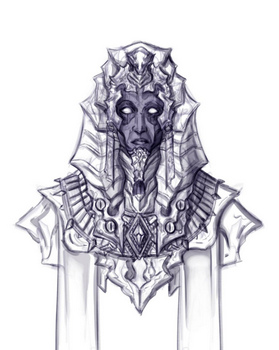
A Decadent dissolving…

I see that the 2013 Kindle edition of H.P. Lovecraft: New England Decadent has vanished from Amazon UK and USA. The extended essay was an early and well-regarded examination of Lovecraft’s ‘decadent’-influenced period (which lasted to about 1926), both in his writing and life.

So it’s just as well I got the ebook when I did, back in 2013. Thankfully I find that it’s still on my Kindle, as the print-on-demand paper price is a bit steep.

Why has it vanished? Well, it was republished in a corrected form for WaterFire Providence in late summer 2013, as a fundraiser. So my guess would be that they were only permitted to offer it for a time-limited five-year period?

The Horror Stories of Robert E. Howard – on sale

The Kindle ebook edition of the Del Ray The Horror Stories of Robert E. Howard is currently at a mere £1.49 in the UK and about $2.49 in the USA.

The Amazon page also links to a downloadable audiobook on Audible, but be warned that in the UK it’s definitely not the same as the proper audio CD which is narrated by Robertson Dean…

Those in the USA can get the proper Tantor Media CD (shown above) as a download at the Tantor website for a current price of just $6.99. It appears that Tantor can’t sell it into the UK or Europe due to copyright on a few of the stories, but you might have some luck via an American friend or via a VPN. Be wary of pushing credit card or PayPal details through a VPN, though.

Friday “picture postals” from Lovecraft: Marblehead point

“I came to Marblehead in the twilight, & gazed long upon its hoary magick. I threaded the tortuous, precipitous streets, some of which an horse can scarce climb, & in which two waggons cannot pass. I talked with old men & revell’d in old scenes, & climb’d pantingly over the crusted cliffs of snow to the windswept height where cold winds blew over desolate roofs & evil birds hovered over a bleak, deserted, frozen tarn.” — H.P. Lovecraft, letter to Kleiner, 11th January 1923.

tarn, from the Middle English, a small and usually circular lake located high in bleak moorland hills or mountainous terrain.

The Irish and the Origins of American Popular Culture

Back in February Taylor & Francis published the Routledge book The Irish and the Origins of American Popular Culture. It has a curiously dull and utterly irrelevant front-cover, which it seems that the entire series has been lumbered with. One would have though, for a $100+ book, that they might have made a bit more effort…

[cover image]

But, despite the shovelware cover, the contents page is far more promising and enticing. Two chapters may especially interest some readers of this blog…

* Chapter 3, “The Weird Tales, Spicy Detectives, and Startling Stories of Irish America: Pulp Magazines”:

“This chapter considers the pulp magazines that dominated early American popular culture and evaluates the profound influence they had in the shaping of Irish-American identity. Several notable types of pulp hero (cowboy, detective, G-Man, soldier, athlete, masked hero, fantasy adventurer) were defined in large part by Irish stereotypes and counter-stereotypes. Famous pulp characters like Hopalong Cassidy, Lance Kilkenny, Race Williams, Sailor Steve Costigan, and Super Detective Jim Anthony have roots in the Irish-American experience of the era. These characters played upon notions of the Irish as figures straddling the border between civilization and savagery to evoke an image of a new kind of American who was well equipped for the rapidly changing and chaotic century. Irish-American pulp stories often lack explicitly Irish cultural or historical references and instead focus on describing Irishness as a more generic Americanness. Similarly, the Irish-American character moved further from ethnic stereotype to become a generic masculine ideal. In several ways, the pulp magazines chronicle the formation of an assimilated Irish identity in the United States. This chapter presents a detailed case study of one of the most famous Irish-American pulp writers, Robert E. Howard, and his most famous pulp character, Conan the Barbarian.”

* Chapter 5, “Irish in the Panels and Gutters: Comic Strips”:

“The very first American newspaper comic strip character, The Yellow Kid, was a precocious Irish street urchin living in the tenements of New York. This bald-headed, big-eared Irish-American kid kicked off an era of innovation in American comics. Soon, Americans became enamoured with other Irish comic characters like Happy Hooligan and Jiggs & Maggie. Even later sensations like Dick Tracy and Little Orphan Annie participated in the public discourse on Irish ethnic identity and the assimilation of the Irish into mainstream American society. This chapter traces the development of Irish characterization in comics from the very beginning through the mid-century. Attention is given both to the work of famously Irish-American cartoonists like George McManus, who constructed his Irish characters from a perspective inside the ethnic group, and to non-Irish cartoonists like Harold Gray, who worked from the outside. Whereas many comic strips reveal a familiarity with old Irish stereotypes, some of the most notable comics of the era demonstrate a dynamic reformulation and hybridization of Irish identity in the popular imagination.”

Catalogo Vegetti della Letteratura Fantastica

I see that Catalogo Vegetti della Letteratura Fantastica (beta) is a large online and public bibliography of 1,444 works, published in Italian, by and about Howard Phillips Lovecraft. It also has smaller bibliographies for Robert E. Howard, Bradbury, Clarke, and others in Italy.

They also have a call for contributors, though Andrea Bonazzi states (see comments, below this post) that it hasn’t been updated since 2010 when its author passed away. Looks like it could do with some new contributors, to update with 2009-2019. That would be a nice addition to the C.V. of some aspiring young cataloguer, and (in Italian) it shouldn’t be too big of a job.

It’s presented under the auspices of the Cataloguers’ Guild of Italy, and the newer Catalogo is a CC-Attribution continuation of Vegetti’s older Catalogo della Fantascienza, Fantasy e Horror.