William Deminoff

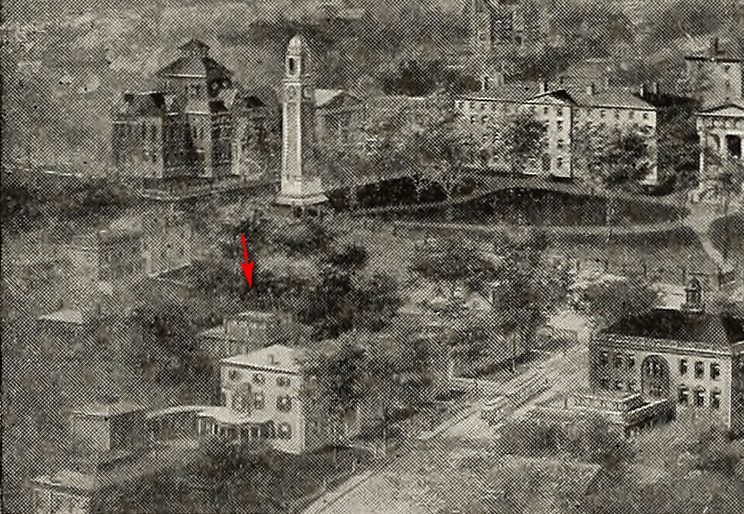
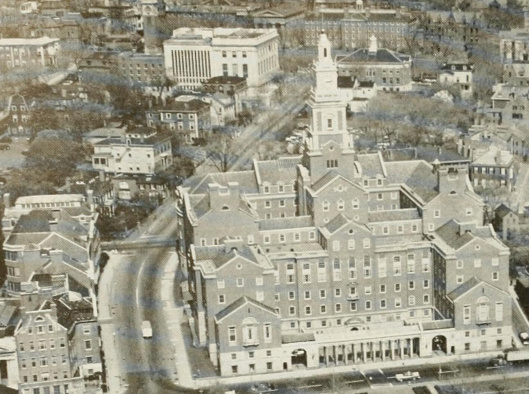
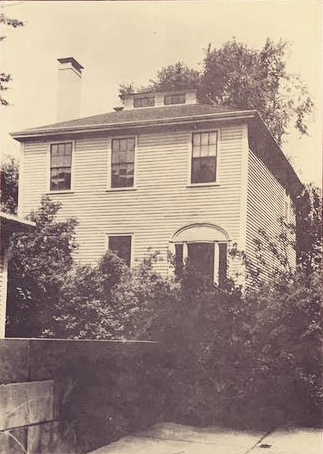
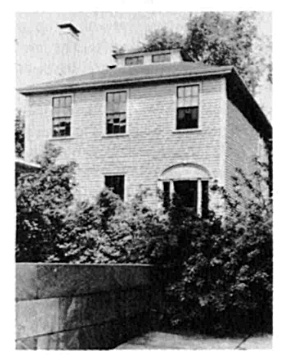
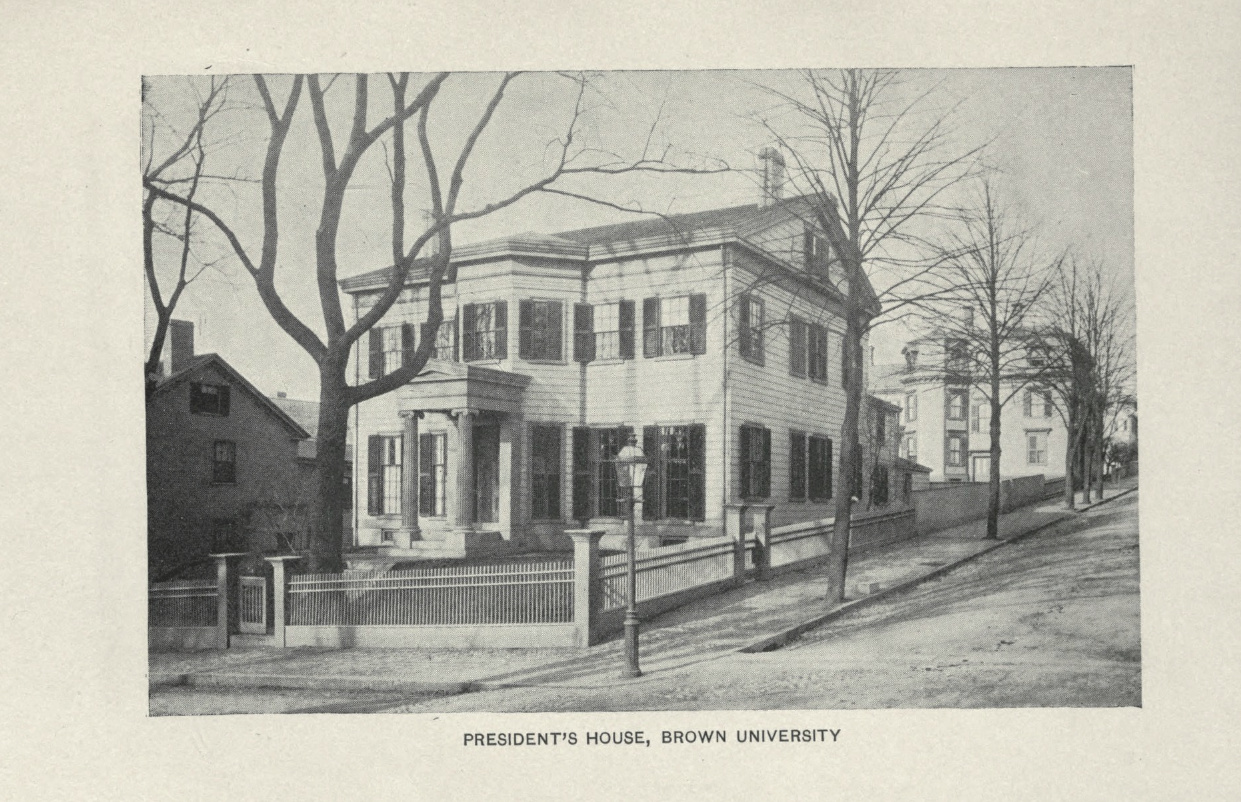
One of the last to live in Lovecraft’s house at 66 College Street, before it was removed in 1959, was a Lovecraft fan writing his dissertation at Brown. William Deminoff (class of 1954) appears to have been an assistant professor at Brown in 1957 (Ken Faig Jr. found a tenancy record for that year, but not that Deminoff was a Lovecraftian) and had gone on to be active in early Lovecraft fandom. The cutting below is from March 1965. This raises the possibility that Deminoff made photographs of the house in situ in its garden court, that may still exist? The name “Deminoff” is not found in Joshi’s comprehensive bibliography, which suggests that his final dissertation was not on Lovecraft.

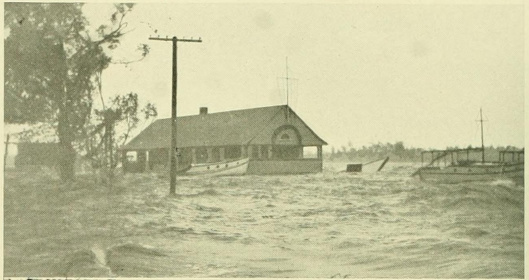
Storm on the Seekonk, 1938

I had thought that no-one had gone out to Lovecraft’s beloved Seekonk with a camera in the great storm of 1938, but here’s the university boathouse half submerged…

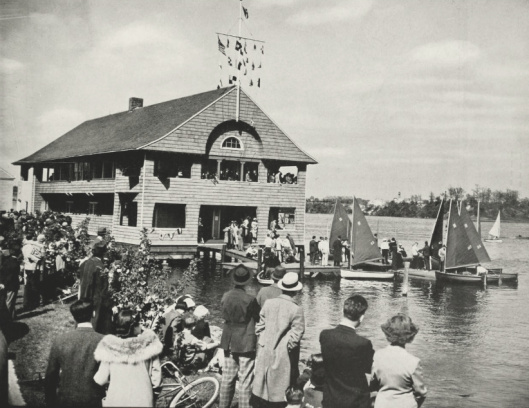
The same boathouse earlier in the same year…

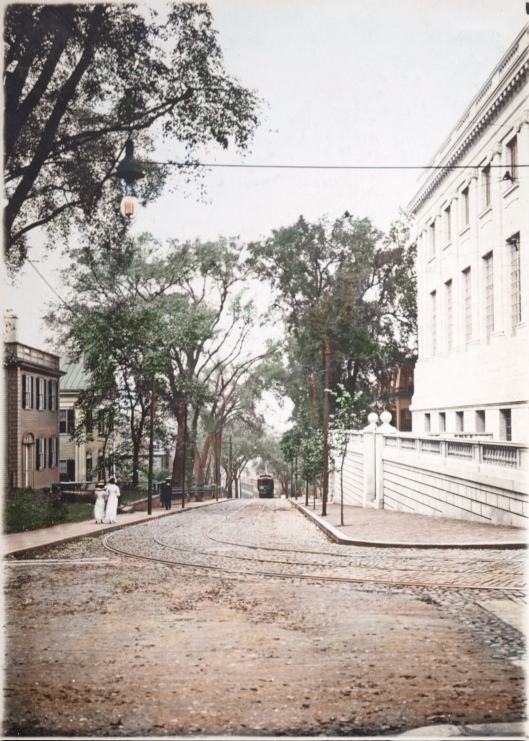
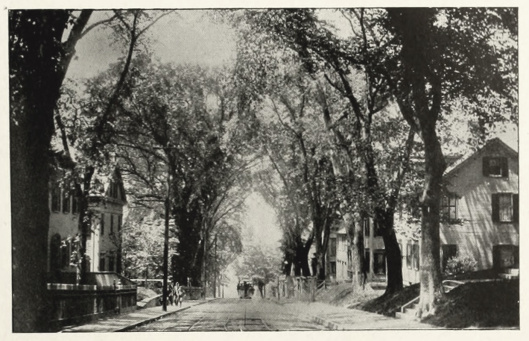
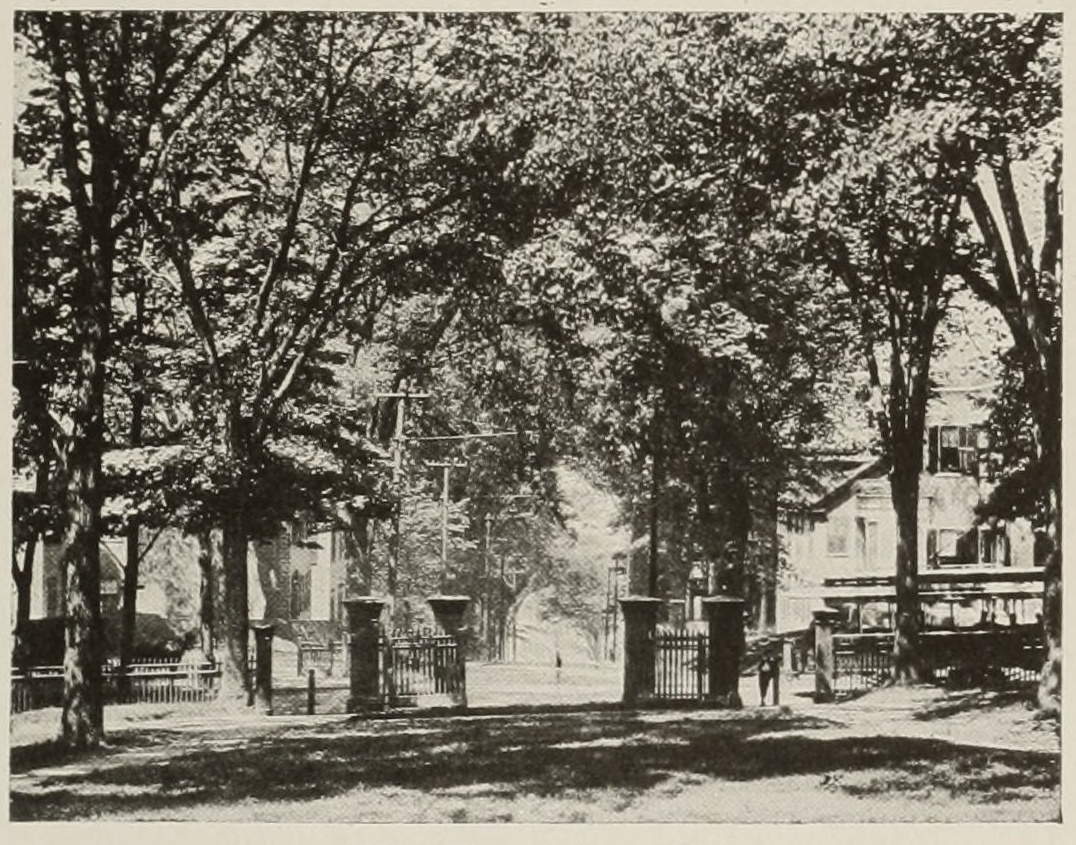
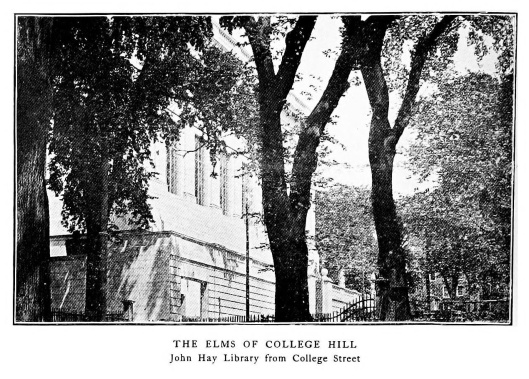
The great storm also downed old elm trees on College St., which had stood in front of the fraternity house that Lovecraft could see the back of from his study window at No. 66. The reporting of this news revealed a snippet of the street’s lore that Lovecraft probably knew of. The trees on the street were thought to have been brought from England in the clipper ship era. The storm probably weakened them and they were naturally failing anyway after so long, and thus in the late 1940s the Brown alumni began a robust programme of revivification and replanting of the elms.

“Lovecraft mythos” in 1976/77

Two very early uses of the term “the Lovecraft mythos”. The first leaves it open — was Robert Anton Wilson actually talking about the Derleth mythos or the original Lovecraft Mythos? We may never know, unless someone can dig up an interview which touches on the topic. The second use is from the critic Jeffrey P. Miller, and is very clear-cut.

1977: Robert Anton Wilson, Cosmic Trigger: Final Secret of the Illuminati. “I had already incorporated into Illuminatus a variation on the Lovecraft mythos” … which he states means a Cthulhu Cult -like group helping alien entities.

1976: Jeffrey P. Miller, in a scourging review of a new Arkham Press anthology, reviewed in Science Fiction Review for May 1976. “No Arkham anthology would be complete without a few stories in August Derleth’s Cthulhu Mythos (in which the good gods and the bad gods play macrocosmic cowboys and indians, as opposed to the Lovecraft Mythos, seldom used these days, in which mankind stands alone against unknown and extra—moral forces)”.

That’s as far back as the online archives can take me, though the Masterplots annuals for 1969 and 1971 do each appear to have a bare noting of items as belonging to “Lovecraft’s mythos”. Presumably this was on their plot summaries for Derleth-approved work which had recently appeared.

Can anyone find more substantial pre-1976 uses? Uses that are not just late Derleth in letters or newsletters, trying to lay a cloaking glamour over his own ‘collaborations’?

The Beautiful Journeys of Moebius

Thanks to Moebius Odyssey for the news of a current Moebius exhibition…

At the time of writing there is an ongoing free exhibition of Moebius called “Les Beaux Voyages de Moebius” (The Beautiful Journeys of Moebius) taking place from 11th May – 24th November 2019 in Venice, Italy at the CA’ASI Architecture Studio as part of the 58th Venice Biennale. The show celebrates Moebius’ first visit to Italy and showcases part of Moebius’ oeuvre of the period.

Moebius Odyssey also has many interior pictures from the show, in the second half of a post on Moebius’s trip to Venice and the work it inspired.

Kittee Tuesday: Mark A. Nelson

Celebrating H.P. Lovecraft’s interest in our fascinating felines.

A kittee from Mark A. Nelson’s new Fantasy World-Building book, one of many such. I can very highly recommend this new book, for world-building imaginative writers as well as for makers of comics, storybooks, artnovels and games. Curiously Amazon has the paperback under a different title, Creative World Building and Creature Design. Perhaps publisher Dover found that the word “fantasy” limited the audience?

Lovecraft by Bani

From the book Vita Privata di H.P. Lovecraft, newly on archive.org this week. It’s a 300-page 1987 Italian translation of memoirs of Lovecraft by those who knew him. It appears to be firmly out-of-print, and there are not even second-hand copies listed on the Italian Amazon site. eBay gives me no results for it, either.

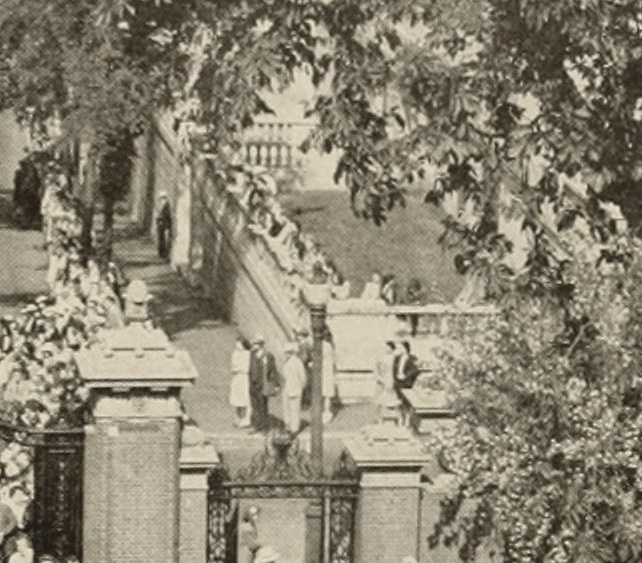
Illustrated, albeit with very fuzzy pictures. Here’s his last home, 66 College Street, seen from the elevated walkway along the side of the John Hay Library. The house rose from a lower level, having a whole lower floor below the floors and attic seen here. The lower level appears to have been lost on the move to its new and current site, unless perhaps it was buried there as a cellar.

Cthulhu outside the Library

Here’s an update on my previous post, “Cthulhu in the Library?”. A new photo has surfaced. The ironwork Cthulhu-a-like I had spotted in a 1965 book of b&w art-photographs of the Brown campus was not inside but rather outside the John Carter Brown Library.

Previous photo:

Newly found photo showing exterior context:

It’s not quite a lion, because of the dog-like teeth. The paw is also dog-like rather than cat-like. More like a supernatural hound, then? Possibly evoking Cerebrus, the multi-headed hound “that guards the gates of the Underworld”?

The Kirby Effect

The late Stan Taylor’s book-length Jack Kirby biography, now available free at The Kirby Effect: the journal of the Jack Kirby Museum & Research Center. Complete with colour scans and archival pictures. The last chapter posted was 1st June 2019, and it looks like it sees one new chapter posted every four months or so. As such the online book is currently only missing the final few chapters…

22 – Allegory Of His Life
23 – Why Did The Fourth World Fail?
24 – Once More Into The Breach
25 – Animated
26 – The Animated Artist

Picture: Jack Kirby at the board, from Kirby: King of Comics.

This spurs a fascinating historical “What If? idea” What if… Stan Lee had said to Jack Kirby one day at Timely in the mid 1950s: “Jack, forget these capes-and-tights heroes. They’re over. The kids want monsters and mystery. So I found us the secret sauce for our new Yellow Claw title, it’ll have new types of monster… and these monsters are gonna get us past this new freakin’ Comics Code and let us scoop up all the homeless readers of EC’s horror comics! Take a read of these here Lovecraft stories… yeah yeah I know, ya heard he’s supposed to be about indescribable monsters… but you’re Jack Kirby, you can draw anything…”

Of course it didn’t happen that way. In the end we got the superpowered capes-and-tights heroes vs. the superpowered monsters, and quadruple the fun. But it could have just gone toward creepy mystery monsters — before being swept away by TV and cheap paperbacks.

A ‘new’ Howard letter

A “New” R.E. Howard Letter, which had been hiding in plain sight in ‘The Eyrie’ in the Weird Tales issue for May 1926.

Howard recommends Nordic stories to the editor and readers. He singles out the Grettir the Outlaw vampire story from Iceland, presumably in the Sabine Baring-Gould translation (1890) rather than William Morris (1869) — though Howard scholars may know otherwise. But possibly younger readers of Weird Tales may equally have found it via Allen French’s popular and streamlined retelling for children The Story Of Grettir The Strong (1908) in their public library.


It would probably be useful for scholars to have a “complete Eyrie and Souk” to 1945, compiled into a single PDF with good OCR, once all the Weird Tales scans and related titles are on Archive.org. Or someone might produce an annotated and indexed ebook of such.

Review: the Lovecraft Annual for 2015

I’m pleased to say that I’ve acquired a copy of the Lovecraft Annual for 2015, for which thanks to my Patreon patrons. The volume arrived via Wordery, a bookseller who sent a small-format paperback in a ridiculous oversized ‘won’t fit in a letter-box’ 12″ stiff-card envelope, more suited to a vinyl LP! I doubt I’ll be using them again, for this reason. Booksellers, please take a tip from Amazon and invest in packing machinery which wraps the book such that it slips through a slim normal-sized letterbox.

After finishing it I thought it worth a quick review. This 2015 issue of Lovecraft Annual contains the usual sound Lovecraft scholarship by veteran Lovecraftians, while also offering space to promising newcomers and reviewing selected items. Three or four short filler-notes give Lovecraft news, or capsule overviews of a set of recent releases.

The book runs to 232 pages and articles usefully have on-page footnotes rather than end-notes. Illustrations are in colour, but thankfully this has not increased the list price above normal. The print-on-demand printers Lightning Source have done a good job at a modest price.

The issue opens with H. P. Lovecraft’s “Letters to Marian F. Bonner”, these being his letters to her and given in full. This appears to be the first publication of the letters, and here they are copiously annotated by David E. Schultz and S.T. Joshi. The letters are from late in Lovecraft’s life, and they arose because of his aunt’s illness and convalescence. Bonner had worked in the Providence Public Library, in the Periodicals Room, and she lived in the boarding house at the back of the garden courtyard shared with Lovecraft and his aunt. She was a close friend of Lovecraft’s surviving aunt. Lovecraft gives no hint of having met or noticed Bonner during her Public Library employment. One then assumes that she may have worked behind the scenes, perhaps preparing and cataloguing the periodicals and newspapers for what was by then one of the nation’s leading public libraries. Lovecraft’s letters to her are ‘playfully formal’, and one almost gets the sense that a strange middle-aged flirtation is ongoing by correspondence between two intensely bookish people. One gets hints that Lovecraft was responding to some similar tone in her own letters, but those have been lost. Given that he and Bonner shared a secluded garden, there is much discussion of its furry feline inhabitants and Lovecraft offers delightfully hand-drawn letterheads illustrating these. These headers are faithfully reproduced in colour, and one shows a cat-head produced by a carved rubber-stamp sent to him by Barlow. Lovecraft here usefully confirms my supposition (see my new Annotated ‘Cats of Ulthar’) that he knew of the Greek origins of ailurophile and its meanings. Lovecraft’s library and informal ‘circulating library’ of fantastic literature is also discussed, and some local journals are usefully named (The Netropian, a magazine available to patients and visitors in the local hospitals and which carried illustrated local history articles including one on Benefit St.) and local lectures and art gallery shows (Lovecraft approved of regional marine and sea-shore artist Henry J. Peck).

The letters cease and then we have the all too brief posthumous “Miscellaneous Impressions of H.P.L.” (1945) by Marian F. Bonner herself. This is also available in Lovecraft Remembered but fits nicely here.

Kenneth W. Faig, Jr.’s essay naturally follows, as “Can You Direct Me to Ely Court?: Some Notes on 66 College Street”. Faig’s essay focuses on the history of the house and that of its garden, courtyard and lane, rather than on the interior arrangements. I was interested to learn that 66 was the first house on its site, and only the second house ever built on the street. This explains the need for the little unpaved lane which ran down the side of the Library, this being needed to reach the house from College Street. The later grand event of the ‘moving of the house’ is not addressed, except in passing and in relation to its continuing existence on its new site. Faig goes into great detail on the house history and occupants, both before and after Lovecraft, but the paucity of the materials means that he cannot get a good idea of the look of the gardens and their plantings. He seems unaware of my 2013 “A Note on The Paxton” (in Lovecraft in Historical Context #4) in which I point out that the Paxton/Arsdale resident Sarah Bartlett Bullock (1840-1921)… “kept a diary to 1921, now at the R.I. Historical Society” on microfilm. I there suggested late entries in this diary may have a description of the courtyard and its plantings, or perhaps even some sketches made when she first arrived.
More biographical information on Lovecraft’s Paxton/Arsdale correspondents can be found in Ken Faig’s “Lovecraft’s 1937 Diary” in the Lovecraft Annual for 2012.

David E. Schultz follows with an essay on “66 College Street”. This closely examines both the architecture and the surroundings, and Lovecraft’s own sketches of the house frontage are here reprinted and compared. Schultz discovers that the Paxton was later called the Arsdale, and that it was later a Brown dormitory. I had failed to discovered these two names via online sources in my brief look at the Paxton in 2013, but I can now add a date here: 1946, which Schultz doesn’t have. The Brown Alumni magazine reported that the declining ‘old Arsdale’ at 53-55 Waterman Street became the ‘Hopkins House’ dormitory for males in 1946, when there was a sudden and pressing need to accommodate the large numbers of students suddenly returning to their studies after serving in the Second World War. One other element not noted by Schultz is my 2013 discovery of the nature of the Paxton/Arsdale’s retired residents, who were evidently very bookish and artistic people. Schultz’s essay also has excitingly clear and large photographs of 66 College St. and of some of its surrounding houses. One can even see that Ely’s Lane was still unpaved in 1941. We are also treated to Lovecraft’s outline sketch plan map of his last home, its lane and its environs.

The Lovecraft Annual usually also has a few informative filler paragraphs, where space allows. In 2015 one of these announced David E. Schultz’s annotated Fungi from Yuggoth critical edition for 2016. Yet I don’t recall it having appeared? Perhaps it was a very limited-edition hardback that I missed, and the paperback has yet to appear?

A filler paragraph also notes the new discovery of 85,000 words of new Lovecraft letters to Zelia Brown, then set to be published by the HPL Historical Society. These later appeared (in paper only) as The Spirit of Revision: Lovecraft’s Letters to Zealia Brown Reed Bishop. I see this is now on Amazon, if you want to add it to your wish-list there, yet this paperback is far more affordable if had direct from the Society website.

Donovan K. Loucks goes searching for Curwen’s town-house, and finds it in two good exterior photographs.

We then sail far away from Providence with Brendan Whyte’s “The Thing (Flung Daily) on the Doorstep: Lovecraft in the Antipodean Press, 1803–2007”. This is a detailed account of the results of a search for all things “Lovecraft”, sweeping across the newly digitised Australian and New Zealand press and similar resources. It’s a useful survey that first checks for possible Lovecraft family and then outlines Lovecraft’s early reception in Australia as seen in the press.

S. T. Joshi’s “Charles Baxter on Lovecraft” is a mild title. A casual peruser of the table-of-contents might mistakenly assume it to have something to do with Charles Dexter Ward. In fact it is S.T.’s full response to some dubious congeries of derision that had appeared in the leftist New York Review of Books in 2014. A lengthy review of Klinger’s Annotated had there foolishly attempted to usher back the Edmund Wilson era, in which Lovecraft was to be deemed a pulp hack of no worth and consigned to the outer darkness. Despite having ample space in their oversized newspaper-broadsheet publication, the Review of Books had then refused to print more than a mere 400-words of Joshi’s response to the said review. Here the reader is treated to Joshi’s point-by-point response in full.

Bobby Derie’s short “Six Degrees of Lovecraft: Henry Miller” draws some interesting parallels. Much as I enjoy Miller’s non-fiction memoir The Colossus of Maroussi every 15 years or so, I have no interest in his fiction. Yet this essay is more about their parallel interest in Machen and it also touches on their later roles in helping to break down both the outright literary censorship and the implicit taboos of the 1960s. I was also interested to be reminded that Lovecraft had read The Black Cat magazine from 1904. How long he then read it for appears to be unknown, but I imagine it might have fallen away as a subscription in the breakdown of 1908. By the early 1920s he was amazed that the title still existed and until then he seems to have considered it a lost relic of his boyhood. Sadly The Black Cat was on the last of its nine-lives and it expired in 1922, thus partly opening the road for Weird Tales in late 1922. Given the likely 1904-1908 dates it thus seems unlikely Lovecraft would have seen Arthur Leeds’s “The Man Who Shunned The Light” (1915) in The Black Cat, that being an obvious fore-runner for “Cool Air” (find “The Man…” in my book Historical Context #4). It would be interested for someone to take a look at Black Cat for 1904-08 and see what supernatural items Lovecraft might have been reading there during ‘the lost years’.

David Goudsward’s “Cassie Symmes: Inadvertent Lovecraftian” takes a detailed biographical look at Frank Belknap Long’s aunt. It was she who subsidised the handsome setting and printing, ably accomplished by Lovecraft’s friend Paul Cook, of her nephew’s first volume of poetry. Goudsward uncovers some interesting details on last-minute changes to this and another book, which suggests some previously unknown Lovecraft revision work.

Kenneth W. Faig, Jr.’s “Clergymen among Lovecraft’s Paternal Ancestors” is a partial updating and extension of his previous good work in painstakingly tracking down and documenting Lovecraft’s ancestry. One section usefully briefly summarises Lovecraft’s shifting perceptions of his paternal ancestry.

Todd Spaulding then offers a version of his Masters dissertation, here being titled “Lovecraft and Houellebecq: Two Against the World”. This is part essay and part review, and it offers a summary of Houellebecq’s reading of Lovecraft and embeds this in a set of useful short overviews of the French understandings of Lovecraft over time. The full cultural history of Lovecraft’s reception by the French (and the British/European surrealists with French connections, and related artistic and theoretical circles) is a 600-page door-stopper book that remains to be written, but this essay lays down some useful groundwork in English.

Donovan K. Loucks looks into “Donald A. Wollheim’s Hoax Review of the Necronomicon” and finds and reprints the text.

Steven J. Mariconda has a book review of S.T. Joshi’s Variorum edition of the collected Lovecraft, explaining what this limited-edition actually is, and how Joshi’s definitive texts came-to-be after vast amounts of close textual work. The final review is a scourging of a new biography of Lovecraft.

Overall this is an excellent issue, and is well worth obtaining at its affordable £8 to £15 price.