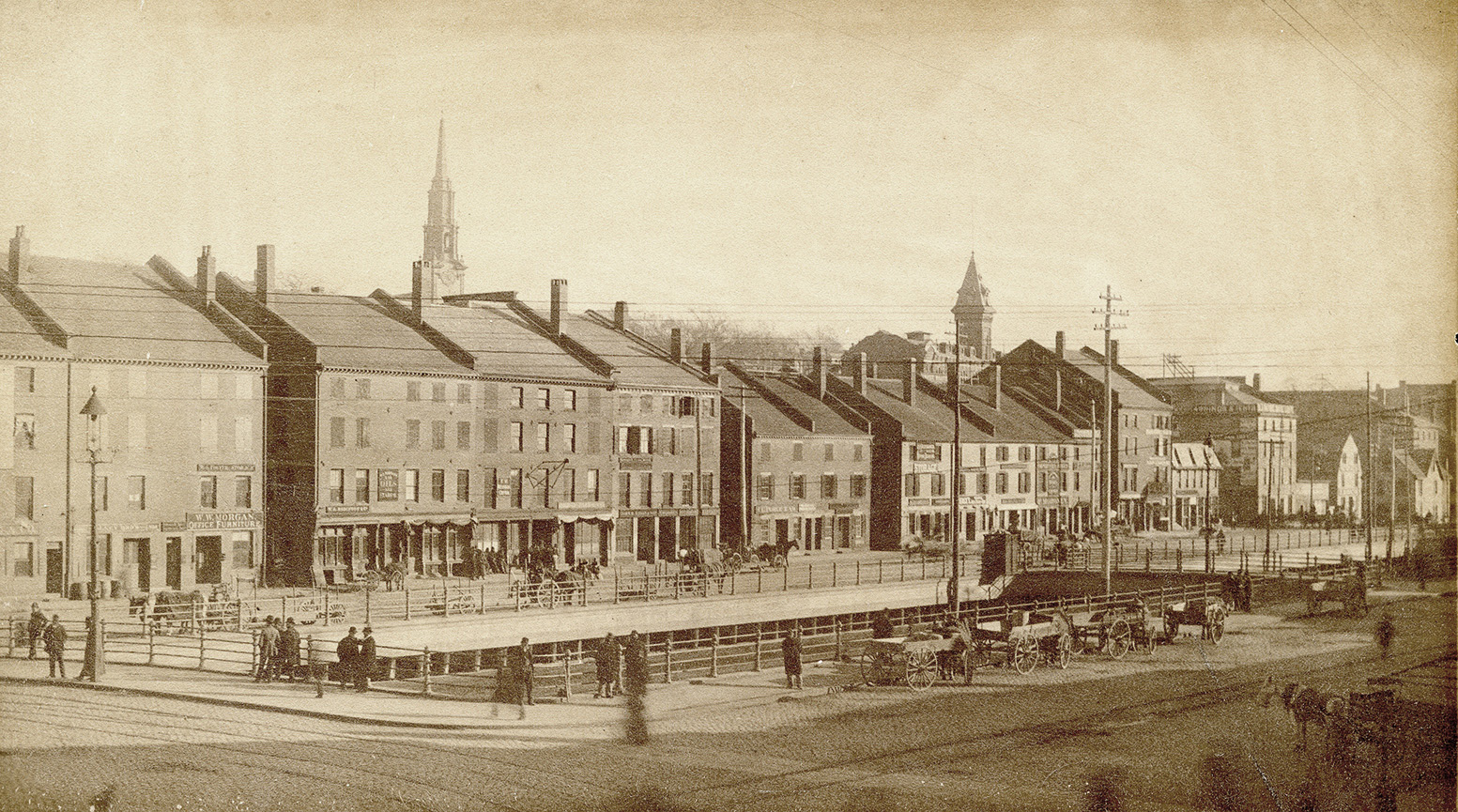
This week, following on from last week’s newspaper focused ‘Picture Postals’, a look at Lovecraft and comic-strips.
Lovecraft did not have a high opinion of the early pre-First World War newspaper comic-strips, which arguably was where mass-market comic art was born. But he may have been sent some as newspaper clippings by his correspondents. We know he did enjoy at least one early comic-strip character from the newspapers, sent to him that way. As he wrote in 1917…
my taste generally rebels at comic-supplement humour; I must confess to many hearty laughs over the particular “Outburst of Everett True” [strip, sent by Moe]. This forms my first acquaintance with that beefy gentleman of pictorial fiction, since the New-England dailies of the first rank do not use the conventional “comics.” […] the humour [found here] is not at all inconsiderable”.
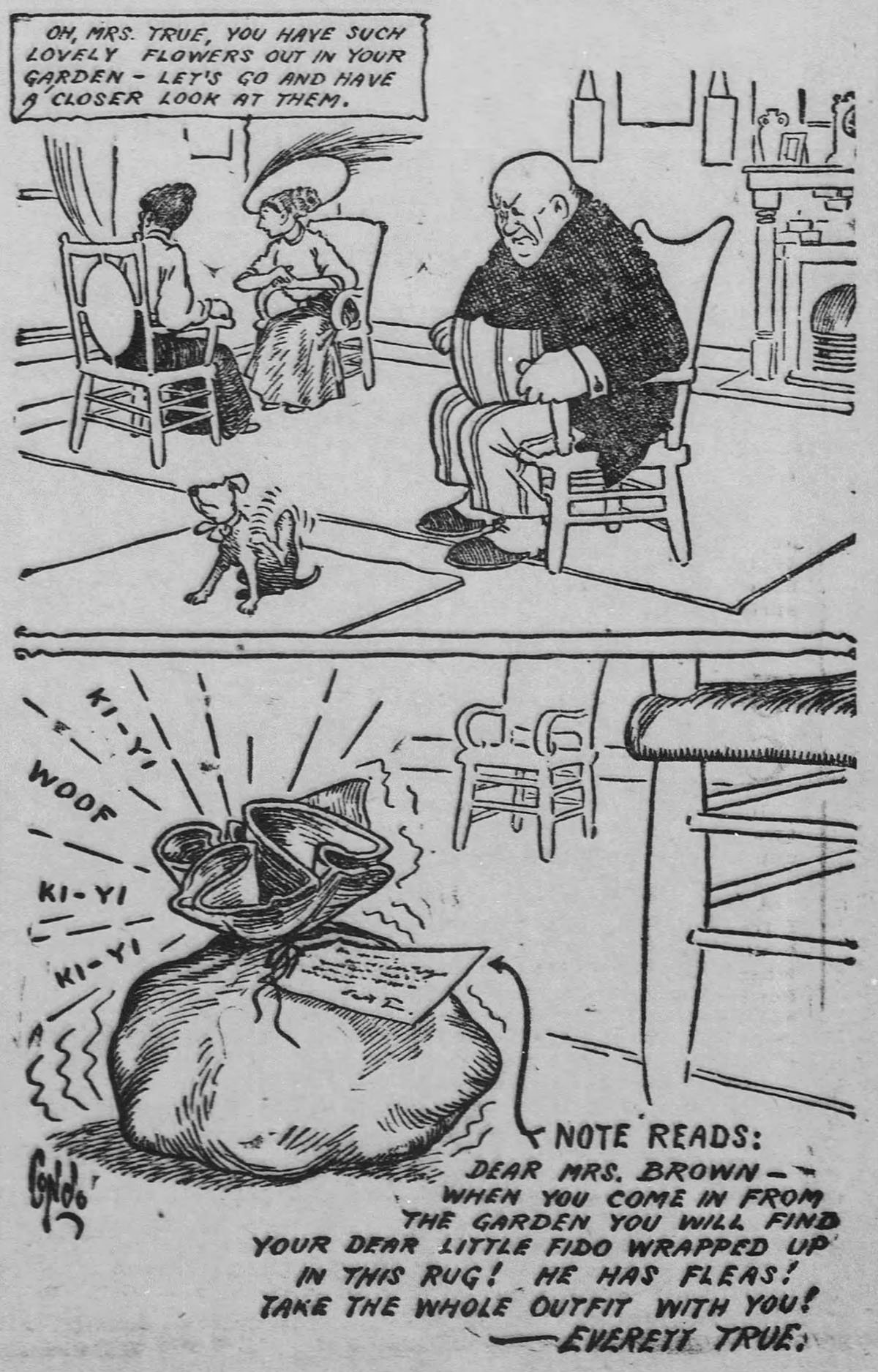
‘The Outbursts of Everett True’ was a strip which featured a portly and rather grumpy looking middle-aged man. He would not put up with the irritations of the modern life, a life then only newly arrived in many people’s experience. Here he tackles a ‘toy’ dog, adored at first and then neglected by its owner…
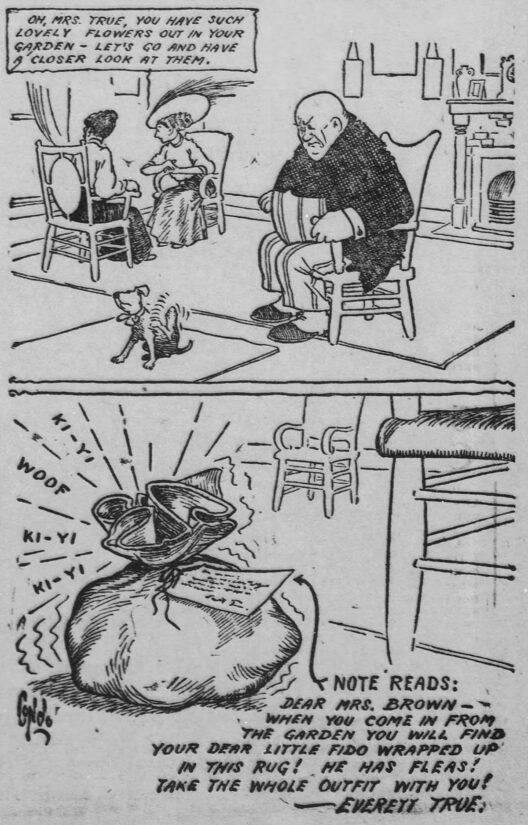
Barnacle Press has a fine collection of his strips online, though only to 1909. Thus the circa 1916/17 strip most likely to have appealed to Lovecraft and Moe can’t be located. The Scriptorium Daily has an appreciative article on the strip, which explains the approach.
It seems a pity that Lovecraft could not have enjoyed more of this fledgling and lively art-form. But evidently he was early put off by seeing the comics in “the Hearst Sunday papers” in perhaps circa 1910-1915, when he would have been age 20-25 and at last putting aside childish things (he was a late developer, as many Lovecraftians will recall). Perhaps this partly explains his adverse reaction. As he wrote in September 1916…
It is evident that those who depreciate British humour must have taken pains to avoid its perusal, since it has a quietly pungent quality seldom found save among Anglo-Saxons. Personally, we believe that the summit of [American] clumsy pseudo-jocoseness is attained by the average “comic” supplement of the Hearst Sunday [news]papers. These, and not the British press, present the pathetic spectacle of utter inanity and repulsive grotesqueness without the faintest redeeming touch of genuine comedy, legitimate satire, or refined humour.
Ouch. Definitely not appreciating those strips, whatever they were. What then were the “Hearst Sunday papers” at that time? Almost certainly Hearst’s New York Sunday American, U.S. sales circulation nudging one million? Probably taken by one of his aunts, or perhaps seen at the barber shop. The comic artist Winsor McCay (Little Nemo) was with Hearst from 1911, though not it seems doing Nemo. George Herriman (Krazy Kat) was also with Hearst for many decades, though Krazy was barely born by circa 1915 and was confined to a narrow ‘margin strip’ in b&w…
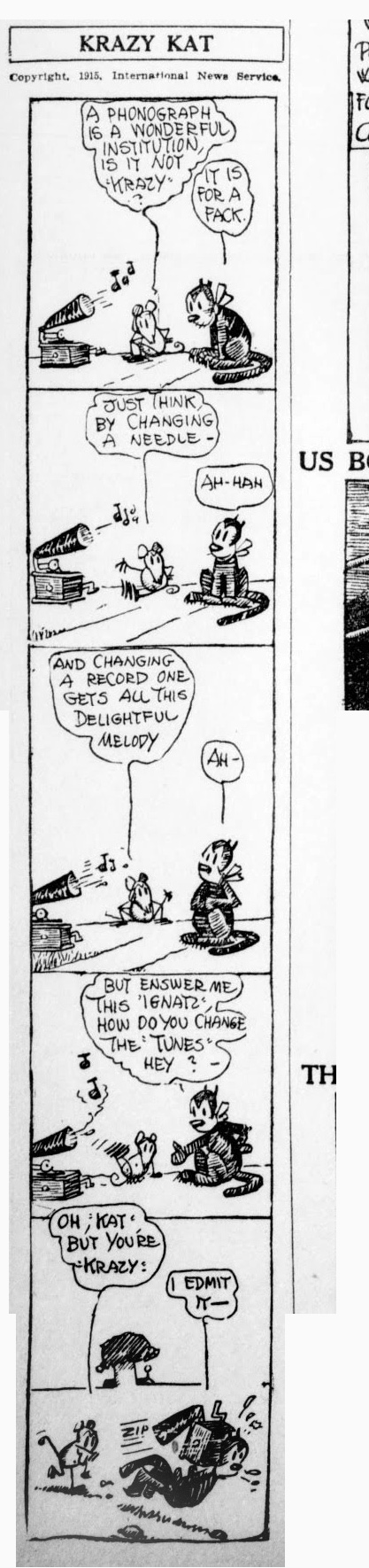
How many pages would Lovecraft have seen? The New York Sunday American had 12 pages of colour comics by 1924, having gone to eight pages of comics in 1922 when it “doubled” its comics pages and introduced colour printing. Therefore it likely only had four pages of comics when Lovecraft perused them, and these pages were in black and white or perhaps two-tone.
23rd April 1916 is said to have been the first full-page Krazy Kat strip, but that appeared in the new Saturday “City Life” supplement of the New York Journal, “devoted to arts and entertainment news”. Thus it was not in the Sunday paper that Lovecraft was reading.
It then seems Lovecraft in circa 1915-16 was a little early to have encountered the mature Krazy Kat of 1922 onwards, and he was anyway reading the wrong edition/title. He was also too late to have appreciated the weird and sublime U.S. Sunday strips surveyed in the book Forgotten Fantasy: Sunday Comics 1900-1915 (2011). It seems these had petered out by 1915, perhaps partly due to the new wartime mood…
these early fantasies really did get “lost”. And that makes a certain amount of sense: The kind of visionary drawing and thinking here isn’t usually sustainable, and neither is it usually character-based — two things necessary for a long commercial run. Many of these practitioners moved on, or back to, children’s books and illustration.
It is however possible that the rapidly maturing and expansive 1920s Krazy Kat (and Ignatz the mouse) strips were sent to Lovecraft as occasional clippings, by his New York City anarchist friend James Morton along with his regular letters. Since in a letter to Morton of 1924 Lovecraft wisecracks about the inner goings-on at Weird Tales magazine, using the ‘snappy patter’ style learned from his young friend Albert Sandusky (aka “Wisecrack Sandusky”). In doing this he seems to allude to Ignatz the mouse…
Wot a inside corneal circumnavigation(*) I’m getting on Weird Tales! I want you should tell ’em, Ignatz!
(* inside corneal circumnavigation = a close-up inside look at things. The cornea is part of the human eye).
Firmer evidence is found in Lovecraft’s long essay on “Cats and Dogs” (November 1926), where he talks of the blind idiot-love owners have for grotesque dogs, comparing it to…
the childish penchant for the grotesque and tawdrily ‘cute’, which we see like-wise embodied in popular cartoons, freak dolls, and all the malformed decorative trumpery of the “Billiken” or “Krazy Kat” order, found in the “dens” and “cosy corners” of the would-be sophisticated cultural yokelry.
The latter point being perhaps an allusion to the use of full-page Krazy Kat strips in Hearst’s attempt to appeal to the “sophisticated cultural yokelry” via the Saturday “City Life” supplement of the New York Journal, which was “devoted to arts and entertainment news”. If I am correct then this suggests Lovecraft not only knew the strip, but also where it was published. If in New York City his friend Morton was regularly getting this Saturday ‘City Life’ arts supplement, as is likely, then he would have thus had access to the maturing full-page Krazy Kat strips. What’s the betting that he sent at least one of these surreal pages to the cat-loving Lovecraft? But did Lovecraft ever get beyond thinking of it as the weekly “malformed decorative trumpery” of the New York arts set? After all, the strip ran to 1944, so he could have encountered it in its mature form 1927-37. But we can’t now know, since — so far as I know — he makes no other mention of Krazy.
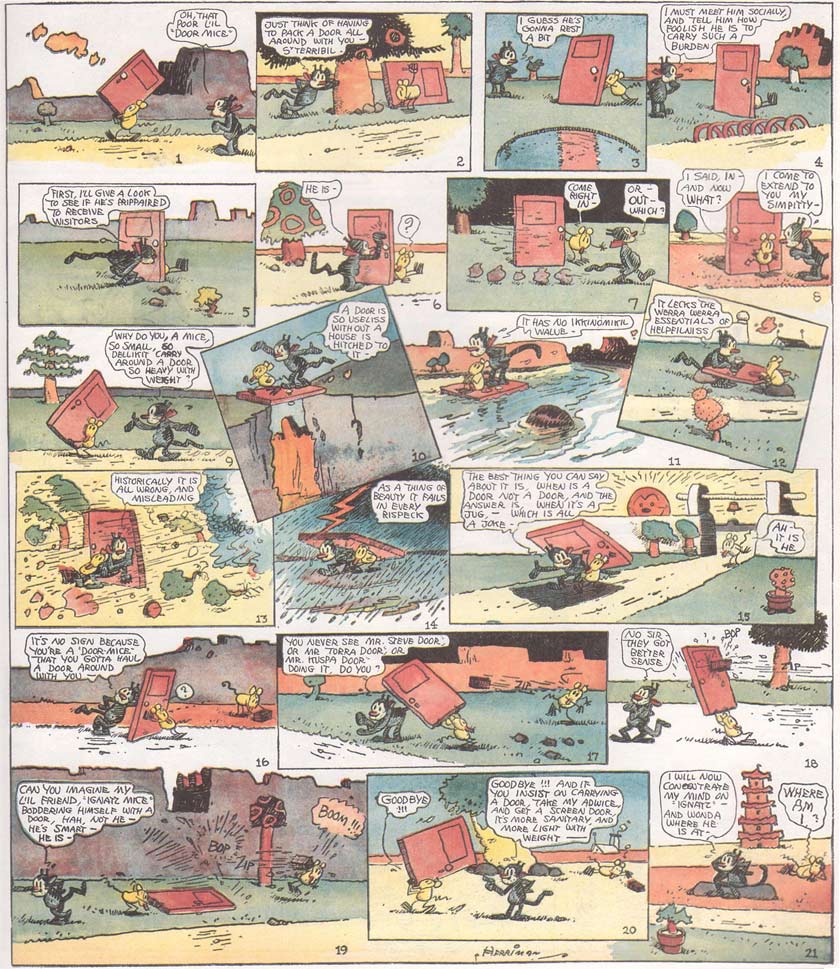
1922, a brief foray into colour.