Weekend project: get rid of the Google-gunk

Are you a search-dependent researcher who’s gurgling under the weight of all the Google-gunk? Then you need my new “Google Search in three columns: how to do it in 2020” linked guide. Works for Google Search, Books and News, and also has details on how to clean off all the gunk and junk cluttering search results, including News thumbnail images and the new favicons in Search. This is what you get on a desktop PC…

… with the gap being an unwanted result hidden by Google Hit Hider.

“The Horror Of The Heights”

A new 39 minute reading of Sir Arthur Conan Doyle’s “The Horror Of The Heights” (1913). The blurb is via Wikipedia and has plot spoilers, the opening being… “The story is told through a blood-stained notebook, dubbed the ‘Joyce-Armstrong Fragment’.” Other aspects are quite Lovecraftian, although the writing isn’t.

If the reader is not to your taste, HorrorBabble has it on YouTube in a good steady British English reading, and there are other readings on Librivox here (40 mins), here (42 mins) and here (36 mins).

Archive.org has the original appearance in The Strand magazine 1913, complete with superb colour plates. I won’t show these here as they’re visual spoilers.

H.P. Lovecraft read a good deal of Conan Doyle, as a lad in his ‘detective phase’. Joshi states that… “he read every Holmes story published up to that time (circa 1903)” and that these formed a key template for his early boyish fiction writing. Lovecraft wrote that… “I used to write detective stories very often, the works of A. Conan Doyle being my model so far as plot was concerned.”

He later recalled he had dipped a toe back into new Holmes stories in 1908, but found these… “an odd (& rather mediocre) pair or series of tales” and thereafter gave up on Holmes. If he also sampled the best of the non-Holmes horror, ghost and weird stories of Conan Doyle appears to be uncertain.

A story by Doyle titled “The Horror Of The Heights” would certainly have attracted Lovecraft’s attention. Yet he would probably have not seen it in The Strand, but rather in Doyle’s non-Holmes 1918 book collection Danger! and other stories. This would surely have arrived in the Providence Public Library in multiple copies and then been noticed by Lovecraft once the initial rush of borrowing of it had subsided — perhaps circa 1919. But more likely the nature of this particular story might have been called to his attention by someone in his circle, at some point in the mid 1920s, before he fully formulated shoggoths. While it appears we have no evidence of such a reading that I know of, we do know that in 1924 Lovecraft was discovering overlooked items such as Wells’s collection Thirty Strange Stories (1897, read January 1924), and Wells’s classic The Time Machine (1895, read November 1924). He was also doing much ‘catch up’ reading for his essay Supernatural Horror in Literature, with the aid of the New York libraries, the many used bookstores, and the private libraries of friends. Could he also have been sampling the best “strange stories” of Doyle, Kipling and others at this time?

The Dexter Asylum

Hope Street English and Classical High School […] was a good mile from Lovecraft’s 598 Angell Street home, but there was no closer public high school to which he could have gone. [His route to school was long and] perhaps skirting the large property housing the Dexter Asylum (a home for the indigent), which obtruded along his path. […] The trip was not insignificant, as is perhaps reflected in the fair number of times during his first term of 1904–05 that Lovecraft reported late [attendance, in the school records]” — S.T. Joshi, I Am Providence.

Also known as the Dexter Hospital.

Witch-craft

A look at the cover that Greenwood gave The H.P. Lovecraft Companion in 1977, a first ‘high pass’ over Lovecraft’s work, written by a Sherlock Holmes fan and newspaper book-critic. The book is usually presented for sale without the dust-jacket, and when it is a nice copy it’s usually for sale at silly prices.

The first section surveys Lovecraft’s style and opinions of other authors. Then follows a section with brief summaries of nearly 60 stories. There’s an A-Z of key places, characters and monsters found in the fiction. Then a survey of the pantheonic monsters. The final part briefly outlines Lovecraft’s pantheon and surveys what he was known to have read re: the occult and witchcraft.

It’s long since been superseded and the book is probably most interesting today for the choice of the cover picture which taps into “Witch House”, rather than into “Cthulhu” and tentacles as would be the case today. Thus the subject matter and 17th century woodcut style would have framed Lovecraft’s ‘first glance’ academic library reception within the mid-70s interest in the New England witch trials. The smiling wizard and the frowning witch also implicitly make an appeal to the then-emerging gender studies crowd in academia, which again links to “Witch House”.

In the slicks

New on Archive.org, Writing For The Quality Market (1935) is a short but detailed book that lays out what the ‘quality’ or ‘slick’ magazine market was like in Lovecraft’s last years, complete with a great many tables that ‘scientifically’ assess the types of purchased stories and their characteristics. Obviously, short of making a return to his “Sweet Ermengarde” days, he wasn’t going to fit in.

“Tally ho!”

The MPorcius Fiction Log takes another look at the Weird Tales Winners, the subject of his longer blog post back in 2017. Both posts being inspired by the fact that in the World Fantasy Convention 1983 Souvenir Book there was…

an article in the program [book] by SF historian Sam Moskowitz entitled “The Most Popular Stories in Weird Tales: 1924 to 1940, with Statistics and Analytical Commentary.

Moskowitz had acquired the set of tally-cards used by editor Farnsworth Wright to decide the most liked writers in Weird Tales.

Where to find this article? Sadly only the Pocket Programme and Progress Report booklets are online for the World Fantasy Convention 1983, not the book itself. But the Moskowitz article was reprinted more recently in Jim van Hise’s Sword & Fantasy No. 13 (2017), which may prove an alternative route for those who want to obtain a copy.

Le Guide Lovecraft (2020)

Christophe Thill’s Le Guide Lovecraft, listed as due in French on 20th March 2020. Thill is the lead editor of the French edition of Joshi’s I Am Providence. There was a 2018 edition of Le Guide Lovecraft in affordable paperback, so I’d imagine this might be an expanded second edition… and with a new and more pleasing cover.

Driftwind

Snagged from the listings. This is what Driftwind would have looked like as Lovecraft opened his mail in November 1931. This particular issue had a checklist that included some of his own publications.

More covers here and a picture of the editor Walter J. Coates.

And a June 1937 Pantagraph, with a Lovecraft-tribute fan-poem on the cover. The *** .. *** is presumably meant to call attention to the implicit evocation of Lovecraft. A such it’s another item for a possible Encyclopedia of H.P. Lovecraft as a Character.

Union Station

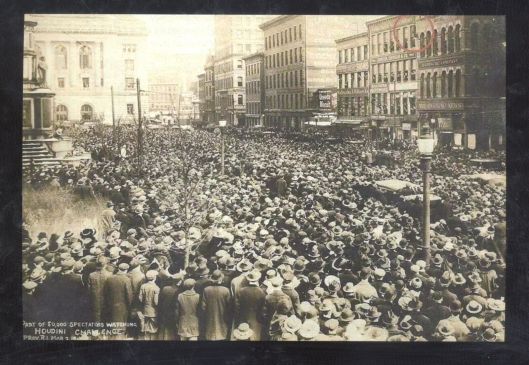
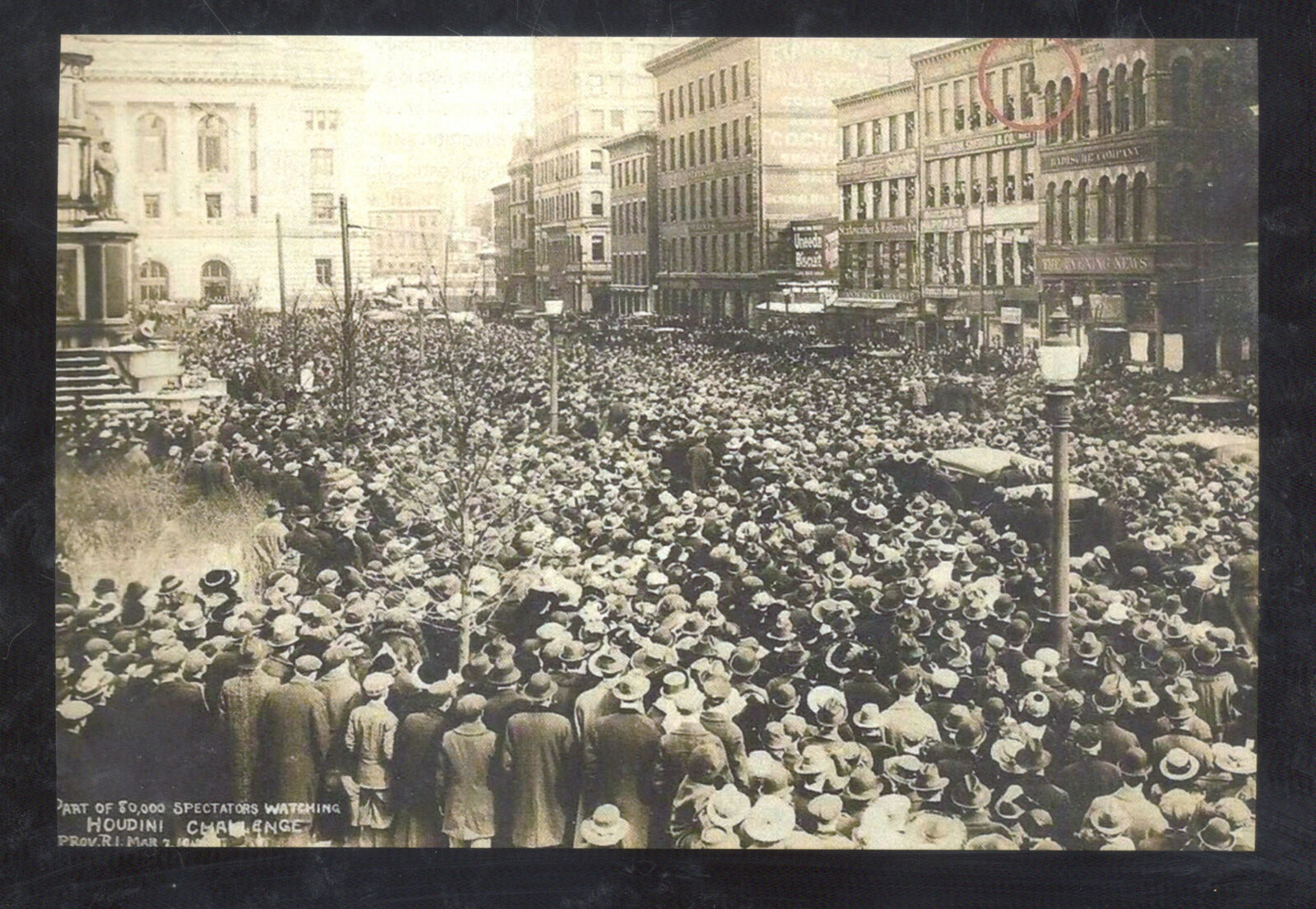
A 1911 photo postcard from Union Station, Providence. Possibly a useful bit of visual information for those crafting graphic novels featuring scenes from Lovecraft’s life. I imagine the trains were much the same a decade or so later. Passenger steam trains only appear to have begun to fade away in the mid 1930s, when one can find mentions of new diesel engines running passenger services on the Providence and Boston line.

In the following May 1926 letter Lovecraft has almost returned home from New York City, and his train is slowing on its approach into Union Station…

… I fumble with bags and wraps in a desperate effort to appear calm -THEN- a delirious marble dome outside the window – a hissing of air brakes – a slackening of speed – surges of ecstasy and dropping of clouds from my eyes and mind – HOMEUNION STATION­ PROVIDENCE!!!! Something snapped – and everything unreal fell away. There was no more excitement; no sense of strangeness, and no perception of the lapse of time since last I stood on that holy ground. […] Simply, I was home­ and home was just as it had always been since I was born there thirty­ six years ago. There is no other place for me. My world is Providence.” — from Selected Letters II.