The verdant greenwood once again embowers Tentaclii Towers, and an eerie hush covers the rolling acres. The new springtime heat imparts heat-shimmers to the air, their undulations disturbed only by the faint pulse of ambulance sirens. Stoke-on-Trent, for all its rumbustious reputation, seems to be taking the ‘bat flu’ (as I’ve heard it called here) well. And surprisingly quietly, given the usual levels of noise-pollution. Most adults are treating the lockdown as paid gardening-leave and the surprisingly chilled kids see it as school-holidays. This attitude is aided by the chance occurrence of a glorious run of weather — which has been both not-too-hot and relatively insect-free. One suspects the city won’t be so quiet once the UK lockdown is effectively and officially over, which at my guess will perhaps be Week Nine (Friday 22nd May). At which point Stokies will roar out of their homes seeking a Bank Holiday weekend of beer and beats, bonking and biffing, shopping and re-stocking.
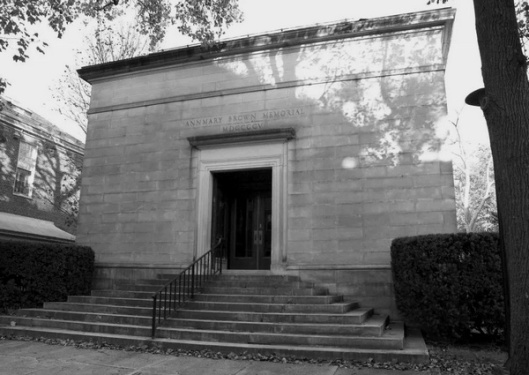
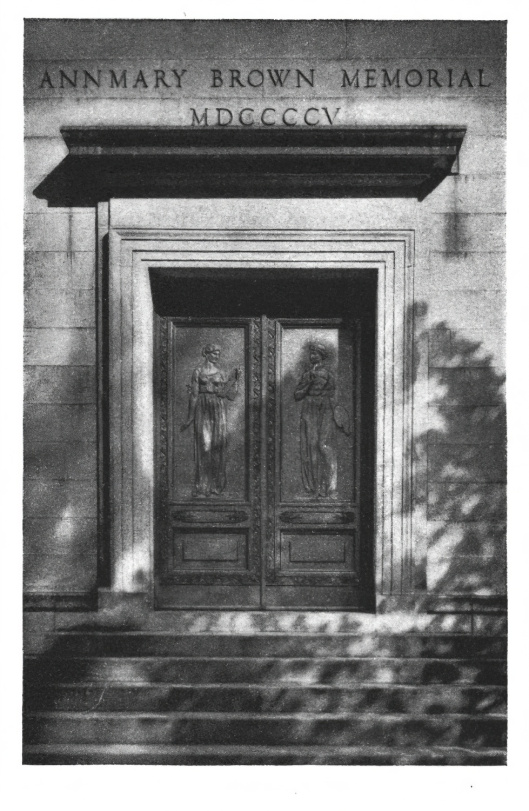
The arboreal stillness has been a suitable atmosphere for my final stretch of reading into the Barlow-Lovecraft letters, O Fortunate Floridian. The letters inspired a post on The Haunted Castle, a 1927 study of the weird, in which I pin down its dates in relation to Lovecraft’s own survey in the same year. Another mention in the Barlow letters also inspired me to peep inside the Annmary Brown Memorial at Brown, a curious mausoleum-museum-library which Lovecraft showed to Barlow on a Providence visit. The Annmary Brown Memorial is yet another example of the Brown-Lovecraft overlap, something which existed despite Lovecraft having no formal connection with the university other than tangentially via his aunts and their circle. I suspect we may learn even more about such small points of informal Brunonian connection when ‘the aunts letters’ are released this summer.
A few weeks ago ‘Sci-Fi-Bookworm’ kindly posted a 1949 Arkham Sampler on Archive.org. This led to a chain of events which culminated in my making a major discovery. The Sampler had lauded S. Fowler Wright as the author of one of the key pre-1948 science fiction classics, and tantalisingly noted a similarity with Wells’s The Time Machine. That alone was enough to interest me, but I was also pleased to learn that Wright was from my own Birmingham / Staffordshire / West Midlands, which led to a long biographical post on Tentaclii.
Talking of aeon-lost scrolls wot the olde master writ himself, this month my bookshelves have been slightly re-organised to accommodate my growing number of Lovecraft items. I’m now a proud ‘one-and-a-half shelf’ Lovecraftian, with the remainder of the ‘new’ shelf accommodating my former pile of recent Tolkien print books. Hopefully by the end of the summer I’ll be a ‘two-shelf Lovecraftian’. My thanks to my Patreon patrons who’ve helped me acquire several chunky new volumes of letters and a handful of Lovecraft Annual issues. I’m currently reading through the latest Lovecraft Annual, with a view to a review-post in May.
Rather less momentously than my “Shadow” discovery, this blog’s Kittee Tuesday post-series made a return after its paws for thought, showing a fabulous rooftop ‘court of the cats’ from among the etchings in Chats et Autres Betes (1933). Again, this post was inspired by a brief mention in the Barlow-Lovecraft letters, and my online research dug up the marvellous picture at a good size.
Another excavation of a lost gem included my discovering the seemingly forgotten author Christoper Anvil and his fun 1960s Interstellar Patrol series, this time found due to my needing to find ‘sci-fi jungle’ paperback art for a Digital Art Live magazine feature. Like many of those Cold War guys from the U.S. Air Force, Anvil could could certainly write compelling fiction. Did they have some Top Secret Psy-ops training in hypnotic writing, during the Cold War? It seems so, and as such the forthcoming Tantor audiobook of his Interstellar Patrol should be a corker. Incidentally the ‘sci-fi jungle’ paperback art feature is to be found in Digital Art Live #48. At the back of the same issue there’s also a new ‘composite’ interview with movie director and FX pioneer George Pal, illustrated with newly colourised old press pictures. He made one of my all-time favourite movies, The Time Machine (1960), so I was pleased to do quite a bit of work digging the interview out of hard-coded subtitles and other deeply buried and utterly forgotten sources. As with S. Fowler Wright, George Pal is a 20th century science-fiction pioneer who is in dire need of a good book-length biography.
Various freebies were noted here, though not so many as of late. These included Conversations with Ray Bradbury, and Archive.org’s lockdown easing of its “Borrow” library arrangements. I also released a handy bundle of early H.G. Wells ebooks for your possible lockdown perusal, plus a book cover for possible POD use by my Patreon patrons.
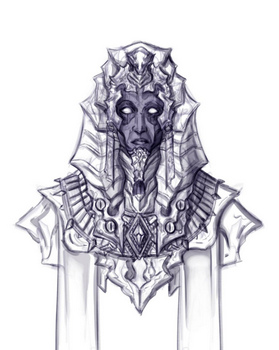
In the arts, I made another survey of the best new Lovecraftian art on DeviantArt, with the charcoal art of ‘NikolaUzelac’ being a major find. I spotted that Gou Tanabe’s graphic novel of “Innsmouth” begins publishing in Japanese in May 2020, and found that his “The Shadow Out of Time” adaptation has still only had a French edition. I enlarged and coloured a reasonably good yearbook picture of Anna Helen Crofts, collaborator with Lovecraft on “Poetry and the Gods” (1920). There was a Patreon-only post here on the almost-movie The Cry of Cthulhu.
This month was light on links to podcasts, but I noted a strong episode of The Lovecraft Geek podcast (#4, new series), and Perfect Bound had a podcast survey of Lovecraftian horror in comics.
Several strong scholarly items were found and added to my Open Lovecraft page, and I’m pleased to see the major Tolkien scholar Thomas Honegger is turning his attention to Lovecraft.
Newly published books noted here included: a new edition of Bookery’s Guide to Pulps & Related Magazines; the Algis Budrys collection Beyond the Outposts: Essays on SF and Fantasy, 1955-1996; the free Fandom in the UK, 1939-1945; and the expensive academic book Weird Fiction and Science at the Fin de Siecle. New ‘forthcoming’ academic books noted included Aliens, Robots & Virtual Reality Idols in the Science Fiction of H.P. Lovecraft, Isaac Asimov and William Gibson; and another on some of the gothic influences to be detected in the apparently rationalist Sherlock Holmes tales.
Well, that’s it for this month’s round-up. If you can help boost my Patreon by a dollar or two, please, it would be much appreciated. If the virus doesn’t carry me off, then it’s quite possible that later in 2020 my Patreon patrons may get ‘early access’ to a chapter or two from my big Tolkien book.