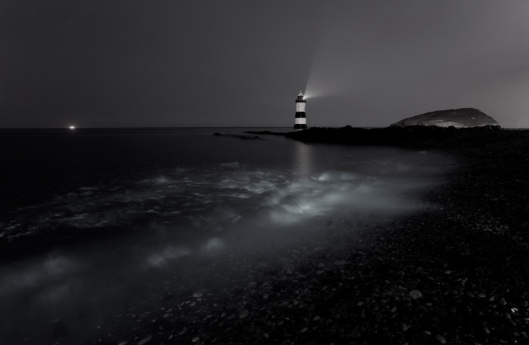
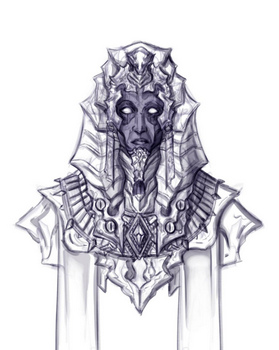
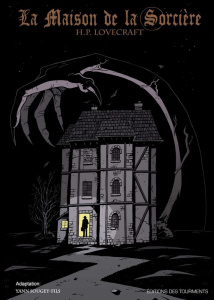
Now pre-ordering, Dark Adventure Radio Theatre’s full-cast olde-time radio adaptation of The Whisperer in Darkness…
We anticipate the download edition of The Whisperer in Darkness will be available for download in the 2nd week of May
08 Friday May 2020
Posted in Lovecraftian arts, Podcasts etc.
Now pre-ordering, Dark Adventure Radio Theatre’s full-cast olde-time radio adaptation of The Whisperer in Darkness…
We anticipate the download edition of The Whisperer in Darkness will be available for download in the 2nd week of May
08 Friday May 2020
Posted in Odd scratchings
More good news on ebooks and tax. Spain has reduced VAT (sales tax) on e-books, e-magazines and e-journals to 4%. Brazil’s highest court has also confirmed their zero-rating. As with last month’s reduction in the UK from 20% to zero tax, the question is now — will sellers pass on the reduction, or just trouser the extra profit?
07 Thursday May 2020
Posted in Scholarly works
Barton Levi St-Armand’s “H. P. Lovecraft : New England Decadent” (1975) is now online for free at Persee, as part of their digitisation of the literary journal Caliban. No. 12, 1975 was a special issue on American science-fiction, and its long article on Lovecraft as a “New England Decadent” was an important item of early Lovecraft scholarship.
“New England Decadent” had been issued as an ebook fundraiser for the WaterFire Providence festival, in connection with NecronomiCon 2013…
WaterFire Providence is re-publishing, H.P. Lovecraft: New England Decadent by Professor Emeritus Barton Levi St. Armand. First published in 1979, the book, which examines the history of Lovecraft scholarship and his roots in the decadent movement of 19th Century Britain and Europe, has been corrected and re-released for NecronomiCon Providence 2013.
… but this edition later vanished from Amazon sometime in late summer 2018. Presumably the permission for an ebook only lasted five years.
06 Wednesday May 2020
Posted in Historical context, Lovecraftian arts
New to me, Jason Eckhardt’s Map of Lovecraft’s Providence. Sadly, ‘sold out’, but still with an online preview.
Also, Brown has Henry Beckwith’s Map of Lovecraft sites in Providence. As with seemingly every item in their online Lovecraft collection, Brown’s cataloguers are rather ambitiously claiming “No Copyright” on this. So far as I can see there’s quite a bit in there which is still under copyright, despite the blanket “No Copyright” claim.
See also my own map, Some Places Known to Howard Phillips Lovecraft.
Also, in the same topographical line, a local newspaper column The View From Swamptown this month surveys the history of the fine old house of the pioneer Lovecraft researcher Henry Beckwith (Lovecraft’s Providence and Adjacent Parts). Unlike the craven Providence newspapers they have not totally blocked visitors from the UK and Europe, due to the idiotic new regulations of the European Union.
05 Tuesday May 2020
Posted in Historical context, Kittee Tuesday, Podcasts etc.
The Voluminous podcast bounces around in the back seat, as H.P. Lovecraft takes his digressive mind for a spin… The Letters of H.P. Lovecraft: Cats, Cheese and Hawaiians.
04 Monday May 2020
Posted in Odd scratchings
≈ Enter your password to view comments.
04 Monday May 2020
Posted in Lovecraftian arts
Another survey of the best new Lovecraftian work on DeviantArt in the last month…
“Somethings happening out at Devils Reef” by ditchpiggy. Appears to be the first Lovecraftian work, in a run of general horror pictures.
“The Shunned House” by Brawnyink.
“In the walls of Eryx” by BrunoSenigalha.
Ronanmc has started on Part Two of his “Dreams in the Witch House Comic”.
03 Sunday May 2020
Posted in Historical context
“The Invisible City”, a sample of the sort of weird-science story Lovecraft was reading in The Black Cat magazine circa age 11.
02 Saturday May 2020
Posted in Kipling, New books, Scholarly works
S. T. Joshi’s blog has updated. He’s rescued sixteen of the best weird stories by the first William Waldorf Astor (1848-1919), the post-1892 owner of The Pall Mall Gazette in London. These are now published in a new 358-page volume titled The Ghosts of Austerlitz and Others. It has a Kindle edition nicely priced at a mere $4, and has a Joshi-penned biography of Astor.
The Pall Mall Gazette is a familiar name to anyone who has looked into the early life of H.G. Wells. Under Astor’s new ownership, and the conservative editorship of his new editor Henry Crust, the Gazette provided a congenial home for paid essays and humour pieces by the impoverished H.G. Wells at an absolutely crucial time in his pre-fame career. If Wells had not had a bare living from the post-1892 Gazette under William Waldorf Astor, we might not have had The Time Machine in 1894-95 — and the history of science-fiction could have looked very different.
I seem to recall the Gazette also published Kipling, and that there was an anthology a year ago of various strange stories gleaned from the Gazette. Presumably Astor’s liking for the weird made it a congenial home for the likes of Wells, Kipling and others. More on such matters will no doubt be found in Joshi’s biographical essay.
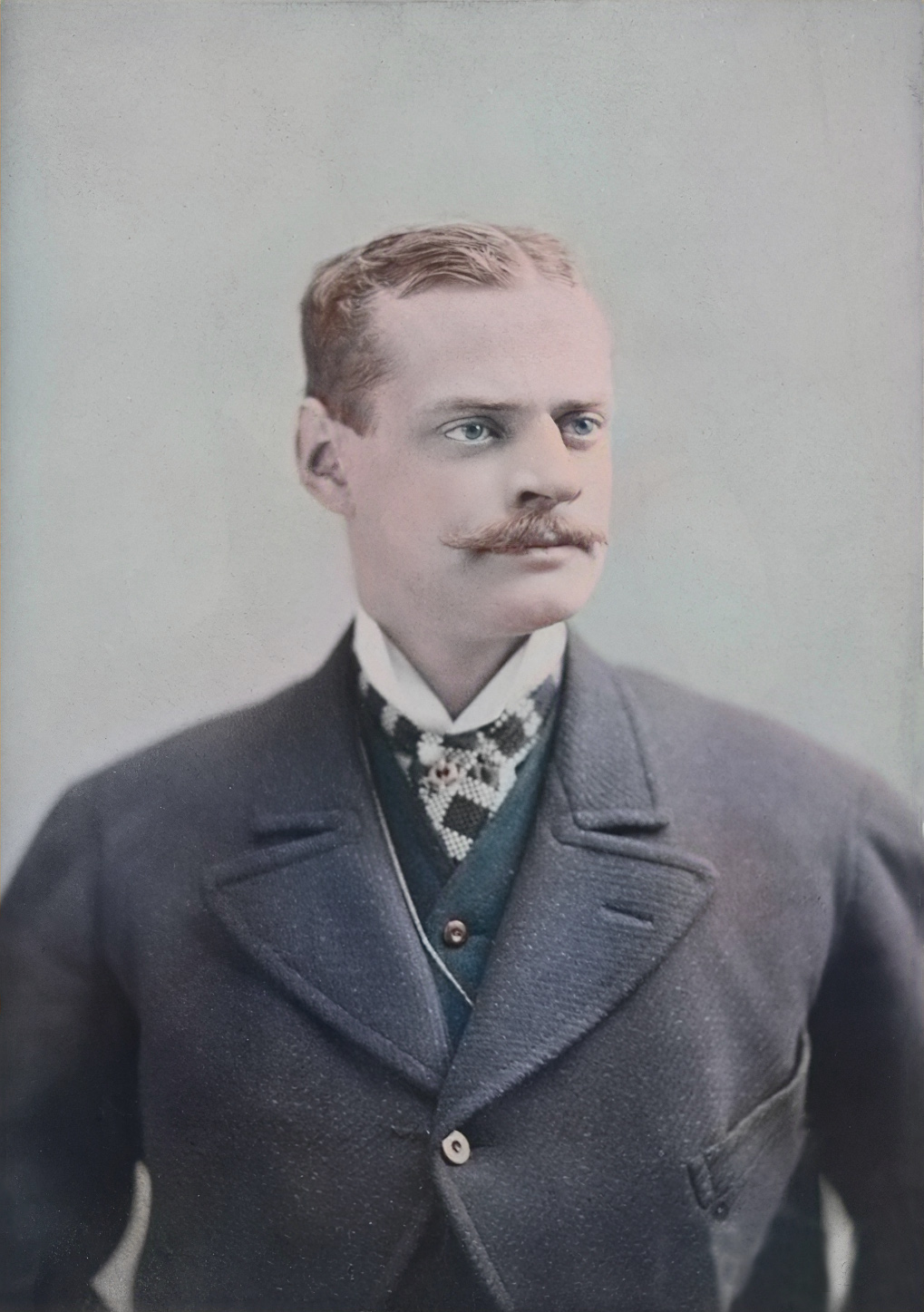
The Wikipedia portrait of Astor at the end of his life is not at all flattering. So here is my repaired, enlarged and colourised picture of him in his prime. Here he might be aged around age 42-ish — about the time when he purchased the Gazette.
Joshi’s new blog post also has new news on the ongoing series of annotated Lovecraft letters…
Later this year we should be publishing Letters to Rheinhart Kleiner and Others (including letters to Arthur Harris, James Larkin Pearson, Winifred V. Jackson, Arthur Leeds, and Paul J. Campbell).

01 Friday May 2020
Posted in Odd scratchings
One possibly silver-lining of the virus. It strikes me that there’s likely to be lots of opportunities for affordable production of full-cast unabridged audiobooks. This is because older actors are said to be set to be shunned by screen productions over the next two years, re: the risks posed to a production by the virus, and possibly the demands of insurers and producers. A major UK TV producer has already stated this will be the case on one of the nation’s leading soap operas.
Yet their voices are often fine, and they can sound far younger. You often hear podcasts where someone sounds 35 but turns out to be 65. Audio technicians can also do wonders with subtle pitch-shifting. If the predictions I’m hearing from the screen industries come true, then there may well be plenty of discarded older talent looking for work. And audio can of course be produced from a home-studio, which many such actors already have for their side-gigs.
Younger voice actors may also become far more available, at least for a while, until tourism and retail/restaurants and personal services are back on their feet. Similarly, audio FX guys may also become more affordable, so the full-cast unabridged production could also add a Phil Dragash-like weave of sound-effects. Music may be trickier to source at a relatively low cost of course, but there’s always the likes of SonicFire.
So, if you did have a big Lovecraftian or science-fiction audio production in mind, now might be the time to start polishing the reading script.
01 Friday May 2020
Posted in Doyle, Historical context
The Catholic Register explores the transition of Conan Doyle from Catholicism to the charlatanry of spiritualism…
“from 1918 onwards, books and bookshops, lectures and lecture tours were to follow, as Conan Doyle became the “Saint Paul of Spiritualism.” From then on, he was to expend more energy on this newfound belief in Spiritualism than on anything else. As a result, by the time of his death in 1930, his reputation lay in tatters.”
Such a pity he didn’t transfer such stuff into some wild and weird fiction, although to some he might seem to have touched on such things by 1910. For instance, when Sherlock Holmes steps down to Cornwall in 1910 (“The Adventure of the Devil’s Foot”), the reader also gets a lecture on possible Cornish Phoenician links that may extend (it is later barely hinted) not only to the Mediterranean but even into lost empires in Africa. This might sound to us like crackpot territory, yet for the Edwardians this was still a plausible though as-yet unproven hypothesis.
But spiritualism is definitely crackpot territory, then as now, and one can’t help but regret not being able to read the adventures and science-fantasies Doyle could have written after the war if he had not gone chasing after the fairies. I’m no Doyle expert beyond multiple readings of Holmes and knowing a bit about the West Midlands biographical connections and some related provincial stories, but after 1918 I see only the spiritualist apologia novel The Land of Mist (1926). As Lovecraft remarked several times in letters of the 1920s (I paraphrase from memory): ‘why don’t these deluded fellows pour their delusions into fiction, as they’d be far more fulfilled and their readers far more entertained.’
Of course, at that point in time even spiritualism and its ilk wasn’t quite so clear cut. The state of science was such that it wasn’t altogether implausible to suppose that ‘the fairies might be proved by science’ at any moment, even if they turned out to be early-morning dew-shapes forming in the air on electrical ‘kirlian’ coronal discharges from flowers, rather than diminutive nymphs with floaty dresses and dreamy smiles. One can equally see how it could have been just-about supposed that mediumship, ‘spiritual healing’, ESP, precognition, time-travel, aether-inhabiting ghosts, stone-circle construction via telekinetic levitation of rocks on ley-lines, and many other previously nebulous or uncertain ‘psychic’ phenomena were about to be somehow ‘proved’ or even ‘enabled’ by the new sciences. That was part of the attraction of such things I suppose, at that liminal moment of circa 1918-1928.
Much the same was true of mainstream archaeology and sound philology, then revealing vast new sweeps of time and major lost civilisations such as the Babylonians. One can see how easy it would have been in 1921 to imagine the steam-shovels digging down just another few feet to discover traces of a Conan-like Hyperborea, or an irrefutable fragment of some lost Atlantean super-civilisation, or just a Phoenician city-port under Roman London.
For further reading on the science angle here, an excellent survey book on the close intertwining of science and the occult is TechGnosis: Myth, Magic, and Mysticism in the Age of Information. I can’t immediately think of a similarly sweeping and high-quality history of the ‘lost archaeology and languages’ angle, on the interplay of real discovery and imaginative speculation, but I’d welcome hearing about it if one exists.
30 Thursday Apr 2020
Posted in Odd scratchings
Excellent news for ebook sellers, “Plans to scrap VAT on e-publications fast-tracked and will come into force tomorrow”, the British Chancellor has just announced. VAT is the UK’s chunky 20% sales tax, and it had been due to be abolished in November for digital newspapers, books, magazines, and academic e-journals. The zero rate doesn’t cover audiobooks. Assuming Amazon and the big publishers don’t just trouser the 20% as extra profit, by keeping prices the same, then this should mean cheaper reading in the UK. Although The Guardian newspaper has already announced it will pocket the extra profit, and won’t reduce prices.