A forthcoming lecture by S.T. Joshi on “The Recognition of H.P. Lovecraft”, on the 8th May 2022. UK evening time, since it’s in partnership with a London museum. Booking now.
Joshi lecture in May
10 Thursday Feb 2022
Posted in Scholarly works

10 Thursday Feb 2022
Posted in Scholarly works
A forthcoming lecture by S.T. Joshi on “The Recognition of H.P. Lovecraft”, on the 8th May 2022. UK evening time, since it’s in partnership with a London museum. Booking now.
09 Wednesday Feb 2022
Posted in New books, Scholarly works
The latest edition of The Fossil (January 2022) has no Lovecraft-related articles, this time around. But there is a short activity-report which brings a snippet of good news on the forthcoming Florida book…
Adventurous Liberation: H.P. Lovecraft in Florida has finally gone to the editor for final review. The book should be out in late spring.
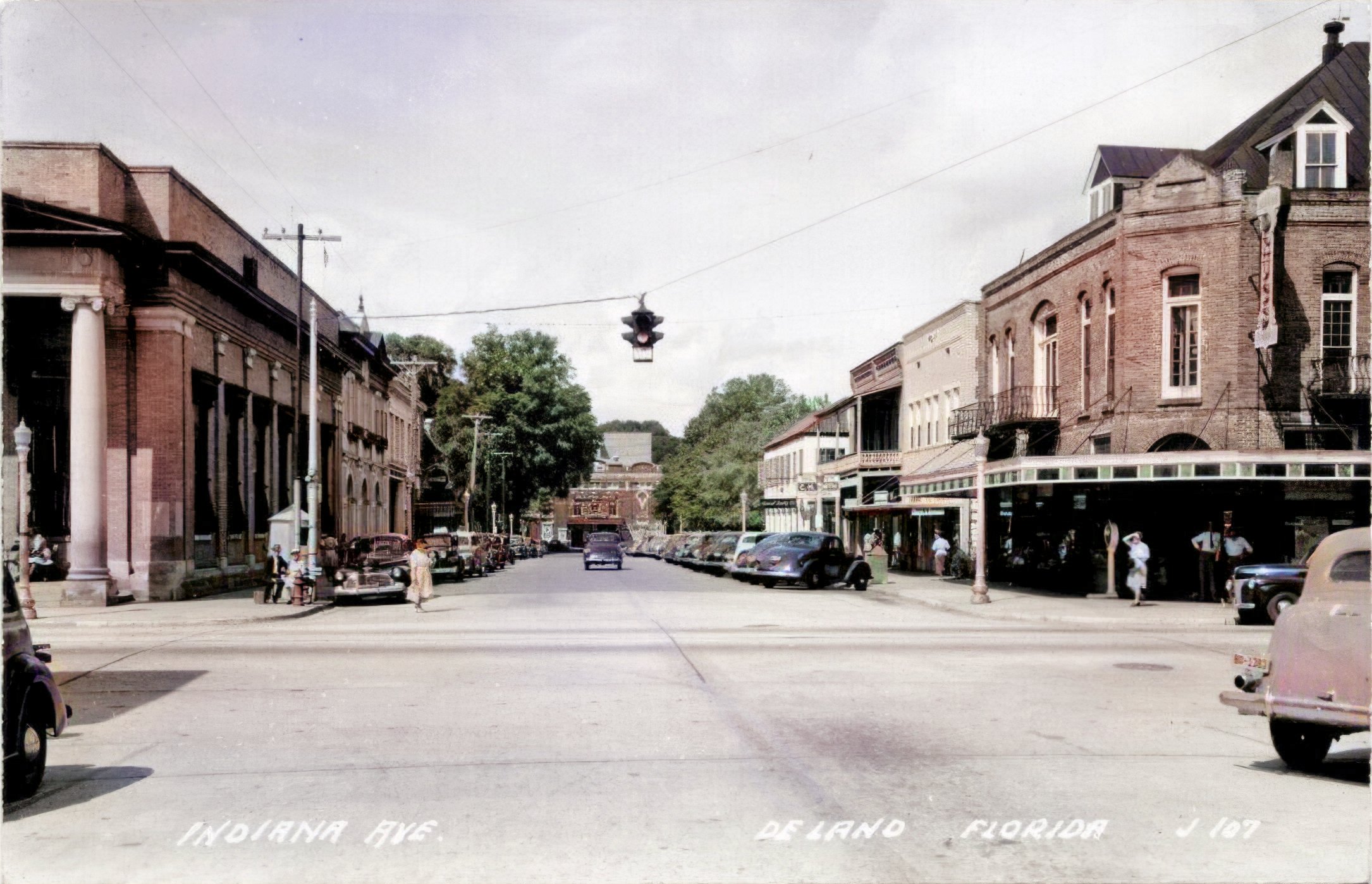
Behind the camera, the likely cross-country stop at which Lovecraft would have arrived, in the centre of De Land.
08 Tuesday Feb 2022
Posted in Scholarly works
Here’s one more I missed back in 2016. The Encyclopedia of Weird Westerns had an expanded second edition in 2016. It’s from McFarland, so one has to double-check to see if it’s not one of their duff ones (the Dune encyclopedia, etc). But it’s reassuring to see that True West magazine gave the first edition a good review.
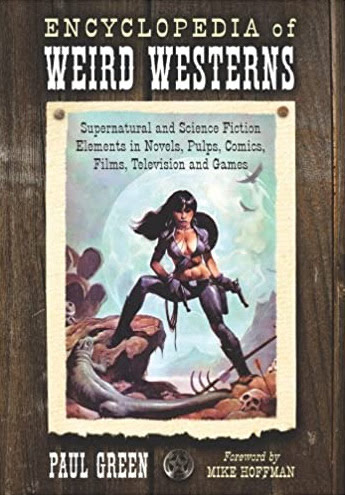
The second edition appears to have had no online reviews, other than a single Amazon U.S. one and a short one on a blog. Which carps on and on about ‘masked cowboys’ not being included, so it’s not much use. The lack of proper reviews seems a pity, and the book might be a candidate for someone casting around for a book to review.
By 2025 there’ll likely be a need for a third edition, given all the Weird West material that’ll have appeared in the decade since 2015. Even in the last five five years in comics, the task of updating would appear to be substantial, so a new edition is probably something for a dedicated ‘tracking blog’ to build up to over the next few years.
07 Monday Feb 2022
Posted in New books, Scholarly works
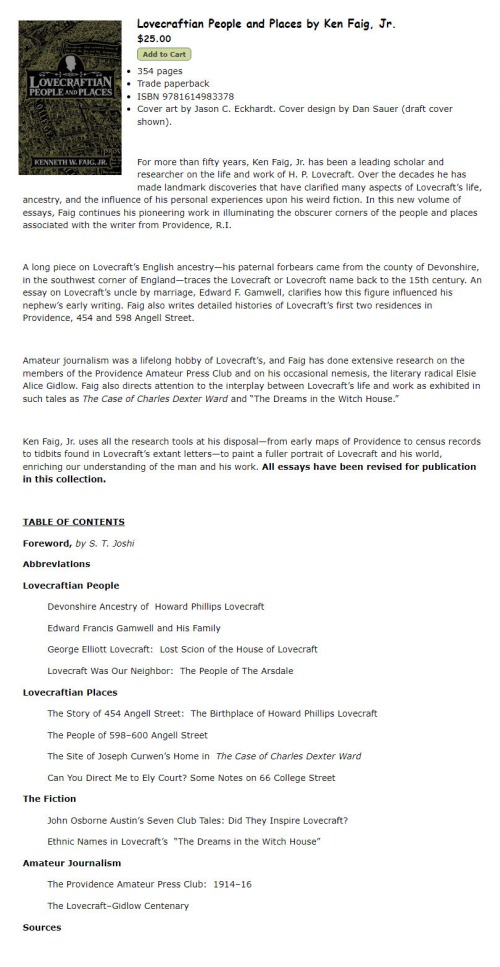
The new book Lovecraftian People and Places by Ken Faig, Jr. now has a listing page at Hippocampus Press. $25, and all the essays have been revised and updated for the new volume. Hippocampus’s site has been and still is ‘up and down’ in terms of access from the UK. So here’s a screenshot for those who can’t access it…
06 Sunday Feb 2022
Posted in Lovecraftian arts, Odd scratchings, Podcasts etc.
The Weird Studies podcast’s latest Episode 115 drifts into the observation lounge of Brian Eno’s famous and seminal album Ambient 1: Music for Airports.
This album followed the instrumentals on Another Green World and Before and After Science, and the instrumentals on the Bowie collaboration albums. It then heralded a small but perfectly formed set of such music spread across three solo albums and two made with Cluster.
Much of this then-new type of music could certainly evoke a sense of big weird empty landscapes.
The introductory listening-list of albums would be, in date order:
Another Green World (just the instrumentals)
Before and After Science (just the instrumentals)
Low (with David Bowie, just the instrumentals)
Heroes (with David Bowie, just the instrumentals)
Then the albums:
Ambient 1: Music for Airports
Music for Films
Cluster & Eno (with Cluster)
After the Heat (with Cluster)
Ambient 2: The Plateaux of Mirror
An argument might also be made that Eno’s early lyrics are also profoundly weird, if in a dreamy ‘British surrealist’ way rather than horror-shocker kind of way. But that’s for another post.
05 Saturday Feb 2022
Posted in Lovecraftian arts, Odd scratchings
The Deutsche Lovecraft Gesellschaft’s report for January 2022 notes two items of interest.
Their free open-source Lovecraft RPG now has a website at https://fhtagn-rpg.de/. The site is in dual English/German, but the rulebook translation to English is not yet complete. As part of this overall project they have a wiki and are currently calling for German-language wiki contributions about the writers Lovecraft classed as his ‘idols’ during his lifetime.
They also notice what sounds like a substantial German screen/theatre piece which will open a major festival in early May 2022…
The summer season of the Kreuzgangspiele begins on 5th May 2022 with a special premiere for Alexander Ourth and Ulrich Westermann’s theatre project based on the work of American author H. P. Lovecraft, considered the most important author of fantastic horror literature of the 20th century and one who influenced numerous successors. There are performances in the Regina Lichtspiele on 5th, 6th and 7th May 2022, each at 8 p.m.
04 Friday Feb 2022
Posted in Historical context, Picture postals
This week in ‘Picture Postals’ I take a look at somewhere warm and sunny. As America and the UK shiver (at the huge rise in heating bills, as much as the cold) it seems that this may be welcome.
In June 1932 Lovecraft reached the city of New Orleans on his travels, and there enjoyed a lengthy visit with the help of local resident and fellow Weird Tales writer E. Hoffman Price. Lovecraft was much taken with the old French Quarter, then gentrifying in parts.
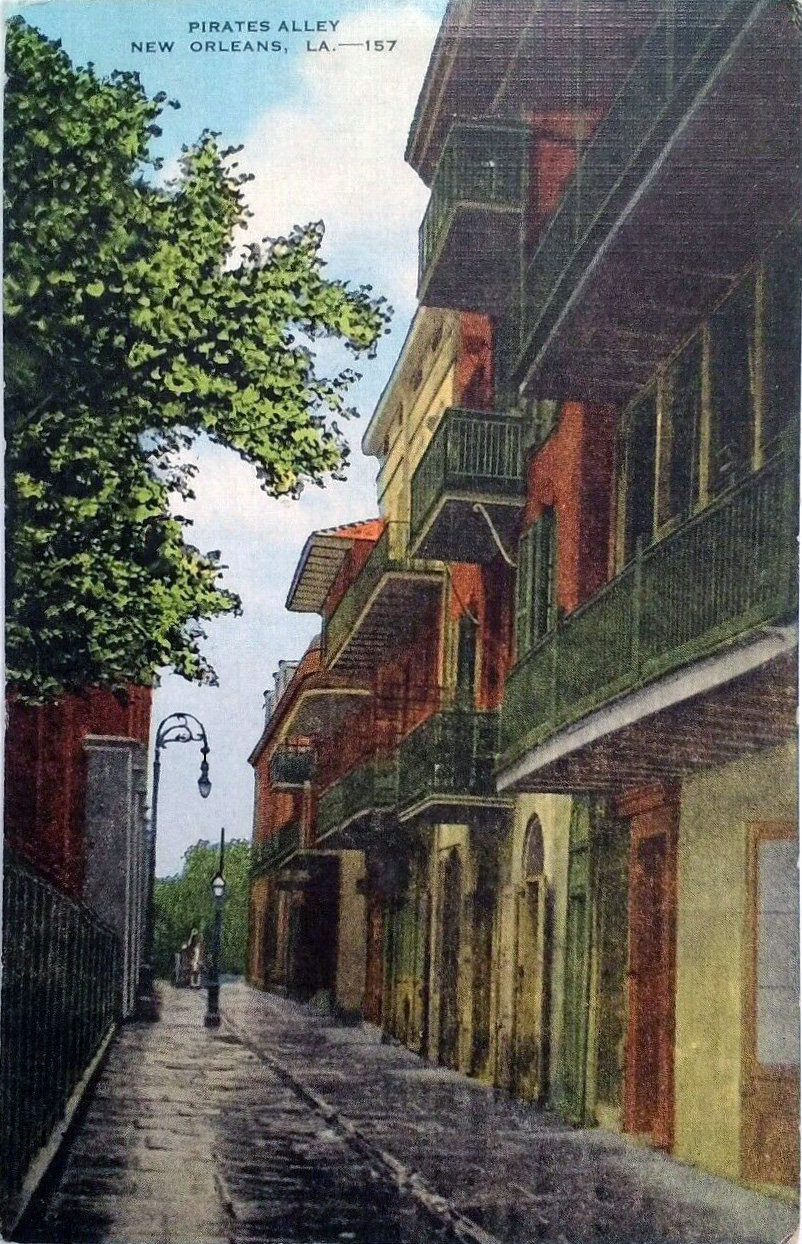
Price later recalled that he “skipped the concubines entirely”, and thus Lovecraft would not have seen all in the city. Gentrifying the place may have been, and Lovecraft later recalled it as such. But several candid b&w street pictures from the mid 1920s show that litter (trash) was a problem even in the business parts, and that side-streets could still be seedy-looking and wild with street children.
The Lovecraft-Price letters have recently been published but I don’t yet have that volume. So I may be missing some further data here on locations. But for now here is a StreetView of the relevant street corner, with Price’s No. 305 a few steps away down the same side of the street.
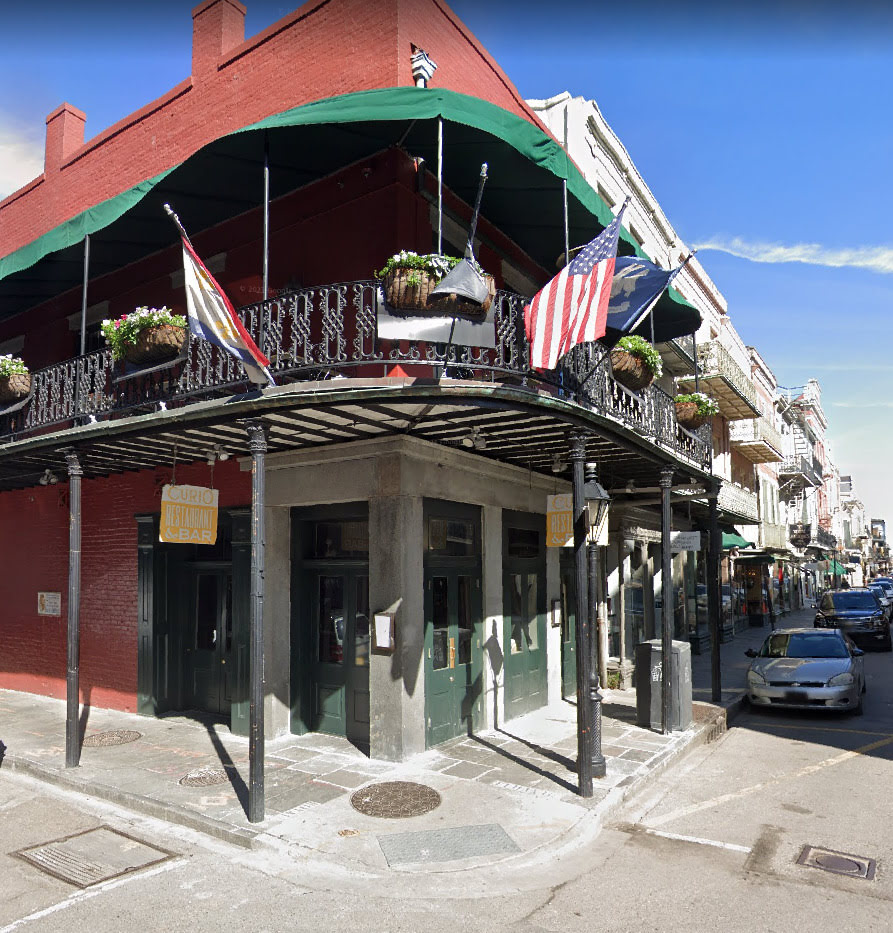
Appropriately enough, No. 305 Royal Street is now a gallery at the heart of the Quarter. Run by, of all people, Nathan Myhrvold. And curiously dedicated to ‘food photography’. Which seems somehow appropriate for a place where H.P. Lovecraft ate nuclear chilli-con-carne and Price brewed his own beer.
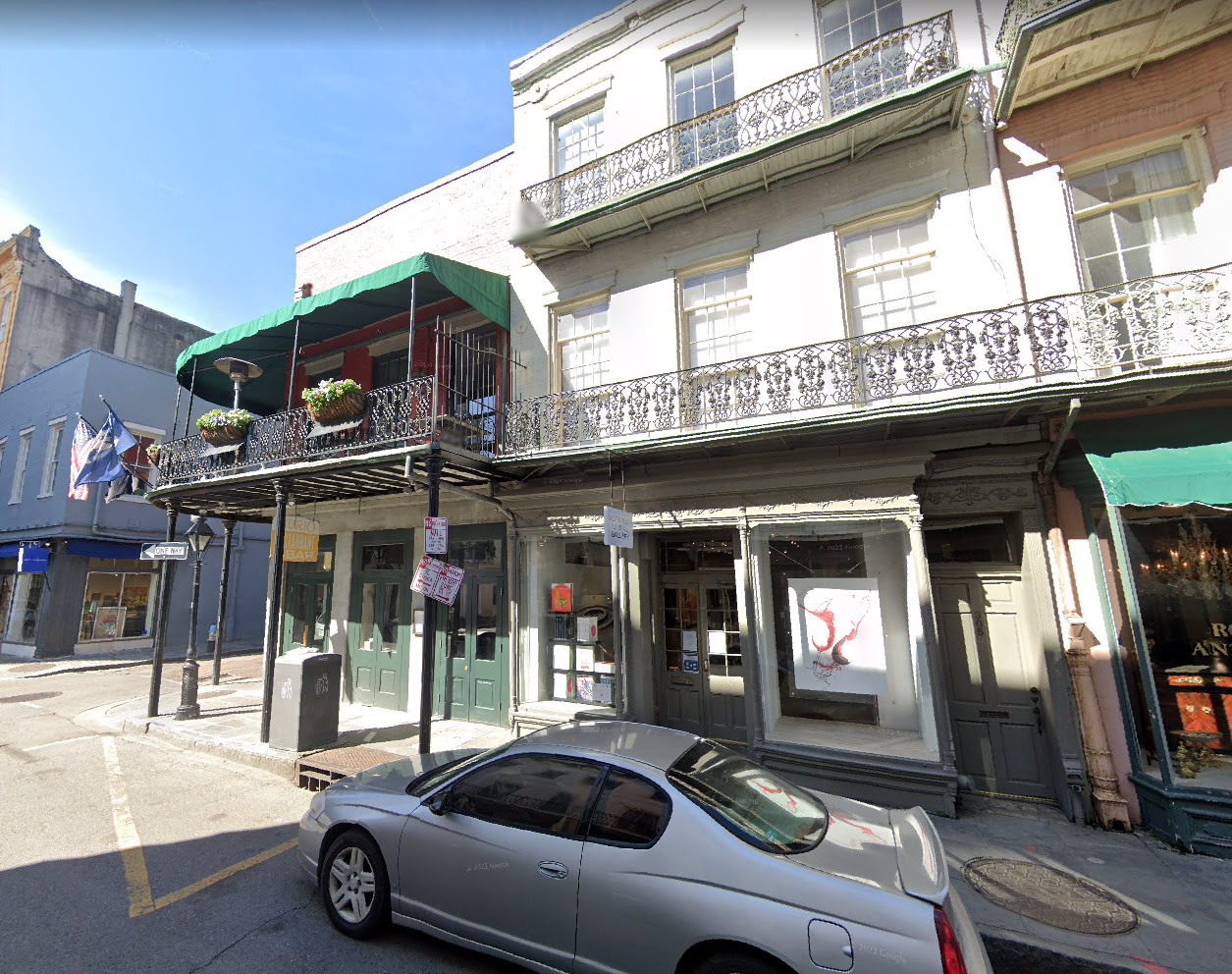
The ground floor looks like it has been ‘shelled’ inside for retail, but the historic frontage still gives a good indication of the place that Lovecraft visited and in which he had epic conversations and epic curries with his friend Price. This would also have been the rendezvous point for a meeting with R.E Howard… but REH couldn’t afford the trip.
We can see here that there would have been a street balcony and we can probably assume abundant balcony plants too, more abundant than seems the case today. This postcard is indicative of the plant life and views from such balconies…
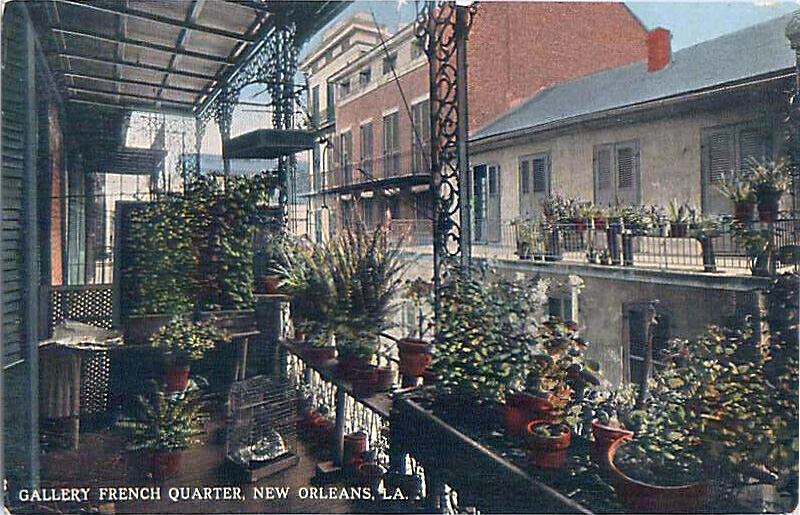
The bird-cages indicate that the twittering of birds would have been part of the ambience, enhanced due to the relative lack of noisy cars and taxis at that time. What we don’t get to see is the back courtyard, if there was one, but this fine picture of the back of No. 633 Royal Street may be somewhat indicative.
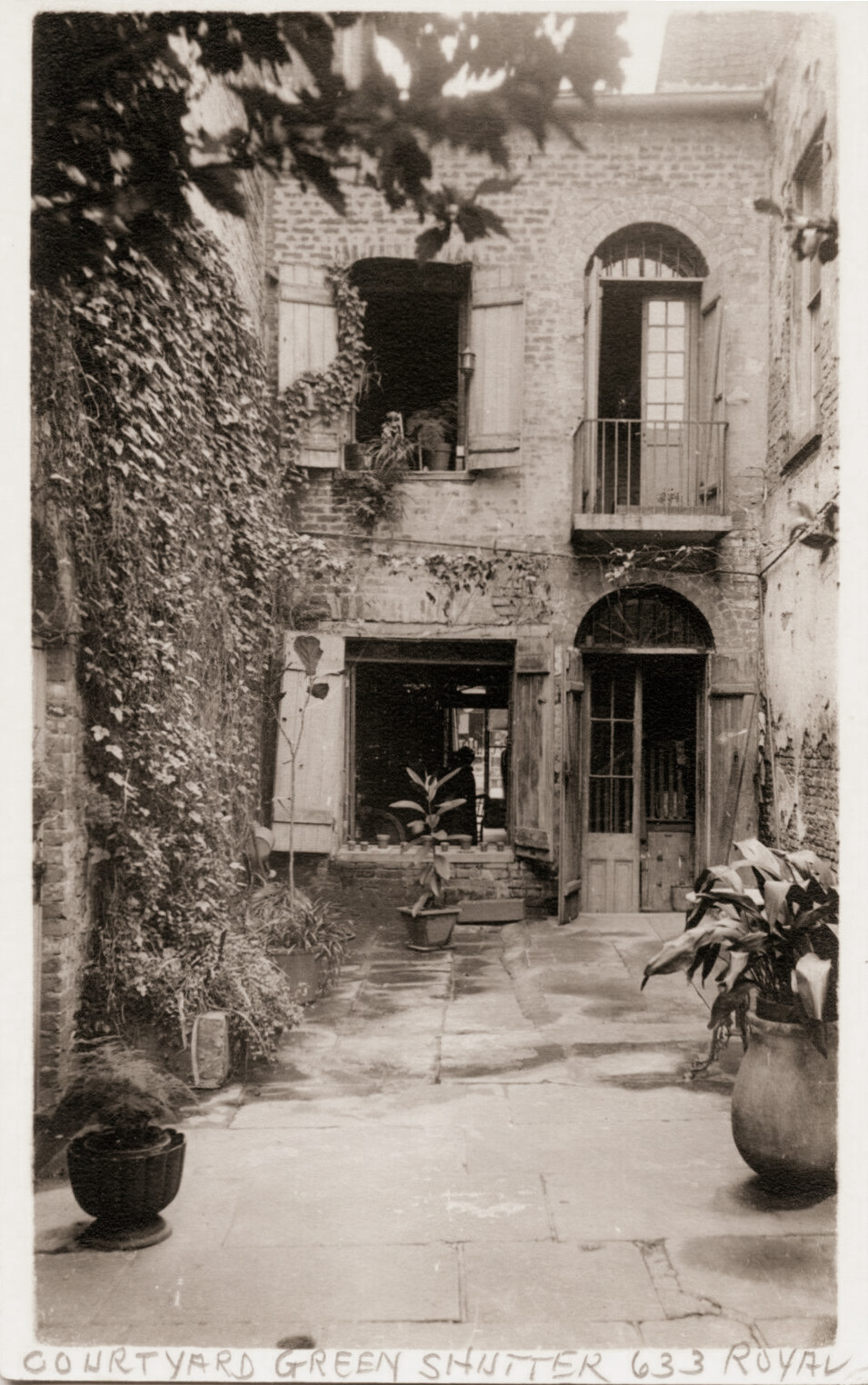
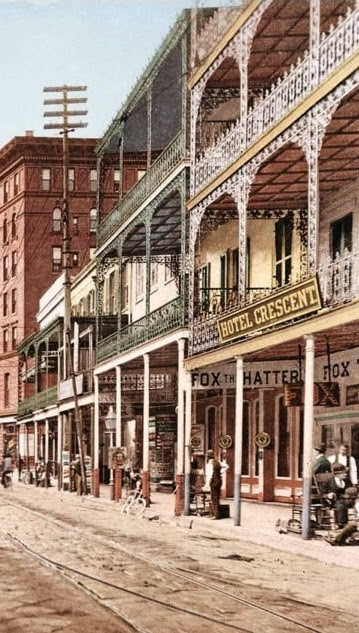
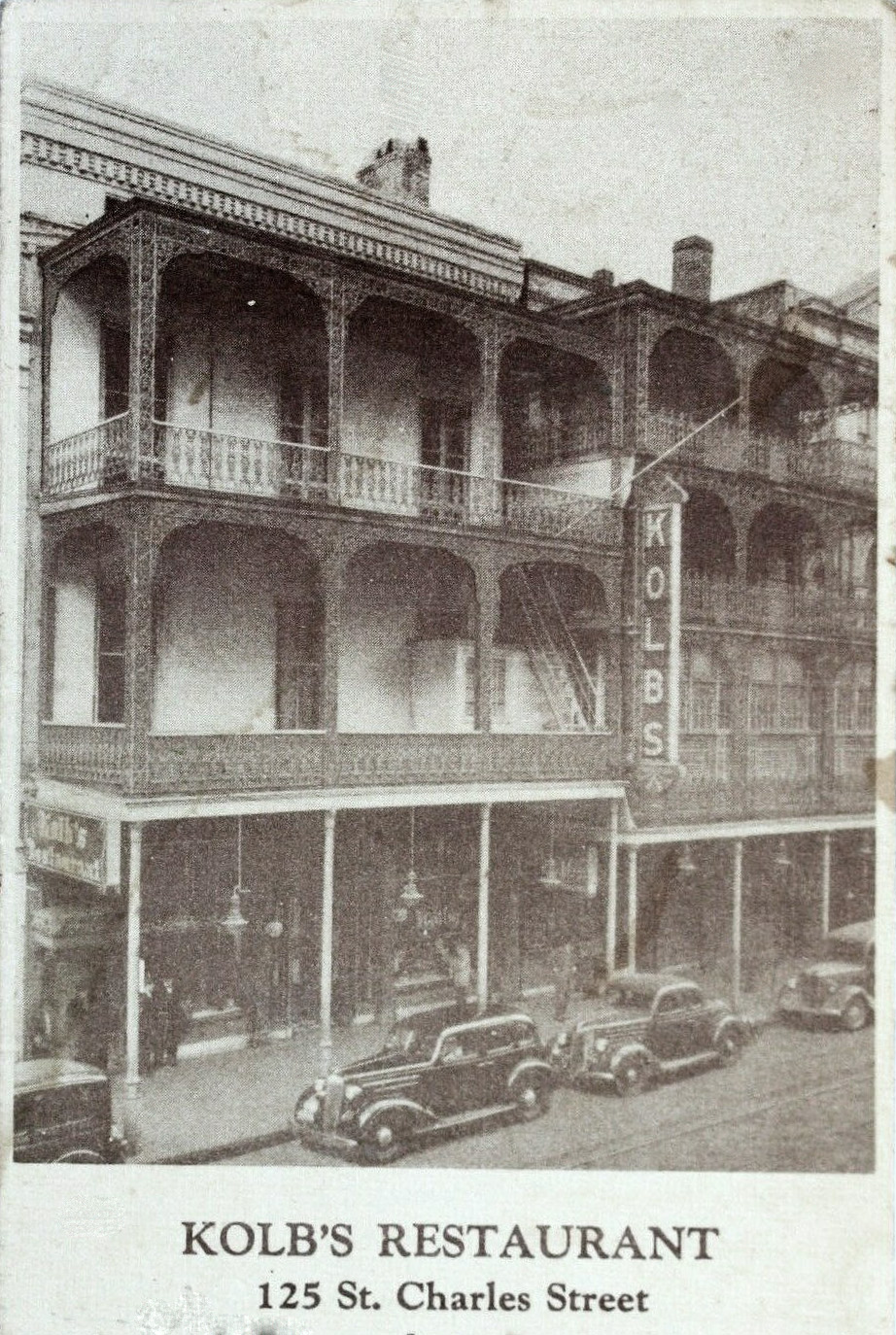
Lovecraft was not staying overnight at Price’s No. 305. He was in a “third-class” hotel nearby. This was on St. Charles Street. The closest I can get visually is this small hotel on St. Charles St., and a picture of an eatery at 125 Charles St. Both of which may be indicative.
03 Thursday Feb 2022
Posted in New books, Podcasts etc.
I’m pleased to see that the Library of America is giving Ray Bradbury the same fine production values they gave Lovecraft a while back. Bradbury gets two volumes, the first being out now as a $40 900-page table-trembler titled Ray Bradbury: Novels & Story Cycles (2021).
It includes “Bradbury’s settled intention” for the final-cut of the famous Martian Chronicles. Google Books can provide no contents list, but according to one interview with the venerable editor this means it includes the show-stopping satirical “Usher II” horror-story, probably best skipped the first time around.
If you want some ‘starter Bradbury’ that’s a little lighter on the wrists, a fine theatrical audiobook version of The Martian Chronicles is the five and a half hour full-cast audio by Colonial Radio Theatre (they use the British spelling for Theatre). Created for direct-to-CD in 2011, rather than lopped-and-chopped to fit a broadcast time-slot. They spent a lot of time making sure the sequence fitted Bradbury’s final intentions. Again, you might do best to skip “Usher II” on the first hearing.
03 Thursday Feb 2022
Posted in Scholarly works
Call for Papers: Space and Time in Tolkien, a theme which may interest some readers of Tentaclii. Regrettably the German site is covered up by extremely vicious ‘EU cookies crap’ overlays, so here’s a screenshot with javascript turned off…
03 Thursday Feb 2022
Posted in Historical context, New books
Lovecraft was not the only one ghostwriting popular fiction for Houdini in the mid 1920s. A new book on the topic is The Zanetti Mystery: Plus candidates for ghostwriting the story (December 2021). The book is a $25 paperback, and is shipping now.
The author republishes the ‘Houdini’ detective thriller novel The Zanetti Mystery (1925), with the original magazine serial illustrations, apparently for the first time since it appeared. He also asks, and with new research… ‘who was the likely ghostwriter?’ Candidates include Eddy Jr. and Lovecraft himself. But they are not the only candidates, and it seems to me a little unlikely that an ‘Eddy + Lovecraft lightly revising’ detective novel could have escaped notice until now. True, Lovecraft was experimenting with speed-writing a detective-like tale at about this time (“Red Hook”), but there was a romance element to The Zanetti Mystery which would not have been congenial.
That said, some Tentaclii readers may still be interested in this new book’s evaluation of the most-likely authorship.
02 Wednesday Feb 2022
Posted in Historical context, New discoveries
New on Archive.org is a run of the journal Atlantica. August 1931 has a profile and photo of Angelo Patri, who I’d be willing to bet was a friend of Everett McNeil of the Lovecraft Circle. It’s good to be able to put a face to the name of the man I encountered while writing my book on McNeil.

Patri certainly championed McNeil in reviews and articles, and (though we’ll probably never know now) I suspect they were friends in New York by around the time of the appearance of McNeil’s Tonty novel.
02 Wednesday Feb 2022
Posted in Lovecraftian arts
Dream by Wombo, which is the art-generating AI I’ve been tinkering with to make some of the recent pictures on this blog. The trick is not to accept the often rather-icky raw output, and to use it as the starting-point for a makeover.
After a while you get a feel for what can be ‘built on’. As you can see here from a comparison of the raw and final of the recent ‘Young Conan’ picture.
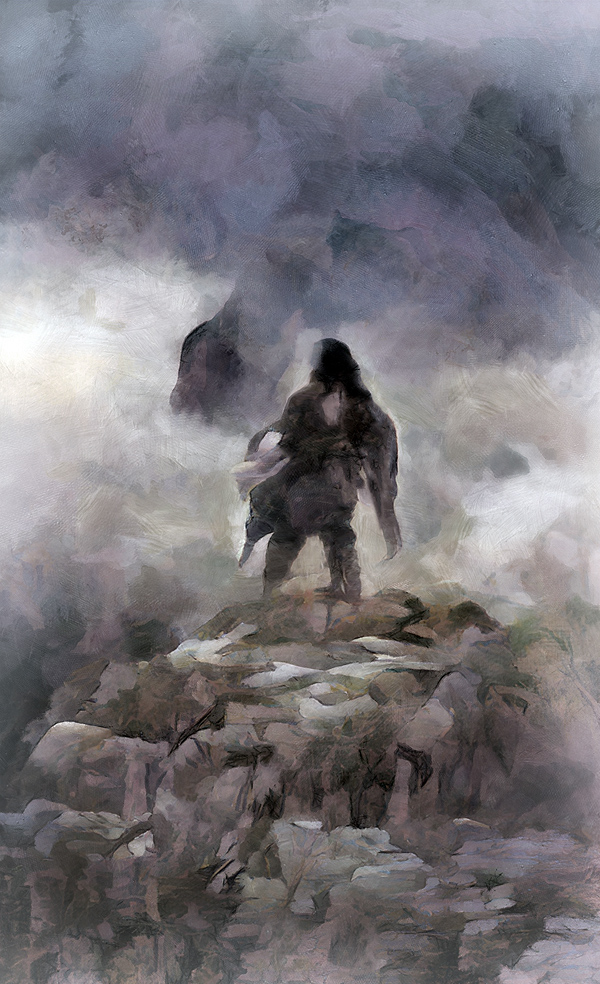
‘Final’, to which one might still add some crawling ‘undead’ creeping up the rocks behind Conan, and more detailing on the clothing and hair.
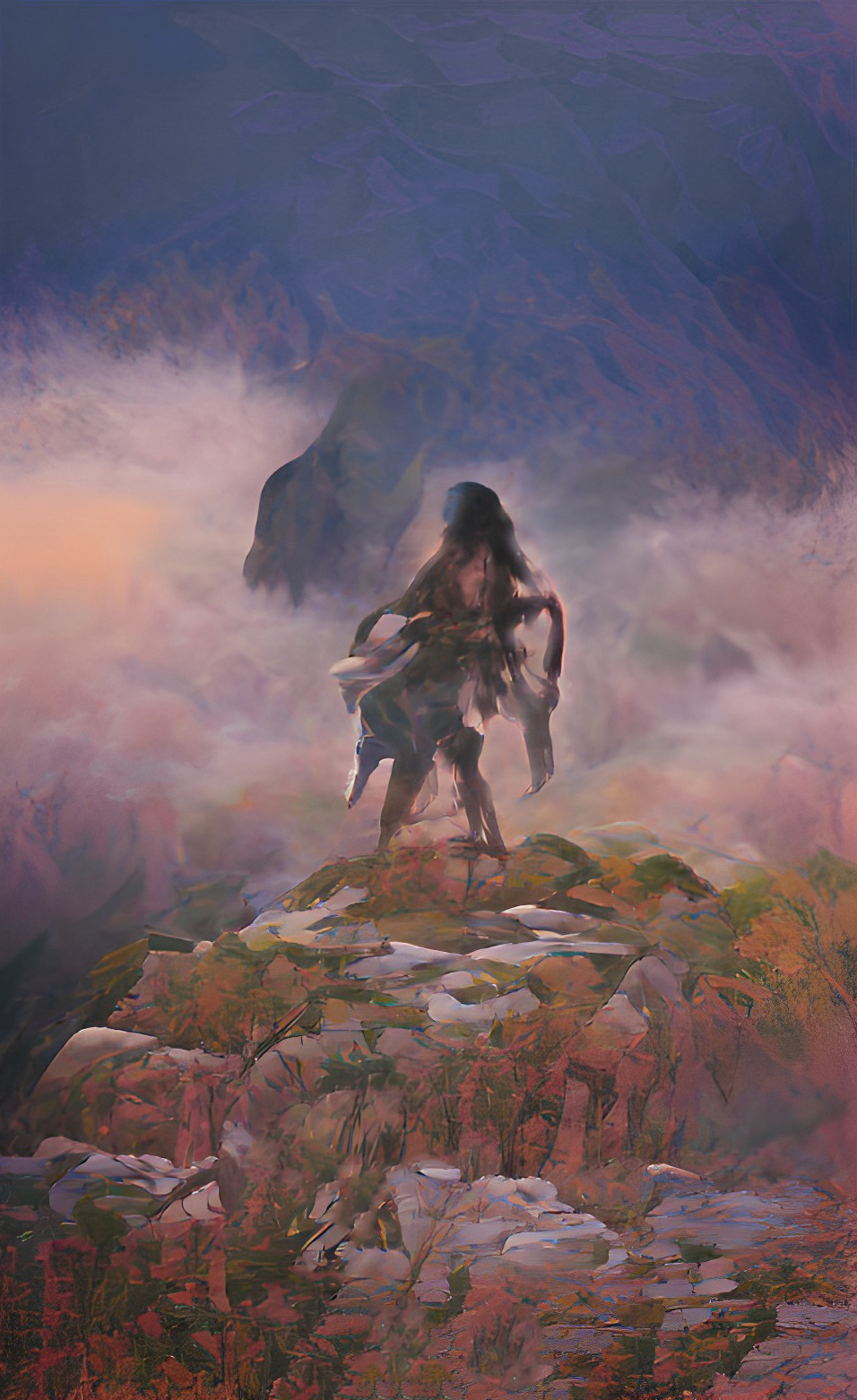
‘Raw’, promising but only a starting point.