• About
  • Directory
  • Free stuff
  • Lovecraft for beginners
  • My Books
  • Open Lovecraft
  • Reviews
  • Travel Posters
  • SALTES

Tentaclii

~ News & scholarship on H.P. Lovecraft

Tentaclii

Category Archives: Scholarly works

Research on Weird Tales at Brown

02 Sunday Jun 2019

Posted by asdjfdlkf in Scholarly works

≈ Leave a comment

Congratulations of Dylan Henderson of Arkansas, who has been awarded the R.D. Mullen Fellowship. According to the local press, he will…

“conduct archival research this July [2019] at the John Hay Library on the Brown University campus. The $1,000 fellowship is sponsored by the journal Science Fiction Studies. Henderson’s current research project explores how, in the 1920s, the distinct genres now known as fantasy, horror, and science fiction gradually coalesced and then separated from one another. He seeks to investigate the role of the early pulp magazines in this process, specifically Weird Tales, the first pulp magazine to specialize in speculative fiction. During its early years, when the genres it published were still comparatively fluid, the Weird Tales magazine contained works that defied categorization, including short stories by H.P. Lovecraft, Clark Ashton Smith, and Robert E. Howard. […] Henderson hopes to reveal how certain plot structures became associated, in the minds of both readers and writers, with more clearly distinct genres of science fiction, horror, and fantasy.”

Guest post: “John Edwards of the Ladd Observatory at Brown – Cockney or Cornishman?”

31 Friday May 2019

Posted by asdjfdlkf in Astronomy, Guest posts, Historical context, Scholarly works

≈ 1 Comment

Horace Smith had kindly posted the following as a comment on this blog. But I think I’d rather present it as a Guest post, which does his work justice. So, here is his investigation…


John Edwards of the Ladd Observatory at Brown — Cockney or Cornishman?

By Horace Smith.

I’ve been researching H.P. Lovecraft’s early astronomical interests. Tentaclii had at one point briefly puzzled over Lovecraft’s calling the Ladd Observatory assistant, John Edwards, a Cockney in one letter and a Cornishman in another. If what I have found is right, he was neither by birth.

Picture: the Ladd Observatory as it appeared in the mid to late 1930s. Newly shadow-lifted and colourised.

Of the three staff members of the Ladd Observatory, whom Lovecraft “pestered half-to-death” in his youth, the observatory assistant John Edwards provided the greatest practical aid to Lovecraft’s astronomical endeavours. Whether it was offering a diagonal eyepiece for his telescope, lantern slides for a lecture, or a lens for a camera, Edwards was there to help. But, aside from being an assistant at the Ladd Observatory, who was John Edwards? In different letters, Lovecraft alternatively referred to him as a cockney, a term traditionally applied to someone from East London, and a Cornishman from Cornwall. Could I pin down which, if either, was correct?

Tracing genealogical connections can be tricky, and not everything you read online can be trusted. I knew when I began only that Edwards had worked at the Ladd Observatory in the late 1890s and early 1900s, but I didn’t know his middle name, nor when he was born, nor where, except that England was a good bet for his birthplace. I turned to Ancestry.com and FamilySearch.org to progress further.

The federal census for 1910 gave me a middle initial, W, and a spouse, Mary A. It also provided a birth date of around 1858 and an immigration date of 1887. In 1915, Edwards accepted his former colleague Frederick Slocum’s offer of a position at Wesleyan University’s new Van Vleck Observatory in Middletown, Connecticut. When Edwards took up that position, the Wesleyan University Bulletin printed his full name: John William Edwards. Alas, his stay at Wesleyan was not long, for he died of heart disease three years later, on 24th April 1918.

Picture: Wesleyan University Bulletin for May 1918.

The Hartford Courant newspaper for 28th April 1918, informed me that, after Edwards’s death, his body was taken to Attleboro, Massachusetts, for burial. Why Attleboro?

‘Find a Grave’ led me to a photograph of the tombstone of John and Mary in Attleboro. It carried their birth and death years (1858-1918 for John and 1856-1917 for Mary) and those of two of their children, Joseph (1882-1901) and May (1891-1891). The 1910 census had already told me that, by 1910, two of their three children had died, and the gravestone and census were thus consistent. The son still living in 1910 was Alban Edwards, born in Lonsdale, Rhode Island, in 1888. His First World War draft card showed that it was he who resided in Attleboro. Massachusetts death records confirmed that Mary Ann Edwards had died in North Attleboro in 1917, the year before her husband’s passing. Now the burial of John and his wife in Attleboro made sense. The gravestone also gave me Robinson as Mary’s maiden name.

With that information, could I trace the family back to England? I checked immigration records, finding one likely match: the arrival from Liverpool of a John Edwards with Mary A. Edwards and Joseph Edwards, all of the right ages, at the port of Boston aboard the Catalonia on the 1st of October 1887. They were lower steerage passengers, and John was labelled a labourer. I next came up with a marriage record for a John Edwards and a Mary Ann Robinson on 12th April 1879, at Christ Church in Preston, Lancashire, with the birth years of 1858 for John and 1857 for Mary. That seemed quite close and, if correct, gave me Peter Edwards as John’s father and an association with Lancashire. Was there additional evidence for a Lancashire connection? A John William Edwards was christened on 4th April 1858, at Saint John Church in Preston, Lancashire. John William Edwards was also listed as having been born in Preston sometime in the first quarter of 1858. If not a certainty, there is at least some likelihood that he was the future assistant at the Ladd Observatory.

Everything was hanging together, so far. But John Edwards is a common name. Could I find any evidence that contradicted the above? I did find one document that didn’t fit. The 1900 U.S. Census showed a John Edwards who was an astronomer’s assistant, who lived on Doyle Avenue, near the Ladd Observatory, who was the right age, and who arrived in the United States 12 years earlier in 1888 — not far off the late 1887 date found above. The census’s March, 1858, birth date is consistent with an early April christening. However, the 1900 census stated that John was single! Where were Mary and Alban? Was that just a mistake? Or did it indicate some sort of otherwise hidden family problem?

I checked the 1900 census for a Mary A. Edwards. Mary Edwards is a common name, but I couldn’t find a Mary Edwards that seemed to fit the bill in terms of age, birthplace, spouse, etc. Nor was there any mention of an Alban Edwards. To try to straighten things out, I turned to the Providence city directories. The 1901 and 1903 directories showed John living at two different Doyle Avenue addresses. They also showed that a Mrs. Mary A Edwards worked as a nurse and lived at 67 Manton Avenue in Providence, but later directories show that she was not the Mary Edwards for whom I was looking. Many women who were not heads of a household or employees do not appear to be listed within the directories, so the absence of Mary is not necessarily telling. For example, John W. Edward’s address in the 1910 city directory is consistent with his 1910 census address, However, the 1910 directory makes no mention of Mary, while the 1910 census indicates she was living with John at that address.

Fortunately, Rhode Island carried out state censuses in between the federal ones. I discovered a 1905 Rhode Island state census for a John W. Edwards, living on Doyle Avenue, of the right age — his birth date is given as 4th March 1858 — and working at the Ladd Observatory, with a mother and father born in England. Those last items are incorrectly indexed on the transcribed version of the census, but are clear in the original. However, in that census, Edwards is listed as married not single, with four in the household. There is also a census entry for Mary A. Edwards at the same address — her birth date is indexed as 18th April, 1856, but the original pencilled entry is hard to read. Mary was then a mother of three, only one of whom was still living, and with a household again containing four people.

My conclusion is that the weight of the evidence indicates that it is the 1900 census entry which is in error. Perhaps the circumstance of their son Joseph having died the following year somehow temporarily disrupted living arrangements? Or perhaps “the census-taker’s knock” awakened John after a night of observing and he just wanted to get back to bed as quickly as possible! If all this is indeed correct, we conclude that John Edwards was English, but neither a cockney nor a Cornishman.


New book: Strange Country: Sir Gawain in the moorlands of North Staffordshire

31 Friday May 2019

Posted by asdjfdlkf in New books, Scholarly works

≈ Leave a comment

The revised and expanded ebook of my Strange Country: Sir Gawain in the moorlands of North Staffordshire, an investigation is now available on Amazon. Sir Gawain and the Green Knight, you’ll recall, is one of the most famous supernatural tales in English literature.

This book offers a concise overview of the existing Gawain research relating to North Staffordshire, and then adds a wealth of new detail and facts drawn largely from previously overlooked sources. The case is clearly made that one of the most famous works of English literature belongs to North Staffordshire. Obvious new candidates for both the Gawain-poet’s patron and the Gawain castle are suggested, and these are found to fit naturally and almost exactly when compared with the expected dates, castle features, dialect location, social status and life-story. A wealth of surrounding detail is also explored, such as: the history and role of the King’s Champion; English contacts with full-blooded paganism during the Prussian crusades; the two lavish courts at Tutbury; and the history of the Manifold Valley. This ebook is well illustrated and copiously referenced with linked round-trip footnotes.

This should now be considered the definitive edition of my book, which until now it has been available in paper from Lulu. It’s had a number of additions and yet another round of close proof-reading.

The book follows my equally successful sleuthing on the trail of the real identity of the Time Traveller from H.G. Wells’s The Time Machine, arising from a study of Wells’s formative time spent in Stoke-on-Trent and North Staffordshire. I hope to also have an ebook edition of my ‘young H.G. Wells’ book available sometime later in 2019. Having cracked, to my satisfaction, both the Time Traveller and the Gawain-castle, the next book will be a far larger one that explores the young Tolkien and Earendel in intellectual and historical context. This will also have something to say about the local connections, but mostly Birmingham, since for Tolkien the Staffordshire topography came a little later and was more incidental to his intellectual development.

New book: The Secret Ceremonies: Critical Essays on Arthur Machen

26 Sunday May 2019

Posted by asdjfdlkf in New books, Scholarly works

≈ Leave a comment

Newly on the Hippocampus Press catalogue, a chunky book of new Machen scholarship titled The Secret Ceremonies: Critical Essays on Arthur Machen. Not yet on Amazon.

Essays which sound like they might be of vague interested to me, re: the possible Tolkien resonances…

* “Of Sacred Groves and Ancient Mysteries: Parallel Themes in the Writings of Arthur Machen and John Buchan”.

* “Sanctity Plus Sorcery: The Curious Christianity of Arthur Machen”.

New book: The Decorative Imagination of Arthur Machen

26 Sunday May 2019

Posted by asdjfdlkf in New books, Scholarly works

≈ Leave a comment

A new book on Lovecraft fave Arthur Machen, The Decorative Imagination of Arthur Machen. This draws on 20 years of the Machen journal Faunus, to assemble a survey of Machen’s…

range of interests, including the legends of the Great War [First World War], the Celtic Church, the “real” Little People, the occult, the byways of London …

The book also…

“makes newly available reprints of rare pieces by Machen himself … as a journalist and essayist”.

The sacking of Farnsworth Wright, editor of Weird Tales

25 Saturday May 2019

Posted by asdjfdlkf in Historical context, Scholarly works

≈ 1 Comment

Was Farnsworth Wright actually fired from Weird Tales? Don Herron is on the case and digs up what seems to be a clincher of a quote. In which case, he muses…

A few tweaks to the timeline and Farny [Farnsworth Wright] could have had HPL [Lovecraft] spearheading a legion of young apprentices in the [Weird Tales] pulp — which he was doing already by the mid-30s. Robert Bloch. Kuttner. Fritz Leiber was about to jump in, too. I wonder what that crew might have done if Lovecraft had lived, given what they did do? Perhaps [in that case] Wright wouldn’t have been unceremoniously kicked to the kerb.

A couple of days later Don posted More on the Firing of Farnsworth Wright, which picks up the notoriously inaccurate Wikipedia on what is apparently yet another inaccuracy, namely that… “Wright’s failing health forced him to resign as editor during 1940”.

I don’t know enough about this end of the Weird Tales years to be able to sift all the ramifying data points, but on the face of it there does seem to have been a sacking rather than a resignation. But I think that what we really need here is a good full archive-researched book-length biography of Wright.

New book: Forgotten Works & Worlds of Herbert Crowley

24 Friday May 2019

Posted by asdjfdlkf in New books, Scholarly works

≈ Leave a comment

New from Beehive, The Temple of Silence: Forgotten Works & Worlds of Herbert Crowley. He’s not to be confused with occult loon Aleister Crowley.

It’s an expensive hardcover, and the Society of Illustrators calls it a… “sumptuous, towering monument of an art book”. The buyer gets a 20,000 word biographical monograph within the 108 pages, which I imagine means that the art on the remaining pages is the ‘best of’ rather than a full illustrated catalogue of his works.

‘Krazy Kat meets Edward Lear’ might be one way of summing up the works.

So far as I’m aware, Lovecraft did not see Crowley’s newspaper strips. Even in the reading room of the Providence Public Library he was probably not able to get the New York Herald, where the strips appeared. Though we know he read the New York Post shortly after he returned to Providence, so as to ‘keep up’ with New York. Also, Lovecraft had arrived in New York just as Crowley was leaving that city.

But Lovecraft was aware of Krazy Kat and may have seen it occasionally as it was widely syndicated. In his essay on “Cats and Dogs” he talks of the blind idiot-love owners have for grotesque dogs, comparing it to…

the childish penchant for the grotesque and tawdrily ‘cute’, which we see like-wise embodied in popular cartoons, freak dolls, and all the malformed decorative trumpery of the “Billiken” or “Krazy Kat” order, found in the “dens” and “cosy corners” of the would-be sophisticated cultural yokelry.

“He acquired a habit of writing long documents of some sort…”

23 Thursday May 2019

Posted by asdjfdlkf in Scholarly works

≈ Leave a comment

The Dr. Henry Armitage Memorial Scholarship Symposium, 2019. “Abstracts due 15th June!”

One has to be physically present at the convention, it seems. No livecast presentations via screen.

New book: A Place of Darkness

22 Wednesday May 2019

Posted by asdjfdlkf in Historical context, Lovecraftian arts, New books, Podcasts etc., Scholarly works

≈ Leave a comment

An interesting sounding new book of cultural history from Kendall R. Phillips, A Place of Darkness: The Rhetoric of Horror in Early American Cinema (Spring 2018). It steps beyond the movie industry’s early history and surveys the wider currents which each distinct cultural milieu both drew on and drew around itself…

“He shows how early cinema [1890s onward] linked monsters, ghosts, witches, and magicians with Old World superstitions and beliefs, in contrast to an American way of thinking that was pragmatic, reasonable, scientific, and progressive. Throughout the teens and twenties [1910s and 20s], Phillips finds, supernatural elements were almost always explained away as some hysterical mistake, humorous prank, or nefarious plot. The Great Depression of the 1930s, however, constituted a substantial upheaval in the system of American certainty and opened a space for the reemergence of Old World gothic within American popular discourse in the form of the horror genre [the famous Universal monster movies, 1931 onwards], which has terrified and thrilled fans ever since.”

It’s being well reviewed. Sublime Horror has a sturdy review, and also a free one-hour podcast interview with the author.

Added to Open Lovecraft

19 Sunday May 2019

Posted by asdjfdlkf in Scholarly works

≈ Leave a comment

* E. Berndtson, Mortal Minds and Cosmic Horrors: A Cognitive Analysis of Literary Cosmic Horror in H.P. Lovecraft’s “The Shadow Out of Time”. (Undergraduate dissertation for Halmstad University, Sweden, February 2019. In English).

* Y. Garcia, “Monstros Sagrados e Ciberculturais: H. P. Lovecraft e sua mitologia na cultura contemporanea”, Galaxia No. 39, September-December 2018 (In Portuguese with short and rather basic English abstract, title translated as “Sacred and Cybercultural Monsters: H. P. Lovecraft and his mythology in contemporary culture”).

* J. Engle, “Cults of Lovecraft: The Impact of H.P. Lovecraft’s Fiction on Contemporary Occult Practices”, Mythlore, Vol. 33, No. 1, 2014.

New book: Letters with Donald and Howard Wandrei and to Emil Petaja

18 Saturday May 2019

Posted by asdjfdlkf in New books, Scholarly works

≈ Leave a comment

S. T. Joshi’s blog has updated. Among the Lovecraft-related news in his latest long post, the Lovecraft Annual for 2019 is done and is thus presumably forthcoming later this summer, as are “volumes of Lovecraft’s letters to Donald Wandrei and Emil Petaja; to Wilfred B. Talman and Helen V. Sully”. Joshi now flies to France to participate in events there surrounding the publication of Je Suis Providence, the French-translation of his monumental H.P. Lovecraft biography.

No sign of a listing yet for the contents for the new Lovecraft Annual, but Hippocampus has H. P. Lovecraft: Letters with Donald and Howard Wandrei and to Emil Petaja listed at $25 after a small pre-publication discount. There’s also an explanatory note that this book has the same content as the older and now-expensive Mysteries of Time and Spirit: The Letters of H. P. Lovecraft and Donald Wandrei (2005) but adds…

120 new pages of Lovecraft’s letters to Howard Wandrei and Emil Petaja. … In addition, a rare interview of Donald Wandrei is included, along with poems, essays, and stories by Petaja.

New book: The Lovecraftian Poe

16 Thursday May 2019

Posted by asdjfdlkf in New books, Scholarly works

≈ 1 Comment

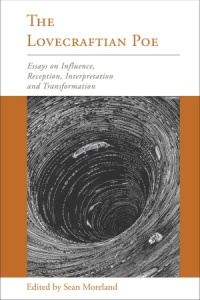
Dated by Amazon for a 1st June 2019 release, in a somewhat affordable £30 paperback, is The Lovecraftian Poe: Essays on Influence, Reception, Interpretation, and Transformation. Although the expensive hardback, aimed at university libraries, appeared back in 2017.


There are only two reviews I can find, the first being from John Tresch in the journal Poe Studies…

The book… “capitalizes on the Lovecraft revival to make clear the profound debts Lovecraft and his followers owed to Poe.” […] “it is the first to concentrate on the relation between these two enormously influential authors”. The book’s Introduction points out that… “Lovecraft became a conduit through which Poe passed into the modern genres of horror, science fiction, fantasy, and weird fiction”.

“Slawomir Studniarz undertakes what he describes as a ‘new, unprejudiced look at Lovecraft’s poems’ and reveals their allegiance to Poe’s poetics” […] “Studniarz concludes that Lovecraft is a better, or at least a more Poe-like, poet than critics have realized.”

Michael Cisco shows that the comic horror of both authors derives from depicting… “the inability to distinguish between inner and outer, psychology and physics”. Yet the cosmic… “unholy, essentially unstable quasi-matters” are tackled empirically by… “detectives, scientists, and amateur scholars seeking explanations for troubling facts”.

“Dan Clinton’s outstanding essay “The Call of Ligeia” traces links between the cosmic vision of each author and the historically specific fields of science with which they engaged.”

“Ben Woodard’s essay “The Killing Crowd” connects Poe’s urban quasi-mystery “The Man of the Crowd” to Lovecraft’s “The Horror at Red Hook,” both of which offer lurid views of a city’s nightlife — London for Poe, and a hellish South Brooklyn for Lovecraft” [where these tales] “present the modern city as a medium, a site in which technologies of organization, knowledge, and visibility attempt to contain yet in fact expose and magnify ungovernable forms of monstrosity while burying the hidden truth of ‘deep crime’, the secret which in Poe’s tale cannot be read.”


The second review is from Travis Montgomery in the Edgar Allan Poe Review…

The book is… “an important step toward filling a critical gap”.

“In Chapter 4, Michael Cisco deems Kant, not Burke, the purveyor of the sublimity associated with the ‘cosmic horror’ that fascinated Poe and Lovecraft as storytellers, but the essay is thin on commentary that would help readers appreciate that Kantian influence.”

“Chapter 6 contains Waugh’s meandering yet intriguing interpretations of that [cat / staring eyes ] imagery. Especially fascinating is his suggestion that feline images in “The Black Cat” and “The Rats in the Walls” signal the narrators’ aristocratic aspirations, desires that underline class themes in the tales.”

[Despite some fuzziness and mis-steps] “Clinton’s investigation of the ways that Poe and his American successor ‘trace literary effects to enduring features of human perception’ is arresting in its originality”.

“Conspicuous [typo] errors appear in the text […] Such things should not surface in a book so expensive.”

← Older posts
Newer posts →


Please become my patron at www.patreon.com/davehaden to help this blog survive and thrive.

Or donate via PayPal — any amount is welcome! Donations total at Easter 2025, since 2015: $390.

Archives

  • February 2026
  • January 2026
  • December 2025
  • November 2025
  • October 2025
  • September 2025
  • August 2025
  • July 2025
  • June 2025
  • May 2025
  • April 2025
  • March 2025
  • February 2025
  • January 2025
  • December 2024
  • November 2024
  • October 2024
  • September 2024
  • August 2024
  • July 2024
  • June 2024
  • May 2024
  • April 2024
  • March 2024
  • February 2024
  • January 2024
  • December 2023
  • November 2023
  • October 2023
  • September 2023
  • August 2023
  • July 2023
  • June 2023
  • May 2023
  • April 2023
  • March 2023
  • February 2023
  • January 2023
  • December 2022
  • November 2022
  • October 2022
  • September 2022
  • August 2022
  • July 2022
  • June 2022
  • May 2022
  • April 2022
  • March 2022
  • February 2022
  • January 2022
  • December 2021
  • November 2021
  • October 2021
  • September 2021
  • August 2021
  • July 2021
  • June 2021
  • May 2021
  • April 2021
  • March 2021
  • February 2021
  • January 2021
  • December 2020
  • November 2020
  • October 2020
  • September 2020
  • August 2020
  • July 2020
  • June 2020
  • May 2020
  • April 2020
  • March 2020
  • February 2020
  • January 2020
  • December 2019
  • November 2019
  • October 2019
  • September 2019
  • August 2019
  • July 2019
  • June 2019
  • May 2019
  • April 2019
  • March 2019
  • February 2019
  • January 2019
  • December 2018
  • November 2018
  • October 2018
  • September 2018
  • August 2018
  • August 2015
  • July 2015
  • April 2015
  • March 2015
  • February 2015
  • January 2015
  • December 2014
  • November 2014
  • October 2014
  • September 2014
  • August 2014
  • July 2014
  • June 2014
  • May 2014
  • March 2014
  • February 2014
  • January 2014
  • December 2013
  • November 2013
  • October 2013
  • September 2013
  • August 2013
  • July 2013
  • June 2013
  • May 2013
  • April 2013
  • March 2013
  • February 2013
  • January 2013
  • December 2012
  • November 2012
  • October 2012
  • September 2012
  • August 2012
  • July 2012
  • June 2012
  • May 2012
  • April 2012
  • March 2012
  • February 2012
  • January 2012
  • December 2011
  • November 2011
  • October 2011
  • September 2011
  • August 2011
  • July 2011
  • June 2011
  • May 2011
  • April 2011
  • March 2011
  • February 2011
  • January 2011
  • December 2010
  • November 2010
  • October 2010
  • September 2010
  • August 2010
  • July 2010

Categories

  • 3D (14)
  • AI (70)
  • Astronomy (70)
  • Censorship (14)
  • de Camp (7)
  • Doyle (7)
  • Films & trailers (101)
  • Fonts (9)
  • Guest posts (2)
  • Historical context (1,095)
  • Housekeeping (91)
  • HPLinks (74)
  • Kipling (11)
  • Kittee Tuesday (92)
  • Lovecraft as character (58)
  • Lovecraftian arts (1,626)
  • Lovecraftian places (19)
  • Maps (70)
  • NecronomiCon 2013 (40)
  • NecronomiCon 2015 (22)
  • New books (966)
  • New discoveries (165)
  • Night in Providence (17)
  • Odd scratchings (984)
  • Picture postals (276)
  • Podcasts etc. (431)
  • REH (184)
  • Scholarly works (1,469)
  • Summer School (31)
  • Unnamable (87)

Get this blog in your newsreader:
 
RSS Feed — Posts
RSS Feed — Comments

H.P. Lovecraft's Poster Collection - 17 retro travel posters for $18. Print ready, and available to buy — the proceeds help to support the work of Tentaclii.

Proudly powered by WordPress Theme: Chateau by Ignacio Ricci.