• About
  • Directory
  • Free stuff
  • Lovecraft for beginners
  • My Books
  • Open Lovecraft
  • Reviews
  • Travel Posters
  • SALTES

Tentaclii

~ News & scholarship on H.P. Lovecraft

Tentaclii

Category Archives: Picture postals

Friday ‘Picture Postals’ from Lovecraft: The foot of College Street

20 Friday Sep 2019

Posted by asdjfdlkf in Historical context, Picture postals

≈ Leave a comment

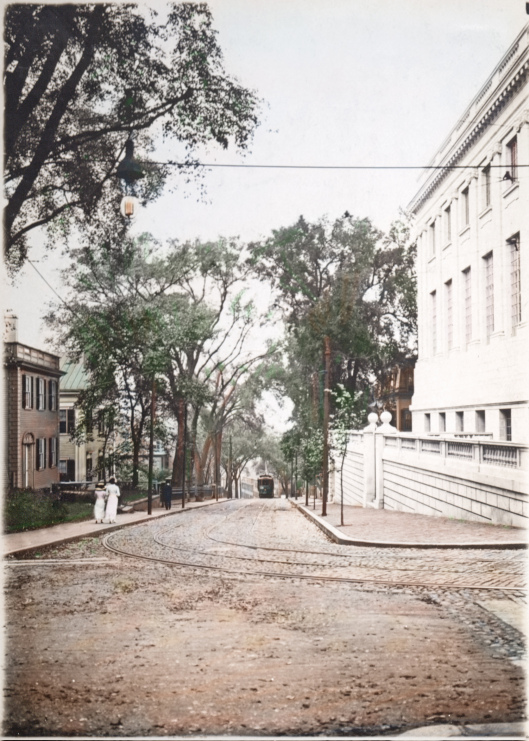
Following my recently pictorial surveys of the top of College Street, around Lovecraft’s final home, here are some nice clear views of the lower end of the street and its hill.

Here’s the same view about five years later as postcard…

And perhaps another few years on, at the dawn of the automobile-age…

Lovecraft possibly about 15 years old by that time.

And further along in the automobile-age, the same junction in 1935, in which the illustrator rather optimistically imagined that fast cars and pedestrians would mix. Two pedestrians in the picture appear to be hesitantly walking out into oncoming traffic!

This run of new frontages was just an architect’s fancy, but was built as planned and (judging by a photograph I saw) it did look like the drawings when completed.

Protected: Friday ‘Picture Postals’ from Lovecraft: College Street bonus

13 Friday Sep 2019

Posted by asdjfdlkf in Historical context, New discoveries, Picture postals

≈ Enter your password to view comments.

This content is password-protected. To view it, please enter the password below.

Friday ‘Picture Postals’ from Lovecraft: College Street

13 Friday Sep 2019

Posted by asdjfdlkf in Historical context, New discoveries, Picture postals

≈ Leave a comment

Two weeks ago, Tentaclii’s Friday ‘Picture Postal’ post was of Lovecraft’s lane-end at night, or near enough. This Friday, much the same view and direction down College Street — only this time the camera is in front of the Gates, and it’s daytime in September 1911.

The entrance to Lovecraft’s Ely’s Lane is about 20 yards away on the centre-right. Find the far corner-end of Library’s white wall and you’ve found the start of the lane. The lane then ran down behind the high wall to reach 66 College Street and its garden court. The brown house seen through the trees is the house in front of Lovecraft’s house.

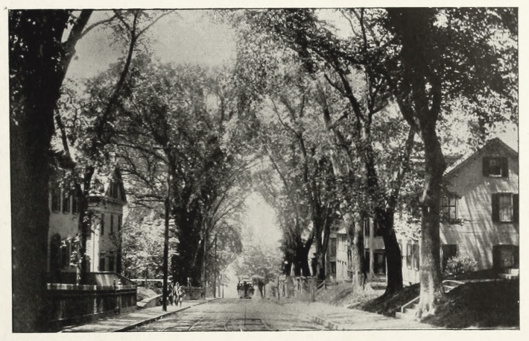
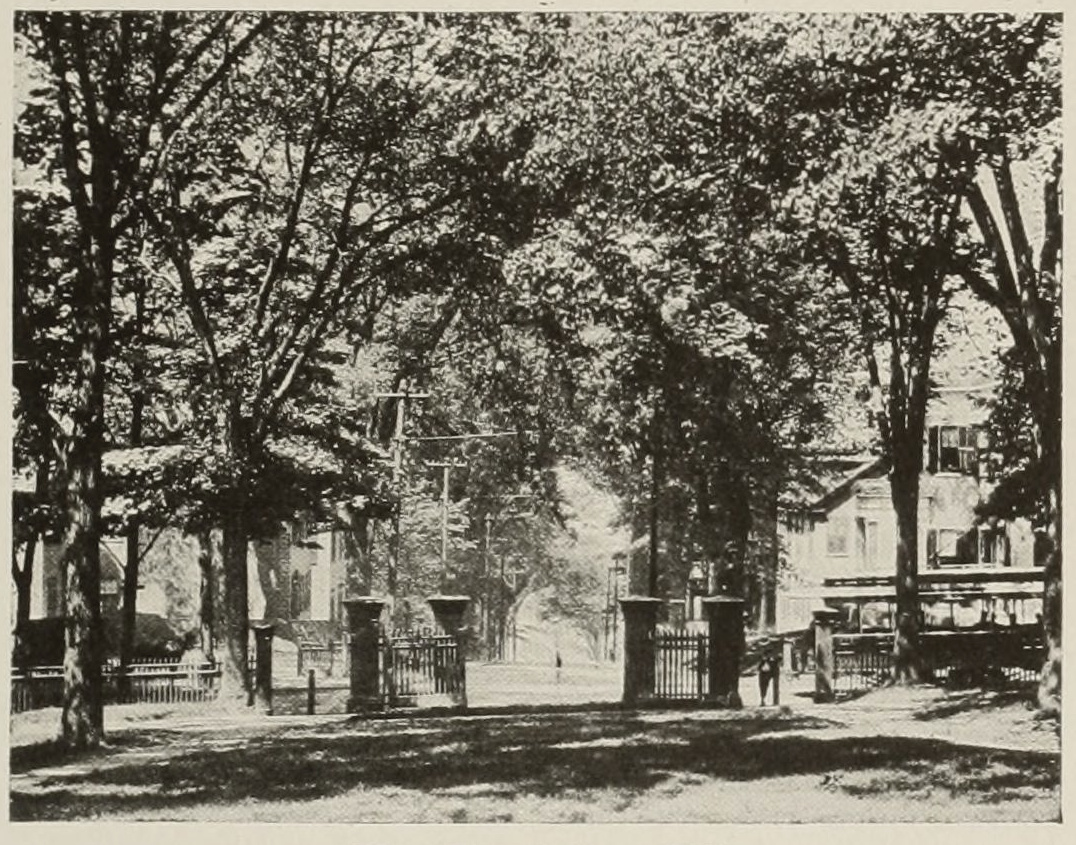
The pictures below are of the same scene prior to the building of the Library, with the street’s elm trees in their prime. The second one is behind what became the Gates. Photos such as this led to the realisation in the late 1940s that College Street’s old elms were then fading and failing. This led to a robust programme of restoration and replanting in 1949, enabled by a $2,500 gift from the class of ’24.

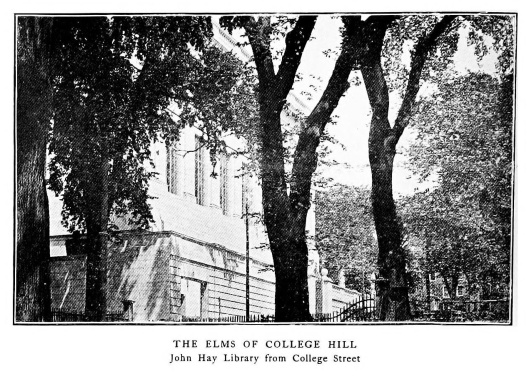
I’ve also made a new discovery of a picture of the same lane-end, seen below. The lane-end is seen on the far left of the picture. The cameraman was in the end house-garden opposite and a little further down the hill than the lane-end. The viewer peeps through the trees to see the rear wall of the lane at the corner of the Library.

From this vantage point and in this season one might have seen Lovecraft come walking down his shady lane in a light suit and summer straw-hat, to then turn and stroll down to the town.

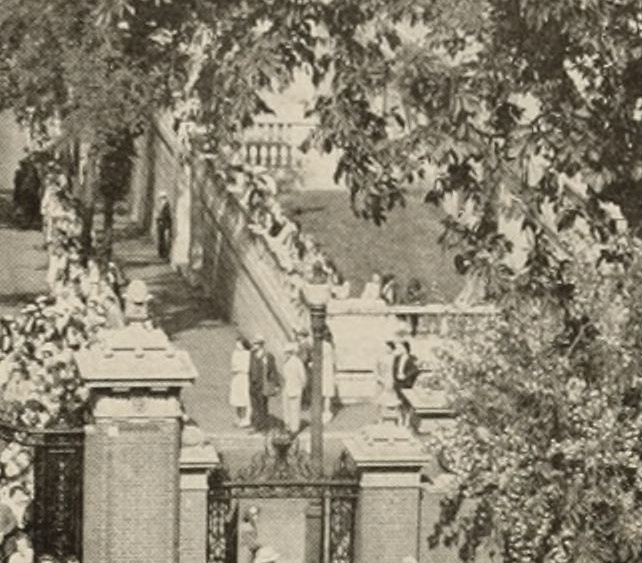
Sadly the above scan is harsh and no-one has the booklet online as a better scan. The ‘ink-drawn effect’, only noticed when seen up-close, is probably an unintentional effect arising from the harsh scanning. The picture’s booklet is simply titled “Brown University” and appears to be a little campus-history guide, probably given out to visiting parents and relatives of students. It appears to be erroneously dated in its record to c. 1900, and does have a flavour of that era about it — yet the Library wall wasn’t up until 1911. Incidentally, you can tell that we’re looking at the correct side of the Library here… because we can see the two tall columns with the bobbles on top.

A further large picture has been found, that does look deeper down Lovecraft’s lane, but this is only available to my Patreon patrons.


I’ve also discovered that in 1929-30 this ‘bobble’ side entrance was… “the Alumni Office, John Hay Library (College Street entrance)” for the University. Also noted in Brown documents was the college rule that… “freshmen [at Brown] shall not walk on the south side of College street” although I don’t know if this was still observed in Lovecraft’s time. Freshmen is the American term for first-year students on a multi-year course.

Here we see the College Street side of the John Hay Library from above the Van Winkle Gate, during a summer parade, indicating that there was a small lawn above and to one side of the Alumni office gate entrance…

By 1942 it was still a lawn, but by the 1960s the lawn had become a dense shrubbery. Presumably as part of the general and successful attempt to re-plant and re-green the street.

Friday ‘picture postals’ from Lovecraft: misty lanes at the end of summer

06 Friday Sep 2019

Posted by asdjfdlkf in Astronomy, Historical context, New discoveries, Picture postals

≈ 1 Comment

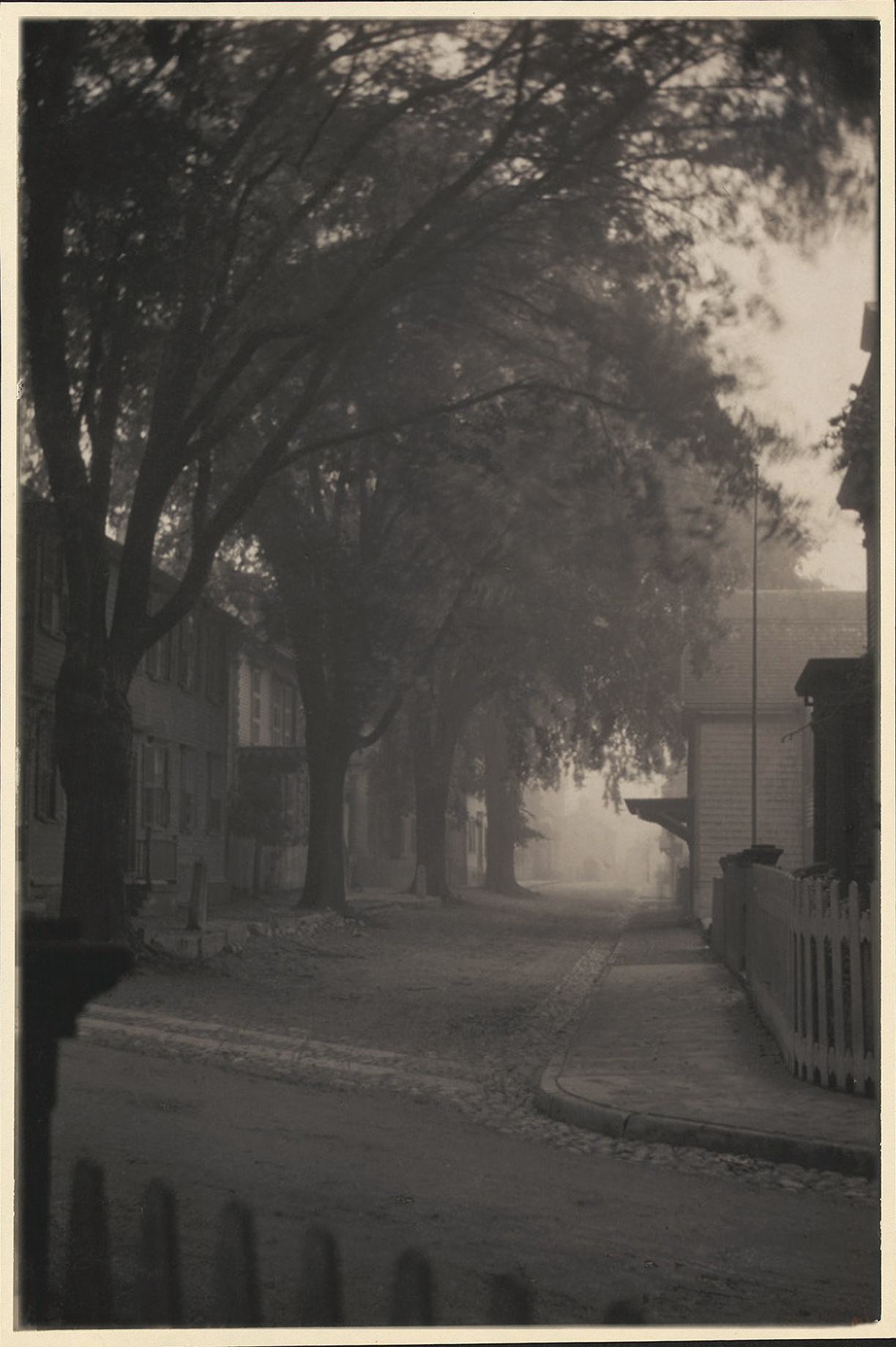
Last week’s ‘picture postal’ had a setting of quiet streets and mistiness. This week’s post continues with the same theme, evoking the ‘end of season’ shawl that many New England places would have worn by September.

I. The mist in New England.

The picture also evokes the distinctly seasonal nature of Lovecraft’s own travels and visits. His annual cycle, of summer walking followed by a winter hermitage, was partly due to his extreme sensitivity to the cold. By the early 1930s he was becoming the old man he had once feigned to be, and appears to have become both more susceptible to cold and more fearful of encountering it. By the mid 1930s his ‘sitting outdoors season’ didn’t usually start until quite late, mid-May. Some historical context is relevant here. The natural state of the eastern USA during the late 1920s and 30s was somewhat different than today, being often significantly hotter in summer and colder and more icy in winter. We can also assume that mistiness was often enhanced by household coal-fires being lit as the mornings and evenings grew chill. Domestic burning of ‘soft coal’ (heavy smoke) was then permitted, for instance, and only in 1946 did Providence begin to adopt clean-air measures. Add to that the likelihood of autumnal garden bonfires being lit.

Toward the end of his annual walking season he would have started to encounter such evocative mists, fogs and mizzling rains. Such mists were almost never captured by picture postcards, which makes scenes like the one seen above all the more valuable. They remind non-residents that New England was actually somewhat akin to England, in terms of the vagaries and mistiness of its very seasonal weather. The region wasn’t all an endless parade of bright summer-scenes.

Yet sometimes it was an endless parade of such scenes, or seemingly so when the bright clement weather would run on in the year. Such was the year 1933, for about six weeks from mid September to the end of October, and Lovecraft continued to enjoy such weather by taking cheap local bus-rides and walks. During most of October 1933 he even contrived to explore parts of the inland back-country far behind Providence. Here he is in October 1933, writing to Morton…

Well, well! The old man’s still out in the open! But though it’s quite oke for brisk walking, it ain’t so good for settin’ down and writin’. Hard work guiding the muscles of my pen hand, for I doubt if the thermometer is over sixty-eight degrees. Glorious autumnal scenery. I’ve spent the last week tramping over archaick rustick landskips, searching out areas still unspoil’d by modernity…

The run of fine weather was over by around Halloween. On 2nd-3rd November 1933 he wrote to R.E. Howard…

Our autumn has been very mild … But of course this is the very end of the season. No more continuous mild weather can be expected [now], though there may be isolated days of more or less pleasantness.

How did he first become sensitised to the Providence mists? He purposefully went walking in such conditions. In a 1933 letter to E. Hoffman Price he also recalled his youthful explorations of Providence, and how he had first become…

sensitive to the mystery-fraught streets and huddled roofs of the town, and often took rambles in unfamiliar sections for the sake of bizarre atmospheric and architectural effects ancient gables and chimneys under varied conditions of light and mist, etc.

He especially favoured such misty atmospherics when blended with a quality of “spectral hush & semi desertion”, ideally accompanied by far half-glimpsed vistas in which the imagination could lightly play. Hush was of course something rather more likely to be encountered at the very end of summer, when the region’s visitors and trippers had departed and the locals were again in a more workaday mood inside their schools and workshops. Lovecraft devised a proto-psychogeographic technique to greatly increase his chances of encountering such hushed moods. In 1933 he would alight from a local cross-country bus in the middle of nowhere, then strike across country in the hope of reaching another distant bus-route where he might flag down a homeward bus. Sometimes he was forced to hitch-hike back, though another part of his practice was to never actually ask for a free ride. Presumably this was partly because he feared that if he asked, a contribution to ‘gas money’ might then be demanded at the end of the journey? By such means he semi-randomly roved down back-roads and up little lanes that he had never seen before…

I have found several alluring regions never before visited by me [that] represent a settled, continuous life of three centuries suggesting the picturesque old world rather than the
strident new.


II. The cosmic mists.

In spring 1931 H.P. Lovecraft had the idea that rain clouds and drizzling mists might be partly influenced by fluxes in incoming cosmic-rays. Although he admitted that the confounding factors on earth would make such things difficult to measure and prove…

Just how far our precipitation is affected by the recent prevalence of ether-waves is a still-open question. The unprecedentedness of any natural phenomena is always subject to dispute — for certain types of phenomena may be naturally cyclic, whilst others may attract notice more than formerly because of increased reporting facilities [and newly populated areas growing up into] dense habitation” — Lovecraft in a letter to Clark Ashton Smith, 15th April 1931.

How prescient. Here his use of “ether-waves” does not mean broadcast radio, though that was by then a secondary shadow-meaning to be found in the radio trade press and a few newspapers. Lovecraft’s new-found ability to hear a speech by the British King may indeed have caused his eyes to mist up with tears of patriotic joy. But his knowledge of science was such that he would not have imagined that mass radio ownership might be the cause of mistier mornings on Rhode Island.

Lovecraft appears rather to have been using “ether-waves” as one finds it in standard 1930s textbooks of meteorological science. There it means radiant energy, such as cosmic-rays, x-rays etc. More specifically, a usage from the June/July 1931 Bulletin of the American Meteorological Society suggests that he had the cosmic-ray end of this spectrum in mind…

First, the cosmic rays enter the earth uniformly from all portions of the sky. Second, they consist – as they enter the earth’s atmosphere – of ether waves, not of electrons. (R.A. Millikan, the Bulletin quoting a talk of his given in September 1930.)

This use of “ether waves” then must indicate that Lovecraft was thinking in April 1931 of ether-waves (cosmic-rays) as inducing “nucleation” in the air, as a mechanism by which the cosmic forces that “filtered down from the stars” could affect the formation of clouds and mists on the earth. Thus, in his mind, a “recent prevalence of ether-waves” would affect “precipitation” in the weather on earth. His only apparent concern was “just how far” this effect carried through.

But all the scientific papers and textbooks say that this idea was first proposed in 1959 by Ney in his Nature paper “Cosmic radiation and weather”. Which implies that Lovecraft’s scientific intuition was thirty years ahead of the curve. Was Lovecraft then the first to propose a direct causal link between ‘space weather’ and ‘earth weather’?

The answer to this puzzle is probably that Lovecraft partly intuited the idea from the Nobel prize-winner Robert A. Millikan. We know this eminent and questing scientist was being tracked by Lovecraft, since he mentions Millikan to Frank Belknap Long in early 1929 when Lovecraft refers to a new theory… “Millikan’s “cosmic ray””… this being mentioned in the context of a discussion of “the radio-active breakdown of matter into energy, and the possible building up of matter from free energy” (Lovecraft).

This latter point indicates that Lovecraft knew that Millikan was proposing cosmic rays that were engaged in atomic construction rather than (as we now understand it) radioactive decay. This point may seem arcane today, but from such things the fate of the universe could be determined: construction meant a constantly-renewing universe, decay an eventual infinitely diffuse heat-death of the universe. The latter theory was given a substantial boost by the publication of the Big Bang theory which occurred in Nature on 9th May 1931 (after Lovecraft’s letter), this being apparently accompanied by much journalistic befuddling of a credulous public — with feverish talk of the coming “heat-death” of the universe.

Of course we cannot be certain that Lovecraft was reading Millikan directly, in the scientific journals available at his Public Library or in the periodicals room at Brown. Because Millikan might also have been encountered in the ‘popular science’ magazines and newspaper columns of the time. He was a popular figure, as scientists go…

Dr. Millikan was the first to prove [1925] the puzzling effect was actually the work of rays bombarding the earth from cosmic depths. The story of his [independent] search is one of the epics of science. Climbing mountain peaks in the Andes, sending aloft sounding balloons on the Texas plains, making tests in a raging blizzard among the Rockies, lowering lead-lined boxes of instruments into the water of snow-fed lakes in the Sierras, he followed one clue after another. (Popular Science, November 1936).

At this time the cutting-edge of science was headline news in regular newspapers, rather than being confined to specialist magazines or to slipshod hysteria in newspapers, as it mostly is today. We also known that Lovecraft was “strongly interested” in such things…

the absorption of radiant energy & re-emission at a lower wave-length has strongly interested me” — letter to Morton on fluorescent rocks, 13th November 1933.

… and that he later attended a public lecture on cosmic rays by W.F.G. Swann in early 1935 (Morton letters).

Perhaps this interest was strong enough in 1931 to cause him to follow the contents pages of the hard science journals, and to actually read papers by Millikan and others. Thus his reading of Millikan and a few others in early 1931 might plausibly be inferred. In which case Lovecraft most likely saw, or at the least read a good summary of, a key paper by Millikan titled “On the question of the constancy of the cosmic radiation and the relation of these rays to meteorology” (Physical Review, December 1930). Since this contains the following…

These rays must therefore exert a preponderating influence upon atmospheric electrical phenomena. [followed by a discussion of] “water vapour … condensing on ions” and the conclusion that… “the cosmic rays enter the atmosphere as ether waves or photons, and hence produce their maximum ionization, not at the surface of the atmosphere, but somewhat farther down.”

The paper does not appear to have been discussed or noted elsewhere. I have looked through and keyword-searched the book-length biography of Millikan (1982), and have searched Google Scholar and Google Books and a few other sources. Note that Millikan doesn’t actually baldly state the rays—>clouds idea in his paper, and he doesn’t actually mention precipitation (i.e.: rain-clouds, rain, drizzling mist). But he gives enough leads and hints in this paper that Lovecraft the meteorologist-and-astronomer would be able to tie the pieces together into a working theory. Given this absence of commentary elsewhere, I then have to suspect this paper is the source for Lovecraft’s April 1931 understanding of levels of precipitation being “affected by the recent prevalence of ether-waves”. The timing of the paper certainly fits neatly with that of Lovecraft’s letter to Smith. We also know that Lovecraft attended a lecture on the latest developments in cosmic rays, in early 1935. In a letter to Barlow he commented on this lecture, implying that he had already had a good working knowledge of such things and that the lecture had usefully updated this.

There is a further small puzzle here. How did Lovecraft know of the recent “prevalence” of ether-waves/cosmic-rays? Because these do not appear to have been measured in time-series until 1933. The answer to the puzzle might be that the aurora borealis was then recently known to be a natural proxy for incoming cosmic-rays. An increase in the aurora would have been noted in the meteorological and polar journals, possibly even in the newspapers. The effect on shortwave radio-reception may also have been understood to be an indicator. We know that Lovecraft enjoyed ‘fishing’ on his older aunt’s radio-set for the most distant exotic radio stations he could find, and this could have sometimes meant rare distant shortwave signals bouncing off the ionosphere. His younger aunt’s radio set was apparently not so powerful. Yet regular ‘fishing’ on either might still have led him to build up a mental time-series of the disturbances in the upper-atmosphere.

“I sometimes ‘fish’ for distant stations when over there — for there is a fascination in the uncanny bridging of space” (Lovecraft in October 1932).

What then was his idea of this rays-to-clouds effect, put in modern scientific terms? At its crudest the idea of “nucleation” holds that: 1) cosmic-rays arrive and cause ionisation inside our atmosphere; 2) which introduces more tiny floating nuclei suitable for water-droplets to form on; 3) and in that way certain types of low-level cloud are more likely to arise when there are more rays. The science of this is still being actively researched, at least by those willing to brave the venomous politics of the field. Personally I remain to be convinced by scientists who suggest more sophisticated and roundabout ideas about how cosmic-ray fluxes and clouds might interact (and thus influence weather). Yet it’s not wholly impossible that Lovecraft’s 1931 hypothesis about ‘cosmic mists’ might one day be agreed to be correct, if science can see through the fog of confounding factors.

Friday ‘picture postals’ from Lovecraft: the lane-end at night

30 Friday Aug 2019

Posted by asdjfdlkf in Historical context, New discoveries, Night in Providence, Picture postals

≈ 1 Comment

As we slip over into the seasons of mists… a vintage picture of the Van Wickle Gates on a misty night, Providence. My thanks to Brown University for digitising this, and I’ve used Photoshop to subtly rectify some of the damage and fuzzyness of the picture (but you can still see a section of peel-up on right). I can add to their record the name of the photographer: Prof. Walter H. Snell, and that it was made in the early 1930s.

The John Hay Library frontage is seen behind, with main entrance-steps seen on the far right of the picture. This orientation confirms that we’re looking down College Street.

From this vantage point in the shadows a lucky observer in 1933-37 might have glimpsed H.P. Lovecraft about to set off on a long night-walk in his city. A tall gaunt figure would have stepped out from the end of the short lane which came up from his house. After pausing a moment to scout the quiet street and garden-walls for any suitably conversational cats, he would have turned to walk briskly away down the hill — while being framed for an instant in the gate-entrance seen on the far left of this picture. Or, if one was lucky, he would have headed toward the gate and the camera, so as to walk through the grounds of Brown University. I assume that the grounds were not sealed-off at night, in those days.

Map:

Below we see the lane-end (far left, lower corner) in daytime, viewed from the other side of the gates…


Incidentally I now realise that I was mistaken in an earlier ‘postcard’ post here, one made late last year. I had though that a bit of a house glimpsed past the John Hay Library might have been that of Lovecraft. It wasn’t so, and that post has now been deleted. I now realise that any picture which shows the frontage alone can’t show the relevant house(s). Only side views, like those above, are of possible interest and even then will likely only indicate the line of the lane that came up from his house at the back of the Library.


New week on ‘Picture postals’: continuing the theme, with a detailed look at Lovecraft’s unique scientific understanding of the origin of clouds and mists.

Protected: Friday ‘picture postals’ from Lovecraft: Finding Bolton

23 Friday Aug 2019

Posted by asdjfdlkf in Historical context, Maps, New discoveries, Picture postals

≈ Enter your password to view comments.

This content is password-protected. To view it, please enter the password below.

Friday ‘picture postals’ from Lovecraft: the Eddy bookstore on Weybosset St.

16 Friday Aug 2019

Posted by asdjfdlkf in Historical context, New discoveries, Night in Providence, Picture postals

≈ 3 Comments

The cutting:

This week I open the Friday ‘Picture Postals’ post with a magazine cutting. There are postcards in this post, but they come later. The cutting is: Muriel Eddy, “H. P. Lovecraft, gentleman”, a letter and memoir of Lovecraft. Published in Thrilling Wonder Stories, June 1948. The magazine’s editor leads straight into the letter without division, which was presumably his house-style…

I don’t see this item under “Eddy, Muriel” in either The Lovecraft Encyclopedia or the Comprehensive Bibliography. A Google Books search for “H. P. Lovecraft, gentleman” comes up empty, as does a general Google search. de Camp doesn’t have it in the bibliography of his 1975 biography, nor does he discuss its claims.

I don’t see either biographer examining Muriel Eddy’s claim that, during his “embryo” years, the young Lovecraft dropped in on Arthur Eddy’s second-hand bookstore on Weybosset St. Nor even mentioning that Lovecraft had easy access to a large local used bookstore, with a friendly proprietor, which I find rather surprising. The same is true for The Lovecraft Encyclopedia, there being no mention in it of either uncle Eddy or his store.


Initial confirmation:

The RIAMCO Collection of Lovecraft has the following catalogue entry, which offered me some initial quick confirmation:

Lovecraft, Howard P. [letter to ] to Wandrei, Donald.

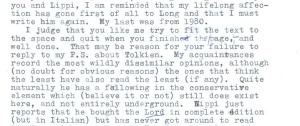
Undated, with envelope postmarked Jul. 31, 1931. Headed: “Nether Crypts – Lammas-Eve” only. Enclosed is a clipping from The Providence News-Tribune [22 Jul 31] about Arthur A. Eddy, proprietor of Eddy’s Bookstore on Weybosset Street in downtown Providence.

I note that the initial ‘A’ is erroneous, as trade directories have ‘E’. I further note that the July 1931 run of this newspaper appears to have otherwise been allowed to perish from the historical record.

This first hit showed me that the uncle and the store did indeed exist and were known to Lovecraft. The mid 1931 date of the clipping might suggest a retirement-date or death-date for the uncle, and if it still exists to be read this clipping may have more information on the old bookseller? Perhaps even a picture of the interior? I don’t have access to the Wandrei letters (in the expensive Mysteries of Time and Spirit, and soon the forthcoming H. P. Lovecraft: Letters with Donald and Howard Wandrei), so I don’t know if there’s mention of the Eddy store in that particular letter. Presumably the clipping was sent because Lovecraft was fond of the old fellow, though it doesn’t necessarily follow that he knew the store as far back as the “embryo” ‘mystery years’ of 1908-1916.

Lovecraft did visit the store:

My thanks to Chris Perridas, though, who once looked at the Munn visit to Providence, and thus quoted two letters which reveal the store was still going in 1928 and Lovecraft was frequenting it…

[31st July 1928 to Wandrei]
I trust Munn has by this time looked you up. He was here yesterday, & we had a very pleasant session – went down to Eddy’s Bookstore & nosed around until he found an old story by Camille Flammarion in some 1893 Cosmopolitans.

[4th August 1928 to Derleth]
… when Munn and I were in Eddy’s bookshop Monday, (this Eddy is uncle of the C. M. Eddy, Jr who writes for W.T.). We met the venerable Joseph Lewis French, editor of the anthology “Ghosts, Grim and Gentle”. He is a quaint, peppery-voiced old codger of 70.


Getting the address and store history:

A directory of 1919 puts uncle Eddy’s address at 260 Weybosset St…

With an address I was then able to get the outline of the store history. A 1914 automobile trade journal recorded that “The local branch of the B. F. Goodrich Co. has been removed from its former location at 260 Weybosset”, though another journal announced that this was a partnership with a local rubber tyre company, and thus the 1914 item may simply indicate the removal of the national franchise. Goodrich Co. was a national chain that sold vehicle tyres. Polk’s Providence directory later listed Avery Piano in the ground-floor frontage at 260, selling pianos, sheet music, music teaching aids, and musical replaceables such as strings. If the premises had once been a Goodrich car-tyre sales/fitting/showroom place, then it presumably had the sturdy showroom floor and street-frontage roll-out ramp needed to later hold heavy pianos, plus a large dry cellar for tyre storage and parts — suitable for later use as a nice dry bookstore. That would be my guess. More certain is that such a bookstore would have benefited from the passing musical clientele, and would be a natural fit with a piano store. One then imagines that Lovecraft might have often heard the hasty scraping of a violin or random tinkling of a piano, coming faintly through the ceilings as he browsed the ancient books. “The Music of Erich Zann” springs to mind…

I heard strange music from the peaked garret overhead … I was haunted by the weirdness of his music. Knowing little of the art myself, I was yet certain that none of his harmonies had any relation to music I had heard before…

Publishers Weekly may indicate the date of change from a tyre store to pianos / used-books. Its edition of 21st April 1917 also usefully confirms Muriel Eddy’s claim of the book store’s large size, by stating “20,000 volumes in stock”. It further suggests that there had been an earlier Eddy store in Providence…

Given this hint I then found the American Library Annual of 1912 and 1913-14, which gave the store’s earlier address as 852 Broad Street.

Broad Street is very long and runs up from the south and at its most northerly end becomes Weybosset. Most probably the new piano store invited uncle Eddy to move further up along the same street, much closer to the commercial heartland at 260 Weybosset, in order to bring suitable additional passing-trade to their own store. 852 Broad Street is probably way too far down into South Providence for the young Lovecraft to have known of it, although if it had a prominent street frontage then he could have noticed it on tram journeys down to Pawtuxet.

The International Directory of Second-hand Booksellers and Bibliophile’s Manual for 1894 gave me an even earlier address at 100 Gallup St.

100 Gallup Street is a small residential house in Lower South Providence, and may have been uncle Eddy’s home address. No date of establishment is given by this 1894 Directory, as it is for the other two, so it seems likely he first started the book-selling from a residential property in the early 1890s.

100 Gallup Street is not near the Eddys, who lived on Second Street over on the other side of the river.


Testing Muriel Eddy’s other claim of night-opening hours:

Given all the above, it seems that Muriel Eddy’s coy hint of “embryo” years for Lovecraft’s night visits to 260 Weybosset does not mean the mystery years of 1908-1916, but must mean springtime of 1917 onward. There is a slim chance he once visited Eddy’s store way down at 852 Broad Street, but he must surely have heard the spring 1917 news of the opening of the new used bookstore at 260 Weybosset. A store with 20,000 volumes no less, and located two streets over from the Public Library. In fact, one can envision him as being the first to jangle the doorbell on the opening day morning. By 1929 he wrote of the “1500 or so books I possess” in his personal library at home and, despite the wonders of the New York stores, one wonders how many of these had come via uncle Eddy. By the time he moved house in 1933, he had 2,000 books.

What of Muriel Eddy’s claim of night opening? Well, directories place the musician’s union office and several newspaper offices on Weybosset St. and around the corner. Daily newspapermen and dance-hall musicians were then semi-nocturnal, often working well past midnight (see the first half of Some Like it Hot for a portrait of the life of jobbing musicians), which may have made it viable for a bookstore that also carried newspapers and magazines to open at night on certain evenings of the week. If the piano store above were open late on ‘dance nights’, to supply emergency strings and minor repairs to the many dance-hall and theatre musicians, then the bookshop below might also have opened very late. By the 1930s Avery also sold advance tickets for big Boston concert performances, another reason to be open in the early evenings at times when show-going crowds were strolling past to the nearby theatres.

Nor is it impossible that, once Lovecraft was bringing amateur and bookish friends to Providence, some special night openings might have been arranged for him by an obliging proprietor in the 1920s. Indeed, there is clear evidence that Lovecraft could introduce some really ‘high rollers’ to uncle Eddy in the late 1920s…

[Lovecraft expects] “as guest the amiable James Ferdinand Morton, who in the next four days will probably do to our local mineral quarries what Cook did to Eddy’s bookshop” [i.e. will ‘mine them out’] (Lovecraft to Talman)

Cook was a major book-collector at that time, termed by some in Lovecraft’s circle as “The Colossus of the North”. I then found further details on Cook and Eddy in Selected Letters II…

Cook has been down twice this autumn — once on the 15th and 16th of October, and again last Sunday. On each occasion we have made trips to Eddy’s (Arthur E. Eddy, uncle of the celebrated theatrical man and weird author whom you had the inestimable honour of meeting) Book Store — Cook nearly buying the old fellow out, and I purchasing a good deal more heavily than my purse and recent custom would ordinarily justify. I am now trying to complete my family file of the Old Farmer’s Almanack… Eddy evades the Sabbath closing [Sunday closing] law by keeping his shop door locked and admitting cus­tomers individually as they knock.”

So, there were special arrangements for liked customers, and at odd times too. Such clandestine opening was probably facilitated by the cellar location, and also usefully indicates that access was not dependent on the piano store above being open. Sunday opening also indicates that uncle Eddy was not a religious man in the later 1920s.


Is there a deeper Eddy connection here?:

One even wonders if it was this uncle who introduced Lovecraft to the Eddys in summer 1923? On this S.T. Joshi writes in I Am Providence…

But how did Lovecraft come into contact with the Eddys at all? There is some doubt on the matter.

Joshi then rightly finds the fanciful 1960s claims of Muriel Eddy on the matter to be very questionable (she claimed then, and only then, that they had known Lovecraft and his mother from circa 1918, and that the Eddys had been amateurs published in The Tryout etc). But Joshi remains puzzled as to how it actually happened. I can now suggest that the bookseller offers a simple and plausible mechanism for this:

i) Lovecraft, newly interested in pulps and seen to be browsing old examples of such in Eddy’s store, explains to the bookseller that he’s just had five stories accepted by Weird Tales circa June 1923. He naturally bemoans ‘the torture of typing’ that he must now endure, in order to see these stories actually published.

ii) The bookseller mentions that his nephew writes stories like that, indeed just last year he had landed a ghost story in Action Stories. This nephew lives in the city, and quite near to Mr. Lovecraft. Then the old bookseller figures Eddy and his wife could use any paid typing work Lovecraft might care to send their way. He swiftly writes out the address and hands it to Lovecraft.

iii) Lovecraft then feels obliged to contact the Eddys, but is perhaps cautious of social entanglements quite so close to home. Especially with those living in what he regards as a somewhat down-at-heel neighbourhood located just across the river. Also, he does not want to damage his relationship with a good local bookseller by ‘getting off on the wrong foot’ with his nephew. Thus he seeks only to sign up the Eddys for the amateur journalism movement. But after a few such letters, and a few phone calls, he decides to stroll over the bridge and meet them in person.

That would be my theory.


Other evidence for Lovecraft and Weybosset Street:

A 1918 letter to Kleiner suggests another reason Lovecraft might have regularly visited Weybosset late at night or in the very early morning after all-night walking. Drugs (for his aunts as well as himself) and a vital tram-stop…

the corner of Dorrance & Weybosset Streets, which is adorned & distinguished by a pharmaceutical emporium — that is, commonly speaking, a drug-store. This is the southeast corner — where you wait for the local stage-coach, or street-car, as such things are called nowadays. [this being the vital tram-stop for Lovecraft, to and from his home]

Here, in two cards, is a day-night comparison of the same stretch of Weybosset…

There are a few other mentions of Weybosset in the materials I have access to. Lovecraft mentioned to Galpin that the stationary store… “Neilan in Weybosset Street always charges me fiendish rates for my [typewriter] paper”. That was the Neilan Typewriter Exchange, 43 Weybosset (Prop. Francis H. Neilan), which adds just a little more data to the story of Lovecraft’s typewriter. Sonia also stayed at a hotel on Weybosset when she first came to Providence. Much later in life Lovecraft also regularly had cheap food from the Weybosset Pure Food Market.


Was this bookstore also mentioned in her 1945 memoir?

What of the 1948 date on the above letter? Sadly I’ve never seen Muriel Eddy’s 1945 memoir, despite S.T. Joshi having written that… “The first memoir [1945] seems on the whole quite reliable”. Until 2019 this item (titled “Howard Phillips Lovecraft”) was available in the booklet Rhode Island on Lovecraft (1945) and the booklet The Gentleman from Angell Street (2001), both duplicated in Lovecraft Remembered other than this memoir. But the 1945 memoir is now also in the new Ave atque Vale: Reminiscences of H. P. Lovecraft (2019) — which I have yet to obtain. Thus, her 1945 memoir has escaped my perusal until now. I’d be obliged if someone with access to it might tell me if the 1948 letter above adds anything to it or not. Ditto for the Wandrei letter of “Jul. 31, 1931”, the other item I don’t have access to.

Update: I’ve now seen Muriel Eddy’s 1945 memoir in A Weird Writer, and it makes no mention of the bookshop or the uncle. I still need the “Jul. 31, 1931” Wandrei letter and cutting.

The above 1948 letter appears to have been overlooked by Lovecraftians and thus has some interest today. And has more interest than if it was from the 1960s.

Note also that the Eddys published a similarly titled “H.P. Lovecraft Esquire: Gentleman”, but that was a 6-page duplicated item of the 1960s.


Did the bookstore’s surroundings also have some interest for Lovecraft?:

Uncle Eddy’s shop was not far from the Public Library, about two streets over. But more interestingly in terms of atmospherics, nephew Eddy evidently knew the ancient back-alleys behind his uncle’s bookshop. These went threading down from the back of Weybosset toward the docks. He introduced these to Lovecraft in the heavy fog of 22nd November 1923…

There are [in the city of Providence] whole sections in which I had never set foot; & some of these we [Lovecraft and Eddy] have begun to investigate. One southwesterly section I discovered from the 1777 powder-horn map … Not a stone’s throw from that 1809 Round-Top church that I shew’d you [at 300 Weybosset St., just down from the bookstore on the same side], lies the beginning of a squalid colonial labyrinth in which I moved as an utter stranger, each moment wondering whether I were indeed in my native town or in some leprous, distorted witch-Salem … there was a fog, & out of it & into it again mov’d dark monstrous diseas’d shapes … narrow exotick streets and alleys … grotesque lines of gambrel roofs with drunken eaves and idiotick tottering chimneys … streets, lines, rows; bent and broken, twisted and mysterious, wan and wither’d … claws of gargoyles obscurely beckoning to witch-sabbaths of cannibal horror in shadow’d alleys that are black at noon … and toward the southeast, a stark silhouette of hoary, unhallowed black chimneys and bleak ridgepoles against a mist that is white and blank and saline — the venerable, the immemorial sea”. (Heavily abridged from a letter to Morton, 5th December 1923)

It would be natural for Eddy to have used his uncle’s bookshop as a base from which to depart and return, on explorations in this “squalid colonial labyrinth” section of the city.


What of today?

When last heard of 260 Weybosset had become the “Gallery Flux”, and a few former local art students note it on their online resumes. Though it seems to have vanished as a gallery in recent years. If someone still has the keys (RISD?) they may be interested to learn that one H.P. Lovecraft once regularly haunted their art-space cellar, musing there on old and hoary books. Avery Pianos is actually still there at ground level at 254-258, although in what seems to be a rebuilt ‘1990s olde-style’ frontage. But one can still see the two blocks of four tyre-shaped street hatches, which presumably let down to the cellars below, the blocks being today embedded in the sidewalk and sealed with concrete. Perhaps sets of four Goodrich tyres were once jacked up out of these openings to street level, before 1917, hence their unusual shape and configuration? I’d guess these may later have held sturdy iron grids of glass blocks, to let a little light down into uncle Eddy’s cellar bookstore? One can’t help thinking of the cellar in “The Shunned House”…

the dank, humid cellar … with only a thin door and window-pierced brick wall to separate it from the busy sidewalk.

Here is a postcard showing the same location, seen over on the extreme right of the card. For orientation, note the same distinctively domed building on the street-corner.
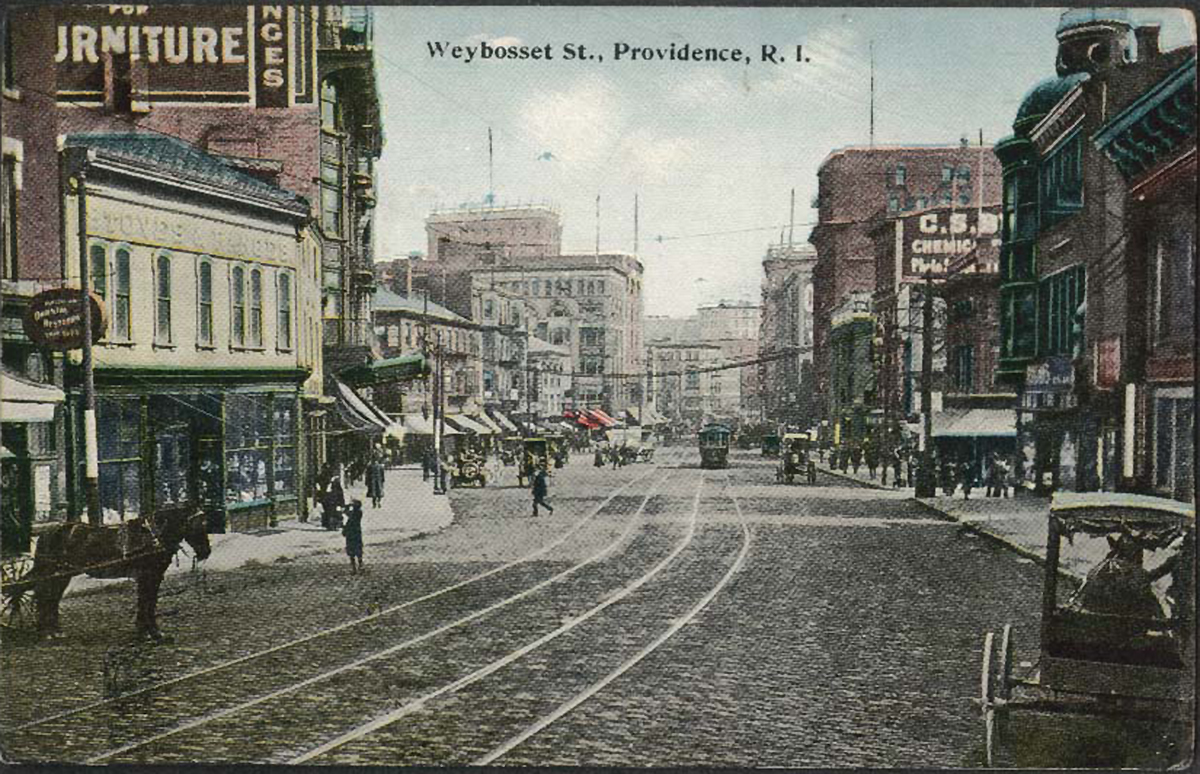
This shows that the current ‘1990s olde-style’ frontage is fairly close to the old look of c. 1905, just a bit shorter and with an inverted roof overhang.


Update: I’ve now seen the detailed biographical introduction on the Eddy family in the Eddy collection The Loved Dead And Other Tales (2008). No mention is made there of uncle Eddy. I’ve now also seen Muriel Eddy’s 1945 memoir in A Weird Writer, and it makes no mention of the bookshop or the uncle. In the latter book, Joshi’s introduction has the Eddy family living in “North Providence” at the time they allegedly first met Lovecraft in person — obviously we need a year-by-year address list for the Eddys, to use to test the veracity of the various memoirs and Muriel’s often-embroidered versions of the truth.

Friday ‘picture postals’ from Lovecraft: HPL in an aquarium

09 Friday Aug 2019

Posted by asdjfdlkf in Historical context, Picture postals

≈ 1 Comment

Continuing my summer visits to the seaside and shoreline, in the Friday ‘picture postals’ post. This week, a stroll down to the New York shoreline and the New York Aquarium in the company of H.P. Lovecraft.

He visited the New York Aquarium in 1922, and then again in April 1929. On the latter visit he and his friend Frank Belknap Long had some long-distance horse-play with Lovecraft’s aunt, in which Lovecraft claimed to have purchased a giant seahorse with the intention of bringing it home to Providence.

“I have purchased one of these and am bringing it home!” Below is the same card, but in a later more vivid over-painted version, with Lovecraft and Long’s messages on it front and back…

My thanks to the Brown University repository for making these available.

Here’s my transcription…

Greetings again! I continue my diary from a bench on the Battery [Battery Park, alongside the aquarium], facing the winds and foam of the immemorial sea! We visited honest old Mac [Everett McNeil, elderly writer of boys adventure stories] this afternoon as per schedule & were pleased to find him bright & much improved – though he is still of course quite weak, & probably won’t be out of the hospital for a week or so yet. Someone else was there to see him – an old lady who was at school with his sister. We took him some oranges which Belknap [Long]’s mother sent him. (|| After our call we went down to the Battery [Park] & inspected the Aquarium – which I hadn’t seen since 1922. Now we are seated on a bench, absorbing the spirit of the sea & having our shoes shined by a sweet boy. Afterward we shall stroll about the ancient parts of Manhattan, toward Paul’s, Fraunce’s Tavern, etc – & finally return to 230 [Long’s parents] …. stopping en route at the Hotel Pennsylvania for guide leaflets & time tables to direct me in my coming antiquarian wanderings. [He was headed to Washington] [“More tales” or “More follows”]. Yr aft. Nephew & obt. servant HPL.

Long has then written: “Howard has purchased an enormous, living sea horse (eighteen inches!) I sincerely hope that it lives to imbibe Providential Atmosphere! – FBL Jr.”

The front of the card excitedly records his finding of a “marvellously cheap” Washington Excursion, perhaps discovered among the Hotel Pennsylvania brochures.

His next postcard shows a mundane view of the Aquarium frontage, with a hand-written note that Lovecraft has bagged the front-right seat behind the driver on the coach to Washington, which he deems the best seat to have in a long-distance coach. Otherwise the card does not concern the Aquarium.


Here are some other scenes from the Aquarium at that time…

The setting:

What Lovecraft would have seen there in 1922, concisely described in Guide to the nature treasures of New York city (1917)…


Some of the denizens, from the same card-set:

“It is no coincidence that the monsters of his later stories resemble combinations of various denizens of an aquarium” — de Camp, Lovecraft: A Biography, 1975.

Visitors appear to have been given a set of tokens on entrance, these presumably giving entrance to halls and pools holding ‘the main attractions’ and thus preventing crowding. Note especially the stylish Octopus token…

It’s possible that this was an inspiration for the metallic octopus-disk in Long’s late story “Dark Awakenings”…

The small object which rested on his palm did not seem to have been compressed or injured in any way by the tight constriction to which it had been subjected. I thought at first it was of metal, so brightly did it gleam in the sunlight. But when I picked it up and looked at it closely I saw that it was of some rubbery substance with merely the sheen of metal.

I had never before looked at any inanimate object quite so horrible. Superficially it resembled a tiny many-tentacled octopus, but there was something about it which would have made the ugliest of sea monsters seem merely fishlike in a slightly repulsive way. It had a countenance, of a sort, a shriveled, sunken old man’s face that was no more than suggestively human. Not a human face at all, really, but the suggestion was there, a hint, at least, of anthropoid intelligence of a wholly malignant nature. But the longer I stared at it the less human it seemed, until I began to feel that I had read into it something that wasn’t there. Intelligence, yes — awareness of some kind, but so much the opposite of anthropoid that my mind reeled at trying to imagine what intelligence would be like if it was as cold as the dark night of space and could exercise a wholly merciless authority over every animate entity in the universe of stars.


Lovecraft later encountered Long’s private home aquarium, on a visit for Christmas 1934…

“I took the midnight coach [from Providence] & arrived in Manhattan the next morning … all the [Long] household were united in absorption in Belknap’s new hobby – tropical fish. These sprightly finny citizens – whose ideas anent [about] temperature are much like my own – form quite a heavy responsibility; since their diet, aeration, & heat have to be regulated with the strictest care. Their infinite variety, however. makes them much more interesting than [the then-common domestic] goldfish; so that I fancy the present fashion for them will prove reasonably permanent.” (Selected Letters IV).

The New York Aquarium encouraged such home ventures…


Lovecraft also visited the the New Bedford Whaling Museum (Jonathan Bourne Whaling Museum) in August 1929, when he also visited the aquarium at the famous Wood’s Hole.

He also also known to have taken a trip in a glass-bottomed boat, to observe a ‘living aquarium’ on the sea-floor…

“… sailed out [from Miami] over a neighbouring coral reef in a glass-bottomed boat which allowed one to see the picturesque tropical marine fauna & flora of the ocean floor.” (Selected Letters III, page 380).

But in terms of inspiration, the 1922 visit to the New York Aquarium seems a key possibility. Or an unrecorded Boston visit circa 1919 or thereafter, to the Museum of Natural History in Boston. There he would have seen, beautifully lit and incredibly life-like…

131 glass models of sea slugs, hydroid jellyfish or craspedotes [made] for the Museum of Natural History Society in Boston in 1880.

According to the de Camp biography of Lovecraft, he saw their collection of such models (flowers and presumably also the sea creatures) at Harvard, and quite early. de Camp, presumably drawing on Sonia’s memory of her courtship of Lovecraft circa Autumn (Fall) 1921, states in the biography that…

Once he [Lovecraft] showed her [Sonia] the display of glass flowers in the Museum of Comparative Zoology at Harvard

These were made by the Blatschkas, who specialised in sea-creatures and fungi. They sold by catalogue a great many (700?)… “Blaschka glass models of marine invertebrates” of which Harvard made a collection of 430 species. These are now documented in the photobook Sea Creatures in Glass: The Blaschka Marine Animals at Harvard (2016). Cornell also has a collection of 570 such items, though it was heavily used for teaching and became much degraded through use. The Cornell collection is being painstakingly restored where possible, and the best restorations featured in a 2017 exhibition.

Friday ‘picture postals’ from Lovecraft: the Long ‘strip’

02 Friday Aug 2019

Posted by asdjfdlkf in Historical context, New discoveries, Picture postals

≈ 2 Comments

This week, a set of hand-drawn postcards sent to Lovecraft. My thanks to the Brown University repository.

From 16th November 1926 Frank Belknap Long began to send a ‘comic-strip by postcards’ to his good friend H.P. Lovecraft. Having recently escaped the ‘pest zone’ of New York City, and recovered his wits, the master thus found one ‘episode’ per day being slipped through his letter-box in Providence from New York. While Long’s art is crude, the biographical and professional insights are of some interest. The final card is not addressed or stamped, so may have been delivered in person or enclosed inside a letter.

1. Randolph Carter and the Priests of Baal-Naplong. While attempting to escape Baal-Naplong (New York?), HPL is caught up on the city’s wall and hangs there ‘invert’ and upside down. He utters vital sentences which are cut in the sword battle between Frank Belknap Long (wielding the Scimitar of Sophistication) in battle against Weird Tales / Farnsworth Wright (wielding, curiously, the Sword of Modernism. Perhaps the irony was intended?).

2. Randolph Carter defies the daemons of Baal-Naplong. Having escaped the city of Baal-Naplong, HPL is perused by daemons from that city. He wields the sword of Puritan Ethics against various monsters, which represent literary, critical and artistic tendencies. He appears to wear a Puritan-style hat.

3. Randolph Carter pursued by an Octopus — that is more shoggoth than octopus. HPL had become rather plump during his early stay in New York, but later took to a ‘reducing’ diet and often this veered near to starvation.

4. Randolph Carter goes in for Genealogy. This may suggest family history as an activity that HPL found solace in when he first returned home from New York City, as he had in the mystery years after 1908. It may also hint that Long was aware that HPL’s family tree was not as blue-blooded as he might have wished for.

5. Randolph Carter indulges in a slight altercation. In Providence Cemetery he battles a “Dr. Calef” for possession of a manifesting spirit. The reference is to Robert Calef, author of More Wonders of the Invisible World (1700).

6. Top: The spirit of Ivan Lampisz, deemed a long-dead medieval poet by the gravestone inscription seen in the previous card, seems to engage in some sort of personality transference with Randolph Carter, which thus enables Lampisz to be released from the spirit world. Lampisz ascends and is welcomed by the higher poetic spirits of Baudelaire, Shelley and Swinburne.

Bottom: Randolph Carter defends the 18th Century. Revivified and rid of the spirit, Carter arises and defends himself and his ugly Georgian Cyclops (i.e. Georgian poetry) against another risen spirit of the graveyard, the Spirit of Eternal Loveliness.

7. Finally, Randolph Carter is seized by three ghouls (Flaming Youth / Victorianism / the 20th Century) and taken by them to the top of a church tower to be dismembered. Lesser horrors (ghost, winged hound or ‘The Hound’ or perhaps a gargoyle, large snake) appear to be circling the church.

A quote from Poe, “The Bells” concludes: “They that dwell up in the steeple, all alone … They are neither man nor woman”. This seems a rather curious choice of emphasis, from the original…

And the people -ah, the people –
They that dwell up in the steeple,
All alone,
And who tolling, tolling, tolling,
In that muffled monotone,
Feel a glory in so rolling
On the human heart a stone –
They are neither man nor woman –
They are neither brute nor human –
They are Ghouls

In Long’s choice is there a subtle inference that HPL risks becoming such a ‘third sex’ or ‘intersex’ type, “neither man nor woman”? Which was how homosexuality was vaguely understood and framed, in 1926, following the reception of the new Hirschfeldian sexology from Berlin. A few months earlier Lovecraft had referred to his close friend Samuel Loveman, a gay man, “if Samuelus isn’t a flaming youth still, for all his barren pole and uncertain equator”. The “pole” and “equator” here are presumably allusions to Loveman’s balding head and slightly expanding paunch. This was said in a June 1926 letter to Long. Had Long looked up the discreet allusion apparently being proffered (in a discussion on poetry) then he could only have found it in Shakespeare…

To flaming youth let virtue be as wax
And melt in her own fire. Proclaim no shame
When the compulsive ardour gives the charge

Perhaps then the apparent not-so-subtle warning offered by Long’s last card was the whole point of the comic strip? Did Long somehow fear that if Lovecraft remained “all alone” and yet also under the sway of the “flaming youth” (Loveman) by correspondence and poetry, then there was a risk that certain latent platonic tendencies might somehow be encouraged to flower in the master? And with “no shame”, too? That the final card had to be delivered in person or inside a letter, rather than risk one of the aunts seeing it in the morning mail, does seem to enhance the likelihood of “neither man nor woman” being intended to have a personal as well as poetic meaning.

Note that Lovecraft did refer to Long as a “flaming youth” a couple of times. But that was four years later, in 1930, and the context shifted the meaning much more toward ‘flaming young fool’. Lovecraft was at that point chiding Long for not having written a ‘dinosaur egg hatches’ story, back when Lovecraft had suggested it to him and no-one else had yet written one.

Friday ‘picture postals’ from Lovecraft: Newburyport – part two

26 Friday Jul 2019

Posted by asdjfdlkf in Historical context, Picture postals

≈ Leave a comment

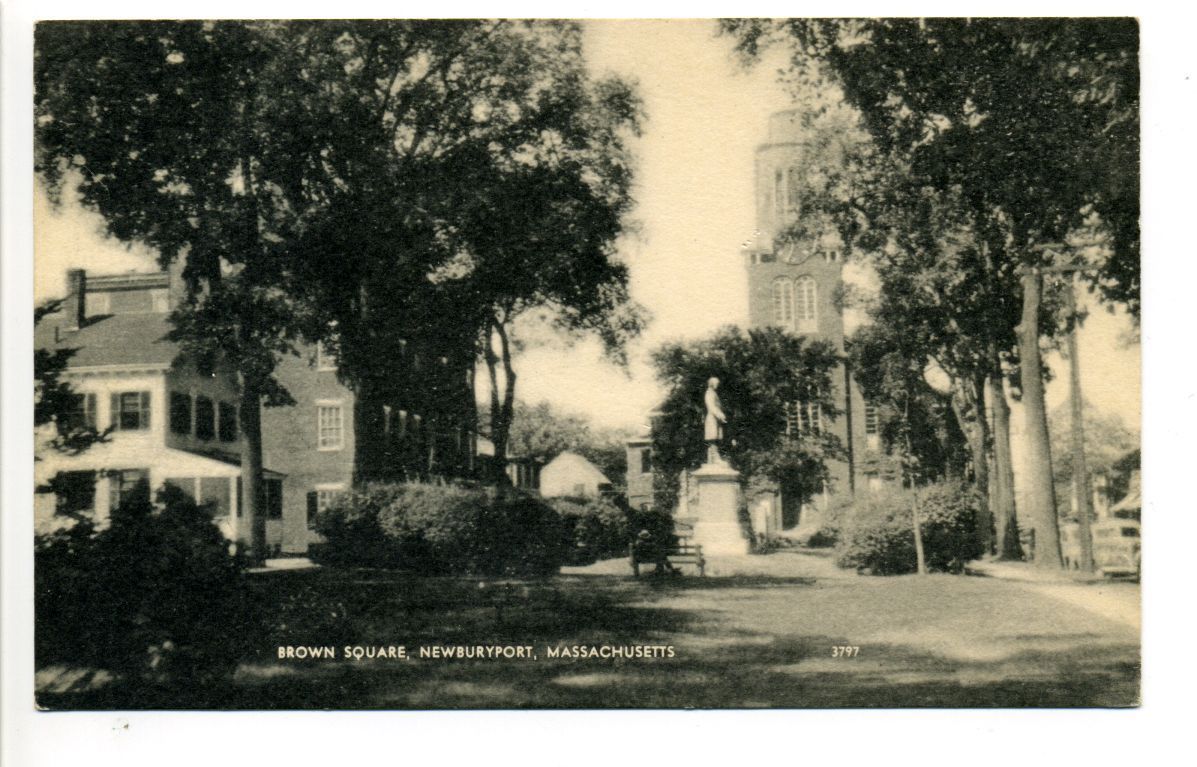
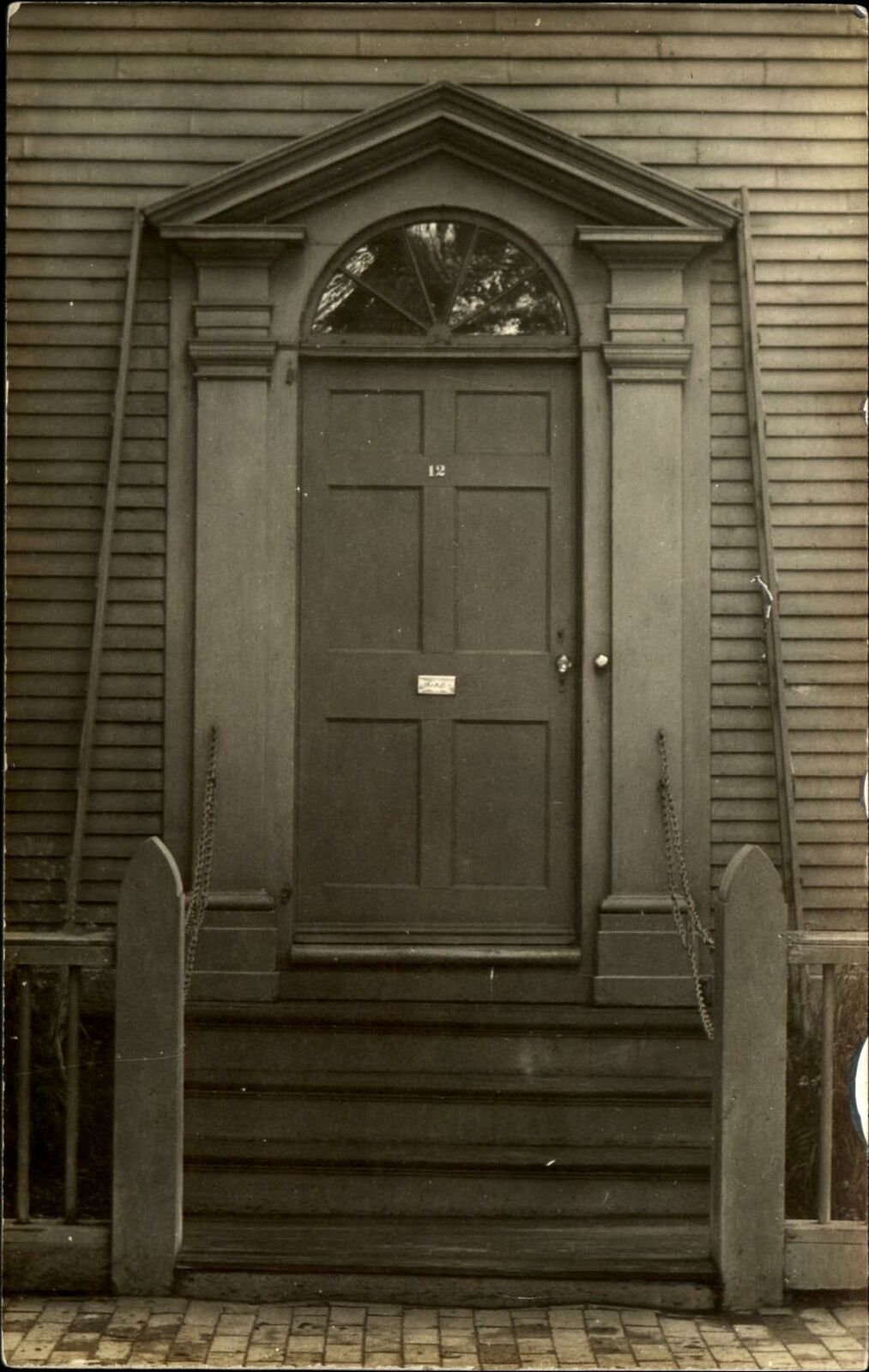
This is the concluding part of Friday ‘picture postals’ from Lovecraft: Newburyport – part one, looking at new views of Newburyport. Which was Lovecraft’s key model for Innsmouth.

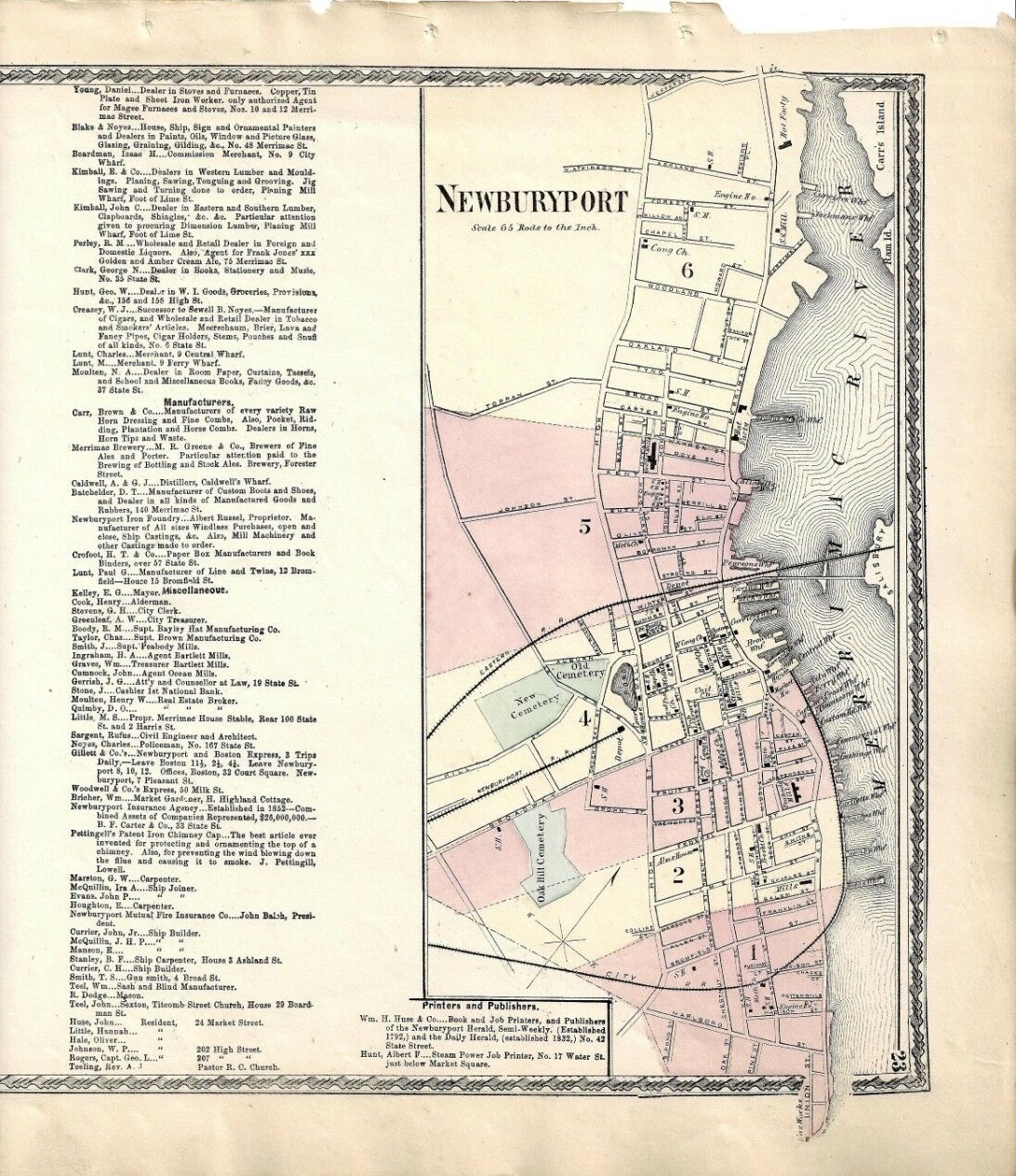
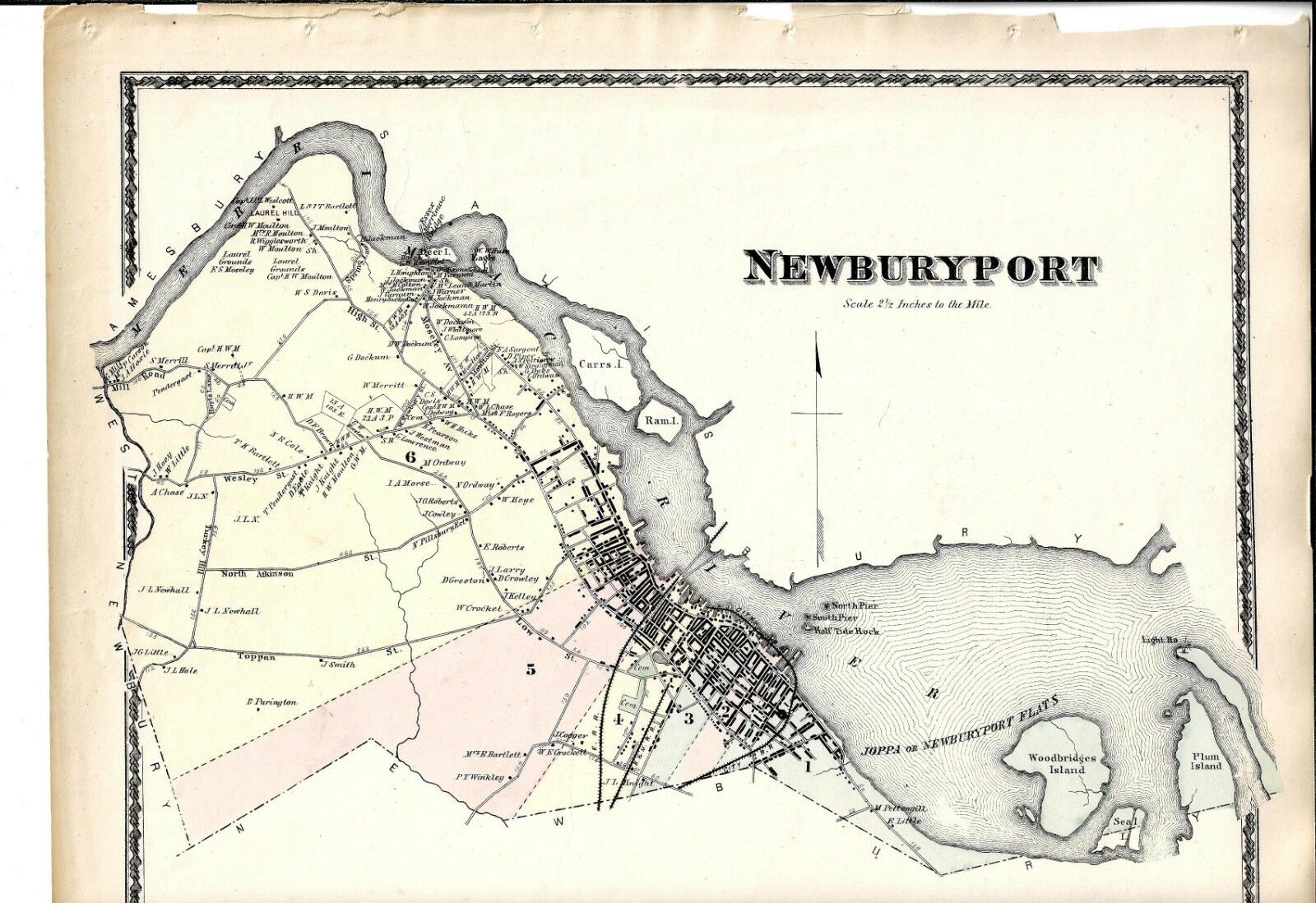
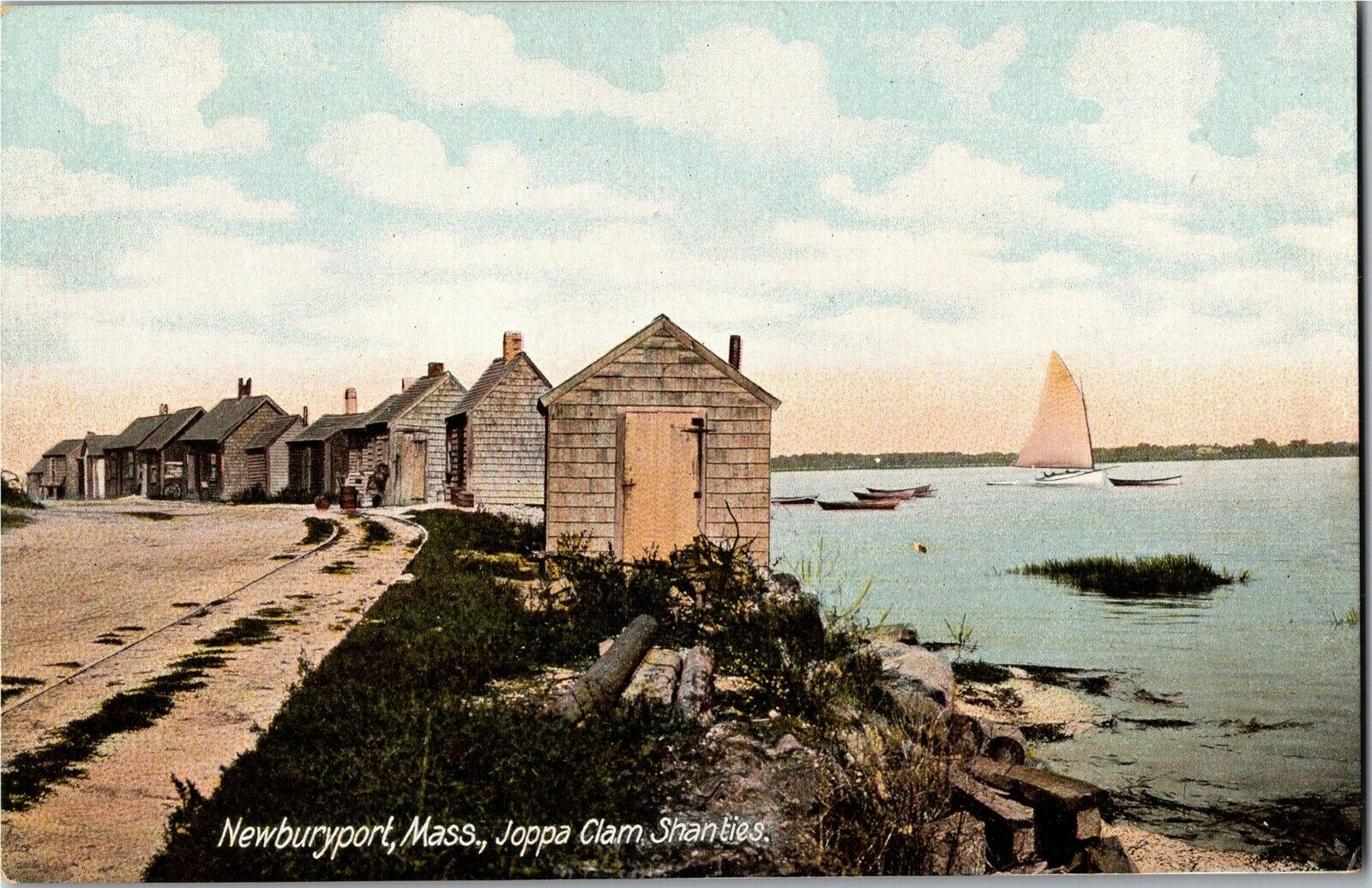
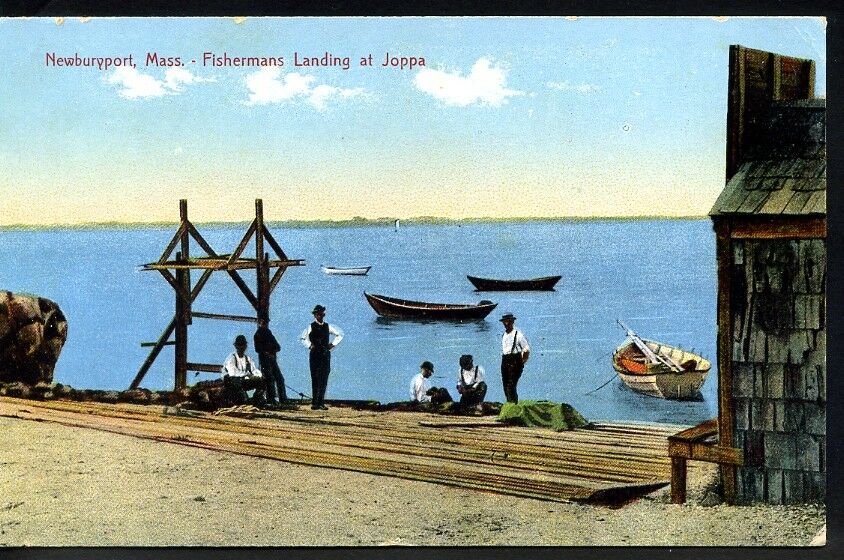
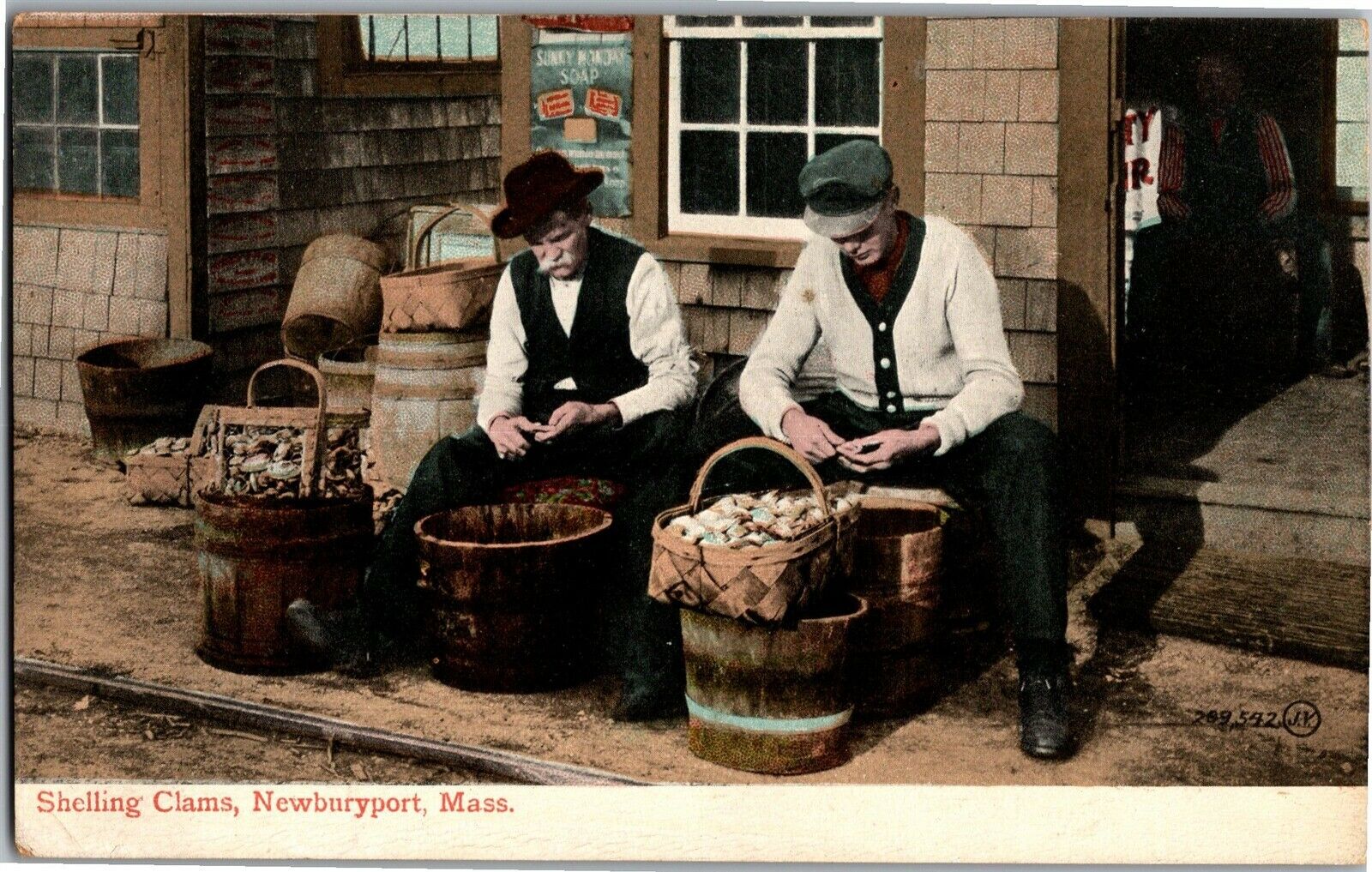
Below are maps and postcards not seen before in posts on this blog (these posts have included part one, and Along the Innsmouth shoreline among others).


Maps:

“the youth drew for my benefit a rough but ample and painstaking sketch map of the town’s salient features.”


The Joppa clam shanties and Joppa landing:

“Not a living thing did I see, except for the scattered fishermen on the distant breakwater, and not a sound did I hear save the lapping of the harbour tides …”


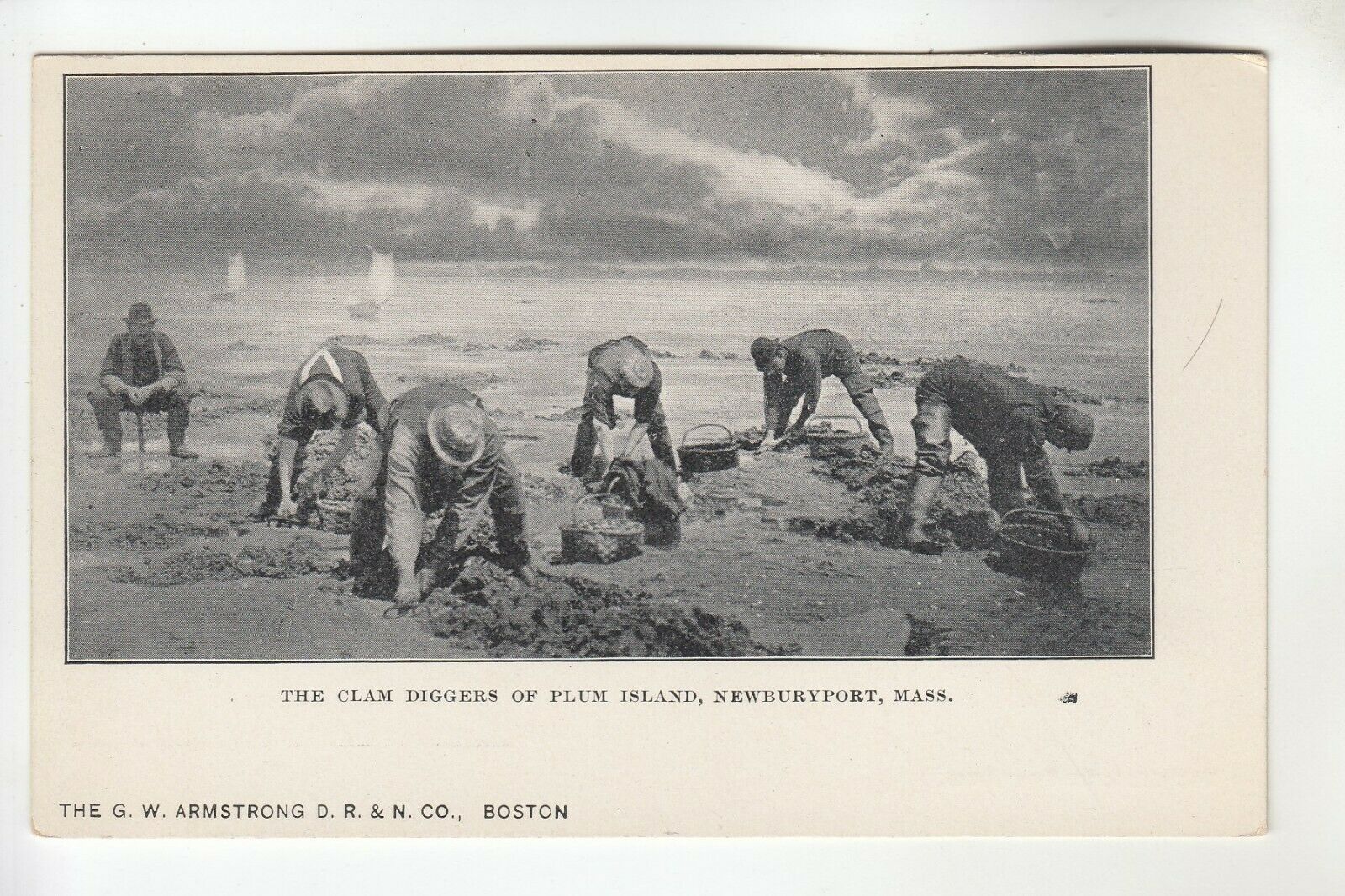
Clam men at work:

“Once or twice I saw listless-looking people working in barren gardens or digging clams on the fishy-smelling beach below …”


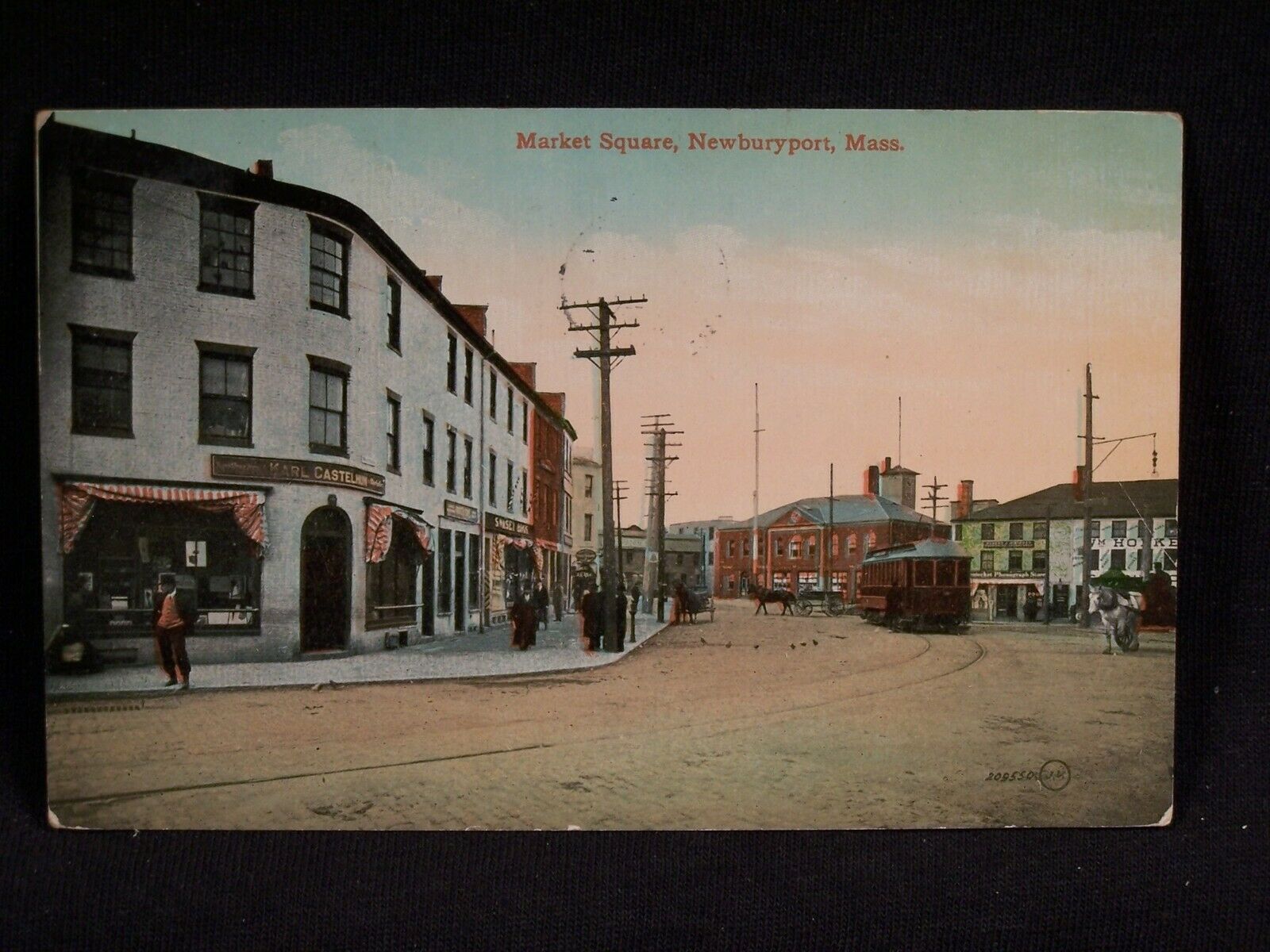
The town:

A Lovecraft-a-alike figure heads to the Innsmouth-type hotel. “Despite what I had heard of this hotel [the Gilman House] in Newburyport, I signed the register, paid my dollar, let the clerk take my valise, and followed that sour, solitary attendant up three creaking flights of stairs past dusty corridors which seemed wholly devoid of life.”

“a curious sort of buzz or roar seemed to be increasing in the direction of Town Square.”

A Lovecraft-a-alike figure on the bench. “The open space was, as I had expected, strongly moonlit; and I saw the remains of a park-like, iron-railed green in its centre.”

“There would, I knew, be plenty of deserted doorways to shelter me in case I met any person or group who looked like pursuers.” As we can see here, one could hop over the fence either side of the door and down into the scraggly plants or let-down behind.

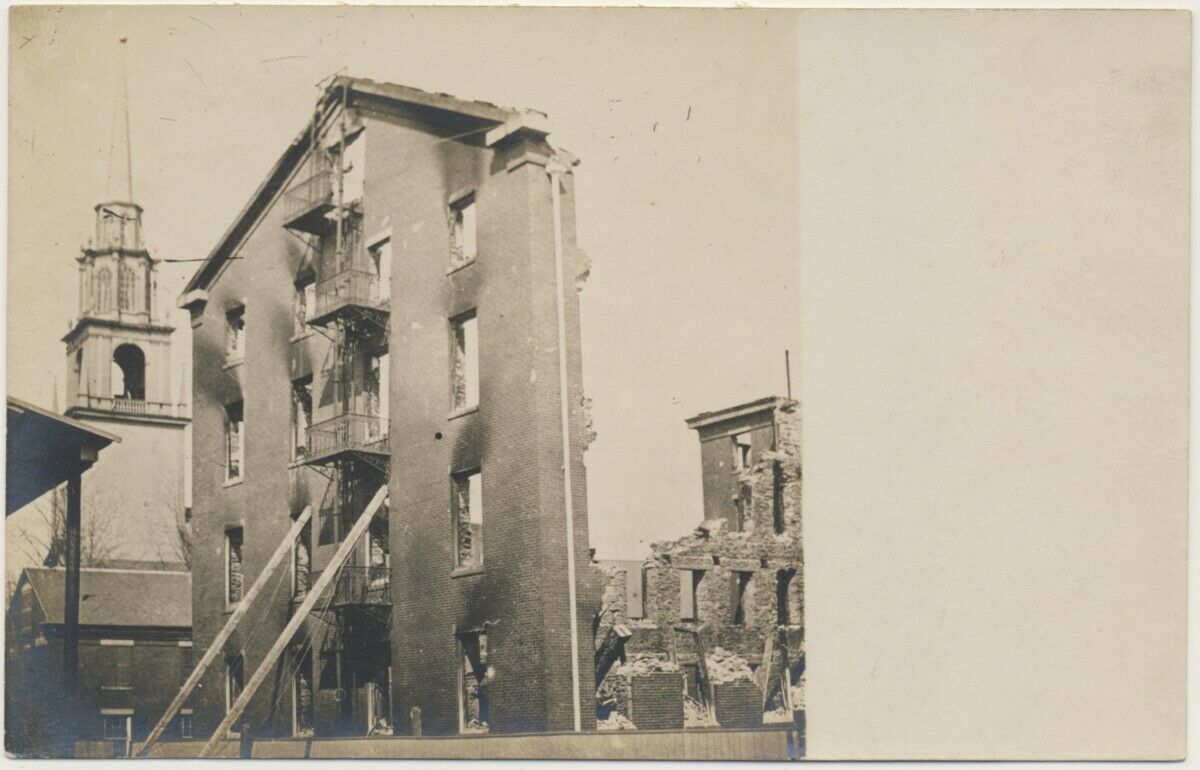
“The public first learned of it in February, when a vast series of raids and arrests occurred [in Innsmouth], followed by the deliberate burning and dynamiting — under suitable precautions — of an enormous number of crumbling, worm-eaten, and supposedly empty houses along the abandoned waterfront.”

MISSING CARD.

Scary driveway/entrance to the ‘homeopathic’ hospital.

“Complaints from many liberal organisations were met with long confidential discussions, and representatives were taken on trips to certain camps and prisons. As a result, these societies became surprisingly passive and reticent.”

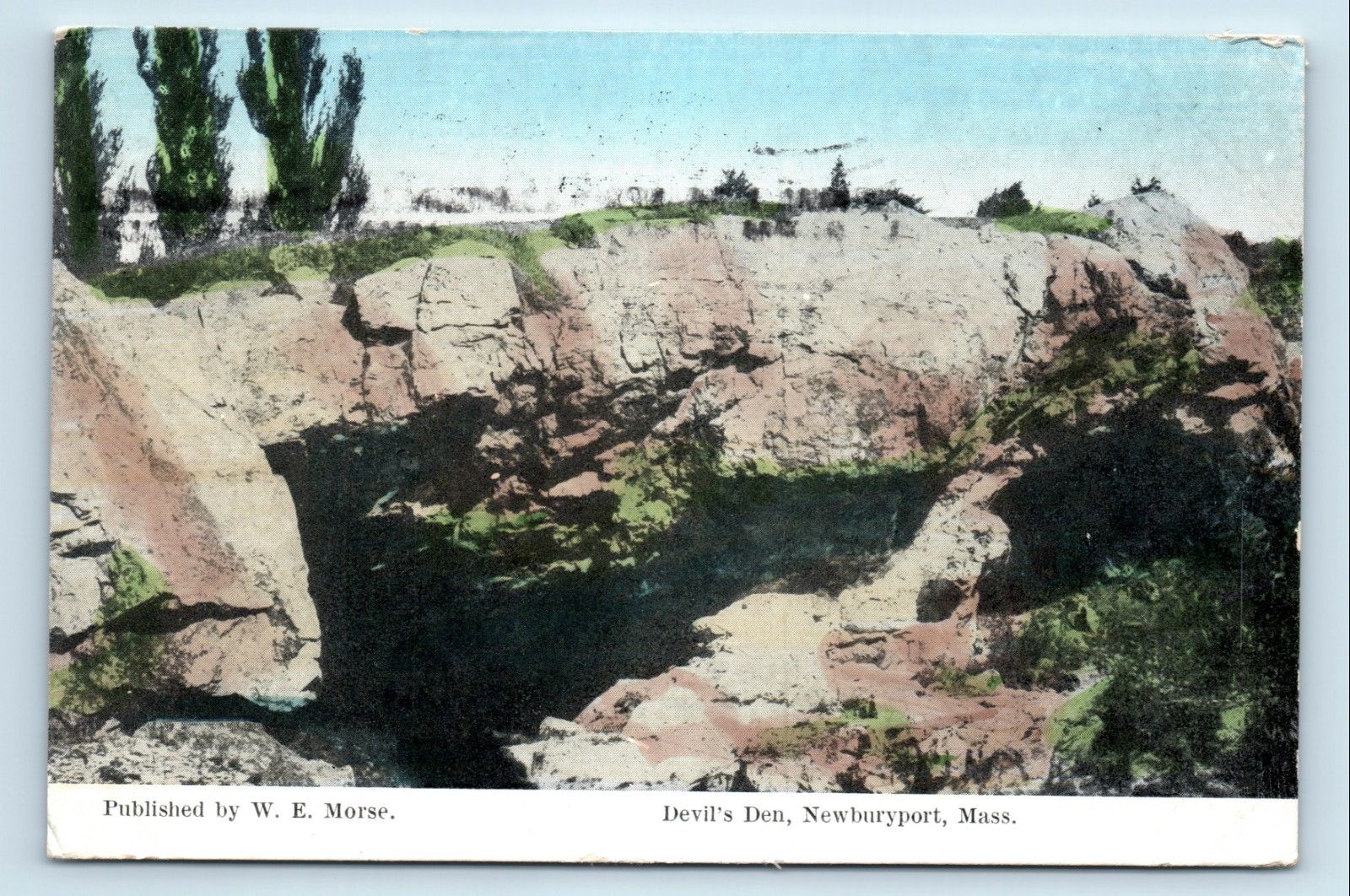
The “Devil’s Den”, a name which some have noted is akin to Innsmouth’s offshore “Devil Reef”.

Friday ‘picture postals’ from Lovecraft: Newburyport – part one

19 Friday Jul 2019

Posted by asdjfdlkf in Historical context, Picture postals

≈ 2 Comments

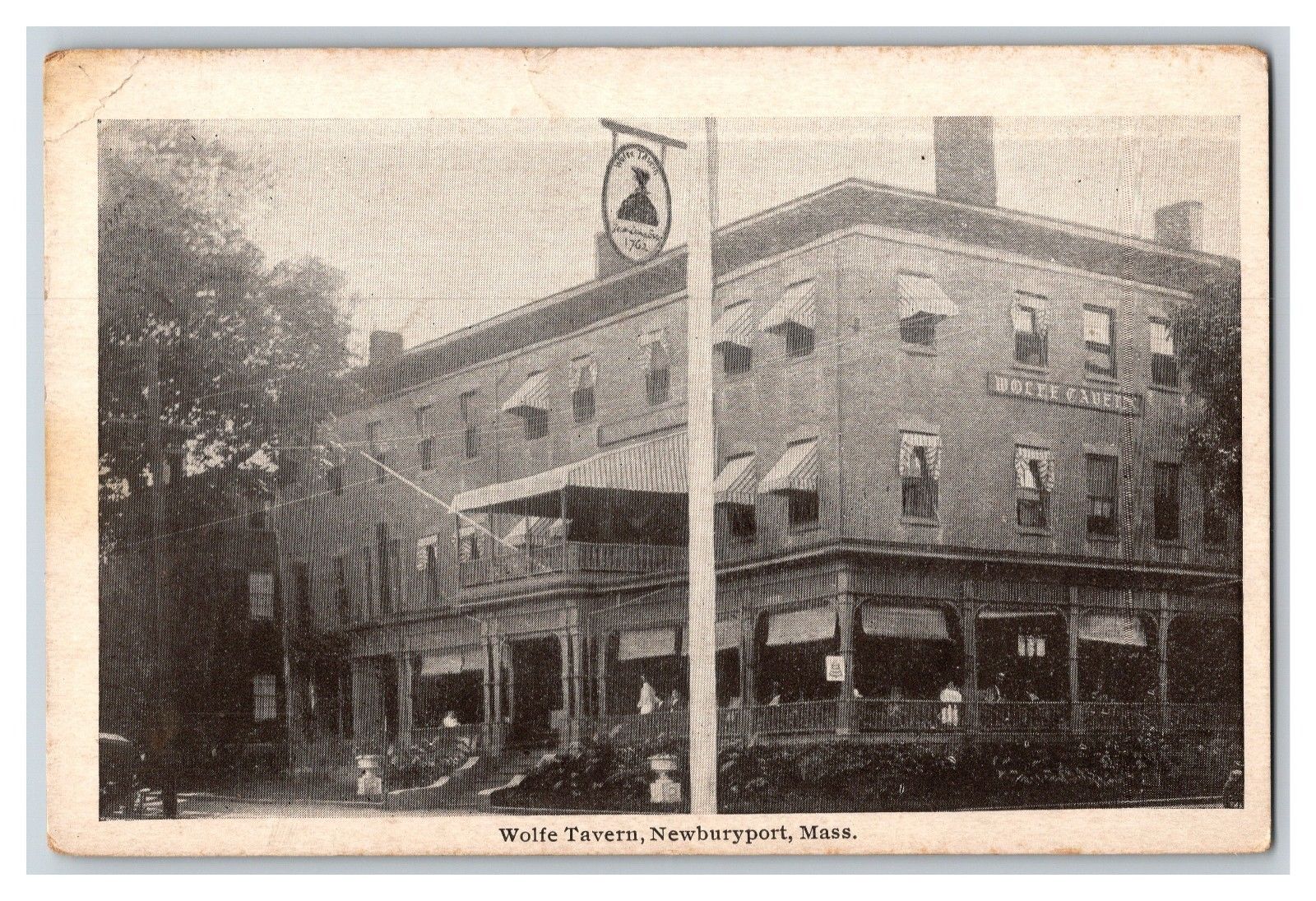
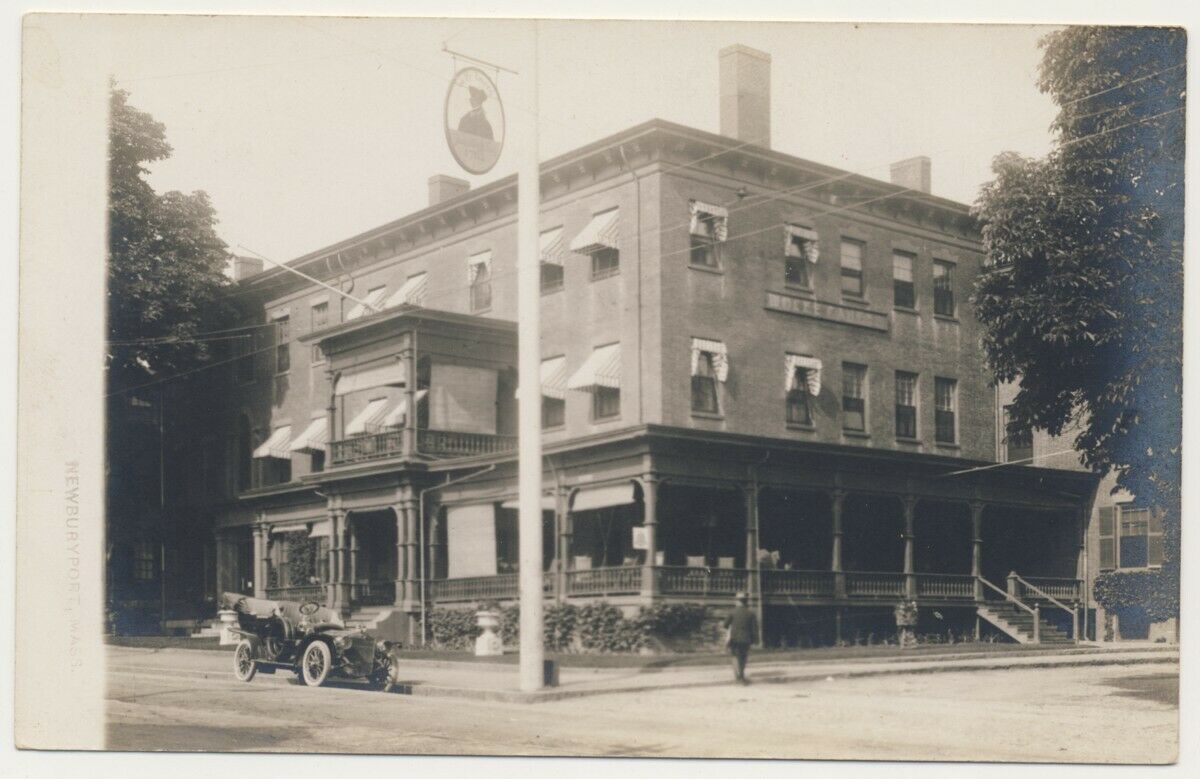
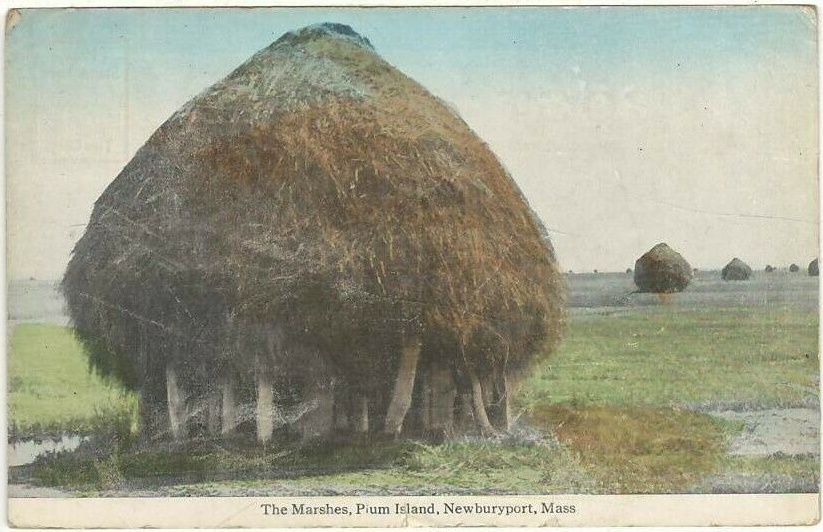
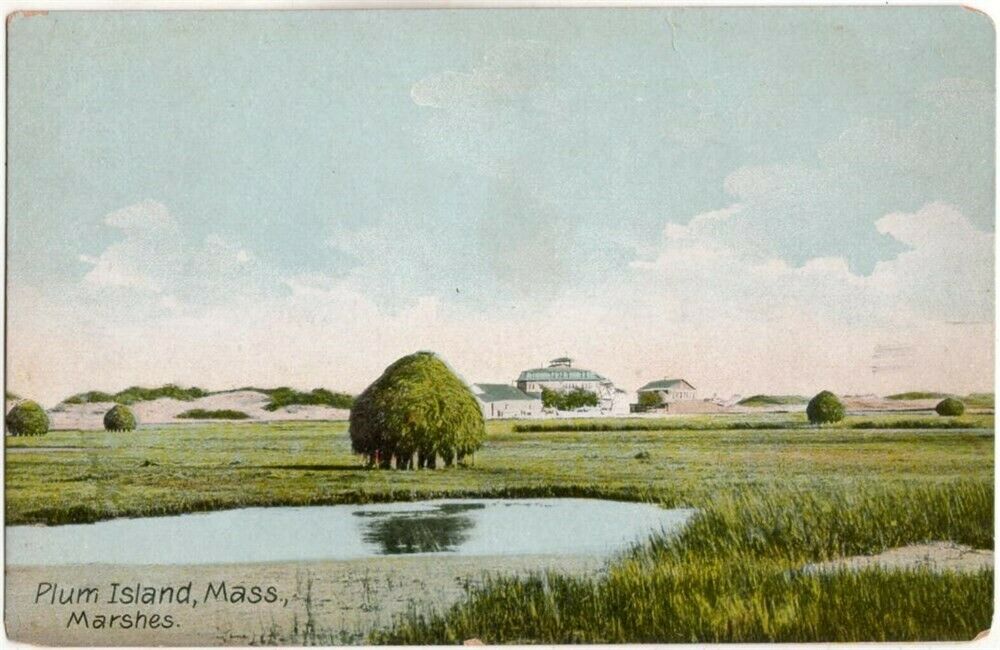
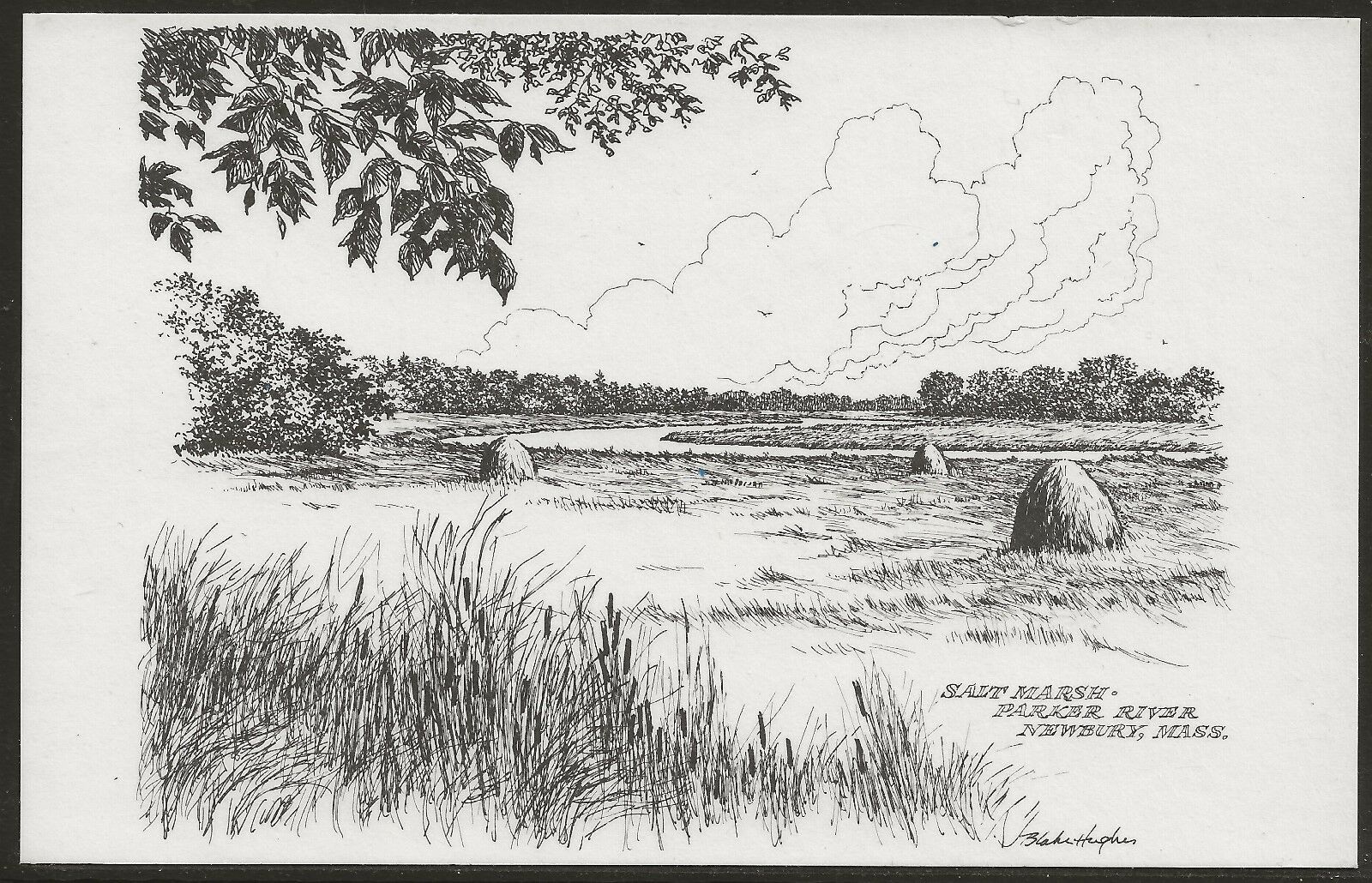
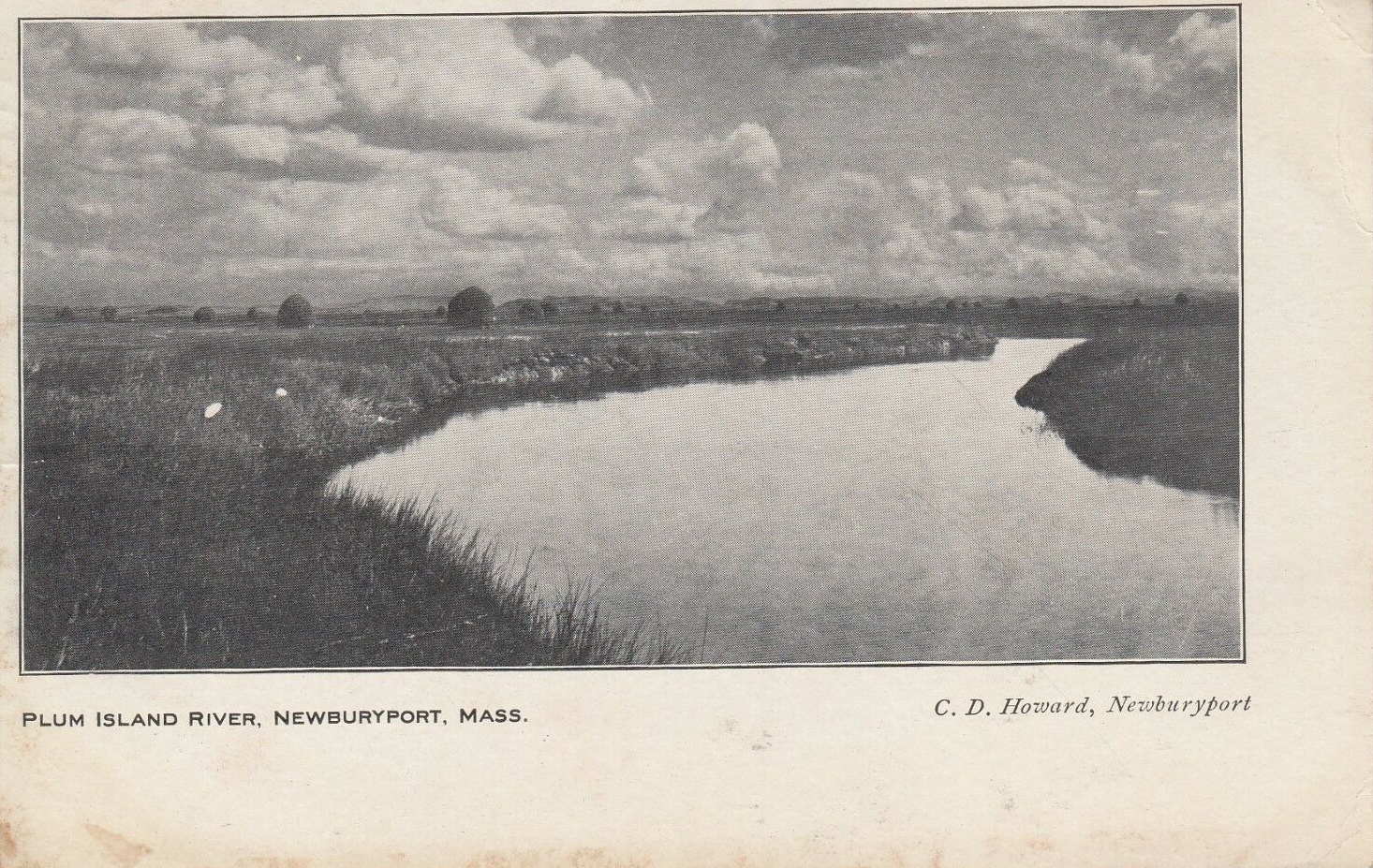
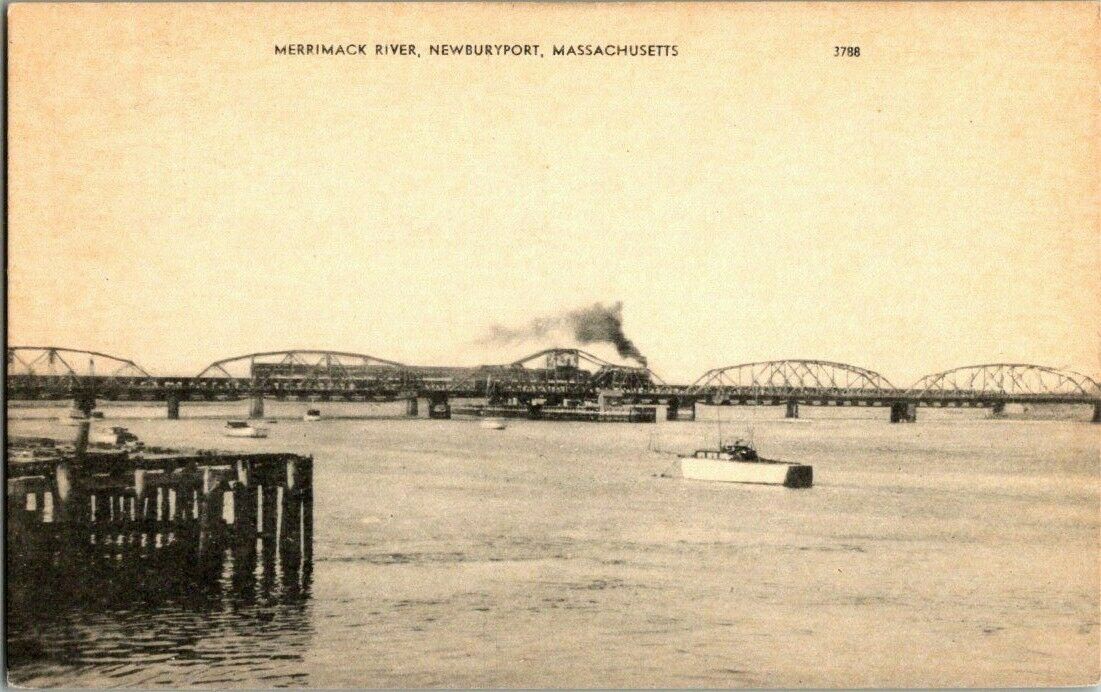
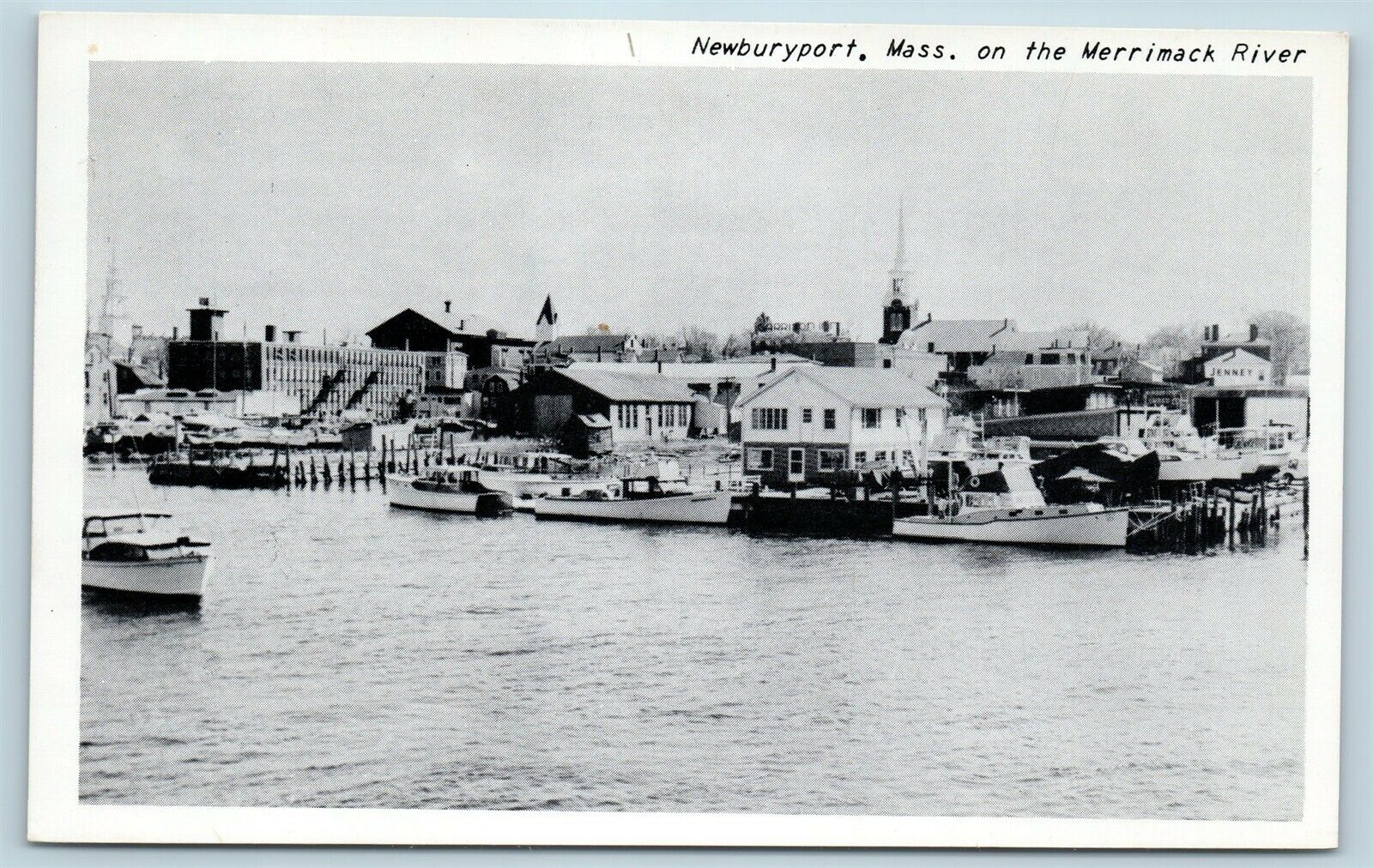
This week… back to Newburyport. Which was Lovecraft’s key model for Innsmouth.

Below are postcards not seen before in posts on this blog. I’ve previously collected such cards in posts such as Along the Innsmouth shoreline. But those below are additional cards.

The marshes on Plum Island, and the river:


The river and working boats:

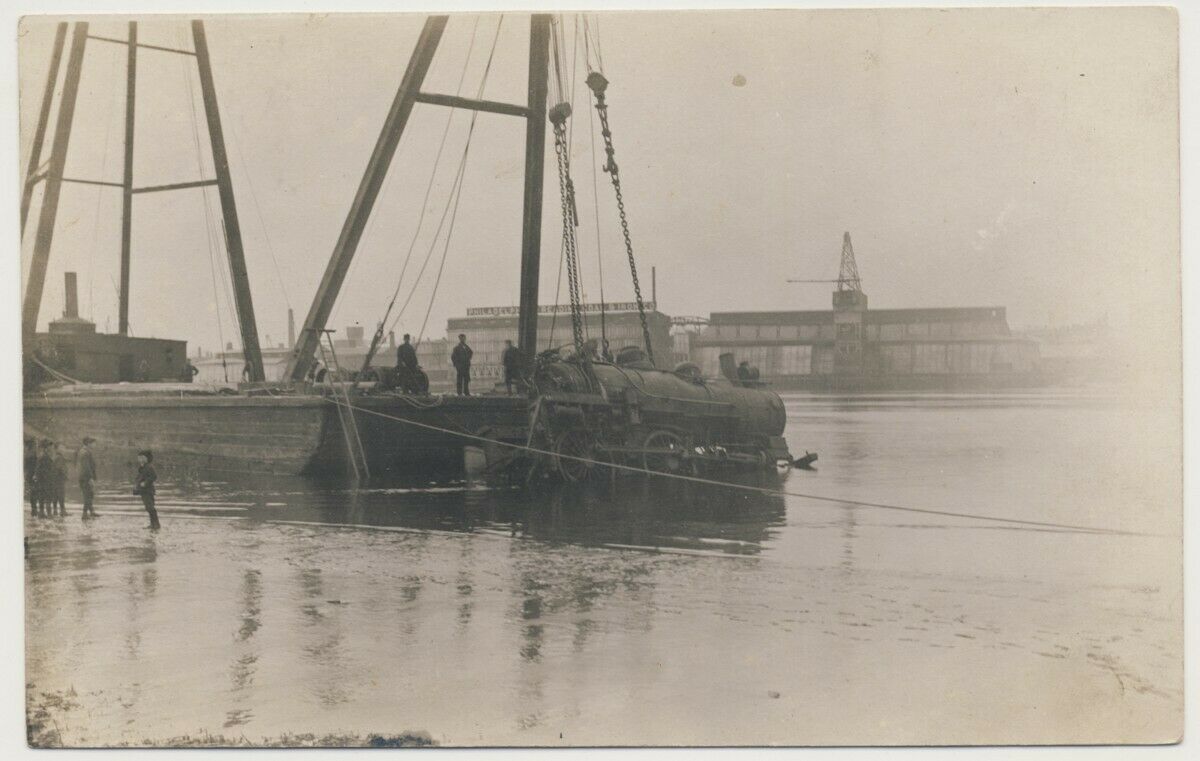
Locomotive gone off a bridge or swept away in a flood. Said by the seller to be Newburyport, but I’m not 100% sure.


Next week: the town and Joppa.

Friday ‘picture postals’ from Lovecraft: the shacks of Marblehead.

12 Friday Jul 2019

Posted by asdjfdlkf in Historical context, Maps, Picture postals

≈ 1 Comment

whilst conversing with natives there [in the witch-town of Salem], I had learnt of the neighbouring fishing port of Marblehead, whose antique quaintness was particularly recommended to me. Taking a stage-coach thither, I was presently borne into the most marvellous region I had ever dream’d of, & furnish’d with the most powerful single aesthetic impression I have receiv’d in years. Even now it is difficult for me to believe that Marblehead exists, save in some phantasticall dream.” — letter from H.P. Lovecraft.

Marblehead thereafter became one of Lovecraft’s favourite places as a New England antiquarian. His first visit to the town was at dusk and relatively brief, and its atmosphere permeates his story “The Festival”. He did not visit the harbour area at that time, but walked upward and onto the headland for sunset views over it, then returned down the winding streets in the gathering dusk (as in “The Festival”).

Did he ever visit the harbour and step down to the shore? I can find no evidence he did. But he returned to the ancient town again and again and must surely have, at some point, closely surveyed the shorelines and jetties, if only from a distance. His July 1923 visit for instance, ‘did’ a newly discovered built-up section which he found went right down to the harbour…

Verily, here alone survives the maritime New-England of yesterday, with the glamour of ships and the salt winds of eighteenth-century voyages.

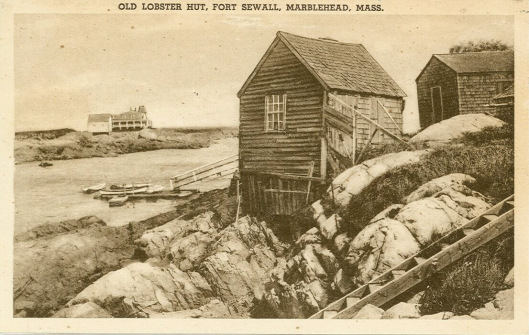
However, at Marblehead many of the lobster shanties appear to have been over on the Little Harbour, on the east side of the town. This was termed at that time a “cove at the lower end of the settlement”. Below is a map for orientation.

It may be objected that Lovecraft would have steered clear of going too close to an actual waterfront. Since, although a ship-captain’s sea-tang in the air seems to have been not unwelcome to him, he disliked the actual smell of fish. Yet here he is at Gloucester in 1927, exploring the still-working waterfront of the “really unchanged New England fishing port”…

one may actually get a lingering taste of old New England’s maritime past, along a waterfront filled with sail-lofts, ship-chandleries, and seamen’s missions.

Again, this doesn’t quite have him tromping down rough cobbled-stone slipways and then out along a sandy strand of loose grit and crushed lobster-claws. Which he might have encountered if he had walked over to Fort Sewall and down into Little Cove (or Little Harbour) in Marblehead. From the shacks at such places the fishermen worked as they always had. Lobstermen, in particular, still worked from shoreline structures such as those shown below, with their wooden lobster pots stacked up against the sides.

One could also see at Marblehead examples of houses which are basically fishing sheds, such as the ancient Gardner House (aka ‘Gardner Cottage’) now at 7 Gregory Street and “facing the quiet water of the tidal bay”…

A possible inspiration for Lovecraft? Well, there are many ‘Gardners’ in New England and, unless someone can dig up a “Nahum Gardner” here, there seems no reason to claim this place for “The Colour out of Space”.

What of other possible inspirations? Well, again one comes up empty. “The Lurking Fear” was written a year before Lovecraft discovered Marblehead. Thus it can’t be suggested that those particular shore shanties may have played into “Fear” settings such as…

The ground under one of the squatters’ villages had caved in after a lightning stroke, destroying several of the malodorous shanties; but upon this property damage was superimposed an organic devastation which paled it to insignificance. … The disordered earth was covered with blood and human debris bespeaking too vividly the ravages of daemon teeth and talon…

Nevertheless, there is a slim chance that there was some other shoreline encounter with “malodorous” shanties, likely surrounded by sun-bleached lobster detritus such as big claws (resembling “daemon teeth and talon”). That might be one possible real-life memory on which Lovecraft drew for this element in “Fear”, though there were doubtless others. It seems that lobstering was a craft practised pretty much all along the New England shoreline in suitable bays and coves, and that such big sun-bleached claws must have been a feature of shore-life. Such remains would have been a macabre if once-removed encounter with real-life deep ones.

What do the history books say? Well, they state that there had been a steady decline in lobster catches from the 1890s onward, probably due to over-fishing for the visitor trade. Then there were three prolonged cold snaps in a row, in the early 1920s, which soon made things quite tough for New England lobstermen by 1923. Worse times were coming, as tourist demand boomed in the hot summers of the mid 1920s and yet catches plummeted into the 1930s… just as the Great Depression really hit. Had Lovecraft actually met any old lobstermen on his travels in the 1920s and 30s, they would likely not have been very cheery people — in manner and sentiment probably much like old Zadok Allen of Innsmouth.

Thus, there seem to be no obvious aha! inspirations in the shanties at Marblehead. Oh well… one can’t expect to haul up new discoveries on every pictorial dive into Lovecraft’s places. But, those Lovecraftians looking for lobster and clam shacks in future will now at least be aware they were not only encountered by Lovecraft at the Joppa clam shanties at Newburyport (his main model for Innsmouth).

← Older posts
Newer posts →


Please become my patron at www.patreon.com/davehaden to help this blog survive and thrive.

Or donate via PayPal — any amount is welcome! Donations total at Easter 2025, since 2015: $390.

Archives

  • February 2026
  • January 2026
  • December 2025
  • November 2025
  • October 2025
  • September 2025
  • August 2025
  • July 2025
  • June 2025
  • May 2025
  • April 2025
  • March 2025
  • February 2025
  • January 2025
  • December 2024
  • November 2024
  • October 2024
  • September 2024
  • August 2024
  • July 2024
  • June 2024
  • May 2024
  • April 2024
  • March 2024
  • February 2024
  • January 2024
  • December 2023
  • November 2023
  • October 2023
  • September 2023
  • August 2023
  • July 2023
  • June 2023
  • May 2023
  • April 2023
  • March 2023
  • February 2023
  • January 2023
  • December 2022
  • November 2022
  • October 2022
  • September 2022
  • August 2022
  • July 2022
  • June 2022
  • May 2022
  • April 2022
  • March 2022
  • February 2022
  • January 2022
  • December 2021
  • November 2021
  • October 2021
  • September 2021
  • August 2021
  • July 2021
  • June 2021
  • May 2021
  • April 2021
  • March 2021
  • February 2021
  • January 2021
  • December 2020
  • November 2020
  • October 2020
  • September 2020
  • August 2020
  • July 2020
  • June 2020
  • May 2020
  • April 2020
  • March 2020
  • February 2020
  • January 2020
  • December 2019
  • November 2019
  • October 2019
  • September 2019
  • August 2019
  • July 2019
  • June 2019
  • May 2019
  • April 2019
  • March 2019
  • February 2019
  • January 2019
  • December 2018
  • November 2018
  • October 2018
  • September 2018
  • August 2018
  • August 2015
  • July 2015
  • April 2015
  • March 2015
  • February 2015
  • January 2015
  • December 2014
  • November 2014
  • October 2014
  • September 2014
  • August 2014
  • July 2014
  • June 2014
  • May 2014
  • March 2014
  • February 2014
  • January 2014
  • December 2013
  • November 2013
  • October 2013
  • September 2013
  • August 2013
  • July 2013
  • June 2013
  • May 2013
  • April 2013
  • March 2013
  • February 2013
  • January 2013
  • December 2012
  • November 2012
  • October 2012
  • September 2012
  • August 2012
  • July 2012
  • June 2012
  • May 2012
  • April 2012
  • March 2012
  • February 2012
  • January 2012
  • December 2011
  • November 2011
  • October 2011
  • September 2011
  • August 2011
  • July 2011
  • June 2011
  • May 2011
  • April 2011
  • March 2011
  • February 2011
  • January 2011
  • December 2010
  • November 2010
  • October 2010
  • September 2010
  • August 2010
  • July 2010

Categories

  • 3D (14)
  • AI (70)
  • Astronomy (70)
  • Censorship (14)
  • de Camp (7)
  • Doyle (7)
  • Films & trailers (101)
  • Fonts (9)
  • Guest posts (2)
  • Historical context (1,095)
  • Housekeeping (91)
  • HPLinks (74)
  • Kipling (11)
  • Kittee Tuesday (92)
  • Lovecraft as character (58)
  • Lovecraftian arts (1,626)
  • Lovecraftian places (19)
  • Maps (70)
  • NecronomiCon 2013 (40)
  • NecronomiCon 2015 (22)
  • New books (966)
  • New discoveries (165)
  • Night in Providence (17)
  • Odd scratchings (984)
  • Picture postals (276)
  • Podcasts etc. (431)
  • REH (184)
  • Scholarly works (1,469)
  • Summer School (31)
  • Unnamable (87)

Get this blog in your newsreader:
 
RSS Feed — Posts
RSS Feed — Comments

H.P. Lovecraft's Poster Collection - 17 retro travel posters for $18. Print ready, and available to buy — the proceeds help to support the work of Tentaclii.

Proudly powered by WordPress Theme: Chateau by Ignacio Ricci.