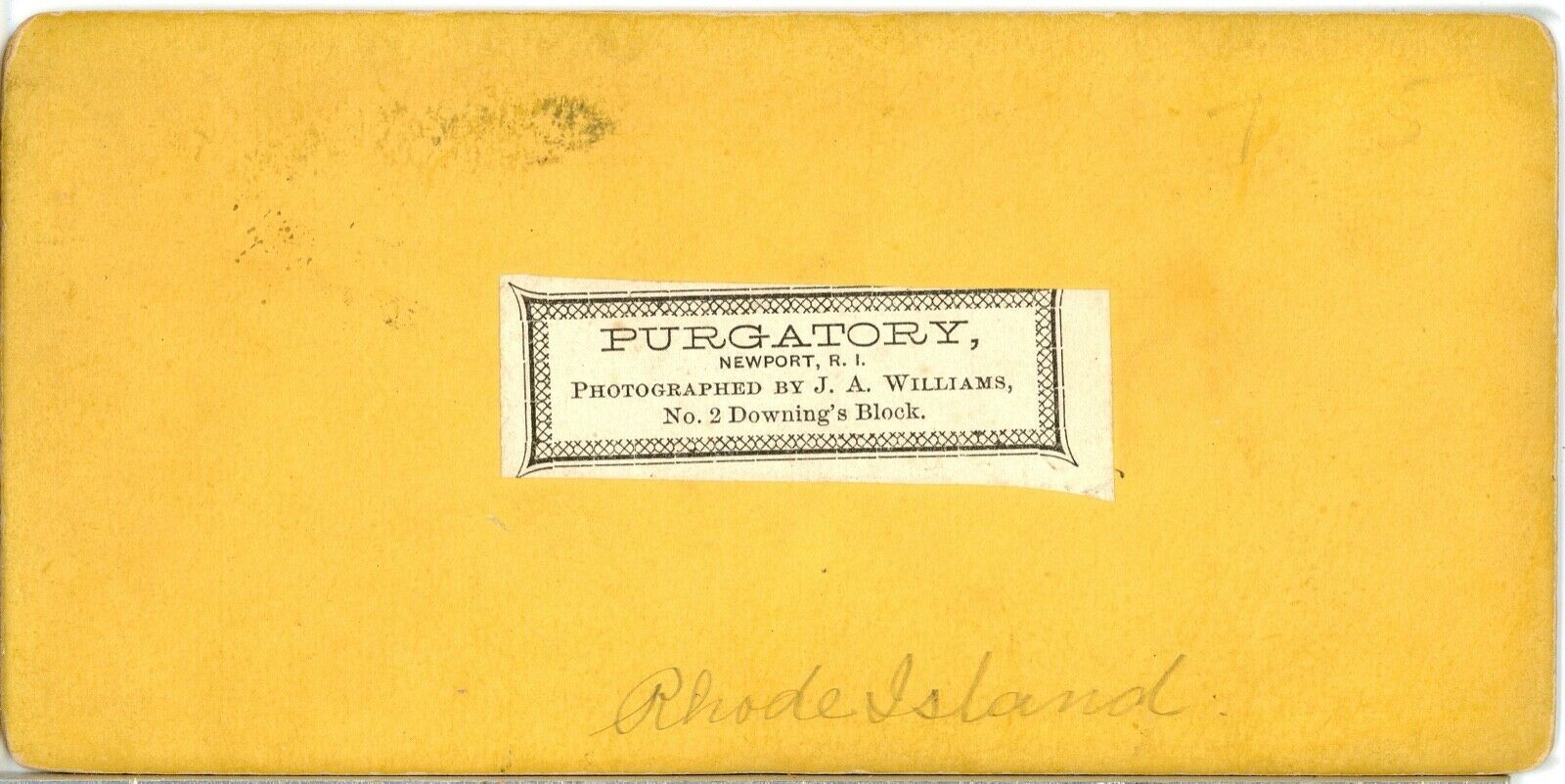
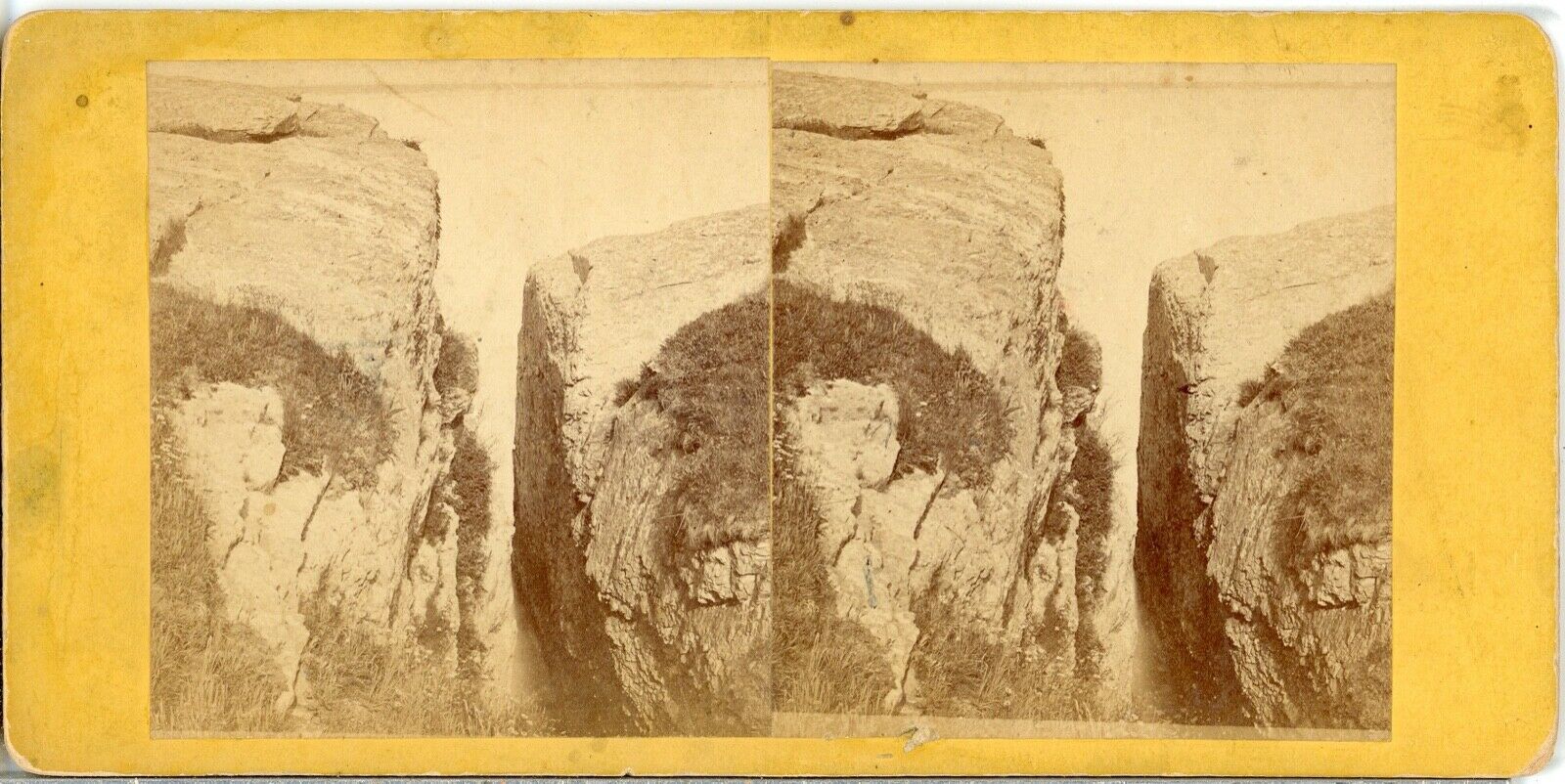
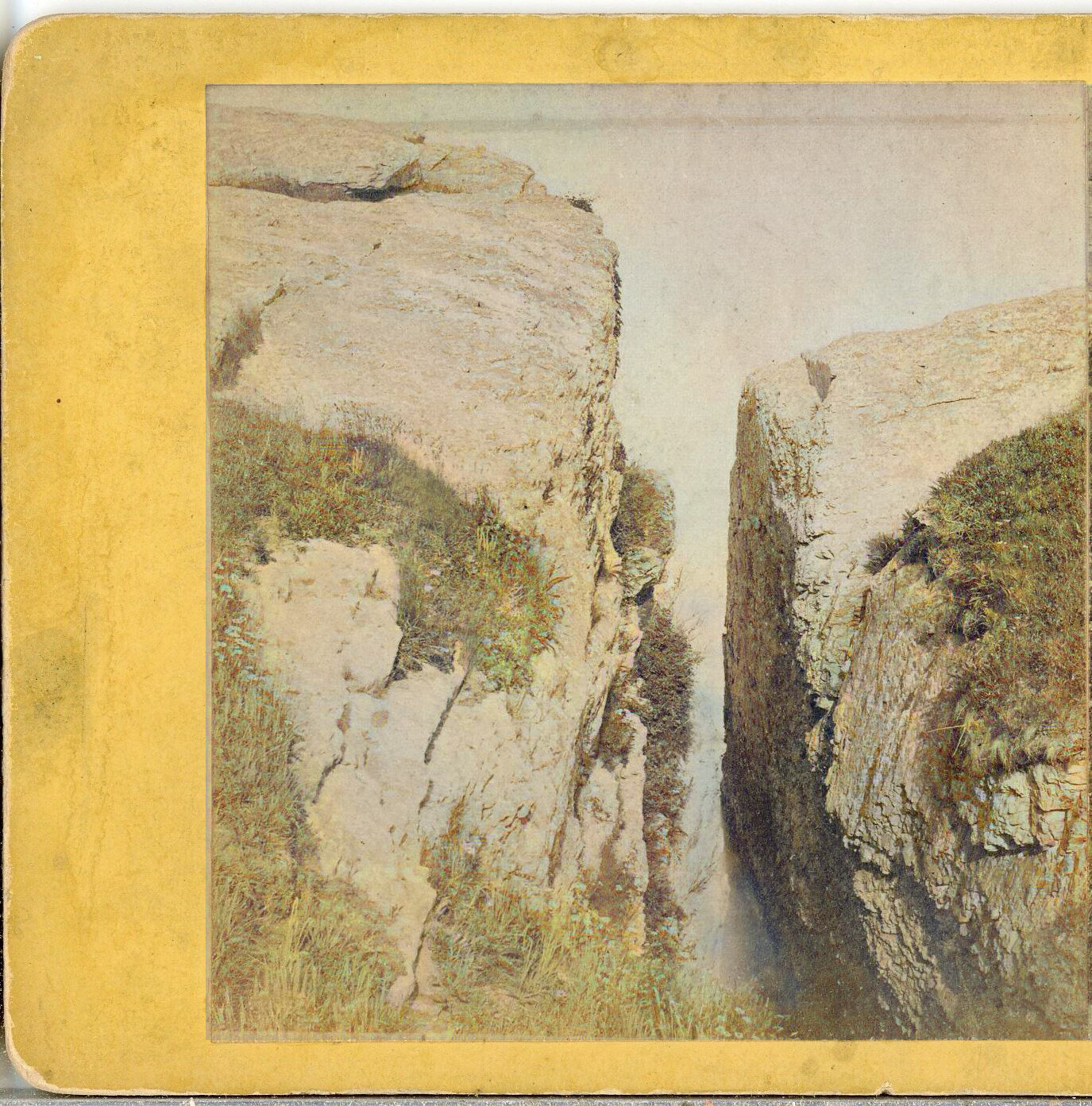
This week, one of Lovecraft’s favourite places, or rather the back of it. It was one of the last places he visited in his final summer.
Text of post lost, due to the WordPress swop-over.

08 Friday Oct 2021
Posted in Historical context, Picture postals
This week, one of Lovecraft’s favourite places, or rather the back of it. It was one of the last places he visited in his final summer.
Text of post lost, due to the WordPress swop-over.
01 Friday Oct 2021
Posted in Historical context, Picture postals

The card shows the old and the new Turks Head.
Just across the street from here was the Dana Bookshop. This bookshop, and possibly some lingering Lovecraft materials, was burned and flooded out just as the Lovecraft revival was getting underway. Lovecraft knew it as the “Old Corner Bookshop” (Letters to Family, p. 612), and named it such in recalling the poignant sight of his mother’s books on display and for sale in the window. Later the Dana shop took some of Lovecraft’s own Library after his death. There is no vintage photo of the shop-front that I can find, so the postcard of the adjacent Turks Head building must suffice.
Here are some reminiscences of the bookshop…
“Wonderful old things continued to vanish [from Providence in the late 1960s]. During my first few weeks at Brown. when I knew nobody, I used to walk most days at lunchtime front my office down College Hill and crossing the Providence River [by the long bridge, no longer there,] I would gawk my way down Weybosset Street. There I would have lunch at the almost deserted lunch counter of the Weybosset Market [only] a bit larger than a mom and pop store. There was sawdust on the floor: ancient fans whirred overhead. […] Dana’s, a wonderful secondhand bookstore run by a most elderly couple […] in the basement of the Wilcox Building where there was a serious fire in the early 1970s. The bookstore was technically saved. but the water damage was so extensive that Mrs. Dana was forced to dispose of her water logged stock and go out of business. Dana’s had wonderful nineteenth-century children’s books.” — Abbott Gleason, A Liberal Education.
“… the wonderful old Dana’s Book Shop which was in the financial district of Providence just across the street from the Turks Head building. I would stop there now and then on my lunch hour […] I once got treated to a ride to their store room on the 3rd or 4th floor of the ancient building they were in, and the elevator was one of the old 1910 era hydraulics with a rope running down the middle. The elevator operator would pull on the ropes, without too much effort and we would go up or down as needed. This was around 1970.” — James Pannozzi.
“The reek of wet ashes and smoke greeted us harshly as soon as we reached the canal. Crossing over, we began to feel the heat before we were able to see exactly what was burning. The closer we got, however, the more sickeningly I felt that I knew. And I wailed aloud when I saw I was right. The fire was speedily gutting part of an old business block, unbelievably right on Weybosset Street, where everything was brick and granite. Flames roared out from shattered windows, illuminating a modestly ornate 1880’s facade [of the Wilcox Building …] Under the torrential discharge of the fire hoses, the inferno was successfully contained. […] Books lay sodden and trampled all over the street and in the gutters. Dana’s, housed in the basement, must have flooded quickly under the hose-attack. A vintage copy of Alice in Wonderland, matted and splayed, was close by my feet. […] finding [Dana’s had been like finding] a bit of London, magically landed in Providence. I lived for those afternoons when I could escape here, with my two or three bucks in my pocket, and idle away the time till rush hour…” — C.A. Bourdon, Charleyville Revisited (fiction, though seemingly semi-autobiographical).
Fine Books later had an article-memoir on the store…
“The shop was on the ground floor of the building, entered from street level down a few steps. […] when the great hurricane of 1938 flooded downtown Providence it escaped, but just barely, as the floodwaters lapped at its bottom edges. The surviving stock had then been moved up to a storeroom on an upper floor [which by the 1960s had become] an enormous warehouse-like room filled with thousands of books, all neatly categorized and shelved, just as in an open bookstore. My jaw dropped at the sight – for me it was like stumbling into King Tut’s tomb, or Ali Baba’s cave. […] Sadly, the building housing Dana’s burned just a few years later and the bookstore, with nearly all of its stock, was destroyed. Ironically, the books in the ground floor shop itself didn’t burn, but were lost to water damage, once again. As for the storeroom upstairs, no mention is made of it in accounts of the fire.” — Martin J. Murphy.
The Wilcox Building is mentioned above, but a 1970s photo shows the ornamented Wilcox Building and adjacent Equitable Building…
the Equitable Building incorporates the Victorian custom of splitting the street-level tenants in half – a shop half a floor down and the principle business half a floor up. At the right is the Wilcox building.
This view must be of Weybosset because the L-shaped building having two frontages, and another source remarks on the “delightfully asymmetrical, sculpturally ornamented one on Weybosset Street”.

Given the Fine Books recollection that… “The shop was on the ground floor of the building, entered from street level down a few steps” this suggests that it could have been on the lower-ground ‘exposed basement’ floor of the Equitable Building seen here.
Yet a 1890s picture hints at a possible down-steps in the centre of the adjacent Wilcox Building…

A 1980s(?) picture of the same spot…

Then a further recollection of the Dana Bookshop places it definitely in the “basement” of the Wilcox Building…
“I discovered a used bookstore called Dana’s, in the basement of the Wilcox Building. They had children’s books from the 1800s, ones I’d only heard about reading other children’s books. Alas, before I ever had the money to make acquisitions, the Wilcox Building caught fire. Dana’s was spared the fire, but the water damage destroyed all those lovely books.” — memories of the 1960s in Providence, by Linda M. Young.
The Antiquarian Bookman journal for summer 1966 gives its address as “Dana’s Old Corner Book Shop, 44½ Weybosset St.” And indeed on Google Streetview this address takes one to the expected place, with “44” seen painted on the shopfront window-glass…

Thus the top two floors of the Wilcox Building are the resting (and burning) place of the last of Lovecraft’s library.
The city’s preservationists recorded the Wilcox Building’s neo-Gothic frontage in a detailed description in 1969, shortly before the fire…
“The Wilcox Building, designed by Edwin O. Howland, dates from 1875. It is one of the city’s first office buildings in the polychromatic High Victorian Gothic style. This L-shaped structure, built around the Equitable Building, has facades on Weybosset and Custom House Streets. The brick facades are trimmed with stone and their regular fenestration serves as a pattern from which a complex decorative scheme is elaborated. The ground floor of the Weybosset Street elevation is arcaded; the voussoirs of its segmental arches are alternate-blocks of pudding stone and grey granite. The capitals of the piers and polished granite columns are richly carved with foliage, flowers and birds. More abstract motifs embellish the stone belt courses and fancifully-shaped window caps of the upper stories. The Weybosset Street facade is accented by a slight projection of the two right hand window bays, terminated by a fake gable rising above the otherwise flat roofline. “The Wilcox Building” is inscribed above the third-story windows of this tower-like projection.”
24 Friday Sep 2021
Posted in Picture postals
This week another postcard sent to Lovecraft, rather than by him. He once had this card (or one very like it). I think it arrived from Paris and was sent by his young friend Galpin, though I could be wrong about that. Anyway he remarked, in a letter I recently read, on the very close resemblance of the painting to his elderly friend and adventure writer Everett McNeil. Then living in the slum of Hell’s Kitchen, New York City.

Though I should add that the good postcard promo-photo of the white-haired McNeil that I found (see my book on McNeil) shows no sign of the Innsmouthian nose-blobbling seen above.
Incidentally, now on Archive.org “to borrow”, two of McNeil’s best-selling boys’ adventure books. The librarians complained they were so popular with boys that (even with multiple copies) his books were almost impossible to keep on the shelves…
The Shadow of the Iroquois (1928)
The Shores of Adventure (1929)


McNeil’s later books are still hard to find in open form, due to copyright renewals by a family member… who then failed to keep the books in print. But his work should all fall out of copyright in the U.S. in 2025.
17 Friday Sep 2021
Posted in New discoveries, Picture postals
“On Cykranosh” (July 1934). Not actually a postcard from Lovecraft this week, but rather an example of the sort of sci-fi postcard-print that Robert Barlow might have sent to his friend in the mid 1930s.

Barlow built this up over a real-world ’empty’ photo (possibly of Florida tree-tops, presumably by Barlow). In the Mythos ‘Cykranosh’ = the planet Saturn, which Mythos encyclopedias inform is the home-planet origin of Smith’s Tsathoggua. Encyclopedia items for “Cykranosh” have failed to also notice Lovecraft’s space-leaping Cats of Saturn, but it must also be their home. In Dream-Quest these alien cats are deemed “large and peculiar”, and have an affinity with the cosmic darkness on the Dark Side of the Moon. But the creature here is more of eel-like, a flying alien ‘eel-gannet’, and thus probably not meant to be one of the Cats of Saturn.
The scan of the card is from the small Barlow collection at Brown University. Looking through this again I find an update to my recent ravine post. Lovecraft’s own sketch map of Providence confirms my research. Two paths around the edges of York Pond, to a narrow ravine then running far back from the shoreline, and into a long oval which appears to indicate a narrow flooded area that was likely the “frog-haunted ponds” he later recalled. My feeling is the arrow may be, following mapping conventions, an indication of a steep incline. Rather than the western starting point of the ravine as he knew it. Note the importance he assigns to it here.

10 Friday Sep 2021
Posted in Night in Providence, Picture postals

Waiting for the night bus, Westminster Street, Providence. Probably the first 4.30am early-service, given what’s on the clock. Or perhaps a tram-car, as the road-rails and cables can still be seen.
Lovecraft often departed or arrived in Providence at odd hours, and not always by train. The ends of his local night-walks may also have entailed waiting at various types of transport stop. Night scenes such as this one in the city’s main Westminster Street seem likely to have been relatively familiar to him.
He also, briefly, worked as a ticket-booth man. Mostly likely at a cinema on Westminster Street, which may have entailed some late working hours.
03 Friday Sep 2021
Posted in Picture postals
In contrast to last week’s lengthy ‘Picture Postals’, a short one this week.

The cliffs where I am now sitting are magnificent. Eastward there is nothing but water and air till Spain is reached. Northeastward is the green Sakonnet peninsula, crowned by the splendid Gothic tower by Ralph Adams Cram.” (August 1932, Selected Letters IV)
Pleasure to me is wonder — the unexplored, the unexpected, the thing that is hidden and the changeless thing that lurks behind superficial mutability.
27 Friday Aug 2021
Posted in Historical context, New discoveries, Picture postals
≈ Enter your password to view comments.
13 Friday Aug 2021
Posted in Picture postals
Urban Archive has a new pictorial map of “Amusements, Movies, and the Great Outdoors: Summertime Fun with H.P. Lovecraft” in New York City. Including a picture of the Montague Street branch of the Brooklyn Public Library.
I went looking for more of this library branch, and found an evocative picture of the entrance. The exterior book and magazine stand, seen outside, was probably not selling the library’s discards. Since a memoir of a Brooklyn boyhood states that the library rigorously removed all dust-jackets and other attractive elements — placing its books into a severe uniform binding.


From the 1925 telegraphic diary, 2nd February…
[With] CME & GK to Taormina [restaurant] and Montague St. — meet SL in subway — Idol
30 Friday Jul 2021
Posted in Historical context, Picture postals
Added to my 2013 H.P. Lovecraft, ticket-seller post, a picture of my best-guess at the cinema where Lovecraft might have briefly been the ticket-seller. The Bijou on Westminster St.

16 Friday Jul 2021
Posted in Lovecraftian arts, Picture postals
Early 1930s ‘sinister’ woodcuts of Newport, a favourite haunt of Lovecraft. They appear to have been produced for the Chamber of Commerce. Perhaps a fundraiser booklet, at a guess? A Halloween Ball?


Someone may wish to have the church steeple woodcut as a book cover (H.P. Lovecraft in Newport or suchlike). I’ve rectified and enlarged it.

18 Friday Jun 2021
Posted in Housekeeping, Picture postals
A hot day under the Brooklyn Elevated railway, 1933, or the ‘El’ as Lovecraft’s letters often called the city’s elevated train service.

The trains would periodically thunder noisily above the walker, as seen in the picture. In a letter Lovecraft once reported that his friend Frank Belknap Long had to ‘hike for the El’, meaning Long had to walk a long distance on the sidewalk under the high rails. With the aim of reaching the wooden stairs leading up to an elevated platform, and a rail line heading in the desired direction.

11 Friday Jun 2021
Posted in Lovecraftian arts, Picture postals
This week on ‘picture postals’, the man himself. As seen on a series of postcards issued in France under the ‘Dessin Jullian’ imprint, by artist Bernard Jullian and presumably self-published. I’ve been unable to discover dates or any biographical data on Jullian, but the cards appear to be classed as vintage — so perhaps before 2000. These are part of a colour postcard series that included portraits-from-photos of Bram Stoker, Arthur C. Clarke, Poe and other famous writers of the imagination. I’m usually averse to portraits-from-photos, which are nearly always so obviously portraits-from-photos, but here the artist has evoked something of Lovecraft’s arch intelligence.

Also R.E. Howard, from the same series…
