• About
  • Directory
  • Free stuff
  • Lovecraft for beginners
  • My Books
  • Open Lovecraft
  • Reviews
  • Travel Posters
  • SALTES

Tentaclii

~ News & scholarship on H.P. Lovecraft

Tentaclii

Category Archives: Picture postals

‘Picture Postals’ from Lovecraft: Inside the Providence Opera House

15 Friday Apr 2022

Posted by asdjfdlkf in Astronomy, Picture postals

≈ Leave a comment

I need to get my DAZ/Poser 3D artistry blog back online, so there’s no time today for a long involved ‘Picture Postals’ post this Friday.

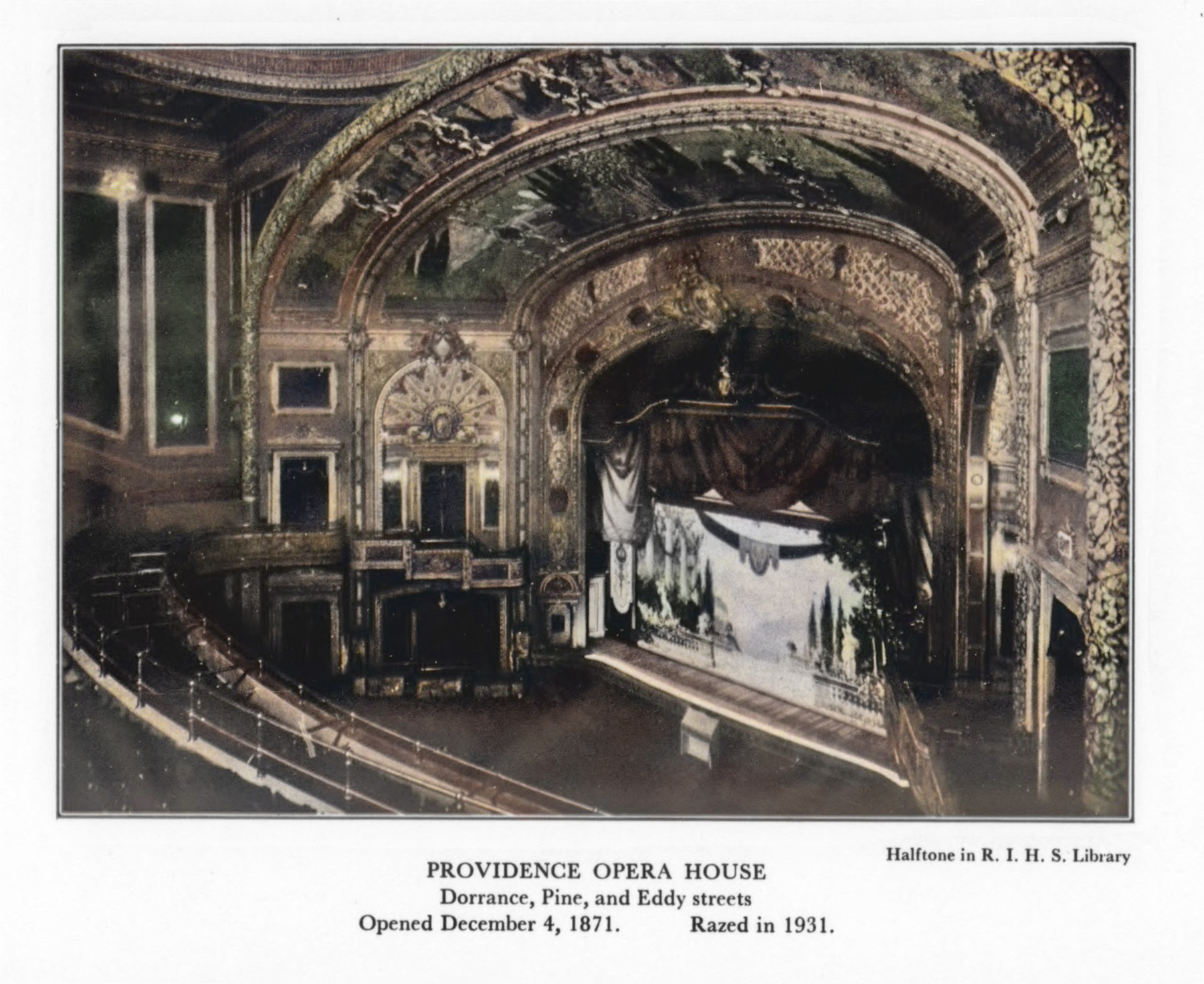
Rhode Island History 1942-2011 is now online at Archive.org from microfilm, with ‘dark but large’ pictures. Here one has been extracted and rectified and given a touch of colour by myself, a rare (perhaps the only) picture of the audience’s view, showing the stage. Presumably made in the late 1920s when the place was under threat of demolition.

This is a rare interior picture (it doesn’t appear to have survived into the current era, to be scanned) of the place which Lovecraft called his second home and the stage from which he “slung” Shakespeare as a youth.

The 1,500 seater was experienced early…

… we were acquainted with Mr. Morrow [Robert Morrow], the lessee & manager of Providence’s chief theatre — The Providence Opera House — (he lived directly across the street) so that it was not thought too shocking to let my aunt take me to see something [on the stage, when a young boy in 1896]” — H. P. Lovecraft, letter to Kleiner dated 16th November 1916.

He later recalled (Letters to Family)…

What a second home the old Opera House used to be to me!

Evidently this was not restricted to boyhood, as he also recalled that he had “slung from the stage” of the Opera House great slabs of a Shakespearean tragedy, given with “vigorous, orotund delivery”. Indeed the full quote, in a letter to Bonner in 1936 (Selected Letters Vol. 5) reveals he had once been out and about at many theatres in the city…

I used to sling from the stage of Forbes’ Theatre, Smarts Hall, Harrington’s Opera House, and the Providence Opera House

That doesn’t sound like a school theatre group ‘show for the parents’. Was he once quietly an actual ‘turn’ on the boards, one wonders?

This is also somewhat strange given his performance at the Boston amateur journalism conference in February 1922 (Selected Letters Vol. 1, pp. 123-24). There he decided to give his banquet speech impromptu rather than from his prepared script, and was thus rapturously recieved as “a born public speaker”. On which he commented…

All of which was rather amusing to me, since I am a hermit who has never before addressed a banquet

He did however note in his letter that he used at least one theatre trick during the speech, with some stock lines delivered and these being…

borrowed from the manner of vaudeville monologue artists

So what are we to make of this? He “slung from the stage” from several theatres, and one has to assume this was to an audience rather than an empty hall. Yet later he appears surprised at his facility with public speaking. I suppose the distinction he may have been making in his mind was between i) large theatre recital of lines from Shakespeare and ii) impromptu after-dinner public speaking with off-the-cuff remarks and tangents. These things, despite having a similar bodily stance, hand-gestures and vocal projections, are probably rightly considered to be different from one another.


Incidentally, I have now started in on a re-reading of the Selected Letters, skipping those I already have in later per-correspondent volumes, and I’ll be posting notes on these volumes as and when. I did think of asking Joshi if I could update his Index to the Selected Letters (second edition), but it would be a huge task and the full mega-index for all volumes of the Letters is anyway said to be forthcoming from someone else in the next few years. I assume this work will also expand the index for the Selected Letters a bit. I was spurred to my passing notion by the very first mention of Venus (the planet, in connection with Develan’s Comet) in Selected Letters Vol. 1 (p. 5), when I found that the planet had no entry in the Index.

‘Picture Postals’ from Lovecraft: the foot of College Street

08 Friday Apr 2022

Posted by asdjfdlkf in Historical context, Picture postals

≈ Leave a comment

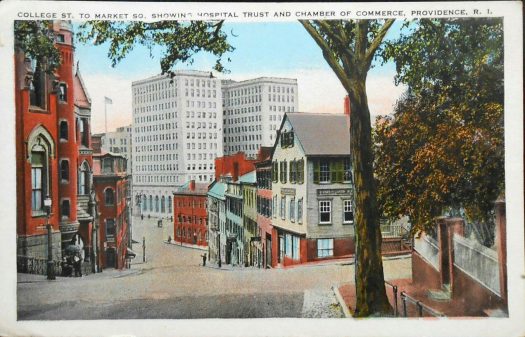
This week’s ‘Picture Postal’ shows the foot of College Street. This circa early 1920s card was about as close as one might have got, before now, on a postcard…

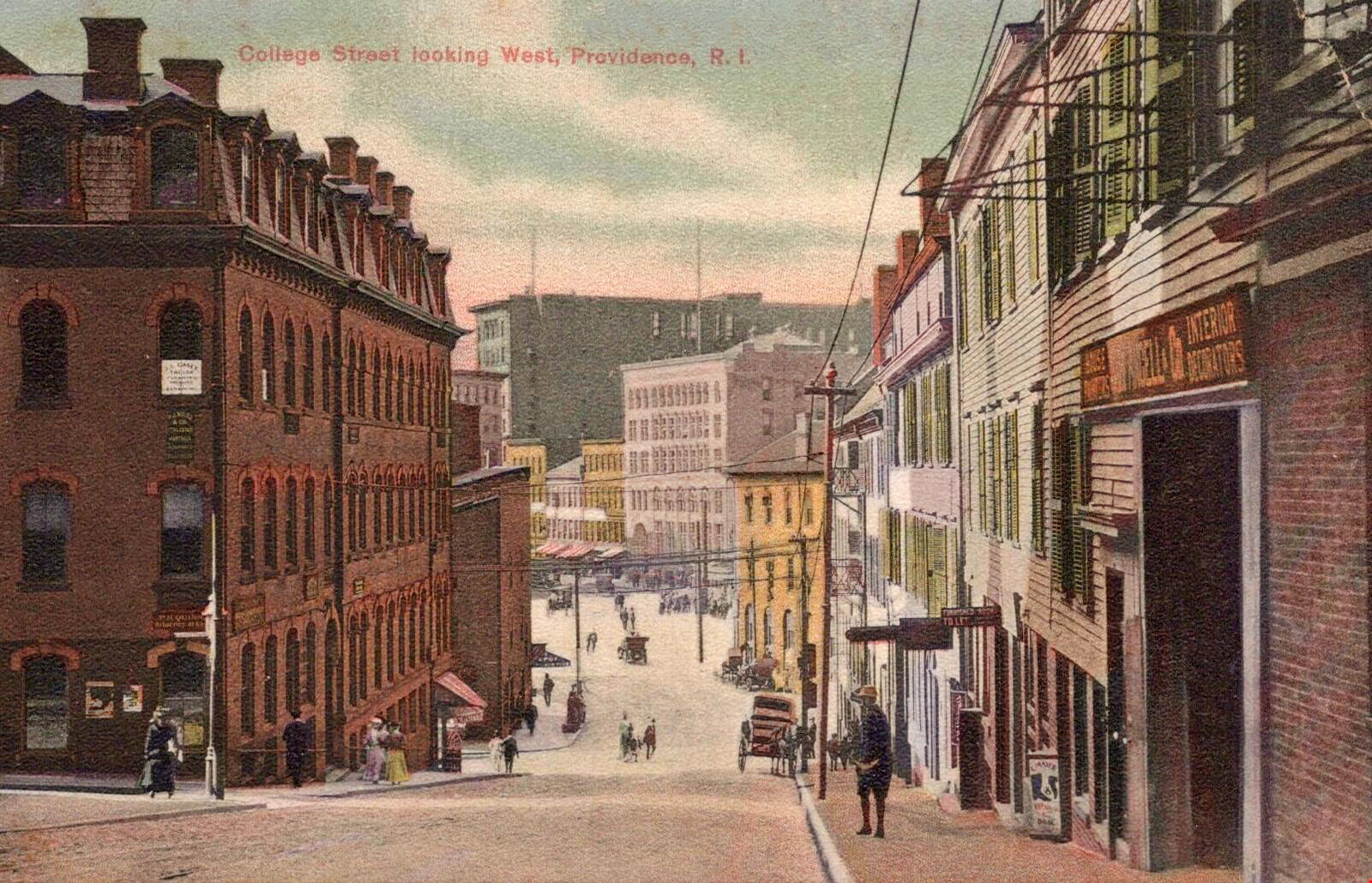
However a new card has surfaced, seen below. This zooms the viewer closer in.

It seems to be circa 1905, which means that Lovecraft was then aged 15. About the same age as a lad looking back at the camera. The lad was likely a resident, since the convention was than the residents went up and down the street on his side. The opposite side was for the use of Brown university students and staff. We see an Interior Decorator’s yard being advertised as available on stepping through the painters-wagon entrance. But presumably Lovecraft had no need of either an interior decorator or spurs, so may never have stepped inside. A sign suggests the boot-maker there would still have been happy to fit riding-boots with spurs, had a man been heading out to the Wild West or Canada. Sundry other practical trades doubtless carried on here. One sign advertises time-worn ‘furnished rooms to let’ at the back. The Colonial archway / horse-yard entrance is actually further down, and appears to be the dark area just to the right of the boy.

On the opposite side of the street one can glimpse signs for a lawyer and a tailor, and what might be a ‘Fruits’ shop on the bottom corner. Which would make sense, as the city’s weekly fruit market was held just around the corner. A fruit or two might be useful while climbing the steep hill. Note the hand-rail on that side, which at first I thought might be damage on the picture. In the following picture the same view is seen after the changes had swept away the old traders and yards and rented rooms.

A gleaming and recognisably modern American city has emerged from the horse-spur and paint-your-wagon days that had evidently still lingered in Lovecraft’s time. The Industrial Trust skyscraper building now rears it winking head. Actually Lovecraft didn’t mind the Trust Building too much, and he was also sanguine about the loss of the foot of College Street, as I’ve noted here before.

That side of the street was replaced by the castle-like new School of Design extension, which at least had its archway in about the same position and style as the old colonial one. Here we look up College Street, rather than down.

‘Picture Postals’ from Lovecraft: the Shepley Library

25 Friday Mar 2022

Posted by asdjfdlkf in Historical context, New discoveries, Picture postals

≈ 3 Comments

This week, the Shepley Library in Providence. This place appears in passing in Lovecraft’s novel Charles Dexter Ward, when Ward is described as having belonged in his city…

as much to the past as the antiquities he loved so keenly. […] His social activities were few; and his hours were spent mainly at home, in rambling walks, [in various learned institutions or at] the newly opened Shepley Library in Benefit Street” Later, in his investigations into Curwen…

Charles Ward examined a set of his accounts and invoices in the Shepley Library

The place also has a passing mention in “The Shunned House”…

I was forced to ransack both the Rhode Island Historical Society and Shepley Library before I could find a local door which the name Etienne Roulet would unlock. In the end I did find something; something of such vague but monstrous import that I set about at once to examine the cellar of the shunned house itself with a new and excited minuteness.

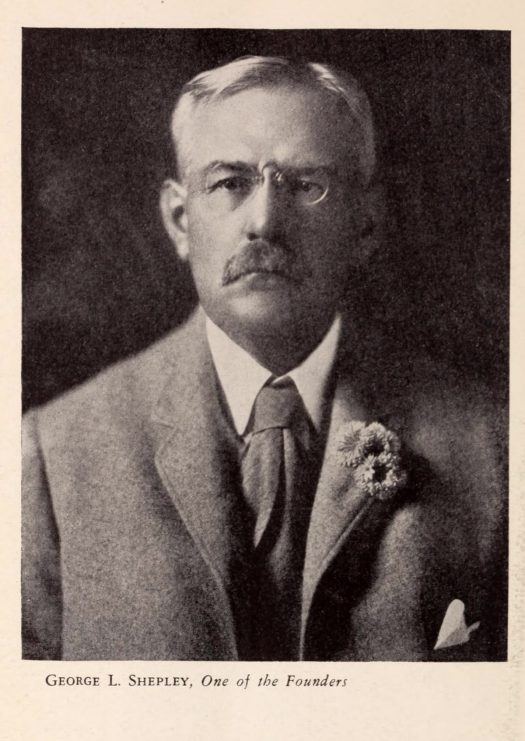
Shepley was Colonel George Leander Shepley (1854-1924). His personally-designed private library / museum opened at 292 Benefit Street in late 1921, as seen here in my newly colourised picture via the Providence Public Library and the Historical Society…

Lovecraft was able to visit in 1923. He appears to have had access because his aunt Annie Gamwell was working there at the time. A magazine of the period shows the Library had been open to the public on afternoons, when first opened in late summer 1921. But I’m uncertain if that opening offer was then continued into 1922 and 1923.

The American Antiquary Society has a short outline biography, revealing the owner to have run and made his fortune in the largest insurance business in the world. One source mentions his ingenuity at developing new insurance services and policy types to serve new markets. Another talks of his absolute integrity. He was a leading Mason who had ascended very high, a member of various clubs and sat on a number of local company boards. In his retirement he built and stocked his large library relating to Rhode Island and Providence history, rivalling that of several other well-endowed local institutions. That Lovecraft’s narrators are able to either frequent or “ransack” the Shepley Library thus implies they knew the old fellow personally, or at least his curator. Lovecraft himself had a friendly reception from the curator, to the extent of apparently being offered the loan of a certain key view of Providence… if only a duplicate could be found to replace it on display. Lovecraft evidently made a long and close inspection of the place and he discovered much, as detailed in the Voluminous podcast letter of 6th March 2022 and also in a letter to Moe (Letters to Maurice W. Moe, page 133-34). It was this visit that revealed to him a previously unknown colonial section at the back of Weybosset, between Weybosset and the waterfront. This quickly led to his foggy expedition into the squalid rookery around ‘Gould’s Court’ (Ghouls Court) at the back of Uncle Eddy’s book shop on Weybosset. Nephew Eddy already knew this area at the back of his uncle’s book shop well, as it happened, and he acted as guide. Ken Faig Jr.’s Some of the Descendants of Asaph Phillips and Esther Whipple also has the museum as being Shepley’s home (“housed in his home on Benefit Street”), and it does appear from the photograph to have been a house with a large museum / library wing seamlessly attached.

Lovecraft was distinctly peeved when the the old fellow died in 1924 without making arrangements for his magnificent collection, other than (seemingly) for it to remain where it was and private. His reaction is revealed by the new Letters to Family (Vol. 1, p. 500), when Lovecraft writes…

the closing of the Shepley museum is utterly barbarous — upon my soul, I don’t think much of the old boy if he didn’t provide for the permanent exhibition of his collection. He aught to have deeded it to the Historical Society, or to Brown University, or to some other institution founded in his name. Egad! But it’s a publick crime to keep a treasure-house like that closed!!

The death of a daughter shortly before her father meant the old man’s planned inheritance was fumbled. The other daughter who did inherit the fortune allowed the museum to languish in a private state for academics only (“opened only to research students on request”), since we hear of no more visits by Lovecraft. If it had been open then he would surely have visited it again and taken friends there, and remarked on this in letters. In 1938, as war loomed, the collection was finally sold (not given) to the Rhode Island Historical Society. The building was for a time used by theatrical players and used to stage puppet-theatre shows for children.

How history might have been different. Imagine… old Colonel Shepley takes a shine to Lovecraft’s aunt, woos and marries her, then adopts Lovecraft as heir-apparent and the ideal antiquarian son he had always wanted. Lovecraft inherits the enormous fortune. He spends the next twenty years championing architectural preservation throughout America and Britain, and on the side issues some modest and slim books of polished philosophy. He barely writes any fiction.

So I guess we should be grateful that such events never happened. But Lovecraft’s extended and generous 1923 visit had done enough. He felt it had been a key turning point in his life, as he told Moe in 1923…

I am now become definitely an antiquarian, rather than a general student of letters

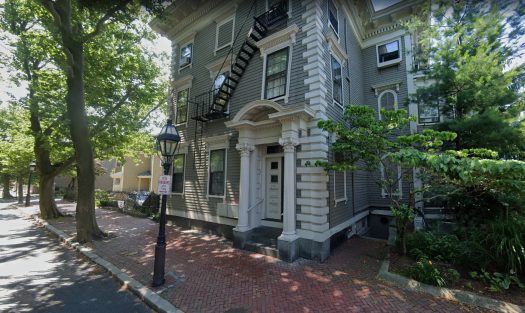
Shepley’s house still exists today as “295”, as can be seen by comparing Street View with the archival view. Today the observant scrutineer will also notice a down-steps side-entrance which goes through through to a shabby apartment and peeling porch on the back of the house. Perhaps this was once the back apartment of the on-site curator? Street View also reveals that the library at the side is now a sunken car-parking area, with crude graffiti and strewn trash… “where once had been only strength and honour, taste and learning” (“The Street”).

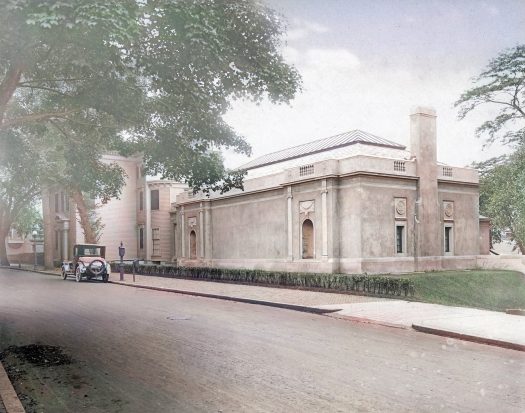
The depth and level of this car-park suggest that the 1921 view of the museum from Benefit Street may well be deceptive. I suspect that we see there the back of the building and that the museum actually had two floors, with the lower one being set down into the slope. The 1921 view thus only shows the back of the top floor as it was visible from the street. In fact, we can see it has a top atrium which even might even suggest two floors and perhaps a sky-room. The Federal Writers’ Project (1937) did briefly itemise the building as “one-storey” in a book, something which has since been parroted by others, but those books were often hasty make-work projects for communist cliques — as Lovecraft’s friend Arthur Leeds found to his detriment. I suspect the compilers of the book were not local, and were just working from quick snapshots of street views.

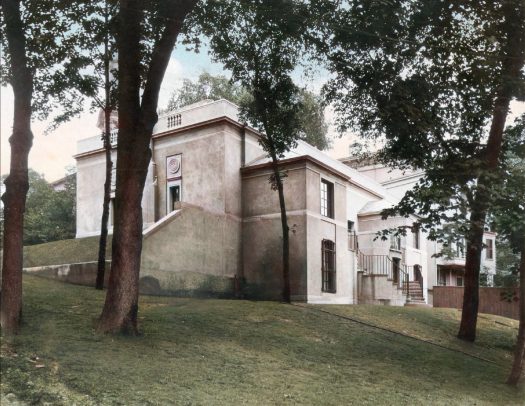
After writing the above I found a back view photograph of the Library, from the Historical Society via the book Providence’s Benefit Street. I’ve here repaired and colorised it. Yes, at the back the building was obviously deeper but also a bit more complex than a straightforward and mundane two-storey building. It may even have had a cellar strongroom (note the bars on the windows) that went down further into the ground. Apparently Shipley’s alarm and burglar-proofing system was state-of-the-art for the time. The modern-day shabby back-porch, as seen on Google Street View, can here be glimpsed in the distance.

‘Picture postals’ from Lovecraft: a tour of the library

18 Friday Mar 2022

Posted by asdjfdlkf in Historical context, Picture postals

≈ 1 Comment

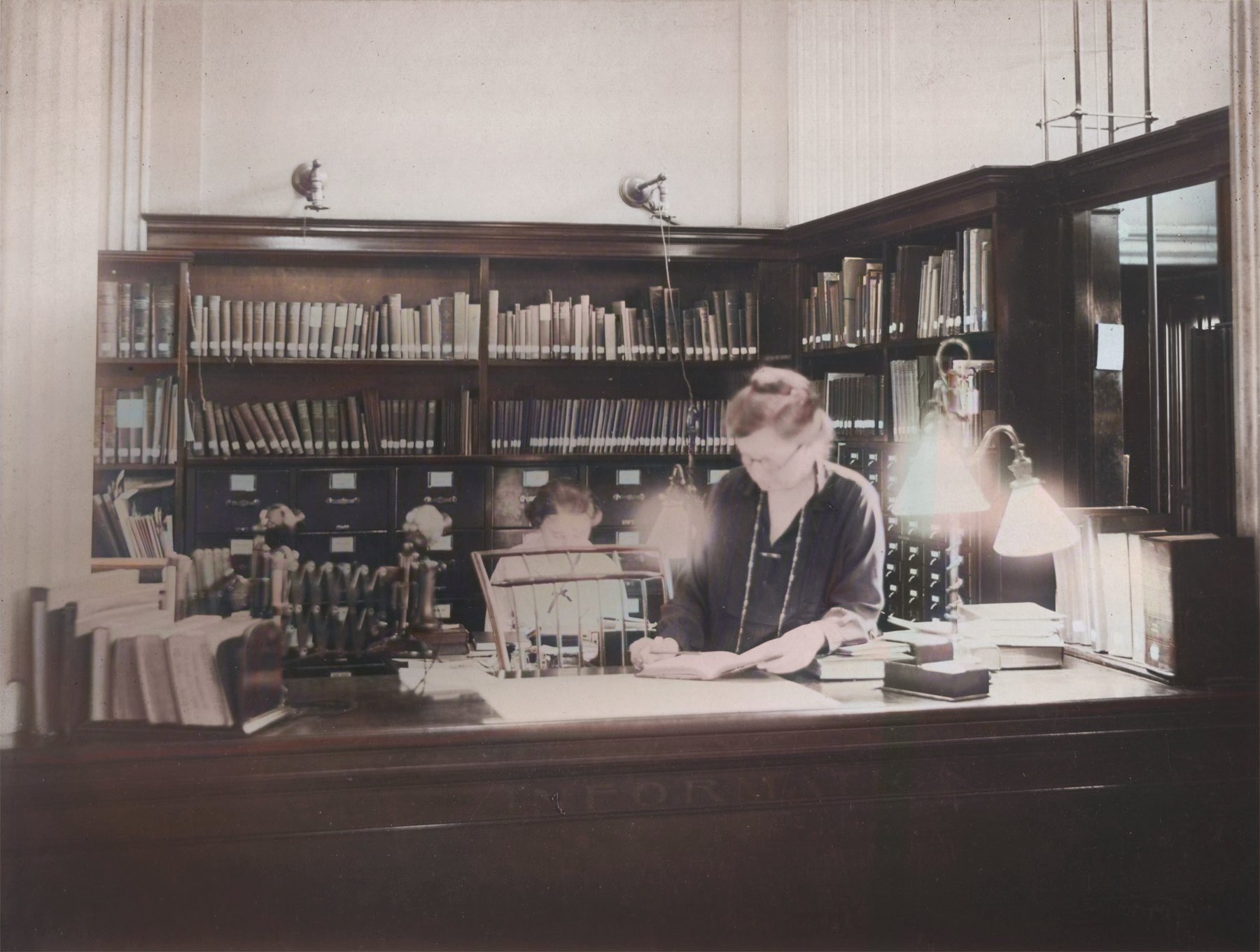
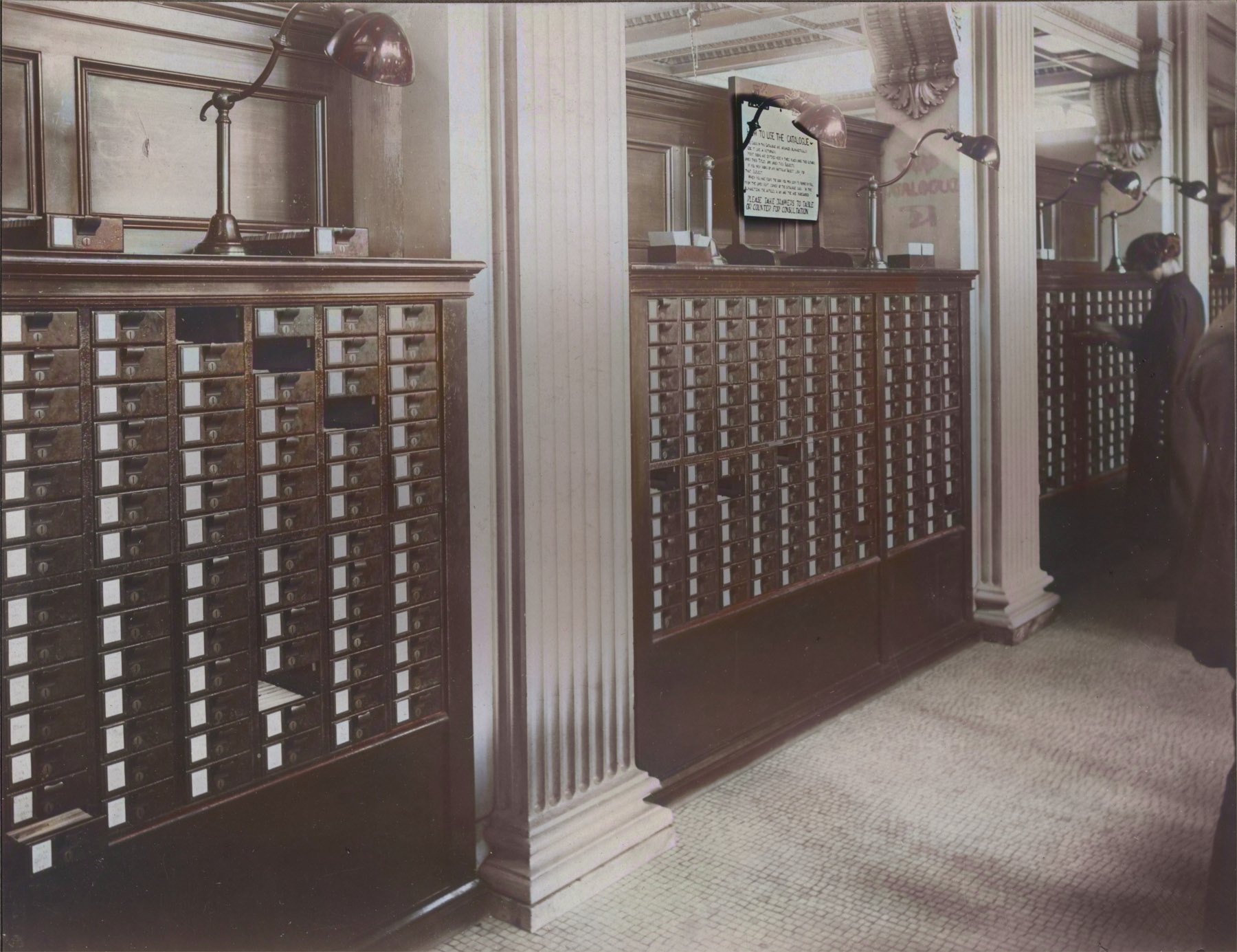
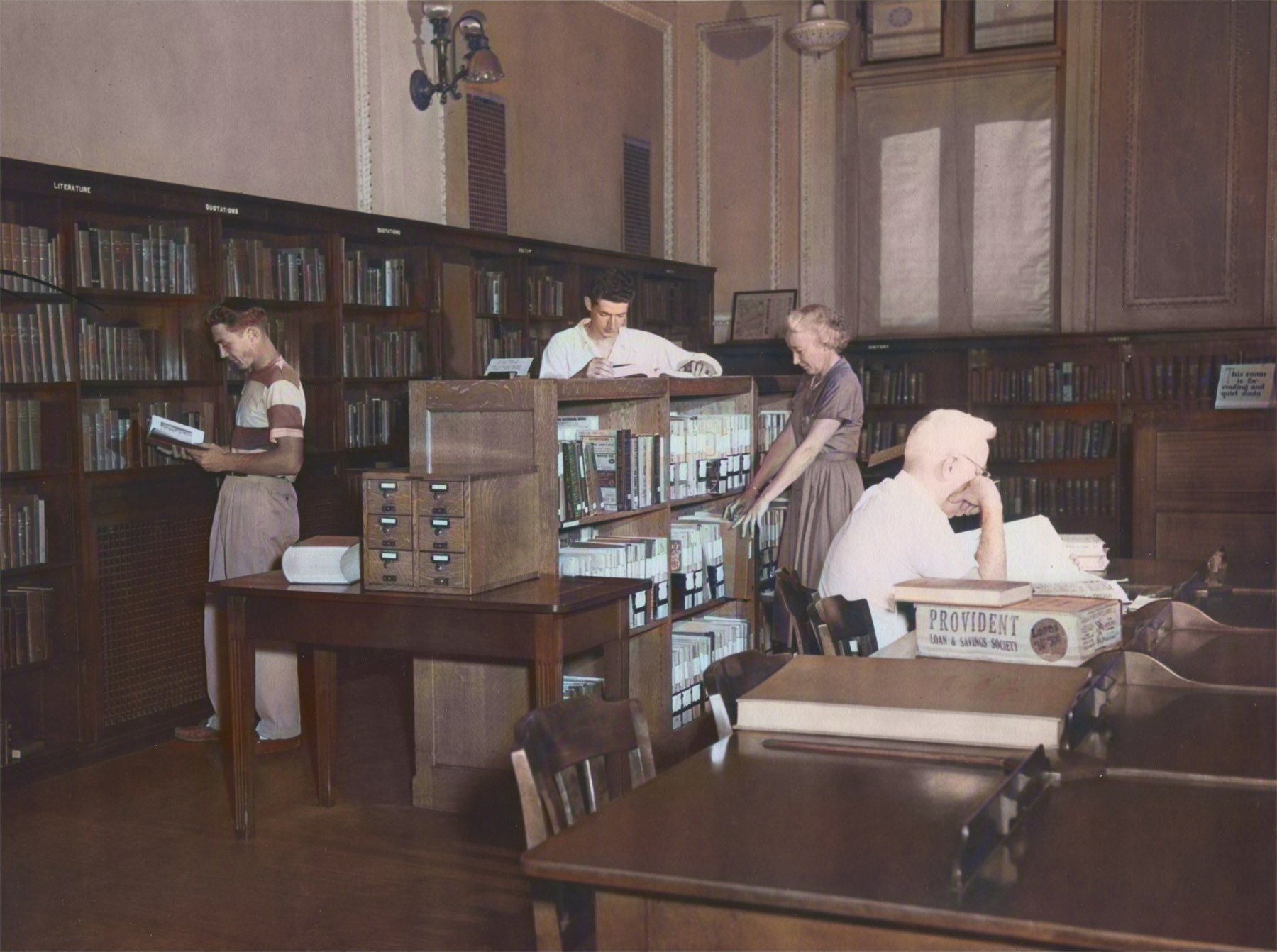
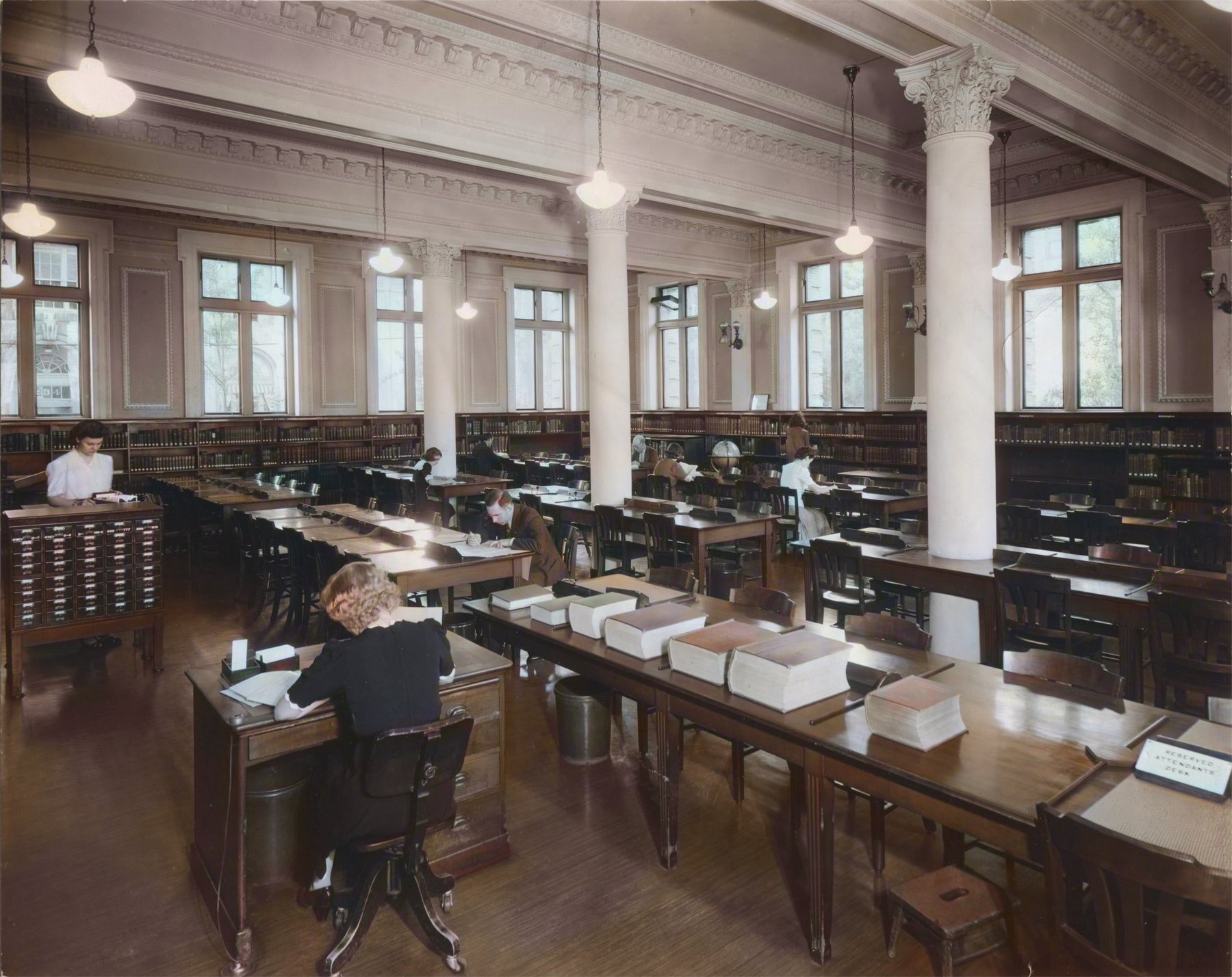
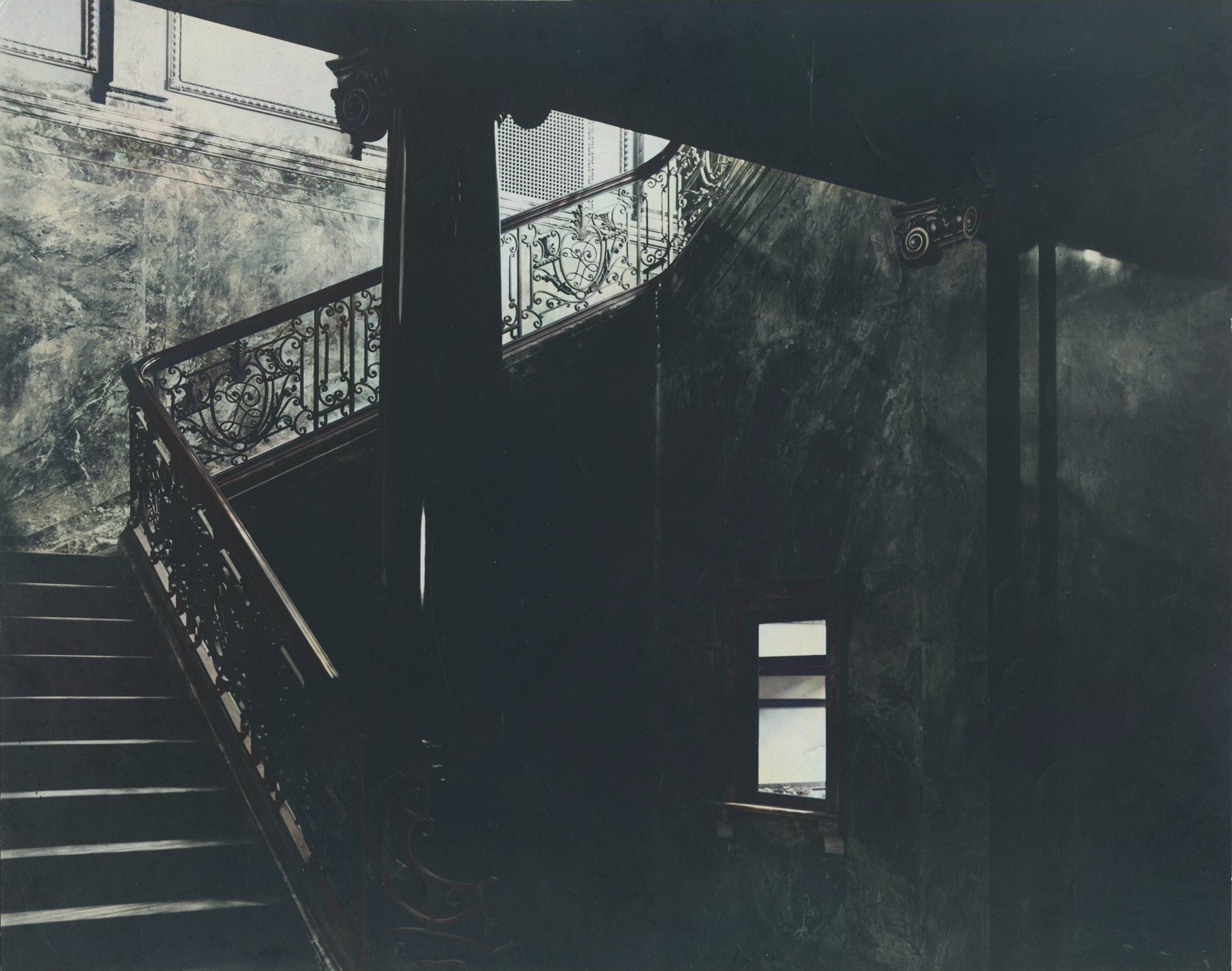
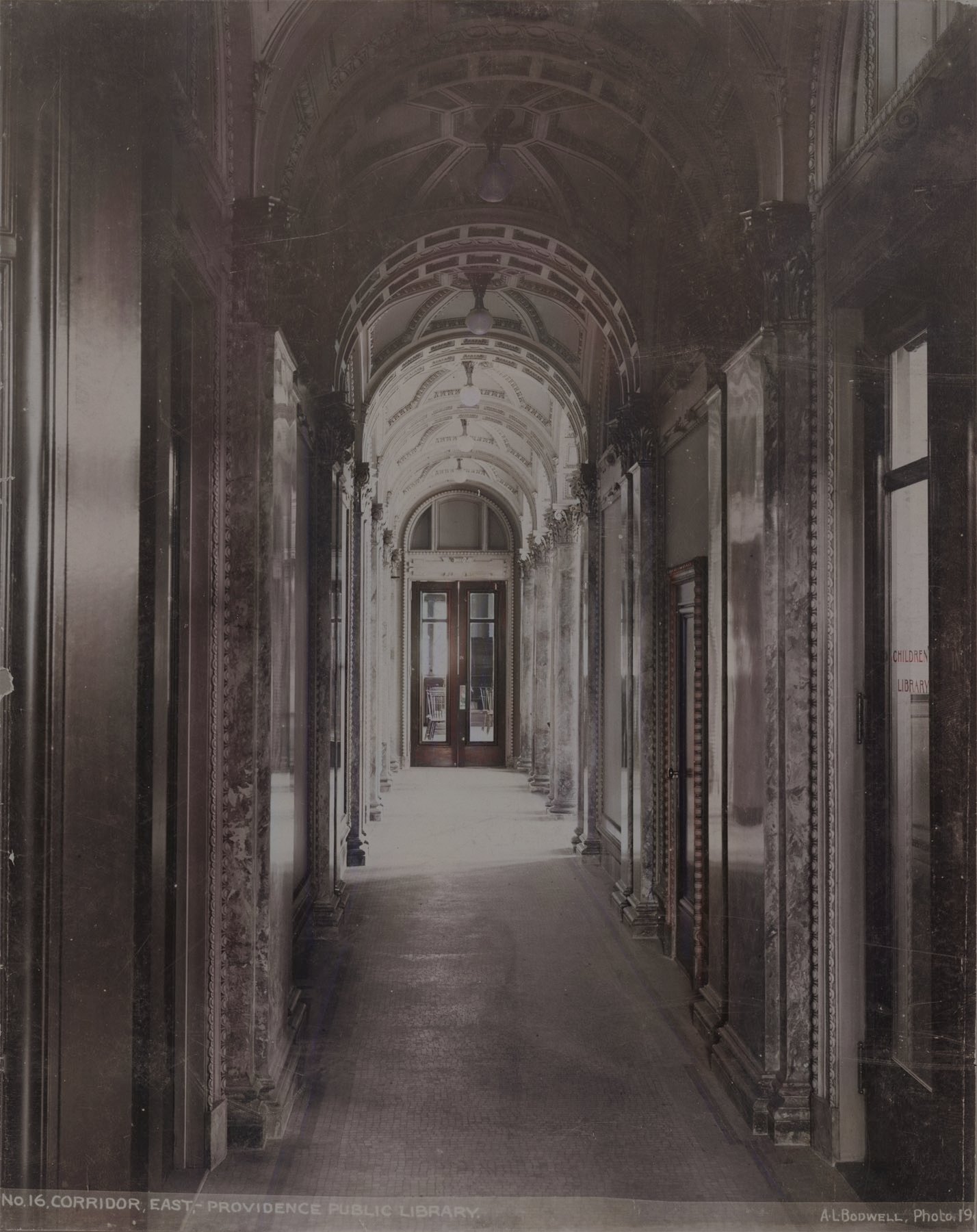
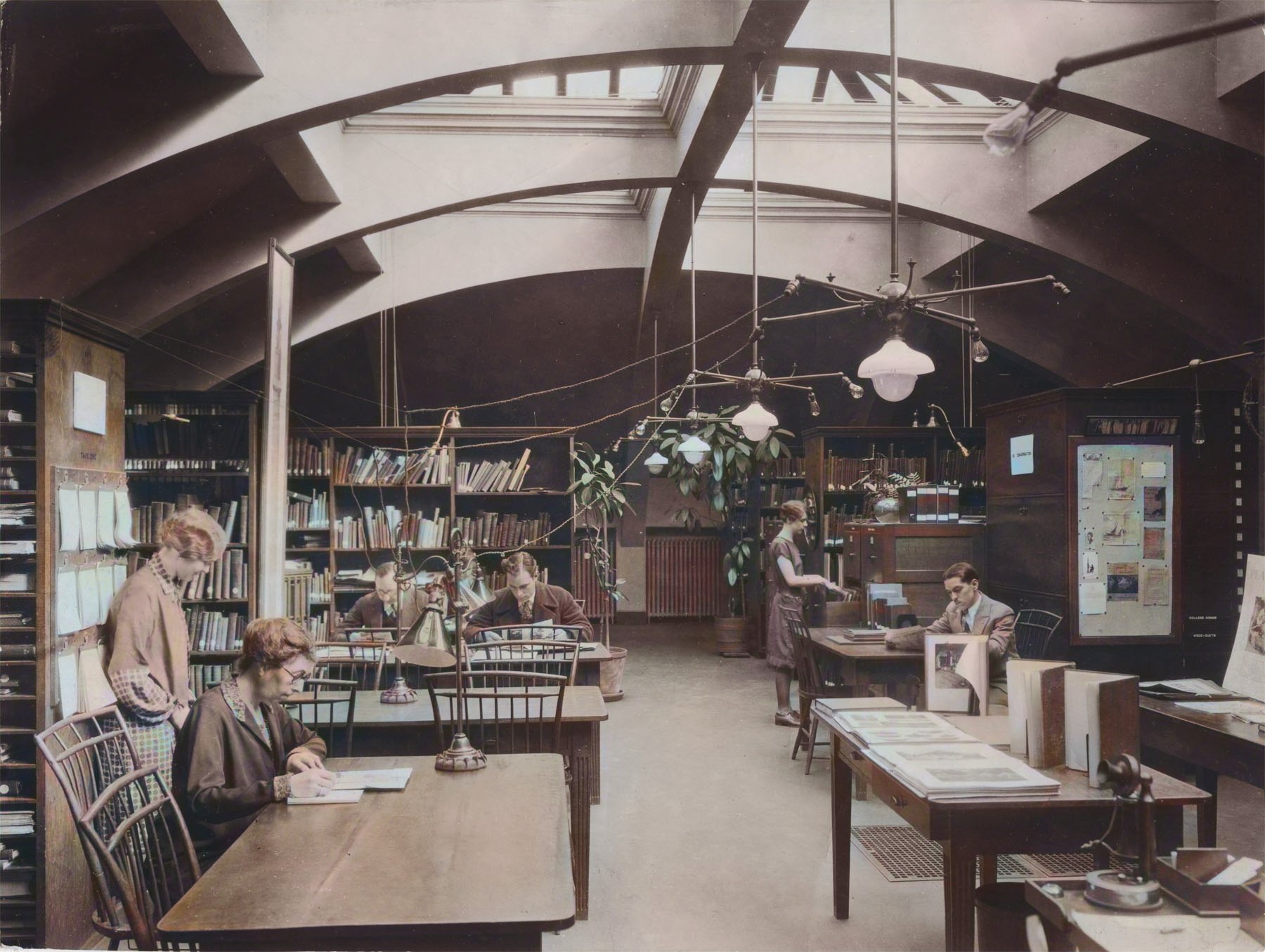
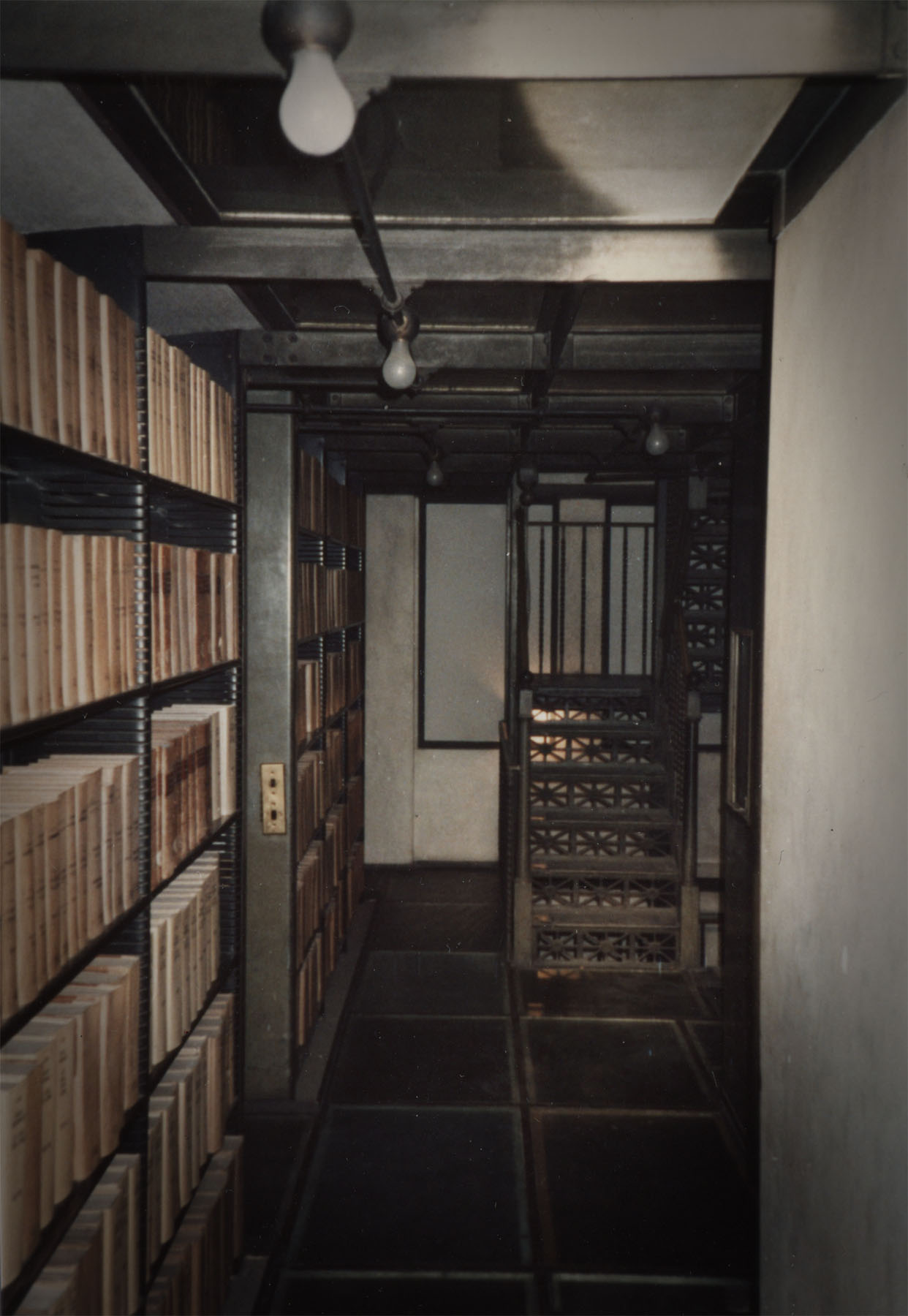
This week, a tour of the library. Not Lovecraft’s own and very large home Library, sadly. But rather the Providence Public Library which he had regularly visited and used since childhood. The following pictures of the Library are from somewhat disparate dates, and the library departments were moved around somewhat over time. But this is basically as he knew the building and its various service desks and rooms.

The entrance steps.

The information desk.

The card-index catalogue system, a primitive paper search-engine for book titles and topics.

Delivery desk, at which one might wait for a book that was not on the open shelves.

Trade and other local directories.

Reference reading room.

A reading room with newspapers.

A magazines and periodicals room, later — perhaps even the 1950s?

A dark staircase, with a watching window.

An upper corridor. Ahead may be the lecture room, while to the right we see a label painted on the glass door for “Children’s Library”.

Children’s rooms. A Lovecraft-alike boy is second from the right, at the front.

Lecture room.

A quiet study room.

The art room and skylights.

Meanwhile, down in the basement… ‘the stacks’. Lovecraft had a special ‘stacks’ library card and appears to have been permitted to descend. This picture may be much later, perhaps the late 1950s or 60s.

All from the Providence Public Library collection, with all but the final picture newly colourised.

‘Picture Postals’ from Lovecraft: Blackstone Park

11 Friday Mar 2022

Posted by asdjfdlkf in Historical context, Maps, Picture postals

≈ Leave a comment

This week, not postcards but more postcard-like gems from the collection of the Boston Public Library. Here we see Providence’s imminent Blackstone Park, circa the early 1860s. The pictures were in a brochure proposing the establishment of the shore-front park. Blackstone Park was indeed established in 1866, but 40 years later it had become a delight for small boys — since the city had allowed it to fall badly… “into disuse and neglect by the early 1900s”. This was when the young free-range Lovecraft knew the place as a boy, and thought he glimpsed flute-playing fauns in its dappled depths.

I’ve colourised the picture. We have to imagine another 40 years of growth added to this, and trees consequently much larger above the grassy rides and rills. Perhaps some of these watery “brooklets”, as Lovecraft called them, were by then dried up in summer. Since drainage of College Hill and the adjacent shore-line was changed, as the city developed and the local ravines were filled in or blocked.

Here is Lovecraft on the Park, writing in 1918…

Scarce a stone’s throw from the house lie the nearest parts of that beautiful rustick reservation known as “Blackstone Park” — wherein I have been wont to wander some twenty or more years. Here Nature unadorn’d displays a multi-plicity of agreeable phases; ravines, groves, brooklets, thickets, & Arcadian stretches of river-bank — for the park borders on the wide & salty [river] Seekonk. … How beauteous indeed is untainted Nature as beheld in so idyllick a spot as Blackstone Park! … I think this park would explain why such a born & bred town man shou’d possess such a taste for rural musings & Arcadian themes!

Lovecraft occasionally took favoured friends there. Here he is in 1927…

the next day we [he and Cook and Munn] lounged about the Blackstone Park woods beside the Seekonk — agrestick haunt of my earliest infancy, and true genesis of my pastoral soul.

And in the mid 1930s he was sitting on the banks of the Seekonk… “Almost every warm summer afternoon” or else he took a short trip up in the “the fields & woods north of Providence”.

Below we see, from the same Boston collection, Blackstone Park’s grassy water-meadow. Most likely this is the “meadow” marked on one map as being roughly in the middle of the park, and located back across the road from the Boat Club house.

Above we also see the edge of the “meadow” area in winter flood, in the context of the Boat House and the shore road. The river Seekonk often flooded over, and thus the meadow would have been seasonally a boggy salt-meadow in its lowest section. It’s quite possible that this Boat House was the point from which the young Lovecraft set off on his solo rowing expeditions on the Seekonk. It was then a difficult and somewhat dangerous river to be out on in a small boat. Yet he became skilled enough with his boat and the river currents to land on the mud-squelching “Dagon”-like ‘Twin Islands’, so rarely shown on maps. Here is an exception.

This was the landscape of water and mud and washed-in sea-things which stirred his early nightmares of a drained Seekonk, and to which the genesis of his “Dagon” can be traced.

Modern seekers can note the boathouse and the site’s current drainage channel here on the right of the current map. It’s my recent composite of a 1972 bird’s-eye picture I found and a modern outline map of the Park. By 1972 the trees were crowding in. If the river’s salty winter over-wash has since been kept out, then I’m guessing they may have now fully colonised the old meadow.

‘Picture postals’ from Lovecraft: At the market

04 Friday Mar 2022

Posted by asdjfdlkf in Picture postals

≈ 2 Comments

Here we see the Providence farmers’ market, more or less as Lovecraft would have know it as a teenager. I’ve added a missing bit at the bottom of the picture, by pasting it in from a near-duplicate b&w view. The card is dated 1909, although there is a somewhat similar close-up picture in the archives dated 1904. Which may indicate that the picture itself is perhaps 1904-08? Anyway, when Lovecraft was a teenager.

I guess adolescent summer night-walks in the city could theoretically have brought him to the market just as it was setting up at the crack of dawn — and thus offered him the opportunity to snaffle the best-and-freshest? Judging by one title on a postcard, which reads ‘Fruit Market’, fruits were a speciality of this market. Lovecraft is often thought of as a devoted store-candy lover, but he was also quite partial to fruits and fruit-cocktails.

I don’t know if the market also sold more mundane winter foods, such as potatoes. But I imagine that the Lovecraft family’s market-day shopping, as opposed to the lighter store shopping, was perhaps not something done by Lovecraft himself in his later teenage years. Strapping lad he may have been, and with muscles developed by rowing on the nearby and difficult Seekonk, but it was then common to have the heavier household staples delivered to one’s home.

Whatever its wares, the market place was evidently one of his frequent and favourite ‘passing through’ places. Here he celebrates the place in fiction, in his Dexter Ward…

He liked mostly to reach this point in the late afternoon, when the slanting sunlight touches the Market House and the ancient hill roofs and belfries with gold, and throws magic around the dreaming wharves where Providence Indiamen [i.e. the old long-distance trading/passenger ships] used to ride at anchor. After a long look he would grow almost dizzy with a poet’s love for the sight, and then he would scale the slope homeward in the dusk past the old white church and up the narrow precipitous ways…” (“The Case of Charles Dexter Ward”)

The above picture looks toward the distant dome of the State House and is thus an unusual view, and it may need some orientation. Here we see a useful bird’s-eye view, as if looking down from College Hill. The cameraman’s view across to the state house is indicated by my red line.

‘The Old Brick Row’ is thus off-camera to the right, on the postcard seen above. As many will recall, Lovecraft later wrote a public poem for this one-time landmark set of buildings. He also wrote a long public letter on the buildings that lay at “the historic meeting place of bay and hill” and which held behind them “richly mellow old-world lanes”. This was published abridged in his local Sunday newspaper. A scan of his original is now to be easily found in full on the Brown repository.

This cherished row had been a welcoming sight when he returned to his city after New York, the “incomparable colourful row of 1816 warehouses in South Water street”. The row would have faced Lovecraft as he left the business district and paused on the wide bridge area to gear himself for the climb up College Hill. It has to be said that these facades appear to be rather mundane, on what seems to be the only postcard showing them. Possibly his word “colourful” then referred to the many subtle ways that time had touched and varied the red Georgian bricks, mingled in poetic double-meaning with the antiquarian’s concept of ‘local colour’.

Interestingly his poem on the old “East India Brick Row”, like Dexter Ward, also evokes the sun and ‘fire’ in this place. Here he evokes the sun as it stuck and coloured the buildings that once ran along the side of the marketplace…

No one remembers when they did not shew
   The dawn’s bright ingots like an open chest,
Or when, near dusk, they were not there to glow
   With hinted wonders from a fire-lashed west.

They are the sills that hold the lights of home;
   The links that join us to the years before;
The haven of old questing wraiths that roam
   Down long, dim aisles to a familiar shore.

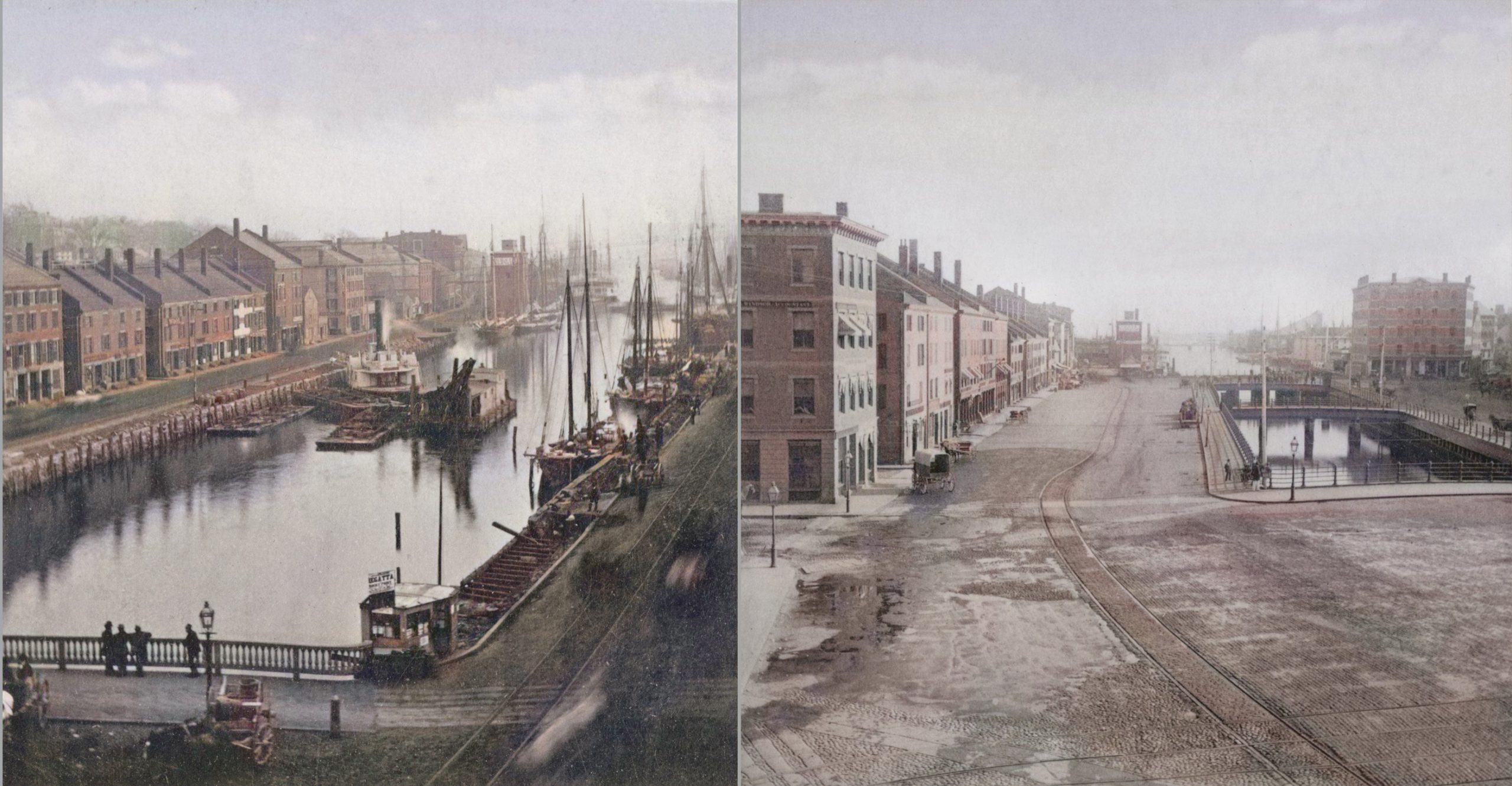
Below we see South Water street before and after the partial ‘covering’ of the shipping channel, so as to make the enlarged market area needed to serve the rapidly growing city. This work evidently served to prevent the tall trading ships from coming right up into the heart of the city. Here the last facade of the Old Brick Row is glimpsed on the left, and we see the full run of the row on the right-hand picture.

Stereo-views, here newly restored and colourised by me, and placed side by side for comparison. With thanks to Boston Public Library.

Lovecraft also evokes this long harbour at the end of his “Observations on Several Parts of America”. On finally returning back home at dawn he finds the city…

quiet and mystical with dawn-haze and elder memories … A fresh salt wind came up from the harbour, over the roofs of the centuried warehouses and the Old Market House of 1773; and down the narrow, curving line of the old town street by the shoar I glimpsed the chimneys and gambrel roofs of mouldering houses known to ancient captains…

‘Picture Postals’ from Lovecraft: the Yale quadrangles

25 Friday Feb 2022

Posted by asdjfdlkf in Picture postals

≈ Leave a comment

This week in the Friday ‘Picture Postals’, another look at academic environments known to H.P. Lovecraft. This time, his visit to Yale in 1935. Sadly he was not visiting as an honoured guest, invited to lecture and conduct a symposium. He was merely an architectural and antiquarian tourist. He wrote similar descriptions of his campus visit to Rimel, White and possibly to others. Here he writes to White…

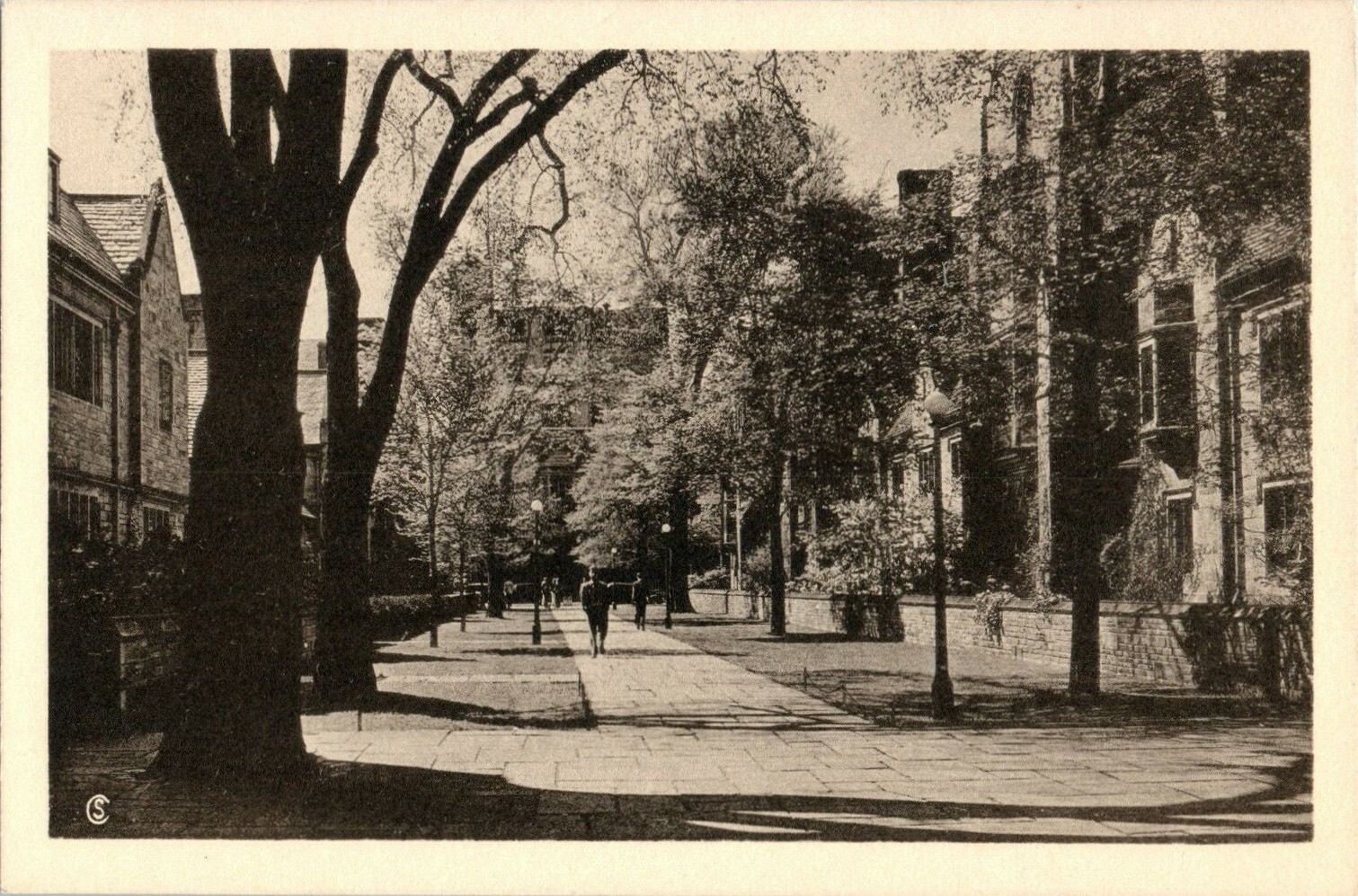
[I visited the] college buildings, &c., & […] 3 museums & 2 botanic gardens. The most impressive sights of all, perhaps, are the great new quadrangles of Yale University — each an absolutely perfect reproduction of old-time architecture & atmosphere, & forming a self-contained little world in itself. The Gothic courtyards transplant one in fancy to mediaeval Oxford or Cambridge — spires, oriels, pointed arches, mullioned windows, arcades with groined roofs, climbing ivy, sundials, lawns, gardens, vine-clad walls & flagstoned walks — everything to give the young occupants that massed impression of their accumulated cultural heritage which they might obtain in Old England itself.

To stroll through these quadrangles in the golden afternoon sunlight; at dusk, when the candles behind the diamond-paned casements flicker up one by one; or in the beams of a mellow Hunter’s Moon; is to walk bodily into an enchanted region of dream. It is the past & the ancient mother land brought magically to the present time & place.

The choicest of these quadrangles is Calhoun College — named from the illustrious Carolinian (whose grave in St. Philips churchyard, Charleston, I visited only 2 months ago), who was a graduate of Yale.

Calhoun College was erected at Yale between 1931 and 1932, complete with a fine new quadrangle. The new building was not a plain 1930s modernist box. It was something that Lovecraft the antiquarian could admire. Brand-new though it was. He visited in the unusually fine and warm fall/autumn weather of late 1935, and after a few years had mellowed the newness and given the place some plant-life.

The quadrangle is very difficult to find a vintage photograph of, even on postcards. Perhaps they had a ‘no photography’ policy after opening. Anyway, the Yale archives has just one, seen above newly colorised by myself. We see the quad when it was when ‘just that week’ completed, and my guess is that the architect and the carpenter (seen in the picture) are just starting the very first ‘race around the quad’.

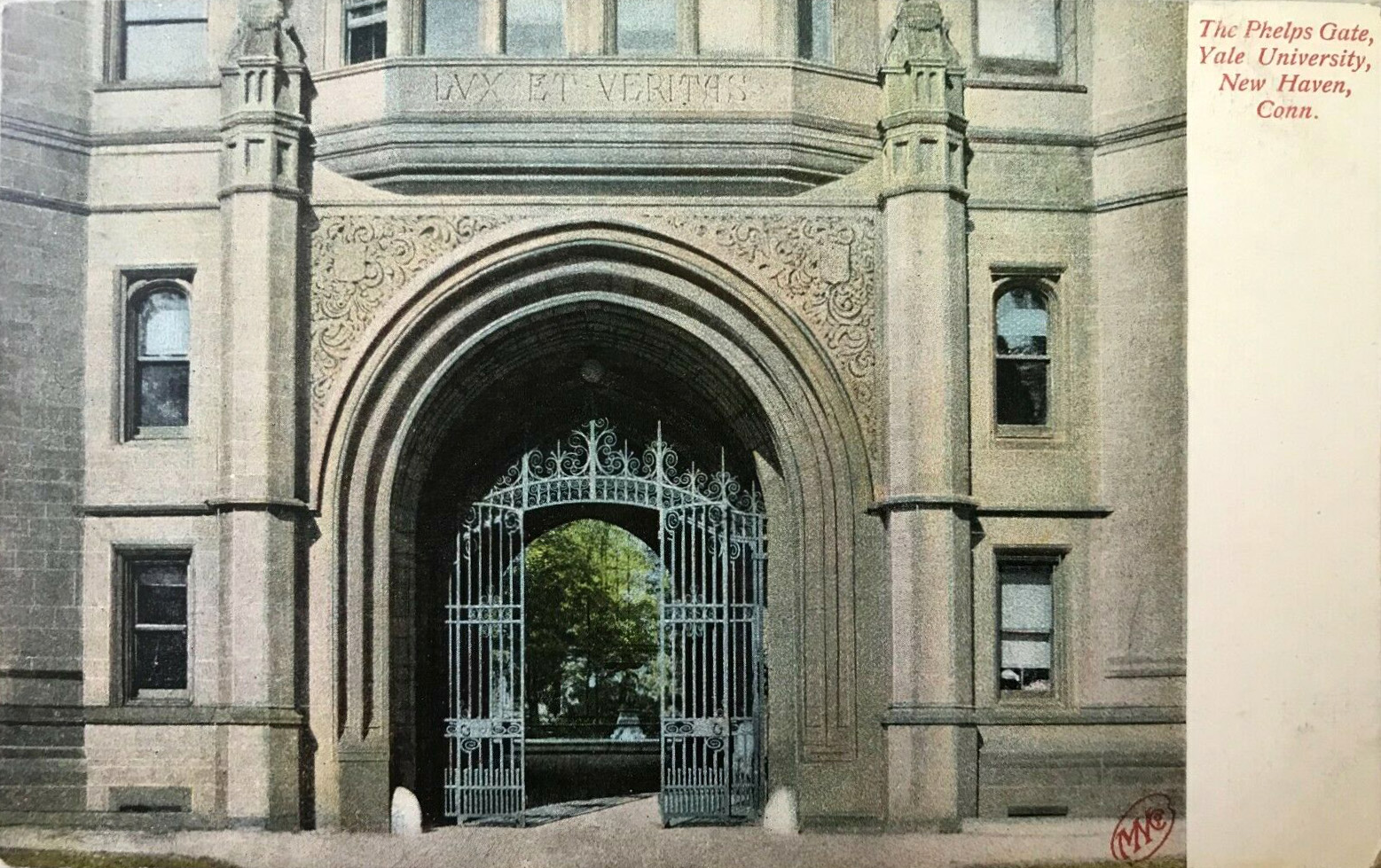
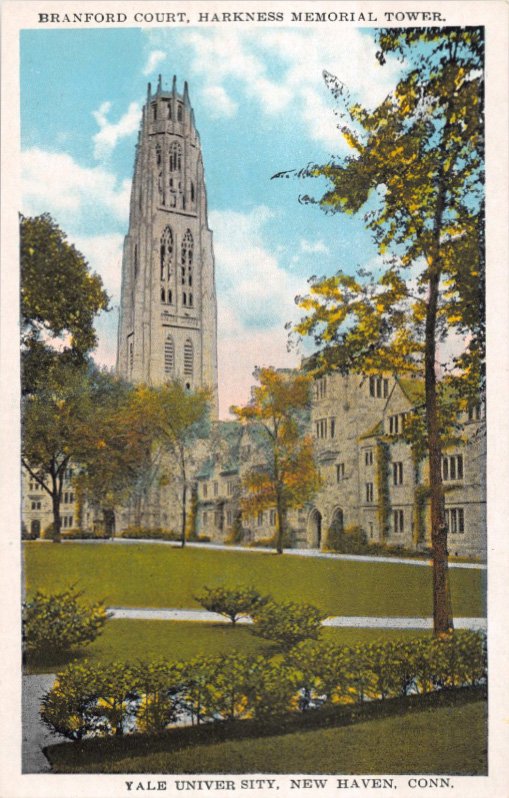
One might have expected Lovecraft to have visited the Yale University Observatory, but he doesn’t appear to mention it in the letters I have access to. Possibly it wasn’t deemed a public attraction for visitors. But he did see the 1917 Harkness Tower and Lovecraft was also enamoured of the other Yale quadrangles, these being freely accessible. Here he is again writing to White…

Nor are the Georgian quadrangles less glamorous — each being a magical summoning-up of the world of two centuries ago. I wandered for hours through the limitless labyrinth of unexpected elder microcosms.

He further writes to Galpin…

Many distinct types of Georgian architecture are represented [at Yale], & the buildings & landscaping alike reflect the finest taste which European civilisation has yet developed or is ever likely to develop.

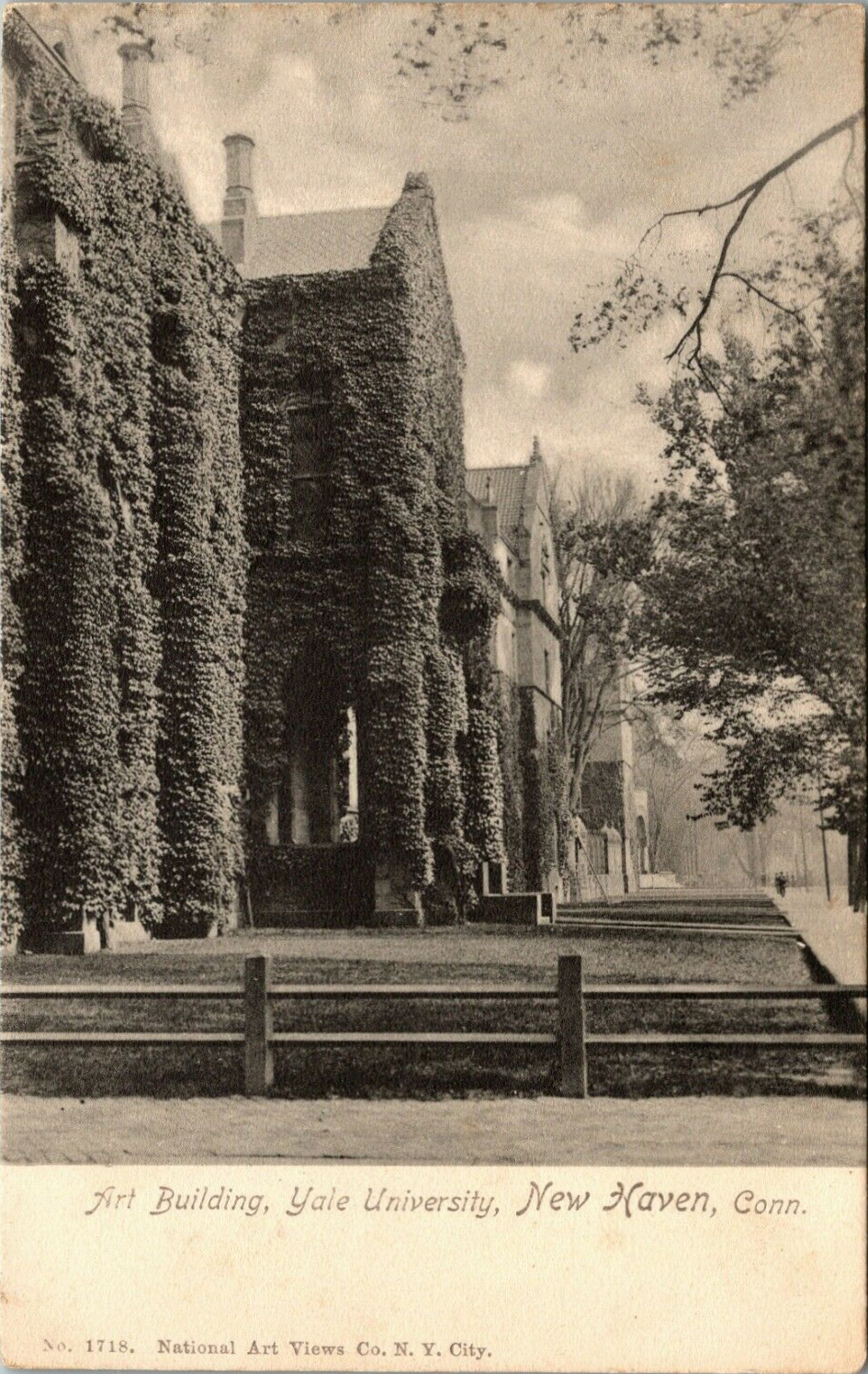
As we see here, many universities abundantly earned their once-familiar name of ‘groves of academe’, being very abundant with foliage. It was the same back in Great Britain. Even there, some colleges took things to excess. In 1920 even Country Life magazine complained of… “the Fellows of Exeter, something really ought to be done about their excessive love of greenery”. This was Tolkien’s college, Exeter College, Oxford. As we can see below, parts of Yale ran them a close second…

A few years earlier, Lovecraft had been amused to discover that Frank Belkap Long’s family had once owned all of Yale…

So your multiplexly great uncle Mansfield owned all the Yale real-estate! … Well — pass me out an extension course or two when you confirm your title to the property.”

‘Picture Postals’ from Lovecraft: lectures at Brown

18 Friday Feb 2022

Posted by asdjfdlkf in Historical context, Picture postals

≈ Leave a comment

On 19th February 1933 Lovecraft wrapped up warm against the winter chill and attended “a poetick reading” by the famous poet T.S. Eliot at Brown University…

the celebrity being none other than … the eminent & incomprehensible Shantih S. (Waste Land) Eliot.

A little later on 15th May 1933 Lovecraft moved to his last home at 66 College Street. This move put him right on the edge of the university campus, since all he had to do was step a few yards up the hill and slip through the gates at the top of College Street…

Looking through the gates at College Street, the John Hay Library on the right.

Having moved into “Grandpa’s hillside abode” nearby, he made two pictures of the new place with his “ancient Brownie” camera and then evidently strolled with his aunt into the neighbouring college grounds at Brown. Since he states that…

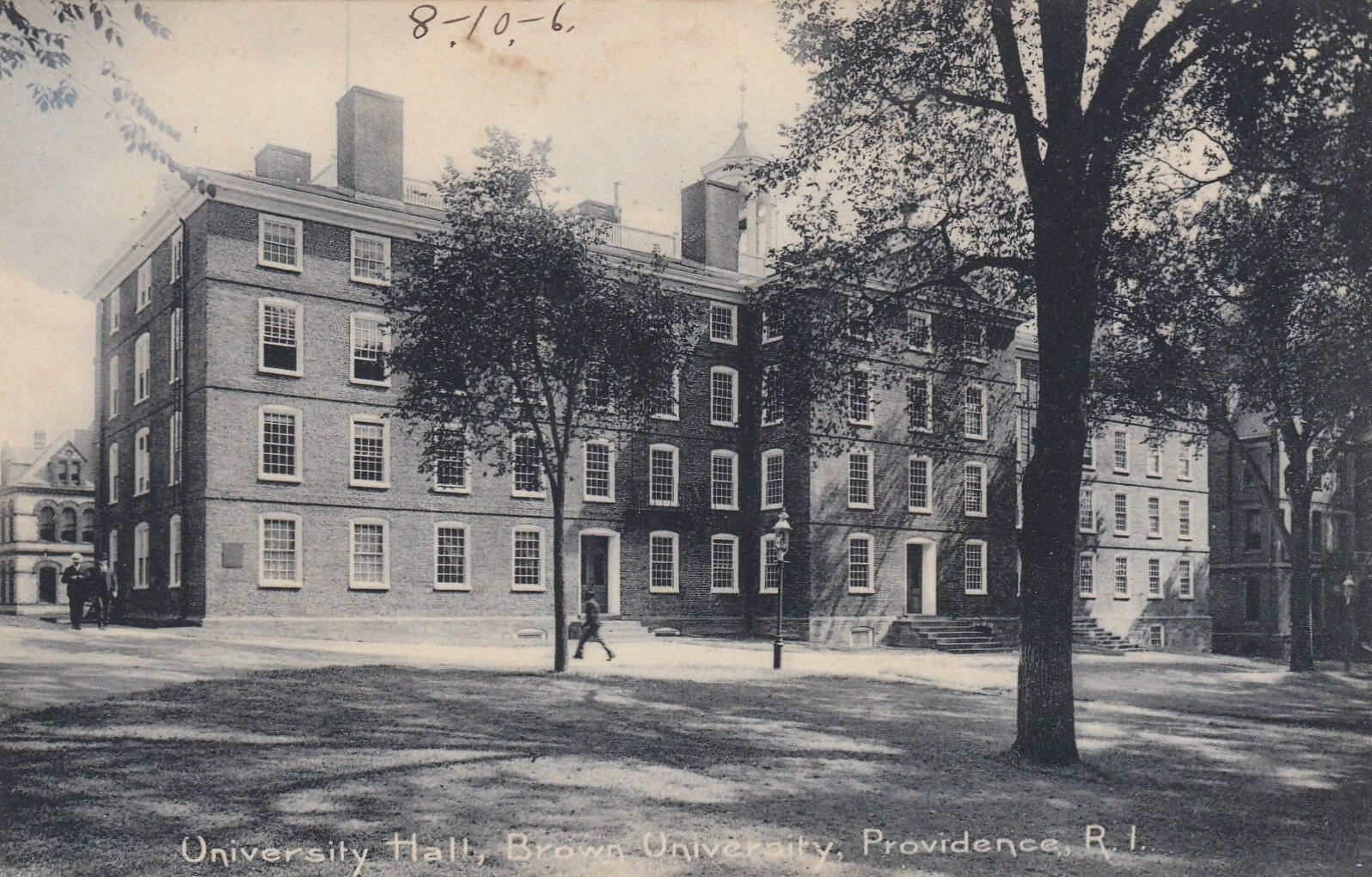
A third snap shews my aunt against ancient University Hall (1770) in the neighbouring college grounds.

He was still very much an outsider of course, a ‘pulp hack’ of no note or celebrity. But due to his new location he must have begun to have more contact with campus life, and (quite possibly) its event notice-boards. In his final years he would sporadically attend various public lectures at Brown. Not only lectures on the arts, but also on certain aspects of history and the sciences which interested him. In one late instance he also attended a large meeting of the Brown ‘Skyscrapers’ astronomy club, where there was to be a lecture on the history of early astronomy in Rhode Island.

It occurs to me that it might be useful to append a full list of ‘public lectures attended by H.P. Lovecraft’ to the forthcoming giant meta-index for the published Letters. And the same for the exhibitions he notes seeing at the city’s School of Design and elsewhere. Rather than try to rather awkwardly shoehorn them into the index itself?

But in the meanwhile, what did the public lecture halls at Brown look like?

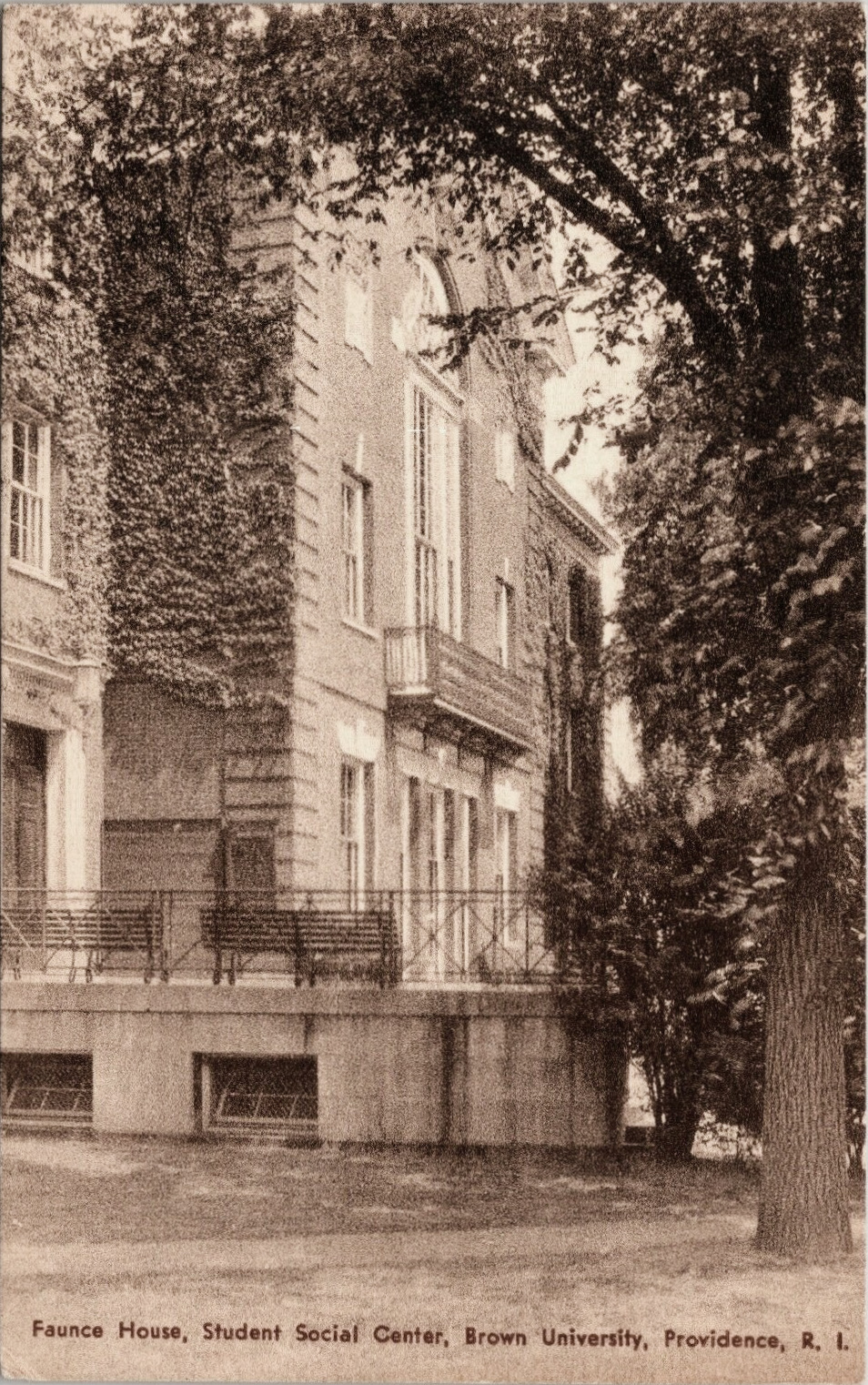
Well, here is the venue for the T.S. Eliot lecture and reading, at Faunce House. This served as the Student Social Centre and was thus presumably larger (the size needed to cater for the large T.S. Eliot audience?) than the adjacent University Hall or Manning Hall. Note what appears to be a pseudo 18th century coaching entrance on the right side, its entrance shape obviously fashioned after one Lovecraft knew near the Art Club (the haunt of the ancient cat ‘Old Man’) and another half-way down College Street.

One of the lounges at Faunce House, late 1930s.

Here we see a 1950s map, which shows the arrangement of the various buildings around the central College Green lawn. Lovecraft had lived just behind the John Hay Library. The map also shows that the genteel old folks home, that had once been across the cat-haunted courtyard garden from him, had by the 1950s been taken by the University as a faculty car-park. Lovecraft’s own house does not appear, being a residential rather than a functional university building. His house was lifted and moved to a new site in the city in 1959.

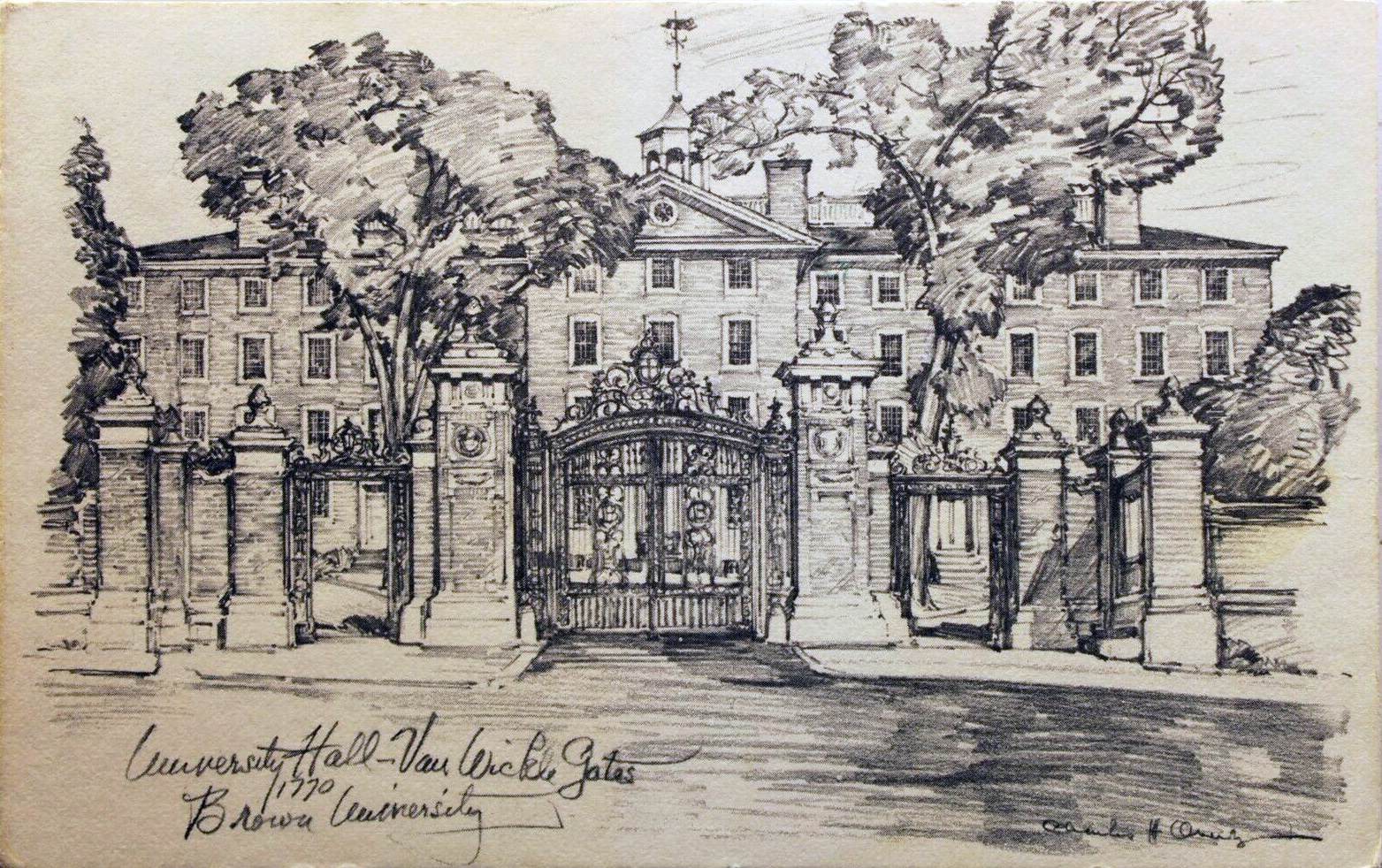
Here we see the University Hall in the 1920s-30s, followed by two sketch cards of Manning and University halls. Lovecraft sent a card showing both halls to Donald Wandrei, quite possibly this one. These sketches are by Stacey Tolman (1860-1935), a prominent Providence artist whose final exhibition Lovecraft also attended.

These then are some of Lovecraft’s last haunts, as he explained to young Rimel in a letter just before Christmas 1936…

For me the season of outings ended early in November [1936], & the long hibernation is now on. I get to hear lectures now & then, but spend as little time as possible away from [the 66 College Street] steam heat!

Lovecraft later told Rimel (in his final 20th February 1937 letter to the lad) that even in his final days, half-starved and near death, he still…

managed to get around somehow … tottering forth … occasionally taking in lectures on subjects as varied as Peruvian antiquities, Italian Romanesque architecture, biological concepts in philosophy, and Greek astronomical hypotheses.

According the Brobst the very last lecture he heard was on his beloved Colonial Furniture. That same night, when he returned in a terrible state, the doctor was called.

‘Picture Postals’ from Lovecraft: High Bridge and the 1925 eclipse

11 Friday Feb 2022

Posted by asdjfdlkf in Astronomy, Historical context, Picture postals

≈ 3 Comments

After last week’s ‘Picture Postals’ visit to sunny climes in New Orleans, this week I look at a frozen New York City.

In one of my earliest blog-essays on Lovecraft, way before I knew as much as know now, I suggested that his 1925 solar eclipse viewing from High Bridge or nearby hill might have provided a dramatic sight of a distant New York City. A city plunged into a sinister darkness, giving an appearance akin to R’lyeh risen from the waves. Whatever the facts of the matter, as set out below, this still seems a poetic image of likely use to future bio-pic makers and graphic novelists. Lovecraft gibbering and stuttering with the severe cold, sinking to his knees like a cultist, as a vision of New York as a R’lyeh-like city emerges from the cold mists under the en-darkening eclipse.

But what of the hard facts? I now revisit my old suggestion, and see if I can glean any more data. My thanks to Horace Smith for reminding me of my old post, and prompting me to look again at the relevant entry in Lovecraft’s 1925 Diary.


We know that an initial intention of the Lovecraft eclipse expedition of 24th January 1925 appears to have been to rise from their beds very early, then travel into the ‘zone of totality’ to reach the High Bridge aqueduct. Kirk invites his girlfriend to join the expedition thus…

… we’ll go up to Yonkers and take [smoked] glasses along and walk up on an aqueduct
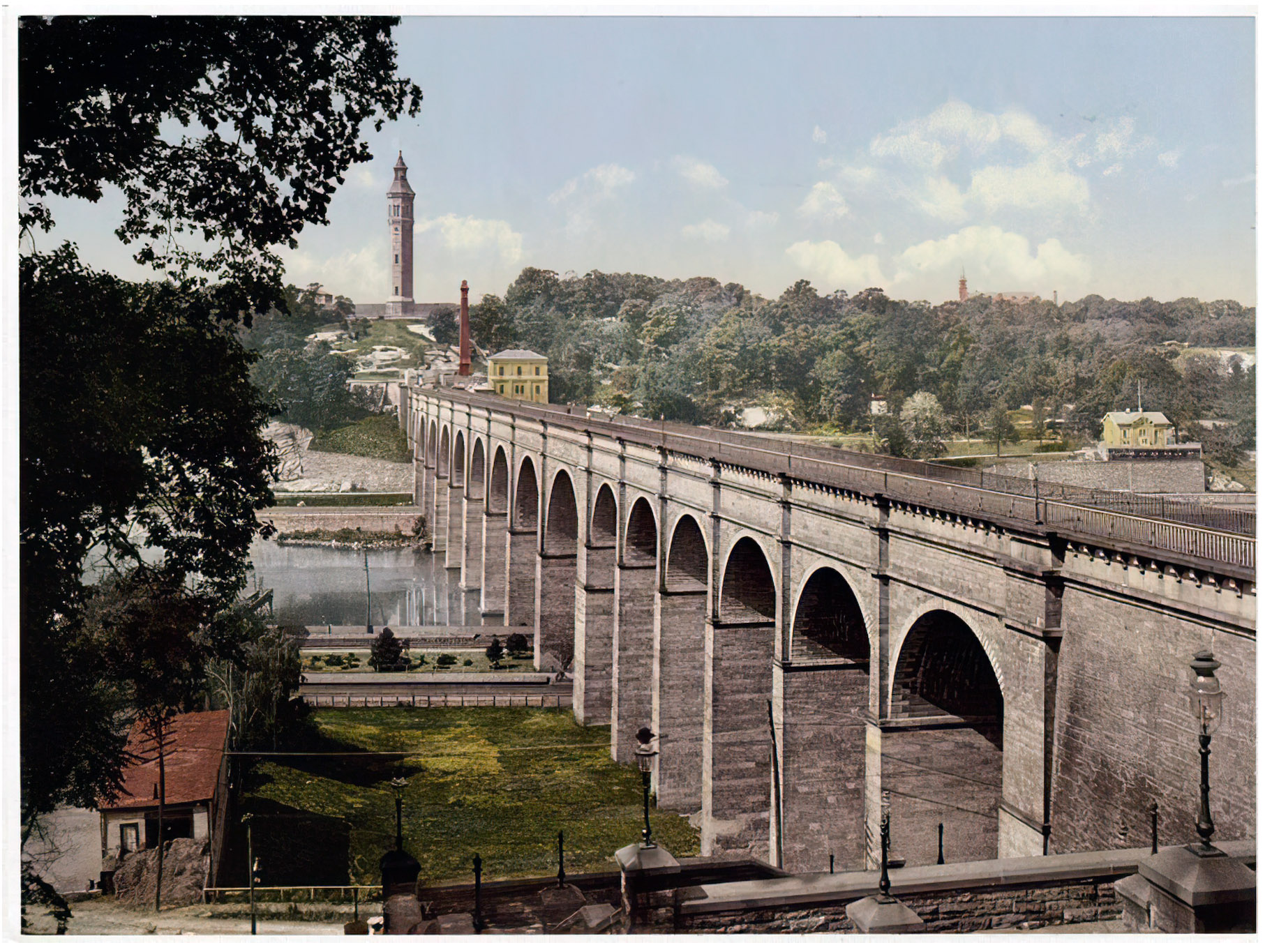
The distant tower and grey wall below it are part of a gigantic elevated reservoir, and the bridge carries its Old Croton Aqueduct.

This aqueduct / pedestrian bridge was once a haunt of Poe, it being said that… “a walk to High Bridge was one of his favorite and habitual recreations” while living at Fordham. It would thus have a double-attraction for the Lovecraft expedition — to view the eclipse on the bridge where Poe walked.
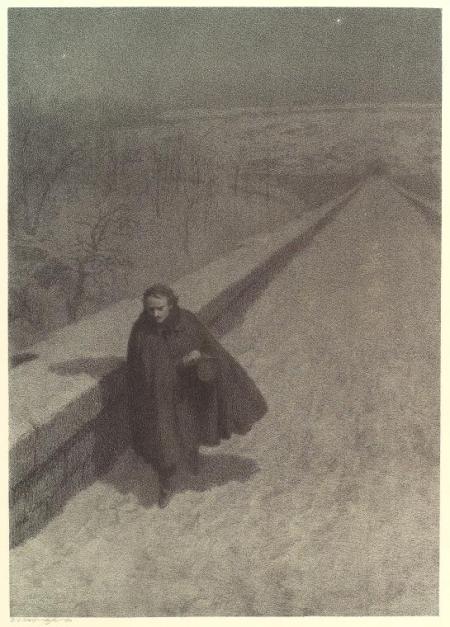
Poe on the High Bridge.

At the end of January 1925 New York City was still in the depths of a bitter and snowy winter, which had arrived with the worst snowstorm in living memory at the start of January. About the third week of January Lovecraft peered out of Loveman’s picture-window at the cityscape. He noted in a letter that another ‘ponderous’ snowstorm appeared set for imminent arrival. However, his other New York letters from January suggest it was still relatively easy to get around the city. That said, it is quite possible that High Bridge was closed by the authorities for public safety due to the likelihood of surging crowds and icy conditions.

Anyway, such was the apparent plan and the seasonal weather. But what of the actual day? Lovecraft’s 1925 Diary is cryptic on the matter, the January 1925 entry being…

Up 3:30 [a.m.] — to SL’s [Loveman’s] & Van Ct. [Van Cortlandt St] with GK [Kirk] — meet JFM [Morton], Dench, Leeds. M & D [Morton and Dench] walk, [the] rest ride [public transport to] Getty Sq. [Into] Yonkers. Walk up hills — ECLIPSE

This entry indicates that Kirk was staying over at Loveman’s, at whose apartment Lovecraft perhaps arrived 5am. Loveman presumably had to work that day, a Tuesday. Lovecraft and Kirk then went to Van Cortlandt (Lovecraft the antiquarian is using the archaic ‘Van’ in the street name in his Diary, and abbreviating Cortlandt to Ct.). Here we see Van Cortlandt St. in the 1930s, a quarter mile west of the Brooklyn Bridge and with the street running below the 9th Avenue Elevated station.
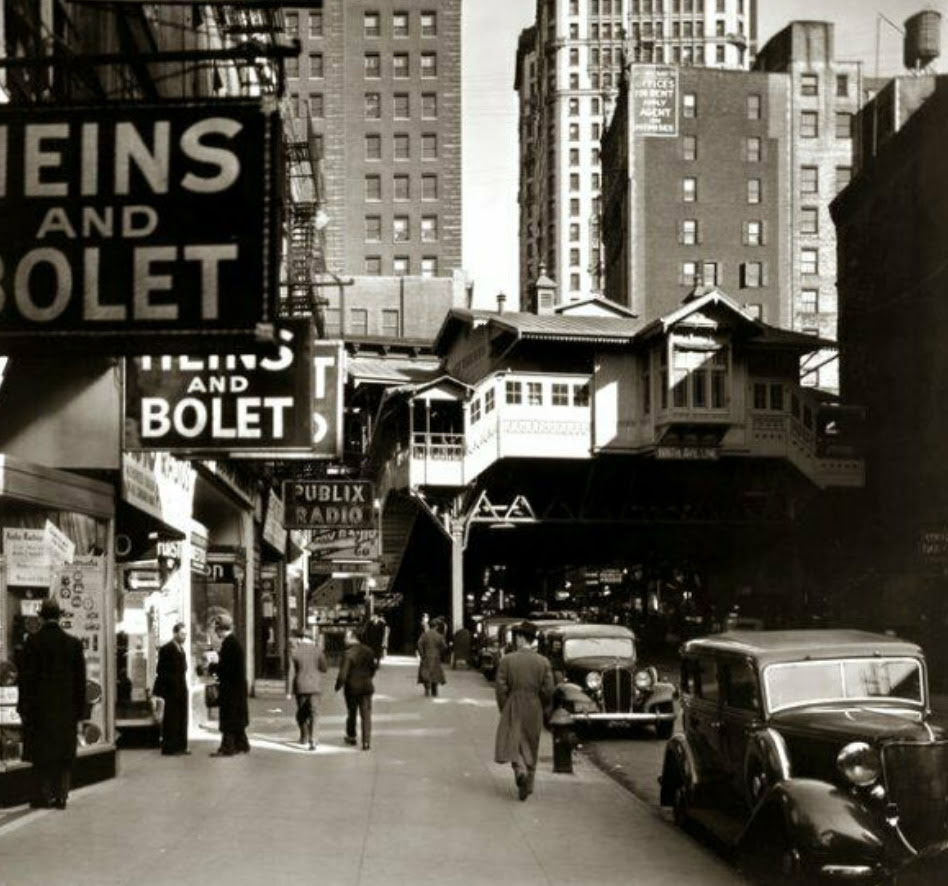
It was a natural place to meet up at 6 a.m., having a key train station on the Elevated. This was presumably serviced by several nearby early-morning cafes. It was on the verge of becoming a famous place in early mass media. In 1925 Oscar Nadel (‘the king of Cortlandt Street’) had opened his famous ‘Oscars Radio Shop’ there. The shop would trigger a cascade of activity which meant that by 1930 the street was a thriving radio broadcasting and radio retail-sales quarter, a place now known to media historians as ‘Radio Row’. In the following 1925 picture we see a wide view from further back, looking into Cortlandt Street and with the Elevated station just about visible in the deep shadows under the new skyscrapers.
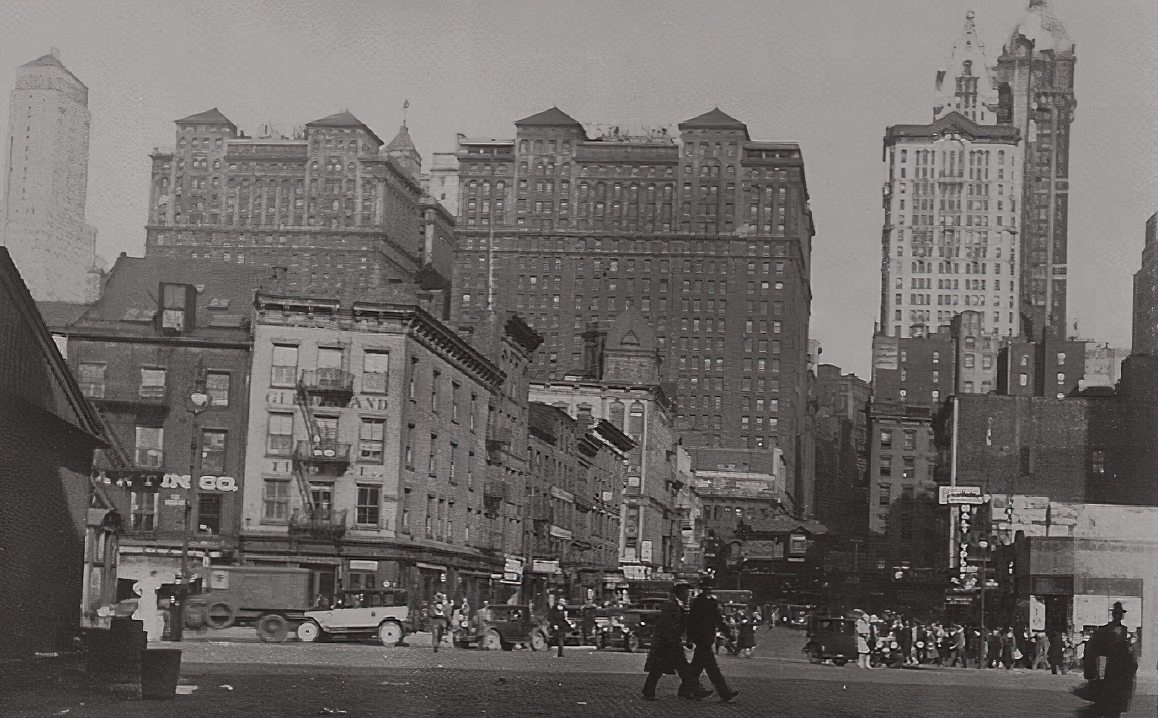
Lovecraft’s friend Morton did not yet have his museum job, and would have been travelling in from Harlem. Dench would have been coming in from Sheepshead Bay. After the expedition had all met up and fuelled up on coffee, the Diary shows that Morton and Dench then walked from Van Cortlandt to Getty Square in Yonkers. If these ardent hikers were walking 12 miles directly north, moving at speed along a well-gritted and otherwise deserted shoreline path, then they might have taken 90 minutes. That then implies that Leeds, Kirk and Lovecraft waited for them for an hour or so in a known-to-all breakfast eatery at Getty Square, after having travelled there in comfort.

We see here a Yonkers candidate for the cafe, ‘Counes’ on the central corner of Getty Square, an establishment offering soda and ‘quality candy’ and likely indicative of the many sugary delights available at this central transport hub…
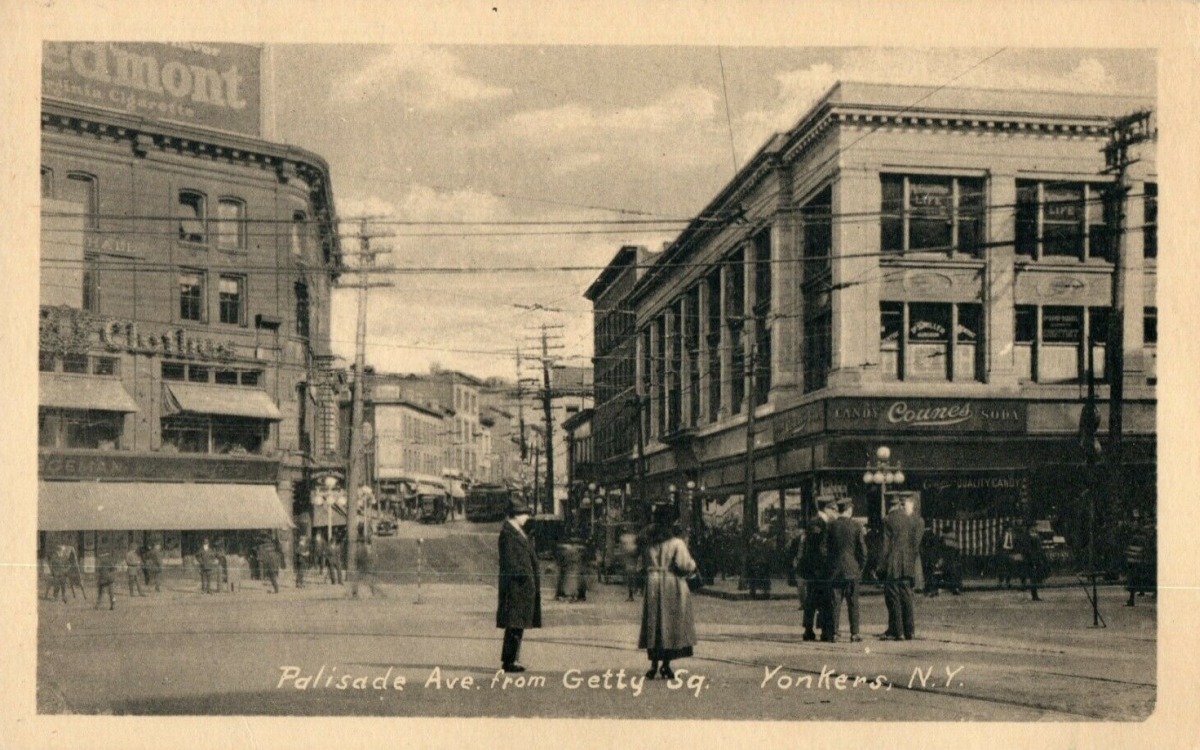
By January 1925 Lovecraft had chuffed one too many candies. As he later recalled for Morton, he was a bit plump at that point…

that eclipse morning occurred whilst I was still a problem for Sheraton chair-makers, yet scant comfort did my proteid integuments afford me! [in that chill]

This soda bar is a possibility, and perhaps was likely to be open earlier than usual to serve the eclipse crowds. Though a cheaper coffee / ‘all-day lunch’ shop was probably the more likely choice. Here we see several options on Getty Square, circa 1920…
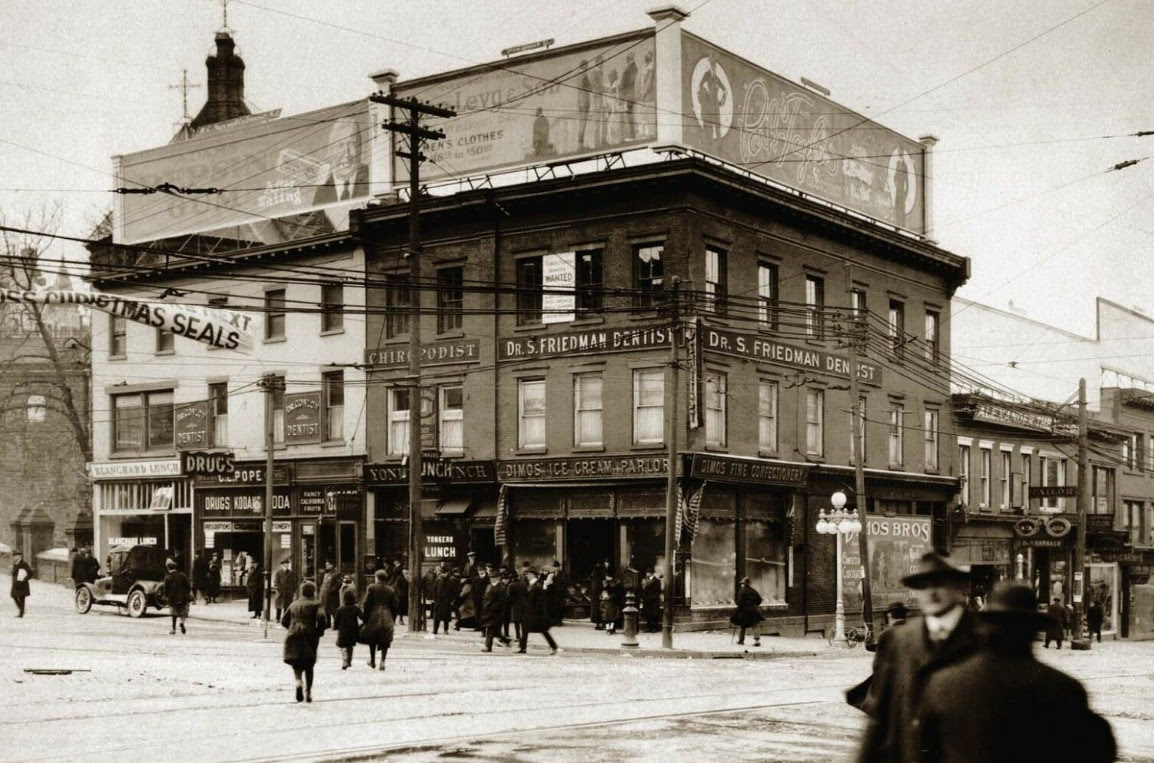
Lovecraft’s “Walk up hills” diary entry implies multiple hills. But this does not get us much further as to the viewing location, because the terrain of Yonkers rather assumes that any route out from Getty Square would have been up and over some rolling hills. Yonkers was well known, then as now, for its many steep hills. As Joseph J. Conte recalled of his 1940s boyhood in his memoir Flies in My Spaghetti…

Wintertime was a great time of the year and, with all the hills in Yonkers, we had a big choice of where we would take our sleds.

In 1932 Lovecraft was no more precise, recalling…

… some of us tramped up into the cold of northern Yonkers to see the January eclipse.

Another letter I found recently states that a hillside was the observation point, equally vague.

If the expedition had left their Getty Square cafe and were on the road out of the urban nexus by 8.a.m., then they would have had 70 minutes left to find a suitable spot. This photo is indicative of the initial trek up Main Street from Getty Square in the “marrow-congealing” ice and snow. It shows the top of Main St. as seen circa the 1920s, climbing up from Getty Square below…
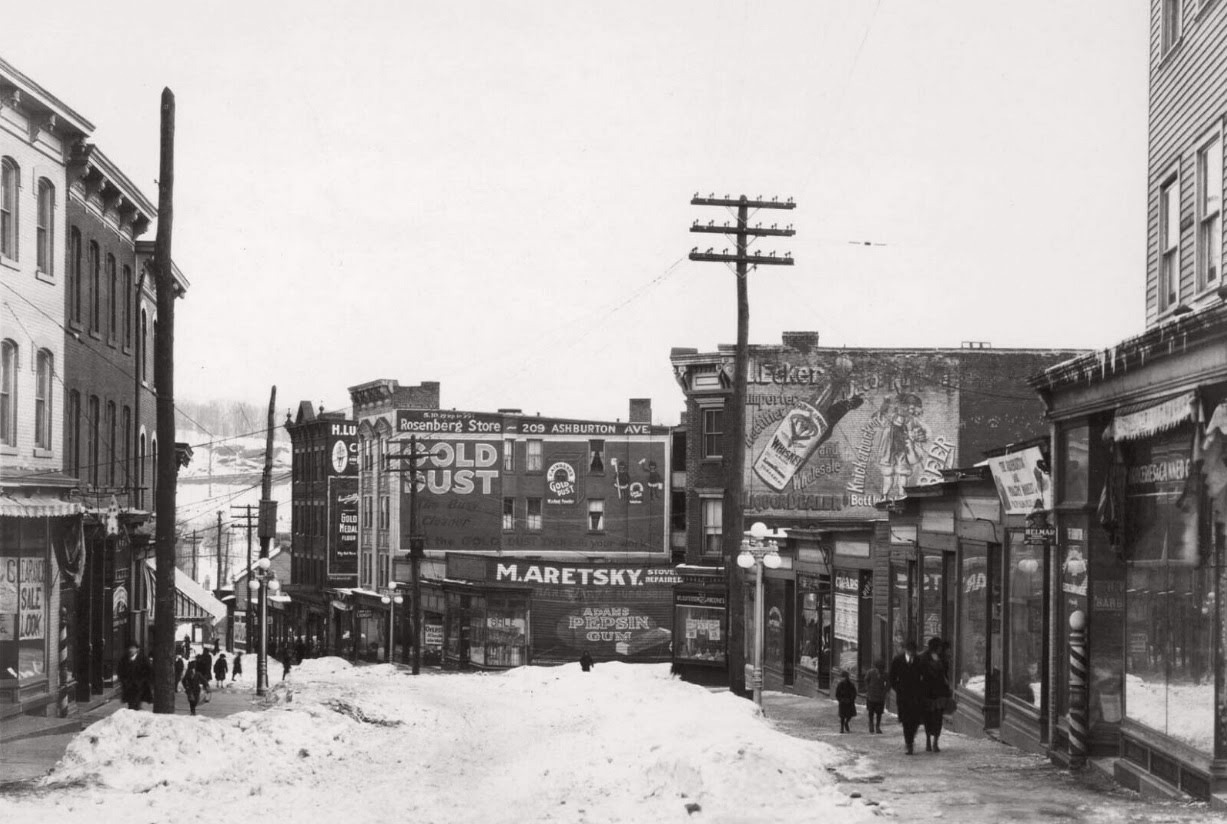
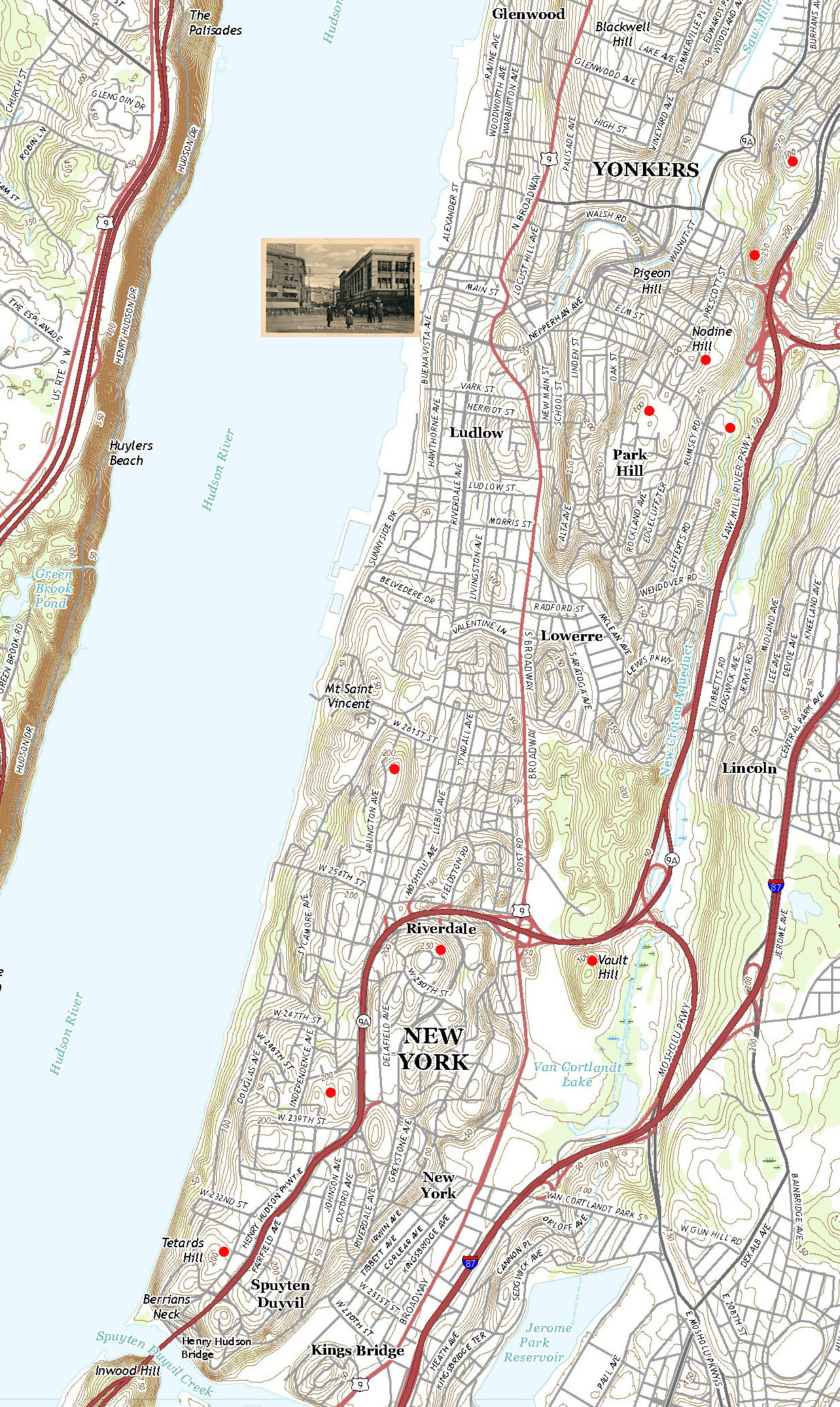
But if High Bridge was still the aim of the expedition, as Kirk’s diary suggests, then one has to assume a walk or tram-ride four miles south from Getty Square through Yonkers to reach the High Bridge. Why do it like this? It would enable them to look out for suitable hillside spots facing east and without encumbering trees or buildings (the sun would be quite low at the ‘totality’), while they walked south. Here then are the likely spots marked by me on a terrain map, spots facing east and not wooded or built-up.
And here we see the above terrain continued down to High Bridge. This map extract is from the 1947 USGS 1:24000 map for the Central Park area. It too has the required elevation contours and heights.
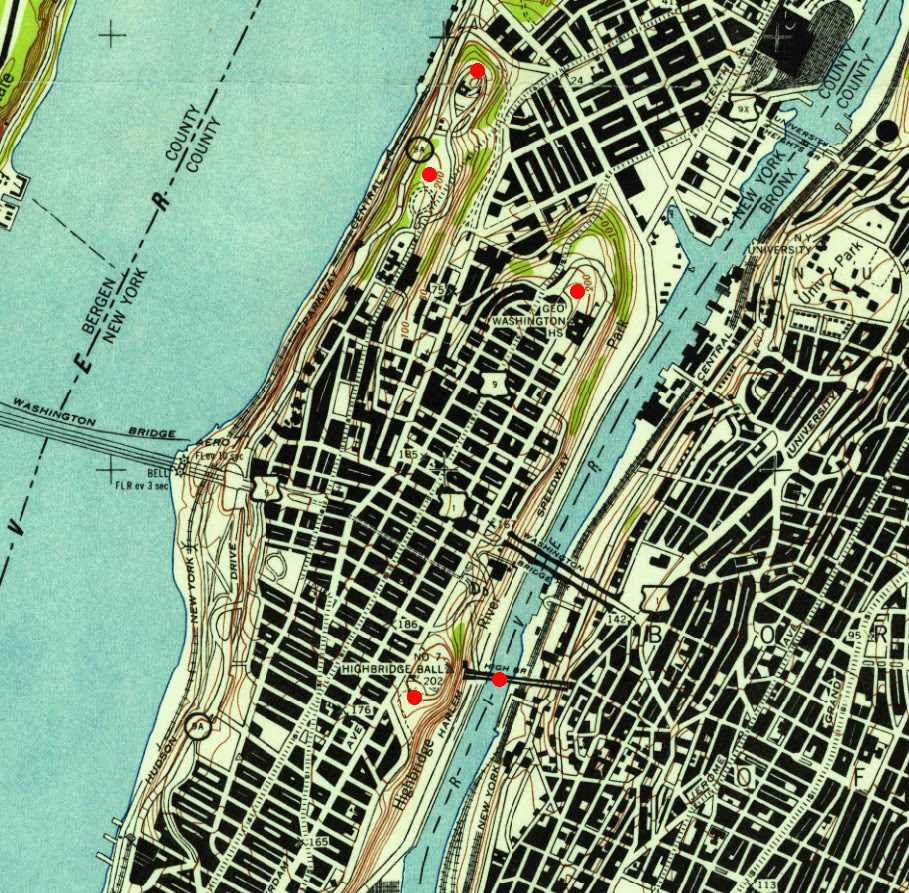
Inwood Hill Park, seen on the top map and here located a little off the north of this map extract, was (at least in 1947) too heavily wooded at the high points to provide good views. If the expedition did hike the four miles through from Getty Square to High Bridge, they would pass two or three 200ft east-facing spots just to the north of the reservoir end of the High Bridge. Again, these are marked on the above map.

Of course, it may well be that the expedition never even reached High Bridge or its nearby hills, as was seemingly initially planned. They could have found a better spot on the way there, or run out of time. Or perhaps they simply chose one of the candidate hills a mile or two back from Getty Square, if they had researched their location or read about likely spots in the newspaper beforehand. This latter idea is supported fairly strongly by the fact that Lovecraft’s 1925 Diary continues after the word “ECLIPSE”, indicating post-Eclipse visits to two local landmarks…

Philipse Manor [a restored Dutch manor house just off Getty Square, with fine interiors], St. John [Episcopal Church, with fine exterior fancy-stonework and fancy roof tiling] home — Tiffany [his regular everyday cafe, near his room on the edge of Red Hook] — rest
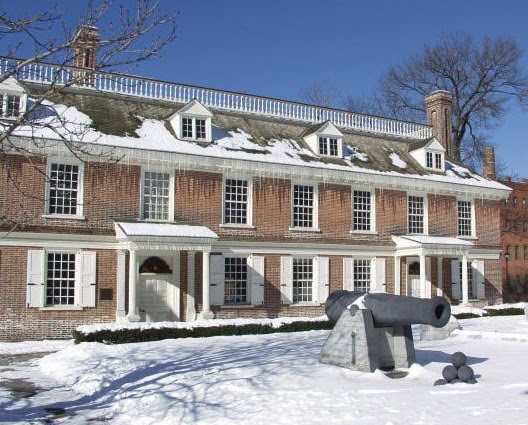
Philipse Manor. The plain exterior was probably enhanced a bit by snow and ice.

These items must argue against the High Bridge having been reached or even walked toward, unless they shuttled back up to Getty Square on public transport. That they visited two sites just off Getty Square after the eclipse would seem to indicate that the “hills” would have been those within a few miles of that place. Which at least narrows the choice of the hill in Yonkers down to a few.

But even this data is vague and we shall probably never know the exact viewing spot now, unless a new letter or postcard comes to light. But the red dots above show the likely candidates. Take your pick.

We do however have this evocative picture, seen below. It clearly indicates the elevation of the sun in the east relative to the ground, and the snowy ground conditions in New York City. It also demonstrates that the rather low sun at the totality would present viewers with potential problems re: finding a suitable east-facing observing site that was well free of obscuring trees or buildings.
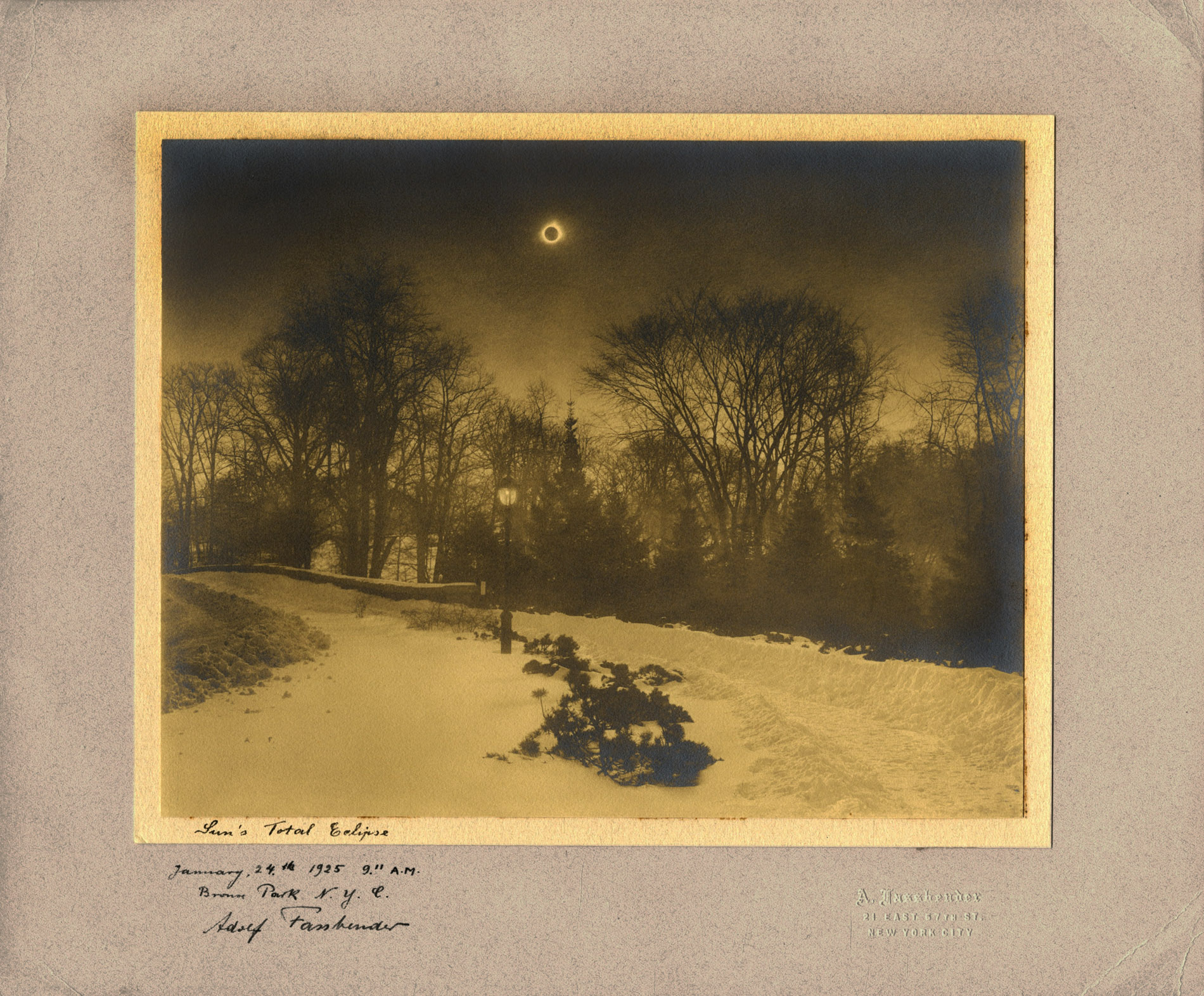
Adolf Fassbender, “Sun’s Total Eclipse. January 24th, 1925, 9:11 a.m. Bronx Park, N.Y.C.” Original held by the New York Historical Society. Here Photoshopped to repair damage and emulsion silvering due to age.

Years later a letter from Lovecraft to Morton described in some detail his second and rather fine solar-eclipse experience in Newburyport. During this account Lovecraft recalled that the flaring corona around the ‘dark sun’ had been very bright in 1925, and thus the earth below had not become as en-darkened as he had expected. This seems to be borne out by the above photograph. The wide blanket of white snow probably kept light levels high, with a bright corona. Note also that the above picture suggests the air was rather still, as the branches are not blurred by wind-movement even in the low light.

Kirk’s diary suggests a further aspect of the experience, and a key reason for seeking an open hillside — the “rushing shadow”. Apparently this is a well-known aspect of viewing a total eclipse. Kirk tried to entice his girlfriend to come on the expedition by noting that…

… it is said that to be on a hill in open country and to see the rushing shadow thrown to Miss Moon is to marvel.

‘Picture postals’ from Lovecraft: New Orleans

04 Friday Feb 2022

Posted by asdjfdlkf in Historical context, Picture postals

≈ Leave a comment

This week in ‘Picture Postals’ I take a look at somewhere warm and sunny. As America and the UK shiver (at the huge rise in heating bills, as much as the cold) it seems that this may be welcome.
In June 1932 Lovecraft reached the city of New Orleans on his travels, and there enjoyed a lengthy visit with the help of local resident and fellow Weird Tales writer E. Hoffman Price. Lovecraft was much taken with the old French Quarter, then gentrifying in parts.

Price later recalled that he “skipped the concubines entirely”, and thus Lovecraft would not have seen all in the city. Gentrifying the place may have been, and Lovecraft later recalled it as such. But several candid b&w street pictures from the mid 1920s show that litter (trash) was a problem even in the business parts, and that side-streets could still be seedy-looking and wild with street children.

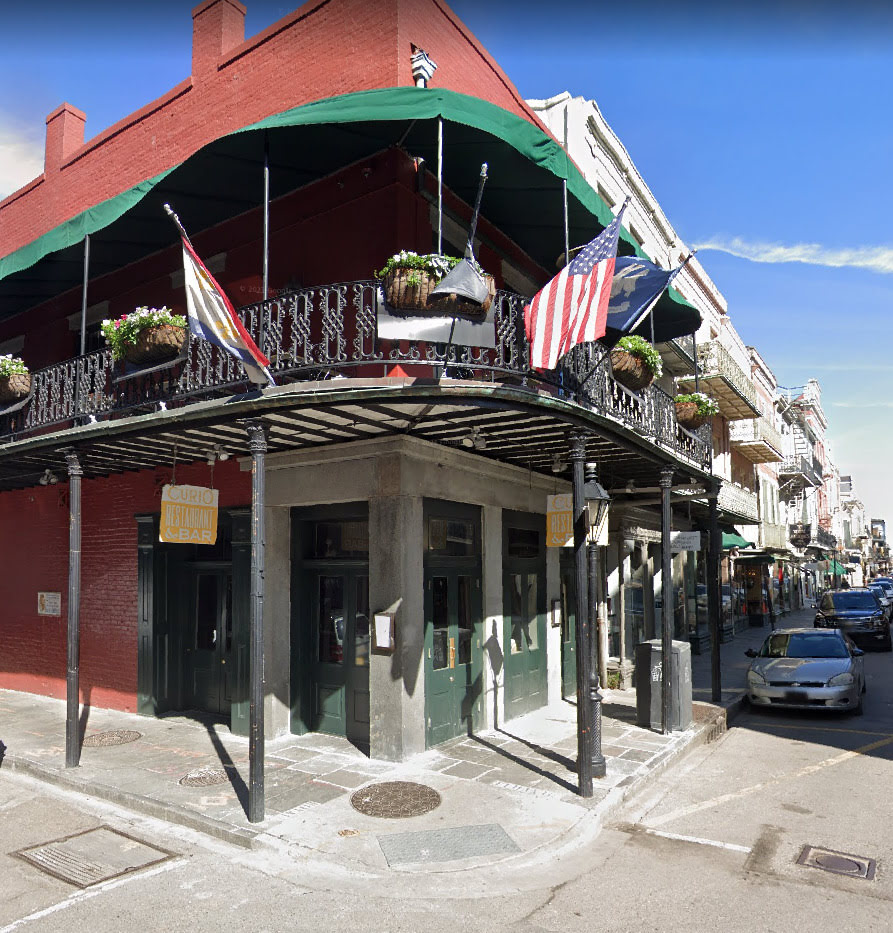
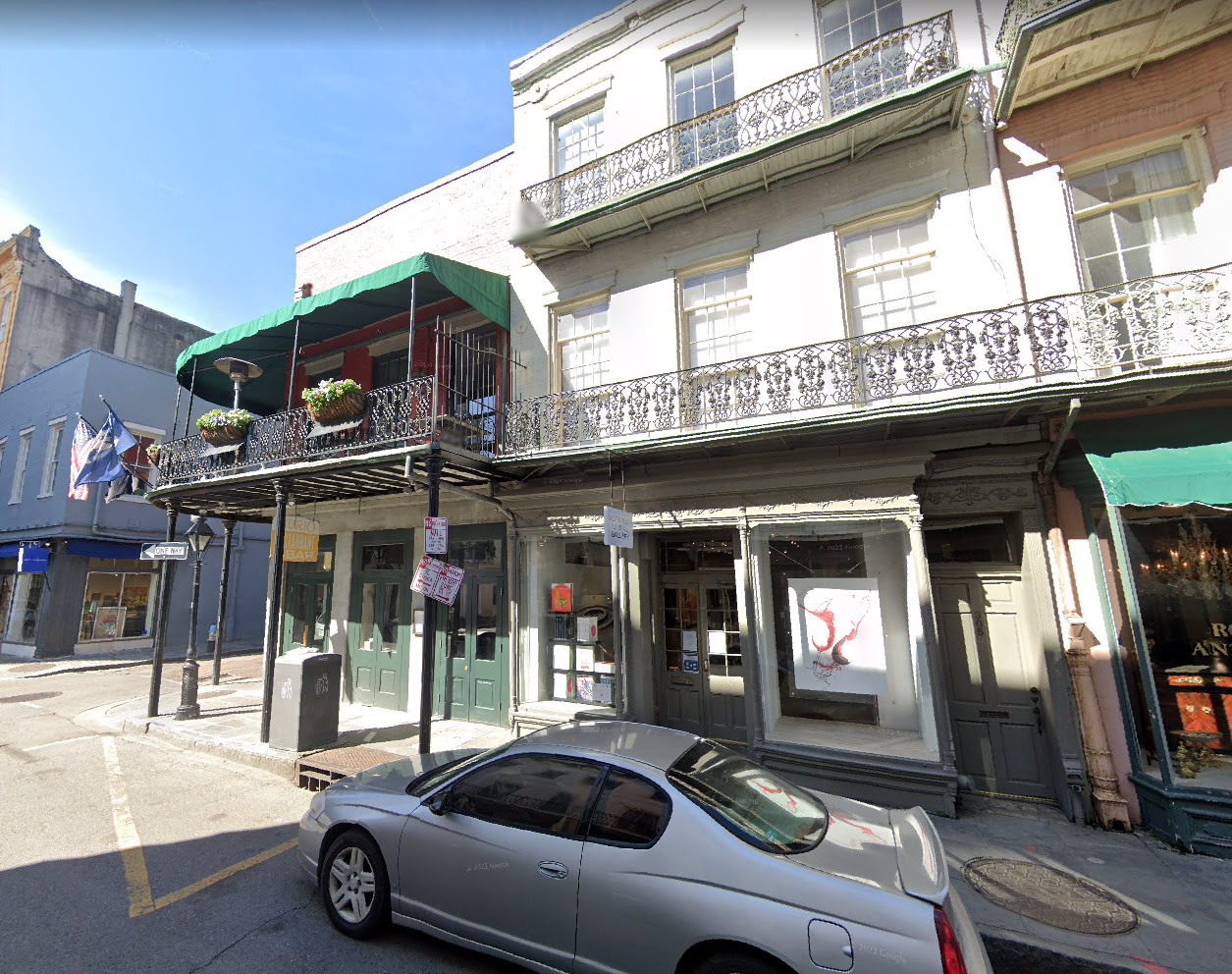
The Lovecraft-Price letters have recently been published but I don’t yet have that volume. So I may be missing some further data here on locations. But for now here is a StreetView of the relevant street corner, with Price’s No. 305 a few steps away down the same side of the street.

Appropriately enough, No. 305 Royal Street is now a gallery at the heart of the Quarter. Run by, of all people, Nathan Myhrvold. And curiously dedicated to ‘food photography’. Which seems somehow appropriate for a place where H.P. Lovecraft ate nuclear chilli-con-carne and Price brewed his own beer.

The ground floor looks like it has been ‘shelled’ inside for retail, but the historic frontage still gives a good indication of the place that Lovecraft visited and in which he had epic conversations and epic curries with his friend Price. This would also have been the rendezvous point for a meeting with R.E Howard… but REH couldn’t afford the trip.

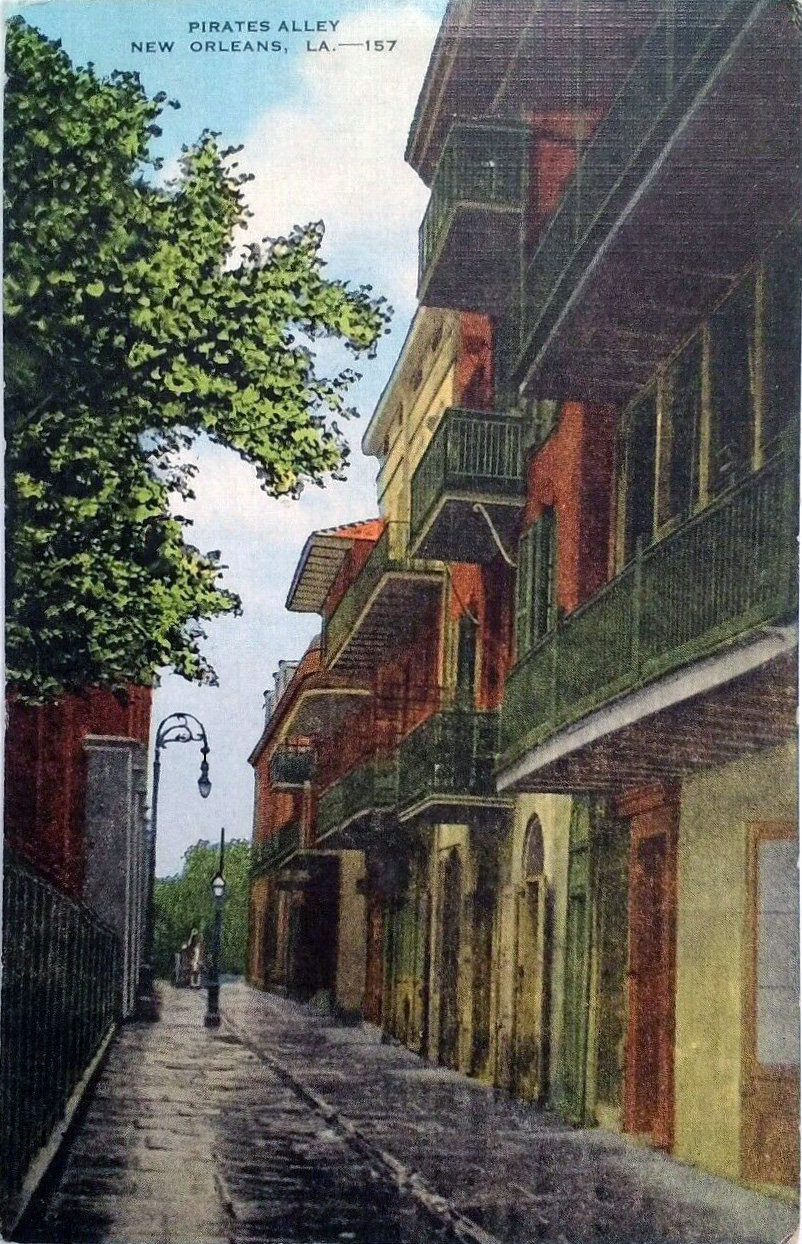
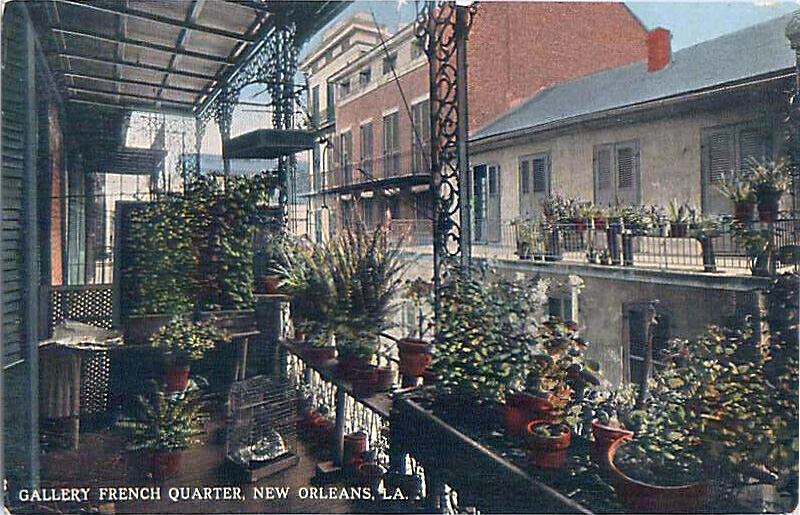
We can see here that there would have been a street balcony and we can probably assume abundant balcony plants too, more abundant than seems the case today. This postcard is indicative of the plant life and views from such balconies…

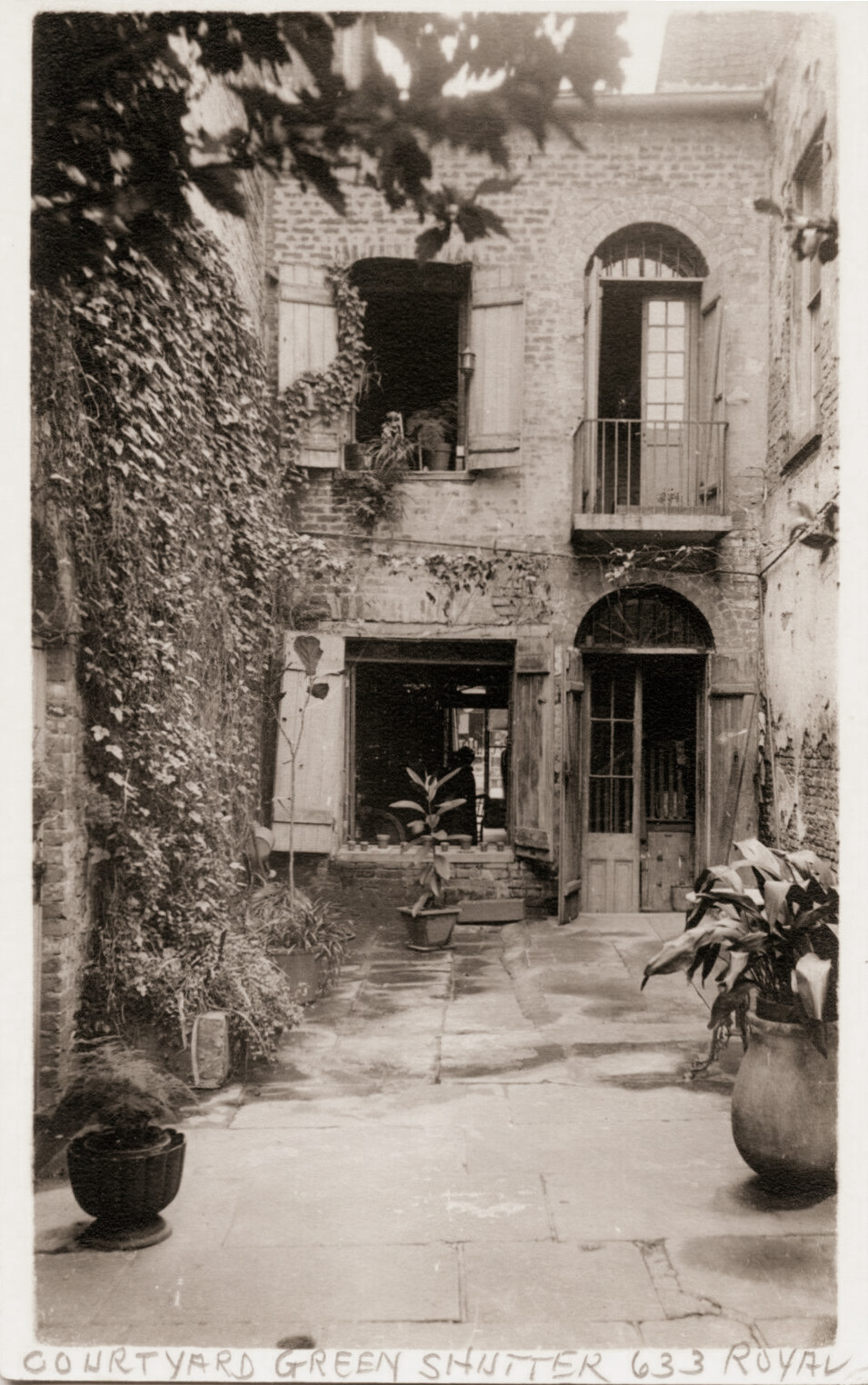
The bird-cages indicate that the twittering of birds would have been part of the ambience, enhanced due to the relative lack of noisy cars and taxis at that time. What we don’t get to see is the back courtyard, if there was one, but this fine picture of the back of No. 633 Royal Street may be somewhat indicative.

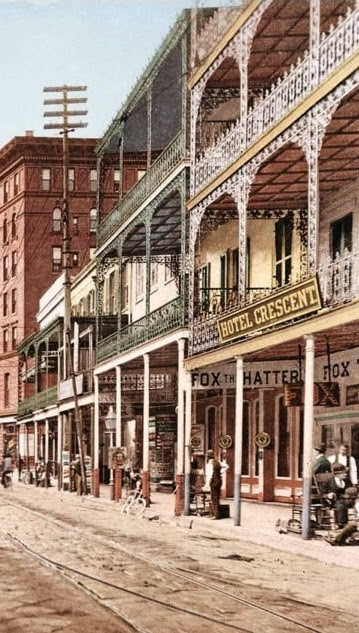
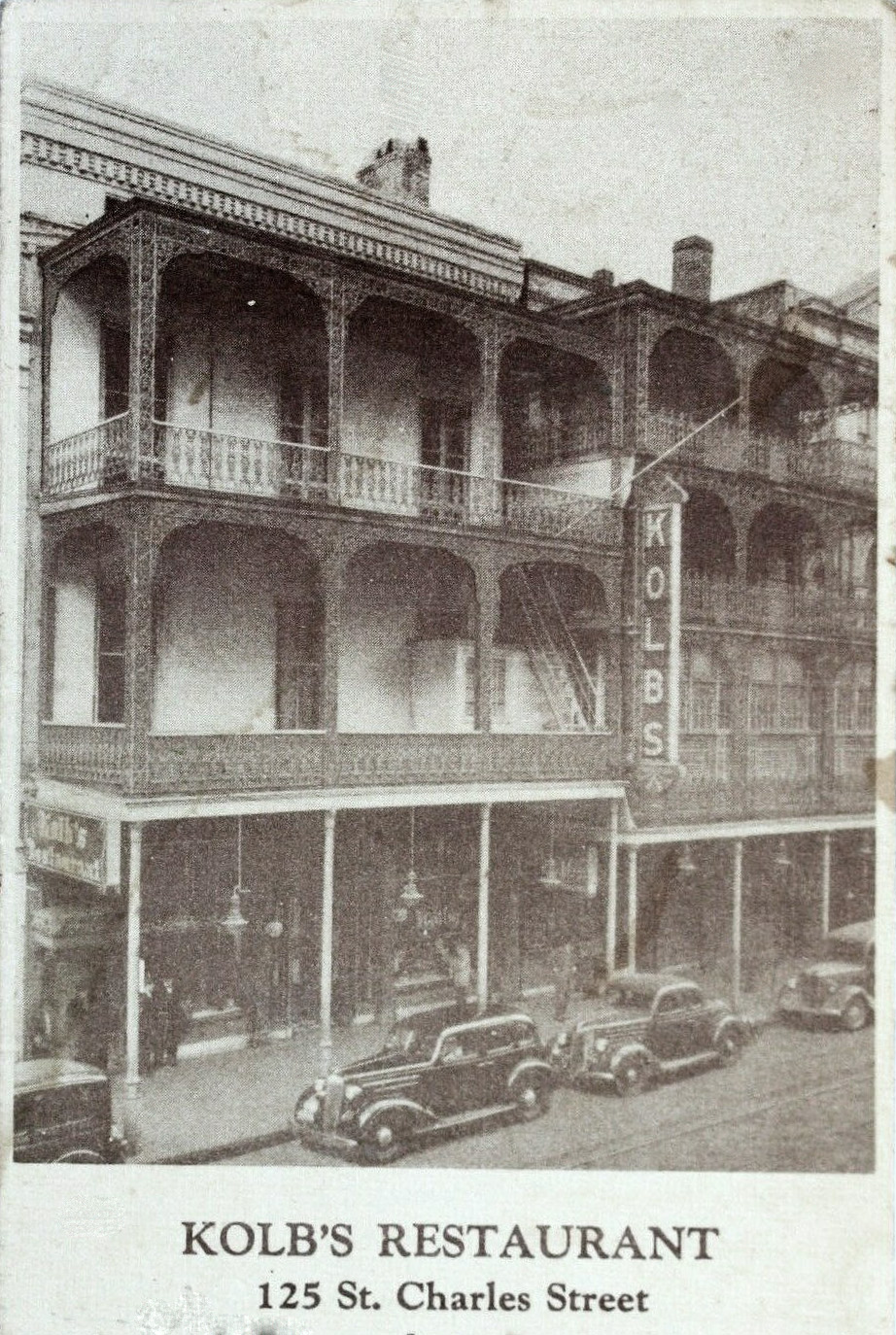
Lovecraft was not staying overnight at Price’s No. 305. He was in a “third-class” hotel nearby. This was on St. Charles Street. The closest I can get visually is this small hotel on St. Charles St., and a picture of an eatery at 125 Charles St. Both of which may be indicative.

‘Picture Postals’ from Lovecraft: pages from a ‘lost dream diary’

28 Friday Jan 2022

Posted by asdjfdlkf in Lovecraftian arts, Picture postals

≈ Leave a comment

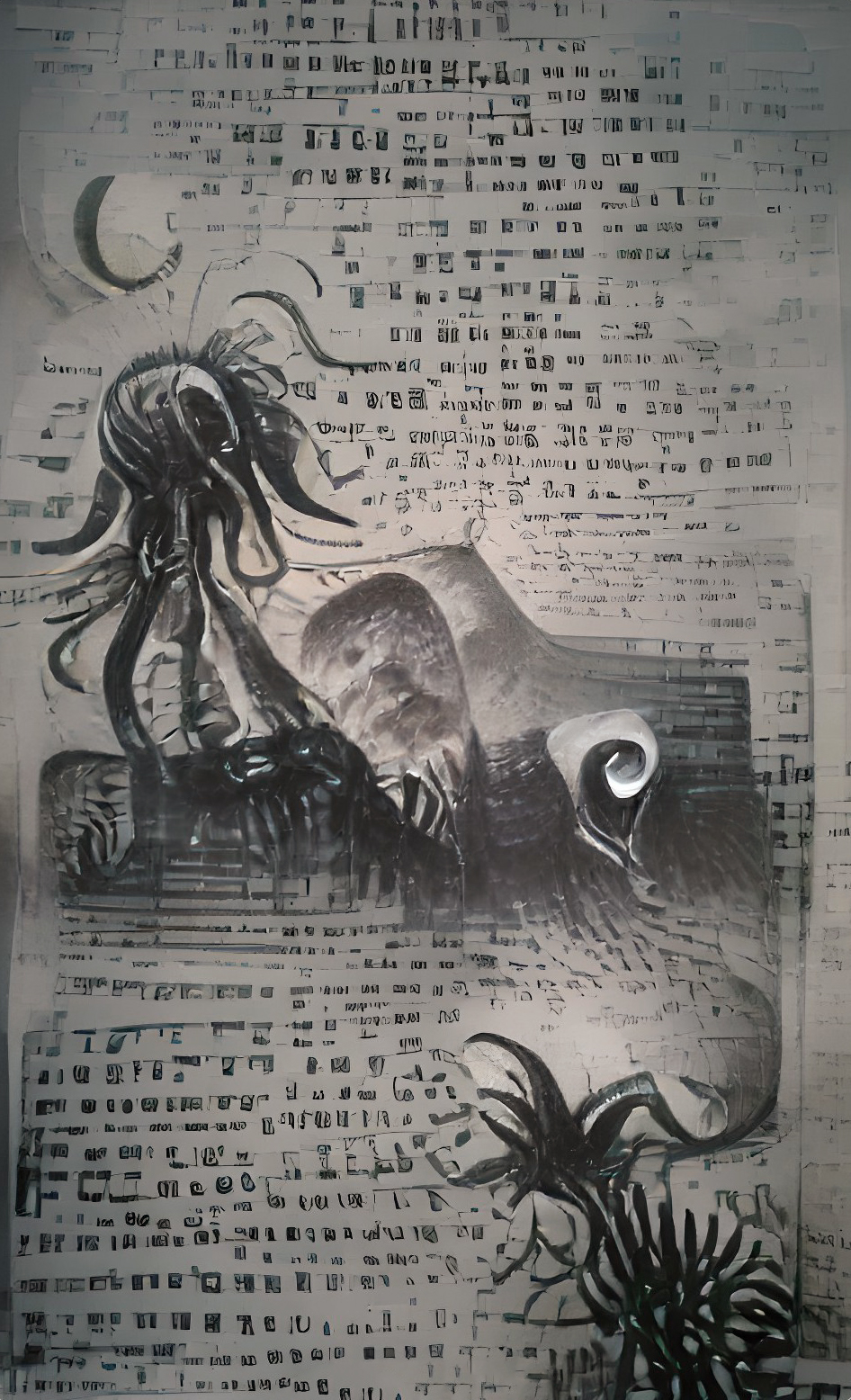
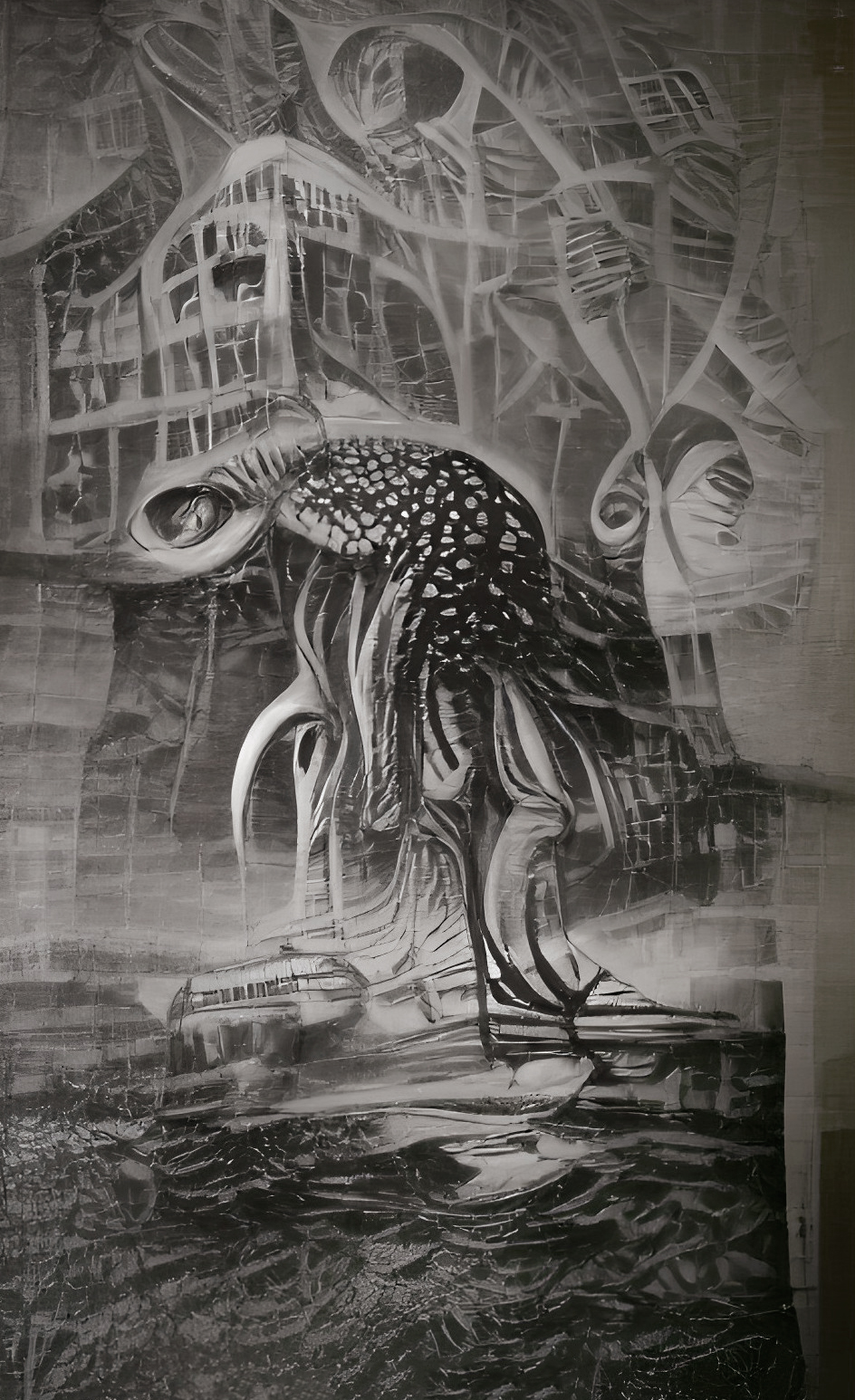
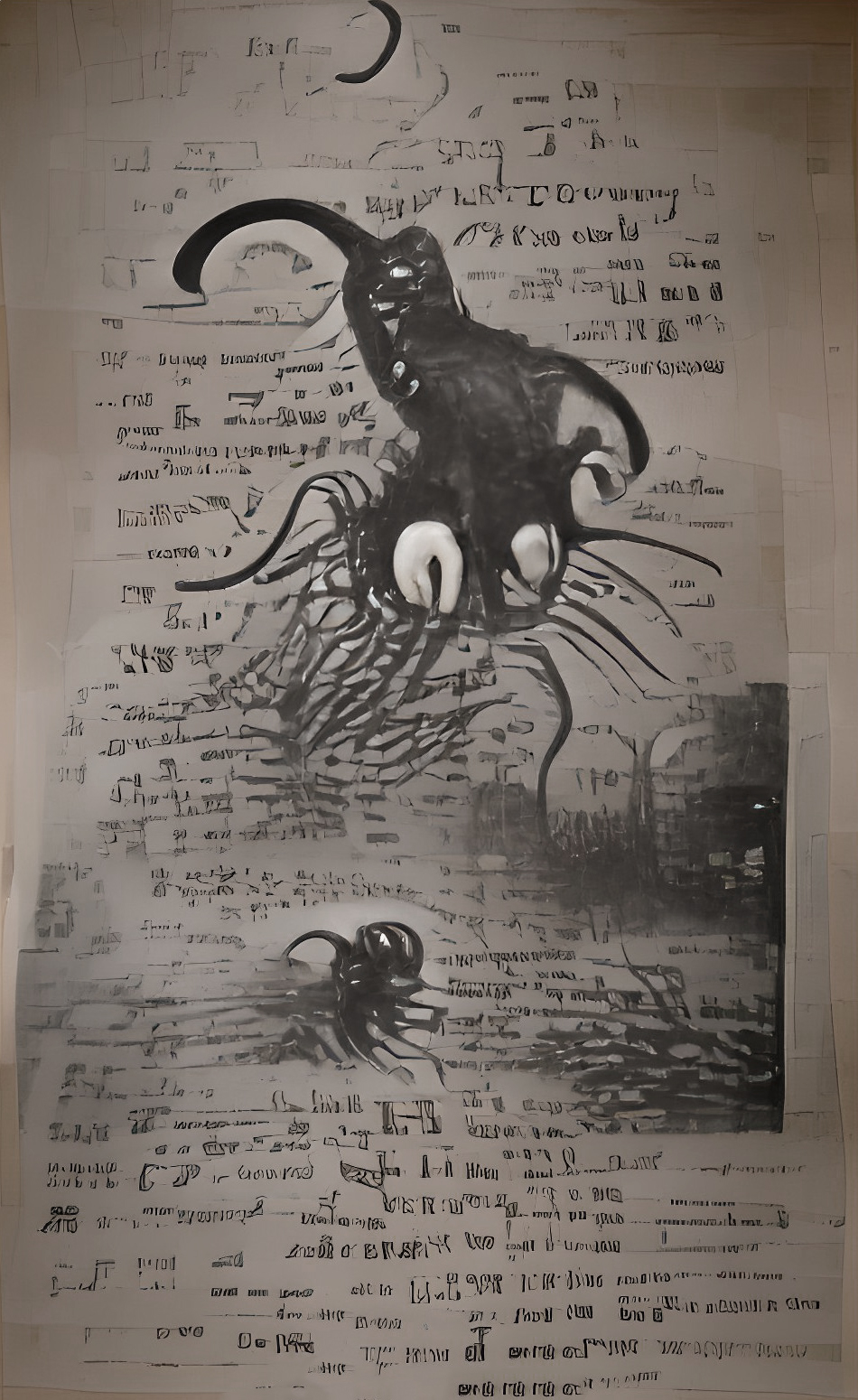
If Lovecraft had been able to send back picture-postcards and pages of notes from his dreams…

‘Picture postals’ from Lovecraft: Uncle Eddy

21 Friday Jan 2022

Posted by asdjfdlkf in Historical context, New discoveries, Picture postals

≈ 2 Comments

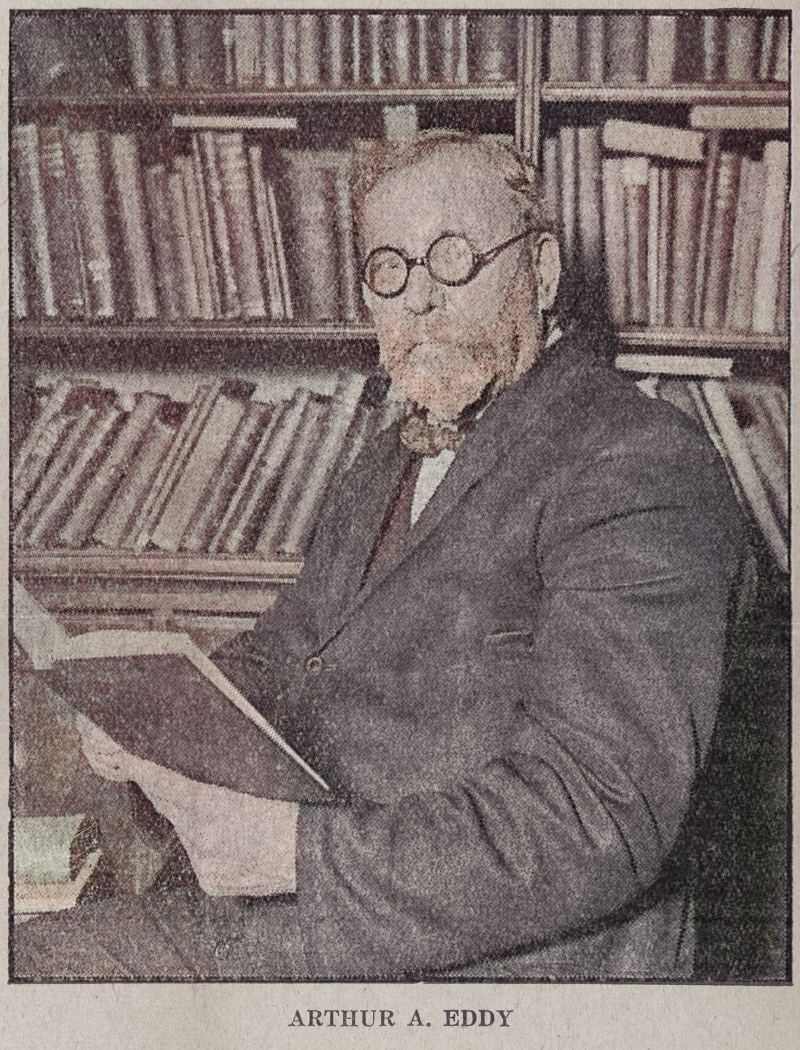
This was H.P. Lovecraft’s Providence bookseller, the uncle of his sometime-friend and fellow-writer Eddy. Here I’ve de-screened from newsprint and colorised as best I can. Until someone comes up with a magic ‘AI newsprint de-screener’ this is as good as it gets, even from a big 600dpi scan.

This comes from the now-found ‘Uncle Eddy’ cutting I referred to some posts back. Evidently the ‘RIAMCO listing’ is actually for the Brown University holdings of Lovecraft, which are now online as hi-res scans along with their enclosures and cuttings. Good to know. Thus we now have a very good picture of Lovecraft’s favourite Providence book-dealer, albeit in dotty newsprint.

It’s from the Providence News-Tribune, 22nd July 1931. Lovecraft and the visiting Morton happened to pop in to the Eddy bookshop shortly after it had been published, and thus were presumably able to rush around and find some local news-stores that had not sent back their ‘returns’ copies of the paper. Copies were duly purchased and the clippings sent to correspondents who knew and had patronised Eddy.

What appears to be a Frankenstein-like scar on the right of his face seems to be his glasses-chain.

What do we learn from the article?

1) His shop was “probably the largest of its kind in the city” at 1931. A massive 200,000 volumes (and, as we know from Lovecraft, more in his attic store at home). Thus Lovecraft’s joking in a letter to the effect that ‘Cook had cleaned Eddy out’ on a spending spree, must refer to the weird and supernatural items only.

2) He looks as though he might be in his early 60s in 1931, although several scratches suggest the press used a picture dated earlier. Possibly came of age circa 1887-90? He had not yet retired at the point of publication. Indeed, he had taken on and recently sold the Bargain Book Shop on Empire Street, which suggest he was still very much in business and had money to invest in new stock.

3) Modern poetry was then “much in demand”, which would be unthinkable today when contemporary poets can only sell to other poets. “Modern” here may not necessarily mean modernist poetry, as this is Providence in 1931.

4) The article hints at his willingness to sell the sort of “paperback” items that would bring fulminating religious ministers into the store to berate him. He would stand up to them. Possibly the books were the Haldeman-Julius ‘Blue Books’ line.

5) He started the business as a side-line, though to what is not stated.

The final part of the article covers the city’s Dana bookstore, and another shop run by Livsey and Knight. This section has other detail on the state of the book trade in Providence during the early years of the Great Depression.

← Older posts
Newer posts →


Please become my patron at www.patreon.com/davehaden to help this blog survive and thrive.

Or donate via PayPal — any amount is welcome! Donations total at Easter 2025, since 2015: $390.

Archives

  • February 2026
  • January 2026
  • December 2025
  • November 2025
  • October 2025
  • September 2025
  • August 2025
  • July 2025
  • June 2025
  • May 2025
  • April 2025
  • March 2025
  • February 2025
  • January 2025
  • December 2024
  • November 2024
  • October 2024
  • September 2024
  • August 2024
  • July 2024
  • June 2024
  • May 2024
  • April 2024
  • March 2024
  • February 2024
  • January 2024
  • December 2023
  • November 2023
  • October 2023
  • September 2023
  • August 2023
  • July 2023
  • June 2023
  • May 2023
  • April 2023
  • March 2023
  • February 2023
  • January 2023
  • December 2022
  • November 2022
  • October 2022
  • September 2022
  • August 2022
  • July 2022
  • June 2022
  • May 2022
  • April 2022
  • March 2022
  • February 2022
  • January 2022
  • December 2021
  • November 2021
  • October 2021
  • September 2021
  • August 2021
  • July 2021
  • June 2021
  • May 2021
  • April 2021
  • March 2021
  • February 2021
  • January 2021
  • December 2020
  • November 2020
  • October 2020
  • September 2020
  • August 2020
  • July 2020
  • June 2020
  • May 2020
  • April 2020
  • March 2020
  • February 2020
  • January 2020
  • December 2019
  • November 2019
  • October 2019
  • September 2019
  • August 2019
  • July 2019
  • June 2019
  • May 2019
  • April 2019
  • March 2019
  • February 2019
  • January 2019
  • December 2018
  • November 2018
  • October 2018
  • September 2018
  • August 2018
  • August 2015
  • July 2015
  • April 2015
  • March 2015
  • February 2015
  • January 2015
  • December 2014
  • November 2014
  • October 2014
  • September 2014
  • August 2014
  • July 2014
  • June 2014
  • May 2014
  • March 2014
  • February 2014
  • January 2014
  • December 2013
  • November 2013
  • October 2013
  • September 2013
  • August 2013
  • July 2013
  • June 2013
  • May 2013
  • April 2013
  • March 2013
  • February 2013
  • January 2013
  • December 2012
  • November 2012
  • October 2012
  • September 2012
  • August 2012
  • July 2012
  • June 2012
  • May 2012
  • April 2012
  • March 2012
  • February 2012
  • January 2012
  • December 2011
  • November 2011
  • October 2011
  • September 2011
  • August 2011
  • July 2011
  • June 2011
  • May 2011
  • April 2011
  • March 2011
  • February 2011
  • January 2011
  • December 2010
  • November 2010
  • October 2010
  • September 2010
  • August 2010
  • July 2010

Categories

  • 3D (14)
  • AI (70)
  • Astronomy (70)
  • Censorship (14)
  • de Camp (7)
  • Doyle (7)
  • Films & trailers (101)
  • Fonts (9)
  • Guest posts (2)
  • Historical context (1,095)
  • Housekeeping (91)
  • HPLinks (74)
  • Kipling (11)
  • Kittee Tuesday (92)
  • Lovecraft as character (58)
  • Lovecraftian arts (1,626)
  • Lovecraftian places (19)
  • Maps (70)
  • NecronomiCon 2013 (40)
  • NecronomiCon 2015 (22)
  • New books (966)
  • New discoveries (165)
  • Night in Providence (17)
  • Odd scratchings (984)
  • Picture postals (276)
  • Podcasts etc. (431)
  • REH (184)
  • Scholarly works (1,469)
  • Summer School (31)
  • Unnamable (87)

Get this blog in your newsreader:
 
RSS Feed — Posts
RSS Feed — Comments

H.P. Lovecraft's Poster Collection - 17 retro travel posters for $18. Print ready, and available to buy — the proceeds help to support the work of Tentaclii.

Proudly powered by WordPress Theme: Chateau by Ignacio Ricci.