• About
  • Directory
  • Free stuff
  • Lovecraft for beginners
  • My Books
  • Open Lovecraft
  • Reviews
  • Travel Posters
  • SALTES

Tentaclii

~ News & scholarship on H.P. Lovecraft

Tentaclii

Category Archives: Odd scratchings

Completely Weird

26 Thursday Sep 2019

Posted by asdjfdlkf in Odd scratchings

≈ Leave a comment

Weird Tales: 1923-1954 complete in a handy linked spreadsheet, with links going mostly to Archive.org in all but one case. I assume the maker looked at which copy was the best and most complete scan, as there are often several versions of each issue on Archive.org. One can also find there the sister title Oriental Stories even a few of the re-titled Oriental Stories which was The Magic Carpet. These being also edited by Farnsworth Wright, though they’re not on the spreadsheet.

The John Brown house

23 Monday Sep 2019

Posted by asdjfdlkf in Odd scratchings

≈ 2 Comments

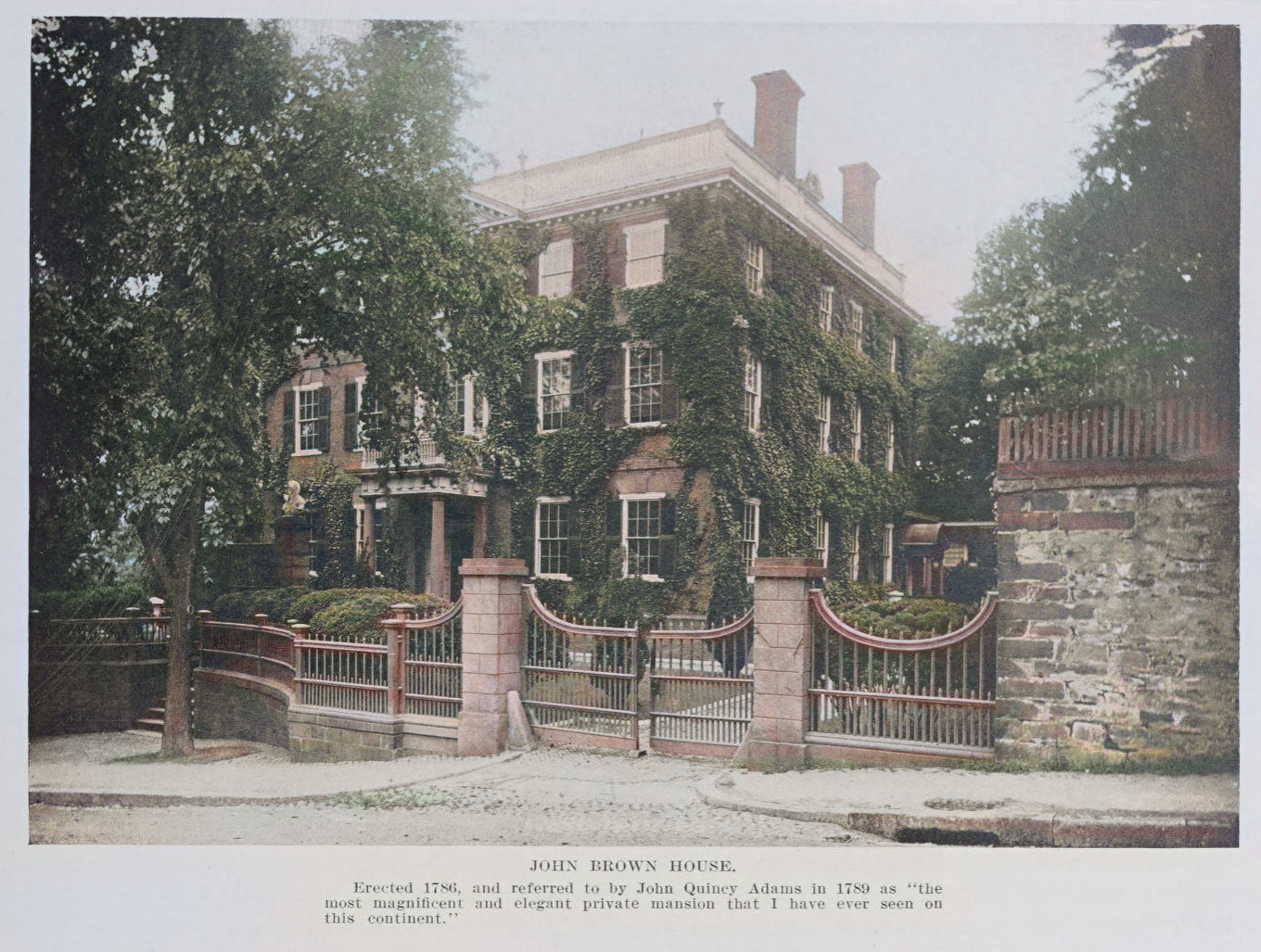
We know that Lovecraft sketched a scene through the John Brown House doorway in Providence, imaginging the scene as it might once have been in the era of the clipper ships, and included this in a letter to Talman circa September 1927…

[From the archival record of a Lovecraft collection:] “Contains drawing [by Lovecraft] of a scene (featuring indications of a steeple and a ship’s rigged mast) as viewed through the doorway from inside of the John Brown House.”

Also…

“At the very end of his life Lovecraft saw the opening of the John Brown house (1786) as a museum, and it is now the home of the Rhode Island Historical Society.” (Joshi, I Am Providence)

Here is the exterior…

I should add that this fine example of penmanship showing the John Brown House is not Lovecraft’s drawing. This is by “Laswell”, George Laswell, who was the creator of the book Corners and Characters of Rhode Island (1924). My thanks to Ken Faig Jr. for pointing out that Sonia recalled that Lovecraft knew and admired these pen sketches — they had first appeared weekly in the local newspaper on which Laswell was a Staff Artist. Oh, for the days when a local newspaper had a Staff Artist…

I imagine the book will have more such quality drawings of Providence in Lovecraft’s time, or near enough. Let’s hope that, as a 1924 book, it’s being lined up for release into the public domain at the start of 2020.


Update: a photograph from 1914…

Poul Anderson’s English and northern fantasies

21 Saturday Sep 2019

Posted by asdjfdlkf in Odd scratchings, REH

≈ 3 Comments

I don’t think I ever got far into the work of Poul Anderson, and in 2019 I vaguely associate the name with 1960s space-opera science-fiction. Perhaps I encountered some of his short stories as “best sci-fi stories of…” collections, and I might have read a few of his galaxy-spanning novels in the early 1980s. But I rather suspect he was another of those libertarian science-fiction authors whose I was shoo-ed away from, in the early 1980s, by left-leaning gatekeepers.

But now I discover he also did historical fantasy / sword and sorcery novels. Some of these are even set in my native England and one has a nicely earth-mysteries dark-faerie twist, even. The mostly interesting one is partly set in the English West Midlands. Who knew? Not me, and I’m fairly well versed on such work if set in the Midlands.

I became aware of his work again thanks to some useful new survey blog posts on this side of his work. These being Poul Anderson’s “Northern Cycle”: Part One and Part Two. Part Three is still to come, but in the meanwhile the same blog has dug up two old articles from the defunct Crom Records heavy metal music website, surveying the relevant works in relation to their possible influence on metal bands… one and two.

His 1950s novel set in England under the Viking Danelaw looks somewhat interesting, The Broken Sword. Apparently best read in its rare first edition form, which launched into that curious dead-zone for public interest in fantasy (circa 1950-1964) and promptly vanished. It was hailed as a lost classic when re-discovered in the late 1960s, but even so I think it may have been one of the few to have escaped me in its 1980s paperback reprint form.

But looking most interesting to me is his A Midsummer Tempest (1974), an alternative history fantasy set in an England in which Shakespeare’s Fairy Folk are real and the English Civil Wars are partly an early-steampunk affair with airships. Super. I may have read it in the early 1980s along with the similar Keith Roberts, et al. But if I did, then I don’t recall it now. Sadly there appears to be no audiobook version, but at just 200 pages it’s not too daunting to tackle in paper or get through the letterbox — not one of those 1990s-style over-padded door-stopper fantasy slabs of 500 pages. It also skips briskly between short scenes, some with chapter headings indicating they’re set in the northern Midlands and thus near to me. It’s also said to take in another setting in which I used to live, at the other end of the West Midlands.

So, a quality pre-PC West Midlands fantasy novel that I had no idea existed. Great stuff. I’ve no idea if the author ever set foot in the English West Midlands, but it’s a nice find all the same. The formatting on the ebook is bad, so I’ve bagged a first-edition hardback for much the same price at just £4 inc. postage. It has a horribly ugly cover, compared to the painted Bob Fowke cover of the Orbit paperback and the UK popular hardback reprint by Severn, but dustjackets can be removed…

“…a titanic achievement — a delightful alternate-history fantasy that brings the fictional worlds of Shakespeare’s plays to breathtaking life with style, wit, and unparalleled imagination.” (blurb from one of the reprints).

Nominated for the World Fantasy Award for Best Novel, Nebula Award for Best Novel, and it won the Mythopoeic Award — and that was back in the 1970s when such awards meant something and hadn’t become political vehicles.

There’s a linked story of The Old Phoenix in Fantasy & Science Fiction (May 1979), which should be read alongside the book.

Unfortunately in terms of his other works he’s another one of those 1950s-1980s writers with a vast and sprawling output, and this is often loosely interconnected in confusing ways. The one reader’s guide (Poul Anderson: Myth-Master and Wonder-Weaver: A Working Bibliography) which puzzled it all out is very firmly out-of-print and unobtainable. Apparently it went to five editions. Meaning that it’s difficult to know where to begin if one were to even sample him, though there have been various reprints in-series. Still, the blog articles linked above give a starter on the more R.E. Howard-like books. I see he also did one Conan book, Conan the Rebel (1980). The plot is said to be rather too convoluted, but looking at the writing it seems a good brisk pastiche in terms of the style. There appears to be no audiobook version for it.

Machen’s autobiography – all three volumes now online

19 Thursday Sep 2019

Posted by asdjfdlkf in Historical context, Odd scratchings

≈ Leave a comment

Arthur Machen’s autobiography, now on Hathi and/or Archive.org in full view at last…

Far Off Things (1922) — First volume of the autobiography. On Archive.org and also Hathi.

Things Near and Far (1923) — Second volume of the autobiography. Hathi only.

The London adventure; an essay in wandering (1924) — Third and final volume of the autobiography. Also on Hathi.

Re: wandering, strange roads and early British psychogeography, see also his little travel book Strange Roads (1924). A letter to Dwyer shows that Lovecraft also knew this, and considered it a bookend to the autobiographical trilogy.

Even if you don’t care for his fiction, the autobiographical/walking work is well worth reading. So far as I’m aware, Lovecraft read all three volumes of the autobiography and it must have influenced how he practised walking. Lovecraft first discovered Machen’s work in the summer of 1923 (S.T. Joshi, I Am Providence, p.454).

‘Mystery upon Mystery’

19 Thursday Sep 2019

Posted by asdjfdlkf in Historical context, Odd scratchings

≈ Leave a comment

A strange and real old booklet in the care of the John Hay Library, Providence, which might be woven into a new Lovecraftian story…

A writer might tie the booklet in with this somewhat Lovecraft-alike (it’s the chin) real ‘mystery sculpture’ at Brown…

Lovecraft’s College Street in a game-engine

17 Tuesday Sep 2019

Posted by asdjfdlkf in Historical context, Lovecraftian arts, Maps, Odd scratchings

≈ 2 Comments

It strikes me that there are now enough pictures of College Street to be able to recreate this area in a 3D first-person videogame, following my picture-sourcing and resulting cavalcade of discoveries of the last week (see my posts and Patreon-only posts here at Tentaclii). Only Lovecraft’s central ‘garden court’ itself is still elusive in ground-level photography. [Update: Ken Faig has good maps showing precise boundaries around No. 66 and the location of the cat-shed].

A 3D recreation of the area could be set-dressed almost exactly as it would have been when Lovecraft was living at 66 College Street, complete with seasonal and atmospheric effects.

The game environment could also stretch all the way down College Street, as that other end of the street is well-documented visually — this section would usefully offer offices for an investigative RPG game. The resulting completed environment could then be released under GPL (open source), so that anyone could devise and build a game from that base environment. Or just virtually stroll around in it.

If “monsters n’ machine-guns” are felt to be needed then the could also be an underground element, re: the tunnels under the hill…

“Did we know, he asked, his sombre eyes intent on our faces, that recently, when early buildings on Benefit Street and College Street were razed to make way for new ones, deep tunnel-like pits, seemingly bottomless and of undetermined usefulness, were discovered in the ancient cellars?” — memoir of a visit by Lovecraft in 1934, by Dorothy C. Walter.

The disused Providence East Side Railway Tunnel under the hill could also feature. At the far end the tunnels could give access to the Seekonk River shoreline and perhaps even a short boat trip through heavy fog to the Twin Islands in the river. Wrapping the game’s horizons in a heavy Halloween fog and night would mean less work, re: making backdrops showing views of distant horizons.

The environment space I’ve outline above offers a fairly limited, and thus manageable, set of places:

The Paxton/Arsdale Boarding House.
The Carrie Tower.
Van Wickle Gate.
The lawns and reception on the main Brown University frontage.
The John Hay Library.
Lovecraft’s house, lane and garden.
The Alpha Delta Phi fraternity house.
The Providence Athenaeum.
Offices on lower College Street.
Court House on lower College Street.
Tunnels under College Hill.

Apart from a working looped tram (trolley-car) line, no vehicles would be required. A basic set of NPCs would be students and faculty, artists from the School of Design, various librarians and curators, and the more elderly retired residents. There would probably be a need to make and animate the tall elm trees and cats from scratch, but that’s not impossible for a talented game-making team. The Egypt-set edition of the Assassin’s Creed game has shown that convincing cats and cat-luring/petting can be done well in 3D videogames. All the rest of a game could be left to those who wished to build their game on top of this base game-world. A basic starting point for a game could be that the Cats of Ulthar have sent emissaries into the real world, seeking Lovecraft’s help in the Dreamlands, but then find themselves mute and treated as normal cats. Lovecraft is the only one who can ‘talk’ to the Ulthar cats, but only partially — even he must collect old lore and folklore that will enable him to speak with them.

Such a faithful and authentic recreation would probably do quite well on Kickstarter or similar. Especially if it was: i) to be made by a reliable team with some RISD and/or Brown endorsement; ii) the end result would be be GPL’d (open source); iii) and it would be made with a major free game-engine such as Unreal.

Marvel buckles its swash with Solomon Kane

12 Thursday Sep 2019

Posted by asdjfdlkf in Odd scratchings, REH

≈ Leave a comment

Hot on the heels of the success of the 17th century videogame Greedfall, Marvel has just announced they will add Robert E. Howard’s Solomon Kane to the comics line-up alongside Conan. Let’s hope he doesn’t end up joining The Avengers superhero-team and wielding a machine-gun — which is the sorry fate of Conan this month, under Marvel.

Judging by the fair-minded reviews, Greedfall is probably the closest thing to a game Lovecraft would like. Although he might tut at the authenticity of bits of it, and hope for a makeover mod that would steer it more toward the 18th century.

Probably best described as Skyrim meets Assassin’s Creed in 17th century America, via the pirate island of the excellent first Risen game + some mystical Witcher-like backwoods monsters.

Major Moebius retrospective

12 Thursday Sep 2019

Posted by asdjfdlkf in Lovecraftian arts, Odd scratchings

≈ Leave a comment

The Max Ernst Museum in Germany is to host a major retrospective of the art of Moebius. Opening 15th September and running until February 2020, with reasonably-priced tickets. The show will feature 450 works covering his whole range, plus a full catalogue.

The museum is about four miles south of the outskirts of the German city of Cologne. Cologne is about 120 miles east of Calais, or about 100 miles SE of Amsterdam, and is well connected by rail.

For a total comics-arts-o-rama visit, note that it usefully overlaps at the end of January with the huge Angouleme 2020 in France (opens 30th January 2020).

The Beautiful Journeys of Moebius

10 Tuesday Sep 2019

Posted by asdjfdlkf in Odd scratchings

≈ Leave a comment

Thanks to Moebius Odyssey for the news of a current Moebius exhibition…

At the time of writing there is an ongoing free exhibition of Moebius called “Les Beaux Voyages de Moebius” (The Beautiful Journeys of Moebius) taking place from 11th May – 24th November 2019 in Venice, Italy at the CA’ASI Architecture Studio as part of the 58th Venice Biennale. The show celebrates Moebius’ first visit to Italy and showcases part of Moebius’ oeuvre of the period.

Moebius Odyssey also has many interior pictures from the show, in the second half of a post on Moebius’s trip to Venice and the work it inspired.

Lovecraft by Bani

09 Monday Sep 2019

Posted by asdjfdlkf in Lovecraftian arts, Odd scratchings

≈ 1 Comment

From the book Vita Privata di H.P. Lovecraft, newly on archive.org this week. It’s a 300-page 1987 Italian translation of memoirs of Lovecraft by those who knew him. It appears to be firmly out-of-print, and there are not even second-hand copies listed on the Italian Amazon site. eBay gives me no results for it, either.

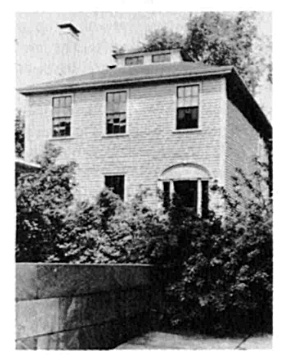
Illustrated, albeit with very fuzzy pictures. Here’s his last home, 66 College Street, seen from the elevated walkway along the side of the John Hay Library. The house rose from a lower level, having a whole lower floor below the floors and attic seen here. The lower level appears to have been lost on the move to its new and current site, unless perhaps it was buried there as a cellar.

Review: the Lovecraft Annual for 2015

07 Saturday Sep 2019

Posted by asdjfdlkf in Odd scratchings, Scholarly works

≈ Leave a comment

I’m pleased to say that I’ve acquired a copy of the Lovecraft Annual for 2015, for which thanks to my Patreon patrons. The volume arrived via Wordery, a bookseller who sent a small-format paperback in a ridiculous oversized ‘won’t fit in a letter-box’ 12″ stiff-card envelope, more suited to a vinyl LP! I doubt I’ll be using them again, for this reason. Booksellers, please take a tip from Amazon and invest in packing machinery which wraps the book such that it slips through a slim normal-sized letterbox.

After finishing it I thought it worth a quick review. This 2015 issue of Lovecraft Annual contains the usual sound Lovecraft scholarship by veteran Lovecraftians, while also offering space to promising newcomers and reviewing selected items. Three or four short filler-notes give Lovecraft news, or capsule overviews of a set of recent releases.

The book runs to 232 pages and articles usefully have on-page footnotes rather than end-notes. Illustrations are in colour, but thankfully this has not increased the list price above normal. The print-on-demand printers Lightning Source have done a good job at a modest price.

The issue opens with H. P. Lovecraft’s “Letters to Marian F. Bonner”, these being his letters to her and given in full. This appears to be the first publication of the letters, and here they are copiously annotated by David E. Schultz and S.T. Joshi. The letters are from late in Lovecraft’s life, and they arose because of his aunt’s illness and convalescence. Bonner had worked in the Providence Public Library, in the Periodicals Room, and she lived in the boarding house at the back of the garden courtyard shared with Lovecraft and his aunt. She was a close friend of Lovecraft’s surviving aunt. Lovecraft gives no hint of having met or noticed Bonner during her Public Library employment. One then assumes that she may have worked behind the scenes, perhaps preparing and cataloguing the periodicals and newspapers for what was by then one of the nation’s leading public libraries. Lovecraft’s letters to her are ‘playfully formal’, and one almost gets the sense that a strange middle-aged flirtation is ongoing by correspondence between two intensely bookish people. One gets hints that Lovecraft was responding to some similar tone in her own letters, but those have been lost. Given that he and Bonner shared a secluded garden, there is much discussion of its furry feline inhabitants and Lovecraft offers delightfully hand-drawn letterheads illustrating these. These headers are faithfully reproduced in colour, and one shows a cat-head produced by a carved rubber-stamp sent to him by Barlow. Lovecraft here usefully confirms my supposition (see my new Annotated ‘Cats of Ulthar’) that he knew of the Greek origins of ailurophile and its meanings. Lovecraft’s library and informal ‘circulating library’ of fantastic literature is also discussed, and some local journals are usefully named (The Netropian, a magazine available to patients and visitors in the local hospitals and which carried illustrated local history articles including one on Benefit St.) and local lectures and art gallery shows (Lovecraft approved of regional marine and sea-shore artist Henry J. Peck).

The letters cease and then we have the all too brief posthumous “Miscellaneous Impressions of H.P.L.” (1945) by Marian F. Bonner herself. This is also available in Lovecraft Remembered but fits nicely here.

Kenneth W. Faig, Jr.’s essay naturally follows, as “Can You Direct Me to Ely Court?: Some Notes on 66 College Street”. Faig’s essay focuses on the history of the house and that of its garden, courtyard and lane, rather than on the interior arrangements. I was interested to learn that 66 was the first house on its site, and only the second house ever built on the street. This explains the need for the little unpaved lane which ran down the side of the Library, this being needed to reach the house from College Street. The later grand event of the ‘moving of the house’ is not addressed, except in passing and in relation to its continuing existence on its new site. Faig goes into great detail on the house history and occupants, both before and after Lovecraft, but the paucity of the materials means that he cannot get a good idea of the look of the gardens and their plantings. He seems unaware of my 2013 “A Note on The Paxton” (in Lovecraft in Historical Context #4) in which I point out that the Paxton/Arsdale resident Sarah Bartlett Bullock (1840-1921)… “kept a diary to 1921, now at the R.I. Historical Society” on microfilm. I there suggested late entries in this diary may have a description of the courtyard and its plantings, or perhaps even some sketches made when she first arrived.

More biographical information on Lovecraft’s Paxton/Arsdale correspondents can be found in Ken Faig’s “Lovecraft’s 1937 Diary” in the Lovecraft Annual for 2012.

David E. Schultz follows with an essay on “66 College Street”. This closely examines both the architecture and the surroundings, and Lovecraft’s own sketches of the house frontage are here reprinted and compared. Schultz discovers that the Paxton was later called the Arsdale, and that it was later a Brown dormitory. I had failed to discovered these two names via online sources in my brief look at the Paxton in 2013, but I can now add a date here: 1946, which Schultz doesn’t have. The Brown Alumni magazine reported that the declining ‘old Arsdale’ at 53-55 Waterman Street became the ‘Hopkins House’ dormitory for males in 1946, when there was a sudden and pressing need to accommodate the large numbers of students suddenly returning to their studies after serving in the Second World War. One other element not noted by Schultz is my 2013 discovery of the nature of the Paxton/Arsdale’s retired residents, who were evidently very bookish and artistic people. Schultz’s essay also has excitingly clear and large photographs of 66 College St. and of some of its surrounding houses. One can even see that Ely’s Lane was still unpaved in 1941. We are also treated to Lovecraft’s outline sketch plan map of his last home, its lane and its environs.

The Lovecraft Annual usually also has a few informative filler paragraphs, where space allows. In 2015 one of these announced David E. Schultz’s annotated Fungi from Yuggoth critical edition for 2016. Yet I don’t recall it having appeared? Perhaps it was a very limited-edition hardback that I missed, and the paperback has yet to appear?

A filler paragraph also notes the new discovery of 85,000 words of new Lovecraft letters to Zelia Brown, then set to be published by the HPL Historical Society. These later appeared (in paper only) as The Spirit of Revision: Lovecraft’s Letters to Zealia Brown Reed Bishop. I see this is now on Amazon, if you want to add it to your wish-list there, yet this paperback is far more affordable if had direct from the Society website.

Donovan K. Loucks goes searching for Curwen’s town-house, and finds it in two good exterior photographs.

We then sail far away from Providence with Brendan Whyte’s “The Thing (Flung Daily) on the Doorstep: Lovecraft in the Antipodean Press, 1803–2007”. This is a detailed account of the results of a search for all things “Lovecraft”, sweeping across the newly digitised Australian and New Zealand press and similar resources. It’s a useful survey that first checks for possible Lovecraft family and then outlines Lovecraft’s early reception in Australia as seen in the press.

S. T. Joshi’s “Charles Baxter on Lovecraft” is a mild title. A casual peruser of the table-of-contents might mistakenly assume it to have something to do with Charles Dexter Ward. In fact it is S.T.’s full response to some dubious congeries of derision that had appeared in the leftist New York Review of Books in 2014. A lengthy review of Klinger’s Annotated had there foolishly attempted to usher back the Edmund Wilson era, in which Lovecraft was to be deemed a pulp hack of no worth and consigned to the outer darkness. Despite having ample space in their oversized newspaper-broadsheet publication, the Review of Books had then refused to print more than a mere 400-words of Joshi’s response to the said review. Here the reader is treated to Joshi’s point-by-point response in full.

Bobby Derie’s short “Six Degrees of Lovecraft: Henry Miller” draws some interesting parallels. Much as I enjoy Miller’s non-fiction memoir The Colossus of Maroussi every 15 years or so, I have no interest in his fiction. Yet this essay is more about their parallel interest in Machen and it also touches on their later roles in helping to break down both the outright literary censorship and the implicit taboos of the 1960s. I was also interested to be reminded that Lovecraft had read The Black Cat magazine from 1904. How long he then read it for appears to be unknown, but I imagine it might have fallen away as a subscription in the breakdown of 1908. By the early 1920s he was amazed that the title still existed and until then he seems to have considered it a lost relic of his boyhood. Sadly The Black Cat was on the last of its nine-lives and it expired in 1922, thus partly opening the road for Weird Tales in late 1922. Given the likely 1904-1908 dates it thus seems unlikely Lovecraft would have seen Arthur Leeds’s “The Man Who Shunned The Light” (1915) in The Black Cat, that being an obvious fore-runner for “Cool Air” (find “The Man…” in my book Historical Context #4). It would be interested for someone to take a look at Black Cat for 1904-08 and see what supernatural items Lovecraft might have been reading there during ‘the lost years’.

David Goudsward’s “Cassie Symmes: Inadvertent Lovecraftian” takes a detailed biographical look at Frank Belknap Long’s aunt. It was she who subsidised the handsome setting and printing, ably accomplished by Lovecraft’s friend Paul Cook, of her nephew’s first volume of poetry. Goudsward uncovers some interesting details on last-minute changes to this and another book, which suggests some previously unknown Lovecraft revision work.

Kenneth W. Faig, Jr.’s “Clergymen among Lovecraft’s Paternal Ancestors” is a partial updating and extension of his previous good work in painstakingly tracking down and documenting Lovecraft’s ancestry. One section usefully briefly summarises Lovecraft’s shifting perceptions of his paternal ancestry.

Todd Spaulding then offers a version of his Masters dissertation, here being titled “Lovecraft and Houellebecq: Two Against the World”. This is part essay and part review, and it offers a summary of Houellebecq’s reading of Lovecraft and embeds this in a set of useful short overviews of the French understandings of Lovecraft over time. The full cultural history of Lovecraft’s reception by the French (and the British/European surrealists with French connections, and related artistic and theoretical circles) is a 600-page door-stopper book that remains to be written, but this essay lays down some useful groundwork in English.

Donovan K. Loucks looks into “Donald A. Wollheim’s Hoax Review of the Necronomicon” and finds and reprints the text.

Steven J. Mariconda has a book review of S.T. Joshi’s Variorum edition of the collected Lovecraft, explaining what this limited-edition actually is, and how Joshi’s definitive texts came-to-be after vast amounts of close textual work. The final review is a scourging of a new biography of Lovecraft.

Overall this is an excellent issue, and is well worth obtaining at its affordable £8 to £15 price.

Getting started with Ardath Mayhar

04 Wednesday Sep 2019

Posted by asdjfdlkf in Odd scratchings, REH

≈ Leave a comment

Where does one start when faced with the vast output of the East Texas writer Ardath Mayhar? Even the intro to her main Megapack Kindle ebook doesn’t provide a quick overview survey and guide. According to the Women SF Writers of the 1970s pages at Tor, she doesn’t even exist. But after a bit of searching and jiggling of Wikipedia I think I now have it roughly worked out…

Audiobook: Crazy Quilt: The Best Short Stories of Ardath Mayhar. I can’t get the table-of-contents for this in any format. Also in paper, but no ebook.

Rural weird/dark: Strange Doin’s in the Pine Hills: Stories of Fantasy and Mystery in East Texas, and A World of Weirdities: Tales to Shiver. The first is in Kindle ebook and is dark rather than weird, and the latter is in collectable paper with 29 stories, “many of them never before published”.

Other starter fiction:

i) As a starting point for her fantasy, How the Gods Wove in Kyrannon (1979) seems to be the best. It was her first such book, a set of tightly linked brief and delicately-Dunsanian stories followed by culminating sections. Its world-setting appears to have later been spun off as a three-volume series under the name Lords of the Triple Moon with these being aimed at a slightly younger audience than the first book? All are in Kindle ebook.

ii) The Ardath Mayhar MegaPack in two $2 Kindle books of stories. The first seeming to have the best and lighter stories in it, the second some darker material. I’m uncertain if these two collections form ‘the complete short fiction’ or are just a partial selection from her vast output. They seem to present the stories in no particular order, and include a number of westerns.

iii) Messengers in White sounds like the most interesting and successful of her science-fiction novels to start with. It’s available in Kindle ebook.

iv) Her ‘what happens when we make intelligent monkeys?’ novels sound perhaps-fun, but is probably not the science-fiction work to start with. These are found as Monkey Station: The Macaque Cycle, Book One and Trail of the Seahawks: The Macaque Cycle, Book Two, and both are in Kindle ebook. There was talk of a videogame, but I’ve found no evidence of a book three? Difficult to tell much more about it without proper reviews. It’s very difficult to find reviews for her work that are not flippant and cynical, and one gets the feeling that — like Clifford Simak — her robust rural Texan conservatism and blending of fantasy/sci-fi didn’t sit well with the sci-fi establishment of the 1980s and 1990s. (“Conservatism” doesn’t here = evangelical or religious, and a Starlog interview reveals that she was hounded locally by deluded Christians during the bizarre moral-panics over ‘Satanism’ in the 90s. Even today I encountered one prissy Christian on Amazon reviews, squeaking over discovering that Mayhar’s regionalist East Texas novels had dared to offer a tepid view of her local Church-goers).

Regionalist: So yes, there’s also a whole bundle of East Texas local rural novels and stories. Mostly ‘young adult’ tales with feisty heroines, though there’s also what is apparently her survivalist adult-novel masterpiece The World Ends in Hickory Hollow. I had my fill of that kind of post-apocalyptic novel in the 1980s, and I’m not sure I want more even now, but it’s well regarded.

Westerns: There are a great many robust pre-PC wild-western novels which might appeal to R.E. Howard fans. I’ve no idea were one might start with these.

Advice: Through a Stone Wall: Lessons from Thirty Years of Writing. Paper only. Seems to be well-regarded.

Autobiography: Strange View from a Skewed Orbit: An Oddball Memoir. Paper only. Said to be excellent.

Most of her books appear to be quite short by modern standards, many well under 200 pages. One associates the late 1980s and 90s with over-padded door-stopper books, especially in fantasy, but that doesn’t seem to be the case here.

So, that’s my somewhat hazy outline based on some online research scrabbling among scattered and sparse materials. Any advice or correction is welcome.

← Older posts
Newer posts →


Please become my patron at www.patreon.com/davehaden to help this blog survive and thrive.

Or donate via PayPal — any amount is welcome! Donations total at Easter 2025, since 2015: $390.

Archives

  • February 2026
  • January 2026
  • December 2025
  • November 2025
  • October 2025
  • September 2025
  • August 2025
  • July 2025
  • June 2025
  • May 2025
  • April 2025
  • March 2025
  • February 2025
  • January 2025
  • December 2024
  • November 2024
  • October 2024
  • September 2024
  • August 2024
  • July 2024
  • June 2024
  • May 2024
  • April 2024
  • March 2024
  • February 2024
  • January 2024
  • December 2023
  • November 2023
  • October 2023
  • September 2023
  • August 2023
  • July 2023
  • June 2023
  • May 2023
  • April 2023
  • March 2023
  • February 2023
  • January 2023
  • December 2022
  • November 2022
  • October 2022
  • September 2022
  • August 2022
  • July 2022
  • June 2022
  • May 2022
  • April 2022
  • March 2022
  • February 2022
  • January 2022
  • December 2021
  • November 2021
  • October 2021
  • September 2021
  • August 2021
  • July 2021
  • June 2021
  • May 2021
  • April 2021
  • March 2021
  • February 2021
  • January 2021
  • December 2020
  • November 2020
  • October 2020
  • September 2020
  • August 2020
  • July 2020
  • June 2020
  • May 2020
  • April 2020
  • March 2020
  • February 2020
  • January 2020
  • December 2019
  • November 2019
  • October 2019
  • September 2019
  • August 2019
  • July 2019
  • June 2019
  • May 2019
  • April 2019
  • March 2019
  • February 2019
  • January 2019
  • December 2018
  • November 2018
  • October 2018
  • September 2018
  • August 2018
  • August 2015
  • July 2015
  • April 2015
  • March 2015
  • February 2015
  • January 2015
  • December 2014
  • November 2014
  • October 2014
  • September 2014
  • August 2014
  • July 2014
  • June 2014
  • May 2014
  • March 2014
  • February 2014
  • January 2014
  • December 2013
  • November 2013
  • October 2013
  • September 2013
  • August 2013
  • July 2013
  • June 2013
  • May 2013
  • April 2013
  • March 2013
  • February 2013
  • January 2013
  • December 2012
  • November 2012
  • October 2012
  • September 2012
  • August 2012
  • July 2012
  • June 2012
  • May 2012
  • April 2012
  • March 2012
  • February 2012
  • January 2012
  • December 2011
  • November 2011
  • October 2011
  • September 2011
  • August 2011
  • July 2011
  • June 2011
  • May 2011
  • April 2011
  • March 2011
  • February 2011
  • January 2011
  • December 2010
  • November 2010
  • October 2010
  • September 2010
  • August 2010
  • July 2010

Categories

  • 3D (14)
  • AI (70)
  • Astronomy (70)
  • Censorship (14)
  • de Camp (7)
  • Doyle (7)
  • Films & trailers (101)
  • Fonts (9)
  • Guest posts (2)
  • Historical context (1,095)
  • Housekeeping (91)
  • HPLinks (74)
  • Kipling (11)
  • Kittee Tuesday (92)
  • Lovecraft as character (58)
  • Lovecraftian arts (1,626)
  • Lovecraftian places (19)
  • Maps (70)
  • NecronomiCon 2013 (40)
  • NecronomiCon 2015 (22)
  • New books (966)
  • New discoveries (165)
  • Night in Providence (17)
  • Odd scratchings (984)
  • Picture postals (276)
  • Podcasts etc. (431)
  • REH (184)
  • Scholarly works (1,469)
  • Summer School (31)
  • Unnamable (87)

Get this blog in your newsreader:
 
RSS Feed — Posts
RSS Feed — Comments

H.P. Lovecraft's Poster Collection - 17 retro travel posters for $18. Print ready, and available to buy — the proceeds help to support the work of Tentaclii.

Proudly powered by WordPress Theme: Chateau by Ignacio Ricci.