• About
  • Directory
  • Free stuff
  • Lovecraft for beginners
  • My Books
  • Open Lovecraft
  • Reviews
  • Travel Posters
  • SALTES

Tentaclii

~ News & scholarship on H.P. Lovecraft

Tentaclii

Category Archives: New discoveries

More unknown memoirs of Lovecraft

26 Thursday Sep 2019

Posted by asdjfdlkf in Historical context, New discoveries

≈ 1 Comment

I’ve found more late 1940s memories of H.P. Lovecraft, from Muriel Eddy. Given that Joshi holds her 1940s memoir as more reliable than those of the 1960s, and that the earlier 1948 memoir I found in a similar magazine (see the post a few weeks ago) turned out to be quite provable from other sources including Lovecraft himself, then it seems worth trusting these too.

There are no great revelations here, as there was with uncle Eddy the bookseller. But I note that the following are not listed in Joshi’s Comprehensive Bibliography nor in de Camp’s biography.


1) Startling Stories, March 1949. “More Lovecraftiania”.

Her first “Lovecraftiania” letter in Startling Stories is banal and of no interest, but this second letter does offer one interesting and genuine-sounding specific memory.

When Lovecraft married… “his two aunts gave our children over 100 empty chocolate boxes to play with! (In fact, a bath-tub full!)”.

The boxes at Angell St. are known from Eddy’s unreliable 1961 memoir. Her main published 1940s memoir (which I now have access to, via A Weird Writer in Our Midst) talks only of two items of furniture being taken over to the Eddys, on Lovecraft’s departure for New York. But this comment on the “chocolate boxes” event may be of interest, because here it’s from 1949 and she even gives the quantity of boxes.

What was he doing with these boxes? The bathtub would, I suppose, be the curious but somewhat logical place to store a collection, if collection they were. Such boxes would otherwise be difficult-to-stack and the stacks inclined to tumble over, being made up of oddly-sized lightweight boxes. So far as I know, the 1920s was not a time of silver-foil collecting-for-charity (which was ‘a thing’ in the mid 1970s following the oil crisis, which caused a knock-on shortage of paper and tin-foil). Thus I doubt the boxes were collected for charity re-cycling. Did Lovecraft have a vague hope of taking up a hobby as a chocolatier at his little gas hot-plate, and re-filling the empty boxes with new weirdly-moulded chocolates to surprise his friends with? It’s a delightful notion, but it seems unlikely. Some vague Joseph Cornell-like ambition to turn them into proto-surrealist art-boxes, perhaps? Again, unlikely at that point in history.

Perhaps they were simply saved for their value as objects, as traditionalist works of ornate construction and printed art which he didn’t care to throw away? Here are quotes from historians on the matter of such boxes…

* “In the 1920s some of the boxes became a work of art in themselves” (The Science of Chocolate)

* “the chocolate boxes of the 1920s and 1930s were largely sentimental holdovers of Victorian romanticism. Modernism was meant to replace this old-fashioned mode with bold new designs [but failed in that respect].” (Chocolate: Food of the Gods).

* “the fancifully beribboned chocolate boxes which were another 1920s addition to the stock of national pleasures.” (Island Stories, of British boxes).

* The critic Banham twitted the great architectural historian Pevsner for bringing… “‘even so slight a thing as a chocolate box’ within his critical system”, while “… apparently not knowing that the design of chocolate boxes was a matter of wide (albeit joking) concern in the 1930s (cartoon of an aesthete pointing the finger of scorn at a sunset and shouting “Chocolate box-y, chocolate box-y!)” (A Critic Writes: Selected Essays by Reyner Banham)

Such lids would contain sunsets and kittens and suchlike, finely printed. Sunsets, kittens, chocolate… well, we know how Lovecraft felt about such things. About Olde worlde scenes from England and the 18th century, too.

Thus, it is not impossible that he kept a collection of the ‘best boxes’ with their traditionalist art, delicate iridescent foils and fancy construction, much in the same way as his friend Morton collected stamps. Of course the fanciest of such boxes would have been expensive, and Lovecraft generally had little money. But other people may have purchased and eaten the chocolates — then given the boxes to him because they knew of his interest in them. Slightly unlikely perhaps, but one imagines his aunts had many chocolate enthusiasts among their friends.

“And yet, who shall say that a bathtub cannot awake the Muse?” (Lovecraft, letter to Kleiner, 1916).

But why not just razor off the artwork and extract the foils, and thus save a lot of the space? He was, after all, quite seriously pressed for living space until 1933. I wonder if perhaps one solution is that the boxes were intended to one day store the sorted and archived collections of his voluminous collection of incoming correspondence? That seems quite a logical solution to his storage problems, since such a picture-coded ‘visual filing cabinet’ would be both practical and fast for consultation. ‘Loveman is in the box with the turtle-doves on it’, etc. Such boxes would make eminently suitable containers for letters, being complete with strong ribbon-ties, provided that the bath tub was thoroughly dried before re-installing the boxes in it.

However, that the aunts gave away 100 or so apparently empty boxes when he went to New York suggests the tub was more likely a curious form of art collection, arising from the fancy-box style of the era. But, on his later return to Providence, he may have found such a practical or long-intended use for a new collection of boxes as a form of letter-storage? Anyway, that would be one theory. Those who have full access to the letters may be able to shed more light on the matter.

The other possibility is that they formed temporary storage for papers when working out in the open, as he did for long stretches in the summer. One would be able to press a peg or long knitting-needle through the card of the box, and so fix them to the turf to prevent the wind taking them. They would also be relatively shower-proof.

Yet another possibility is their use as mailing-boxes for sending manuscripts and collections of amateur journals to his friends and correspondents, suitably wrapped in brown paper. And yet I’ve never heard or read of a correspondent mentioning such boxes.

For the moment it’s a bit of a mystery. We may learn more about such curious domestic arrangements once Lovecraft’s forthcoming ‘aunts letters’ are published. The boxes are of course only a small and seemingly trivial point in Lovecraft’s life, yet clarifying this point may help to forestall a shoddy biographer or hater’s claim that… ‘Lovecraft spent his days in squalor, surrounded by discarded candy-wrappers’ etc.


2) Fantastic Adventures, October 1948. “Shaver and Lovecraft”.
Lovecraft liked to watch husband Eddy writing his music, and he and Lovecraft talked about setting “weird poems” to music. Again this is possibly interesting because of the early date of the memory. I don’t see this point mentioned in the 1940s and 1960s Eddy memoirs I have access to.


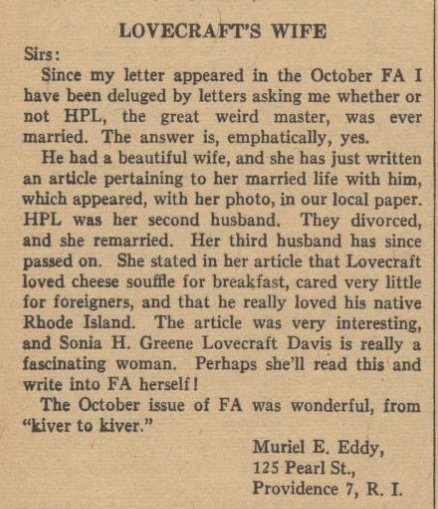
3) Fantastic Adventures, December 1948. “Lovecraft’s Wife”.
Only of very slight interest. Muriel Eddy notes a newspaper article by Sonia, presumably the memoir of Lovecraft first printed in the Providence Journal. This then must be the article abridged and edited by Winfield Townley Scott, and printed in The Providence Sunday Journal for 22nd August 1948. It later appeared in Books at Brown and then in Lovecraft Remembered.


4) Incidentally I have also found that Ghost Stories magazine for April 1929 has a letter to the editor from Muriel E. Eddy with the address of “317 Plain Street”, Providence. The content is of no interest, but the address may be of use to some researchers. She talks of living on “Second Street, East Providence” in her main 1940s memoir, then moving across the city so that Lovecraft called on the Eddy’s at a different address when he returned from his New York sojourn.
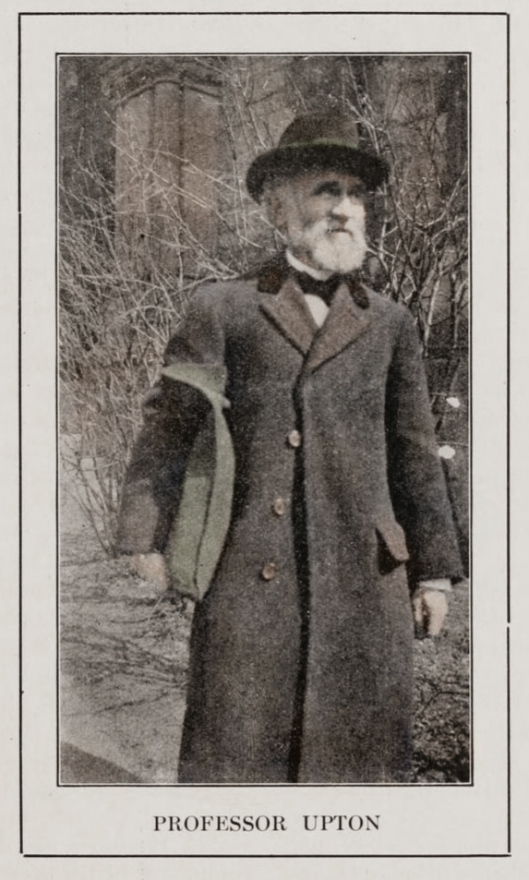
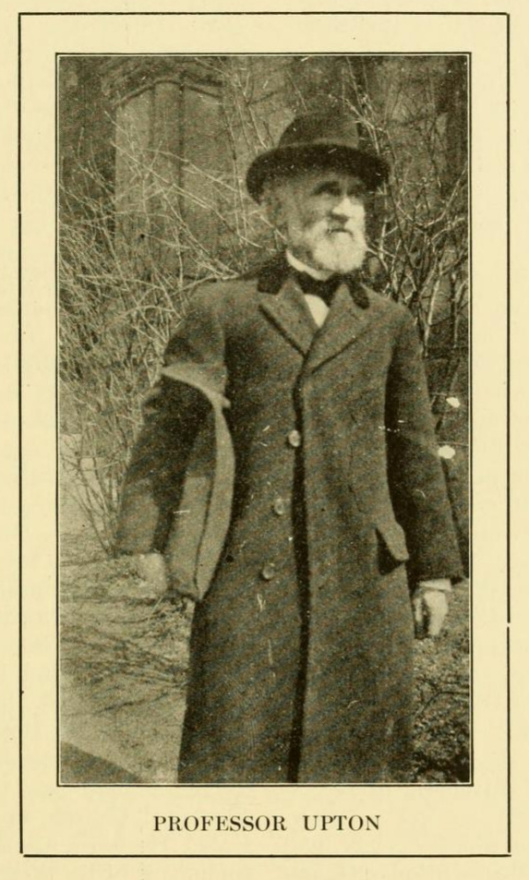
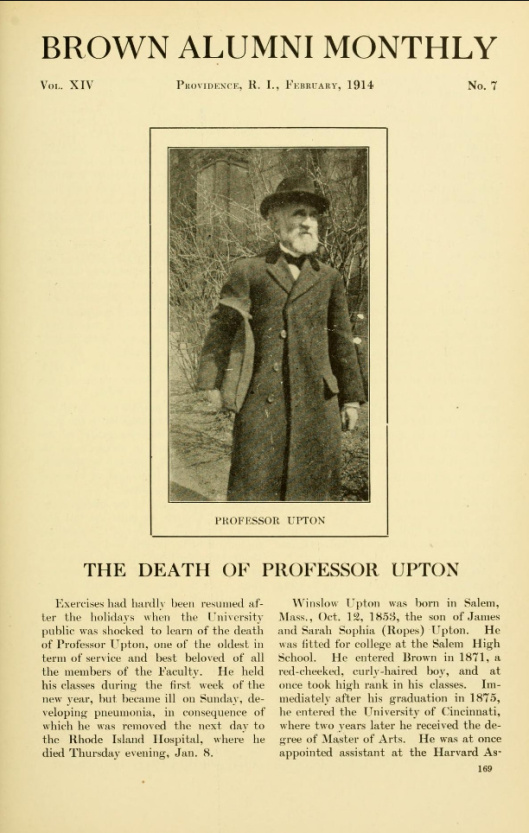
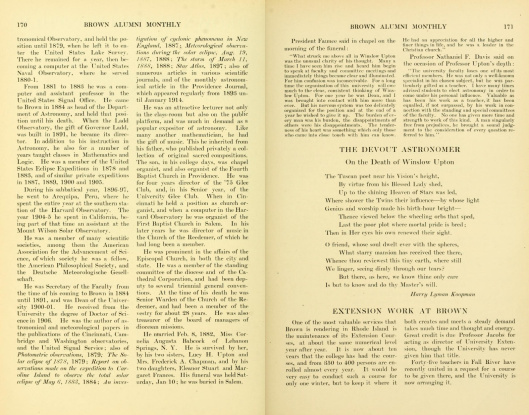
“The late Prof. Upton of Brown”

21 Saturday Sep 2019

Posted by asdjfdlkf in Astronomy, Historical context, New discoveries, Scholarly works

≈ 1 Comment

“The late Prof. Upton of Brown, a friend of the family, gave me the freedom of the college observatory, (Ladd Observatory) & I came & went there at will on my bicycle.” — H.P. Lovecraft.

Possibly this was the man who saved Lovecraft’s life. As a youth Lovecraft was contemplating throwing himself into the river in despair — just before the kind offer came from Prof. Upton.

Protected: Westward Ho! – Lovecraft’s view

16 Monday Sep 2019

Posted by asdjfdlkf in Historical context, New discoveries

≈ Enter your password to view comments.

This content is password-protected. To view it, please enter the password below.

On Waterman Street: the Paxton/Arsdale

15 Sunday Sep 2019

Posted by asdjfdlkf in Historical context, Maps, New discoveries

≈ 4 Comments

I’ve found a picture of the Paxton/Arsdale frontage. First, here’s the map oriented to the same viewpoint as the photographer…

Here we see the Waterman Street approach to the Brown University campus at the top of the hill, with the clock-tower in the distance. It’s 1909.

The twin pale buildings in the centre of the picture are the Paxton frontage. They have different roofs because they were once separate buildings, before being joined and painted alike. The resulting large boarding house was later called the Arsdale, then re-named again from 1946 as the male dormitory ‘Hopkins House’ housing some of the many Brown students returning from service in the Second World War. (My thanks to Ken Faig and David Schultz for discovering the later names of the place). Lovecraft lived at the back of this boarding-house and shared a courtyard garden and cats with it. His aunt ate either her main or midday meals here, and it seems that Lovecraft accompanied his aunt to festive meals here if he wasn’t in New York with the Long family. He may also have taken some meals here in the depths of winter. This was also the home of two of his late correspondents including Marion F. Bonner (for the letters see Lovecraft Annual 2015).

It’s also possible that Lovecraft would telephone from this building — there are two 1934 memoirs of Lovecraft in Lovecraft Remembered. In one, Kenneth Sterling discovers Lovecraft has no phone at home, in the other Dorothy C. Walter is telephoned twice by Lovecraft. Both are recalling 1934 at 66 College Street. In the Dorothy C. Walter instance Lovecraft was certainly at home, and would not have gone more than a few yards out of his door due to the bitter cold and ice outside. This suggests he may have made outgoing phone calls at the Arsdale, just across the garden court from 66 — unless perhaps the downstairs tenant at 66 had a phone that could be used. At the old address of 10 Barnes he had used his landlady’s phone for calls.

Update: my thanks to David Schultz for pointing out that the C.A. Smith letters indicate that Lovecraft’s aunt had a phone in her section/apartment of 66 College St.


Here we seen a long view from the tall Industrial Trust building. It’s late January 1929 and we can just make out the back of the Paxton/Arsdale. One can just about make out the garden space between Lovecraft’s house and the boarding-house.

Protected: College Hill from above: bonus pictures

14 Saturday Sep 2019

Posted by asdjfdlkf in Historical context, New discoveries

≈ Enter your password to view comments.

This content is password-protected. To view it, please enter the password below.

College Hill from above

14 Saturday Sep 2019

Posted by asdjfdlkf in Historical context, New discoveries

≈ 1 Comment

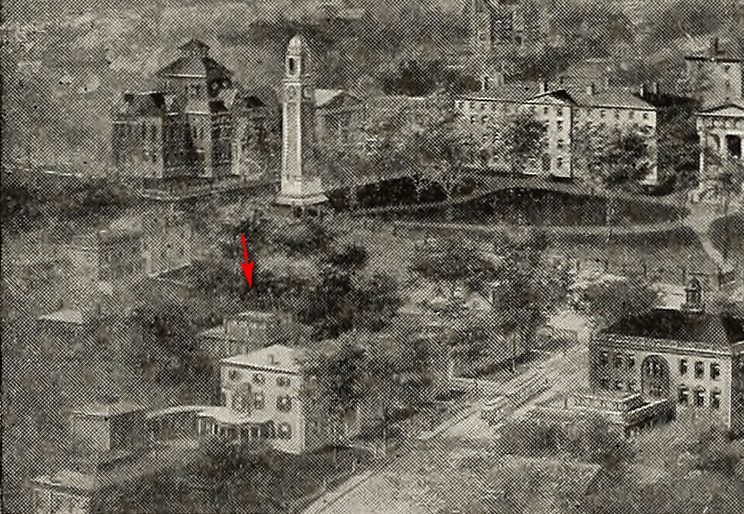
Here is a bird’s-eye engraved view of Lovecraft’s 66 College Street in 1908, before the building of the Library on the corner. From the book Memories of Brown (1909). The house is set back from College Street in a garden court.

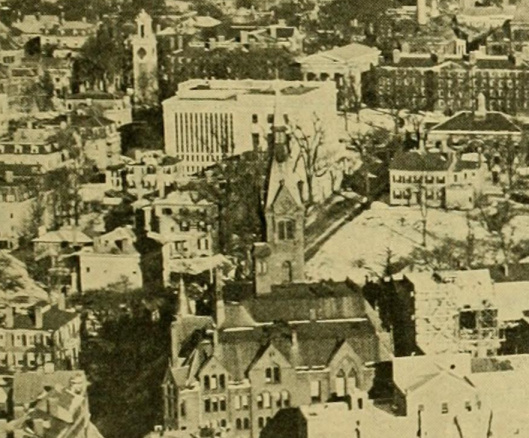
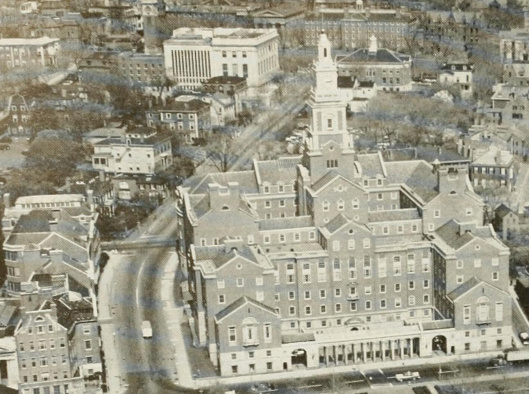
The John Hay Library is the large white squarish building see in this newly-found a view of College Hill in summer 1959. Lovecraft’s house just visible in original position next to the Library…

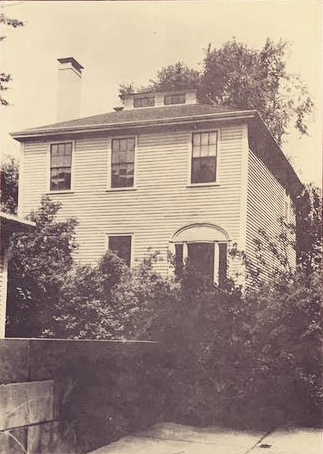
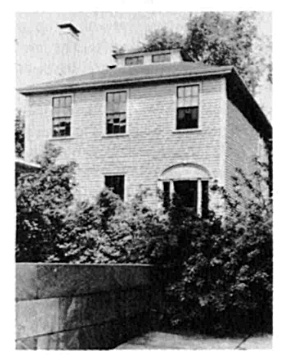
Compare with 66 College Street seen from the ground…

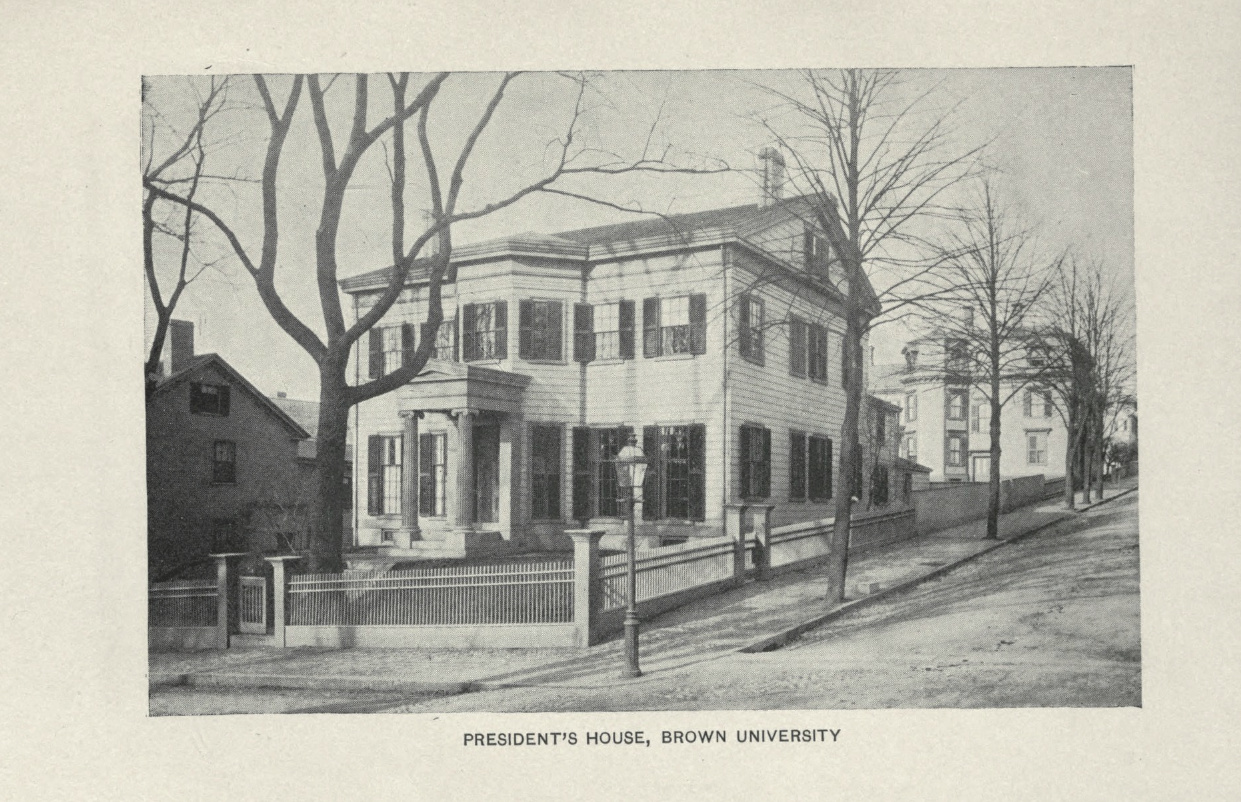
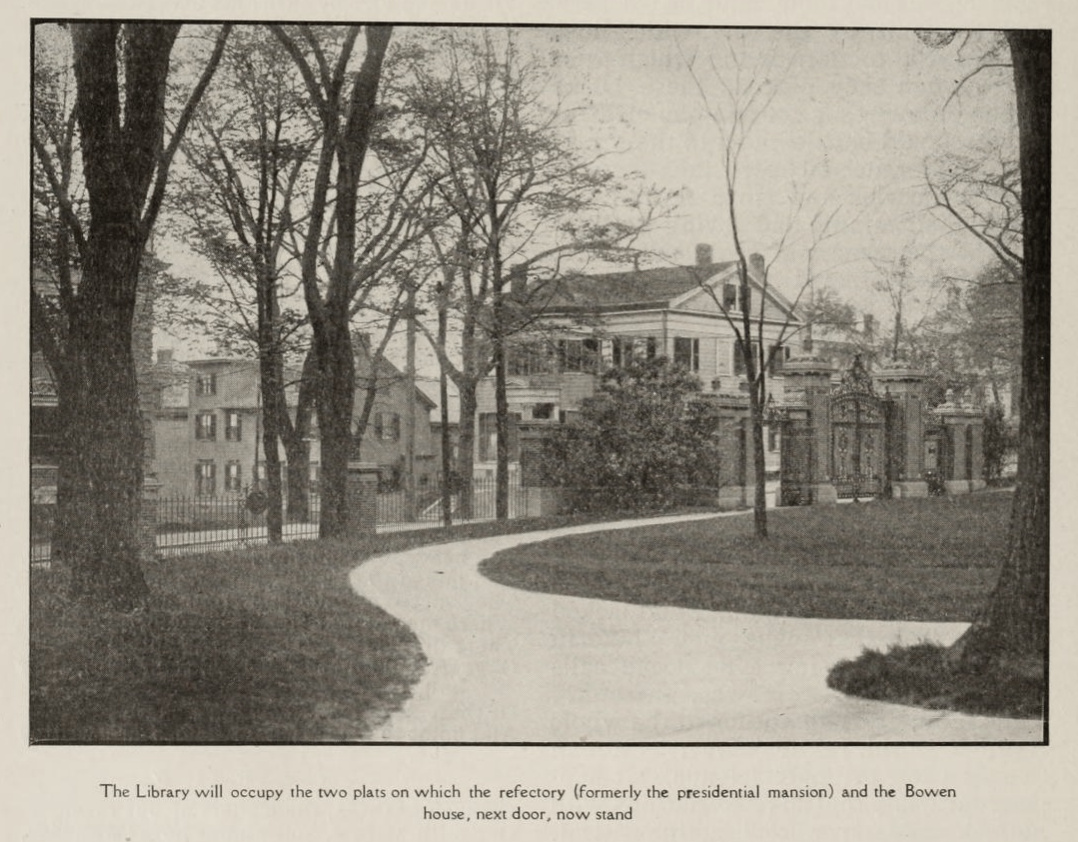
The John Hay Library would be built on the corner seen to the right of Lovecraft’s house in the 1908 picture, the Library rising where this former “President’s House” had stood…

The house next to it was also taken for the Library.


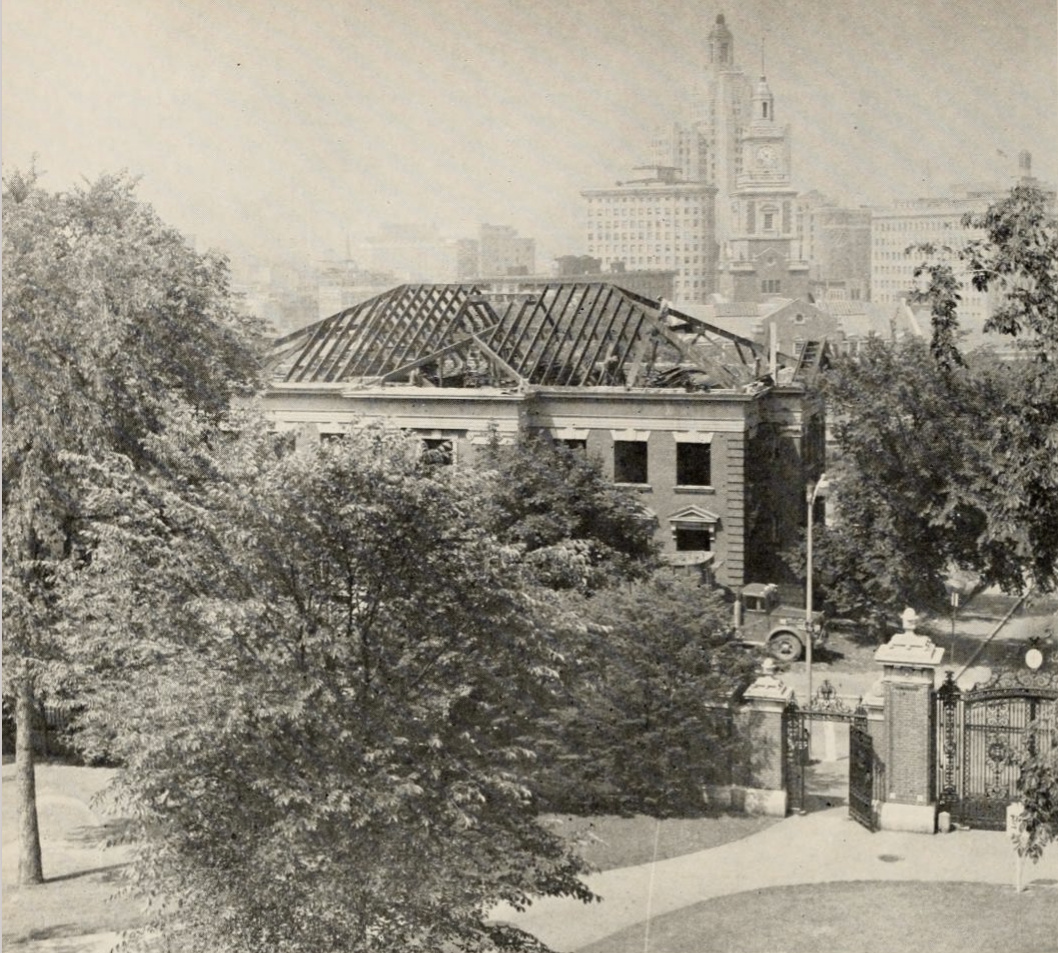
Below is the bird’s-eye scene seen the other way, looking at the vantage point from which the above 1959 telephoto picture was made. Here it’s 1962 and the building being torn down is opposite the Van Wickle gate and on the opposite corner to the John Hay Library (top of College St.).

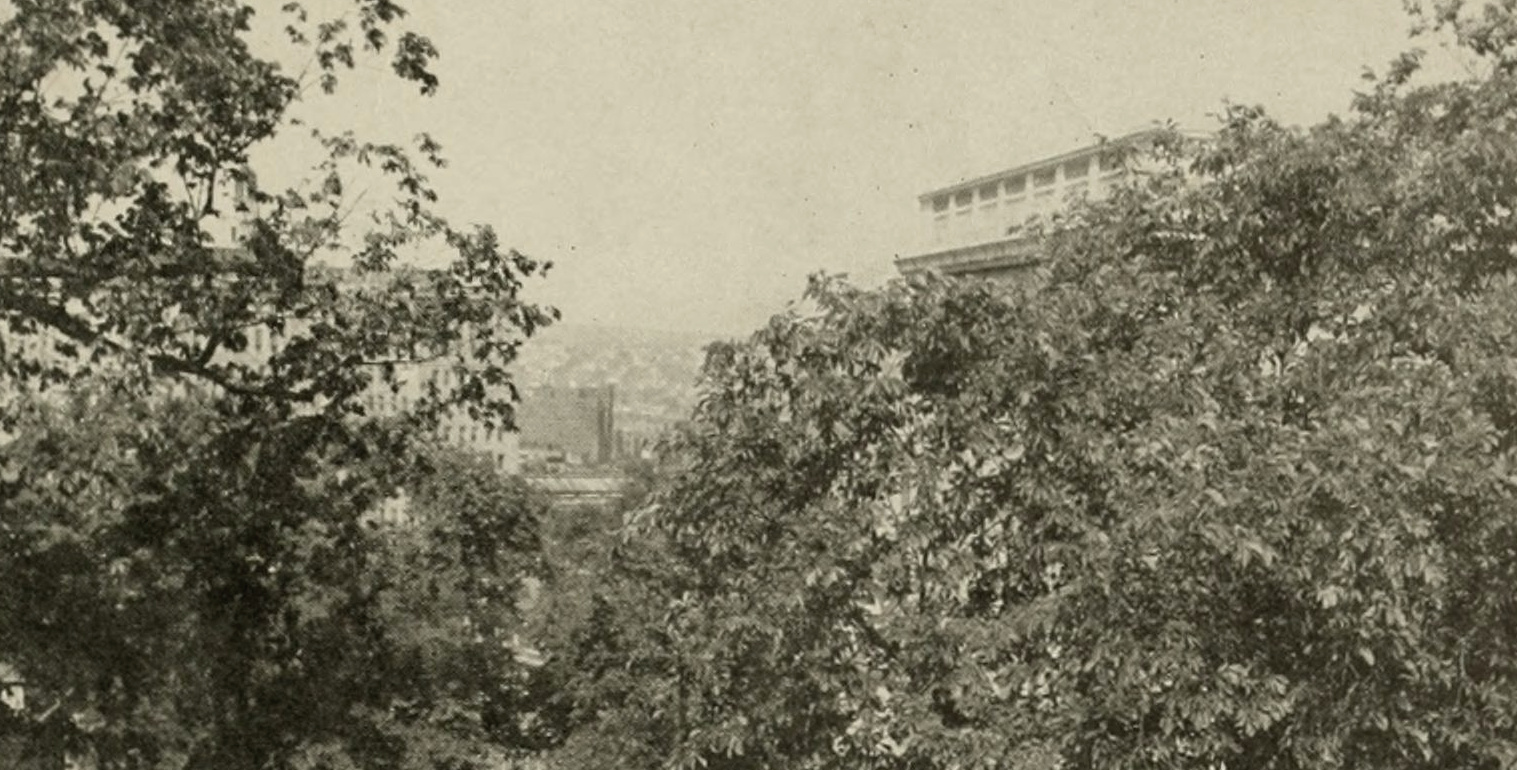
This 1946 view, looking west from a similar spot at the top of College Hill but this time looking through the elm trees, is also indicative. The roof of the John Hay Library is seen on the right of the picture, and the Industrial Trust building can just be seen in the distance on the left.

And here the Industrial Trust building (the main slim tower seen in both pictures above) looks back again, in a telephoto view down on Lovecraft’s house in late January 1929.

I’m uncertain what the two long white marks are. They may be damage, as there appears to be a patch of damage below them with a small ‘x’ on it. Update: by referencing against the 1959 picture, it can be determined that the long white streaks are very tall thin chimneys emerging from the rear section of an adjacent house.


There are also a number of bonus pictures, for my Patreon patrons, showing the site of Lovecraft’s house and garden after it was removed but before the Brown arts block was built on it.

Protected: Friday ‘Picture Postals’ from Lovecraft: College Street bonus

13 Friday Sep 2019

Posted by asdjfdlkf in Historical context, New discoveries, Picture postals

≈ Enter your password to view comments.

This content is password-protected. To view it, please enter the password below.

Friday ‘Picture Postals’ from Lovecraft: College Street

13 Friday Sep 2019

Posted by asdjfdlkf in Historical context, New discoveries, Picture postals

≈ Leave a comment

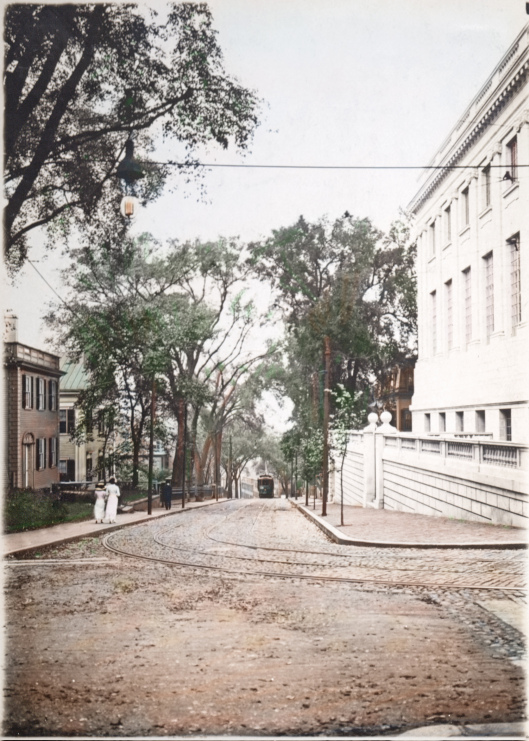
Two weeks ago, Tentaclii’s Friday ‘Picture Postal’ post was of Lovecraft’s lane-end at night, or near enough. This Friday, much the same view and direction down College Street — only this time the camera is in front of the Gates, and it’s daytime in September 1911.

The entrance to Lovecraft’s Ely’s Lane is about 20 yards away on the centre-right. Find the far corner-end of Library’s white wall and you’ve found the start of the lane. The lane then ran down behind the high wall to reach 66 College Street and its garden court. The brown house seen through the trees is the house in front of Lovecraft’s house.

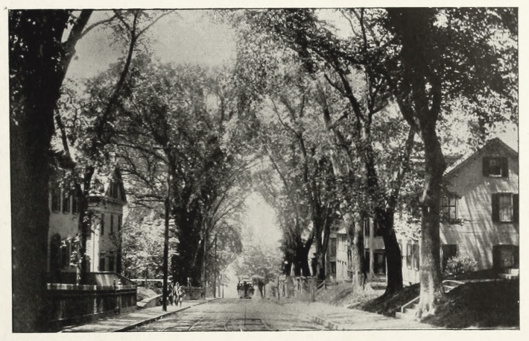
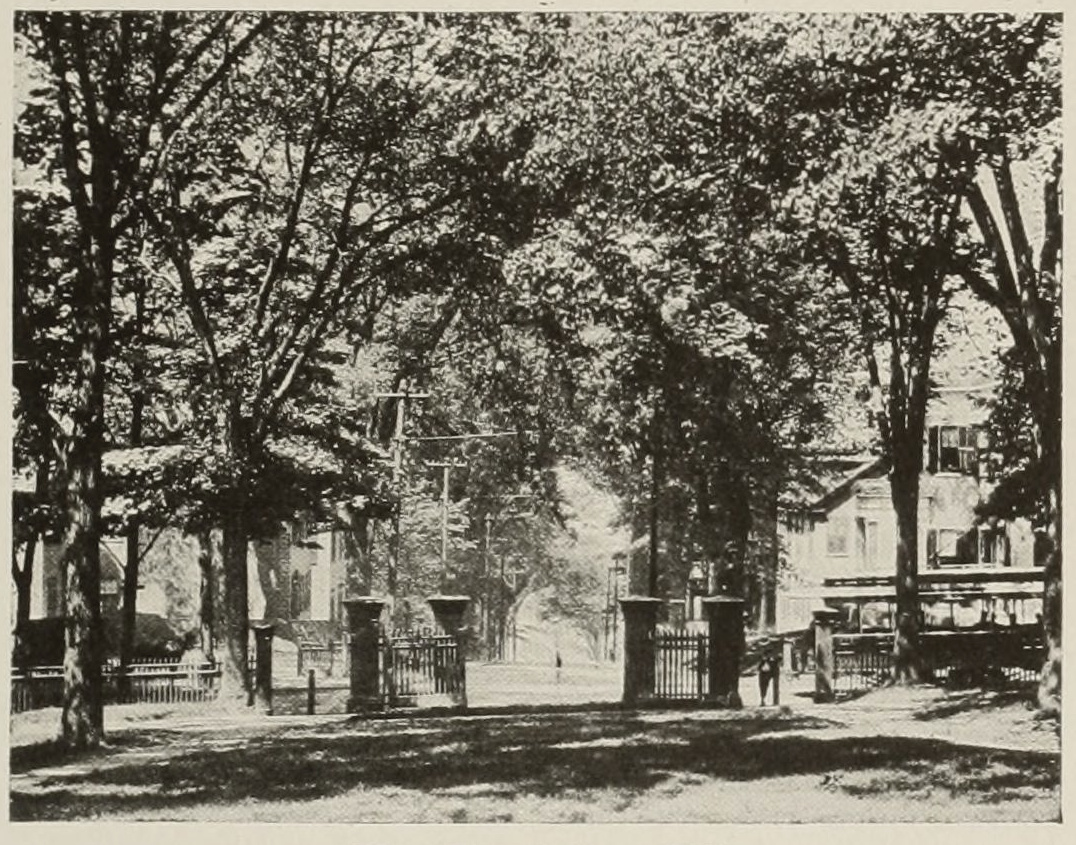
The pictures below are of the same scene prior to the building of the Library, with the street’s elm trees in their prime. The second one is behind what became the Gates. Photos such as this led to the realisation in the late 1940s that College Street’s old elms were then fading and failing. This led to a robust programme of restoration and replanting in 1949, enabled by a $2,500 gift from the class of ’24.

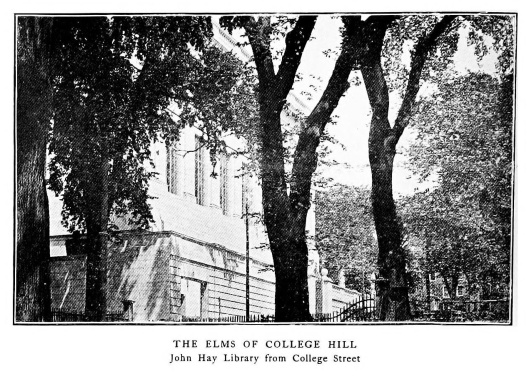
I’ve also made a new discovery of a picture of the same lane-end, seen below. The lane-end is seen on the far left of the picture. The cameraman was in the end house-garden opposite and a little further down the hill than the lane-end. The viewer peeps through the trees to see the rear wall of the lane at the corner of the Library.

From this vantage point and in this season one might have seen Lovecraft come walking down his shady lane in a light suit and summer straw-hat, to then turn and stroll down to the town.

Sadly the above scan is harsh and no-one has the booklet online as a better scan. The ‘ink-drawn effect’, only noticed when seen up-close, is probably an unintentional effect arising from the harsh scanning. The picture’s booklet is simply titled “Brown University” and appears to be a little campus-history guide, probably given out to visiting parents and relatives of students. It appears to be erroneously dated in its record to c. 1900, and does have a flavour of that era about it — yet the Library wall wasn’t up until 1911. Incidentally, you can tell that we’re looking at the correct side of the Library here… because we can see the two tall columns with the bobbles on top.

A further large picture has been found, that does look deeper down Lovecraft’s lane, but this is only available to my Patreon patrons.


I’ve also discovered that in 1929-30 this ‘bobble’ side entrance was… “the Alumni Office, John Hay Library (College Street entrance)” for the University. Also noted in Brown documents was the college rule that… “freshmen [at Brown] shall not walk on the south side of College street” although I don’t know if this was still observed in Lovecraft’s time. Freshmen is the American term for first-year students on a multi-year course.

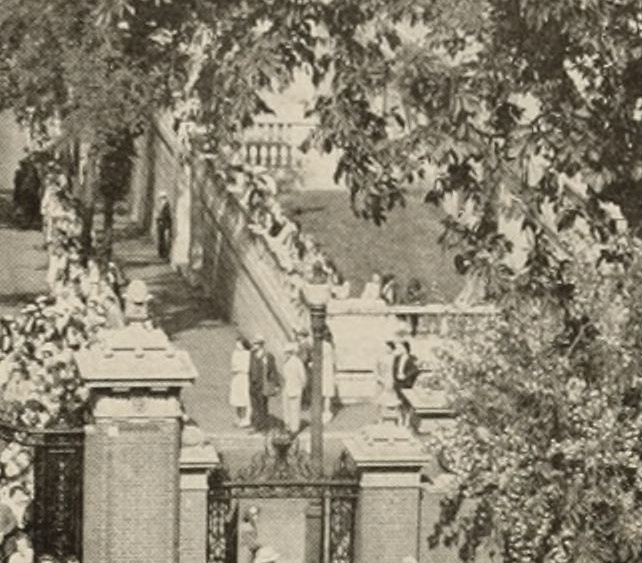
Here we see the College Street side of the John Hay Library from above the Van Winkle Gate, during a summer parade, indicating that there was a small lawn above and to one side of the Alumni office gate entrance…

By 1942 it was still a lawn, but by the 1960s the lawn had become a dense shrubbery. Presumably as part of the general and successful attempt to re-plant and re-green the street.

William Deminoff

12 Thursday Sep 2019

Posted by asdjfdlkf in Historical context, New discoveries, Scholarly works

≈ 1 Comment

One of the last to live in Lovecraft’s house at 66 College Street, before it was removed in 1959, was a Lovecraft fan writing his dissertation at Brown. William Deminoff (class of 1954) appears to have been an assistant professor at Brown in 1957 (Ken Faig Jr. found a tenancy record for that year, but not that Deminoff was a Lovecraftian) and had gone on to be active in early Lovecraft fandom. The cutting below is from March 1965. This raises the possibility that Deminoff made photographs of the house in situ in its garden court, that may still exist? The name “Deminoff” is not found in Joshi’s comprehensive bibliography, which suggests that his final dissertation was not on Lovecraft.

Storm on the Seekonk, 1938

11 Wednesday Sep 2019

Posted by asdjfdlkf in Historical context, New discoveries

≈ Leave a comment

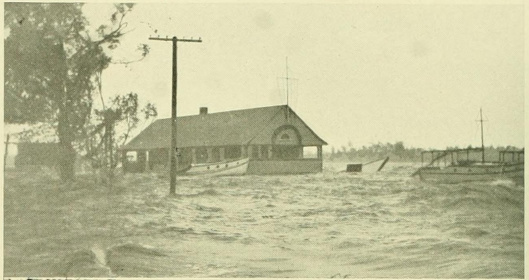
I had thought that no-one had gone out to Lovecraft’s beloved Seekonk with a camera in the great storm of 1938, but here’s the university boathouse half submerged…

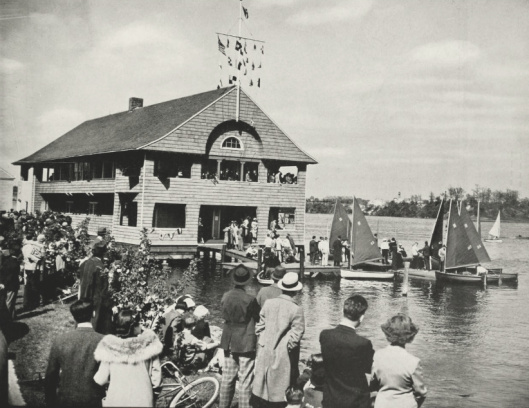
The same boathouse earlier in the same year…

The great storm also downed old elm trees on College St., which had stood in front of the fraternity house that Lovecraft could see the back of from his study window at No. 66. The reporting of this news revealed a snippet of the street’s lore that Lovecraft probably knew of. The trees on the street were thought to have been brought from England in the clipper ship era. The storm probably weakened them and they were naturally failing anyway after so long, and thus in the late 1940s the Brown alumni began a robust programme of revivification and replanting of the elms.

Friday ‘picture postals’ from Lovecraft: misty lanes at the end of summer

06 Friday Sep 2019

Posted by asdjfdlkf in Astronomy, Historical context, New discoveries, Picture postals

≈ 1 Comment

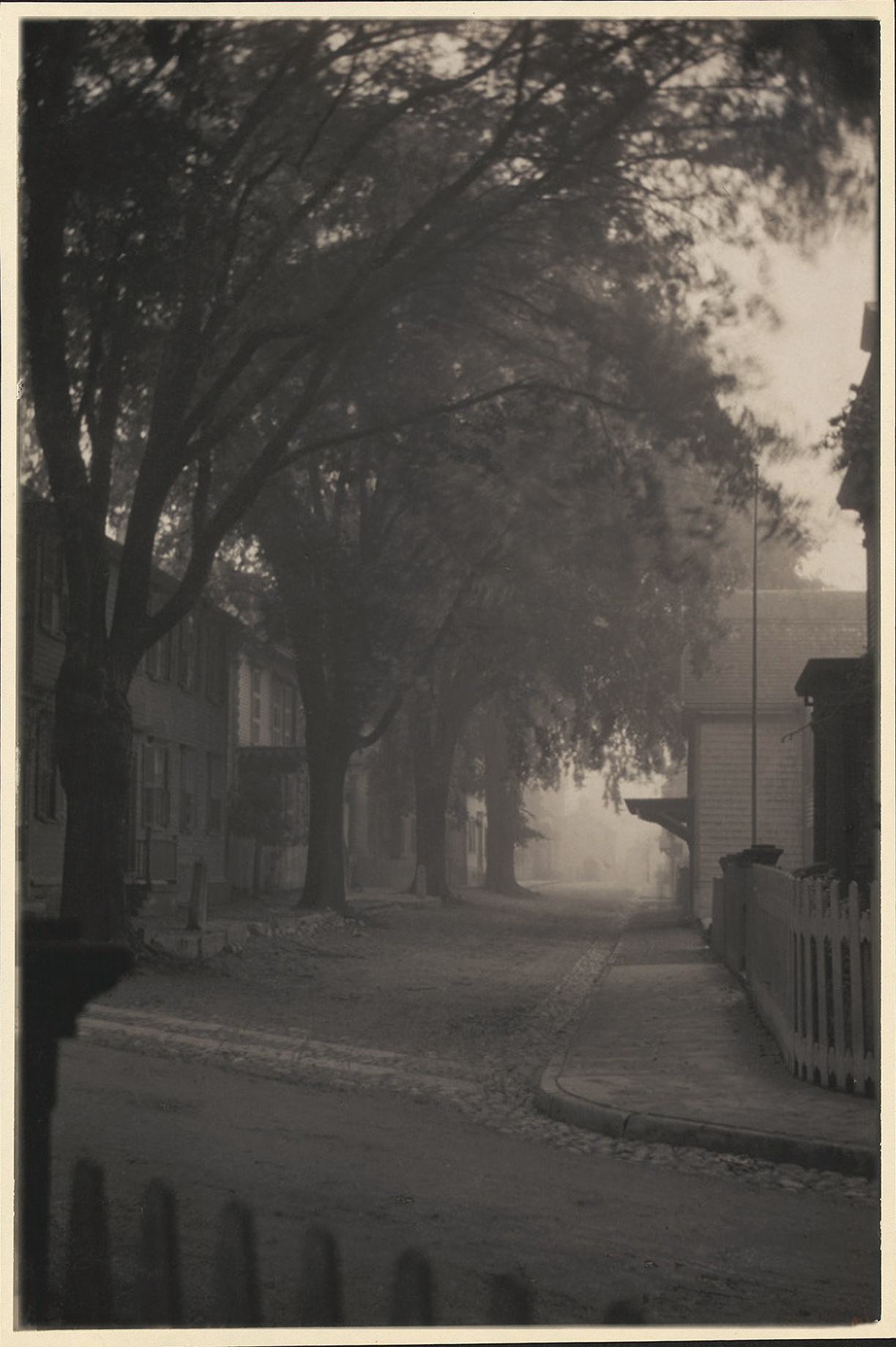
Last week’s ‘picture postal’ had a setting of quiet streets and mistiness. This week’s post continues with the same theme, evoking the ‘end of season’ shawl that many New England places would have worn by September.

I. The mist in New England.

The picture also evokes the distinctly seasonal nature of Lovecraft’s own travels and visits. His annual cycle, of summer walking followed by a winter hermitage, was partly due to his extreme sensitivity to the cold. By the early 1930s he was becoming the old man he had once feigned to be, and appears to have become both more susceptible to cold and more fearful of encountering it. By the mid 1930s his ‘sitting outdoors season’ didn’t usually start until quite late, mid-May. Some historical context is relevant here. The natural state of the eastern USA during the late 1920s and 30s was somewhat different than today, being often significantly hotter in summer and colder and more icy in winter. We can also assume that mistiness was often enhanced by household coal-fires being lit as the mornings and evenings grew chill. Domestic burning of ‘soft coal’ (heavy smoke) was then permitted, for instance, and only in 1946 did Providence begin to adopt clean-air measures. Add to that the likelihood of autumnal garden bonfires being lit.

Toward the end of his annual walking season he would have started to encounter such evocative mists, fogs and mizzling rains. Such mists were almost never captured by picture postcards, which makes scenes like the one seen above all the more valuable. They remind non-residents that New England was actually somewhat akin to England, in terms of the vagaries and mistiness of its very seasonal weather. The region wasn’t all an endless parade of bright summer-scenes.

Yet sometimes it was an endless parade of such scenes, or seemingly so when the bright clement weather would run on in the year. Such was the year 1933, for about six weeks from mid September to the end of October, and Lovecraft continued to enjoy such weather by taking cheap local bus-rides and walks. During most of October 1933 he even contrived to explore parts of the inland back-country far behind Providence. Here he is in October 1933, writing to Morton…

Well, well! The old man’s still out in the open! But though it’s quite oke for brisk walking, it ain’t so good for settin’ down and writin’. Hard work guiding the muscles of my pen hand, for I doubt if the thermometer is over sixty-eight degrees. Glorious autumnal scenery. I’ve spent the last week tramping over archaick rustick landskips, searching out areas still unspoil’d by modernity…

The run of fine weather was over by around Halloween. On 2nd-3rd November 1933 he wrote to R.E. Howard…

Our autumn has been very mild … But of course this is the very end of the season. No more continuous mild weather can be expected [now], though there may be isolated days of more or less pleasantness.

How did he first become sensitised to the Providence mists? He purposefully went walking in such conditions. In a 1933 letter to E. Hoffman Price he also recalled his youthful explorations of Providence, and how he had first become…

sensitive to the mystery-fraught streets and huddled roofs of the town, and often took rambles in unfamiliar sections for the sake of bizarre atmospheric and architectural effects ancient gables and chimneys under varied conditions of light and mist, etc.

He especially favoured such misty atmospherics when blended with a quality of “spectral hush & semi desertion”, ideally accompanied by far half-glimpsed vistas in which the imagination could lightly play. Hush was of course something rather more likely to be encountered at the very end of summer, when the region’s visitors and trippers had departed and the locals were again in a more workaday mood inside their schools and workshops. Lovecraft devised a proto-psychogeographic technique to greatly increase his chances of encountering such hushed moods. In 1933 he would alight from a local cross-country bus in the middle of nowhere, then strike across country in the hope of reaching another distant bus-route where he might flag down a homeward bus. Sometimes he was forced to hitch-hike back, though another part of his practice was to never actually ask for a free ride. Presumably this was partly because he feared that if he asked, a contribution to ‘gas money’ might then be demanded at the end of the journey? By such means he semi-randomly roved down back-roads and up little lanes that he had never seen before…

I have found several alluring regions never before visited by me [that] represent a settled, continuous life of three centuries suggesting the picturesque old world rather than the
strident new.


II. The cosmic mists.

In spring 1931 H.P. Lovecraft had the idea that rain clouds and drizzling mists might be partly influenced by fluxes in incoming cosmic-rays. Although he admitted that the confounding factors on earth would make such things difficult to measure and prove…

Just how far our precipitation is affected by the recent prevalence of ether-waves is a still-open question. The unprecedentedness of any natural phenomena is always subject to dispute — for certain types of phenomena may be naturally cyclic, whilst others may attract notice more than formerly because of increased reporting facilities [and newly populated areas growing up into] dense habitation” — Lovecraft in a letter to Clark Ashton Smith, 15th April 1931.

How prescient. Here his use of “ether-waves” does not mean broadcast radio, though that was by then a secondary shadow-meaning to be found in the radio trade press and a few newspapers. Lovecraft’s new-found ability to hear a speech by the British King may indeed have caused his eyes to mist up with tears of patriotic joy. But his knowledge of science was such that he would not have imagined that mass radio ownership might be the cause of mistier mornings on Rhode Island.

Lovecraft appears rather to have been using “ether-waves” as one finds it in standard 1930s textbooks of meteorological science. There it means radiant energy, such as cosmic-rays, x-rays etc. More specifically, a usage from the June/July 1931 Bulletin of the American Meteorological Society suggests that he had the cosmic-ray end of this spectrum in mind…

First, the cosmic rays enter the earth uniformly from all portions of the sky. Second, they consist – as they enter the earth’s atmosphere – of ether waves, not of electrons. (R.A. Millikan, the Bulletin quoting a talk of his given in September 1930.)

This use of “ether waves” then must indicate that Lovecraft was thinking in April 1931 of ether-waves (cosmic-rays) as inducing “nucleation” in the air, as a mechanism by which the cosmic forces that “filtered down from the stars” could affect the formation of clouds and mists on the earth. Thus, in his mind, a “recent prevalence of ether-waves” would affect “precipitation” in the weather on earth. His only apparent concern was “just how far” this effect carried through.

But all the scientific papers and textbooks say that this idea was first proposed in 1959 by Ney in his Nature paper “Cosmic radiation and weather”. Which implies that Lovecraft’s scientific intuition was thirty years ahead of the curve. Was Lovecraft then the first to propose a direct causal link between ‘space weather’ and ‘earth weather’?

The answer to this puzzle is probably that Lovecraft partly intuited the idea from the Nobel prize-winner Robert A. Millikan. We know this eminent and questing scientist was being tracked by Lovecraft, since he mentions Millikan to Frank Belknap Long in early 1929 when Lovecraft refers to a new theory… “Millikan’s “cosmic ray””… this being mentioned in the context of a discussion of “the radio-active breakdown of matter into energy, and the possible building up of matter from free energy” (Lovecraft).

This latter point indicates that Lovecraft knew that Millikan was proposing cosmic rays that were engaged in atomic construction rather than (as we now understand it) radioactive decay. This point may seem arcane today, but from such things the fate of the universe could be determined: construction meant a constantly-renewing universe, decay an eventual infinitely diffuse heat-death of the universe. The latter theory was given a substantial boost by the publication of the Big Bang theory which occurred in Nature on 9th May 1931 (after Lovecraft’s letter), this being apparently accompanied by much journalistic befuddling of a credulous public — with feverish talk of the coming “heat-death” of the universe.

Of course we cannot be certain that Lovecraft was reading Millikan directly, in the scientific journals available at his Public Library or in the periodicals room at Brown. Because Millikan might also have been encountered in the ‘popular science’ magazines and newspaper columns of the time. He was a popular figure, as scientists go…

Dr. Millikan was the first to prove [1925] the puzzling effect was actually the work of rays bombarding the earth from cosmic depths. The story of his [independent] search is one of the epics of science. Climbing mountain peaks in the Andes, sending aloft sounding balloons on the Texas plains, making tests in a raging blizzard among the Rockies, lowering lead-lined boxes of instruments into the water of snow-fed lakes in the Sierras, he followed one clue after another. (Popular Science, November 1936).

At this time the cutting-edge of science was headline news in regular newspapers, rather than being confined to specialist magazines or to slipshod hysteria in newspapers, as it mostly is today. We also known that Lovecraft was “strongly interested” in such things…

the absorption of radiant energy & re-emission at a lower wave-length has strongly interested me” — letter to Morton on fluorescent rocks, 13th November 1933.

… and that he later attended a public lecture on cosmic rays by W.F.G. Swann in early 1935 (Morton letters).

Perhaps this interest was strong enough in 1931 to cause him to follow the contents pages of the hard science journals, and to actually read papers by Millikan and others. Thus his reading of Millikan and a few others in early 1931 might plausibly be inferred. In which case Lovecraft most likely saw, or at the least read a good summary of, a key paper by Millikan titled “On the question of the constancy of the cosmic radiation and the relation of these rays to meteorology” (Physical Review, December 1930). Since this contains the following…

These rays must therefore exert a preponderating influence upon atmospheric electrical phenomena. [followed by a discussion of] “water vapour … condensing on ions” and the conclusion that… “the cosmic rays enter the atmosphere as ether waves or photons, and hence produce their maximum ionization, not at the surface of the atmosphere, but somewhat farther down.”

The paper does not appear to have been discussed or noted elsewhere. I have looked through and keyword-searched the book-length biography of Millikan (1982), and have searched Google Scholar and Google Books and a few other sources. Note that Millikan doesn’t actually baldly state the rays—>clouds idea in his paper, and he doesn’t actually mention precipitation (i.e.: rain-clouds, rain, drizzling mist). But he gives enough leads and hints in this paper that Lovecraft the meteorologist-and-astronomer would be able to tie the pieces together into a working theory. Given this absence of commentary elsewhere, I then have to suspect this paper is the source for Lovecraft’s April 1931 understanding of levels of precipitation being “affected by the recent prevalence of ether-waves”. The timing of the paper certainly fits neatly with that of Lovecraft’s letter to Smith. We also know that Lovecraft attended a lecture on the latest developments in cosmic rays, in early 1935. In a letter to Barlow he commented on this lecture, implying that he had already had a good working knowledge of such things and that the lecture had usefully updated this.

There is a further small puzzle here. How did Lovecraft know of the recent “prevalence” of ether-waves/cosmic-rays? Because these do not appear to have been measured in time-series until 1933. The answer to the puzzle might be that the aurora borealis was then recently known to be a natural proxy for incoming cosmic-rays. An increase in the aurora would have been noted in the meteorological and polar journals, possibly even in the newspapers. The effect on shortwave radio-reception may also have been understood to be an indicator. We know that Lovecraft enjoyed ‘fishing’ on his older aunt’s radio-set for the most distant exotic radio stations he could find, and this could have sometimes meant rare distant shortwave signals bouncing off the ionosphere. His younger aunt’s radio set was apparently not so powerful. Yet regular ‘fishing’ on either might still have led him to build up a mental time-series of the disturbances in the upper-atmosphere.

“I sometimes ‘fish’ for distant stations when over there — for there is a fascination in the uncanny bridging of space” (Lovecraft in October 1932).

What then was his idea of this rays-to-clouds effect, put in modern scientific terms? At its crudest the idea of “nucleation” holds that: 1) cosmic-rays arrive and cause ionisation inside our atmosphere; 2) which introduces more tiny floating nuclei suitable for water-droplets to form on; 3) and in that way certain types of low-level cloud are more likely to arise when there are more rays. The science of this is still being actively researched, at least by those willing to brave the venomous politics of the field. Personally I remain to be convinced by scientists who suggest more sophisticated and roundabout ideas about how cosmic-ray fluxes and clouds might interact (and thus influence weather). Yet it’s not wholly impossible that Lovecraft’s 1931 hypothesis about ‘cosmic mists’ might one day be agreed to be correct, if science can see through the fog of confounding factors.

Friday ‘picture postals’ from Lovecraft: the lane-end at night

30 Friday Aug 2019

Posted by asdjfdlkf in Historical context, New discoveries, Night in Providence, Picture postals

≈ 1 Comment

As we slip over into the seasons of mists… a vintage picture of the Van Wickle Gates on a misty night, Providence. My thanks to Brown University for digitising this, and I’ve used Photoshop to subtly rectify some of the damage and fuzzyness of the picture (but you can still see a section of peel-up on right). I can add to their record the name of the photographer: Prof. Walter H. Snell, and that it was made in the early 1930s.

The John Hay Library frontage is seen behind, with main entrance-steps seen on the far right of the picture. This orientation confirms that we’re looking down College Street.

From this vantage point in the shadows a lucky observer in 1933-37 might have glimpsed H.P. Lovecraft about to set off on a long night-walk in his city. A tall gaunt figure would have stepped out from the end of the short lane which came up from his house. After pausing a moment to scout the quiet street and garden-walls for any suitably conversational cats, he would have turned to walk briskly away down the hill — while being framed for an instant in the gate-entrance seen on the far left of this picture. Or, if one was lucky, he would have headed toward the gate and the camera, so as to walk through the grounds of Brown University. I assume that the grounds were not sealed-off at night, in those days.

Map:

Below we see the lane-end (far left, lower corner) in daytime, viewed from the other side of the gates…


Incidentally I now realise that I was mistaken in an earlier ‘postcard’ post here, one made late last year. I had though that a bit of a house glimpsed past the John Hay Library might have been that of Lovecraft. It wasn’t so, and that post has now been deleted. I now realise that any picture which shows the frontage alone can’t show the relevant house(s). Only side views, like those above, are of possible interest and even then will likely only indicate the line of the lane that came up from his house at the back of the Library.


New week on ‘Picture postals’: continuing the theme, with a detailed look at Lovecraft’s unique scientific understanding of the origin of clouds and mists.

← Older posts
Newer posts →


Please become my patron at www.patreon.com/davehaden to help this blog survive and thrive.

Or donate via PayPal — any amount is welcome! Donations total at Easter 2025, since 2015: $390.

Archives

  • February 2026
  • January 2026
  • December 2025
  • November 2025
  • October 2025
  • September 2025
  • August 2025
  • July 2025
  • June 2025
  • May 2025
  • April 2025
  • March 2025
  • February 2025
  • January 2025
  • December 2024
  • November 2024
  • October 2024
  • September 2024
  • August 2024
  • July 2024
  • June 2024
  • May 2024
  • April 2024
  • March 2024
  • February 2024
  • January 2024
  • December 2023
  • November 2023
  • October 2023
  • September 2023
  • August 2023
  • July 2023
  • June 2023
  • May 2023
  • April 2023
  • March 2023
  • February 2023
  • January 2023
  • December 2022
  • November 2022
  • October 2022
  • September 2022
  • August 2022
  • July 2022
  • June 2022
  • May 2022
  • April 2022
  • March 2022
  • February 2022
  • January 2022
  • December 2021
  • November 2021
  • October 2021
  • September 2021
  • August 2021
  • July 2021
  • June 2021
  • May 2021
  • April 2021
  • March 2021
  • February 2021
  • January 2021
  • December 2020
  • November 2020
  • October 2020
  • September 2020
  • August 2020
  • July 2020
  • June 2020
  • May 2020
  • April 2020
  • March 2020
  • February 2020
  • January 2020
  • December 2019
  • November 2019
  • October 2019
  • September 2019
  • August 2019
  • July 2019
  • June 2019
  • May 2019
  • April 2019
  • March 2019
  • February 2019
  • January 2019
  • December 2018
  • November 2018
  • October 2018
  • September 2018
  • August 2018
  • August 2015
  • July 2015
  • April 2015
  • March 2015
  • February 2015
  • January 2015
  • December 2014
  • November 2014
  • October 2014
  • September 2014
  • August 2014
  • July 2014
  • June 2014
  • May 2014
  • March 2014
  • February 2014
  • January 2014
  • December 2013
  • November 2013
  • October 2013
  • September 2013
  • August 2013
  • July 2013
  • June 2013
  • May 2013
  • April 2013
  • March 2013
  • February 2013
  • January 2013
  • December 2012
  • November 2012
  • October 2012
  • September 2012
  • August 2012
  • July 2012
  • June 2012
  • May 2012
  • April 2012
  • March 2012
  • February 2012
  • January 2012
  • December 2011
  • November 2011
  • October 2011
  • September 2011
  • August 2011
  • July 2011
  • June 2011
  • May 2011
  • April 2011
  • March 2011
  • February 2011
  • January 2011
  • December 2010
  • November 2010
  • October 2010
  • September 2010
  • August 2010
  • July 2010

Categories

  • 3D (14)
  • AI (70)
  • Astronomy (70)
  • Censorship (14)
  • de Camp (7)
  • Doyle (7)
  • Films & trailers (101)
  • Fonts (9)
  • Guest posts (2)
  • Historical context (1,095)
  • Housekeeping (91)
  • HPLinks (73)
  • Kipling (11)
  • Kittee Tuesday (92)
  • Lovecraft as character (58)
  • Lovecraftian arts (1,625)
  • Lovecraftian places (19)
  • Maps (70)
  • NecronomiCon 2013 (40)
  • NecronomiCon 2015 (22)
  • New books (966)
  • New discoveries (165)
  • Night in Providence (17)
  • Odd scratchings (984)
  • Picture postals (276)
  • Podcasts etc. (430)
  • REH (184)
  • Scholarly works (1,468)
  • Summer School (31)
  • Unnamable (87)

Get this blog in your newsreader:
 
RSS Feed — Posts
RSS Feed — Comments

H.P. Lovecraft's Poster Collection - 17 retro travel posters for $18. Print ready, and available to buy — the proceeds help to support the work of Tentaclii.

Proudly powered by WordPress Theme: Chateau by Ignacio Ricci.