If Lovecraft had been filmed in the 1960s… the “Arkham Angst” poster-collage series by weißweißweiß in Germany.
Arkham Angst
03 Saturday Jan 2015
Posted in Lovecraftian arts
03 Saturday Jan 2015
Posted in Lovecraftian arts
If Lovecraft had been filmed in the 1960s… the “Arkham Angst” poster-collage series by weißweißweiß in Germany.
02 Friday Jan 2015
Posted in Lovecraftian arts
3dmotive has a new paid video tutorial course. Sculpting Cthulhu using the popular Zbrush 3d digital sculpting software…
01 Thursday Jan 2015
Posted in Lovecraftian arts
Being widely hailed as one of the PC games of the year (warning: there’s a spoiler in the description at the end of that link), the videogame The Vanishing of Ethan Carter (26th Sept 2014) had until now escaped my attention. A weird murder-mystery adventure story, it appears to have sensibly avoided the use of the “Lovecraft, Lovecraft!! LOVECRAFT!!” marketing buzzword, and instead left that for reviewers to decide. The makers say rather that it is… “Inspired by the weird fiction stories and other tales of macabre of the early 20th century”. Be warned that the game is a short one, four-to-six hours apparently, though game geeks often don’t realise how fast they can buzz through games. Those less familiar with PC gaming and its numerous fiddly conventions may take a good few hours longer than that to play. Especially those flummoxed by a non-combat first-person detective puzzler story-game, which is said to offer little hand-holding in terms of game mechanics. As compensation for the relatively short length, it’s a walk-anywhere 3d ‘open world’ in a Vermont / New England -like autumnal landscape named Red Creek Valley…
“while not strictly a Lovecraft game [it] is one of the best examples of these themes for a long time” — Bleeding Cool.
“Somewhere in-between H.P. Lovecraft and Gone Home” — IGN.
“There’s a wonderful Lovecraftian pay-off for your toiling in the darkness [in one section of the game]” — Eurogamer.
[As with Lovecraft…] “most of that horror is derived from an eerie sense of dread created through [the slow revealing of] the presence of the alien and the weird in an otherwise familiar environment.” — PopMatters.
01 Thursday Jan 2015
Posted in Lovecraftian arts
Delicious tentacular b&w 3d steampunkery from Danny van Ryswyk, via the Mark Ryden end of Pop Surrealism. Not safe for work…
19 Friday Dec 2014
Posted in Housekeeping, Lovecraftian arts
So the Yuletide season rolls around, for another year. Happy Christmas, and here’s a rather excellent illustration — which can serve as a Christmas card for readers…
Picture: the UK’s Nelson Evergreen (the canvas name of Neil Evans).
18 Thursday Dec 2014
Posted in Lovecraftian arts
Additions to the ‘Lovecraft audio before digital’ gallery post. Many thanks to Dennis Weiler of Fedogan, for sending me more cover art from Lovecraft audio cassettes. Dennis writes of them…
“Our “Fungi From Yuggoth” is on [picture] 01, initially released in 1987 on cassette alone. As far as I know, it was the first HPL poetry recording ever released for sale. All of these J-cards are from cassettes in my possession. The R.M. Price recording is marked 1997, but I’ve no idea whether digital-format was released. It was a Necronomicon Press production, I think.”
18 Thursday Dec 2014
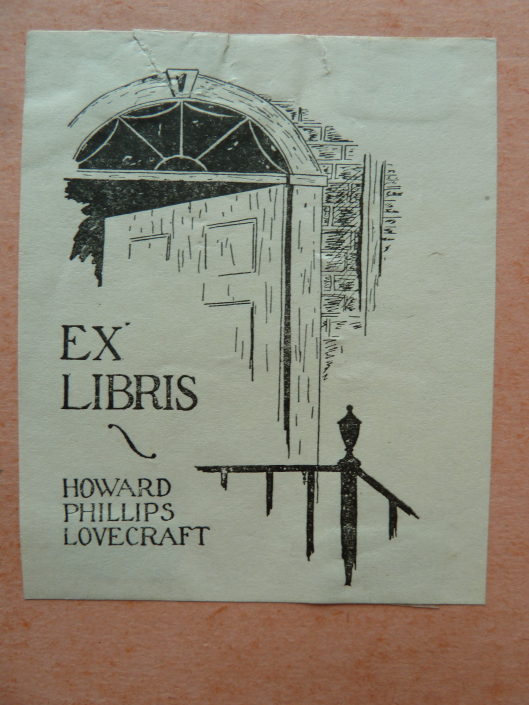
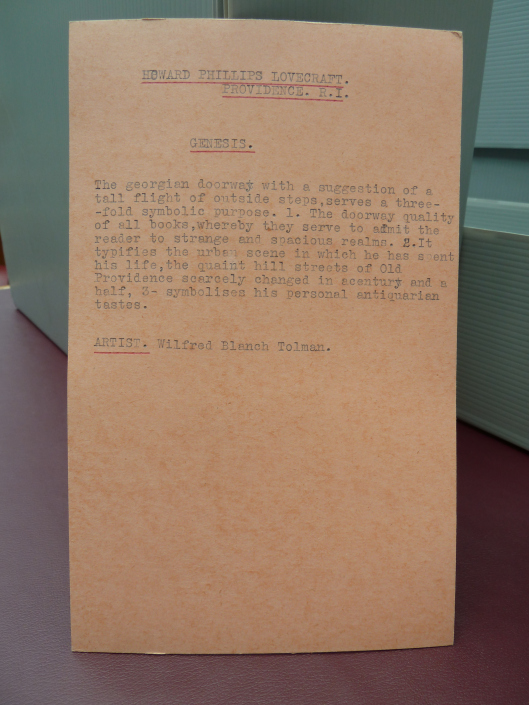
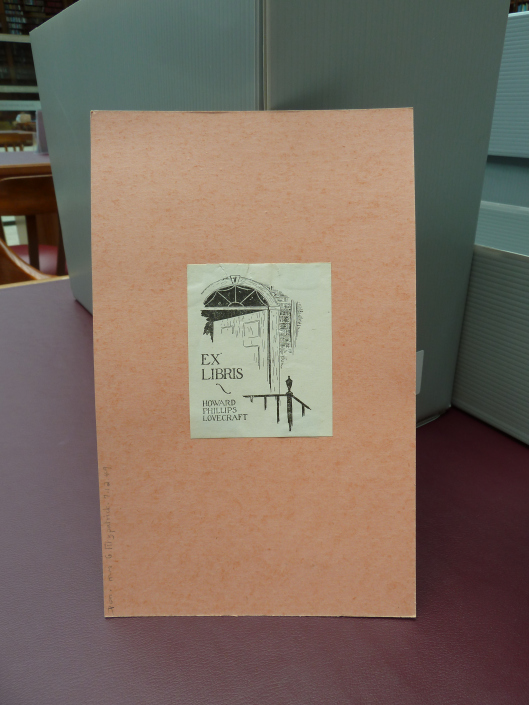
It appears I was correct about George Fitzpatrick, an Australian Lovecraft correspondent (see my Historical Context #4 and also Lovecraft Annual 2013). Drs. Brendan Whyte & Martin Woods of the National Library of Australia looked into the Fitzpatrick bookplate collection, seeking the Lovecraft bookplate. They found it…
“I instructed him to see if the HPL bookplate was in the Fitzpatrick collection, and indeed it is. Attached are photos of it and the card to which Fitzpatrick attached it. The verso of the card, presumably typed (rather poorly) by Fitzpatrick from notes sent by Lovecraft, reads:
GENESIS.
The georgian doorway with a suggestion of a tall flight of outside steps, serves a three-fold symbolic purpose. 1. The doorway quality of all books, whereby they serve to admit the reader to strange and spacious realms. 2. It typifies the urban scene in which he has spent his life, the quaint hill streets of Old Providence scarcely changed in a century and a half, 3- symbolises his personal antiquarian tastes.
ARTIST. Wilfred Blanch Tolman.”
A note in pencil on the side states: “Don[or]. Mrs G. Fitzpatrick. 7.12.[19]49”
I would agree that the typed card must be Fitzpatrick’s summary of a Lovecraft letter which had accompanied the bookplate to Australia, and which had been discarded. The words “The doorway quality of all books, whereby they serve to admit the reader to strange and spacious realms.” certainly sound like they could be Lovecraft’s own.
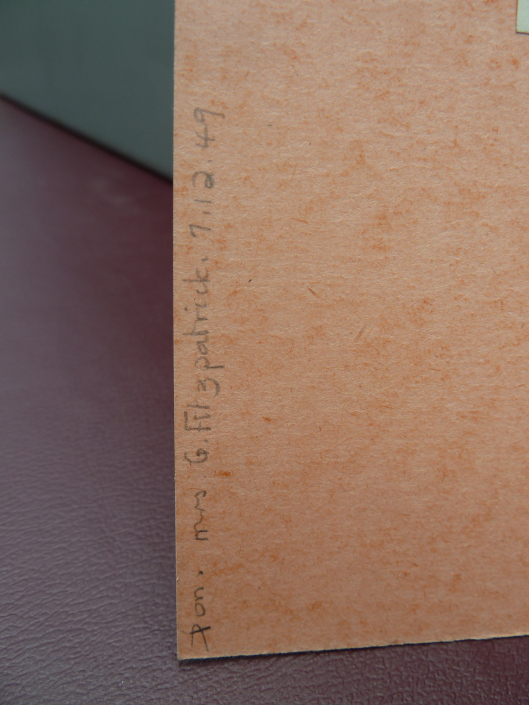
One wonders if this was the limit of the correspondence, or if there were later letters between the two men?

14 Sunday Dec 2014
Posted in Lovecraftian arts
Lovecraft in audio, before digital…
UPDATE: Additions to the ‘Lovecraft audio before digital’ gallery post. Many thanks to Dennis Weiler of Fedogan, for sending me more cover art from Lovecraft audio cassettes. Dennis writes of them…
“Our “Fungi From Yuggoth” is on [picture] 01, initially released in 1987 on cassette alone. As far as I know, it was the first HPL poetry recording ever released for sale. All of these J-cards are from cassettes in my possession. The R.M. Price recording is marked 1997, but I’ve no idea whether digital-format was released. It was a Necronomicon Press production, I think.”
14 Sunday Dec 2014
Posted in Historical context, Lovecraftian arts
(A few have pages deleted because certain stories are still in copyright)
12 Friday Dec 2014
Posted in Lovecraftian arts
A fine new sci-fi short movie, Wanderers, from director Erik Wernquist of Sweden. It captures something of the nature of ‘cosmic awe’, although is perhaps more Asimov/Clarke than Lovecraft…
12 Friday Dec 2014
Posted in Lovecraftian arts, Odd scratchings
“Page-by-page” replicas of Weird Tales. The store includes notable contents + a cover for all issues from the Lovecraft / Howard years. Evidently the ‘scanty gals’ covers only started appearing from May 1933.
$34.95 each. The store-front makes no mention of the size of the replica, which makes me suspect they might be smaller than the original newsstand edition. “Page-by-page” also doesn’t quite reassure me that the adverts and the letters pages are included. The seller might sell more if he could place a YouTube video on the store, showing an example replica being flipped through.
01 Monday Dec 2014
Posted in Lovecraftian arts, Scholarly works
In the new Journal of Sonic Studies, an essay on “The Imagined Sounds of Outer Space” by James Wierzbicki.