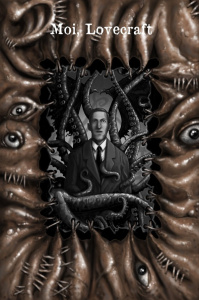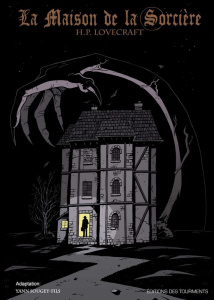
Starting tomorrow, little Titchfield in the south of England (UK) has a mini-Lovecraft theatre festival.
Cthulhu has arisen in… Titchfield!
22 Sunday Sep 2019
Posted in Lovecraftian arts
22 Sunday Sep 2019
Posted in Lovecraftian arts
Starting tomorrow, little Titchfield in the south of England (UK) has a mini-Lovecraft theatre festival.
18 Wednesday Sep 2019
Posted in Lovecraftian arts
S. T. Joshi heads out West, in his latest blog post. He also visits the Art Institute of Chicago and the Field Museum, lucky fellow. He further reports that he has now composed, in response to weird poems…
a total of twelve [choral] compositions, which may run to as much as 50 or 60 minutes. Enough for a CD!
He also has them in musical notation software, which potentially means they’re also available for translation into fully synchrotroniced cosmic synths via the likes of the Sibelius software.
17 Tuesday Sep 2019
Posted in Historical context, Lovecraftian arts, Maps, Odd scratchings
It strikes me that there are now enough pictures of College Street to be able to recreate this area in a 3D first-person videogame, following my picture-sourcing and resulting cavalcade of discoveries of the last week (see my posts and Patreon-only posts here at Tentaclii). Only Lovecraft’s central ‘garden court’ itself is still elusive in ground-level photography. [Update: Ken Faig has good maps showing precise boundaries around No. 66 and the location of the cat-shed].
A 3D recreation of the area could be set-dressed almost exactly as it would have been when Lovecraft was living at 66 College Street, complete with seasonal and atmospheric effects.
The game environment could also stretch all the way down College Street, as that other end of the street is well-documented visually — this section would usefully offer offices for an investigative RPG game. The resulting completed environment could then be released under GPL (open source), so that anyone could devise and build a game from that base environment. Or just virtually stroll around in it.
If “monsters n’ machine-guns” are felt to be needed then the could also be an underground element, re: the tunnels under the hill…
“Did we know, he asked, his sombre eyes intent on our faces, that recently, when early buildings on Benefit Street and College Street were razed to make way for new ones, deep tunnel-like pits, seemingly bottomless and of undetermined usefulness, were discovered in the ancient cellars?” — memoir of a visit by Lovecraft in 1934, by Dorothy C. Walter.
The disused Providence East Side Railway Tunnel under the hill could also feature. At the far end the tunnels could give access to the Seekonk River shoreline and perhaps even a short boat trip through heavy fog to the Twin Islands in the river. Wrapping the game’s horizons in a heavy Halloween fog and night would mean less work, re: making backdrops showing views of distant horizons.
The environment space I’ve outline above offers a fairly limited, and thus manageable, set of places:
The Paxton/Arsdale Boarding House.
The Carrie Tower.
Van Wickle Gate.
The lawns and reception on the main Brown University frontage.
The John Hay Library.
Lovecraft’s house, lane and garden.
The Alpha Delta Phi fraternity house.
The Providence Athenaeum.
Offices on lower College Street.
Court House on lower College Street.
Tunnels under College Hill.
Apart from a working looped tram (trolley-car) line, no vehicles would be required. A basic set of NPCs would be students and faculty, artists from the School of Design, various librarians and curators, and the more elderly retired residents. There would probably be a need to make and animate the tall elm trees and cats from scratch, but that’s not impossible for a talented game-making team. The Egypt-set edition of the Assassin’s Creed game has shown that convincing cats and cat-luring/petting can be done well in 3D videogames. All the rest of a game could be left to those who wished to build their game on top of this base game-world. A basic starting point for a game could be that the Cats of Ulthar have sent emissaries into the real world, seeking Lovecraft’s help in the Dreamlands, but then find themselves mute and treated as normal cats. Lovecraft is the only one who can ‘talk’ to the Ulthar cats, but only partially — even he must collect old lore and folklore that will enable him to speak with them.
Such a faithful and authentic recreation would probably do quite well on Kickstarter or similar. Especially if it was: i) to be made by a reliable team with some RISD and/or Brown endorsement; ii) the end result would be be GPL’d (open source); iii) and it would be made with a major free game-engine such as Unreal.
15 Sunday Sep 2019
Posted in Lovecraftian arts
The new feature-length movie adaptation of Lovecraft’s “The Colour Out of Space” appears to have been a success, both critically and in terms of being picked up for cinema distribution in the USA. Here in the UK it opens in London in early October. The movie seems to have had to get through a ‘double-hate’, with early negative reviews not only from haters of Lovecraft but also from haters of the lead actor Nic Cage. But it appears to have moved past those with ease.
On the back of a renewed interest in pastoral/rural science-fiction, Clifford D. Simak’s best novel Way Station has been picked up for a TV movie adaptation. Matt Reeves (Cloverfield, two of the new Planet of the Apes reboots) is to adapt it as a “large-scale sci-fi thriller”. It’ll be a single TV movie, apparently, rather than a mini-series. Let’s hope he doesn’t bring the Cloverfield found-footage look (camera so shaky and unsteady as to make the movie unwatchable) to Way Station. As usual with anything ‘Simak’, be very careful what you read about his work — blurb writers for Simak seem to delight in giving huge plot-spoilers.
One suspects that, inevitably, some modern political correctness will get slipped into the script. Perhaps in the 2020s the political equivalent of the Christian movie-snippers will arise, if they haven’t already done so. Those old-school snippers would deftly edit or blip out all the profanity and nudity and gore in a movie and produce a ‘clean version’.
12 Thursday Sep 2019
Posted in Lovecraftian arts, Odd scratchings
The Max Ernst Museum in Germany is to host a major retrospective of the art of Moebius. Opening 15th September and running until February 2020, with reasonably-priced tickets. The show will feature 450 works covering his whole range, plus a full catalogue.
The museum is about four miles south of the outskirts of the German city of Cologne. Cologne is about 120 miles east of Calais, or about 100 miles SE of Amsterdam, and is well connected by rail.
For a total comics-arts-o-rama visit, note that it usefully overlaps at the end of January with the huge Angouleme 2020 in France (opens 30th January 2020).
09 Monday Sep 2019
Posted in Lovecraftian arts, Odd scratchings
From the book Vita Privata di H.P. Lovecraft, newly on archive.org this week. It’s a 300-page 1987 Italian translation of memoirs of Lovecraft by those who knew him. It appears to be firmly out-of-print, and there are not even second-hand copies listed on the Italian Amazon site. eBay gives me no results for it, either.
Illustrated, albeit with very fuzzy pictures. Here’s his last home, 66 College Street, seen from the elevated walkway along the side of the John Hay Library. The house rose from a lower level, having a whole lower floor below the floors and attic seen here. The lower level appears to have been lost on the move to its new and current site, unless perhaps it was buried there as a cellar.
07 Saturday Sep 2019
Posted in Films & trailers, Lovecraftian arts
H.P. Lovecraft Film Festival, 4th – 6th October 2019, USA. Now with guests and film-schedule announced.
04 Wednesday Sep 2019
Posted in Lovecraftian arts
The making of a stop-motion animation of “The Howler” by H.P. Lovecraft.
03 Tuesday Sep 2019
Posted in Lovecraftian arts, New books
Celebrating H.P. Lovecraft’s interest in our fascinating felines.
This week, a panel of Lovecraft’s trans-lunar leaping Ulthar cat-army from “The Language of Cats” by Nicole Claveloux. The two-page strip appeared in Heavy Metal magazine’s Lovecraft special-issue in October 1979. I see the Heavy Metal online shop still appears to be shipping paper copies of that issue, though I’d guess they might perhaps be reprints rather than 1979 originals.
“The Language of Cats” is not in the fine new The Green Hand and Other Stories collection of Claveloux’s scarcer work. Hopefully the “Cats” strip can eventually be properly re-published in crisp scans, alongside the long masterpiece “Off Season” by Zha and Claveloux (which also appeared in English in Heavy Metal). And ideally without the colourisation which bedevils reprints of older b&w line-art comics these days.
02 Monday Sep 2019
Posted in Lovecraftian arts
François Baranger’s Les Montagne Hallucinees, Tome 1 is now listed on Amazon, for an October 2019 release in French from the publisher Bragelonne. The artist is also showing previews at Facebook, which have English text — so I guess an English edition may also happen too…
The format for his At The Mountains of Madness appears to be the same as his 2017 Call of Cthulhu book. Not quite an artnovel — but 14″ tall and with abundant double-page spreads of superb visuals done in his sweeping cinematic style. I assume the approved Joshi texts or the equivalent French translations are being used.
The second and concluding volume of his Mountains is set to appear before Halloween 2020. The first is being delivered on time, so we can reasonably assume the second will be too.
31 Saturday Aug 2019
Posted in Historical context, Lovecraftian arts, New books, Scholarly works
Two new books on Breccia are due soon:
Breccia : Conversations avec Juan Sasturain is transcribed previously-unpublished tape interviews in French translation, plus a detailed chronology and newly published art. 460 pages in French. Amazon says October, the publisher says November 2019.
Alberto Breccia, le Maitre Argentin Insoumis. A book by the curator of recent exhibitions in France on Breccia, who is currently preparing a forthcoming… “major retrospective on Breccia, to be held in the Argentine capital Buenos Aires under the auspices of the Ministry of Culture”. 128 pages, in French but it seems to be well illustrated, and is apparently limited to 800 copies. Both the publisher and Amazon say October 2019.
If you want a taster of his Lovecraft comics art, see Revista El Pendulo No. 1 (1979) which has recently arrived on Archive.org due to an Argentine historical journals digitisation project. This issue has a 15-page Breccia comics adaptation of Lovecraft’s “The Whisperer in Darkness”. In Spanish, but still worth seeing for the masterly art alone…
The comic is followed by a Lovecraft article by Mosig, again in Spanish. This was graced by a Moebius panel depicting Lovecraft. The article was a Spanish translation of Mosig’s essay “Poet of the Unconscious”, which had first appeared in The Platte Valley Review, Vol. 6, No. 1, April 1978.
The next issue Revista El Pendulo No. 2 (1979) had a short interview with Breccia in Spanish.
Revista El Pendulo seems to have been a brief attempt at publishing an Argentine equivalent of Toutain’s 1984 and its various licensees and imitators, and as such Pendulo’s issues are not ‘safe for work’ today.
The Mosig essay led me to discover that his Mosig at Last (1997) book of collected Lovecraft essays is still available at $7.95 from Necronomicon Press, which means that Lovecraftians and academics can bypass the Cthulhu-sized prices asked for it on Amazon and eBay.
30 Friday Aug 2019
Posted in Lovecraftian arts
From the latest Decibel magazine…
Legendary horror film composer Fabio Frizzi talks about helping to bring H.P. Lovecraft’s poetry to life on I Notturni Di Yuggoth.
Decibel also has an exclusive preview-track online. This new Cadabra album starts pre-orders today. Exclusively in heavy vinyl, with “a new liner essay by S. T. Joshi” plus sleeve art and fold-out poster insert.
For those without a vinyl record-player, note also the forthcoming Karamazid Art Portfolio from Cadabra Records. This is the art for the Cadabra albums to date, done as a set of sumptuous prints. 50 copies only, 14 still available as of today.