• About
  • Directory
  • Free stuff
  • Lovecraft for beginners
  • My Books
  • Open Lovecraft
  • Reviews
  • Travel Posters
  • SALTES

Tentaclii

~ News & scholarship on H.P. Lovecraft

Tentaclii

Category Archives: Historical context

Lovecraft’s core classical reference works

17 Sunday Aug 2014

Posted by asdjfdlkf in Historical context

≈ 1 Comment

Lovecraft’s three key recommendations for vital encyclopaedias of the classical world, given by him in Fritz Leiber and H.P. Lovecraft: Writers of the Dark (2004). All now online…

* Harper’s Dictionary of Classical Literature and Antiquities. Probably had by Lovecraft in the Second Edition, 1897. Owned by Lovecraft, but its whopping 1,700 pages explains why he was unwilling to mail it to Leiber as a loan. Lovecraft also called it… “a volume without which I could not exist”, suggesting another reason for not parting with it on loan. It is obviously an extremely comprehensive work, so much so that one has to wonder why Hypnos has only the most cursory four-word entry: “The god of sleep.”.

* Manual of Classical Literature : from the German of J.J. Eschenburg. Owned by Lovecraft in his grandfather’s 1846 edition.

* Baird’s The Classical Manual. Owned by Lovecraft. A sort of student equivalent of the above manual.

Glowing creatures

16 Saturday Aug 2014

Posted by asdjfdlkf in Historical context, Lovecraftian arts

≈ Leave a comment

A visual taxonomy of glowing creatures, a new infographic made by Eleanor Lutz.

glowingEleanorLutz

absolutely marvellous firefly display … All agree that it was unprecedented, even for Wilbraham. Level fields & woodland aisles were alive with dancing lights, till all the night seemed one restless constellation of nervous witch-fire. They leaped in the meadows, & under the spectral old oaks at the bend of the road. They danced tumultuously in the swampy hollow, & held witches’ sabbaths beneath the gnarled, ancient trees of the orchard”. [Lovecraft went to bed afterwards, intending to dream the fireflies into…] “spectral torches, & about the lean brown marsh-things (invisible to mortal eyes) who wave & brandish them in the gloaming when the unseen nether world awakes.” — letter to his aunt Lillian, 1st July 1928, kindly supplied in transcript by David Shultz.

Arkham House: the first 20 years

15 Friday Aug 2014

Posted by asdjfdlkf in Historical context, New books

≈ Leave a comment

The book Arkham House: the first 20 years, 1939-1959 (1959). Now free on HathiTrust. Just keep in mind that the history is probably the Derleth-tastic version of the truth…

house

Chaosium’s contempt

14 Thursday Aug 2014

Posted by asdjfdlkf in Historical context

≈ Leave a comment

Interesting snippet from Sandy Petersen, on the early history of Call of Cthulhu (tabletop role-playing game)…

I remember when I was [first] doing Call of Cthulhu at Chaosium, the people there had contempt for Lovecraft — they thought he was a hack writer — but they wanted me to work on the game. They were smart; they said ‘we don’t respect this property, but Sandy Petersen does, so he’s the better person to design it!’

Whitehead: Editoral Prejudice Against the Occult (1922)

13 Wednesday Aug 2014

Posted by asdjfdlkf in Historical context

≈ 1 Comment

EDITORIAL PREJUDICE AGAINST THE OCCULT (The Writer, 1922)

By Henry S. Whitehead.

Said a famous editor not so very long ago in writing to one of his contributors : “but my dear fellow, if you are aiming to enlist against you the suspicion — nay, the actual enmity — of the average editor, send him a Ghost Story, a Fairy Story, or a Dream Story. If you want to be absolutely certain of such an effect, make it a Dream Story!” These three classes of stories may be said to merge into what is generally understood under the caption, “The Occult.” And “the occult” in this general sense of the term is banned by most magazines. Authors who “try one on an editor” are apt to get their tales back in haste; yet there is the well known fact that readers revel in tales of this general type! Moreover, there is hardly an author of note who has not done good work in this field, or at least tried his hand at “the occult.”

It is, for example, to “The Messenger” written in the golden nineties, that the partizans of Robert Chambers are apt to turn in his defence when pressed. It appears to be conceded that “The Mark of the Beast” is Rudyard Kipling’s high-water mark. Has any comparatively modern tale been reprinted more times than “The Phantom Rickshaw”? Does not Bram Stoker’s finger clasp relentlessly the edge of “the granite brink in Helicon” (Ezra Pound) because of “Dracula”? Possibly the editorial tradition noted is still laboring under the weight of the Gothic Ghost — the kind of ghost which rattled its chains in “The Castle of Otranto”; but Walpole was not a Mary Wilkins Freeman. The ghosts of the pre-Poe period arc quite hopeless unless as material for getting a Ph.D.! They are not the “ghosts” of Arthur Machen, or Rudyard Kipling; of M. R. James, or Algernon Blackwood. They are not even kindred to the “ghosts” of Elliott O’Donnell, Miss Freeman, George Adams Cram, or Ambrose Bierce, to say nothing of William Hope Hodgson and his “Carnacki,” or even W. W. Jacobs, who has to sandwich his “ghosts “in between tales of “Ginger Dick”and “Wappin Old Stairs” to get a hearing for them!

What real reader does not know “John Silence”? Who, once having dipped into “The House of Souls” would not set it down as the third of the five books to take into life imprisonment with him — or even the second, if he be a Baconian. It seems hardly necessary to adduce to-day’s enormous interest in spiritistic phenomena in this connection, although this would be a legitimate argument in favor of “the occult as showing which way the popular wind is blowing. The word “spiritism “at once conjures up the names of Sir Oliver Lodge and Sir Arthur Conan Doyle, as well as The Proceedings of the Society for Psychical Research. And it is a fact that there is just now growing up a generation of readers for whom the Doyle of “Sherlock Holmes” is an obsolescent figure, disappearing behind the Doyle who is championing spiritism.

Fairy Stories ! Howard Pyle ! Andersen ! The Grebruder Grimm! Andrew Lang! Why, the last-named dear old gentleman must have made a comfortable fortune with his kaleidoscopic catena of Fairy Books! It would be interesting to know what proportion of the constant readers of the Strand Magazine take it for the monthly fairy tale. Dreams! “Peter Ibbotson”! “A Dream of Armageddon”! “Gerontius”! “Dream Life” and “Reveries of a Bachelor”! “Dreams”! Du Maurier, H.G. Wells, Cardinal Newman, Donald G. Mitchell, and Olive Schreiner! Could any other common interest conceivably have brought together such a group of diverse intellects? Dreams make queer assortments of literary bedfellows. And it is simply because dreams have invaded the realm of scientific psychology as contrasted with literary, that Sigmund Freud has become one of the great ones of earth. Many of the intelligentsia, to whom Freud and his satellites Jung and Adler are restaurant-words (there being no longer households to have words among the “intelligentsia”), have never heard, say, of Jelliffe, or Janet, or Edward Cowles, all of them very much greater psychologists than Freud and his immediate following. Yet there is perhaps nothing today, not even excepting the late excitement about the League of Nations, which has so intrigued the popular mind as Freud’s Dream Psychology, and its concomitant psychoanalysis. From the day of Joseph, backward and forward, dreams and the occult have been fascinating people’s minds with the perennial lure of their mystery. Ghost Stories, Fairy Stories, and Dream Stories — the occult in fiction — have always been unfailingly alluring to the popular mind. The inventor of the ouija board is said upon sound authority to have made more than a million dollars from its sale!

In Erse and Choctaw, in the Hieroglyphics and in the Sumerian; in Kalmuck, and Finnish, and Hebrew, there are and always have been Ghost Stories, and Fairy Stories, and Dream Stories. They have been told and are being told — and read — from the bazaars of Oodeypore to the Steppes; from the lamaseries of Tibet to the Beach of Easter Island. In China, in Afghanistan, in Ireland, and down in Maine, people are positively clamoring for Ghost Stories and Fairy Stories and Dream Stories.

Why, why, do not the magazine editors give the people what they want?

Henry S. Whitehead.
FREDERIKSTAD, Virgin Islands.


Later re-worked as a chapter for The Free-lance Writer’s Handbook (1926).

On Lovecraft’s glands

13 Wednesday Aug 2014

Posted by asdjfdlkf in Historical context

≈ 1 Comment

Lovecraft’s letters are dotted with references to glands and glandular functions…

the business of acquiring contentment is an easy or frivolous matter. [yet] the relentless demands prompted by our glandular and nervous reactions are exceedingly complex, contradictory, and impetuous in their nature … So real and fixed is this state of things, that we may easily see how futile it is to expect anything to produce emotional satisfaction — or to pretend that it does — unless all the genuine laws of emotion and nerve-reaction are recognised and complied with. False or insincere amusement is the sort of activity which does not meet the real psychological demands of the human glandular-nervous system, but merely affects to do so. Real amusement is the sort which is based on a knowledge of real needs, and which therefore hits the spot.” (September 1929, Selected Letters III, p.21)

From where did Lovecraft’s long-standing notions of ‘glands shaping personality’ and indeed a sort of ‘glandular compulsion’, arise? And when? Joshi suggests it was partly from the best-selling book The Glands Regulating Personality (Oct 1921, reprinted 1926, 1928), which he was including in his “Suggestions for a Reading Guide” as late as 1936. (see S.T. Joshi, H.P. Lovecraft: A Life, p.486). Lovecraft’s use of the pineal gland in the story “From Beyond” (1920) does pre-date this book, however, suggesting a pre-existing interest in the topic, perhaps arising from his own maladies. The text of “From Beyond” indicates that Lovecraft had been reading up on the early endocrinology prior to Berman’s book of 1921, to the extent that he was confident enough to write…

I laugh at the shallow endocrinologist, fellow-dupe and fellow-parvenu [meaning, upstart] of the Freudian.” (from “From Beyond”)

This line was inserted later, and is not in the original manuscript. But S.T. Joshi suggests the insertion “may well have occured quite early” (Joshi, Primal Sources, p.137). The feeling inside the field of endocrinology itself might help confirm this supposition of an early date. If one considers the line as being a reflection of the time when…

by 1919 the whole promise of the young discipline of endocrinology seemed a cruel disappointment. The triumph of thyroid replacement therapy in the 1890s was not being replicated. In Boston even Osler’s great protege, Harvey Cushing, was becoming disillusioned […] Cushing and others wondered if the whole idea of endocrinology was flawed. Perhaps the field was little more than a stew of old wives’ tales and folklore about vital juices and essences. Cushing sometimes called it “endo-criminology.”” (Michael Bliss, The Making of Modern Medicine, University of Chicago Press, p.77)

Perhaps this failure was what allowed Berman to overlay endocrinology with his glands-as-personality and racialist theories, and give it a spin that fascinated the public. L.M. Montgomery (Anne of Green Gables etc) probably reflects the typical lay reader’s impression of the best-selling The Glands Regulating Personality, in one of her letters…

One very absorbing book was The Glands Regulating Personality. It is an amazing thing. I can not agree with all the writer’s conclusions and theories. Even those that are very likely correct will take a deal of proving. But the facts concerning the endocrines are marvellous enough, all deductions apart. I feel that we are on the threshold — that is, within one or two hundred years — of a new and — of course — amazing revelation. The world needs it. The older revelations have exhausted their mandate. I believe the next one will come through Science. What form it will take I can not guess.” (November 1924)

A book review in The Journal of Abnormal Psychology and Social Psychology (Jul-Sep 1922) put Montgomery’s reservations less delicately…

[the book is] a statement of the extreme position held by those who have been dazzled by the possibility of a glandular explanation for all the forces underlying behavior. […] The reader is left unsatisfied as to proof for the marvellous alleged properties of “the interlocking directorate of glands.”

Yet Berman’s ideas were said to have been taken up by Charles Stockard in his The Physical Basis of Personality (1931), a respected survey of the then-known wider facts on heredity. This latter book was re-published by Penguin in 1952, suggesting that at least some of Berman’s ideas were conveyed to a post-war audience.

Some of Berman’s ideas do appear to have been ahead of their time, anticipating the discoveries about how the nervous system interacts with the endocrine glands, and the need for thyroid boosting medicines. Others were very much of their time, which is perhaps why his book had no entry in The History of Clinical Endocrinology: A Comprehensive Account (1993). ‘The White Man’s Burden’, Berman thought, was all down to the lack of certain vital secretions among the lesser races, since anatomists had by then demonstrated a variety of marked physical glandular difference among the races. Berman’s racialist slant, whether conscious or unconscious, thus meant he was well-reviewed by the likes of Ezra Pound in The New Age, and admired by Wyndham Lewis, T.S. Eliot (Berman examined Eliot’s sickly wife as a potential patient) and D.H. Lawrence among others.

But Berman also looked forward to what he called “the chemistry of the soul” — future scientific techniques of glandular manipulation and regulation that would repair the glands of the ‘impaired’ lesser races, and so in time make them less of a burden on humanity. In this he was in step with the prevailing progressive liberal line that the ‘capacity’ of the masses needed to be improved through reforms — be it in diet and healthcare, housing, education, etc — to make them fit for the modern world. Interestingly Lovecraft anticipated a similar idea to Berman, with his 1920 story “From Beyond”, and its harmonic vibrating machine built to boost the pineal gland. His focus, however, was on raising the abilities of males like himself to a higher level of consciousness, and to warn about the dangers to such men of absorbing too much knowledge from ‘outside’. Incidentally long after Lovecraft’s own day, in the late 1950s, the pineal gland was indeed discovered to be an endocrine gland.

By 1934 there is evidence that Lovecraft was still following developments in this medical field, perhaps out of an interest in finding a straightforward cure for his own strange cluster of maladies. By then he had become sanguine about the ultimate prospects for Berman’s “chemistry of the soul”, which in the previous decade some had taken in the direction of quack rejuvenation therapies (monkey-gland supplements and suchlike)…

We can discover & apply a few biological principles — but the limit of effectiveness is soon reached. For example — despite all the advances in endocrinology & all the experiments in glandular rejuvenation, there is no such thing as a permanent or well-balanced staving-off of senescence [old age] & dissolution.” (Selected Letters V, p.75)

Berman also thought, as did Lovecraft, that the modern brain is haunted by patterns of thought and behaviour that are relics of our past evolutionary forms…

The memories of the cold lone fish and the hot predatory carnivore who were our begetters, may haunt us [our brains and behaviours] till the end of time”

Lovecraft later explores these ideas of evolutionary heredity in the “The Rats in the Walls” (1923), and identifies this as a key psychological hook for horror fiction in his essay “Supernatural Horror in Literature”…

all the conditions of savage dawn-life so strongly conduced toward a feeling of the supernatural, that we need not wonder at the thoroughness with which man’s very hereditary essence has become saturated with religion and superstition. That saturation must, as a matter of plain scientific fact, be regarded as virtually permanent so far as the subconscious mind and inner instincts are concerned […] there is an actual physiological fixation of the old instincts in our nervous tissue, which would make them obscurely operative even were the conscious mind to be purged of all sources of wonder.” (from “Supernatural Horror in Literature”)

This belief in residual primitive urges find an echo Lovecraft’s understanding of the erotic urges, which to him seem to have been equally horrifying when given active expression. Could Lovecraft’s 1921 reading of Berman have been a part of his rethinking of his outspoken censoriousness of the erotic, which occurred in April 1921…

I am coming to be convinced that the erotic instinct is in the majority of mankind far stronger than I could ever imagine without wide reading & observation; that it relentlessly clutches the average person — even of the thinking classes — to a degree which makes its overthrow by higher interests impossible. Probably recommendation of dismissing it by displacement by purely imaginative interests is an absurdity based on ignorance of its extent & intensity … The only remedy would seem to lie in the gradual evolution of society out of the puritan phase, and the sanctioning of some looser morality or hetairism” [Ancient Greek: meaning ‘permitted prostitution via gift-giving’] [he then announces his revocation his previous “anti-erotic” stance] (from a letter of 23rd April 1921, to Kleiner).

But Berman’s The Glands Regulating Personality was not published until October 1921. So his reading of it must have been the result of some earlier thinking on the bodily secretions and urges — probably in the late winter and early spring of 1921. Perhaps this was linked to his psychological release from the cloying grip of his mother, who had been hospitalised in March 1919. Lovecraft reported that his health improved “vastly in 1920-21”, and most Lovecraftian scholars would attribute this to the removal of her daily influence. One even wonders if his April 1921 change of heart on expressions of eroticism might have been a result of his reading, and even revising, manuals on sex for David Bush — for whom he had been ghosting since 1917. One might even see his “The Quest of Iranon” (written late Feb 1921) and “The Outsider” (written Spring-Summer 1921) as a part of his struggle to comprehend the (im)possibilities of adding such a new dimension to his human contact.

Linkages between glands and personalities were still part of his thinking in the mid 1930s, as evidenced by the inclusion of Berman in his 1936 “Suggestions for a Reading Guide”. So it’s interesting to note that his late boy protege Kenneth Sterling went on to take up a career as an endocrinology specialist. One then has to wonder what effect Lovecraft’s discussion of glandular theories might have had on the lad, as they walked about Providence together, at the impressionable point at which Sterling lost his “unchanged childish treble [voice]” and went through puberty.

So far as I can see Lovecraft hardly makes any direct use of the glandular and endocrine theories in his fiction — other than in “From Beyond”, which was anyway not published until June 1934 — although of course monstrous bodily secretions and “sticky clammy masses” of various types abound in his work. It is a common notion that the physical nature of Lovecraft’s horror was largely influenced by his phobia about gelatinous sea-creatures. But the human glandular influence provides an interesting counterpoint to such notions.

Allan Grayson

11 Monday Aug 2014

Posted by asdjfdlkf in Historical context

≈ 6 Comments

Meanwhile his [Whitehead’s] young friend & guest Allan Grayson of New York (who turns out to be a dental patient of Doc Long’s — Little Belknap’s father!) has formed a tremendous admiration for you & your work, & wants desperately to see your whole…” — Lovecraft to Derleth.

Apparently Lovecraft wrote a sonnet for Grayson, which is noted in the new Mariconda collection of essays. Can anyone supply me with a copy of the sonnet?

Death, the Avenger

11 Monday Aug 2014

Posted by asdjfdlkf in Historical context, Lovecraftian arts

≈ 1 Comment

maskedball1831

“Death, the Avenger” (based on a description by the poet Heinrich Heine of the outbreak of cholera at a masked ball in Paris in 1831). 1851 engraving by Alfred Rethel (1816–1859), from A History of Everyday Things in England : 1733-1851.

The pestilence was awaited with comparative indifference, because the news from London was that it carried off comparatively few … [during the day] the Parisians streamed merrily to the boulevards to look at the masks, which held up to ridicule the fear of the cholera and the disease itself, by all sorts of monstrous caricatures. The public balls [that night] were fuller than ever that evening; insane peals of laughter almost drowned the music. People got heated in the Chahut, a dance of no doubtful character, swallowed ices and cold drinks … and then, all of a sudden, the gayest of the harlequins felt a strange chill in his limbs, and took off his mask; when, to the amazement of all, his face was seen to be violet blue. It was soon found that this was not a joke, and the laughter ceased; wagons full of men were taken from the hall to the hospital of the Hotel Dieu, where, all dressed in their masquerading habits, they straightway died. As the theory of infection prevailed in the first excitement, and the other inmates of the Hotel Dieu shrieked in terror, it is said that the earliest victims were so hastily buried that they were not even stripped of their motley dresses, so that they lie in the grave as merrily as they lived. — Heinrich Heine.

Presumably an influence on Poe’s “The Masque of the Red Death” (1842), and also on Lovecraft’s “The Outsider”…

… the open windows — gorgeously ablaze with light and sending forth sound of the gayest revelry. Advancing to one of these I looked in and saw an oddly dressed company, indeed; making merry, and speaking brightly to one another. I had never, seemingly, heard human speech before; and could guess only vaguely what was said. Some of the faces seemed to hold expressions that brought up incredibly remote recollections; others were utterly alien. I now stepped through the low window into the brilliantly lighted room, stepping as I did so from my single bright moment of hope to my blackest convulsion of despair and realisation. The nightmare was quick to come; for as I entered, there occurred immediately one of the most terrifying demonstrations I had ever conceived. Scarcely had I crossed the sill when there descended upon the whole company a sudden and unheralded fear of hideous intensity, distorting every face and evoking the most horrible screams from nearly every throat. Flight was universal, and in the clamour and panic several fell in a swoon and were dragged away by their madly fleeing companions. Many covered their eyes with their hands, and plunged blindly and awkwardly in their race to escape; overturning furniture and stumbling against the walls before they managed to reach one of the many doors. — from “The Outsider”.

Everyday Life / Everyday Things

10 Sunday Aug 2014

Posted by asdjfdlkf in Historical context

≈ Leave a comment

“A couple of years ago I found a marvellous set of 10¢ books at Woolworth’s — all pictures, but covering British history from neolithic times to the present in considerable detail. Everything illustrated — events, persons, architecture, landscape, costume, articles in common use — a veritable pictorial museum.” (Lovecraft letter to Lee McBride White, 20th December 1935)

Possibly this was the British ‘Everyday Life / Everyday Things’ series, written for intelligent older children, and mostly now online:

* Everyday Life in the Old Stone Age

* Everyday Life In The New Stone, Bronze And Early Iron Ages

* Everyday life in Roman and Anglo-Saxon times

* A History of Everyday Things in England : 1066-1499

* A History of Everyday Things in England: 1500-1799

* A History of Everyday Things in England : 1733-1851

* A History of Everyday Things in England : 1851-1934

1821

Lovecraft and Chthetho

08 Friday Aug 2014

Posted by asdjfdlkf in Historical context

≈ 4 Comments

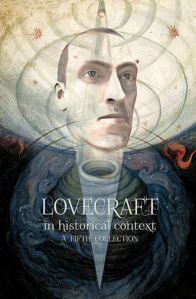
This essay has been replaced by the essay in my new book of revised, expanded, and footnoted versions of my recent Tentaclii essays, Lovecraft in Historical Context: fifth collection.

cover_front_600px

Barlow and Burroughs’ centipede fixation

06 Wednesday Aug 2014

Posted by asdjfdlkf in Historical context

≈ 1 Comment

A new BoingBoing article on William S. Burroughs’s centipede fixation. The article is of interest to Lovecraftians for the short section on Robert Barlow, for which skip to the line… “The source of Burroughs’s centipede fixation lies, most likely, in his Mexico City days.”

The BoingBoing author then claims that a field “trip to the Temple of Quetzalcoatl in Teotihuacan”, with Barlow in the lead, led Burroughs to discover/imagine the “thought-controlling Mayan theocracy, manipulating the serfs through pictographs and punishing thought criminals with Death in Centipede”. This was later used by Burroughs in his fiction, with the first instance said to have been in the 1951-1953 Queer.

The BoingBoing information on the Temple of Quetzalcoatl field trip seems to have come from Barry Miles’s new biography Call Me Burroughs: A Life (2014) which confirms the Barlow connection…

Burroughs studied the Mayan Codices under Robert Hayward Barlow

Miles states Burroughs had his studies funded under the G.I. Bill and that he started classes 3rd January for the Winter/Spring semester, with Barlow. It appears the field trip was July 1950, just six months before Barlow died. Many of the American students at the College were just there for the sun, the G.I. Bill grant money, the Mexican sense of privacy and the amenable local youths…

[In Mexico] “everyone has mastered the art of minding his own business. If a man wants to wear a monocle or carry a cane he does not hesitate to do it and no one gives him a second glance. Boys and young men walk down the street arm in arm and no one pays them any mind. It is not that people here don’t care what others think. It simply would not occur to a Mexican to expect criticism from a stranger, nor would it occur to anyone to criticize the behaviour of others.” (William S. Burroughs)

But it seems that Burroughs was genuinely interested in the ancient Maya, since he had studied the Mayan Codices in Algiers, and later joined a student archaeological society in Mexico City.

It’s curious to think of the possibilities, in terms of weird fiction, that the landscape of the newly-discovered Mexican ruins lost at that moment. What would have happened if Burroughs had tapered off his drug habit and Barlow and he had become a couple, meaning that Barlow survived the blackmail attempt?

[Hat-tip: Miss Allen]

The King of Weird

06 Wednesday Aug 2014

Posted by asdjfdlkf in Historical context

≈ Leave a comment

Joyce Carol Oates’s highly influential Halloween 1996 Lovecraft review, in The New York Review of Books: “The King of Weird”. Currently free online, without need for a sign-up.

01c_nyrb103196Ugh. “The Newspaper that Graphic Design Forgot” 🙂

← Older posts
Newer posts →


Please become my patron at www.patreon.com/davehaden to help this blog survive and thrive.

Or donate via PayPal — any amount is welcome! Donations total at Easter 2025, since 2015: $390.

Archives

  • March 2026
  • February 2026
  • January 2026
  • December 2025
  • November 2025
  • October 2025
  • September 2025
  • August 2025
  • July 2025
  • June 2025
  • May 2025
  • April 2025
  • March 2025
  • February 2025
  • January 2025
  • December 2024
  • November 2024
  • October 2024
  • September 2024
  • August 2024
  • July 2024
  • June 2024
  • May 2024
  • April 2024
  • March 2024
  • February 2024
  • January 2024
  • December 2023
  • November 2023
  • October 2023
  • September 2023
  • August 2023
  • July 2023
  • June 2023
  • May 2023
  • April 2023
  • March 2023
  • February 2023
  • January 2023
  • December 2022
  • November 2022
  • October 2022
  • September 2022
  • August 2022
  • July 2022
  • June 2022
  • May 2022
  • April 2022
  • March 2022
  • February 2022
  • January 2022
  • December 2021
  • November 2021
  • October 2021
  • September 2021
  • August 2021
  • July 2021
  • June 2021
  • May 2021
  • April 2021
  • March 2021
  • February 2021
  • January 2021
  • December 2020
  • November 2020
  • October 2020
  • September 2020
  • August 2020
  • July 2020
  • June 2020
  • May 2020
  • April 2020
  • March 2020
  • February 2020
  • January 2020
  • December 2019
  • November 2019
  • October 2019
  • September 2019
  • August 2019
  • July 2019
  • June 2019
  • May 2019
  • April 2019
  • March 2019
  • February 2019
  • January 2019
  • December 2018
  • November 2018
  • October 2018
  • September 2018
  • August 2018
  • August 2015
  • July 2015
  • April 2015
  • March 2015
  • February 2015
  • January 2015
  • December 2014
  • November 2014
  • October 2014
  • September 2014
  • August 2014
  • July 2014
  • June 2014
  • May 2014
  • March 2014
  • February 2014
  • January 2014
  • December 2013
  • November 2013
  • October 2013
  • September 2013
  • August 2013
  • July 2013
  • June 2013
  • May 2013
  • April 2013
  • March 2013
  • February 2013
  • January 2013
  • December 2012
  • November 2012
  • October 2012
  • September 2012
  • August 2012
  • July 2012
  • June 2012
  • May 2012
  • April 2012
  • March 2012
  • February 2012
  • January 2012
  • December 2011
  • November 2011
  • October 2011
  • September 2011
  • August 2011
  • July 2011
  • June 2011
  • May 2011
  • April 2011
  • March 2011
  • February 2011
  • January 2011
  • December 2010
  • November 2010
  • October 2010
  • September 2010
  • August 2010
  • July 2010

Categories

  • 3D (14)
  • AI (70)
  • Astronomy (70)
  • Censorship (14)
  • de Camp (7)
  • Doyle (7)
  • Films & trailers (101)
  • Fonts (9)
  • Guest posts (2)
  • Historical context (1,096)
  • Housekeeping (91)
  • HPLinks (77)
  • Kipling (11)
  • Kittee Tuesday (92)
  • Lovecraft as character (58)
  • Lovecraftian arts (1,628)
  • Lovecraftian places (19)
  • Maps (70)
  • NecronomiCon 2013 (40)
  • NecronomiCon 2015 (22)
  • New books (966)
  • New discoveries (165)
  • Night in Providence (17)
  • Odd scratchings (984)
  • Picture postals (276)
  • Podcasts etc. (431)
  • REH (184)
  • Scholarly works (1,470)
  • Summer School (31)
  • Unnamable (87)

Get this blog in your newsreader:
 
RSS Feed — Posts
RSS Feed — Comments

H.P. Lovecraft's Poster Collection - 17 retro travel posters for $18. Print ready, and available to buy — the proceeds help to support the work of Tentaclii.

Proudly powered by WordPress Theme: Chateau by Ignacio Ricci.