• About
  • Directory
  • Free stuff
  • Lovecraft for beginners
  • My Books
  • Open Lovecraft
  • Reviews
  • Travel Posters
  • SALTES

Tentaclii

~ News & scholarship on H.P. Lovecraft

Tentaclii

Category Archives: Historical context

Machen’s autobiography – all three volumes now online

19 Thursday Sep 2019

Posted by asdjfdlkf in Historical context, Odd scratchings

≈ Leave a comment

Arthur Machen’s autobiography, now on Hathi and/or Archive.org in full view at last…

Far Off Things (1922) — First volume of the autobiography. On Archive.org and also Hathi.

Things Near and Far (1923) — Second volume of the autobiography. Hathi only.

The London adventure; an essay in wandering (1924) — Third and final volume of the autobiography. Also on Hathi.

Re: wandering, strange roads and early British psychogeography, see also his little travel book Strange Roads (1924). A letter to Dwyer shows that Lovecraft also knew this, and considered it a bookend to the autobiographical trilogy.

Even if you don’t care for his fiction, the autobiographical/walking work is well worth reading. So far as I’m aware, Lovecraft read all three volumes of the autobiography and it must have influenced how he practised walking. Lovecraft first discovered Machen’s work in the summer of 1923 (S.T. Joshi, I Am Providence, p.454).

‘Mystery upon Mystery’

19 Thursday Sep 2019

Posted by asdjfdlkf in Historical context, Odd scratchings

≈ Leave a comment

A strange and real old booklet in the care of the John Hay Library, Providence, which might be woven into a new Lovecraftian story…

A writer might tie the booklet in with this somewhat Lovecraft-alike (it’s the chin) real ‘mystery sculpture’ at Brown…

New Book: A Wild Tumultory Library

17 Tuesday Sep 2019

Posted by asdjfdlkf in Historical context, New books, Scholarly works

≈ Leave a comment

Just published, Mark Valentine’s A Wild Tumultory Library is a 350-page collection of a wealth of short essays on the most obscure ‘forgotten’ writers, books, and a few bookshops — with what appears to be a strong British focus. A small sampling of the many titles…

The Palace of Isis: A Note on Elizabeth Bowen’s ‘Mysterious Kor’. [1940s, so not an influence on Tolkien’s Kor]

Pagan Mysteries in the Novels of P.M. Hubbard.

Some Books on Tea Cup Reading.

Modern Ghosts: The Macabre Fiction of L.P. Hartley.

The Ancient Art: The Tales of A.E. Coppard.

‘Great-Nephew to the Queen of Faerie’: A Note on the Grindletonians.

Zodiacs in Britain.

At the Sign of the Black Pterodactyl: George Hay and Books of ‘Some Other Dimension’.

Lovecraft’s College Street in a game-engine

17 Tuesday Sep 2019

Posted by asdjfdlkf in Historical context, Lovecraftian arts, Maps, Odd scratchings

≈ 2 Comments

It strikes me that there are now enough pictures of College Street to be able to recreate this area in a 3D first-person videogame, following my picture-sourcing and resulting cavalcade of discoveries of the last week (see my posts and Patreon-only posts here at Tentaclii). Only Lovecraft’s central ‘garden court’ itself is still elusive in ground-level photography. [Update: Ken Faig has good maps showing precise boundaries around No. 66 and the location of the cat-shed].

A 3D recreation of the area could be set-dressed almost exactly as it would have been when Lovecraft was living at 66 College Street, complete with seasonal and atmospheric effects.

The game environment could also stretch all the way down College Street, as that other end of the street is well-documented visually — this section would usefully offer offices for an investigative RPG game. The resulting completed environment could then be released under GPL (open source), so that anyone could devise and build a game from that base environment. Or just virtually stroll around in it.

If “monsters n’ machine-guns” are felt to be needed then the could also be an underground element, re: the tunnels under the hill…

“Did we know, he asked, his sombre eyes intent on our faces, that recently, when early buildings on Benefit Street and College Street were razed to make way for new ones, deep tunnel-like pits, seemingly bottomless and of undetermined usefulness, were discovered in the ancient cellars?” — memoir of a visit by Lovecraft in 1934, by Dorothy C. Walter.

The disused Providence East Side Railway Tunnel under the hill could also feature. At the far end the tunnels could give access to the Seekonk River shoreline and perhaps even a short boat trip through heavy fog to the Twin Islands in the river. Wrapping the game’s horizons in a heavy Halloween fog and night would mean less work, re: making backdrops showing views of distant horizons.

The environment space I’ve outline above offers a fairly limited, and thus manageable, set of places:

The Paxton/Arsdale Boarding House.
The Carrie Tower.
Van Wickle Gate.
The lawns and reception on the main Brown University frontage.
The John Hay Library.
Lovecraft’s house, lane and garden.
The Alpha Delta Phi fraternity house.
The Providence Athenaeum.
Offices on lower College Street.
Court House on lower College Street.
Tunnels under College Hill.

Apart from a working looped tram (trolley-car) line, no vehicles would be required. A basic set of NPCs would be students and faculty, artists from the School of Design, various librarians and curators, and the more elderly retired residents. There would probably be a need to make and animate the tall elm trees and cats from scratch, but that’s not impossible for a talented game-making team. The Egypt-set edition of the Assassin’s Creed game has shown that convincing cats and cat-luring/petting can be done well in 3D videogames. All the rest of a game could be left to those who wished to build their game on top of this base game-world. A basic starting point for a game could be that the Cats of Ulthar have sent emissaries into the real world, seeking Lovecraft’s help in the Dreamlands, but then find themselves mute and treated as normal cats. Lovecraft is the only one who can ‘talk’ to the Ulthar cats, but only partially — even he must collect old lore and folklore that will enable him to speak with them.

Such a faithful and authentic recreation would probably do quite well on Kickstarter or similar. Especially if it was: i) to be made by a reliable team with some RISD and/or Brown endorsement; ii) the end result would be be GPL’d (open source); iii) and it would be made with a major free game-engine such as Unreal.

Protected: Westward Ho! – Lovecraft’s view

16 Monday Sep 2019

Posted by asdjfdlkf in Historical context, New discoveries

≈ Enter your password to view comments.

This content is password-protected. To view it, please enter the password below.

On Waterman Street: the Paxton/Arsdale

15 Sunday Sep 2019

Posted by asdjfdlkf in Historical context, Maps, New discoveries

≈ 4 Comments

I’ve found a picture of the Paxton/Arsdale frontage. First, here’s the map oriented to the same viewpoint as the photographer…

Here we see the Waterman Street approach to the Brown University campus at the top of the hill, with the clock-tower in the distance. It’s 1909.

The twin pale buildings in the centre of the picture are the Paxton frontage. They have different roofs because they were once separate buildings, before being joined and painted alike. The resulting large boarding house was later called the Arsdale, then re-named again from 1946 as the male dormitory ‘Hopkins House’ housing some of the many Brown students returning from service in the Second World War. (My thanks to Ken Faig and David Schultz for discovering the later names of the place). Lovecraft lived at the back of this boarding-house and shared a courtyard garden and cats with it. His aunt ate either her main or midday meals here, and it seems that Lovecraft accompanied his aunt to festive meals here if he wasn’t in New York with the Long family. He may also have taken some meals here in the depths of winter. This was also the home of two of his late correspondents including Marion F. Bonner (for the letters see Lovecraft Annual 2015).

It’s also possible that Lovecraft would telephone from this building — there are two 1934 memoirs of Lovecraft in Lovecraft Remembered. In one, Kenneth Sterling discovers Lovecraft has no phone at home, in the other Dorothy C. Walter is telephoned twice by Lovecraft. Both are recalling 1934 at 66 College Street. In the Dorothy C. Walter instance Lovecraft was certainly at home, and would not have gone more than a few yards out of his door due to the bitter cold and ice outside. This suggests he may have made outgoing phone calls at the Arsdale, just across the garden court from 66 — unless perhaps the downstairs tenant at 66 had a phone that could be used. At the old address of 10 Barnes he had used his landlady’s phone for calls.

Update: my thanks to David Schultz for pointing out that the C.A. Smith letters indicate that Lovecraft’s aunt had a phone in her section/apartment of 66 College St.


Here we seen a long view from the tall Industrial Trust building. It’s late January 1929 and we can just make out the back of the Paxton/Arsdale. One can just about make out the garden space between Lovecraft’s house and the boarding-house.

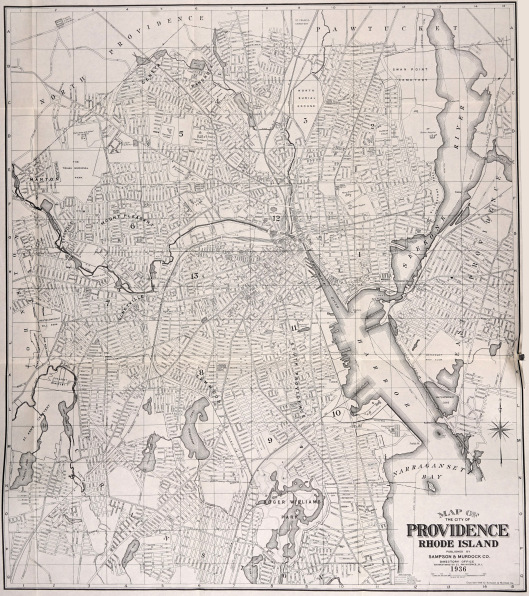
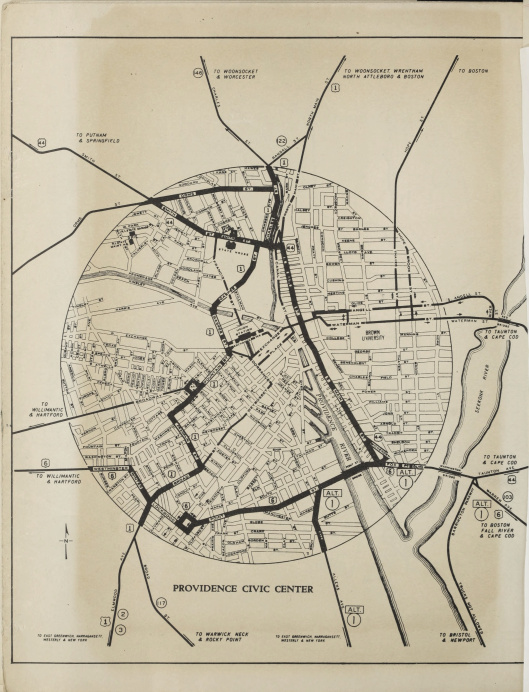
Street-maps of Providence, 1936 and c. 1940

14 Saturday Sep 2019

Posted by asdjfdlkf in Historical context, Maps

≈ Leave a comment

More maps useful to Lovecraftians…

1) A single-sheet street-map of Providence, 1936. If one squints a bit, about 70% of the street names can be made out.

2) A circa 1940 map of the central streets.

3) The Brown University campus, Providence, as it stood in 1928, including what were then the fraternity houses.

Protected: College Hill from above: bonus pictures

14 Saturday Sep 2019

Posted by asdjfdlkf in Historical context, New discoveries

≈ Enter your password to view comments.

This content is password-protected. To view it, please enter the password below.

College Hill from above

14 Saturday Sep 2019

Posted by asdjfdlkf in Historical context, New discoveries

≈ 1 Comment

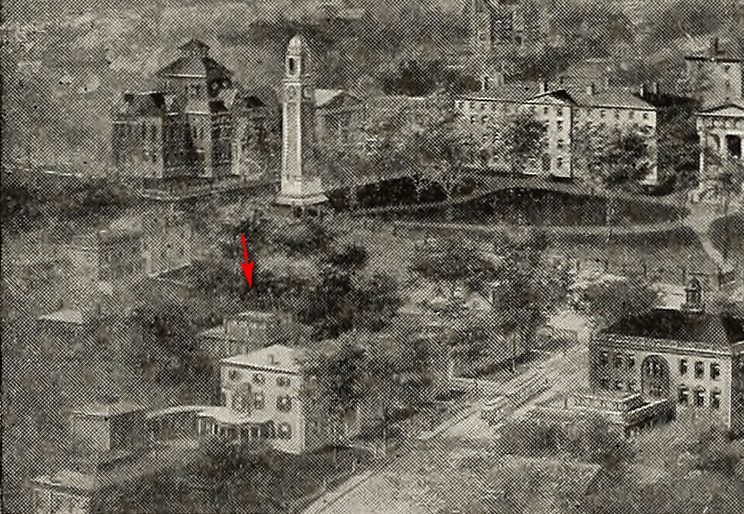
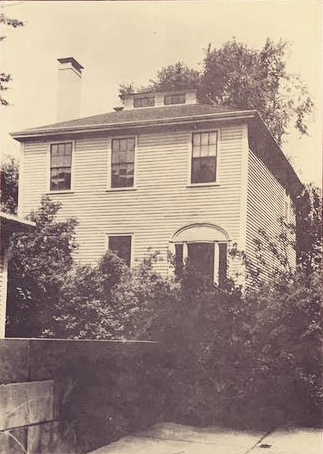
Here is a bird’s-eye engraved view of Lovecraft’s 66 College Street in 1908, before the building of the Library on the corner. From the book Memories of Brown (1909). The house is set back from College Street in a garden court.

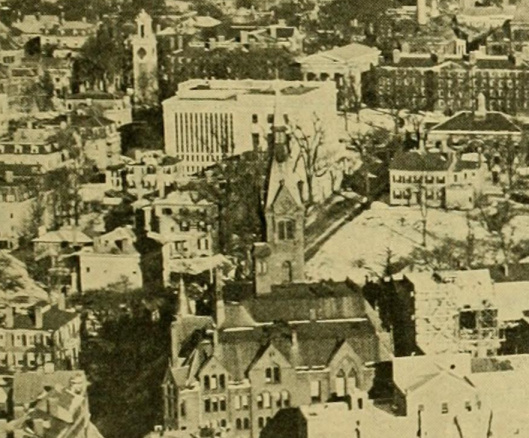
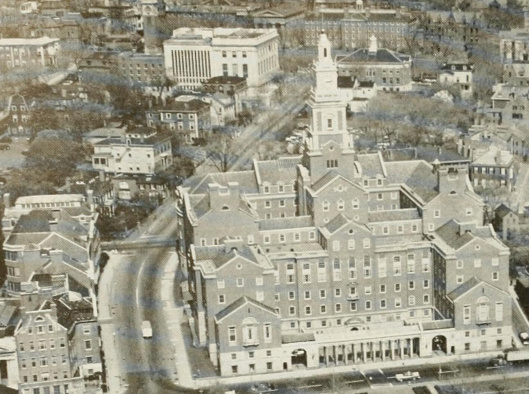
The John Hay Library is the large white squarish building see in this newly-found a view of College Hill in summer 1959. Lovecraft’s house just visible in original position next to the Library…

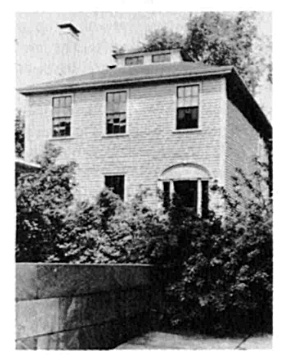
Compare with 66 College Street seen from the ground…

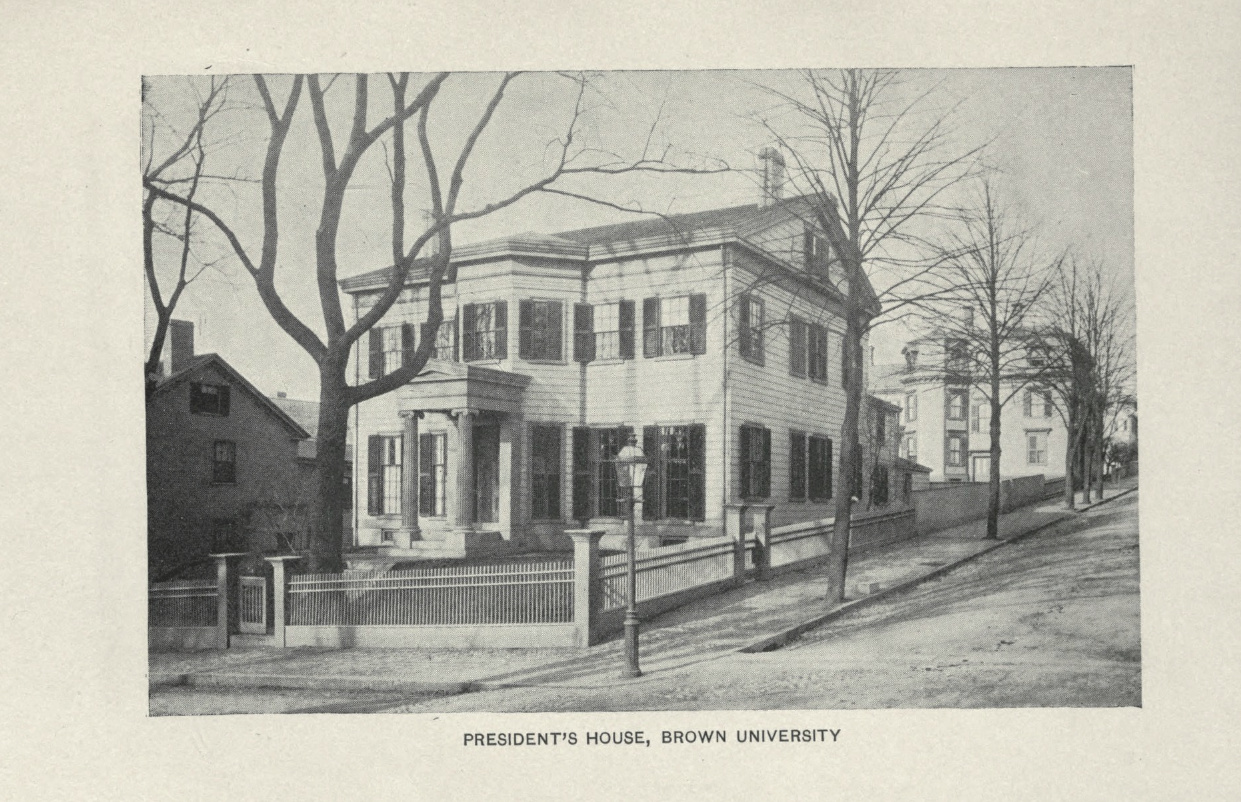
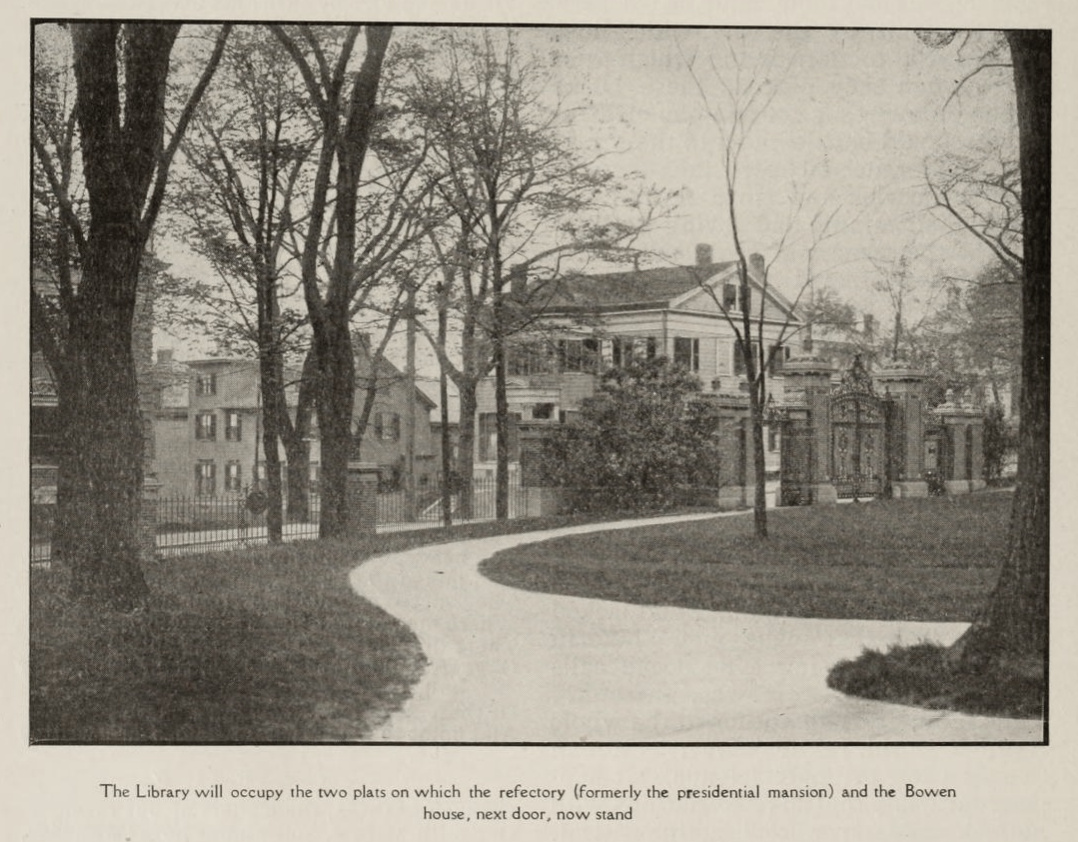
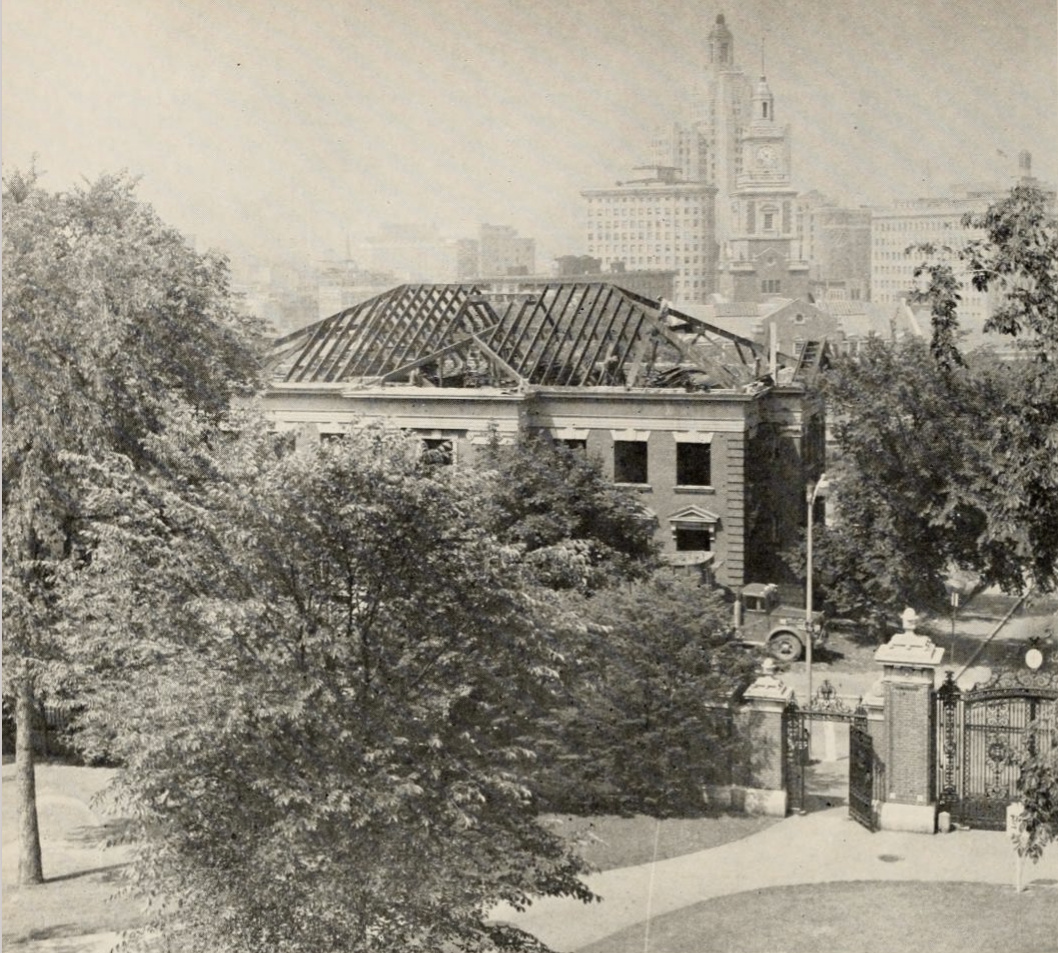
The John Hay Library would be built on the corner seen to the right of Lovecraft’s house in the 1908 picture, the Library rising where this former “President’s House” had stood…

The house next to it was also taken for the Library.


Below is the bird’s-eye scene seen the other way, looking at the vantage point from which the above 1959 telephoto picture was made. Here it’s 1962 and the building being torn down is opposite the Van Wickle gate and on the opposite corner to the John Hay Library (top of College St.).

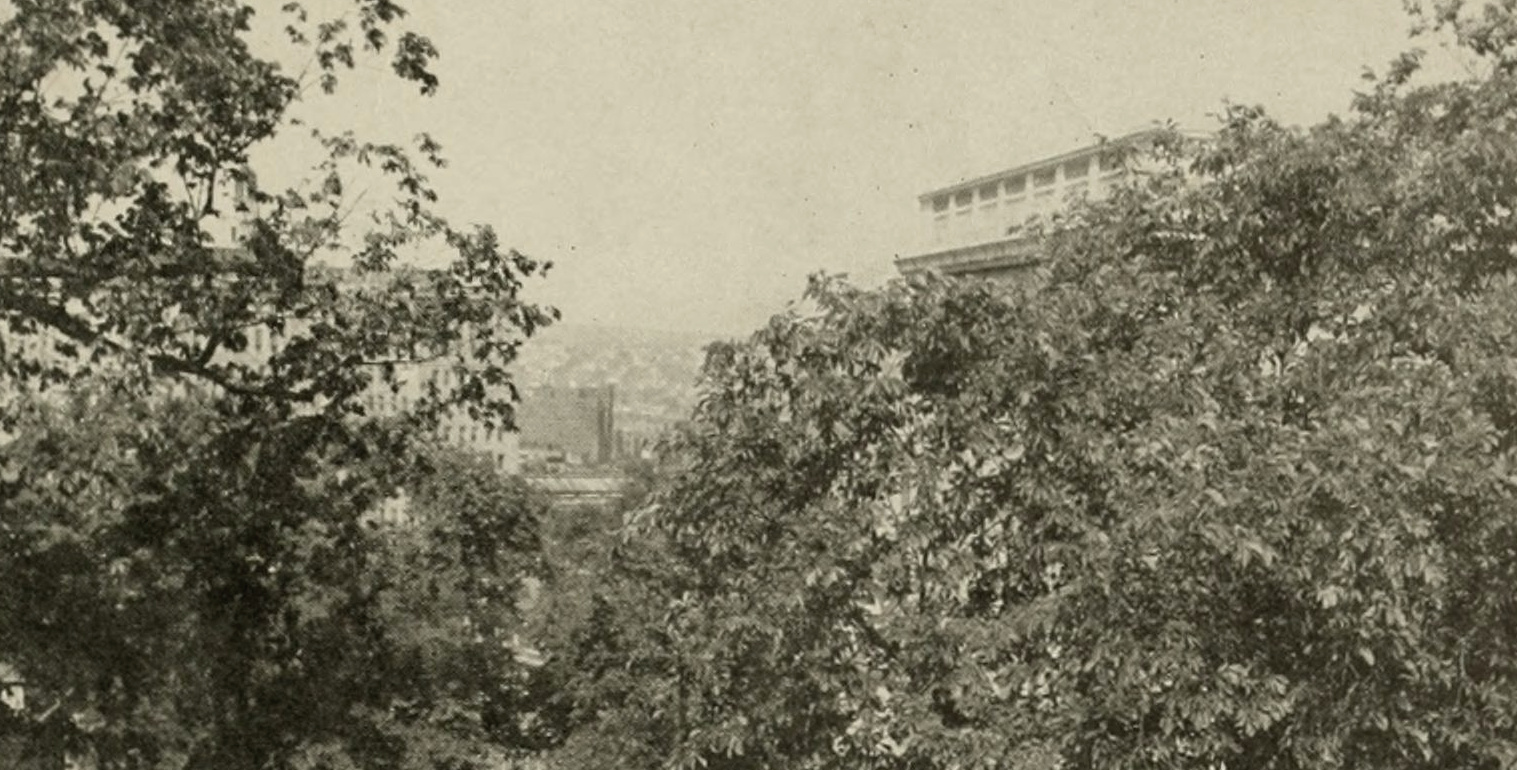
This 1946 view, looking west from a similar spot at the top of College Hill but this time looking through the elm trees, is also indicative. The roof of the John Hay Library is seen on the right of the picture, and the Industrial Trust building can just be seen in the distance on the left.

And here the Industrial Trust building (the main slim tower seen in both pictures above) looks back again, in a telephoto view down on Lovecraft’s house in late January 1929.

I’m uncertain what the two long white marks are. They may be damage, as there appears to be a patch of damage below them with a small ‘x’ on it. Update: by referencing against the 1959 picture, it can be determined that the long white streaks are very tall thin chimneys emerging from the rear section of an adjacent house.


There are also a number of bonus pictures, for my Patreon patrons, showing the site of Lovecraft’s house and garden after it was removed but before the Brown arts block was built on it.

Protected: Friday ‘Picture Postals’ from Lovecraft: College Street bonus

13 Friday Sep 2019

Posted by asdjfdlkf in Historical context, New discoveries, Picture postals

≈ Enter your password to view comments.

This content is password-protected. To view it, please enter the password below.

Friday ‘Picture Postals’ from Lovecraft: College Street

13 Friday Sep 2019

Posted by asdjfdlkf in Historical context, New discoveries, Picture postals

≈ Leave a comment

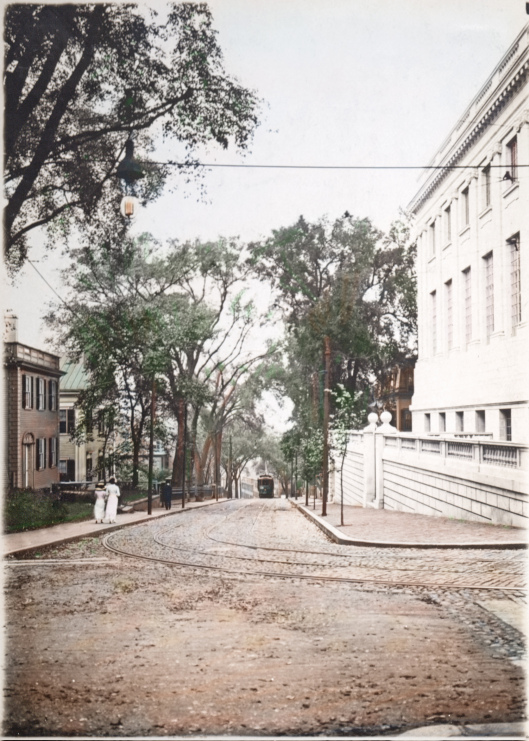
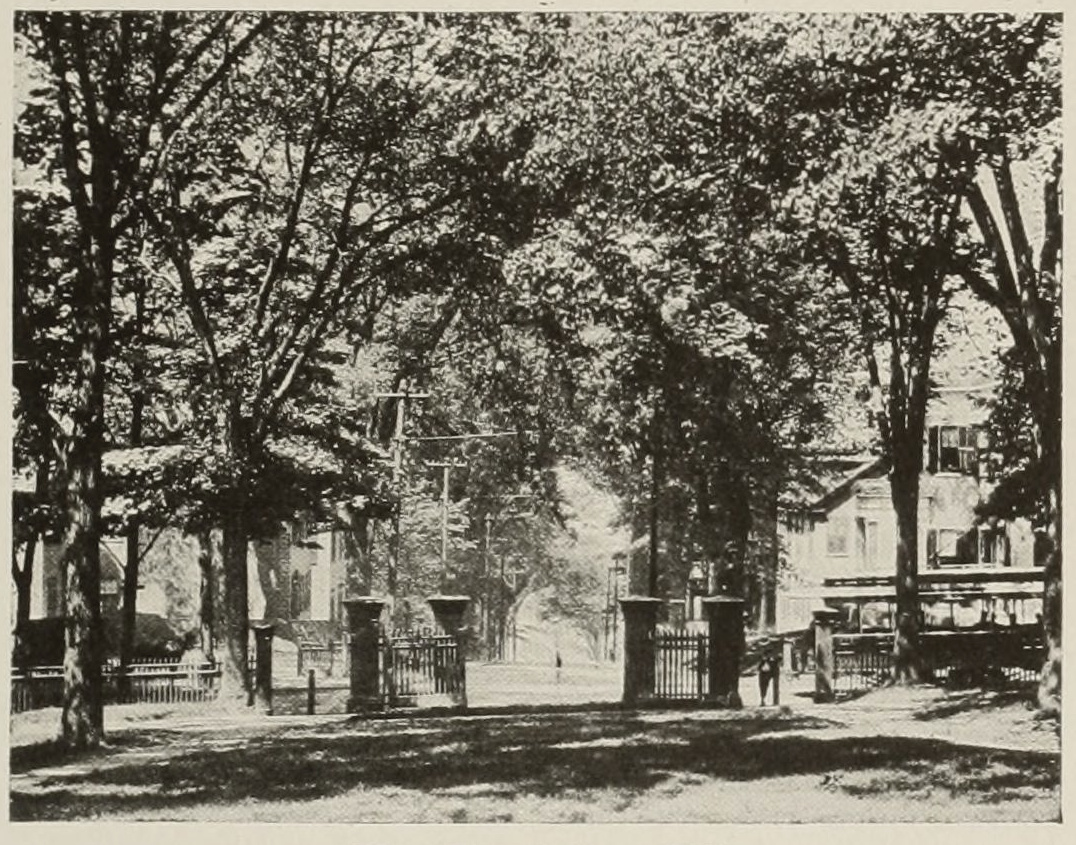
Two weeks ago, Tentaclii’s Friday ‘Picture Postal’ post was of Lovecraft’s lane-end at night, or near enough. This Friday, much the same view and direction down College Street — only this time the camera is in front of the Gates, and it’s daytime in September 1911.

The entrance to Lovecraft’s Ely’s Lane is about 20 yards away on the centre-right. Find the far corner-end of Library’s white wall and you’ve found the start of the lane. The lane then ran down behind the high wall to reach 66 College Street and its garden court. The brown house seen through the trees is the house in front of Lovecraft’s house.

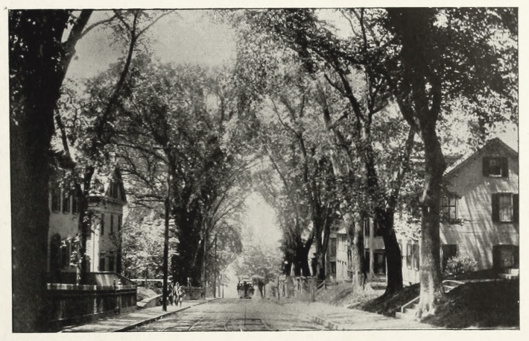
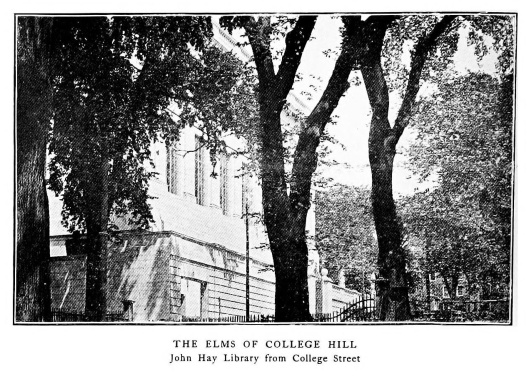
The pictures below are of the same scene prior to the building of the Library, with the street’s elm trees in their prime. The second one is behind what became the Gates. Photos such as this led to the realisation in the late 1940s that College Street’s old elms were then fading and failing. This led to a robust programme of restoration and replanting in 1949, enabled by a $2,500 gift from the class of ’24.

I’ve also made a new discovery of a picture of the same lane-end, seen below. The lane-end is seen on the far left of the picture. The cameraman was in the end house-garden opposite and a little further down the hill than the lane-end. The viewer peeps through the trees to see the rear wall of the lane at the corner of the Library.

From this vantage point and in this season one might have seen Lovecraft come walking down his shady lane in a light suit and summer straw-hat, to then turn and stroll down to the town.

Sadly the above scan is harsh and no-one has the booklet online as a better scan. The ‘ink-drawn effect’, only noticed when seen up-close, is probably an unintentional effect arising from the harsh scanning. The picture’s booklet is simply titled “Brown University” and appears to be a little campus-history guide, probably given out to visiting parents and relatives of students. It appears to be erroneously dated in its record to c. 1900, and does have a flavour of that era about it — yet the Library wall wasn’t up until 1911. Incidentally, you can tell that we’re looking at the correct side of the Library here… because we can see the two tall columns with the bobbles on top.

A further large picture has been found, that does look deeper down Lovecraft’s lane, but this is only available to my Patreon patrons.


I’ve also discovered that in 1929-30 this ‘bobble’ side entrance was… “the Alumni Office, John Hay Library (College Street entrance)” for the University. Also noted in Brown documents was the college rule that… “freshmen [at Brown] shall not walk on the south side of College street” although I don’t know if this was still observed in Lovecraft’s time. Freshmen is the American term for first-year students on a multi-year course.

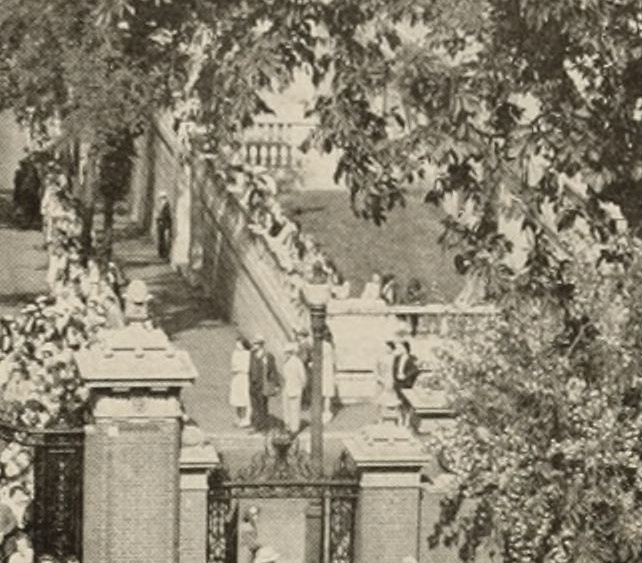
Here we see the College Street side of the John Hay Library from above the Van Winkle Gate, during a summer parade, indicating that there was a small lawn above and to one side of the Alumni office gate entrance…

By 1942 it was still a lawn, but by the 1960s the lawn had become a dense shrubbery. Presumably as part of the general and successful attempt to re-plant and re-green the street.

William Deminoff

12 Thursday Sep 2019

Posted by asdjfdlkf in Historical context, New discoveries, Scholarly works

≈ 1 Comment

One of the last to live in Lovecraft’s house at 66 College Street, before it was removed in 1959, was a Lovecraft fan writing his dissertation at Brown. William Deminoff (class of 1954) appears to have been an assistant professor at Brown in 1957 (Ken Faig Jr. found a tenancy record for that year, but not that Deminoff was a Lovecraftian) and had gone on to be active in early Lovecraft fandom. The cutting below is from March 1965. This raises the possibility that Deminoff made photographs of the house in situ in its garden court, that may still exist? The name “Deminoff” is not found in Joshi’s comprehensive bibliography, which suggests that his final dissertation was not on Lovecraft.

← Older posts
Newer posts →


Please become my patron at www.patreon.com/davehaden to help this blog survive and thrive.

Or donate via PayPal — any amount is welcome! Donations total at Easter 2025, since 2015: $390.

Archives

  • March 2026
  • February 2026
  • January 2026
  • December 2025
  • November 2025
  • October 2025
  • September 2025
  • August 2025
  • July 2025
  • June 2025
  • May 2025
  • April 2025
  • March 2025
  • February 2025
  • January 2025
  • December 2024
  • November 2024
  • October 2024
  • September 2024
  • August 2024
  • July 2024
  • June 2024
  • May 2024
  • April 2024
  • March 2024
  • February 2024
  • January 2024
  • December 2023
  • November 2023
  • October 2023
  • September 2023
  • August 2023
  • July 2023
  • June 2023
  • May 2023
  • April 2023
  • March 2023
  • February 2023
  • January 2023
  • December 2022
  • November 2022
  • October 2022
  • September 2022
  • August 2022
  • July 2022
  • June 2022
  • May 2022
  • April 2022
  • March 2022
  • February 2022
  • January 2022
  • December 2021
  • November 2021
  • October 2021
  • September 2021
  • August 2021
  • July 2021
  • June 2021
  • May 2021
  • April 2021
  • March 2021
  • February 2021
  • January 2021
  • December 2020
  • November 2020
  • October 2020
  • September 2020
  • August 2020
  • July 2020
  • June 2020
  • May 2020
  • April 2020
  • March 2020
  • February 2020
  • January 2020
  • December 2019
  • November 2019
  • October 2019
  • September 2019
  • August 2019
  • July 2019
  • June 2019
  • May 2019
  • April 2019
  • March 2019
  • February 2019
  • January 2019
  • December 2018
  • November 2018
  • October 2018
  • September 2018
  • August 2018
  • August 2015
  • July 2015
  • April 2015
  • March 2015
  • February 2015
  • January 2015
  • December 2014
  • November 2014
  • October 2014
  • September 2014
  • August 2014
  • July 2014
  • June 2014
  • May 2014
  • March 2014
  • February 2014
  • January 2014
  • December 2013
  • November 2013
  • October 2013
  • September 2013
  • August 2013
  • July 2013
  • June 2013
  • May 2013
  • April 2013
  • March 2013
  • February 2013
  • January 2013
  • December 2012
  • November 2012
  • October 2012
  • September 2012
  • August 2012
  • July 2012
  • June 2012
  • May 2012
  • April 2012
  • March 2012
  • February 2012
  • January 2012
  • December 2011
  • November 2011
  • October 2011
  • September 2011
  • August 2011
  • July 2011
  • June 2011
  • May 2011
  • April 2011
  • March 2011
  • February 2011
  • January 2011
  • December 2010
  • November 2010
  • October 2010
  • September 2010
  • August 2010
  • July 2010

Categories

  • 3D (14)
  • AI (70)
  • Astronomy (70)
  • Censorship (14)
  • de Camp (7)
  • Doyle (7)
  • Films & trailers (101)
  • Fonts (9)
  • Guest posts (2)
  • Historical context (1,096)
  • Housekeeping (91)
  • HPLinks (77)
  • Kipling (11)
  • Kittee Tuesday (92)
  • Lovecraft as character (58)
  • Lovecraftian arts (1,628)
  • Lovecraftian places (19)
  • Maps (70)
  • NecronomiCon 2013 (40)
  • NecronomiCon 2015 (22)
  • New books (966)
  • New discoveries (165)
  • Night in Providence (17)
  • Odd scratchings (984)
  • Picture postals (276)
  • Podcasts etc. (431)
  • REH (184)
  • Scholarly works (1,470)
  • Summer School (31)
  • Unnamable (87)

Get this blog in your newsreader:
 
RSS Feed — Posts
RSS Feed — Comments

H.P. Lovecraft's Poster Collection - 17 retro travel posters for $18. Print ready, and available to buy — the proceeds help to support the work of Tentaclii.

Proudly powered by WordPress Theme: Chateau by Ignacio Ricci.