• About
  • Directory
  • Free stuff
  • Lovecraft for beginners
  • My Books
  • Open Lovecraft
  • Reviews
  • Travel Posters
  • SALTES

Tentaclii

~ News & scholarship on H.P. Lovecraft

Tentaclii

Category Archives: Historical context

Tolkien and Lovecraft

27 Wednesday Oct 2021

Posted by asdjfdlkf in Historical context, Scholarly works

≈ Leave a comment

I get the vague impression, wafted to me over the luminiferous aether, that at least one Lovecraftian may be in the process of writing a comparative book about the approaches taken by Tolkien and Lovecraft. And perhaps also the ‘response to the times’. If that’s the case, knowing a bit about both authors, I’d be happy to read through a pre-publication near-final draft and provide a set of comments for the author’s use.

Epidemic Disease in Colonial Rhode Island

27 Wednesday Oct 2021

Posted by asdjfdlkf in Historical context, Scholarly works

≈ 2 Comments

Newly online, a timely and long article on “The Response to Epidemic Disease in Colonial Rhode Island”. Mostly about the early, pre-1800s history. Interesting in itself, and possibly also useful as research material / inspiration for Mythos writers.

New on Archive.org

24 Sunday Oct 2021

Posted by asdjfdlkf in Historical context, Lovecraft as character, Lovecraftian arts, Scholarly works

≈ Leave a comment

New on Archive.org, the 1943 “Fungi From Yuggoth” stencil duplicated edition. Mmmm… smell that hand-cranked duplicator fluid and fan-sweat…

Also newly arrived on Archive.org from microfilm, the Monthly Weather Review 1872-2012. Useful for U.S. researchers seeking a quick answer to “and what was the weather like when event X was happening?”. The new run of Notes and Queries 1849-2014 also looks handy.

I also spotted Jacqueline Baker’s novel The Broken Hours (2015), seemingly a creepy atmospheric haunting story set in Lovecraft’s house and late Depression-era Providence. Another one that escaped me during the blog hiatus. I guess this counts as another ‘Lovecraft as character’ work, though I’m not yet sure if he actually makes an appearance.

Arvon Ghost Reader, 1946

22 Friday Oct 2021

Posted by asdjfdlkf in Historical context

≈ Leave a comment

New to me, the Arvon Ghost Reader from 1946. This was another way to get Lovecraft’s “The Dunwich Horror”, post-war. If you hadn’t already encountered Derleth’s Armed Services edition paperback intended for the troops in Europe.

‘Picture Postals’ from Lovecraft: ‘Saturn in Nantucket’

22 Friday Oct 2021

Posted by asdjfdlkf in Astronomy, Historical context, Picture postals

≈ Leave a comment

“One of the principal features today is the Maria Mitchell Observatory in Vestal St. (formerly Goal Lane), which adjoins the birthplace of the celebrated female astronomer (professor at Vassar) whose name it bears. The observatory is modern — a memorial to Prof. Mitchell. I had a good chance to observe Saturn through its excellent 5” telescope.” (to J. Vernon Shea, 10th February 1935)

“I had an excellent view of Saturn” (to Arthur Harris, 1st September 1934)

He had once had a fever-vision of flying to Saturn…

though I often dream of things of the most bizarre and vivid sort … the only well-defined delirium I ever had was in 1903 … [I] mumbled things about flying to Mars and Saturn.

In summer 1934 the observatory’s observers (Margaret Harwood and John Heath) were noted for their work on discovering variable asteroids, and the observatory seemingly benefited from the general oversight of the Harvard College Observatory. The 1908 (“modern”, to Lovecraft’s thinking) elevation plans for the place show that the apparently twee external ‘garden house’ appearance actually hides hidden depths…

Pictures missing

Which may interest Mythos writers, as in “how far down does it go…”? Google StreetView shows the Observatory much as it was, though with side extensions. It appears to be open to interested visitors.

The resort town also has the Loines Observatory, which allows public viewing and is often confused with the Maria Mitchell Observatory, but the first dome there was not open until 1968…

“Since its establishment in 1968 and 1998, Loines Observatory’s two domes house multiple telescopes for research and public astronomical programs”.

“Our Empire’s Story, told in Pictures”

20 Wednesday Oct 2021

Posted by asdjfdlkf in Historical context, New discoveries

≈ 1 Comment

The new Arthur Harris letters (found in the new revised/expanded edition of the Lovecraft-Kleiner letters) reveal the exact details of the British historical survey books which Lovecraft so enjoyed circa the mid-1930s. He found four of this set at 10 cents each, while browsing for bargains before Christmas 1934 in the Providence branch of the Woolworth Store.

He reveals to Harris that the set was edited by one C.W. Airne, and published from Manchester by Sankey, Hudson & Co. They were thus not, as I had assumed by the description that Lovecraft gave to another correspondent, the wonderful Everyday Life / Everyday Things series by the Quennells.

With the editor’s name in hand one can thus discover that Airne edited the following series, with the overall title of “Our Empire’s Story, told in Pictures”:

1. The Story of Prehistoric & Roman Britain Told in Pictures.

2. The Story of Saxon and Norman Britain Told in Pictures.

3. Medieval Britain, Told in Pictures.

4. Tudor & Stuart, Hanoverian & Modern Britain, Told in Pictures.

5. Our Empire’s Story, Told in Pictures.

About 64 – 66 pages in each, containing “450 to 600 captioned illustrations”. Undated internally.

At Christmas 1934 Lovecraft only lacked the last in the series — “the Empire outside Britain” as he termed it — in his personal library. He tells Harris that he was striving to obtain that missing title for his set. Harris found the same set in his British Woolworth, on Lovecraft’s recommendation.

An Abe listing reveals there were also two later titles in the same series, one seemingly published during the war and thus after Lovecraft’s death:

6. Britain’s Story (to 1930’s).

7. Britain’s Story Revised (to 1943) (possibly issued 1944?).

Amazon appears to reveal a 1953 post-war addition:

8. Our Empire’s Story Told in Pictures (1953, revised)

Possibly 7. was a revised and expanded version of 6. And 8. was a post-war revision of 5.

Listed in the copy of Lovecraft’s Library I have, under “Airne” there is only Our Empire’s Story, told in Pictures, as if a single 64-page booklet. The series titles are not then sub-listed. Either Lovecraft had lent out the others in the series by 1937, or the initial cataloguer gave only the series title to save time and assumed a professional bookseller would figure out what the item was.

Variant covers on Abe and eBay show one edition with striking colour covers, possibly for the British gift market.

Though I suspect that the 10-cent Woolworths copies may well have been cheaper run-ons with lesser covers. Although it should be said that other seemingly-early-and-cheap variant covers can be found.

There is no publication-history of the series that I can find, only one blog post that hunts for racism… but the highlighted item is a page on the history of Rhodesia which fails to say anything bad about Cecil Rhodes (founder of Rhodesia).

Only one of the series is currently on Archive.org (linked above) and it seems to be quite an early edition of the first book in the series. (Update, April 2023: two more added, see links above).

I see that Airne’s similar 66-page photographic Castles of Britain is also on Archive.org, and this would have delighted Lovecraft had he seen it. Though it very regrettably omits the central Midlands. I recall from my work on Mary Howitt that the central Midlands were effectively erased (for some unknown reason) from her publisher-led project Ruined Abbeys and Castles of Great Britain (1862), and the effect may have cascaded though later books. Certainly it seems strange that the Gawain scholars so thoroughly overlooked Alton for over a century.

Airne also produced at least one other in the ‘In Pictures’ series, Animals of the World Told in Pictures.

1920s Scientific American

11 Monday Oct 2021

Posted by asdjfdlkf in Historical context

≈ Leave a comment

Early 1920s issues from the Scientific American 1845-2016 microfilm run are now starting to appear on Archive.org.

Picture Postals from Lovecraft: Purgatory

08 Friday Oct 2021

Posted by asdjfdlkf in Historical context, Picture postals

≈ Leave a comment

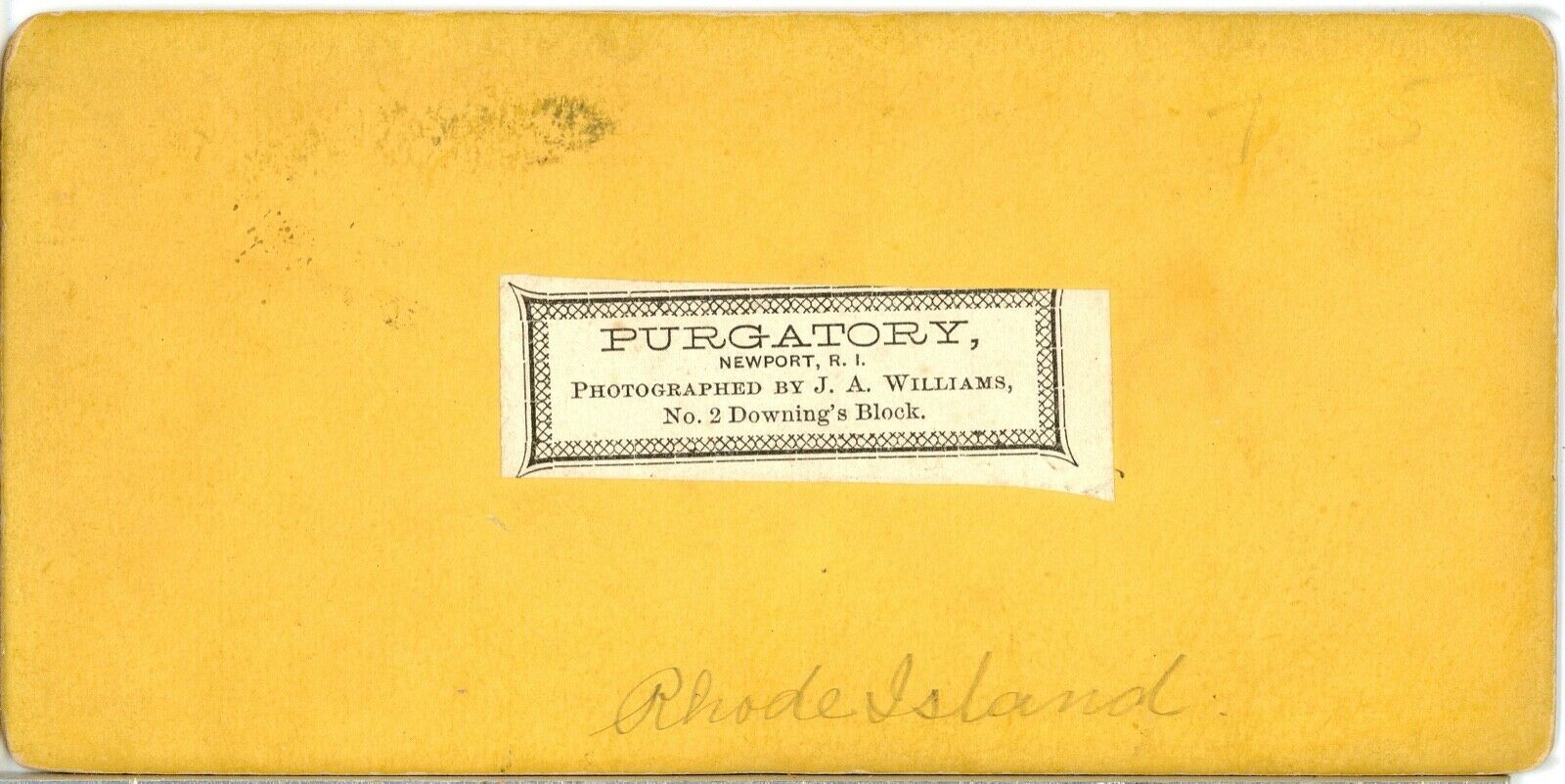
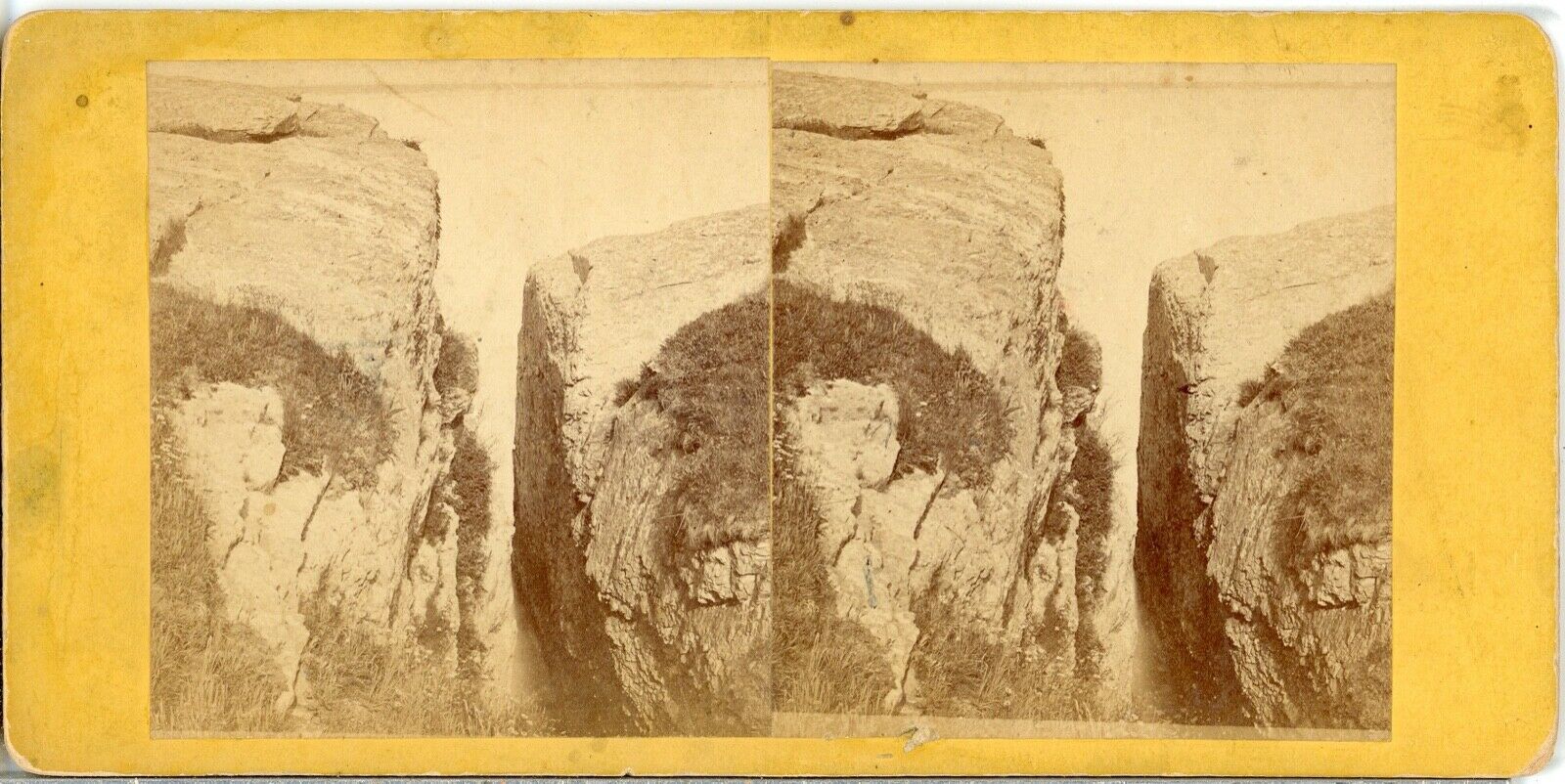
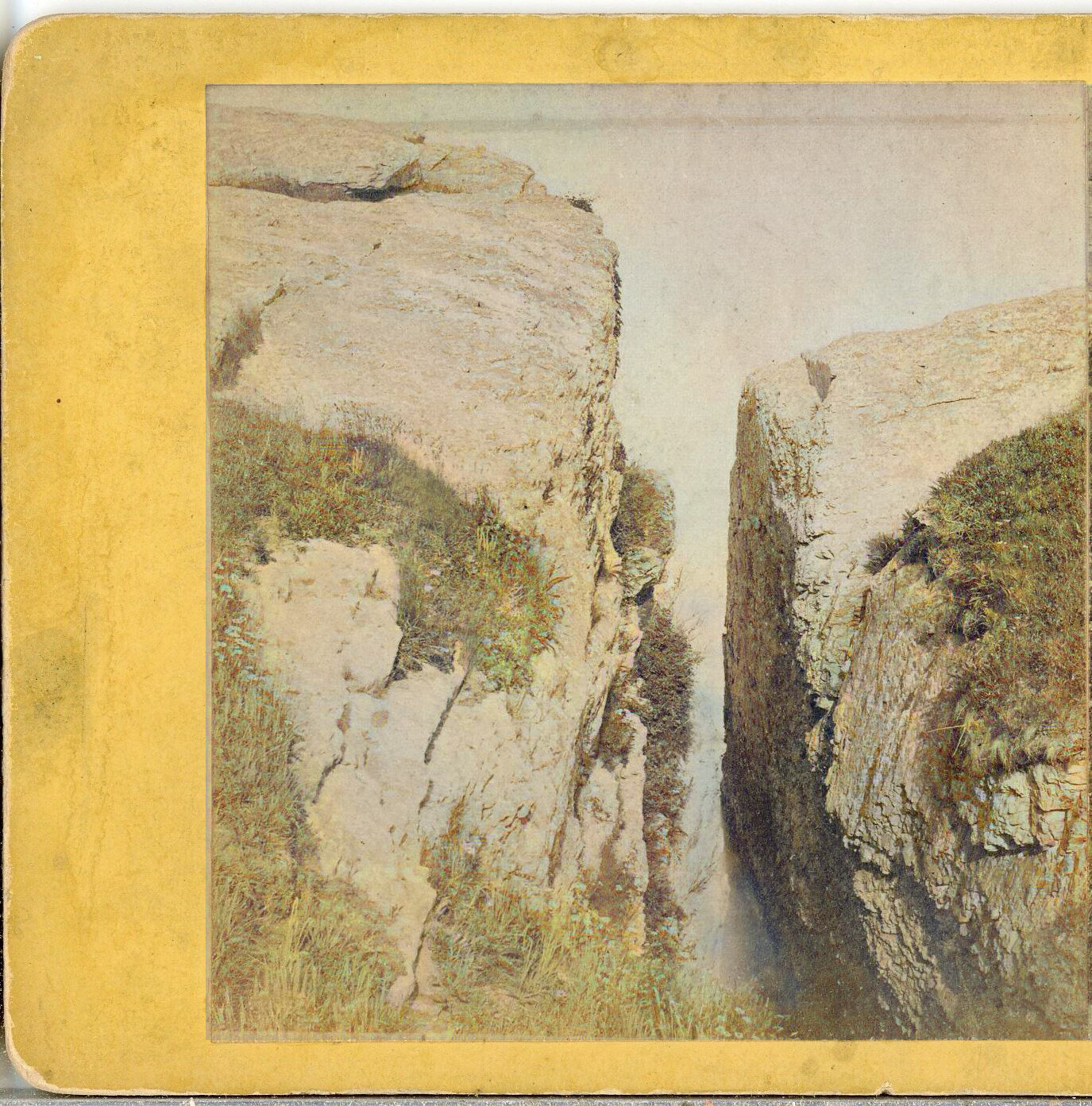
This week, one of Lovecraft’s favourite places, or rather the back of it. It was one of the last places he visited in his final summer.

Text of post lost, due to the WordPress swop-over.

‘To De Land and a little sunshine…’

04 Monday Oct 2021

Posted by asdjfdlkf in Historical context

≈ Leave a comment

The Voluminous podcast returns with “The Wind That Is in the Grass”, at 90 minutes. In which Lovecraft prepares for his epic bus journey down to Florida, to meet the fifteen year-old Robert H. Barlow for the first time. Lovecraft…

offers travel tips, thoughts on mental health, and a robust breakdown of the latest issue of Weird Tales in preparation for his trip to visit his young friend.

Judging by postcards, the commercial and traffic centre and the first view that travellers would have encountered on stepping down from the bus. Note the end of a long bus seen parked on the left, seeming to indicate a bus terminus. The picture looks like the mid/late 1930s and near enough in time to the 2nd May 1934 point when Barlow and Lovecraft first met. Lovecraft calls the place “De Land” in letters, but the 1920s newspaper title DeLand Sun News suggests it was DeLand locally. Here the picture is newly and imperfectly colourised, due to laying an older colorised postcard over the 1930s b&w, and blending for colour.

Here is the view looking in the other direction (note the same Drugs and Coca-Cola sign) in the 1940s, and the large clock again suggests a terminus.

*

Notes on Letters to Family – final instalment

02 Saturday Oct 2021

Posted by asdjfdlkf in Historical context

≈ Leave a comment

Here is the final instalment of my notes on the Letters to Family volumes.


Lovecraft states that his edition of Poe was a cheap one, until he was given a more handsome illustrated edition in the late 1920s.

For Lovecraft, in the 1920s, “my favorite Downyflake doughnuts” was the fare for breakfast and eaten with cheese. “Untouched by human hands” proclaims the marketing of the 1930s.

Gervaise Butler was “that young friend of Loveman’s” (p. 737), further confirming my idea (see my earlier post) that he was not the older dance critic of the same name. Earlier in the Letters to Family we also learn that Loveman had a string of young male proteges.

Lovecraft had acquired a book on the practice of drawing in January 1929, and wistfully still hoped he might one day improve at the art.

He was greatly impressed by “my new acquaintance Troop” (p. 744-746), but it appears this brilliant fellow (Oxford and Harvard) has not yet been identified.

In April 1929 he saw a marvellously arranged exhibition of “the strange and sinister deep-sea fishes discovered by William Beebe on his Arcturus expedition” [1925]. This might seem to contradict the recent claim that interest in deep-sea biology was effectively in abeyance from 1900-1945. In January 1934 he saw the newly opened Hall of Oceanic Life (later the Milstein Hall of Ocean Life) at the American Museum of Natural History. Science may well have been largely uninterested in deep-water biology, but celebrity explorers and the public were evidently still occasionally fascinated.

Book on William Beebe.

The Hall being refurbished, probably in the early 1950s.

Lovecraft plotted a tale for his friend Orton (pages 747, 748, 749 x 2, 752) as a way of repaying him for copious hospitality. Seemingly this was all plot, as “Orton can write the prose but has no plot ideas”, and also involved adding motivation while untangling contradictions. “Wednesday evening I spent devising a complicated plot for his coming story.” This was April 1929, and two more sessions saw the synopsis to a “tentative conclusion”. He gives no indication of the nature of the tale, and the footnotes can shine no light on its survival or folding into a later Lovecraft tale. A few weeks later, perhaps made gun-shy by intensive plotting sessions with Lovecraft, Orton teamed up with a young crank-’em-out plot-maker (who Lovecraft found rather uncouth) with the aim of targeting the “cheap magazines”.

He recalls that he saw Shakespeare’s Cymbeline at the Opera House, aged 7.

In 1929 Frank Belknap Long acquired a large “night-black were-hound” as a pet, and Lovecraft helped to walk it through the streets of New York City.

Lovecraft gives the address of his regular “Jake’s restaurant in Canal Street”, which he later describes in May 1930 as growing “rabbly” in terms of clientele, mentioning rough stevedores and trucking men who worked the dock-side. Trucking presumably means the operators of ship-unloading hand-trucks, not drivers of 18-wheelers.

Munn drove a high-explosives nitro-glycerine truck for high wages. (p. 858).

Lovecraft did actually make good on his comedy-threat to mail home a sea-horse from the aquarium (p. 800), a visit which I have a post on. Presumably it was not live, but I think it was possible to ship such things live by mail in those days.

In the Philadelphia museums he saw “a gigantic sphinx”.

In spring 1929 he was reading Time, Scribner’s, and Harper’s magazines. At the end of his life he was reading Scribner’s when he had a chance to get to the reading room of the Providence Public Library.

“West Deerfield — what visions and memories that name evokes!” (p. 807)

He read Kruch’s “work on Poe” in early summer 1929.

He recalled that 1926 was a superb year for the aurora (‘northern lights’).

He was still wearing “arrow softs” collars into early summer 1930, but found them increasingly difficult to obtain in the shops. These appear to have been a brand, with many types. Presumably he favoured their older and more conventional forms.

By summer 1930 the family’s repair-tailor appears to be a Mr. Seagrave, in Somerset St. (p. 852). Lovecraft was anticipating seeing his old Providence pal Eddy again at this point (p. 855), and also Kleiner.

He found the cinema of 1929-1930 mostly very tedious, despite the advent of the new “talking device”. Though he was impressed by the African adventure movie Trader Horn (1930) and felt “the atmosphere of cryptic Africa in every inch of it”. Still available in a fine print today. The 1975 remake was a dire quickie made with old Tarzan footage, incidentally.

He makes a lone remark, the only one that I know of, which indicates he saw the news-reels that then accompanied most cinema shows at that time. Which means he must also have seen the cartoon shorts.

He read the Montague Summers book on vampires in early June 1930. Whitehead gave him a present of Paul Morand’s book Black Magic, which was Morand’s account of his travels in Sub-Saharan Africa. Both feed into my notion that Lovecraft would have explored ideas about Africa’s Ancient Roman frontier and vampires, had he lived.

At Whitehead’s informal local boys’ club in Florida, Lovecraft read not only a now-lost ‘re-written from memory’ version of “The Cats of Ulthar” but also his “The Outsider”. The latter had appeared in the latest Weird Tales, which Whitehead presumably had mailed to him and was thus available in the house. (p. 906). Such clubs are usually split in two by age, and I would imagine the younger boys heard “The Cats of Ulthar”, while the older ones heard “The Outsider” at a later session.

Lovecraft talked of his “gold bows”, meaning his spectacles. Solid gold would presumably not cause an allergic skin reaction.

He did “quite a bit on a new story” in June 1930, but quit it when he heard of a rejection from Weird Tales editor Wright. The tale and theme are unknown.

He revisited the Cloisters in New York City, albeit in a blazing July rather than in more suitably medieval mist and fog. (p. 943). I have a long post on the Cloisters.

In July 1931 Arthur Leeds was running a Coney Island bookshop (p. 935), revealed a page later to be The Half Moon on Surf Ave., the main drag. Lovecraft purchased there a 10c copy of Beowulf in “a good school translation” and presumably later read it. Possibly the bookshop was in the lobby of The Half Moon Hotel (opened 1927) on Coney Island, later a haunt of 1930s gangsters.

He visited the Museum of Modern Art and only made the terse observation that… “The collection did not greatly impress me”. He went from there to see real gorillas and found them vastly more interesting than the MoMA, even witnessing the creatures standing and chest-drumming. Seeing them for the first time, outside of cinema newsreels, he found the species to be “a very sinister-looking customer”.

In September 1931 he managed to replace the Atlas supplement for Burritt’s Geography of the Heavens, having lost his inherited original in March 1926.

Leeds was a strong anti-communist at Christmas 1932, as he and Lovecraft did their best to persuade Long out of his communist affectations.

He read Pitkin’s History of Human Stupidity over Christmas 1932.

John H. Briss was one of Lovecraft’s correspondents (p. 960).

In January 1934 Lovecraft writes briefly of Morton’s luminous rock collection (p. 967), being rocks “which shine with strange colours”. It was located in the attic of the Patterson Museum, which Morton ran. Earlier we learn that his friend Morton also wrote weird poetry (p. 757).

He skimmed a borrowed book on Mu, probably The Lost Continent of Mu (1926).

He read a sheaf of recent unpublished stories by Arthur Leeds and gave his opinion to Leeds… “Some are really rather good” he observed in a letter. In January 1935 Leeds was working for the winter in a 4th Ave. bookstore in New York City, and there he pointed the visiting Lovecraft to a cheap copy of the old gothic horror The Monk.

By March 1936 Lovecraft was buying catnip by the box-full (p. 984), commenting on his “new box”. He habitually kept some on his person, in case he encountered a kitty that needed enticing.

Toward the end of his life he evidently took up, once again, his exploratory walks around urban Providence. For instance he encountered an abandoned dome and explored the “monstrous ruin” (p. 990). Seemingly trespassing, “I stepped inside the spectral abyss — a mere dot in the midst of utterly empty shadowy immensity.” HPL, urban explorer… before urban exploring was a thing.

He saw Peck’s Providence show at the Art Club in 1936, and recalled he had seen the earlier show in 1928 (p. 1036). I have a post on Peck.

He fondly recalled “the old Sea View line” as once marking one of the boundaries of his youthful world. (p. 1037). This was a trolley-car line operated by The Rhode Island Company. The line appears to have ended at Narragansett Pier, suggesting this was once a terminus of Lovecraft’s young world. Shipwrecks on the shingle and a fanciful water-tower could have been memorable items for a young lad.

One wonders if there were other large and whimsical creatures on the Narragansett Pier sea-front, and how Cthulhu-like they became.

‘Picture Postals’ from Lovecraft: Dana’s Bookshop

01 Friday Oct 2021

Posted by asdjfdlkf in Historical context, Picture postals

≈ Leave a comment

The card shows the old and the new Turks Head.

Just across the street from here was the Dana Bookshop. This bookshop, and possibly some lingering Lovecraft materials, was burned and flooded out just as the Lovecraft revival was getting underway. Lovecraft knew it as the “Old Corner Bookshop” (Letters to Family, p. 612), and named it such in recalling the poignant sight of his mother’s books on display and for sale in the window. Later the Dana shop took some of Lovecraft’s own Library after his death. There is no vintage photo of the shop-front that I can find, so the postcard of the adjacent Turks Head building must suffice.

Here are some reminiscences of the bookshop…

“Wonderful old things continued to vanish [from Providence in the late 1960s]. During my first few weeks at Brown. when I knew nobody, I used to walk most days at lunchtime front my office down College Hill and crossing the Providence River [by the long bridge, no longer there,] I would gawk my way down Weybosset Street. There I would have lunch at the almost deserted lunch counter of the Weybosset Market [only] a bit larger than a mom and pop store. There was sawdust on the floor: ancient fans whirred overhead. […] Dana’s, a wonderful secondhand bookstore run by a most elderly couple […] in the basement of the Wilcox Building where there was a serious fire in the early 1970s. The bookstore was technically saved. but the water damage was so extensive that Mrs. Dana was forced to dispose of her water logged stock and go out of business. Dana’s had wonderful nineteenth-century children’s books.” — Abbott Gleason, A Liberal Education.

“… the wonderful old Dana’s Book Shop which was in the financial district of Providence just across the street from the Turks Head building. I would stop there now and then on my lunch hour […] I once got treated to a ride to their store room on the 3rd or 4th floor of the ancient building they were in, and the elevator was one of the old 1910 era hydraulics with a rope running down the middle. The elevator operator would pull on the ropes, without too much effort and we would go up or down as needed. This was around 1970.” — James Pannozzi.

“The reek of wet ashes and smoke greeted us harshly as soon as we reached the canal. Crossing over, we began to feel the heat before we were able to see exactly what was burning. The closer we got, however, the more sickeningly I felt that I knew. And I wailed aloud when I saw I was right. The fire was speedily gutting part of an old business block, unbelievably right on Weybosset Street, where everything was brick and granite. Flames roared out from shattered windows, illuminating a modestly ornate 1880’s facade [of the Wilcox Building …] Under the torrential discharge of the fire hoses, the inferno was successfully contained. […] Books lay sodden and trampled all over the street and in the gutters. Dana’s, housed in the basement, must have flooded quickly under the hose-attack. A vintage copy of Alice in Wonderland, matted and splayed, was close by my feet. […] finding [Dana’s had been like finding] a bit of London, magically landed in Providence. I lived for those afternoons when I could escape here, with my two or three bucks in my pocket, and idle away the time till rush hour…” — C.A. Bourdon, Charleyville Revisited (fiction, though seemingly semi-autobiographical).

Fine Books later had an article-memoir on the store…

“The shop was on the ground floor of the building, entered from street level down a few steps. […] when the great hurricane of 1938 flooded downtown Providence it escaped, but just barely, as the floodwaters lapped at its bottom edges. The surviving stock had then been moved up to a storeroom on an upper floor [which by the 1960s had become] an enormous warehouse-like room filled with thousands of books, all neatly categorized and shelved, just as in an open bookstore. My jaw dropped at the sight – for me it was like stumbling into King Tut’s tomb, or Ali Baba’s cave. […] Sadly, the building housing Dana’s burned just a few years later and the bookstore, with nearly all of its stock, was destroyed. Ironically, the books in the ground floor shop itself didn’t burn, but were lost to water damage, once again. As for the storeroom upstairs, no mention is made of it in accounts of the fire.” — Martin J. Murphy.

The Wilcox Building is mentioned above, but a 1970s photo shows the ornamented Wilcox Building and adjacent Equitable Building…

the Equitable Building incorporates the Victorian custom of splitting the street-level tenants in half – a shop half a floor down and the principle business half a floor up. At the right is the Wilcox building.

This view must be of Weybosset because the L-shaped building having two frontages, and another source remarks on the “delightfully asymmetrical, sculpturally ornamented one on Weybosset Street”.

Given the Fine Books recollection that… “The shop was on the ground floor of the building, entered from street level down a few steps” this suggests that it could have been on the lower-ground ‘exposed basement’ floor of the Equitable Building seen here.

Yet a 1890s picture hints at a possible down-steps in the centre of the adjacent Wilcox Building…

A 1980s(?) picture of the same spot…

Then a further recollection of the Dana Bookshop places it definitely in the “basement” of the Wilcox Building…

“I discovered a used bookstore called Dana’s, in the basement of the Wilcox Building. They had children’s books from the 1800s, ones I’d only heard about reading other children’s books. Alas, before I ever had the money to make acquisitions, the Wilcox Building caught fire. Dana’s was spared the fire, but the water damage destroyed all those lovely books.” — memories of the 1960s in Providence, by Linda M. Young.

The Antiquarian Bookman journal for summer 1966 gives its address as “Dana’s Old Corner Book Shop, 44½ Weybosset St.” And indeed on Google Streetview this address takes one to the expected place, with “44” seen painted on the shopfront window-glass…

Thus the top two floors of the Wilcox Building are the resting (and burning) place of the last of Lovecraft’s library.


The city’s preservationists recorded the Wilcox Building’s neo-Gothic frontage in a detailed description in 1969, shortly before the fire…

“The Wilcox Building, designed by Edwin O. Howland, dates from 1875. It is one of the city’s first office buildings in the polychromatic High Victorian Gothic style. This L-shaped structure, built around the Equitable Building, has facades on Weybosset and Custom House Streets. The brick facades are trimmed with stone and their regular fenestration serves as a pattern from which a complex decorative scheme is elaborated. The ground floor of the Weybosset Street elevation is arcaded; the voussoirs of its segmental arches are alternate-blocks of pudding stone and grey granite. The capitals of the piers and polished granite columns are richly carved with foliage, flowers and birds. More abstract motifs embellish the stone belt courses and fancifully-shaped window caps of the upper stories. The Weybosset Street facade is accented by a slight projection of the two right hand window bays, terminated by a fake gable rising above the otherwise flat roofline. “The Wilcox Building” is inscribed above the third-story windows of this tower-like projection.”

New book: The Recognition of H.P. Lovecraft

30 Thursday Sep 2021

Posted by asdjfdlkf in Historical context, New books, Scholarly works

≈ Leave a comment

S.T. Joshi’s blog has updated. The main good news is his new history book which surveys Lovecraft’s 1938-1988 period…

The Recognition of H.P. Lovecraft should appear within a few weeks, enhanced by a fine cover design by Jason Van Hollander.

Google Books suggest the full title is to be The Recognition of H. P. Lovecraft: His Rise from Obscurity to World Renown, but can as yet provide no table-of-contents or cover.

Among other items Joshi notes is the arrival of the new expanded Samuel Loveman collection Out of the Immortal Night (original book was 2004), and the slight delaying of the expected premiere of the new Lovecraft documentary. It has originally been mooted for the Lovecraft Film Festival, but is now to be shown via streaming only and “occurring a week after” the Festival.

← Older posts
Newer posts →


Please become my patron at www.patreon.com/davehaden to help this blog survive and thrive.

Or donate via PayPal — any amount is welcome! Donations total at Easter 2025, since 2015: $390.

Archives

  • March 2026
  • February 2026
  • January 2026
  • December 2025
  • November 2025
  • October 2025
  • September 2025
  • August 2025
  • July 2025
  • June 2025
  • May 2025
  • April 2025
  • March 2025
  • February 2025
  • January 2025
  • December 2024
  • November 2024
  • October 2024
  • September 2024
  • August 2024
  • July 2024
  • June 2024
  • May 2024
  • April 2024
  • March 2024
  • February 2024
  • January 2024
  • December 2023
  • November 2023
  • October 2023
  • September 2023
  • August 2023
  • July 2023
  • June 2023
  • May 2023
  • April 2023
  • March 2023
  • February 2023
  • January 2023
  • December 2022
  • November 2022
  • October 2022
  • September 2022
  • August 2022
  • July 2022
  • June 2022
  • May 2022
  • April 2022
  • March 2022
  • February 2022
  • January 2022
  • December 2021
  • November 2021
  • October 2021
  • September 2021
  • August 2021
  • July 2021
  • June 2021
  • May 2021
  • April 2021
  • March 2021
  • February 2021
  • January 2021
  • December 2020
  • November 2020
  • October 2020
  • September 2020
  • August 2020
  • July 2020
  • June 2020
  • May 2020
  • April 2020
  • March 2020
  • February 2020
  • January 2020
  • December 2019
  • November 2019
  • October 2019
  • September 2019
  • August 2019
  • July 2019
  • June 2019
  • May 2019
  • April 2019
  • March 2019
  • February 2019
  • January 2019
  • December 2018
  • November 2018
  • October 2018
  • September 2018
  • August 2018
  • August 2015
  • July 2015
  • April 2015
  • March 2015
  • February 2015
  • January 2015
  • December 2014
  • November 2014
  • October 2014
  • September 2014
  • August 2014
  • July 2014
  • June 2014
  • May 2014
  • March 2014
  • February 2014
  • January 2014
  • December 2013
  • November 2013
  • October 2013
  • September 2013
  • August 2013
  • July 2013
  • June 2013
  • May 2013
  • April 2013
  • March 2013
  • February 2013
  • January 2013
  • December 2012
  • November 2012
  • October 2012
  • September 2012
  • August 2012
  • July 2012
  • June 2012
  • May 2012
  • April 2012
  • March 2012
  • February 2012
  • January 2012
  • December 2011
  • November 2011
  • October 2011
  • September 2011
  • August 2011
  • July 2011
  • June 2011
  • May 2011
  • April 2011
  • March 2011
  • February 2011
  • January 2011
  • December 2010
  • November 2010
  • October 2010
  • September 2010
  • August 2010
  • July 2010

Categories

  • 3D (14)
  • AI (70)
  • Astronomy (70)
  • Censorship (14)
  • de Camp (7)
  • Doyle (7)
  • Films & trailers (101)
  • Fonts (9)
  • Guest posts (2)
  • Historical context (1,095)
  • Housekeeping (91)
  • HPLinks (76)
  • Kipling (11)
  • Kittee Tuesday (92)
  • Lovecraft as character (58)
  • Lovecraftian arts (1,628)
  • Lovecraftian places (19)
  • Maps (70)
  • NecronomiCon 2013 (40)
  • NecronomiCon 2015 (22)
  • New books (966)
  • New discoveries (165)
  • Night in Providence (17)
  • Odd scratchings (984)
  • Picture postals (276)
  • Podcasts etc. (431)
  • REH (184)
  • Scholarly works (1,469)
  • Summer School (31)
  • Unnamable (87)

Get this blog in your newsreader:
 
RSS Feed — Posts
RSS Feed — Comments

H.P. Lovecraft's Poster Collection - 17 retro travel posters for $18. Print ready, and available to buy — the proceeds help to support the work of Tentaclii.

Proudly powered by WordPress Theme: Chateau by Ignacio Ricci.