• About
  • Directory
  • Free stuff
  • Lovecraft for beginners
  • My Books
  • Open Lovecraft
  • Reviews
  • Travel Posters
  • SALTES

Tentaclii

~ News & scholarship on H.P. Lovecraft

Tentaclii

Category Archives: Historical context

Notes on the Galpin letters – part three

17 Sunday Apr 2022

Posted by asdjfdlkf in Astronomy, Historical context, Odd scratchings

≈ 1 Comment

Part three of four, of a few notes on the new expanded edition of the Galpin letters:

* Lovecraft’s childhood barn was “razed” in 1931 (p. 272) having become rotten and fungus ridden. He puts an age-date on the period in which it formed his playhouse, age 10. Which puts the disposal of the carriage-horses at or before 1900. (p. 272).

* The 1932 eclipse of the sun is described in detail on page 274, with some comparative reference to the eclipse of 1925.

* He cogently summarises his attitude to emotions and his ‘what the heck’ approach, in paragraphs at the foot of pages 278 and 279.

* He notes the “mild winters” in 1932/32 (p. 283), 1932/33 (p. 288), at a time when he had not yet moved into 66 College Street. The move to the new house may well have saved his life, since 1933/34 was a very cold winter and was sometimes at “seventeen below” zero (p. 305). But by then he thankfully had the 24-hour steam-heat from the neighbouring Library boiler. At No. 66 he also enjoyed the “symphony of chimes” from the various nearby clock and church towers (p. 291).

* Lovecraft found a “surprisingly vast audience” attendant on a public visit to Brown by the T.S. Eliot to Providence. He notes that Eliot was newly British Royalist / Anglo-Catholic.

* At the end of March 1933 he was about to launch into the revision of an 88,000 word novel, which it appears he completed and for which he was paid $100. “This novel has not been identified” says a footnote.

* He notes various Cleveland locations in August 1922. More on those, with new pictures, in a near-future ‘Picture Postals’ post at Tentaclii.

* He tells Galpin in 1933 that he had twice been mistaken by Canadian strangers as a British man (p. 296). The non-French Canadians presumably being, at that time, more familiar with the British upper-class accent than today.

* He talks of a booklet issued by the city “school department” circa 1933, which presumably formed a guide to College Hill. Since he was pleased that the bird’s eye view on the cover showed #66 and its garden court. (p. 300) Elsewhere he talks of the magnifying glass he used to closely scrutinise such things, and also picture postcards and photographs.

* He gives a long synopsis of a never-written story of his, in a lengthy paragraph (p. 303, also footnote on p. 305 which references Commonplace Book #157). This would have been about the animated ‘Kirby krackle’ that happens behind the eyes when they are tightly scrunched shut.

“It would amuse me if some writer were to build upon my work & achieve a fabric infinitely surpassing the original!” (p. 301). Indeed.

* He did extensive research on the topography and sights of Paris in early 1933, as he had earlier done for olde London (p. 304).

* Belknap Long was a strongly doctrinaire communist by June 1934, but by October had learned to tone it down a bit when writing to Lovecraft (p. 312, p. 322).

* “Had an interesting view of Peltier’s Comet…” late in his life at Ladd. He then still had his own “small glass” [i.e. his telescope], but evidently he has not set it up on the monitor roof at No. 66. He had a fine westward view, and even a door onto the roof. But the general view of the northern sky had an “obstructed nature” as he put it (p. 336).

* Galpin’s lost novel is named, being Murder in Monparnasse (p. 336).

* The de Castro letters are at the end of the book of Galpin letters. Spurred by de Castro’s wayward pursuit of various New Testament figures via ancient Gaul, Lovecraft engages in discussion about the historicity of Christ and the value of Christianity in the modern world (pp. 366-367).

* He recalls he read a biography of Baudelaire circa 1922. The book’s notes suggest there were then two good choices for such (p. 375).

* His phone number at No. 66 was Providence 2044. Which is the title of a future Lovecraftian sci-fi graphic novel, if ever I heard one (p. 375).

* Despite Lovecraft’s reputation for being supposedly unreadable, a Galpin review hails his style in “Arthur Jermyn” story and the Dreamlands tales… “He certainly excels Lord Dunsany in the directness of narration” and has a “beauty of style” (p. 426).

Brooklyn Botanic Garden Record

13 Wednesday Apr 2022

Posted by asdjfdlkf in Historical context

≈ Leave a comment

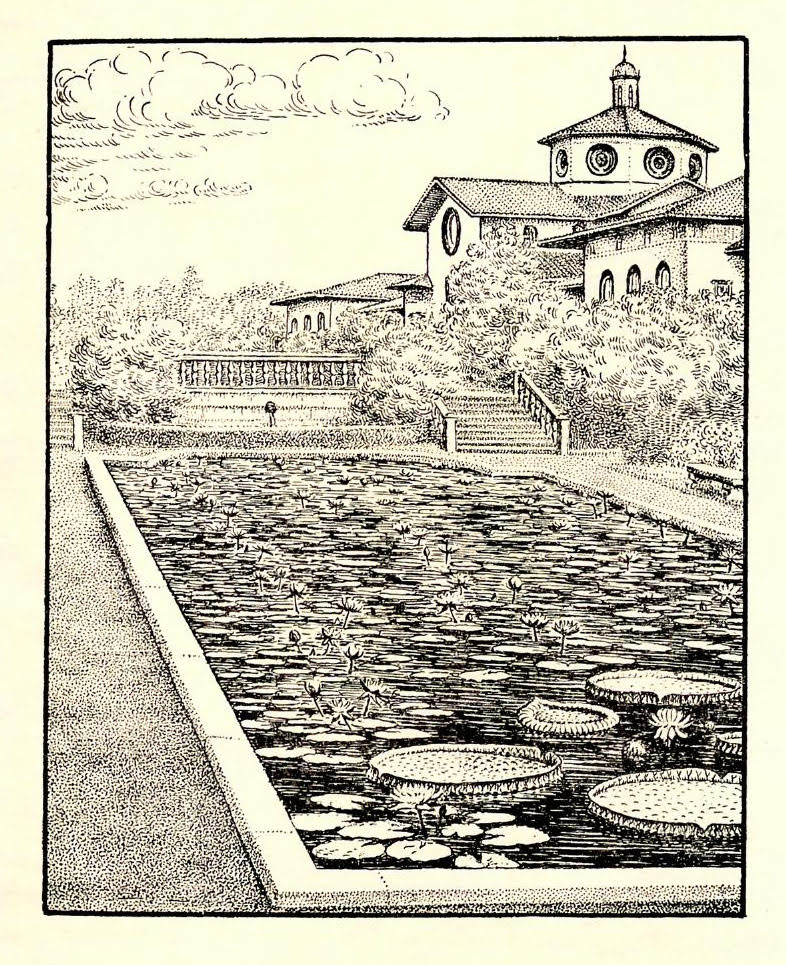
Further to my recent post on Lovecraft favourite New York garden, the Brooklyn Botanic Garden Record archives are now online 1912-1944, and may have pictures. I haven’t had time to look, as yet. The Gardens included Lovecraft’s cherished Japan-inspired public gardens.

Most of these are on the Internet Archive, which should mean the pictures have been auto-extracted and placed on Flickr. Only… Flickr has just cancelled and deleted the Internet Archive’s public-domain illustrations channel. Durn.

Update: Yes, there are pictures. The Record archive is also available over on the BHL, but although the scans are larger there the bad contrast is the same. The Gardens website has a few of the same Record pictures online from glass plate scans, but at a uselessly tiny size.

‘Picture Postals’ from Lovecraft: the foot of College Street

08 Friday Apr 2022

Posted by asdjfdlkf in Historical context, Picture postals

≈ Leave a comment

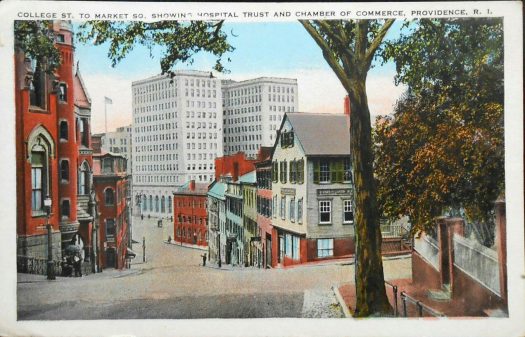
This week’s ‘Picture Postal’ shows the foot of College Street. This circa early 1920s card was about as close as one might have got, before now, on a postcard…

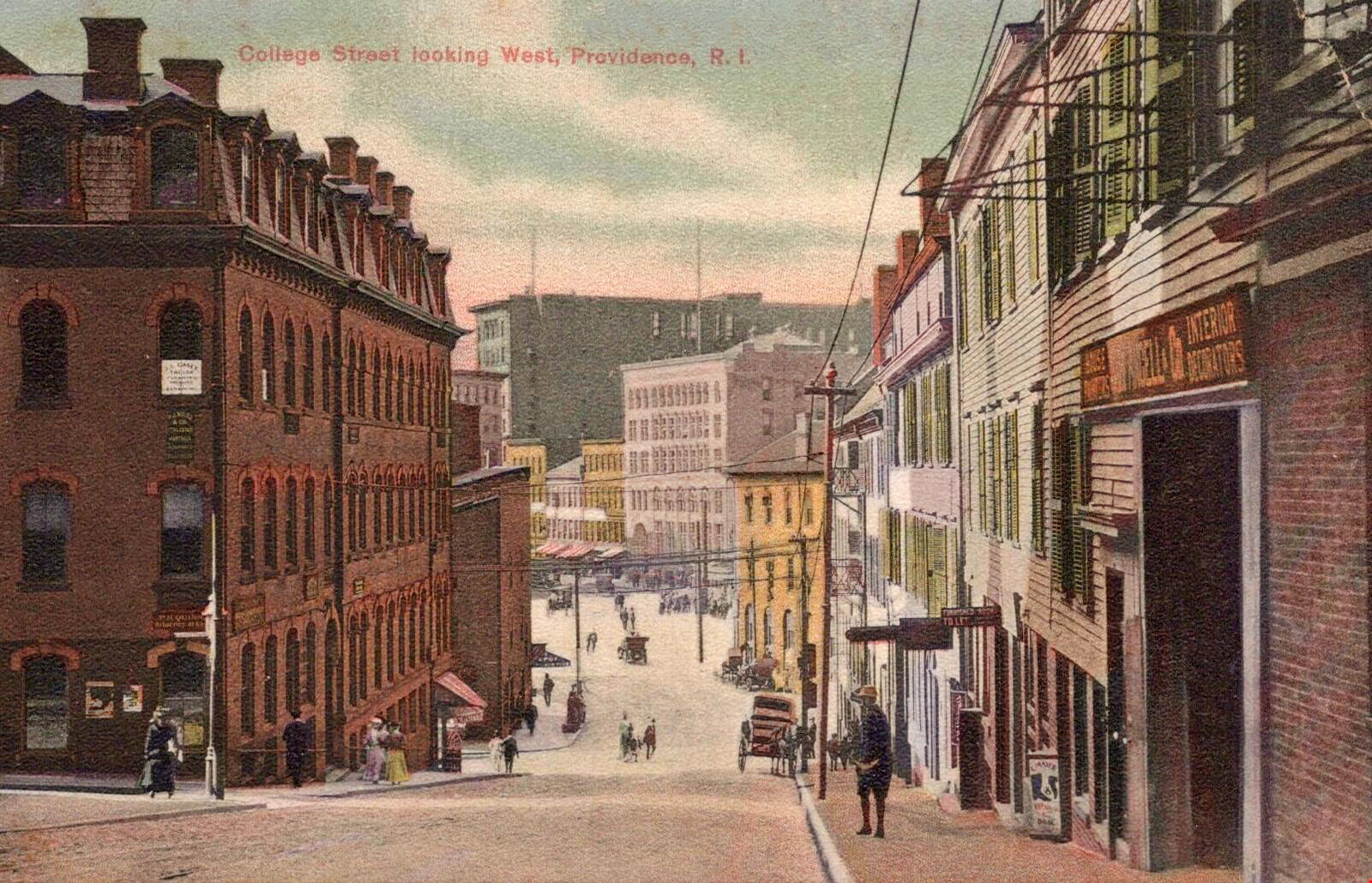
However a new card has surfaced, seen below. This zooms the viewer closer in.

It seems to be circa 1905, which means that Lovecraft was then aged 15. About the same age as a lad looking back at the camera. The lad was likely a resident, since the convention was than the residents went up and down the street on his side. The opposite side was for the use of Brown university students and staff. We see an Interior Decorator’s yard being advertised as available on stepping through the painters-wagon entrance. But presumably Lovecraft had no need of either an interior decorator or spurs, so may never have stepped inside. A sign suggests the boot-maker there would still have been happy to fit riding-boots with spurs, had a man been heading out to the Wild West or Canada. Sundry other practical trades doubtless carried on here. One sign advertises time-worn ‘furnished rooms to let’ at the back. The Colonial archway / horse-yard entrance is actually further down, and appears to be the dark area just to the right of the boy.

On the opposite side of the street one can glimpse signs for a lawyer and a tailor, and what might be a ‘Fruits’ shop on the bottom corner. Which would make sense, as the city’s weekly fruit market was held just around the corner. A fruit or two might be useful while climbing the steep hill. Note the hand-rail on that side, which at first I thought might be damage on the picture. In the following picture the same view is seen after the changes had swept away the old traders and yards and rented rooms.

A gleaming and recognisably modern American city has emerged from the horse-spur and paint-your-wagon days that had evidently still lingered in Lovecraft’s time. The Industrial Trust skyscraper building now rears it winking head. Actually Lovecraft didn’t mind the Trust Building too much, and he was also sanguine about the loss of the foot of College Street, as I’ve noted here before.

That side of the street was replaced by the castle-like new School of Design extension, which at least had its archway in about the same position and style as the old colonial one. Here we look up College Street, rather than down.

Q: Did HPL ever visit the Brooklyn Museum?

02 Saturday Apr 2022

Posted by asdjfdlkf in Historical context

≈ Leave a comment

One of my Patreon patrons, J. Miller, asks:

Did HPL ever visit the Brooklyn Museum? What did he like to see there? I may go next week, so I’m seeking tips.

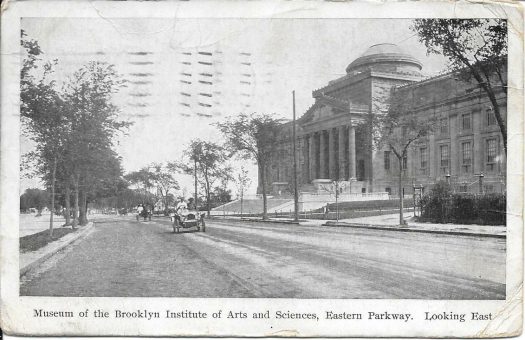
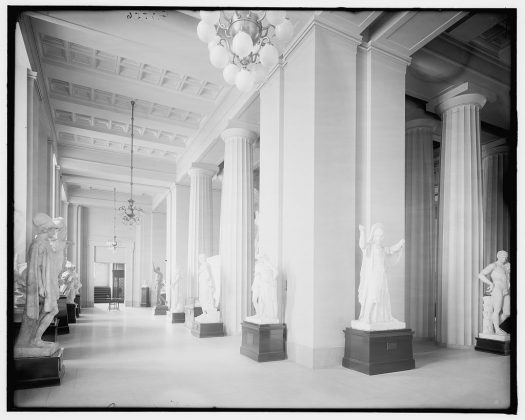
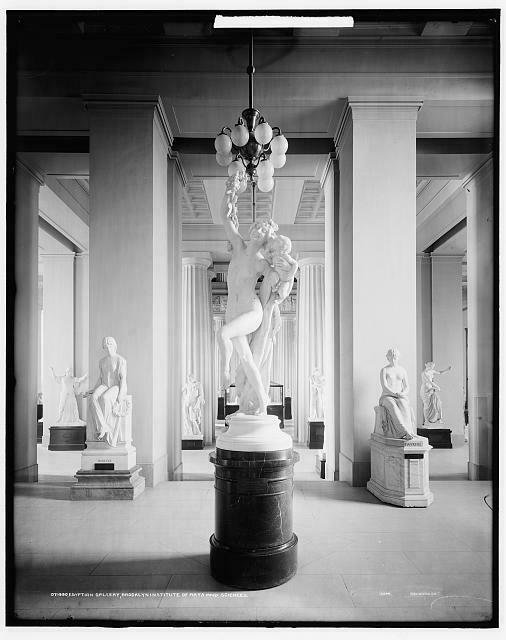
Yes, he did see the Museum, which was also once known as the Brooklyn Institute. He first saw it in 1922, as a ‘visiting NYC’ tourist in the company of “Morton, Kleiner, Belnap” (see Letters from New York). A big attraction of the place was the cost. Entry was free on most days, and the place was also open into the evening on Thursdays. This is how it would have looked from the “crossing the street” view.

This first visit seems to have been a brisk look at the ‘highlights’. Since we know that then ‘did it’ more systematically and thoroughly later in the same year (see Letters to Family). I think we can assume the fine sculpture from antiquity would have been enjoyed, and would have reminded him of the sculpture hall in Providence in which he had lingered as a lad.

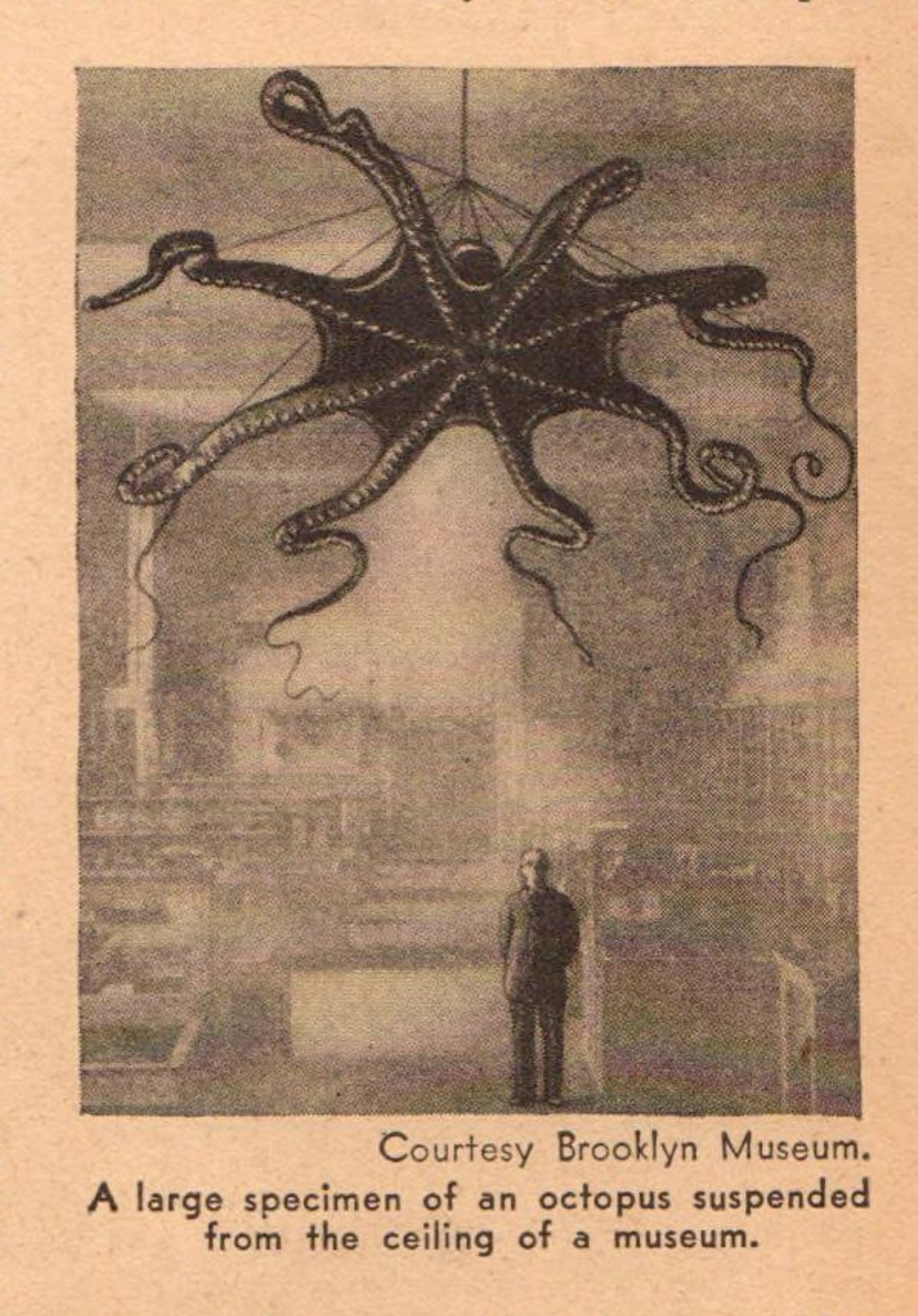
But there was also the Invertebrates Hall and Insect Hall in the eastern galleries, on the “second floor” until 1927. There he may well have seen the hanging giant octopus, which is known to have been there and accompanied by a giant squid, pre-Cthulhu.

I had better pictures than this, but sadly they’ve been lost. I’m not sure if this is still there to be seen today. A catalogue search for “octopus” did not reveal it, though perhaps the natural history section (if it still exists there) has another catalogue? This same Hall also had… “The marine animals of the coast of Long Island and New England, from high tide to a depth of 7,200 feet” as a long cased display. It’s possible he missed these sea-creatures on the first visit, but must surely have seen them on the second.

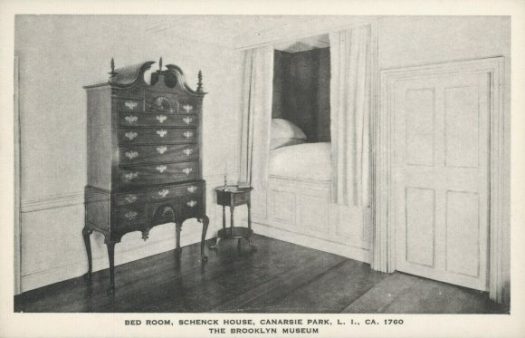
Lovecraft ‘did’ the Museum again solo in May 1930, seeing the new ‘Colonial furniture and interiors’ wing which was then newly offering complete rooms arranged for his antiquarian delight.

In 1933 he “…did the Brooklyn Museum with Sonny” (Lovecraft letter to Morton, 12th January 1933) when they focused on the “Dutch” section. I would suspect that this section may also have been new and have featured old Dutch furniture and interiors, but I suppose it may also have been flanked by rooms with other Dutch items such as paintings.

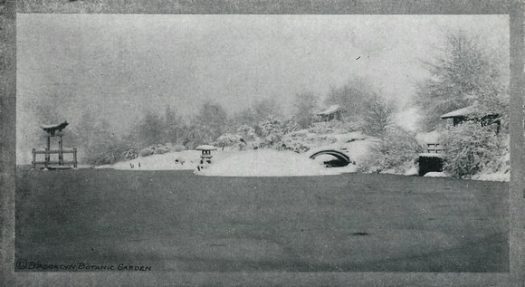
Equally important to Lovecraft was… “my erstwhile favourite Japanese Garden beside the Brooklyn Museum” which had been designed in 1914/15 by the young self-taught Takeo Shiota. This was likewise free, and Shiota’s initial hill and pond planting was after a decade maturing nicely by the mid 1920s. His planting was also being sensitively added to. Lovecraft found the place “always lovely”, whatever the season. This garden now appears to be part of the Brooklyn Botanic Garden, and may no longer be free (at a guess). Here we see it under one of the heavy snowstorms of New York City, possibly even the very same “worst in living memory” snowstorm that Lovecraft very narrowly missed when he moved into Red Hook…

There was also evidently once a pleasant sunset walk to be had after the Museum had closed, and if the leaves were off the trees. In early November 1924 he and Loveman walked at sunset from the Brooklyn Museum to Brooklyn Heights, to call on the poet Hart Crane…

The walk was very lovely — downhill from the heights on which the Brooklyn Museum stands, & with many sunset vistas of old houses and far spires. We reached the heights in the deep twilight…” (Letters from New York, p. 82)

At first glance then, the ‘Lovecraft’ version of the museum would be:

Egyptian and Roman antiquities and statuary.
British historical items, non-ecclesiastical.
Long Island and New England natural history, inc. toads, coastal marine animals,
deep sea-horrors, giant octopus.
Any colonial portraits, New England landscape painting especially Providence.
Any colonial / old Dutch rooms, doorways.
The Japanese Garden.

1st April 2022 posting

01 Friday Apr 2022

Posted by asdjfdlkf in Historical context, Housekeeping

≈ Leave a comment

An archival screenshot of the April Fools Day post for 2022.

Notes on the Galpin Letters – part two

28 Monday Mar 2022

Posted by asdjfdlkf in Historical context

≈ Leave a comment

I’m now further into reading the Gaplin letters, in the new expanded volume. Here is my second batch of notes.

* In early 1917 Lovecraft states that he likes the travel films of Burton Holmes (p. 176), seen at the Strand in Providence. Homes shot artful travel documentaries on 35mm, and appears to have made about thirty shorts a year. Here is a small selection of his travel films which could have been seen around this time, fronting the main movie…

1916:

The Cliff Dwellers Of America.
Among the Head Hunters.
Picturesque Prague.
Motoring In England.
British Egypt.
The Real Streets Of Cairo.
The Lower Nile.
Thee Upper Nile.

1917:

Quaint Quebec.
On the Great Glacier.
Fruitful Florida.
Kyoto, the Ancient Capital.

1918:

Fire Walkers Of Bega.

Some readers may also be interested in his 1947 “Historic New England” colour documentary, 21 minutes, if it survives.

* When Lovecraft registered for military duty he gave his occupation as “writer”. He tells Galpin that he was reassured that he might therefore still be of use… even if he failed the physical. (p. 182)

* He assumed he had read all of Sherlock Holmes by 1918, but a footnote itemises what he had read by 1927: three collections (Adventures, Memoirs, Return), three novels (Scarlet, Four, Hound) and two unnamed “mediocre” stories appearing circa 1908. I assume these were the 1908 tales “The Adventure of Wisteria Lodge” and “The Adventure of the Bruce-Partington Plans”. This shows he would have been up-to-date to summer 1908, but after that lost touch. He would have missed the rest of the tales included in the book collections His Last Bow (1917) and all of the tales in The Case-Book of Sherlock Holmes (1927). Thus it would be a mistake for scholars to assume Lovecraft had read… “The Adventure of the Devil’s Foot”; “The Valley of Fear”; “The Adventure of the Sussex Vampire” or any other of the Case-Book tales. A pity, as if he’d have stuck with Holmes just a bit longer he would likely have enjoyed “The Adventure of the Devil’s Foot” with its macabre plot and Cornwall/Africa combination.

* He owned all of Prof. Appleton’s chemistry instruction books (p. 211) as a boy. Relevant to his later work because of how the pictures line up so nicely with the themes of his later stories.

* “I tried to write a comic opera when about ten years old” (p. 214).

* He mentions the “Spanish Influenza” explicitly (p. 216). He realises around 18th November 1918, that… “This influenza is nothing light”, which seems a bit of an understatement and perhaps suggest he was behind with his reading of the newspapers. Statistics show that peak deaths in Providence occurred 13th- 14th October, and Boston had seen 3,700 deaths by the 16th October 1918.

* He had seen and strongly approved of the movie Hearts of the World (p. 219). This was a big-budget D.W. Griffith / Lillian Gish movie, partly filmed on location and depicting German brutality and atrocities against civilians during the invasions early in the First World War. Gish and Griffith later thought the movie was too anti-German, though that was at a time when the atrocities had been very assiduously ‘written out of history’ — seemingly by those who instead preferred to show the Allies (British and Americans) in a negative light. But the very widespread atrocities did happen and they were later unearthed by post- 1990 historians and are now copiously documented. If anything, the movie now appears to have underplayed the matter.

* Lovecraft lists three humorous spoofs he wrote in early summer 1923, “The Wonderful Hills”, “A Day in the Country”, and “Uncle John’s Legacy”. (p. 225). These may have been published in an amateur journal, but are now lost. They “convulsed” Lovecraft’s future wife with “mirth”.

* Lovecraft states that his uncle Dr. Clark had made a deep study of “‘descent of fire’ and legends pertaining thereto”. (p. 226). This is the idea of ‘the descent of fire from the heavens’ and its study appears to have involved examining various legends and lore for traces of early attempts to explain storm lightning, ball- lightning, ‘St. Elmo’s Fire’ and suchlike. I would guess probably also the apparent ‘trapping’ of sparks (rubbed amber, flints, static electricity, etc). Such things were seen, circa the middle of the 19th century, to be an ancient current in human belief that was different from ancient sun worship and sun-lore. This stems from Muller and others in Germany who saw the philosophy of the ancients as centred around the Dawn-time, and thus the coming Sun. But by the 1870 the scatter-gun followers of his idea were seeing ‘sun-gods’ in every fairy-tale and local old-wives tale, and a basically sensible theory was made to seem ridiculous. Being someone more interested in ‘descent of fire’ would by the 1880s have made one something of a heretic against ‘the consensus’. Lovecraft does not state that he had read his uncle’s work or the notes for it, but it might be assumed that he had at least talked with his uncle on the topic.

* Lovecraft talks of the sinister odour of old Puritan houses (p. 232), a significant factor in their macabre allure for him.

‘Picture Postals’ from Lovecraft: the Shepley Library

25 Friday Mar 2022

Posted by asdjfdlkf in Historical context, New discoveries, Picture postals

≈ 3 Comments

This week, the Shepley Library in Providence. This place appears in passing in Lovecraft’s novel Charles Dexter Ward, when Ward is described as having belonged in his city…

as much to the past as the antiquities he loved so keenly. […] His social activities were few; and his hours were spent mainly at home, in rambling walks, [in various learned institutions or at] the newly opened Shepley Library in Benefit Street” Later, in his investigations into Curwen…

Charles Ward examined a set of his accounts and invoices in the Shepley Library

The place also has a passing mention in “The Shunned House”…

I was forced to ransack both the Rhode Island Historical Society and Shepley Library before I could find a local door which the name Etienne Roulet would unlock. In the end I did find something; something of such vague but monstrous import that I set about at once to examine the cellar of the shunned house itself with a new and excited minuteness.
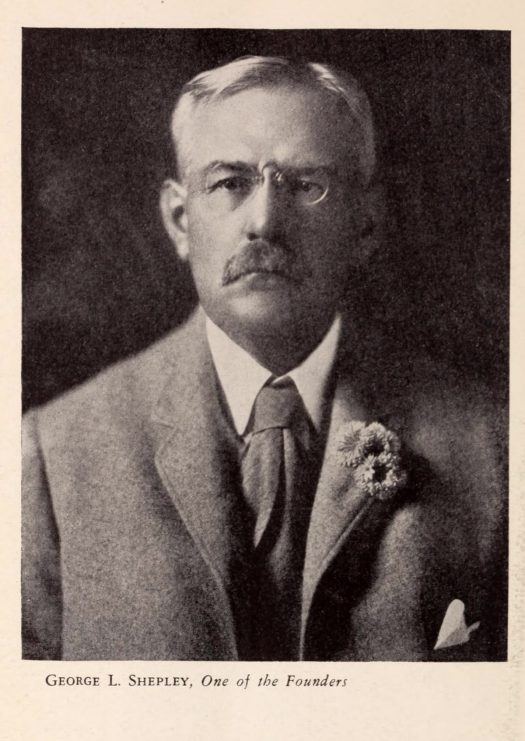
Shepley was Colonel George Leander Shepley (1854-1924). His personally-designed private library / museum opened at 292 Benefit Street in late 1921, as seen here in my newly colourised picture via the Providence Public Library and the Historical Society…
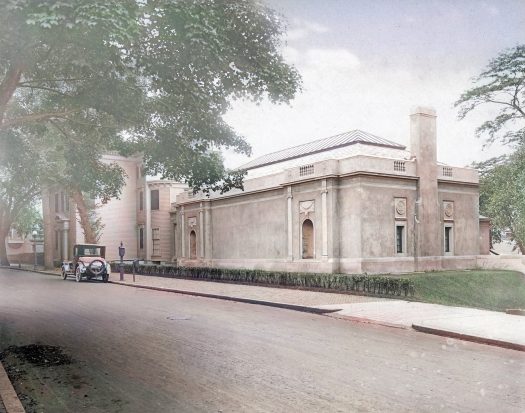
Lovecraft was able to visit in 1923. He appears to have had access because his aunt Annie Gamwell was working there at the time. A magazine of the period shows the Library had been open to the public on afternoons, when first opened in late summer 1921. But I’m uncertain if that opening offer was then continued into 1922 and 1923.

The American Antiquary Society has a short outline biography, revealing the owner to have run and made his fortune in the largest insurance business in the world. One source mentions his ingenuity at developing new insurance services and policy types to serve new markets. Another talks of his absolute integrity. He was a leading Mason who had ascended very high, a member of various clubs and sat on a number of local company boards. In his retirement he built and stocked his large library relating to Rhode Island and Providence history, rivalling that of several other well-endowed local institutions. That Lovecraft’s narrators are able to either frequent or “ransack” the Shepley Library thus implies they knew the old fellow personally, or at least his curator. Lovecraft himself had a friendly reception from the curator, to the extent of apparently being offered the loan of a certain key view of Providence… if only a duplicate could be found to replace it on display. Lovecraft evidently made a long and close inspection of the place and he discovered much, as detailed in the Voluminous podcast letter of 6th March 2022 and also in a letter to Moe (Letters to Maurice W. Moe, page 133-34). It was this visit that revealed to him a previously unknown colonial section at the back of Weybosset, between Weybosset and the waterfront. This quickly led to his foggy expedition into the squalid rookery around ‘Gould’s Court’ (Ghouls Court) at the back of Uncle Eddy’s book shop on Weybosset. Nephew Eddy already knew this area at the back of his uncle’s book shop well, as it happened, and he acted as guide. Ken Faig Jr.’s Some of the Descendants of Asaph Phillips and Esther Whipple also has the museum as being Shepley’s home (“housed in his home on Benefit Street”), and it does appear from the photograph to have been a house with a large museum / library wing seamlessly attached.

Lovecraft was distinctly peeved when the the old fellow died in 1924 without making arrangements for his magnificent collection, other than (seemingly) for it to remain where it was and private. His reaction is revealed by the new Letters to Family (Vol. 1, p. 500), when Lovecraft writes…

the closing of the Shepley museum is utterly barbarous — upon my soul, I don’t think much of the old boy if he didn’t provide for the permanent exhibition of his collection. He aught to have deeded it to the Historical Society, or to Brown University, or to some other institution founded in his name. Egad! But it’s a publick crime to keep a treasure-house like that closed!!

The death of a daughter shortly before her father meant the old man’s planned inheritance was fumbled. The other daughter who did inherit the fortune allowed the museum to languish in a private state for academics only (“opened only to research students on request”), since we hear of no more visits by Lovecraft. If it had been open then he would surely have visited it again and taken friends there, and remarked on this in letters. In 1938, as war loomed, the collection was finally sold (not given) to the Rhode Island Historical Society. The building was for a time used by theatrical players and used to stage puppet-theatre shows for children.

How history might have been different. Imagine… old Colonel Shepley takes a shine to Lovecraft’s aunt, woos and marries her, then adopts Lovecraft as heir-apparent and the ideal antiquarian son he had always wanted. Lovecraft inherits the enormous fortune. He spends the next twenty years championing architectural preservation throughout America and Britain, and on the side issues some modest and slim books of polished philosophy. He barely writes any fiction.

So I guess we should be grateful that such events never happened. But Lovecraft’s extended and generous 1923 visit had done enough. He felt it had been a key turning point in his life, as he told Moe in 1923…

I am now become definitely an antiquarian, rather than a general student of letters
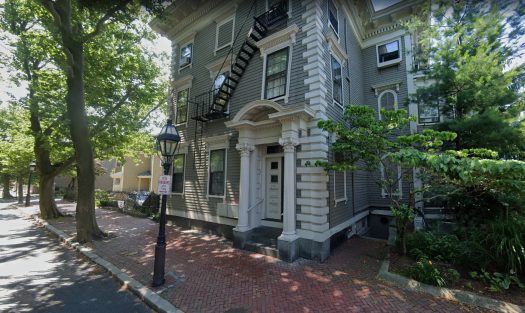
Shepley’s house still exists today as “295”, as can be seen by comparing Street View with the archival view. Today the observant scrutineer will also notice a down-steps side-entrance which goes through through to a shabby apartment and peeling porch on the back of the house. Perhaps this was once the back apartment of the on-site curator? Street View also reveals that the library at the side is now a sunken car-parking area, with crude graffiti and strewn trash… “where once had been only strength and honour, taste and learning” (“The Street”).

The depth and level of this car-park suggest that the 1921 view of the museum from Benefit Street may well be deceptive. I suspect that we see there the back of the building and that the museum actually had two floors, with the lower one being set down into the slope. The 1921 view thus only shows the back of the top floor as it was visible from the street. In fact, we can see it has a top atrium which even might even suggest two floors and perhaps a sky-room. The Federal Writers’ Project (1937) did briefly itemise the building as “one-storey” in a book, something which has since been parroted by others, but those books were often hasty make-work projects for communist cliques — as Lovecraft’s friend Arthur Leeds found to his detriment. I suspect the compilers of the book were not local, and were just working from quick snapshots of street views.
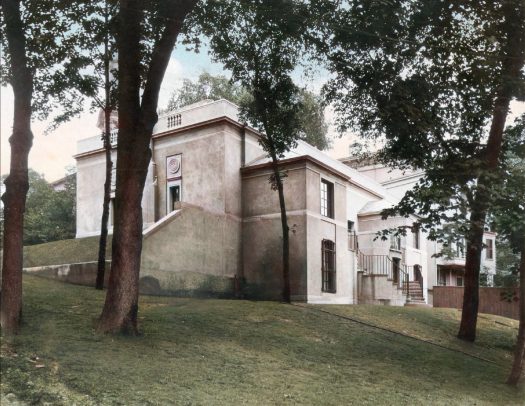
After writing the above I found a back view photograph of the Library, from the Historical Society via the book Providence’s Benefit Street. I’ve here repaired and colorised it. Yes, at the back the building was obviously deeper but also a bit more complex than a straightforward and mundane two-storey building. It may even have had a cellar strongroom (note the bars on the windows) that went down further into the ground. Apparently Shipley’s alarm and burglar-proofing system was state-of-the-art for the time. The modern-day shabby back-porch, as seen on Google Street View, can here be glimpsed in the distance.

Lovecraft in the backpack

22 Tuesday Mar 2022

Posted by asdjfdlkf in Historical context

≈ 1 Comment

A peep inside the 1945 Armed Services overseas paperback edition of The Dunwich Horror and Other Weird Tales. This could have been what the soldiers and airmen were reading as they waited for D-Day. It was incredibly damp in England (more so than usual in a British summer) in the run-up to the invasion of Europe, and indoor pursuits such as reading were thus highly likely. After that, the men were probably rather too busy for reading.

I wonder if the thinking was that such reading would prepare the men for the horrors of battle with the Nazis? Wells’s The Island of Dr Moreau was also on the slate, in the list in the back.

Is there a publication history of this item that can reveal the facts? Perhaps in one of the Derleth biographies?

“The Dunwich Horror” was also on the radio in 1945.

Some notes on the Cole letters

19 Saturday Mar 2022

Posted by asdjfdlkf in Historical context, Lovecraft as character

≈ Leave a comment

I’ve finished reading the Cole letters, which front the new expanded volume of Lovecraft-Galpin letters. Here are some notes.

Galpin wrote a detective novel, now presumably lost (p. 19).

By the mid 1930s Lovecraft had access to the latest Encyclopedia Britannica at the Public Library (p. 34) and slightly later purchased a Modern Encyclopedia (p. 110) that brought him right up-to-date with entries that had… “all the dope on neutrons, Nazis and the N.R.A.”.

The cut-price Newport passenger / cattle-boat boat was the Sagamore (p. 62). No postcards are to be immediately found.

He describes the layout of No. 66 (p. 65).

The origin of his “andwhere” phrase is given (p. 67).

He bemoans the “new synthetick highway” from Providence-Boston, this presumably being some sort of early motorway inter-state road which the express passenger coaches soon used. (pp. 82, 132). This was fast, but very dull in terms of scenery and architecture. Lovecraft then discovered an old-school bus-line that was still taking the ‘through the towns’ route, and booked a ticket for Boston. Later he had Loveman bring him back from Boston by the old route.

Various friends and acquaintances were being injured or killed by the new fast cars. Munn’s father was killed, for instance (p. 87).

Cook was writing a werewolf novel, presumably either left unfinished or lost (p. 105).

Lovecraft reveals his talent for purring like a cat, loudly and well. He teaches several kittens to purr in this way (p. 122 and elsewhere).

The Red Rooster and New Times (Babcock) for May 1935 had two 1920s photos of Lovecraft and “numerous photos of other amateurs” (p. 127 and footnote). This doesn’t appear to be online.

Mrs Miniter very early depicted ‘Lovecraft as character’. Of her “novelette of 1923” titled The Village Green, Lovecraft stated “I am recognisably depicted!” (p. 143). In fact that was her second try. Her short “Falco Ossifracus” (1921) was a Lovecraft parody by her, published in her journal The Muffin Man and in which Lovecraft was the supposed first-person narrator of a “Statement of Randolph Carter”-like tale. So she beat Belknap Long to it by a decade. Lovecraft noted Long was writing a novel of the Kalems in 1931 (Letters to Wandrei, page 265) but it never appeared.

‘Picture postals’ from Lovecraft: a tour of the library

18 Friday Mar 2022

Posted by asdjfdlkf in Historical context, Picture postals

≈ 1 Comment

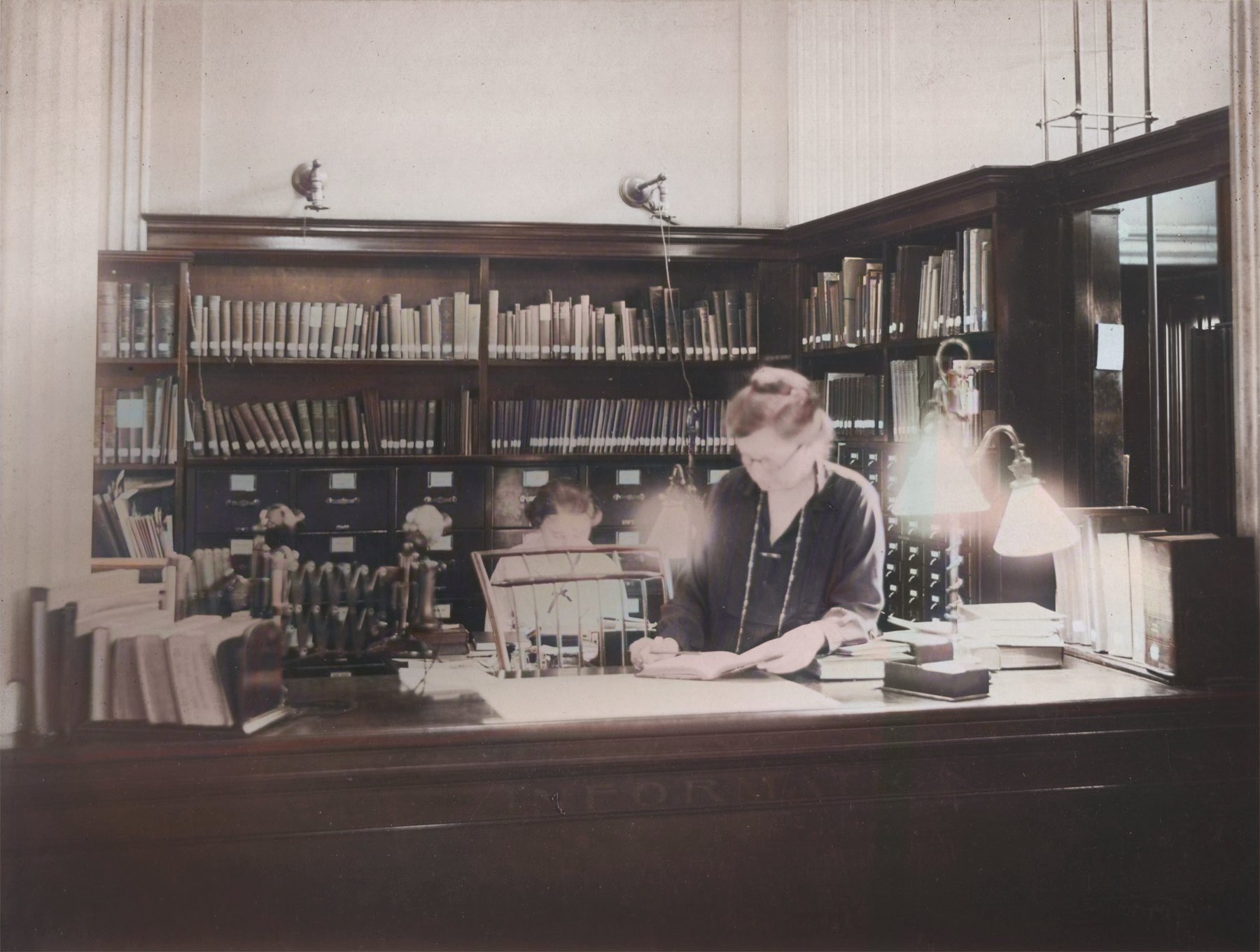
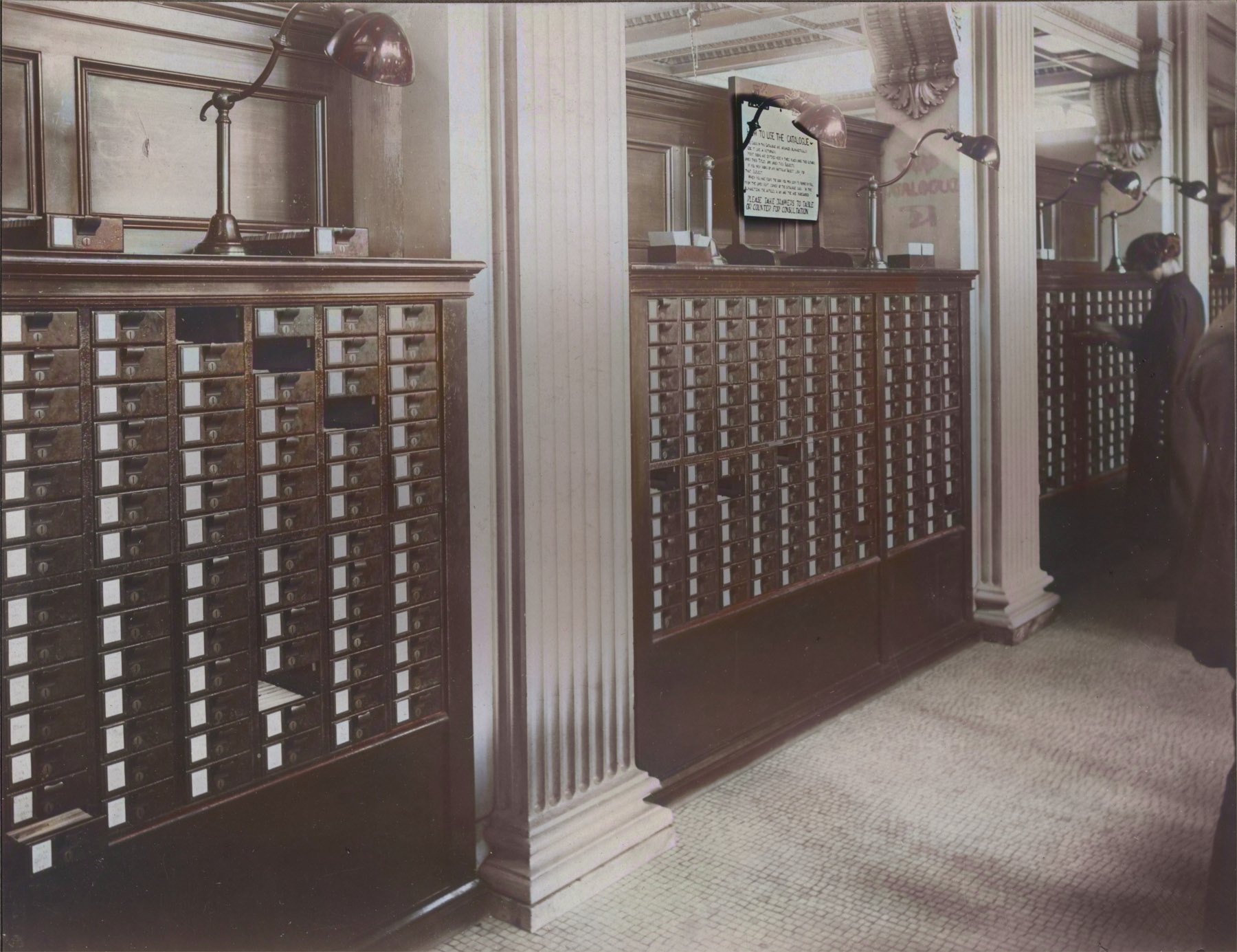
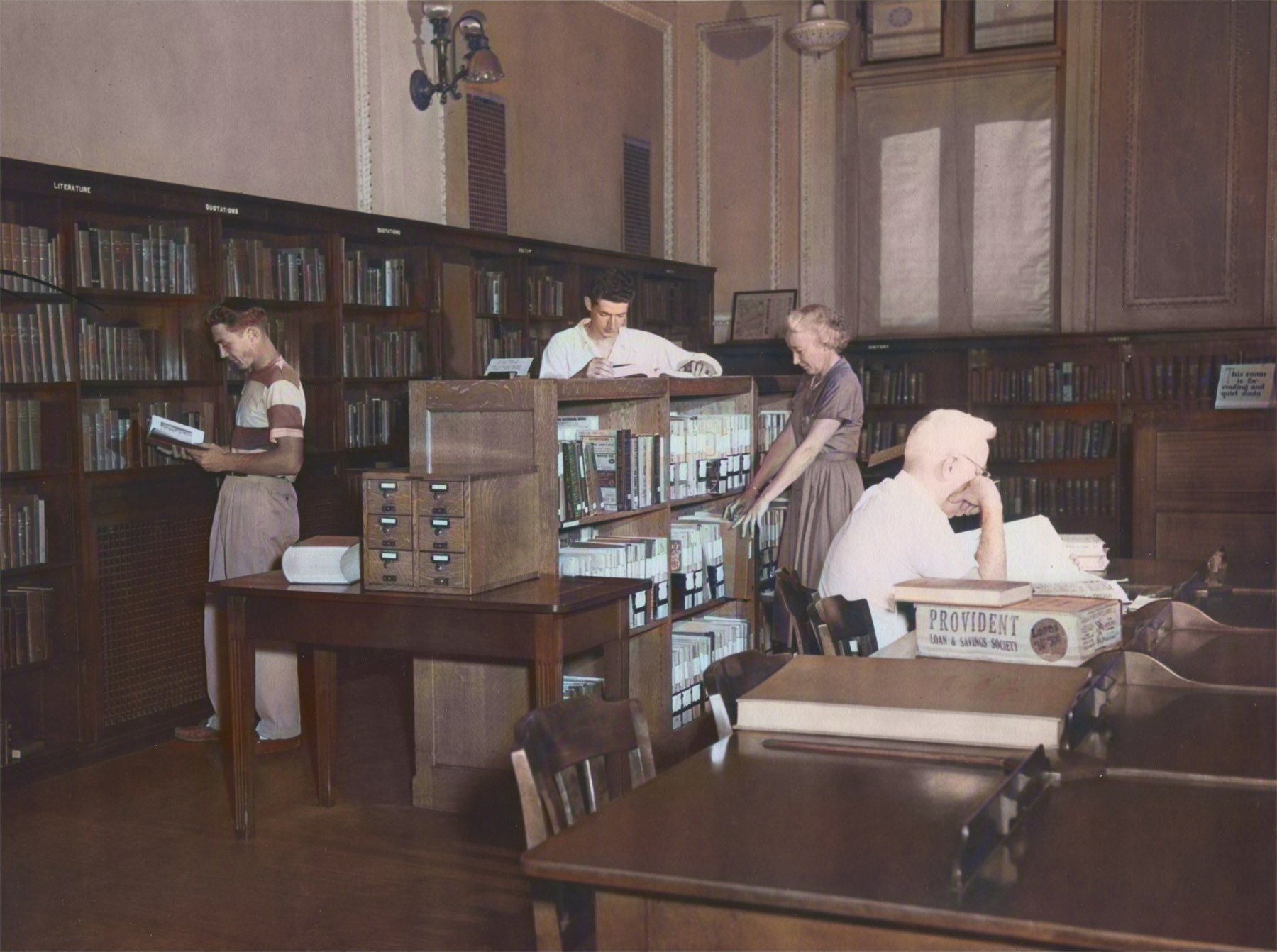
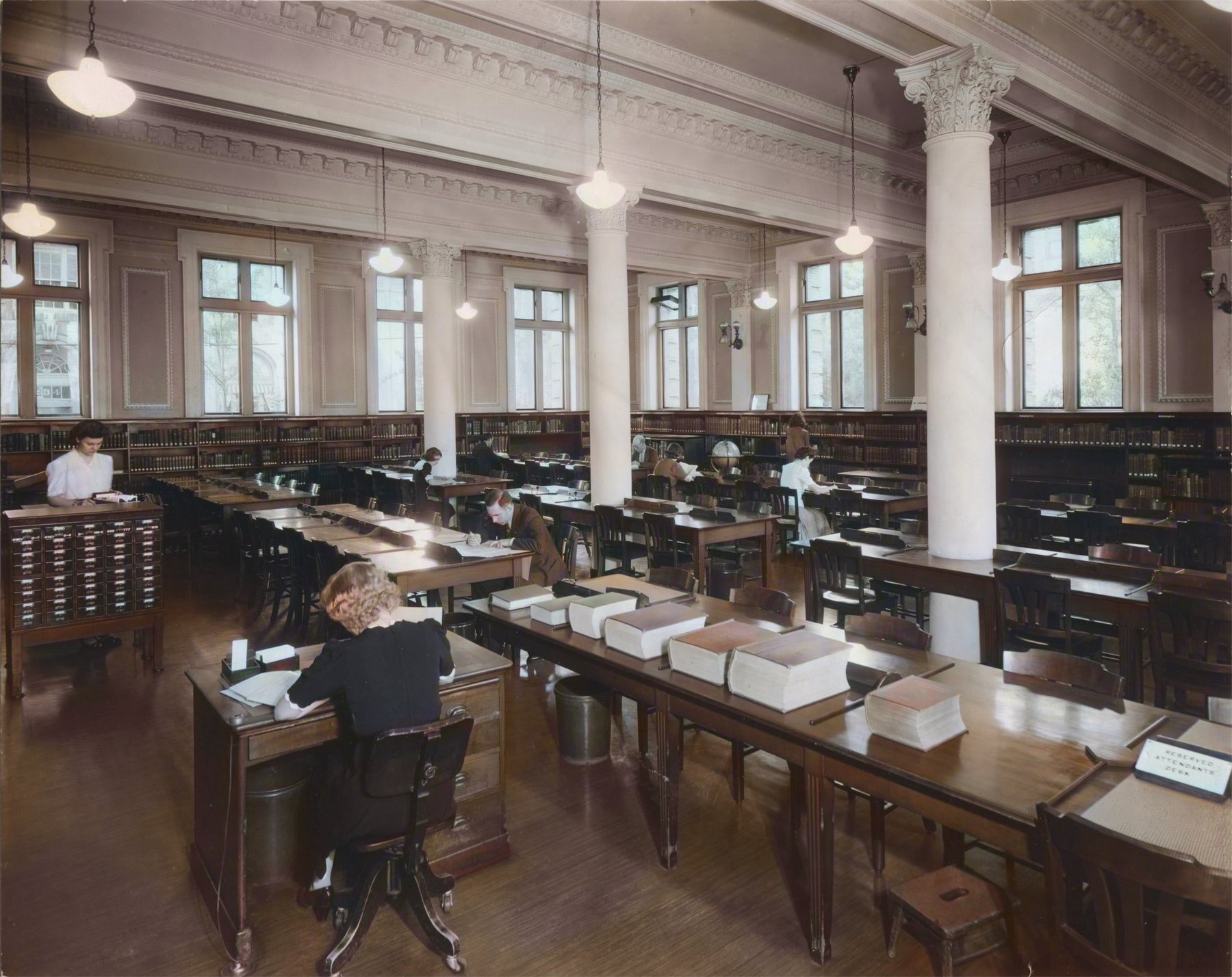
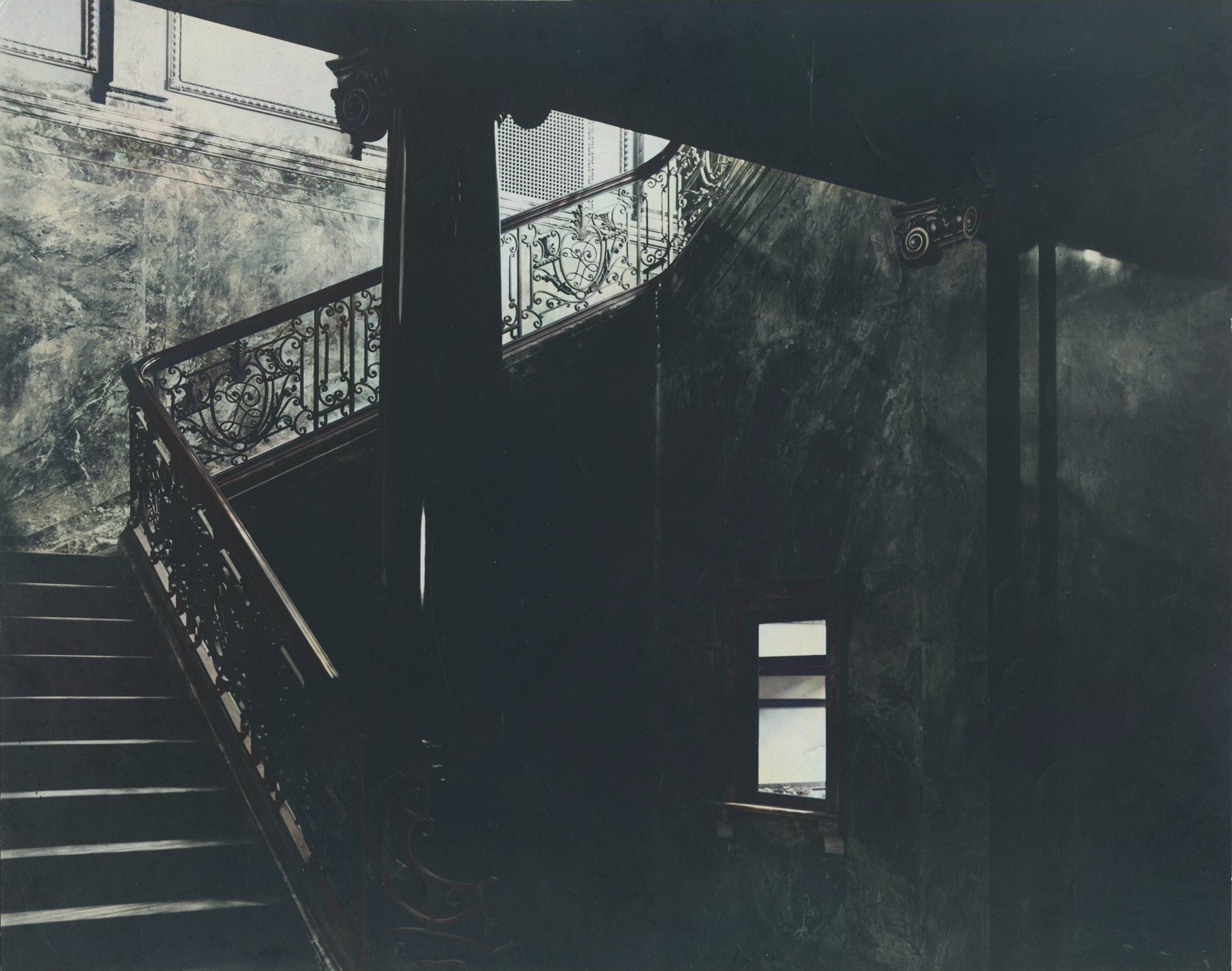
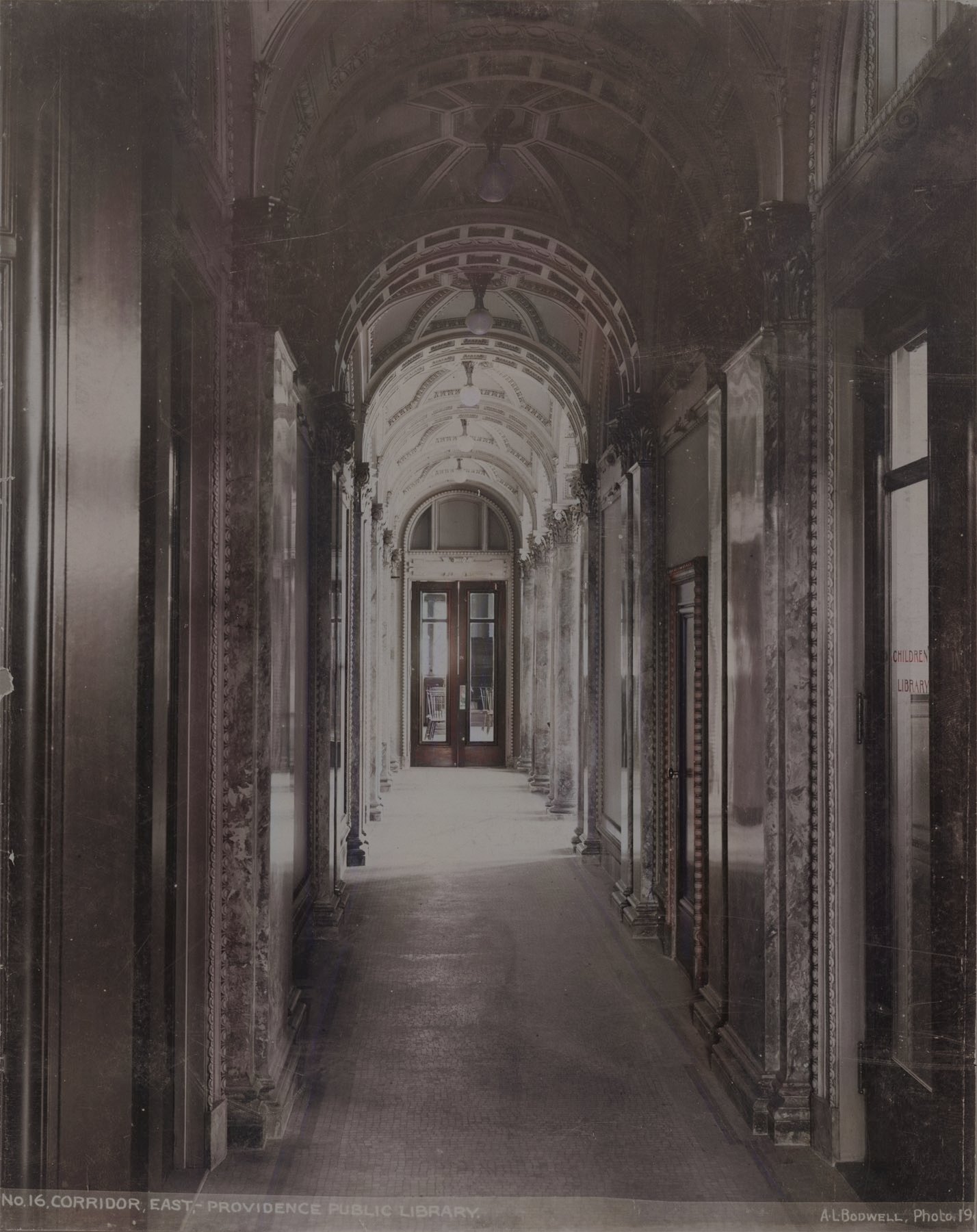
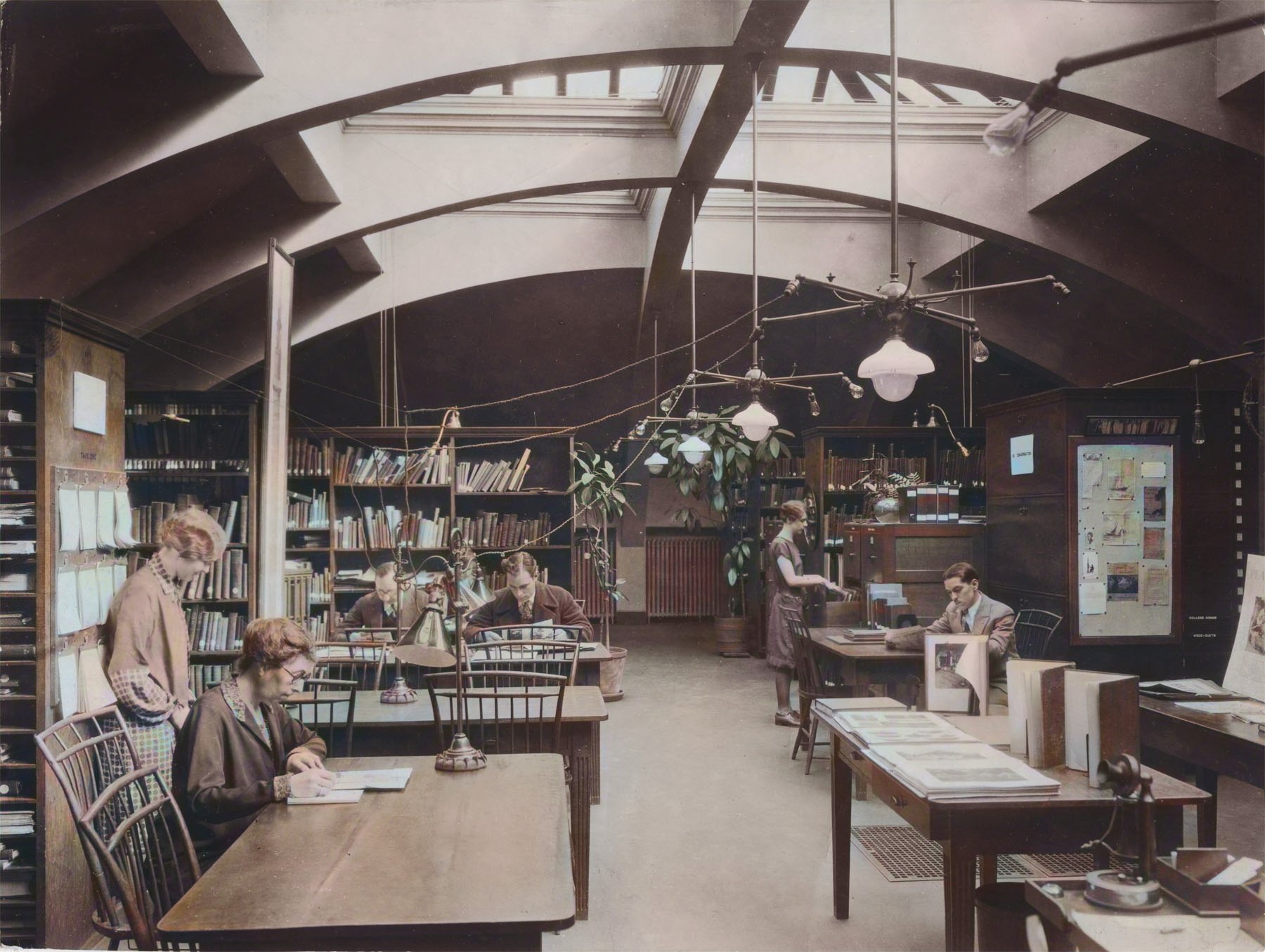
This week, a tour of the library. Not Lovecraft’s own and very large home Library, sadly. But rather the Providence Public Library which he had regularly visited and used since childhood. The following pictures of the Library are from somewhat disparate dates, and the library departments were moved around somewhat over time. But this is basically as he knew the building and its various service desks and rooms.

The entrance steps.

The information desk.

The card-index catalogue system, a primitive paper search-engine for book titles and topics.

Delivery desk, at which one might wait for a book that was not on the open shelves.

Trade and other local directories.

Reference reading room.

A reading room with newspapers.

A magazines and periodicals room, later — perhaps even the 1950s?

A dark staircase, with a watching window.

An upper corridor. Ahead may be the lecture room, while to the right we see a label painted on the glass door for “Children’s Library”.

Children’s rooms. A Lovecraft-alike boy is second from the right, at the front.

Lecture room.

A quiet study room.

The art room and skylights.

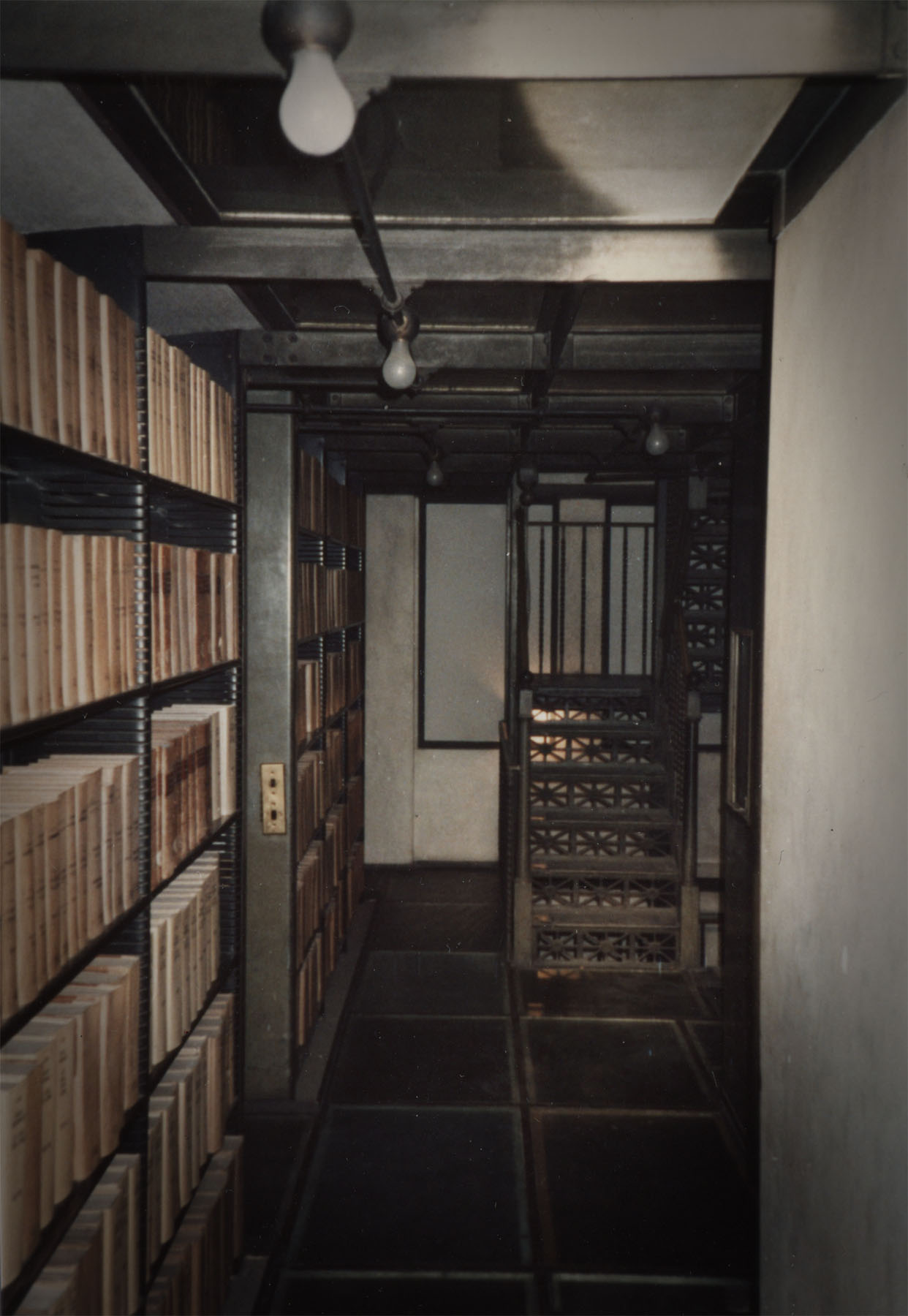
Meanwhile, down in the basement… ‘the stacks’. Lovecraft had a special ‘stacks’ library card and appears to have been permitted to descend. This picture may be much later, perhaps the late 1950s or 60s.

All from the Providence Public Library collection, with all but the final picture newly colourised.

Ripped and torn

16 Wednesday Mar 2022

Posted by asdjfdlkf in Historical context

≈ Leave a comment

At the foot of the Brown repository letter in which Eddy recalls a “Poe Street” encounter on a walk with Lovecraft (see this post for details) is Winfield Scott’s additional and almost indecipherable pencil note…

Dana – says HPL would buy pulps in [?] [?] then tore off the [?] sexy-lurid covers because [“under neath counter”?]

Dana’s was the local bookshop which took the remainder of Lovecraft’s Library shortly after his death. We have no evidence of the cover-tearing in Lovecraft’s extant set of Weird Tales, as I understand it. But perhaps Dana encountered runs of other pulps in his posthumous consignment of the less desirable items. As a more upmarket book-seller, unfamiliar with New York news-stand practices with pulps, he may not have realised what could have happened to these magazines.

News-stand sellers of pulps, and later the cheap paperbacks in the 1950s-70s, were supposed to send unsold copies back to the publishers to be pulped. But that was impractical. The actual practice was to mail sheafs of the ripped-off colour covers, as proof of the unsold and supposedly un-sellable copies. Thus would the magazines be ‘returned’ for credit.

Was this practice present in New York as far back as the 1930s? Perhaps a pulp history expert can fill me in on that. But in the meantime, here is a tantalising Google Books snippet from The New Yorker, Vol. 12 1936…

So it does seem that flea-market re-sale of coverless copies was going on, at least in New York City. And on a scale large enough to make it profitable for the junk-men to invent machines to rectify the magazines. The process for lesser pulps sounds like it would have been…

1. Covers returned for credit on the next order.
2. Coverless copies locally given away to junk-men as worthless ‘pulp’.
3. The junk-men quietly pass these into the New York flea-markets.
4. The magazines spend a few weeks on the stalls at ‘three for a nickel’.
5. The junk-men return to the stalls, take away the bundles of the unwanted dregs as pulp. They may even have become ballast on ships to England.

That could help explain why Lovecraft evidently had coverless pulps among the lesser parts of his collection, as disposed of to the Dana bookshop. He and his circle could have been acquiring them in this way in New York City.

Fish city

15 Tuesday Mar 2022

Posted by asdjfdlkf in Historical context

≈ Leave a comment

This post follows on from yesterday’s post on the Voluminous podcast (a new partly-unpublished letter, in which Lovecraft visits the Italian quarter of Providence). Also from my recent ‘Picture Postals’ post (Lovecraft and the farmers market)

I see that the Online Review of Rhode Island History has a new first-hand memoir of “Growing Up Italian in Providence in the 1940s”, in which Dr. Ed Iannuccilli’s evokes his everyday experiences of the city as a boy. Especially the fish-man. Friday was then still a big traditional fish-eating day, and it was brought up from the harbour and sold on carts…

Streetlights were suspended from the middle of the poles, with circular, scalloped metal “hats” covering the bulbs. When the lights were lit, a yellow haze emanated and created dancing shadows on the street below. They were our summer-evening clocks. […] The Grocery Man might be making deliveries from his huge truck, a traveling store, followed closely by the fruit peddler. On Fridays, the Fish Man appeared, blasting his mouth horn with the message that his truck was filled with a new catch. […] He stopped his dark green panel truck in the middle of Wealth Avenue. Laden with dead fish covered in ice, it had open sides with canvas rolled to the top and tied with thick rope, a Fish Man’s knot, I guess. Firm fish of all kinds were on display, neatly arranged, right side up, eyes open, in wooden sections fitted to the bed of the truck, a roof above protecting the catch from the hot sun. Fillets, shellfish and lobsters were stacked separately. A scale, secured with a chain, hung from a hook screwed into the top rear “two by four.” There was dried blood along the sides of the truck. Melting ice water dripped from the tailgate. The tires were low, burdened with a packed catch. And there was the aroma, fishy the only way to describe it… musty, damp and salty also.

One then vaguely imagines that the fish-detesting Lovecraft might not have been out much on Fridays, if the streets of his own section also had fish-peddlars. Not even if these had a retinue of local cats pattering along behind.

Also, I wonder if Providence had a wholesale fish-market? I’ve never heard of one, but I imagine a growing sea-port city that size must have had one. And again, I imagine Lovecraft stayed well away from it. Which would give Lovecraftians a negative data point, in terms of ‘Lovecraft was unlikely to have gone there, or half a mile around it in summer’.

Anyway, I see that Dr. Ed Iannuccilli has a complete new book of such 1940s city memories. Which may interested those who want to learn more about the everyday patina of the city as it might have been encountered, more or less, in Lovecraft’s final decade of the 1930s.

← Older posts
Newer posts →


Please become my patron at www.patreon.com/davehaden to help this blog survive and thrive.

Or donate via PayPal — any amount is welcome! Donations total at Easter 2025, since 2015: $390.

Archives

  • March 2026
  • February 2026
  • January 2026
  • December 2025
  • November 2025
  • October 2025
  • September 2025
  • August 2025
  • July 2025
  • June 2025
  • May 2025
  • April 2025
  • March 2025
  • February 2025
  • January 2025
  • December 2024
  • November 2024
  • October 2024
  • September 2024
  • August 2024
  • July 2024
  • June 2024
  • May 2024
  • April 2024
  • March 2024
  • February 2024
  • January 2024
  • December 2023
  • November 2023
  • October 2023
  • September 2023
  • August 2023
  • July 2023
  • June 2023
  • May 2023
  • April 2023
  • March 2023
  • February 2023
  • January 2023
  • December 2022
  • November 2022
  • October 2022
  • September 2022
  • August 2022
  • July 2022
  • June 2022
  • May 2022
  • April 2022
  • March 2022
  • February 2022
  • January 2022
  • December 2021
  • November 2021
  • October 2021
  • September 2021
  • August 2021
  • July 2021
  • June 2021
  • May 2021
  • April 2021
  • March 2021
  • February 2021
  • January 2021
  • December 2020
  • November 2020
  • October 2020
  • September 2020
  • August 2020
  • July 2020
  • June 2020
  • May 2020
  • April 2020
  • March 2020
  • February 2020
  • January 2020
  • December 2019
  • November 2019
  • October 2019
  • September 2019
  • August 2019
  • July 2019
  • June 2019
  • May 2019
  • April 2019
  • March 2019
  • February 2019
  • January 2019
  • December 2018
  • November 2018
  • October 2018
  • September 2018
  • August 2018
  • August 2015
  • July 2015
  • April 2015
  • March 2015
  • February 2015
  • January 2015
  • December 2014
  • November 2014
  • October 2014
  • September 2014
  • August 2014
  • July 2014
  • June 2014
  • May 2014
  • March 2014
  • February 2014
  • January 2014
  • December 2013
  • November 2013
  • October 2013
  • September 2013
  • August 2013
  • July 2013
  • June 2013
  • May 2013
  • April 2013
  • March 2013
  • February 2013
  • January 2013
  • December 2012
  • November 2012
  • October 2012
  • September 2012
  • August 2012
  • July 2012
  • June 2012
  • May 2012
  • April 2012
  • March 2012
  • February 2012
  • January 2012
  • December 2011
  • November 2011
  • October 2011
  • September 2011
  • August 2011
  • July 2011
  • June 2011
  • May 2011
  • April 2011
  • March 2011
  • February 2011
  • January 2011
  • December 2010
  • November 2010
  • October 2010
  • September 2010
  • August 2010
  • July 2010

Categories

  • 3D (14)
  • AI (70)
  • Astronomy (70)
  • Censorship (14)
  • de Camp (7)
  • Doyle (7)
  • Films & trailers (101)
  • Fonts (9)
  • Guest posts (2)
  • Historical context (1,095)
  • Housekeeping (91)
  • HPLinks (76)
  • Kipling (11)
  • Kittee Tuesday (92)
  • Lovecraft as character (58)
  • Lovecraftian arts (1,628)
  • Lovecraftian places (19)
  • Maps (70)
  • NecronomiCon 2013 (40)
  • NecronomiCon 2015 (22)
  • New books (966)
  • New discoveries (165)
  • Night in Providence (17)
  • Odd scratchings (984)
  • Picture postals (276)
  • Podcasts etc. (431)
  • REH (184)
  • Scholarly works (1,469)
  • Summer School (31)
  • Unnamable (87)

Get this blog in your newsreader:
 
RSS Feed — Posts
RSS Feed — Comments

H.P. Lovecraft's Poster Collection - 17 retro travel posters for $18. Print ready, and available to buy — the proceeds help to support the work of Tentaclii.

Proudly powered by WordPress Theme: Chateau by Ignacio Ricci.