The Knight Letter, free on Archive.org and running to 2022 thanks to the latest uploads. It’s the long-running Newsletter of the Lewis Carroll Society of North America.
The Knight Letter
24 Monday Jun 2024
Posted in Scholarly works
24 Monday Jun 2024
Posted in Scholarly works
The Knight Letter, free on Archive.org and running to 2022 thanks to the latest uploads. It’s the long-running Newsletter of the Lewis Carroll Society of North America.
23 Sunday Jun 2024
Posted in New books, Scholarly works
S.T. Joshi’s blog has updated, and he reports receipt of copies of his new edition of Lovecraft’s Library: A Catalogue. 148 new additions for me, as I only have the 2002 paper edition on my shelves. Same cover art as before. I see it’s now properly listed at Amazon UK as Lovecraft’s Library: A Catalogue (Fifth Revised Edition), so buyers can be sure of getting the right edition. Amazon is currently saying it might take four weeks to deliver to the UK.
Incidentally, I don’t think I’ve ever seen a visualisation of the attic library in which Lovecraft did his first serious ‘bookworm’ reading among ye olde discards from the family collection. This is as close as I can get without using AI, my Photoshopped version of a picture showing an untouched-for-100-years Rhode Island attic library.
22 Saturday Jun 2024
Posted in Housekeeping
No post today, as I’ve been wrangling a bargain mid-range (i5 CPU) £90 Microsoft Surface Pro 3. For use mainly as an ebook and entertainment touchscreen tablet.
This was Microsoft’s flagship 12″ product from nine years ago and accordingly built like a tank (though considerably lighter). I had it in nice condition from a reputable UK refurbisher, and on arrival it turned out to be almost un-used. Nice. Just 222 charge cycles on the battery and only 2Tb written to the Samsung SSD (they only need replacing around 125Tb). That’s ‘little old lady user’ good, though various clues make me think it was lightly used in a U.S. school’s IT lab for a few years, before being part-exchanged back to Microsoft. Probably been in a warehouse ever since.
So… many thanks to my Patreon patrons, since your regular PayPal has eased this fine upgrade to my armchair reading.
Hours of wrangling it into shape today, not least due to chopping off the manic tentacles of the eldritch Windows 10, with only an unfamiliar touchscreen (a bit like tackling Cthulhu with a machine-gun). But it’s done now, and thus I’ve broken free from the increasingly annoying and flaky Amazon Kindle 10″ tablet (2017, when they were subsidised and thus dirt cheap) for a better 12″ tablet with far better colour and far more user control — since it’s running the full Windows desktop OS. Though I can still see/read my purchased Kindle books via read.amazon.com. The online Kindle reader is vastly better than their dire Windows desktop app, and I’m pleased to find it can also even do ‘guided view’ for purchased comics.
I might still put Winux 7 (Linux Mint that looks and feels like Windows 7) on the new SP3, but it’s too early yet to say. I also need a suitable pen (and perhaps a keyboard-cover called a ‘type cover’), in order to write notes on the screen. But I do like to get bargains, so I’ll wait until I can find a cheap one.
21 Friday Jun 2024
Posted in Astronomy, Maps, Picture postals
The U.S. appears to have just passed the legislation to re-introduce ‘the draft’ (military conscription), so far as I can tell without an in-depth dive into American politics (snore…). Though, rather curiously in this age of supposed gender-equality everywhere, it’s reported to be only for men aged 18-26. But no doubt young women are at this moment clamouring for equality here, as elsewhere (sound of crickets chirping). There is no actual draft or registration currently in place, I should add, lest I be accused of ‘misinformation’.
This news, and a recent mini-debate here in the UK about the need for conscription into and rapid training of a “Citizen’s Army” in the event of real hostilities (due to a run-down of the military over many decades), made me think about Lovecraft’s attempts at enlistment in the armed forces during wartime…
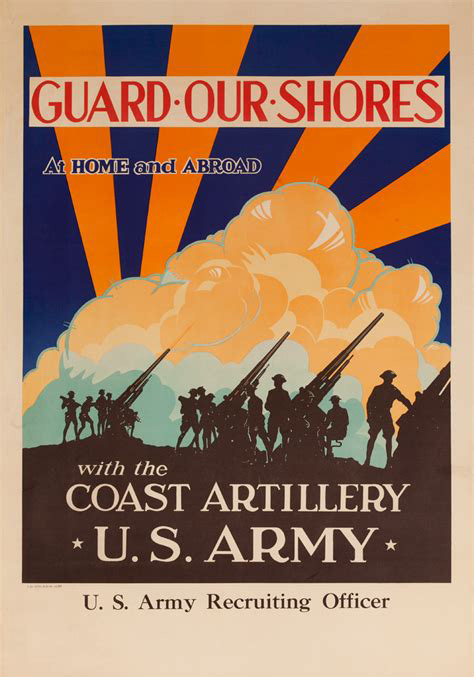
I presented myself at the recruiting station of the R.I. National Guard & applied for entry into whichever unit should first proceed to the front [i.e. the front-line of battle, in France]. On account of my lack of technical or special training, I was told that I could not enter the Field Artillery, which leaves first; but was given a blank of application for the Coast Artillery [Corps], which will go after a short preliminary period of defence service at one of the forts of Narragansett Bay.
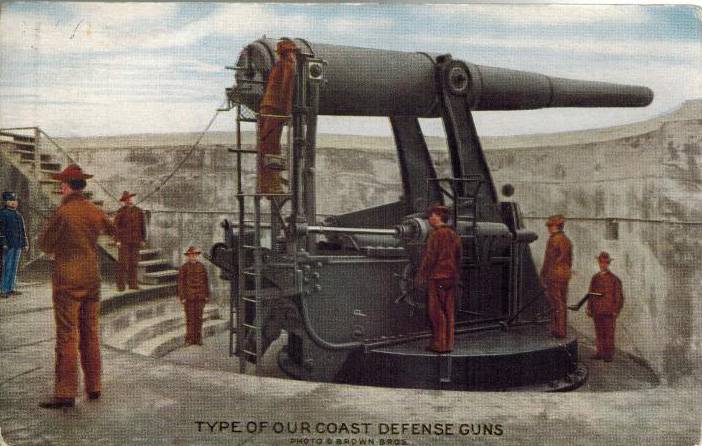
Thus Lovecraft would have been initially defending against German submarine and (via cliff-top / island patrols) spy/saboteur encroachment on the American coastline. In principle, the type of large emplacement gun seems not altogether unlike a telescope, and perhaps involving some of the same maths and aiming. Possibly his astronomical training at the Ladd Observatory would actually have come in useful?
He made several attempts, I recall. To the extent that, whenever he left the house, his mother was fearful he would try to enlist. But it was not to be, and he was rejected.
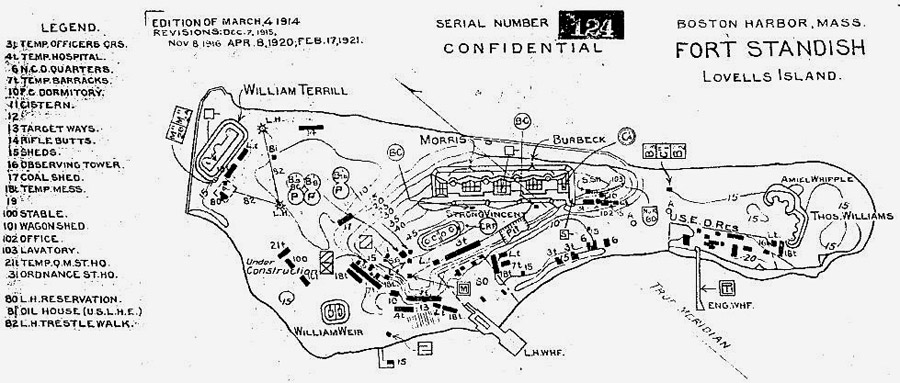
Had not my mother disturbed my ambitious effort of last May [1917], in which I utilised my absurdly robust-looking exterior as a passport to martial glory […] I should now be digging trenches, drilling, & pounding a typewriter at Fort Standish in Boston Harbour, where the 9th Co. R.I. Coast Artillery is placed at present.” (Lovecraft, in Letters to Rheinhart Kleiner).
This was on an island, which has a 1914/1921 war-map which may interest those looking for fresh 1920s RPG material / settings relating to Lovecraft. One might devise a “what if” scenario in which a successfully enlisted Lovecraft encounters mysterious and maddening Mythos doings in Boston harbour. He might even get to blast the heck out of the monster with a BIG gun, before going mad… thus especially pleasing the ‘blast Cthulhu with a machine-gun’ RPG crowd.
20 Thursday Jun 2024
Posted in Odd scratchings, Scholarly works
I’ve now had a chance to read through “Middle-earth, Narnia and Lovecraft’s Dream World: Comparative World-Views in Fantasy” (Crypt of Cthulhu, 1983). It adds some additional points to my previous blog posts about the various similarities of Tolkien and Lovecraft…
* Both Tolkien and Lovecraft maintained that their tales were written primarily for their own “amusement” (this is the word used).
* Blackmore notes that Lovecraft’s biographer de Camp had earlier observed that Tolkien was an unabashed ‘rurophile’ [lover of the rural, in the form of the Shire], just like Lovecraft in his letters and trips. I might also add they were both lovers of garden-like parkland landscapes with many beautiful trees and glades (recall Ithilian and Lorien in The Lord of the Rings).
* Both Tolkien and Lovecraft disliked mechanisation and crassly sub-urban development.
* Lovecraft’s Dreamlands are seen as similar to Middle-earth, in that flora and fauna from the primary world are mixed with the fantastica of the secondary world. The Dreamlands also feature many ancient ruins, as does Middle-earth.
I’ve just thought of a final point of admittedly very loose comparison — fungi. The hobbits are revealed to be inordinately fond of mushrooms, though Tolkien makes no later use of this in terms of inverting it into horror or sinister landscapes/caves. The closest we come is the lair of Shelob, in which the horror is white and webbed rather than white and fungous.
19 Wednesday Jun 2024
Posted in Scholarly works
In the undergraduate journal The Lectern #3 (2023), “Edgar Allen Poe and H.P. Lovecraft: The Language of Madmen”.
And also note Horror Homeroom #7 (2023), a special on the archival and ‘found material’ tendencies in various forms of horror. This has the short lead essay “A Weird Bunch of Cuttings: Newspaper Clippings as Lovecraftian Found Footage”. The author is aware that Lovecraft’s correspondents occasionally sent him cuttings, but not that he was sorting and ordering his large ‘mounded’ cuttings collection into pasted scrapbooks at around the time of writing “Cthulhu”.
18 Tuesday Jun 2024
Posted in Podcasts etc., Scholarly works
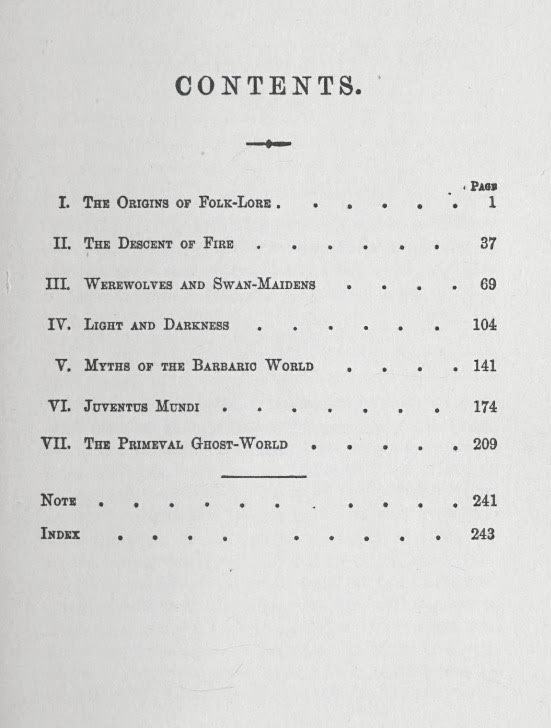
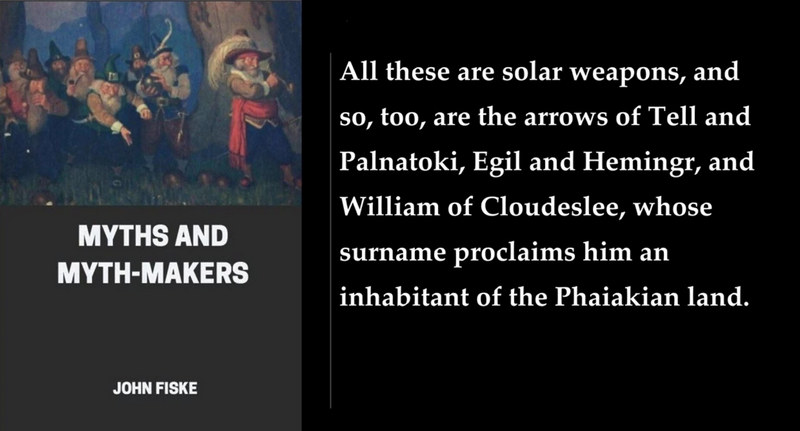
New on YouTube, a seven-hour audio reading of Myths and Myth-Makers: Old Tales and Superstitions Interpreted by Comparative Mythology by the American historian, philosopher, bookman, and lecturer John Fiske. He introduced Darwin to America, wrote a book on the early history of New England (Lovecraft had it in his personal library), and another which outlined “cosmic” philosophy, among many other accomplishments. This particular book on myth was written while Fiske was a philosophy lecturer and assistant librarian at Harvard, and it became a key source for Lovecraft’s knowledge of the early ethnography of folk-tale, fairy and myth…
HPL was much influenced by Fiske’s popular study, Myths and Myth-Makers: Old Tales and Superstitions Interpreted by Comparative Mythology” (Collected Essays: Science, page 318).
The reading is very likely to be by an AI voice, but how you tell that has changed since the days of the old robo-voices. It’s now a telltale of AI that the narrator pronounces a wide range of really complex ancient names correctly every time. The days of text-to-speech garble-de-gook appear to be gone! Usefully, for those who want to check the names as they hear them, the YouTube video displays the text of the book along with the narration.
Though you can also find the book it in a good clean scan on Archive.org. Or on Project Gutenberg in plain HTML, which is more easily searched.
Incidentally, readers of Tentaclii may also be interested in this amusing paragraph on Fiske from an old issue of the Skeptical Enquirer, which notes that Fiske also became an expert on eccentric ‘crank’ writers…
In his [late] essay “Some Cranks and their Crotchets” he relates that, when he was librarian at Harvard and trying to straighten out the card catalogue, he came across many books that seemed to be listed under the wrong categories. […] Fiske proposed to group these crank publications under “Insane Literature”. However, it was called to his attention that this appellation might hurt the feelings of certain living authors, so he decided to change the classification to “Eccentric Literature”. During the course of this reclassification project, Fiske became familiar with much of the eccentric literature of the day. In his case familiarity bred contempt. […] Fiske [in his essay] then proceeds to survey the cranks and crotchets of the nineteenth century.”
17 Monday Jun 2024
Posted in Lovecraftian arts, Odd scratchings, Scholarly works
Necronomicon Press shop, back online at necropress.squarespace.com/necro-shop — though sadly without the Crypt of Cthulhu PDF back-issues set. Only issues #108-113.
17 Monday Jun 2024
Posted in New books, Scholarly works
I’ve now had a chance to read through the auto-translation of the Italian book Tolkien e Lovecraft (2023), mentioned at the end of my recent Tolkien and Lovecraft post. I’ve noted down the book’s various additional points of comparison, beyond those which Honneger made or which I added in my earlier post.
* Tolkien e Lovecraft discusses, for most of its short length, the fantasy reading that both writers shared in their youth. Dunsany (early work), Edgar Rice Burroughs (early work), E.R. Eddison (Ouroboros). With other writers being less certain. William Morris certainly for Tolkien, but only read in passing by Lovecraft. Poe certainly for Lovecraft, but only very much a ‘maybe, we don’t really know’ for Tolkien.
* Both had a vast knowledge of the past, but often a somewhat idealised past. A past in which they often spent long periods of time. I would add that idealisation of the past was partly made possible by the patchy coverage of the scholarship and archaeology before the Second World War and before modern genetics.
* Both had a strong love for a cultivated, crafted and tamed landscape. Implicitly an English landscape, well stewarded for future generations. This love overlapped with their disdain for modern ugliness and befoulment.
* Both drew on an essentially 18th century gothic conception of horror and terror.
* Both were drawn to obsolete or arcane languages.
* Both upheld what might be termed a ‘civalric’ attitude in their personality and personal dealings.
* Both were averse to allegory in literature.
* They saw fantastical escapist literature as positive, something “authentically creative” and not a lesser or debased form of literature.
* Both devised a fantastic pantheon and lore from scratch. And highly believable ones.
* The book also reminded me that Lovecraft had an interest in faery lore, albeit a passing one, evidenced by his essay “Some Backgrounds to Fairyland” (1932). In my view this (even if deemed erroneous now) valuably encapsulated the secondary understanding of such things that could be had from a large library circa 1922-32.
I would add, finally, that…
* Both had an open ’21st century approach’, by the standards of the 20th century, to sharing what they made with others. Tolkien expected “other minds and hands” to expand and fill in his Legendarium after his death. While Lovecraft fairly freely shared his Mythos before his death, and then Derleth and public-domain did the rest.
* For both, horrific creatures are the result of unnatural cross-breeding (orcs by wizards / hybrids by cult leaders).
16 Sunday Jun 2024
Posted in Odd scratchings
I’m pleased to see that British electronica pioneer John Foxx has a new artbook due soon. Electricity And Ghosts will offer a full retrospective of the art, photography and graphic design from his career.
I was a collector at one time, having at one time had all his early gatefold double-singles, as well as the early albums both with early Ultraxox and then solo. I say “was” a collector because he was in the bulk of my record collection, which was left behind when I went away to university in the late 1980s. But that collection and all those Foxx singles were later carted (unbeknown to me) to the local charity shop (‘thrift store’), by a relative who had always loathed the looks of Gary Numan and all those late-70s/early-80s electronica ‘Space Patrol cadets’.
Ah well, it’s all on .MP3 now (his early solo work is best had in one shot via the five-album The Virgin Years 1980-1985 which has the singles b-sides as a bonus). But it would certainly be nice to have all that Foxx pre-Photoshop artwork back again. The artbook is not yet on Amazon, and is currently only pre-ordering from the publisher. But I need books sent to an Amazon locker, so I’ll have to wait until it’s on Amazon. What a wasted marketing opportunity, since he’s currently front-page on the latest Electronic Sound magazine.
All those potential Amazon pre-orders from readers… and not even a way to save the book to your Amazon WishList.
Why write about a British electronica musician and singer here? Well, I always thought he must have been partly inspired by Lovecraft’s “The Outsider” and perhaps a little by the ‘ruined London’ theme in British science-fiction (with a nod to Ballard and the French flâneur tradition). His signature neo-romantic (not to be confused with the 80s synthetic popsters of the ‘New Romantics’ scene) imagery is of the ‘Grey Man’ in a suit walking through the sunset in a romantically-overgrown and abandoned London, through abandoned Georgian arcades and plazas and into gothic graveyards with oversized looming statuary. Very Lovecraft-of-the-letters. Though I don’t recall that he’s ever nodded to Lovecraft in an interview.
15 Saturday Jun 2024
Posted in Podcasts etc., REH, Scholarly works
M. Fields has kindly uploaded Robert E. Howard Days 2024 panel talk recordings, to YouTube.
* R.E. Howard in 1934
* Travels with Bob
* R.E. Howard as a Southwestern writer
* R.E. Howard in pop culture
* Novalyne Price and her influence on Robert E. Howard
* Heroic and Hilarious (the characters of El Borak and Breckinridge Elkins)
15 Saturday Jun 2024
Posted in Lovecraftian arts
AI Weekly briefly surveys and links the new leading-edge technical papers on generative AI each week. Its next art/cover challenge is ‘Weird’. Weirder images than generative AI usually produces, I guess. Unlike most arty challenges, there’s $50 in it for you.
Talking of ‘weird’ AI, Google has a new alphabet-generator called GenType. Give it a prompt, and out pops an A-Z alphabet of snazzy type. I suggested a font based on the idea of “Cosmic tentacle-beings from the mind of H.P. Lovecraft”, but that was refused as too weird. Thus I never got to see GenType produce any type. But you may want to give it a go.
Also, in AI Weekly one learns that it’s now just-about “possible to train diffusion models using mixed-resolution image datasets”. Which brings hope for a ‘face of H.P. Lovecraft’ plug-in for Stable Diffusion. Since many of the training images would necessarily be low-res. Stable Diffusion already knows what Lovecraft looks like, more or less, though often adds in Nick Cage (starred in the Colour movie, and thus gets tagged as ‘Lovecraft’), Buster Keaton (1920s film star, somewhat similar face), etc. We still need a LORA plug-in that guides the AI back to Lovecraft’s face and head shapes.