• About
  • Directory
  • Free stuff
  • Lovecraft for beginners
  • My Books
  • Open Lovecraft
  • Reviews
  • Travel Posters
  • SALTES

Tentaclii

~ News & scholarship on H.P. Lovecraft

Tentaclii

Monthly Archives: March 2023

OpenChatKit

20 Monday Mar 2023

Posted by asdjfdlkf in AI, Odd scratchings, Scholarly works

≈ 1 Comment

It was only a matter of time before text-generating AI became as open and free as graphics AI. The first such is here now and ‘live’, OpenChatKit…

“a ChatGPT-like dialogue language model that is fully open-sourced, with full access to code, model weights, and training data. The released OpenChatKit model can perform natural-language reasoning tasks, answer questions about documents with retrieval, and browse the Web much like BingChat. The model has 20 billion parameters and is trained on 43 million instructions. […] The release also comes with fine-tuning guides that allow users to easily fine-tune the model for their own applications. […] Apache-2.0 license.”

20 billion is not enough for complex tasks (it can’t write long working Python scripts, or pop out complete essays/stories), but it’s good enough to be useful so long as you know how to ask the question. For instance…

Show me an example of the use of taskkill in a Windows batch file

… gets a line of valid working code. Though you still need to know to wrap it in @echo off and exit, and then save as a .BAT file.

But this is just the starting release. The initial live/free public demo is here, if you want to see what arcane Lovecraftian blurblings it might produce if given the correct prompt. It’s fast and easy to use. Though obviously knows nothing about R’lyeh as a holiday destination. Pity.

I’m uncertain if it can be operated purely locally on a desktop PC, being open source. (Update: Yes it can, it now has a downloadable “7B” model). If not then such things can only a matter of time and the right slot-in card.

So far, this is the only genuinely free / public and ‘no sign-up’ text-generating AI I know of.

Meanwhile, Grammarly will reportedly be plugging in AI auto-writing assistants sometime in April 2023. For a price, of course.

1899 reviewed

19 Sunday Mar 2023

Posted by asdjfdlkf in Lovecraftian arts

≈ Leave a comment

A new Liberty Room review of 1899, which it turns out was a short-lived and not much watched U.S. TV show in 2022.

The show only increases its adoption of Lovecraftian elements from there, featuring mad cults, rooms which defy all rules of geometry and space, and strange structures hidden in the remote arctic, all set in the same era in which many of Lovecraft’s own weird tales take place. Yet the show’s use of these elements is wholly its own, putting far more focus on the human mind and the mysteries that lie within each person than on those which lie in other dimensions.

I see it was a Netflix show, and that the (reportedly costly) first season ended on a monumental chiffhanger. Not that many viewers made it that far, though, with tracking showing only 50% of buyers made it through to watch the final episode. It will now never be completed, unless perhaps in audio / novel / graphic-novel form.

Lovecraft at the 2023 Chaosium Con

18 Saturday Mar 2023

Posted by asdjfdlkf in Lovecraftian arts

≈ Leave a comment

Chaosium has an Event Spotlight: H.P. Lovecraft Historical Society Events page, for the 13th-16th April 2023 U.S. Chaosium Con event.

Stepping up…

17 Friday Mar 2023

Posted by asdjfdlkf in Picture postals

≈ Leave a comment

I’ve had a Covid-like cold and no appetite for the last week, and a certain amount of brain and eye-fog. An AI doc (the only sort you can get in the UK, these days) had earlier chewed on my demographics and the weather/dates, to predict the strong likelihood of this happening. I very rarely get ill, otherwise. The AI was right, and not even wearing a mask for a while (as was suggest) prevented it. I suppose I should think myself lucky, though, because at least it wasn’t the ‘flu.

Anyway, for this reason my regular ‘Picture Postals’ post is necessarily short this week. Just the one picture, but a fine one. The steps of Lovecraft’s Public Library in Providence. Note the rather creepy-looking lamp-holders that once hung over the entrance.

The Paradox of David H. Keller

16 Thursday Mar 2023

Posted by asdjfdlkf in Historical context

≈ 1 Comment

Up for sale, a 1960s zine I’d not heard of, Paradox #7…

Half of this issue is taken up with a bibliography of the fantasy and horror writings of David H. Keller, the [medical] doctor and Lovecraft scholar and Arkham House patron. The bibliography is extensive and is based upon the doctor’s own files, which the editor consulted on a visit to his house.

fanac.org doesn’t appear to have scans, and neither does Archive.org. Comments in other zines of the time suggest Paradox was held in high regard for its content.

His Fancyclopedia page is extensive, but makes no mention of Arkham House and (being focused on his pioneering role in science-fiction, begun at the then-startling age of 47) it makes little of his interest in the macabre and weird. Possibly “patron” is just a bookseller’s come-on, and he was really just a collector rather than an active backer of Derleth? But no, as a hard-working medical man he was well off and he had once kept Arkham afloat at a difficult time.

Keller was also an early Lovecraftian. Yes, he was the author of “Shadows Over Lovecraft” (1948), the medical man’s reply to Winfield Townley Scott’s “His Own Most Fantastic Creation” (1944). He also saved Lovecraft’s astronomy notebook for posterity (Wetzel). This latter is “Astronomical Observations Made by H. P. Lovecraft”.

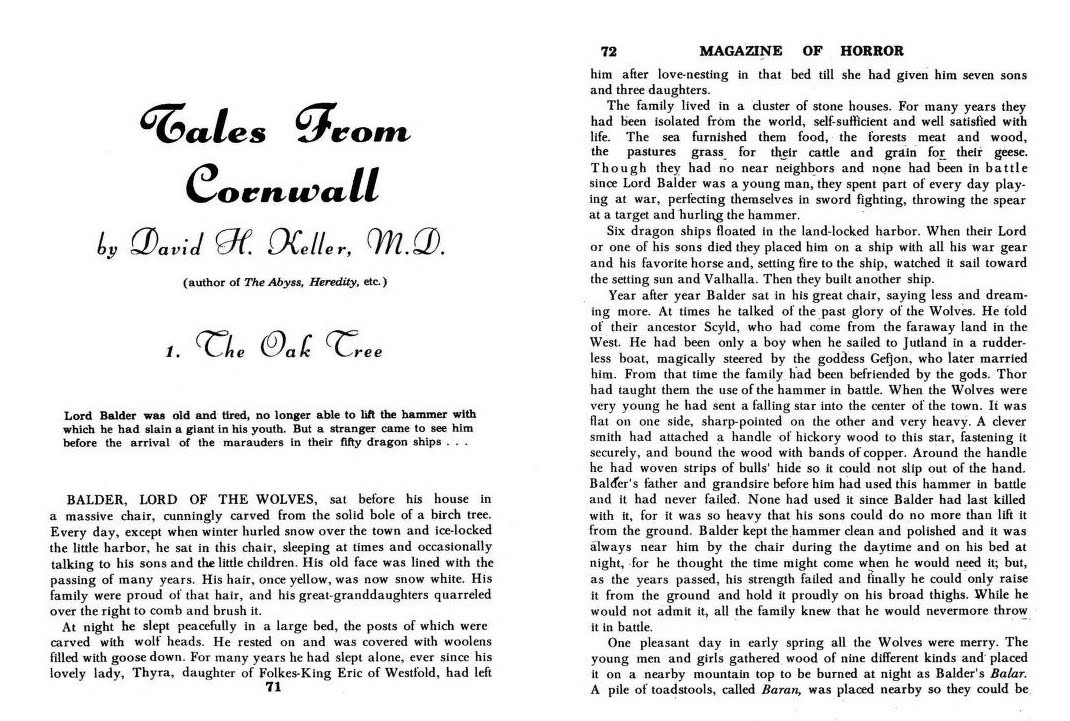
More interesting to me was that Keller also created a series of historical fantasy stories later called the “Tales of Cornwall” sequence, several of which appeared in Weird Tales in Lovecraft’s time. I’m always curious about forgotten British fantasy. Where can these tales be found? Archive.org to the rescue… it has a home-brewed Magazine of Horror PDF, a fan compilation of the stories in correct order of story-world dating and with new ones added. There are a total of ten, opening with…

The Oak Tree, dated 200 B.C, when Folkes-King Eric rules in Norway, and Olaf is Lord of the House of the Wolves at Jutland. The family name will not be changed to “Hubelaire” until 57 B.C.

… and running through to 1914.

The compiler notes on the listing page…

Lowndes managed to publish ten stories in the Cornwall series before the Magazine Of Horror folded in 1971: the six previously published tales and four of the unpublished stories. Unfortunately, the last five stories remain unpublished to this day.

His long short story “Men of Avalon”, issued in a 15 cent booklet paired with a similarly long Clark Ashton Smith story, was also partly a tale of the British Isles. Also of time-travel…

the ancient bowmen of the beautiful isle of Avalon cross the mighty abyss of Time, to pit their puny weapons against modern implement of slaughter

… though seemingly it is not one of the Cornwall tales. The only criticism of it I can find is that Derleth once called it “mawkish” when compared to the Smith story. Apparently complete in the two copies that survive, but garbled by pagination errors. Not scanned and online.

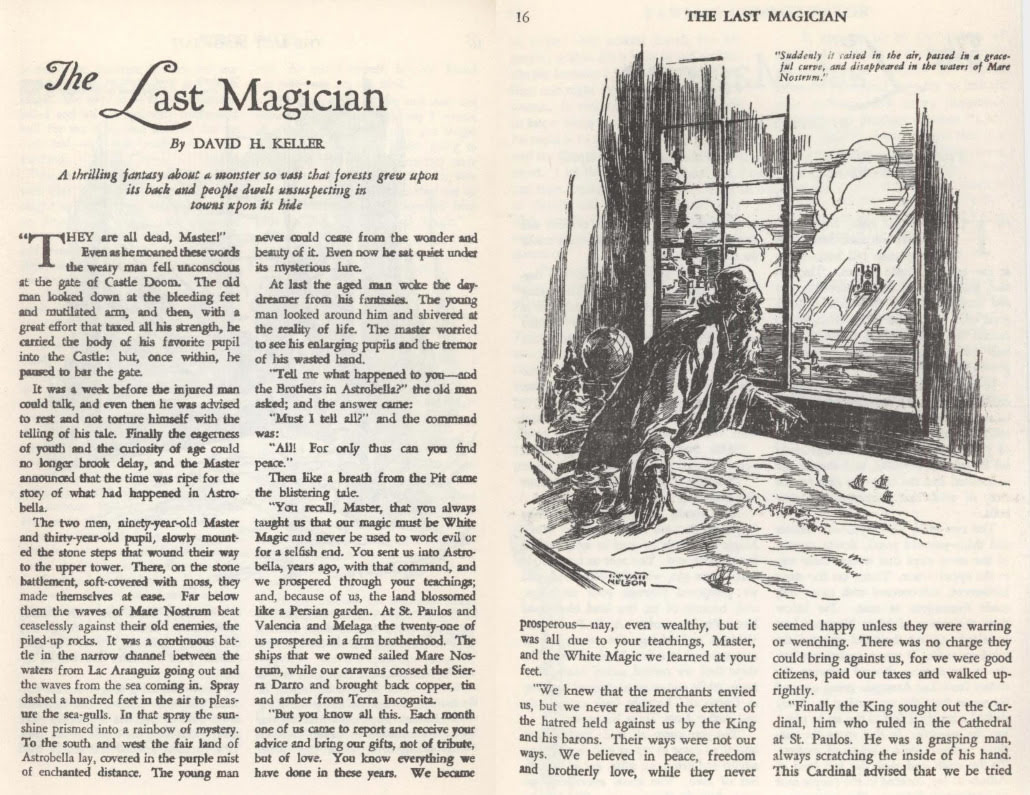
What is online is his The Last Magician: Nine Stories from Weird Tales (1978), at Archive.org and now forming a handy sampler of his other Weird Tales fantasy outside of the “Cornwall” stories. And with direct reprints of magazine pages…

His own personal introduction to this book also reveals he had another series, a string of detective tales of “Taine of San Francisco”. Here Keller also offers this important little biographical snippet about Farnsworth Wright, editor of Weird Tales…

Our meeting was the beginning for me of a very pleasant friendship with a very remarkable editor. Much of that story is confidential, but I can reveal that I was able to attain him a wife and child in spite of his serious handicaps.

A further story collection is the collectable Arkham House volume The Folsom Flint: And Other Curious Tales (1969). A tepid review in The Arkham Sampler for Summer 1948 reveals an earlier collection…

LIFE EVERLASTING AND OTHER TALES OF SCIENCE, FANTASY, AND HORROR, by David H. Keller. Collected by Sam Moskowitz and Will Sykora. With a Critical and Biographical Introduction by Sam Moskowitz. 382 pp.

I see that this is now online to borrow in its 1974 re-printing. Here one can find in good form his horror classic “The Thing in the Cellar”, and sample a Taine of San Francisco detective-horror tale in “The Cerebral Library”. The latter can also be seen in the original in Amazing Stories for May 1931.


Further reading:

“By The Waters of Lethe: or The Forgotten Man of Science-Fiction”, Fantasy Times, December 1945. (The Evening Star was deemed his greatest greatest novel, but alongside some huge plot spoilers. Concludes that despite the lack of a critics-pleasing style… “He was consistently readable and enjoyable to a greater extent then any other writer in the history of fantastic literature.” Indeed, he topped ‘favourite’ polls in the 1930s, but was forgotten by young readers by the end of the war.)

Lovecraft and photography

15 Wednesday Mar 2023

Posted by asdjfdlkf in Scholarly works

≈ Leave a comment

An unusual academic essay, “H.P. Lovecraft, Photography, and the Transhumanist Imagination” (Fall 2022). Sadly behind a paywall at Project Muse. But it’s the lead article in the issue and, since informed essays on Lovecraft’s understanding of photography are so rare, I’m mentioning it here.

Lovecraft’s seemingly naive conception of photography as unerringly “objective” actually reflects his understanding of photography as a transhuman technology that can transform human consciousness.

New books from Hippocampus Press

14 Tuesday Mar 2023

Posted by asdjfdlkf in New books

≈ Leave a comment

S.T. Joshi’s new 9th March 2023 blog post notes the arrival of “a sheaf of new publications” from Hippocampus Press. These include Robert Barlow, Eyes of the God in the new expanded edition of nearly 600 pages, and the journal Dead Reckonings No. 32 (Fall/Autumn 2022). Looking at the cover of the latter I see it has a number of interesting items…

Several other new items are mentioned by Joshi in his post, including a new extensively annotated translation of Lovecraft’s “philosophical essays”.

Looking at the “New” page on Hippocampus I see that Darrell Schweitzer has a story collection titled The Children of Chorazin and Other Strange Denizens.

Notes on The Conservative – July 1915

13 Monday Mar 2023

Posted by asdjfdlkf in Historical context

≈ Leave a comment

Notes on The Conservative, the amateur journalism paper issued by H.P. Lovecraft from 1915-1923.

Part Two: the July 1915 issue.

As war rages in Europe, Lovecraft presents his second issue. To front the paper he publishes the westerner Ira Cole’s poem “A Dream of a Golden Age”. Elegiac, bucolic, pastoral, though with a conventional Dante-like hint of the supernatural…

My spirit guide told wondrous tales of yore,
And strove by magic, and in mystic ways,
To show the splendour of those other days;

Lovecraft remarks that this poem is only Cole’s “second metrical effort”, which makes me wonder if Lovecraft may have revised some of the metre. (Lovecraft uses the British spelling of the latter word).

Lovecraft follows with an apt essay on metrical regularity in poetry. He traces rhythm to “the prehuman age” and to natural pulses ranging from the slow seasons to human walking. Rhythm is therefore a natural and ancient instinct and this has informed a time-tested tradition. Certain types of metre have been found over time to be more fit for “certain types of thought” than others. Modernists who abandon the ancient tradition…

cannot but be a race of churlish, cacophonous hybrids [uttering] amorphous outcries

As in the first issue’s poem (his own), we see here imagery that he will later use in fiction.

His “Editorial” briefly states what he understands to be his own core “conservatism” at summer 1915. His conservatism was not economic at this time, and even many decades later he was still an economic illiterate. He is mostly oppositional and reactionary, a rather doomed position for a conservative who might also want to guide the world into and through a rapidly emerging modernity. He is opposed to liquor, in favour of personal abstinence and legal Prohibition of liquor by the state. Even in 1915 this was a potent political topic, though today we associate it with the gangsters of the 1920s and 30s. What he evocatively calls the “Hydra-monster Rum” must be actively fought, he says. He is against anarchy (by which he means anarchism, then a far more potent creed than after its violent suppression by post-1917 international communism) and socialism (at 1915 Soviet-style post-1917 Russian revolutionary communism was not yet a force in the world).

He is actively for domination by the English backed by a “healthy militarism” aligned with national patriotism. And yet at 1915 his beloved British Empire was only a decade or so beyond its mature height (say, 1904-1909) and was ruling a quarter of the world’s people, so again he is really defending what already exists. He doesn’t elaborate on why this domination should be favoured (e.g.: abolishing the slave trade; ending petty inter-tribal feuds and local wars; developing agriculture and animal husbandry; opening up and regularising local trade and shipping; offering a reliable international currency with trading regulations; enforcing the rule of laws well-known and administered; secure land tenure; permission-less travel on new railroads and roads; basic literacy and a free press; sanitation, dentistry and medicine; libraries and museums that rescued regional history and traditions from destruction by an inexorable modernity; widespread education and un-cheatable sit-down exams that allowed talent to rise above caste and creed, and so on). Perhaps, in 1915, he doesn’t need to elaborate… since such things are still in existence and are obvious to all. But anyway the above non-bracketed items are his core, as stated in 1915.

Among his critics he notes Rheinhart Kleiner’s more measured response to his journal’s first issue. Kleiner, already an expert in light verse, frowned only on “art-shot” rhyming in the first issue’s opening poem. Kleiner may at first seem to mean by this that the rhymes used were a little too forced, in trying to make an ‘arty’ impact on the reader. But a glance at the subsequent issue — on the theme of ‘Allowable Rhyme’ — suggests that Kleiner’s objection was spurred by Lovecraft’s occasional use of casual rather than over-arty rhyming.

This contact suggests a likely date for the first Kleiner correspondence, and I find that S.T. Joshi sees it the same way…

he came in touch with Lovecraft only when Lovecraft issued the first number of his Conservative in March 1915

Amateur election musings follow, though even here there is one point of interest. We see that Lovecraft is comfortable with the concept of what is now called ‘the Anglosphere’…

Why should we not spread throughout the whole Anglo-Saxon world, fostering amateur journalism wherever our language is spoken and written?

And in this he follows a similar sentiment given in one of his earliest letters, sent to the editor of the All-Story magazine in 1914.

In the following article — on John Russell, an amateur Scots dialect poet often working in the ‘Burns’ style — he uses the seemingly clumsy “North Britain” to indicate Scotland. This made me wonder if his embrace of the terminology of the motherland was as yet a little shaky. Yet one finds that to have been an antiquarianism, used in the 18th and early 19th century. For instance it can be found in the book title Views in North Britain: Illustrative of the Works of Robert Burns (1805) and elsewhere. Even at this early date, Lovecraft is starting to slip obsolete antiquarian phrases into his writing.

His article on Russell also mentions various worthy Scotsmen including a “Lord Kames”, who it turns out was an 18th century philosopher interested in establishing the broad periods of upward human development (hunters, herders, farmers, chieftains/tribes, marketplaces/feudalism).

Lovecraft then responds to what he portrays as an anarchist pamphlet, though one apparently issued by the Blue Pencil Club of Brooklyn. A Lovecraftian might now think of this Club as a group of rather sedate amateurs. But perhaps the Club was more fiery in those days? Lovecraft chafes at a love of Walt Whitman, whose poetry and person he detests. But the pamphlet’s writer was in part responding to the new movie The Birth of a Nation, which prompts Lovecraft to state that he had not seen the movie. He had however read and seen the “crude and melodramatic” play and novel (1905, one of a trilogy) on which the movie was based. Lovecraft reveals he has… “made a close historical study” of the Klan and he believes them to no longer be in existence as an Order (though their former costumes and iconography are still sometimes adopted by thugs, he believes). Lovecraft saves his starkest condemnation for last, taking the pamphlet’s writer very strongly to task for encouraging his wartime readers to “refuse military service when summoned”. A brief glance at following issues of The Conservative suggests the matter develops further later in the year.

He concludes with a measured public letter of candidacy by Leo Fritter, his chosen candidate for President in his part of the amateur journalism world.

Lastly, I should add that in this issue he offers three short untranslated quotes in Latin:

1)

“Ver erat aeternum, placidique tepentibus auris
Mulcebant zephyri natos sine semine flores”. – OVID (said of the first ‘Golden Age’).

“The spring [of fresh water] flowed eternally, calm and singing to the ear,
The zephyrs [i.e. soft moist winds] were feeding flowers born without seed.”

2)

“Deteriores omnus sumus licentia.” – TERENCE.

“Suffering always follows licence”.

For clearer sense it might run: “We all suffer if one man gives himself license [to ignore the rules].” Anyone who has had to negotiate a bicycle-path which has many anti-motorcycle gates knows the sentiment well.

3)

On the critics of The Conservative, who perhaps hope to kill it off with words…

“Fragili quaerens illidere dentem, Offender solido” – HORACE.

“Bite softly, for you may find something hard” or “Bite into something fragile, hit something solid”.

For clearer sense it might run: “Those who bite unwarily into something they deem to be fragile or soft, may be jarred to discover their tooth has struck something hard and solid.” This was probably especially the case in an era when bread might have bits of grit and grindstone in it.

Tanabe’s “The Shadow Over Innsmouth” in English

12 Sunday Mar 2023

Posted by asdjfdlkf in Lovecraftian arts

≈ 1 Comment

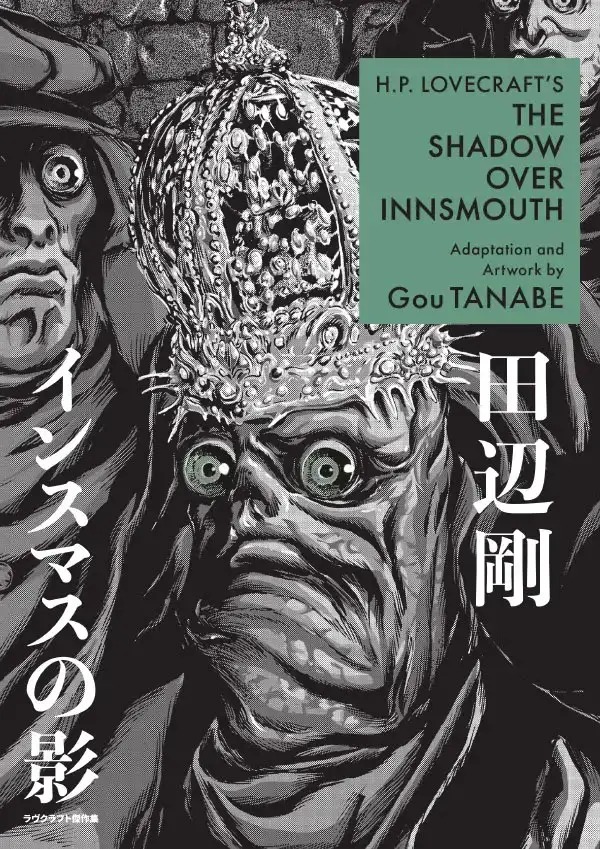
Dark Horse has finally dated Gou Tanabe’s “The Shadow Over Innsmouth” comics adaptation in its English translation. Though we’ll still have to wait a while, and even then its release will manage to miss the pre-Halloween market. 24th November 2023 is the current date for the $30 single volume. The original from manga master Tanabe was first published in Japanese, concluding there in November 2020.

Italy recently saw it released as a two-volume translation totalling 480 pages…

Also noted in comics, Slings & Arrows has a new review of Jim Steranko’s Marvel Visionaries collection (2002) and the reviewer, as well as some classic Captain America issues, notes the following…

The Lovecraft-inspired ‘At the Stroke of Midnight’ [is] beautifully drawn, with characters navigating panoramic gothic backdrops, through rows of micro-panels (pictured, right) capturing moment-to-moment reactions. Steranko’s use of extreme tonal contrasts prefigures V for Vendetta and Sin City. It’s a visual delight, and not reprinted elsewhere.

The tale was originally a seven-pager in the spinner-rack comic Tower of Shadows #1 (September 1969), and it appears that Steranko also had standalone strips in later editions of the same title. Having tracked this particular strip down at a blog as scans, I’d say it’s rather more ‘haunted house’ than Lovecraftian (possibly the reviewer was thinking of Derleth’s ‘collaborations’), but with some effective twists and moments.

The Cracks of Doom – third edition

11 Saturday Mar 2023

Posted by asdjfdlkf in New books, Scholarly works

≈ 1 Comment

My book The Cracks of Doom: Untold Tales in Middle-earth is now available in its expanded third edition. Notes for The Hobbit have been added, as well as many new and expanded additions for The Lord of the Rings. As such the book is now at 28,000 words. It has also had a further two passes of proof-reading, plus Amazon’s own spell-checking (it picked up four I didn’t catch, but Amazon doesn’t know about huorns).

Amazon has had the newly uploaded file for five days now, and they say ‘wait 72 hours’ after successful submission. Thus the new edition (in Kindle ebook only) should by live by now. I’ve also dropped the price a dollar, to $5.99 or around £5 UK. If you’ve already purchased the Kindle ebook edition, a new download to your Kindle should get you the new third edition.

My book seeks to sympathetically identify all the ‘cracks’ and ‘gaps’ in The Hobbit and The Lord of the Rings in which new fan-fiction stories might be told, or where small new gap-fillers might be fitted in.

Three examples of the sort of notes and ideas you’ll find, which track through in the same order as the events of the books…


Rangers hold Sarn Ford

Rangers attempt to hold Sarn Ford against the Black Riders, but many are killed and others are forced to fall back.

In a long-unpublished text, at the moment when Frodo’s luggage leaves Hobbiton bound for Crickhollow, Tolkien has Sarn Ford in the far south of the Shire being defended by the Rangers. They face the Black Riders boldly but are out matched and defeated. Some escape, so the encounter and losses would become known to the other Rangers. There might be a scope for a poignant story set a few years after the War of the Ring, in which some of the Southfarthing hobbits trek all the way to the Brandywine Bridge to petition the King for a stone memorial at the Ford to their fallen defenders, and there meet some of the Rangers who survived the encounter with the Riders.


Gimli and the honey-cakes

Gimli remarks that the waybread of the elves is better than honey-cakes made by the Beornings, a treat they are evidently reluctant to offer to travellers in such wary days.

Gimli thus implies that he has recently encountered the Beornings, as a traveller. Presumably this was on his journey to Rivendell. How did he persuade them to let him have some honey-cakes? This might be a short comedic tale, with songs and mention of some of the bee-lore of the Beornings.


Were-worms and heroes

Evidently Bilbo knows a tale or tales that indicate that in the East of East of Middle-earth there are fierce wild Were-worms in the Last Desert.

This implies that someone fights with these creatures, presumably a hero who defeats or at least escapes from them. Such a tale has most likely been picked up from travelling dwarves, who by that time pass through the Shire on the way to their mines. That Bilbo can use the reference without comment from the dwarves strongly suggests that this is the case. “Were-worms” suggests shape-changing dragon-men, real desert men who can become dragons or dragon-like, just as Beorn is a bear-man or were-bear. There is surely a story here of how a Tookish ancestor of Bilbo manages to winkle such a vivid story out of a passing dwarf, followed by details of the great (dwarf?)-hero involved and the reasons for his epic quest to such a remote and fearsome place.

Jas. F. Murray

10 Friday Mar 2023

Posted by asdjfdlkf in Picture postals

≈ Leave a comment

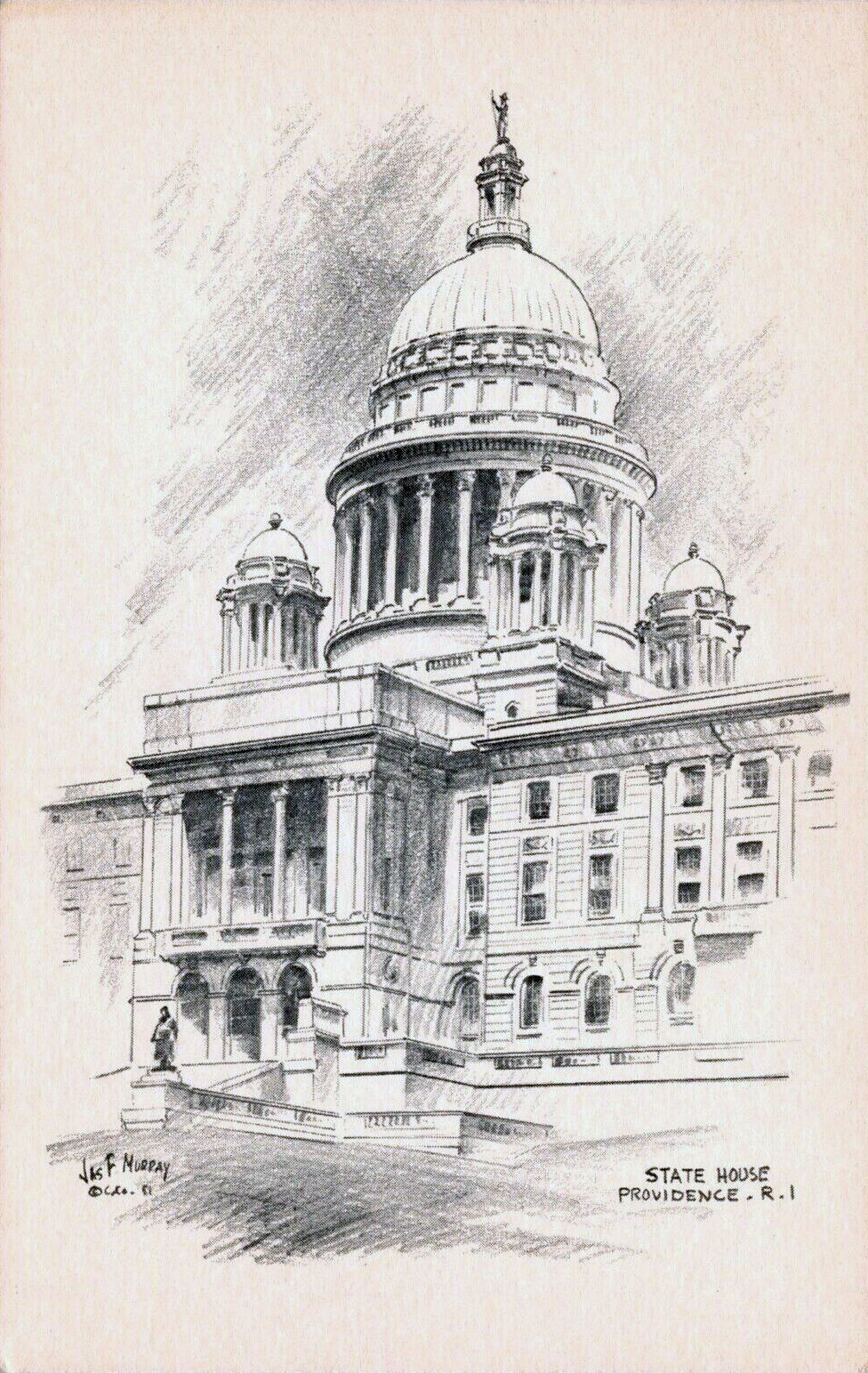
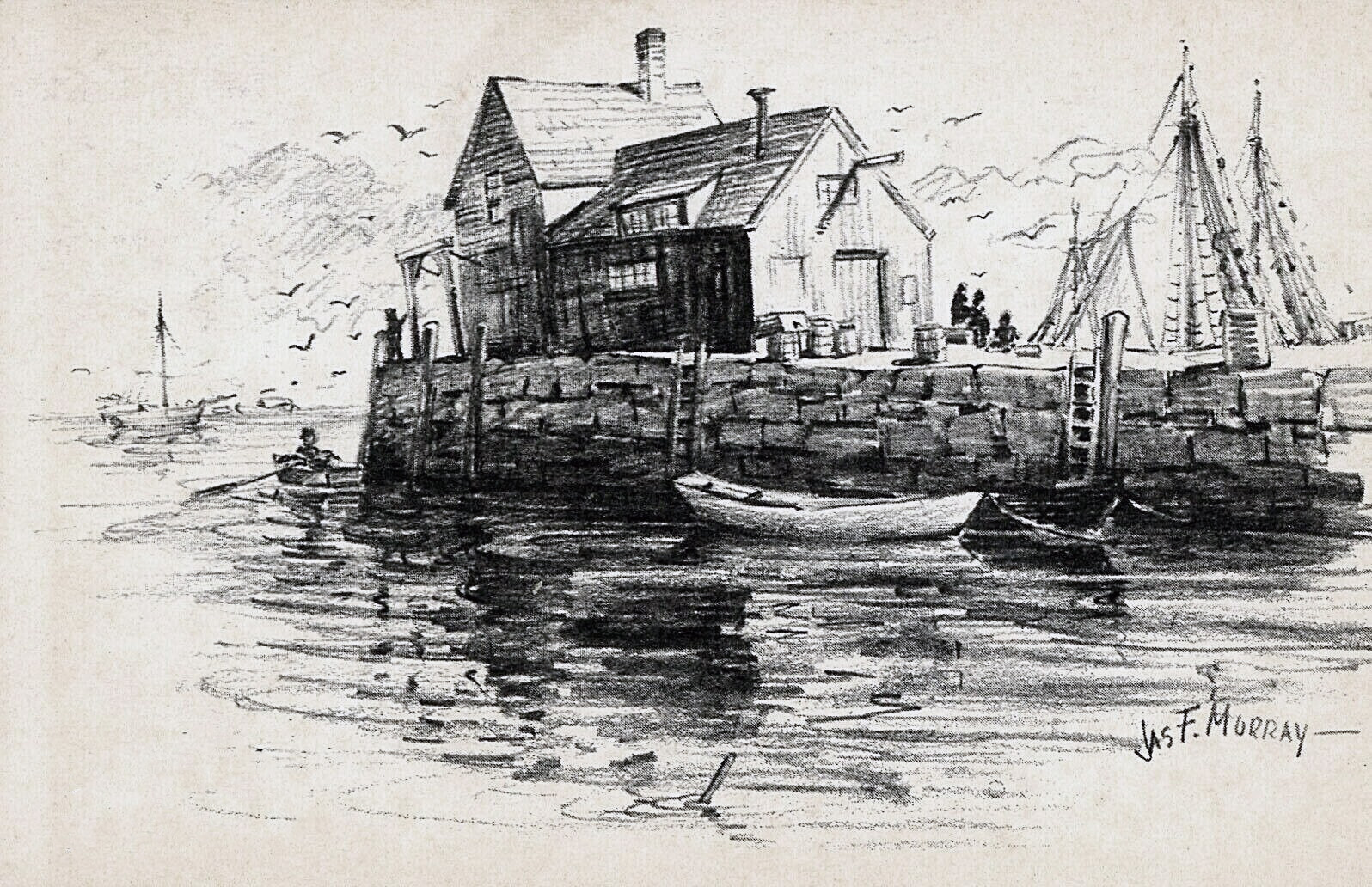
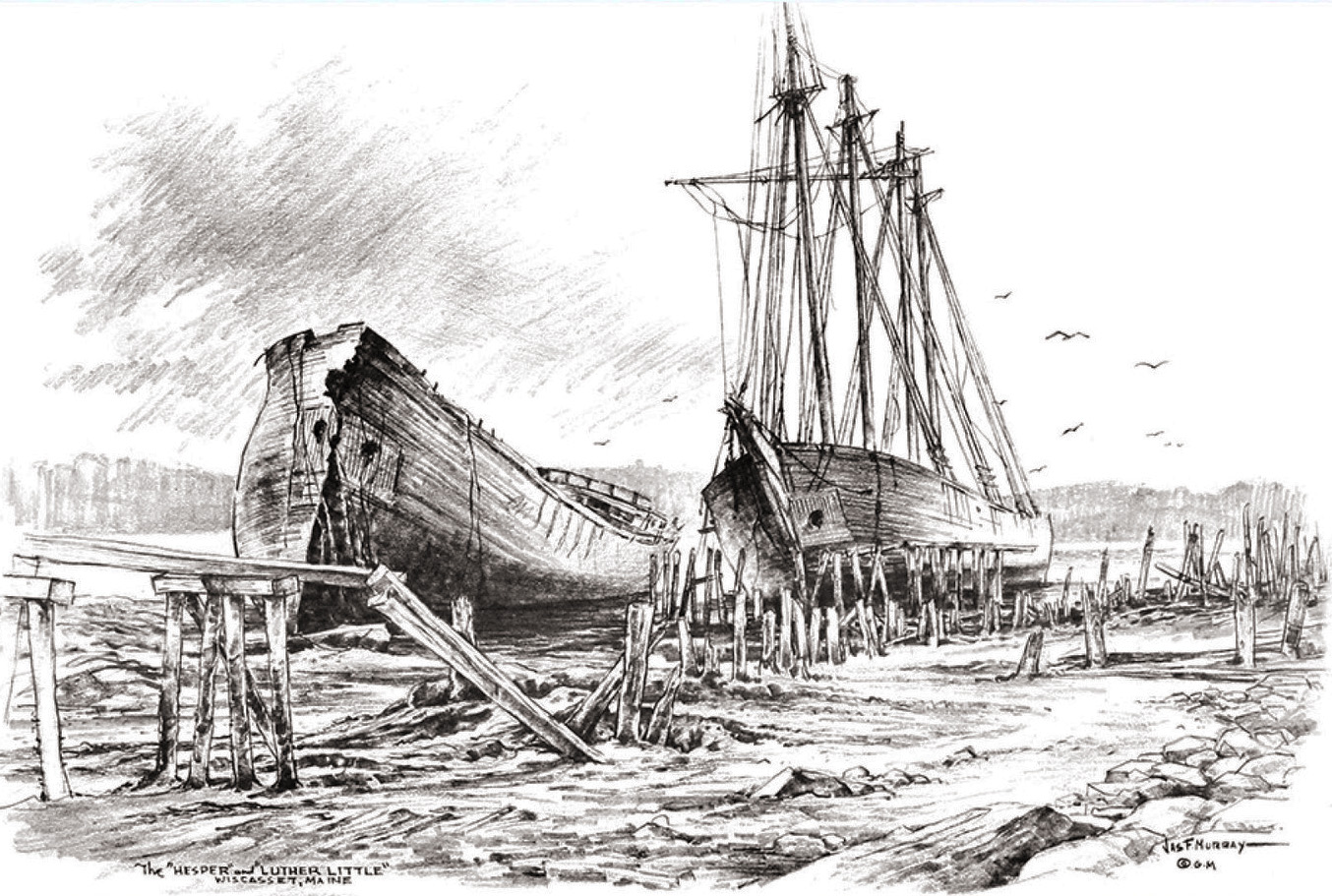
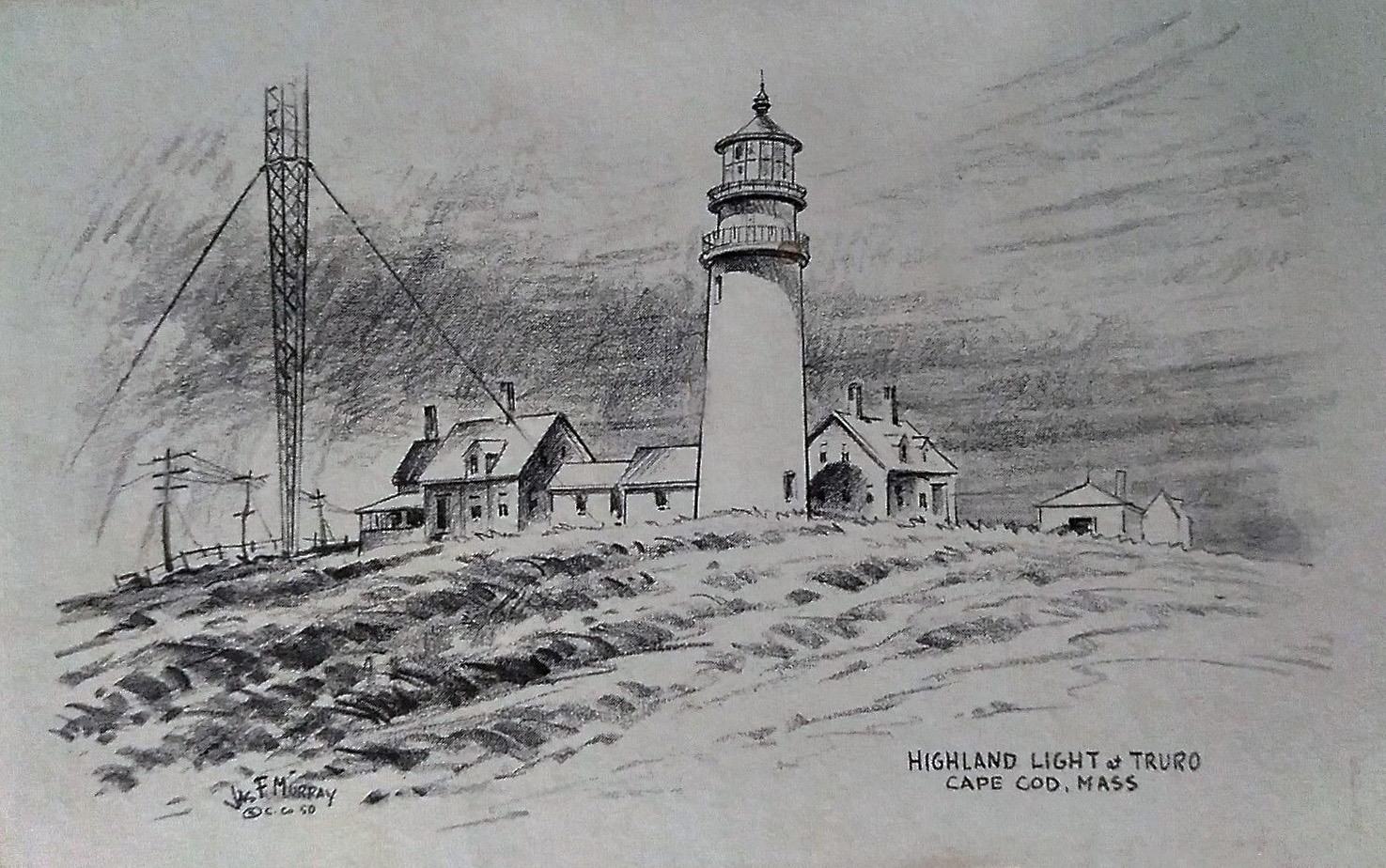
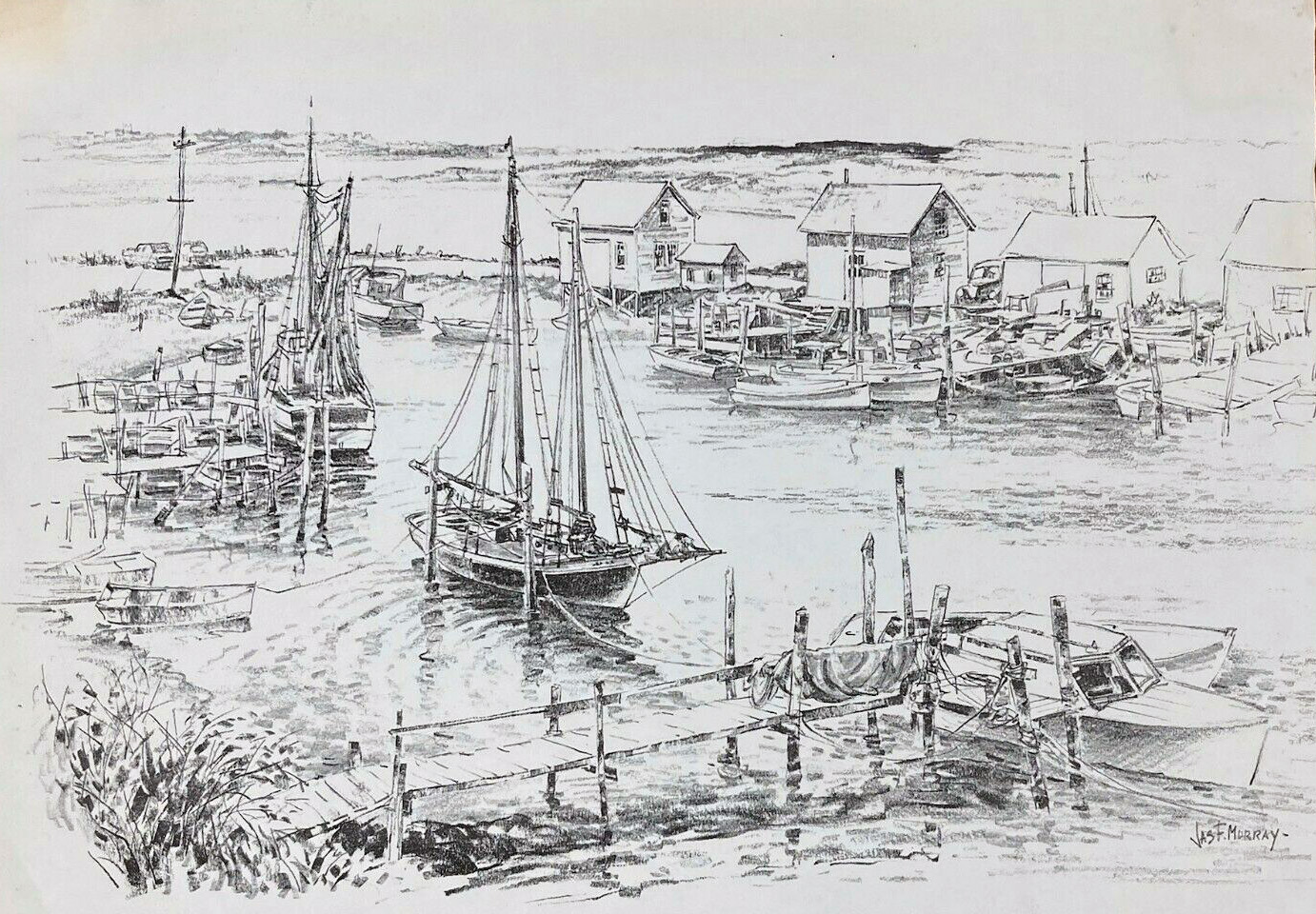
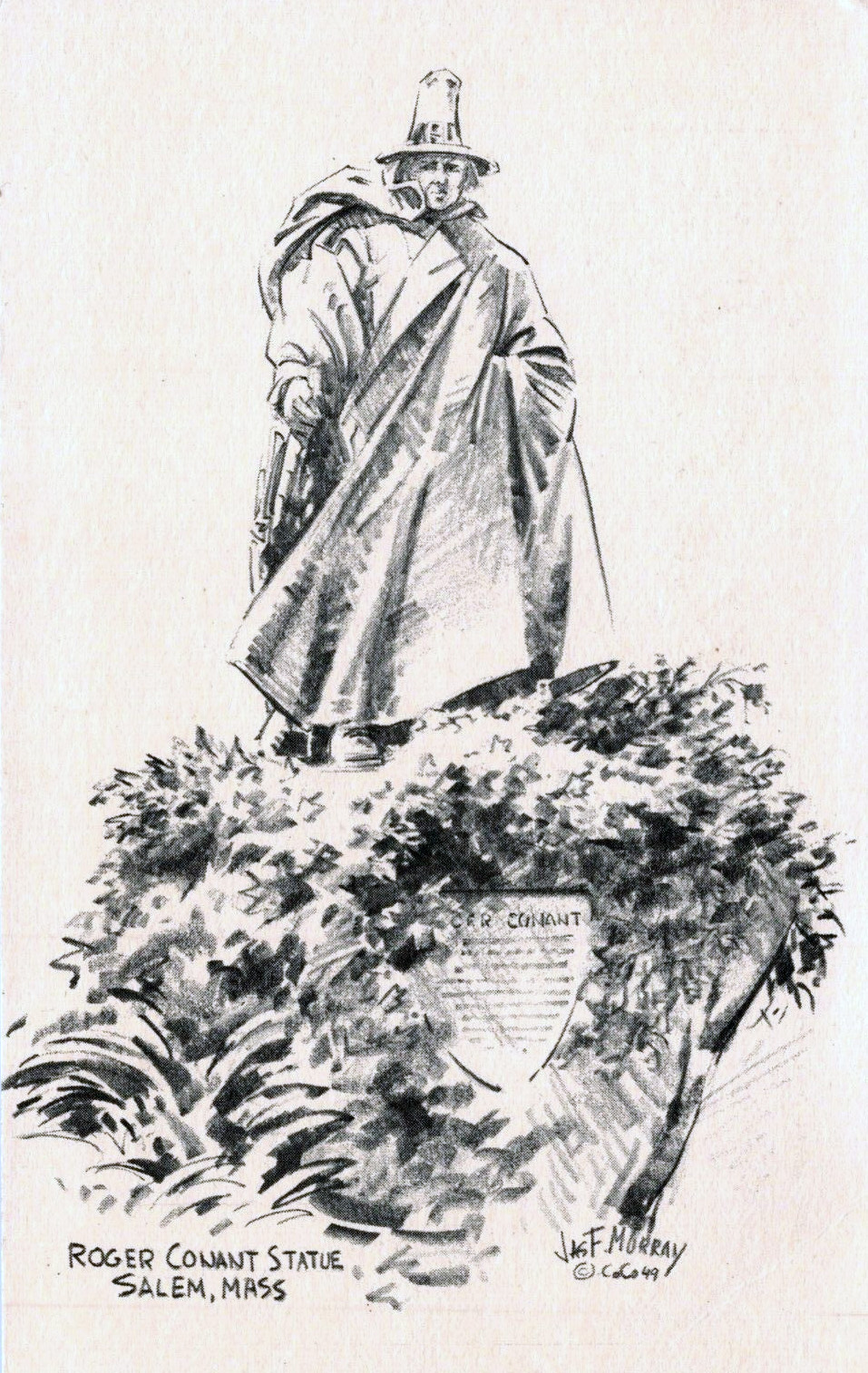
This week for my regular ‘Picture Postals’ blog post, some sketch views by the artist “Jas F Murray” whose full name was James Francis Murray (1899-1990). He ‘worked over’ much of the same antiquarian and coastal territory as Lovecraft, but some 15 or 20 years later. I’ve picked out a few postcard sketches from his very prolific output. The picks are either of Providence, or of places known to Lovecraft, or are coastal scenes evocative of Innsmouth. There are probably hundreds more of his scenes floating around, from which a larger selection might be made.


Providence:

The tentacular tree at the Betsy Williams House. Note the ‘face’ to be found in the tree.

The Van Wickle Gates at Brown University, a stone’s throw from Lovecraft’s final home.

The State House, whose distant exterior oriented him when glimpsed in distant views while out walking, and whose fine interior he came to admire in letters.


Evocative of Innsmouth:


Some places Lovecraft knew:

‘Mother Ann’, near Gloucester.

‘House of the Seven Gables’, Salem.

‘Witch House’, Salem.

Pioneers’ Village, Salem.

Conant, the key Puritan founder of Salem.

‘Gardener’s Court’, Nantucket. (Partially reconstructed picture, blurred on right-hand-side)

Call of the Sea (2020) for free

09 Thursday Mar 2023

Posted by asdjfdlkf in Lovecraftian arts

≈ Leave a comment

The well-reviewed 1930s Lovecraftian videogame Call of the Sea (2020), is free from the Epic Games Store from 9th-16th March 2023. The locks have not yet popped on this $20 narrative / mystery / puzzle game, but should any hour now. Account required. Runs back to Windows 7 and low-spec graphic cards.

← Older posts
Newer posts →


Please become my patron at www.patreon.com/davehaden to help this blog survive and thrive.

Or donate via PayPal — any amount is welcome! Donations total at Easter 2025, since 2015: $390.

Archives

  • November 2025
  • October 2025
  • September 2025
  • August 2025
  • July 2025
  • June 2025
  • May 2025
  • April 2025
  • March 2025
  • February 2025
  • January 2025
  • December 2024
  • November 2024
  • October 2024
  • September 2024
  • August 2024
  • July 2024
  • June 2024
  • May 2024
  • April 2024
  • March 2024
  • February 2024
  • January 2024
  • December 2023
  • November 2023
  • October 2023
  • September 2023
  • August 2023
  • July 2023
  • June 2023
  • May 2023
  • April 2023
  • March 2023
  • February 2023
  • January 2023
  • December 2022
  • November 2022
  • October 2022
  • September 2022
  • August 2022
  • July 2022
  • June 2022
  • May 2022
  • April 2022
  • March 2022
  • February 2022
  • January 2022
  • December 2021
  • November 2021
  • October 2021
  • September 2021
  • August 2021
  • July 2021
  • June 2021
  • May 2021
  • April 2021
  • March 2021
  • February 2021
  • January 2021
  • December 2020
  • November 2020
  • October 2020
  • September 2020
  • August 2020
  • July 2020
  • June 2020
  • May 2020
  • April 2020
  • March 2020
  • February 2020
  • January 2020
  • December 2019
  • November 2019
  • October 2019
  • September 2019
  • August 2019
  • July 2019
  • June 2019
  • May 2019
  • April 2019
  • March 2019
  • February 2019
  • January 2019
  • December 2018
  • November 2018
  • October 2018
  • September 2018
  • August 2018
  • August 2015
  • July 2015
  • April 2015
  • March 2015
  • February 2015
  • January 2015
  • December 2014
  • November 2014
  • October 2014
  • September 2014
  • August 2014
  • July 2014
  • June 2014
  • May 2014
  • March 2014
  • February 2014
  • January 2014
  • December 2013
  • November 2013
  • October 2013
  • September 2013
  • August 2013
  • July 2013
  • June 2013
  • May 2013
  • April 2013
  • March 2013
  • February 2013
  • January 2013
  • December 2012
  • November 2012
  • October 2012
  • September 2012
  • August 2012
  • July 2012
  • June 2012
  • May 2012
  • April 2012
  • March 2012
  • February 2012
  • January 2012
  • December 2011
  • November 2011
  • October 2011
  • September 2011
  • August 2011
  • July 2011
  • June 2011
  • May 2011
  • April 2011
  • March 2011
  • February 2011
  • January 2011
  • December 2010
  • November 2010
  • October 2010
  • September 2010
  • August 2010
  • July 2010

Categories

  • 3D (14)
  • AI (70)
  • Astronomy (70)
  • Censorship (14)
  • de Camp (7)
  • Doyle (7)
  • Films & trailers (101)
  • Fonts (9)
  • Guest posts (2)
  • Historical context (1,094)
  • Housekeeping (91)
  • HPLinks (61)
  • Kipling (11)
  • Kittee Tuesday (92)
  • Lovecraft as character (56)
  • Lovecraftian arts (1,618)
  • Lovecraftian places (19)
  • Maps (70)
  • NecronomiCon 2013 (40)
  • NecronomiCon 2015 (22)
  • New books (962)
  • New discoveries (165)
  • Night in Providence (17)
  • Odd scratchings (985)
  • Picture postals (276)
  • Podcasts etc. (430)
  • REH (181)
  • Scholarly works (1,461)
  • Summer School (31)
  • Unnamable (86)

Get this blog in your newsreader:
 
RSS Feed — Posts
RSS Feed — Comments

H.P. Lovecraft's Poster Collection - 17 retro travel posters for $18. Print ready, and available to buy — the proceeds help to support the work of Tentaclii.

Proudly powered by WordPress Theme: Chateau by Ignacio Ricci.