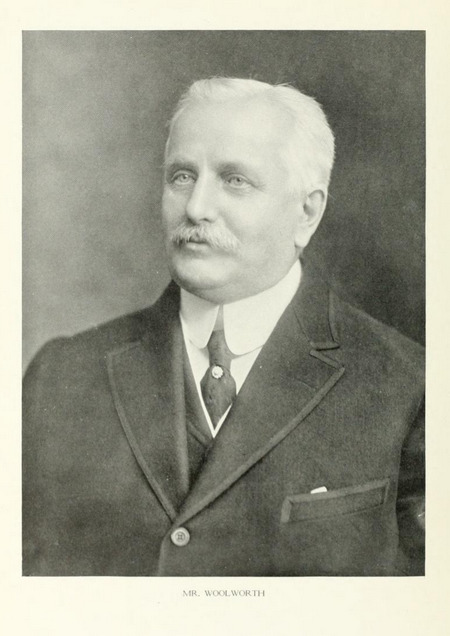
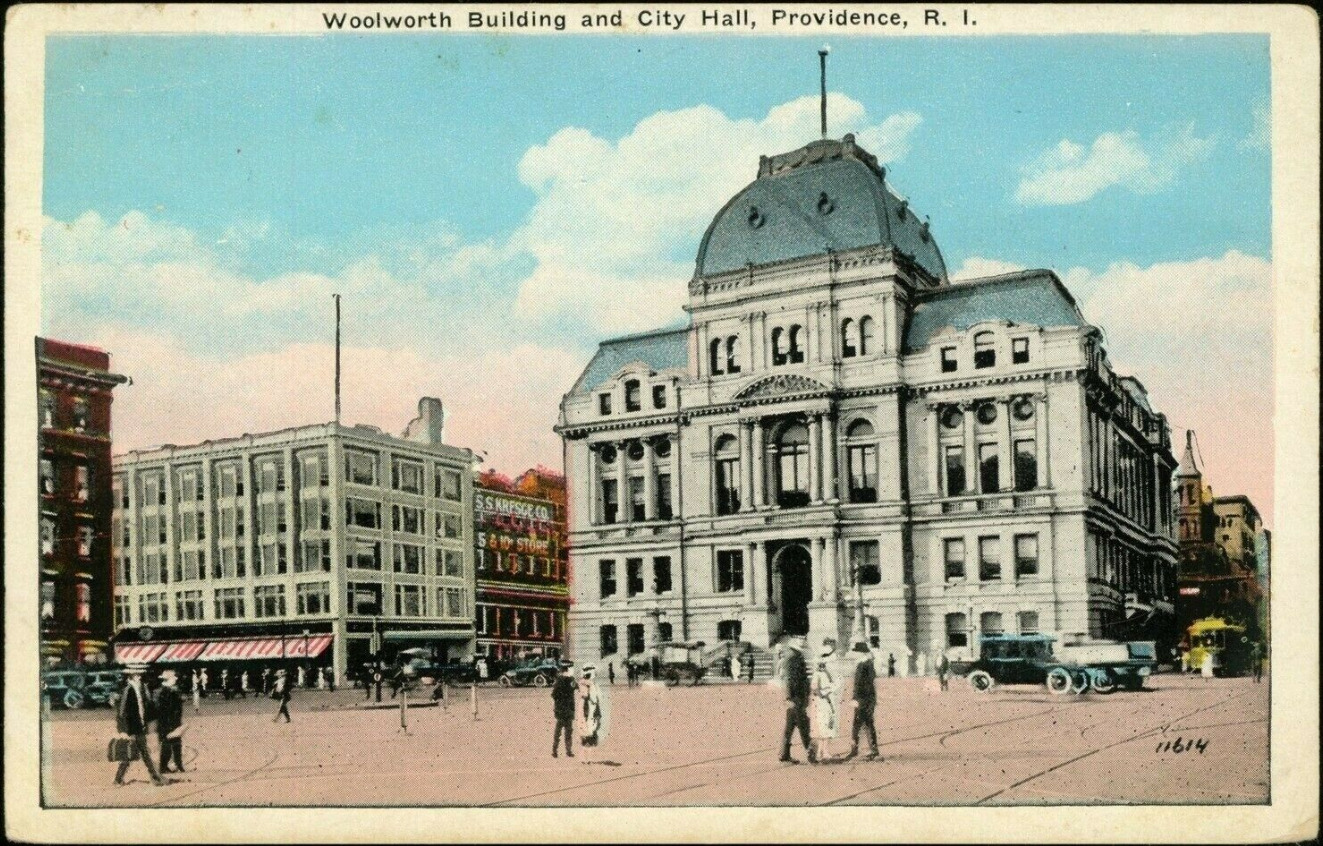
This week, another of my peeps through the door of a store, cafe or soda-bar known to Lovecraft. The Providence Woolworth or Woolworth’s was once a world-famous and much-loved budget department store chain. Here we see the wider urban context for the Providence store. It was just around the corner from the Biltmore Hotel and thus in the centre of the city…


Here we see what the blue-grey ‘tower’ was. The Woolworth building was also next to City Hall, and the store had a similar but presumably less salubrious “Kresge’s 5 & 10c” store opportunistically tagged on behind it.
This store was where, we now know from Letters to Family, Lovecraft acquired his nearly complete set of Our Empire’s Story, told in Pictures. As I wrote earlier…
He found four of this set at 10 cents each, while browsing for bargains before Christmas 1934 in the Providence branch of the Woolworth Store.
We might then assume that in the depths of the Great Depression he found some regular enjoyment in browsing here for small ‘micro bargains’, as people do in a recession, and he likely paid special attention to things like the stationery, budget reprint books, pencils and the sort of bargain candy that Woolworths was once famous for. We definitely know that the 20th century’s all-time champion letter-writer found his envelopes there circa springtime 1934, having finally run out of the supply he had from his friend Kirk. He wrote to Helen Sully in May 1934…
I may reply that the containing envelope (an honest product of my philanthropic stationer-in-chief, Mr. Frank Winfield Woolworth) is infinitely less likely to succumb to disintegration than were the ageing reliquiae of the (to my old correspondents) famous George W. Kirk charity stationery which I have been using for 9 years.
I Am Providence observed the pitiable poverty that lay behind such budget purchases…
In late 1935 we even read of Lovecraft having to conserve on ink: he felt unable to make repeated purchases of his usual Skrip ink, at 25¢ a bottle, and was trying to get by on Woolworth’s 5¢ brand.
In a letter to Rimel at the same time we learn he also uses the Woolworths writing pads and finds they agree tolerably well with his pen and the ink.
Here is a detail from an over-painted card of circa 1940, its impossibly gaudy colours toned down, which broadly indicates Lovecraft’s view on approaching the Providence Woolworth’s on foot…
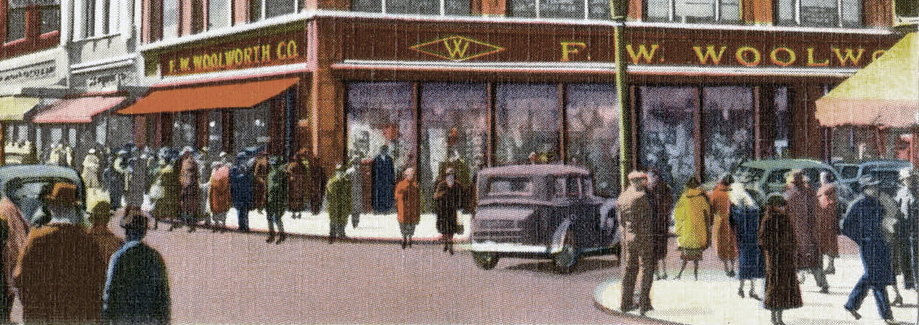
And another of the same building, perhaps 20 years earlier and from further back…

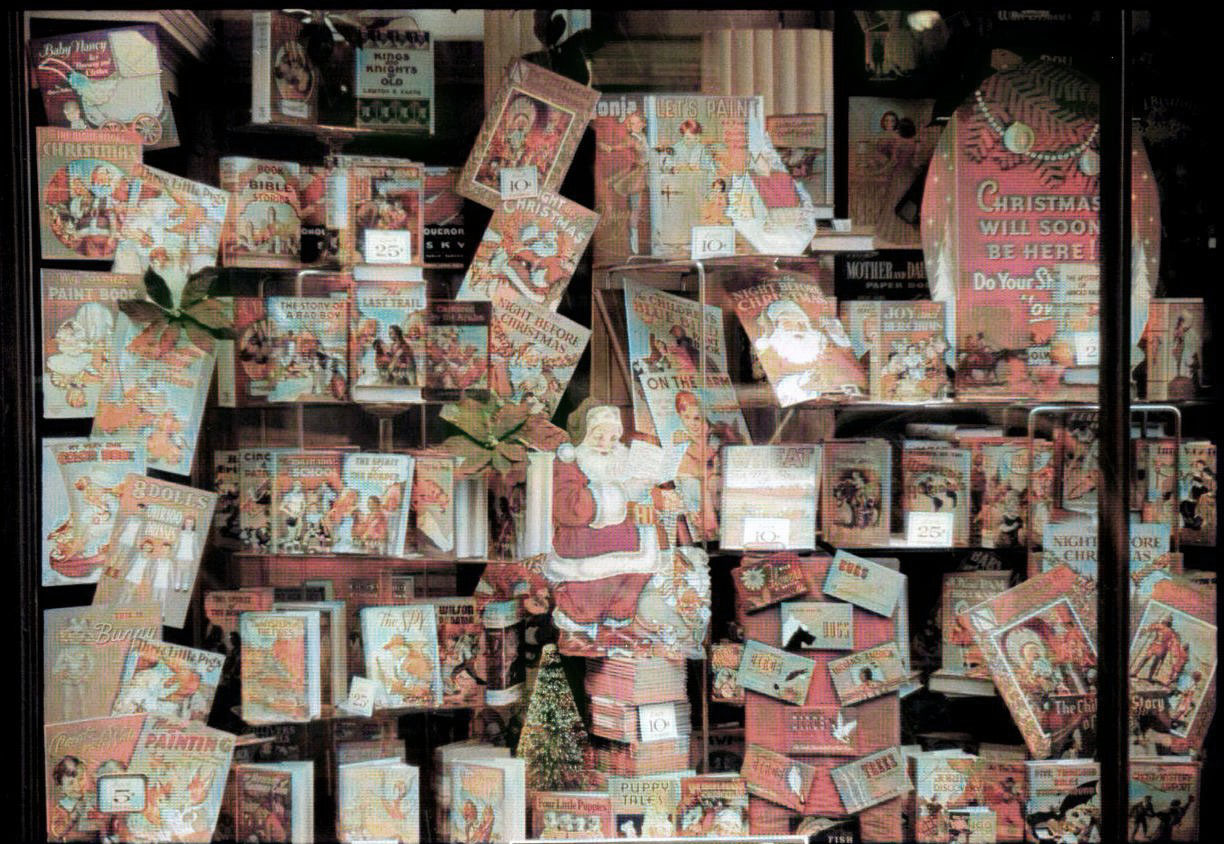
As one approached, the quality of the window dressing in the various show-windows would attract the eye and would probably cause Lovecraft to linger in front of those showing books. Here we see a typical Woolworth’s children’s book selection for Christmas, with books priced at 25 and 10 cents, and one item vaguely akin to Lovecraft’s Our Empire’s Story 10-cent books.
Since Lovecraft was keen to assure his Welsh correspondent (Harris) that the Our Empire’s Story illustrated books were also valuable as visual reference for adults, we might assume they were marketed to children and thus stocked in the children’s books section of the Woolworth store. In those days an old gent could browse a children’s section alone, without security guards being summoned. He elsewhere notes that books of other types might be found there… “Very fair atlases can be obtained at Woolworth’s”.
There were also displays of goods in the recessed main entrance. As seen below, their Providence store promoted the latest hit music records in this way. Lovecraft’s lowbrow musical taste would likely feel right at home here.

The store may have glittered like this but he liked “Frank’s” lack of pomposity, as evidenced his “To a Sophisticated Young Gentleman” poem (1928). In this he remarked that young Long was as… “devoid of Pomp as Woolworth’s”.
Ken Faig has recently identified “Frank’s” as Lovecraft’s sometime name for Woolworth’s. Evidently the master whimsically felt as if Mr. Frank Winfield Woolworth were a sort of capitalist philanthropist-magician, personally conjuring up for impoverished old gents their affordable boxes of envelopes, 5-cent ink-bottles, 10-cent illustrated history books and atlases, and occasional bags of chocolate creams.