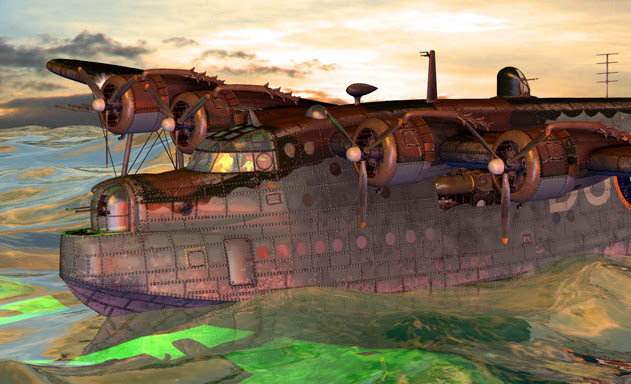
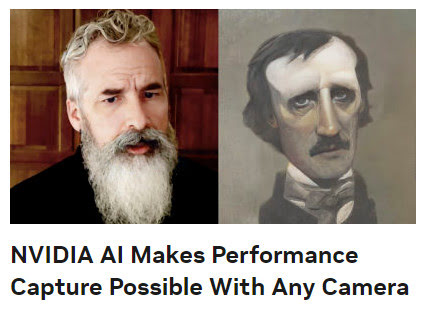
Now available, the latest free Digital Art Live magazine, this month at a chunky 96 pages. Free as “pay what you want” on Gumroad, but a small donation is certainly encouraged to help keep it going.
Get issue 70 (August 2022) in .PDF at Gumroad.
Now available, the latest free Digital Art Live magazine, this month at a chunky 96 pages. Free as “pay what you want” on Gumroad, but a small donation is certainly encouraged to help keep it going.
Get issue 70 (August 2022) in .PDF at Gumroad.
Duplicate and Scatter for Poser 12, a free script meant for low-poly props.
Yesterday’s ‘Jessi in SuperFly’ post has been updated. I went back to a saved scene file where the pupils were still white after eZSkin 3, before I fixed it. I started again and figure out how I fixed it. It actually wasn’t the Reflectivity or Specular. Here’s the corrected line, with the solution…
“Pupils should be black but they’re white after eZskin 3. Solution to fix: Material Room | Pupil | Alternate Diffuse node | follow the wire to the Scatter node | turn colour there to a very dark grey.”
Some people seem to think this is impossible, but all I can say is that tweaking the Alternate Diffuse node worked for me. Perhaps it’s only the case for very old figures?
Ok, after a few days most things are fixed / created / done / decided now, re: Poser 12. Note to self… still to look at for Poser 12 in future…
* DONE. Stress-test ‘scene compatibility’ with the old Vue 2016 R5. Success. Also works with the modern subscription Vue.
* DONE. Can a DAZ DSON import, saved as a scene from Poser 11, then be opened in Poser 12? Fail.
* SuperFly now does shadow-catching. How does the shadowcatcher work, and can it be automated via a script? Can the script(s) output varying intensities / hardness of shadows?
* What nodes are needed for PBR materials in Poser 12, and when loaded how much does fancy PBR slow down renders? Are there PBRs that are fast and funky and useful? Do they jar with regular materials (i.e. they look too good, and show up the plainer/old materials). Can output from Material Maker be instantly whisked into Poser and connected up, by a script? Or could Material Maker even simply output straight into the Poser format, via a plugin or script?
* The new Pillow module for scripted image processing in Python 3. What can it do? Where is it documented, with simple examples? Can it, for instance, cleanly knock out white from a line-art render, then layer it onto a Sketch render at 80% opacity? Can a Pillow script auto-combine two auxiliary .PSD renders from SuperFly and Firefly, into a single layer-stacked .PSD?
* The new Python “method to find a parameter specifically by internal name”. Sounds useful, but… where, and how?
* See how well my mo-cap works with it.
* Fix my various as-yet unreleased commercials scripts for Poser 12.
DALL.E 2. has launched in beta. $15 effectively buys you three or four text prompts per day, across a month. The lucky beta “users get full usage rights to commercialize the images they create”. There’s also a bung for those around the world who can’t afford that… “Artists who are in need of financial assistance will be able to apply for subsidized access.”
A quick fun test to see how eZSkin 3 and the official Superfly strand hair shader hair work in Poser 12. As a stress-test I chose the ancient Poser 6 official Jessi figure, with skin and eyes auto-converted for Superfly by eZSkin 3. Overall, not great… by modern standards. But much better than the Poser 6 helmet-hair and plasti-skin of yesteryear.
The old Poser strand hair was slightly more difficult. It’s the standard old Jessi hair cut and comes in a half-dozen pieces on a folical growth-cap and — even with the easy-apply feature in the Hair Room — it needed six or seven applications to convert. The default strand hair SuperFly shader (P12 default Library: ..\Materials\Superfly\SuperFly Basics\Strand Hair) seems to be best used with a colour one or two shades darker than you think you want, otherwise it can get very reflective. It anyway tends to ‘shine up’ to a lighter colour.
EzSkin 3 works fine on these old P6 figures. James preset = his P6 gal Jessi, even though she doesn’t appear to be in the presets. Eye pupil-shine is tricky to get rid of. Pupils should be black but they’re white after eZskin 3. Solution to fix: Material Room | Pupil | Alternate Diffuse | follow to the Scatter node | turn colour there to a very dark grey. But once that’s done, and the pupils are black then save as a SuperFly eyes material for future use on older figures.
Her nice hairstyle, seen in the thumbnail, seems to have gone AWOL over the years. Possibly there were once styling presets, but in 2022 it loads as a bit of a mop. But her grey painted eyebrows are the main problem. I don’t think anyone ever made strand-hair eyebrows for her. Though theoretically you could grow some in the Hair Room.
As you can see, eZSkin 3 and the standard Superfly hair shaders open up the possibilities for portraits of a vast range of older Poser content from far beyond the old official P6 figures.
Spurred by today’s release of the free PBR Material Maker, I made a bit more progress in solving the seemingly inscrutable mystery of how to set up PBR materials in Poser. I found a useful official tip from an old La Femme webinar…
“In the Library there’s a thing called Tileables, Superfly Tileables. The image maps that you get out of Substance Painter, you can plug them right into that node and you’re done. You don’t have to do anything else. Just plug those image maps in and you’re done.”
Great. They’re found here in the Poser Library, and I must say the preview thumbnails look distinctly uninviting and un-sexy. Which is probably why I’ve never paid any attention to them…
The examples load and look useful. But I cannot find a way to add the image maps. The nodes are correctly labelled, but utterly without the ability to input or swap-out any new image maps.
I guess that what you do is not replace image maps on the existing setup nodes. Rather you disconnect and delete what’s there at present. So for instance, disconnect and delete “Metallic” and then replace it with a completely new node on “Metallic” which uses (somehow) the Metallic material output from the PBR maker software. Then name the node “Metallic”.
But that assumes you know what specific type of node needs to be added, from the gazillion possibilities, for PBR to work. And then there’s the problem that the nodes in the example above don’t appear to be image-loading nodes at all. Except that they do seem to show tiled images within them.
Like I said, a bit more progress… but still stumped.
How to add a simple overlay on top of an existing texture in Poser:
The overlay has not destroyed the original glossy effect, I just took that off manually to make for a simpler demonstration of the nodes.
1. At the top Diffuse node, right-click and disconnect the connector to your current 2D texture. This does not destroy the texture. It’s still there waiting to be re-connected.
2. Right-click the empty Diffuse slot and there plug in a new Math | Color Math node.
3. Set the Color Math node’s Argument to Multiply. Also have both of its values be pure White.
4. Connect the Color Math node’s Value 1 slot to the original texture map.
5. On the Color Math node’s Value 2 slot, right-click and then add a new standard 2D node.
6. On the new 2D node you then load your overlay as a square 2D image source, in the usual way. Pure b&w appears to work best.
Here we have a puny low-res dash-shading overlay for demo purposes. Nor is it even uniform, which it ideally should be…
For dash or hatched-shading of the object you may want to dial this source’s U and V scales down from their 1.0 settings, to something like 0.10 or 0.12, as seen here.
You can save this as a standard material setup, and then just switch the source texture and overlay texture. Obviously you’d use a seamless tiling texture, which I haven’t here.
Of course, it would be nice to have the overlay effect render on its own. There are two ways to do this, that I know of…
1. Also plug the overlay into the Alternate Diffuse, which should be set to white. You then see the change in the Preview. Then render again, in Preview even. In Photoshop, knock white out of the render with an automated Action.
2. Also plug the overlay into the Custom_output_1. There will be no change in the viewport.
But if you render to Firefly with the following settings…
… and save as a Photoshop .PSD then you get a nice Photoshop layer of the effect on its own…
Yes, ugly seams… but this is just a quick demo. The seams could be fixed.
We still don’t have it in a form where the white is transparent, but any good Photoshop Knock Out White Action will do that.
Of course, it may be possible to just leave the whole current material setup alone, and just plug your overlay shading into the Custom_output_1. I’ve yet to investigate that. Though that would limit you to Firefly rendering only. But doing it that way should be simple and reliable enough for a script to handle automatically.
A new Poser freebie today, a low-poly 1940s scientist / investigator type to populate the background of your Poser scenes. Especially important for noir / pulp-crime comics and Lovecraftian RPG games artists, I’d say.
Once installed, found in the Library under: Figures | !DieselPunkUniverse | Character Male | Agent the Forties.
Judging by the poly-reduction tool in Poser (perhaps not a good guide?) the figure is just under 3,000 polys each, including clothes, but still looks good. So you could have 12 of these in a scene, and your higher poly heroes. You could even have a scatter script set to load and scatter 12 of them, and auto-apply poses.
The figure is found to work with poses from the main M3 partial-poses constructor pack (‘Dynamic Pose Construction Set’, no longer sold, found under ‘M3 DynamicsPCS’ in the Library).
The head accepts M3 character dial morphs (seen here is “HdFrankentn”), so you can quickly get away from the ‘stock M3 face’ which everyone goes “ugh!” at. There is absolutely no reason that any M3 has to look like a sad Poser 4 left-over.
Adding a head morph does not appear to increase poly-count, and does not need any prior INJ injected. So basically… poses and head morphs for M3 will all likely work with these figures. Aren’t you glad you kept all that M3 stuff, now?
My raw Poser test renders in real-time Comic Book. Stock Poser light preset.
RodZilla’s Material Maker 1.0 is now available. It’s standalone desktop software for making PBR materials and more, and is a simpler-to-use open-source alternative to Adobe Substance 3D Designer and Substance 3D Painter. Version 1.0 (July 2022) adds 13 new nodes (inc. noise: dilate, erode, mask), undo/redo system, animated materials, sprite-sheet output, and more.
Free as ‘name your own price’ as a download on itch.io, but of course donations are encouraged for this very worthy software. For Windows, Mac (now ‘signed’), and Linux.
The nodes display will look familiar to anyone who knows the Poser Material Room.
Video intro at YouTube.
Welcome to this month’s survey of recent Poser / DAZ content and scripts. Yes, it’s a week early. But I may be busy at the end of the month.
I’m pleased to say that the DAZ Store seems to have fixed their slow loading / no loading problem, which had persisted for over a year. The store is now loading delightfully fast, for me.
As usual there’s no “HD” character stuff here (most people can’t run it) and non-commercial freebies are only mentioned if obvious fan-art.
Science-fiction:
Jepe’s WonderPlantZ 3 for DAZ Studio.
A free Space Girl Outfit for Genesis 8 Female.
The free CyborgHarry for Hivewire Horse. The horse ships free with Poser 12, with both Firefly and SuperFly materials.
A usefully generic DZ G8M ZSuit, though look at Xurge’s future-suits before you buy this.
A free Vorlon Alien. Only for non-commercial Babylon 5 fan-art, obviously.
The free SY Body Sockets for Genesis 8. Cyborg body plugs. Now it just needs someone to make the tangle of fitted pose-able connectors.
The unusual alien HF Prystine for Genesis 8.
Steampunk:
Hat Couture for La Femme & L’Homme, for Poser.
The free Syncope Round Glasses for Genesis 8.
Free Fitted Pipes for Bryce. Ready-made gnarly pipework for a steam-room.
Fantasy:
A free pack, FP Iconic Makeups for Genesis 3 & 8 Males. Non-commercial use, but that’s presumably because most of it is obvious fanart.
A free Sandclock, aka an hourglass. For DAZ Studio, and also an .OBJ version.
La Femme Warrior for La Femme and LF Warrior Poses. Pretty good. I don’t care for the warrior thing, but having a more Aiko 3 look for the flagship Poser female figure can only be a good thing.
Storybook:
Sweet and Sleepy Pillows for DAZ Studio. Probably destined for a cushion-fight in this new room for DAZ Studio.
Dynamic nightie for Diva for Dawn, for Poser.
Free socks for G8M, and textures.
Flink’s Rolling Hills – Daisy, new for Flink’s Rolling Hills base. Likely to be home to the naughty Storybook Mole.
Floppy Beach Vacation Hat for Genesis 8 Females, and a more formal straw boater hat in the new dForce Summer Tourist Set for G8F.
Toon:
Almost nothing in toon this month. But over on ArtStation, 20 Stylized Aircraft Base Mesh with .OBJ and .FBX formats. Free, but $25 gets extended commercial use.
A free Marshmallow Man for GM8. Not sure how close this is to a once-famous 1950s U.S. marketing figure, so beware of commercial use.
Hair and character:
dForce Gentleman Suit for Genesis 8. Looks usefully generic.
The DAZ Store temporary freebies page has updated. Capsces pose sets are always worth having, and here we have Ethereal Lady poses for Ninive 6. Also for G2F is the toony The Girl 6 Hair.
A free Telescopic Walking Stick of the sort given out by modern hospitals.
Free stylish Syncope Sunglasses for Genesis 8.
Lusitana. A free re-release of a universal Poser girl from 2011, made to work in “for all Poser versions”. Presumably if for some reason you have to use Poser 4, she’ll work there.
60 x Low-poly hat and headwear base meshes. With commercial use.
Gaming Poses for G8F, a set useful for those needing poses for tabletop role-playing and card/dice games.
Animals:
Songbird ReMix Birds of Prey Vol 6 – Eagles of the World 2. A Spanish eagle, among others. For Poser and DAZ.
Nature’s Wonders Lizards of the World Vol. 5. For Poser and DAZ.
Millennium Dog Motions 2 as AniBlocks. I seem to recall that Millennium dog / cat / sheep / lamb etc motions were cross-figure, so they may also work for other early animals.
Landscapes:
Just Beachy – Underwater Kelp Forest for DAZ Studio.
Underwater Seabed for Blender. I wouldn’t normally mention Blender stuff, but this is especially made to be “very light and easy to manage” by the expert maker RaffyRaffy.
Modular 3D Kits: Craterscape by ShaaraMuse3D. Shallow small crater impacts, lots of photoreal detail. For Poser and DAZ. Cover them with ocean and they could be underwater nests.
Modular 3D Kits: Sandwashed Desert Ruins by ShaaraMuse3D. For Poser and DAZ.
Ancient Ruins – Lost Civilization, a useful set of mixed generic props.
Mega Terrain: Swampland for DAZ Studio. ‘Beware of falling magicians’ (old Morrowind joke).
Historical:
Stonemason’s new Temple Of The Sun, a classical Chinese hilltop town setting.
Yo ho! ho! me harties, it’s free Pirate Treasure for DAZ. See also the older free Beach Cave as a setting to try out your treasure. You’ll also be needing your new free Flintlock Pistol, m’ lad.
The Eiffel Tower for DAZ Studio. Annoy ze French copyright trolls…
Free Pilot for Michael 4 set. Appears to be American, Second World War. For Poser.
A 1950s female office suit, dForce Basic Jacket Outfit for Genesis 8.1 Female.
Utilities:
DAZ to Cinema 4D Bridge, updated. “Improved UI, better GUI”, and “Basic support for earlier versions” in the form of C4D R22 and R21.
Bone Minion for Generation 4 Poses Bundle and and useage video. Apparently a seamless on-demand pose converter. No need to have a script chug through your 15Tb runtime, for a week. The poses get converted one at a time when you try to load to a figure.
Free Node Navigation Tools for DAZ Studio. DAZ has nodes? Who knew?
dFast for DAZ Studio. Jiggling body-bits for animations, done without dForce… apparently. Don’t blame me if you spend $20 on it and then don’t like it.
A free four-layer iRay shader.
My Technical Search for Poser and Daz Studio, a search-engine for those needing technical information. Now drawing on and searching across 173 sources.
Scripts:
P12 – free Python scripts for Poser 12, my new mega-list page. Poser 12 moved to Python 3, so the software needs these new scripts.
The free SnapTo for Poser 12. A simple object-mover script for Poser 12, and should also work on a Mac in Poser 11 (unless Apple’s Weird Foibles Dept. decided to ban Python this week).
A free Poser 12 Script Starter. A neat little panel to pin stuff to, including one-click render-size settings.
Small script demos on how to Load and Render a Sketch Preset in Poser 11 and Store and Restore Render Size Settings for Poser 11 and 12.
A free pack of Poser 12 helper scripts & a perma-palette, and More Poser 12 helper scripts.
Tutorials:
Digital Comics Creative : Volume 1. A new how-to part-work publication for digital comics makers.
How to Master Material Zones webinar recording, for DAZ Studio.
Expert Compositing with DAZ Rendered Backgrounds webinar recording.
Free, the defunct Artzone Wiki 2012 archive – 50 selected pages that could still be useful for Poser / DAZ people in 2022. The Wiki is no longer online.
How to fix the ever-accumulating lights in Poser 12 scenes. A default behaviour that seems likely to be a key show-stopper for new users.
That’s it for this month. As always, please consider becoming my patron on Patreon. Even pledging a few dollars a month is a great help. Thanks.
adp001’s Fake_poser is now updated for Poser 12. His Fake_poser3a.py “supports editors while writing Python scripts” for Poser. See the free Digital Art Live #56 for a short practical plain-English tutorial on getting the free Microsoft Studio Visual Code editor installed (a good replacement for Notepad++) and then this Fake_poser3a.py installed to run in it and help you with the PoserPython bits.
Also, my P12 scripts page is now many times larger than it was at launch a few days ago. Also my Technical Search tool has grown further as I’ve found older Poser 12 relevant pages, tutorials, scripts etc.
If you want to run a Python script in Poser using an assigned keyboard shortcut, you can.
1. The script must be in the software’s ScriptsMenu folder or sub-folders…
C:\Program Files\Poser Software\Poser 12\Runtime\Python\poserScripts\ScriptsMenu
2. Rename your target script filename in the following format…
my_fabulous_script###Alt+C.py
Use of Ctrl or Shift and Alt are permitted, as are capital letters. Capital letters correspond to a lowercase key-press: e.g. C = c.
3. Close and reload Poser. Try your new keyboard command to invoke the script. Tested and working on Poser 12, and once done you see the shortcut on the drop-down if you look there…
With this in place you can now also use mouse-gestures, tied to a keyboard shortcut… which in turn invokes the script.
It appears that Poser can easily memorize and restore several things using Python scripting commands. Such as lights, camera, figure etc. But not the user’s current render setting dimensions.
Here’s a demo of how to do that in a script. Working in both Poser 11 and Poser 12.
Copy and save as Store_and_Restore_Render_Size_Settings.py
|
1 2 3 4 5 6 7 8 9 10 11 12 13 14 15 16 17 18 19 20 21 22 23 24 25 26 27 28 29 |
# Restore render settings. A demo Python script for Poser 11 and 12. # Save the user's current render size settings for their scene, # do something fab, then restore the user's render size settings. import poser # Tell Poser the script expects a scene to be loaded and present. scene = poser.Scene() # Tell Poser what x,y,z co-ordinates mean in this instance. x = 0.0 y = 0.0 z = 0.0 # Get the scene's current render size dimensions. size = poser.Scene().OutputRes(x,y) # Store that current render size as data in our two named variables. sceneHorX = size[0] sceneVerY = size[1] # Set a new render size for the scene, in pixels. scene.SetOutputRes(600,400) # Do a scene render at that size, with the current render engine. scene.Render() # Set the scene render size back to the stored original size. scene.SetOutputRes(sceneHorX,sceneVerY) |
A useful basis for making a script that does a quick 600 x 450px test render, without affecting your main render dimension settings.
You could probably tweak this to save/restore other settings within a scene.
I’ve been re-listening to the Poser 12 launch webinar recording, and learned a few things…
39:53 mins – the new Cycles 2 “Adaptive Sampling works best with smaller bucket sizes”.
40:27 mins – “Branched Path Tracing works well for CPU renders, but not GPU renders”.
For me this custom SuperFly preset works so well even at a bucket size of 64…
For me it closely mimics the behaviour of iRay. Not sure where I got this iRay-like preset now. One of the forums I think? I don’t know the mind-bending math/theory behind it, but it works for me. Bear in mind that this is for a Windows PC with multiple Xeon CPUs running a total of 24 render-threads, and that “Branched Path” does not play nicely with graphics cards. Your super-powered graphics card may need something completely different.
Of course, this assumes you don’t have awkward old slow-rendering Poser hair bogging down the render speed. Once you have good go-to hair, it’s best to turn it off until the final render.
If lacking hair or other boggers, this superfast preset gives instant pop in like iRay. Quick de-grain too. Fast finessing to reach a usable image. All very iRay-like, which I like. Also works very with Poser 12’s CPU-friendly and very quick denoiser. Manually cancel it after about some 20 seconds, wait a moment for Poser 12’s excellent de-noise to do its work, and you’re done.
Of course, it’s no challenger to DAZ’s iRay after it’s had a dose of Scene Optimiser. Which then lets me run three dressed and hair-ed characters in real-time iRay in the DAZ iRay-driven viewport. But the above Poser SuperFly preset may be of use to some.
Also of note, in the webinar it’s clearly stated of the Library Panel… “You can float it, but you can’t float it outside the app window. I don’t see that happening any time in the future”. But in 2022 this can now be done, and you can now float it over to a second monitor and yet still do drag and drop to the Poser stage.