NeoWin Deals still has Poser Pro 11 for $80. It’s starting to look like it’s a perpetual offer from Bondware, the new top-level owners of Poser. You buy the licence there, then take it over here for the downloads.


NeoWin Deals still has Poser Pro 11 for $80. It’s starting to look like it’s a perpetual offer from Bondware, the new top-level owners of Poser. You buy the licence there, then take it over here for the downloads.
 Posted in Comics, DAZ Studio, Natural media emulation, Spotted in the News, The Animation Industry
Leave a comment
Posted in Comics, DAZ Studio, Natural media emulation, Spotted in the News, The Animation Industry
Leave a comment
DAZ Studio has new Enterprise Licensing plans for studios creating major productions with the help of DAZ Studio and “large scale” use of the software’s various plugins and content. So far as I can see this changes nothing in the current and long-standing royalty-free arrangement. It just provides “world-class” support to studios using DAZ assets, in a busy work setting where time-is-money. The first such client enjoying the service is Canada’s…
Wind Sun Sky Entertainment [which] has seen exceptional success this year including their […] hit Amazon Prime Original series Invincible.
Invincible has been such a hit, that in May 2021 Amazon renewed the show for another two seasons. Nice to be able to show it to the pros who disdain DAZ and Poser and say… “yup, that’s made with DAZ that is…”.

A recent job ad for a new series suggest their key tools are DAZ Studio and Adobe After Effects.
I missed the news on Reallusion’s excellent Cartoon Animator 4.5, which had an update in July.
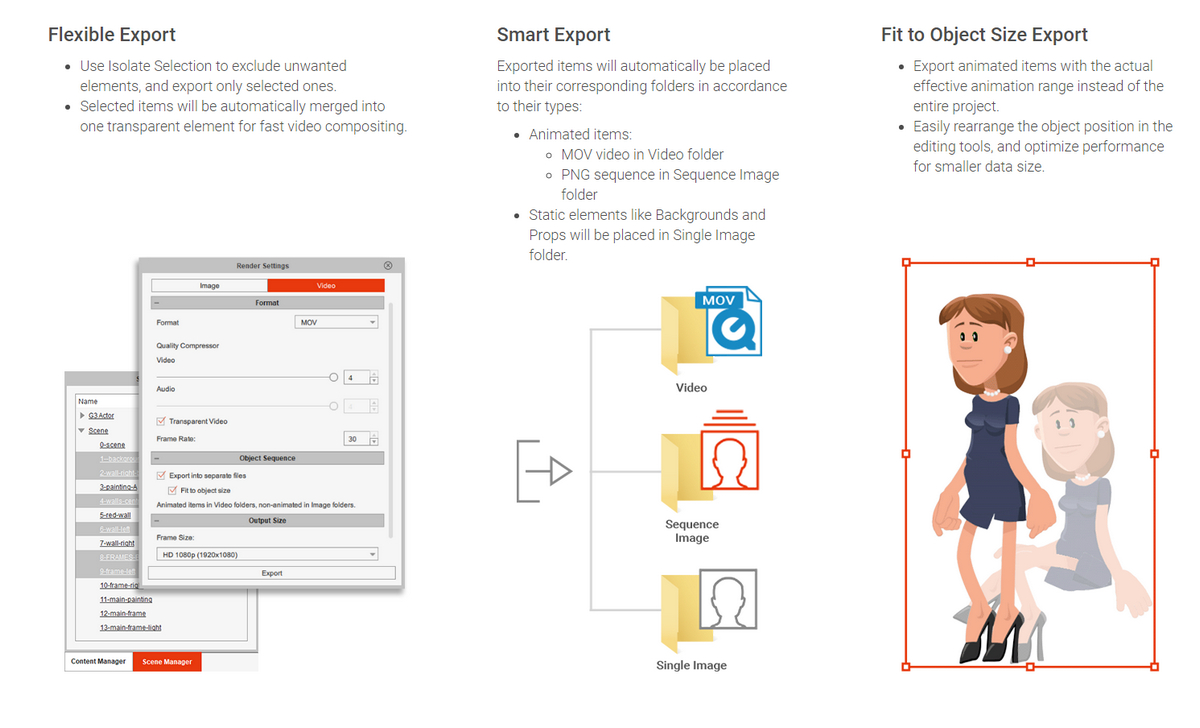
Version 4.5 supports export of transparent-background video (.MOV as ProRes 4444) and alpha-masked image sequence (.PNG, lossless, cropped to visible pixels). This means you can just layer the exported animation over your existing video footage, and it should blend in nicely. No green-screening needed, no ugly fringing of pixels at the edges. There’s a new video tutorial on YouTube…

How to capture an old abandonware software manual page to PDF, from the deeply buried Internet Archive ‘Wayback’ copy, without the header frame and other unwanted items on the page.
1. Make your selection(s) on the Web page, by the usual click / drag / select.
2. Crtl P on the keyboard, or Menu / Page / Print to open the browser’s printing preview.
3. Choose More Options / Selection Only. Print to PDF.

There are free Web browser add-ons that also let you make multiple selections on the same page, if there is some cruft that you want to skip.
I assume here that your target manual was at one time posted as a single long Web page, as was a common practice ‘back in the day’ for plugins and utilities. For multiple pages you would save them as individual PDFs and then join these into one. (Capturing complex nested manuals for big software, with sidebar panels and many pages, is another matter. But even they can be wrangled to a single PDF in various ways).
Why do this? Because then the clean and streamlined result can be uploaded as a PDF manual to the main Internet Archive, where it will become visible in search-engines.
Update, June 2022: this solution is now broken in the latest G’MIC, due to regrettable changes in the required filter. Should work on G’MIC 3.0.x or lower.
I’ve found a way to just about emulate the Topaz Clean 3 Photoshop plugin, using the free G’MIC filter set in its new Photoshop .8BF form. Since G’Mic also runs on Paint.NET and PhotoLine, it will also work there. I can’t vouch for Krita, as Krita bundles its own variant of G’Mic.
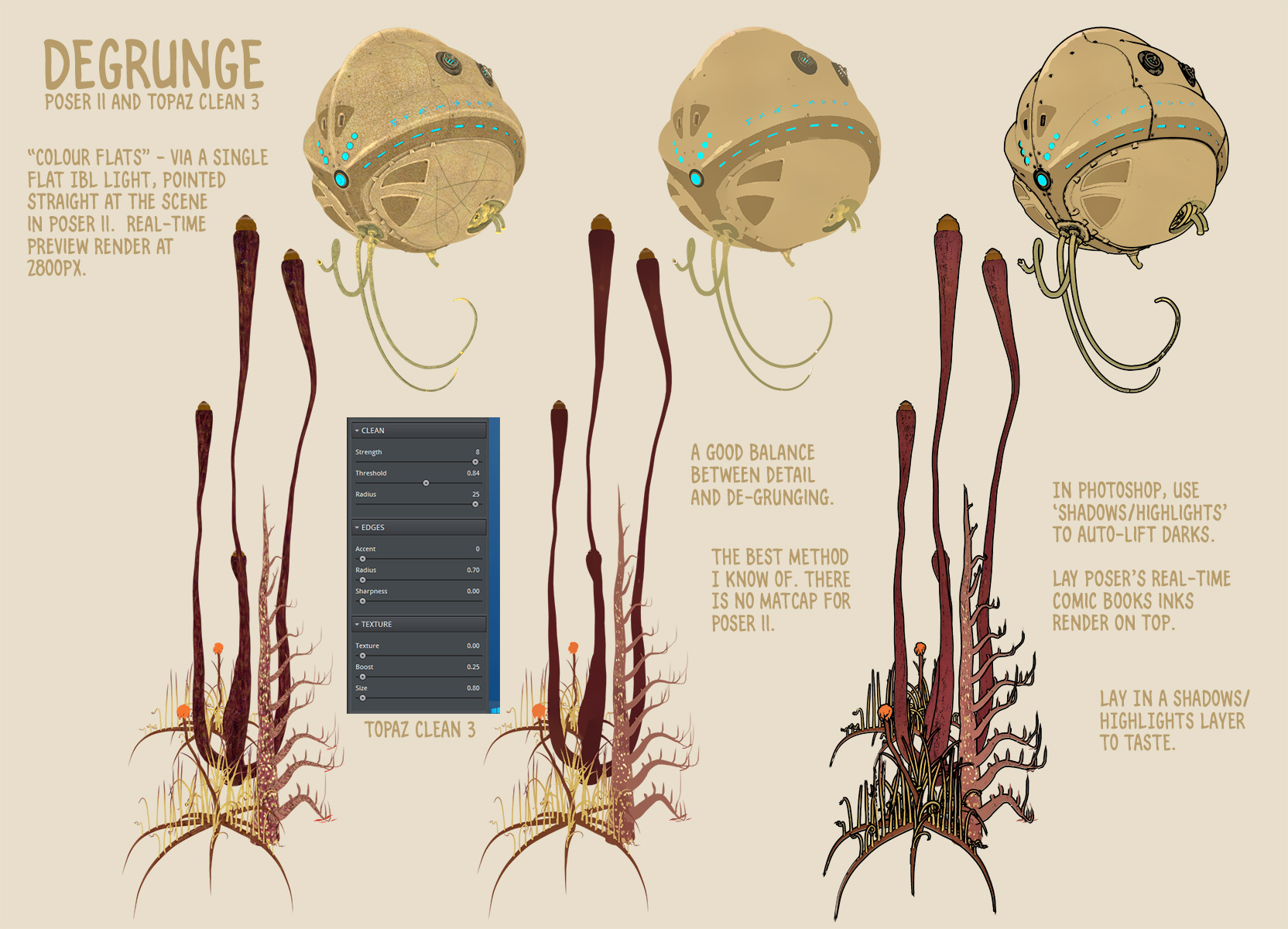
Why is this needed? Because Topaz Clean 3 is no longer sold. Clean was unique and useful for 3D comics people, old manga scanners, and those who wanted to perk up character screenshots from The Sims etc. My specific use case is filtering a ‘colour flats’ base render from Poser, which could be very nicely de-grunged with Clean 3.1 in Photoshop.
This is as close as I can get in 2021 to Clean 3. It uses G’MIC’s standard Artistic | Comic Book filter with the sliders tweaked as you see below. There is also a comparison with the original and the old Clean 3 result. The original render had already been taken some way by using a flat IBL light in Poser, but still had unwanted grunging and speckling.
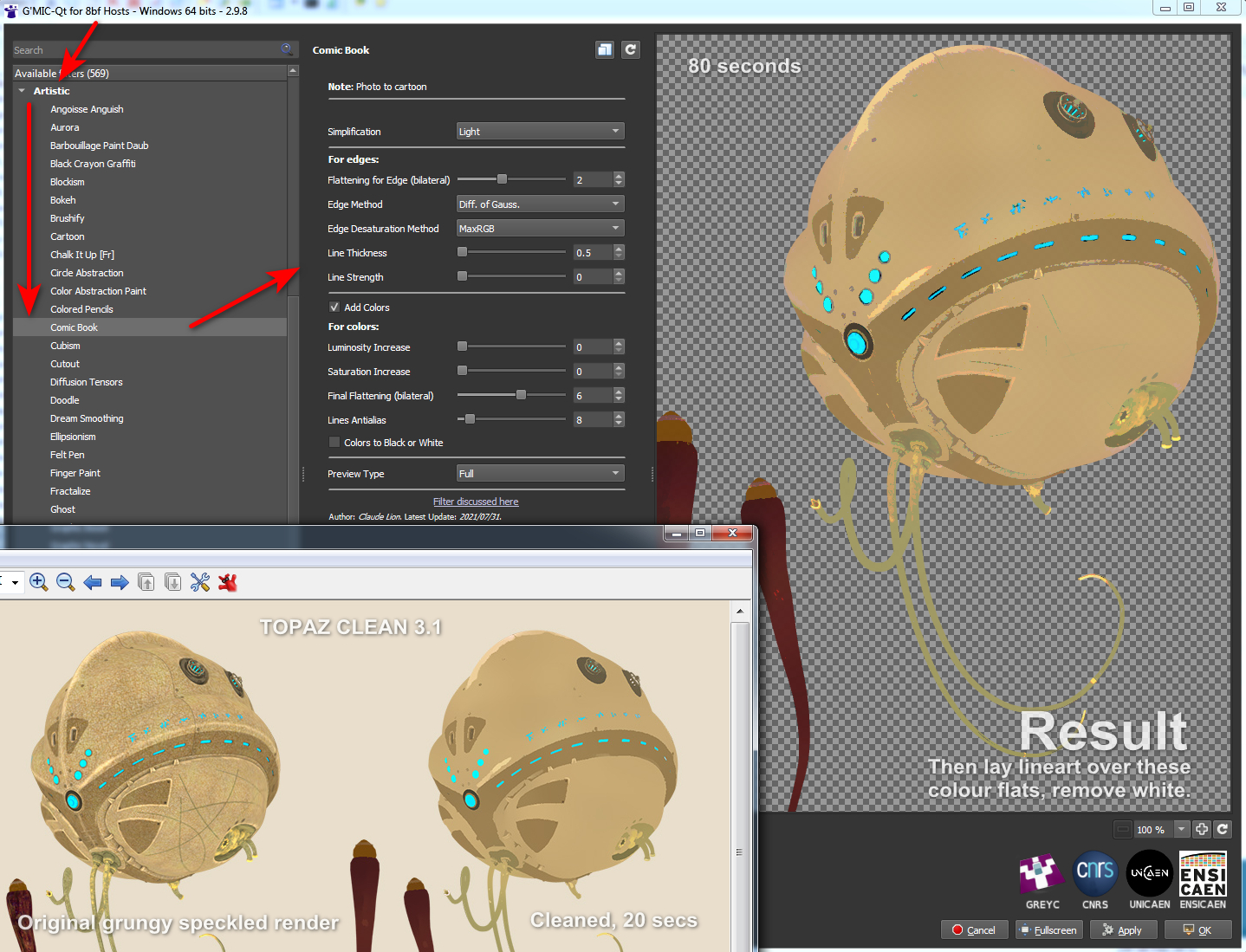
Pretty close, but there are drawbacks:
1. It takes a long time to run, 60 to 80 seconds on a workstation. Compared to a much more nippy 15 to 20 seconds for Topaz Clean 3.1.
2. You cannot take the Comic Book lines off altogether. Their lowest setting is locked at 0.5. This matters little, however, as you’re going to drop a real-time lineart render on top.
3. There are still some artefacts, that seem like posterization of the colours, here and there. Topaz Clean smoothly cleans them away, but G’MIC doesn’t.
But there you go… if you need free and no longer have Topaz Clean 3 for some reason or can’t (cough) find a copy, then this should help with the degrunging job for 3D comics when using layers (colour flats / details / lineart / shadows, all on their own filter-able and editable layers).
And it can do so in a more satisfactory way than the obvious and cringe-y ‘Posterized in Photoshop’ look, or by applying some swirly-blurry mess-filter that destroys edge details. The aim here being to somewhat emulate the crisp ‘paint-bucket’ flats that a professional comic-book colourist might start the colouring process with.
There’s a new free motion-capture Python script for Blender. It uses Blender to… “re-target motion-capture data from Mixamo, BVH or iClone to Rigify, DAZ or custom rigs”.
I had a quick look at the Softpedia changelog digest for DAZ Studio. My last look was at the January 2021 version, which had then added iRay 2020.1.3.
I had overlooked a March 2021 DAZ Studio release which saw an…
“Update to NVIDIA Iray 2020.1.5 (334300.8936)”
But the June 2021 release appears to have dropped back two versions…
“Integrated Iray 2020.1.3 (334300.6349)”
So what was briefly in 2020.1.4 / 2020.1.5 iRay? Not a lot for either. Bugfixes and new updates for some under-the-hood internal libraries. So we’re not missing much, by the look of it, by dropping back from 1.5 to 1.3. The current DAZ Studio beta is 18th August, but judging by the forums that’s cutting-edge early-adopter seat-of-the-pants stuff.
However, I see that the iRay devs currently have iRay up at 2021.0.1, and it has rather more exciting goodies. Their key focus has been to add much faster volumetrics and caustics and better light-spill.

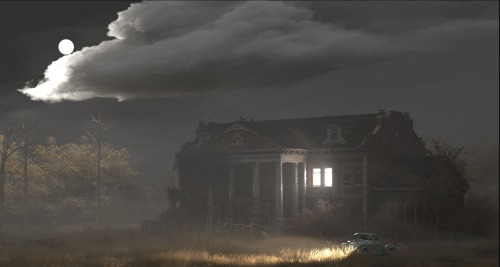
Also…
“dramatically decreased host/CPU texture memory usage”
“Dramatically” sounds good. When this reaches DAZ it sounds like it could further speed up a real-time CPU-driven viewport. Nice.
They also have an improved Interactive version of iRay, although that sounds like it needs an expensive RTX card…
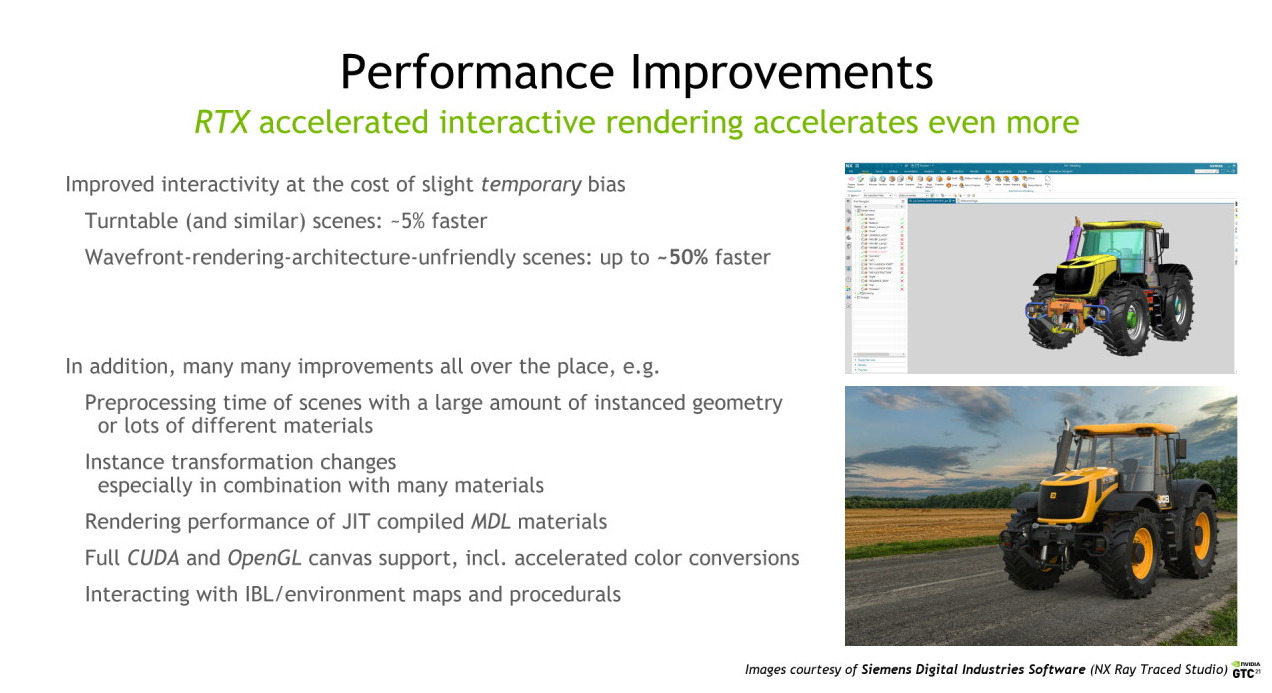
The CPU memory improvement means that when DAZ plugs in iRay 2021.0.1, that could well be a good reason for me to jump to the then-latest version. I currently run iRay on CPUs alone, and can do so in a large viewport in near real-time.
Call me ‘delicate’, but I’m not so keen on painful swollen fingers and hurty-squinty eyes. Thus I went in search of a way to bypass the thin dark scrollbars in Poser 11 and DAZ Studio. Of course you can always ignore them and click into a panel/window to get ‘focus’ on it, then scroll and scroll again using a central mouse wheel and big twisty finger-movements. That’s not ideal, and such clunkiness is compounded by mouse-wheels that tend to become gunked up and anything but free-wheeling.
But imagine you could just hover your mouse over a Library window pane in either DAZ or Poser, auto-focusing the mouse into that window. Then with a single ‘right-click and hold’ (anywhere) start elegantly scrolling the window’s contents down or up. With the scrolling all then under the control of very subtle mouse movements. No need to shift focus to a different Library pane, by first clicking inside it. No need to then scrollwheel and scrollwheel again and again to get down a long list.
There’s a surprising lack of Windows helper software to do this. Some of the functionality is built into modern mice, but while they sort-of work well on browsers they can’t do what I describe above. Nor can they distinguish between different Library panels in DAZ and Poser. Is there software that can? Well, Google Code has kept the old abandonware MoScroll_0_7 beta around, but I found it very basic and so far as I can tell no longer does anything at all after install.
The best option that can is the equally old Windows abandonware called Pointix Scroll++ 2.02. Basically its unique function can be summed up as “right-click anywhere to smoothly scroll, under the control of subtle mouse-movements”, and it can handle focusing into subtly-different Library panels with ease. This software has now turned up at at WinFiles Mouse and Keyboard Utilities. There is also a slightly different copy of 2.02 on Archive.org in an old cover-disc bundle of freebies and shareware titled ‘(Czech) PC World 1999-06 CD-ROM.’ Yes, it’s that old. But… like many old bits of Windows shareware it still works fine!
After getting it (ideally from WinFiles, which is what worked for me) you then visit Carlton Bale’s page “How to Scroll if Your Mouse has No Scroll Wheel”. There he has the Netplaque and zeroes you need to enable this old abandonware. He also offers some useful settings screenshots. Tested and working for me on the WinFiles download of v.2.02. He also hosts an archive of the slightly more advanced 2.05 version, but so far as I can tell neither his Netplaque or regfix work on that.
So… 2.02 is still working fine, is stable and doing a lovely job (though I can’t vouch for it on Windows 10). Version 2.02 may thus be enough for you, especially if you need scrolling on a scroller-free device. It works very nicely with auto-focusing on and scrolling the Poser and DAZ UIs, and does the same with the PzDB 1.3 external content library manager. Very useful when scrolling past 463 similar MAT files. It’s also said to be especially unique and handy for handling scrolling and zooming on large 3D CAD files, which may also interest some readers. A commenter on the Carlton Bale page linked above said…
in CAD its function is to zoom in and out wherever you place the cursor. This is currently done with the wheel in jumps, as you can zoom only to the extent the finger can turn the wheel. And the wheel gets ruined very often. It’s a delight to just press the button and get to the required zoom at fantastic speed.
Which kind of suggests it may also be of use for things like Google Earth, though I’ve not tested it with that. I know it also works nicely with Trello, as it can also scroll sideways. A normal mouse will only scroll up and down on a Trello column. The original market was business people with big spreadsheets to navigate, hence it had to go sideways as well as up/down.
Back in Poser 11 it does not affect or work on the Poser dials, which is good, though it will scroll down a big list of morphs like any other long UI panel. It will not scroll up and down a long list of render presets in Poser, regrettably. Nor will its side-scroll work with the Poser 11 side-scrolling Material Room.
You can still make a static right-click and get the usual Windows context-menu.
Now my main problem was that it uses the right-click button, a problem possibly unique to me. Because using Scroll++ meant my trusty old StrokesPlus mouse-gestures software was bjorked, and StrokesPlus is vital for things like Back / Forward in a Web browser and in Explorer. Eek! Could StrokesPlus perhaps emulate the unique Scroll++, I wondered? Well, while it can assign things like a clunky PageUp key as acSendKeys(“{PGUP}”), its ‘local’ scrolling commands all now fail to work (not because of Scroll++, I might add). So no, StrokesPlus is not going to do what Scroll++ can do.
The most obvious solution, for me, was to…
– run StokesPlus set to a right-click.
– run Scroll++ set to a middle-click.
… and thus they don’t conflict and fight over the right-click. It’s easy to swop them over, if that proves more convenient for long periods of either 3D or Web work.
But this meant that my trusty five-year old and somewhat gunked Microsoft mouse was no longer up to the job of the middle-click. Even a cleaning and a generous squirt of WD40 would not fix it. Thus a new mouse was needed… with a highly sensitive middle-click (unlike the old one). Thankfully I had picked one up in a sale a while back, and it had been stashed in a drawer ‘waiting for the day’. It’s HP’s perfect wired clone of my previous and also perfect wired Microsoft mouse. I presume they’ve licensed this very affordable re-brand of Microsoft’s usually very expensive mouse. Get them while they’re hot.
So there, for those who need it, is the obvious additional solution to running StokesPlus (old LuaScript version) and Scroll++ 2.02 in tandem. A new mouse. The middle-click button is now a pressing-only button, although can also finesse the scroll with a slight nudge, and is thus less likely to become gunked up too quickly.
Here’s how to get a bigger Sketch Designer window in Poser 11, on a big widescreen desktop. The Sketch Designer default window and its internal preview window-size has not increased since the old days. You can of course, drag the corner…

…and thus enlarge the window. But you have to do that every time. And it doesn’t ‘stick’ between sessions. It’s not ideal.
Let’s fix that, with a perma-fix for those with PCs fast enough to run the larger real-time Sketch preview window.
1. Close Poser 11, if open.
2. In Windows Explorer open the path C:\Users\USER_NAME\AppData\Roaming\Poser Pro\11
3. Find there the file Poser UI PrefMap.xml and copy a backup somewhere safe. Open the original file with Notepad++ and you will see the section…

This is fairly self-explanatory. Set the x and y screen co-ordinates where the Sketch Designer window first pops into existence. Then set how wide and high it draws out onto the screen.
4. Now take a look at how wide your current Sketch Designer window actually is. Here I have 958 x 720…
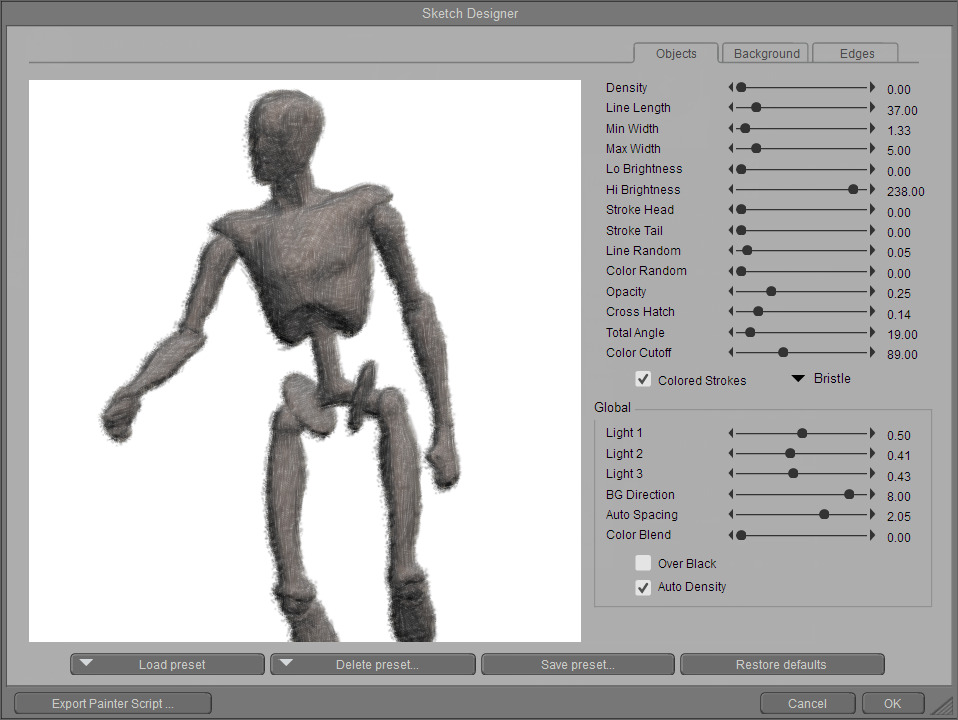
… but that’s not the XML’s default 799 x 600 settings. Ah, but I have a general UI scaling set in Poser Preferences to 1.2. Therefore you will want take this scaling into account, as most users with large desktop monitors will have scaling on. The easiest way to work it out is to grab your calculator and x 1.2 or whatever the scaling you have set. With a 1.2 UI scaling, 1000px becomes 1200px, for instance.
5. But that’s not all. Now we have a larger window opening, the initial window-loading location co-ordinates also need to be changed to re-centre it. In practice, Poser can do this for you. Open Poser with your new settings and position the larger window where you want it on the screen. Close and re-open Poser 11. You will then see that Poser UI PrefMap.xml has changed and Poser has done the added calculations for you…
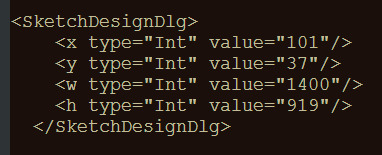
With 1.2 scaling, the above gives you nearly full screen on a 1920 x 1200px monitor. But not too much, and nicely centred. But you can have it whatever larger size you want. I guess you could even have it smaller, and appearing in a corner of the monitor. Those with an ‘extended’ desktop in Windows, and two monitors, might even be able to get it to appear on the second monitor. But that’s just my guess.

The re-sizing you set in the XML is persistent across sessions. Or it is if…
i) you never try to manually resize by dragging on the corner. In which case the magic mega-size sketch window goes “pooot!”, and the factory defaults on the Sketch Designer will be automatically re-instated by Poser.
ii) if you re-run a Sketch preset via Top Menu | Render or Crtl + R, without going back into Sketch Designer first. Not sure why you would want to run the same Sketch preset twice on the same scene, though.
iii) if Poser crashes, then the same thing will happen. It reverts to the old size.
Sadly a Python script cannot re-write the Poser UI PrefMap.xml with the big settings while Poser is running. Once the software has reverted to its hidden internal defaults for Sketch Designer, due to one of the above conditions, no scripted rewrite of the relevant XML block can persuade it to go back to the big window for that session.
So there you go. No more peering into a relatively small Sketch Designer preview window, or having to manually drag and re-size it every time. Just be careful not to revert it. If you do you need to close Poser and fix up the XML again. I now have a Windows .BAT which calls a script that patches the XML automatically.
The other trick to know is to make a quick Preview render and then go straight into Sketch Designer. You then get a Sketch Designer Preview mini-window which ‘looks into’ the render size you just rendered to, which is what you need for designing custom Sketch presets. Because the Sketch effect is render-size dependent. What looks great at 800px wide will look quite different at 1800px, and may have a cut-off edge on the render. Thus you need to design presets at the size you want to render to, and then note the target render size in your saved custom preset (e.g. 1800px_fast__painterly001_run_on_smooth_shaded_with low_lights). As you can see here, it’s also useful to note the speed on your PC, veryfast, fast, 1min, slow, and so on.
This blog’s Python scripts for Poser 11 page and guide has had its annual link-check (by hand), and has also been updated and clarified a bit. Please update any local copies you may have been keeping.
All sidebar links on the blog have had their annual check by hand, and have been updated or deleted if necessary. A half-dozen more of the many old freebie site links now go to an archive at Archive.org, and I cannot guarantee that the .ZIP files will also still be accessible via Archive.org.
Smith Micro links are now fixed, among others. The MotionArtist link still goes to Smith Micro, because the download links for the final version are still hot — if you dig into the ‘farewell’ page.
Vue link also fixed.
3D&D’s wealth of free Poser D&D monsters and fanart is gone, but many of these are now starting to turn up on ShareCG.
Lost:
The greatest loss is Nursoda’s older freestuff at klopfholz .de. His newer freebies are all at Renderosity, but his older freebies are gone. The Free page was never saved by Archive.org (I checked). Or, almost gone… as the cunning multi-search-engine wrangler (eTools is your friend there…) can find at klopfholz…
Sleepy Hein
Psili ‘shrooms
Kali Underwear
Zwoggel
… and more.
If you like Nursoda’s figures, get the .ZIPs while they’re hot. The front page is ‘domain parking’, but the freebies are still there. For now. Sadly Archive.org still refuses to capture the Free pages, so I’m assuming a robots.txt file is still also active somewhere.
At summer 2021 we have also lost the software Topaz Clean 3.x, the best solution for de-grunging renders. Especially useful with Poser 11 for comics work… degrunge a colour flats render with Clean and then lay the pure lineart on top in Photoshop. It appears to have been taken off the market, so that Topaz can focus on their AI line of software. The last version is at Softpedia and was 3.1 (not 3.3, caused by Softpedia misunderstanding “3 3.1.0”; or 3.2, caused by a misunderstanding of “3.0.2”). Redirects at the Topaz site give the impression 3.x could be bundled in the $99 Topaz Studio 2, but there’s no mention of Clean on the Studio 2 page. Studio 2 does have an ‘AI Clear’ (not Clean) but the forums suggests it is weaker than Clean and aimed at RAW photographers and is not comparable. The old Clean 3 does appear to have been in the partly-free early editions of Topaz Studio 1.x (where the standalone version could do batch, interestingly) but was removed in the later Topaz Studio 2 and perhaps before. Topaz Studio 2 was a paid upgrade from a free Studio 1, to something not comparable. Sadly the free 1.x is no longer viable (installer stub only, modules, online log-in barriers after install) and there appears to be no viable replacement for Clean 3.x, just stuff for pro photographers with 48-megapixel SLR camera RAWs to process. As if they don’t already have enough tools to do that.
Added to the sidebar:
Mandelbulb3D. Can’t think why this was not on already. But it is now.
Several printed Poser books, now scanned and on Archive.org to ‘borrow’ as if from a public library.
Poser 2014 Reference Manual. Only a stub was installed with the software, you then had to get the full 950-page manual from Smith Micro.
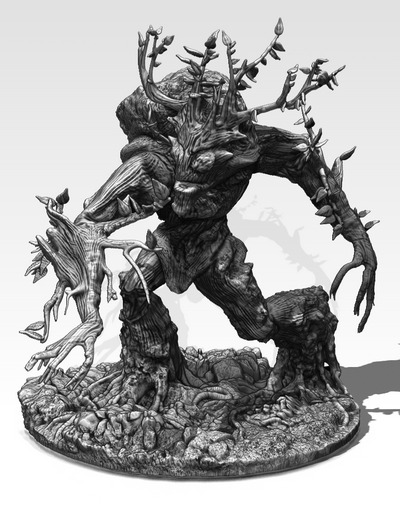
Sixus1, who many will know from his DAZ/Poser figures, has launched a new website with his own sculpted resin collectables at www.sixus1collectibles.com.
“This store features hand pulled and inspected resin prints in a variety of sizes and options.”
A 4″ tall Ent-like figure is (currently) just $10, which sounds pretty good. No colours, though I presume that table-top gamers then break out the paints and paint them up in their own way.
Project Dogwaffle’s Howler 2020 has been released for free on Windows, although you are “encouraged to make a donation to fund future development”. As noted here on this blog, v.2020 saw… “a revamp of the legacy brush engine, new paper textures, and rationalised de-cluttered media presets”. The latest release is Howler 2022.1, which is several bounding doggie-leaps ahead of 2020. But still only $77 for a perpetual licence. Definitely worth a look, and you’re sure to find a use for it at some point.
Added to my Technical Search engine, the new dedicated Krita Scripting site for Python. The Technical Search now indexes 45 useful technical pages, sites and forums likely to interest Poser and DAZ scripters and seekers of technical tips. To be used in conjunction with a local keyword search of an unpacking of the Smith Micro Forums complete and the archive of the old Runtime DNA forums.
There’s a new Poser 12 Early Access version, available now. The last one looked at here was Poser 12.0.498 (dated 29th April). It’s now 12.0.617 (dated 3rd August 2021). The latest Poser 12 is still in Early Access, but the changelog shows a lot of activity and I also know there’s been even more behind the scenes.
So, looking at the Changelog, what do users have…?
Startup:
A number of fixes for quicker and smoother startup and “Fixed startup select to ‘Body’ when a main figure is loaded”. The default factory launch-state figure is now clothed… “Default scene launches La Femme figure with clothes.”
Library:
Lots of fixes and tweaks, things like “Library Search no longer returns duplicate results” and “Crash avoided on launch when library search set to NONE”.
Materials:
“Material Room significant speed improvements when displaying texture previews.” Nice, probably especially so if you’re developing clothing or materials makeover sets for Poser.
Real-time Comic Book:
Looks like some unspecified back-end change slightly dinged Comic Book Preview, but it’s now been fixed…
“OpenGL Comic Book Preview no longer clips to black [when] adjusting the camera hither/yon parameter.” and “Comic Book Preview’s Geometric Edge Line is no longer turned off, when Draw Last is checked.”
Plus many repairs of temporarily broken bits (some broken by Windows 10 updates, rather than the developers). One small Mac fix. More tweaks on the “Poser 12 Japanese localization”, no doubt useful for the large cohort of Japanese users.