That Creative Cloud version of Adobe creative software, the one that’s ‘always there’, wherever you are? It was unavailable for 27 hours this week, and on weekdays too. Some say 48 hours.
Category Archives: The Animation Industry
Movie: Visual Futurist: the art & life of Syd Mead
Trailer for the feature-length 2007 documentary Visual Futurist: the art & life of Syd Mead.
If you like his vision I have a 3D content survey, recreating Syd Mead’s vision in DAZ and Poser.
Firefox gets native 3D via bundled Unreal Engine 4
A new Firefox feature is rather cool…
“You’ll soon be able to stream and play highly realistic three-dimensional video games from within the Mozilla Firefox [Web] browser. … Firefox’s gaming capabilities don’t even require a Web browser plugin to function … ability to run the Unreal Engine, even the new Unreal Engine 4”
Firefox joins Google Chrome in this, as Chrome has had the same HTML5 3D gaming ability for a while now.
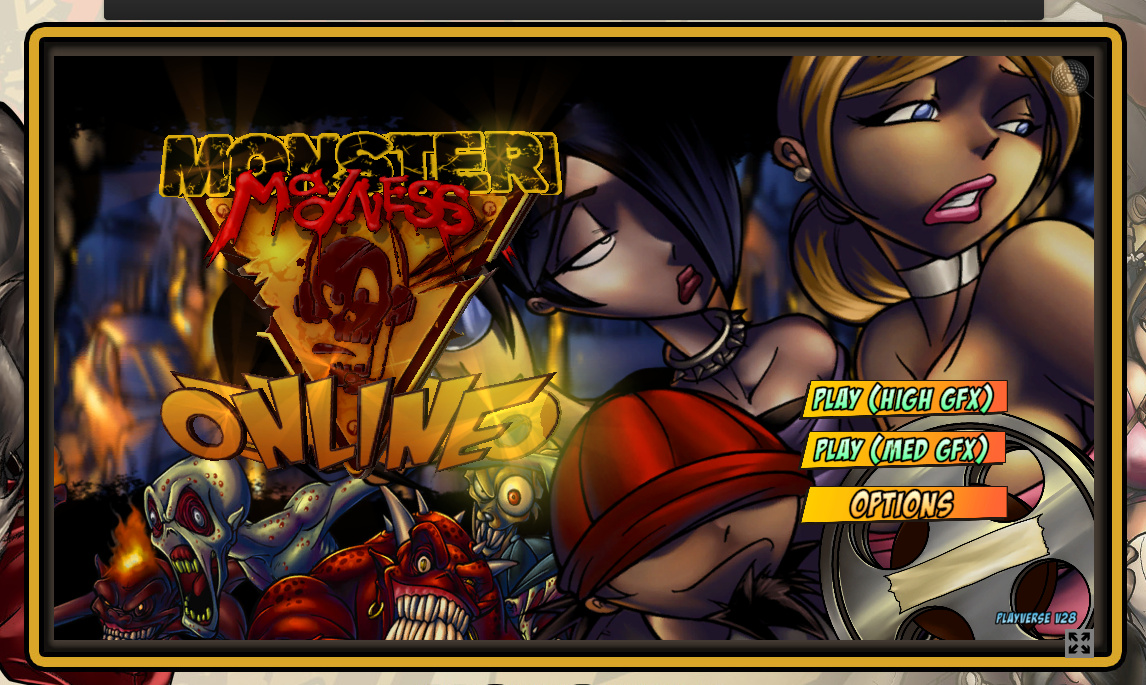
Given the pace that Firefox is developing it can’t be long until we see it in the latest Firefox downloads. In fact, those with the 64-bit developer Nightly build of Firefox can already play Monster Madness. Or, they can if they play it if can get past the dreadfully unintuitive UI interface which serves to hide the buttons that actually starts the gameplay. I clicked the main play button, but was then presented with nothing that would actually start the game. Though the game’s interface elements loaded fine…
Such teething problems aside, we’ve come a long way from those far-off years when a clunky Java browser applet would load… and load… and then… crash and freeze your entire PC.
Animations Backgrounds returns
Glad to see that the Animations Backgrounds blog is back in action. Just the backgrounds / backdrops / mattes / backplates, whatever you want to call them. Usually from old animations.
Lots of inspiration here for artfully arranging the backgrounds of your Daz and Poser scenes.
Live!: A History of Art for Artists, Animators and Gamers
Free Coursera online course, Live!: A History of Art for Artists, Animators and Gamers. 8 weeks, starts 24th February 2014.
Bite the bullet
New free webinar tutorial for users of Poser 2014. This one is on the Bullet Physics in Poser, so will be of interested to animators. Thursday, 27th June 2013 at 11:00AM PDT, for one hour.
“the finer details and settings for creating both Soft Body and Rigid Body Dynamics using Bullet Physics in Poser 10 and Poser Pro 2014.”
MotionArtist for motion comics
I’m always been a fan of comics, and the chance to combine comics with animation seems like a dream come true — to someone who was a kid in an age when the coin-operated photocopier was the best advanced comics-production technology we had access to. So it’s exciting that Smith Micro, of Poser fame, have announced that they are to very shortly release MotionArtist, for making interactive digital motion-comics…
“MotionArtist is going to be released very soon with amazing improvements over the public beta version. These span from HTML5 output to animated panels, text and word balloons, 3d Parallax effect, and Anime Studio input. Start counting your pennies and watch for additional news about the official launch coming very soon!”
Reallusion also reportedly have something similar in the works, and it’ll be interesting to see what CrazyTalk Animator 2.0 looks like when it arrives. I’d expect Reallusion may learn a lot from letting MotionArtist launch first.
It’ll also be interesting to see how MotionArtist interfaces with Smith Micro’s comics production software Manga Studio, if at all. It sounds like it might interface more with their animation software Anime Studio and with Poser 2014.
Octane final released
Octane render 1.0 final is now available, with the Poser plugin. A DAZ 3d Studio plugin is coming “soon”. A Standalone + Poser plugin bundle costs 279 euros (about $360), although the purchase page for that bundle hasn’t yet been updated — it still talks about the beta version of Octane.
Poser 2012 physics – video demo
Poser 2012‘s new physics engine add-on is coming soon. PoserPhysics has a summary of the features we can expect, and two video demonstrations. Here’s one of the videos..
DAZ to Unity – detailed technical overview
DigiTech has posted a lengthy new whitepaper/tutorial on pipelining customised character assets for the popular free Unity game engine, based on DAZ Studio exports…
“This tutorial presents an asset pipeline, and design and code analysis information, to support the character customization workshop project download [available] for Unity game engine. […] The character customization workshop provides a foundation for a startup individual or small team of developers to begin introducing character management to their games.”
CG Student Awards 2012
The 2012 CG Student Awards are now open. Entrants worldwide are invited to compete for $100,000 in prizes. You have to be on, or a recent graduate from, an accredited course at a college or university.

Octane renderer is coming to DAZ Studio, cloud-powered
Cloud-based rendering could be coming to DAZ Studio soon, as Otoy has purchased New Zealand’s Refractive Software. The news from GDC 2012 is that Otoy will now reportedly pair its cloud-gaming power with Refractive’s GPU-rendering software. The result will be Refractive’s Octane plugin presented as a cloud-renderer… “for DAZ 3D Studio”. No time-frame on that yet, but possibly 2012?
Although quite how a home user will send the bundle of data (FBX?) required for the cloud render, is another matter, especially on slow broadband uplink speeds.
The standalone desktop version of Octane costs only $99. So there’s hope that the DAZ Studio version would be at the same affordable cost. Poser users can already use Octane. My guess is perhaps $250 a year with the cloud rendering thrown in? That would certainly be cheaper than that the dual top-end Nvidia graphics cards needed to run Octane optimally on its own. Even then, you might need to scale down your 4000px skin textures on your DAZ exports.
One of the interesting aspects of Octane’s blurb is that…
“Octane Render provides [a] ‘What You See Is What You Get’ rendering environment […] The viewport on the screen IS the final render”
Nice, especially for 32-bit systems. But don’t think it’s going to replace software built on game engines, like Lumion and iClone any time soon. Here’s a real-world Octane user review, just published…
“At work, I use a fairly old quad-core workstation with bags of RAM. A 1080p frame with AO, some reasonably complex geometry and soft shadows will take me around 3 and a half minutes to render in Cinema4D’s native renderer. In Octane I can get much higher quality (including, I might add, working AO) in about 1 and a half minutes.”
Not bad, and no doubt useful for shaving down a commercial production company’s billing times. But what I want is genuine WYSIWYG 1080px in the viewport at 60 frames per second, like a videogame.
Why did DAZ have its great freebie giveaway?
DAZ 3D is about to finish giving away its major software. DAZ Studio 4 Pro, Bryce 7 Pro, and Hexagon 2.5 were all available for free for a month. Plus some very valuable plugins. Why did DAZ give away over $1,000 of software, to what might well have been around 250,000 people?
The headline answer is that software vending provides only about twenty percent of the firm’s annual income. The rest comes from sales of royalty-free content for its popular range of DAZ characters and animals. So the move was a drive to increase sales to that user base. Everyone who got the freebies had to sign up to DAZ’s store first, thus paving the way for future casual sales of content. With Carrara 9 (DAZ Studio’s “big sister”) expected to be released in Q2 2013, with Genesis and Victoria 5 support, DAZ’s new mailing-list is certainly going to come in handy for future promotions.
Behind the scenes there are apparently complicating factors. Some key merchants, such as the leading Sixus1, have publicly declared they can no longer support both the DAZ and Poser platforms. He favored supporting Poser 9 and Poser Pro 2014, in future. DAZ was thus seemingly facing a significant move toward the outstandingly excellent Poser Pro 2014. Poser can, of course, load more or less all the same content as DAZ and visa versa, although some Poser-specific texture types don’t travel well. Some of the other dedicated 3D pro and semi-pro creatives were also talking about making the same move to Poser-only content production. By giving away the DAZ range of software for free, if only for a limited time, DAZ perhaps hopes to claw back some of its key content creation merchants.
The inclusion of robust content production tools in DAZ Studio 4 Pro also means that DAZ might be able to grow its content producing merchants as a result of the giveaway, which could make up for any that decide to produce only for Poser.
The promotion will also leave a long-lasting legacy of inbound links and publicity, scattered around the Web, all driving traffic to DAZ. The promotion has possibly widened its hobbyist user-base to the sort of advanced Photoshop and Corel Painter users who read ImagineFX magazine.
The final reason is no doubt to placate the user-base of DAZ. The launch of Studio 4 was not smooth, and might even be said to have been a long drawn-out series of mistakes. Many advanced users were spurred by this sad saga to look seriously at Poser Pro 2014, and they very much liked what they saw. By giving away the top-of-the-line pro version of DAZ Studio now, including the valuable Decimator and several bridge plugins that give access to ZBrush and Photoshop, DAZ has done a lot to restore its reputation and to draw people back. Personally I dislike Studio 4 and I will be sticking with Studio 3 and iClone, while taking another look at Poser in the form of the excellent Poser Pro 2014.
But, free is good. We should welcome anything that draws newcomers and traditional creatives into the world of 3D renders, especially at a time when 2D and 3D creative practices are converging and merging. As for storytelling animation, I suspect that many hobby animators will in future increasingly go to real-time tools, that are based on videogame engines — such as Lumion, iClone 5, Muvizu, and others that will emerge.
“Some sorts of fans, you really don’t want to make angry…” Above: Sanctum Arts’s The Horde werewolf model for Poser (now, sadly, withdrawn from the market along with his other fabulous RD Phenotype monsters — I hear rumors they’re going to be used for a feature-film…?)