GRAFT has updated with new additions to the URLs indexed. Now searching across full-text and records alike, in 4,569 repositories.
More GRAFT
20 Tuesday Feb 2018
Posted in Academic search, New titles added to JURN

20 Tuesday Feb 2018
Posted in Academic search, New titles added to JURN
GRAFT has updated with new additions to the URLs indexed. Now searching across full-text and records alike, in 4,569 repositories.
16 Friday Feb 2018
Under pressure from commercial image library Getty, Google Images has removed a key button from its search results. It’s the “View Image” button, which allowed people to view an image in isolation, against whatever colour they have set as a background for the Web browser.
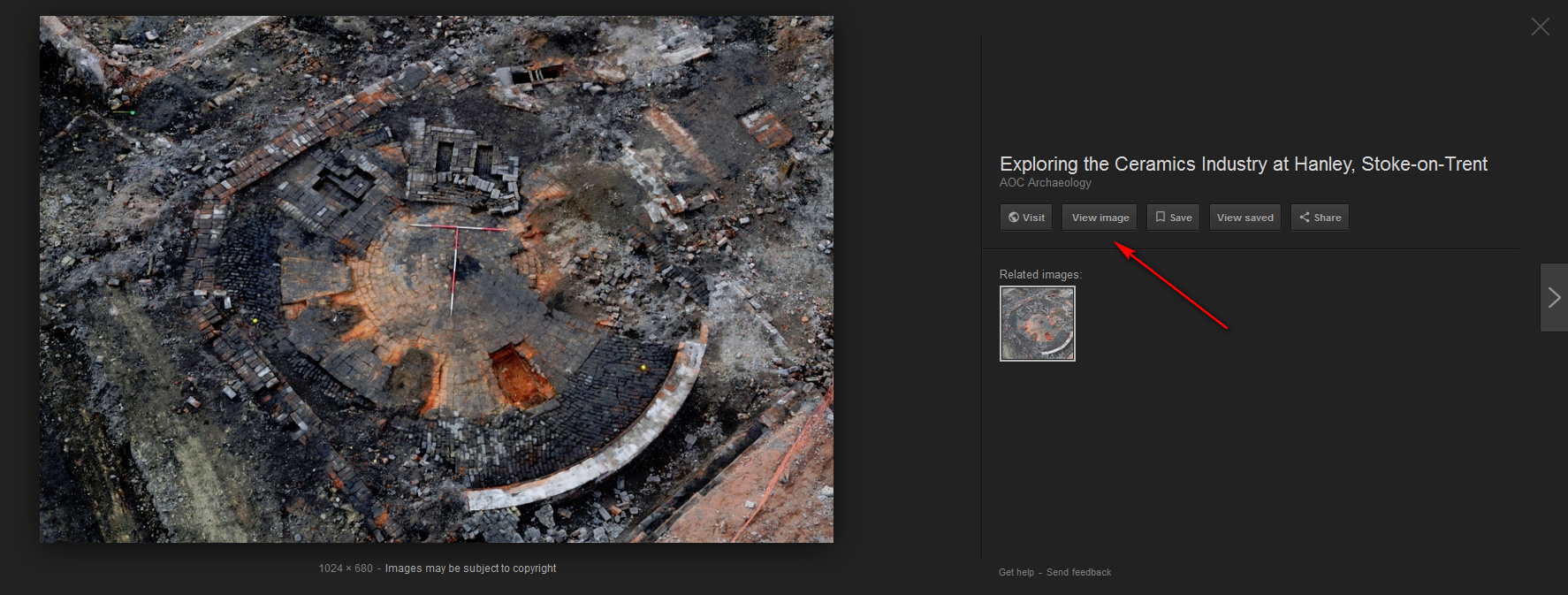
The removal is easily fixed with a simple new script:
Firefox: Google Images Fix for Greasemonkey.
Chrome and Chrome-compatible: Google Search "View Image" Button
If you also want to change the default background colour (white can be better for screen-shots of logos for Facebook posts, to get an edge), in Firefox you can change the Web browser’s default background from black thus: Tools | Options | Content | Colours | Background | OK.
There are also press reports that the “search by image” icon in the Google Images search box is to be removed, also due to Getty pressure. But I see it’s still there on the UK version of Google Images.
14 Wednesday Feb 2018
“The state of OA: a large-scale analysis of the prevalence and impact of Open Access articles” (Feb 2018, PeerJ)…
“the most common mechanism for OA is not Gold, Green, or Hybrid OA, but rather an under-discussed category we dub Bronze: articles made free-to-read on the publisher website, without an explicit Open license.”
Of Bronze, “few studies have highlighted its role” [in OA]. “We manually inspected a small sample of Bronze articles in order to understand this subcategory more; we found that while many Bronze articles were Delayed OA from toll-access publishers, nearly half were hosted on journals that published 100% of content as free-to-read but were not listed on the DOAJ and did not formally license content (using CC-BY or any other license).”
Bronze was found to be at a whopping 47% of OA, from a one-week sample of Unpaywall-DOIs in 2017.
14 Wednesday Feb 2018
Posted in New titles added to JURN
Journal of the General Union of Arab Archaeologists
Demokratizatsiya (to 2012, on post-Soviet Russia)
Swiss Analytics Magazine (Swiss Association for Analytics)
31 Wednesday Jan 2018
Posted in JURN tips and tricks
Problem: For some of your WordPress.com hosted blogs, you are effectively unable to export a local backup copy of the blog.
You Export, and apparently you have success. The WordPress dashboard informs you that “Your export is being processed!” and that a link to the download will be emailed to you. But… nothing ever arrives in your email in-box.
This seems more likely to happen on larger blogs, with smaller ones tending to give you a direct .XML download of your blog.
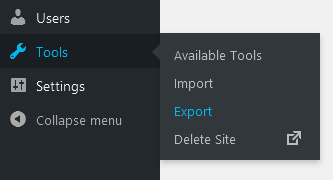
Solution: You are likely still using the older WordPress interface for posting. This is a very sensible option, as the new posting page is hideous and clunky. But it appears that the whole-blog Export option only works as intended with the ungainly newer Blue interface. To get there from the old WordPress interface:
i) Visit the daily stats page, which uses the new Blue interface.
ii) Then scroll down to the listing for the blog you want to export, and click on “Views”.
iii) Once there, click the Settings on the sidebar, and then scroll down the Settings page to find the Export option near the bottom.
iv) Start the Export. At the end of the Export process, you should get the message that “Your export was successful! A download link has also been sent to your email.” But this time you will also get a direct download link to a .ZIP file…
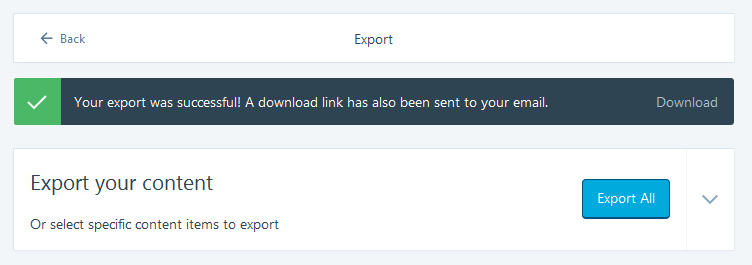
This .ZIP contains the compressed WordPress eXtended RSS file generated by WordPress. It contains your posts, pages, comments, categories, and links to the graphics (but not the blog’s graphics). In some cases the .ZIP may contain multiple .XML backups. In many cases the media export .ZIP will fail repeatedly. Despite WordPress claims of being ‘portable’ it really isn’t when it comes to the images.
31 Wednesday Jan 2018
Posted in JURN tips and tricks, JURN's Google watch
In Autumn 2017 Google announced that Google Search would ignore the country domain of its service, and instead serve you national results based on what Google thinks your geographic location is…
“the choice of country service will no longer be indicated by domain. Instead, by default, you’ll be served the country service that corresponds to your location.”
Here’s my quickstart on some of the nation-specific research options which can route around this. You either need to:
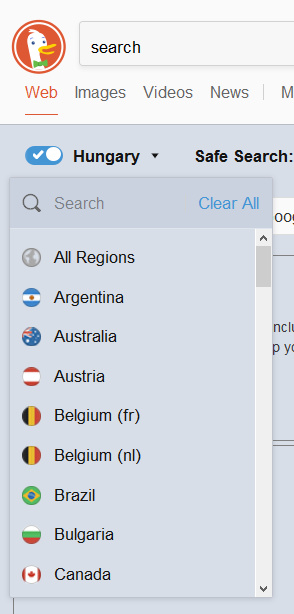
i) use the likes of DuckDuckGo and add national URL Parameters to the end of your bookmarked URL: e.g. Hungary. Top results are not great in that instance, with BBC, Wikipedia and Guardian cruft, but they quickly become relevant as you scroll down. Adding site:hu helps a lot, at the cost of knocking out local grassroots blogs on WordPress and Hungarian .org and .com sites etc.
DuckDuckGo is now actually better than Google, in my opinion, for picture research. Though you will have to home-brew a Creative Commons filter within your search terms.
ii) Go to Google’s Advanced Search settings and (for now) you can request that Google Search “narrow your results” by nation. Clunky, but it may prove useful. I imagine there must be a browser plugin that allows this setting to be swiftly switched across various nations.
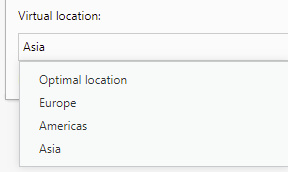
iii) use a VPN proxy in your Web browser. The Opera web browser has a free and sturdy VPN built in, but all you can do with it these days is to select broad regions rather than nations (as used to be the case). Adequate for things like quickly getting past region-blocking on public domain resources at Hathi, etc, but not that useful if you just want to research ceramics in Morocco.
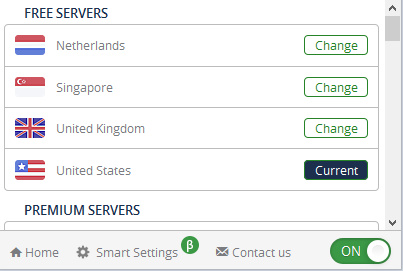
iv) use a few free VPN such as Browsec. This offers three or four free national VPN nodes, of a limited access duration (10 minutes or so before it becomes unresponsive). Again, useful for researchers wanting to access region-locked Hathi books or YouTube videos etc. Such freebie VPNs also offer an enticingly big list of other national nodes for paid users…
v) The TOR browser. Google’s new move potentially leaves sensitive ‘business researcher traffic’ open to being snooped on and tracked by hostile/piratic nations, who may either clandestinely run and/or can tap into VPN traffic. As such, smaller business — especially those in a larger supply-chain but without security-savvy IT departments — might also look into the anonymous TOR browser’s capabilities before doing intensive country research. It’s my understanding that some TOR exit nodes can be geolocated to nations, while others appear to be free of geolocation, and apparently one can switch between these types and choose which nation the exit node is in.
So far as I’m aware, JURN has for some time now auto-detected your home nation and served results accordingly. Some types of user can route around this somewhat, by searching in a local alphabet and encasing words or phrases in quote marks (“مقارنة”) which in this case should mean the majority of search results are in Arabic.
31 Wednesday Jan 2018
Posted in New titles added to JURN
Paperity is back online, and has been added back into the JURN index.
30 Tuesday Jan 2018
Posted in JURN tips and tricks, Spotted in the news
The BBC Weather forecast page has changed. It’s slightly clunkier now, in terms of graphic elegance. Certainly a move away from the near-perfect design they had before. But there are new features, as trade-offs. Presumably the change is because the promised new supercomputers are now online, as so we get a nine-day default view rather than the previous five-day default view. They’ve also added a new unlabelled “Chance of precipitation” (meaning, rain) icon down the bottom just above the wind speed and direction…
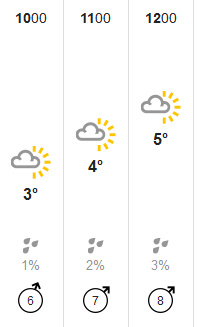
To the 95% of the population who don’t understand probabilities, and are anyway not able to meaningfully apply them within the highly variable system that is the British weather, that new additional icon is probably unwanted. Also, why show a visual icon of rain when it’s not at all likely to happen? It’s a form of pessimistic “fake news”, done in the language of graphic design.
If you want to remove these “Chance of precipitation” icons, here’s how to do it in Firefox. I’m assuming you have AdblockPlus installed and its Element Hiding Helper add-on, which only work properly in FF55 or lower. In Adblock go to: Filter Preferences | Element Hiding Rules | Add filter. Add the following new rule…
bbc.co.uk##[class*="wr-time-slot-primary__precipitation wr-time-slot-primary__precipitation--grey gel-brevier"]
This removes the grey “low” probability icons…
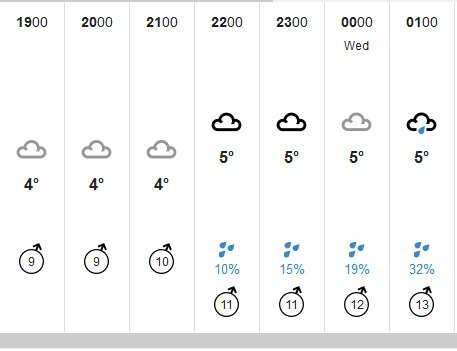
If you also want the blue “low-medium” probability icons gone, then add the following rule…
bbc.co.uk##[class*="wr-time-slot-primary__precipitation wr-time-slot-primary__precipitation--blue gel-brevier"]
Even after this blocking, you can always click on an hour-slice and you get a slide-out which gives a more sensible type of “Chance of precipitation”…
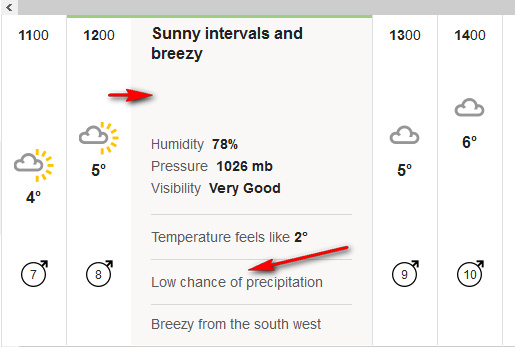
The gradations here are far more simple: Low chance | Chance | High chance. That’s good enough for me, as I don’t need to be constantly juggling with fine percentage gradations of an hourly probability of rain. We’re a damp nation and the ever-changing weather in a specific locality is complicated enough as it is.
Here’s what the BBC Weather’s new nine-day hourly forecast looks like, after fixing…
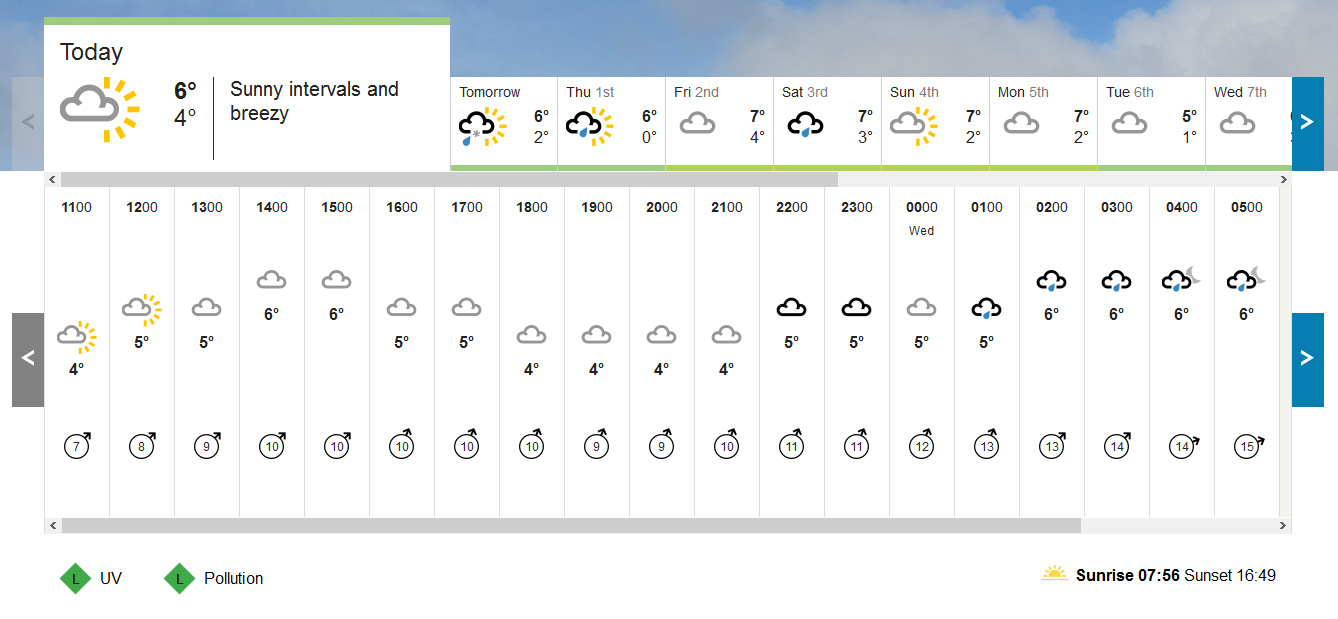
Regular users will probably also want to block the new animated tickers, the huge and ugly new satellite map that loads under the bottom of the page, and other page-junk, in order to speed up loading.
24 Wednesday Jan 2018
Posted in New titles added to JURN
18 Thursday Jan 2018
Posted in Spotted in the news
“Utility of primary scientific literature to environmental managers: an international case study on coral-dominated marine protected areas” (preprint, Nov 2017)…
“To assess accessibility of MPA science to decision-makers we conducted a literature search using the database SCOPUS … limiting our search to all ‘articles’ and ‘reviews’ published between 1 January 2009 and 31 December 2012. … only 43% of primary scientific articles and 50% of review papers relating to coral dominated MPAs [marine protected areas] were freely accessible to decision makers.”
Although keep in mind here that SCOPUS only has 29.18% coverage of the DOAJ Open Access titles, so is not likely to do well on many types of OA indexing test.