Rosetta Journal, The (Papers of the Department of Classics, Ancient History and Archaeology at the University of Birmingham)
Ostracon, The (Egyptian Study Society)

13 Sunday Mar 2016
Posted in Ecology additions, New media journal articles
Rosetta Journal, The (Papers of the Department of Classics, Ancient History and Archaeology at the University of Birmingham)
Ostracon, The (Egyptian Study Society)
12 Saturday Mar 2016
Posted in Ecology additions, New titles added to JURN
ABEI Journal : Brazilian journal of Irish Studies
+
Publications of the European Tropical Forest Research Network
12 Saturday Mar 2016
Posted in My general observations, Ooops!
A quick check of the front-page statement “Our corpus currently includes only computer science papers” on Paul Allen’s Semantic Scholar shows that it’s no longer quite true. “Our corpus is mostly computer science papers and… a whole lot of other stuff that the A.I. dragged in” might be a more apt statement.
Semantic Scholar is definitely now ranging more widely in science, looking for fulltext PDFs. I’d guess that its A.I. is working outward from highly-cited papers and ferreting among their citations to try to dig up the fulltext for each. That would explain what appears to be the eclectic nature of Semantic Scholar’s spread away from computer science. On searches for ecology and other not-computer-sci stuff I very easily found a Powerpoint in PDF, a workshop presentation, even a saved print-to-PDF of a book reviews page in Science…
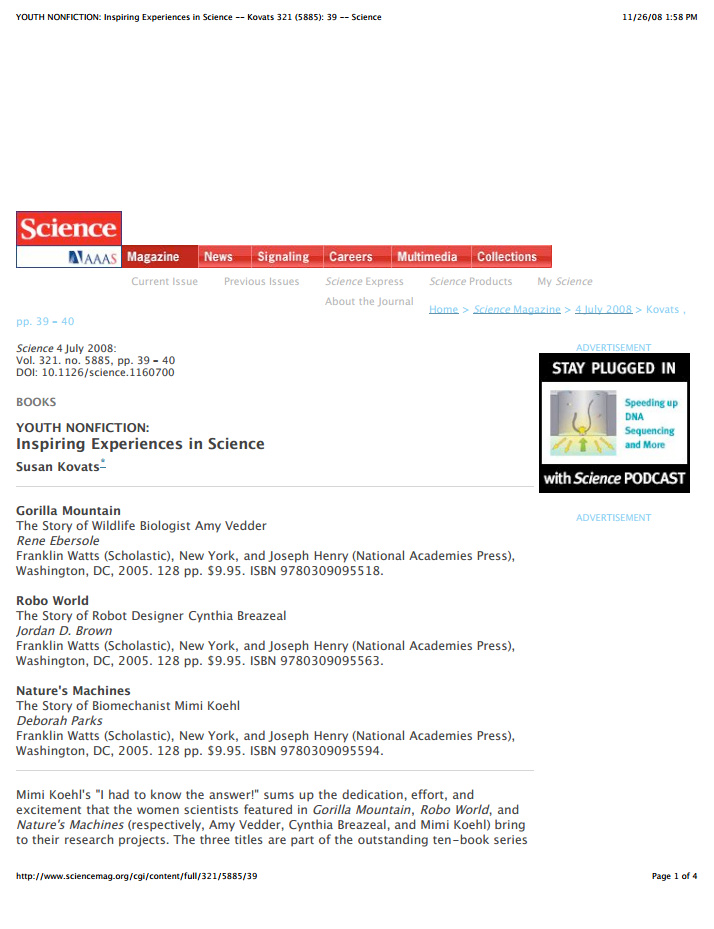
… as well as PDF papers from MDPI and ResearchGate, plus really obscurely self-archived and departmental archived PDFs. That kind of scattergun approach and lack of judicious curation seems to me to be the sign of a self-learning baby A.I. in action.
11 Friday Mar 2016
Posted in New titles added to JURN
Approaches : an interdisciplinary journal of music therapy
AMAR : Mesopotamian Archaeological Reports collection
+
Iraqi Archaeology Digital Texts collection
Two more caches of research papers and R&D reports from DEFRA (the UK Department for Environment, Food and Rural Affairs)
11 Friday Mar 2016
Posted in Spotted in the news
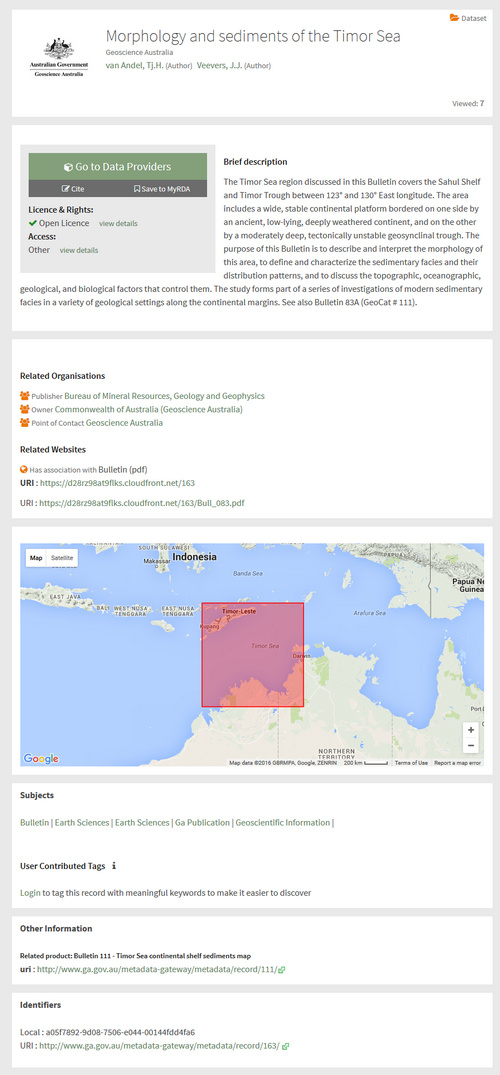
Research Data Australia. Including over 250 PDF monographs in the Australia Bureau of Mineral Resources Bulletin series, all under CC-Attribution. It’s possible there are more series, but the Web connection to Australia from the UK died before I could investigate further.

10 Thursday Mar 2016
Posted in Spotted in the news
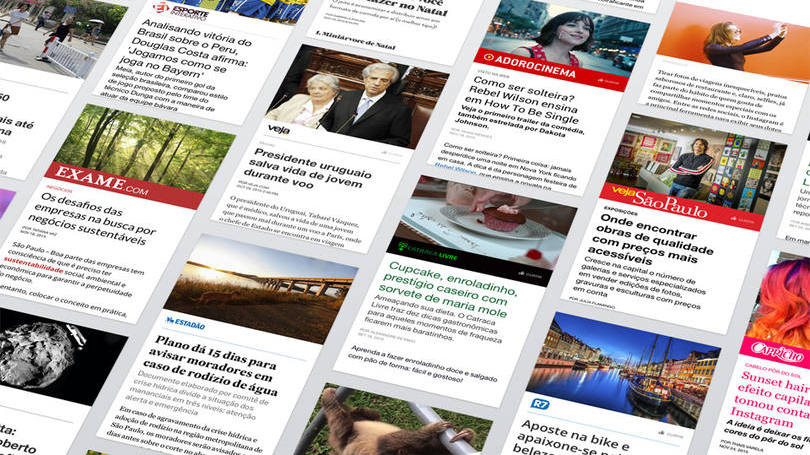
Facebook continues to slowly roll out various parts of Facebook for Business. Instant Articles is to be launched next, and is being pitched as…
“A new way for publishers to create fast, interactive articles on Facebook … articles load instantly, as much as 10 times faster than the standard mobile Web … Instantly zoom into high-resolution photos and tilt to explore in detail. Watch autoplay video … as you scroll through the article. See where it all happened with interactive maps. Hear the author’s voice with embedded audio captions.”
Also “sign-up to the newsletter” or “book now” buttons.
“On April 12th at Facebook’s F8 conference, we will open up the Instant Articles program to all publishers — of any size, anywhere in the world.”
There’s already a Simple Facebook Instant Articles — WordPress Plugin…
“Add support for Facebook Instant Articles to your WordPress site. This plugin creates a new articles endpoint, and a feed to give to Facebook with links to those articles.”
I’m not sure if this also has FB-tailored widgets for zoom-able photos, video and audio, maps, buttons that interface with MailChimp and Eventbrite. But anyone with a standalone WordPress install can get such widgets. Might be interesting to also create a sister plugin that helps to format bits of an academic article into a one-page Instant Article (abstract + the gist of the conclusion + a picture + plain English suggestions + auto Wikipedia-linking of recognised phrases).
The Wall Street Journal reported…
“Publishers are entitled to 100% of revenue generated from ads in Instant Articles, provided they sell and serve the ads themselves. Publishers keep a 70% cut if they’d rather have Facebook sell ads on their behalf through its mobile ad network, the Facebook Audience Network.”
I suspect we’ll see a Pinterest-isation of the articles ‘post cards’ for desktop and tablet users, outside of the users’s Facebook streams, once they’re established…
It’s unknown if publisher ad-blocker blockers will be tolerated in articles or not. I’d guess that Facebook’s terms will forbid publishers from gunking up their FB Articles with scripts of that type, or the whole thing would turn into a Wild West and Facebook could also be the target of a lot of user negativity. Hopefully Instant Articles will also be free of annoying slide-ins and page-blocking “Give us your email address!” and “Agree to our use of cookies!” overlays.
Personally I’ll continue to fling longer articles to Instapaper and read them on the Amazon Kindle eReader. I presume that Instapaper will work with the new Facebook Instant Articles, as it does with other articles.
09 Wednesday Mar 2016
Posted in Ecology additions, New titles added to JURN
Modern Greek Studies : a journal for Greek letters
Journal of International Trade, Logistics and Law
Sheetlines (journal of The Charles Close Society for the Study of Ordnance Survey Maps) is now back online after an extended absence. The PDFs are now at a new URL.
Proceedings of the Linnean Society of New South Wales (Australia, has the Victorian-era archives alongside the new volumes which run annually from 2011-)
+
Free reports at Ithaka S+R and the UK’s AHRC.
09 Wednesday Mar 2016
Posted in JURN tips and tricks
The new update to the posting UI at Scoop.it has killed Scoop.it for me, in the Firefox Web browser. The new posting form just never loads in Firefox — and I have AdBlock and NoScript disabled at Scoop.it. The old Scoop.it browser bookmarklet has never worked for me in Firefox, so I can’t use that either.
In the Google Chrome browser, the Scoop.it post interface does appear, but the control graphics for it mysteriously fail to load, and there’s no snippet of text from the article being shown either…

Why do great Web services (Flickr, etc) feel compelled to ruin themselves by allowing idiot Web designers to mess around with what works and what people are familiar with, thus forcing many veteran users to look seriously at alternatives? If it isn’t broken, don’t fix it.
Anyway, here’s my functioning workaround for Firefox users who want to continue using Scoop.it:—
1. Install the AddThis addon in Firefox, and set it to use a right-click option (otherwise it will clutter the screen with its additional bookmarks bar, ugh…) and than also set AddThis to reference Scoop.it. You don’t have to give AddThis your log-on details at Scoop.it.
2. On right-clicking anywhere on a Web page you want to Scoop you can now select “Scoop.it”, thus…

3. This will take you to a Scoop.it posting page that actually works in Firefox, but is cramped inside a phone/tablet-sized box. So click the enlarge icon…

4. A new window will then load, and the new Scoop.it posting interface will display fine in Firefox.

It does so with an URL of http://www.scoop.it/bookmarklet?childWindow=1 — thus proving that it wasn’t my Web browser’s addons or blockers that were preventing the posting form from loading in a standard Firefox page. Presumably the initial problem was down to the new posting UI’s interaction with other page elements.
06 Sunday Mar 2016
Posted in Spotted in the news
“An up-to-date open access repository of science methods … Save time and increase the reproducibility of your research…”

06 Sunday Mar 2016
Posted in Spotted in the news
“Reducing noise in the academic library: The effectiveness of installing noise meters” ($) in the paywalled Library Hi Tech. The paper…
“explore[s] the effect of an electronic [light-up] noise-monitoring device (NoiseSign) at reducing noise levels in quiet study areas in an academic library.”
Perhaps their NoiseSign could also trigger a powerful signal-blocker that would block all phone connections within 50 feet for thirty minutes. The resulting peer-pressure on talkative teens could be enormous.