Records of the Auckland Museum and the Bulletin of the Auckland Museum. (New Zealand)
Bishop Museum Occasional Papers, Bulletins, Technical Reports, Memoirs and other publications. (Hawaii Biological Survey)
Pacific Insects and Monographs.

11 Friday Aug 2017
Posted in Ecology additions
Records of the Auckland Museum and the Bulletin of the Auckland Museum. (New Zealand)
Bishop Museum Occasional Papers, Bulletins, Technical Reports, Memoirs and other publications. (Hawaii Biological Survey)
Pacific Insects and Monographs.
11 Friday Aug 2017
Posted in Spotted in the news
PastPin by Geopast, challenging the public to geo-locate and time-tag photos of unknown location/time, uploaded by 115 selected institutional contributors to the Flickr Commons.

A nice cleanly designed service for public domain pictures, but page-loading assumes that you have superfast broadband, and that your broadband isn’t already being saturated with other downloads and music streaming. It also seems to be calling images from the often-slow Flickr, which slows it down even further. Lovely idea, but too grindingly slow for the majority of Internet users.
05 Saturday Aug 2017
Posted in Ecology additions, New titles added to JURN
Defendant, The (Australian Chesterton Society)
Journal of Interactive Media in Education (Open University, UK)
Journal Of Litter And Environmental Quality (Keep Britain Tidy)
SCAR Bulletin, Reports, Newsletter, and Occasional Publications (The Scientific Committee on Antarctic Research)
+
Biogeographic Atlas of the Southern Ocean (selected free chapters)
Online Library of the Wild Trout Trust (British Isles)
03 Thursday Aug 2017
Posted in JURN tips and tricks, My general observations
I’ve updated and expanded my Christmas 2016 post “A survey of automated book index making software”. New bits…
PDF Index Generator 2.4 tested, specifically its very useful new “capitalized phrases only” automated query-filter which allows you to grab only personal names and longer place names, with a short tutorial on finding and using this feature…
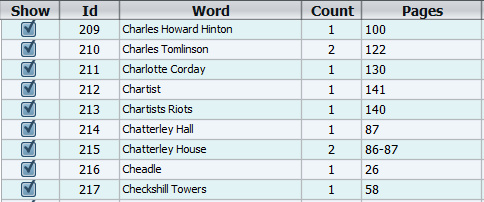
More tips on Java security, re: the security nightmare that is Java being needed to run PDF Index Generator.
Also, the genuine freeware Index Generator 5.5 has just updated to 5.8, adding new features such as a “word list import and export feature” and “index support for alphanumerical words”.
29 Saturday Jul 2017
Posted in Spotted in the news
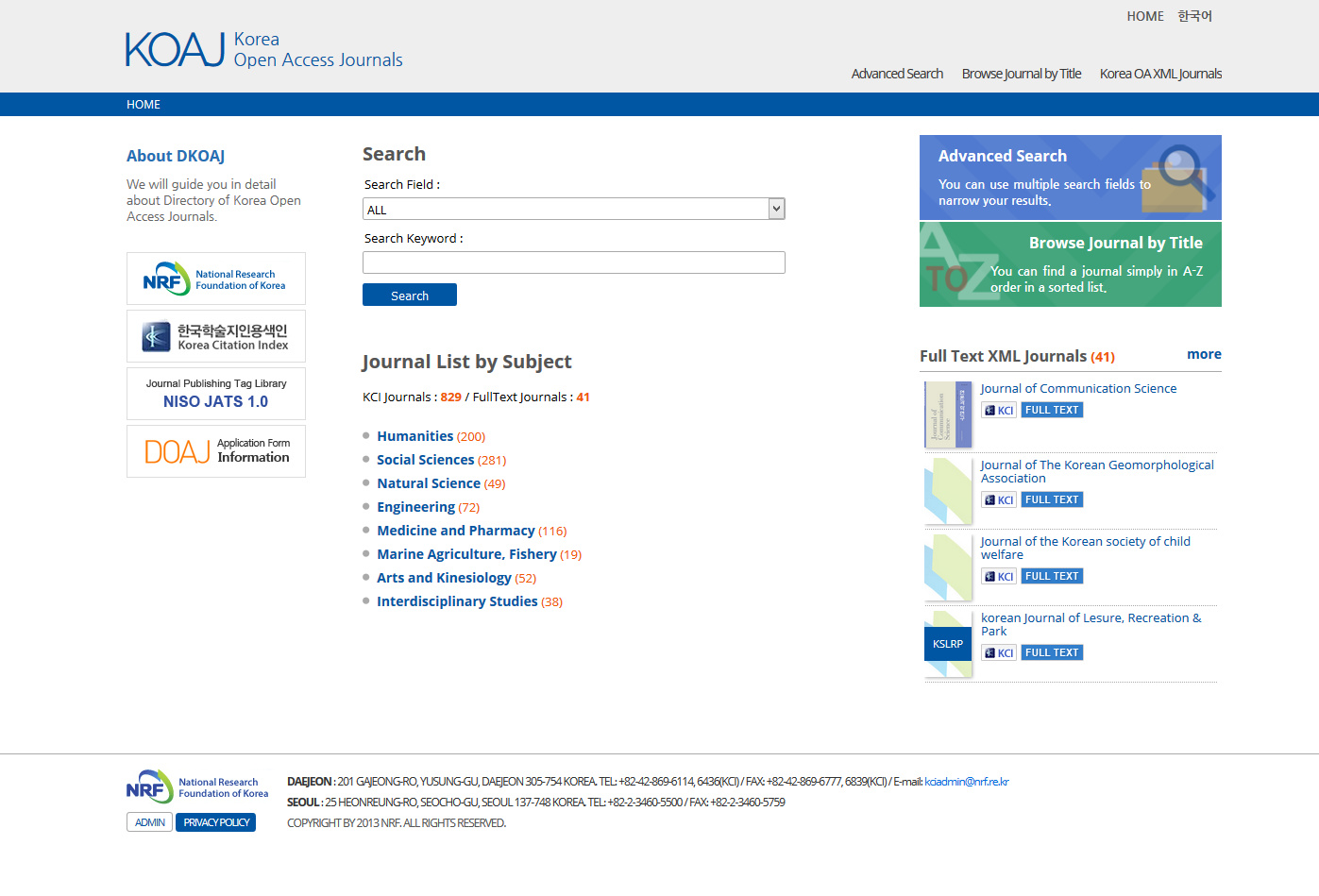
New to me, the Directory of Korea Open Access Journals from the National Research Foundation of Korea. The NRF’s website is currently down and their Wikipedia page is confusing, but at 2017 they appear to be a bona-fide if somewhat semi-detached arm of the Korean culture ministry.
29 Saturday Jul 2017
Posted in Spotted in the news
High quality long-form journalism on “The future of learning and the independent scholar”, from Karl Schmude in The Spectator Australia…
“In this essay I will focus on three things – firstly, to sketch the contribution of the independent scholar to the world of learning in the past, and more broadly to the world of culture; secondly, to reflect on changes in university and academic life that have affected the capacity, and even the existence, of the independent scholar; and thirdly, to highlight the potential for independent scholarship in present-day culture, given that the university has now come to dominate the world of learning, and even of vocational training.”
The British edition of The Spectator sporadically nips behind a paywall, but this is from the Australian edition and is free for me.
Schmude is writing from a Catholic perspective, so the essay entertains a few hobby-horses which canter around aimlessly for a few lines, but when he’s sticking to the topic it’s a stimulating read. Worth it for the phase “immune to the insinuations of conformism” alone…
… he was largely immune to the insinuations of conformism.
27 Thursday Jul 2017
Posted in Spotted in the news
Algeria now has an official Algerian Scientific Journal Platform (ASJP) aggregator for online journals (inc. humanities), all of which appear to be open. It’s from CERIST (Centre de Recherche sur l’Information Scientifique et Technique), which a little digging shows is a bona fide arm of the Algerian Ministry of Higher Education and Scientific Research.

27 Thursday Jul 2017
Posted in Ecology additions, New titles added to JURN
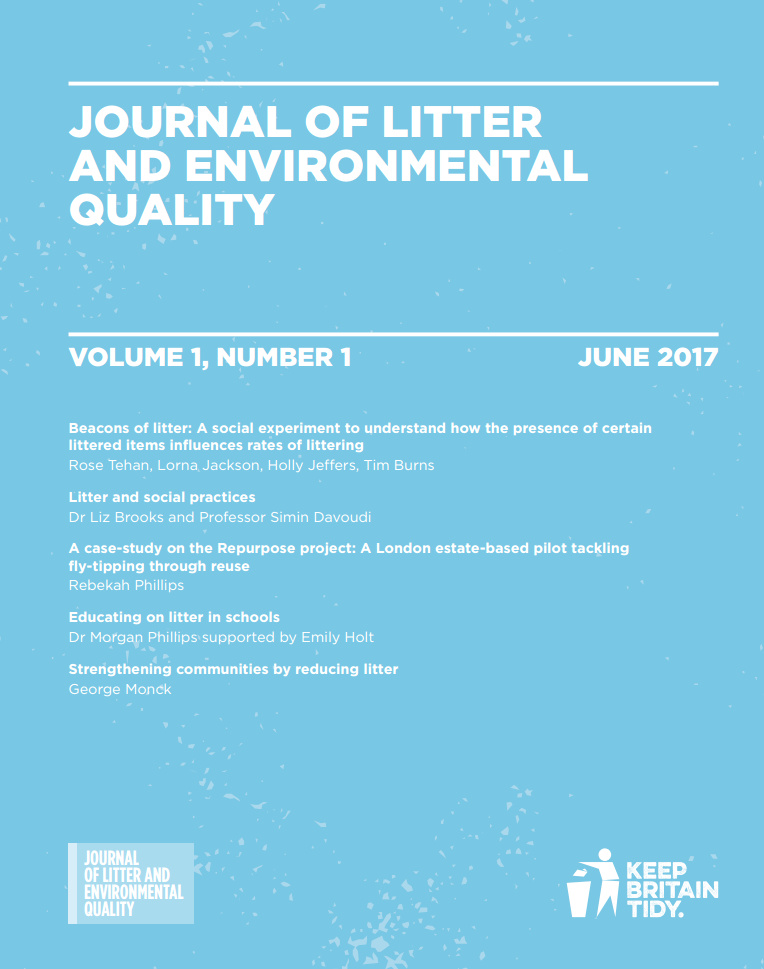
I’m pleased to see the first issue of the free Journal Of Litter And Environmental Quality, from the respected Keep Britain Tidy advocacy organisation.
Issue One:
* Beacons of litter: A social experiment to understand how the presence of certain littered items influences rates of littering.
* Litter and social practices.
* A case-study on the Repurpose project: A London estate-based pilot tackling fly-tipping through reuse.
* Educating on litter in schools.
* Strengthening communities by reducing litter.
From the form, the issue downloads in Firefox as “Journal” (no file type) and then needs to be manually re-named and given a .PDF file-type in order to launch. There’s an easier direct-to-PDF download for the issue here.
27 Thursday Jul 2017
Posted in My general observations
I see that Amazon UK is now defaulting to a really dumb wide-spectrum search, when one clicks on the author-name link on a book page. For instance, a click-search for the Tolkien scholar J. S. Ryan plunges one into quack-pot ‘health cure’ books and trash sci-fi trilogies by similarly-named authors. It’s done on the basis of ‘confusion marketing’ I guess.
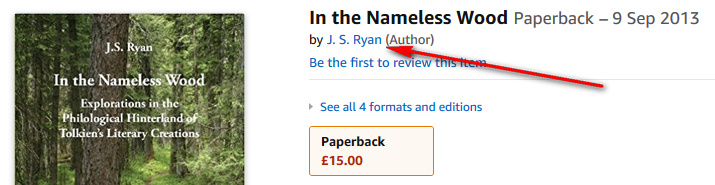

The spectrum gets extremely wide half way down the results page, when it seems that any author with “J. S.” in the name is being shovelled in.
The U.S. version of Amazon appears to have the same name-authority problem on search. For now, one can instead manually paste-search for “J. S. Ryan”, which does give correct results. But that’s not going to be much use for someone with a less distinctive name.
This new problem comes on top of Amazon’s foul new practice of lumping all book reviews for a book title under all editions of that book. Thus, for instance, one arrives at the page for a critical edition of a classic work but reads a peeved review of a cheap shovel-ware reprint ebook of the same title.
22 Saturday Jul 2017
Posted in Ecology additions, New titles added to JURN
Occasional Papers of the Natural Science Research Laboratory, Museum of Texas Tech University. Also the Special Publications monographs.