Is Biblioleaks inevitable?

“Is Biblioleaks inevitable?”

Through a concerted effort, hackers gain access to the databases of six publishers that together control access to the majority of subscription-based biomedical journal articles. This group makes copies of every article from every journal 1 and releases them into the public domain. Subsets of articles are mirrored in anonymous peer-to-peer networks, creating a decentralized and multiply-redundant repository… we speculate that a disruptive change is more likely to come from a Biblioleaks scenario — a small number of massive breaches, potentially from outside academia — rather than en masse civil disobedience from within academic communities.

  1. 6 million articles in total

JURN’s big expansion and ‘spring cleaning’ is complete

Ok, I’m calling the recent big expansion and ‘spring cleaning’ of JURN complete. If anyone wishes to publicise this fact, perhaps to their newsletter readers or social networks or blogs, here’s some news blurb…


News, 25th April 2014: Jurn.org search-tool expands in scope

The open access search tool Jurn.org has just completed a significant expansion, undertaken throughout March/April 2014. Jurn.org had previously only indexed its core collection of over 4,000 arts and humanities ejournals, all open access or otherwise free. The new Jurn.org expansion has now added a large intake of business and law, science, biomedical and ecology related open access ejournals. Also new to Jurn.org are full-text theses at selected academic repositories, with an initial focus on including the bulk of the larger UK research repositories. Jurn.org has been built by hand, and highly curated, over a period of five years. Jurn is non profit and ad-free.

jurn.org

Party like it’s 2007…

Google has released all its old Google Street View pictures, so we can travel back in time….

We’ve gathered historical imagery from past Street View collections dating back to 2007 to create this digital time capsule of the world. If you see a clock icon in the upper left-hand portion of a Street View image, click on it and move the slider through time and select a thumbnail to see that same place in previous years or seasons. Now with Street View, you can see a landmark’s growth from the ground up, like the Freedom Tower in New York City or the 2014 World Cup Stadium in Fortaleza, Brazil. This new feature can also serve as a digital timeline of recent history, like the reconstruction after the devastating 2011 earthquake and tsunami in Onagawa, Japan. You can even experience different seasons and see what it would be like to cruise Italian roadways in both summer and winter.

Bing Predict

The Bing search engine is now offering predictions

“… teams within Bing have been experimenting with useful ways that we can harness the power of Bing to model outcomes of events. … Today we are bringing these insights directly to our search results pages. Based on a variety of different signals including search queries and social input from Facebook and Twitter, we are unveiling an experiment we’ve built to give you our prediction of the outcome of a given event.”

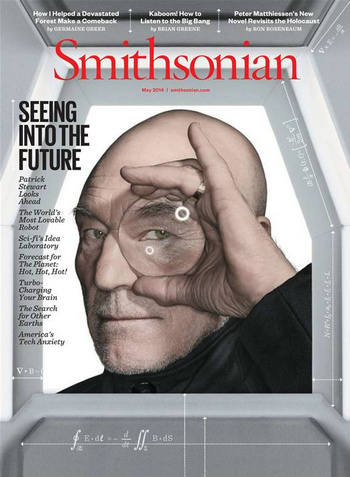
The front cover of the latest Smithsonian magazine also heralds the Future Studies meme…

smithson

PhilPapers tries new access model

PhilPapers is the free index and search tool that comprehensively tracks philosophy papers online (paywall, open, and ‘citations only’). They’re now calling for supporting subscriptions from academic institions, and will restrict feature access for those who don’t subscribe…

“To sustain PhilPapers in the long run, we need financial support for new technical and administrative staff. … the best way forward is a model involving annual subscriptions for large institutions. Starting on 1st July 2014, the PhilPapers Foundation requires that research and teaching institutions offering a B.A. or higher degree in philosophy subscribe to PhilPapers in order to have the right of access to its index. … Access … remains free for individuals accessing PhilPapers from home. Institutions that do not subscribe will have their access limited in various ways.”

Great idea. It’ll be really interesting to see what they restrict, how they do it, and if it actually works.

Cast out your dead

When mooching around the Web I quite often land on fairly newly minted college and university library guides to online research. Many of these seem to be made by copying and pasting old link lists from their older pages, or are perhaps even copied from other libraries. What’s worrying is that some librarians are obviously not even clicking through on the old links, to check the services are still there. The giveaways are usually the inclusion on a new list of dead sites like Open J-Gate, Scirus, or links to internal DOAJ pages that vanished in the reorganisation at the end of December 2013.

6th Conference on Open Access Scholarly Publishing

The 6th Conference on Open Access Scholarly Publishing is to be hosted by UNESCO in Paris, 17th–19th September 2014. The 2013 conference presentations are online free as video and audio.

For the 2014 event it’d be great to hear someone talking frankly about “the spectre at the feast” of open access, by which I mean discoverability by search. Imagine the citation advantage and impact OA could have, if only more people could easily find it.