• Directory
  • FAQ: about JURN
  • Group tests
  • Guide to academic search
  • JURN’s donationware
  • Links
  • openEco: titles indexed

News from JURN

~ search tool for open access content

News from JURN

Category Archives: Spotted in the news

Google Scholar banned in China

28 Saturday Nov 2015

Posted by futurilla in JURN's Google watch, Spotted in the news

≈ 1 Comment

Paul Stapleton, associate professor at the Hong Kong Institute of Education, writes in the South China Morning Post today that… “China must unblock Google Scholar”…

… it is curious to note what has happened recently on the mainland [China]. Google Scholar is no longer available there.”

It’s a weak article but at least it’s made me aware that Scholar, as well as the main Google Search, had been blocked in mainland China. Looking back through the surprisingly sparse western news reports, I see that the Chinese national block reportedly began in earnest on 29th May 2014. The New York Times reported in September 2014 “China Clamps Down on Web, Pinching Companies Like Google”…

… blocking virtually all access to Google websites [from 29th May 2014 onwards, and … ] the block has largely remained in place ever since. […] Jin Hetian, an archaeologist in Beijing […] said. “When in China, I’m almost never able to access Google Scholar, so I’m left badly informed of the latest findings.”

Back in January 2015 The New York Times reported “China Further Tightens Grip on the Internet”…

In recent weeks, a number of Chinese academics have gone online to express their frustrations, particularly over their inability to reach Google Scholar, a search engine that provides links to millions of scholarly papers from around the world. [there is now an energy-sapping] unending scramble to find ways around website blockages… “

An April 2015 Forbes article “How The Great Firewall Prevents China From Becoming A World Education Power” failed to mention Scholar, but the journalist (visiting Shanghai at the time) opened by reminding readers that…

all things Google are all blocked [in China]”

The reason for the ban appears to be ideological. The respected Index on Censorship had an article “Return of the Red Guards: the risks faced by students and teachers criticising the government line in China” in their June 2015 issue, that opened…

Since Xi Jinping came to power nearly three years ago, China has witnessed an intense campaign against anyone who criticises the party. Recently this campaign has moved into universities and sought to muffle both teachers and students alike. […] In January 2015, the Chinese leadership released guidelines that said universities must prioritise ideological loyalty to the party, the teaching of Marxism and Xi Jinping’s ideas. In the days following this announcement, education minister Yuan Guiren announced to a room of leaders from several prominent universities that the use of Western textbooks would be restricted and any that promote “Western values” would be banned. […] “By no means allow teaching materials that disseminate Western values in our classrooms,” Yuan told the gathering. “Never allow statements that attack and slander party leaders and malign socialism to be heard in classrooms.”

Issuu at 25 million

27 Friday Nov 2015

Posted by futurilla in Spotted in the news

≈ Leave a comment

Once upon a time, a creative seeking contemporary visual inspiration might trawl a university library’s new journal shelves. Now there are 25 million magazines online at Issuu, free-to-read and in handy flip-book format. The art / design / fashion section of Issuu is a fascinating insight into what editors have cared enough about to produce a proper designed and curated magazine for. Issuu is especially good for fashion students, with middleweight industry magazines such as WWB and MWB publishing on Issuu…

wwb

The highly curated nature of many Issuu magazines means that spotting subtle forward cultural trends may be easier than amid the manic/nostalgist jumble of Pinterest.

Issuu’s native search box isn’t great, at least for the sort of one-word searches its users are likely to use. “academic” plunges one into a wasteland of old university course catalogs and redundant student guides. “Scholarly” is only marginally better.

Sadly the flipbook format, of medium res jpgs + javascript, is usually unfriendly to Google Search. Unless you’re the editor of the National Endowment for the Humanities’ Humanities magazine or the Medical Humanities Journal of Boston College, both of whom obviously know how to extract the fulltext and invisibly add it to each issue’s flipbook page.

truncate

medhum

Many other publishers, such as Texas Wildlife magazine, don’t seem to know how to get their magazine’s text indexed by Google. Even if they did, one suspects that it may not be the greatest search experience — searching against a whole run-on block of text, that’s been auto-extracted from a PDF.

texwild

What about getting a date-ordered single page of a title’s issues? Publishers on Issuu can at least, if they wish, produce ‘stacks’ from their magazine issues. Japan’s International Academic Forum (IAFOR), for instance, does this here. But their sub-stack for IAFOR journals is rather lumpen and fails to present ordered runs of their titles. Luckily, in their case, the issues are also online in PDF.

The similar jumbling of dates at Issuu for the Illumination: the Undergraduate Journal of Humanities stack suggest that re-ordering titles by publication date, rather than by upload date, may not actually be possible? Just my guess.

Regrettably Issuu doesn’t let Google index http://issuu.com/*/stacks/ Or perhaps the Googlebot just didn’t feel the need to do so?

Occasionally one gets only a truncated preview at Issuu, such as the venerable British Journal of Photography or the previews of the V&A Museum books, but most titles appear to be complete. Sometimes a little too complete, hem hem. Issuu might add a useful icon or two: indicating ‘sample only’ and ‘flagged by users as possibly pirated’.

bjp

Issuu’s somewhat mainstream tilt nicely complements pdf-mags.com, a similar well-established free magazine flipbook site that veers more towards the indie fashion / artzine / perzine end of the spectrum. The print-focussed MagCloud store, until recently owned by HP, also has a modest ‘free to read online’ section…

magcloud

Creative students and faculty will still benefit from grabbing an armful of current print magazine from the library shelves — especially the elite photography, architecture/design, fashion and fine art publications. But thanks to Issuu and their ilk now the rest of us can also have a similar experience, albeit minus the likes of Vogue, Aperture and similar.

(Update: my fuller survey of titles on Issuu)

Google New

26 Thursday Nov 2015

Posted by futurilla in JURN's Google watch, Spotted in the news

≈ Leave a comment

A long article in TIME magazine this week on Google’s roadmap for voice recognition / voice-controlled services on everyday platforms — such as phones, wrist-bands, smartcars, and perhaps even dolls and fridges. Robot cats, even. Sadly, TIME remarks that…

At the product meetings where Google plans out the future of its search products, the desktop is rarely discussed.”

Let’s hope that’s because their ‘new product’ marketeers are confident that desktop keyword search is still being steadily advanced, and by the world’s best techies, somewhere far below them in the Google-bunkers.

Sci-hub returns, as erm… Google Scholar?

25 Wednesday Nov 2015

Posted by futurilla in Spotted in the news

≈ Leave a comment

Sci-hub is back, and now appears to be doing strange things with Google Scholar framed overlays and URL injections.

Source IP

25 Wednesday Nov 2015

Posted by futurilla in Spotted in the news

≈ Leave a comment

Source IP is a new single hub from which to search across Australia’s current commercial patents. It’s different from the usual dull type of patent search. SIP search results make it easy to identify patents available for sale, and also what’s out there but is already owned (by potential competitors). Each search result goes to a business-friendly page with a picture, the patent abstract, expiry dates, and inventor contact details.

patent

Antiquity through autobiography

24 Tuesday Nov 2015

Posted by futurilla in Spotted in the news

≈ Leave a comment

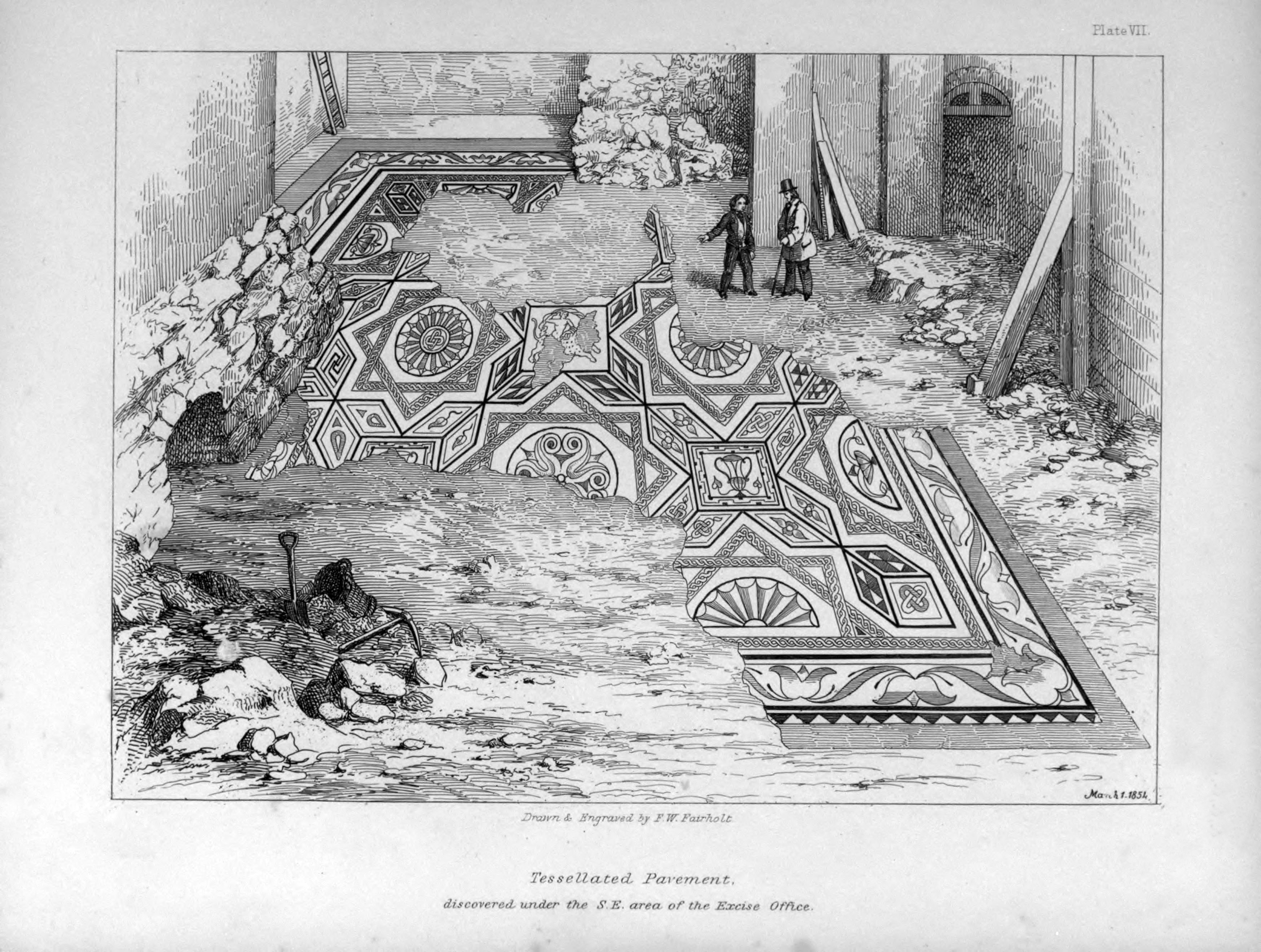
A fab new blog from Charles Jones of AWOL, The History of the Study of Antiquity through the Lens of Autobiography. Complete with a “Working Bibliography”.

Illustrations_of_Roman_London_page213 Discovery of a Tessellated Pavement, Illustrations of Roman London, page 213. Public domain.

The Academia.edu advantage

23 Monday Nov 2015

Posted by futurilla in Academic search, Open Access publishing, Spotted in the news

≈ Leave a comment

Post your articles to Academia.edu as soon as they’re published, get more citations….

Based on a sample size of 34,940 papers, we find that a paper in a median impact factor journal uploaded to Academia.edu receives 41% more citations after one year than a similar article not available online, 50% more citations after three years, and 73% after five years. We also found that articles also posted to Academia.edu had 64% more citations than articles only posted to other online venues, such as personal and departmental homepages, after five years.” [the conclusion expands this “other” element, it includes: “journal site, or any other online hosting venue”]

The studied papers were uploaded at “the same time they’re published”. Excluded from the study were… “articles uploaded to Academia.edu after they were published”.

Amazingly, the authors also note that…

To our knowledge there has been no research on what features of open access repositories or databases make articles easier to discover”

All that public money spent on repositories around the world, and not one librarian has felt the need to test for such public discoverability vectors? Seriously?

oaFindr

22 Sunday Nov 2015

Posted by futurilla in Academic search, Open Access publishing, Spotted in the news

≈ 1 Comment

A new Canadian commercial start-up is offering its new oaFindr service, with free / low-cost trials for university libraries. oaFindr is said to be able to explore a library’s existing journal subscriptions, and to identify just the open access articles within the hybrid journals. According to the press release oaFindr…

… enable[s] academic institutions to analyze their journal subscriptions and provide[s] them with a reliable, precise search and discovery tool to retrieve all open access articles. This solution will also help them comply with governmental open access mandates, and support them in rapidly increasing the diffusion of their institutions’ scholarly production in a manner that is much less labour-intensive”

The idea appears to be that the discovered OA articles are then harvested and passed to the company’s related oaFoldr service, with oaFoldr providing a conduit into their hosted repository for the OA articles. Nice if it works and gets adopted and, if public, it would provide a welcome new mega-repository for Google and JURN to index. Alternatively, I suppose that the oaFoldr may just be a private folder for cataloguers, in which the articles reside before being placed into the university’s own repository. More likely to be the latter, since otherwise one commercial company could potentially get to corral the world’s OA article output in its own repository, and would then be in a position to sell it back to universities via an enhanced search and mining/metrics service.

Regrettably, as Bernard Rentier observes, mass extraction and archiving of 1000s of OA articles per month from commercial databases may not be welcomed by the big publishers…

Elsevier has designed a way to prevent researchers from mass-downloading articles from its website where they are so-called open access…”

So how would universities harvest efficiently? Bear in mind that commercial licenses may also prevent a university from taking the proprietary hybrid journal metadata from the likes of Elsevier, Springer, Oxford etc, along with their OA fulltext PDFs. So I guess it’s much more likely that each institution will play safe and harvest only PDF articles by their own researchers, thus giving a much lower harvesting volume that might not trigger download blocking. And that they’ll find ways not to take any metadata generated around the OA article by publisher databases.

I wonder if some large institutions may have to harvest articles via spoofing multiple ‘student’ accounts? Or is oaFindr itself pre-harvesting OA PDFs from hybrid journals and then vending them to institutions along with metadata? Probably not, or the big publishers would likely be throwing lawsuits at the company. oaFindr seems more likely to be a sort of super-Paperity, but covering all hybrid titles from the big publishers plus all the DOAJ titles at the article level. I’m guessing a lot here, or course, but if such a service works then it would be rather cool. Though probably lacking in things like Google-strength semantics and relevance ranking.

So let’s assume that the university libraries are the ones that do the work of harvesting OA PDFs for their repositories. OA mandates and the consequent exponential growth of OA articles may still lead to the hitting of a ‘mass downloading’ roadblock in the near future, even at a university which restricts itself to its own outputs and/or harvests fulltext via multiple accounts. Big publishers might even change their database small-print, so as to forbid ‘type targetted’ mass harvesting leading to local storage of articles.

I guess one solution would then be to rely only on having repository records + Web links to the fulltext (fulltext hosted back on the journal’s website). Though that assumes that links don’t break. Which they do, and at a horrendous rate.

In the end I suspect it may just be easier for a university to go after its research staff with pitch-forks, and literally force them to upload their OA papers to the university repository. If your new paper isn’t in the repository after 28 days, then your next month’s salary gets docked 20% and your department can’t apply for any new funding or external partnerships in the next six months. That sort of thing.


Update, Nov 2017: OAFindr is now called 1Findr.

Help fill in a spreadsheet of open conference proceedings

20 Friday Nov 2015

Posted by futurilla in Spotted in the news

≈ Leave a comment

Deborah Fitchett is finding all the research conference proceedings that are online and open access, and at which New Zealand researchers are known to have presented. She could do with a little help on filling in the final 1,500 or so entries on the online spreadsheet.

MOSF Journal of Science Fiction : call for papers

20 Friday Nov 2015

Posted by futurilla in Spotted in the news

≈ Leave a comment

The MOSF Journal of Science Fiction, launching soon as open access, and calling for papers now.

For Web links to more such open access online SF research journals in English (Fafnir, Brumal, Eaton Journal of Archival Research in Science Fiction, SFRA Review) see the JURN directory.

← Older posts
Newer posts →
RSS Feed: Subscribe


Please become my patron at www.patreon.com/davehaden to help JURN survive and thrive.

JURN

  • JURN : directory of ejournals
  • JURN : main search-engine
  • JURN : openEco directory
  • JURN : repository search
  • Categories

    • Academic search
    • Ecology additions
    • Economics of Open Access
    • How to improve academic search
    • JURN blogged
    • JURN metrics
    • JURN tips and tricks
    • JURN's Google watch
    • My general observations
    • New media journal articles
    • New titles added to JURN
    • Official and think-tank reports
    • Ooops!
    • Open Access publishing
    • Spotted in the news
    • Uncategorized

    Archives

    • February 2026
    • January 2026
    • October 2025
    • May 2025
    • April 2025
    • September 2024
    • June 2024
    • May 2024
    • April 2024
    • March 2024
    • February 2024
    • January 2024
    • December 2023
    • November 2023
    • October 2023
    • September 2023
    • June 2023
    • May 2023
    • January 2023
    • December 2022
    • November 2022
    • October 2021
    • September 2021
    • August 2021
    • July 2021
    • June 2021
    • May 2021
    • April 2021
    • March 2021
    • February 2021
    • January 2021
    • December 2020
    • November 2020
    • October 2020
    • September 2020
    • August 2020
    • July 2020
    • June 2020
    • May 2020
    • April 2020
    • March 2020
    • February 2020
    • January 2020
    • December 2019
    • November 2019
    • October 2019
    • September 2019
    • August 2019
    • July 2019
    • June 2019
    • May 2019
    • April 2019
    • March 2019
    • February 2019
    • January 2019
    • December 2018
    • November 2018
    • October 2018
    • September 2018
    • August 2018
    • July 2018
    • June 2018
    • May 2018
    • April 2018
    • March 2018
    • February 2018
    • January 2018
    • December 2017
    • November 2017
    • October 2017
    • September 2017
    • August 2017
    • July 2017
    • June 2017
    • May 2017
    • April 2017
    • March 2017
    • February 2017
    • January 2017
    • December 2016
    • November 2016
    • October 2016
    • September 2016
    • August 2016
    • July 2016
    • June 2016
    • May 2016
    • April 2016
    • March 2016
    • February 2016
    • January 2016
    • December 2015
    • November 2015
    • October 2015
    • September 2015
    • August 2015
    • July 2015
    • June 2015
    • May 2015
    • April 2015
    • March 2015
    • February 2015
    • January 2015
    • December 2014
    • November 2014
    • October 2014
    • September 2014
    • August 2014
    • July 2014
    • June 2014
    • May 2014
    • April 2014
    • March 2014
    • February 2014
    • January 2014
    • December 2013
    • November 2013
    • October 2013
    • September 2013
    • August 2013
    • July 2013
    • June 2013
    • May 2013
    • April 2013
    • March 2013
    • February 2013
    • January 2013
    • December 2012
    • November 2012
    • October 2012
    • September 2012
    • August 2012
    • June 2012
    • May 2012
    • April 2012
    • March 2012
    • February 2012
    • January 2012
    • December 2011
    • November 2011
    • October 2011
    • September 2011
    • August 2011
    • July 2011
    • June 2011
    • May 2011
    • April 2011
    • March 2011
    • February 2011
    • January 2011
    • December 2010
    • November 2010
    • October 2010
    • September 2010
    • August 2010
    • July 2010
    • June 2010
    • May 2010
    • April 2010
    • March 2010
    • February 2010
    • January 2010
    • December 2009
    • November 2009
    • October 2009
    • September 2009
    • August 2009
    • July 2009
    • June 2009
    • May 2009
    • April 2009
    • March 2009
    • February 2009

    Proudly powered by WordPress Theme: Chateau by Ignacio Ricci.