From The History of Science Society…
“As of November 2016, anyone can now access the printed text of the Isis Cumulative Bibliographies between 1913 and 1975. This is the first time these bibliographies have been made freely accessible.”

26 Wednesday Apr 2017
Posted in Spotted in the news
From The History of Science Society…
“As of November 2016, anyone can now access the printed text of the Isis Cumulative Bibliographies between 1913 and 1975. This is the first time these bibliographies have been made freely accessible.”
26 Wednesday Apr 2017
The Economist Intelligence Unit and Google, “A New Age Of Culture: The Digitisation of Arts & Heritage Around the World”. Free online.
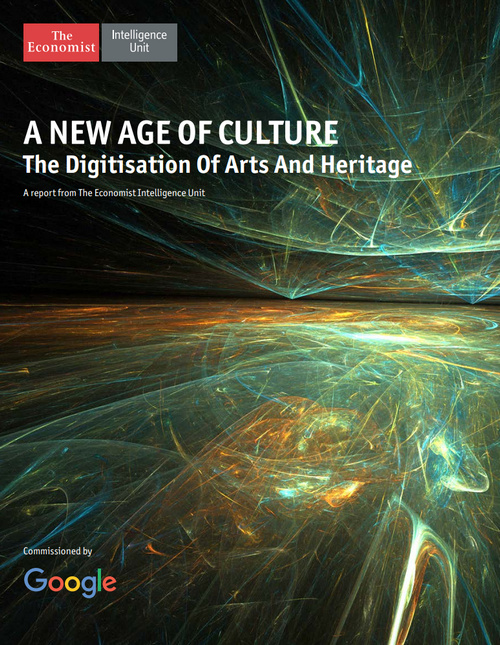
It’s a nice counterweight to the recent spate of whining about Google Books, trying to portray it as almost being a shuttered project when it’s not. Which smells to me like big publishers, their PR flunkies and a gaggle of pliable journalists.
26 Wednesday Apr 2017
Posted in JURN tips and tricks, Spotted in the news
The Internet Archive (and its Wayback Machine) has recently announced it has stopped honouring robots.txt files for some sites. A robots.txt is a simple text file which tells visiting crawler and harvesting bots that the site owners don’t want their content accessed, copied and (potentially irrevocably) made public somewhere else without their permission.
The Internet Archive is currently… “ignoring [robots.txt warnings at] U.S. government and military web sites”, and state that in future… “We are now looking to do this more broadly.”
This would seem to have a number of implications for repositories and journals. Especially in terms of things like retractions, ‘heavy harvesting’ of large numbers of large files, and also the practical implementation of the emerging legal concept of ‘the right to be forgotten’.
To anticipate this impending policy change at Internet Archive and to block their crawlers, you reportedly need to set up a way to “limit access by IP addresses” from the IA, and/or configure your site to block visiting clients named “ia_archiver”.
If you can’t do that — at first glance it looks a lot more complex than simply uploading a plain robots.txt file — then note that they say they will… “respond to removal requests sent to info@archive.org”. The latter option may be of special interest to hosted wordpress.com blogs and similar sites, which have no means of blocking the IA’s crawlers.
25 Tuesday Apr 2017
Posted in JURN metrics, Spotted in the news
Another screenshot that gives an up-to-date glimpse of the universities-only oaFindr service, in action. In this case it’s from ETH Zurich, which has a trial running with its students…
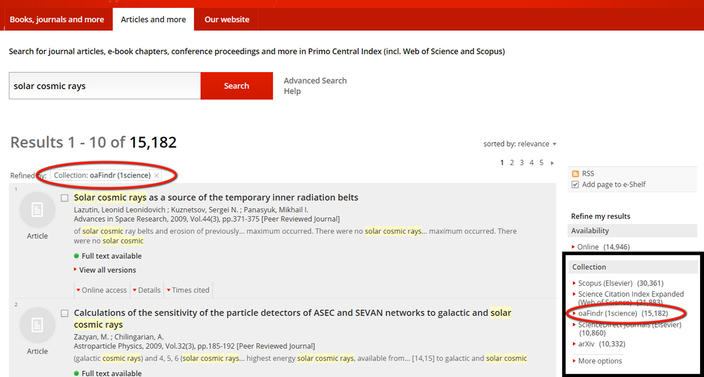
In JURN, for same search, slightly more results. Plus Google’s leading relevancy-ranking…

Of course, it’s going to help if you at least try to do a search using basic quote marks: solar “cosmic rays” gets 290,000 results. solar “cosmic rays” troposphere whittles it down to a mere 24,500.
Update, Nov 2017: OAFindr is now called 1Findr.
25 Tuesday Apr 2017
Posted in Spotted in the news
If you have a degree of Asperger’s — as many of the brightest in academia do — then Oxford University now automatically suspects you of being ‘a racist’ on campus…
Students who avoid making eye contact with their peers could be guilty of racism, according to Oxford University’s latest guidance.
And it’s not some irrelevant extreme-left Students Union officers saying this, either. It’s in the University’s printed ‘guidance’ from their own Equality and Diversity Unit.
I hear that Durham is an excellent no-nonsense alternative to Oxford, these days.
21 Friday Apr 2017
Posted in JURN tips and tricks, Spotted in the news
Trello Inspiration, a fine survey of all the different ways in which one can use the excellent and free Trello service. They missed out magazine and journal production, though.
20 Thursday Apr 2017
Posted in Spotted in the news
A fine feature article and photo-story in The Atlantic: “The Monk Who Saves Manuscripts From ISIS”…
“… the Hill Museum & Manuscript Library (HMML) … is dedicated to preserving endangered manuscripts on microfilm and in digital format. So far, it has managed to photograph more than 140,000 complete manuscripts, for a total of more than 50,000,000 handwritten pages … 2,000 out of the 6,000 manuscripts digitize[d] in Iraq between 2009 and 2014 have been lost or destroyed. Other manuscripts digitized in Syria may have suffered the same fate.”
The Hill Museum and Manuscript Library has a Virtual Reading Room in which one can browse images of treasured books and pages, such as this 6th-10th gospel from a monastery in Tigray in Ethiopia…
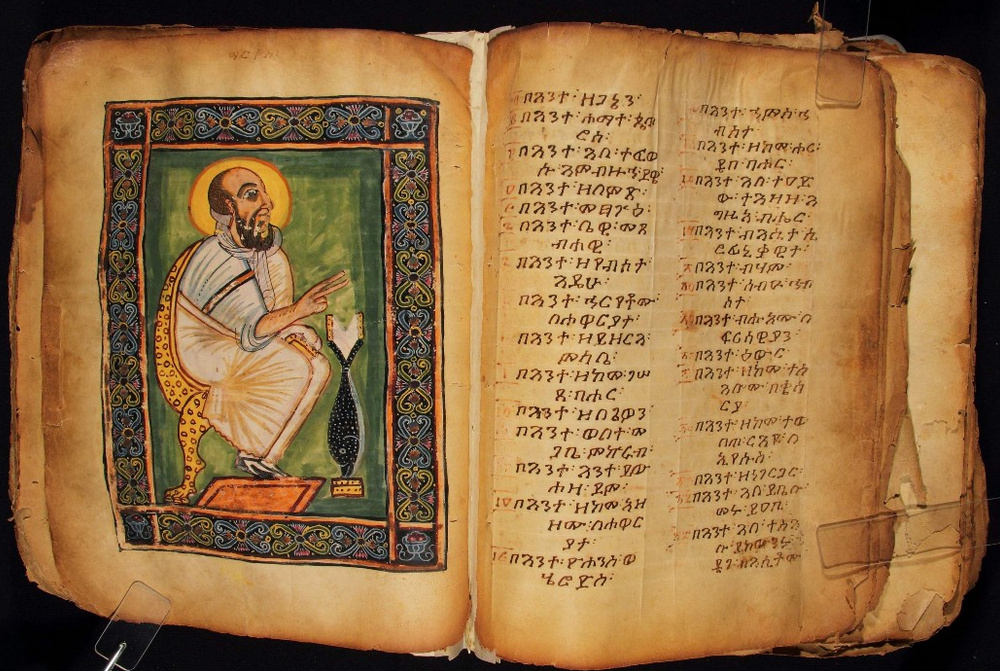
Also note their large Lexicon of Manuscript Studies, among the many other features of the website. The Lexicon can also be searched across via Google Search: site:https://www.vhmml.org/lexicon/definition/ keyword
18 Tuesday Apr 2017
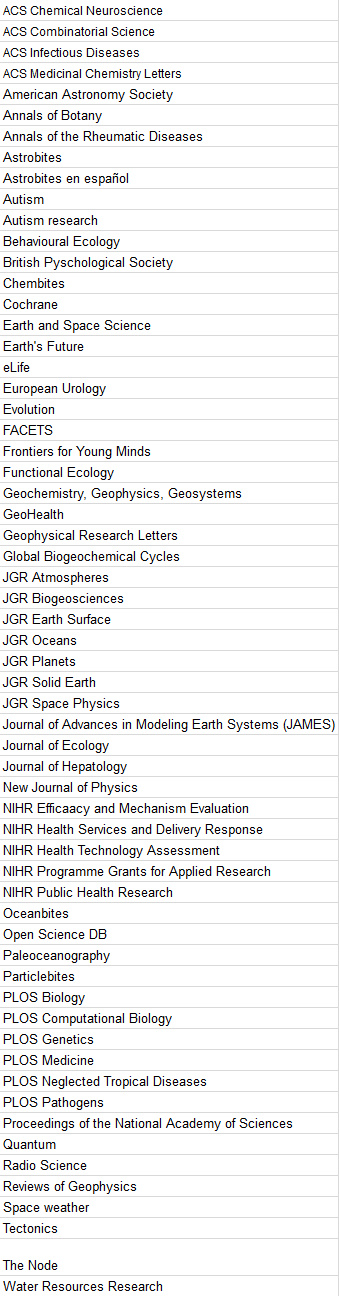
A survey of the state-of-play in providing ‘plain English’ summaries of journal articles. With a spreadsheet list of the titles which currently offer such summaries.
12 Wednesday Apr 2017
Posted in Spotted in the news
Around two-thirds of the 2016 tranche of the Knowledge Unlatched open books are now available. Back in January I blogged about 106 Knowledge Unlatched titles available in public on OAPEN. Now there are 306 such titles at OAPEN. Though the Unlatched mirror at Hathi seems to be lagging, and today is still showing only 96 results for Unlatched titles with ‘Full View’ available.
OAPEN’s search is a bit basic, but one can kludge a list of the new books by doing a search for “KU Select 2016” which filters for the 200+ new titles.
Here’s my personal pick of the newly opened scholarship…
Before Einstein : The Fourth Dimension in Fin-de-Siecle Literature and Culture. The influence of pre-Relativity four-dimensional theory on culture.
Father of Persian Verse : Rudaki and his Poetry.
The Origins of Western Notation in revised English translation. The early history of musical notation.
Biopunk Dystopias : Genetic Engineering, Society and Science Fiction.
10 Monday Apr 2017
Posted in Spotted in the news
The comprehensive national collection of historical journals on Wales, formerly at http://welshjournals.llgc.org.uk/ is now at https://journals.library.wales/