J. R. R. Tolkien in Stoke

Early in the First World War J. R. R. Tolkien had learned to fire a rifle at a camp at Newcastle-under-Lyme, near Stoke-on-Trent. Less well known is that he had a connection with Stoke-on-Trent toward the end of his life, in the period after the first publication and tepid reception of The Lord of The Rings, and before his great work was re-discovered by a critical mass of young readers in the 1970s.

From 1960 through to the early 1970s he spent many holidays with his son — who lived at 104 Hartshill Road, at the top end of Stoke town in Stoke-on-Trent. His son had lived there from 1957, just a few years before his father retired as a university lecturer in 1959. We know, from Tolkien’s surviving published letters, that the senior Tolkien spent the summer of 1960 in Stoke with his son and many summer holidays thereafter. We also know from his letters that he spent winter holidays here, in the early 1970s. Specifically a long late visit at Christmas 1971, after his wife’s death, and a long summer visit in August 1972. His surviving letters don’t provide comprehensive day-to-day coverage of his life, and so there may have been earlier visits to his son in Stoke which went unrecorded. One imagines that Tolkien probably continued to live his life according to the divisions of the academic calendar, as he had since the 1900s, so perhaps some of the holidays were relatively long ones.

Picture: Northcote House, 104 Hartshill Road, seen today. Now converted to a children’s nursery. Presumably the rather bare back-yard, seen here, was once a garden.

Picture: 104 seen from the front, on Google StreetView. Catholic church on the left. Rear upper windows would have given a good view over the city in the valley below.

The church where his son was priest, Our Lady of the Angels and St Peter in Chains. Next to it on other side was the large St. Dominic’s Convent and School, and below that the Convent Pools where the girls did Botany studies — this large Catholic school for girls is said to have existed there until 1985. The church is still a very active Catholic church, today.

We can thus imagine Tolkien, aged in his late sixties and seventies, being quite familiar with alighting from the Oxford train at Stoke with his trusty bicycle. He disliked cars (“Mordor-gadgets” as he called them), and the car-culture that was everywhere ruining England. Oxford-Stoke is a long-established direct train service, and there’s still a direct two-hour service today. Despite his increasing twinges of arthritis it seems the older Tolkien was still an avid train user and bicyclist, and until about 1968 and IRA terrorism it was still fairly easy to get a bicycle onto an inter-city train. Thus we can easily imagine him bicycling from the station through Stoke town (the barrier of the A500 road did not then exist) and up onto the lower slopes of Hartshill. Admittedly, he moved from Oxford to a new home near Bournemouth in 1968 but this would not have hampered a train trip to Stoke. The four-hour journey would then have been Bournemouth to Oxford, and Oxford to Stoke.

Direct train ticket from Oxford to Stoke.

Tolkien as an older man, holding his pipe in one hand, circa 1972.

He was not the cultural colossus he would later become. In 1960 there would be no throng of adoring fans waiting for him at Stoke station, of the sort that might gather today for someone like Neil Gaiman. In Stoke he was just an obscure and rather isolated old man and a retired ‘professor of medieval language and literature’ (as most non-specialists would understand his job). His unwelcome retirement and his caring for his ill wife had tended to cut him off from social life. Yes, he had once published a mildly popular children’s book in 1937, as well as a follow-up fantasy book in three volumes from 1954-56. The children’s book had sold well-enough but not-all-that-well in bookshops, and was out-of-print for most of the 1940s (though there had been a special Children’s Book Club edition, issued in the dark days of 1942). The follow-up had mixed reviews in the press. By the time he was first in Stoke the establishment critics rarely thought of his work, and if they did they usually derided it after a hasty skim-reading, or even no reading at all. Philip Toynbee in the left-wing Observer newspaper (6th August 1961) was pleased to note of Tolkien’s works that… “today these books have passed into a merciful oblivion”. Tolkien’s deep national patriotism and his concern with the heroic past were increasingly out of fashion among the chattering classes of the 1960s and early 70s. What fans his work did have, mostly among the young from about 1966/67 onward in America and from 1968/70 in the UK, tended to see only the surface layer of his stories and he often found such people rather annoying. The cultural seeds that Tolkien had planted in The Lord of the Rings were thus still largely dormant, and they would only grow up into a vast murmuring forest long after his death.

Once unpacked and ‘settled in’ at his son’s house in Stoke, he might have regularly walked or cycled to a local newsagents. Seeking some Capstan Navy Cut ‘Blue’ pipe-tobacco for his very standard Dunhill pipe (sadly he did not sport a Gandalf-ian ‘Churchwarden’ pipe), and a fresh box of matches.

Picture: Tolkien’s preferred pipe-weed. Today referred to as ‘Capstan Navy Cut Ready Rubbed’.

Also some daily newspapers, which were very important to him in terms of keeping him connected to the world. He was in those years an avid newspaper reader, and took both the Times and the Telegraph and read them attentively every day. On these he sometimes liked to doodle fine decorative ‘elvish’ patterns with the newly-invented ‘biro’ pens of red, blue and green. Some of his doodles were exhibited at the Bodleian Library in Oxford, a few years ago now.

The only route for a probable walk from his son’s home to the centre of Hartshill, the nearest newsagents, pub and Post Office / post-box. Seen here in the 1930s, but much the same until the local Labour Council destroyed the coherence of this part of Hartshill by permitting a modern 1980s petrol station and used-tyres dump.

The shops at the centre of Hartshill, a little way up from The Jolly Potters pub and a short walk from where Tolkien was staying. Seen here in the 1930s but much the same in the 1950s-70s, and even today. The most likely local newsagents is in the middle of the picture on the left, with its awning out. On the nearer corner was the nearest Post Office and Royal Mail post-box (still there today).

Quite possibly he visited a local pub for a pint and a smoke of his pipe, the most likely pub being the very nearby Jolly Potters rather than the more work-a-day pubs down in the town. He liked traditional pubs, with good beer and no blaring radio playing music. His memory for everyday matters was by then noticeably declining, but he was still fascinated by the intricacies of language and the names for things. Thus he would have had an eager ear for our strong and distinctive local dialect and words, then far stronger than today’s faded forms.

He would certainly have visited local Catholic churches and places, since he was deeply religious. But where he worshipped in the Potteries is not known. One assumes the church next door to where was was staying, but that might not be the case. Very nearby, at both Burslem and Tunstall, there are very impressive Catholic ‘cathedral’-style churches for instance. There was also a large Catholic church in Newcastle-under-Lyme.

In 1962, he was prize-giver at the Catholic boys’ school of St. Joseph’s in Stoke-on-Trent. This was before the brief ‘Hobbit fever’ of the late 1960s. The end-of-May event was reported in the Catholic Herald on 1st June 1962. We have to assume that he was able to attend the prize-giving because he was staying locally with his son. The school was in Trent Vale, on the London Road, thus Tolkien would likely have walked or cycled down there from Hartshill in the May weather. If so, then we can add the summer of 1962 to the years that Tolkien stayed in Stoke.

St. Joseph’s on the London Road, Stoke.

One imagines that he visited the usual local places on day-trips: the new (opened 1956) city museum, where he might have been more interested in the archaeology and the very fine natural-history rooms, rather than our world-famous ceramics; Trentham Gardens and the richly-wooded parkland estate; Biddulph Grange with its fantastical compartment-gardens and trees; the vast grounds full of trees on the campus at nearby Keele. Apparently the son Tolkien was staying with was, or had recently been (depending on the date) the Catholic Chaplain there. The Keele grounds have fine trees and it later became a formal Arboretum of world class. He would have felt at home in a district that cherished, as he did so ardently, its trees and gardens. Pugin’s Alton Castle in the Staffordshire Moorlands would have been a strong draw for a Catholic. Perhaps he also once or twice waded through the bracken to see King Wulfhere’s hill-fort near Stone, since he had an abiding interest in all things that were early Mercian. Though admittedly such an adventurous and uphill visit might have been too arduous and risky for an older man. If he had visited Wulfhere’s hill-fort and Alton Castle, would he have known how very close he was to his beloved Beowulf and to Sir Gawain respectively? No, sadly he would not have known. The scholarship would have to progress for another sixty years.

Possibly he and his son liked to use the various bits of the local railway network to get about, since the local lines were fairly extensive until the cuts made by the despised Dr. Beeching in the mid 1960s. His story “Leaf by Niggle”, which features a small railway station at a pivotal point, was written in 1942 and thus cannot have been influenced by the Potteries network.

Pre-Beeching local railway system, at the start of the 1960s.

Any such local visits would of course have been far too late in time to have influenced the landscapes of The Hobbit or The Lord of the Rings.

There seems just one possibility for influence on his creative work. In early 1965 Tolkien wrote the bulk of the fine long fairy-story “Smith of Wootton Major”, a late masterpiece which appeared in 1967. One then wonders if the name might come from the elegant house at Wootton near Ellastone, in the moorlands of North Staffordshire.

Because, at that time, Wootton was the home of the war poet Major Alan Rook. Rook knew Tolkien, and might have once been his student…

Picture: Wartime postcard from Tolkien to Rook, April 1943. Tolkien assures Rook that he has “never forgotten you and those pleasant days which preceded this ghastly storm”.

Rook had the house from 1950. In 1959 Country Life reported that… “In 1950 the house was bought by the present owner, Major Alan Rook, the poet and playwright, who has solved with great ability and discrimination the problem of living in a house that is both somewhat large and exceedingly remote.” Tolkien’s great friend C.S. Lewis may also have been a visitor at Wootton, as Rook also knew Lewis well (see: Schofield, In search of C.S. Lewis, 1983). Could the ‘Major’ and ‘Wootton’ have then lent their names to the late Tolkien story “Smith of Wootton Major” (published 1967)? This is a very tentative theory, but it gains a little weight if we consider that Tolkien may have mused on the placename ‘Ellastone’ perhaps arising from ‘elf stone’, since this would connect with the matter of the tale. The ‘great house’ setting is also similar.

There is also a somewhat less likely influence, but one that is worth considering (if only to dampen the wild claims sometimes heard for it in the Staffordshire Moorlands). Given his continuing scholarly interests it is also conceivable that the older Tolkien made at least one excursion to the eerie cleft of Lud’s Church in the nearby Moorlands, stated nationally in 1958 (R. V. W. Elliot, article in The Times) to be one of the settings for the ancient tale Gawain and The Green Knight — of which Tolkien had published a fine scholarly edition in 1925. Tolkien was still interested in Gawain in his old age. He would broadcast his modern English translation of Gawain on BBC radio in 1953, and would publish his Gawain book again in a revised edition in 1967. Most of the work on the new edition appears to have been done by a student of his, but one then wonders if — as part of the field research for the new edition — Tolkien and his student ever made any trips by car from Stoke into the wild ‘barrow downs’ districts of the Gawain story? These are to be found very nearby, in the Staffordshire Moorlands and on the western edge of the Peak District, only a short car ride away through lovely scenery.

But did he know about such locations when he was younger? Before the writing of The Lord of The Rings, for instance? Well, in the 1925 edition he knew that the fading Gawain manuscript had been preserved by chance in a Yorkshire library, in a copy which was then thought to have been made in south-west Lancashire. However, it cannot be suggested that visits to the Gawain landscape inspired elements of Tolkien’s famous works (such as the road to the Door of the Dead, see postcard above). Since in his 1925 edition of Gawain he and his collaborator could only suggest a broad resemblance of the surviving Gawain copy to old manuscripts known to have been…

“written at Hales in south-west Lancashire, not many years earlier than 1413. This resemblance, however, only goes to show that the dialect of the copyist was of Hales in south-west Lancashire”.

Slightly later, in a 1928 text (Walter E. Haigh’s Glossary of the Dialect of the Huddersfield District) he suggested Gawain was “probably written to the west of Huddersfield”, this being a small district nestled under the northern edge of the Peak District. It was not until later, though, that we have the mature Tolkien stating that the dialect showed that the original author’s…

“home was in the West Midlands of England; so much his language shows, and his metre, and his scenery.”

By 1928 Serjeantson was suggesting “the western part of Derbyshire”. Much later the dialect specialists would place the Gawain-poet’s likely home-place on the south-west of the Peak and in the precisely described landscape where Gawain meets the Green Knight at the end of the tale, in the northern part of what is now the West Midlands. Most likely an isolated dialect ‘district’ infused with what Tolkien referred to (following the usage of his Oxford tutors) as “Old Mercian” — roughly the North Staffordshire moorlands and the Peak District of western Derbyshire, or just north across the River Dane and the high Cloud into directly-adjacent parts of Cheshire.

We appear to have no other public pronouncements or endorsements of a likely location from Tolkien. Thus, without delving further into what Tolkien thought about Gawain locations, it seems we have no indication that the pre-Lord of the Rings Tolkien associated Lud’s Church or the Moorlands landscape with a Gawain location. It would, however, be interesting for Tolkien scholars to more precisely date the exact point at which Tolkien switched away from his early focus on Lancashire. Could his focus have privately changed on that matter by the early/mid 1940s (perhaps due to Israel Gollancz’s student Mabel Day, who publicly and correctly suggested Wetton Mill in the Staffordshire Moorlands), before he wrote the 'Door of the Dead' sections of The Lord of the Rings? He would have been very remiss, and also very haughty, if he had not bothered to read the key new edition of Gawain in which Day’s statement was made. But if he took note of the suggestion is now unknown.


Further reading:

Tom Shippey, “Tolkien and the West Midlands: The Roots of Romance”, in Roots and Branches: Selected Papers on Tolkien, Walking Tree, 2007. (One of Shippey’s best and most important papers on Tolkien. Originally in Lembas Extra 1995.)

Tom Shippey, “Tolkien and the Gawain-poet”, also to be found in Roots and Branches (2007). (Originally in Mythlore Vol. 21, No.2., Winter 1996, and thus now free online.)

See also my new book Strange Country: Sir Gawain in the moorlands of North Staffordshire. An investigation.

Tolkien’s Staffordshire camps

Some postcards of Tolkien’s camps in Staffordshire during the First World War:


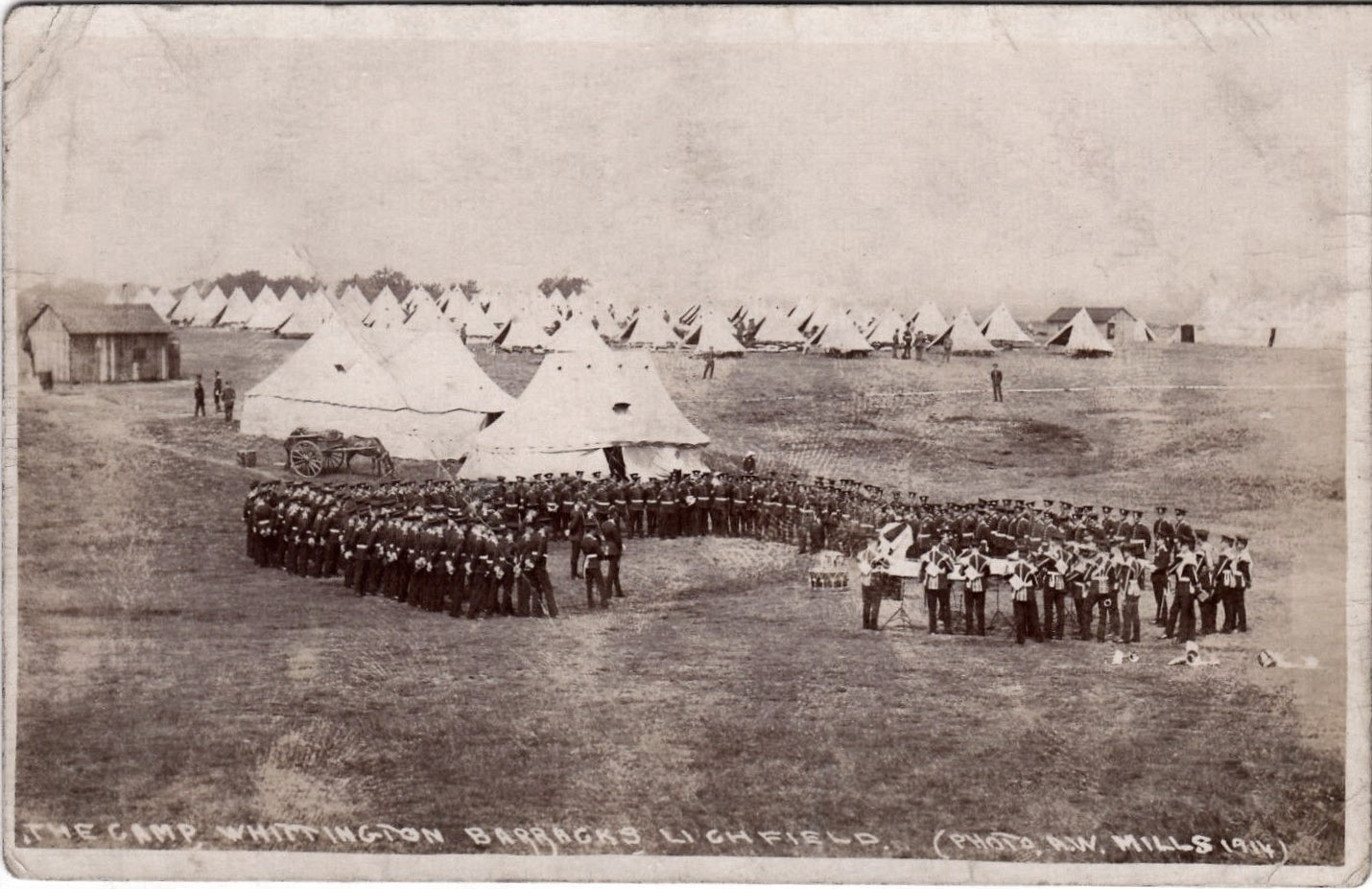
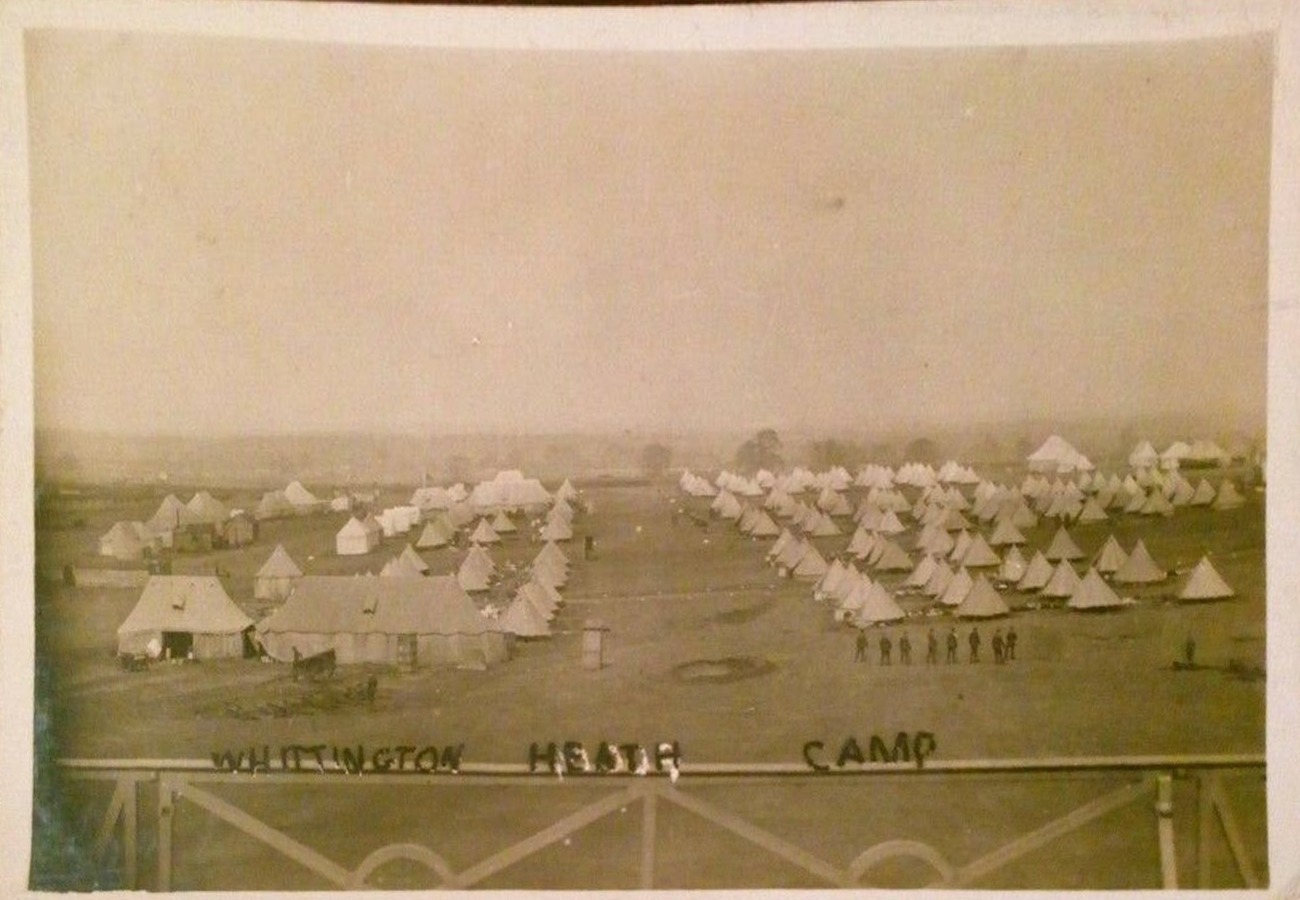
Whittington Heath, near Lichfield.

Two miles from Lichfield. The above huts are probably later, after the First World War at a guess. Still, it gives an impression of the heathland landscape. In the First World War it was probably largely tented, most likely by different Lancashire and West Midlands regiments, one in each large field…

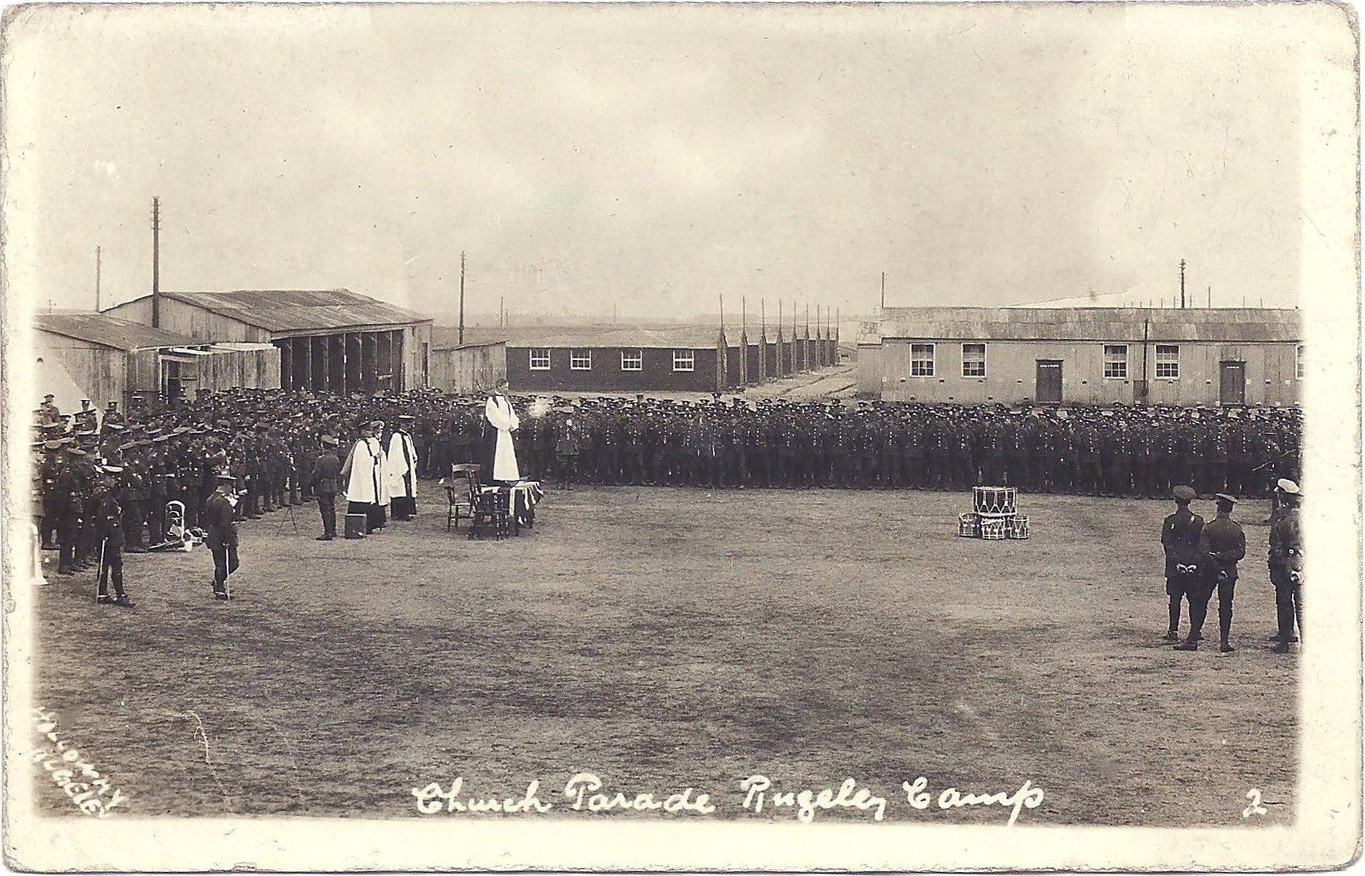
This supposition appears to be confirmed by my finding this 1914 card of the open-air Sunday Service (‘Church Parade’) at one of the Whittington tented camps…


The Butts, near Newcastle-under-Lyme, for Musketry camp.

[No picture known]


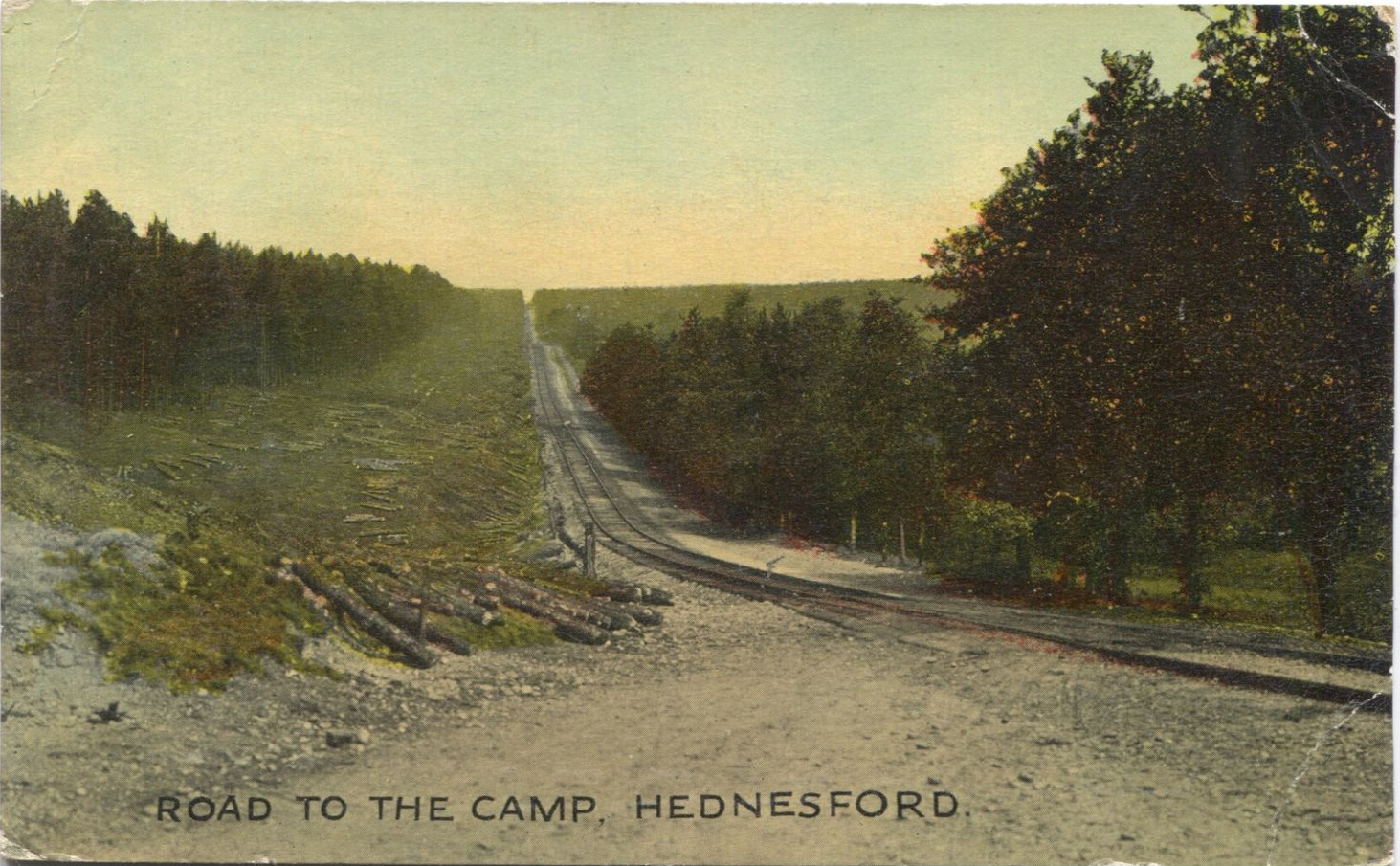
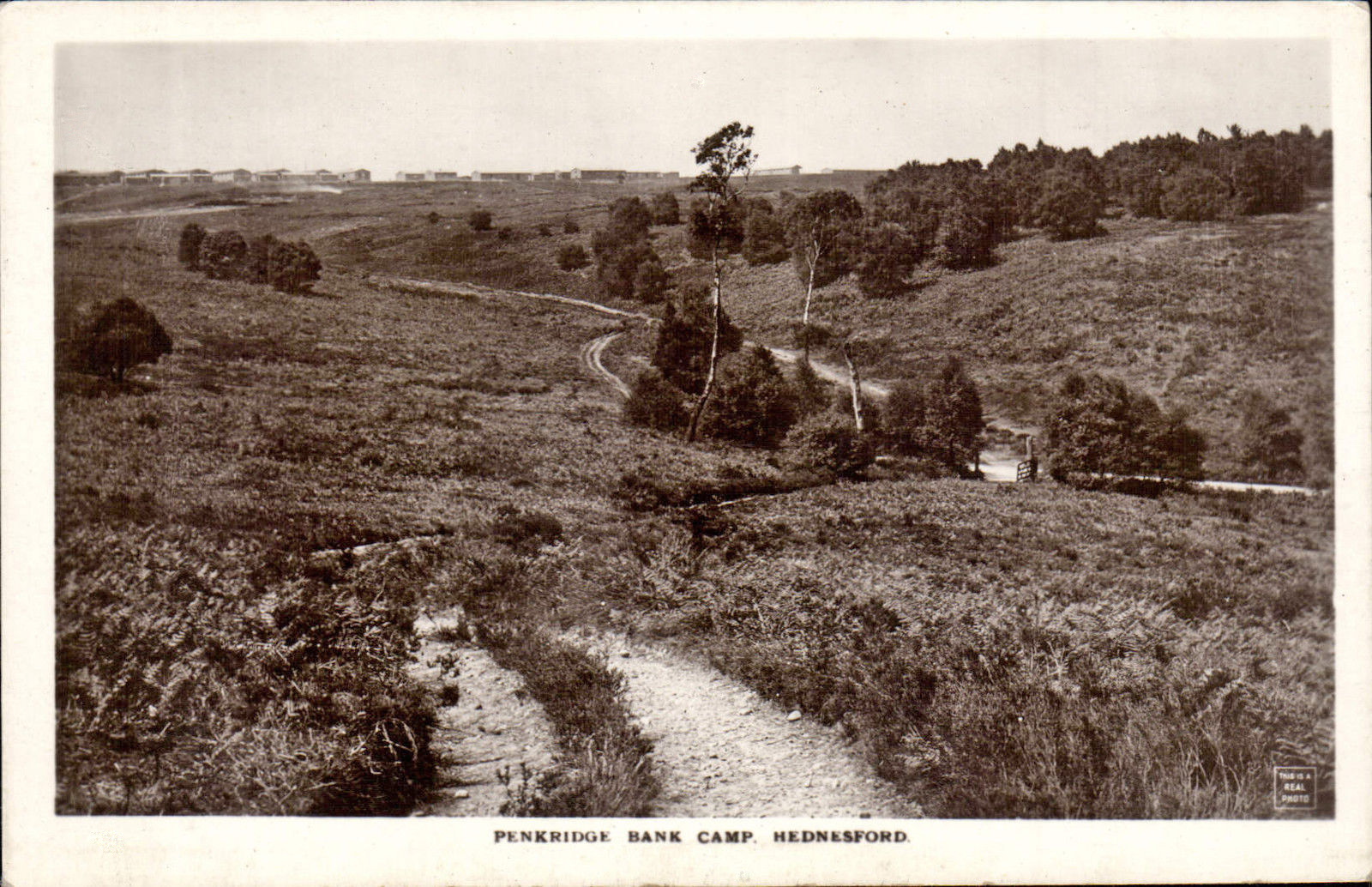
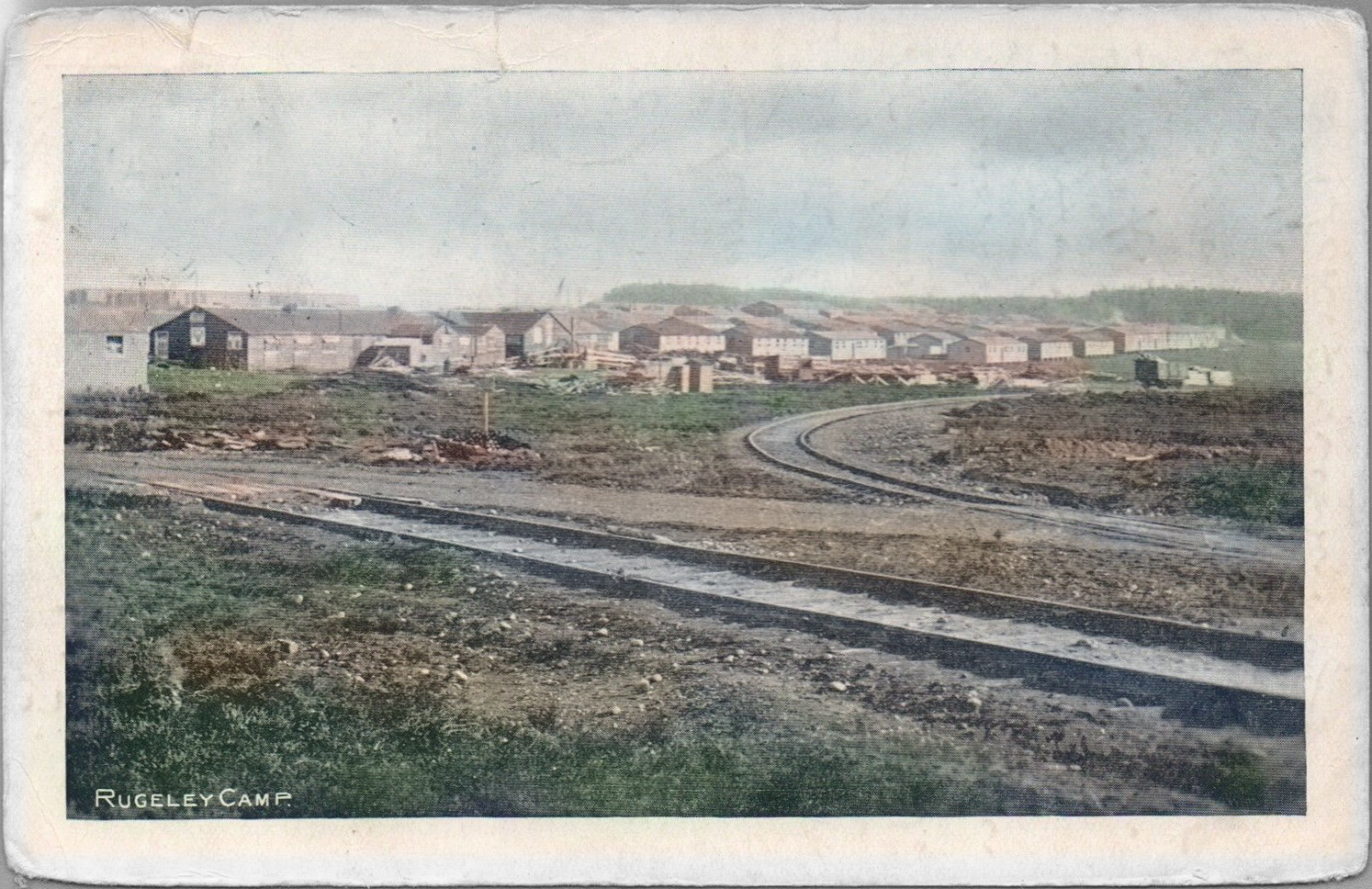
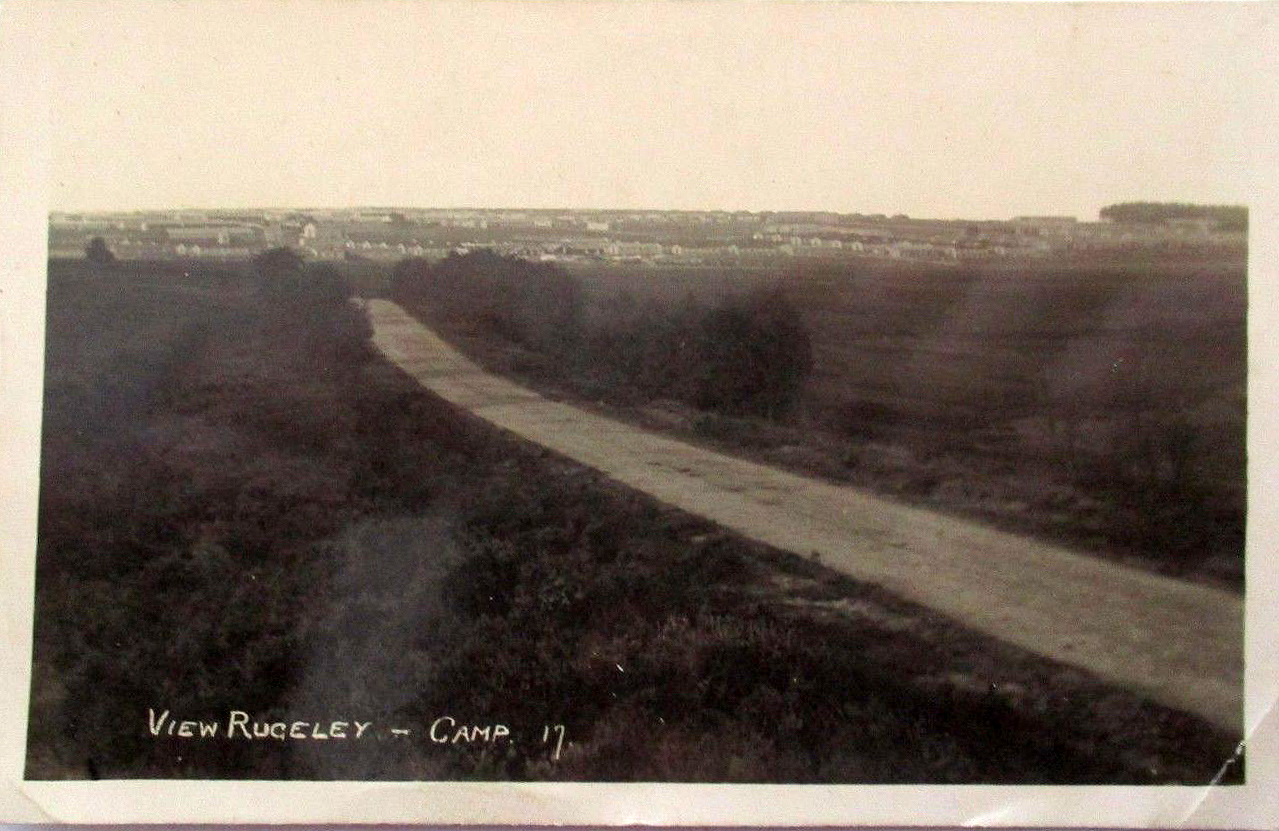
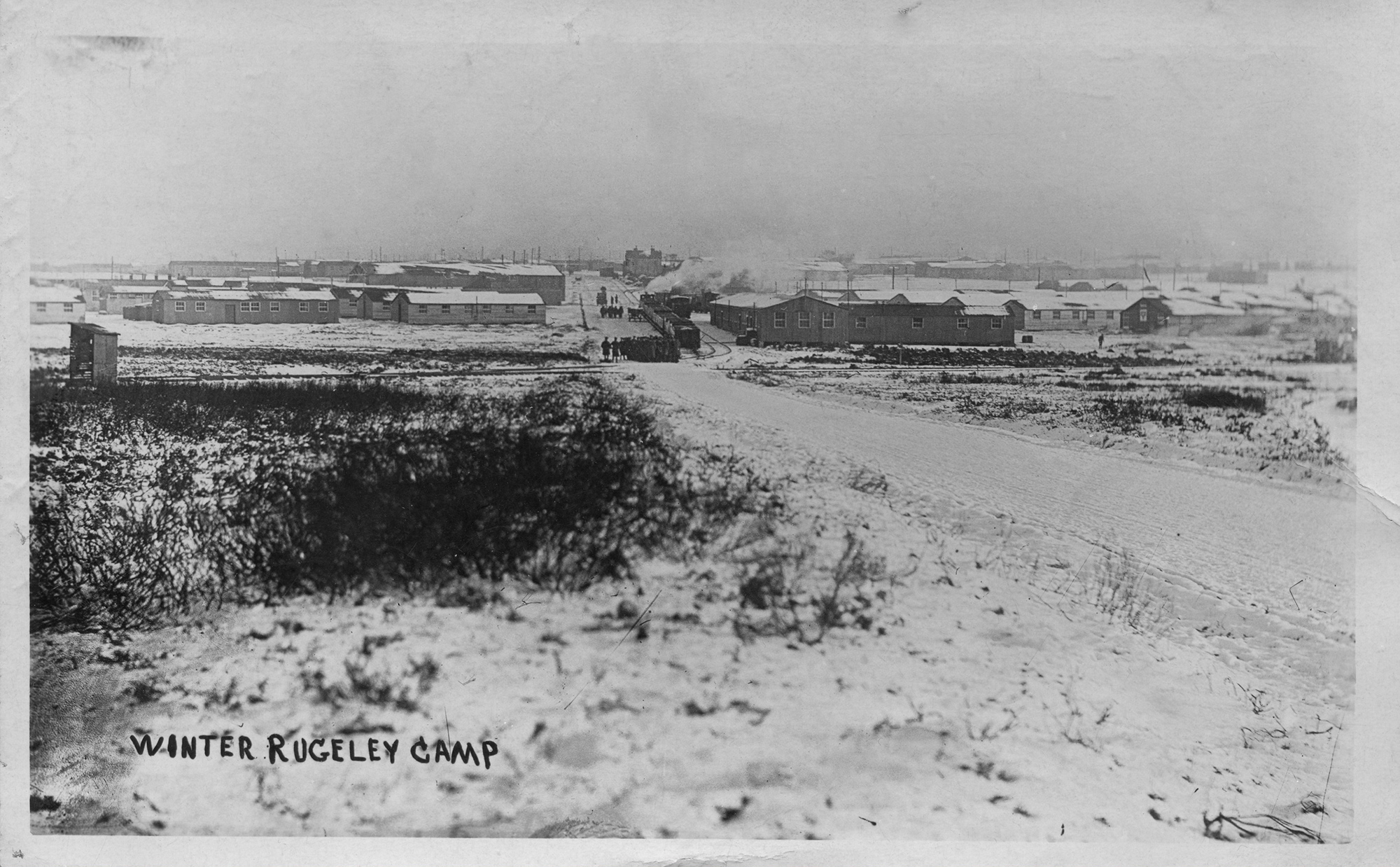
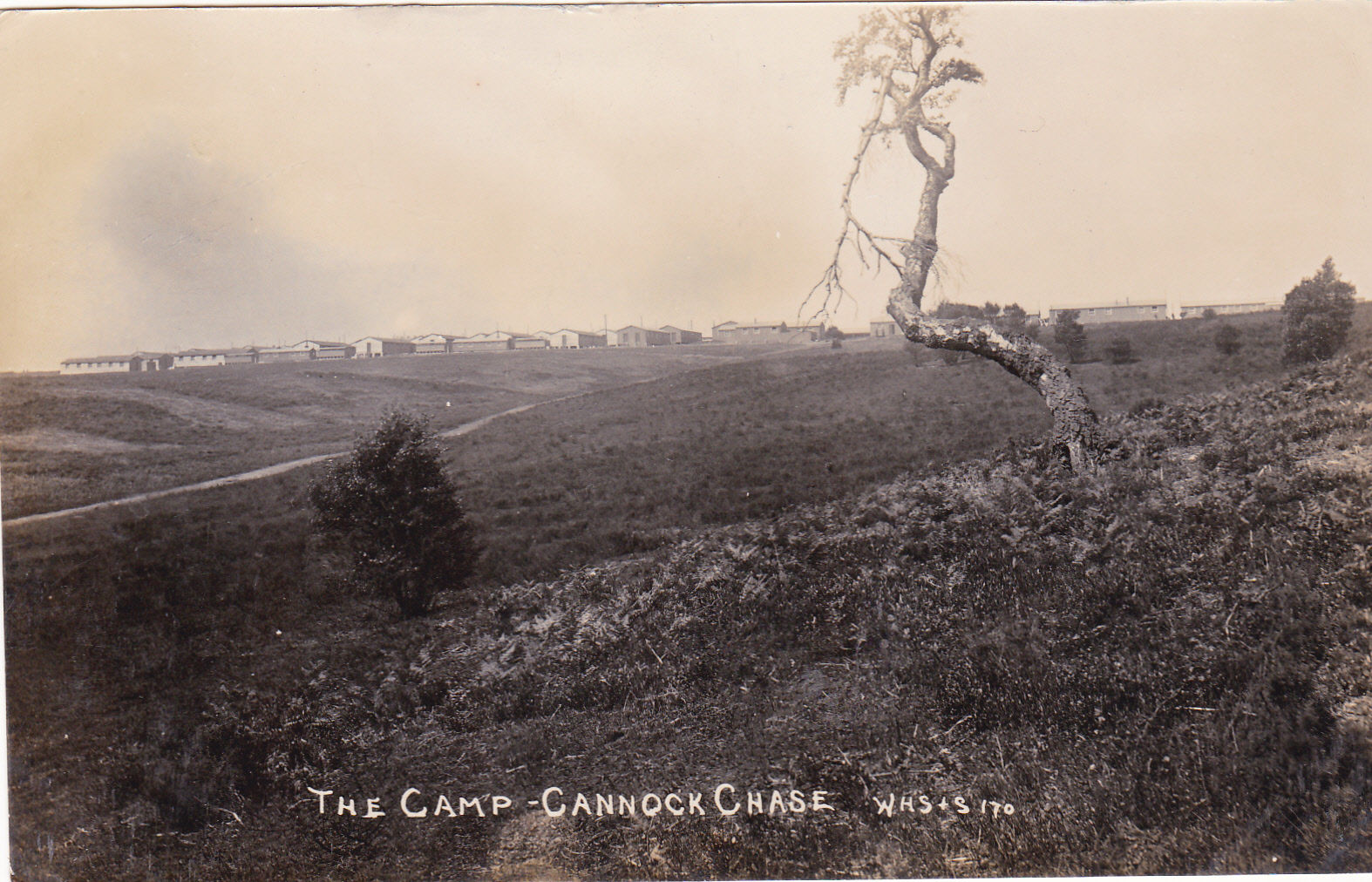
Rugeley Camp (Penkridge Bank Camp), at Brindley Heath on Cannock Chase, between Rugeley and Hednesford.


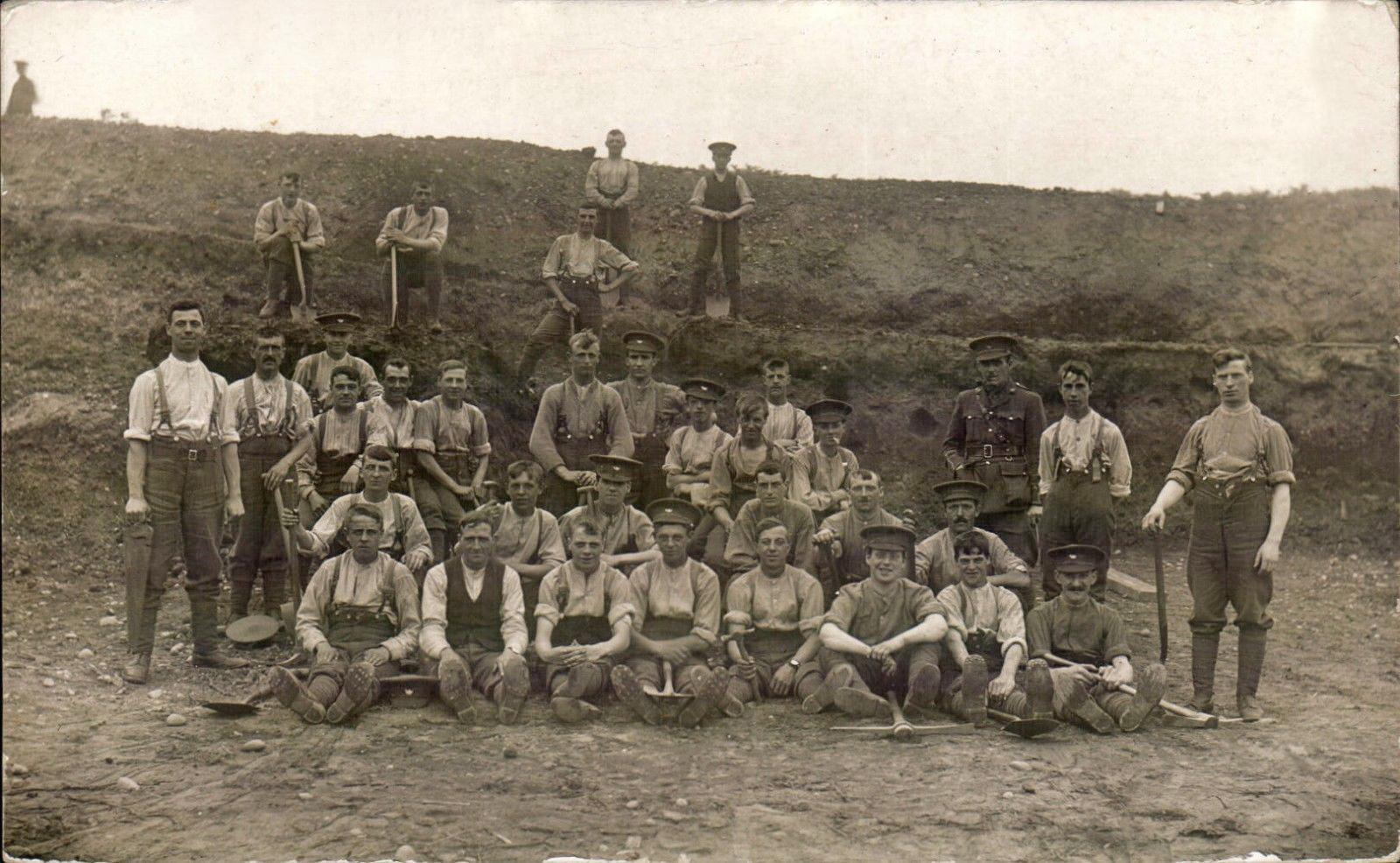
The men:

Picture was “Posted to France from Penkridge”. Indicative of the type of soldiers Tolkien would have been in command of.


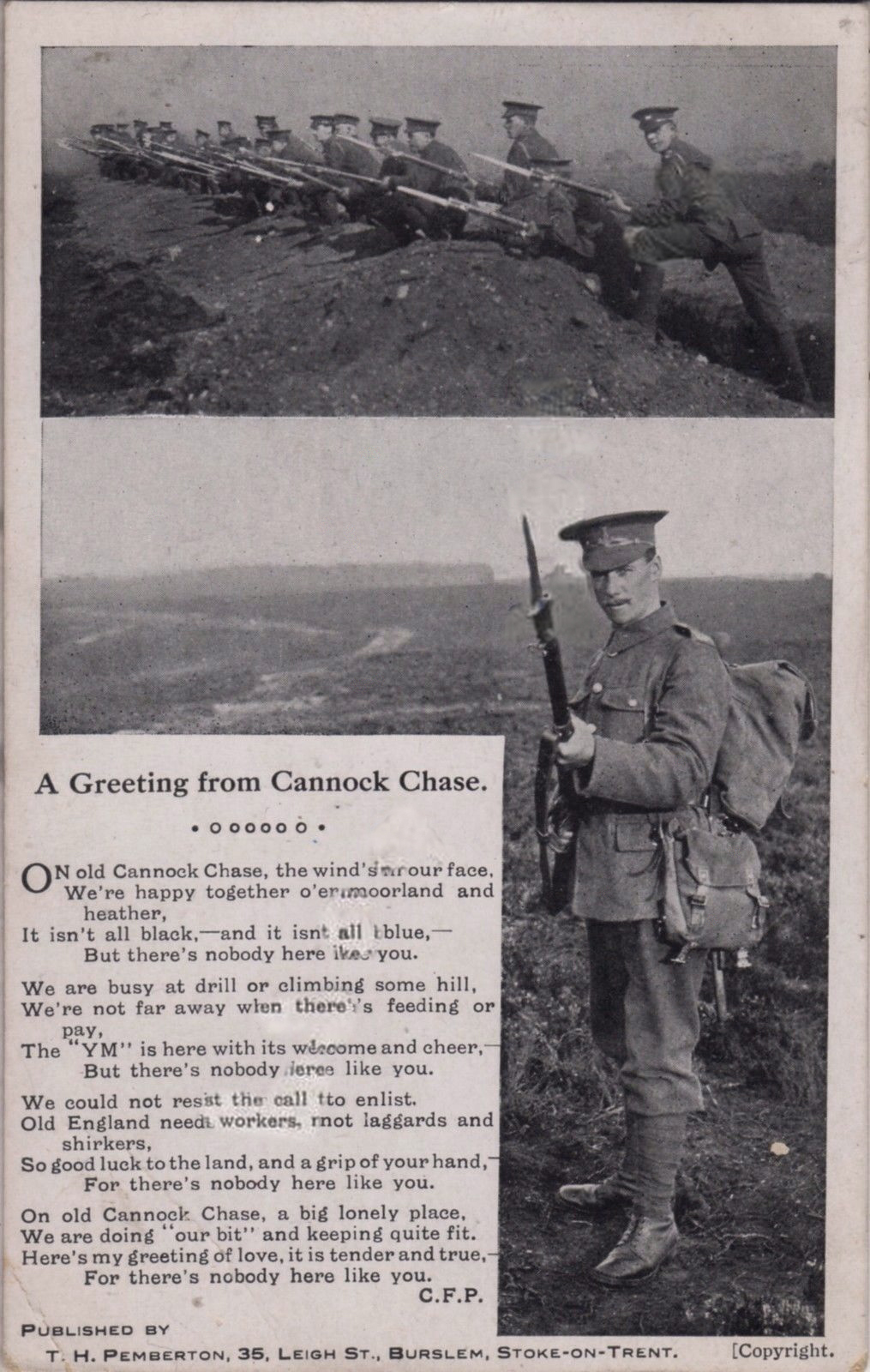
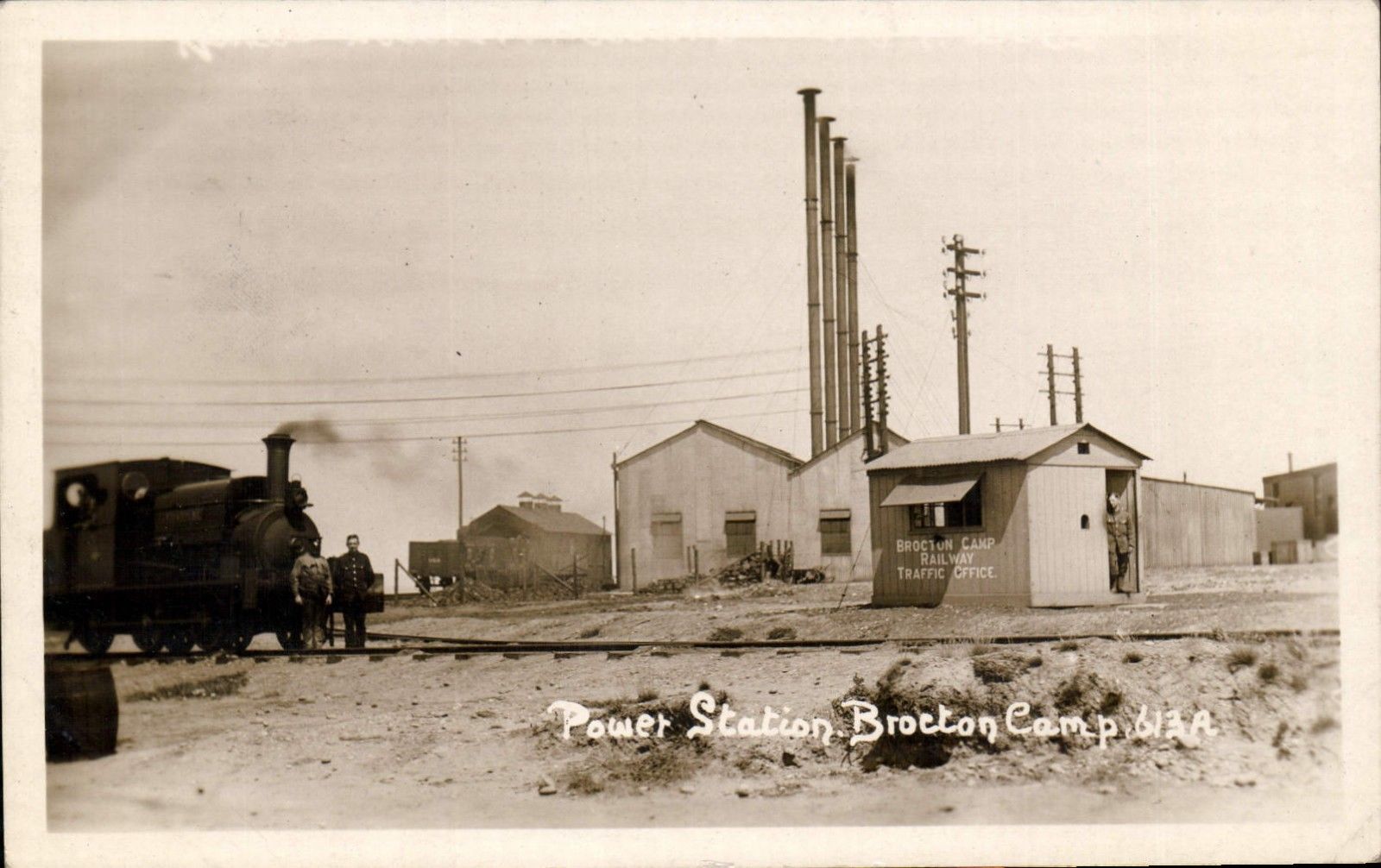
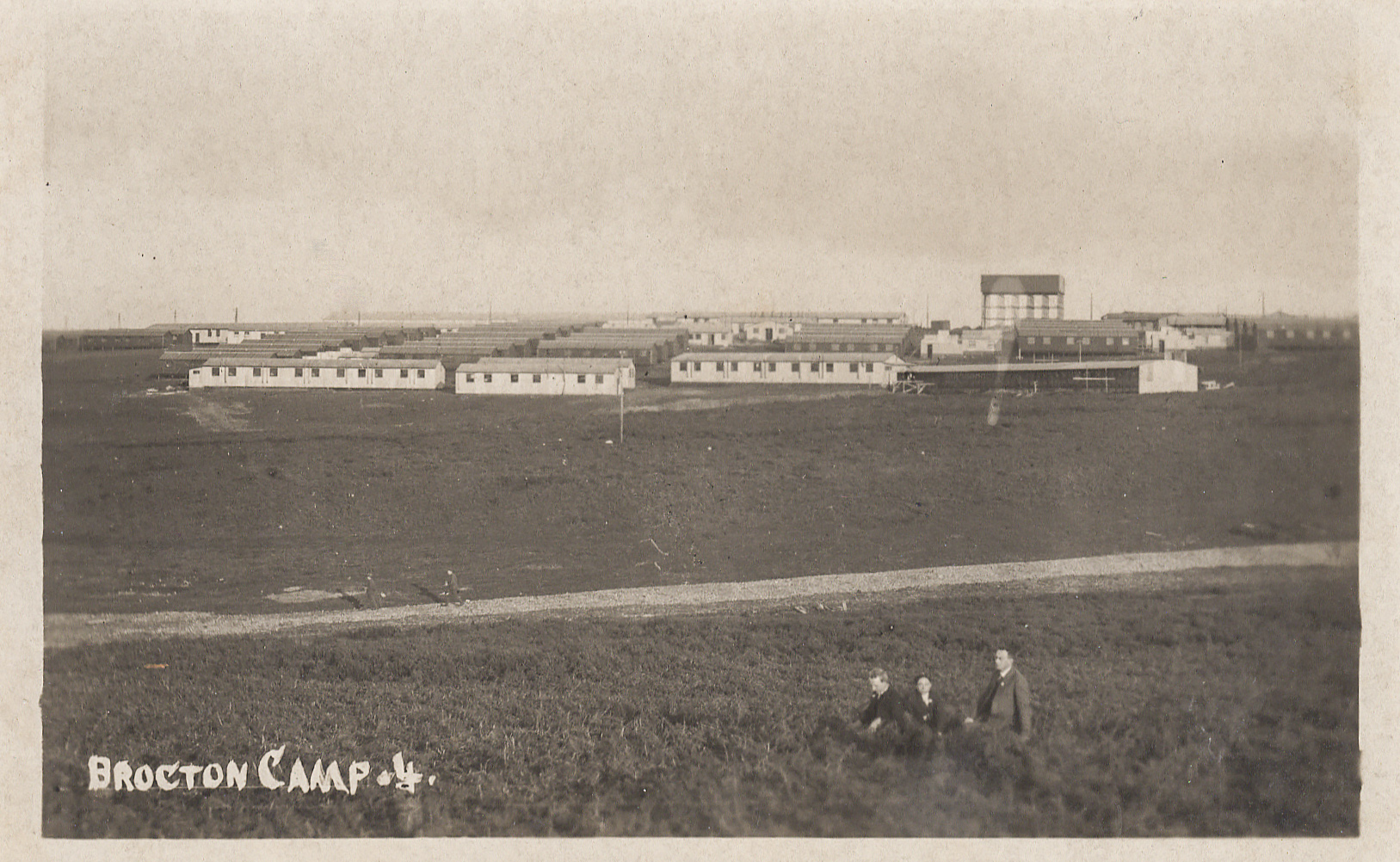
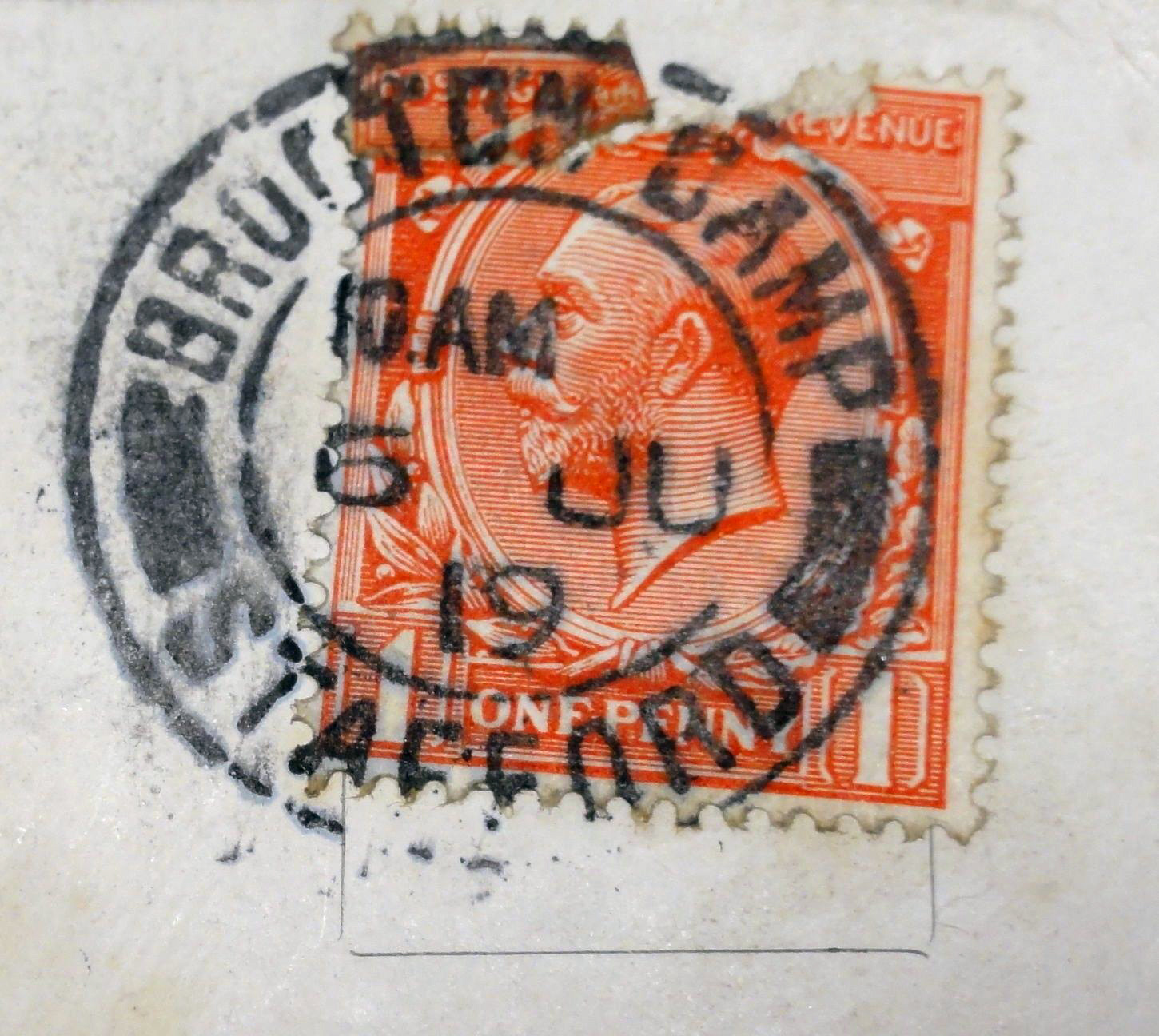
Brocton Camp, Cannock Chase.

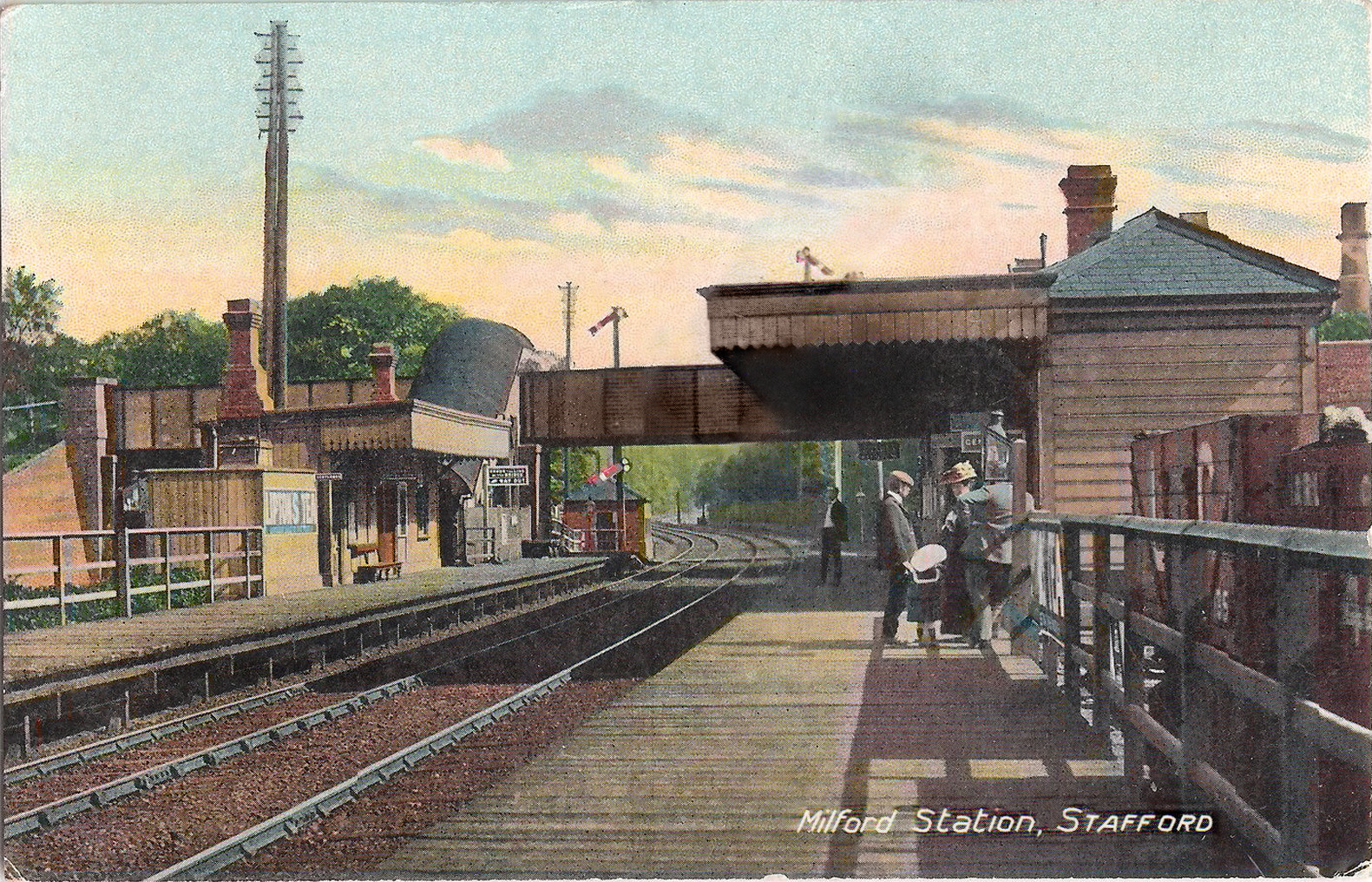
Milford & Brocton Railway Station. “Milford and Brocton railway station served the villages of Milford and Brocton in Staffordshire, England from 1877 to 1950 on the Trent Valley line [to Lichfield].”

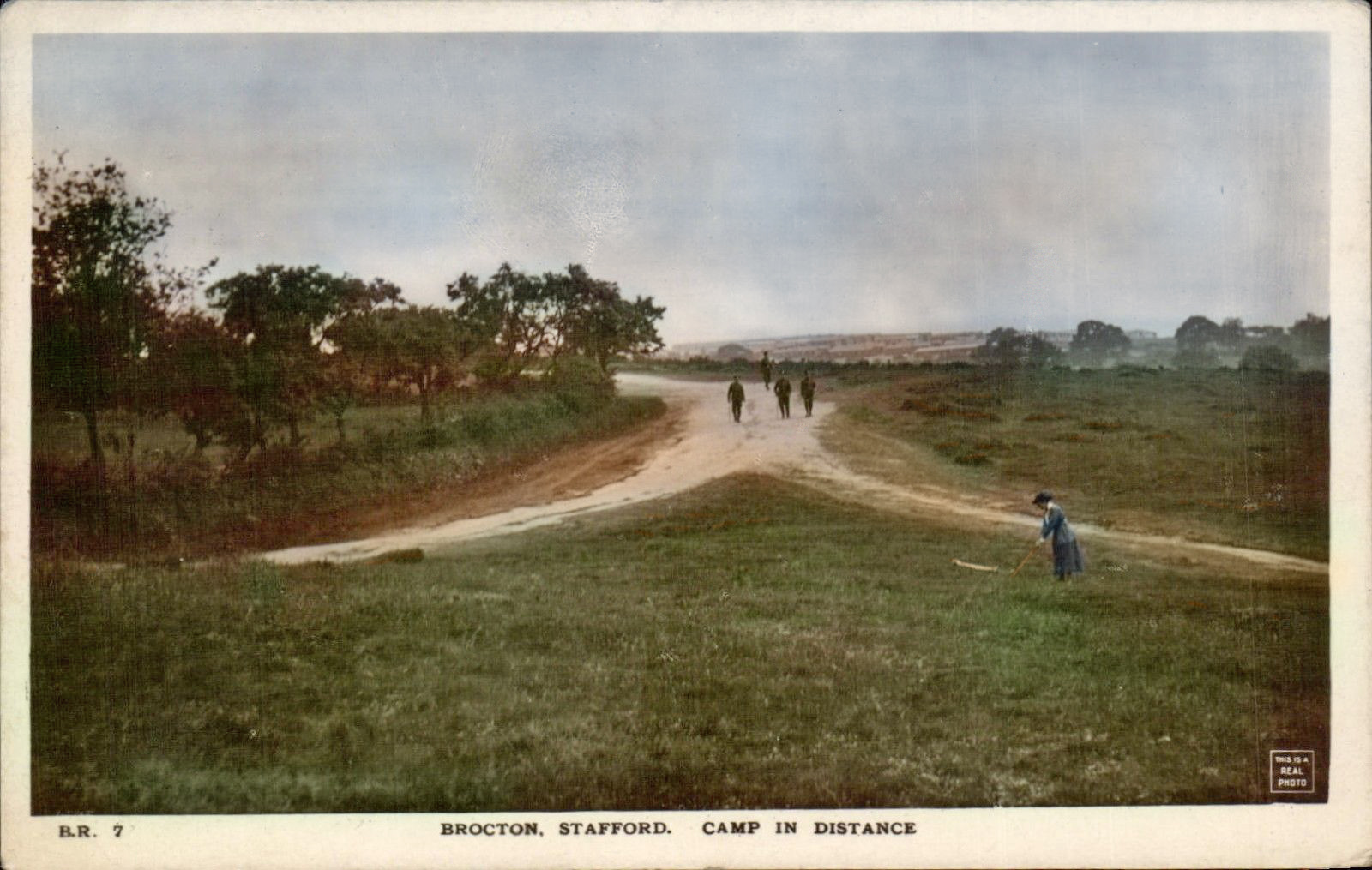
A lady golfer about to swing, with officers looking on from a safe distance. Brocton camp seen in the distance.

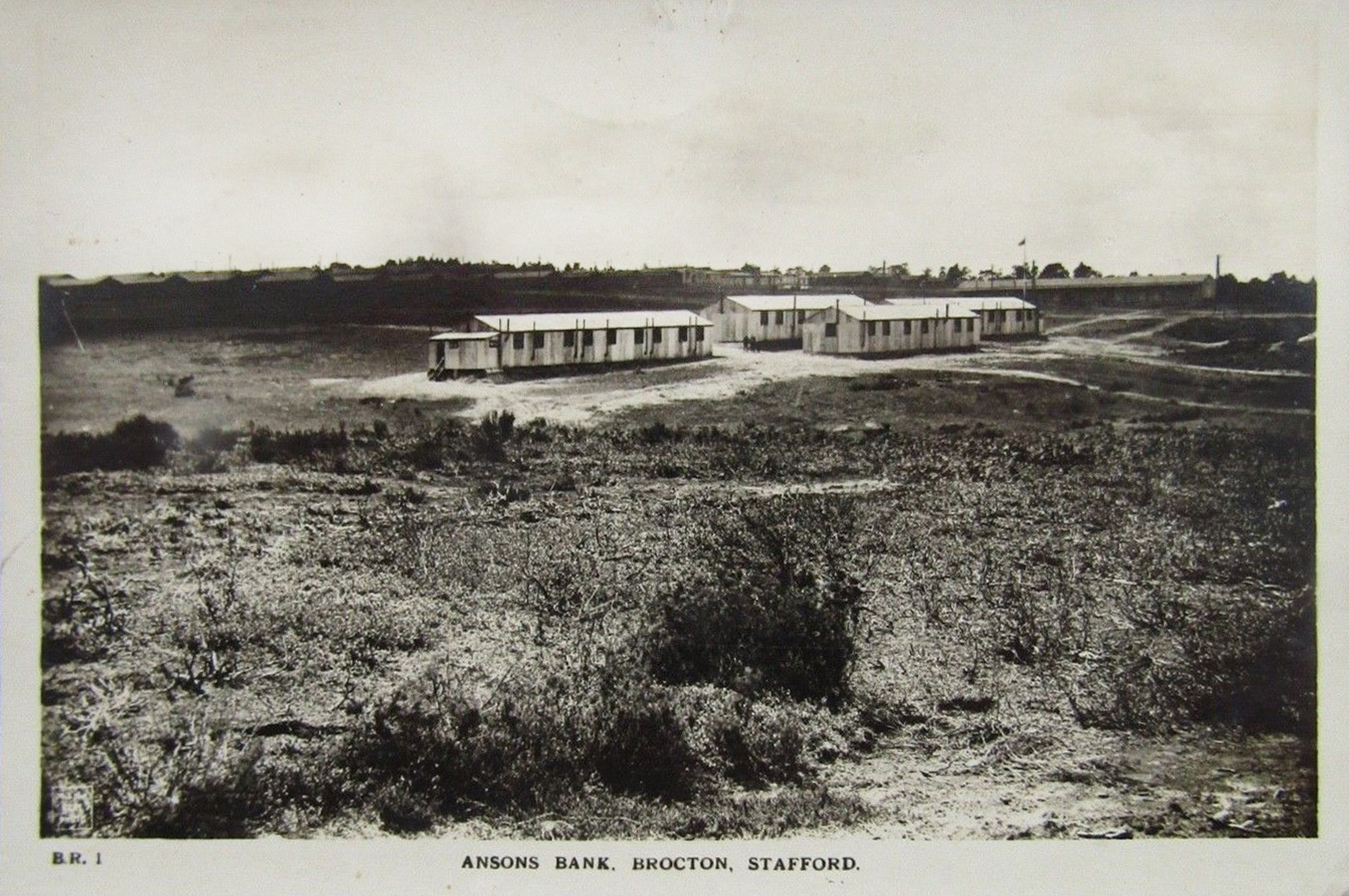
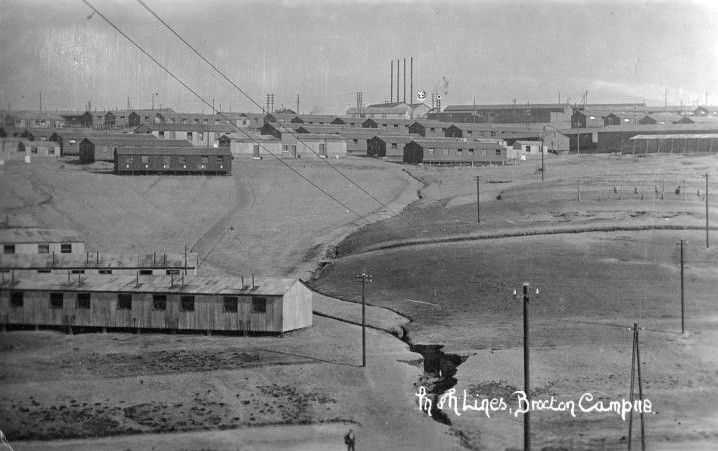
Tolkien is initially in the ‘P Lines’ huts near Ansons Bank, possibly these ones.

M & H Lines, Brocton Camp. He then moves to the lower ‘M Lines’ officer huts, about a mile north along the ridge from his previous ‘P Lines’ huts.

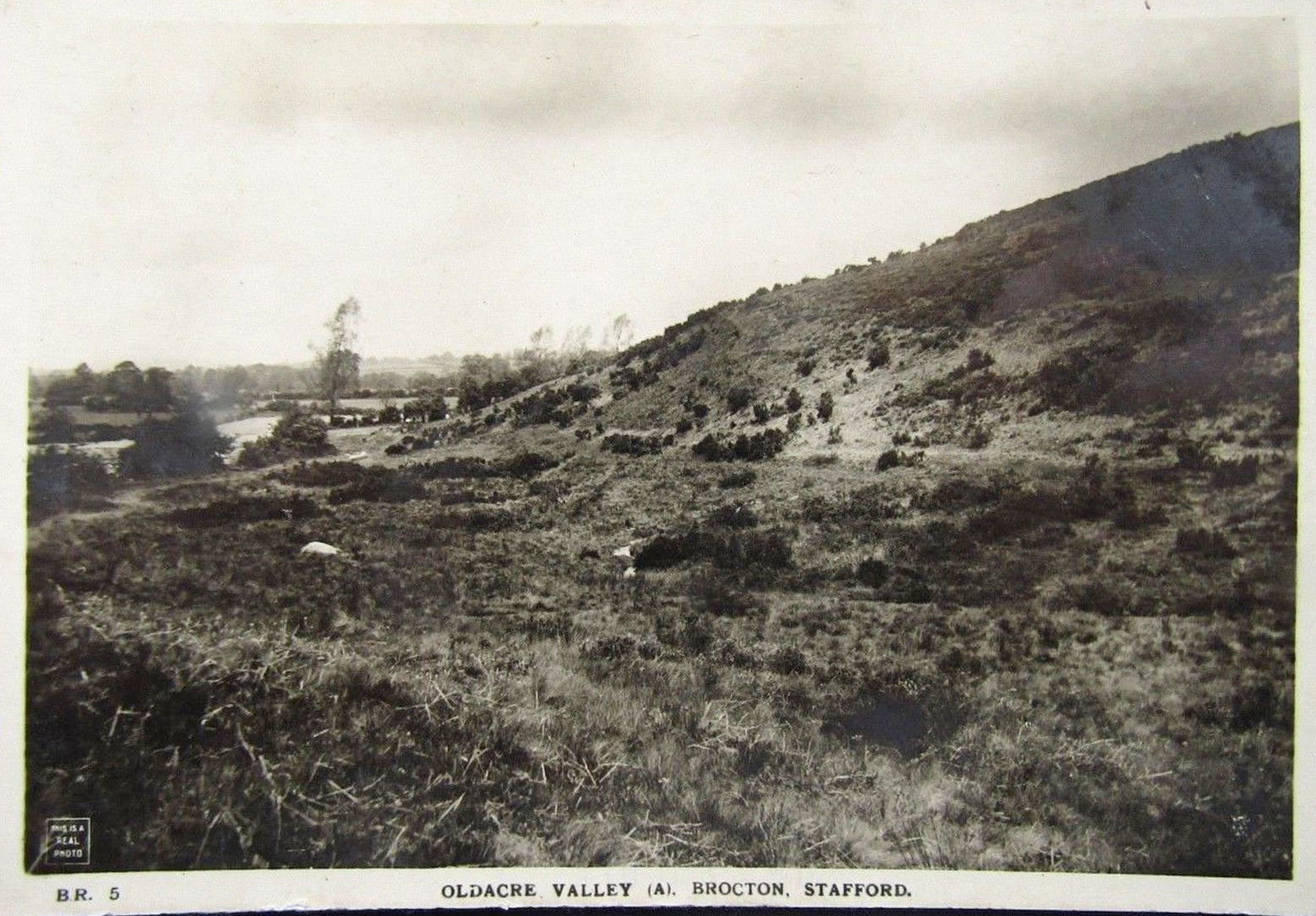
Oldacre Valley was a stone’s-throw below his ‘M Lines’ huts. Judging from maps, this is the way he would have walked to reach the road through Brocton village, and thence to the railway station. One can just about make out sandy footpaths through the heather slope, going toward the start of a lane in the distance.

“Behold, I stole by the evening from the ruined heath, and my way fled winding down the valley of the Brook of Glass, but the setting of the Sun was blackened with the reek of fires, and the waters of the stream were fouled with the war of men and grime of strife…” Eriol, speaking in Tolkien’s ‘Book of Lost Tales’.

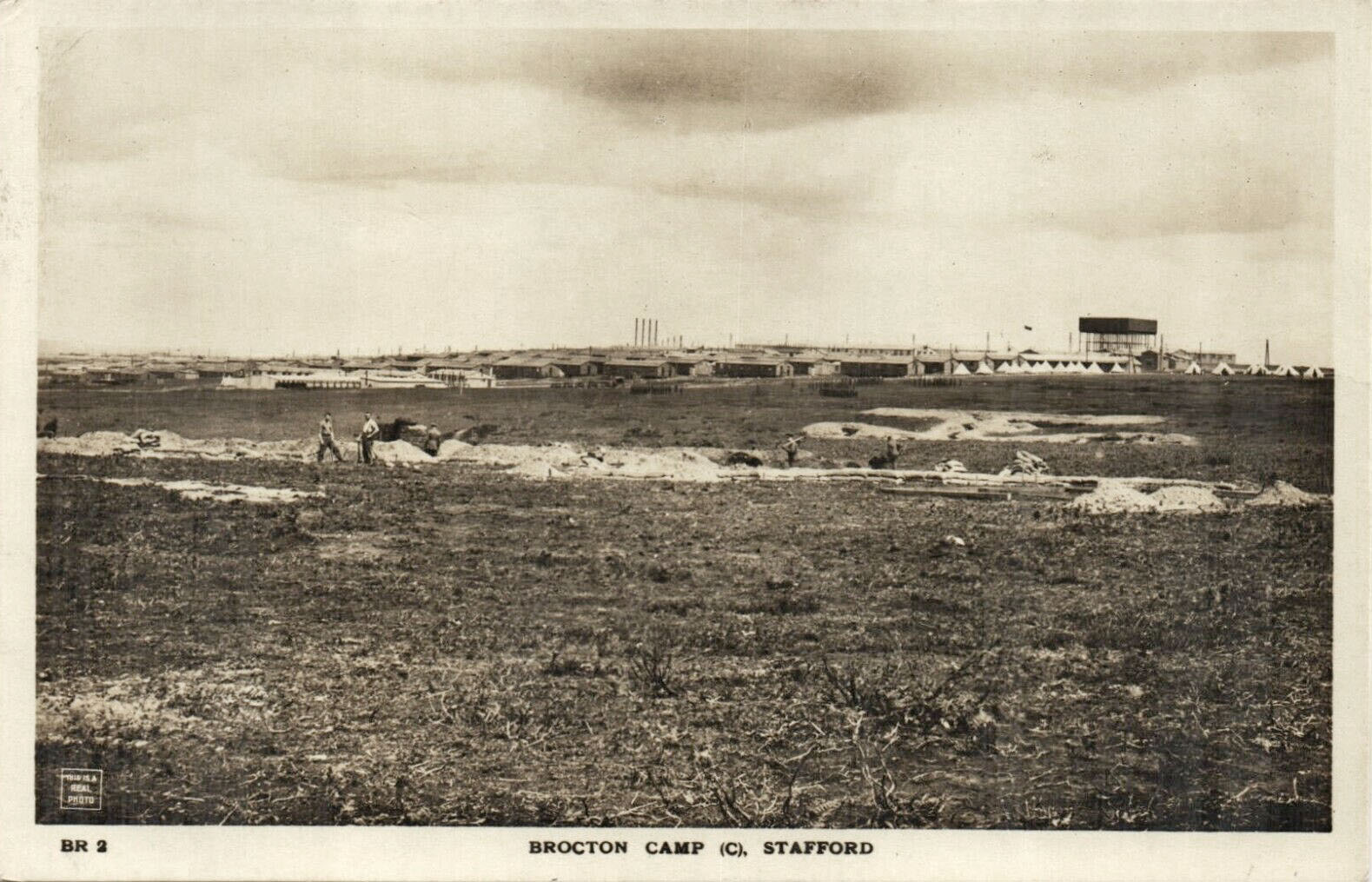
Digging trenches at Brocton, with bell-tents as well as huts to be seen.

General view, the water tower being about midway between the ‘M’ and ‘P’ Lines huts.

Probably Brocton, 1915.

“Lots of the early parts [of the great tale] … were done in grimy canteens, at lectures in cold fogs, in huts full of blasphemy and smut, or by candle light in bell-tents, even some down in dugouts under shell fire.” (Tolkien, Letters 78)


Further reading:

C.J. and G.P. Whitehouse, Great War Camps On Cannock Chase – A Town For Four Winters.

John Garth, Tolkien and the Great War: The Threshold of Middle-earth.

My blog article “On Tolkien at the Butts, near Newcastle-under-Lyme, in September 1915” and subsequent polished and expanded paper.

Labouring under a misapprehension

An interesting bit of historical corrective from a local transport historian, spotted on the letters page of The Sentinel newspaper today. Here’s part of his letter…

I HAD to smile at the letter from Paul Stanier of Trentham (Sentinel, Saturday March 10), accusing the Tories of destroying the industrial base of the area. Perhaps he ought to take off his pink-tinted spectacles.

Shelton Steelworks was closed as a steel producer with the loss of hundreds of jobs in 1978 by Jim Callaghan’s Labour Government. The surviving rolling mill was closed with the loss of hundreds more jobs in 2002 during the Labour Government led by Tony Blair, above.

As for the pits, Chatterley Whitfield, the first mine in the country to produce 1,000,000 tons of coal in a year, was closed in 1976, along with Glebe Fenton in 1964, Foxfield in 1965, Parkhouse 1968, Great Fenton 1969 and Norton in 1977 – all under Labour Governments. The last surviving pit in the area, Silverdale succumbed in 1998, again under a Labour Government.

As for the pottery industry, well it was decimated under the policies of Tony Blair’s Labour Government. Royal Doulton haemorrhaged thousands of jobs between 1997 and 2004, with Baddeley Green and Beswick closing in 2002 and finally the jewel in the crown, Nile Street went in 2004.

Cliff Beeton, Tunstall.

Ken Dodd and Stoke-on-Trent

It’s sad to hear the news of the death of the wonderful Sir Ken Dodd of Knotty Ash, Liverpool, aged 90.

Here’s a survey of some of his local connections. In the 1950s he was heard in every home in Stoke, as a popular national radio entertainer. By the mid 1960s his fame had grown enormously, on the stage and in the pop charts, and he was visiting the city regularly to play at the Mr Smith club. The growing spread of TV led to Ken once again becoming a fixture in local living-rooms. But he kept touring widely, and in a December 2017 Sentinel interview he recalled that he had often played Jollees cabaret in Longton during the 1970s.

In the 1980s his favoured local venue when touring was the Theatre Royal, Hanley, where he was patron of the Trust. William A. Neale’s book Old Theatres in the Potteries has details on this. The Royal’s Mecca bingo operation had closed in the early 1980s, and Ken Dodd had agreed to be patron of the Theatre Royal Trust. The Trust hoped to take over the building and restore it to a working theatre. The theatre was thus re-opened for shows in time for Christmas 1982, when the pantomime Babes in the Wood made a huge profit. The theatre later went on to great financial success in the mid 1980s with a very long run of The Rocky Horror Picture Show.

In November 1997, Ken Dodd formally opened a re-vamped Theatre Royal, Hanley. The Theatre had just had £1 million of private cash spent on its extensive refurbishment, a new exterior coat of blue paint, and had been renamed ‘The Royal’. He returned soon after to play the venue with his show.

As everyone knows, he continued to tour his four-hour variety and comedy show into his old age, to packed houses. He must surely have visited more theatre dressing rooms in the British Isles than any other popular entertainer in history. And as such there must surely be numerous records of his visits to the Potteries and nearby venues such as the Buxton Opera House, in the various theatrical and newspaper archives. But doubtless we’ll soon get a “Ken Dodd in the Potteries” special supplement in The Sentinel, including many fond memories from audience members.

He was performing in Hanley only a few months ago with his The Happiness Show “Sir Ken Dodd brings four-and-a-half hour Happiness Show to Victoria Hall”, when he had a new set of local jokes at the ready.

One hopes he won’t be forgotten, and that his video recordings will continue to be enjoyed.

Book sources:

William A. Neale, Old Theatres in the Potteries.

Chris Wright, One Way Or Another: My Life in Music, Sport & Entertainment.

See also: Ken Dodd: The Biography (2007).

Lifting and Heaving

Lifting and Heaving

“The custom of ‘lifting’ and ‘heaving’ is referenced in several sources in the University of Leicester’s Special Collections as being an Easter tradition in the 18th and early 19th centuries. Common in Lancashire, Staffordshire and Warwickshire and other parts of England, the practice involved groups of people gathering together in the street and physically lifting those they came across into the air … in all cases the ceremony is considered incomplete without three distinct elevations made.

Also in Bakewell in the nearby Peak…

“It persisted in some areas for a little longer, for example at Bakewell in Derbyshire where young men lifted and kissed the girls on Easter Monday as late as the 1890s.”

It seems the rumbustious and boisterous ‘street heaving’ had a parallel in a more restrained and respectable ‘chair lifting’. I’ve found that it was also done in Buxton, as stated in British calendar customs: England, 1936. Volume 97, page 109…

On Easter Monday and Tuesday an ancient custom prevails at Buxton consisting in lifting a person, in a chair, three times from the ground. … Until about the middle of the nineteenth century the heaving custom at Easter was regularly observed in South Staffordshire.

The same University of Leicester source also has a first-hand account nearby Shrewsbury…

A more detailed account of heaving was first printed in Henry Ellis’s edition of John Brand‘s Observations on Popular Antiquities Vol. 1 (London, 1813). The description was from Thomas Loggan, a ‘correspondent of great respectability’, who encountered the practice while minding his own business eating breakfast at the Talbot Inn, Shrewsbury. A group of female servants entered, carrying a chair lined in white decorated with multi-coloured ribbons. When asked what they wanted, they replied that they came to “heave” him, according to custom:

“It was impossible not to comply with a request very modestly made, and to a set of nymphs in their best apparel, and several of them under twenty. I wished to see all the ceremony, and seated myself accordingly. The groupe then lifted me from the ground, turned the chair about, and I had the felicity of a salute from each. I told them, I supposed there was a fee due upon the occasion, and was answered in the affirmative; and having satisfied the damsels in this respect, they withdrew to heave others. (SCM 09950, pages 155-56)

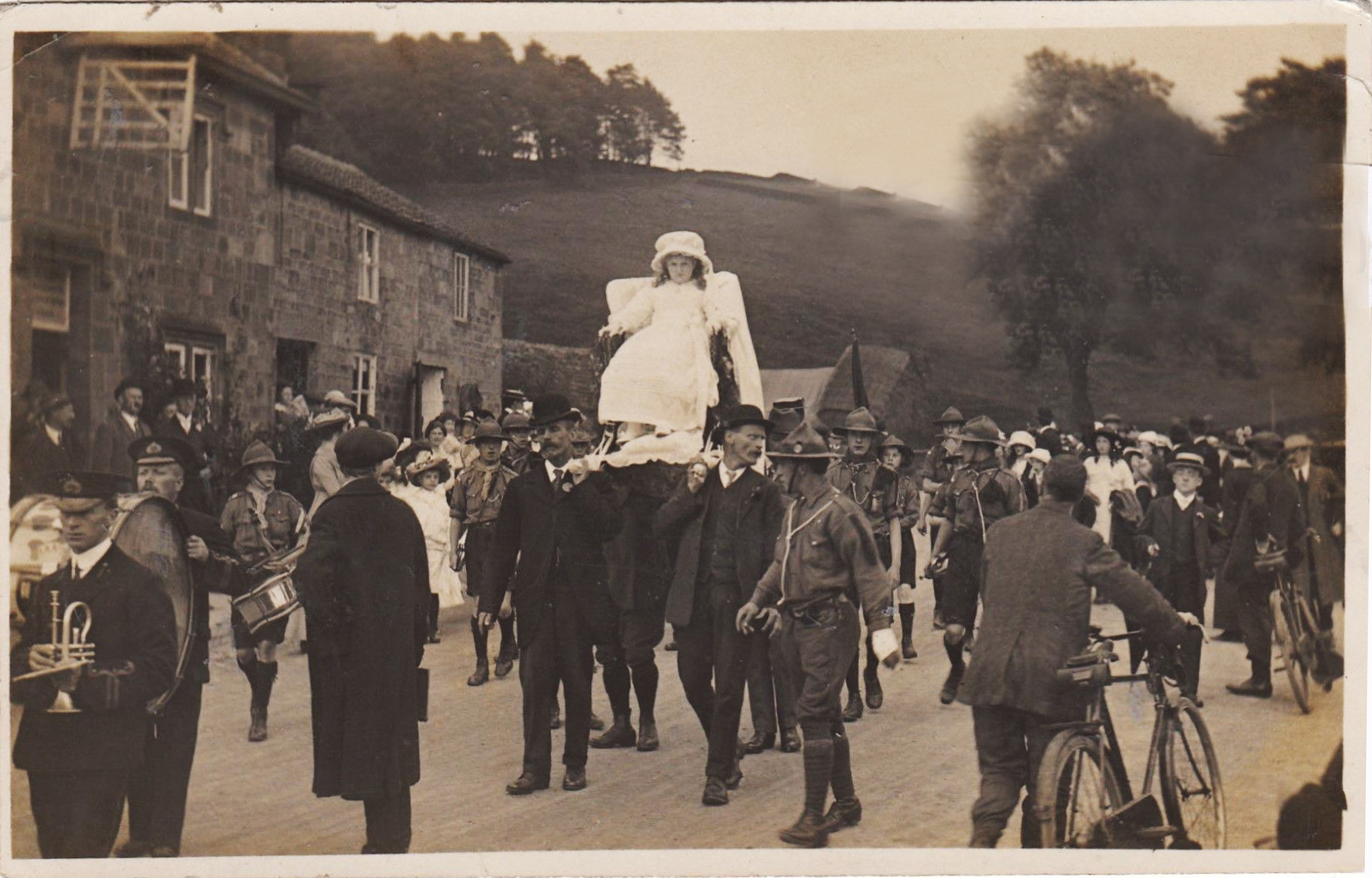
I can add that in North Staffordshire it has a late parallel, in a May Queen chair-carrying celebration near Leek (which is near Buxton, see mention above)…

The May Queen aloft, at Rushton Spencer, near Leek in the Staffordshire Moorlands. Flanked by boy-scouts, so possibly early 1910s?

A pox on Stoke?

Penkhull historian Richard Talbot, writing in The Sentinel today, mentions the earliest medical institution in the modern Potteries district circa 1804 to 1820…

“Apart from one small Dispensary of Recovery at Etruria, there was little to support those who were ill with mass-killers of the day: smallpox, cholera, typhoid and typhus were left to their own devices.”

“Small”? But the Victoria County History records that that the ‘House of Recovery’, far from being “small” or only a dispensary, was three stories high…

“The ‘House of Recovery’ for the poor, consisting of a dispensary and a reception ward and supported by voluntary contributions, was built in 1803–4 at Etruria Vale, north of the Bedford Street canal bridge; of brick and three stories high”.

Even this was soon replaced by something even larger. The article “Dispensary and House of Recovery: The first public hospital in North Staffordshire” states that in 1819 it was realised that…

“larger buildings were required and the site was not suitable for expansion. A new infirmary was erected in Etruria [and that] operated until 1869”.

There may have been in the 1810s, as Talbot claims, “little to support those who were ill with mass-killers of the day: smallpox”, simply because little could be done by science once the disease took hold of an individual. But Talbot’s article omits something. Since the “Dispensary and House of Recovery” article also comments that at Etruria…

“Good work on the prevention of illness progressed with a program of vaccination against smallpox (developed by Edward Jenner in 1796-8) and encouragement to factory and mine owners to improve safety.”

So, Etruria was not “small” by the standards of the time, and nor it seems were its doctors indifferent to smallpox in terms of its mass prevention in the district. Indeed, as early as 1792 the Reverend William Turner of Newcastle had issued a booklet entitled “An Address to Parents on the Subject of Inoculation for the Small-Pox”, in favour of pre-Cowpox vaccination, and…

“Thomas Wedgwood (a son of Josiah Wedgwood I) had evidently expressed interest in the subject, for he took 1,000 copies for distribution round Etruria” (The Reverend William Turner, 1997)

Evidently then at least one large manufacturing family personally engaged in the struggle against smallpox, alongside the doctors. Indeed, the Wedgwood family led by example, and had long been vaccinating their own children.

By the early 1860s smallpox had all but gone as a regular epidemic…

“Smallpox is occasionally met with in the Potteries, but of late years has not been a prevailing epidemic. Vaccination is carried on pretty effectively in the Potteries.” (Clinical Lecturers on The Diseases of Women, 1864)

There appears to have been a virulent outbreak in Longton in 1871, with 27 deaths, but vaccination proved its worth and it was contained. The authorities reported that “the disease has not spread to other towns” in the district. A national epidemic of 1902-03 did reach the Potteries in 1903, when newspapers reported that it led to a surge among the still un-vaccinated…

“So great has been the rush to be vaccinated during the present severe outbreak of smallpox in the Staffordshire Potteries that the police have been called to keep order outside the public vaccinator’s surgery.”

… but although it led to panic, the disease appears to have been late arriving from its then-stronghold of Walsall. Despite being initially “severe”, it appears to have quickly burned-out on our heavily vaccinated population — judging by medical reports in late April 1903 stating that there were few cases to be found in North Staffordshire.


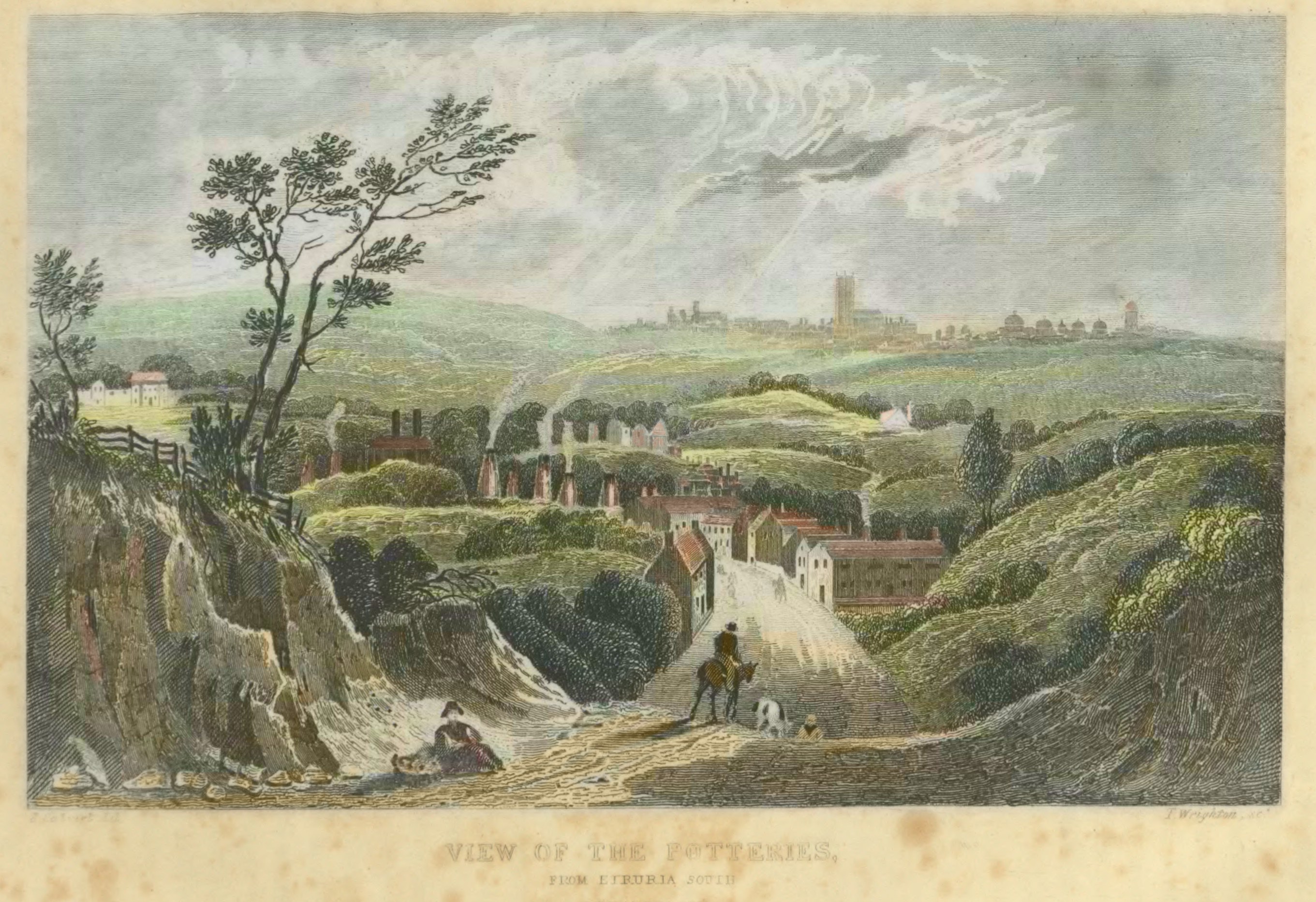
Talbot’s Sentinel article also makes one especially sweepingly claim that “Little of nature’s green was visible” in the Potteries of the early 1800s and onwards. Yet this appears to be amply disproved by the paintings and sketches of the Etruria part of the valley of around that time, as well as by first-hand accounts. For instance, here we see Etruria from the Basford Bank in 1830…

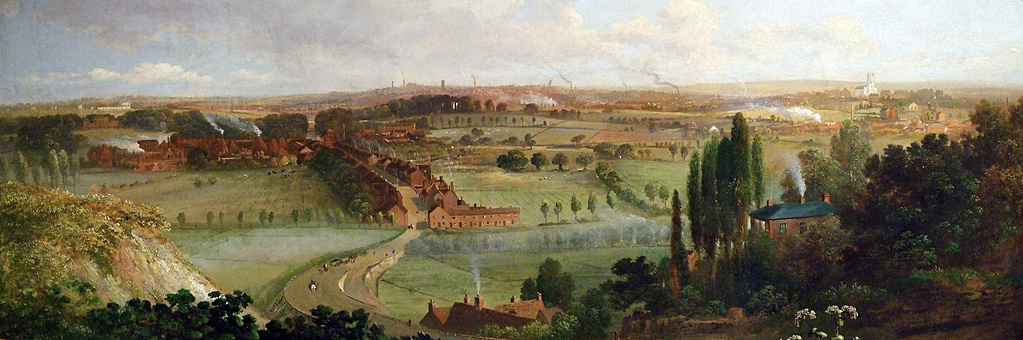
And here is another of Etruria from Basford Bank, by Henry Lark Pratt (1805-1873), perhaps two decades later. With Hanley in the distance, and Cliffe Vale to the right with upper Shelton beyond it…

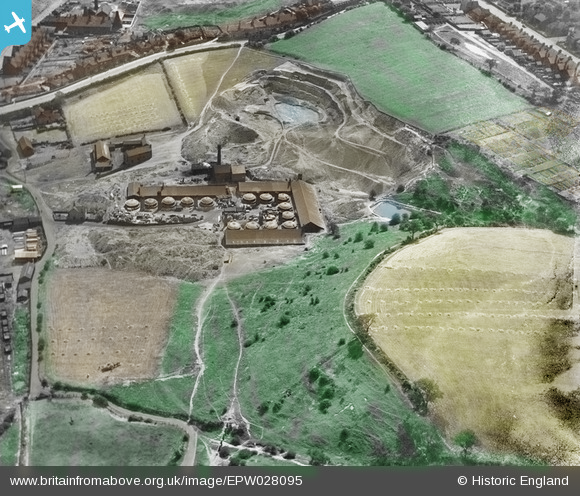
This claim is also disproved more widely in the valley by even a brief study of early maps, and then later by early aerial photography made of the entire district. For instance, even in the 1920s one can see large cornfields in harvest next to Etruria Station (the Basford Bank road runs across the top of the picture), with a tile works nestled in amongst them…

We have long been a district that has mixed the rural and the industrial, side by side. Many writers including Bennett recognised this. Occasionally smoky, yes, when the pot-banks were ‘in smoke’. Often despoiled by industrial manufacturing sites and their spoil tips. But not the utterly desolated wasteland of urban myth.

‘Tolkien in Staffordshire’ touring exhibition, list of 2018 dates

Additional 2018 dates for the ‘Tolkien in Staffordshire’ touring exhibition:

Chasewater Innovation Centre (near Cannock): 6th March to 21st April 2018.

Eccleshall Library (to the west of Newcastle-under-Lyme): 24th April to 22nd May 2018.

Norton Canes Library (near Cannock): 5th June 2018 to 14th July 2018.

Hednesford Library (near Cannock): 17th July – 28th August 2018.

Shenstone Library (just south of Lichfield): 5th September – 13th October 2018.

Penkridge Library (between Stafford and Wolverhampton): 16th October – 1st December 2018. (The most accessible date via train).

On Jenny Green-teeth

North Staffordshire’s local moor-monster Jenny Green-teeth, said to be resident under Doxey Pool in the Staffordshire Moorlands in modern times, is not recorded in the historical books and articles on Staffordshire folklore. Yet one does find the name attested in Victorian books and earlier sources, and as close as South Cheshire — where her kind presumably haunted the abundant meres and pool-strung “mosses”. There was also a late mermaid tale from Black Mere near Leek.
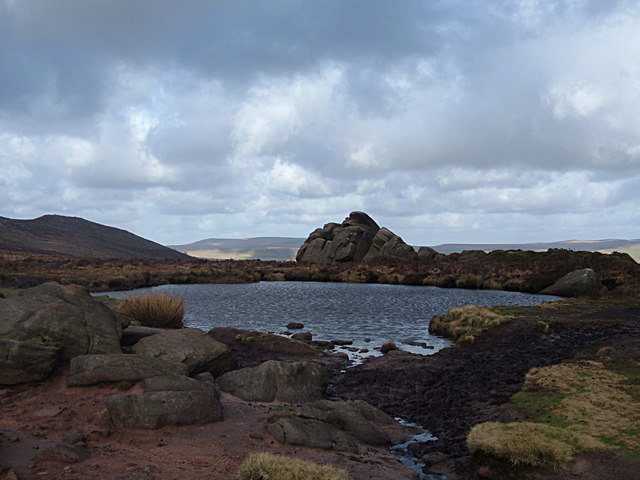
Doxey Pool, high in the Moorlands.

A detailed article by Charles P. G. Scott, “The Devil and His Imps”, is found in Transactions and Proceedings of the American Philological Association, 1895, and this usefully and precisely surveys the evidence for a wealth of such old names in the British Isles. Scott remarks…

Jenny Green-teeth, in the vernacular Jinny Green-teeth, is the pretty name of a female goblin who inhabits wells or ponds. […] She is one of the very few female goblins [that are, in character] as frightful as male goblins” [since she was believed to bite and then drag children under the water].

In name she appears to be closely related to faintly glowing will-o-the-wisps, meaning the tricksy-lights especially likely to be seen above or encountered near marshy moorland pools or on gas-seeping rocky crags…

“Jenny with the lantern, Kitty with the wisp, and Joan in the wad [an East Cornwall ‘pisky’ name, a wandering light], are indeed mischievous damsels, but they are fair to look upon, and have no voracity.”

The furtherest back in time one can easily find the name in print is in the book A Glossary of the Words and Phrases of Furness (North Lancashire) (1869)…

Jinny-green-Teeth — green converva on pools.

Conversa here meaning…

“green scum on ponds, but supposed to imply the presence of a water-sprite or “boggart”, a terror to children as they pass the pond on which the appearance is seen.”

The Scott article (1895, see link above) also references the name of ‘Nelly Long-arms’, a very similar water-dweller to Jinny but instead to be found in deep wells. Nelly might draw children over the brink of the well. Presumably, the surface of a deep well being invisible down in the darkness, no child would be able to see the green weed which they deemed to indicate the presence of Jinny. Hence the need for another name, “Long-arms”.

There is no other indication, other than teeth and arms, of the actual physical appearance of Jenny Green-teeth. The absence of visual description being infinitely more scary to the child-mind than otherwise, since it calls the imagination into play. She is always solo and wholly supernatural. Meaning that there was no indication in the folklore that she was thought of as being akin to a medieval human witch, or was thought to have once been a witch but had since become a ghost. ‘Mermaids in pools’ do occasionally have tales that they were once accused as witches and drowned (e.g. Black Mere near Leek), but these are very late in time and were obviously confabulated on top of existing lore.

The lack of visual description hasn’t stopped modern confabulators from dreaming up and depicting all sorts of visual appearances for Jinny, from a fearsome mermaid to an eerie water-fairy to a green-skinned river-hag — though it is clear that she was never originally associated with rivers, only with isolated freshwater pools, wells, flooded quarry pools and Potteries marl-holes.

River spirits of the north obviously once had different names, recorded as ‘Peg Powler’ on the Tees, and ‘Peg-o’-Nell’ on the Ribble. These Pegs are the only two examples known, and as such my guess is that it’s possible they were Viking imports. Also suspect is the 1912 claim of a ‘river mermaid’ at Marden in Herefordshire (south West Midlands) which can be discounted as an obvious late invention, albeit confabulated on top of genuine lore about a lost church bell: “There is a tradition at Marden that there lies in the river Lugg [Herefordshire, former Mercia], near the church, a large silver bell, which will never be taken out until a team of white [female] oxen are thereto attached to draw it from the river.” Horses would not move it. This was reported in Archaeologia Cambrensis shortly after an “ancient [four-sided] bronze bell was actually discovered in a pond at Marden” in 1848, corroded and well below the sediment of centuries. Mrs E. M. Leather’s Folk-Lore of Herefordshire (1912) added to this a locally-heard tale that had grown up since 1848 of the “Mermaid of Marden”, deemed to have charge of the bell in the river, and which makes the two oxen into twelve. This obviously evolved locally from the 1848 bell discovery, and probably also via a reading of Hans Christian Andersen’s Danish story of “The Bell-Deep” on ‘the River-man and his bell’. But the initial story of the bell in the river seems interesting in relation to a wider related folkloric tradition of ‘stuck things’, the obvious antiquity of the river name of Lugg, and the more practical and better-attested historical practice of Irish monks who “concealed their bells by letting them down into the river” during times of war and attack.

Locally, the late books Folk-speech of South Cheshire (1887) and A Glossary of Words Used in the County of Chester (1886) also record the name Jinny Green-Teeth, both using much the same phrasing…

“Children are often deterred from approaching such places [as wells or ponds] by the threat that “Jinny Green-Teeth will have them.”

The name and tradition was also well attested in child-life around Warrington and Manchester, discussed in February 1870 in Notes and Queries. In this article there is a memory of the tradition extending up to some pits near Fairfield, Buxton, “Some half century ago”. Meaning, in the 1820s. A later note in a March issue of Notes and Queries adds that the common duckweed on ponds was then still known in Birmingham as ‘Jenny Greenteeth’, though the informant doesn’t state if this was still being personified in child-lore or if (in the urban environment) it had dwindled to just being a folksy plant name.

There is an interesting early partial example of the name, found on page 56 of Thomas Sternberg’s The Dialect And Folk-Lore Of Northamptonshire (1851), which usefully delves for a source for the name…

   JINNY-BUNTAIL, s. The ignis fatuus, or Will with the wisp. Believed in Northamptonshire to proceed from a dwarfish spirit, who takes delight in misleading “night-faring clowns,” not unfrequently winding up a long series of torments by dragging victims into a river or pond. The word is evidently a corruption of Jinn with the burnt tail, Jild burnt tail.
   “Will with the wisp, or Gyl burnt taylte.” – Gayton’s Notes on Don Quixote. London 1654. p. 97.
   “An ignis fatuus, or exalation, and gillon a burnt tayle, or Will with the wispe.” Ibid, p. 268.

Here we glimpse how the Will o’ the wisp and Jenny Green-teeth may once have been deemed one and the same. Initially alluring and teasing, only to turn monstrous and fatal.

The book Lancashire folk-lore (1867) records one curious instance of a “Grindylow”, a name suspiciously similar to Beowulf‘s Grendel’s mother and unknown elsewhere…

“Aqueous nymphs or nixies, yclept “Grindylow,” and “Jenny Green Teeth,” lurked at the bottom of pits, and with their long, sinewy arms dragged in and drowned children who ventured too near.”

I suspect here that a wily local antiquarian was trying to claim for Lancashire the similar and rather more famous moorland female mere-monster of Grendel’s mother, found in Beowulf (1826 in English translation). By Nixies he refers to the Germanic ‘nixies’ and Icelandic ‘nykr’ (possibly Beowulf’s nicors and akin to the Germanic Moorjungfern), thus perhaps further indicating the antiquarian’s confabulating intentions. On the other hand, we do know that the six surviving lines of the lost Wade epic mention ‘nixies’ and water, which may suggest an English aspect.

But evidently some Jild– or Gyl– or Gill– word was once in fairly widespread use to mean a Will o’ the wisp, and this was closely associated with some slightly harder Jinn– or Ginn– name for a dangerous spirit who lurked below the surface of wells or ponds. As such, there may indeed be some link with the name of the Anglo-Saxon Grendel mother-monster. The Will o’ the wisp aspect (see Jinny-Buntail, above) indicates the ability to emerge from the pool and roam around, as Grendel’s mother does in Beowulf. Note that in Beowulf, at the haunted mere in the story a… “dreadful wonder does appear each night, a fire on the flood”, which perhaps indicated a glowing will o’ the wisp. “Flood” implies ‘wide and still’, a mirror-like surface.

Possibly there is some folk memory of this overall tradition in the famous and enduring nursery-rhyme “Jack and Jill went up the hill / to fetch a pail of water / Jack fell down / And broke his crown / And Jill came tumbling after”. This associates the Gill- name with a well, water, and with falling and tumbling (“fell down” the well, rather than the hill?), and resulting child-injury. Shakespeare may have played upon his audience’s everyday knowledge of such a rhyme in his famous A Midsummer Night’s Dream, where he gives the line: “Jack shall have Jill; Nought shall go ill”.

The “crown” here is of course a part of the head, and if Jack and Jill “fell down” the well rather than than hill, then there would be a certain level of ritual resonance at play in the rhyme. For instance, David Rudling in Ritual Landscapes of Roman South East Britain (2008) remarks on a very ancient British cultic tradition that once linked wells with heads…

“… a pre-Roman cult of the head, an ancient custom dating back to the late Bronze Age, which continued long into the Roman period (ibid, 96-97). As well as skulls deposited in streams, a human skull was found deposited after a well in Queen Street had silted up (GM 1 44). There are numerous accounts of other finds of skulls, both human and animal, in Romano-British wells and their magical power is recorded in many Celtic legends (Merrifield 1969, 176).”

The archaeologists are more cautious on that…

“Certain Celtic ritual activity, such as deposition of ‘head objects’ re-emerged strongly in the fourth century in Roman Britain. Although Ross refers to this as a ‘cult’ of the head, it is probably best described as part of a general phenomenon, and not a ‘cult’ (Riddel 1990).” (Theoretical Roman Archaeology: Conference Proceedings, 1993, page 123).

But even a cautious appraisal of this ancient phenomenon suggests a possible linkage with the famous nursery rhyme. Could a Gill have been a name for the annual sacrificial child-victim, rather than the deity of the water? But perhaps it just relates to being ‘in service to the water’ — consider for instance that in the British Isles (north of about the Wye), “a gilly” is an estate’s river servant, an experienced man of quality who knows rivers, fishing and pools. One who accompanies the estate’s master and guests on fishing trips.

Evidently, there is some nexus of ancient belief at play among these surviving words and fragments, though while we can just about glimpse its outlines we may never know for sure quite what it was.

What can be noted in closing is that as ‘a frightening figure that threatens drowning’ she has a close similarity in modus operandi with aspects of the widespread Northern folk idea of the strong and male water-horse connected with rivers. This supernatural shape-changing river-spirit will emerge from a river to stand stock still and thus tempt people to mount and try to ride him. Immediately they do so he will race away back to the river with wind-like speed and plunge in, drowning the rider. There is an obvious and close parallel here between the still pool and still river-horse, and the temptation to the unwary and the drowning are both the same. Dag Stromback has a fine and detailed overview discussion of… “the old and fundamental idea” of the water-horse “within the Nordic area … and their similarity with Scottish, Irish and Breton traditions” in his essay “Some Notes on the Nix in the Older Nordic Tradition”, in Mandel and Rosenberg, Medieval literature and folklore studies: essays in honor of Francis Lee Utley, Rutgers University Press, 1970.


Interestingly, in relation to my recent delvings here on the overlap between insects and pisky (once deemed the souls of dead children), Jinny is found in “A Glossary of the Words and Phrases of Furness (North Lancashire)” (1869), which offers…

Jinny-spinner — an insect (Tipula).

Tipula is the class of insects that include Daddy Long-legs and Crane-flies, but A Glossary of North Country Words (1825) suggests the country folk understood a broader class of any “very long slenderlegged” fly. Which implies that the presence of pond-skaters on the surface of a still freshwater pool could also be taken by northern children to be a similar ‘danger indicator’ of the presence of Jinny under the water, akin to the ‘green teeth’ pond-weed. Interestingly the name in Scotland was Jenny Nettles, the Scots word for long slenderlegged insects. Nettles arising from Scotland’s notorious profusion of biting long-legged midges, which presumably caused a nettle-like rash.

Also in the north, The Dialect of Craven in the West-Riding of the Country of York (1828) records…

JINNY SPINNER, A large fly, called also ‘Harry long legs’. “Her wagon spokes made of long spinners legs.” Shakespeare, Romeo & Juliet.

This latter quote is from Shakespeare’s description of Queen Mab…

She is the fairies’ midwife, and she comes
In shape no bigger than an agate-stone
On the fore-finger of an alderman
Drawn with a team of little atomies
Athwart men’s noses as they lie asleep
Her wagon-spokes made of long spinners’ legs
The cover of the wings of grasshoppers
The traces of the smallest spider’s web …

Evidently then “spinners” — and presumably also the common name Jinny-spinners — was known to a South Warwickshire playwright and was deemed to be easily understood by a London audience of play-goers in the 1590s.


Incidentally I also found in A Glossary of North Country Words, in Use (1829)…

“‘By Jinkers’, a sort of demi-oath. From jingo.”

Again, this points to a Jinn– or Ginn– name which was perhaps once some sort of spirit which could be invoked by a veiled oath. One wonders if jingo was where Tolkien got the original name for Frodo, who was for a short while to have been called ‘Bingo’ in an early draft. Possibly not, as family members reportedly later remembered that Tolkien probably… “derived his name from the Bingos, a family of toy koala bears owned by the Tolkien children”. But the definitive Tolkien Companion seems unsure on this, and remarks “perhaps” on this claim.

The word Jinkers / Jingo is uncertain but has been variously suggested to be: the Roman god Jove; early stage conjurers’ language akin to “Hey presto!”; a veiled oath which was Puritan slang for the obscure Saint Gengulphus or Gingolph (so obscure he presumably wouldn’t be offended by the oath); or an actual euphemism for Jesus or God (in Basque, Jinko is God).

“Bingo” was also recorded prior to the popularity of the game of bingo (newly popular under that new name in the 1920s) as being “A customs officers’ term, the triumphal cry being employed on a successful search” for contraband. Possibly this use was a contraction of “By jingo!” to “b’ingo”, the old word jingo having by then been made unavailable — due to its having accidentally taken on the new connotation of ‘jingoistic’ or ‘displaying a proudly militaristic nationalism’.

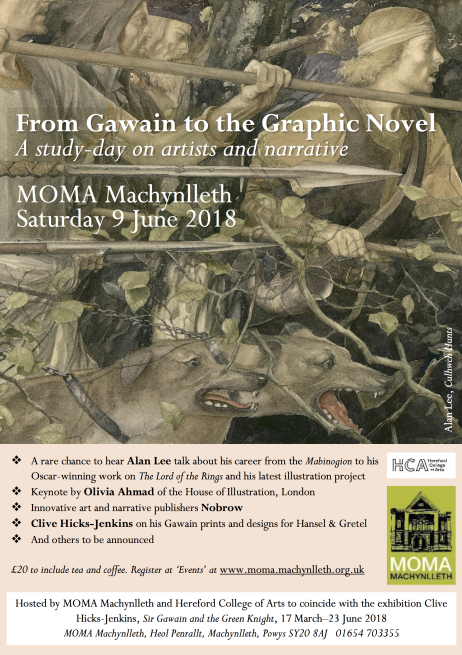
From Gawain to the Graphic Novel – study day in June 2018

From Gawain to the Graphic Novel: A study-day on artists and narrative on the mid Wales coast in June 2018, with accompanying art exhibition.

News of the day reminded me that we still really need a good graphic novel of Gawain, one which takes it seriously and accurately depicts the local topographies involved. So far the two comic takes on it appear to have been toon-y and unsatisfactory:

1. There was what looks like a very superficial ‘superhero’-like appearance of a stock medieval Green Knight character in Eco Comics’s The Green Man #1 (2013). But the title never seems to have gone beyond issue #1.

2. There was also a well-made cartoony German-language adaptation Sir Gawain und der Grüne Ritter (2016). But reviews talk of its approach being “tongue-in-cheek” and “jokey”. That may well be the most suitable approach for interesting children in the tale, but as far as I can see it hasn’t yet been translated into English. And, being in German, the jokes may not translate — because the German sense-of-humour is notoriously difficult to get working in English.

Naked on the Barrow-downs

The third volume of Thomas Crofton Croker’s Fairy legends and traditions of the South of Ireland (1825) runs out of Irish material and has sections on the Welsh and the then-scarce English tradition. I was struck by a section of his preface, specifically its similarity to elements of the barrow-wight sequence which occurs in “Fog on the Barrow-downs” in The Lord of the Rings. Here is Croker…

I have taken some pains to seek after stories of the Elves in England; but I find that the belief has nearly disappeared. [Yet] In Devonshire, the Pixies or Pucksies are still remembered and described as “little people and merry dancers” but I can collect no other anecdotes respecting their pranks than the two following.

About seventy years [meaning, circa 1755] since a clergyman named Tanner held two benefices between Crediton and Southmolton, adjoining each other. The farmers of both parishes attended the tithe-audit annually at his residence; and in going to the glebe-house the distant parishioners had to pass an extensive moor, intersected by numerous tracks or sheep-walks.

Although they reached their destination in safety in the morning, yet on their return they invariably found themselves “Pixy-laid,” and were compelled to pass a night of bewildered wandering upon the moor. Such recreation at Christmas was not very agreeable, and it was determined that a deputation from the parishioners should proceed to Exeter, and consult an old woman celebrated for her skill in charming away the tooth-ache. Her instructions against Pixy spells proved effectual. She directed the way-laid travellers, on reaching the verge of the moor, to strip themselves, and sit down on their clothes for five-and-thirty minutes, or more, according to the state of the weather; and so soon as they discovered the cloud which the Pixies had thrown around them to be dissipated, they might then safely proceed. By following this valuable prescription Mr. Tanner’s parishioners invariably reached their homes without further interruption from Pixy spells.”

Whatever one may think about such rustic superstition, some of the resemblances to Tolkien’s “Fog on the Barrow-downs” chapter in The Lord of the Rings are notable, in terms of:

1. All-male group journeying away from an important meeting at a friendly house.
2. A malevolent ‘cloud’ then thrown around the moorland travellers, followed by bewildered night-wandering on the moor.
3. Casting off of all clothing as a definitive ‘breaking of the spell’…

‘You won’t find your clothes again,’ said Tom, bounding down from the mound, and laughing as he danced round them in the sunlight. […] Tom shook his head, saying: ‘You’ve found yourselves again, out of the deep water. Clothes are but little loss, if you escape from drowning. Be glad, my merry friends, and let the warm sunlight heal now heart and limb! Cast off these cold rags! Run naked on the grass, while Tom goes a-hunting!'” (The Lord of the Rings)

It may also be important to someone that I note here that Anna Eliza Bray, working as a respected and careful folklorist in Devon and Cornwall under the direction of Robert Southey a decade later, found of “the little people” of the twilight that they were clearly distinguished from fairies…

“The pixies are certainly a distinct race from the fairies; since, to this hour, the elders amongst the more knowing peasantry of Devon will invariably tell you (if you ask them what pixies really may be) that these native spirits are the souls of infants, who were so unhappy as to die before they had received the Christian rite of baptism.” (Anna Eliza Bray, The Tamar and the Tavy, 1836, Vol. 1, page 172.)

Thus, perhaps, there was some ‘sympathetic’ element to the old woman’s prescription for the problem. In that, perhaps her thinking was that if the travellers were to strip ‘naked as they day they were born’, and to sit down so as to lower their height, then the “the souls of infants” might mistake them for fellow babes and thus let them pass?