Tolkien Gleanings #410

Tolkien Gleanings #410

* Magdalen College, Oxford has a nice new job offer. Work for three years as a postdoctoral researcher on “C.S. Lewis and J.R.R. Tolkien: A Scholarly Reappraisal”. The successful candidate is to be paid £42.7k(!) per year. Not a AHRC project. Deadline 7th June 2026, to start 1st October 2026.

* New in the forthcoming £245 Routledge Companion to Early Modern Music and Literature, the chapter “Tolkien, the Gawain-Poet, and Music”. The book is due in June 2026, with a free chapter-abstract available now.

* The Entmoot Podcast this week interviews the author of the book Tolkien, Enchantment, and Loss (2021).

* Kmita’s Library has the new article “Legendary Heroes and Baptismal Symbolism in Tolkien’s Stories”. Substack, but freely available.

* Humanum Review has the new article “Table Matters: On St. Thomas, Tolkien and Babette’s Feast”. Freely available online.

* Tolkien: Medieval and Modern has a new article on “The Fallen World and the Fear of Monsters”. Freely available online…

“In [Edmund] Wilson’s critique, and [that of] many others, the idea of monsters is taken as a childish one, conjurations of the imagination that serve as nothing more than a means to scare children into behaving. They’re not real, and as such don’t deserve any real study or focus. [… But for Tolkien, monsters can be made] to illuminate the truth of sin Tolkien believes to exist in our world […] monsters are sin, and that sin, to Tolkien, is very real, and should be feared.”

* From the University of Silesia, Poland, the PhD thesis Myths, Gods and Saga Structure: On Heroism and Tradition in the Old-Norse Sagas (2024), now freely available online. In English, a close comparison of the Volsungasaga and The Nibelungenlied, with a touch of Tolkien at the end…

“The last chapter provides a view on modern ideas of heroism and its depiction. Arthurian myth and the works of J.R.R. Tolkien are examined in terms of comparison with what is represented in the source texts, showing a significant overlap of motifs in all texts.”

* A new debut novel, just published, The Inklings Detective Agency (May 2026). Set in 1936, a fictional Tolkien and C.S. Lewis team up with Agatha Christie and Dorothy L. Sayers to solve a series of mysterious Oxford murders.

There’s a slight spoiler in the official blurb, which I’ll skip. The blurb then goes on to gush…

“Packed with historical details, intrigue, and a thrilling whodunit, this novel is a masterful blend of high-stakes drama. Dive into a world where the creators of fantasy and mystery confront a real-life menace in a race against the clock.”

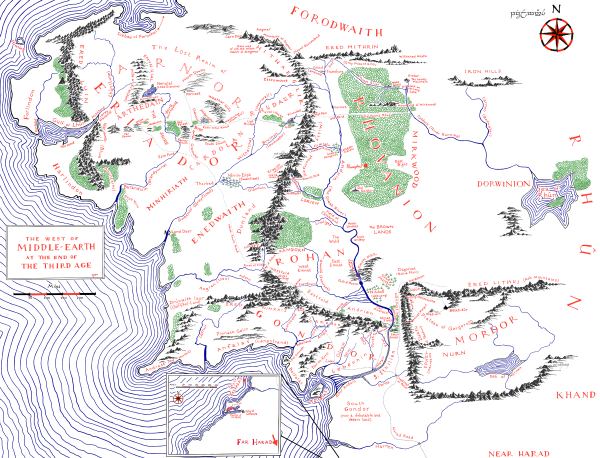
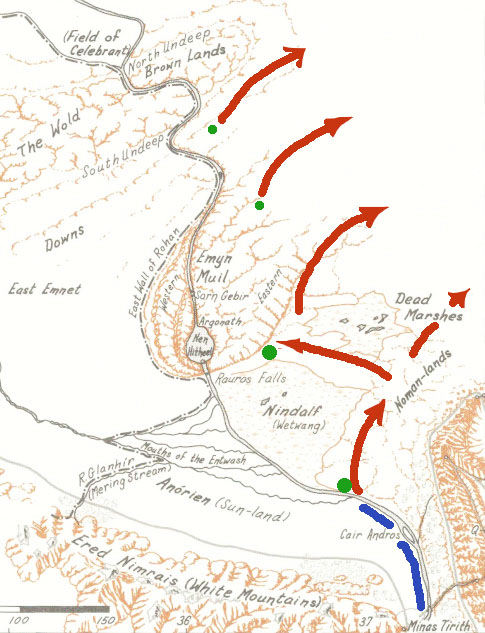
* A new Middle-earth map-pack, for sale from Into Far Lands, Kingdoms of Rohan and Gondor.

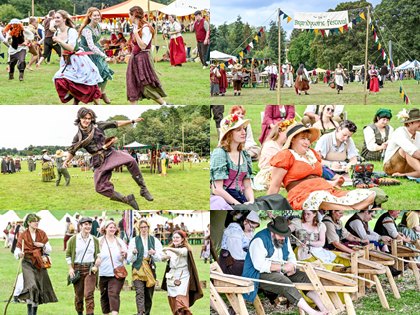
* The Tolkien Society’s revived Sarehole Festival in Birmingham now has an official poster / flyer…

* Should you bag the above lucrative £47k per-year Magdalen College job, and thus be jetting down to sun-drenched Corfu to celebrate… note that the painter Spyros Gelekas has started a Tolkien Museum on the idyllic Greek island. This official Tolkien Calendar artist (2024/2027) has newly…

“founded in Corfu a permanent exhibition space dedicated to Tolkien’s world, the ‘Art of Middle-earth Gallery’, one of the few internationally dedicated to approaching the subject through contemporary visual art.”

* Seemingly newly up for sale from a seller of rare books, a 1924 example of Tolkien’s published poetry.

* And finally, this week an unusual item popped up on eBay. A frank and amusing ordinary soldier’s poem from “Rugeley Camp” (one of the popular names for Tolkien’s Penkridge Bank Camp). The 1917 card is new to me, and I’m fairly experienced in plucking mid and north Staffordshire cards from eBay. Perhaps it’s scarce due to predations by the war-time censor, due to its focus on the camp’s rats?

Evidently the camp’s men had rough straw matresses, and there were rats which invaded the huts, at least by 1917. If Tolkien encountered either in his stays in 1915 or 1918 we can’t now know. The anonymous poet’s… “You “double” round the hut three times and dive into the cupboard.” also suggest the men had to run three times around their hut ‘at the double’, before being allowed to scramble for the hut’s tea-cupboard? Tolkien suggests something of the same scramble…

“The usual kind of morning standing about freezing and then trotting to get warmer so as to freeze again. We ended up by an hour’s bomb-throwing with dummies. Lunch and a freezing afternoon… we stand in icy groups in the open being talked at! Tea and another scramble – I fought for a place at the stove and made a piece of toast on the end of a knife: what days!” (letter to Edith Bratt, 26th November 1915).

Penkridge Bank Camp was located at Brindley Heath on Cannock Chase, between Rugeley and Hednesford. Also known to some at the time as ‘The Camp, Hesnedford’ but more often referred to simply as ‘Penkridge Camp’. One of several Staffordshire camps which Tolkien experienced during The First World War.

Tolkien Gleanings #409

Tolkien Gleanings #409

* In Lombardy, northern Italy, an evening talk and academic conference “Tolkien: Fantasist or Prophet?”. With Malcolm Guite as guest speaker…

“Scheduled for Thursday 14th May 2026 [under the auspices of the Philosophicum Ghislieri Association,] Guite will argue that Tolkien had anticipated many of the definitive crises of the twenty-first century […] and that his narrative does not offer an escape from these problems, but a coherent imaginative response to them.”

* The Spanish Tolkien Society has a YouTube link, and a Spanish text-summary, for a recent conference talk on the history of its journal Nolme (six issues from 2002-2024, ongoing). There are also details of future plans for this bilingual Spanish/English journal…

“Issue 7 is already underway, and looking ahead to issue 8 the team will launch an open call for papers. If you would like to collaborate with the magazine in translation, proofreading or layout work, please contact the team; the magazine is waiting for you…”

* The programme book is now available for the vast 61st International Congress on Medieval Studies (14th-16th May 2026). Papers include, among others…

    — Beyond the Stars: Voyaging into the Void in Tolkien’s Early Cosmologies. [Larsen]
    — Ulmo and Manannan mac Lir as Lords of the Waters and Divine Intermediaries.
    — How Mad Ye Be: Water as Essential Boundary in Akallabeth and Pearl.
    — “We that endured the Grinding Ice”: The Helcaraxe in the Noldor Imaginary.
    — Ethereal: J.R.R. Tolkien and the Dreamer’s Near-Death Experience in the Middle English Pearl.
    — A Survey of Parents and Parenting in Tolkien’s Middle-earth.
    — Samwise the Gardener: Parenting as Salvation and Recovery.
    — Where Now the Horse and Rider? The Shifting Medieval Voice in Tolkien’s Afterlives.
    — Script and Story: Tolkien’s Philological Imagination in “On Aelfwine’s Spelling”.
    — Scribal Practice and the Footnotes of The Lord of the Rings.
    — The Tell-Tale Tengwar, or, What the Script Reveals About the Scribe.
    — Tolkien, Exodus, and the Dirty, Stinking, Lying, Pusillanimous Scribes.
    — Exodus from Edoras: Tracing the Old English Exodus in The Lord of the Rings.
    — The Translator as Sub-Creator: Tolkien’s Beowulf, Exodus, and the Mythopoeic Imagination.
    — Tolkien and the Old English Exodus: the Influence of the Poem on the Legendarium.

    — The Dragon’s Big Pile: New Tolkien Manuscripts Discovered. [Judging by its placement, possibly a humorous squit to end the conference with?]

    — Adaptations of Tolkien: Medieval Traces in Movies, Games and Other Transmedial Text. [roundtable]
    — One Hundred Years of Tolkien and Lewis: Fruits of a Medieval Collaboration. [roundtable]

    — The Forge of Friendship: J.R.R. Tolkien and C.S. Lewis. [film screening]

    — The Medieval March of Wales and Its Gentry Libraries. [Sir Gawain relevance]
    — Fragments and Frameworks: Rebuilding the Libraries of Early Medieval England.

    — Two Paths Diverged in an Old English Wood: The Conceptual Metaphor of Wayfaring in Old English Poetry.

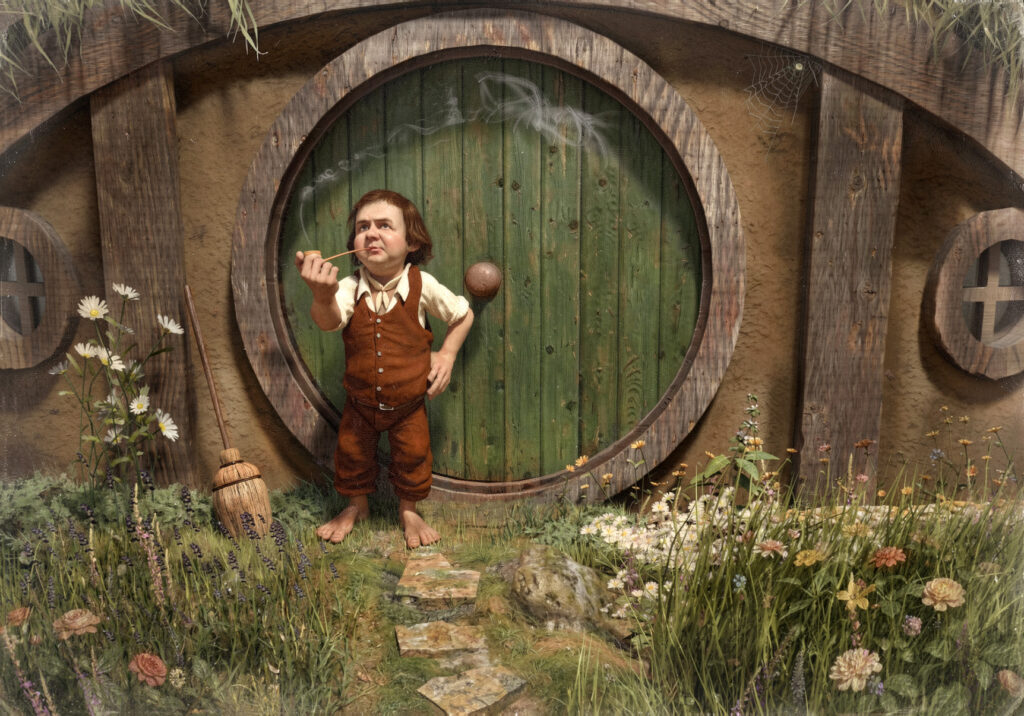
* Dimitri Fimi considers “Bilbo’s decluttering” of Bag End, in The Hobbit.

* Tolkien: Medieval and Modern has a new essay on “Worship, Language, and the Liturgy”.

“The practice of saying names and the presence of songs is an essential component of not only Tolkien’s storytelling method, but also the manner in which the plot unfolds. The beauty of Sam’s song stands tall in the tower of art, and also communicates what Tolkien’s vision of worship might actually be.”

* And finally, The Gregorio project is an open-source typesetter for engraving “beautiful Gregorian chant scores”. I’m guessing it might be useful for creating fine sheet-music for Elvish singing? “Elvish singing is not a thing to miss…”, as Bilbo once remarked. Tricky to install locally, by the looks of it, but note the links to free installations that one can use online.

Tolkien Gleanings #408

Tolkien Gleanings #408

* Words Do Things podcast has a new ‘Elvish English’ series, and a new interview with Verlyn Flieger on Tolkien

“In the second episode in the ‘Elvish English’ series, Sorina Higgins has the distinct honor of talking with Verlyn Flieger, one of the greats of Tolkien studies.”

The .MP3 download link is hidden under the “… More” button.

* Malcolm Guite has the chapter “Allegory Among the Inklings”, in the new £150 book The Oxford Handbook of Allegory (May 2026). Readers of this may find David Bratman’s free online A Handlist of Books by the Inklings a useful accompaniment.

* Elfenomeno has an Interview with Michael Martinez, author of Parma Endorion: Essays on Middle-earth (2001).

* From the University of East Anglia, an abstract for “Teaching, Learning, and Biblical Symbolism: The environmentalisms of J.R.R. Tolkien and C.S. Lewis” (2026). This is a Masters dissertation, currently under university repository embargo until 2028.

* A new Reading Soundscape for The Adventures of Tom Bombadil ($ Substack, with a paywall for the audio)…

“Soundscapes are original music and sound design that are meant to accompany your reading and they really are such a lovely way to experience Tolkien’s works. Jordan’s soundscape for Smith of Wootton Major by J.R.R. Tolkien was such a delightful addition to our slow reading for our Faerie segment and I’m really excited that we now have a soundscape to accompany our reading of Tolkien’s poems!”

* The International Association of Music Libraries has the new long article “The Piano Makers: An exploration of the musical history of the Tolkien family”, well illustrated with period images. It also serves as an update on project progress…

“We have found a functional Tolkien piano located at Winterbourne House in Birmingham that we will visit and photograph. […] we will be recording some of the smaller scale works [discovered as a sheet music], possibly even all of them if we can bridge the gap of financing small projects without affecting our other projects and aims. The operas and cantatas by Frederick Tolkien (of which there are some incredible reviews of performances in the late 1890s to early 1900s) may be beyond our means currently, but we have been retrieving the scores and supporting documents for them. A book may be a possibility with new editions of the printed music and family history connecting it.”

* “St. John Ambulance and British Army officers wait for the arrival of wounded soldiers from the Western Front at Snow Hill, 1916” (restored, and for once Nano Banana 2 got the details right — even the slowing train, which looks vaguely modern, is the same in the original).

It appears from the photograph that Tolkien’s First World War “ambulance train”, then the common name of the train which carried battle-front soldiers home from the hospital-ships, arrived at Birmingham Snow Hill and not (as might be expected) at New Street station. A little research discovers that the women of the Birmingham Nursing Corp., assisted by men of St. John Ambulance brigade, led… “the rest station at Snow Hill [which] has been organised and developed until it is now acknowledged to be not only the largest, but in all respects the best rest station in the country” (Birmingham Post newspaper, 6th November 1917). They organised the initial reception of the ambulance train at the station. Tolkien’s hospital ship docked at Southampton, and the pre-closure/pre-1950s Snow Hill station appears to have had the required direct ‘Southampton docks to Birmingham Snow Hill’ connection, via Worcester. I see Snow Hill (later re-opened and now a working station again) still sells tickets for the three-hour journey from Birmingham to Southampton.

* And finally, in Greece, “The ‘Guardians of the White Tower’ stage epic Tolkien battle in Thessaloniki city-centre”. Sadly not in costume and on the streets. Rather, it’s an innovative approach to tabletop war-gaming that combines gaming with storytelling…

“more than 1,000 hand-painted miniatures will be deployed across nine themed boards, all custom-built to capture Gondolin’s aesthetic […] The programme will run for approximately five and a half hours and […] follow Tolkien’s narrative arc. This approach aims to offer a complete visual and strategic experience, combining storytelling with tactical gameplay [to re-enact The Fall of Goldonin]”.

Tolkien Gleanings #407

Tolkien Gleanings #407

* The Oxford C.S.Lewis Society has posted its list of April-June 2026 events. Talks include…

    — J.R.R. Tolkien and the Patriotism of G.K. Chesterton: Little England, The Shire, and Notting Hill.
    — Biography of C.S. Lewis’s Library: The Kilns’ Years.

* Tolkien: Medieval and Modern muses on “Tolkien’s Metaphysics”.

* The Tolkien Pop! podcast has a new long interview with Dr. Luke Shelton, editor of Mallorn and author of a recent thesis on the reception of The Lord of the Rings among young readers.

* Tolkien Oddments tracks down the “Books Dedicated to J.R.R. Tolkien During His Lifetime”. (Substack, but freely available).

* Miriam Ellis reviews Malcolm Guite’s new book Galahad and the Grail (2026).

* The Church Times reviews Fairies: A history (2026).

* The Gondolin Student Project has built Tolkien’s Gondolin in 3D and rendered a view of it using the open-source Blender software.

* And finally, via a crisp eBay scan, a restored and colorised ‘magic-lantern’ slide of Warwick Castle from the river.

“June-July 1914: Tolkien spends the early part of his vacation visiting Edith in Warwick. Probably on this visit he draws a view of Warwick Castle seen from under a bridge, apparently made from a punt or boat on the river. He will later date it ‘1913-14?'” — Hammond & Scull, Chronology.

O fading town upon a little hill,
Old memory is waning in thine ancient gates,
The robe gone grey, thine old heart almost still;
The castle only, frowning, ever waits

— Tolkien, from the first version of “Kortirion among the Trees” (1915).

Tolkien Gleanings #406

Tolkien Gleanings #406

* New listings for the May and June 2026 Tolkien Research Seminars at the University of Oxford…

   – Lexical Palimpsests: Old English and Old Norse loan words in Tolkien’s Gnomish Lexicon (1917).
   – Tolkien the Parodist: Revisiting Songs for the Philologists.
   – Tolkien and Sawles Warde.
   – Genealogy of Smaug: Draconic influences on Tolkien.
   – Charting Faerie: Cartography as the threshold of enchantment.
   – The Verbal System of Quenya: Structures, functions, and linguistic models in Tolkien’s linguistic invention.

* Luna Press have picked up the book Las Vacaciones de un Hobbite (2022) for an English translation. In their English edition it will be titled A Hobbit’s Holiday: J.R.R. Tolkien’s Journeys in the Belle Epoque. The book apparently considers the young Tolkien’s various real journeys as formative encounters, made in unfamiliar landscapes such as Switzerland, Scotland, Paris, Brittany, Cornwall etc.

* The Inklings blog notices the 100th Anniversary of the meeting of Tolkien and C.S. Lewis. (Substack, but freely available online).

* The Imaginative Conservative has a new article on “Tolkien, Chesterton, & the Sloth of England”. Freely available online.

* Matej Cadil starts blogging his artistic journey through Tolkien. (Substack, but freely available online).

“So here we set out together: chapter by chapter through The Hobbit. In each post I’ll reflect on Tolkien’s text — its story, themes, connections, and what caught my attention — and then turn to my illustration for that chapter to discuss my choices, influences, and small discoveries that shaped it.”

* And finally, in France the La Cuivrerie de Cerdon seems to be a newly restored and reopened large ex-industrial site, now specialising in crafts metalwork training. It’s located about 40 miles east of the city of Lyon in central France. This summer and autumn they have a Tolkien and metalwork exhibition

“a unique exhibition where copperwork meets the imagination of J.R.R. Tolkien. Through the theme of forging, discover the fascinating links between Middle-earth and our industrial heritage. La Cuivrerie de Cerdon opens the doors to a universe where metal comes to life and speaks of legends.”

Tolkien Gleanings #405

Tolkien Gleanings #405

* The call for papers for Omentielva Minquea, the 11th International Conference on Tolkien’s Invented Languages. Set for 30th July – 2nd August 2026 at Marquette University in the USA…

“The proceedings of the conference will be published in the eleventh volume of Arda Philology, meant to appear in 2027 (although the publication still has a backlog).”

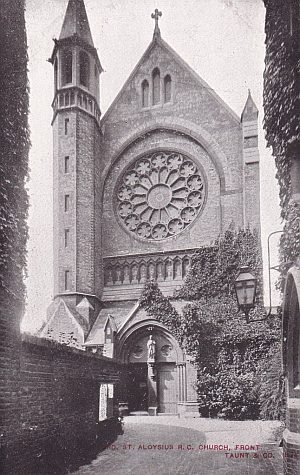
* Italy’s Fantasy Magazine has a brief review of Tolkien e l’Irlanda: Un viaggio tra miti e influenze (summer 2025) (‘Tolkien and Ireland: a journey through myths and influences’). Evidently a short book of 112 pages, which begins with inner-city Digbeth in 1900 where we find the newly-Catholic Tolkien family among the recent Irish immigrants who attended the Catholic church of St. Anne, Birmingham. Then on through his discovery of the Gaelic language and the ancient myths of Ireland. Finally, accounts of his visits to Ireland, and the publication of his fine 1955 poem on the life of Saint Brendan. I guess it’ll also mention things like Leaf by Niggle being published in The Dublin Review in 1945, but the blurb/review doesn’t mention that.

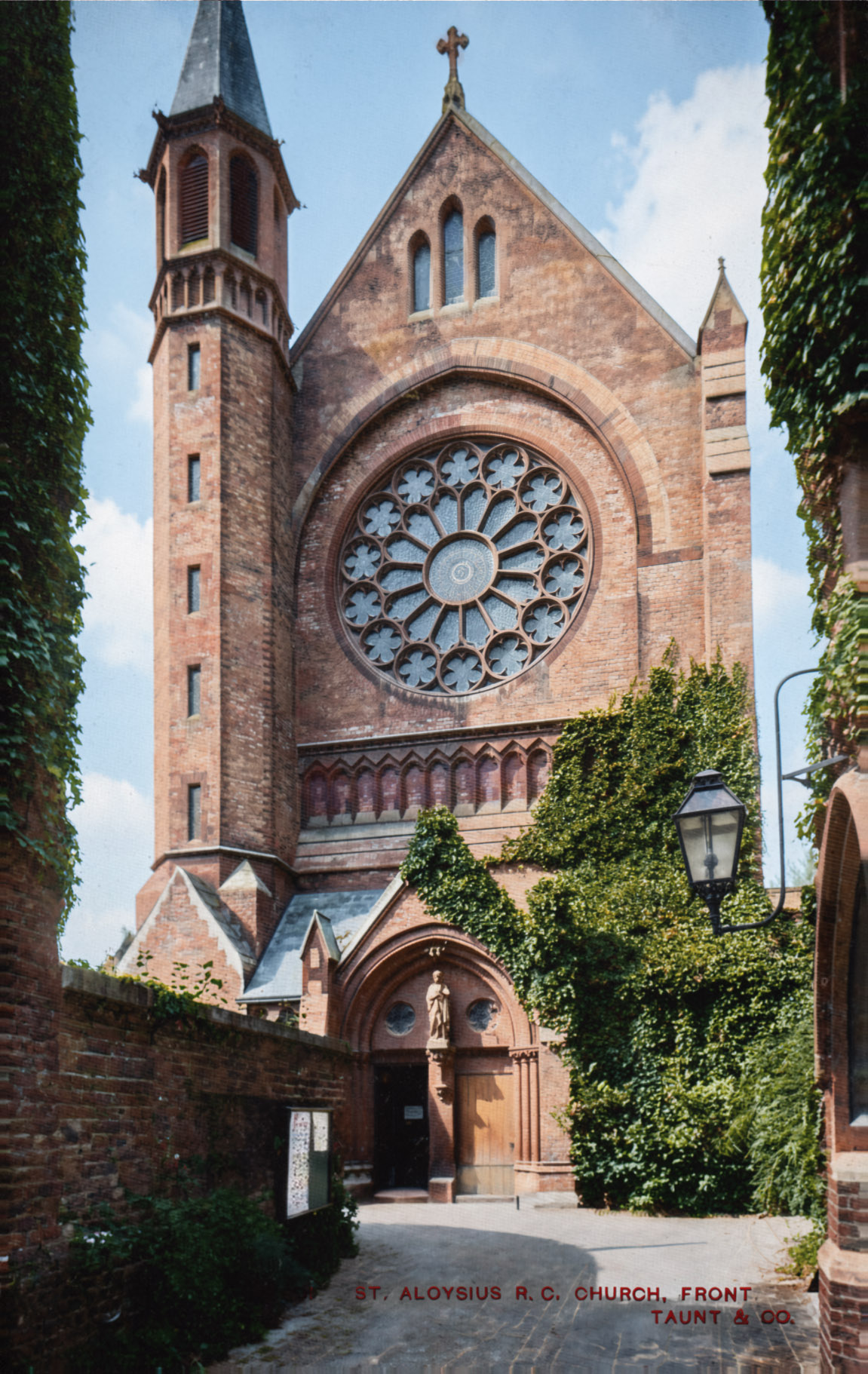
* Talking of St. Anne’s, I recently found this good scan of a Birmingham postcard of a humble church hall. The eBay seller specified no location other than Birmingham. I realised that the half-hidden map of Ireland on the wall (see the upper right) probably meant this was the hall of a Catholic church serving recent arrivals from rural Ireland. St. Anne’s had a low church hall of the same sort immediately adjacent (it’s still there today), but this is probably not the same. There would have been many halls like this in Digbeth. Still, the photograph is a rare interior photograph and it seems highly evocative of the Catholic Birmingham encountered by the Tolkien family in the spring/summer/autumn of 1900.

Here the photograph is also restored by Nano Banana v2 which, for once, copied almost all details from the source. Though it has added the mirror at the back, which one might whimsically imagine to have been for the priest, standing at the back, to keep an eye on the back benches. Though the ‘mirror’ was far more likely just another framed print.

* The Tolkien-friendly Word on Fire has a new imprint… “Word on Fire Luminor, a new publishing imprint dedicated to renewing the rich tradition of Catholic literature for today’s readers.” Only a few titles as yet, but they’re obviously open to non-fiction as well as fiction…

There’s an interview with the new imprint’s editor here with a pitch email.

* At the Royal Birmingham Conservatoire in Birmingham city-centre, “The Music of The Lord of The Rings”, a tribute to Howard Shore. Set for 16th May 2026, and booking now. Children age 6+ are welcome. The Conservatoire is the main music-teaching centre for the West Midlands, located a short walk from Birmingham New St. train station.

* And finally, due for publication on 12th May 2026, The Franchise is a dystopian sci-fi novel which appears to offer a determined poke at the Tolkien franchise. Possibly the book is just a rehash of a rather tired old sci-fi idea, and is only playing on the Tolkien connection for book-boosting publicity? But we’ll know soon enough. The book’s idea is that in the 1940s the famous book The Malicarn re-defined fantasy with its land “filled with magic and dragons and wizards and warriors”. Then the author died after a lifetime of assiduously nurturing his creation, only for his commercially-minded son to quickly turn it into a money-spinner. The resulting franchise spawned dozens of lesser newly-written books, and a series of big-screen blockbusters. Now AI, theme-park and fan-fever have all converged to make a never-ending content-factory for the avid fans, a factory which is also a built physical place. There the cast are made up of actors and fans who believe themselves to be living in The Malicarn. But one of them begins to doubt…

Tolkien Gleanings #404

Tolkien Gleanings #404

* Dimitra Fimi considers “Gandalf’s fireworks”, and specifically their terminology (“squibs, crackers, backarappers, sparklers, torches, dwarf-candles, elf-fountains, goblin-barkers and thunderclaps”) in historical context. (Substack, but free).


Gandalf taking the ‘special’ fireworks to Hobbiton. Many of the lesser fireworks having already been delivered by the dwarves.

* The University of Iowa’s latest Iowa Magazine has a new faculty profile article, “Iowa Professor Explores J.R.R. Tolkien’s Influence on ’60s Counterculture”. Who knew that Stuart Hall studied under Tolkien?

“Sparked by this previously overlooked connection between two cultural giants [Hall and Tolkien], Lavezzo embarked on an academic adventure exploring Tolkien’s influence on 1960s counterculture — a topic Hall first touched on in his 1968 essay, “The Hippies: An American ‘Moment.’” Lavezzo’s research project has taken her around the world to interview sources, inspired an upcoming book titled ‘Hobbits and Hippies: Fantasy and the Long Sixties’. [Though this is] a book still in the research stage”.

* An article I missed noting, in the latest Mythlore, “Tolkien’s Thomist Triad: A High Medieval Response to Contemporary Jus Ad Bellum”. Freely available online. You wouldn’t know it from the title — unless you can read Latin — but this turns out to be about the timely matter of what justifies war. The essay outlines ‘just war theory’ from the…

“early medieval to early modern eras and compares its principles [to those found in Tolkien’s Middle-earth …] I conclude that Tolkien’s fictional works permit broader justifications for war than do most modern just war theorists.”

* Tolkien Medieval and Modern considers “Lost Identity and Found Myth in The Lost Road”.

* Just released in English, the short book Finnish Mythology: Introduction to Myths, Gods and Legends (2026).

* And finally, learn The Language of the Dwarves: A Beginner Course. Starts 24th May 2026…

“This is a fully structured course of nine lessons, designed to guide you from the very foundations of the language to practical use. It includes detailed documents, audio segments, and a wide range of exercises, with the option to receive personal feedback along the way.”

Tolkien Gleanings #403

Tolkien Gleanings #403

* A new website, The Dwarrow Scholar: Your source for all things Dwarvish. With new long essays, including “How Geology Shaped the Great Dwarven Mansions” in Middle-earth.

* Tolkien: Medieval and Modern has a new essay on “The Binding of the Dwarves” and notes Biblical parallels.

* Signum University has a Helcaraxe Moot event set for August 2026, to be held in Alaska. The one-day conference has the interesting and location-specific theme of “The Long Winter and the Unending Light: Endurance in Tolkien’s World and the North” and papers and contributions on the topic are sought. “Presentations can be delivered in-person at the event or remotely from your location”, and the submission deadline is 1st July 2026.

* The official Jesuits.org website weighs in on the question “What We Can Learn From Tolkien’s Catholic Imagination”.

* A Damn Fine Cup considers the music composed for the old BBC Radio Lord Of The Rings adaptation…

“Shadowfax gets this delightful tune: capturing in music a fleet-footed horse both frolicking but then in an epic gallop across leagues of Middle-earth. It’s a tune I would love to see performed live one day.”

* And finally, a recent copy of the UK’s weekly Country Life magazine (1st April 2026, Easter special) had an item on church Easter traditions. The article unwittingly threw light on a key moment in The Lord of the Rings. re: Gandalf’s deep and unforced laughter at the Field of Cormallen, and also Sam’s laughter there, both of which take place on an Easter-ish day. As Gandalf says, “the eighth day of April”. Here’s the relevant bit of the article…

“For much of the mediaeval period, there was a well-established ritual for churches to invoke the risus paschalis or ‘Easter laughter’. Specifically the priest would seek to begin their Easter sermons by making the congreation laugh […] they viewed it as ncessary to provoke a real, deep and unfeighned laugh from the assembled company. The laughter was thought to be directed at no other target than Death itself. The joy of Christ’s resurrection and its consequences was thought to be so great and triumphant that only laughter would do by way of response. We know that the practice survived the Reformation, as comic actors in the time of Shakespeare would listen to Easter sermons to pick up gags and tips on delivery.”

Tolkien Gleanings #402

Tolkien Gleanings #402

* The new Spring 2026 edition of Mythlore: A Journal of J.R.R. Tolkien, C.S. Lewis, Charles Williams, and Mythopoeic Literature is now freely available online. Including, among many others, articles on…

    – Elwing and Earendil and the “Living Light” of Love.
    – The Significance of Ioreth, Wise Woman of Gondor.
    – The Enigma of Goldberry and the River-woman.

Also a wealth of reviews, including The Fantasy of J.R.R. Tolkien: Mythopoeia and the Recovery of Creation, and J.R.R. Tolkien’s Women of Middle-earth.

* The April 2026 issue of Journal of Inklings Studies is now available ($ partly paywalled). Free access to the book reviews, which include long reviews of Theology and Tolkien: Practical Theology and its companion Theology and Tolkien: Constructive Theology, Tolkien and the Mystery of Literary Creation, The High Hallow: Tolkien’s Liturgical Imagination, and J.R.R. Tolkien: A Very Short Introduction. The latter is found to be…

“a must-read for all scholars, students, and readers of English literature who are willing to dive into the depths of Tolkien’s literary world – guided by lucid prose and an engaging style, all in just over 100 pages”

* Malcolm Guite gives a short interview about his major new book Galahad and the Grail

“Malcolm Guite helps contemporary readers experience an authentic version of the Arthurian legends in modern language. Here at the height of his poetic power, Malcolm Guite delivers a tale of adventure in ballad form that plumbs the depths of the human soul, carries readers through the Wasteland, and sets them upon the numinous shores of Faerie.”

* Another restored view of the young Tolkien’s Birmingham. The Great Hall of Birmingham University, where Tolkien was brought from France. Still not a great picture, due to the uneven contrast and dark shadows. But now much crisper than others available online. An alternative view, without the upper half of the Hall, can also be found in Garth’s Worlds of J.R.R. Tolkien, page 173.

It strikes me that, should the Tolkien Society succeed in getting Sarehole Mill as their HQ, their success might trigger the formation of a new ‘Tolkien Scholarship Collection’ in the city? This could be housed nearby, and where better than at Birmingham University? All the Tolkien scholarship books (500+ and growing by the month) shelved in a one-room reference collection, alongside runs of journals, handily located in the middle of the nation.

* And finally, talking of the West Midlands, the touring Magic of Middle-earth exhibition is to return here. The exhibition opens at Bewdley Museum in July 2026. Their free opening-day events sound rather substantial. Viking reenactments and… “warriors [to] bring the spirit of the Northmen to life”, a performance of Beowulf, and… “you’ll be welcomed by two towering, friendly tree-giants”, among other attractions. The show runs 4th July – 27th September 2026. The opening event is obviously free, but the exhibition page says nothing on the matter of a charge.

Tolkien Gleanings #401

Tolkien Gleanings #401

* The latest Antigone: An Open Forum For The Classics has an article musing at length on “Arbor fulgida: The Origins of Tolkien’s Shining Tree”. Freely available online.

* Newly announced by Tom Shippey’s growing Uppsala Books imprint, the book The Trees of Middle-earth: J.R.R. Tolkien’s Environmental Philosophy. No sign of it on Amazon UK as yet, so presumably due later in 2026.

* The Oxford Tolkien Network’s YouTube channel has posted six new videos. Including Thomas Honneger on “Habitatio est omen – or: Like land, like people”. He discusses how Tolkien skillfully matches character morality with place and language.

* The Wade Center’s interview podcast has a new YouTube episode “Filming the Lives of Lewis and Tolkien”, with Kirk Manton

In this week’s episode, co-hosts Dr. Jim Beitler and Aaron Hill sit down with Kirk Manton, the producer of a forthcoming five-part documentary about the lives and friendship of Lewis and Tolkien titled, ‘The Forge of Friendship’ (Eastgate Creative)”.

* A new call for papers on “Tolkien, Barfield, and the Inklings: Questions of Influence”, for a Pacific Ancient and Modern Language Association conference session. The call implies the influence of Owen Barfield may at times have been overstated, and asks…

“What about other connections between the individual Inklings, are there significant literary or philosophical influences? Shared methods, perhaps, or something else? Have Tolkien’s recently published works, or recent analyses and developments of Barfield’s “ancient semantic unity,” changed this judgment?”

* The Catholic World Report has a new article “Mythology and what it means to be human” which compares Tolkien with T.H. White’s The Once and Future King and Gene Wolfe’s The Wizard Knight.

* A student presentation Appreciating the role of the music in the movie of The Fellowship of the Ring (2026). The slides are freely available online, and one slide suggests that the key “The Shire” music has antecedants…

* And finally, a restored view of the ‘Four Arches’ bridge and ford at Sarehole, circa spring 1903 (source card posted March 1904).

Tolkien Gleanings #400

Tolkien Gleanings #400

The 400th edition of Tolkien Gleanings! If you find my regular Gleanings useful, please consider a small monthly donation via Patreon.

* A new PhD thesis from New Zealand, “Echoes of music dim: Hard hope in J.R.R. Tolkien’s early heroic legends” (2026). Freely available online, the thesis…

“examines the presence and quality of difficult Hope in J.R.R. Tolkien’s early mythology, chiefly across the years c. 1913 to c. 1938. Approaching his work through the combined lenses of biography, mythological vision, linguistic pursuit, and religious conviction, it treats the ‘tower’ of Tolkien’s legendarium not as a structure to be dismantled, but as a work of remarkable craft still able to grant a meaningful view. At its centre lies Hope as a vital, often hidden bond-stone in Tolkien’s so-called Great Tales: not optimism, but a hard and costly longing for things to come right, somehow, grounded in an ultimately eschatological horizon. Because Tolkien was not a theologian working in systematic terms, this study follows Hope as he himself explored it”

* The new book Vikings, Knights, Elves, and Ogres: Essays in Honor of Shaun F.D. Hughes (2026) has the chapter “Thoughts on J.R.R. Tolkien’s and E.V. Gordon’s ‘Viking Club’ Songbook at Leeds, and Related Nordic Songbooks”.

* Tolkien: Medieval and Modern has the new long essay “On Darkness and Tongues”, musing on the ‘darkness’ of the… “words of the secret dwarf-tongue that they teach to none”. Freely available online.

* Thoughts on Tolkien plausibly considers “The Long Shadow of Bilbo”, re: his likely influence on the breaking of the Fellowship. Freely available online.

* At Reddit, a seemingly new “List of all aphorisms from The Hobbit and The Lord of the Rings”.

* Mythprint Vol 60, No. 4 (2023) is now released from its membership embargo and freely available for download. This issue has a review of the book Middle-earth, or There and Back Again (2020), this being Cormare Series No. 44 published by Walking Tree.

“In the tradition of source studies and those reception studies which undertake close readings, [the book’s authors] engage with material with which Tolkien was certainly familiar, and yet they are not afraid to move beyond an illustrative mode of correspondence, that is, treading the lines between ‘source’ and ‘target’”.

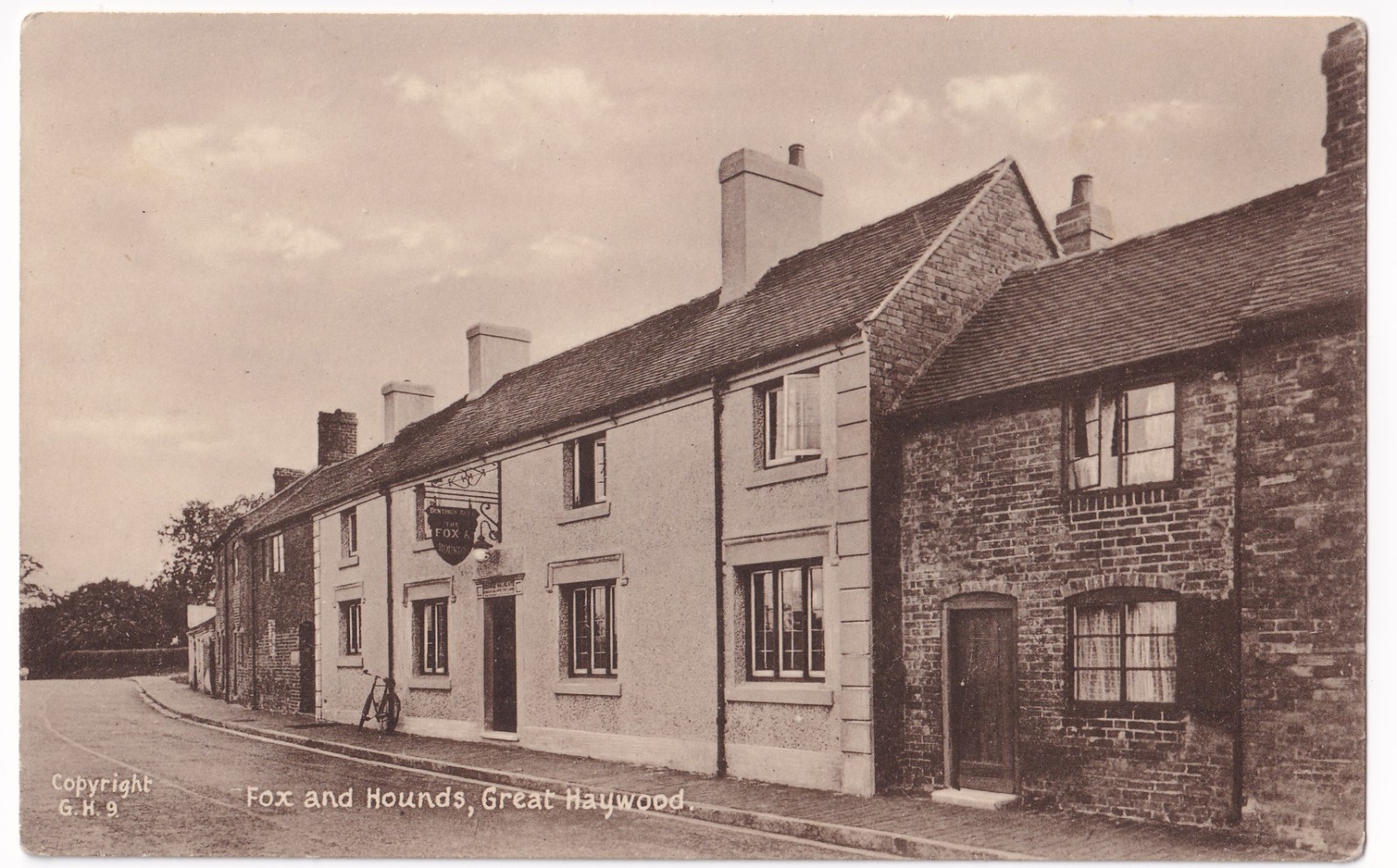
* And finally, a Tolkien weekend is planned for Great Haywood in mid Staffordshire, in July 2026. Free admission. With the event poster suggesting there will also be a showing of artworks relating to Tolkien and Edith in the locality during wartime. Some of these are glimpsed on the poster.

Tolkien Gleanings #399

Tolkien Gleanings #399

* News of a forthcoming book, Joy Beyond All Worlds: Universal Salvation, George MacDonald, and J.R.R. Tolkien. Judging by the table-of-contents it looks like a deep dive into MacDonald’s Christianity and its historical context, followed by a shorter four chapter section relating these ideas and themes to Tolkien’s Ainulindale.

* News of a new book from Italy, from the author of Dentro i panni di Gandalf: Tra letteratura e spiritualita nella Terra di Mezzo di J.R.R. Tolkien (2024) (‘In Gandalf’s Shoes: Between Literature and Spirituality in J.R.R. Tolkien’s Middle-earth’). He is giving a university talk on his new book due soon, which appears to be on the theme of ‘Tolkien today: between cinema and literature’.

* A short interview in Italian with the art historian who worked on the new Tolkien in Italia documentary film, which is now screening in Italy…

“His letters clearly show how much Tolkien was struck by the beauty of the places he visited in our splendid country. He stopped briefly in the city of Verona, but his most significant memories are associated with Venice and Assisi, in Umbria. He was fascinated by the mosaics of San Marco and the paintings of Tintoretto, but the pilgrimage to the lands of Saint Francis aroused very strong emotions in him. As a Catholic, he felt even more the spirituality that always fills those places. Oddly enough, he never went to Rome, the capital.”

* In German in the Swiss magazine HR Today, Thomas Honegger interviewed on leadership lessons from The Lord of the Rings. Freely available online.

* On Etsy, pre-orders are now open for the book Tolkien’s Tragedy: Concerning Numenor, the Rings of Power, and the Second Age. The third volume in his ‘The Mind of Tolkien’ series from a popular podcaster, the book seeks to unravel the “hidden narrative unity” of the Second Age. Hopefully, the title’s apparent reference to the TV series is just a marketing ploy.

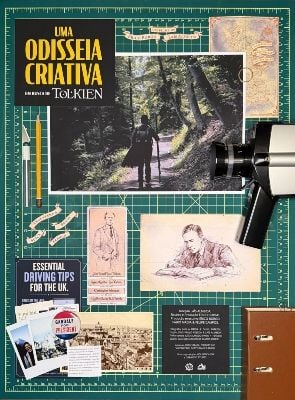
* A new YouTube channel has two short clips in English, “Birmingham Oratory and J.R.R. Tolkien” and “Newman’s Library in Birmingham”. Filmed inside the Birmingham Oratory, but I’m uncertain where they’ve come from.

The presenter gives hesitant and passing credence to the hoary old claim about the ‘Two Towers of Edgbaston Waterworks’. He may be more correct on the claim that the Tolkien brothers were briefly housed in the rooms of the Oratory itself, since the Oratory website has…

“A brief stop at the Oratory [following their mother’s death] was could be no more than a temporary expedient, as the community was large and part of the building was used a dormitories for the boys of the adjacent Oratory Public School, leaving space almost non-existent.”

I daresay the Oratory could instantly crowd-fund a few million to make a high-quality feature-length Ken Burns-style documentary film about the young Tolkien in Birmingham, with a focus on his religious upbringing in the city, but… these clips don’t feel like they’ve come from something like that.

* And finally, Tolkien: Medieval and Modern has another fine long essay on how “Everyone Knows a Sam”

“Sam speaks ‘sermo humilis’ (a description he’d not even know how to define). It’s humble speech, the style of the Gospels: the books in the Bible that talk about fisherman and tax collectors, those on par with Sam the gardener.”