Tolkien Gleanings #467

Tolkien Gleanings #467

* In the latest Lithuanian open-access journal Acta Globalis, “Linguistic World-Building in Tolkien’s The Hobbit: Language, Naming, and the Emergence of Modern Fantasy”…

“Tolkien creates credibility not by eliminating linguistic inconsistency but by distributing different linguistic textures across peoples, places, and narrative situations. Familiar English, archaic resonance, Old Norse-derived names, invented forms, and performative verbal genres coexist within a layered system. This system allows language to function simultaneously as characterization, cultural memory, spatial mapping, and evidence of an imagined past.”

* A new Masters dissertation “From Inferno to Middle-earth: The Transformation of Sin, Judgment, and Redemption in Dante, Milton, and Tolkien” (2026). Freely available.

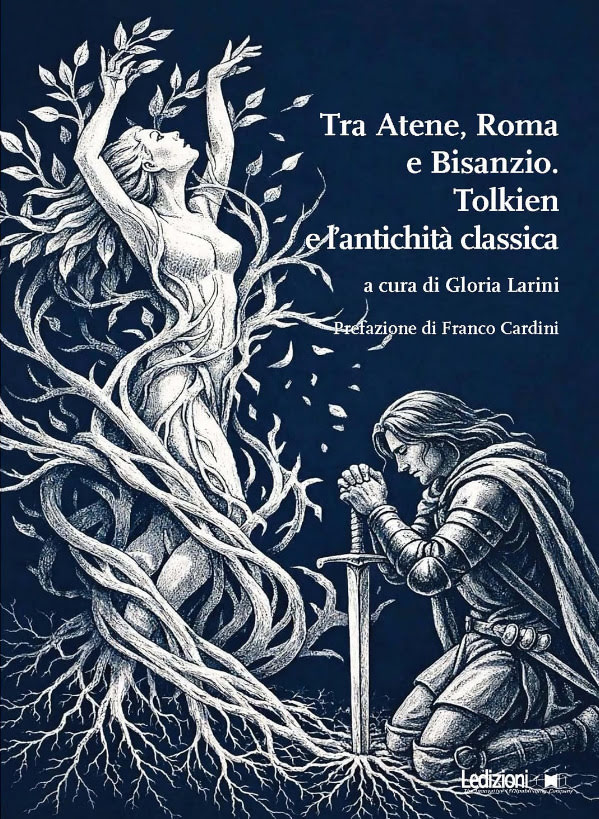
* Due in early December 2026 in Italian and as an affordable £12 ebook, Tra Atene, Roma e Bisanzio: Tolkien e l’Antichita classica. With an introduction by Franco Cardini, one of Italy’s leading historians and Professor Emeritus of Medieval History at the University of Florence.

“Tolkien wove his work from the Northern mists […] but he also looked to ancient Athens, Rome, and Byzantium: to the epics of Homer and Virgil, the theatre of Sophocles, the Metamorphoses of Ovid, to Stoic philosophy, and the forms of Christian hagiography. The Proceedings of ‘Between Athens, Rome, and Byzantium: Tolkien and Classical Antiquity’ collects essays that explore these resonances without forcing unlikely “sources”.

* There’s obviously been enough advance interest in the forthcoming Tolkien’s Material Culture: (Extra)ordinary Objects in Middle-earth and Beyond to issue an affordable paperback edition. Due in February 2027, and currently pre-ordering at a discounted £20 on Amazon UK.

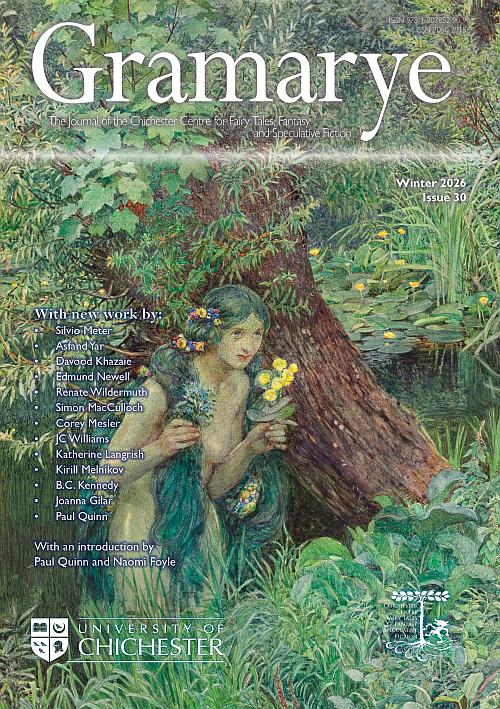
* From the Chichester Centre for Fairy Tales, Fantasy and Speculative Fiction, the Winter 2026 issue of their substantial house journal Gramarye. Available in print only.

* Catholic World Report has a text interview with Brad Birzer on “Tolkien, the Inklings, and the battle for a humane and Christian West”. Freely available.

* On YouTube, Malcolm Guite chats with artist Jake Weidmann, fine-art printmaker and portraitist of Lewis and Lovecraft.

* Project Gutenberg has been badly hacked and has been down for a few days now. There’s a working mirror at gutenberg.ar.io.

* From Kansas, Chesterton Radio’s latest podcast is Tolkien Speaks Elvish: The Lost Sounds of Middle-earth… “These are not actors or modern recreations — this is the creator of Middle-earth, speaking to us across more than seventy years.”

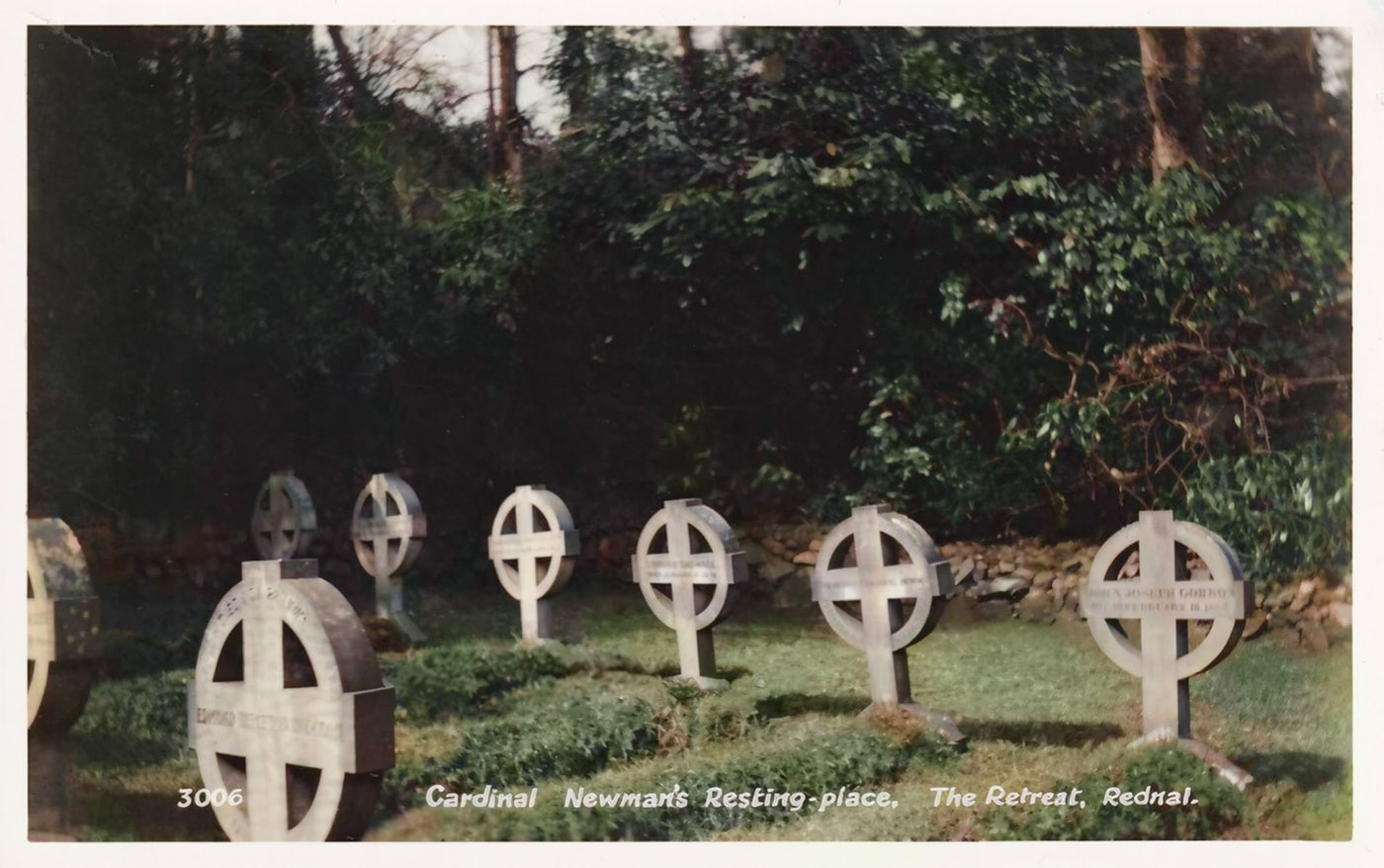
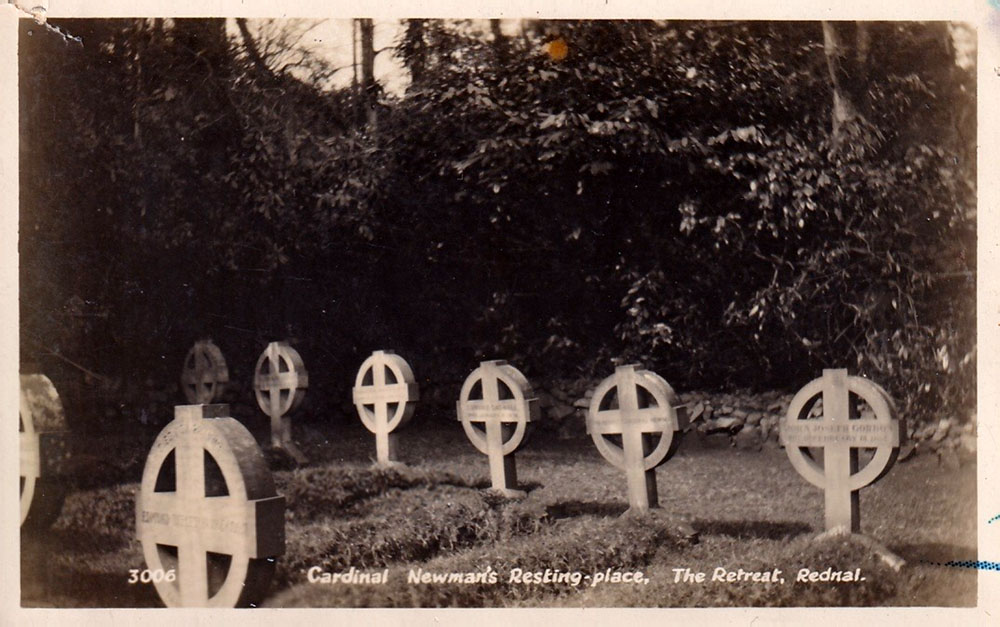
* And finally, an eBay postcard of the cemetery at the Birmingham Oratory’s retreat at Rednal, in the north of the Lickey Hills near Birmingham.

“Mabel Tolkien was buried in the Catholic churchyard at Bromsgrove. Over her grave, Father Morgan placed a stone cross of the same design used for each of the Oratory clergy in their Rednal cemetery” — Andrew James, “J.R.R. Tolkien & Birmingham, 1896-1916”.

Tolkien Gleanings #466

Tolkien Gleanings #466

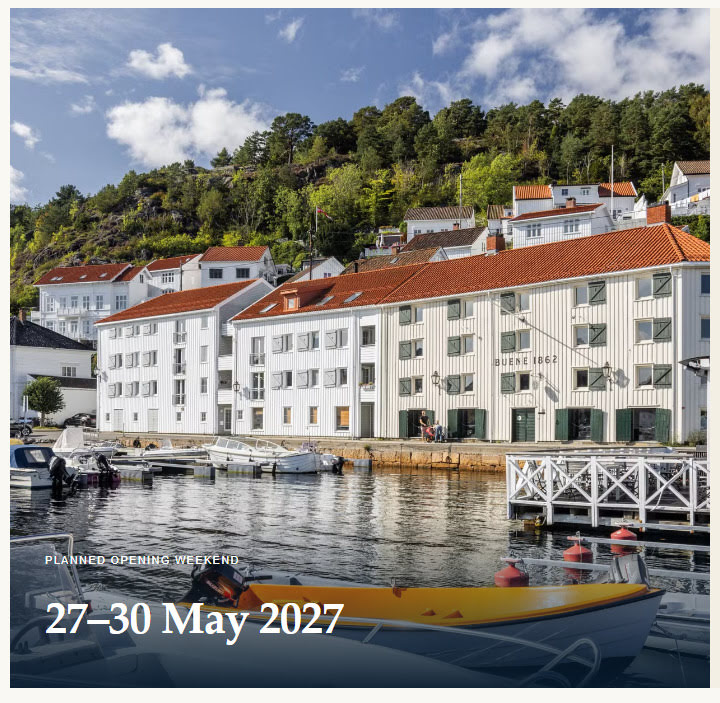
* Taking shape in Norway, The Tolkien Centre for the North. “Not yet open to visitors. Planned opening weekend 27th-30th May 2027”. Proposals include a reading and research library, exhibitions, a specialist bookshop, and activities for schools and families.

“The aim is to bring people together throughout the year. Exhibition ideas linked to The Hobbit’s 90th anniversary, Tove Jansson, and Songs for the Philologists are being developed. Potential sponsors and partners are warmly invited.”

I’d suggest “Dwarves and the North” could also have a relatively wide appeal.

* Newly online in open-access, the 2025 issue of the Italian Tolkien journal I Quaderni di Arda. This issue’s theme, in English translation, is ‘Tolkien Beyond Tolkien: Heirs and Heretics’. Among other items, Italian articles on: “J.R.R. Tolkien and A.S. Byatt”; “A Comparison of Tolkien and Gaiman”; and three book reviews including the Collected Poems.

* Spanish site Elfenomeno has a new English article noting the Tolkien papers in the just-gone 10th International Congress on Myth in the Arts.

* A new book in Spanish, Mito y Muerte: Estudio de la poetica de J.R.R. Tolkien, from Legendaria Ediciones.

“Jon Mentxakatorre offers the reader a study in which he explores the meaning and scope of Tolkien’s legendarium as “an essay on linguistic aesthetics concerning death and immortality.”

* The Acton Institute podcast interviews Brad Birzer on the Friendship of Tolkien and the Inklings.

* Word on Fire considers “Leaf By Niggle”.

* Beyond Bree has reviewed Nancy Bunting’s book Tolkien – History Meets Legend and publisher Walking Tree has the PDF freely available.

* Kindly uploaded to the Internet Archive by its author, the PhD thesis Weaving Wonder: George MacDonald and The Threads of Modern Fantasy (2025).

* Announced at the Tolkien Guide, a book collecting the recent essays by Matthew Thompson-Handell, which have appeared in Beyond Bree and elsewhere.

* A new painting and commentary from artist Miram Ellis, “The Elvenking rides out from his gate: Tolkien and the Horns of Elfland”.

* The Internet Archive’s 2027 Public Domain Film Contest. Make a short movie, up to four minutes max., using at least one work published in 1931 that will become Public Domain in the USA on 1st January 2027. Films of that year veered toward gothic horror… Dracula (Universal), Frankenstein (Universal), Dr. Jekyll and Mr. Hyde, M (Fritz Lang), but also included the first sound version of Alice in Wonderland (now only in a bad print at 52 minutes, but frames might be restored with Klein and then re-animated with Minimax H3).

* The poetry and tales of Walter de la Mare will enter the public domain on 1st January 2027, in nations which hold to the 70 year copyright rule. Best known for his poetry and English ghost/supernatural stories, he also wrote many new fairy-tales for children — as well as some ‘re-tellings’ of traditional fairy-tales. Tolkien, it would appear, recalled him only as a dark writer of the supernatural…

“I do not think Walter de la Mare walked in my country, whether you mean: read my work before he died, or inhabited a similar world, or both. I only met him once, many years ago, and we had little to say; but as far as my feelings for and understanding of his work goes, I should guess that he inhabited a much darker and more hopeless world: one anyway that alarms me profoundly.” — Tolkien in July 1956, writing to Amy Ronald.

* And finally, hobbits rock! Metal magazine Decibel interviews Black Metal Band Lammoth. Freely available online…

“Many bands have looked to author J.R.R. Tolkien for inspiration. But Lammoth, a one-person band fronted by Rob Sanford, takes it a step further: the entire musical output is hobbit-themed.”

Tolkien Gleanings #465

Tolkien Gleanings #465

* At The Tolkien Society website, David Bratman (1957-2026): In memoriam. Also links to online obituaries.

* Artist Matej Cadil considers “Poppies and Simbelmyne: Tolkien and the Many Meanings of Remembrance Day”.

* Fellowship & Fairydust posts an advance review of Tolkien and the Inklings: Men of the West. The book is due in December 2026, although Amazon UK has January 2027…

“While [Tolkien’s official biographer] Carpenter gives us a look at the Inklings through the eyes of C.S. Lewis, Bizer expands his focus to include not just the most well-known members such as Tolkien, Lewis, and Charles Williams, but also Lord David Cecil, Hugo Dyson, ‘Humphrey’ Havard, Nevill Coghill, C.L. Wrenn, and more, as we are transported to Oxford and academia before, during and after WWII. […] This is not a surface-level take on the Inklings, but an encompassing deep dive into these great men, their works, and their influences on each other. It provides the ins and outs of all one would desire to know about the Inklings and of Inklings scholarship to date.”

* A new book from Germany, Die verzauberte Vernunft: Mythisches Denken und die Grenzen der Entzauberung. Levi-Strauss, Garcia Marquez, Tolkien (2026). (‘Enchanted Reason: Mythical Thinking and the Limits of Disenchantment’). The four authors discussed…

“… are united by a project older than all of them — the romantic demand for a ‘mythology of reason’. And they show that enchantment is not a regression behind reason, but one of its forms: a relationship to the world that Hartmut Rosa calls ‘resonance’ — and which, as the book ultimately asks, even a machine cannot simply produce.”

* In the latest open-access Albertus Magnus journal, “Tolkien y la superacion de la teodicea leibniziana: El Senor de los Anillos como teodicea poetica desde la Tierra Media”. (‘Tolkien and the Surpassing of Leibnizian Theodicy: The Lord of the Rings as a Poetic Theodicy from Middle-earth’). In Spanish with English abstract. The author discerns… “a theological narrative that illuminates the problem of evil, original sin, human freedom, and redemption” in The Lord of the Rings, one that “transcends the rationalist explanation of Leibnizian theodicy”.

* Elfenomeno notes, in English, a new Spanish book on the forces of nature as depicted in The Hobbit…

“Across its 216 pages, Simonson examines the storms of the Misty Mountains, the waters of Mirkwood, the darkness of the caverns and the intervention of the great eagles, relating these elements to ancient myths, literary influences and Tolkien’s personal experiences.”

Sadly the link to the book on the publisher site is blocked by a “robot challenge”, but I find there’s a basic listing on the Spanish Amazon site. I see that the author is the same as the author of the Walking Tree book The Lord of the Rings and the Western Narrative Tradition, and the more recent The Woods and the World in J.R.R. Tolkien’s Legendarium.

* The Professor Kozlowski Lectures podcast on British magic and magicians alights on “Magic in Tolkien” (8th November)…

“In Tolkien’s work, as well as that of the other Inklings, magic was rarely something that humans could wield or control, and was instead something fundamental to the world itself. Using the story of Beren and Luthien from The Silmarillion (and Tolkien’s poem, “Mythopoeia”) as our guide, we’ll see how Tolkien understood magic, and how it differs from the other magicians in our study.”

* Posthumously published in Italian, Tolkien Pagano (‘Tolkien, Pagan’) is a new book by a man who was apparently one of Italy’s leading science-fiction authors. In it he discusses how…

“pagan sacredness, the heroism typical of Nordic tradition, and the sense of destiny and cyclicality profoundly characterize Middle-earth”

* Also from Italy, a new Italian Kindle ebook Il femminile in Tolkien: Le donne nella Terra di Mezzo: regine, guerriere e custodi (‘The Feminine in Tolkien: Women in Middle-earth: Queens, Warriors, and Keepers’). In a survey across the entire Legendarium, the author finds that…

“Queens and warriors, mothers and daughters, immortal creatures and mortal women become pieces of a mosaic that extends from the cosmic dimension to everyday life. […] What emerges is a Tolkien far removed from more schematic readings: an author in whose work the feminine does not constitute a simple counterpoint to male heroism, but an essential component of history, mythology, and worldview.”

* A snippet of information about what will be in the forthcoming Oxford Handbook of J.R.R. Tolkien. It will have a chapter surveying Tolkien’s academic life.

* The new book The Worlds of Christopher Tolkien is set for release in about a week, according to Amazon UK…

“This brand new celebration of J.R.R. Tolkien’s son and literary executor, The Worlds of Christopher Tolkien sheds light on the worlds in which Christopher Tolkien lived and wrote, illuminated by essays from academics, colleagues, friends and family.”

* On Reddit, a comprehensive listing of Christopher Tolkien’s admitted mistakes, re: his father’s works. Being the places in his publications where he admits an earlier mistake of interpretation or scholarly sifting.

* Elfenomeno interviews artist Ted Nasmith.

* On YouTube Malcolm Guite appreciates the new artbook A Shire Walking Party.

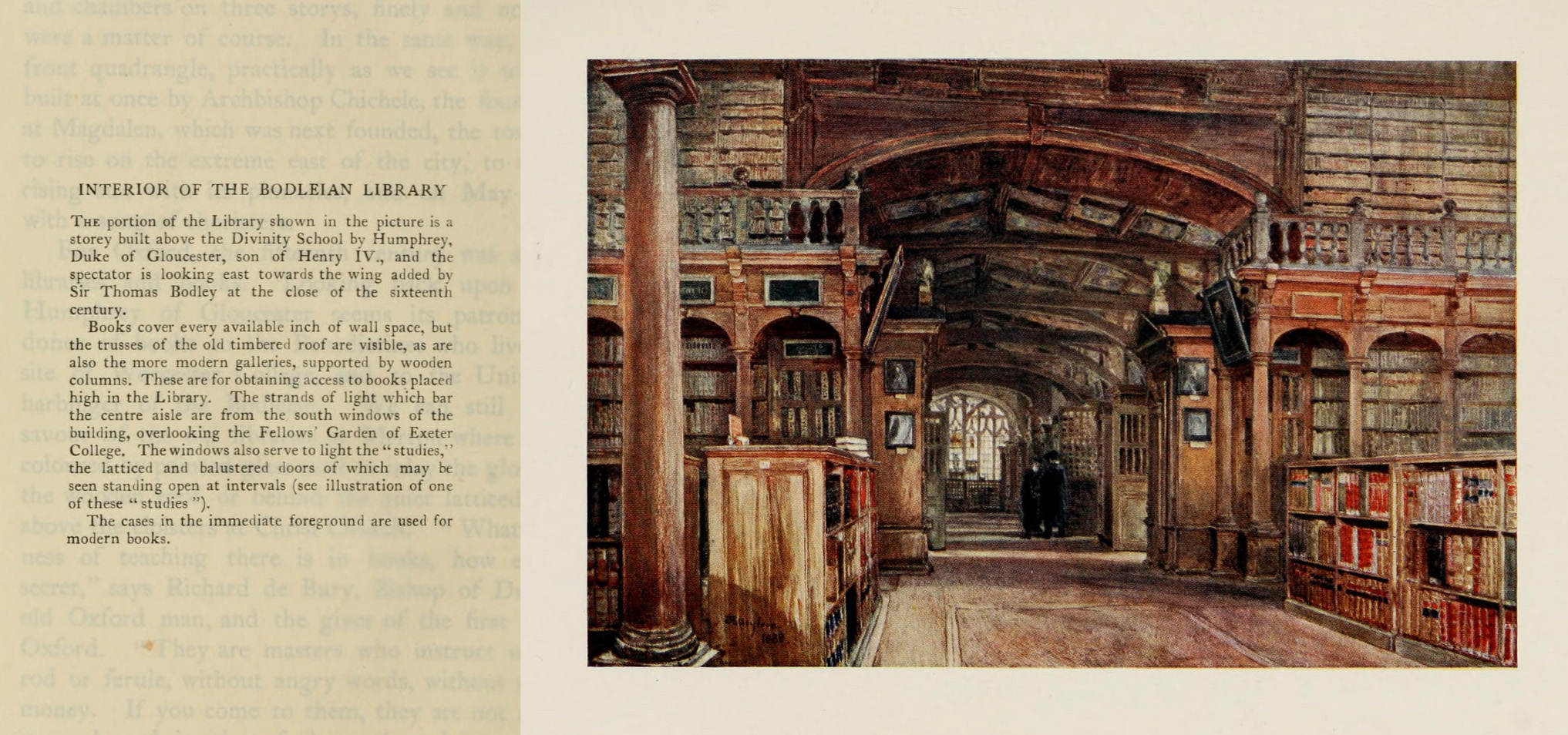
* And finally, the interior of Bodleian Library, as Tolkien would have know it. Painting by John Fulleylove. Interesting to know that the windows had a view into the Fellows Garden of his Exeter College.

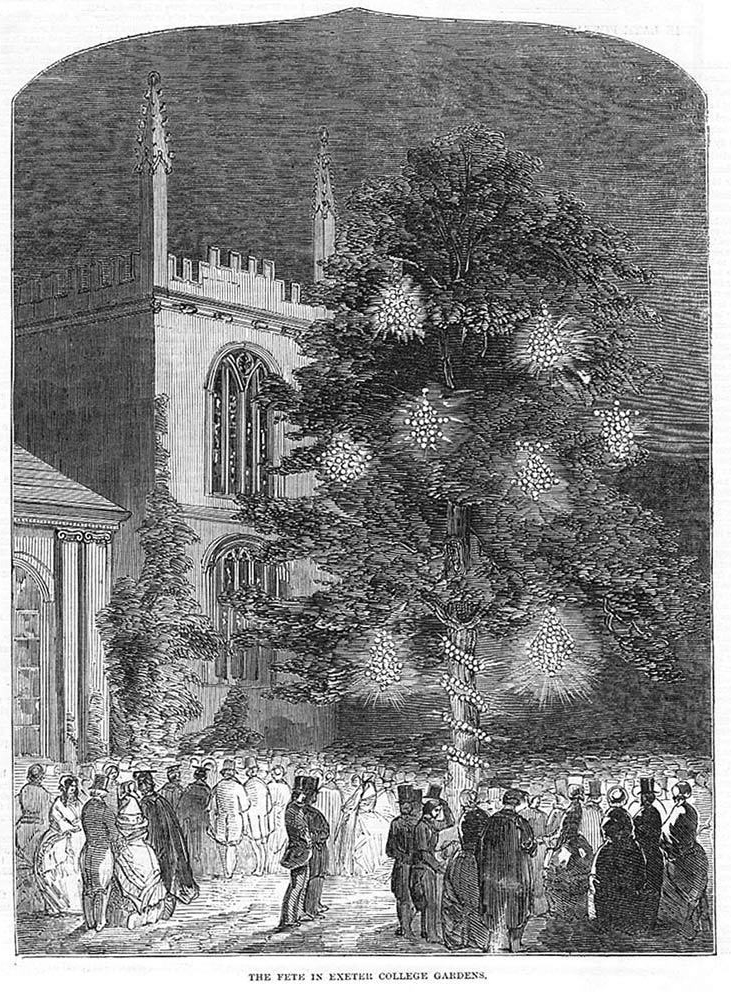
Possibly he had a view of the ‘Party Tree’ in the Garden?

Tolkien Gleanings #464

Tolkien Gleanings #464

* The new documentary The Stories That Come to Us: A Conversation with Verlyn Flieger has now been released at the Signum Store at $12.99.

“We invite you to step into the heart of Tolkien scholarship with one of the great trailblazers of Tolkien Studies, Dr. Verlyn Flieger! Led by Jonatan Lyssens and Maggie Parke, these interviews are accessible, comfortable and from her own home – it’s like sitting down for a chat over a cup of tea with one of the legends in the field.”

* Open Letters Review reviews The Hobbit by J.R.R. Tolkien, illustrated by Tove Jansson. Incidentally the Tove Jansson exhibition, at London’s Quentin Blake Centre, will open 21st November and run until 9th May 2027.

* The Oxford Mail local newspaper notes “Rare Hobbit first editions listed on eBay for £800,000″.

* Word on Fire on “The Glory of the Unfinished: Reading Tolkien’s “Leaf By Niggle” on All Souls Day”.

* The Westminster Podcast talks to Yannick Imbert on Tolkien and the Christian Imagination…

“Drawing on his doctoral work on Tolkien, Imbert explores how stories can challenge our assumptions, awaken our sense of wonder, and help us imagine hope in a world marked by suffering and death.”

* The latest SFRA Review reviews J.R.R. Tolkien’s The Hobbit: Realizing History Through Fantasy.

* Cultus Dispatches at the SWG investigates and tabulates Marquette’s new Tolkien fanzine dataset…

“Last month, Marquette University released the Tolkien Fanzine Dataset, 1967-2017, a spreadsheet of 4,113 entries from Tolkien fanzines [which] is the most significant effort to bring those zines to light that I’ve yet seen, and what can be gleaned from it reveals what pre-internet Tolkien fandom looked like.”

* A short online course from Signum University, The Inklings and King Arthur. Starts 4th January 2027, booking now.

* A new site section at the Digital Tolkien Project, Tolkien Annotations.

* Adam Roberts translates the Lord of the Rings Ring Rhyme into Latin.

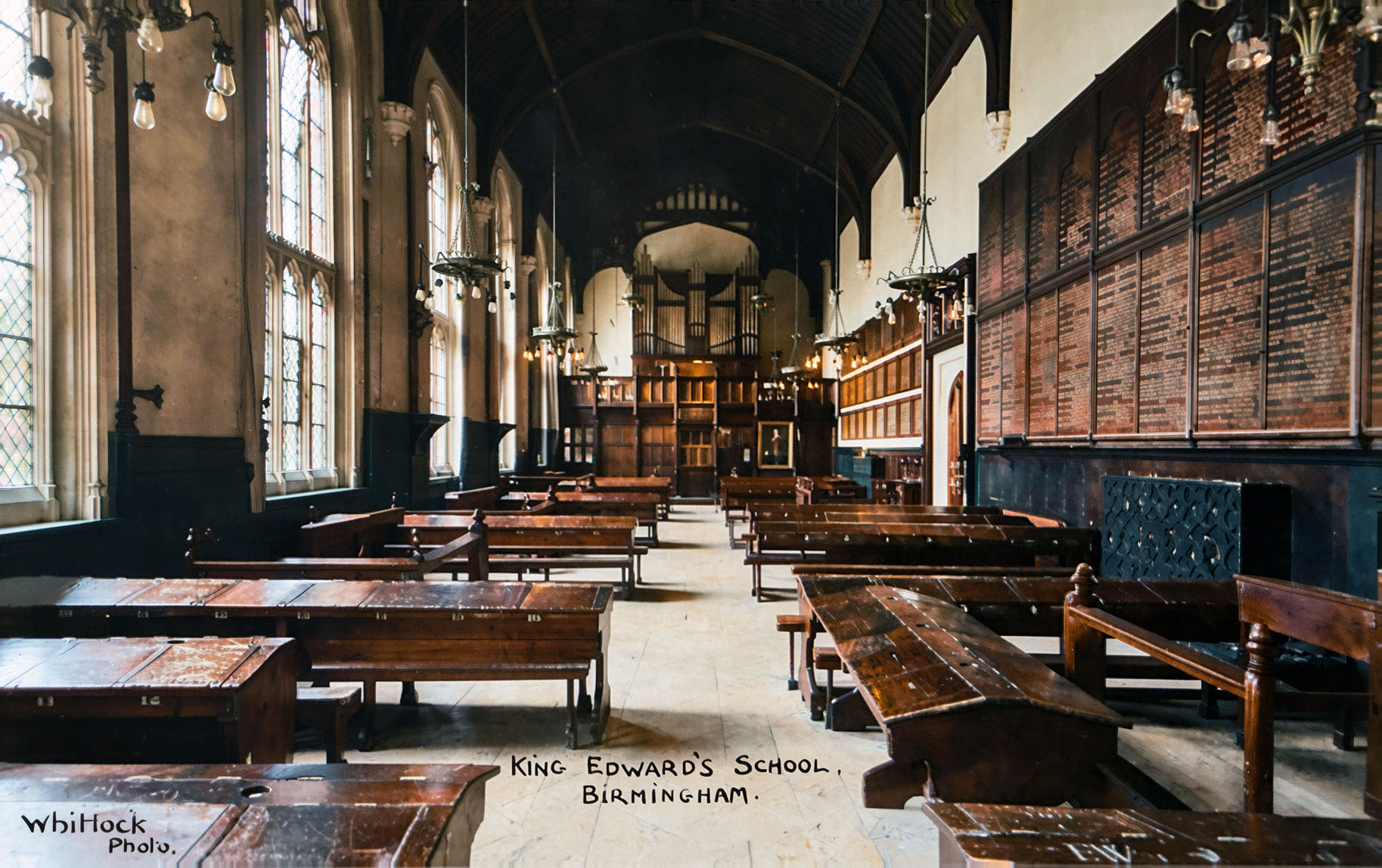
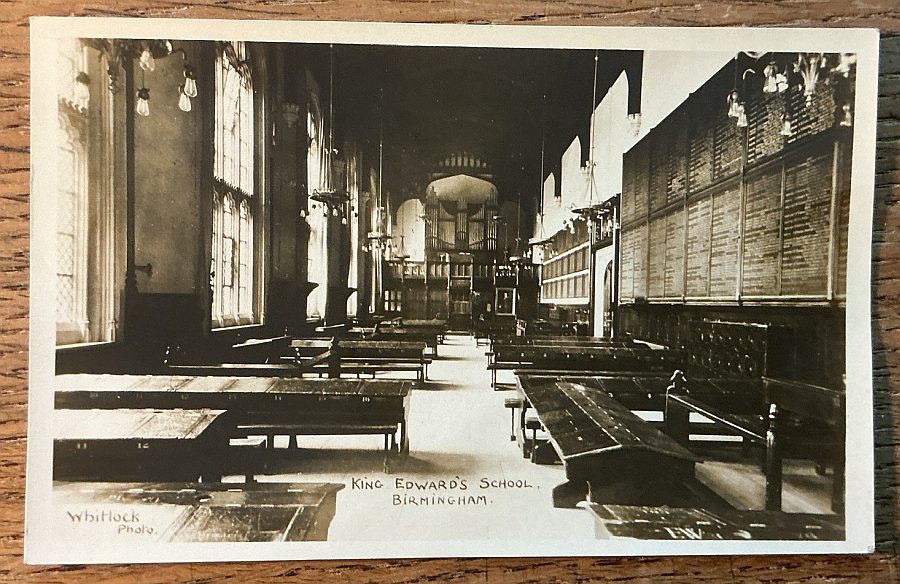
* And finally, popping up on eBay, a rare interior view of Tolkien’s school in Birmingham. Here newly restored and colorised.

The working life of Stoke’s stations in the days of steam

Here’s the first part of an evocative article from Railway magazine, June 1950. Giving a vivid account of Stoke and Hanley stations in the days of steam, circa the 1920s-1940s. Had from an eBay listing of the paper magazine, and the hasty and low-res eBay page-scans proved an interesting test for the current state of OCR text extraction. The open-source NormCap, a Windows screenshot utility that runs Tesseract OCR, did the job well even though the text was tiny and the .JPG compressed.


“North Staffordshire Memories”

By R.E.G. READ.

OCCUPYING a strategic position in the industrial North Midlands, and hedged in by two of our largest railway systems, the old N.S.R. [North Staffordshire Railway] was never widely known and one imagines was often too hastily dismissed with contempt solely by virtue of its size, which, incidentally, was not quite so small as it would appear at a first glance.

Nevertheless, the line was far from despised by those who knew it best. On the contrary, among even its season ticket holders — most critical of travellers — there were many who would point out with pride its achievements, such as the possession of a higher proportion of electrically-lit rolling stock and stations than most of the great main line railways could then show, its fine punctuality, and freedom from accidents — in this last respect it claimed that throughout its history no single passenger had received fatal injury — and, last but not least, its readiness to meet the special needs of the district it served.

The focal point of the system was Stoke, and here the platforms (of no great length) plus one short bay, had to deal with the passenger traffic, mainly local in character but of a density that gave ample point to the local boast that the station handled more passenger trains in the working day than Crewe. For some years prior to the amalgamation, the management had been making strenuous efforts to overcome the competition of the “Potteries” trams on the inner suburban sections and, amongst other things, had opened a number of “halts”, of which Mount Pleasant between Stoke and Trentham, and Basford and Hartshill between Stoke and Newcastle-under-Lyme, stand out in the memory. Railmotors were built to cater for this traffic, which was of short duration, for they, and most of the halts, disappeared quickly under the L.M.S. regime [London, Midland and Scottish Railway, est. 1923-].

Stoke station was a lively place in those days. There were no platform indicators then, and destination boards were conspicuous more often than not by their absence, so that the human voice, served instead. Only the [Potteries] “Loop” line trains were conspicuously marked. In the “rush” period when the short trains would follow each other along the platforms, each moving up in turn as the place before it became vacant, the noise would become a Bedlam, with the porters cries alternating between train announcements and warnings to “mind the doors” “stand clear” “train drawing up” and so forth. The train announcements, by the way, included all the intermediate stops, reeled off fortissimo and seemingly in one breath, and to the unitiated would sound the most utter gibberish. Some of the staff were rare characters, and are remembered by name to this day.

The “high spot” of the day’s working was undoubtedly the 1.14 p.m. to Euston (the 12 noon from Manchester, London Road) and forerunner of the ‘Lancastrian’, which of course filled the whole length of the up platform. To the normal activity was added an unusual dignity, reflected from the presence of the station-master and the train itself in its fine North Western colours. Until the early 1920s when a War Memorial arch was built across the circulating area on the up [east] side, together with platform gates, the station was an “open” one and a huge fire used to burn in the vestibule entrance to the down [west] platform. The refreshment rooms were deservedly well patronised and the whole station had the air of being what it in fact was, the hub of a railway system.

On the whole, the N.S.R. stations were quite substantial affairs, with a brick wall usually taking the place of the fencing at the rear of the platforms. The characteristic station house situated above and around the Booking Hall, Waiting Rooms, etc., seen perhaps to best advantage at [the town of] Stone and to a lesser degree at Sandon, was of a style delightfully summed up by Mr. C. Hamilton Ellis as “Victorian Tudor.” That at Longton was unusual in that it had both a short allover roof and platform awnings adjoining and spanning but two tracks, while Hanley station lay well below the level of its approach road, and access to the platforms was by means of a boarded slope — down which tardy passengers would chase full tilt into the waiting trains below, to the accompanying cries of the staff at both ends. Trentham was built in a style that matched the coach-houses of Trentham Hall — once the seat of the Dukes of Sutherland. Those outside the smoky towns often went in for gay flower borders and I particularly recall Radway Green, Sandon, and Alsager in this connection.

The intensive suburban service was seen at its most characteristic on the old [Potteries] Loop line, whose trains were distinguished by the carrying of that name on an oval plate above the front buffer beam. This sinuous and sharply graded [i.e. often steep] line, constructed after the opening of the direct route from Stoke to Macclesfield via Longport, left it at Etruria and serving Hanley, Burslem, and Tunstall together with their off-shoots, finally rejoined it at Kidsgrove. It was a tough locomotive proposition, triumphantly overcome by the designing of a locomotive stud for passenger train working with its special difficulties ever in mind. […] The hill-climbing ability of some of these machines was given eloquent testimony by Mr. Cecil J. Allen in his British Locomotive Practice and Performance articles of that day […]


The rest of the article is unavailable to me, but the Railway magazine now has full archives available online. The original article also has images of working railway engines.