Tolkien Gleanings #461

Tolkien Gleanings #461

* This week’s Spectator magazine reviews The King Under the Mountain: In Search of J.R.R. Tolkien. ($ paywall)…

“Tolkien remains stubbornly outside the norms of literary criticism. As D.J. Taylor writes in his fresh, incisive but uneven new study of the man and his work: ‘He is too unlike anyone else, too detached from most of the discernible mainstreams and too opposed to most of the things they hold dear.’ […] ‘Tolkien… is the worst person in the world to tell us what his books are about,’ Taylor writes, and, given the gulf in quality between The Hobbit and The Lord of the Rings and the 20-plus volumes of largely inert prose and poetry published posthumously under Tolkien’s name, one wonders whether even the man himself ever understood what had made those books successful.”

* The latest Christian Scholar’s Review, on “Wordy Professors, Woodland Elves, and the Wisdom of Tolkien”.

* The latest Humanist magazine considers “Tolkien on the Subject of Death”. Freely available online.

* From Padua, Italy, an English abstract for what sounds like a Masters dissertation, “Medievalismo. Dalla riscoperta della cultura medievale nel XIX secolo alle opere di J.R.R. Tolkien”. Compares William Morris and Tolkien to…

“show how Tolkien inherited and reworked medieval motifs, helping to consolidate the Middle Ages as an essential resource for the imagination of contemporary literature.”

* In the open-access Columbian journal Revista Albertus Magnus, “Tolkien y la superacion de la teodicea leibniziana: El Senor de los Anillos como teodicea poetica desde la Tierra Media”…

[The LoTR] “… articulates the concepts of fallibility, freedom, providence, and redemption in a manner consistent with Christian anthropology. It is concluded that Tolkien offers, through fantastic narrative, a poetic theodicy that surpasses Leibniz’s philosophical conformism and points to the salvific presence of Christ as the hermeneutical key to evil in human history.”

* Elfenomeno has a new long interview with Michael Drout, freely available online…

“I’d really love to see something with the depth, detail, and sophistication of John Garth’s Tolkien and the Great War on Tolkien’s intellectual life after the First World War. […] in terms of the wider currents of art, music, literature, history, philosophy” that he would have encountered and heard discussed.

“… the proportion of [Tolkien Studies journal] submissions that come from full-time academics has slowly climbed compared to those from independent scholars. I am hoping that this is not a continuing trend [… In the past] the prejudice against Tolkien in academia meant that no one studied him simply for career-building, ‘publish-or-perish’ purposes, which meant that we didn’t have to deal with too much frivolous, hyper-trendy criticism. I worry that Tolkien scholarship having become more prestigious might encourage shallow, insincere work that would take up space that should be used for higher-quality research.”

* The journal Tolkien Studies Volume 22 (2025) is now online ($ paywall). No ‘Year’s Work’ survey is this issue, it appears.

   – The Surveyor’s Eye: Tolkien, Hugh Lofting, and Creative Topography.
   – The Day Rune, the Dawn of Language, and the Mark on the Hobbit’s Door.
   – A Middle-Aged Boy: The Perpetual Childhood of Bilbo Baggins.
   – Owen Barfield and the Poetic Diction of the Ents.
   – Hidden in Plain Sight: A Norse-style Poem in The Lord of the Rings.
   – Ioreth, the Wise-woman of Gondor: Heard but not Seen.
   – Dunlendings and the Riders of Rohan: Revisiting the Forgoil and their Celtic Etymological Connections.
   – Goblin Feet and “Honey-flies”.
   – Reviews.
   – Bibliography (in English) for 2023.

* On Youtube, the podcast Everyday Anarchism has “Making Sense of Tolkien’s Anarchism”, an audio recording of a September 2026 talk given at Oriel College, Oxford. The speaker defines anarchism as the belief that human flourishing and social progress is best achieved with minimal coercion, and that systems of coercion are counterproductive. The LoTR is fundamentally about the rejection of absolute power, and Tolkien’s stance implies a vision of an England free of the coercive machinery of government, where patriotism means loving the land and its people, not the state.

* Signum Thesis Theatre has the new “Movement Through Enchantment” audio recording, a talk which offers… “a study of the methods that Tolkien uses to move both his readers and his own characters into the Otherworld”.

* A new Inklings Quarterly 12 online newsletter from the Inklings Project.

* Students at the University of York appear to be eligible for free Tolkien Society Membership 2026/27. I wonder if this extends to students at other British universities? Might be worth asking, if you’ve just arrived as a full-time student on campus.

* At the Fitzwilliam Museum in Cambridge, England, A Call to Art: William Morris and the Pre-Raphaelites. The exhibition runs 23rd October 2026 – 3rd May 2027, and draws for the first time on…

“thousands of drawings, paintings, designs, letters, books and other objects acquired by his friend Sydney Cockerell … most of the objects never previously displayed”.

* New on the long-running British Fairies blog, “In Search of a British Mythology?”

* And finally, new at The Dwarrow Scholar is the Middle-earth Travel Calculator.

“Plan an overland journey between named places in Middle-earth. Terrain, local climate, the season on each day, your transport, what you carry and rest days all change how far a day takes you.”

Tolkien Gleanings #460

Tolkien Gleanings #460

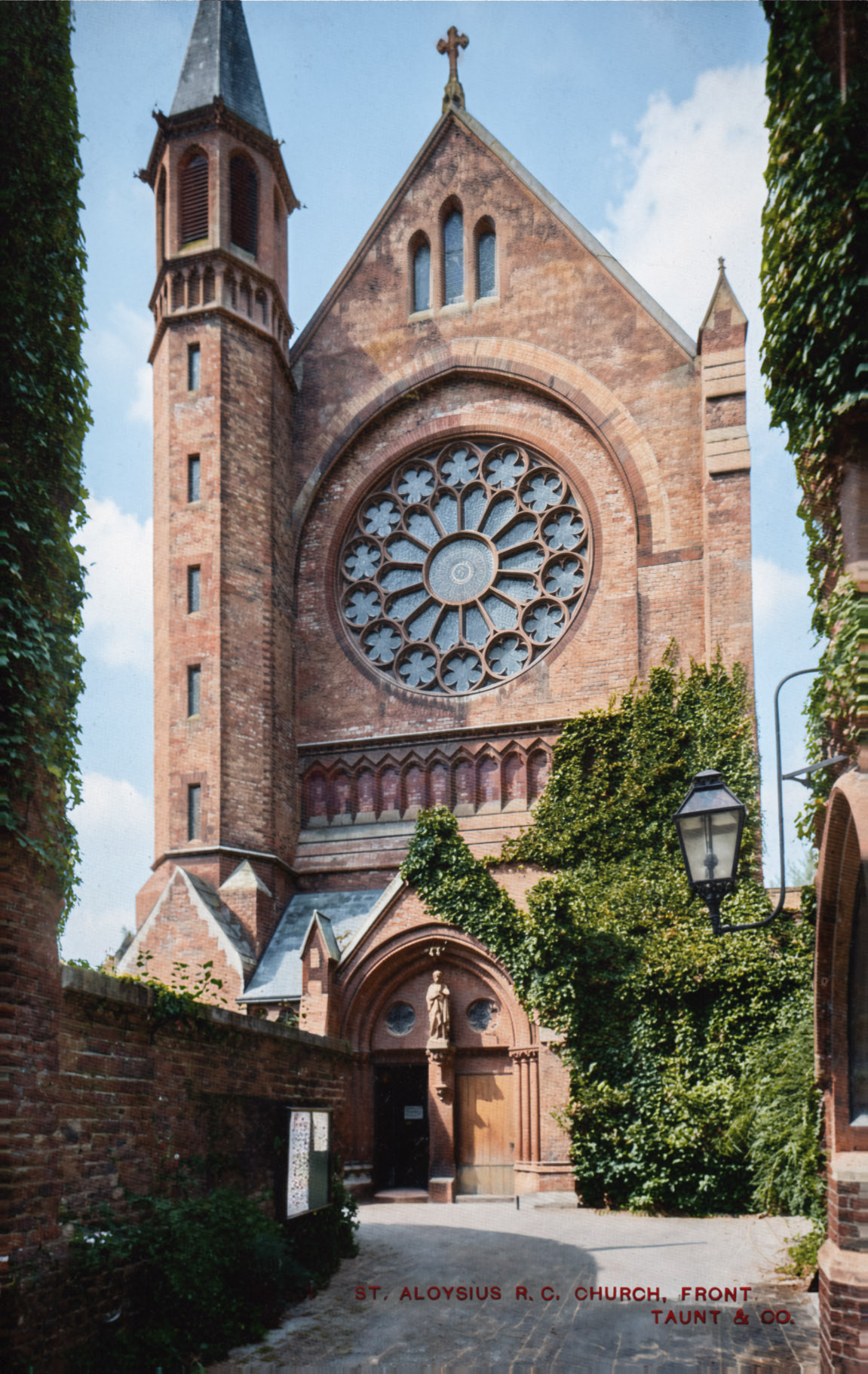
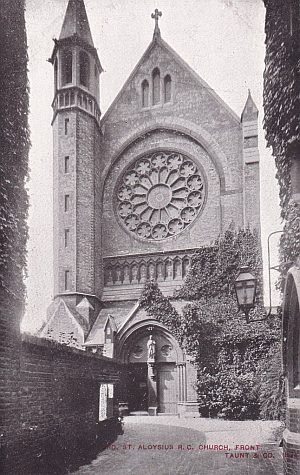
* Holly Ordway on “Tolkien and restoring the beauty of the Oxford Oratory” (Substack, but wholly free), which in Tolkien’s day was the Catholic parish church of St. Aloysius. Interior restoration has been underway since 2007, and this work moved into a major new phase in 2025…

“Although it has an unassuming brick facade [1875], the beautiful interior of the church would have been a visual delight to Tolkien, who loved intricate designs in the style of William Morris’s Arts and Crafts Movement. Indeed, he might well have noticed that the enamel, copper, and silver altar of the Lady Chapel was designed by Morris & Company. A double rank of statues of saints and angels curves above and to either side of the main altar; Tolkien would have observed among them his patron, St. John the Evangelist. […] St Aloysius is open for anyone to stop in, whether it’s for some quiet reflection in a beautiful space, to appreciate a place that was important in the life of J.R.R. Tolkien, for a bit of personal prayer or meditation, or to see what a reverently done Catholic Mass is like.”

Even better, Ordway states that this Oxford church now holds to the… “same Oratorian ethos that so deeply formed the young Tolkien”. The restoration target is £3.3 million, and donations are welcomed.

* I’ve restored and colourised this old postcard view of the entrance from the street to St. Aloysius. Judging by the look of the original, and the cultivation of arboreal growth, the view is probably contemporary with the young Tolkien.

* Amarillo Film Festival in Texas has screened the first finished 60 minute episode of The Forge of Friendship: J.R.R. Tolkien & C.S. Lewis, a planned five-part series. This is the fruit of some ten years of production, which has involved scores of interviews with scholars, and extensive re-enactment location shooting with costumed actors.

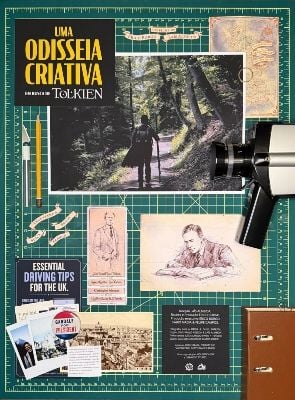
* From Brazil and currently screening there, the personal documentary travel film Em Busca de Tolkien: Uma Odisseia Criativa (2026) (‘In Search of Tolkien: A Creative Odyssey’).

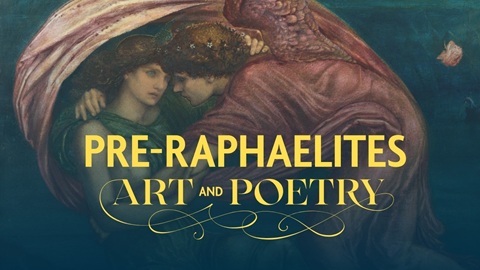
* In Newcastle in the north of England, the major loan exhibition Pre-Raphaelites: Art and Poetry is set to be… “the first large-scale exhibition to explore the connections between Pre-Raphaelite art and poetry”. Ticketed, with a substantial entry price. There is also a published catalogue. Runs from 17th October 2026 – 13th February 2027.

* The Oxford C.S. Lewis Society has posted the list of autumn 2026 talks. Among talks on Lewis, Williams and Benson, the talk “The Ring of Words: Tolkien and the OED — Twenty Years On” is set for 24th November 2026.

* “Oxford and the Rise of Fantasy Literature”, a residential summer school course at The University of Oxford from 28th June – 16th July 2027. Applications appear to be open.

* And finally, aspiring springle-ringers may appreciate a forthcoming event at the Weston Library of the Bodleian in Oxford, “A Day of 18th-Century Country Dance”, on Sunday 8th November 2026. Free, and booking now. A talk, a book launch, and three dance workshops. Also of tangential Tolkien interest — at the same venue and on the same day — is Plain Things: Wonders, an exhibition on the history… “of how paying attention to nature can make plain things into wonders”, 5th November – 29th August 2027.

Tolkien Gleanings #459

Tolkien Gleanings #459

* A new issue of the journal Mythlore is now online and freely available, the Fall/Winter 2026 issue. This includes, among other items…

   – “With Axe, Knife, Sting, and Tooth: The Enduring Wounds of Gawain and Frodo.”
   – “Dreaming of Bag End: The Hobbit and Medieval Dream-Poetry.”
   – “Oxford at War: ‘Leaf by Niggle’ as a Wartime Work, Part 1.”

Books reviews include, among others, a review of Tolkien’s Glee: A Reading of the Songs in The Hobbit and The Lord of the Rings.

* The Dwarrow Scholar has a new and long article on “Dwarvish Astronomy: Under Stone, Under Stars”.

* From the Oxford Tolkien Network, a new article on the preparations for the Tolkien Memorial at Westminster Abbey. Also, I note that their website says that the seminar talks have been put on hold… “In Michaelmas Term 2026, there will be no Tolkien seminar” presentations. But there will be one guest lecture.

* John Garth is now embarking on his Oxford Tolkien DPhil, researching “Myth-making and war from 1919 to the Atomic Era: Tolkien’s The Lord of the Rings in its time”.

* Holly Orway’s Tolkien’s Modern Reading: Middle-Earth Beyond the Middle Ages (2021) has just appeared in Spanish translation.

* The latest issue of the journal Fandom | Cultures | Research has a book review for The Politics of Fantasy: Magic, Children‘s Literature, and Fandom in Putin’s Russia (2025). The focus of the book is very much on Harry Potter and its franchise, but the reviewer notes in passing… “His analysis of how The­ Lord­ of­ the ­Rings prepared the ground for fantasy in Russia is strong”.

* Forthcoming from Bloomsbury in November 2026, The Ancient World in Rock Music: Playing the Classics in the 1960s and 1970s. Possibly somewhat Tolkien relevant is the chapter titled “Magic, Mythology, and Nostalgia in Marc Bolan’s Carnivalesque World”.

* A pre-print for the academic book chapter “Fear of the Forest: Cultural Xylophobia from Pliny to Proulx”.

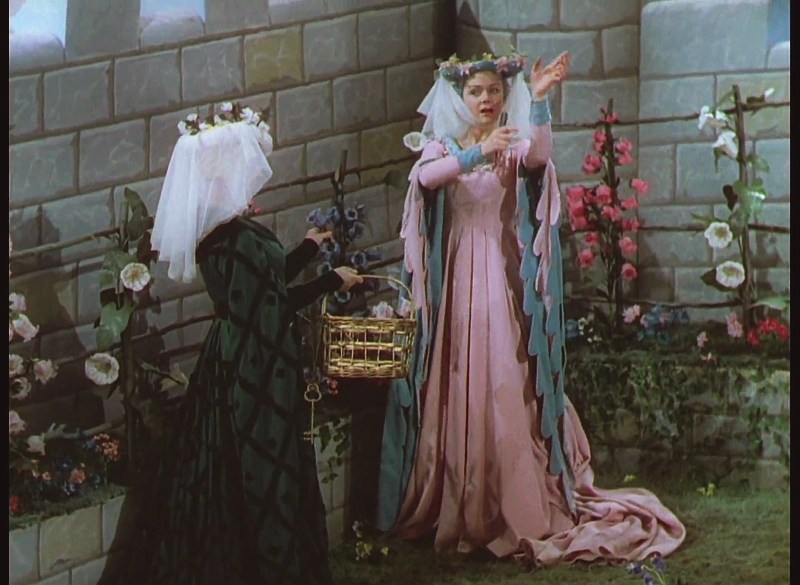
* And finally, I can add one more old use of the word “bilbo”. Many of the pre-Tolkien uses have of course been surveyed. Among others, by Mark T. Hooker in the lead essay in his essay collection The Hobbitonian Anthology. But I don’t believe the following item from England in 1599 has been noted before. Half way though Shakespeare’s well known play Henry V (1599) the audience encounters the English King’s future French wife, the young Catherine of Valois. She is in a castle garden, being taught the rudiments of English by her nurse. She repeats the body-part names she has just heard for the first time, and comically mis-names the elbow, e.g…

   KATHERINE: Ecoutez [listen]: d’hand, de fingre, de nailes, d’ arma, de bilbow.

She then mis-names it a second time, despite having been corrected the first time, for even more audience chuckles.

For a stage audience the word would have been heard as “bilbo”. Admittedly Tolkien was apparently rather averse to Shakespeare’s ‘history plays’, so it seems an unlikely unconscious source. But I thought I’d add it to the pile of “bilbo” possibilities.

New book: Alan Garner and the work of time

Just published, an academic book surveying the work of our local fantasy author Alan Garner, Alan Garner and the work of time (September 2026). Rather expensive, as academic books are these days. But here it is. Complete with a gloomy picture of local landmark Mow Cop, on the cover.

CONTENTS:

Introduction.

placeworntime.

Alan Garner and folk fantasy in The Weirdstone of Brisingamen.

The view from the vanishing point.

The melancholy matter of Britain.

‘Aback of everything’.

Dancing on the Edge.

‘We both look, but we see differently’.

Boneland.

Are you alright, Colin? Brisingamen to Boneland and back.

Strandloper, Treacle Walker and unified field theory.

Circles in the eternal.

Afterwords.

Stones, bones, Mr Garner and me.

Thin places.

Index.

Tolkien Gleanings #458

Tolkien Gleanings #458

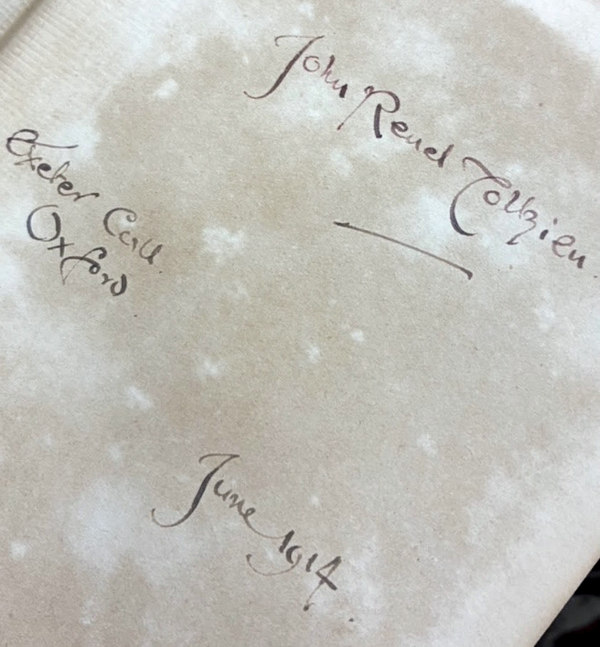
* Local newspaper the Stroud Times has “‘Unique’ J.R.R. Tolkien book from Oxford university days up for auction in Stonehouse”.

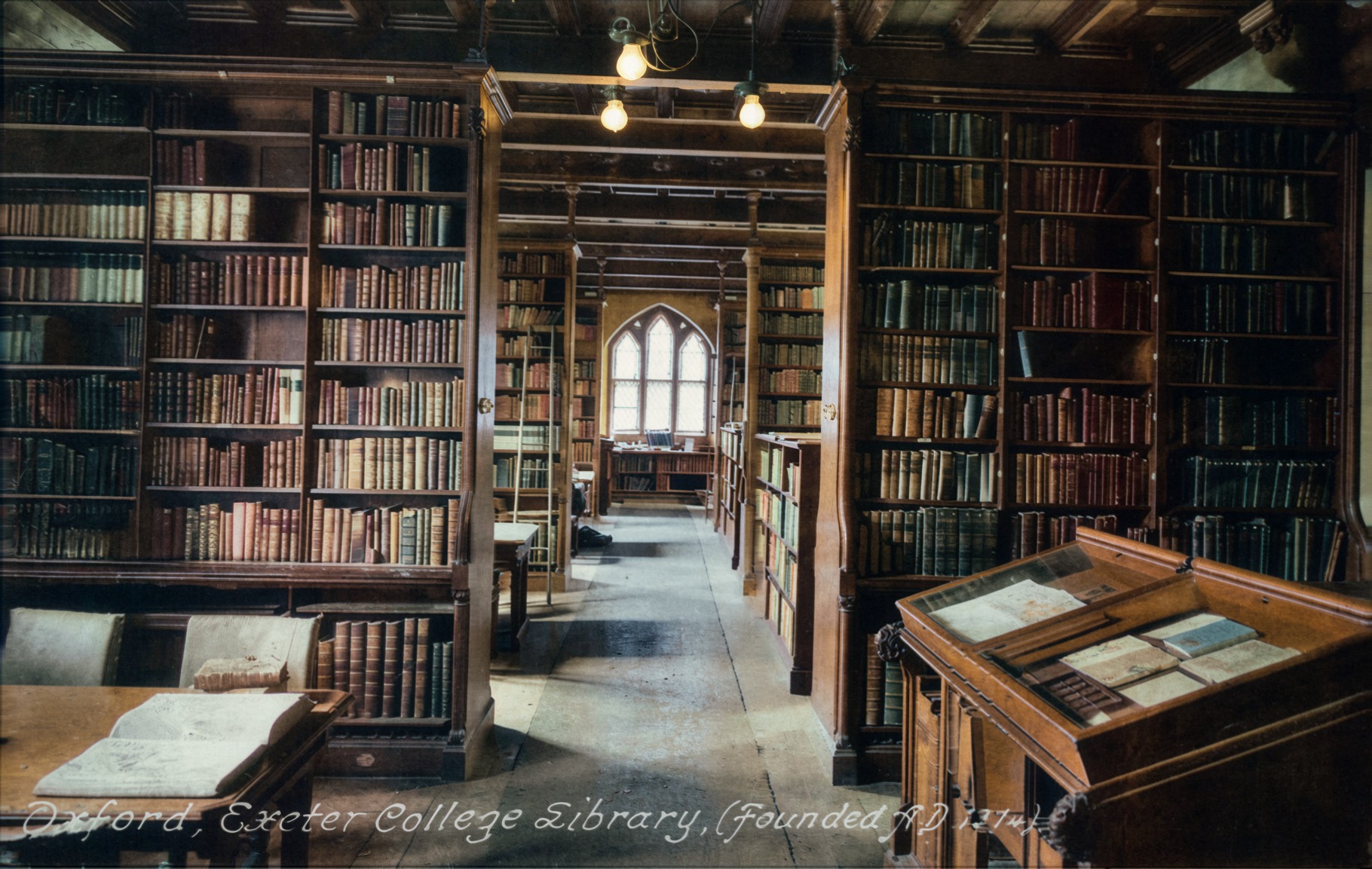
“The copy of The Wanderings of Peoples by anthropologist A.C. Haddon contains Tolkien’s handwritten ownership inscription, dated June 1914, when he was a student at Exeter College, Oxford.”

The book is not listed in the second edition of Tolkien’s Library. The firm dating of acquisition suggests that he read the book over the 1914 holidays, most likely as background reading for coming exams. If purchased new then the book would have been the second edition, published by Cambridge University Press in 1912. Haddon provided a short authoritative overview of the world’s ancient migrations as they were known in 1911, prior to DNA technology and modern archaeology. “Europe” is treated in ten pages. One wonders why Tolkien felt the need to own a copy, when the university surely had several copies of it?

* Pre-ordering now, Signum University’s documentary The Stories That Come To Us – A Conversation with Verlyn Flieger. The film premiered at Oxonmoot 2026, and there’s now a trailer on YouTube. The $10 pre-order page is online, but can currently offer no shipping date.

* Leo Carruthers of the Sorbonne discussed “L’Histoire de Kullervo”: laboratoire de toute l’oeuvre de J.R.R. Tolkien ? on Radio France’s France Culture, a few days ago. The programme asked if Kullervo could have served as… “a laboratory for the entire work of J.R.R. Tolkien”. Freely available online, but possibly region-blocked — the ‘play it again’ audio doesn’t play for me.

* From South America’s DLN, in English, the long and thoughtful article “The Unexpected Miracle: Tolkien’s Eucatastrophe as a Philosophy of Resistance for Modern Man and Society”. Freely available online.

* “Tolkien’s Notion of Fantasy, Creation, and the Anthropocentric in Tarkovsky’s Solaris”. Freely available online, albeit in an MDPI journal.

* British auction house Sotheby’s have the page “A Guide to Identifying J.R.R. Tolkien First Editions”, dated 8th October 2026. I seem to recall something similar earlier this year, but perhaps that was from another auction house? This page appears to be new.

* The latest Journal of Folklore Research Reviews has a long and detailed review of Fairy Encounters in Medieval England: Landscape, Folklore, and the Supernatural (2024). The reviewer notes that the book also covers material from Wales and Scotland. Freely available online.

* The conference on Tolkien’s invented languages has a hint at a date for 2028… “close to the beginning of August” and in Chartres, France. I see that their Arda Philology 8 (2025) is available, the volume being the 2019 conference proceedings. Articles include “‘Unrecorded’ Germanic: An Art-language for England”, among others.

* “How Did Hobbits Dance? Reconstructing Tolkien’s springle-ring”.

* And finally, talking of vigorous springle-ringing… the British version of the Brandywine Festival now has 2027 dates. The festival will return to Shropshire from 9th-12th September 2027.

Brake pads for the Apollo Phaze

As the darker wetter mornings once again sweep into the British Isles, it’s time for bicycle fixing-up and winter lubricating.

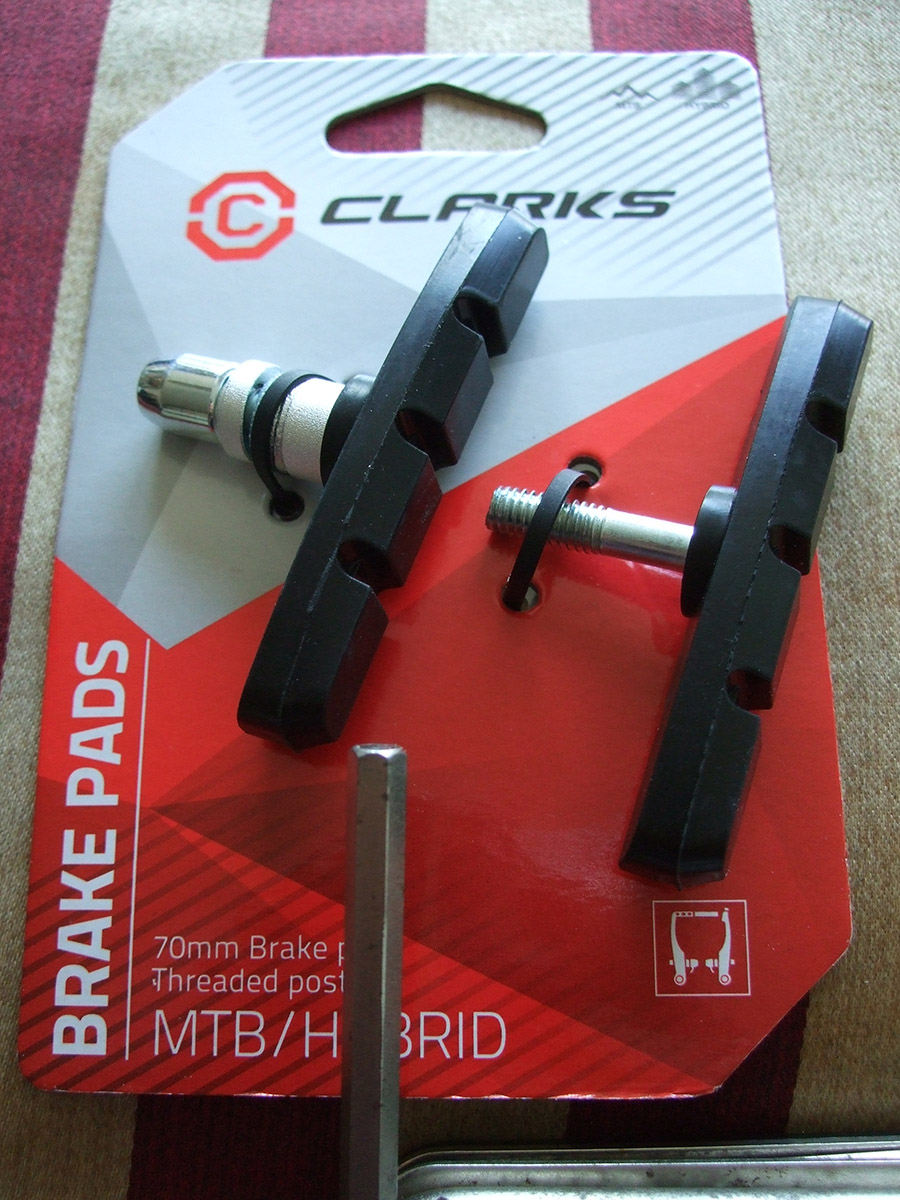
But… which replacement brake pads for a Halfords Apollo Phaze? I couldn’t discover this from the official manual, or from online sources. I did have what I thought were some replacement pads, from an older bike, but it turned out that the steel posts on them were too thick for the slots on the Phaze.

Go Outdoors had run out of pads today, so fortune took me tromping up the hill to Halfords itself. And there the helpful chap at the bike bay was able to point me to these on the fully stocked racks, as perfect for the Apollo Phaze… Clarks 70mm brake pads / threaded post/ Mtb / hybrid, where ‘Mtb’ stands for mountain bike.

The tool needed for fitting is seen sticking up in the picture. You may also need the same-but-thicker tool to get your old pads off, if the old ones have a larger holding nut. But most Swiss Army-style bike-tool sets should have both tools.

Not all the nuts and washers that fit onto the new steel post will be needed. In order to get my new brake pads on, with space between the wheel and the pad, I needed to leave one off.

Hopefully this information will help someone in the same situation, at some point in the future.

Tolkien Gleanings #457

Tolkien Gleanings #457

* New in the latest rolling Journal of Tolkien Research, the article “Ornamental Letters in Tolkien’s Manuscripts”, which makes comparisons with medieval lettering.

* A new book in Italian by Gianfranco de Turris, to be published as an ebook in a few days, Il Professore Che Amava i Draghi: Miti e simboli in J.R.R. Tolkien (2026) (‘The Professor Who Loved Dragons: Myths and Symbols in J.R.R. Tolkien’)…

“This book brings together 31 of his texts — including articles, prefaces, essays, miscellaneous writings, and, in the appendix, an ironic play aptly titled Teatrino Tolkieniano, all published between 1979 and 2026, along with a complete bibliography of his writings on Tolkien from 1968 to the present.”

* And forthcoming from France, with a November 2026 release date, Michael Devaux’s 640-page J.R.R. Tolkien et la foi: La consonance chretienne de la Terre du Milieu (‘J.R.R. Tolkien and Faith: The Christian Undertones of Middle-earth’). Not yet listed on the Editions Salvator website.

* From Russia, the journal article “Dreams In The Lost Road And The Notion Club Papers” (2025). English abstract and bibliography, Russian PDF. Freely available for download.

* From Ukraine, the short conference paper Inhabiting Middle-earth: The Evolution of Howard Shore’s Musical Worlds in The Two Towers (2026). In English, and freely available online.

* On Reddit, “I visited the birthplace of J.R.R. Tolkien in Bloemfontein. It is now a guesthouse called the Hobbit Hotel”.

* The Mythopoeic Society’s domain www.mythsoc.org appears to be gone, and the whole site is now “403 Forbidden”. Access through a VPN was also tried, with the same result.

* Of possible interest to Gleanings readers, an excellent local freeware Windows copy-editor and proof-reader, which can handle 60,000+ words easily. Tested by myself, and I find it checks a novel in about an hour and also interfaces very nicely with Microsoft Word. Forbidden to the anti-AI zealots, obviously, but many will welcome such tools.

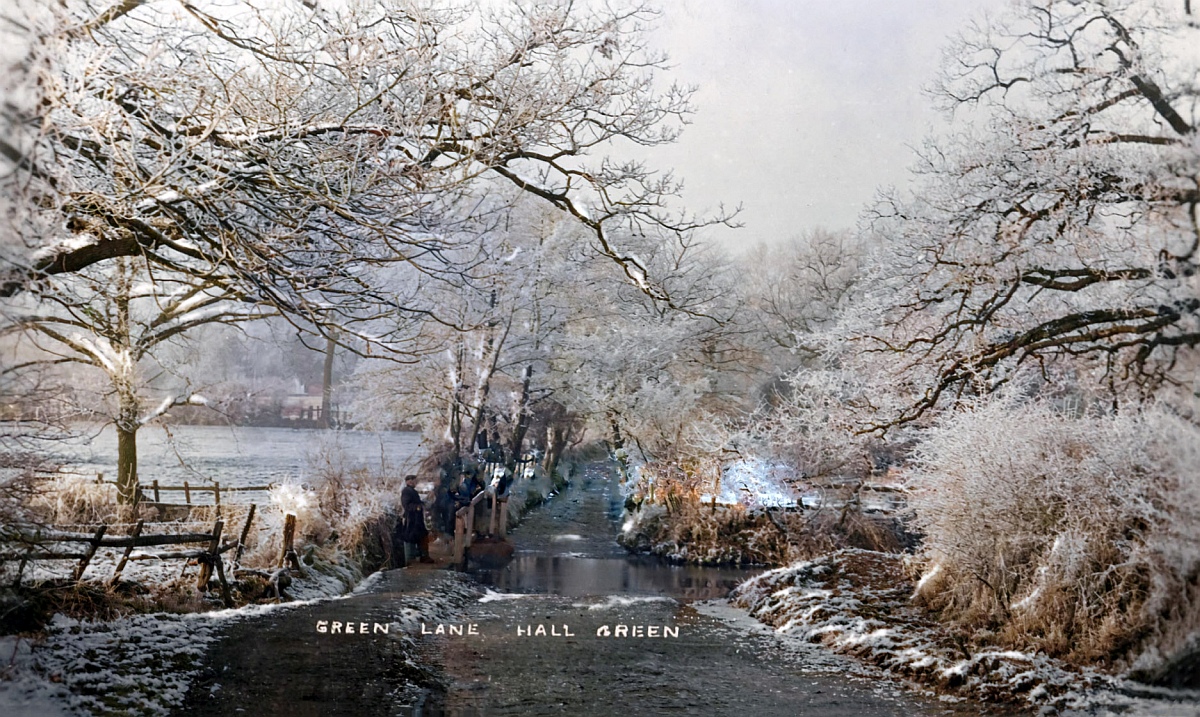
* And finally, newly on eBay, a picture of the ford on the Green Lane (one of the entrances to Sarehole, Birmingham) as seen in winter. On a postcard postmarked February 1910, thus it was likely photographed 1909 or 1910 — and thus is seen much as the young Tolkien brothers would have known it in winter. Here restored and colourised.

On the buses

A nice move, albeit one which should have been done decades ago. Stoke-on-Trent old age pensioners now get free bus travel all day and night, any day. Previously their free bus travel was restricted to certain times. The catch is that it’s still restricted in part, to “participating Stoke-on-Trent bus services” and companies.

Tolkien Gleanings #456

Tolkien Gleanings #456

* From the University of Sao Paulo, Brazil, their third scholarly book on Tolkien. Down from the door where it began: 70 years of the Lord of the Rings (2026) is this time in English, and follows Portuguese volumes issued in 2019 and 2021. All freely available in Open Access, as is the way in South America.

2019 had, among others (titles translated)…

   – Tolkien and His References.
   – Wystan Hugh Auden, Reader of Tolkien: Heroic Quest, Realism, and Imagination.
   – Lexical Choice and Stylistic Expressiveness in The Lord of the Rings.

2021 had, among others (titles translated)…

   – The Construction of J.R.R. Tolkien’s Public Figure as a Monument.
   – The Philologist and His Boy: Christopher Tolkien, Co-author of Middle-earth.
   – “The Lay of Aotrou and Itroun”: Celticism and Memory in Tolkien’s Works.
   – Celebrating Christmas in England: Dickens, Tolkien, and the Christmas Spirit.

2026 has, among others (in English)…

   – More Hobbits: The Critical Reception of The Fellowship of the Ring.
   – The Middle-earth Manuscripts: Pseudotranslation as a Creative Foundation.
   – Christopher Tolkien’s Calligraphy in The Lord of the Rings.
   – Understanding Medievalism Through J.R.R. Tolkien’s Legendarium.

* The Introduction and Bibliography from the new book Management Lessons from The Lord of the Rings – Organization Theory, Leadership and Sustainability on Middle-earth (2026) are freely available online. There is no Kindle ebook with ‘10% free’, so this appears to be the only way to read the Introduction.

* Thoughts on Tolkien considers books recently read, or newly arrived on the doorstep. He notes…

“Tolkien’s edition of The Old English Exodus is a very important text in Tolkien-studies that was often overlooked. Thankfully, now that it is available in the second Myths and Legends box set and more widely available, it will hopefully become a source for renewed and in-depth studies by Tolkien scholars and fans.”

* Pencilled in for a Christmas 2026 release, the book Tolkien Ludens: Narrative, Myth, and Play in Middle-earth.

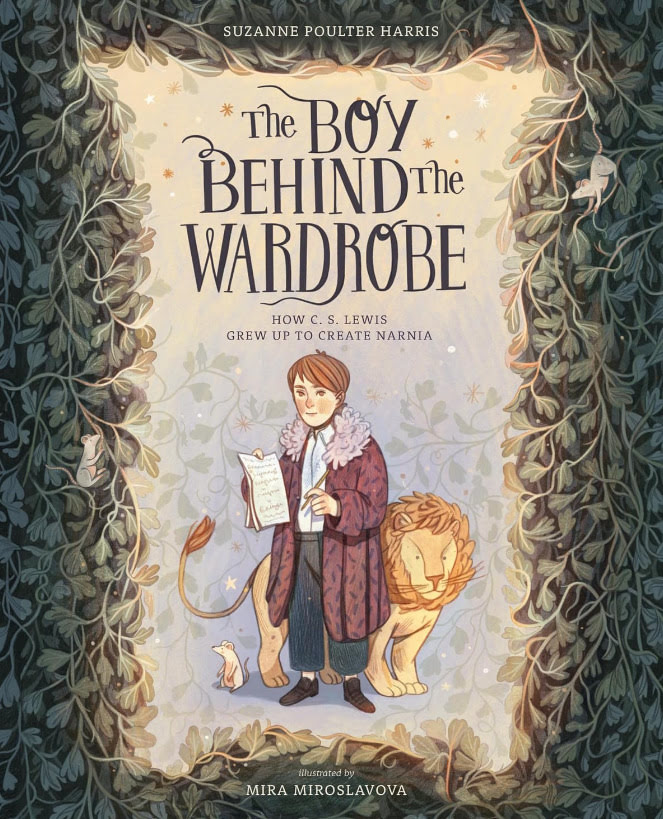
* Due in a few weeks, the illustrated young children’s book The Boy Behind the Wardrobe: How C.S. Lewis Grew Up to Create Narnia (2026).

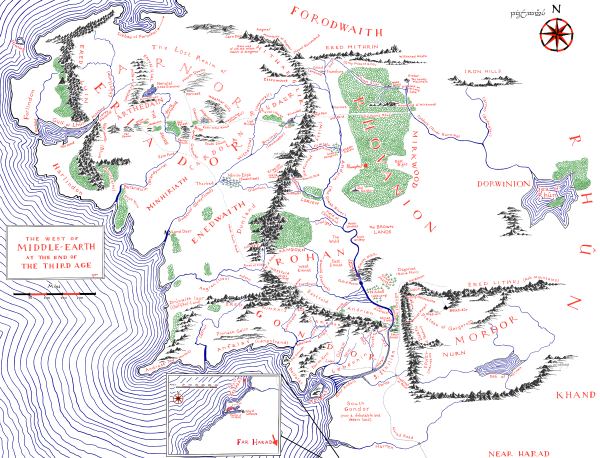
* And finally, a fine new hand-drawn remake of the Lord of the Rings map. Freely available online, as a 25Mb 300dpi .JPG file. The size is such that a wall-map should be able to be printed, which might make for an interesting school project – how to print a wall-map without a huge wall-sized printer.

Tolkien Gleanings #455

Tolkien Gleanings #455

* Hammond & Scull have issued their latest Addenda and Corrigenda. Including a lengthy page of corrections for The Collected Poems of J.R.R. Tolkien.

* Fine Books, on a forthcoming auction 1963 Tolkien letter which has a mention of the word ‘cram’ as found in “Perry-the-Winkle” (The Adventures of Tom Bombadil)… “Cramsome” is merely hobbitese for “filling” (Tolkien). The auctioneers at the Swann Galleries elaborate further. Their statement that cram was not in 1963 “in common use by English speakers” is true, yet at that time it would still have been understood at private schools and some universities — in which lax students would have to “cram” for their exams. I would imagine one could also find it still in use in the school-story based weekly comics of the time, in that context, and of course in the Molesworth books which were widely read by children. Swann do usefully dig up the following, which suggests that Gimli’s “cram” was possibly a nod to an English Bible produced only five years after the writing of Sir Gawain and The Green Knight…

“In a 1382 edition of the Bible (according to the Oxford English Dictionary), “cramcake” is used to mean a kind of pancake.”

Specifically in the famous Wycliffe Bible, in “Exodus”. There is also a possible food reference in the Ancrene Riwle which Tolkien would have had to investigate, “Gif heo mei sparien eni poure shreaden [shiue]” (“If she might spare me a poor shred”), perhaps implying some form of tear-able and share-able plain cake.

* Artist Matej Cadil considers “Service, Sacrifice, and the Artist’s Calling in Leaf by Niggle”.

* Elfenomeno on “The Hobbit illustrated by Maurice Sendak: the edition that never existed”.

* The Catholic magazine The Tablet has the article “Memorial to J.R.R. Tolkien to be unveiled in Westminster Abbey”. Appears to be free online.

“Stephen Broadbent of Broadbent studio in Chester designed the memorial depicting a tree in a forest […] It will be fashioned by a team including designers, artisans and engineers from Silverlining Furniture in Wrexham.”

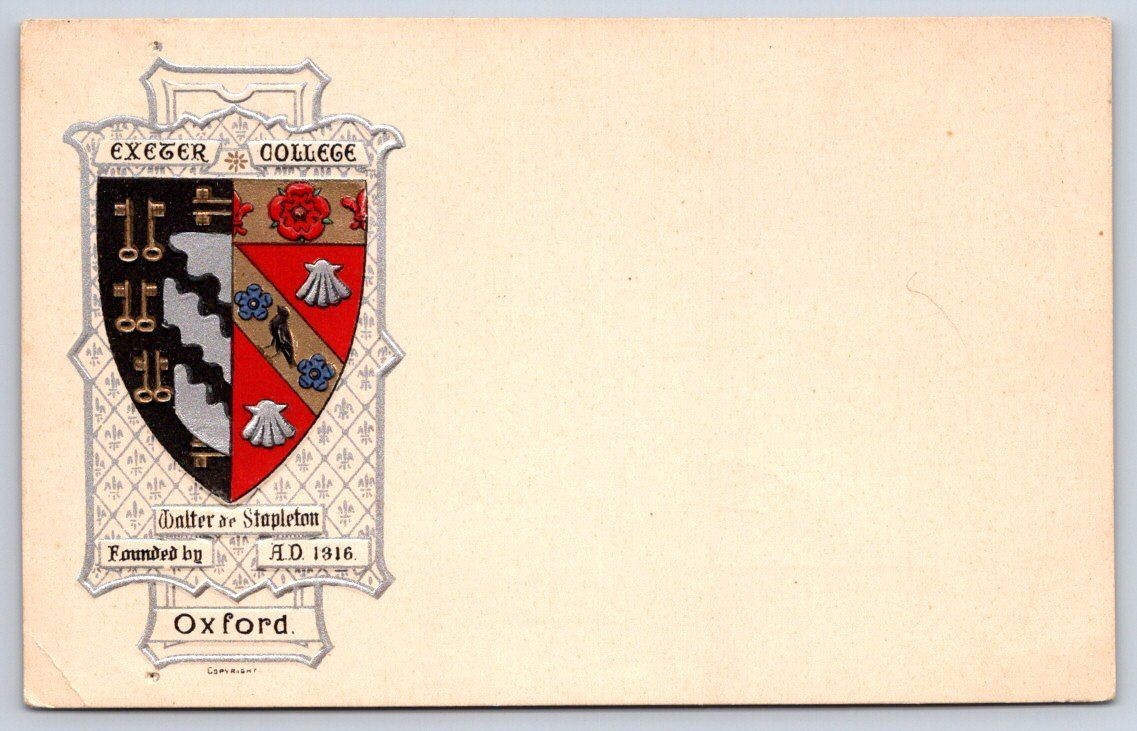
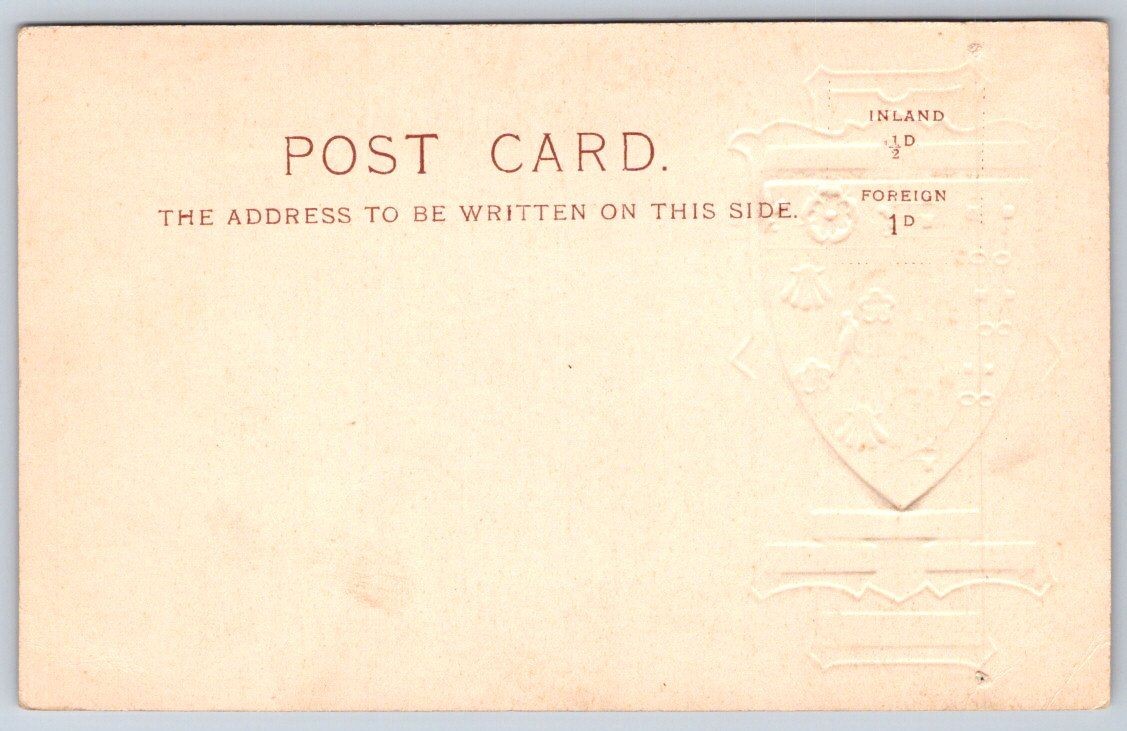
* And finally, on eBay, a vintage postcard with a fine embossed rendering of the arms of Tolkien’s Exeter College. Bird, key and shelled molluscs, hmmm… now where have I seen Tolkien use that combination before? And those wavy lines might be interpreted as moonlight.

The post rate for a postcard was ½d until 1918, so this is presumably pre-1918.