The early years of Jodrell Bank Radio Telescope – in colour

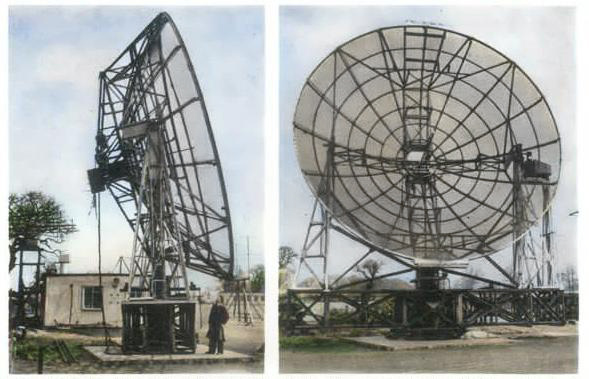
The early prototype for the steerable ‘big dish’ telescope, possibly circa 1950.
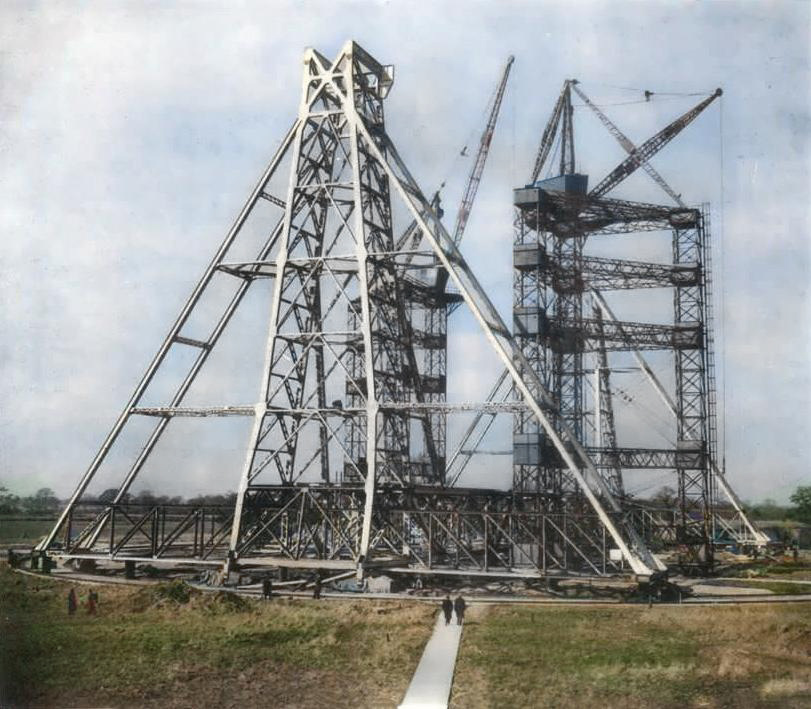
Building the tower-arms, early 1950s.
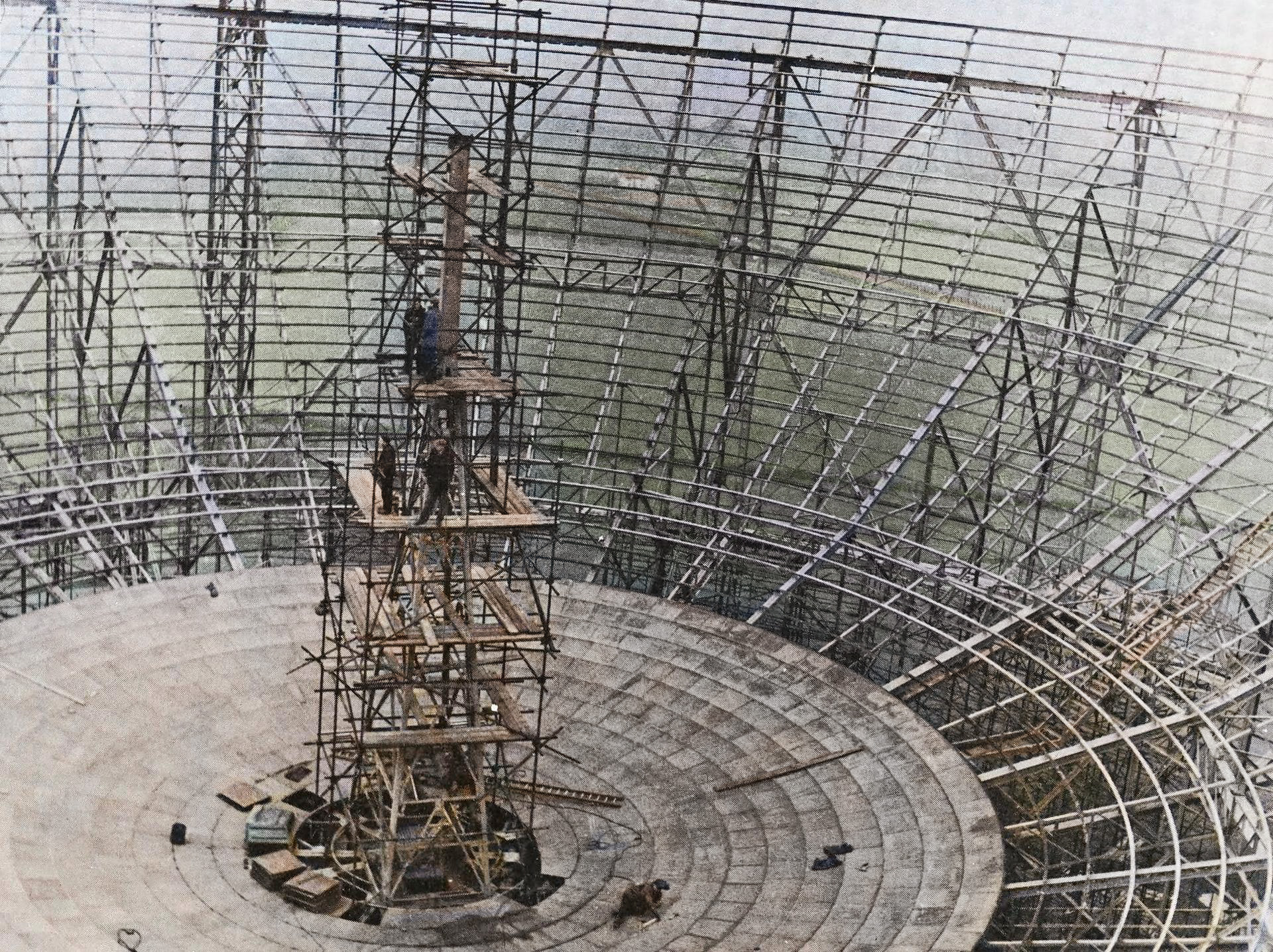
The telescope under early construction, mid 1950s.
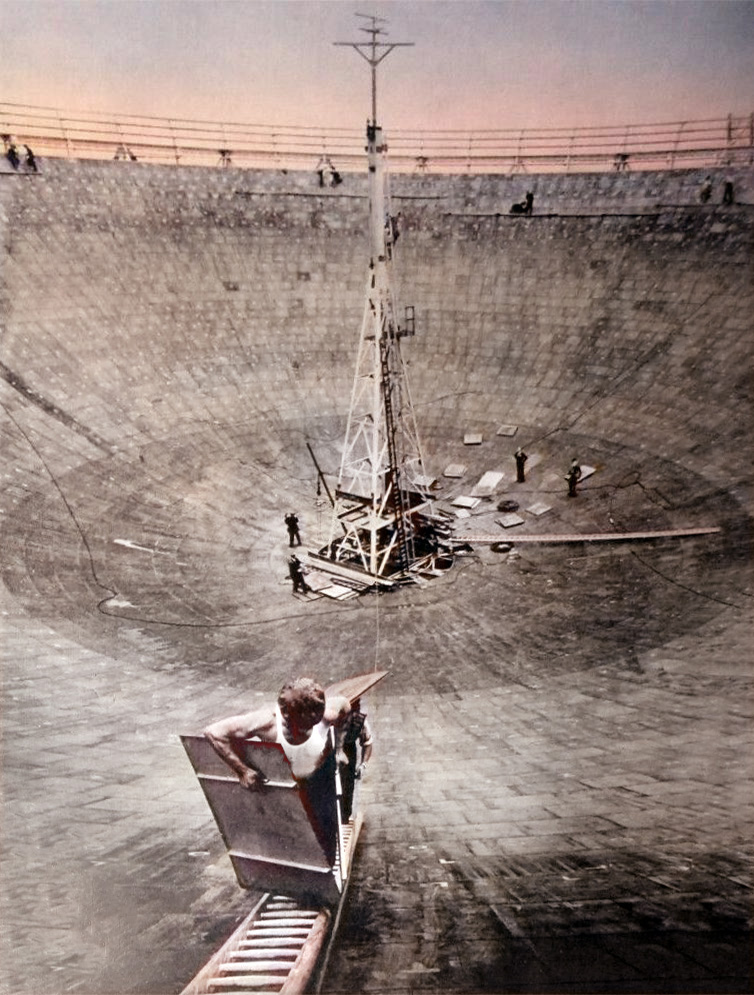
The telescope dish under construction, mid 1950s.
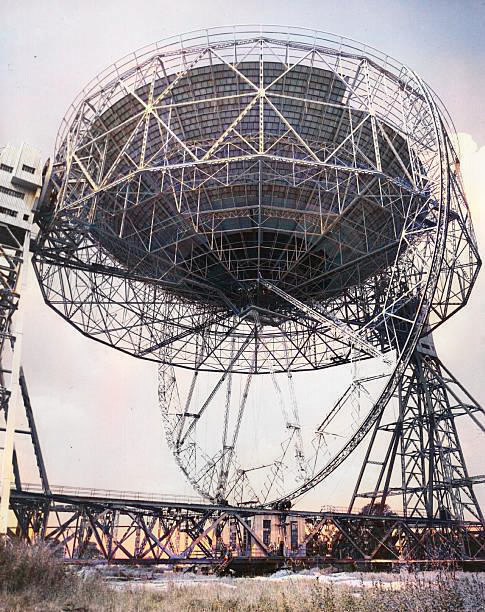
The telescope frame and dish begins to take shape, though still under construction.
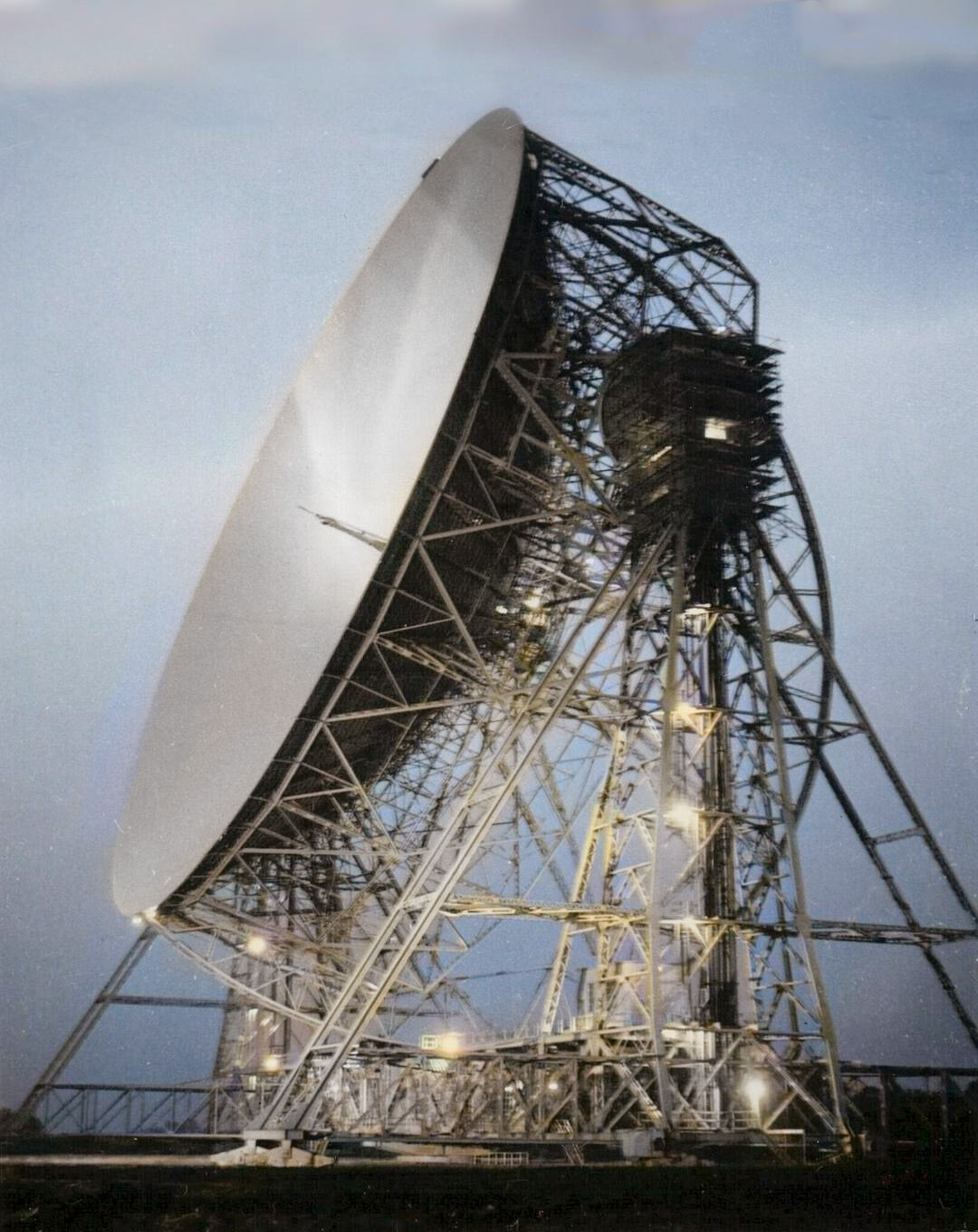
The completed telescope stands ready at dusk.
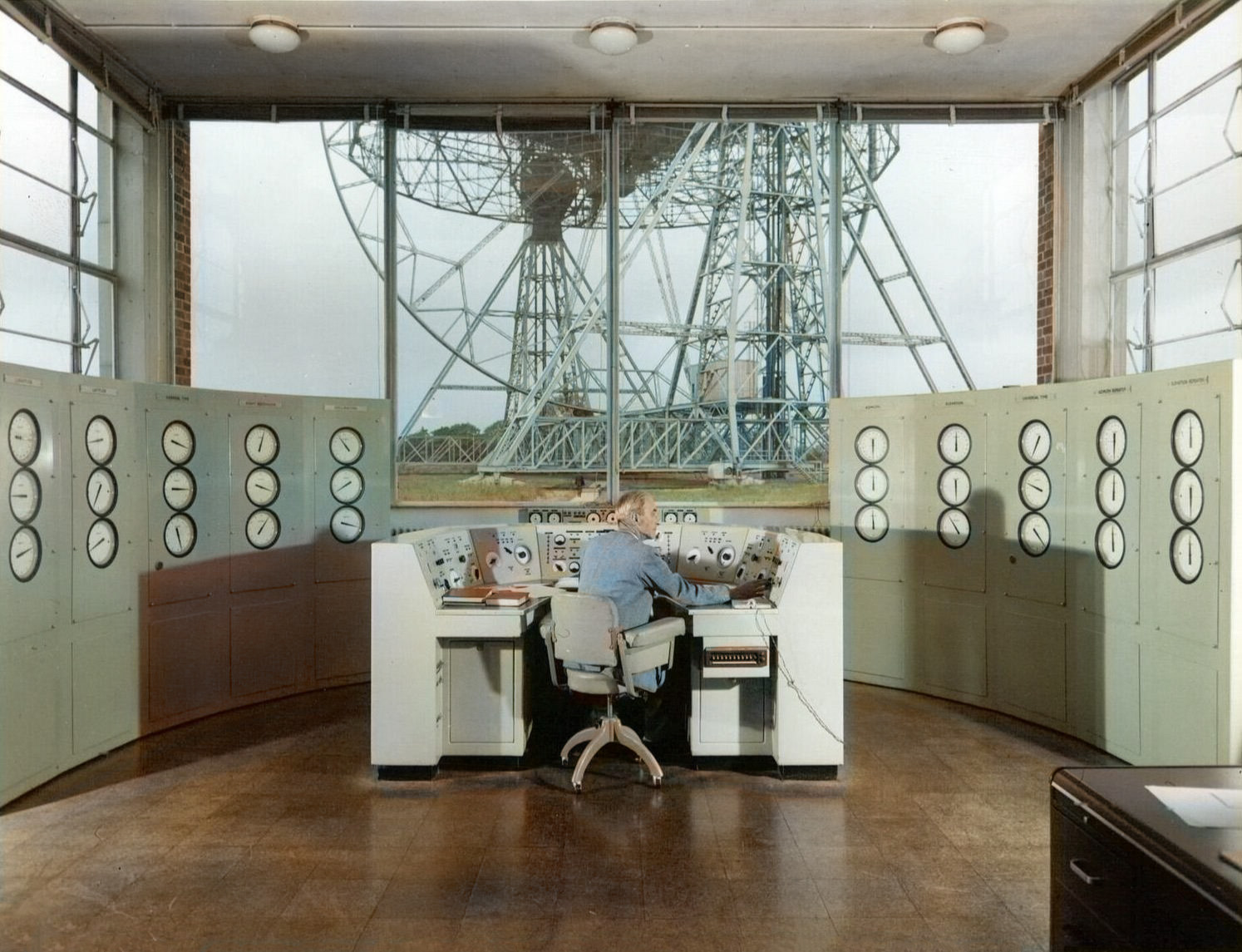
Sir Bernard Lovell, the project’s master-mind, turns on the power.
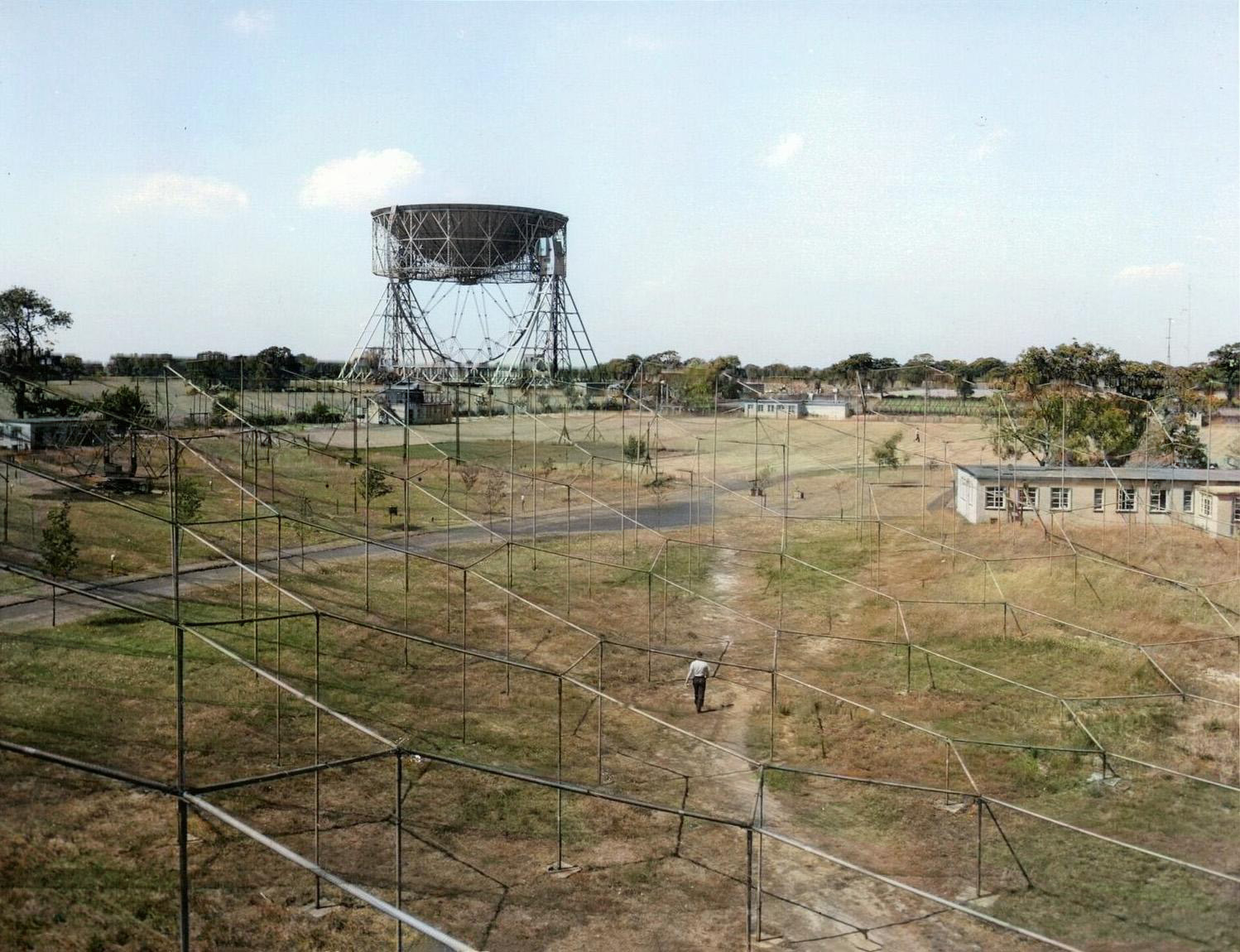
A growing advanced-research station on the Cheshire Plain, by the late 1950s.
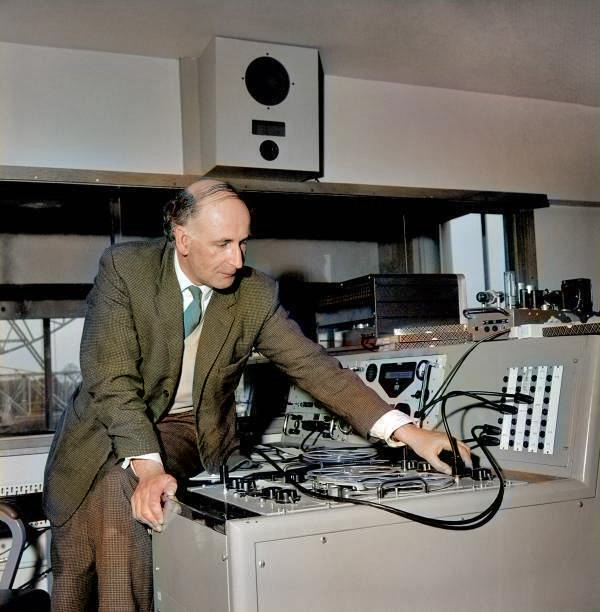
Sir Bernard Lovell, head of the project.
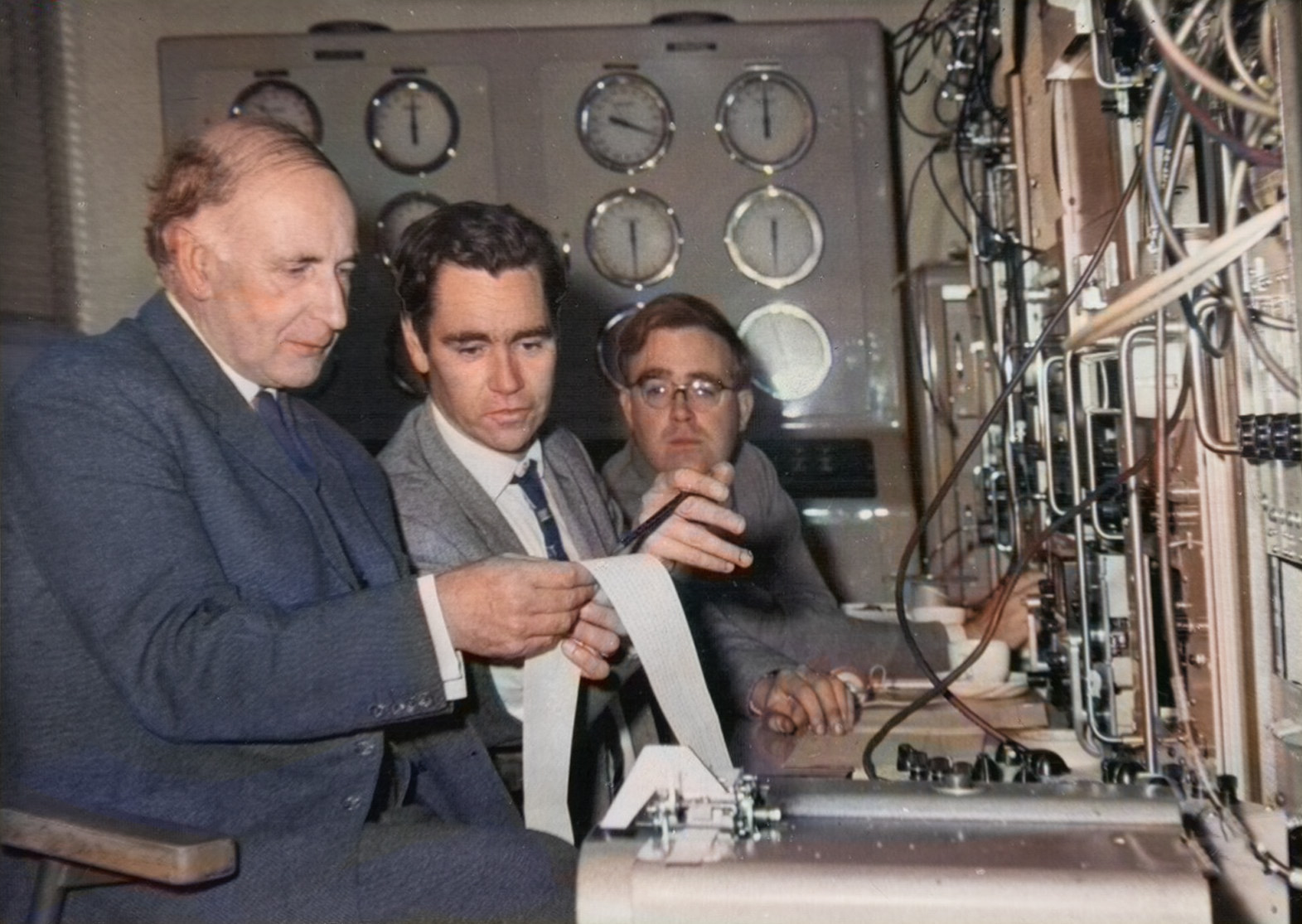
Sir Bernard Lovell, examining data on paper tape. In those days punched and graphed paper-tape was the most efficient way to stream and record massive amounts of data from the stars. Possibly mid 1960s.
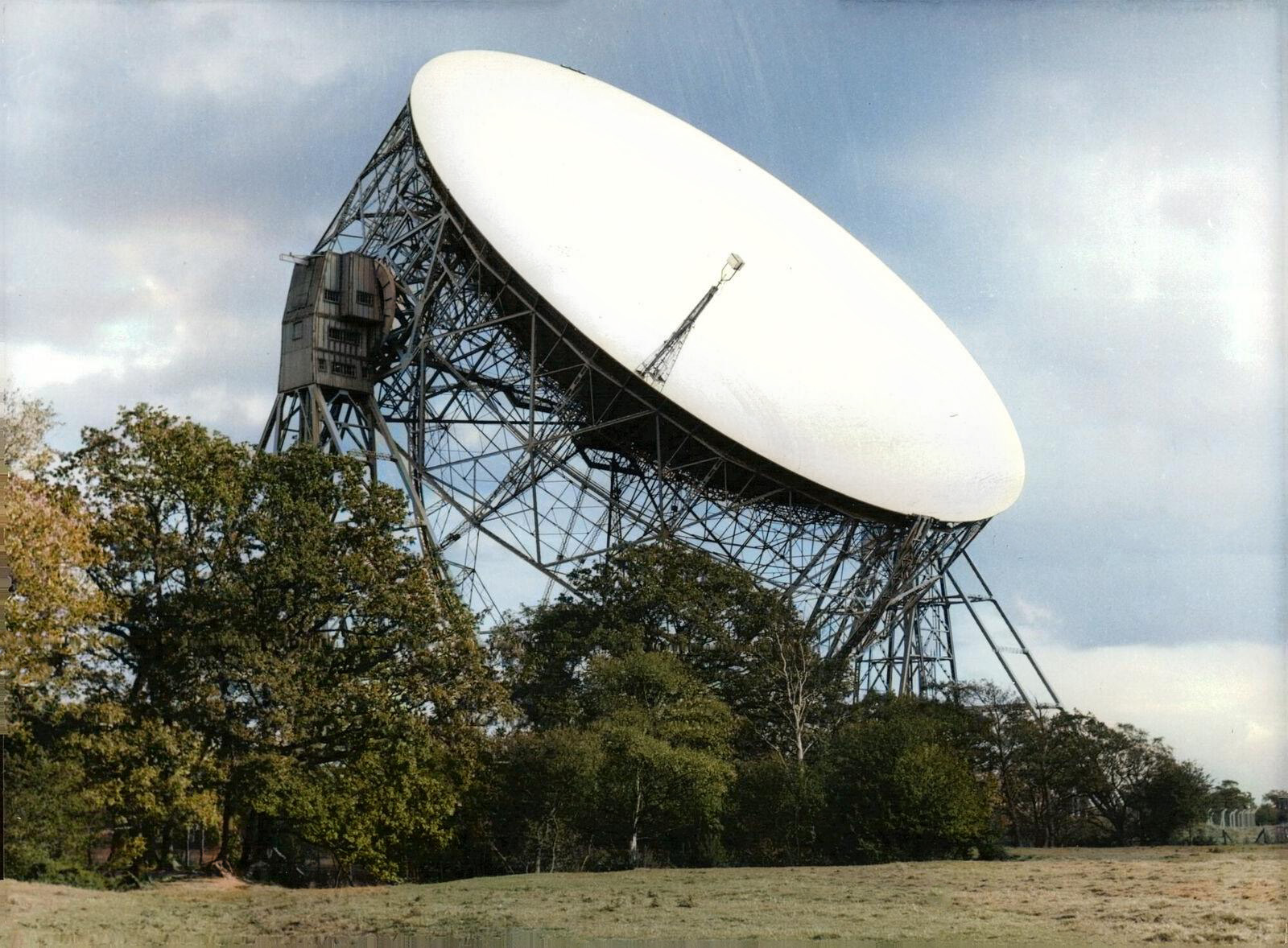
The giant dish becomes a local landmark in the countryside.
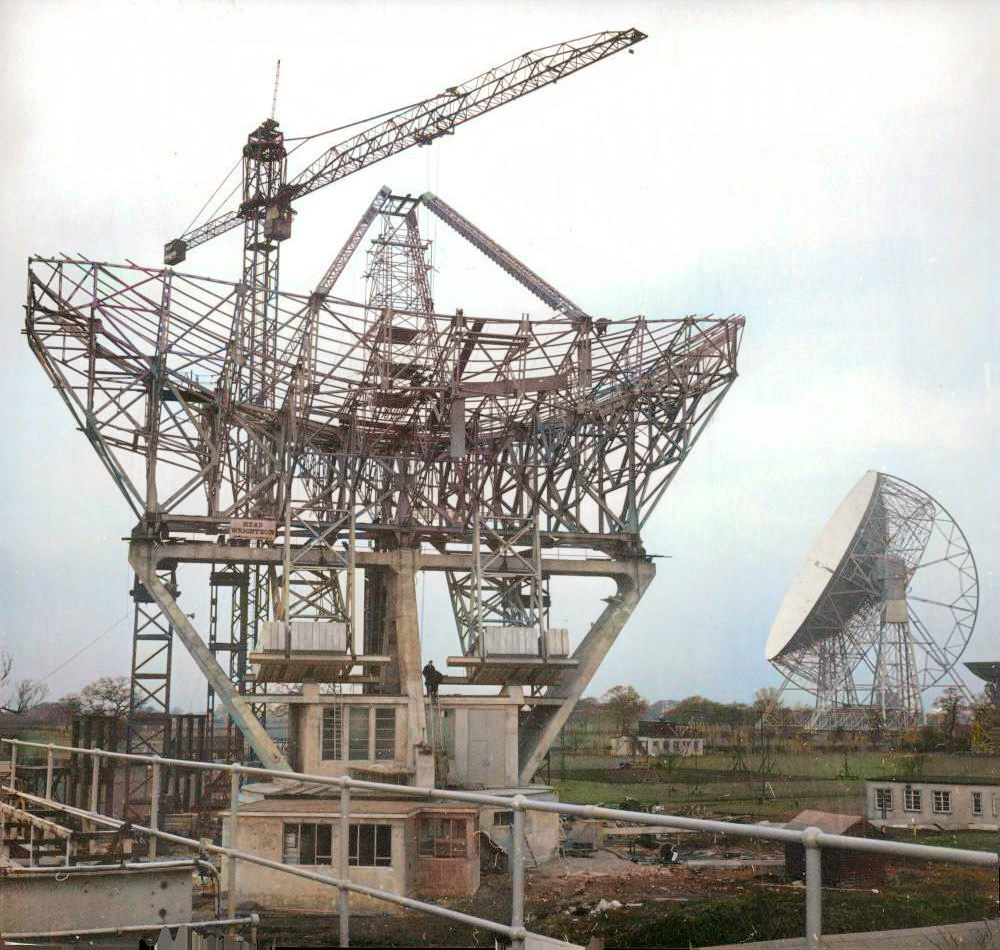
In the 1960s, new additional telescopes.
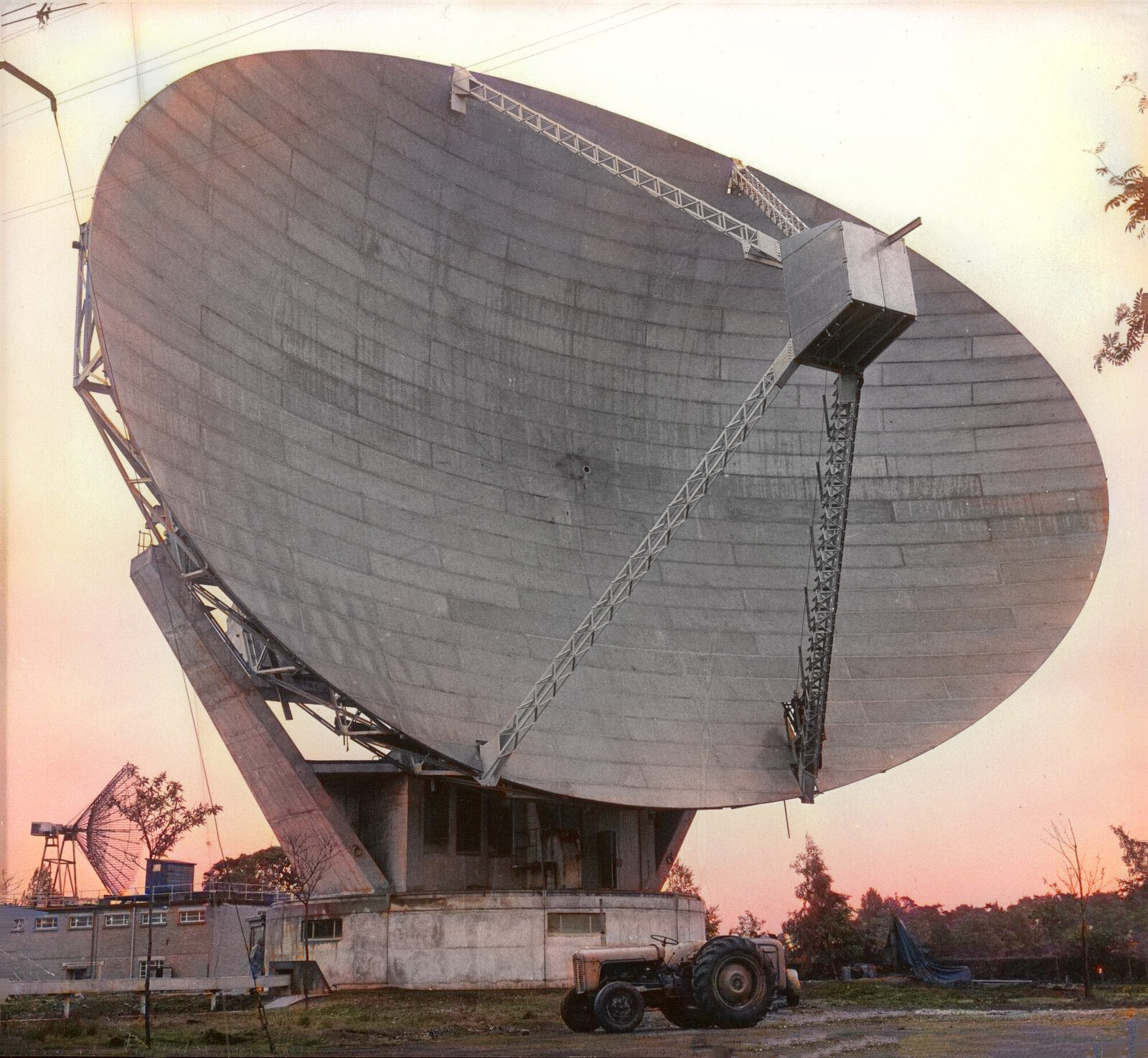
In the 1960s, new additional advanced radio telescopes.
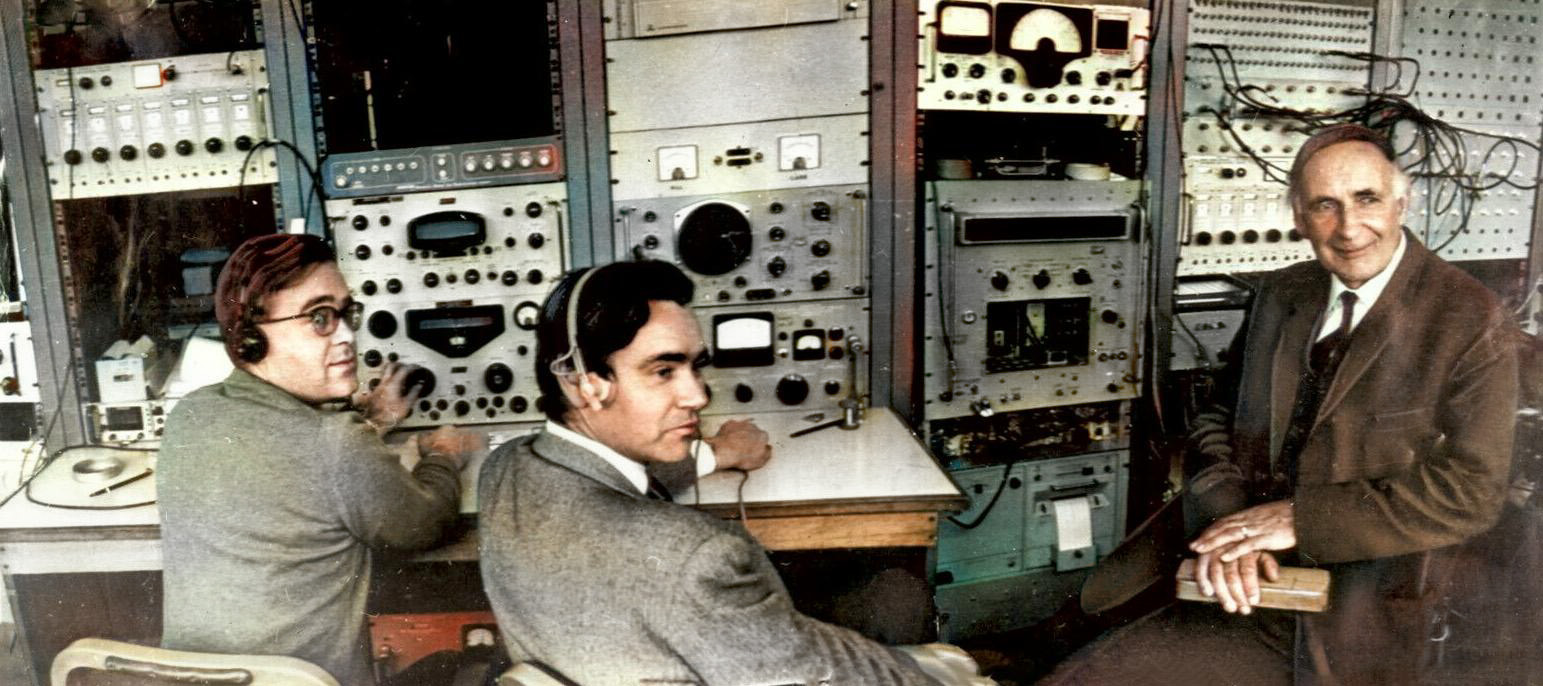
An older Sir Bernard Lovell and others, listening for messages from a Venus probe in the 1960s. Even aged in his 90s, he was still going into Jodrell every work day.
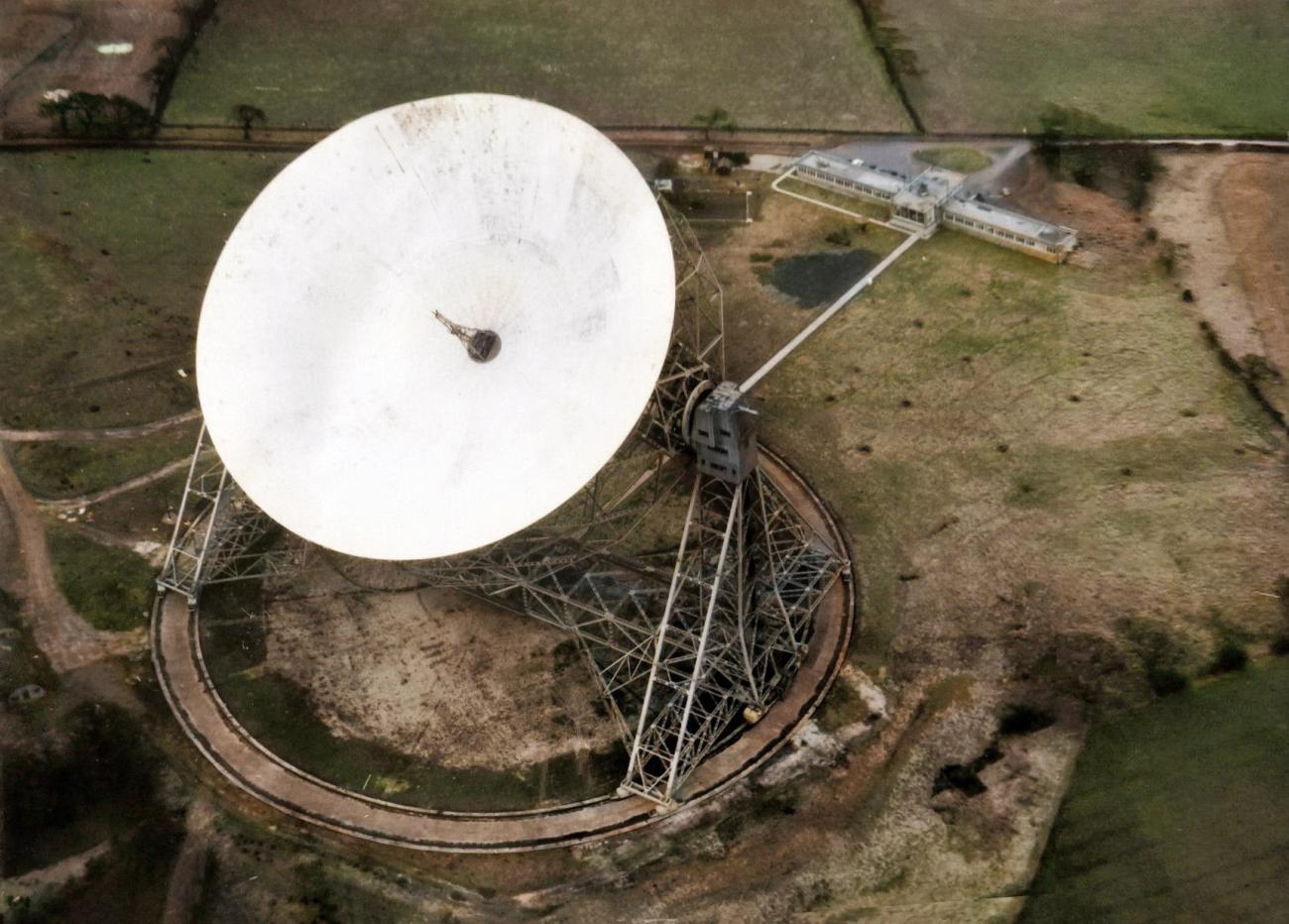
Early layout with control buildings. Very little fencing (pre IRA terrorists) or cars.
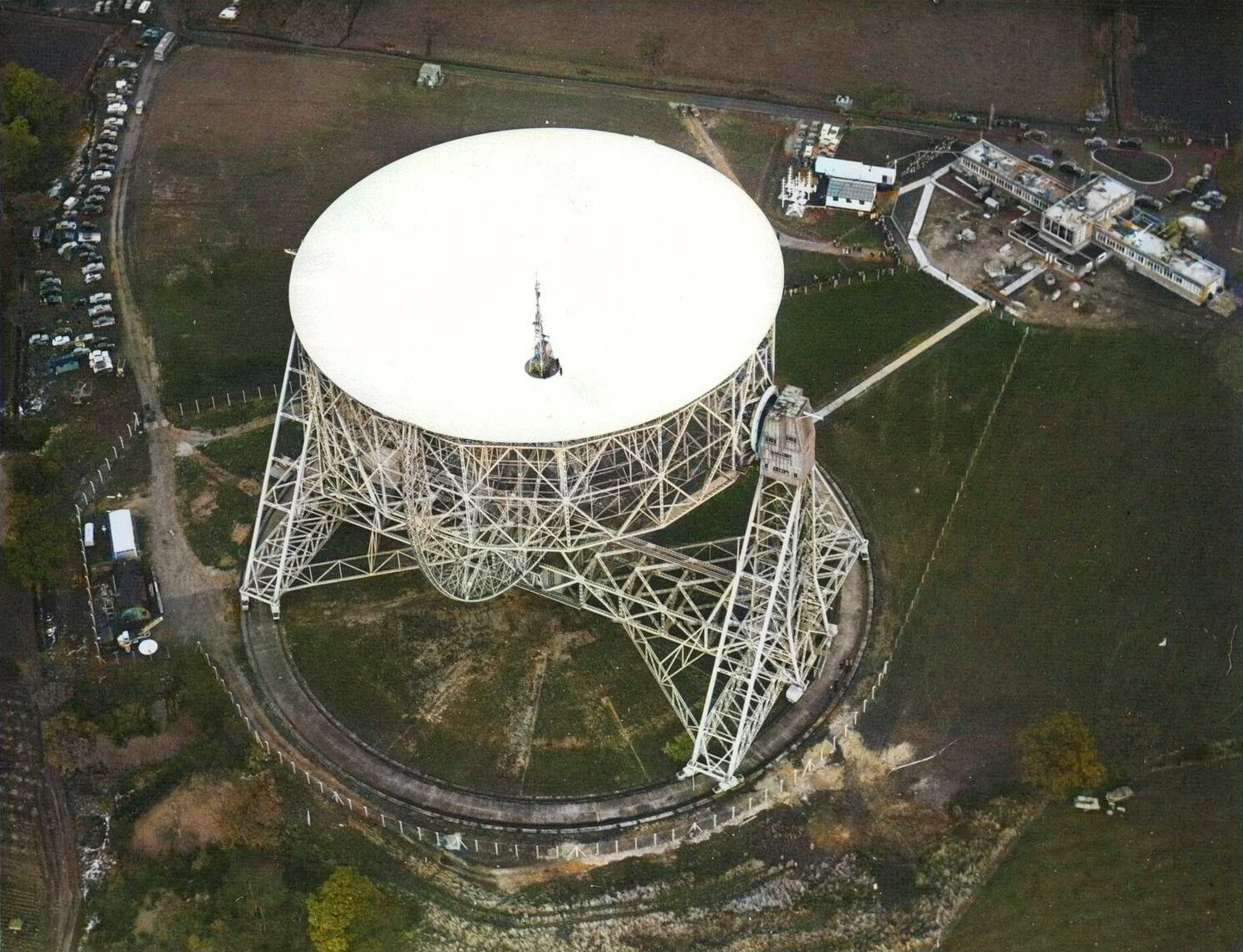
Later layout. By the late 1960s, with the first Space Race well underway, the place was becoming something of a tourist destination as well as a growing and widening research centre stretching out around the giant telescope. This mix continues today, in public events such as the sci-art Blue Dot Festival which returns in summer 2023.
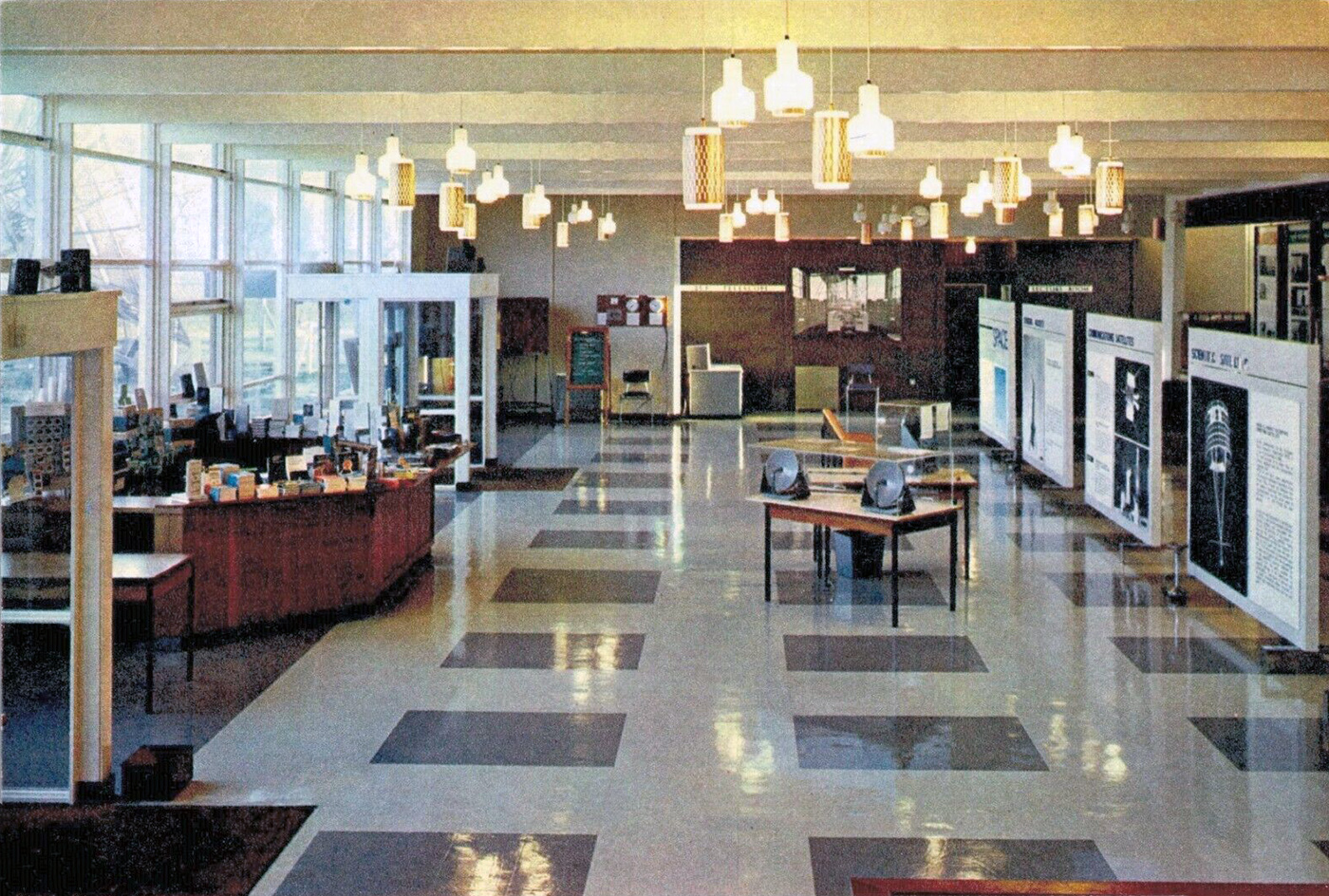
Throughout the late 1960s and into the 70s, the small but fascinating visitor centre helped to enthuse the new young ‘Space Race’ generation — who were already well enthused by the manned Moon missions and by humanity’s pioneering exploration of the Solar System. In 1971 a new Planetarium was added. I remember the visit well, and especially the reels of punched data-tape — some of which interested children were allowed to take home.
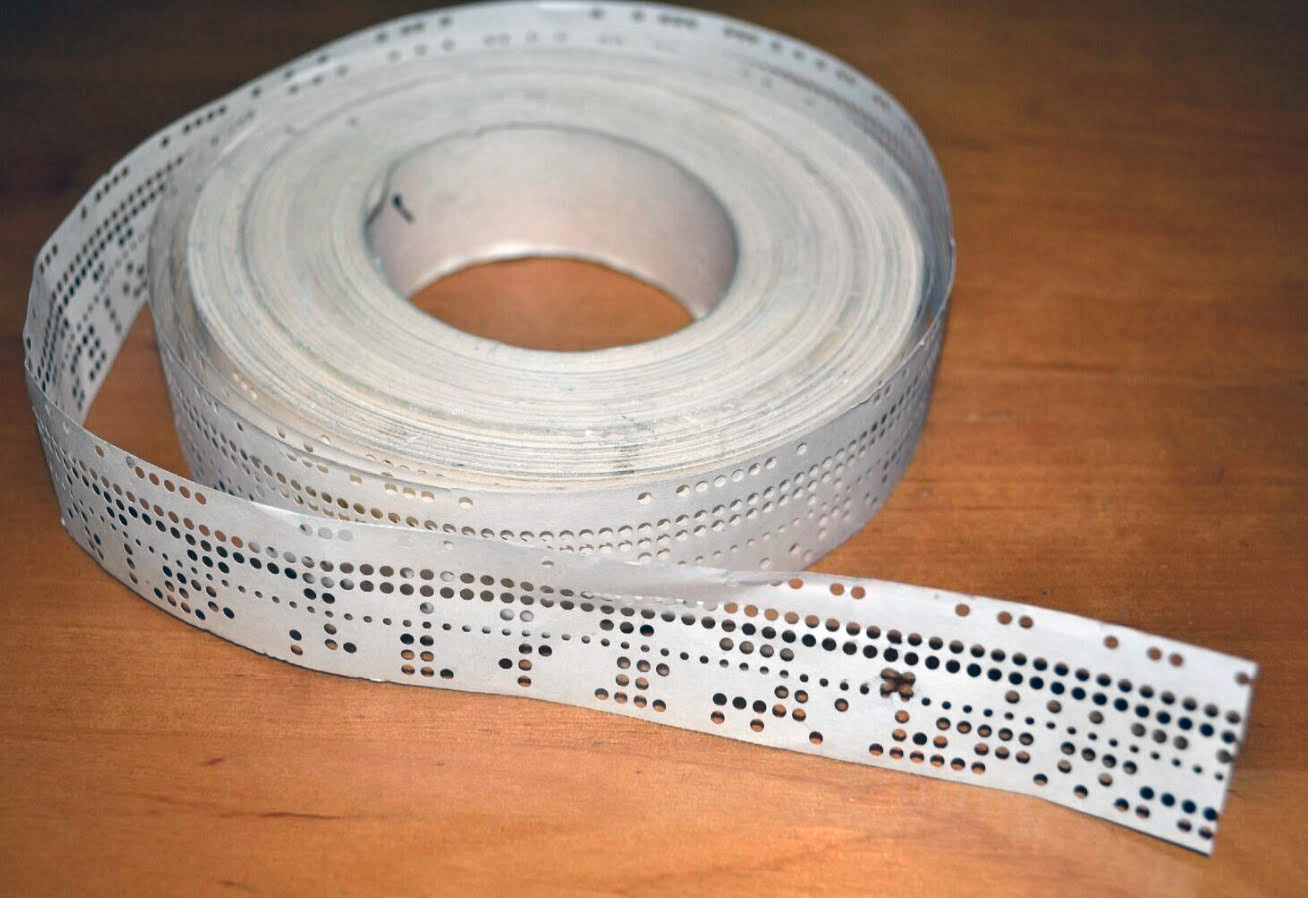
Secret messages from the stars!

Today Jodrell Bank is home to one of the most powerful telescope arrays in the world, created by linking together all the UK’s seven radio telescopes to work as one. Jodrell Bank is also home to the HQ for the Square Kilometre Array, an even larger multi radio telescope project that will do the same for sites in Africa and Australia.


Further reading:

Sir Bernard Lovell’s accessible book on the early history is The Story of Jodrell Bank (1968), and this was revised as Voice of the Universe: Building the Jodrell Bank Telescope; Revised and Updated (1983). The Out of the Zenith: Jodrell Bank, 1957-70 (1973) is a more technical book for astronomers, from Oxford University Press. The technical aspects of the telescopes themselves were later covered in the book The Jodrell Bank Telescopes (1985). All these are now on Archive.org.

Children’s publisher Corgi/Carousel also appears to have issued the Story of Jodrell Bank (1972) for children in middle-childhood, and this can still be found used in paper form on eBay and Amazon. At a guess, this is perhaps Lovell’s accessible 1968 book heavily adapted, condensed and illustrated for intelligent children? Surprisingly, there appears to have been no subsequent children’s book on the topic. Time for a graphic novel?

Sir Bernard Lovell also appears to have had at least three book-length biographies.

There appears to be no large modern coffee-table history book on the history of Jodrell Bank, but there is likely room in the market for one — perhaps even in conjunction with a new Ken Burns-style documentary film. In the meanwhile there’s a two-hour YouTube Playlist of available documentaries.
Stellarium 1.0

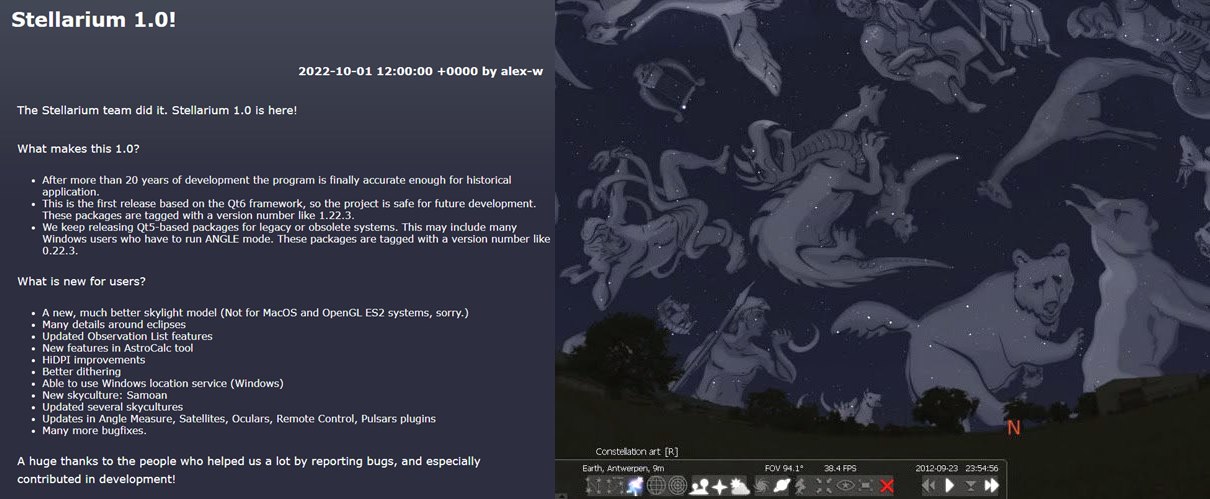
After many decades in beta, the excellent free Stellarium desktop software is finally in a stable version 1.0. Useful for casual astronomers and night-sky watchers, and its time-travel function also makes it useful for historical researchers and writers of historical fiction.

Slightly confusingly, 1.0 stable is officially 0.22.3 for Windows 7, and 1.22.3 for other lesser Windows OS’s.

Staffordshire soup kitchens

A timely new PhD thesis, in part a study of post-medieval soup kitchens in Staffordshire including around five pages in total relating to the Potteries. Public and available for download.

Also reveals the origins of the well-known Soup Kitchen, in Stafford town centre…

Thomas Salt, a banker, founded Stafford’s soup kitchen as part of a ‘house of charity’ that provided lodging, clothing, and food to the poor, with an area to sit and eat. Salt’s son, Sir Thomas Salt MP, handed the institution over to a committee in 1865 which then ran the institution on a subscription basis [i.e. local people undertook a sort of early crowd-funding to sustain the service]. In 1868 it limited its ambition to soup. It opened all year unlike most other soup kitchens; its premises remain in use today as a restaurant called The Soup Kitchen.

I’m fairly sure it’s also still run by a charitable body.

From Waterloo to Vindaloo

Not a bad local idea, and apparently backed with £2m of private money from a Cobridge businessman…

“the Burslem end of Waterloo Road” could become “Stoke-on-Trent’s very own ‘curry mile'” of curry houses.”

The Burslem end of the road is just down-a-bit from the town centre. Ideally you’d have Burslem town centre itself for such a thing. But I guess the business rates, car parking, and the Council’s retail use-zoning / liquor licensing / policing worries are all probably against such a notion. So far as I know Burslem is not about to become one of the new Investment Zones and sweep away such restrictions on trade.

So down on the Waterloo Road looks a good and probably cheap location. Perhaps the shop-fronts could also be nicely restored, so the road would not look like a wall of garish plastic tat. The adjacent olde church might even take in any spare food each night, and feed the homeless with it.

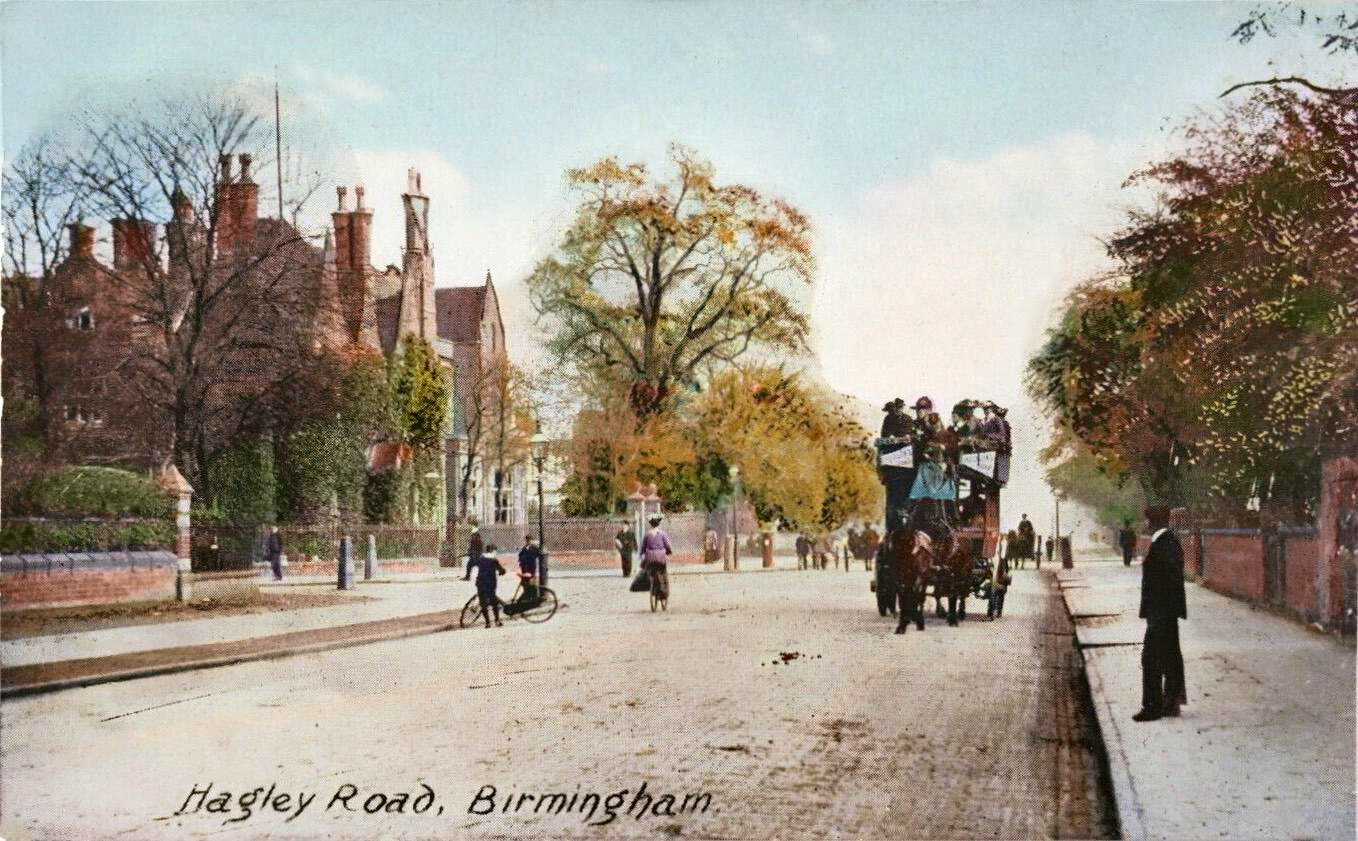
Old picture of this bit of the road, leading up to the town centre, circa the 1910s…

Not sonic

Interesting discovery with YouTube. Searching for…

“sir gawain” -sonic

… does not work to remove Sonic the Hedgehog videogame crap from results.

Nor does…

“sir gawain” NOT sonic

But using both together…

“sir gawain” NOT -sonic

…does work.

Forthcoming: The Historical Arthur and the Gawain Poet (2023)

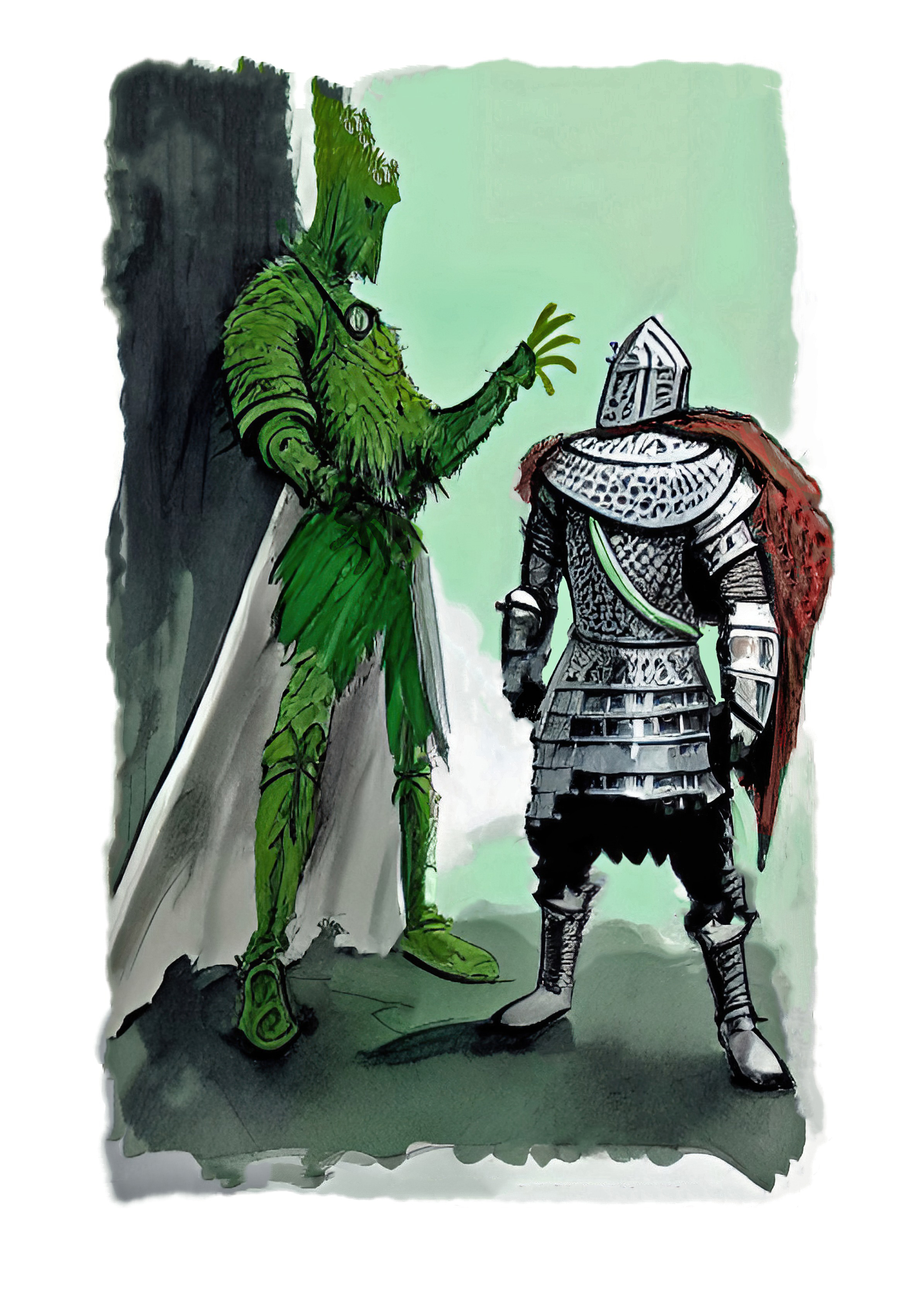
Even more Gawain. Andrew Charles Breeze’s book The Historical Arthur and the Gawain Poet: Studies on Arthurian and Other Traditions (Studies in Medieval Literature) is set to be released in hardcover for circa £80 on 15th January 2023.

The blurb reveals that it is partly Arthurian, and states that the first part will offer…

evidence for the Arthur of film and legend as a real person, a Celtic commander (not a king) who fought battles in North Britain during the terrible volcanic winter of 536-7, before dying a hero’s death in a conflict on Hadrian’s Wall.

The second part…

uses arguments of the U.S. scholar Ann W. Astell to date the text to 1387 and name the poet as Sir John Stanley (d. 1414), a Cheshire and Lancashire grandee.

The date given seems curious, since Astell states “my argument necessitates dating Gawain after 1397” (in her Political Allegory in Late Medieval England, page 188). This is slightly expanded when she gives “1397-1400” elsewhere in the same book, the date being drawn from reading Gawain as a mirror-like political allegory of events — claimed by her to be inspired by the beheading of Richard of Arundel in 1397. But I guess the arguments that Breeze takes from her must relate to something other than Astell’s own choice for the dating of Gawain.

Either late date seems doubtful to me, and the Stanley claim more so. But it will be interesting to see if the book has new evidence.


Update: Ah, I see that the dating is explained in Breeze’s latest paper. He notes Astell’s observation of… “line 678 of Gawain, on its protagonist as being made a duk or duke [which she sees as a coded reference to] Robert de Vere (1362-92), ninth Earl of Oxford, created Duke of Ireland on 13 October 1386. She adds that ver or spring, used in line 866 of beautiful clothing given to Gawain, is a dig or quiet joke at the expense of de Vere, favourite of Richard II and notorious for flamboyant dress.”

More than a bit tenuous, and seemingly an insight originally from McColly and not Astell. Let’s hope there’s more new evidence than that in the book.