The Potteries Post has updated. More ‘news you can use’ in the arts, wildlife and heritage.
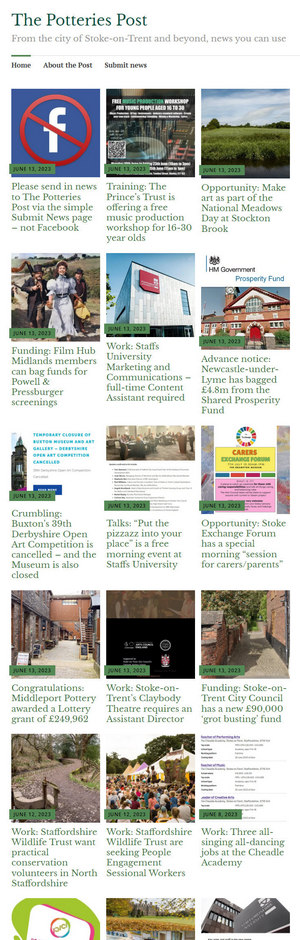
The Potteries Post has updated. More ‘news you can use’ in the arts, wildlife and heritage.
Tolkien Gleanings #85.
* The new online Guide to Tolkien’s Letters is starting to fill up.
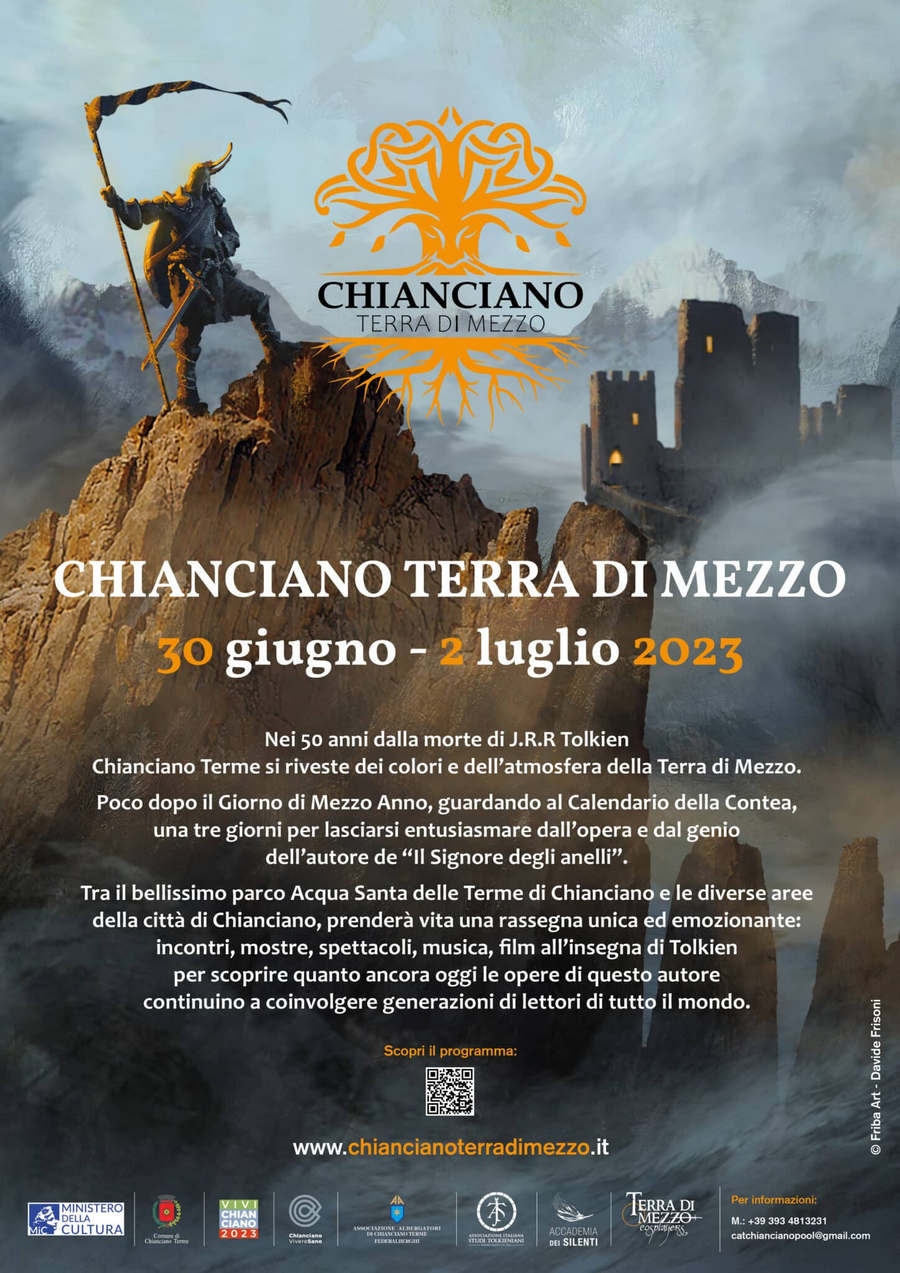
* In Italy, the hill-village of Chianciano Terme rises from the hills about 40 miles south of Florence and 60 miles north of Rome. The place is set to mark the 50th anniversary of the death of J.R.R. Tolkien…
over three days, from 30th June to 2nd July 2023, offering insights from internationally renowned speakers, and multiple cultural events in Chianciano, from the Parco Fucoli and Parco Acqua Santa to the historic centre. “Chianciano Terra di Mezzo: Journey into Tolkien’s genius” was developed by the town with the ViviChianciano (‘Living Chianciano’) public-private network which is made up of over 50 companies from Chianciano, and which obtained the patronage of the national Ministry of Culture and the Associazione Italiana Studi Tolkieniani (‘Italian Association for Tolkien Studies – Tolkien Society of Italy’).”
* A talk by Tom Shippey on “Politics in Tolkien: What We Can Learn From Hobbits” (2015). As AI-cleaned audio, newly made from this almost un-listenable ‘big ballroom, massive echo’ recording on YouTube.
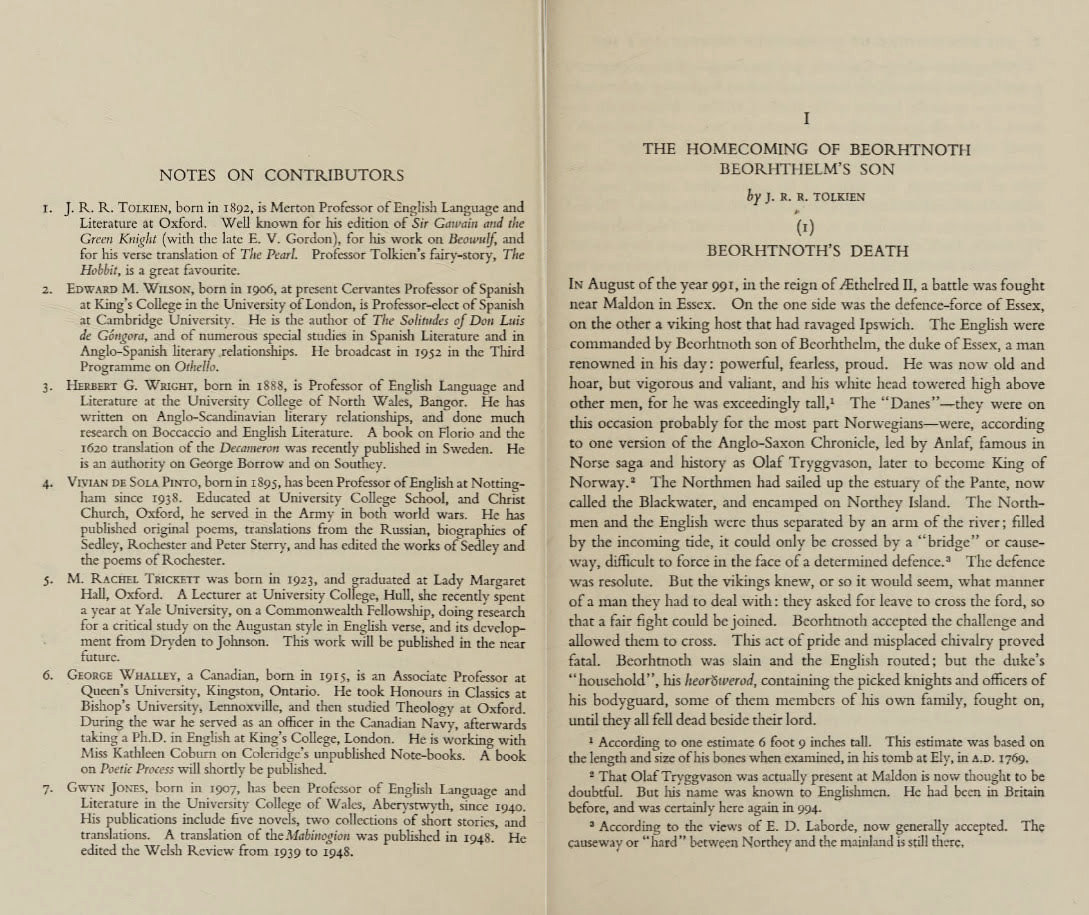
* New on Archive.org to borrow, a good scan of Essays And Studies: Collected for the English Association (1953, Vol. 6, New Series). With Tolkien’s “Beorhtnoth” as the lead item.
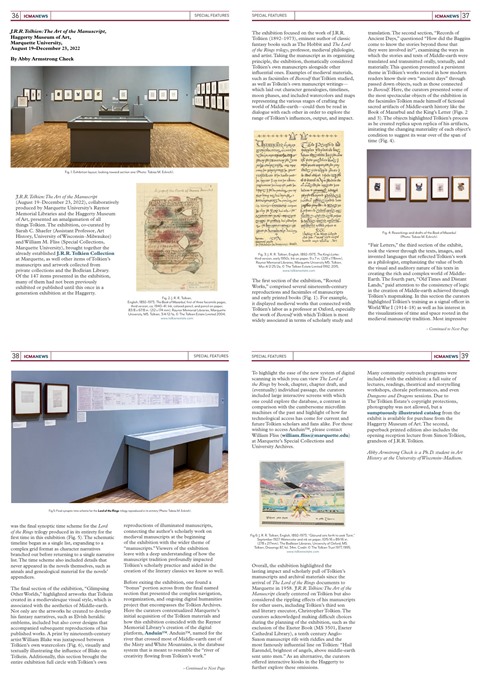
* The March 2023 issue of ICMA News had a review-report on the 2022 ‘J.R.R. Tolkien: The Art of the Manuscript’ exhibition.
* And finally, “The 16 types of graduate supervisor, by J.R.R. Tolkien”.
Tolkien Gleanings #84.
* Following on from my idle musing about elvish handicraft in Gleanings #82, “Medievalism, the Lost Book, and Handicraft in The Lord of the Rings” (2022), a Masters dissertation for Laurentian University in Canada. Freely available online. Suggests, among other things, that Tolkien’s eventual mass-market success helped to keep alive the connection in the thinking public’s mind between fine handicrafts and the medieval…
Clearly the association of handicraft and the Middle Ages exists before and beyond The Lord of the Rings, as evidenced by the Arts and Crafts movement, but the continued popularity of The Lord of the Rings and subsequent medievalisms have only heightened the association between handicraft and the Middle Ages.
* Somewhat related, a Masters disseration for the Dept. of History and Archaeology, Macquarie University, Australia. “Harmony and folklore: the function of the forest in Middle-earth” (2022). Freely available online. Offers, via Tolkien…
“a close reading of the texts to track how forests function within the medievalism of Victorian England, and the changing medievalism of the [early] twentieth century.”
* A Masters dissertation for Leiden University “J.R.R. Tolkien and the Modern Philosophies of Death and Immortality” (2022). Freely available online. Looks rather interesting, in that I would never have thought to use both Existentialism and Posthumanism to address Tolkien’s concerns on these topics.
* A page for the new Amon Hen #301, with a full table-of-contents. A new addition to the gappy coverage of the title at Tolkien Gateway wiki.
* In Gleanings #83 I admired the new cover for a forthcoming 2024 book. Why the in-filling on the letters marking “Gondor” I wondered? To get around an Estate trademark, presumably.
This led me to note some clear ‘prior art’ in the word “Gondor”. For instance it’s trivial to find…
– “At Gondor is the residence of the king, Elias by name, Ate or Nogoos, called by the Abyssinians” (Missionary Journal and Memoir of the Rev. Joseph Wolff, 1829).
– “the most important prince was the party called by Europeans an Emperor, but known to Abyssinians as the Athie or Negus, whose capital was Gondor, in Amaraha, or the south-western division of the kingdom [of what is now Ethiopia]” (Transactions of the Ethnological Society of London, 1868).
Page scans show these are not OCR errors. The use of the word in English has continued to the present day, though it is now sometimes also called Gonder or Gondar by aid/development agencies. Capital, seat of the king (an ancient Christian ruler, indeed), in the south… it all sounds rather familiar. Much later, in 1971, Tolkien mused that the 1935-37 Italy-Abyssinia war may have brought it frequently to his eye in the newspapers, but he also recalled that it had entered the legendarium early and related to ond = ‘stone’.
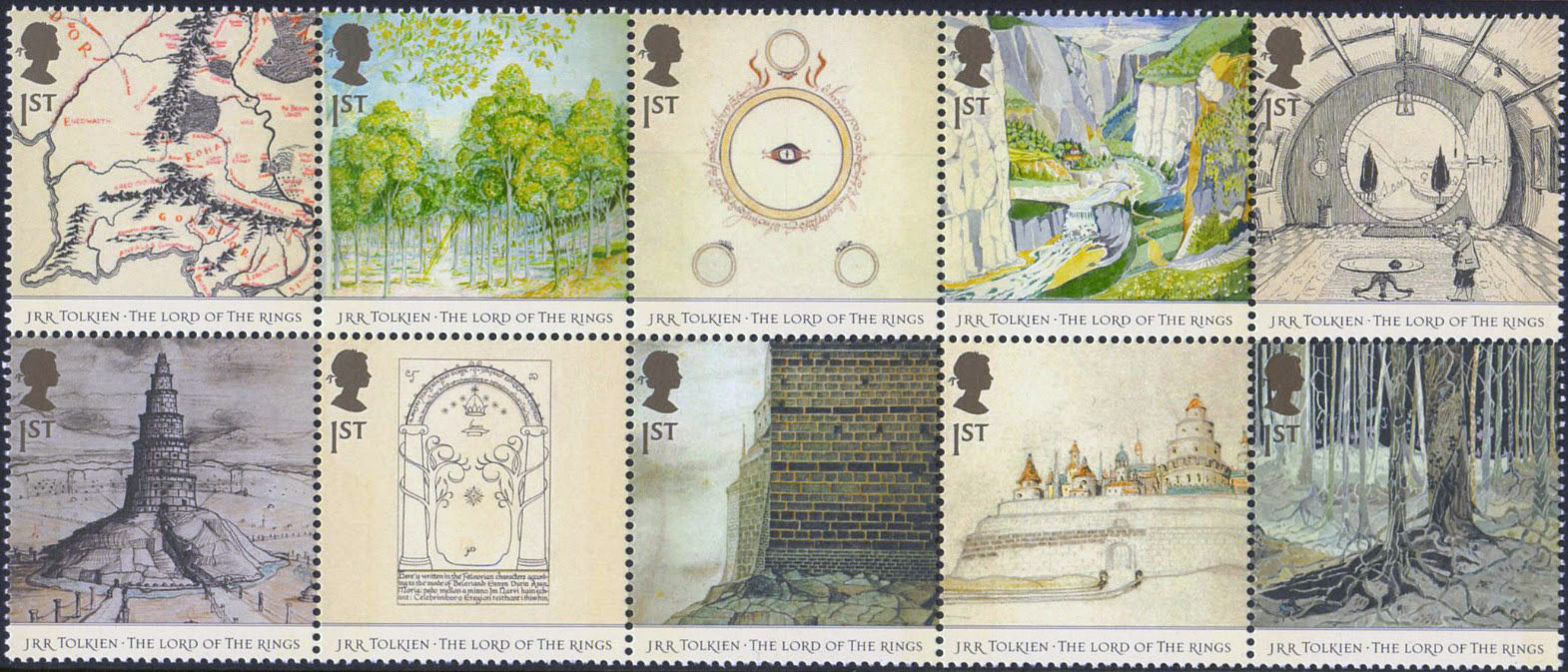
* And finally, Lord of the Rings Stamps for Postage – 10 x Royal Mail 1st Class (2004). I’m faintly amazed to see these still available at summer 2023, on Amazon and at non-collector prices. £15 for ten, at present, not much more than it might cost to buy 10 x regular 1st’s these days. The Christmas and themed picture-stamps are said to be still valid, while the plain ones are defunct unless they have a bar-code on the side.
Tolkien Gleanings #83.
* The Digital Tolkien Project has posted abstracts for three upcoming talks. Talks on how an innovative interactive “digital reading environment” might help scholars visualise and navigate the 12-volume History of Middle-earth; on “the relationship of the Second Age Tale of Years to the text of Lord of the Rings, the Silmarillion, and Unfinished Tales“; and on “Linguistic Variation in Tolkien’s Writing Styles”.
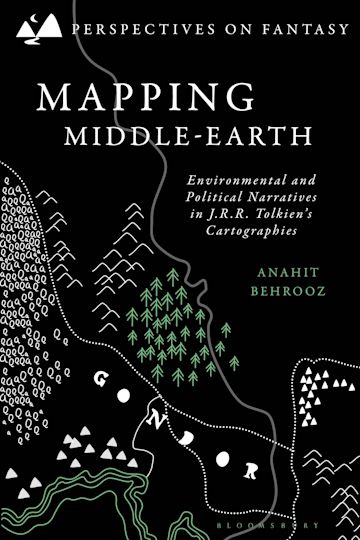
* News of a new ‘for academic libraries’ book of the £85 variety, Mapping Middle-earth: Environmental and Political Narratives in J.R.R. Tolkien’s Cartographies. Due 22nd Feb 2024 from Bloomsbury Academic. Presumably based largely on the freely available 2019 PhD thesis from the same author. The new book has added a pleasing cover…
I assume the filling-in of the word “Gondor” is because of the Estate’s trademark.
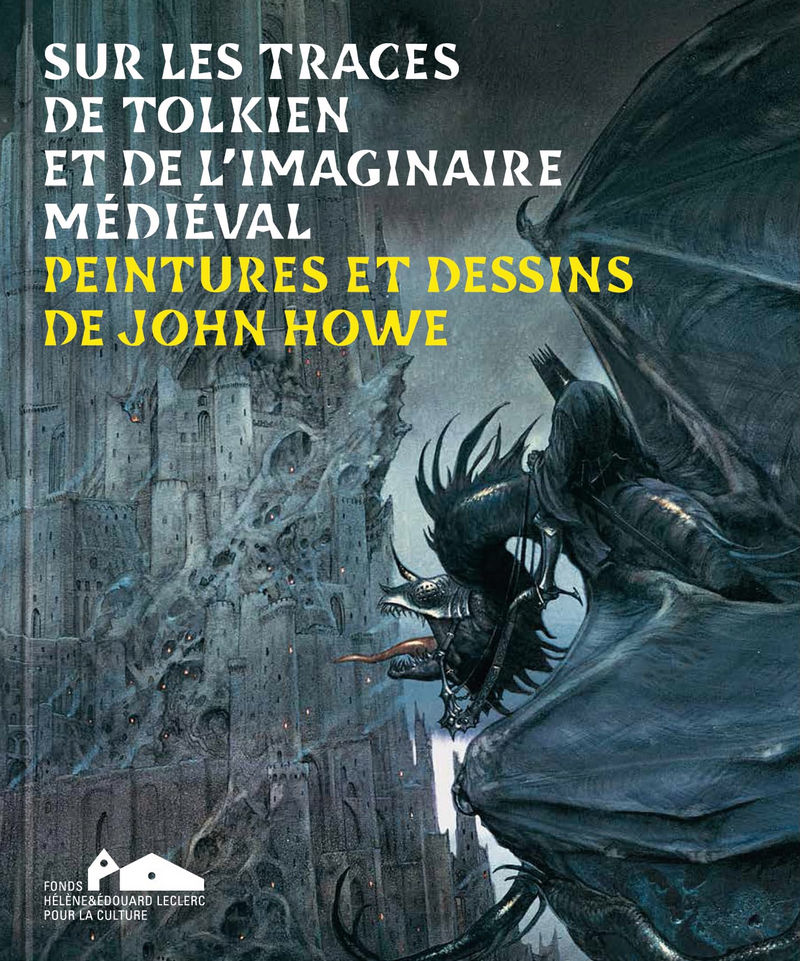
* And talking of book covers, here’s a peep at the cover for the book and exhibition catalogue Sur les traces de Tolkien et de l’imaginaire medieval: Peintures et dessins de John Howe, due to ship in a few weeks.
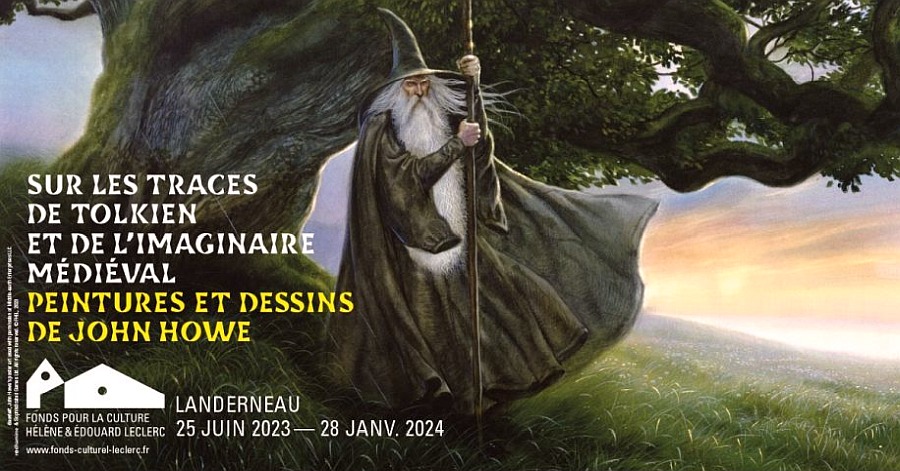
Also “Online ticketing is open” for the French summer show for which this is the catalogue. “Online” here meaning tickets to the show, not an online virtual tour (yet).
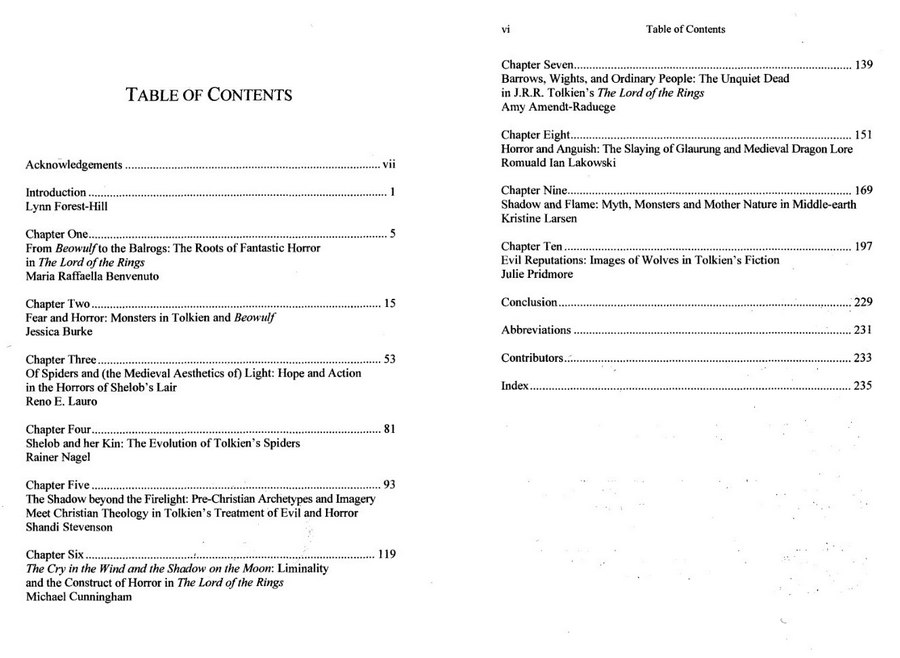
* Somehow I’d completely missed the book The Mirror Crack’d: Fear and Horror in J.R.R. Tolkien’s Major Works (2008). Not even my Lovecraft blog had noted it, at the time. Issued in hardcover only, and Amazon UK suggests it’s now well out-of-print and unavailable. Among others, Mythlore gave it a review. This and other reviews suggest a usefully unique volume of patchy quality, though The Irish Journal of Gothic and Horror Studies noted that the essays do “cohere clearly in their investigation of Tolkien’s medieval sources”. Also useful, I’d suggest, for not spending half the book on the movies.
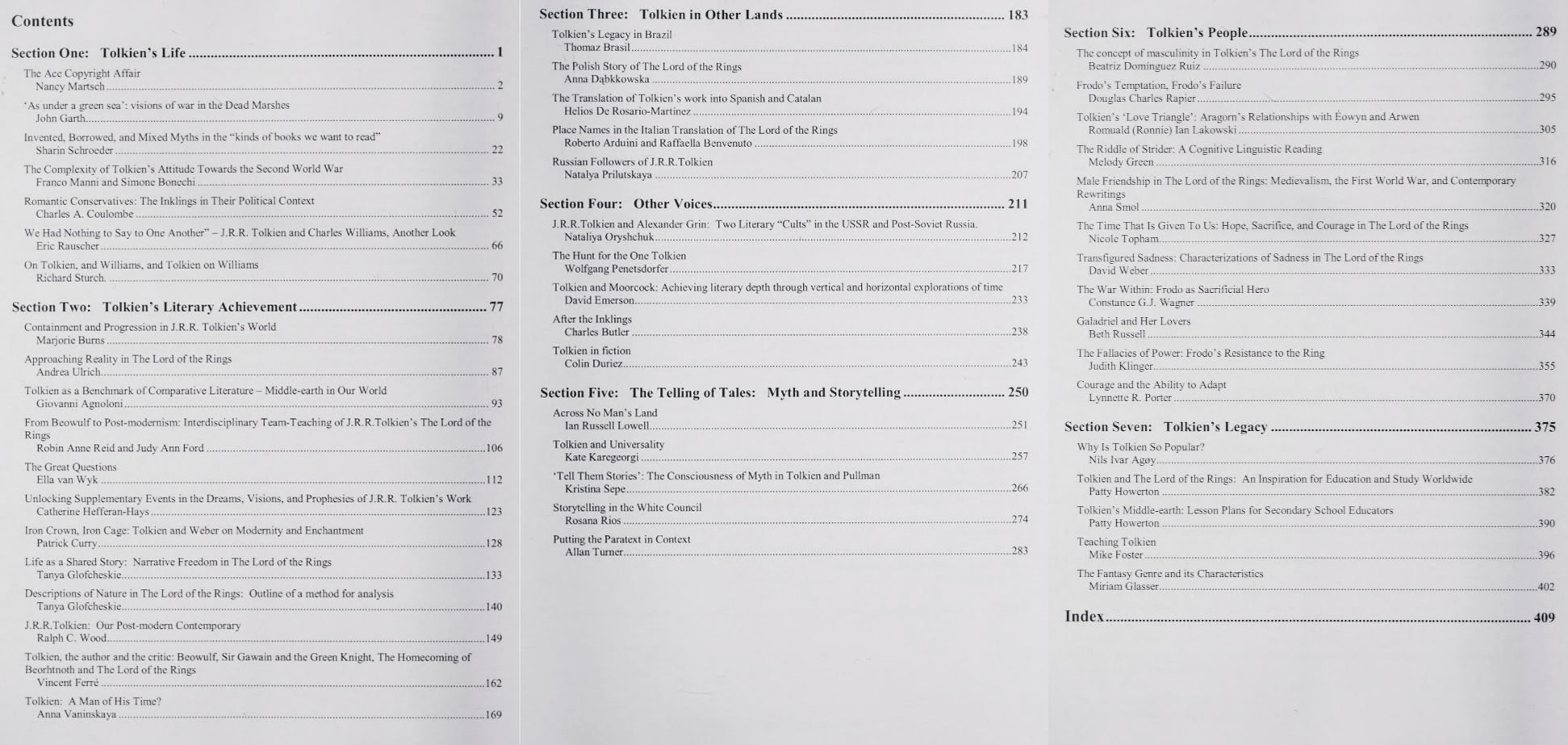
* A new study offers a useful reminder to scholars that articles by academic historians in leading journals have a 24.27% error rate in their use of quotation references. And that’s after peer-review and proof reading. The new study in the journal Scientometrics asked if the references actually… “substantiate the propositions for which they are cited”. Around 25% don’t. That sounds about right to me, from my experience. If planning to rely on an evidential quote from such a source (usually time-pressed university academics, rather than independent scholars) always dig back to get the source, if that’s possible. Be wary of their use of titles, too. For instance, in the academic book Horror in Architecture (2013) I recently found mention of “the cursed De La Poer family of Lovecraft’s The Drowned”, for which the title should of course be “The Rats in The Walls”. No-one had picked up this obvious error regarding one of the greatest horror tales of the 20th century. Tom Shippey has often also amusingly observed similar errors in literary academia. All this is why, in my opinion, full footnotes are required (ideally with the full reference, which is what I do). Hiding ‘endnotes’ at the back of the article or chapter, which then need to be again tracked down in the bibliography, greatly aids such fudging and fakery.
* And finally, the excellent $70 desktop back-of-the-book index maker PDF Index Generator. Version 3.3 (May 2023) has “fixed footnotes, as it was showing footnote number & normal page number too!” A useful fix.
Tolkien Gleanings #82.
* Forthcoming, a look at “Dyeing in Middle-earth”. The author blogs that…
“my talk on ‘Dyeing in Middle-earth’ [has been] accepted for online presentation at this year’s Oxonmoot […] investigating textiles and the dyes that create the distinctive colours worn by various characters […] This means that my work on Sir Bevis will alternate with the new Tolkien project and one will refresh the other”.
Good to know that that Forest-Hill is continuing to work on Bevis, and a look at my new book may interest her in that regard. In Chapter 3 my book has about 12,000 words on Bevis and Arundel, and makes a number of new discoveries. On the interesting matter of dyeing and what dyestuffs might imply about Middle-earth, I wondered the other day if “we put thought of all that we love into all that we make” implied more that it said, re: the making of what Pippin thinks of as “magic” cloaks in Lorien. Could there also be a sort of Elvish ‘emotional infusion’ into such material things, working in combination with that of the physical dyestuffs?
* Locked down for now, a new study of Alterity in Central and Eastern European Illustrations for The Lord of the Rings 1981-1993 (2023), for the University of Plymouth here in the UK. Has a good abstract and centres on… “the comprehensive analysis of five Central and Eastern European illustrated translations of The Lord of the Rings published between 1981 and 1993″. Difficult to tell from the repository’s record-page if it really is a PhD thesis, or just a dissertation being called a thesis (in the UK “thesis” is in most universities a prestigious word reserved only for PhDs, whereas in America it is freely applied to undergraduate and Masters dissertations). But my guess is it’s probably a PhD.
* A possible PhD thesis for the University of Aberystwyth in the UK, “Our Elves, Ourselves” (2023). The “thesis sets out to contest the still prevalent infantilisation and marginalisation of elves and fairies, and to conversely prove their lasting relevance for understanding our own cultural identities as an eerie distorted reflection of humanity’s deepest fears and desires.” The PDF file is currently away with the fairies and ‘404 not found’, so I can’t determine if it really is a PhD thesis.
* Freely online in PDF, a PhD thesis for the University of Georgia in the USA, To Cuivienen There Is No Return: English and American Fantasy Literature as a Second Hagiography (2023). Considers if the writing of fantasy can sometimes be a religious practice, comparable to writing the lives of the saints.
* Signum Press has an innovative new patronage concept, their $25 a month Author’s Circle. Too complex an idea to summarise here, but it appears very worthy. More importantly, yesterday’s podcast interview with Drout suggests it works well.
* On YouTube from this time last year, Συμπόσιο J.R.R. Tolkien | Ελληνικός Σύλλογος Φίλων Τόλκιν. As the saying goes “It’s all Greek to me…” though not quite in this case. From 1 hour and 18 minutes this Greek symposium, held in Athens in May 2022, has an hour in English on…
‘The Hobbits and I: My Travels in Middle-earth’: online talk by English author Brian Sibley, award-winning producer of radio adaptations of Tolkien’s works for the BBC.”
* And finally, a new Google Middle-earth, in the style of Google Earth. The maker says… “I started adding all the names and markdowns in the style of Google Maps using Corel Draw. Took me some days.” The 50Mb “PDF is in CMYK mode and ready for printing.” No Street View, but one imagines someone will cook up an AI for that soon enough, by hooking into one of the more canonical game-worlds. The map’s a touch dark for me on Windows, so I’ve tweaked it a bit in this small preview…
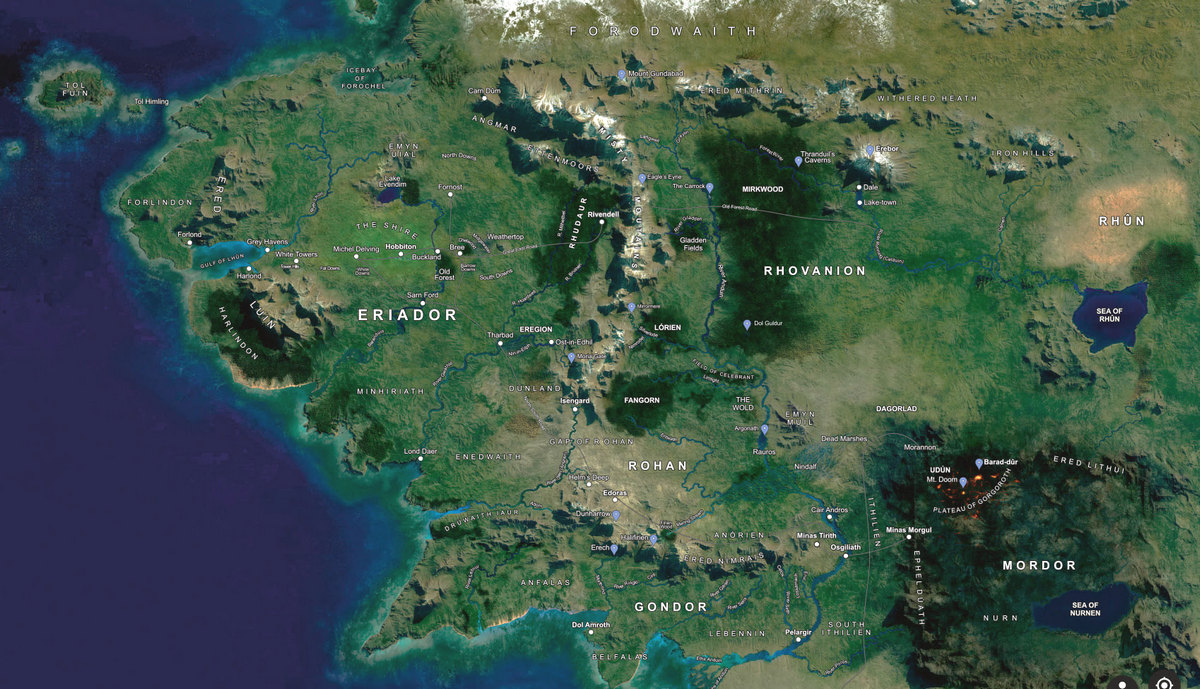
If you want to have a go yourself, the source is here in 5k. It’s made by gamers and described as “the canonical map described by the author”. Though places a forest between Lorien and the Gladden Fields, has the Old Forest be far larger and further south, and adds a large island in the Sea of Rhun. Possibly it’s meant to be earlier in time than Tolkien’s maps? Or perhaps it’s been influenced by games? Still it’s a good starting point, with a few tweaks. Once again it’s very dark and I’ve here tweaked it up in Photoshop…
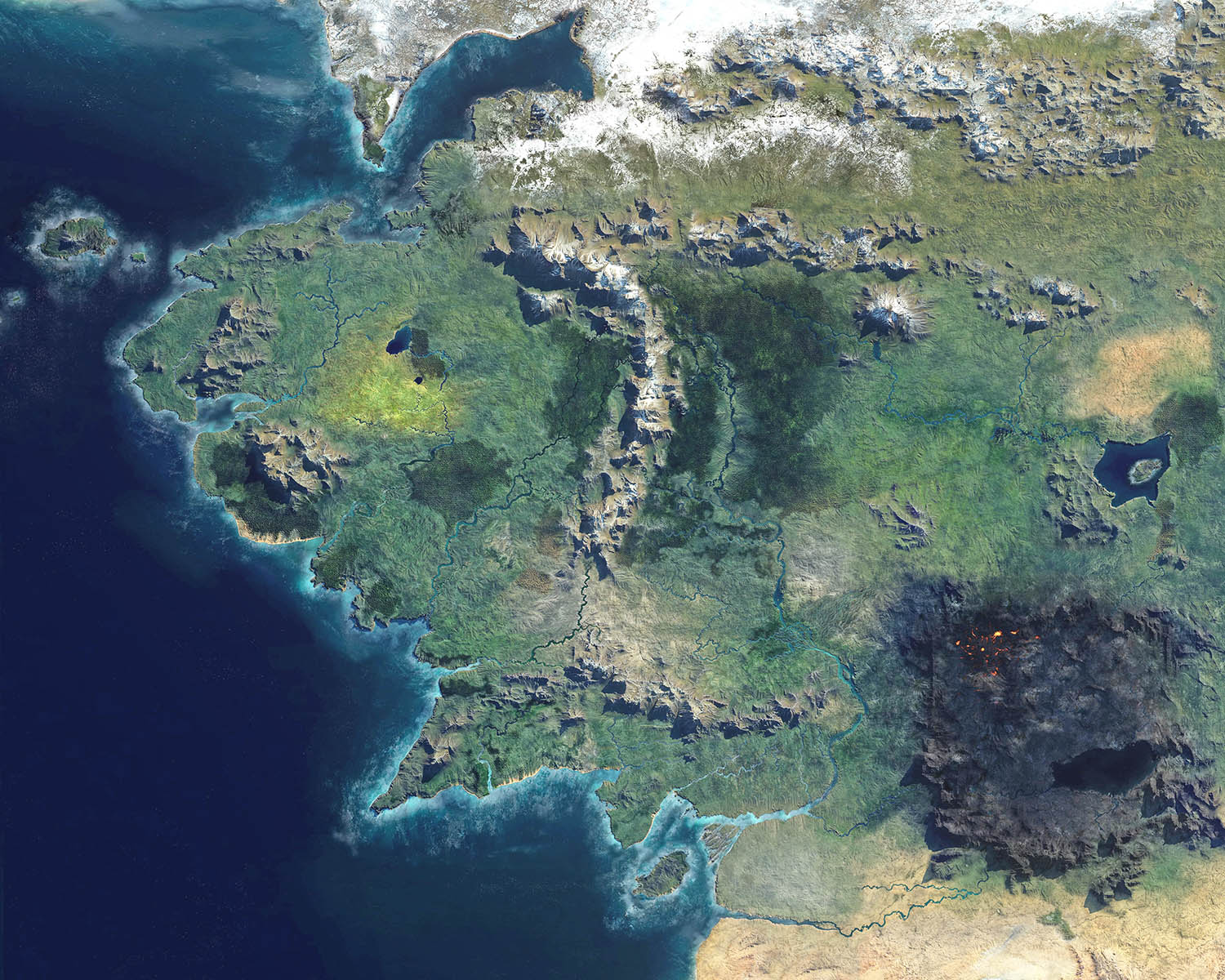
Don’t try to get a height-map from this, for projection into 3D. That’s been done.
Tolkien Gleanings #81.
* A new Inklings Variety Hour podcast interview, “Michael Drout: The Liberal Arts and Beowulf”. Starts at 6:40 minutes.
* New on YouTube, “Charles Coulombe on Kingship and Tolkien”… “Daniel Cote Davies speaks to Charles Coulombe, the American Catholic author and historian, on the topic of kingship, as well as J.R.R. Tolkien’s own interpretation of the topic.”
* Kent State University Press now has a page and a date for the forthcoming book Pity, Power, and Tolkien’s Ring… “Thomas P. Hillman gets to the heart of the tension between pity and the desire for power” in LoTR. The $40 book is currently due December 2023.
* New on John Garth’s site, an article on “The mood music of G.B. Smith, T.C.B.S.”.
* New on Archive.org, to borrow, The Ring Goes Ever On: Proceedings of the Tolkien 2005 Conference (2008). The conference was held in Birmingham in 2005. Archive.org only has “Volume One”, although even that is a table-trembling 434 pages. Appears to be well out-of-print, with only one paper copy on Amazon (used at £85).
* And finally, a rare Twitter-trawl reveals… the usual utter piffle. But also something of the latest Amon Hen #301, the publication from the Tolkien Society. It has a ‘centrefold’, no less. In the form of a 1960s-style Frodo Baggins cut-out paper-doll. Yes, really, in a two-page colour spread. I’ll spare you the picture.
Strangeness from Stoke: 86 year-old Joseph Jones builds Milan Cathedral in matchsticks, in his front room, having already done the same for Westminster Abbey and St. Paul’s. The wire-photo caption, in Italian, appears to say that he then used them as garden features after completion. Presumably after giving them a good coat of varnish. (Christmas 1965, Italian press photo).
Tolkien Gleanings #80.
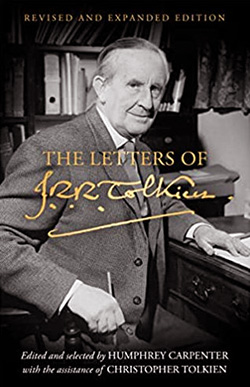
* Further details of the new volume of the Tolkien Letters. Specifically, where the new letters are being found. A new article in The Bookseller reveals that the original Letters…
“… was not the book envisaged by Humphrey and Christopher [Tolkien]. At the publisher’s request, they were required to reduce the original selection to what was then deemed a publishable extent. By going back to the editors’ original typescripts and notes, it has finally been possible for us to reinstate the 150 letters they excised purely for length – an additional 50,000 words – and publish the book as originally intended.”
Which means the new edition will be these, and presumably any other letters which have since turned up. Sounds good. The title of the early November book is The Letters of J. R. R. Tolkien: Revised and Expanded edition. The £20 hardback is now pre-ordering for delivery well before Christmas 2023 and its inevitable UK postal strikes.
* A PhD thesis for Concordia University in Canada, freely online in PDF, Mere Love: The Theology of Need and Gift-Love in the Fiction of C.S. Lewis and J.R.R. Tolkien (November 2021).
* At the University of Leiden, a course titled The Medieval in Middle-Earth: J.R.R. Tolkien and Old English Philology, running 2023-2024. Unusual for focusing on one man’s academic work, and in Philology too. Starting September, and seemingly limited to the university’s eligible students. Who should book early, I’d guess, as it’ll probably fill up quickly.
“Reading Tolkien’s academic work will first of all provide students with a better insight into the culture, language and literature of early medieval England, as well as the methodology of Old English philology. At the same time, it will also illuminate their reading of Tolkien’s fantasy fiction.”
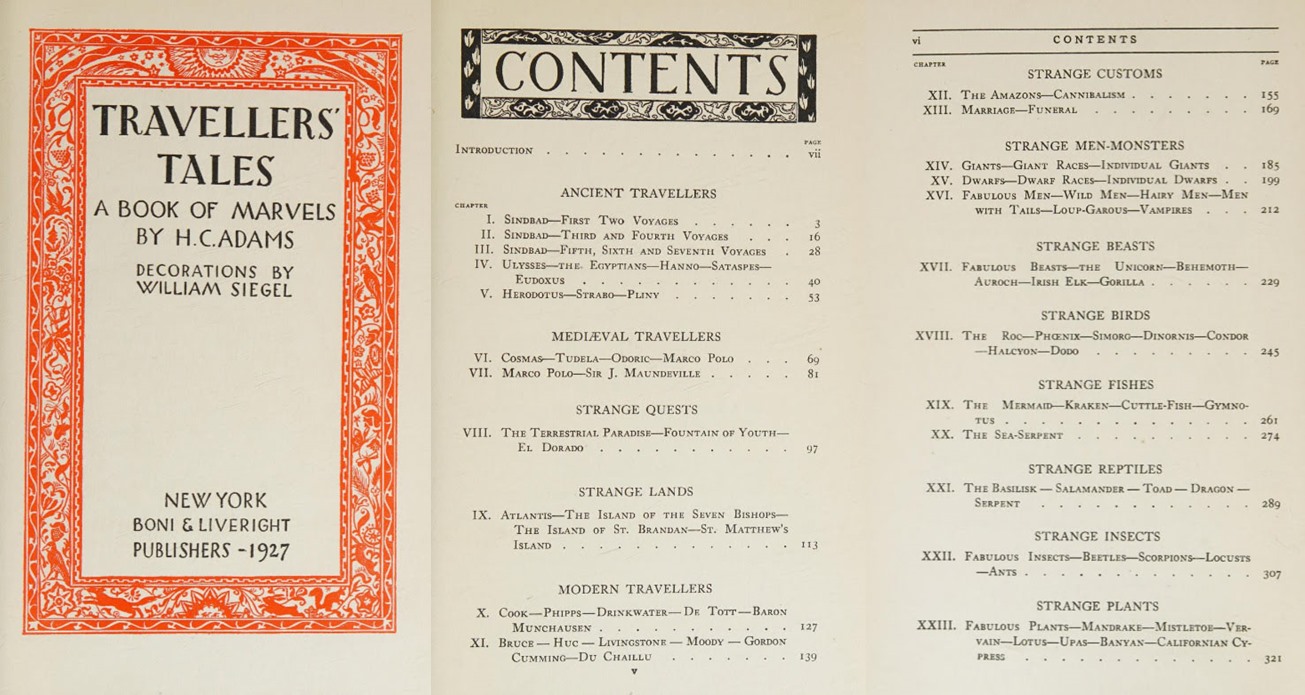
* A fine fresh scan of Travellers’ tales: a book of marvels (1927), new and free on Archive.org. Previously only available as one of the abysmal Digital Library of India scans. An accessible English collection of the material Tolkien would have known, though some of it perhaps only by reputation, by circa 1930.
* And finally, a new article on “How to Replicate J.R.R. Tolkien’s Education for Your Child”. I’d add a ‘daily translation’ exercise (Latin, Anglo-Saxon, Middle English etc), which was a commonplace for children of ability in Tolkien’s time. Also lots and lots of walking to school. Or the home-schooled equivalent.
I’m pleased to see that some bits of Etruria and Cliffe Vale have been newly photographed for Google StreetView, at the end of May 2023.
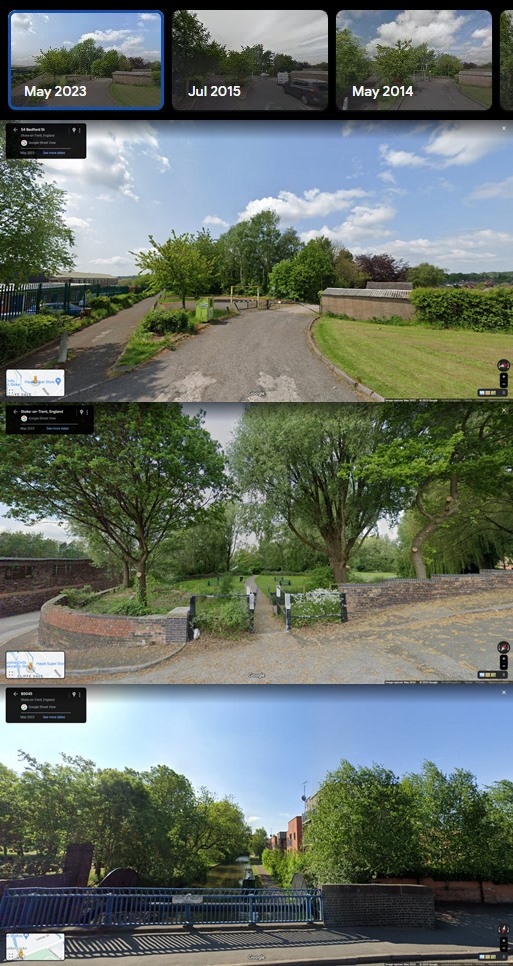
The first re-photographing in a long time, as you can see above. And looking fabulous with it — or as fabulous as the greener bits of inner-city Stoke-on-Trent can look at the end of May. Coverage is a bit patchy at present, but hopefully it’s the start of a new tranche of photography. I’d do it myself, along with litter-picking, but I can’t afford the £500 for an Insta360 X3 camera with GPS (apparently the best and easiest, I hear).
Now, there’s an idea. Every city, each May-June, trusted photographers should be able to borrow an X3 camera for free and go out and build Street View for their city. Cheap, easy, ‘citizen PR’. Although, of course, ideally done after a Dad’s Army of paid-unemployed litter-pickers has swept through the area.
Stokies reading this should note that uploading 360-degree .MP4 or .MOV video (Google prefers 360-video) to help build Google Street View has changed. The long-time Android creation/uploading app has gone, and it seems you now do it through the Street View Studio website. Although it seems you can also do it direct from an X3 camera, which I’m told recently had a firmware update to enable more fine-grained GPS metadata. Older buyers should beware that the user needs to also own a smartphone (ugh!), to ‘activate’ the X3 camera for the first time via an ‘app’ — this may be a deal-breaker.
Tolkien Gleanings #79.
* The latest Inklings Variety Hour podcast interviews Verlyn Flieger at length, and also reveals that there’s to be an interview with Michael Drout “next week”. Which should be due any day now, by my reckoning.
* In Germany the Fantastische Welten in Oberlech (‘Fantastic Worlds in Oberlech’) event, in what appears to a rather plush hotel in the Oberlech mountains. Seems to be in German and annual. Here’s some of the blurb, translated…
From 28th to 31st July 2023, exchange ideas about the creator of Middle-earth. In six specialist lectures this year, we will examine various questions from a scholarly perspective. Such as these: “Can fantasy lead to a deeper awareness of our real history?” and “How do voices and silences function in Tolkien’s stories?”
* Currently new on YouTube, Tolkien: A Film Portrait (1996, 107 minutes) at 480px and without a watermark (older YouTube uploads of this seem at first glance to either be in Russian or have a watermark). Can also be found at Archive.org at much better quality (the bot-built .torrent file there is messed up and doesn’t include the 8Gb .MP4 file found via the MP4 list — use DownThemAll). Don’t worry, I’m not causing anyone lost income over this link. I checked. Amazon UK has the documentary as VHS tape only, completely unavailable either new or used. eBay also has nothing. Amazon USA only has a listing for J.R.R. Tolkien – An Authorized Film Portrait on DVD in 2003, but I suspect that’s a ‘ghost’ listing and that it was never issued on DVD. If it had been, then the Tolkien collectors would know about it by now as an ultra-rarity. Anyway, if the DVD ever existed then that too is unavailable. The documentary is known by several names, but despite its title it seems never to have been in cinemas. It seems rather to have been a ‘direct to videotape’, and thus wasn’t strained though the political sieve of the BBC. I can find no trace of any archival print being held in some vault, such as that of the British Film Institute. Nor even a single review, just one forum pundit saying that it’s the best of the bunch.
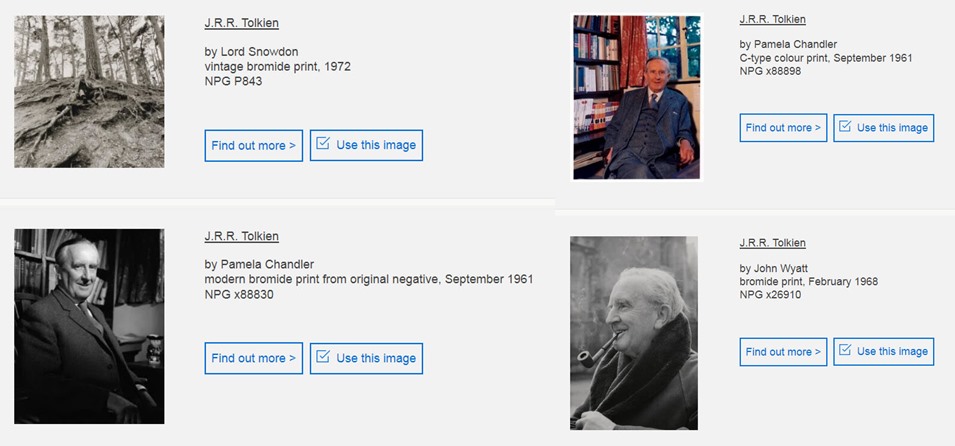
* ‘J.R.R. Tolkien – Person’ at the National Portrait Gallery website. Four pictures, at a good size.
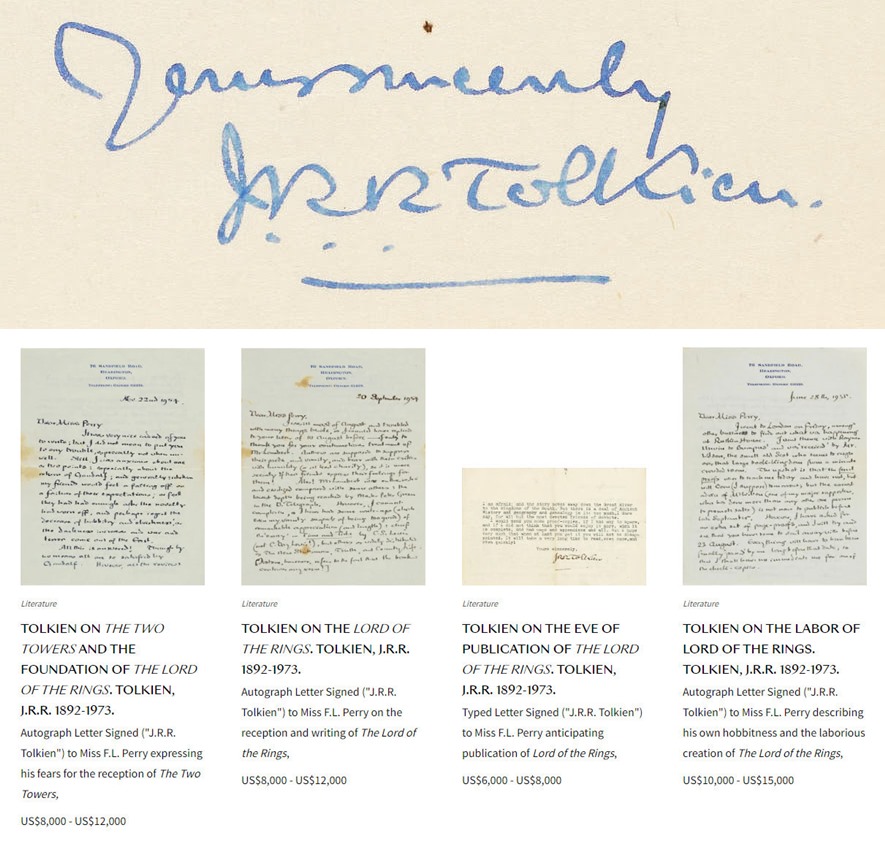
* Some Tolkien letters are coming up for auction on 22nd June 2023, these being the letters to a Miss F.L. Perry and another to a Miss Flint. The Bonhams website now has nice scans online. Right-click and ‘Open image in new tab’, and then zoom, for the largest size.
* New on Word on Fire, thoughtful thoughts on “Lessons from Tolkien’s “Leaf by Niggle””. Warning: plot spoilers.
* In the localist Chicago Reader last week, “Twenty years after the movie trilogy’s conclusion, local author reflects on working with composer Howard Shore”. This mentions the well-reviewed book The Music of the Lord of the Rings Films: A Comprehensive Account of Howard Shore’s Scores. In my view the music and voice-work was the best thing to come out of these movies, and it’s wonderful that they’ve since passed so powerfully (if unofficially) into Phil Dragash’s full-cast unabridged LoTR audio.
* And finally, those going ‘a hunting on the North Moors this summer may want to pack a Thigh Book Holster of the hand-made sort newly available on Etsy…
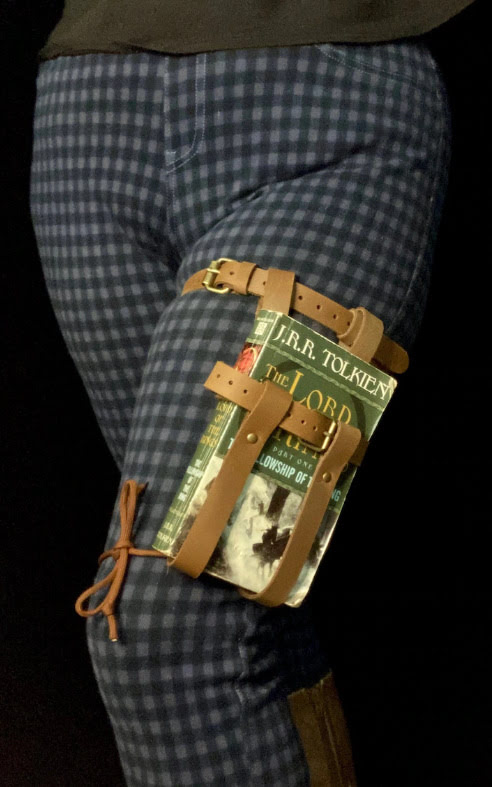
Although I can see immediately that it’s likely to chafe someone in summer-clothes and will also restrict the blood flow. Nice for posing at a hipster campfire party or deep winter walking when well-padded, but not for walking ten miles in summer. Perhaps better to get one of these, into the shoulder-bag for which a slim Hobbit-sized paperback can also slip. Regrettably, you can’t now get them from Amazon.

Tolkien Gleanings #78.
* More details are emerging about the forthcoming “expanded” book of Tolkien’s letters. Turns out it really is being expanded with a substantial amount of letters from Tolkien, and not just three or four. To be… “revised and expanded, with ~150 new letters and additional material restored to existing letters”. Sounds good, and hopefully they won’t all be about how to pay the bills or his work on academic committees. The new expanded edition is due in November 2023. The Tolkien Guide is also making an online discovery tool to aid researchers.
* The new blog post “Introduction to Tolkien’s Metaphysics” has thoughts on the book The Flame Imperishable: Tolkien, St. Thomas, and the Metaphysics of Faerie.
* Tolkien: Medieval and Modern: Syllabus 2023. I wasn’t aware of this online course and see that it has just completed classes. The detailed course schedule and outline is still online, and it looks like 2023’s final student essays are now being posted on the blog. Such as “Invocation and Worship: Reverence for Elbereth”.
* In Spanish, with English abstract, ““The chanting becomes loud and clear”: J.R.R. Tolkien’s poetry, Anglo-Saxon epics and medieval liturgy on those who have fallen in battle” (2023). In open access.
* And finally, new on Archive.org, Christopher Isherwood’s diaries…
[May 1967] “Wystan [Auden] was wearing a sweater with the word GIMLI on it. [… He] remarked that the book on Tolkien which he has been writing has been held up, or maybe abandoned, because Tolkien didn’t like having the sources of some of his material revealed.”
The editor’s footnote suggests Auden later destroyed the entire text, after objections by Tolkien. Auden had apparently also been rather catty about the humdrum appearance of Tolkien’s house, which didn’t help matters.
The only thing I see from the BBC these days is the 10-day weather, on a desktop PC. And even that’s becoming alarmist and naggy and click-baity, if it’s not filtered and blocked. Here’s how to clear all that guff off, in one go, and just leave yourself with what you came for… the likely weather plus sunset/sunrise times.
Just copy-paste my personal list of blocks into your Web browser’s uBlock Origin filter list (Icon | Dashboard (cog-wheel icon) | ‘My Filters’)…
! Hide all the alarmist, political, nagging and video stuff on the 10-day BBC Weather forecast

www.bbc.co.uk##:xpath(//span[contains(@class,"wr-c-environmental-data__item wr-c-environmental-data__item--pollution")])

www.bbc.co.uk##:xpath(//span[contains(@class,"wr-c-environmental-data__item wr-c-environmental-data__item--pollen")])

www.bbc.co.uk##:xpath(//span[contains(@class,"wr-c-environmental-data__item wr-c-environmental-data__item--uv")])
www.bbc.co.uk##.domestic.orbit-header-links > ul
www.bbc.co.uk###idcta-link
www.bbc.co.uk##.orbit-header-left
www.bbc.co.uk##.wr-c-environment-container--enhanced.wr-c-environment-container > .gel-wrap > .wr-c-environment-day-wrapper--active.wr-c-environment-day-wrapper--day-1.wr-c-environment-day-wrapper > .wr-c-environmental-data > .wr-c-environmental-data__item--pollution.wr-c-environmental-data__item
www.bbc.co.uk##.gel-long-primer.ls-c-favourite
www.bbc.co.uk##.wr-c-warnings-issued__container--with-warnings.wr-c-warnings-issued__container > .gel-pica.wr-c-warnings-issued__banner
www.bbc.co.uk##.wr-c-warnings-issued__container--with-warnings.wr-c-warnings-issued__container > .gel-pica-bold.wr-c-warnings-issued__banner
www.bbc.co.uk##.wr-c-regional-forecast-slice.gs-u-pb\+\+.gs-u-box-size > .gel-wrap
www.bbc.co.uk##.gs-u-pt\+\+.gs-u-box-size.wr-c-weather-watchers > .gel-wrap
www.bbc.co.uk##.wr-day__warning
www.bbc.co.uk##:xpath(//div[contains(@class,"temperature-bar")])
www.bbc.co.uk##.orb-footer-lead
www.bbc.co.uk##.orb-footer-primary-links
www.bbc.co.uk###orb-contentinfo > .orb-footer-inner
www.bbc.co.uk###navigation-links\?country\=gb\&language\=en\&service\=weather
www.bbc.co.uk###navp-orb-footer-promo
www.bbc.co.uk##.ls-c-id-signin__wrapper
www.bbc.co.uk##.ls-o-id-signin.ls-c-id-signin
www.bbc.co.uk##.ls-ui-personalisation-container
www.bbc.co.uk##.orbit-header-right
www.bbc.co.uk##[class*="wr-time-slot-primary__precipitation wr-time-slot-primary__precipitation--grey gel-brevier"]
www.bbc.co.uk##[class*="wr-time-slot-primary__precipitation wr-time-slot-primary__precipitation--blue gel-brevier"]
The result, clean and simple…

You’re welcome.
What I can’t do anything about is this subtly depressive slight-of-hand. The worst possible weather for the day is always chosen to represent it on the main single-icon. The single-icon is thus usually deeply unrepresentative of the day’s likely weather…
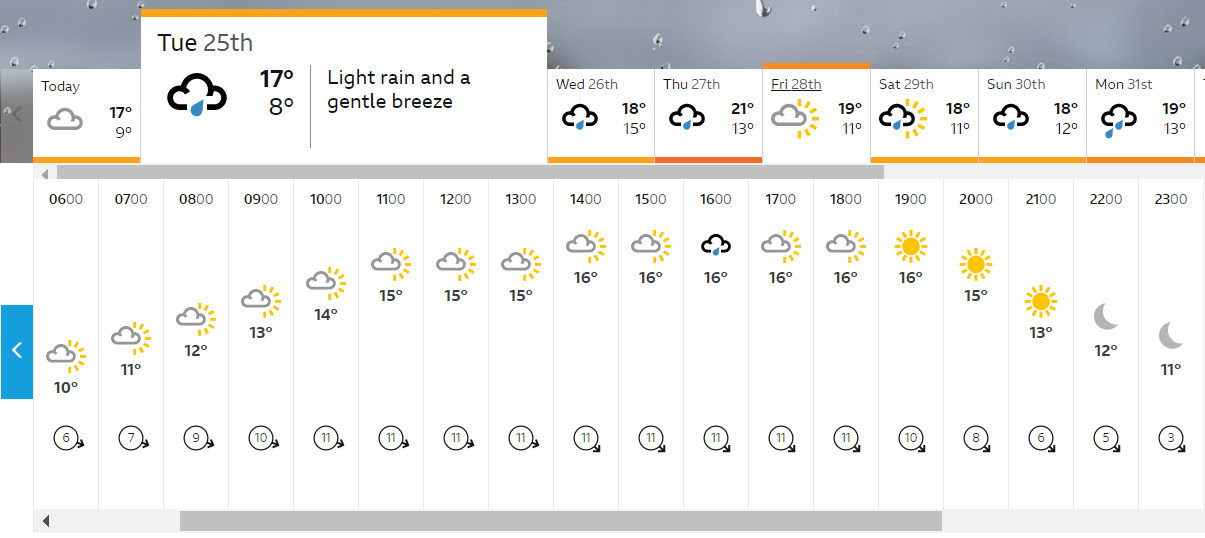
A lovely day, effectively and falsely proclaimed to be “wet all day” by the main icon and description, just because of a few drops of rain at 4pm.

And here’s another example of how the BBC lies with its 10-day forecast. A beautiful Sunday, but the slight chance of a drop of rain at 4pm means the whole day is falsely labelled “Light rain”.
This is not just misleading, it’s damaging the UK, with visitor attractions and some retail seeing up to a 30% drop in people if “rain” is apparently forecast.