Tolkien Studies #14 (2017)

The new edition of the leading journal Tolkien Studies (Volume 14, 2017) appears to be available now at Project MUSE. Not that I’d be able to tell, as it’s pay-walled there. Scholars outside academia and outside the USA have to pony up $70 for a paperback version. $70!

Why is there no ebook version, on Amazon? The editors might be able to make more profit that way, according to my back-of-the-envelope sums. Let’s say they sell 1,000 copies of the $50-$70 paperback and make $38 a copy after printing and overheads. That’s $38,000 profit in maybe 18 months of sales. Let’s say that West Virginia University Press takes a 35% publisher’s cut, thus leaving the editors with about $25k per issue.

But if there was an $8.95 Amazon-delivered ebook giving $6 profit per book, after Amazon’s modest cut, and it sold 5,000 copies (because it was on Amazon, and so cheap and accessible in digital form) then that would give $30k profit in 18 months or so.

Anyway…. the highlights of the issue, for those not interested in the invented languages, are:

* The Mystical Philology of J.R.R. Tolkien and Sir Israel Gollancz: Monsters and Critics. (Update: found in Open Access)
* Visualizing the Word: Tolkien as Artist and Writer. [Update: found a summary on the author’s blog]
* The Year’s Work in Tolkien Studies 2014. (The usual lengthy and authoritative survey review)

Project MUSE does at least have the first page of each of these, for free.

The Queen’s Diamond Jubilee beacons of 1897.

In June 1897, the Queen’s Diamond Jubilee beacons blazed across the nation. Many were of tremendous size. A record of them seems very elusive in north Staffordshire, though one certainly happened atop the Broom Hills near Rudyard. Relics like that shown on the above postcard suggest many more also happened here, and into Cheshire and the Peak, to the same extent as in the south of Staffordshire.

Here’s a June 1897 letter from the poet A. E. Housman, on observing the Queen’s Diamond Jubilee bonfires and beacons to the south-west of the Black Country (South Staffordshire):

“Five minutes or so after the hour [of 10pm, their official starting time] I easily counted 67 [from his vantage point on Walton Hill, Clent]. Some of these were small affairs in the near neighbourhood, which soon died down; but at half-past there were fifty-two burning merrily on the south and west, from the Lickey on the left to the Wrekin on the right. Northward I did not attempt to count, as it was hard to tell the beacons from the ordinary illuminations of the Black Country. Of the distant fires Malvern was much the largest: the pile was sixty feet high and could be seen with the naked eye by daylight: through a telescope it looked like the Eiffel tower, as it was much higher than its width and held together with iron. But it had been so saturated with paraffin that it burnt out in an hour. The Clent fire was on the further hill, and not on the top The Clent fire was on the further hill, and not on the top but on the south-western face. By midnight, the number of fires had very much decreased, and only four, besides the Clent one, were visible at two o’clock: two distant ones somewhere by the Brown Clee, and two nearer, — one Droitwich way, and one on Kinver Edge which burnt till daylight brilliantly. It was a fine night, and at midnight the sky in the north had enough light for me to see the time by my watch. At two I heard a cuckoo, and immediately afterwards the larks began to go up and make a deafening noise, and some person at Kingswinford, possibly wishing to stop the row, sent up a sky-rocket. (There had been a number of rockets at Birmingham before 10.) About this time the first tinge that you could call blue came in the sky, which had turned buff and green soon after one: at 5 the clouds were red. I stayed to see the sun get above the mists and clouds, which was just 4 o’clock, and then I went back to bed at 5.15. There was a fair crowd round the Clent fire, but a policeman, who told me at 3 that he had been on duty ever since 6 a.m. the day before, said that it was not near so large as in 1887.”

Tallet

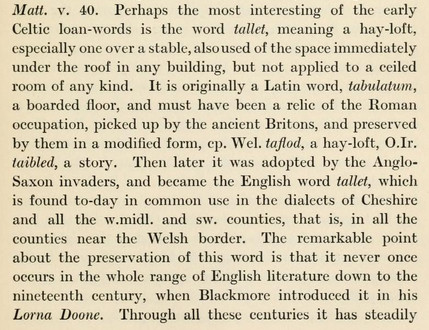
A fascinating account of the survival of an archaic Staffordshire and Cheshire word, tallet, meaning the hay-loft above a stable. The passage on tallet occurs on page 105-6 of Rustic Speech and Folk-Lore (Oxford University Press, 19131) by Mary Elizabeth Wright. Wright was the learned wife of one of J.R.R. Tolkien’s key tutors at Exeter College Oxford, Joseph Wright.


1. Likely to be November 1913. In October 1913 The Dial stated that the book was forthcoming and to be issued in the Autumn of 1913. In the 1st December 1913 issue of the The Dial, the book is listed as having been “received since the last issue”. Given the delay in transatlantic shipping to the USA, this would place the publication date at perhaps early to mid November 1913. Given the date and the author, and the subject matter (inc. “Supernatural Beings”, plant names etc) it seems a likely early influence on Tolkien. The possible influence has been explored by J. S. Ryan in his essay “An Important Influence: His Professor’s Wife” (in Tolkien’s View: Windows into his World, 2009).

Been there, done that…

A couple tour a few of the many pottery factory outlets in Stoke-on-Trent, and are generally disappointed by all but Dudson in Burslem…

“Julia thought she’d like to look round a shop full of odds and ends of hotel ware [at Dudson]. So, U-turn [the car] and waste time as traffic builds up. I couldn’t have been more wrong. It’s actually got loads of great (brightly coloured) stuff and it’s cheap. It also had plenty of room for fat people and a cheery woman on the till. I bought more there than we bought anywhere else … We will be going back to Dudson, and will doubtless fit in a visit to Moorcroft [which is nearby]”

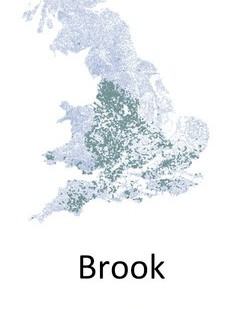
Brook

I’m generally rather sceptical of ‘place-name evidence’. But it seems that ‘generic’ stream names are, in aggregate, clear evidence of ancient territorial boundaries. Which is a very interesting finding…

One can glimpse here the boundaries of ancient Mercia, the incursion of the Danelaw, and even spot the English speakers who settled into a little nook of Wales. Tolkien was fascinated by that nook, as a linguistic reliquary, and is known to have visited it. In one of his texts he named himself ‘Prof. Rashbold of Pembroke’.

Flora of Middle-Earth

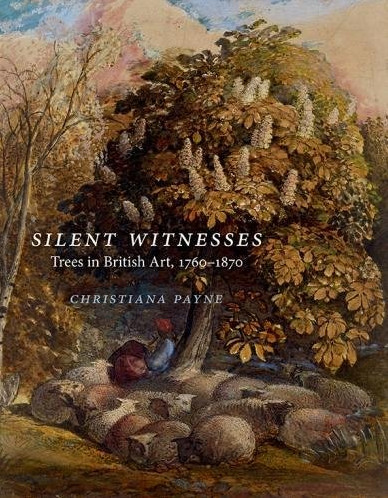
“Tolkien fan science and the flora of Middle-earth“, musing on a just-published Oxford University Press book Flora of Middle-Earth: Plants of J.R.R. Tolkien’s Legendarium.

“The book’s thoroughness and detail is exhilarating. Though most of the information it offers can be found in field guides, encyclopedias, and other reference sources, I did not really appreciate the variety of plants Tolkien portrays in his world until I read it. Sated with Tolkien’s love of trees and his obsession with climatic and ecological details, a reader can easily overlook the diversity and careful placement of Middle-earth’s plant-life. Flowers and shrubs are everywhere, from Bagshot Row to Morgul Vale. The biomes of Tolkien’s world show a profound ecological insight, from the First Age through to the Fourth.”

Yet… “it is unlikely to attract many botanists or Tolkienists, much less casual readers. A passion project it proceeds, seemingly without care for an audience, shoring its opinions with insouciance and data.”

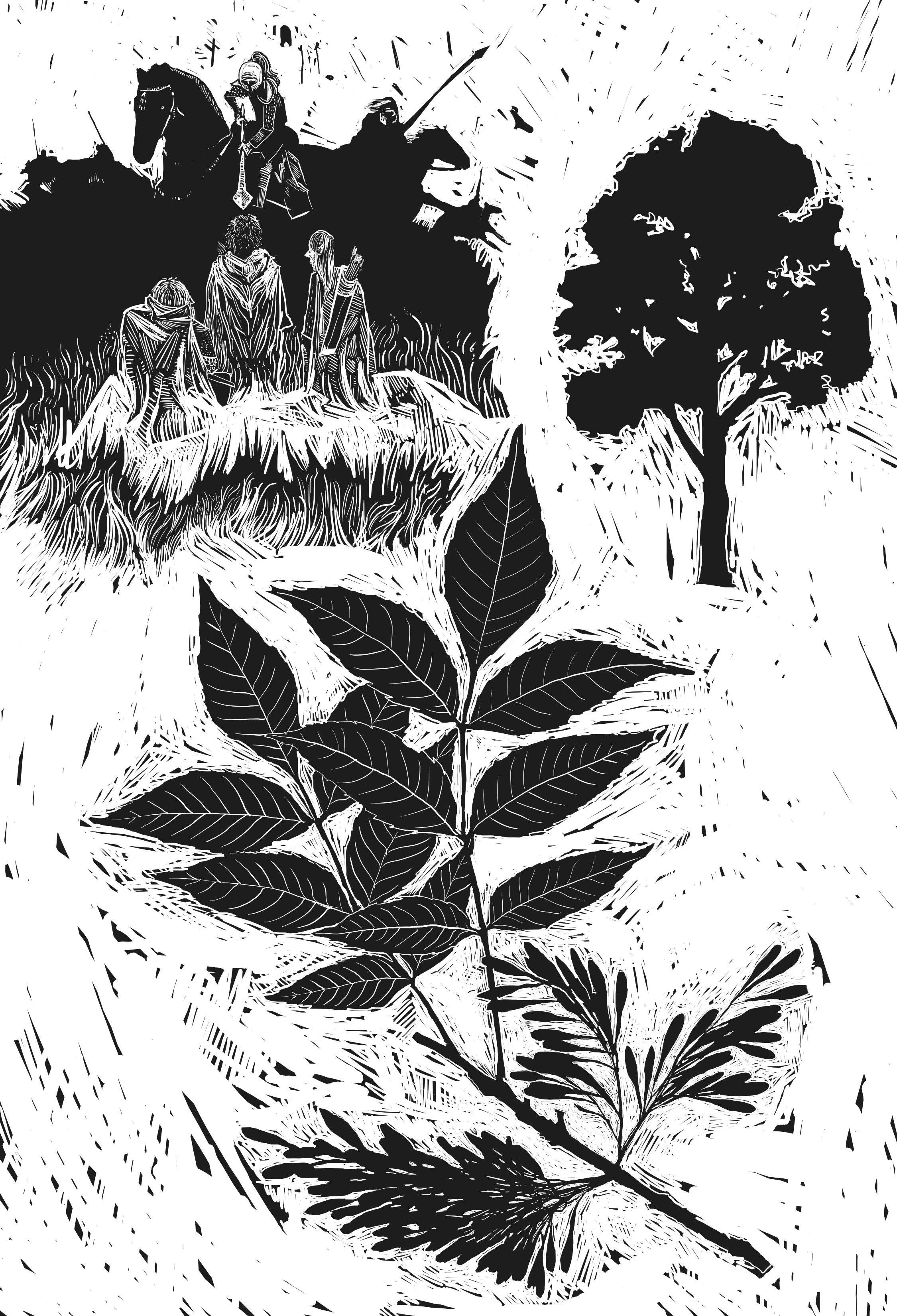
Sounds absolutely wonderful. However, on closer perusal on Amazon I definitely don’t like the rather chilly and dour b&w woodcut style of Graham Judd’s illustrations, which doesn’t reflect the warm and enticing cover illustration. Good for researchers, though.

Update: Having seen it I really can’t recommend it for most, due to the choice of interior art style. Vastly better for most people will be the beautiful and warm book The Plants of Middle-earth. Perhaps accompanied, if a gift for a bloke, by Pipe-smoking in Middle-earth.