Howard Shore’s superb score for The Lord of the Rings: The Fellowship of the Ring (the first of the film trilogy) is getting a limited edition pressing of 5,000 copies of a 5 disc set of L.P. records on red vinyl. Probably about as close as you’ll get to having the original master tapes, assuming that red vinyl has the same audio properties as black does. It’s released in April from Rhino, for $120.
Category Archives: Tolkien Gleanings
All around the Wrekin
My Birmingham grandmother, who grew up in rural mid-Staffordshire, used a common Staffordshire and Shropshire phrase meaning ‘going all around-about on foot, in a long and tangled journey back to where you started’. This was “all around the Wrekin”. The same phrase was also used to refer to a person who verbally rambles, taking a long time to say something that could be said more directly.
The Wrekin [ree-kin] in question is a famous and impressive hill-fort of the Cornovii in nearby Shropshire, on the Welsh Marches. Its size and location indicates it was their most significant tribal centre, although they were probably still somewhat seasonally nomadic in terms of having summer and winter palaces…
[Caesar] “had ample opportunities of observing the appearance of the country, and of learning much about the inhabitants … He considered the country very thickly inhabited, and the abundance of cattle to be deserving of notice. The buildings he saw resembled those of Gaul, and were very numerous, but according to him the British idea of a town or fortress was a place with a tangled wood [the mwthlach or mothlach] round it, and fortified with a rampart and ditch; inside this they would, as Strabo tells us, build their huts and collect their cattle, but not with a view of remaining there long.” (Sir John Rhys, Celtic Britain, page 53)
These are the words of J.R.R. Tolkien’s early inspiration on matters Celtic, Sir John Rhys. He published an essay on the Wrekin and its various linguistics in 1908, and this is now online: “All around the Wrekin”, Y Cymmrodor XXI, printed November 1908.
Tolkien was familiar with Rhys from a young age. He had read Rhys’s Celtic Britain (probably in the second edition of 1884) as a boy in Birmingham. Later he very likely sat in on Rhys’s series of lectures at Jesus College, Oxford, even though Tolkien was then at another Oxford college and the lectures were not required for his degree. There is, however, no evidence that I know of that the Wrekin was “the inspiration for Middle-earth” — a claim made in local Tourist Board piffle.
Rhys’s essay on the Wrekin mostly delves very deeply in the history and word-meanings, and is as digressive as its title suggests. But everyday readers may be interested to know that, buried deep among the dense philology, Rhys notes (page 11) a similar surviving phrase of the 1900s…
“a local toast in our day describes [the district] comprehensively as: “All friends round the Wrekin”.”
Rhys passes this swiftly by and he assumes the phrase was a conflation of the people of the district with the district itself. In effect a phrase meaning that: ‘all are friends who live around the Wrekin’, because from a common stock. But the use of the phrase in print, as a dedication for the book The Recruiting Officer (1706), seems to me to indicate that it then meant something slightly different: ‘too many friends to go all-around and mention each person by name’. In the era of heavy-drinking banquets, this would have been a convenient and welcome phrase for a toast-giver, getting him out of having to remember and recount a string of names while drunk. And risk mispronouncing or forgetting people’s names. This meaning is then congruent with the modern use of “all around the Wrekin” meaning someone who verbally rambles. In effect, at a banquet it would have been easily remembered shorthand for: ‘Here’s a toast to all my friends… but I won’t go all around the Wrekin, by trying to mention each of them by name’.
One might recall Bilbo’s party speech here, at the start of The Lord of the Rings, when he thanks the…
“”Bagginses and Boffins … Tooks and Brandybucks, and Grubbs, and Chubbs, and Burrowses, and Hornblowers, and Bolgers, Bracegirdles, Goodbodies, Brockhouses and Proudfoots …” Why couldn’t he stop talking and let them drink his health?”
The more casual reader of Rhys’s essay may also find useful his appendix, where in three pages he deftly summarises a long scholarly monograph on the name Wrekin: in Mercian the name was Wreocen, going back to a Celtic Wrikon-. Later authors (1949, 1963) have tentatively suggested a relation of Wrikon- to the Welsh gwrygio, meaning something like ‘to wax (grow, swell) strong and manly | to exert strength and thus thrive’.
The cost of roaming the fields
From a blog post I noted while searching, “A reviewer’s complaint”…
Thomas Honegger [in 2015, complained of Tolkien] scholars unaware of major and basic work in the areas they are covering. “How are we going to advance Tolkien studies if scholars in the field are ignorant of each others research?”
Well, I know how and why this happened. It’s the explosion in the size of our field.
I’d also suggest it’s the cost, and sometimes the difficulty, of obtaining the needed items. To obtain the “little opinion piece by Thomas Honegger”, for instance, I’d need to spend £20 plus postage for a print copy of a little-known German scholarly journal. Since I don’t need anything else that’s in the journal issue, and a quarter of the essays are in German anyway, £20 is not an enticing price.
Let’s say that one wishes to make a basic start in Tolkien scholarship. That’s a little less daunting than starting on someone comparable like H.P. Lovecraft, since Tolkien scholarship is not so saddled with rare book collectors (Tolkien collectors are only interested in what Tolkien wrote, not what’s been written about him). Even so, a basic small shelf for Tolkien is probably around £500. That’s less than the perhaps-£800 you’d need to make a start on Lovecraft and do proper fannish scholarship (not the risible slander which Lovecraft usually gets from fly-by university professors). But with Tolkien, the somewhat lower per-item costs are then balanced out by the larger range of items you’d need to see a clear outline of the field. There are also higher ongoing costs to keep up with the ongoing wash of Tolkien scholarship, compared to the relatively small trickle of annual Lovecraft scholarship (the valiant efforts of S.T. Joshi and co. aside) that’s worth reading. There is admittedly a very good survey in each annual issue of Tolkien Studies, but just acquiring the last four issues of Tolkien Studies would cost me $280.
Such startup costs would be no problem for an academic on a whopping £38,000+ a year, or even for an £18k funded PhD who has miraculously found a friendly librarian with ample funds for inter-library loans and book purchases. But even an initial £500 outlay would be daunting for most impoverished independent scholars. Especially as that initial £500 would soon need to be matched by another £500 for runs of paper journals, books and obscure out-of-print items. Even if one was very frugal, and also knew how and where to hunt items online, and how best to wrangle with Google Books etc, one could still end up having to spend at least £300 on ‘needed item’ print books. All in order to write a new book that may only sell 30 copies and get one review.
The other problem, in terms of Honegger’s complaint, may be the cost of getting a detailed pre-publication reader’s report from someone at the top of the field. Thus enabling one to sidestep the sort of small snags that so antagonise reviewers in the field. Perhaps Tolkien studies now needs some kind of subsidised pre-publication peer review system, for substantial new books from outside the academy. Or one might publish the PDF online for free for 18 months, with a public “call for comments” and commenting system, then publish a revised and corrected final-version in print two years later.
A wander in the Morlock Mountains
I’ve been reading the new essay by H.L. Spencer, “The mystical philology of J. R. R. Tolkien and Sir Israel Gollancz: monsters and critics”. One of the things I was pleased to learn was that Tolkien seems to have known Wells’s The Time Machine, on the genesis of which I’ve recently written a book. The evidence for Tolkien having read The Time Machine is that he wrote a poem, circa 1927, which satirised the fearsomeness of “exalted” academics by describing them in proto-Gollum terms. In both person and topography, since they live underground and beyond the “Morlock Mountains”. The reference being, of course, to the Morlocks — the devolved subterraneans in Wells’s The Time Machine.
This poem was titled “Knocking at the Door” and subtitled: “Lines Induced by Sensation When Waiting for an Answer at the Door of an Exalted Academic Person”. It was published 18th February 1937 in The Oxford Magazine (page 403, as ‘Oxymore’). Sadly it seems The Oxford Magazine is not online, and the original version of the poem seems not to be available online in any form.
The 1962 version is however online on YouTube, in several readings, and also at the Tolkien Gateway in text form. Here are the final verses…
The cellars where the Mewlips sit
Are deep and dank and cold
With single sickly candle lit;
And there they count their gold.Their walls are wet, their ceilings drip;
Their feet upon the floor
Go softly with a squish-flap-flip,
As they sidle to the door.They peep out slyly; through a crack
Their feeling fingers creep,
And when they’ve finished, in a sack
Your bones they take to keep.Beyond the Merlock Mountains, a long and lonely road,
Through the spider-shadows and the marsh of Tode,
And through the wood of hanging trees and gallows-weed,
You go to find the Mewlips – and the Mewlips feed.
The similarity to “flap-flip”-footed Gollum, in his bone-strewn cave under the mountains, should be obvious. So it’s interesting that Gollum could have started off as a prototype as early as 1927 and in the form of a satire on slippery student-gobbling “exalted” academics. H.L. Spencer explores the possibility that the academic who Tolkien had in mind was his rival at the time for Gawain, Sir Israel Gollancz. But finds the evidence rather vague, and offers some counter-evidence on Tolkien’s sentiments at the time. It’s difficult to tell, without seeing the original poem. For instance, was “And there they count their gold.” in the 1937 original? [Update: no, it wasn’t] Or was it something more academic, like “And there they scratch so bold.”?
The J. R. R. Tolkien Companion & Guide comments on the later version of the poem, that…
“Knocking at the Door seems to be a comment on the trepidation of a student calling on a professor; transformed into The Mewlips and divorced from its original meaning, it is a work purely of mood and imagination.”
To be specific, it was re-titled, stripped of its explanatory sub-title and apparently re-worked (how much?) for children, and thus tamed. It was reprinted as “The Mewlips” in The Adventures of Tom Bombadil (1962).
H. L. Spencer usefully comments in a footnote in the essay, that…
“The Mewlips are later said to live beyond the ‘Merlock Mountains’; in the original [1927/1937] version, these are the ‘Morlock Mountains’, referring to H. G. Wells’s cannibalistic underground creatures”.
I’d add that this shift from Morlock to Merlock also shifts the register from the Biblical (Morlock recalls Moloch) to the Arthurian (Merlock recalls Merlin). I’ve discussed Wells’s Biblical Moloch link at length, in my recent book on the genesis of The Time Machine. One then has to suspect that Tolkien easily spotted that Wells was quietly referencing Moses and Moloch worship throughout The Time Machine, and would thus have puzzled out all the subtle re-uses of such Biblical elements and names. In which case he knew that Morlock must recall Moloch for the fellows of Oxford who read The Oxford Magazine, which must then key the poem’s theme to the similar and well-known forms of Moloch worship. This can then be seen to tie in with certain other aspects of the information given in H. L. Spencer’s essay, and even with a certain gruesome later development in Gollum’s back-story as given in The Lord of the Rings.
Also interestingly, Tolkien’s apparent reading of The Time Machine, if in perhaps circa 1924/25, would have been closely paralleled by H. P. Lovecraft reading The Time Machine for the first time in New York during November 1924.1 It’s strange to think of them as such contemporaries in horror, like that. Shortly after experiencing the underground cannibalistic Morlocks, Lovecraft writes “The Horror at Red Hook” (underground, child sacrifice), and Tolkien writes “Knocking at the Door” (underground, student-eating).
1. Lovecraft thought Wells was a tedious and canting socialist, which he was by that point. Thus Lovecraft avoided his books. But a young protege of Lovecraft was making a collection of very early SF, then largely forgotten, with the aid of the used bookshops of New York City. He encouraged the master to at least read The Time Machine.
Tolkien at Leeds, July 2018
A wealth of Tolkien sessions, at the International Medieval Congress 2018 at the Leeds Hilton in the UK (2nd – 3rd July). The most interesting papers for me would be those on the deeper historical context, in “Tolkien: Medieval Roots and Modern Branches, II” on Tuesday 3rd July: “Tolkien’s Agrarianism in its Time” (hopefully surveying the verdant undergrowth of nature-thinking, land reform concerns and organicist living that informed radical politics from the 1920s onwards), and “A Man of His Time?: Tolkien and the Edwardian Worldview”. Rather too expensive for me, though, just to hear those two papers: £35 + a £45 train fare to arrive after noon = £80.
Free: “The mystical philology of J. R. R. Tolkien and Sir Israel Gollancz”
Excellent, I’ve found the essay “The mystical philology of J. R. R. Tolkien and Sir Israel Gollancz: monsters and critics”. It’s in full-text Open Access at the Oxford University Research Archive. No need to pay $70 for it, in a copy of the latest edition of Tolkien Studies where it forms the lead essay.
I also found a summary on the author’s blog of the other interesting essay “Visualizing the Word: Tolkien as Artist and Writer”.
Though sadly the volume also contains the desirable “The Year’s Work in Tolkien Studies 2014”, which isn’t going to be Open Access any time soon.
Tolkien Studies #14 (2017)
The new edition of the leading journal Tolkien Studies (Volume 14, 2017) appears to be available now at Project MUSE. Not that I’d be able to tell, as it’s pay-walled there. Scholars outside academia and outside the USA have to pony up $70 for a paperback version. $70!
Why is there no ebook version, on Amazon? The editors might be able to make more profit that way, according to my back-of-the-envelope sums. Let’s say they sell 1,000 copies of the $50-$70 paperback and make $38 a copy after printing and overheads. That’s $38,000 profit in maybe 18 months of sales. Let’s say that West Virginia University Press takes a 35% publisher’s cut, thus leaving the editors with about $25k per issue.
But if there was an $8.95 Amazon-delivered ebook giving $6 profit per book, after Amazon’s modest cut, and it sold 5,000 copies (because it was on Amazon, and so cheap and accessible in digital form) then that would give $30k profit in 18 months or so.
Anyway…. the highlights of the issue, for those not interested in the invented languages, are:
* The Mystical Philology of J.R.R. Tolkien and Sir Israel Gollancz: Monsters and Critics. (Update: found in Open Access)
* Visualizing the Word: Tolkien as Artist and Writer. [Update: found a summary on the author’s blog]
* The Year’s Work in Tolkien Studies 2014. (The usual lengthy and authoritative survey review)
Project MUSE does at least have the first page of each of these, for free.
Flora of Middle-Earth
“Tolkien fan science and the flora of Middle-earth“, musing on a just-published Oxford University Press book Flora of Middle-Earth: Plants of J.R.R. Tolkien’s Legendarium.
“The book’s thoroughness and detail is exhilarating. Though most of the information it offers can be found in field guides, encyclopedias, and other reference sources, I did not really appreciate the variety of plants Tolkien portrays in his world until I read it. Sated with Tolkien’s love of trees and his obsession with climatic and ecological details, a reader can easily overlook the diversity and careful placement of Middle-earth’s plant-life. Flowers and shrubs are everywhere, from Bagshot Row to Morgul Vale. The biomes of Tolkien’s world show a profound ecological insight, from the First Age through to the Fourth.”
Yet… “it is unlikely to attract many botanists or Tolkienists, much less casual readers. A passion project it proceeds, seemingly without care for an audience, shoring its opinions with insouciance and data.”
Sounds absolutely wonderful. However, on closer perusal on Amazon I definitely don’t like the rather chilly and dour b&w woodcut style of Graham Judd’s illustrations, which doesn’t reflect the warm and enticing cover illustration. Good for researchers, though.
Update: Having seen it I really can’t recommend it for most, due to the choice of interior art style. Vastly better for most people will be the beautiful and warm book The Plants of Middle-earth. Perhaps accompanied, if a gift for a bloke, by Pipe-smoking in Middle-earth.
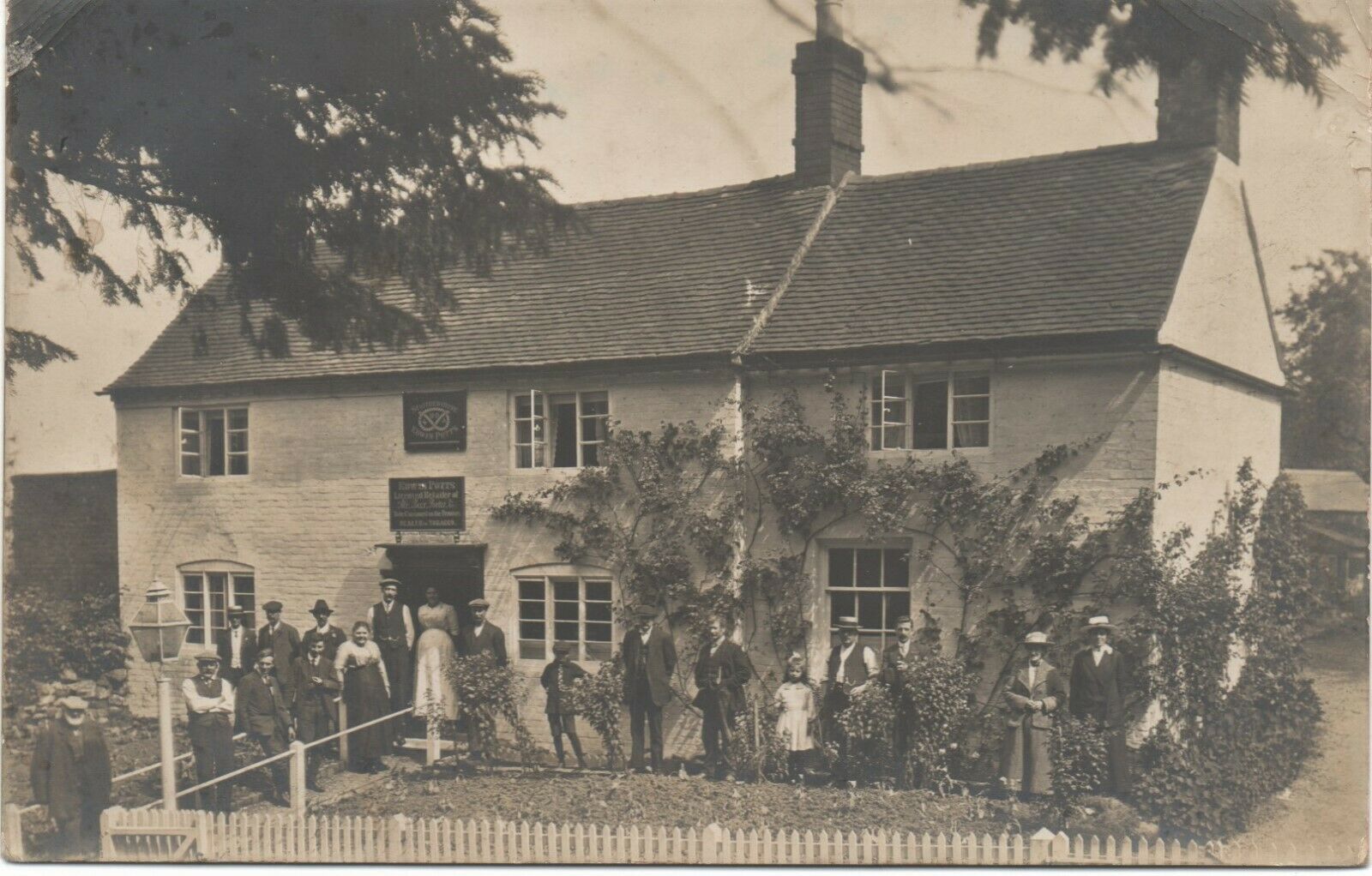
‘Tolkien in Staffordshire’ – at Newcastle-under-Lyme from 24th June 2017
I’m pleased to see that the “J.R.R. Tolkien in Staffordshire” touring exhibition reaches the Brampton Museum soon, opening there on Saturday 24th June and running until 22nd July 2017. It’s my nearest venue, and I’ll be popping along at some point.
“Brampton Museum” seems to be a fairly new moniker for the museum, and as such won’t be recognised by many. When I first saw the name on the list I assumed it must be some obscure rural Staffordshire village. It’s actually the council-run museum in Newcastle-under-Lyme, located in Brampton Park on the northern edge of the town centre.
I see there’s also a talk in Newcastle-under-Lyme from the active local branch of The Western Front Association. Dave Robbie will talk on ‘J. R. R. Tolkien and The Great War’, 10th July 2017, 7pm until 9pm at “Newcastle Methodist Church”. That could be one of many such Methodist churches, but judging by the map on the website it’s the former church lecture hall in Merrial St., close to the Council offices…
I vaguely seem to recall that this is used by the ‘University of the Third Age’ crowd, so this must be it.
Possibly there will be other such talks and events in the town. “Tolkien in Staffordshire” is not a major show in size, but I happen to know that the assistant at the town’s Museum is a big Tolkien fan. So possibly there will be add-on events around the exhibition.
Tolkien at Exeter College
John Garth profiles his Tolkien at Exeter College: Birth of a legend in his blog. A very good booklet as far as it goes, and the scholarship is of course sound. It’s well worth getting if you’re interested in the pre-war Tolkien, but be aware that there are huge gaps and elisions.
J.R.R. Tolkien’s Vision of Freedom
There’s an entertaining and well-delivered recent Acton Institute podcast on Tolkien’s political stances, “J.R.R. Tolkien’s Vision of Freedom” (major plot spoilers). Be warned that the sound quality at the start is terrible. The lecture itself starts at 3:48 minutes, using a different microphone, and from then on the sound becomes much better.
It’s a very illuminating lecture, and didn’t drift off into the usual tedious American think-tank concerns about: ‘… and how does this relate to the Constitution and the Founding Fathers?’ The speaker’s grasp of both The Lord of the Rings and British history is obvious somewhat superficial (at one point he forgets the names Merry and Pippin, and never mentions the roots of Tolkien’s ‘conservative anarch’ politics in the lived experience of pre-Norman England), but otherwise the lecture seems soundly based. After listening I can certainly see an additional political aspect to the initial tepid reception of The Lord of the Rings in the Cold War of the mid and late 1950s. Soviet agents and communist sympathisers were in key positions in British literary life at the time. The publication of Orwell’s Animal Farm for instance, was repeatedly blocked by what we now know to be Soviet ‘sleeper’ agents. One wonders how this influenced the reviews for The Lord of the Rings, though one also has to wonder how many of those early reviewers actually read the book, let alone got all the way to “The Scouring of the Shire”. The same problem also informs the more recent sour reception of the movie adaptation, among leftists and Guardian readers.
The lecturer also has a whole book on the topic, for those who need the details and the footnotes, The Hobbit Party: The Vision of Freedom That Tolkien Got, and the West Forgot. This has a deeply off-putting title and cover, which I presume were somehow meant to ‘attract the Harry Potter generation’, but with the unintended consequence of making everyone else cringe and flee. Nevertheless, the book has been well-reviewed, and it’s definitely not another ‘Shopping Lists of the Inklings: a Lacanian analysis’.
The Runic Poem’s “moor-stepper”: Orion
I saw the constellation Orion rising in the dawn sky, standing up and rather fine, this morning at 6.30am. So I thought I’d make a suggestion that might put right a misconception, about the nature of the “moor-stepper” found in the gnomic “Ur” Runic Poem (pub. 1705). Especially for the benefit of any pagans out there, who according to my cursory searches appear to think it was a Grendel-like monster or a wild auroch (extinct type of wild bull).
Runic Poem, original:
U | [ur] byþ anmod and oferhyrned,
felafrecne deor, feohteþ mid hornum,
mære morstapa; þæt is modig wuht.
Charles William Kennedy, 1910, in the “Introduction” to the best translation of Cynewulf:
U | [Ur] is headstrong and horned, a savage beast. With its horns the great moor-stepper fighteth; that is a valiant wight.
My translation:
U | is steadfast has horns above all,
a very savage beast, fighting with its horns,
great mere-stepper; that is greatly spirited.
Picture: Simplified design based on Orion shown in the Firmamentum star atlas, 1690 AD. He steps into a mere, a spring-fed mere-pool that feeds the river constellation. (This is a .GIF image and may not appear if you have a GIF blocker).
Having seen Orion this morning I can say that his stepping pose is quite obvious to the star-gazer. So I’d suggest it’s not only a moor-stepping bull in the Runic Poem. It’s also Orion, who is frozen in the pose of stepping up. The “mere” is the (assumed moorland) mere-pond that feeds the river constellation, into which he steps in order to face the bull. He is at a disadvantage in the fight, due to the terrain, not to mention the gigantic bull. The trickster hare gives him ‘a leg up’ on her ears, and lets him borrow her back legs for a moment, with the implication that he may be about to spring over the bull’s horns.
My use of “greatly spirited” is more subtle than Kennedy — since the lines are meant to be a sort of night-sky riddle. So there’s no need to blatantly spell out that to the reader the supernatural aspects. The implication of the lines is that both the Bull and Orion are “greatly spirited”, and that they both exemplify the ‘fighting spirit’ in the rune Ur. The word “wight” was also avoided because modern readers now understand “wight” as being connected to Tolkien’s “barrow-wight”.
Orion’s rising (as a wintertime standing figure) traditionally heralds the autumn storms — “the storms that annually attend the heliacal rising of Arcturus and Orion” (Bede, drawing on Job in the Bible). Thus, the runic Ur is also the associated “greatly spirited” storms and winds. Thus we get the name, presumably, Ur-ion.
The Ur rune might be thought of in terms of man’s bravery and courage, in the face of implacable fury. Not in terms of the rather lumpen modern pagan suggestion that: “durh… Ur means a mad cow, dude!”
It’s then a dual-pronged rune in meaning as well as design: consider for instance the military distinction made between the two types of battlefield bravery: mad foolhardy rush-at-’em bravery, and considered bravery that is brought forth from within oneself in the face of an implacable opposing force. Only the latter type gets medals.
There is a sound-play in the rune poem (given above) between mǽre (‘great’, ‘monstrous’, ‘boundary’, ‘mere (pool)’) and the following word morstapa (‘ranger in-the-wilds’, ‘Orion’). If the Runic Poem was a mnemonic for teaching people the runic alphabet and then helping them to recall its subtleties, this would be a kind of test for them. The choice of meaning that a student has to bravely declare to the teacher (‘it’s just an angry bull’) thus encapsulates the choice a brave man must take in battle, in weighing the evidence and then pressing forward bravely regardless of the known risk. The correct student should emulate this type of subtle military decision-making, before he makes his brave call on the gnomic meaning of the lines (‘actually it’s the Bull and Orion, and is about the two types of bravery’).
Incidentally, “modig” = ‘spirited’ in the Anglian form. Which implies the Runic Poem may be Mercian, or at least copied there by a scribe, because in other territories modig was only used religiously and later. (The Cambridge History of the English Language, Volume 1, p. 343).
I can call an eminent philologist to my cause here. Bosworth obviously also thought the morstapa wasn’t the wild bull itself, but rather a man ranging into the wilds to fight it…
Mor-stapa, an; m. a moor stepper, a desert ranger (A Dictionary of the Anglo-saxon Language, 1838)
Compare also the Roman writer Manilus (d. 384 BC) on Orion (Jewish: gibbor, ‘the giant’; Arabic: ‘the hero’). To him this sky-deity makes… “Smart souls, swift bodies, minds busy about their duty (officium), hearts attending all problems with speed and indefatigable vigor”. (A.E. Housman trans.) Also Thomas Hood of Trinity College, Cambridge (1590)… “the reason why this fellow was placed in heaven, was to teach men not to be too confident in their own strength.” Horne, famed for his deep study of Orion and his three-volume epic poem on the topic, also has in his Introduction… “Orion is man standing naked before Heaven and Destiny, resolved to work as a really free agent to the utmost pitch of his powers…”.
Tolkien might have nodded to the -or part of Gibbor in The Lord of the Rings… “as he climbed over the rim of the world, the Swordsman of the Sky, Menelvagor with his shining belt. The Elves all burst into song.”
Finally, I’d also note that the bottom half of Orion with his ‘stepping’ leg looks like the shape of the Ur rune….
Picture: Malton Pin, 10th century northern England (my crop of the British Museum’s photo of the cleaned brooch); and a modern simplified version of the rune.