Tolkien Gleanings #410
* Magdalen College, Oxford has a nice new job offer. Work for three years as a postdoctoral researcher on “C.S. Lewis and J.R.R. Tolkien: A Scholarly Reappraisal”. The successful candidate is to be paid £42.7k(!) per year. Not a AHRC project. Deadline 7th June 2026, to start 1st October 2026.
* New in the forthcoming £245 Routledge Companion to Early Modern Music and Literature, the chapter “Tolkien, the Gawain-Poet, and Music”. The book is due in June 2026, with a free chapter-abstract available now.
* The Entmoot Podcast this week interviews the author of the book Tolkien, Enchantment, and Loss (2021).
* Kmita’s Library has the new article “Legendary Heroes and Baptismal Symbolism in Tolkien’s Stories”. Substack, but freely available.
* Humanum Review has the new article “Table Matters: On St. Thomas, Tolkien and Babette’s Feast”. Freely available online.
* Tolkien: Medieval and Modern has a new article on “The Fallen World and the Fear of Monsters”. Freely available online…
“In [Edmund] Wilson’s critique, and [that of] many others, the idea of monsters is taken as a childish one, conjurations of the imagination that serve as nothing more than a means to scare children into behaving. They’re not real, and as such don’t deserve any real study or focus. [… But for Tolkien, monsters can be made] to illuminate the truth of sin Tolkien believes to exist in our world […] monsters are sin, and that sin, to Tolkien, is very real, and should be feared.”
* From the University of Silesia, Poland, the PhD thesis Myths, Gods and Saga Structure: On Heroism and Tradition in the Old-Norse Sagas (2024), now freely available online. In English, a close comparison of the Volsungasaga and The Nibelungenlied, with a touch of Tolkien at the end…
“The last chapter provides a view on modern ideas of heroism and its depiction. Arthurian myth and the works of J.R.R. Tolkien are examined in terms of comparison with what is represented in the source texts, showing a significant overlap of motifs in all texts.”
* A new debut novel, just published, The Inklings Detective Agency (May 2026). Set in 1936, a fictional Tolkien and C.S. Lewis team up with Agatha Christie and Dorothy L. Sayers to solve a series of mysterious Oxford murders.
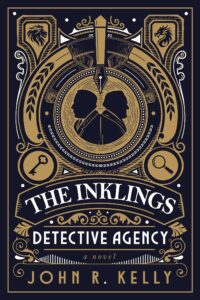
There’s a slight spoiler in the official blurb, which I’ll skip. The blurb then goes on to gush…
“Packed with historical details, intrigue, and a thrilling whodunit, this novel is a masterful blend of high-stakes drama. Dive into a world where the creators of fantasy and mystery confront a real-life menace in a race against the clock.”
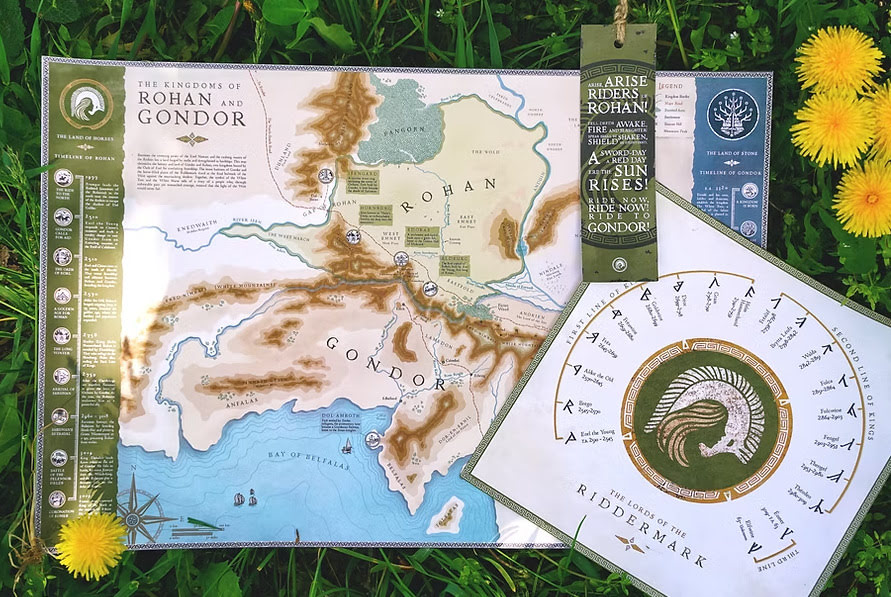
* A new Middle-earth map-pack, for sale from Into Far Lands, Kingdoms of Rohan and Gondor.
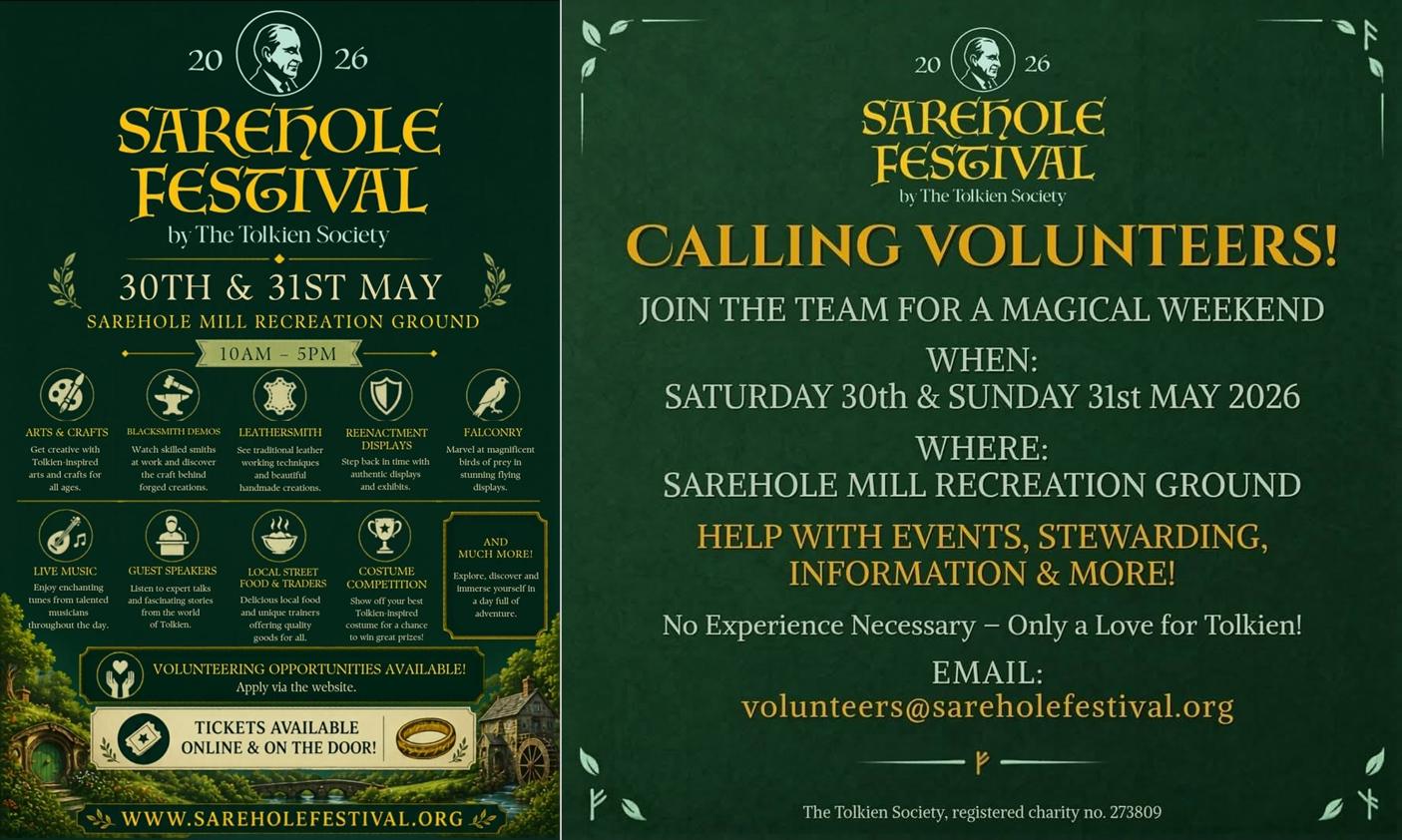
* The Tolkien Society’s revived Sarehole Festival in Birmingham now has an official poster / flyer…
* Should you bag the above lucrative £47k per-year Magdalen College job, and thus be jetting down to sun-drenched Corfu to celebrate… note that the painter Spyros Gelekas has started a Tolkien Museum on the idyllic Greek island. This official Tolkien Calendar artist (2024/2027) has newly…
“founded in Corfu a permanent exhibition space dedicated to Tolkien’s world, the ‘Art of Middle-earth Gallery’, one of the few internationally dedicated to approaching the subject through contemporary visual art.”
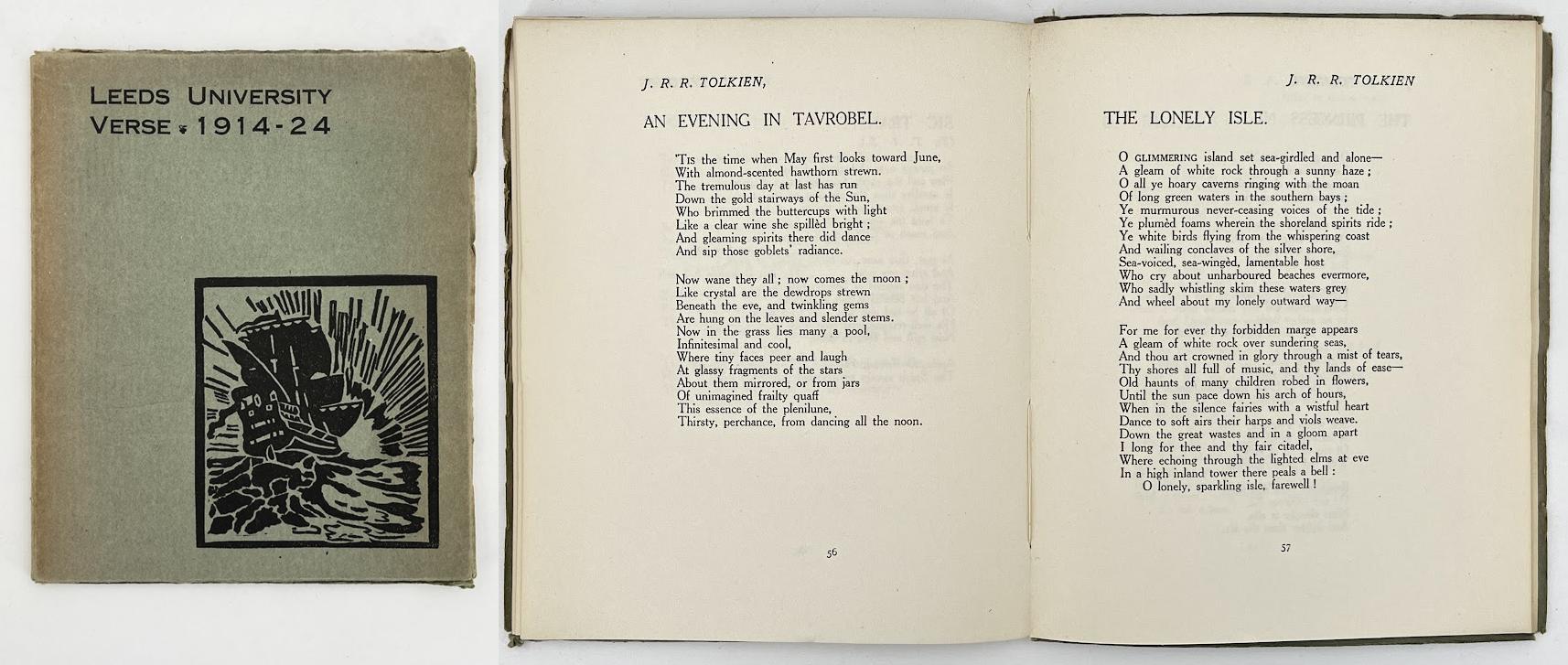
* Seemingly newly up for sale from a seller of rare books, a 1924 example of Tolkien’s published poetry.
* And finally, this week an unusual item popped up on eBay. A frank and amusing ordinary soldier’s poem from “Rugeley Camp” (one of the popular names for Tolkien’s Penkridge Bank Camp). The 1917 card is new to me, and I’m fairly experienced in plucking mid and north Staffordshire cards from eBay. Perhaps it’s scarce due to predations by the war-time censor, due to its focus on the camp’s rats?
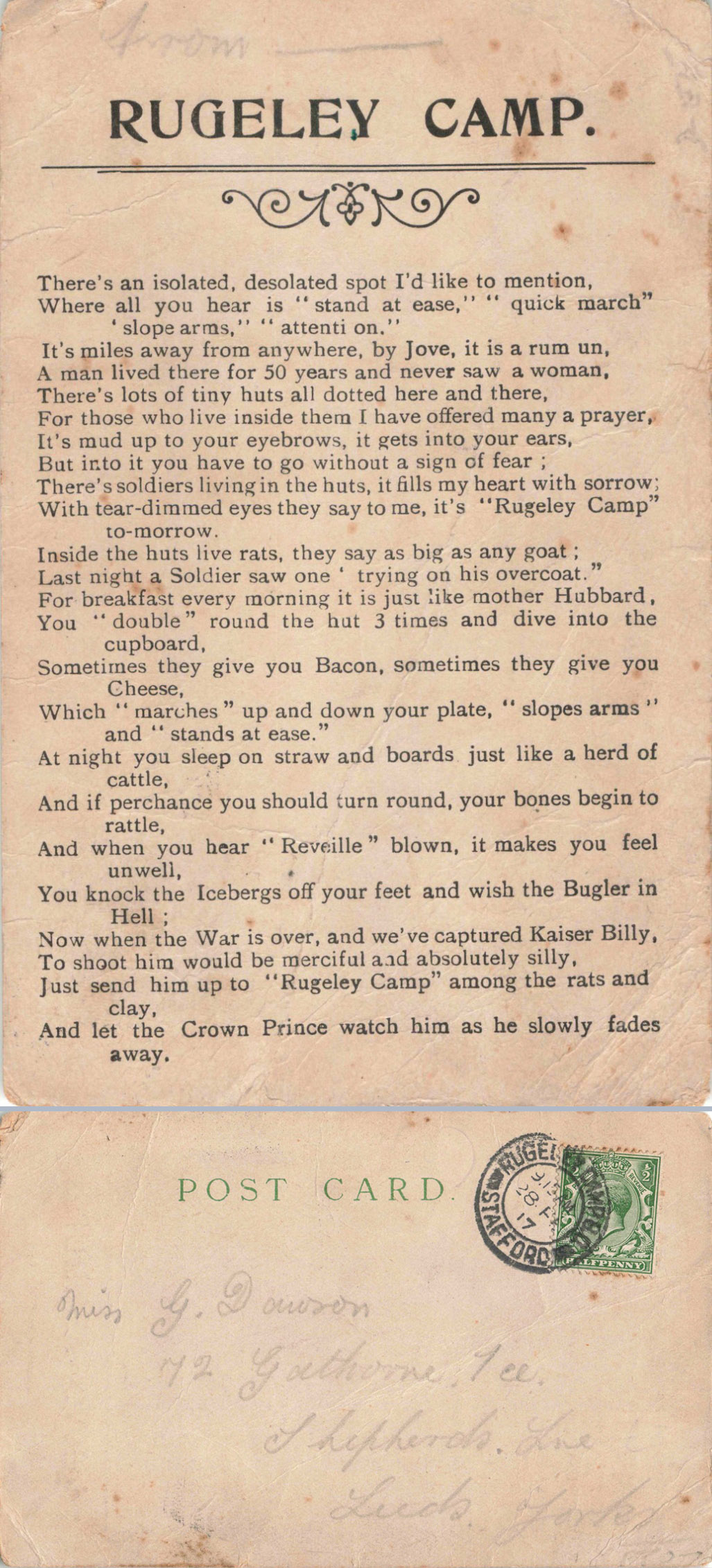
Evidently the camp’s men had rough straw matresses, and there were rats which invaded the huts, at least by 1917. If Tolkien encountered either in his stays in 1915 or 1918 we can’t now know. The anonymous poet’s… “You “double” round the hut three times and dive into the cupboard.” also suggest the men had to run three times around their hut ‘at the double’, before being allowed to scramble for the hut’s tea-cupboard? Tolkien suggests something of the same scramble…
“The usual kind of morning standing about freezing and then trotting to get warmer so as to freeze again. We ended up by an hour’s bomb-throwing with dummies. Lunch and a freezing afternoon… we stand in icy groups in the open being talked at! Tea and another scramble – I fought for a place at the stove and made a piece of toast on the end of a knife: what days!” (letter to Edith Bratt, 26th November 1915).
Penkridge Bank Camp was located at Brindley Heath on Cannock Chase, between Rugeley and Hednesford. Also known to some at the time as ‘The Camp, Hesnedford’ but more often referred to simply as ‘Penkridge Camp’. One of several Staffordshire camps which Tolkien experienced during The First World War.