A rare bit of memorabilia for the 1986 National Garden Festival, popping up on eBay. The poster for the accompanying photography exhibition at the Potteries Museum and Art Gallery.
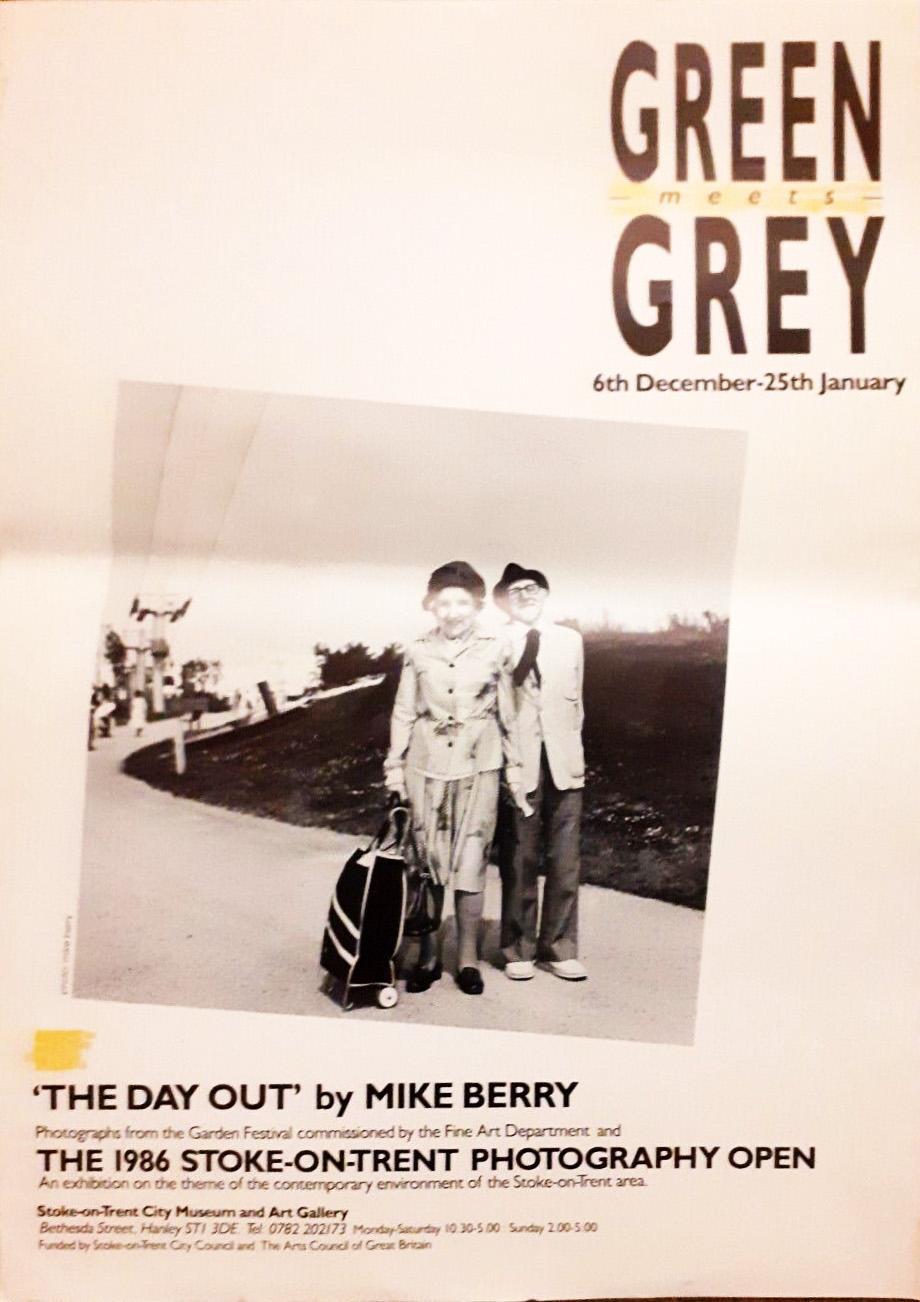
A rare bit of memorabilia for the 1986 National Garden Festival, popping up on eBay. The poster for the accompanying photography exhibition at the Potteries Museum and Art Gallery.
* Now public, a recording of a new public lecture on YouTube ““I hold the key”: J.R.R. Tolkien through interviews and reminiscences”. Given by Dimitra Fimi at the University of Birmingham, in May 2022.
* My unearthing of the location of C.S. Lewis’s 1936 walk near Buxton, Derbyshire, plus a small correction to an important memoir of Tolkien.
* New on Archive.org to borrow, the book There and back again: in the footsteps of J.R.R. Tolkien (2004). This reflects on a series of walks, presumably made in the late-1990s / early 2000s, in the following places…
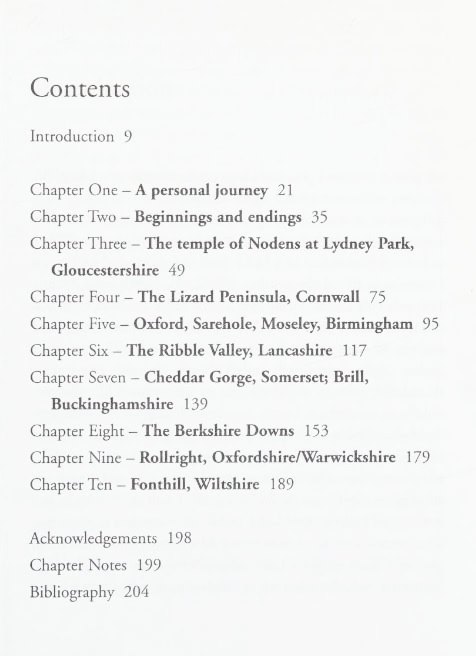
So far as I know, Tolkien never visited the Lyndey excavations. But he certainly wrote the “Nodens” paper.
* And finally, “The Magic of Middle-earth” exhibition is travelling to West Sussex in 2023. The show opens at the museum in Chichester in April, and will require paid tickets.
I’m pleased to present Three Generations of The Family of Author Sydney Fowler Wright (1874-1965), by leading H.P. Lovecraft scholar Ken Faig Jr.
Ken had shown me the private PDF of his genealogical text before Christmas, and I suggested that a few historians and some fiction readers in the West Midlands would be interested in this local writer, if I could add a biographical introduction and more images. He agreed to the expansion and that it could be made public. This 26-page PDF is the result, now freely available for download.
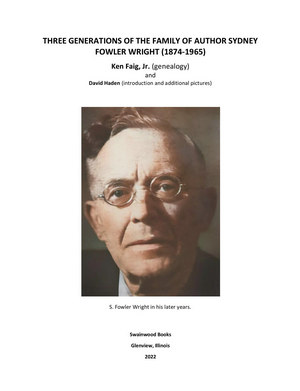
Download: fowler_wright_genealogy_life.pdf
S. Fowler Wright was a key writer in the history of early science-fiction. To earn money for his family he was also a popular crime-mystery writer of the 1930s and 40s. He was raised in Smethwick and then lived in north Birmingham. As a seminal imaginative writer and as a Birmingham man interested in Mercian history he was thus very much a contemporary of Tolkien, and he even went to the same school in New Street. I suspect a connection with Arnold Bennett, and note that Wright apparently advised Churchill on certain matters during wartime (see PDF for details). S. Fowler Wright’s biography remains to be written. I won’t be the one to write it, so feel free.
A bit more on walking and fantasy writers, following my last Tolkien Gleanings. I found a list of long walks taken by C.S. Lewis and his brother. One walk had possibly been taken near me, in Derbyshire.
“13th–16th January 1936 in Derbyshire”
So I briefly looked into it. Tolkien was not with them, and according to the Chronology was hard at work preparing for his new academic term and dealing with tedious Early English Text Society business. But I wondered where the walk was anyway, perhaps for the benefit of some future Tourist Board leaflet. Was it on the west or the east of the Peak? The location took a bit of tracking down, but Lewis’s brother kept a diary that records a visit to the church at Taddington, which is rather amusingly described by the American diary annotator as “north of Oxford”. England may be a very small place, compared to America, but we’re not that small. More precisely Taddington is just a little east of the spa-town of Buxton, in the far west of the Peak. No further details of the precise spot are known. But logically the trip would then be on the train from Oxford – Birmingham – Derby – then onto the local milk-run train through the Peak and then off at Miller’s Dale station just before Buxton… and then brisk and chilly walking in and around the fabulous Miller’s Dale (aka Millers Dale) and probably staying in the local pub there.
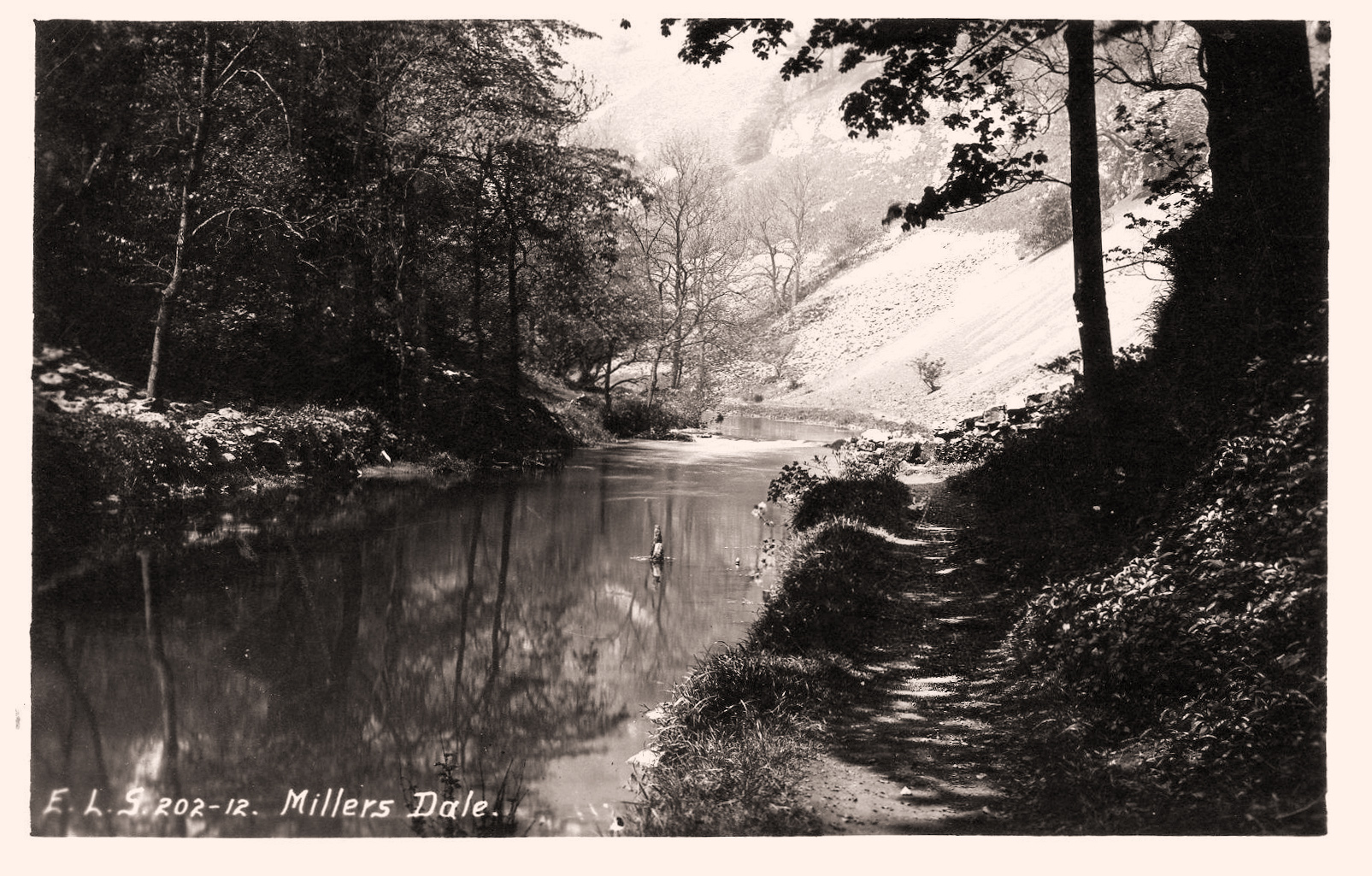
Walking in the snow, since “lovely snow clad trees” feature in the diary in the entry for their final day there. A 1930s winter, with heavy snow, in the Peak, in January. Not something that even the most ardent Lewis-ite would want to re-create today, I’d imagine. Even if they could. Today even the fall of a few snowflakes could be enough to stop all transport and prevent you from getting there on public transport. Not so back then, when we had more grit and gumption.
Along the way I found a small transcription error re: another walk, the error being caught in George Sayer’s important 1992 speech “Recollections of J.R.R. Tolkien”…
I had the impression that he [Tolkien] had never walked the [Malvern] hills before [August 1947] though he had often admired the distant view of them from [his brother’s at] the Avon valley near Evesham. Some of the names of the places we saw from the [Malvern] hills produced [in his talk] philological or etymological footnotes. Malvern was a corruption of two Welsh words, “moel” meaning bear, and “vern” derived from bryn or fryn meaning hill. This of course told us that the area was in early times heavily wooded, though the ten-mile ridge of the hills was not.
I was puzzled for a moment by this, unable to ‘see the bear for the woods’. But I realised that “bear” (animal) should be “bare” (bald), from the Welsh moel (bare, bald, often applied to a prominent hill). From the Malvern Hills one looks east across Herefordshire and into Wales.
The error is repeated in Tolkien: A Celebration (1999), in which the speech is reprinted. So, no… sadly Malvern does not mean Bear-hills, but simply Bare-hills.
New on Archive.org to borrow, the book Forgotten folk tales of the English counties (1970). Late tales gathered by a proper folklorist, with a few of relatively local interest from Cheshire/Shropshire and the west of the Derbyshire Peak. The most interesting of which is “The Asrai” (Cheshire/Shropshire, large mere pools) with supporting evidence from other sources.
* In the new issue of the scholarly journal 1611, a new Spanish-language article on the reception of Tolkien’s works in Spanish translation. …
“this study constitutes a contribution to the still-scarce academic bibliography on the reception of a British author, one who has come to occupy an important place in the Spanish-speaking publishing world.”
* The Chairman in Humanities at Houston Christian University has a glowing review of the new book Tolkien Dogmatics by Austin M. Freeman…
Austin Freeman has given a gift to Tolkien scholars and aficionados alike in a work I didn’t think could be written. Tolkien Dogmatics: Theology Through Mythology with the Maker of Middle-Earth painstakingly assembles, collates, and cross-references Tolkien’s legendarium, academic essays, and letters to construct a systematic theology. Though informed by the copious secondary material on Tolkien, Freeman’s work is firmly and faithfully grounded in the depth and breadth of the primary material. Broken into 12 chapters that explicate Tolkien’s views on God, revelation, creation, humanity, angels, the fall, evil and sin, Satan and demons, Christ and salvation, the church, the Christian life, and last things, Tolkien Dogmatics takes a deep dive into the theological convictions that grounded, inspired, and guided the maker of Middle-earth. In his aptly titled “Prolegomena,” Freeman makes clear his goal: “To set out as accurately as possible what Tolkien thought, without letting my or other people’s views intrude upon the matter”. He stays true to his promise.
* The Index of Medieval Art Database will become ‘free to use’ from 1st July 2023 onward. The largest online database of such research, it is well-established and includes a huge “photographic archive” with cross-reference links to the relevant texts which the pictures illustrate or allude to. The service currently requires a university subscription.
* “Hill Is a Hasty Word” is a new blog post from the English West Midlands. It helped me make the link between Treebeard’s approach to things and ‘Tolkien as a walker’. It appears that Tolkien was an ‘artist-rambler’ type of walker — relatively slow in walking and curious about his surroundings, stopping frequently to collect his thoughts and/or to consider the things he encountered big or small. Whereas Lewis appears to have been an ‘exercise-hiker’ of the brisk 1930s type — wanting to walk fast to ‘cover the ground’ and get to the destination. A slow “Cretaceous Perambulator” Lewis was not, though apparently that was how he liked to style himself as a walker. Another earlier blog post from 2019 looked at this topic of walking and has taken the time to find various quotes. Lewis said (1947, Malvern) that Tolkien was…
“not our sort of walker. He doesn’t seem able to talk and walk at the same time. He dawdles and then stops completely when he has something interesting to say”.
In 2022 First Things had another post on the topic, but with a contradictory quote (c. early 1950s, published 1955) from Lewis…
“Walking and talking are two very great pleasures, but it is a mistake to combine them.”
So, what is one to make of that? Perhaps Tolkien changed Lewis’s mind on the combination of talking and walking, between 1947 and the early 1950s, as he did with other things? Well, I’ll leave that one for the Lewis scholars to puzzle over. Another 2022 article “Walking with Chesterton and Lewis (and Tolkien)” also mused on this topic, and related the walking styles back to the writing styles…
“The Lewis brothers liked to walk vigorously, covering lots of ground; Tolkien preferred to amble, stopping every few hundred yards to look at a flower or a tree. The brothers became increasingly frustrated with their lack of progress and increasingly impatient with Tolkien’s dilatory perambulations. They strode off ahead, leaving Tolkien and Sayer to meet them in the pub when they eventually arrived. […] This difference in approach to a country walk is evident in the difference between the respective writing styles”.
* And finally, take a walk in the rich fields of Brewer’s Dictionary of Phrase and Fable (1895) in its 1905 printing. This was the standard edition until the major revision of 1952, and thus the one available to Tolkien prior to the creation of The Lord of the Rings. This online version has very poor OCR (see the .ePub file), but is a good scan otherwise.
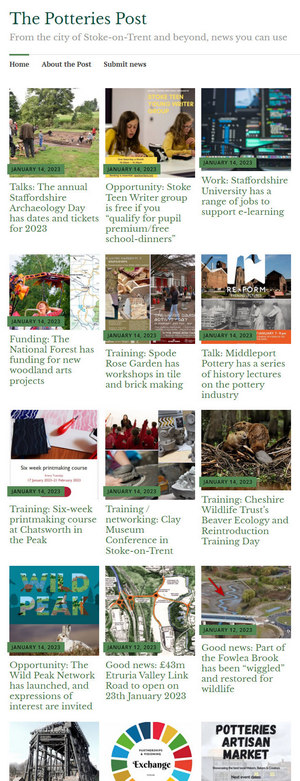
The Potteries Post has updated, with more news you can use. The site replaces my former Facebook groups ‘Creative Stoke’, ‘Wild Stoke’ etc.
An excellent short post about “The Britishness of British Faeries”. Despite its click-baity title that article doesn’t sum up the characteristics of Britishness and then tally them with fairy-lore and fairy-traits. Though that might make for an interesting future post at the venerable British Fairies blog.
The article is actually about how the idea of ‘fairy’ can be brought before the more rational mind. In this case by situating the fairies as the ineffable genii loci of a place, especially in the British context of our ‘deep time’ landscape and places. No diminutive Tinkerbell or neo-pagan confabulation is then required to get the basic idea across to the musing young walker.
The concise article sums this up very well. But I’d like to add a few points, around the idea that its not all about an ‘immediate emotional response’ to a place.
At worst that sort of response can simply stop short, easily slipping into a purely nostalgic and preservationist view of a place. The preservationist ends up ‘pickling the fairies’ of a place, as if in a jar of pickling vinegar.
The ‘immediate emotional response’ assumption can also overlook the contributions made by the rational thinking mind, in terms of ‘landscape place-making’ (from path-makers to tree tenders to grand folly-makers to wall-builders), and also ‘landscape place-discovering’ (folklorists and antiquarians through to modern metal-detectorists, from child den-makers to footpath naturalists). It’s not just about cultivating a hazy awareness that some distant ancestors may have once ‘dwelt’ here long ago, but rather that an active chain of creators helped to subtly shape and ‘make’ this place while respecting all the past contributions. In which case today’s beholder of the place could become a part of that chain, one of the many local stewards and makers whose work of centuries eventually enables one to say…
“Whether they’ve made the land, or the land’s made them, it’s hard to say” (Samwise Gamgee)
Although cultivating such an awareness would then risk opening the place up to unwanted ‘tinkering and improvements’, of the sort which may do more harm than good. Rather than ‘pickling the fairies’, in this case it would be ‘suffocating the fairies’ in a cloud of cringe-inducing naffness. I’m thinking here of hasty bits of ‘improvement’ of a place. Such as:
* a massive shiny new DIY shed which instantly destroys the lovely ambience on the corner of an allotments;
* some old rain-bedraggled ‘yarn-bombing’ or ‘inspirational’ message left to rot in a depressing manner;
* various quick-fix local council ‘improvements’, at best new ‘interpretation boards’ and/or a mundane municipal sculpture, at worst things like the replacement of a park’s proper wooden-slat benches with one tiny and freezing anti-dosser metal-mesh seat;
* the numerous examples of over-interpretation and political ‘interventions’ at National Trust sites, and increasingly also at nature reserves;
* ersatz ‘fairy-fication’ via sculptures — ranging from some quite acceptable bits of outdoors art sympathetically made by local people, through a host of bland wickerwork dragonflies made by fly-by-night ‘creative practitioners’, right down to the occasional naff garden-gnome gardening (sometimes not without an eccentric charm, admittedly).
Doubtless readers can think of some tinkering or ‘improvements’ done at their own favourite places, which has caused the genuine fairy-feeling to vanish while (curiously) the litter remains un-picked.
So, yes… perhaps after all it’s best to leave most people with their brief ‘immediate emotional response’, before ushering them back to their latest forgettable TV series. Rather than pushing the mood on further, into a response that risks being either about ‘pickling’ or ‘tinkering’.
* “Song Lyrics in The Hobbit: What They Tell Us”, a 2022 undergraduate dissertation by a mature student, for the University of Southern Mississippi in the USA. Open access and public.
* News of a forthcoming book, via a slightly-expired call for papers. Titled Tolkien as a translator: investigations on Tolkien translation studies, and at a guess probably pencilled-in for 2024. The topic is…
“Tolkien as a great translator [who deserves] a collection of essays on his way of translating, the criteria he used, the choices that distinguished his style and that inevitably influenced his sub-creation(s), and the author’s thoughts on translation itself.”
* Since I’m no longer listening to the BBC, it’s taken me a while to twig to the existence of their recent Open Country podcast. This ‘audio countryside ramble’ took a November 2022 open-air walk in the Cotswolds, with Tolkien scholar… “John Garth to find traces of Tolkien Land at Faringdon Folly and the Rollright Stones”. The .MP3 is available at Listen Notes…

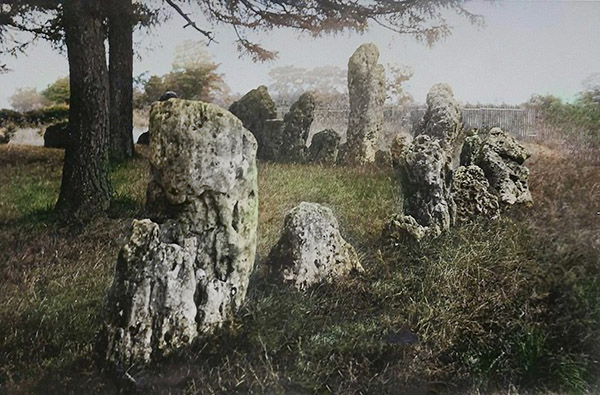
The tower is debatable. Probably Tolkien’s initial Oxford audience for the famous Beowulf lecture would have recognised the similarity, but in Worlds Garth wants a poster of it to be the inspiration for the hill of Hobbiton. I wasn’t convinced. Yet evidence for the ancient Rollright Stones is clear, for instance when in 1948 Tolkien berated his publisher on the topic of the Farmer Giles of Ham illustrations…
The incident of the dog and dragon occurs near Rollright, by the way, and though that is not plainly stated at least it clearly takes place in Oxfordshire. [As currently illustrated] The dragon is absurd. Ridiculously coy, and quite incapable of performing any of the tasks laid on him by the author.”
* And finally, according to the Pipedia, there has yet to be even a “list of literature where the pipe plays a major role in character and/or plot development”, let alone a book survey of such. That’s an opportunity for someone, though Middle-earth is already well-served by the new third edition of Pipe Smoking in Middle Earth (2022). Tolkien himself used a standard Dunhill briar pipe, of the sort common in the trenches at the time of the First World War — partly due to Mr. Dunhill sending them out to front-line soldiers and officers. The type of pipe-bowl also causes some aficionados of pipe-weed to call it a ‘pot’ or ‘billiard’ type of pipe, which I have to assume is correct. Sadly Tolkien did not sport a long Gandalf-ian ‘Churchwarden’ type of pipe. His favoured tobacco came in tins of Capstan Navy Cut ‘Blue’ flake pipe-tobacco, apparently a smooth and creamy Virginia blend today referred to as ‘Capstan Navy Cut Ready Rubbed’.
* Newly and freely online in 2022, the 2014 Australian PhD thesis Imagined worlds: the role of dreams, space and the supernatural in the evolution of Victorian fantasy. The new…
“concept of hyperspace was a fundamental and sustained aspect of the British imagination” [and its deep and serious exploration then contributed to fantasy’s acceptance as] “an appropriate vehicle through which to explore the possibilities and conditions of other worlds”.
As in his medievalism, Tolkien’s thinking on time and dreams must have been entangled with this stream of culture. We have to remember that Victorian ‘reconstructed’ medievalism and proto-fantasy had a profound effect on many of Tolkien’s teachers, and later on various Edwardian youngsters (such as himself) who re-discovered it. There was also a later vogue for the old heroic romances among the more romantic soldiers who fought in the First World War, and I would imagine that some of the scientific romances (e.g. the early Wells) also had a re-reading at that time.
* In the Mail this week, a short article on a frosty walk in the Cotswold uplands. The writer goes “Following in the footsteps of C.S. Lewis and J.R.R. Tolkien”…
“It was the winter of 1945. They’d travelled with a group of friends from Oxford, where both were dons, to have a ‘Victory Dinner’ at The Bull Inn in Fairford to mark the end of the Second World War, and spend a few days on their passions: beer and talking.”
Also walking, pre-Christmas 1945. The backdrop to this was war-time food rationing and overwork and exhaustion by the war’s end. Tolkien’s health and home-life were both affected and imminent for Tolkien, when at Fairford, was a doctor-ordered “restcure”. The Chronology has “after Christmas his health gives way”. But by the following 2nd April 1946 a friend noted of him… “Tollers [Tolkien] looking wonderfully improved by his restcure at Stonyhurst” (from The Diaries of Major Warren Hamilton Lewis, 1982).

This comment adds a bit more to the ongoing mini-saga of Stonyhurst, recently mentioned several times in Tolkien Gleanings. Tolkien “stayed at a guest house in the grounds” and the guest-register shows him there “21st March to 1st April 1946”, which helps confirm the above diary entry about the “restcure” he took there. It’s strange, how seemingly unconnected bits of news can link up like that. So it can now be seen that it wasn’t just any old short break with his son at Stonyhurst. Rather it was a vital attempt at recovering his health and equilibrium, at a very difficult time both personally, creatively and nationally.
* In 2020 Christopher Armitage remembered how J.R.R. Tolkien and C.S. Lewis influenced his 53-year academic career”. In the early 1950s Tolkien’s…
“lectures were always full of students [despite his being hard to hear if one was sat on the back-row. He was approachable…] Class had ended after discussing the medieval romance Sir Gawain and the Green Knight. “There is a refrain in that poem when characters say ‘barlay may’” Armitage said. “It’s from French, ‘parlez moi’ anglicized, and used when you’re calling for a power play or a comment. So the action is suspended.” He told Tolkien that he and childhood friends used the expression ‘barley me‘ to ask for a time-out while playing soccer or cricket in their neighbourhood street. “Tolkien was quite fascinated and asked where we played games, and I explained to him it was where I grew up in Sale, Cheshire [now south Manchester], the county south of Lancashire” Armitage said. Jotting the expression in a notebook, Tolkien insisted that Armitage provide the street address. Armitage does not know if Tolkien used the reference in a scholarly work.
Yes, I see the old dialect books confirm ‘barley me’ as a Cheshire saying. This must then be a relative of the Birmingham ‘bagsy me’. The first child who thinks to make such a bagsy statement effectively suspends any tedious and play-delaying squabble, by claiming the right to ‘go first’ in a game. Or to be the first to try a new toy, be first in the bath, to get the front rather than rear seat in a car, or get the first sausage out of the pan, etc. It might also excuse one from starting a game as IT, as in “bagsy not IT” just before a playground game of tag.
Armitage’s reminiscence also shows that in the early 1950s Tolkien was still conveying the idea of Gawain being ‘of Lancashire’ rather than (as we now know) further south in North Staffordshire. Even though Mabel Day, who Tolkien knew at this time via his involvement with the Early English Text Society and her editing of Sir Israel Gollancz’s Gawain, had in 1940 publicly and prominently suggested Wetton Mill in North Staffordshire. Day had followed Serjeantson’s 1927 suggestion of “the western part of Derbyshire” (adjacent North Staffordshire) as the home of the Gawain-poet, and Bertram Colgrave’s 1938 suggestion of North Staffordshire as a location for Gawain’s Green Chapel.
* And finally, ticket booking for The Tolkien Society’s Oxonmoot 2023 is now open, with an Early Bird discount available into February.
* The table-of-contents for the journal Tolkien Studies #19 (2022 issue, delayed) has now been announced. I still can’t afford to get the 2021 issue yet, but of special interest to me for 2022 will be…
— “Tolkien, the Medieval Robin Hood, and the Matter of the Greenwood”.
— “Early Drafts and Carbon Copies: Composing and Editing “Smith of Wootton Major””.
— John Garth reviewing The Nature of Middle-earth.
— The “Year’s Work in Tolkien Studies 2019”, and the “2020 Bibliography”.
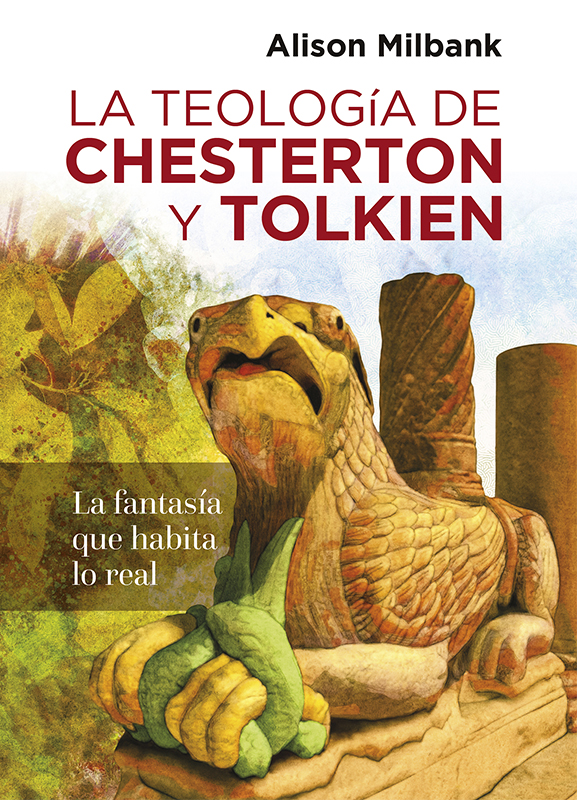
* I see the 2009 book Chesterton and Tolkien as Theologians has been translated into what might be Spanish. I wasn’t aware of either version before encountering the news of the new translation. It appears that the author looks for the influence of Aquinas on both men, and thus the book is partly about a probable influence on the young Tolkien.
* This week the Reading and Readers podcast reviews Austin M. Freeman’s new book Theology through Mythology with the Maker of Middle-earth.
* At the start of December 2022 the Athrabeth podcast released Episode 53: Interview with Dr. Sarah Schaefer and Dr. William Fliss, co-curators of the 2022 “J.R.R. Tolkien: The Art of the Manuscript” exhibition in the U.S.A.
* And finally, the first fan-edits have appeared for That Recent TV Series. This has been radically trimmed and re-cut to make two coherent movies, The Light of the Eldar, and The Three Rings. Apparently the cuts remove a lot of the stock ‘TV soap-opera emotion-wrenching’ and superfluous filler scenes, much violence and gore, and also what are said to be the great many over-the-top whizz-bang CGI action-scenes. In general it sounds like a quieter and less padded version, cut from 9½ to 4½ hours in total. Doubtless there will be other fan-edits in due course.
Stoke-on-Trent in the National Biodiversity Network Atlas.
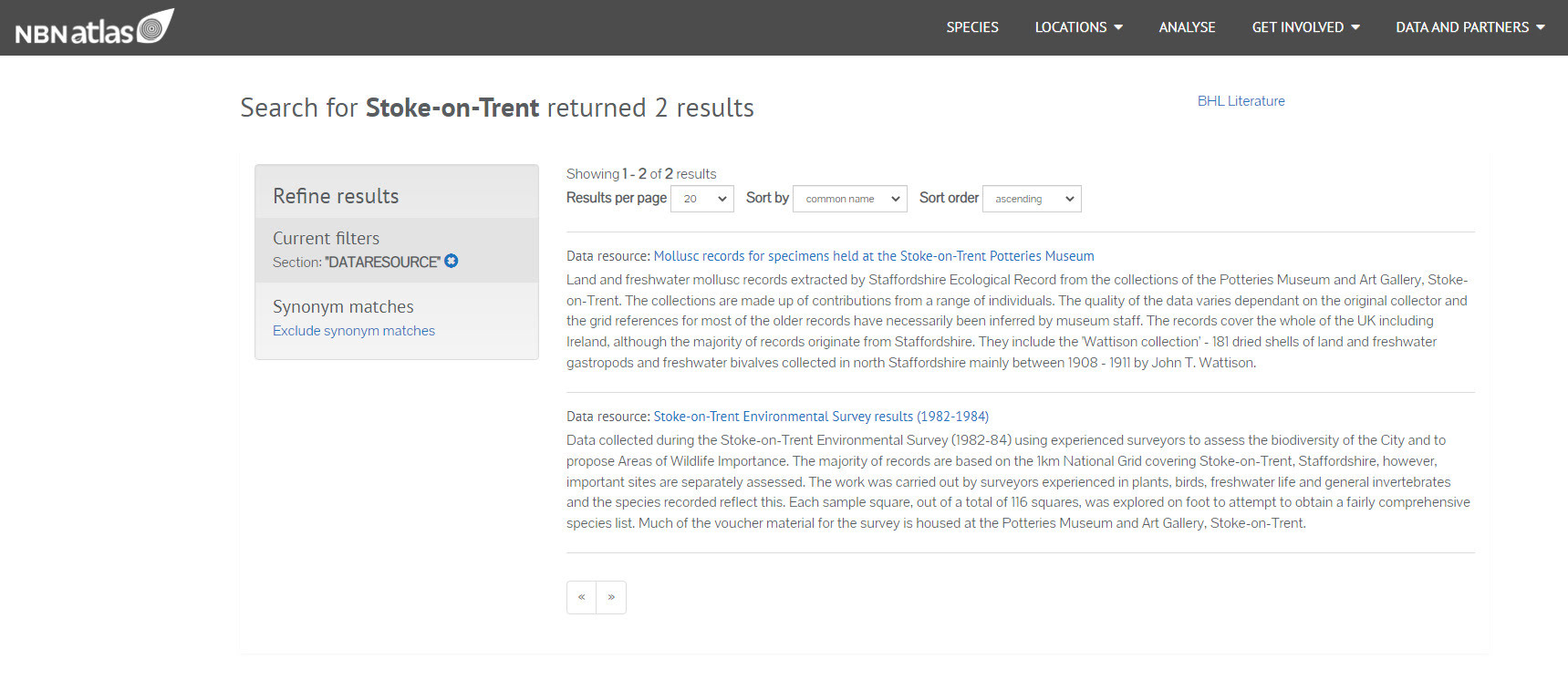
Two items. Ecology last surveyed in the early 1980s, under the work-experience schemes of the time (so I’m told). The Museum has records of molluscs. Nothing else to see here. Move along now…