Author Archives: futurilla
“The Cone” as an audiobook
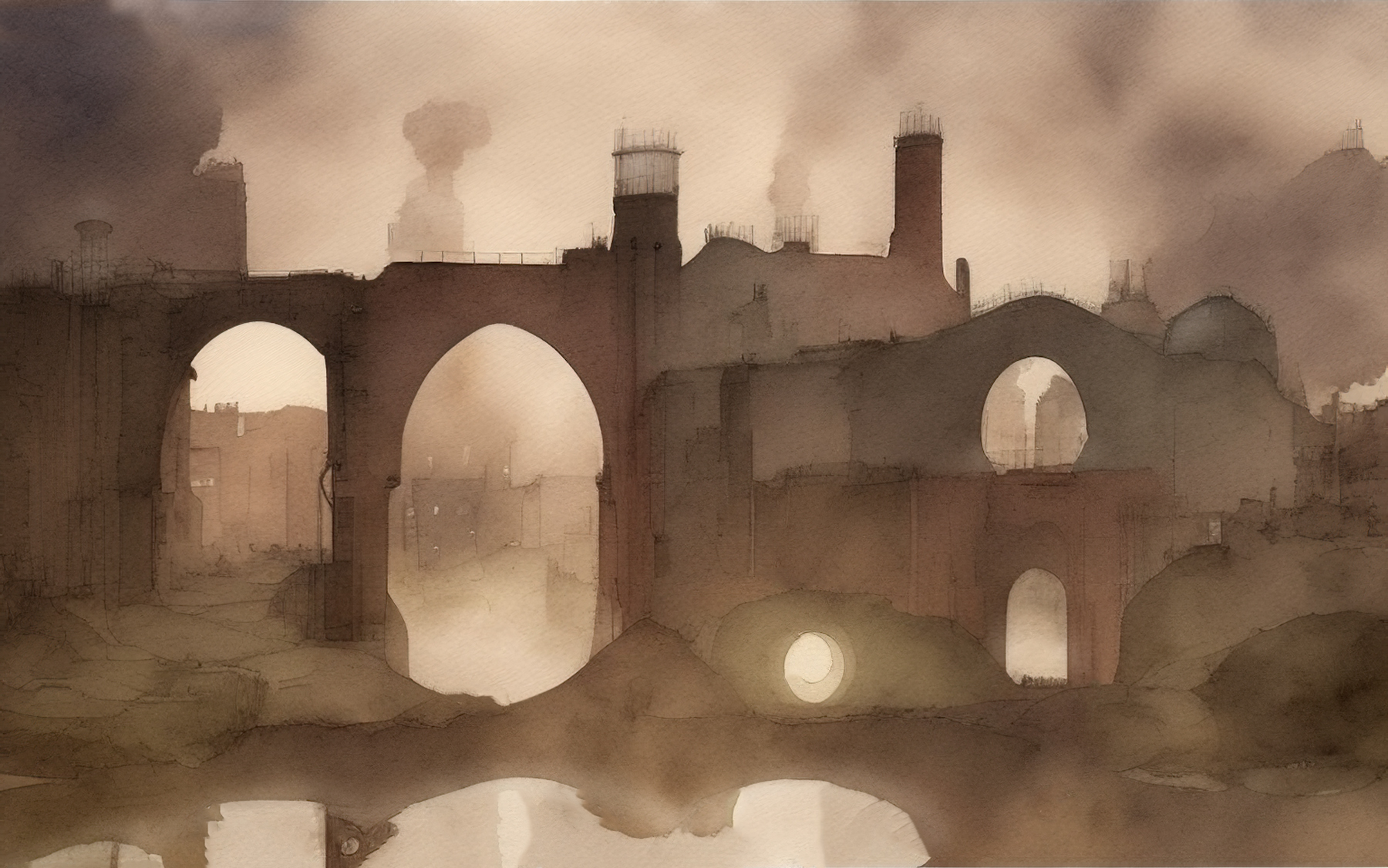
New on Libivox a free reading of “The Cone” by H.G. Wells. Regular readers of this blog will recall the local Stoke-on-Trent setting of the Basford Bank / and the ironworks (not yet a steelworks) at Etruria. I have a fully annotated version of this this macabre revenge tale, to be found in my book H.G. Wells in the Potteries.
As with all Librivox audio readings, this one is in the public domain (i.e. is free to re-use in any way you want).

Tolkien Gleanings #48
Tolkien Gleanings #48.
* Now available, tickets for the Second Annual Tolkien Lecture with John Garth. To be given on a Friday evening, 12th May 2023 at the Elgar Concert Hall of Birmingham University (UK). Booking now on Eventbrite. I’ve never been in this Hall, but the venue sounds suitably large. Thus I imagine that the free tickets for “The Houses of Healing: Tolkien, Fantasy, and the Road to Recovery” won’t immediately all be taken.
* The Church of Scotland reports “Tolkien talk returns by popular demand”…
“J.R.R. Tolkien and The Hope of Easter”, Dr. Hood’s new talk will take place at 7pm on Wednesday 5th April 2023, and will also be streamed online.”
* In Canada on 30th March 2023, the public lecture titled “Tolkien, Middle-earth, and the Lost Inheritance of England”…
“Mark Doersken [discusses how Tolkien] sought to engage with the lost tales of pre-Conquest England and in the process changed the modern fantasy landscape. This talk is part of Literature Matters: Literature in the Community Series at the University of Saskatchewan.”
* Amazon UK is listing a new academic book of 230 pages, set for publication at the end of September 2023. Titled J.R.R. Tolkien in Central Europe: Context, Directions, and the Legacy. It’s a Routledge collection and, as you might expect from this publisher, the book sounds rather theoretical-political…
“The essays move between and across theories of cultural and social history, reception, adaptation and audience studies, and offer methodological reflections on the various cultural perceptions of Tolkien’s oeuvre and its impact on twenty-first century manifestations.” [also] examines the entanglement of fantasy and Central European political and cultural shifts […] across different domains from communist times through today.”
* And finally the Novium Museum in Chichester, England, launches ‘The Magic of Middle-earth’ exhibition on Saturday 1st April 2023. This is a large popular touring show, free at some venues but here with a £4 ticket price. The show will run through the summer and close on 24th September.
The Potteries Post has updated
The Potteries Post has updated, with new ‘news you can use’ in the arts, creative industries, wildlife and heritage.

Tolkien Gleanings #47
* The Franciscan University of Steubenville (Pittsburgh, USA) is set to hold a Tolkien Conference in the Autumn/Fall. Titled “A Long Expected Party: A Semicentennial Celebration Of Tolkien’s Life, Works, And Afterlife”, the conference will run 22nd-23rd September 2023. Submissions of papers… “reflecting on less studied elements of Tolkien’s legendarium and recently published works” are welcomed, with a 30th April 2023 deadline.
* A listing for a French exhibition catalogue, Sur les Traces de Tolkien et de L’imaginaire Medieval (‘In the Footsteps of Tolkien and the Medieval Imagination’) reveals a large exhibition in summer 2023. The… “exhibition will feature over 250 drawings and paintings by John Howe […] concept illustrator on the two cinema trilogies The Lord of the Rings and The Hobbit. […] The exhibition is accompanied by authentic objects from the medieval period and punctuated by pictures that would have been contemporary for the young Tolkien, drawing notably on the works of the Pre-Raphaelite movement.” The 192 page hardcover catalogue is currently dated “21st June 2023” by Amazon UK.
* New from Word on Fire, a one-hour panel talk on YouTube… “Andrew Petiprin moderates a conversation between leading J.R.R. Tolkien scholar Dr. Holly Ordway and leading C.S. Lewis scholar Fr. Michael Ward. The pair debate and discuss J.R.R. Tolkien and C.S. Lewis, two Christian literary giants of the twentieth century.”
* New on Archive.org to borrow, a scan of the book War and the works of J.R.R. Tolkien (2004). If the book interests, note also the course listing at Signum University for Autumn/Fall 2023, “Tolkien’s Wars and Middle-earth” with John Garth.
* And finally, a review of a recent book with chapters offering Orthodox Perspectives on Tolkien’s Fantastic Realm (2021). Among others… “Richard Seraphim Rohlins splendidly adds to the best of Tolkien scholarship by explaining in close detail the reference to medieval church architecture made by Tolkien…”.
Tolkien Gleanings #46
* The National Archives reports that… “Two handwritten letters penned by J.R.R. Tolkien have been discovered for the first time”…
“Written in 1945, shortly after Tolkien’s appointment as Professor of English Language and Literature at Merton College, Oxford, the letters are part of an exchange with the British Council about funding for his research into early English languages.”
* The editors of the forthcoming academic journal The Incredible Nineteenth Century: Science Fiction, Fantasy, and Fairy Tale…
“will host an online conference via Zoom on 31st March – 1st April 2023. The theme is “Beginnings” and we will be exploring how, in many ways, the nineteenth century saw the birth of science fiction and fantasy as we know them as well as the scholarly study of folk and fairy tales.”
Sadly the deadline for registration for attendance has now passed, but hopefully recordings will become available on YouTube.
* A handy YouTube playlist for “G.B. Smith and J.R.R. Tolkien: a meaningful friendship”. This being a scholarly conference at Corpus Christi College, Oxford, 21st-22nd March 2023.
* Listed as due in mid September 2023, a new edition of Letters from J.R.R. Tolkien. “Featuring a radically expanded index”, and set to be a volume of 704 pages from “William Morrow & Company (15th September 2023)”, according to Amazon UK. No further details.
* And finally, a sale listing alerted me to the fact that that there was once a place called “The Ring” at Tolkien’s Great Haywood in mid Staffordshire…
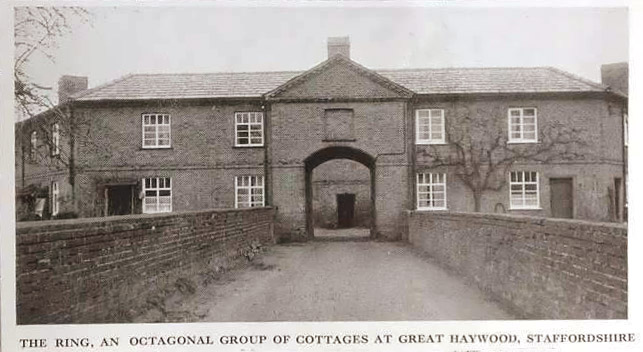
“Samuel Wyatt’s other group at Great Haywood was regrettably demolished in about 1965. Known as the Ring, it comprised a hollow hexagon formed of 16 cottages with a communal bake-oven in the centre of the inner yard.” (Country Life, 1977). One of the cottages served as a schoolroom. Erected sometime after the Great Flood of 1795, to house many of the former villagers of Shugborough. Probably built c. 1800-1806. Therefore the ‘Ring’ was there in Tolkien’s time.
In a West Midlands mere
A new academic paper, “The Midlands of England: Economic Backwater or an Agricultural Powerhouse?” offers the results of a…
“palaeo-environmental investigation from Aqualate Mere near Newport, Staffordshire [6 miles west of Stafford,] undertaken on the sediment record [found there …] from the later prehistoric period onwards. The results challenge the idea this region was a backwater, as there is near-continuous agricultural activity around the mere from the Late Bronze Age through to modern times.”
Tolkien Gleanings #45
* Dr. Wotan’s Musings has full details of the forthcoming Tolkien Sessions at the Leeds International Medieval Congress (July 2023). Talks include, among others: “Tolkien’s Development of the Elvish Languages at Leeds, 1920-1925”; “Travel and the Quest Motif in Tolkien’s Work”; and “Out of the Great Sea: Of Elendil and Legends Old and New”.
* In Spain, the launch of a new national Catholic Tolkien Association…
“In the heart of the new Association are the priest Antonio Izquierdo, parish priest in Mostoles (Madrid); Diego Blanco Albarova, popular author of the children’s books in the El Club del Fuego Secreto series; and Joaquin Ocana, a “passionate Tolkinian” with experience organizing groups.”
* New on Mere Orthodoxy, a long essay on “The Death and Immortality of Mortal Men in The Lord of the Rings“.
* I see there was an essay on “Image and the Tree in Middle-earth” in issue 23 of the BFS Journal (Autumn 2022)…
Tree-imagery “throughout Middle-earth, and how it reflects historical tree imagery in Europe”.
Are there more essays of interest in the journal? Difficult to know. Curiously the British Fantasy Society’s website has only one item on its ‘journal’ tag, and the Site Map knows nothing about any journal. A Google search reveals the staff list, on which… “BFS Journal Editor, currently vacant”. First job for the new editor, I’d suggest, is a complete public list of what’s in those 23 issues and in earlier incarnations.
* And finally, Tolkneity asks “What do you think, could the map for Beowulf from the edition by Frederik Klaeber (1922) have influenced the shape of the map of Middle-earth in the first edition of The Lord of the Rings?” The answer is “no”. It only took me a minute to find Klaeber’s rather poor map in his Beowulf and The fight at Finnsburg (1922), and to discover it looks nothing like its much later Tolkien-alike re-imagining (which was made in 1973).
Cinder Dip for Breakfast
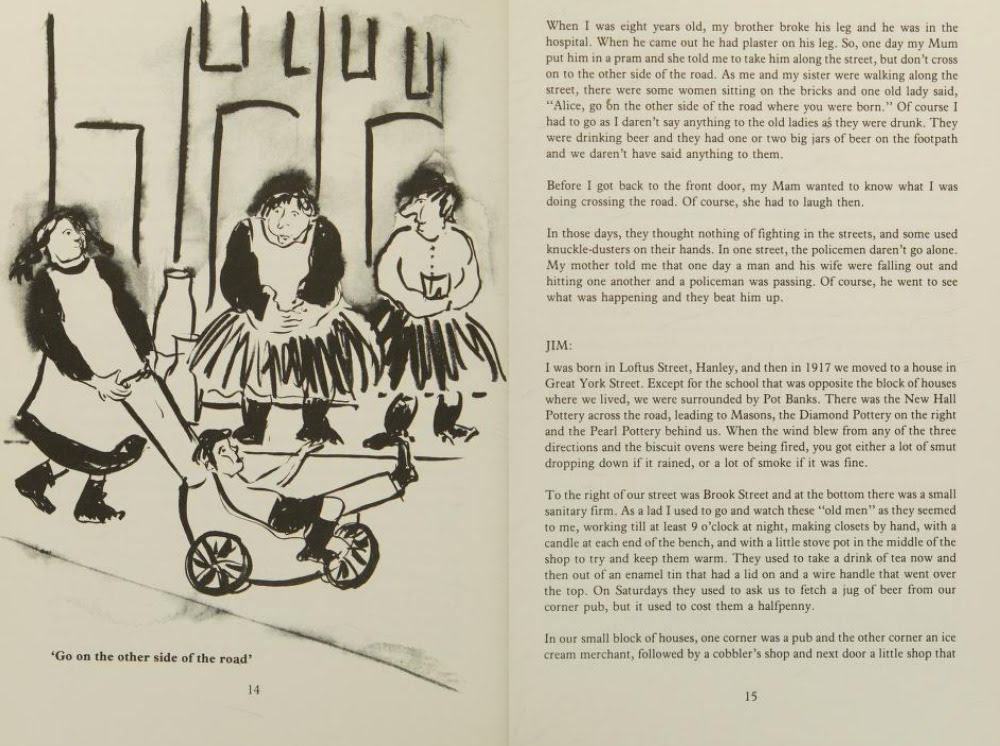
An important local booklet, recently popped up on Archive.org to borrow, Cinder Dip for Breakfast: a collection of memories (1982). Being 48 pages of vivid memories of childhood and evocative charcoal line-drawings of Stoke-on-Trent scenes and people. Sponsored by the Beth Johnson Foundation, and drawn from sessions with older people on the Bentilee estate.
Tolkien Gleanings #44
* In France… “The Tolkien association is organising a symposium in the Paris region on 6th & 7th October 2023, on the occasion of the 50th anniversary of the translation of The Lord of the Rings into French”. I see the French also have online a fine illustrated timeline of “Tolkien on the Somme”. It’s all in HTML as a single page, and thus can be run through Google Translate.
* In Italy, a national conference on Tolkien. This event is reported to be the culmination of a long period in which advanced students at “lower secondary schools from eight Italian regions” studied Tolkien’s texts with their teachers…
“The 17th edition of Le Vie d’Europa is dedicated to Tolkien. This interdisciplinary student conference was conceived and organised by the professional association of teachers Diesse Firenze and Toscana (Didactics and Scholastic Innovation). It will be held on Friday 31st March 2023. […] in collaboration with the Catholic University of the Sacred Heart of Milan (Department of Linguistic Sciences and Foreign Literature). It has the patronage of the Metropolitan City of Florence, the Municipality of Florence, INDIRE, and the British Institute of Florence.”
* In the USA, a “Colloquium on developing a digital critical edition of Tolkien fanzines”. Note… “There will also be a [Microsoft] Teams option for those who prefer to attend virtually.” 29th March 2023 is the date.
* I’ve made a few notes on the new second edition of Tolkien’s Library (2023).
* In The Medieval Review, a glowing and informative book review of Meanings of Water in Early Medieval England (2021)…
“the work of eleven scholars working on the cultures of medieval water. […] an exemplary collection, highlighting the vibrancy of the medieval world, revealing a multi-sensory, complex water landscape full of swimmers, sailors, sea monsters, scholars, and saints. […] one of the most cohesive and consistently engaging [edited collections] that I have reviewed”.
* And finally, from Madrid comes a new Spanish-language open-access study of “A Hobbit Hole: on the habitability of fantastic architecture” (2022). This ably…
“focuses on performing bio-climatic simulations that allow measuring the hygrothermal comfort level of buried architecture. As a case-study, ‘Bag End’ has been selected. How deep can natural light penetrate? What is each room’s average radiant temperature? Does it need mechanic ventilation?”
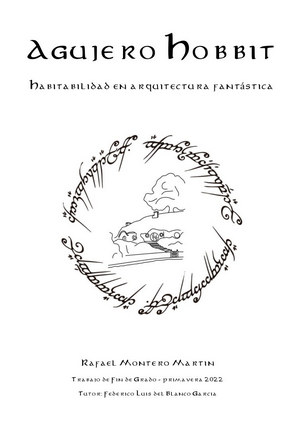
Lots of pictures and floor-plans, and entertaining even if you don’t read Spanish.
A few notes on ‘Tolkien’s Library’
I’ve had a chance to peruse Oronzo Cilli’s excellent new second edition of his Tolkien’s Library: An Annotated Checklist. Here are my brief notes, and I’ll take the items in date order.
1908-09. These are the dates given in the new book as likely for Tolkien’s fateful purchase of the Gothic Grammar, in Birmingham.
1912. Halldor Hermannsson’s third Bibliography of the mythical-heroic sagas. One would have expected some of the historical atlases from this late-Edwardian period, but they’re not listed.
1914. He borrows the hefty journal Anglia: Zeitschrift fur englische Philologie in Vol. IX (1886). This is in German, devoted to philology dealing with English material. I would imagine he also had the separate Supplement volume, containing an organised bibliographic survey of the year’s work. A little digging shows me that the main volume has Felix Liebermann on “Gerefa”, this being the history of the tradition of the local English sheriff, and Sherrazin on “Beowulf and Kynewulf”.
1915. One of his Oxford Exams was on the Prose Edda. Also Old English texts, part of The Amazons and The Voyages of Ohthere and Wulfstan.
1921. John Masefield’s Reynard the Fox (1921). Not, as it turns out from my quick perusal, the classic medieval tale of the wily anti-hero. Rather, a long modern poem on the ancient tradition of English fox hunting.
1922. Acquires the Book of Taliesin (Facsimile and text) by John Gwenogvryn Evans. Dated “1910” in Tolkien’s Library, but Celli has not discovered that the volume was issued in 1916, although dated on the title page as “1910”. Tolkien had many other books by Evans, but apparently not his companion volume of translations Poems from the Book of Taliesin (also 1916), which would have given him far easier access to the gnomic poem ‘The Battle of the Trees’. One would have expected both books to sit on the shelf together, although I know of no other evidence that Tolkien was aware of Taliesin’s ‘The Battle of the Trees’ (which centres on Ent-like trees marching into battle).
1922. Yes, he had a copy of E.R. Eddison’s The Worm Ouroboros, and in the “very limited” first edition of 1922. He also had Eddison’s Egil’s Saga (1930).
1923. Locally, I spotted E.W. Bowcock’s Shropshire place names (1923). This was unknown to me, and is also unknown to Archive.org. Not online.
1930. An amusing sidelight on Tolkien in 1930. He played the part of ‘the tobacconist’ in Linguaphone’s recorded course for foreign students learning conversational English for use in shops and workplaces. Sadly it appears that the audio recording has not survived.
1935. In 1938 Tolkien cited Joseph Neill’s novel Land under England (1935) as a “weak” example of a genre of which he is “extremely fond”. He then presumably means a certain type of imaginative early British science-fiction with underground adventures (the Morlocks of The Time Machine, Fowler Wright’s The World Below etc). In this case Neill imagines a nightmare authoritarian dystopia, surviving underground from Roman times, discovered by a son searching for his missing archaeologist father. Deep underground ‘the common good’ has become the only principle, and an excuse for ‘Master Minds’ to telepathically control brainwashed and emotionless workers. The young discoverer escapes, but can he be sure his memories have not been telepathically tampered with?
1958. Tolkien has Joaquin Verdaguer’s The Art of Pipe Smoking (Curlew Press, 1958). Said elsewhere to be a booklet of 60 pages, illustrated throughout. Not online, as far as I can see. One would have expected a reprint, by now.
1967. The evidence for Tolkien liking at least one of R.E Howard’s better Conan tales, in later life, is still incredibly slim. No new evidence here. L. Sprague de Camp remembered in 1983 a snatch of conversation had with Tolkien in his suburban garage-study in 1967. That was it, so far as I can tell.
1971. “A statement by Tolkien describing his reading habits as a teenager”, published in Attacks of Taste and then Beyond Bree. One source has the contribution as “one page”, another as “one paragraph”. Neither 1971 publication is online.
And finally, a lovely quote from Tolkien…
“English is an instrument of very great capacity and resources, it has long experience not yet forgotten, and deep roots in the past not yet all pulled up. It can, if asked, still play in modes no longer favoured and remember airs not now popular; it is not limited to the fashionable cacophonies.” (comment on Burton Raffel’s Poems from the Old English, 1961).
Tolkien Gleanings #43
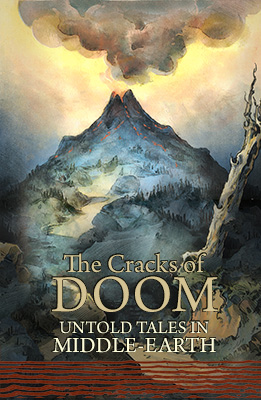
* The Cracks of Doom: Untold Tales in Middle-earth ebook is now available as the expanded third edition. Newly added are a full set of notes for The Hobbit, plus many expanded or new additions for The Lord of the Rings. The book now totals 28,000 words. Despite the many new additions, I’ve dropped the price by a dollar to $5.99 (about £5, depending on currency exchange-rates). If you’ve already purchased the Kindle ebook edition, then forcing a fresh download should bring you the new edition at no extra cost.
* News of a Tolkien conference in Italy organised by Eterea Edizioni in collaboration with the Museum of Religions ‘Raffaele Pettazzoni’ in Rome. The conference theme is animals in Tolkien’s works. The organisers are interested in Tolkien in relation to medieval animal traditions, fairy-tales, and animals in religion. Also his main animal characters and shape-shifters (such as Beorn), and his lesser animals (badgers, birds, ponies etc). The call for papers closes 30th April 2023, for the face-to-face conference on 21st-23rd July 2023. Submissions must be in Italian. Further details from: info@etereaedizioni.com
* In relation to the above, note also the forthcoming “Tolkien’s Animals” special issue of the Journal of Tolkien Research. As I was typing that, it struck me that there’s very little mention of fish in LoTR. Despite the many streams, rivers, pools, lakes, marshes, oceans, bridges and boats. Where it is mentioned it’s what poor Deagol’s doing when he’s murdered, or Gollum’s slimy/smelly raw food and brief fish-riddle, or a mass of eel-like tentacles surging toward the doors of Moria. It’s amusing to think that, had Tolkien been a rod-and-line fisherman as well as a pipe-smoker, we might have heard just as much about the beautiful fishes of Middle-earth as about pipes and pipe-weed. As it is one gets the impression that, along with Samwise, Tolkien thought that the only good fish was a dead one deep-fried in batter and served with potato chips.
* Mises muses this week on “J.R.R. Tolkien on the danger of centralized political power”…
“many libertarians unfortunately fail to call upon one of the most articulate critics of centralized political power with unparalleled intellectual and cultural influence; J.R.R. Tolkien. While Tolkien is no doubt a popular figure among many libertarians, [there is] an unfortunate unfamiliarity with his work on a deeper intellectual level”
* Being released in a few weeks, the journal Hither Shore No. 18: Tolkien und Politik – Tolkien and Politics. It appears to be a 2023 release of a heavily delayed 2021 edition? Though the contents-list suggests it will have been worth the wait, with article titles such as…
~ “An examination of Tolkien and eco-anarchism” (English)
~ “Tolkien und die libertare kritik an staat und politik” (German. ‘Tolkien and the libertarian critique of the state and politics’)
~ “A re-reading of the Tolkienian concept of war” (English)
~ “Tolkien on heroism and politics” (English)
~ Also book reviews, and what appears to be a review article on “Tolkien’s Artwork: publications and exhibitions in Paris”.
* Hither Shore No. 18 also has a review of a book I’d not heard of before, Gleanings from Tolkien’s Garden: Selected Essays (2020). Thirteen articles, four new, from the co-founder of the Dutch Tolkien Society. I can’t find a contents-list online, and Amazon UK thinks the book’s unavailable. But the above Web link is apparently the one to use if you’re shipping the book to an address outside the Netherlands.
* There’s a new free audiobook version of Studies in the Fairy Mythology of Arthurian Romance, just released on Librivox. I assume it’s the 1903 public domain version rather than the 1960 version. But the latter is free on Archive.org as a scan and might be of interest to Tolkien scholars. Especially those seeking a unified survey of the relevant 1903-1950s fairy scholarship Tolkien could have accessed or seen reviewed. Because the 1960 edition updated the 1903, being a…
“Second edition enlarged by a survey of scholarship on the fairy mythology since 1903 and a bibliography by Roger Sherman Loomis”.
* And finally, I see the documentary Tolkien’s Great War (Free Spirit Film, 2014) is now freely available on YouTube. The 33 minute film was… “produced for a centenary exhibition at King Edward’s School, Birmingham.”