Tolkien Gleanings #425
* John Garth has a new article on “How the tides of Tolkien’s world shaped The Lord of the Rings” (Substack, but free). This puts some basic time parameters on his newly-undertaken PhD research. He will look at the gathering storm in the 1920s and 30s, as well as the Second World War and its immediate aftermath…
“my Oxford doctoral research will continue the same work [as the First World War book] by graphing the relation between Tolkien’s ‘outward circumstances’ and what he wrote from the 1920s to 1940s, particularly The Lord of the Rings.”
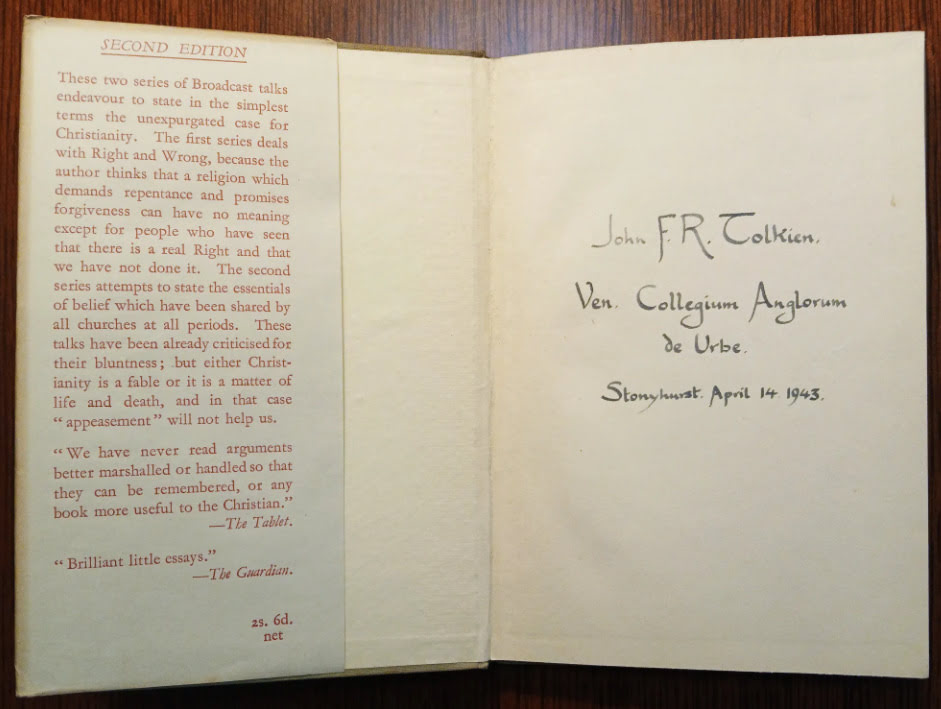
* In the USA, the Wheaton Archives & Special Collections and the Marion E. Wade Center has a blog post on their “New Treasures”. These include Tolkien’s copy of C.S. Lewis’s Broadcast Talks, talks broadcast to the nation on Christianity during the early part of the Second World War.
* Dreaming Spires outlines “a syllabus for my 2026 Oxford Project” ($ SubStack, partially free)…
“we’re going to apply for Reader’s Cards at the Bodleian Library. [… the research in Oxford will focus on how the] same threads [that are to be seen in The Lord of the Rings also] appear in the web of words and ideas of three other famous Oxonians of the century preceding Tolkien’s arrival in 1911: St. (Cardinal) John Henry Newman, the art critic John Ruskin, and novelist, poet, and designer William Morris, the leading light of the Arts & Crafts Movement.”
* A new article at The Times of Israel website muses at length on seeming parallels between Jewish mysticism and Tolkien’s work…
“The apophatic withdrawal of God as a precondition for creation, the concept known as tzimtzum, has no precise structural equivalent in Augustine or Aquinas. The concept of evil as an active structure that imprisons divine sparks rather than a mere privation of good is absent from the Thomistic framework. The insistence that repair is collective, partial, and never completed within history, which Tikkun Olam describes, stands in direct tension with Christian soteriology, where a single act of redemption is sufficient and complete. […] The lineage of Aquinas, Boethius, and Pseudo-Dionysius does not account for the active structure of evil, the collective and partial nature of repair, or the divine spark within the fallen.”
* The French literary site PhiLitt has a new long article on Tolkien and Barfield. Freely available online.
* The new Italian book Note d’autore: casi editoriali tra musica e letteratura (‘Notes and Authors: editorial fusions between music and literature’) (2026) has a chapter on The Hobbit and music/song.
* The revised and expanded edition of The Letters of J.R.R. Tolkien has just arrived in Spanish bookshops, in translation.
* The Dwarrow Scholar website has had a design makeover. The Neo-Khuzdul Dictionary of the Dwarves is now online as a search-box, as well as being a PDF to download. Both versions are free.
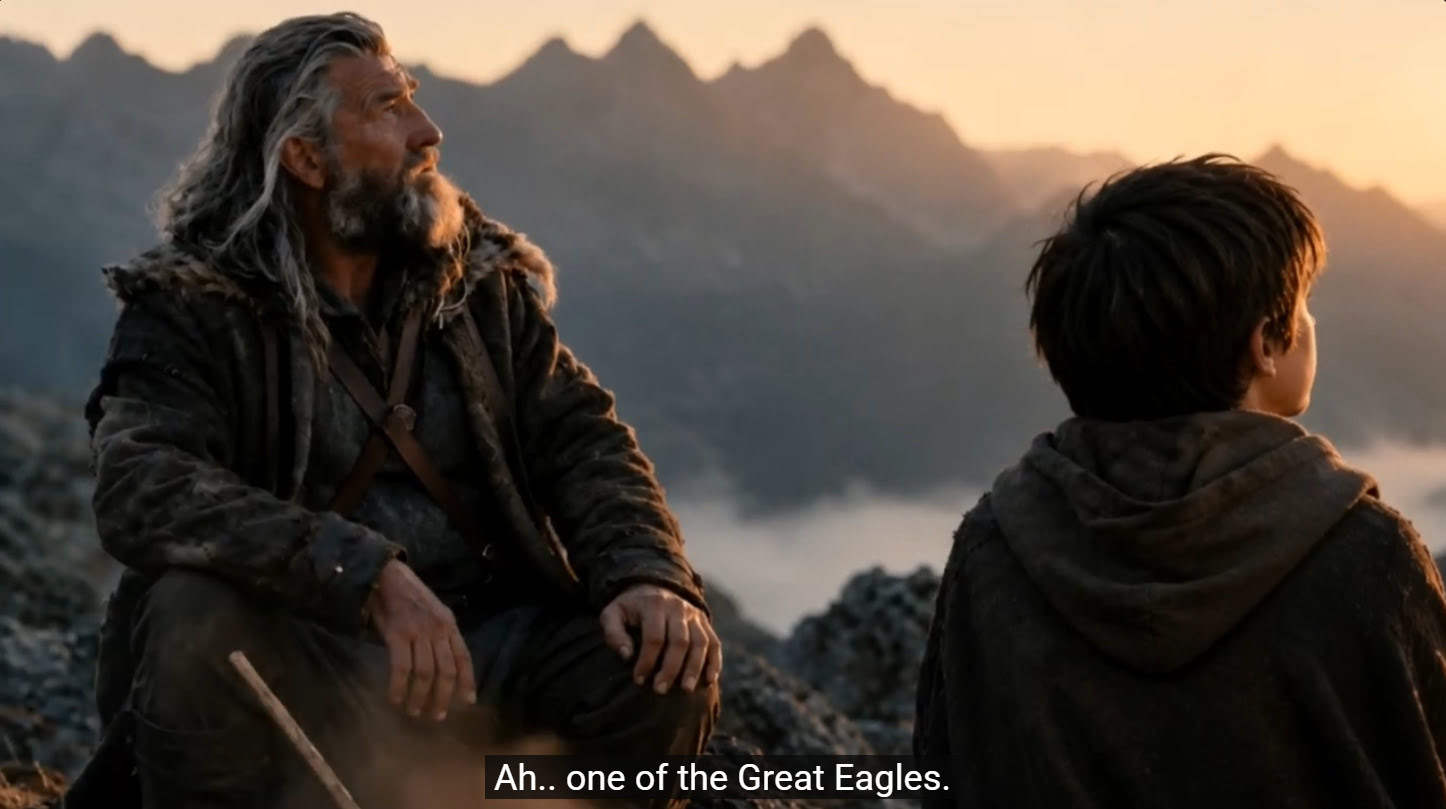
* And finally, Sweden’s Shadow of Morgoth is graduating from making heavy-metal music videos, and is now starting to put Turin’s story on the screen. Three parts so far. One, two and three. All free on YouTube.