An interesting call, in the latest edition of Country Life magazine. The editorial says we need a “ruralist Harry Potter“, to do what Potter did in reviving interest in learning Latin, boarding schools, school uniforms and more. This new ‘CountryPotter’ would at least aim to revive interest the wide range of wild herbage, encouraging children to learn tree types and what “a meadow clary or a hairy mallow” looks like. More ambitiously, also the old dialect words, the ins and outs of rural crafts inc. den-making, the more reliable bits of our weather-lore, the seasons and their foods, and the ways of wildlife and horses. A healthy disdain for health and safety, and irrational far-left eco-politics, would probably also add to the appeal to intelligent children in middle-childhood. It would have to be about magic in some way, tightly plotted but also epic, and probably a bit ‘alternative history’.
Views of Rome
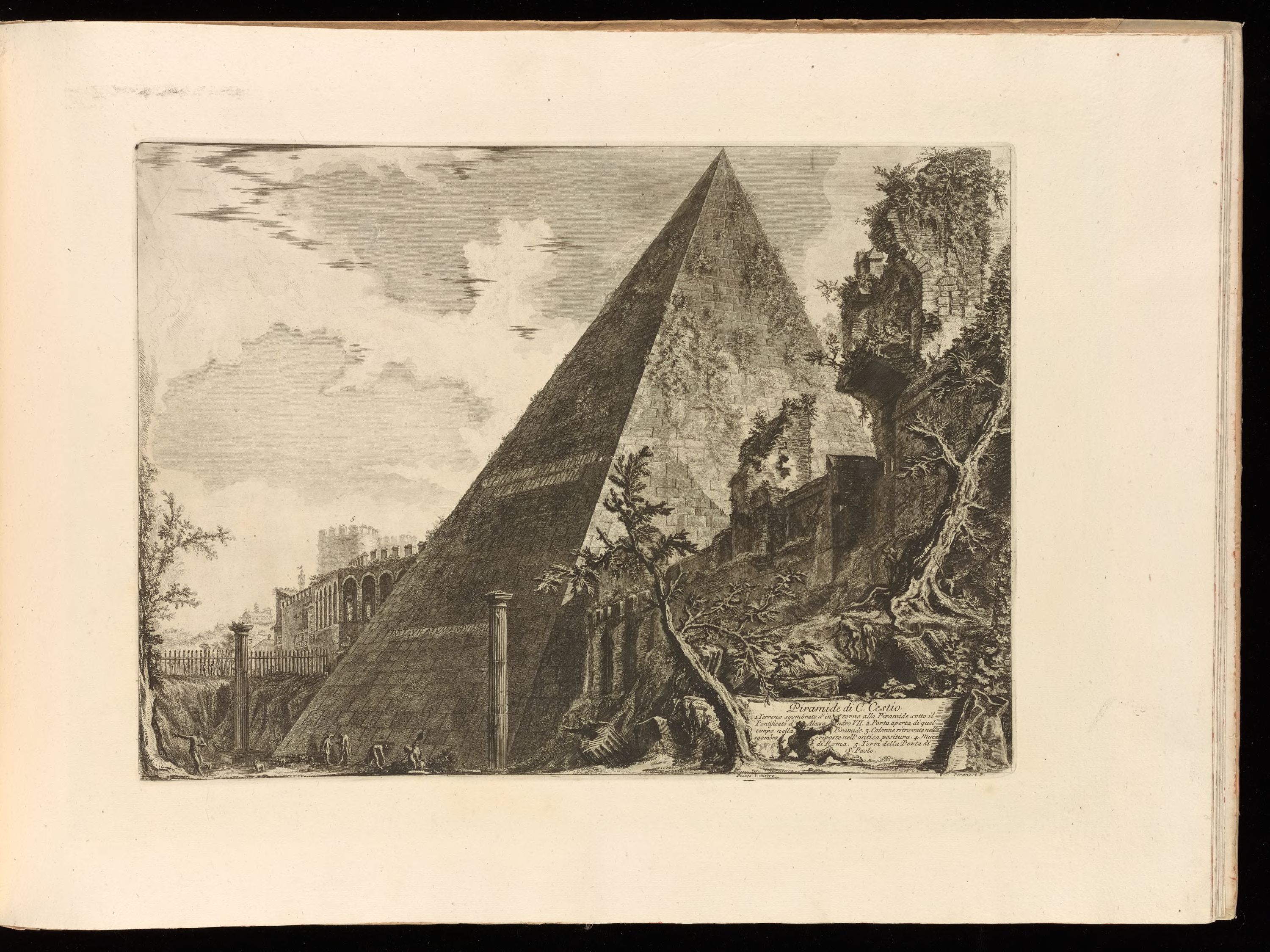
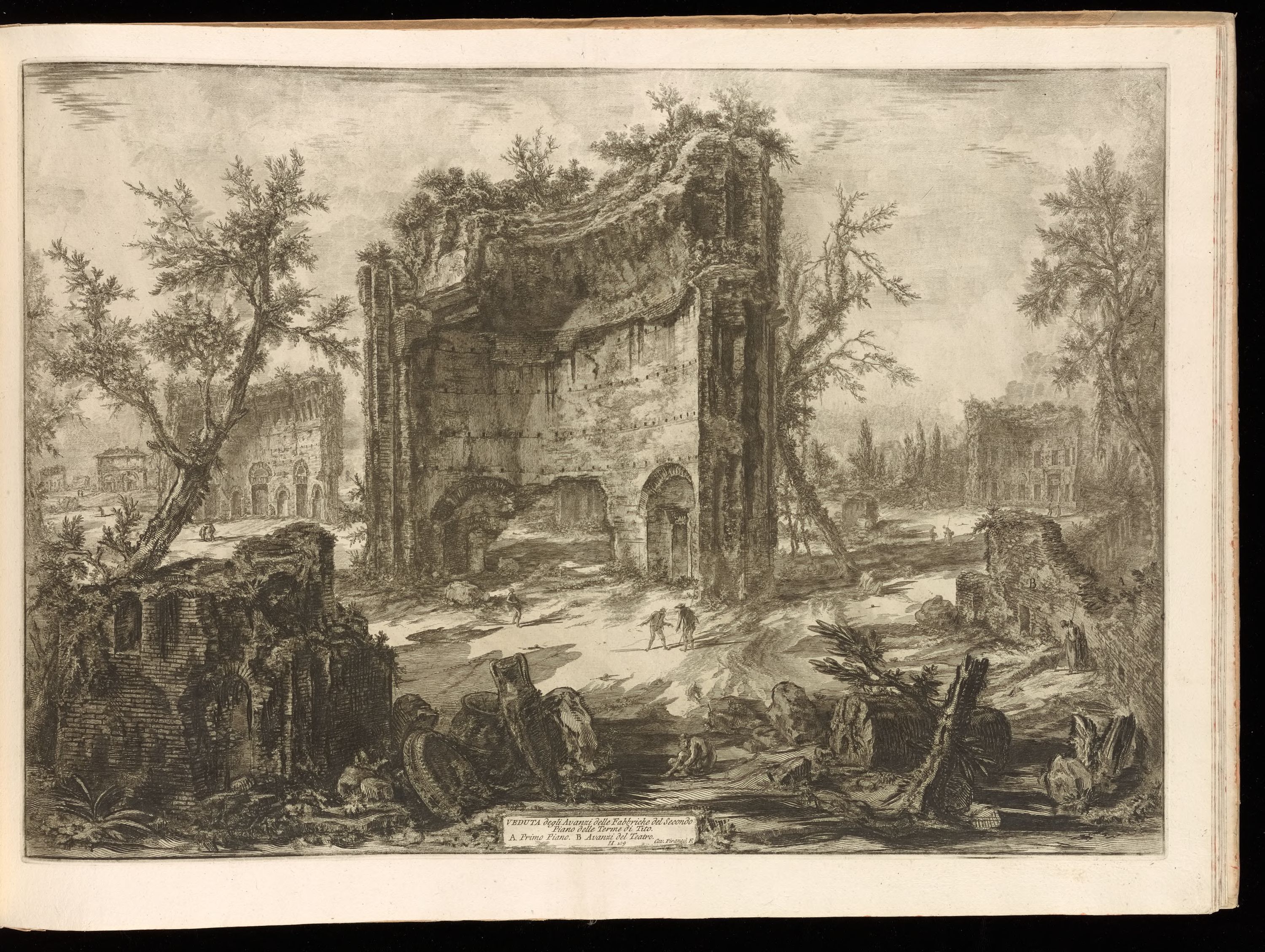
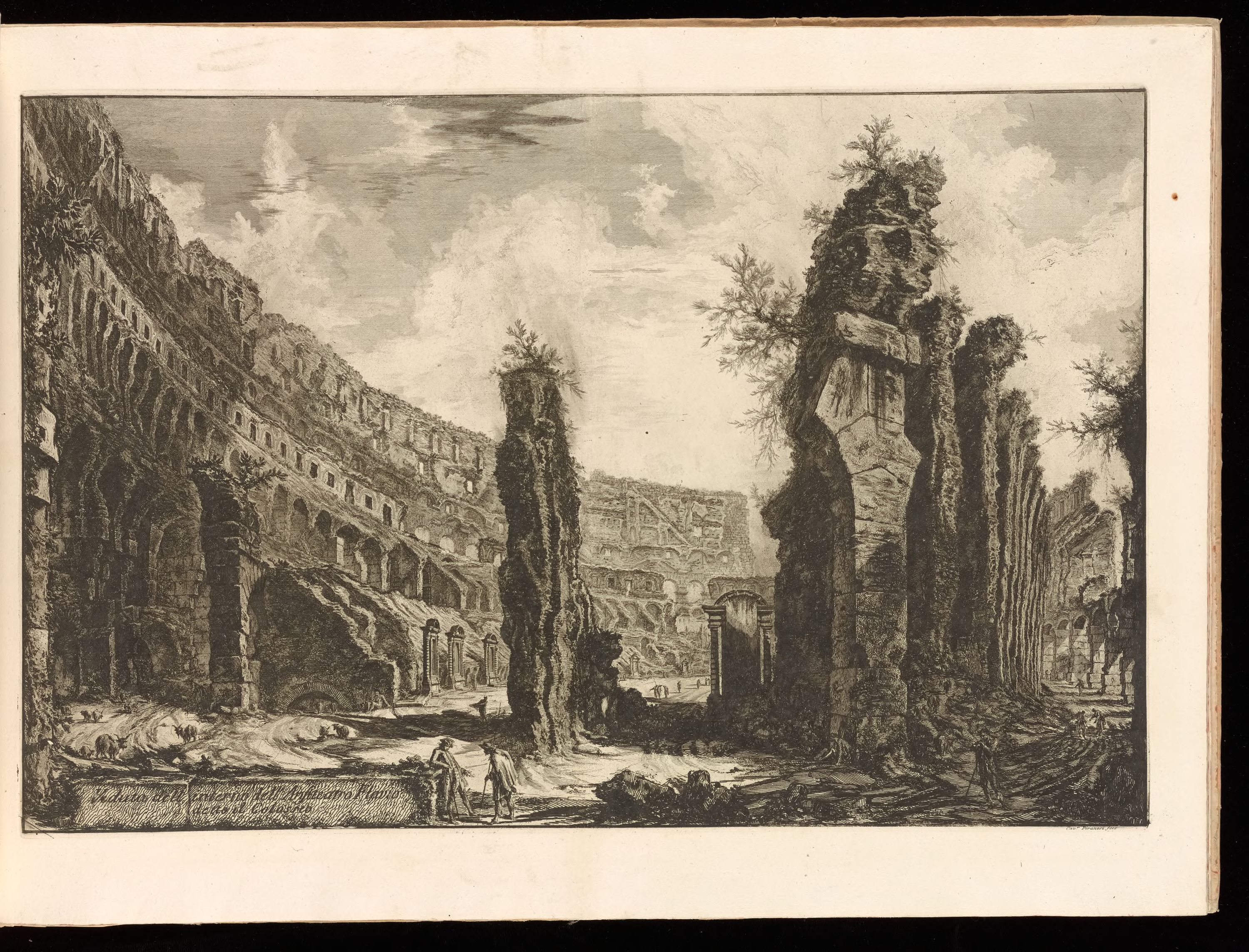
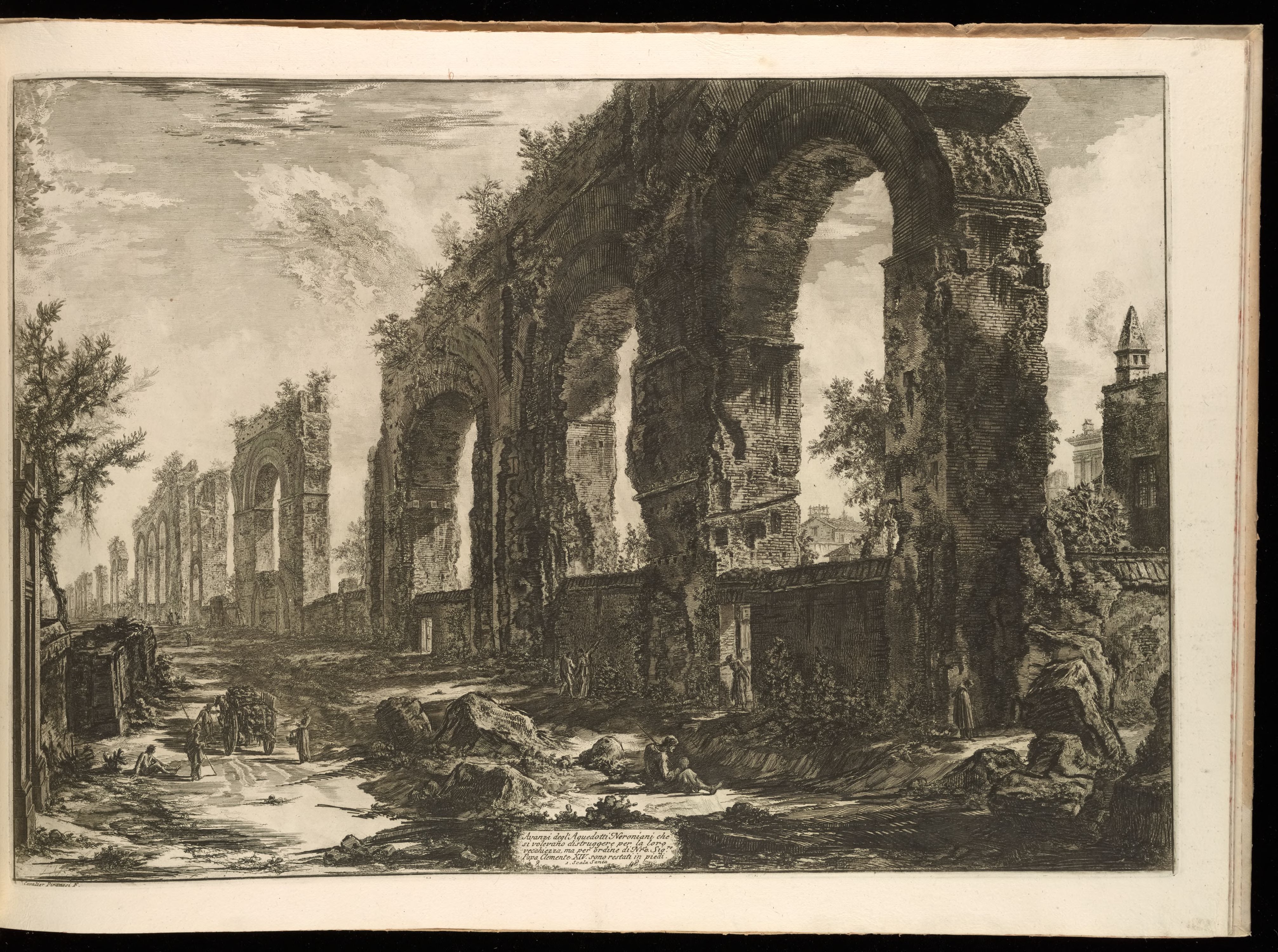
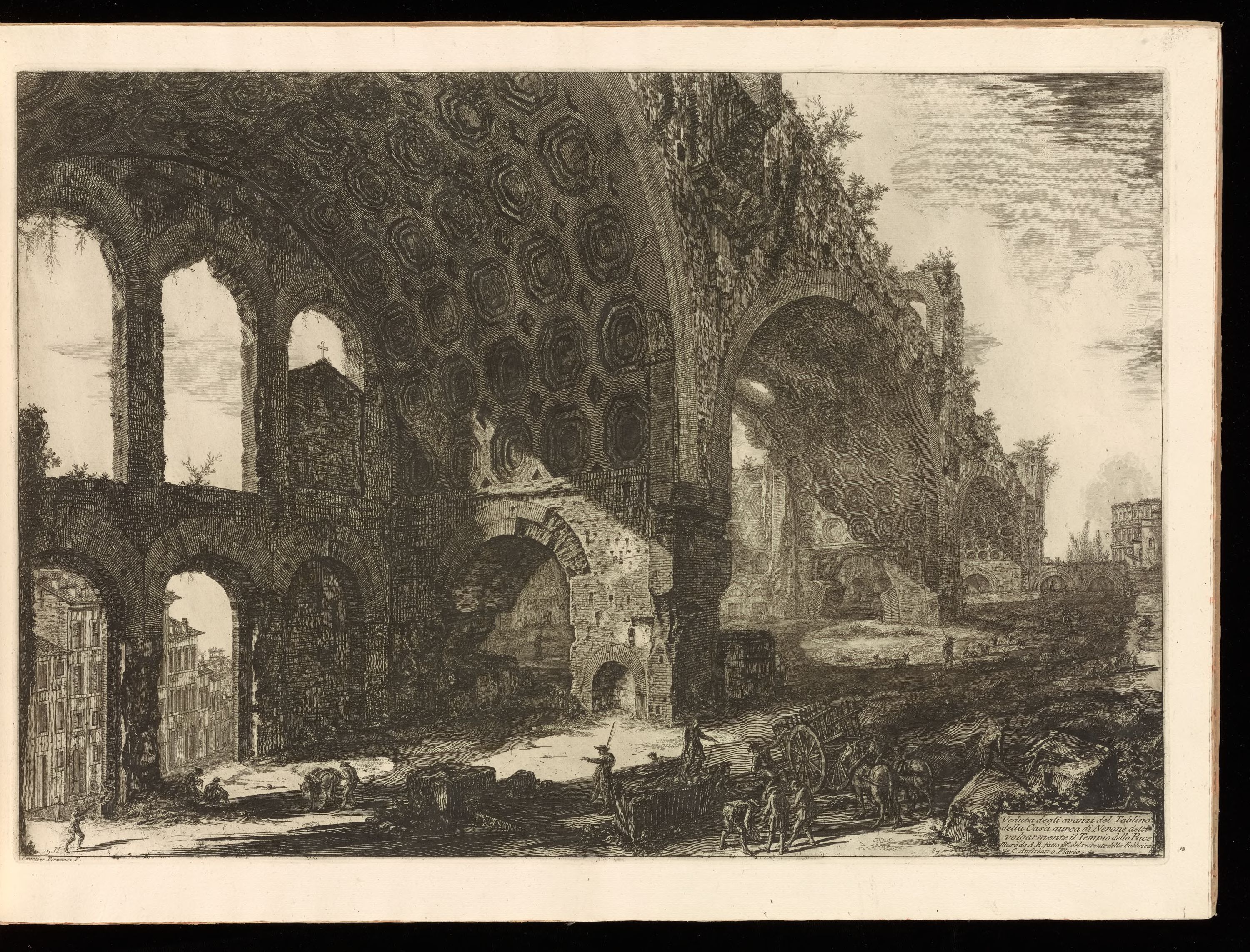
Selected pictures from Piranesi’s Views of Rome (Vedute di Roma), of the ruins of Rome as they were when the place was still a “living in the ruins” city. I’d had it my Amazon wishlist for ages in print form, but now Archive.org has it (search: Piranesi + Roma, not Rome).
Trolls discovered in Manchester
The Manchester Art Gallery‘s Director has removed a well-known Pre-Raphaelite painting “Hylas and the Nymphs” (1896) by J. W. Waterhouse, calling it an “embarrassment”.
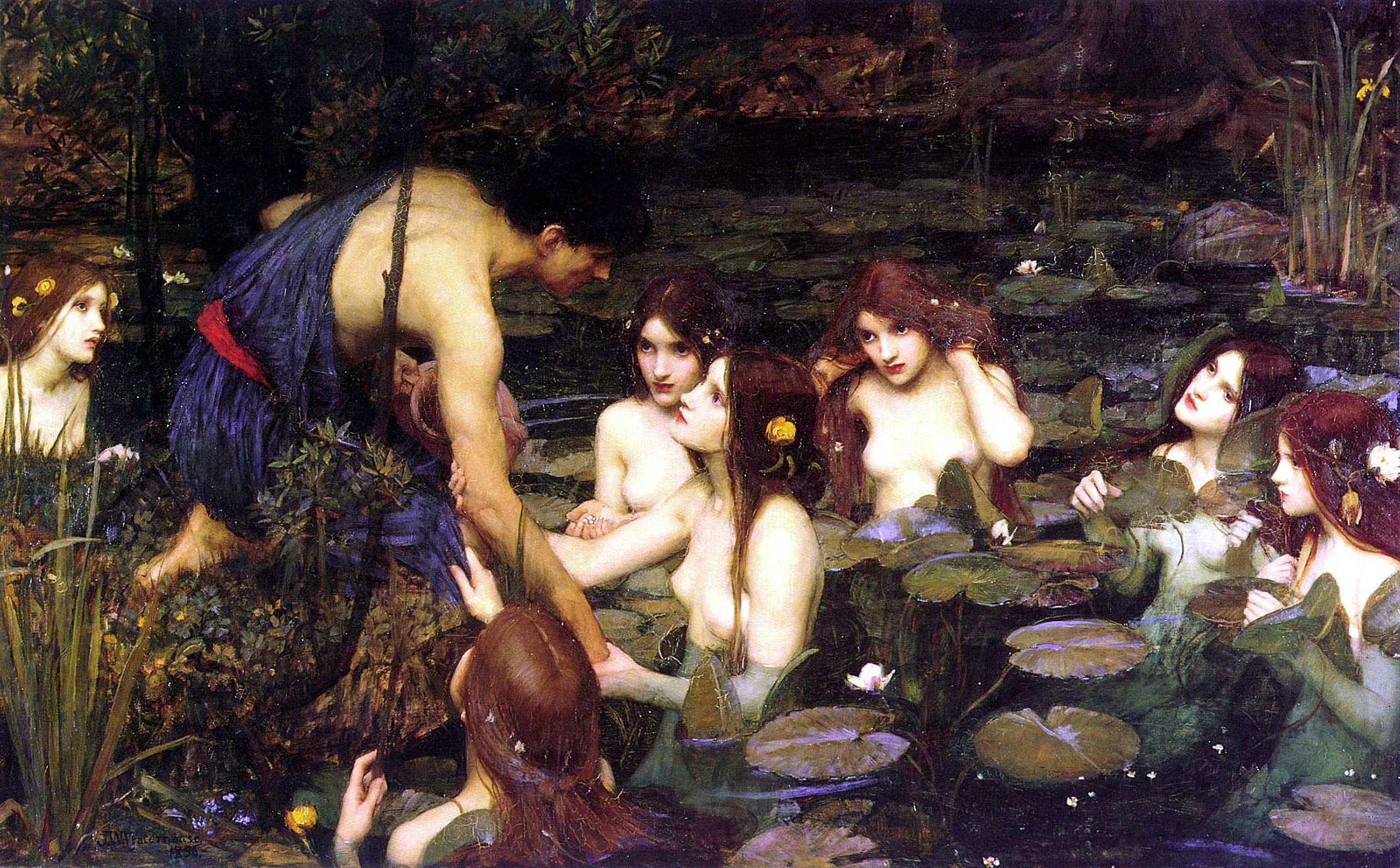
This is obviously about the political trolls getting ‘a foot in the door’ and trying to widen the spectrum of ‘acceptable’ political censorship in art galleries. Accept this, and the next removals will be even more serious.
If I know the political far-left then their end-game is pervasive censorship of nudity (to make a ‘safe space’ for various groups), alongside a ‘Year Zero’-style erasure of the mythic past from museums and galleries. The leftist Independent newspaper gives the game away on this, with a headline which asks: “Why are we in such a hurry to erase the past?”. Which implies that the left’s political project is to “erase the past”. But that the left doesn’t want to hurriedly tip its hand too soon, and thus make the public aware of what its long-term aims are.
Thankfully it’s all futile, a powerless power-fantasy of the leftist professional elites who are rapidly losing their status as cultural gatekeepers. So possibly the censorship in Manchester is just about the Director cynically angling for a big pay-off, when she’s sacked for bringing both the gallery and the curatorial profession into disrepute.
“Blind Orion Searching for the Rising Sun”
Poussin’s painting “Blind Orion Searching for the Rising Sun” (1658):
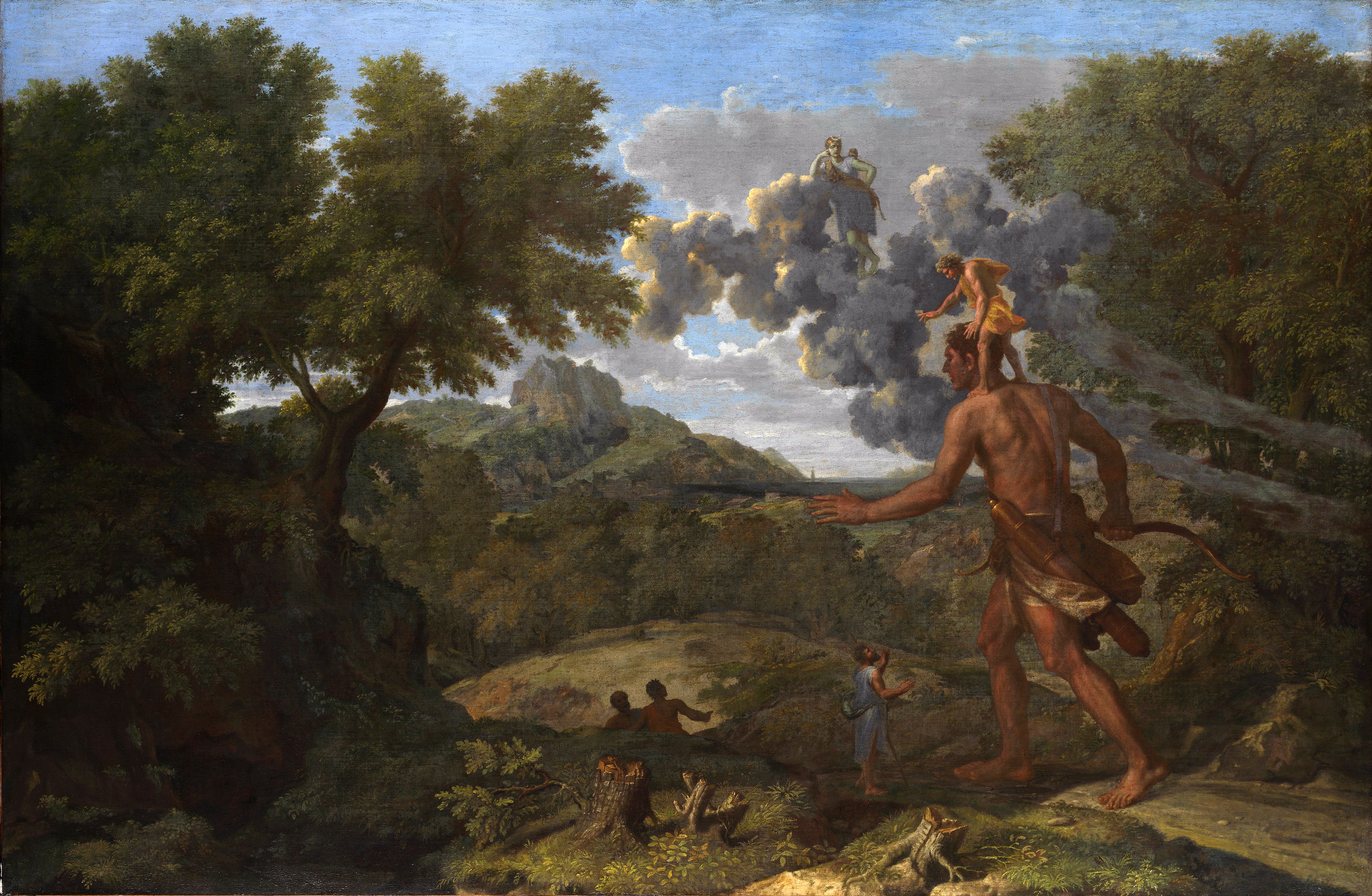
The painting draws on the deeply confused1. classical Greek and Roman stories of Orion, with a tilt toward the later Roman versions which emphasise the huntress Diana. Broadly these stories can be boiled down thus:
Before he was a constellation in the night sky, Orion was deemed by stories to be a giant youth and an impulsive hunter. He was an earthly being, but also a primal son of the dynamic Sea and the fertile Earth.
He was blinded due to his youthful lust, but he believed that his sight would be restored if ever he reached the seat of the rising Sun. In this he embodied the typical adolescent conflict between base impulses and lofty aspiration, something typical of humanity as a whole during prehistory.
Seen on Orion’s shoulders is the blacksmith’s assistant Cedalion. In some of the stories the blind Orion was wading (or stepping upon and over) the ocean and he was drawn toward the sound of the ‘source-of-all-fire’ smithy, where he picked up the fire-god’s assistant Cedalion. As shown by his orange robes in the painting, Cedalion is a primal ‘fire-associated’ being. He stands on the shoulders of the giant, and with his far-sight he tries to guide Orion to find the ever-elusive seat of the rising sun. In his guiding role Cedalion symbolises ‘the flame of knowledge’, guiding impulsive and blind humanity through its historical adolescence.2.
In this painting the rising place of the sun is hidden by storm clouds which emanate from the (implied-mystical) woodland of the goddess Diana. The edge of her deep woodland realm is seen in the bottom-right of the picture. Poussin’s picture shows the moment the goddess Diana spies and falls in love with the blind Orion.3. The figure can be identified as Diana because she wears the bow-like crescent moon on her brow and she is equipped with the bow and quiver of a woodland huntress. The green tint on her skin might be meant to indicate that her realm is that of the woodland seen in the right-hand corner, or it could be that the paint has colour-shifted.
The educated viewer of the painting would remember the next part of the general story. Infatuated, Diana will take Orion into the sky to hunt in her perpetual pre-sunrise dawn woodland. From which place he will never reach or see the earthly sunrise. Presumably his hunting skill is so superlative that he can hunt even while blinded, and possibly Diana values him partly because he loves her for herself and not for her visual beauty (which he cannot see). He of course stays too long in the pre-dawn sky. His hubris in chasing the title of ‘the greatest hunter’ leads him to try to hunt everything. Including, fatefully, even an attempt to hunt the sacred doves of the Pleiades. He has clearly outstayed his welcome. This dove-hunting, and Diana’s apparent elevation of an earth-dweller to the heavenly realm, angers the gods. The gods cause Orion to be killed, with either Diana’s own arrow or a scorpion-sting.
But Orion had proven himself to be ‘the greatest hunter’, so the gods then place Orion in the night sky as the famous constellation of stars, where he is forever a hunter facing the constellation of the Bull with the Pelaides flying above its back, while Orion is also being circled by the She-bear (The Great Bear). But Orion is fixed in place among the nightly wheel of the constellations, and by sunrise he has vanished from the sky. Thus he can never again enter the pre-dawn sky to be with Diana/Aurora.
1. The first chapter of Joseph Eddy Fontenrose’s book Orion: The Myth of the Hunter and the Huntress (University of California Press, 1981) makes a valiant attempt at a concise summary and comparison of the tangled mess of stories.
2. This is an inversion of today’s understanding of the common phrase ‘standing on the shoulders of giants’, which arises from a literary culture of transmission. Here the giant is impulsive/blind, and it is the inventive ‘bright spark’ who stands atop him who has the intelligence and far-sight.
One can also suggest that the enduring idea of “the pot of gold at the end of the rainbow” bears comparison with Orion’s quest for the golden sun. Like “the end of the rainbow”, he can never reach the point at which the sun rises.
3. In the painting Diana ‘stands in’ for the rising-dawn pre-sunrise goddess Aurora, who was the protagonist in older versions of the story — in which it was Aurora who took Orion into the pre-dawn sky, and only later does Orion somehow meet Diana while hunting there.
Mothlach
Mothlach was a word in old Irish, meaning “rough, bushy, tangled, scraggy”, with the implication of a type of scrubbily wooded place. With the variant Mothrach being the name for an equivalent woody tangled place if the place were persistently wet and damp, such as an overgrown wet hollow.
In Welsh it took the form of the very similar mwthlach, meaning a tangled and scrubby bit of overgrown ground. Later, and within living memory in the 1900s, it was applied in parts of Wales to a soft person who was a bit of a ‘walking heap’. Presumably with the implication that a few moths or flies might be flitting about them.
The words are mentioned by Sir John Rhys in his Celtic folklore, Welsh and Manx (1901, in two volumes, I and II), and I found the variant Mothrach in an earlier Irish dictionary. There was also the related meaning of murlach from the Isle of Islay, as ‘woman having an ugly head of hair’.
I can’t discover scholars noting a link to the Norse Myrkviðr (Anglicised as Mirkwood by Scott, Powell, William Morris and then picked up by Tolkien), but the meaning is broadly similar if on a much larger scale. Myrkviðr being a “dark boundary-forest” (Tolkien) which is “untracked” (Drout, J.R.R. Tolkien Encyclopedia, p. 430) and thus implicitly defensive in military terms. Drout refers to the deeper…
proto-Indo European roots for *mer– “to flicker,” with derivatives indicating dim states of illumination, and *merg-, “boundary, mark, border”
Interesting. Moths flicker in dim illumination, and recent linguistic scholarship seems to confirm the ‘soul’ cultural connotations…
“certain other small, often winged, creatures are marked as special by the fact that their death, unlike that of “normal” animals, can be described with forms based on the Proto-Indo-European root *mer– (as in Lat. morior), otherwise reserved for humans.” (Anatolisch und Indogermanisch, 2001, Indogermanische Gesellschaft Kolloquium, page 209)
Those “certain other small, often winged, creatures”… again that sounds to me like moths. The ecological habitat of a dark “trackless” wood, windless and “rough, bushy, tangled, scraggy”, would certainly be conducive to abundant moth-life. One wonders if there was an ancient perception that moths were “already-dead things” or linked with human death? I found immediate confirmation of this notion via a quick search…
“folklore describes moths or butterflies — and occasionally, bees — which appear after a person’s death and which hold their escaping soul.” Source: Henderson, George. Survivals in Belief Among the Celts. Glasgow: James MacLeose and Sons, 1911 (in The Encyclopedia of Celtic Mythology and Folklore, 2014).
This reminded me of my recent and similar musing on a local instance in which a ‘lady well’ spirit was referred to with the curious phrase “or else an insect” by a local informant.
This brings me neatly back to Rhys’s authoritative Celtic Folklore, in which I found Mothlach. Elsewhere, on page 612 of volume 2, he notes…
“Cornish tradition applies the term ‘pisky‘ both to the fairies and to moths, believed in Cornwall by many to be departed souls. So in Ireland: a certain reverend gentleman named Joseph Ferguson, writing in 1810 a statistical account of the parish of Ballymoyer, in the county of Armagh, states that one day a girl chasing a butterfly was chid [chided] by her companions, who said to her: ‘That may be the soul of your grandmother.’ This idea, to survive, has modified itself into a belief less objectionably pagan, that a butterfly hovering near a corpse is a sign of its everlasting happiness. … it is also stated that the country people in Yorkshire used to give the name of souls to certain night-flying white moths.”
In which case the dense tangled woods that defensively surrounded hill-forts such as The Wrekin…
“according to him [Caesar] the British idea of a town or fortress was a place with a tangled wood round it, and fortified with a rampart and ditch” (Sir John Rhys, Celtic Britain, page 53)
… might have been understood by the ancient inhabitants to be flickering at night with the souls of their recent ancestors. And these large white moths would have visited for nectar the first wood anemones — wind-stars or windflowers in the Midlands. These beautiful flowers are the first and commonest woodland flowers of the year and are likewise white, since they have no need to attract day-time insects (there are none at that time of year). The wearing of these wood anemone flowers on the lapel or in the hair was recorded by late English folklorists as deeming bad luck, and I wonder of this was originally due to their cultural association with attracting the souls of the dead (in moth form)? In this they would be rather like Tolkien’s grave-associated Simbelmyne white flowers, which likewise grow at the edge of a large hill-fort.
Sadly the excellent word mothlach doesn’t appear to have survived into English, its meaning having been superseded in use by common Norse and French words. Although in meaning “tangled, scraggy” it has a likeness to the disused Old English mothfret, meaning something moth-eaten. To say today that an item of clothing had been found to be “moth-fretted” would still be understood in modern English.
Lastly, if someone wanted a title for an eclectic magazine or academic journal then Mothlach might serve.
All around the Wrekin
My Birmingham grandmother, who grew up in rural mid-Staffordshire, used a common Staffordshire and Shropshire phrase meaning ‘going all around-about on foot, in a long and tangled journey back to where you started’. This was “all around the Wrekin”. The same phrase was also used to refer to a person who verbally rambles, taking a long time to say something that could be said more directly.
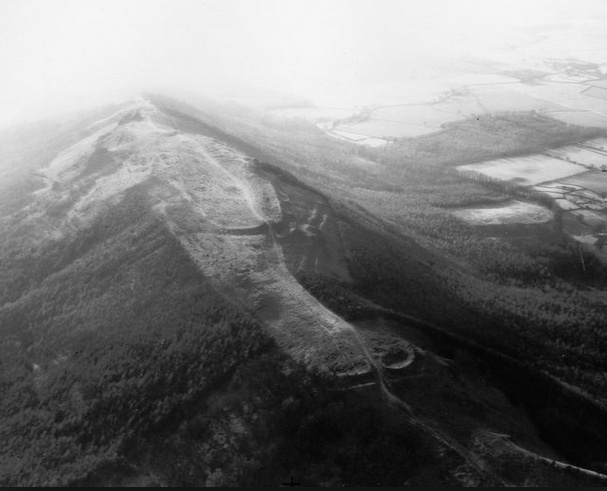
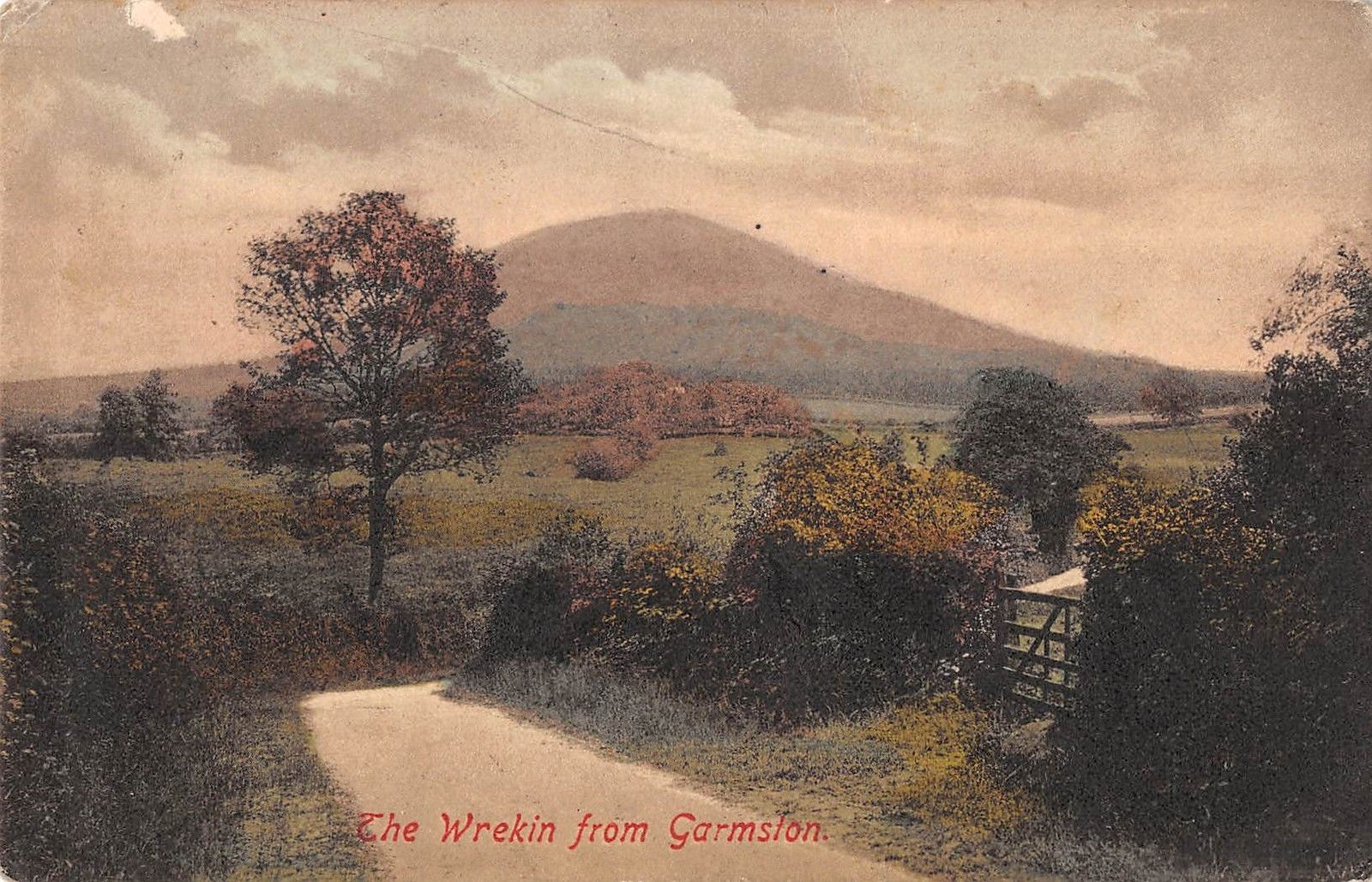
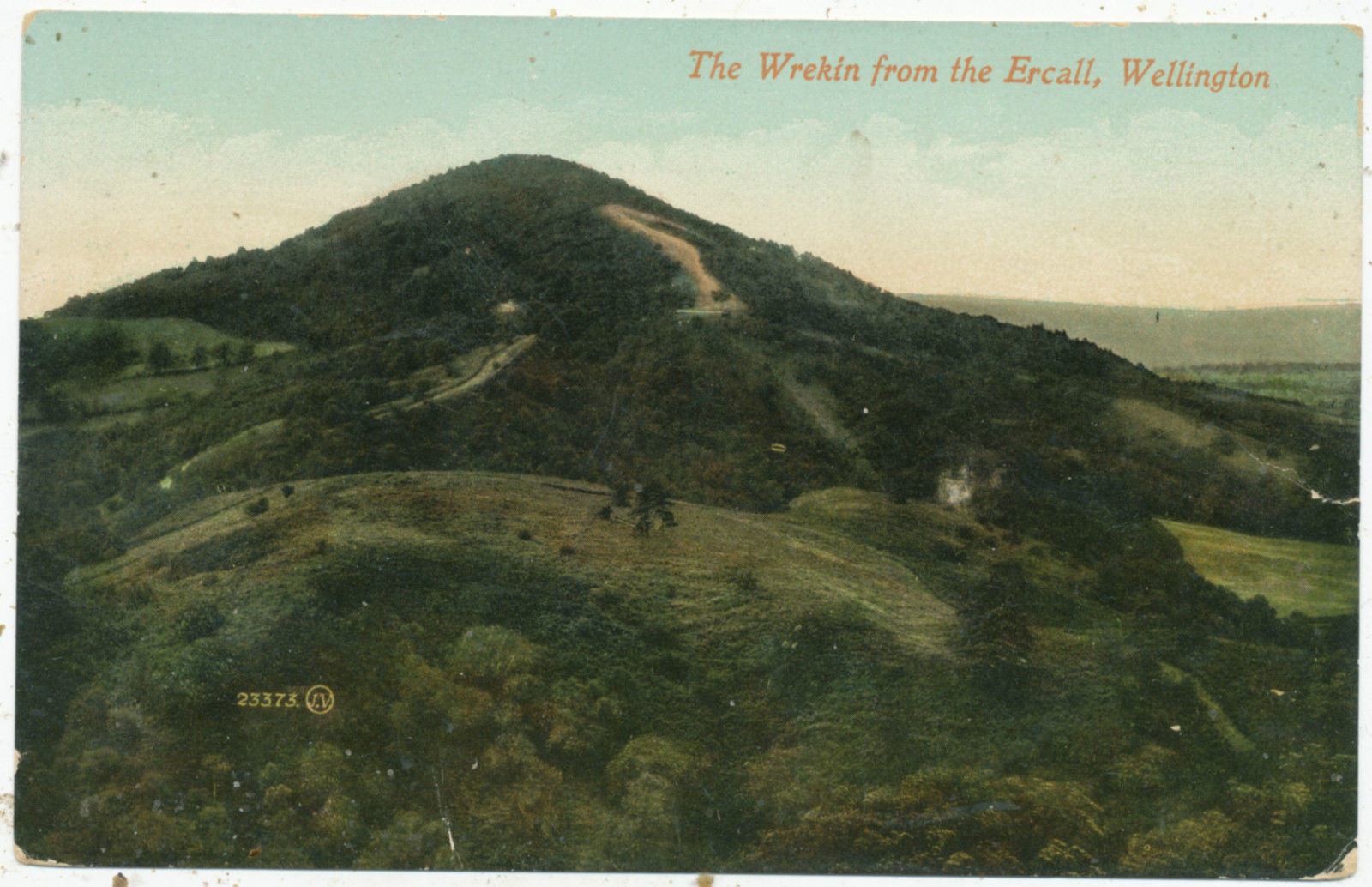
The Wrekin [ree-kin] in question is a famous and impressive hill-fort of the Cornovii in nearby Shropshire, on the Welsh Marches. Its size and location indicates it was their most significant tribal centre, although they were probably still somewhat seasonally nomadic in terms of having summer and winter palaces…
[Caesar] “had ample opportunities of observing the appearance of the country, and of learning much about the inhabitants … He considered the country very thickly inhabited, and the abundance of cattle to be deserving of notice. The buildings he saw resembled those of Gaul, and were very numerous, but according to him the British idea of a town or fortress was a place with a tangled wood [the mwthlach or mothlach] round it, and fortified with a rampart and ditch; inside this they would, as Strabo tells us, build their huts and collect their cattle, but not with a view of remaining there long.” (Sir John Rhys, Celtic Britain, page 53)
These are the words of J.R.R. Tolkien’s early inspiration on matters Celtic, Sir John Rhys. He published an essay on the Wrekin and its various linguistics in 1908, and this is now online: “All around the Wrekin”, Y Cymmrodor XXI, printed November 1908.
Tolkien was familiar with Rhys from a young age. He had read Rhys’s Celtic Britain (probably in the second edition of 1884) as a boy in Birmingham. Later he very likely sat in on Rhys’s series of lectures at Jesus College, Oxford, even though Tolkien was then at another Oxford college and the lectures were not required for his degree. There is, however, no evidence that I know of that the Wrekin was “the inspiration for Middle-earth” — a claim made in local Tourist Board piffle.
Rhys’s essay on the Wrekin mostly delves very deeply in the history and word-meanings, and is as digressive as its title suggests. But everyday readers may be interested to know that, buried deep among the dense philology, Rhys notes (page 11) a similar surviving phrase of the 1900s…
“a local toast in our day describes [the district] comprehensively as: “All friends round the Wrekin”.”
Rhys passes this swiftly by and he assumes the phrase was a conflation of the people of the district with the district itself. In effect a phrase meaning that: ‘all are friends who live around the Wrekin’, because from a common stock. But the use of the phrase in print, as a dedication for the book The Recruiting Officer (1706), seems to me to indicate that it then meant something slightly different: ‘too many friends to go all-around and mention each person by name’. In the era of heavy-drinking banquets, this would have been a convenient and welcome phrase for a toast-giver, getting him out of having to remember and recount a string of names while drunk. And risk mispronouncing or forgetting people’s names. This meaning is then congruent with the modern use of “all around the Wrekin” meaning someone who verbally rambles. In effect, at a banquet it would have been easily remembered shorthand for: ‘Here’s a toast to all my friends… but I won’t go all around the Wrekin, by trying to mention each of them by name’.
One might recall Bilbo’s party speech here, at the start of The Lord of the Rings, when he thanks the…
“”Bagginses and Boffins … Tooks and Brandybucks, and Grubbs, and Chubbs, and Burrowses, and Hornblowers, and Bolgers, Bracegirdles, Goodbodies, Brockhouses and Proudfoots …” Why couldn’t he stop talking and let them drink his health?”
The more casual reader of Rhys’s essay may also find useful his appendix, where in three pages he deftly summarises a long scholarly monograph on the name Wrekin: in Mercian the name was Wreocen, going back to a Celtic Wrikon-. Later authors (1949, 1963) have tentatively suggested a relation of Wrikon- to the Welsh gwrygio, meaning something like ‘to wax (grow, swell) strong and manly | to exert strength and thus thrive’.
The cost of roaming the fields
From a blog post I noted while searching, “A reviewer’s complaint”…
Thomas Honegger [in 2015, complained of Tolkien] scholars unaware of major and basic work in the areas they are covering. “How are we going to advance Tolkien studies if scholars in the field are ignorant of each others research?”
Well, I know how and why this happened. It’s the explosion in the size of our field.
I’d also suggest it’s the cost, and sometimes the difficulty, of obtaining the needed items. To obtain the “little opinion piece by Thomas Honegger”, for instance, I’d need to spend £20 plus postage for a print copy of a little-known German scholarly journal. Since I don’t need anything else that’s in the journal issue, and a quarter of the essays are in German anyway, £20 is not an enticing price.
Let’s say that one wishes to make a basic start in Tolkien scholarship. That’s a little less daunting than starting on someone comparable like H.P. Lovecraft, since Tolkien scholarship is not so saddled with rare book collectors (Tolkien collectors are only interested in what Tolkien wrote, not what’s been written about him). Even so, a basic small shelf for Tolkien is probably around £500. That’s less than the perhaps-£800 you’d need to make a start on Lovecraft and do proper fannish scholarship (not the risible slander which Lovecraft usually gets from fly-by university professors). But with Tolkien, the somewhat lower per-item costs are then balanced out by the larger range of items you’d need to see a clear outline of the field. There are also higher ongoing costs to keep up with the ongoing wash of Tolkien scholarship, compared to the relatively small trickle of annual Lovecraft scholarship (the valiant efforts of S.T. Joshi and co. aside) that’s worth reading. There is admittedly a very good survey in each annual issue of Tolkien Studies, but just acquiring the last four issues of Tolkien Studies would cost me $280.
Such startup costs would be no problem for an academic on a whopping £38,000+ a year, or even for an £18k funded PhD who has miraculously found a friendly librarian with ample funds for inter-library loans and book purchases. But even an initial £500 outlay would be daunting for most impoverished independent scholars. Especially as that initial £500 would soon need to be matched by another £500 for runs of paper journals, books and obscure out-of-print items. Even if one was very frugal, and also knew how and where to hunt items online, and how best to wrangle with Google Books etc, one could still end up having to spend at least £300 on ‘needed item’ print books. All in order to write a new book that may only sell 30 copies and get one review.
The other problem, in terms of Honegger’s complaint, may be the cost of getting a detailed pre-publication reader’s report from someone at the top of the field. Thus enabling one to sidestep the sort of small snags that so antagonise reviewers in the field. Perhaps Tolkien studies now needs some kind of subsidised pre-publication peer review system, for substantial new books from outside the academy. Or one might publish the PDF online for free for 18 months, with a public “call for comments” and commenting system, then publish a revised and corrected final-version in print two years later.
Arthur Machen, weaver of fantasy
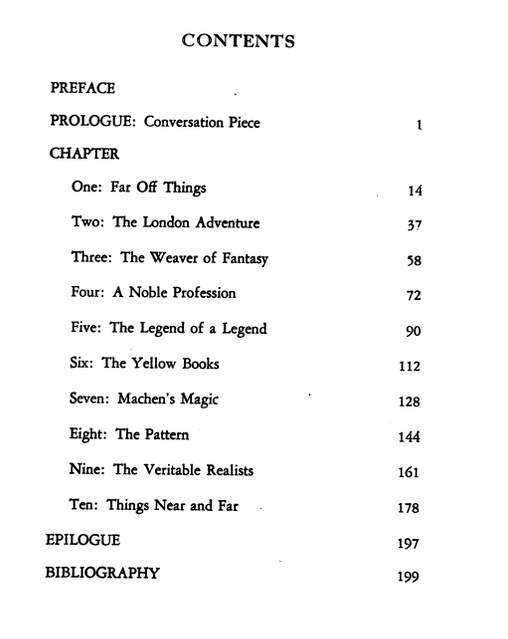
New on Hathi, in public full-text: the book Arthur Machen, weaver of fantasy (1949).
Mary Flynn in Stoke
“Farewell to Faha’s Friend”, the orthopaedic nurse Mary Flynn…
“Last week the small community of Faha outside Kilmacthomas [County Waterford, Ireland] mourned the death of one of its oldest and longest residents.
[When young] Mary and [her sister] Philomena found it difficult to get [nursing] work experience at home [in Co. Waterford, deep in rural Ireland]. Undeterred, they decided to travel to England to seek work, heading for Stoke-on-Trent where their aunt worked as a radiographer and a ward sister in City General Hospital. Mary had embarked on the daunting journey firstly, followed shortly afterwards by Philomena.
With little money and no modern telecommunications, they travelled to Dún Laoghaire to catch a ferry to Holyhead [in north Wales], a train to Crewe, and another train to Stoke-on-Trent. Travelling outside Waterford for the first time, Mary and Philomena faced many challenges but recounted their time in England with fond memories. Mary spoke of nursing the late English soccer international Sir Stanley Matthews, widely regarded as one of the greatest ever players of the game in Britain.”
Saga Book of the Viking Club
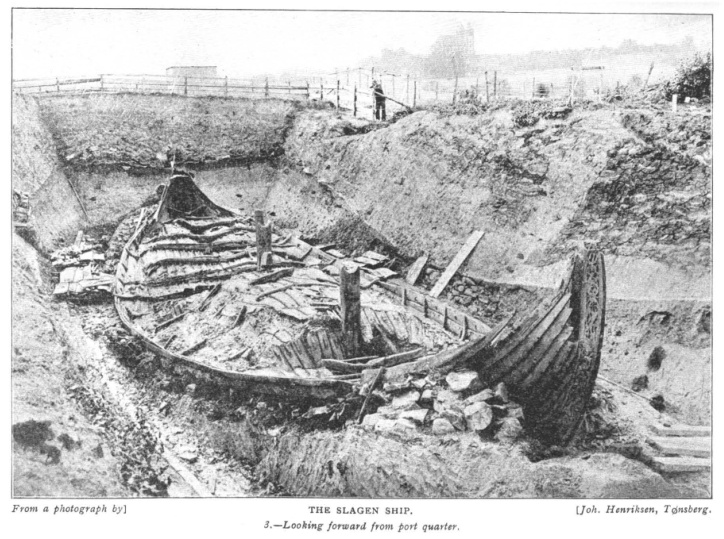
PDFs for the Saga Book of the Viking Club, 1895-2015, and associated publications. Public, OCR-d and searchable.
A wander in the Morlock Mountains
I’ve been reading the new essay by H.L. Spencer, “The mystical philology of J. R. R. Tolkien and Sir Israel Gollancz: monsters and critics”. One of the things I was pleased to learn was that Tolkien seems to have known Wells’s The Time Machine, on the genesis of which I’ve recently written a book. The evidence for Tolkien having read The Time Machine is that he wrote a poem, circa 1927, which satirised the fearsomeness of “exalted” academics by describing them in proto-Gollum terms. In both person and topography, since they live underground and beyond the “Morlock Mountains”. The reference being, of course, to the Morlocks — the devolved subterraneans in Wells’s The Time Machine.
This poem was titled “Knocking at the Door” and subtitled: “Lines Induced by Sensation When Waiting for an Answer at the Door of an Exalted Academic Person”. It was published 18th February 1937 in The Oxford Magazine (page 403, as ‘Oxymore’). Sadly it seems The Oxford Magazine is not online, and the original version of the poem seems not to be available online in any form.
The 1962 version is however online on YouTube, in several readings, and also at the Tolkien Gateway in text form. Here are the final verses…
The cellars where the Mewlips sit
Are deep and dank and cold
With single sickly candle lit;
And there they count their gold.Their walls are wet, their ceilings drip;
Their feet upon the floor
Go softly with a squish-flap-flip,
As they sidle to the door.They peep out slyly; through a crack
Their feeling fingers creep,
And when they’ve finished, in a sack
Your bones they take to keep.Beyond the Merlock Mountains, a long and lonely road,
Through the spider-shadows and the marsh of Tode,
And through the wood of hanging trees and gallows-weed,
You go to find the Mewlips – and the Mewlips feed.
The similarity to “flap-flip”-footed Gollum, in his bone-strewn cave under the mountains, should be obvious. So it’s interesting that Gollum could have started off as a prototype as early as 1927 and in the form of a satire on slippery student-gobbling “exalted” academics. H.L. Spencer explores the possibility that the academic who Tolkien had in mind was his rival at the time for Gawain, Sir Israel Gollancz. But finds the evidence rather vague, and offers some counter-evidence on Tolkien’s sentiments at the time. It’s difficult to tell, without seeing the original poem. For instance, was “And there they count their gold.” in the 1937 original? [Update: no, it wasn’t] Or was it something more academic, like “And there they scratch so bold.”?
The J. R. R. Tolkien Companion & Guide comments on the later version of the poem, that…
“Knocking at the Door seems to be a comment on the trepidation of a student calling on a professor; transformed into The Mewlips and divorced from its original meaning, it is a work purely of mood and imagination.”
To be specific, it was re-titled, stripped of its explanatory sub-title and apparently re-worked (how much?) for children, and thus tamed. It was reprinted as “The Mewlips” in The Adventures of Tom Bombadil (1962).
H. L. Spencer usefully comments in a footnote in the essay, that…
“The Mewlips are later said to live beyond the ‘Merlock Mountains’; in the original [1927/1937] version, these are the ‘Morlock Mountains’, referring to H. G. Wells’s cannibalistic underground creatures”.
I’d add that this shift from Morlock to Merlock also shifts the register from the Biblical (Morlock recalls Moloch) to the Arthurian (Merlock recalls Merlin). I’ve discussed Wells’s Biblical Moloch link at length, in my recent book on the genesis of The Time Machine. One then has to suspect that Tolkien easily spotted that Wells was quietly referencing Moses and Moloch worship throughout The Time Machine, and would thus have puzzled out all the subtle re-uses of such Biblical elements and names. In which case he knew that Morlock must recall Moloch for the fellows of Oxford who read The Oxford Magazine, which must then key the poem’s theme to the similar and well-known forms of Moloch worship. This can then be seen to tie in with certain other aspects of the information given in H. L. Spencer’s essay, and even with a certain gruesome later development in Gollum’s back-story as given in The Lord of the Rings.
Also interestingly, Tolkien’s apparent reading of The Time Machine, if in perhaps circa 1924/25, would have been closely paralleled by H. P. Lovecraft reading The Time Machine for the first time in New York during November 1924.1 It’s strange to think of them as such contemporaries in horror, like that. Shortly after experiencing the underground cannibalistic Morlocks, Lovecraft writes “The Horror at Red Hook” (underground, child sacrifice), and Tolkien writes “Knocking at the Door” (underground, student-eating).
1. Lovecraft thought Wells was a tedious and canting socialist, which he was by that point. Thus Lovecraft avoided his books. But a young protege of Lovecraft was making a collection of very early SF, then largely forgotten, with the aid of the used bookshops of New York City. He encouraged the master to at least read The Time Machine.
Tolkien at Leeds, July 2018
A wealth of Tolkien sessions, at the International Medieval Congress 2018 at the Leeds Hilton in the UK (2nd – 3rd July). The most interesting papers for me would be those on the deeper historical context, in “Tolkien: Medieval Roots and Modern Branches, II” on Tuesday 3rd July: “Tolkien’s Agrarianism in its Time” (hopefully surveying the verdant undergrowth of nature-thinking, land reform concerns and organicist living that informed radical politics from the 1920s onwards), and “A Man of His Time?: Tolkien and the Edwardian Worldview”. Rather too expensive for me, though, just to hear those two papers: £35 + a £45 train fare to arrive after noon = £80.