Prince Charles’s Watercolour World – the first fruits

Prince Charles’s big Watercolour World charity is starting to bear fruit. The project aims to get all watercolour pictures properly scanned and online without watermarks or other encumbrances. The first batch is now online from The Potteries Museum & Art Gallery. They’re not all local scenes, but a few are and two of these are corkers.
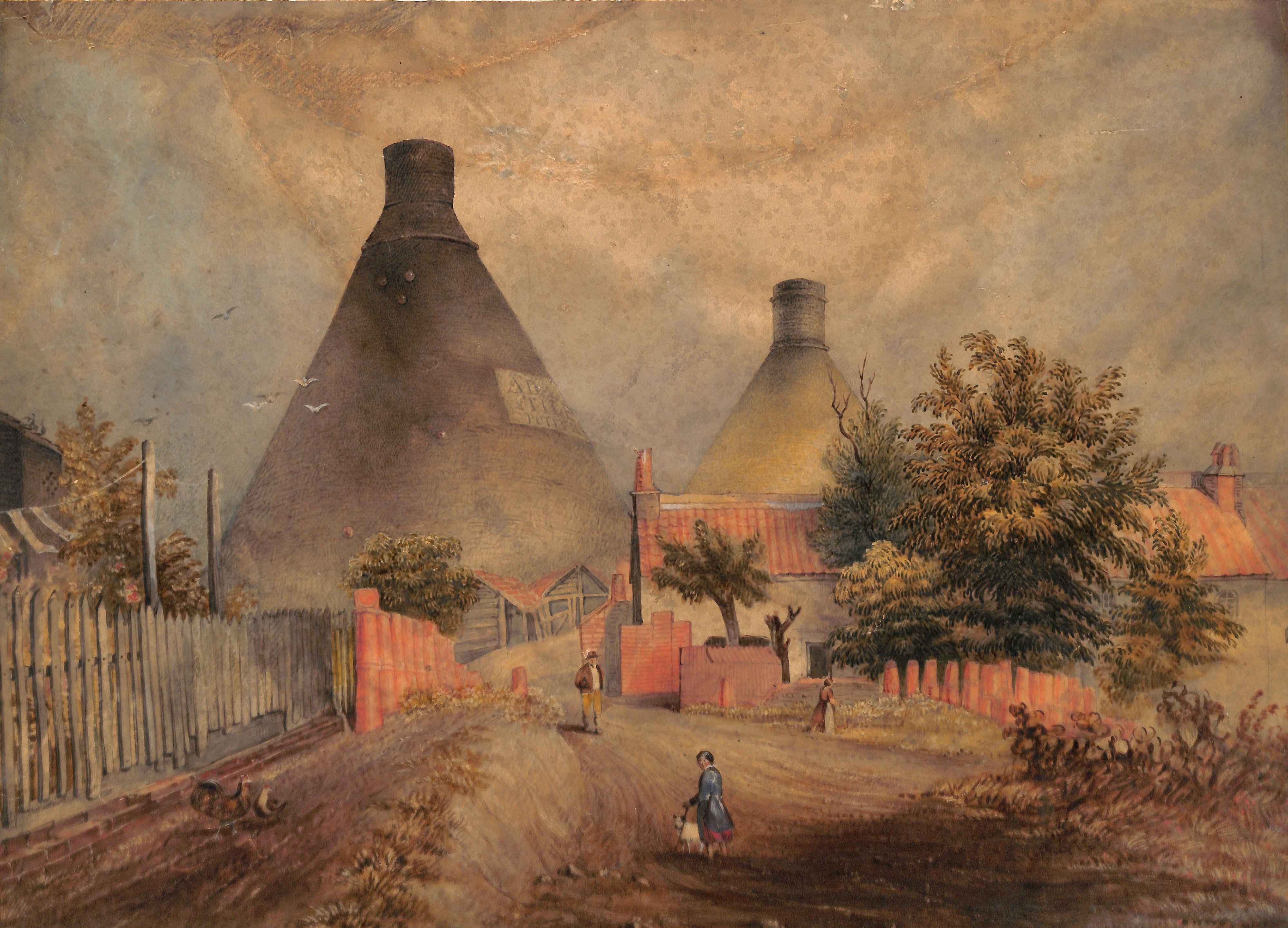

“Adam’s Tile Pottery c.1840-1890” by Anon. According to the un-zoomable map, this was at the top end of the London Road in Stoke, just before the turn up toward Hartshill. Roughly about where the new animation training centre’s going to be, opposite the former Woolworths.
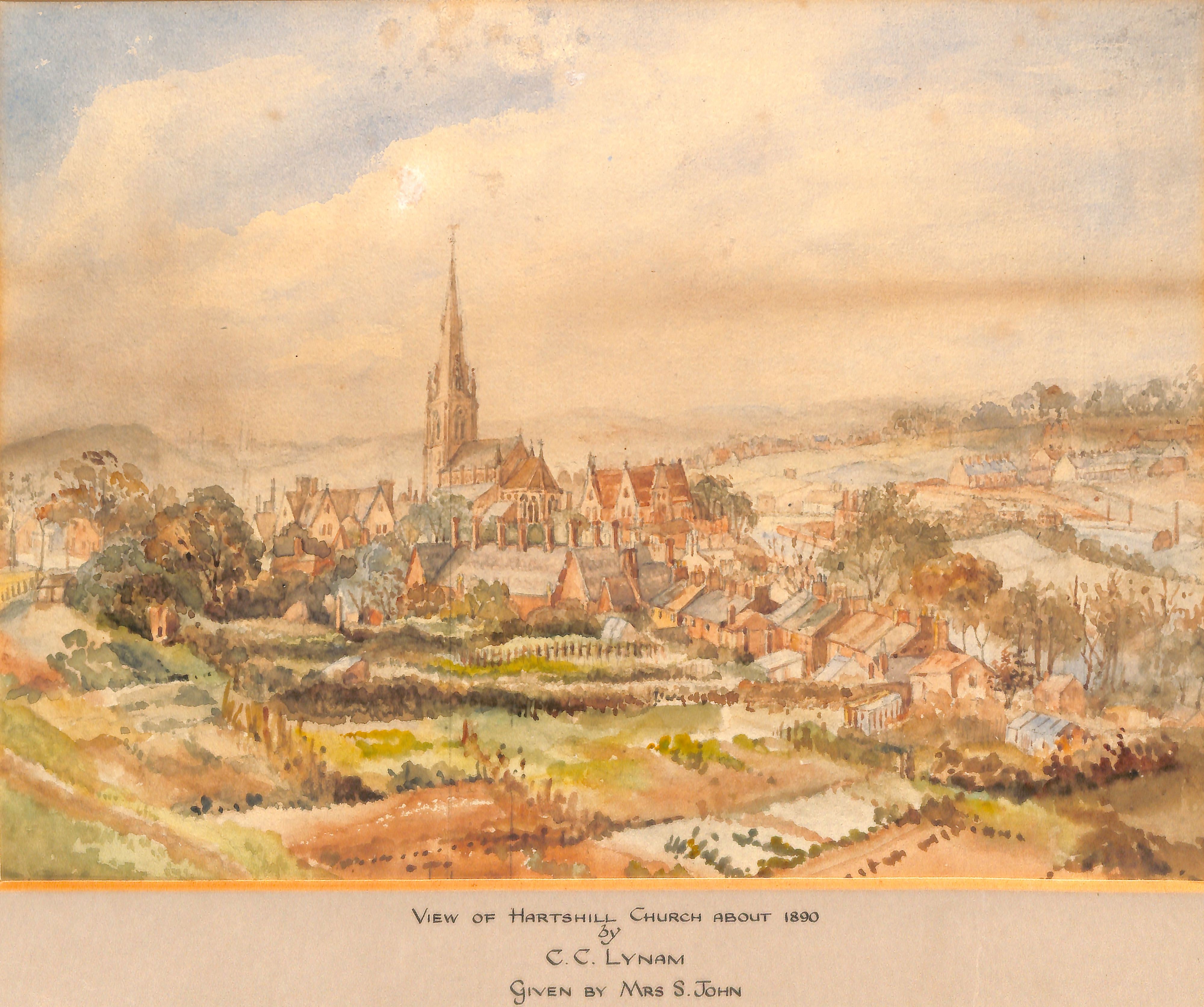

“View of Hartshill Church, c.1890.” Hartshill in Stoke-on-Trent. Looking over the back gardens and tucked-away allotments on the left hand-side of the road up from Stoke, as the road ascends toward the Church and the Jolly Potters pub. Neither building seen on either side of the church is the Vicarage, which is out-of-sight from this perspective except for its chimneys. One imagines a hot-air balloon and a precariously balanced painter, to get this view, or perhaps some temporary wooden scaffolding, or a small flet up in a tall tree.

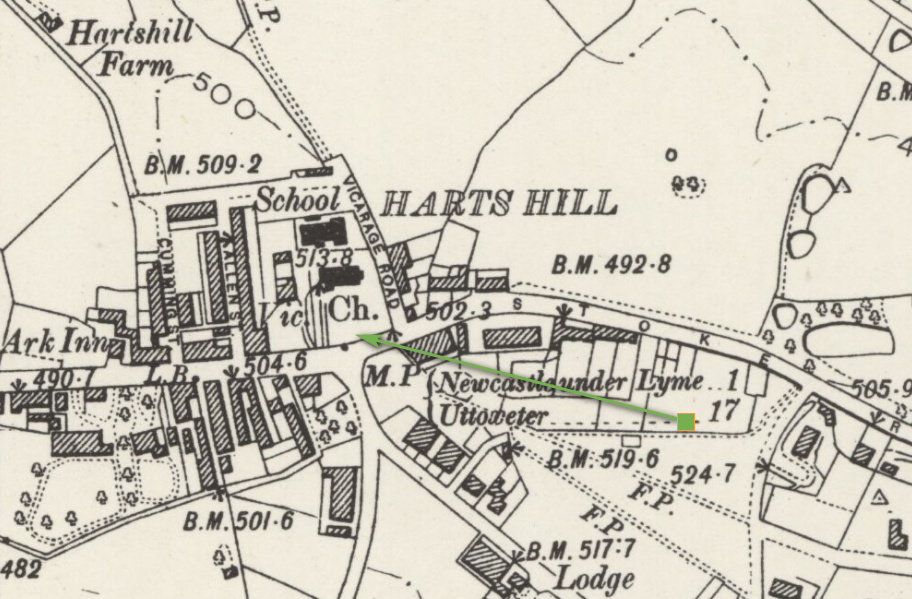
This 1890s maps shows the approx. vantage point of the artist, and his direction of view over to the church.


What of the credit? It is clearly labelled on the picture as by “C. C. Lynam”, although the museum’s record page has the painter as Lucy Lynam. At a guess, perhaps a sketch by C. C. which was then later coloured by his wife Lucy? But assuming the picture itself is correct, then was this “C. C. Lynam” the “Mr. C. Lynam, F.R.I.B.A. [i.e.: an architect]” who wrote the antiquarian essay “A few jottings on some Staffordshire Camps”? Of whom the North Staffordshire Field Club noted in 1892…

“his portrait ought to be painted with a drawn sword in his hand, keeping off the restoring vandals from our ancient camps [the old name for Iron Age hillforts and Roman stations] and beautiful mediaeval architecture, all traces of which he so jealously guards.”

It might be. There was a Lynam family who lived at “The Quarry, Harts Hill, Stoke-on-Trent”, interested in architecture and antiquities. Indeed a Congress of architects took place at their home in 1895…

“The final meeting was held in the garden at the Quarry, Hartshill, about a mile out of Stoke, the residence of Mr. C. Lynam, where, beneath an ancient timber roof now covering a large pavilion, the concluding business of the Congress took place”.

The Quarry was “on the corner of Hartshill Road and Quarry Road”, meaning that it was only a few yards from the vantage point taken by the artist of the above picture. One wonders if the roof of the “large pavilion” in timber might have had a viewing tower from which the picture above was painted?

One can also note that a Stoke-on-Trent architect was central to Arnold Bennett’s famous story “The Death of Simon Fuge” (written March-April 1907).

Anyway, the picture is certainly from the family of the architect Charles Lynam, who designed many of the better late Victorian buildings in the Potteries, such as the Public Library down in Stoke. Although I can find no trace of him ever having used a middle-name starting with C., so I can’t quite be sure that the “C.C.” of the picture does not indicate his son. He had 14 children, and apparently his eldest son was a Charles C. Lynam, aged in his 30s when the picture was painted. My feeling is that the picture’s record sheet mis-attributes it, and that this younger “C.C. Lynam” was the painter.


Watercolour World also has a geo-located map, which reveals a picture of “Long Bridge, near Shugborough” near Stafford. This being the Essex Bridge, with Haywood glimpsed on the left.

The British Museum also contributes “Untitled (Mow Cop)” by John Charles Robinson, a rather pleasing massing of mossy foliage, lichened rocks and distant views, in which the artist avoids the folly castle entirely.
Tolkien, time and stars

Anna Smol usefully rounds up the papers set to be presented Tolkien at Kalamazoo 2019. Of interest to me, re: my forthcoming book, and being noted here for my future reference (I’ll see if I can find open access versions in nine months or so) are…

* Two on time…

“Of Niggle and Ringwraiths: Tolkien on Time and Eternity as the Deepest Stratum of His Work”. Robert Dobie.

“The Eschatological Catholic: J. R. R. Tolkien and a Multi-Modal Temporality”. Stephen Yandell.

* Three on stars…

“Who maketh Morwinyon, and Menelmacar, and Remmirath, and the inner parts of the south (where the stars are strange): Tolkien’s Astronomical Choices and the Books of Job and Amos.” Kristine Larsen.

“‘It Lies Behind the Stars’: Situating Tolkien’s Work within the Aesthetics of Medieval Cosmology”. Connie Tate.

“Cynewulf, Copernicus, and Conjunctions: The Problem of Cytherean Motions in Tolkien’s Medieval Cosmology”. Kristine Larsen.

* And one of personal hobbit-ish interest…

Queer Hobbits: Language for the Strange, the Odd, and the Peculiar in Tolkien’s The Lord of the Rings. Yvette Kisor.

Archaeologies and Cosmologies in the North

Relational Archaeologies and Cosmologies in the North, coming soon. Some dunderheaded cover-bot at Routledge has given it a most misleading cover photo of a moose crossing a road. Either they’re hoping for the Northern Exposure crowd, or the bot’s auto-semantics module confused animistic with animal.

Surely Routledge makes enough profit on its over-priced academic books that it can afford some proper cover designers? But apparently not. It’s time that authors started demanding oversight of their cover designs at academic publishers, I’d suggest, as the trend toward robo-designers increases.

Anyway, despite the misleading cover, the book is actually a survey of… “animistic-shamanistic cosmologies and the associated human-environment relations from the Neolithic to modern times” in the far-north, which incorporates the latest thinking and discoveries. Looks fascinating. No ebook, but the paperback looks somewhat affordable at about £30. It’s due toward the end of July 2019.

Coming soon: new ebook edition of my Gawain book

I’m preparing a new expanded ebook edition of my recent print book on Sir Gawain and the Green Knight. I’m now near to completion on it, and only need to: i) plug in two additional print-only sources I’m awaiting postal delivery of; ii) get the images looking as good as they can on the Kindle ereader and 10″ Kindle HD, while also keeping file-size down; and iii) then give the resulting generated ebook a proof-reading looking for mis-formatting in the HTML. And, of course, then upload it to Amazon. It’ll have indented quotations and hyper-linked ’round-trip’ footnotes.

Tolkien reviewed

Oh dear, SFX magazine is not so keen on the first of the new ‘young Tolkien’ biopic movies. Their review gives Dome Karukoski’s Tolkien (May 2019) just three stars and barely a quarter of a page. The dire new Hellboy gets two and a half stars, by comparison, in the same issue. The main complaints seem to be un-engaging acting and lack of cinematic flourish…

[The love] scenes are earnestly performed, but don’t feel particularly cinematic or engaging. The better sequences are those that follow Tolkien while he’s suffering from trench fever during World War I, where – delirious – he starts hallucinating the bones of future ideas.”

In the Midderlands

Good to hear, from the Lovecraftian Rlyeh Reviews, that…

“On the tail of Old School Renaissance* [in tabletop RPG gaming] has come another movement — the rise of the fanzine.”

There’s more good news. The article unwittingly made me aware of a new British Midlands-based fantasy game, which the particular fanzine in question is dedicated to celebrating and exploring…

“The Midderlands, the horror infused, green tinged interpretation of the medieval British Isles flavoured with Pythonesque humour and an Old School White Dwarf sensibility, published by Monkey Blood Design and first detailed in [the book] The Midderlands – An OSR Setting & Bestiary.”

The game is made by MonkeyBlood and Glynn Seal, who is presumably based somewhere in the Midlands. A 2018 review of this points up the transmuted West Midlands setting for the game…

“the Midderlands goes a step further [than most medieval-ish RPG fantasy], taking the English West-Midlands and twisting them into a grim, grimy, gritty, green-tinted land full of monsters, weirdness and subterranean horror.”

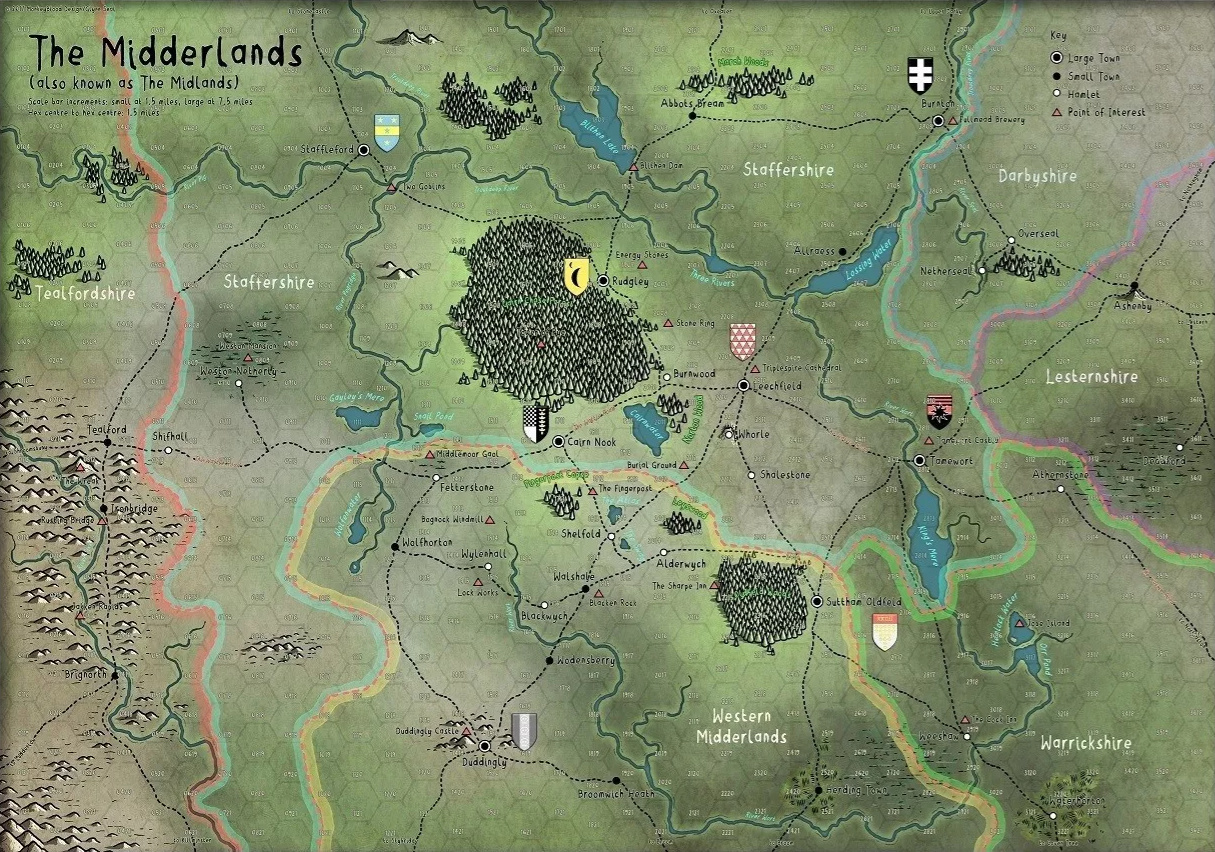
The author is in Walsall. I wonder if he might care for a Brummagem add-on? There seems to be a big space on the map where a surreal steampunkish Birmingham might arise, filled with Broomies and mysterious Buzz Tins…

Ey… or what about a Stoke-on-Trent addon? Stoke seems to be slightly off the north of the Midderlands map, even though we’re in the Midlands. We could be all liminal and mysterious to the game’s dwellers. [Update: I wrote one]

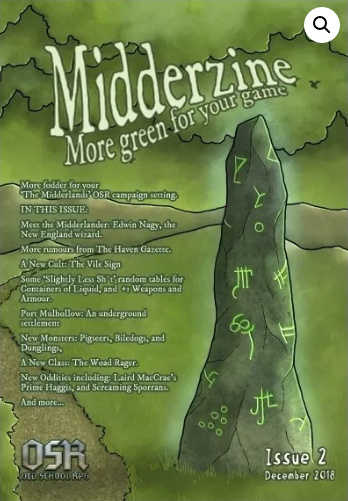
Anyway, looking at The Midderlands online store I see not only a second issue of the fanzine and the original book (£30, successfully Kickstart’d, seemingly paper only), but also some award-winning mapping.

Apparently it runs on Swords & Wizardry Complete, which looks fairly short and is now officially free as the Revised PDF.


* Old School Renaissance — “seeks to recapture the magic of the early days of tabletop RPGs, particularly early Dungeons and Dragons” (Fantasy Faction).

The Middleport and Longport work of Maurice Wade

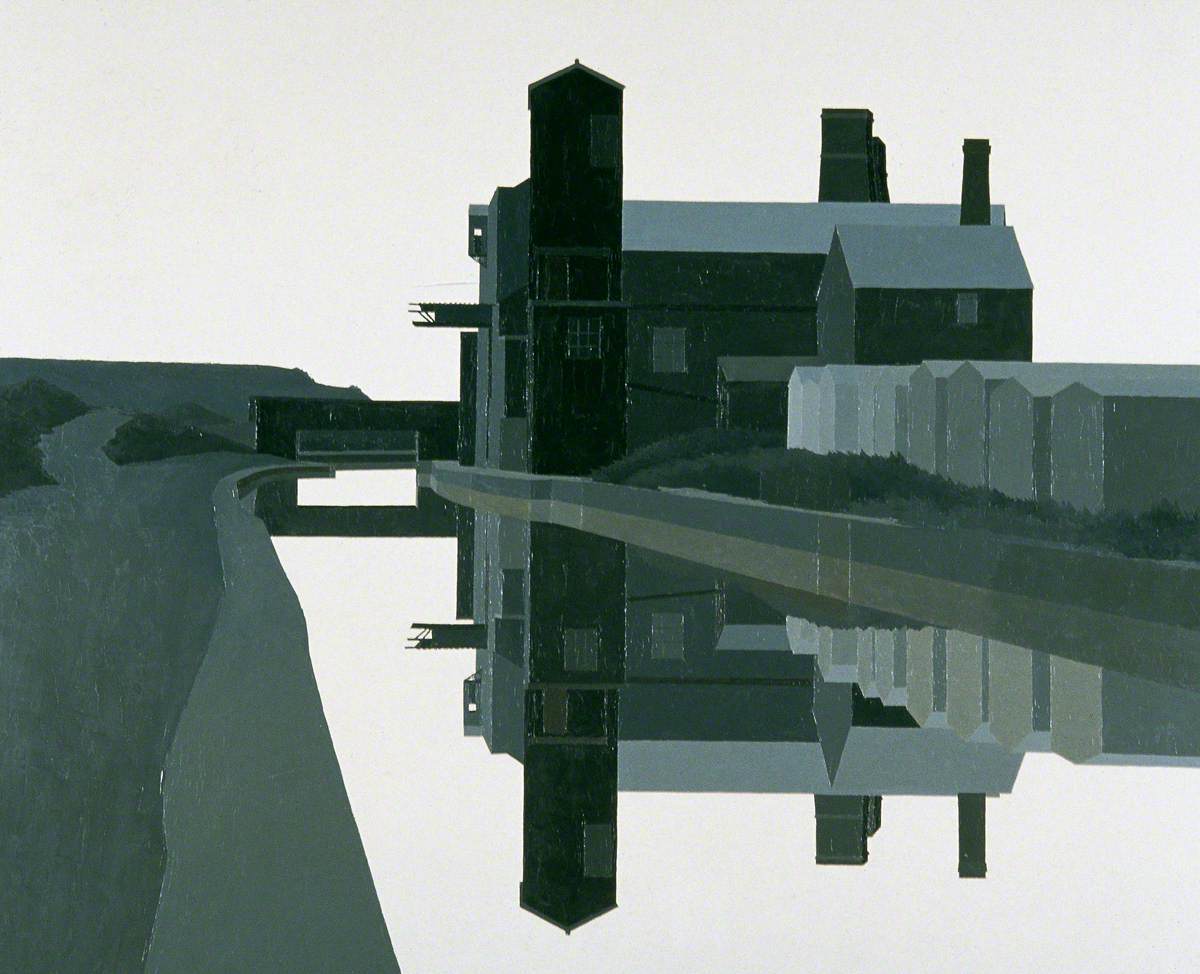
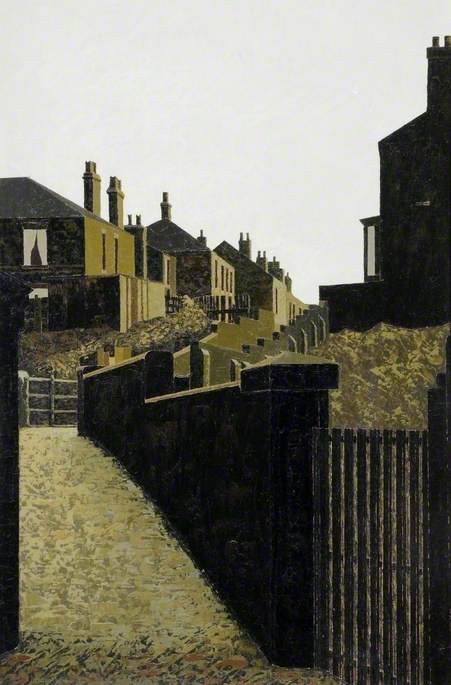
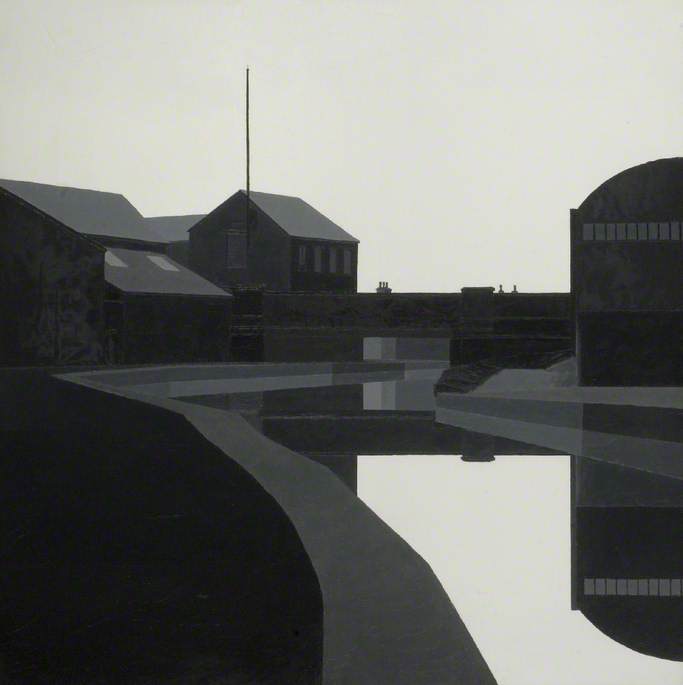
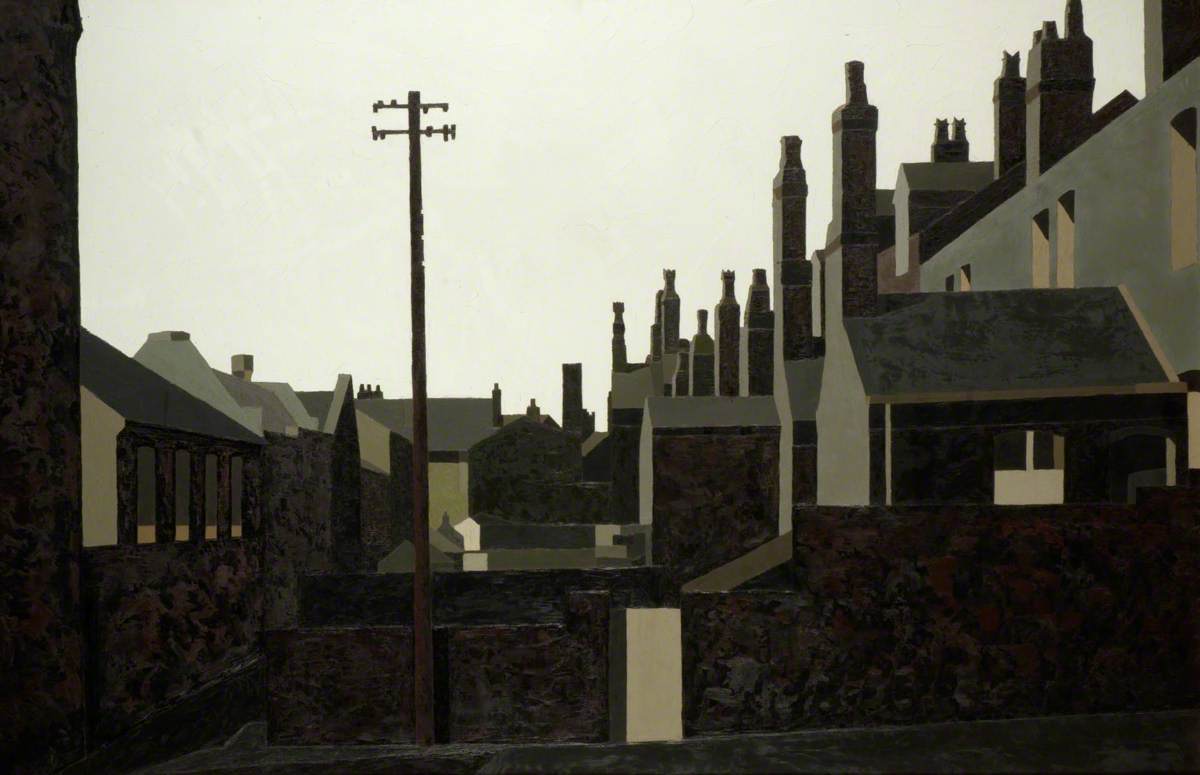
Art UK now has images of the Stoke-on-Trent paintings by Maurice Wade. Specifically, Longport and Middleport on the edge of Burslem, plus widely-seen pictures from Etruria and some obviously commissioned for the new Wedgwood factory at Barlaston. It’s similar to the more colourful work of his fellow Potteries painter Jack Clarkson. Here are Wade’s Longport and Middleport pictures, with my explication of exactly where they are and what they show…

On the Trent and Mersey Canal towpath at the edge of Middleport, looking north. On the right are the garages sited at the foot of Middleport Park alongside the canal. Ahead is the point at which the footpath from Wolstanton to Burslem crosses the canal on a bridge and enters into Middleport from the west, passing from the left to the right of the picture.

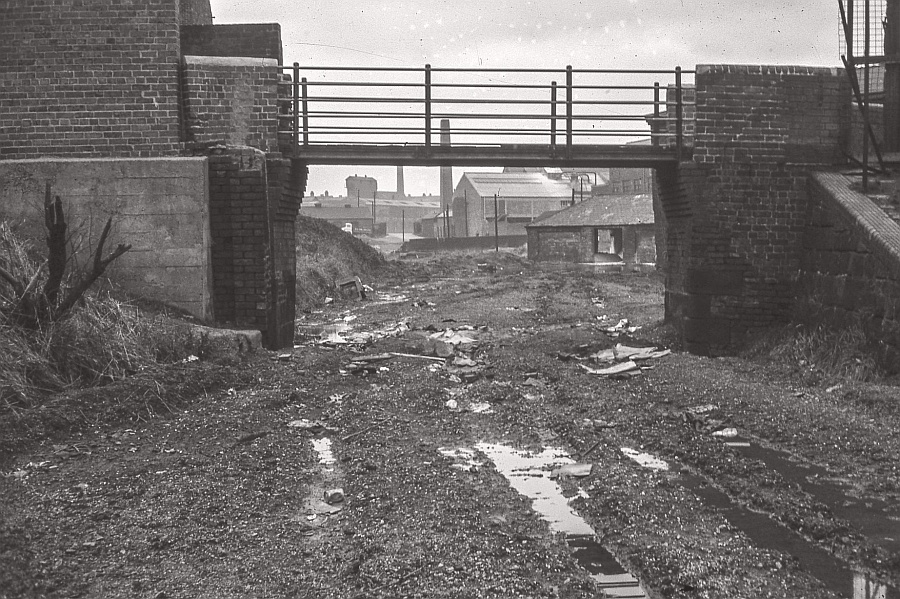
This is the other end of the Wolstanton to Burslem footpath-way (seen crossing the first picture in this post, above), but here we see the the point at which the footpath enters/exits Middleport on the east side. The viewer of the picture is placed in the position of a visitor from Burslem who has walked ‘down the back’ by the quiet Navigation Lane, has gingerly crossed the often-flooded patch of the lane at the corner by Rogerson’s Meadow, and is about to enter into Middleport (probably with trepidation, if not a local) by ascending by the sloped path up to Dimsdale St. Usually known as ‘the Dimsdale St. bridge’, it crosses a disused dry canal spur. Here’s a 1960s photo from the bed of the dry canal, looking south under the bridge…

On the Trent and Mersey Canal towpath at the edge of Middleport, headed north toward Longport. The tall buildings are part of Burgess and Leigh, aka Burleigh, aka Middleport Pottery. Behind the hedge on the left, allotments slope down to the Fowlea Brook.

Seems to be the Trent and Mersey Canal towpath at Longport, looking north toward the Bradwell Wood (would be visible behind the line of the bridge), with what is now the boat-building yard and Steelite on the right. One can just make out the grilled gate-fence that gave canal-access to the beer-garden of the pub which was sited just before the bridge and to the left of the towpath.

A typical Middleport/Longport scene, with a slightly sloping road letting onto a back-alley. He’s got the telegraph pole exactly right.

What’s missing here is the people, for which you need to go instead to the paintings of Arthur Berry. Middleport was one of the strongest communities in the city, until its deliberate destruction as a community — first by twenty years of official neglect and then by the Council bulldozers levelling the most important parts of it.