Some new local books, recently added to the Internet Archive

Some links to local books, recently added to the Internet Archive:

The 5th North Staffords and the North Midland Territorials (The 46th and 59th Divisions) 1914-1919 (1920).

Notes on Staffordshire Placenames (1902).

Medieval Newcastle-Under-Lyme (1928), by Pape who was the leading local historian of the time.

Memorials of Old Staffordshire (1909), being a book collection of antiquarian essays on various local historical topics, including “Staffordshire Forests”, “Some Local Fairies”, “Old Towers and Spires”, “In Charles Cotton’s Country”, and more.

The Portland Vase booklet (1936), on the history of the making, and the remaking of the vase by Wedgwood.

Story of Wedgwood, 1730-1930 (1930).

Artes Etruriae (1920), being an illustrated booklet giving a tour of the Wedgwood factory in Etruria, North Staffordshire.

Sun Pictures (1859) by Mary Howitt. Being a vivid and lively account of a long summer trek through the Staffordshire Moorlands of England in the late 1850s. 22,000-word travel writing serial, with parts collected into a PDF.

Samuel Parsons 1747 map – North Staffordshire section.

Phillip Lea 1689 map of the country of Staffordshire.

A Uttoxeter Treasure Trove At Your Finger Tips (2025), being “A List Of Books, Publications, Photo Collections On The History And Heritage Of Uttoxeter”.

The Gawain Country (1984) by Ralph W.V. Elliott. Plus several essays published after the book appeared. Sir Gawain and the Green Knight in the Staffordshire Moorlands.

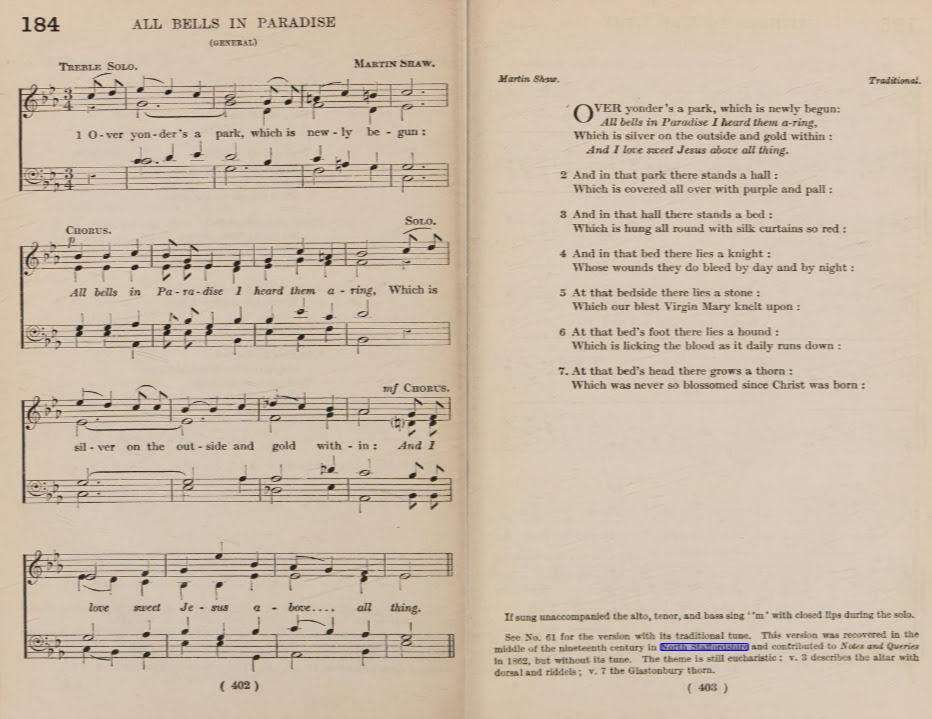
The Oxford Book Of Carols (1928). Has the dream-fantasy hymn/carol “All Bells in Paradise” (with tune) … “this version was recovered in the middle of the nineteenth-century in North Staffordshire”.
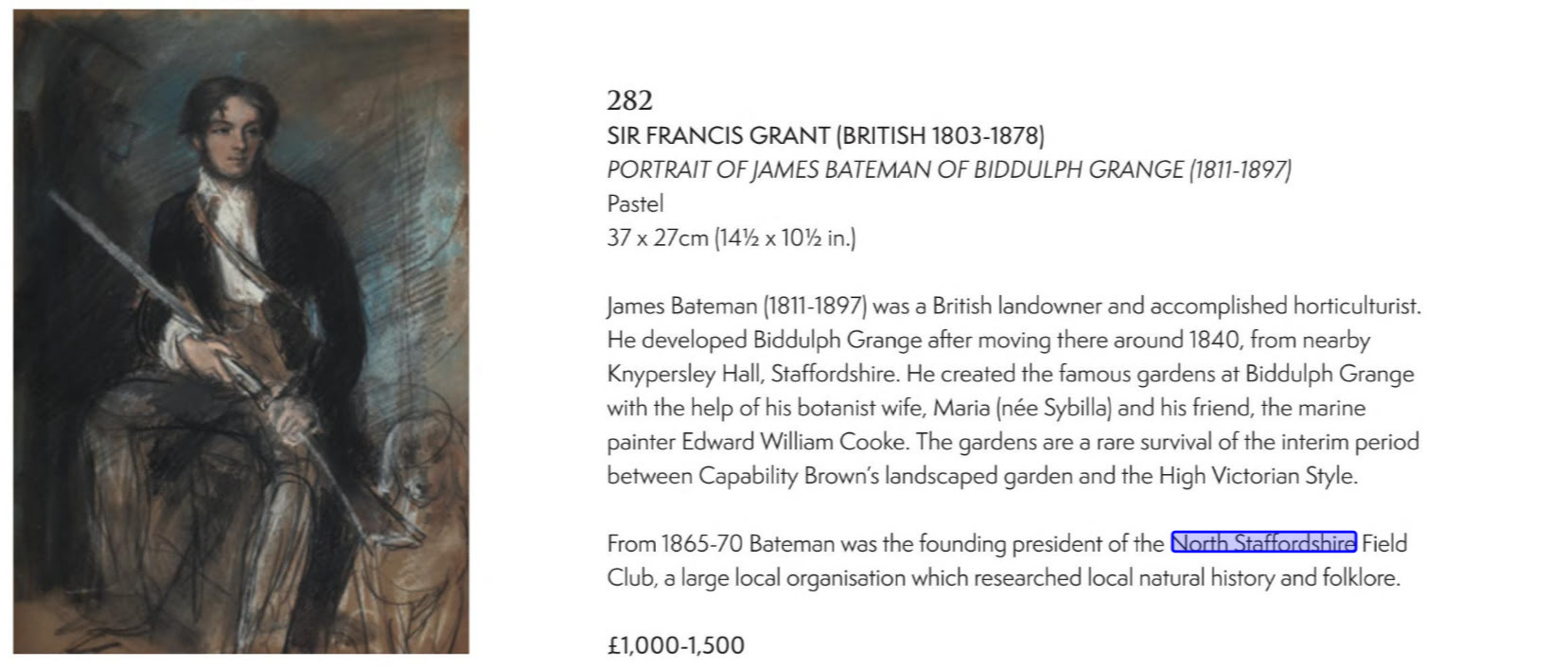
DREWEATTS. Old Master, British & European Art. Catalogue 29 May 2025. Auction catalogue with a portrait of the young Thomas Bateman, later maker of Biddulph Grange.
Speculations by T.E. Hulme (1924). Collection of the essays of the North Staffordshire philosopher and early modernist poet, killed in the First World War.

Also of interest, at the National Library of Scotland, Ordnance Survey map of the Staffordshire Potteries & District, O.S. One-Inch 3rd Edition (District) (1913).

New URL for my Spyders blog and ‘Tolkien Gleanings’!

I’ve now moved the Spyders of Burslem blog from the free WordPress blog domain, to a proper hosted WordPress blog install at   https://jurn.link/spyders/ — please update your Web links and RSS feeds.

The new RSS Feed for your feedreader is https://jurn.link/spyders/feed/ for everything posted at the blog, or https://jurn.link/spyders/category/tolkien-gleanings/feed/ if you just want the Tolkien Gleanings newsletter posts.

You can also get the PDF magazine-style omnibus edition of Tolkien Gleanings at Archive.org, with the most recent issue collecting the Gleanings from August to October 2023, with clickable links retained.

The blog links are now a nice green to match the magazine version, turning dark red after you’ve visited them.

Old word: squitch

Popping up on eBay, an old letter of compliant from the days when there were hay-dealers in Shelton, which enshrines the old agricultural word ‘Squitch’. Meaning couch grass.

Squitch. Triticum repens, L. (Lichfield [mid Staffordshire]) — iv. 415. Triticum repens, L., and Agrostis vulgaris, L. Worc[estershire]. —xvii. 38. Also Scutch.” (from Old Country and Farming Words (1880).

Evidently a word known in mid Staffordshire and Worcestershire in the 1870s, and still to be understood in Warrington and Stoke in 1932.

Another Planet

I was forced to go to Hanley today (ugh, even the sunshine couldn’t make it look better), and with a few minutes to spare I decided to pop into Forbidden Planet for the first time. Thinking to see what comics and graphic-novels are being dinged by da kidz these days, and what with my not having set foot in a bricks-and-mortar comics shop in aeons. But… no comics! Not a single one in sight. Looks remarkably like it’s just walls of toys and bags, these days. Oh well, back to digital.

Stoke Comic Swap

Durn. The perils of not being on Facebook any more. I missed hearing about what sounds like a great vintage British comics event right here in Stoke, Wolstanton’s Stoke Comic Swap in June 2025. Let’s hope there’s another one. Down the Tubes has a long report with photos. Apparently the next one is set for Colchester, so that’s no good for me.

Angry Birds

Strange bird behaviour today, in Stoke-on-Trent. In the earliest pre-dawn, a whole lot of crow-flight and verbal calls. And lots of crows in flight, most heading south down the Etruria valley. “They’re up and about unusually early”, I thought. Then, as the light rose, I saw stray seagulls going the opposite way, north up the valley. That’s not unusual just after dawn, as I suspect they sleep down on Trentham Lake or somewhere like that. But this time they were being harassed or shadowed by crows, and were also coming individually rather than in groups as they usually do. Also some which had escaped the crows seemed rather wary, and none were doing their usual ‘leisurely flapping’ northwards (which I assume = ‘scouting for food-litter along the A500 and its feeders’).

“Aha”, I thought. “The crows have cleverly organised an en-masse dawn raid on the seagulls”. Presumably by surprising them mid-air, as they swung into the Etruria Valley heading north. That timing would make sense, since the lack of warm updrafts of air would deny the seagulls some of their soaring capability and manoeuvrability.

Later, I saw a very unusual sight which seemed to confirm my early morning observations. 11am and a dozen seagulls were sitting tight-packed, right in the middle of a medium-sized pond in Etruria. Never seen that before, at any time. Very unusual behaviour, as normally they’d be soaring and looking for food. Sure enough, on getting home I find the crows still making a lot of noise and seemingly ‘patrolling’ up and down the valley. No seagulls about. My guess is that the seagulls on the pond knew what was good for them, and were keeping a low profile in a defensible position. Then, at noon it all went quiet. The crow-clan’s ‘Operation See Off the Seagulls’ was seemingly over.

I wonder if it’s somehow been triggered by the shortage of rain, over the last few weeks? Or perhaps the young crow nestlings are fledged, and about to fly for the first time? I also rather more whimsically wonder if, while all this was going on, the magpies were down on the ground and enjoying scoffing all the Saturday-night food-litter? Amusing to think of them chuckling at the antics of their feathered fellows in the skies above, while scoffing McDonalds. I saw no evidence of that, though.

Cornish tin-traders – definitive proof

After more than a century of debate, definitive scientific proof on links between Cornwall and the ancient Mediterranean. “How Britain’s long-distance tin trade transformed the Bronze Age”

“Published in the journal Antiquity, the results provide the first concrete evidence that Cornwall and Devon were major suppliers of tin for bronze production in the ancient world. […] British tin was traded up to [2,500 miles away by] around 1300 BC. […] The research team at Durham [University], in collaboration with European institutions, used chemical and isotope analyses” of metal found in ancient shipwrecks. (My emphasis).

Which of course doesn’t endorse far-fetch notions that ancient Phoenician traders were rocking up for a tour of Stonehenge, or that the young Jesus had an uncle in the long-distance tin-trade and thus walked inland and over to Glastonbury. But at least it overturns any previous scepticism on the trade.

Needwood Forest (1776) in free audiobook

New on LibriVox, a free public domain audiobook of the book Needwood Forest (1776)…

Francis Noel Clarke Mundy […] describes the forest’s natural beauty, its flora and fauna, and the various activities that take place within its boundaries. […] Mundy’s writing style is descriptive and poetic, and he captures the essence of the forest in vivid detail.

Electric shock on the canals…

More poppycock proposals from our dismal Labour government. They’re set to force canal narrowboats to rip out… “diesel engines, petrol generators and wood-fired stoves”, and also plan to slam boat-owners with big “tax rises on marine fuel”. Plus all… “new boats will be required to be entirely electric.”

Not going to go down well among boaters on the Trent & Mersey and Cauldon canals through Stoke, and likely to remove a lot of the more traditional ‘woodsmoke’ narrowboats that walkers and visitors like to see on our local canals.

The Telegraph newspaper spoke about the news to the…

“National Association of Boat Owners, [whose spokesman] cautioned that replacing diesel engines and generators on canal boats would be impractical [and] could trigger a wave of homelessness, as people who lived on canal boats because of the high cost of housing would be unable to afford an enforced switch to electric power. “No way they could do it,” said Mr Braybrook. “They’d be forced off the water, off their off-grid lifestyle, and probably into homelessness.”

A bit ‘o brick for Burslem…

A key part of Burslem is to get a £1.25m refurb. The £1.25m will fund Queen Street being dug up and re-laid with ‘anywhere’ paving, with trees planted. Not sure there’s really room for large trees, but they’re going to squeeze some in.

The new paving will also continue up the Brick House (aka Brickhouse or Cock’s Yard) pedestrian alleyway that goes through to the Town Hall, and there will be an unspecified “cleaning and refurbishment of Swan Square”, presumably the bit at the east end of Queen Street by the traffic lights.

It all looks horribly modern, forcing the place into being a naff ‘same as everywhere else’ retail plaza. That’s not what you should be doing with somewhere as historic as Burslem.