The Boy Who Cried Wolf

A note by fairy-tale scholar and authority Joseph Jacobs pointed me toward the Greek original, in Babrius, of the famous short fable “The Boy Who Cried Wolf”…

“Ultimately derived from Babrius: though only extant in the Greek prose Aesop. Gitlbauer has restored it [to the non-extant poetry] from the prose version”

… meaning the prose version as first found in the Collectio Augustana (dating perhaps from the 2nd century A.D., though said to be impossible to date).

I was interested and went in search of it. Archive.org has the Gitlbauer book of 1882. Jacobs erroneously pointed fellow scholars to Gitlbauer’s ‘restored’ Babrius 199 as the fable, but after some translation and searching I find it’s actually Babrius 161. Thus…
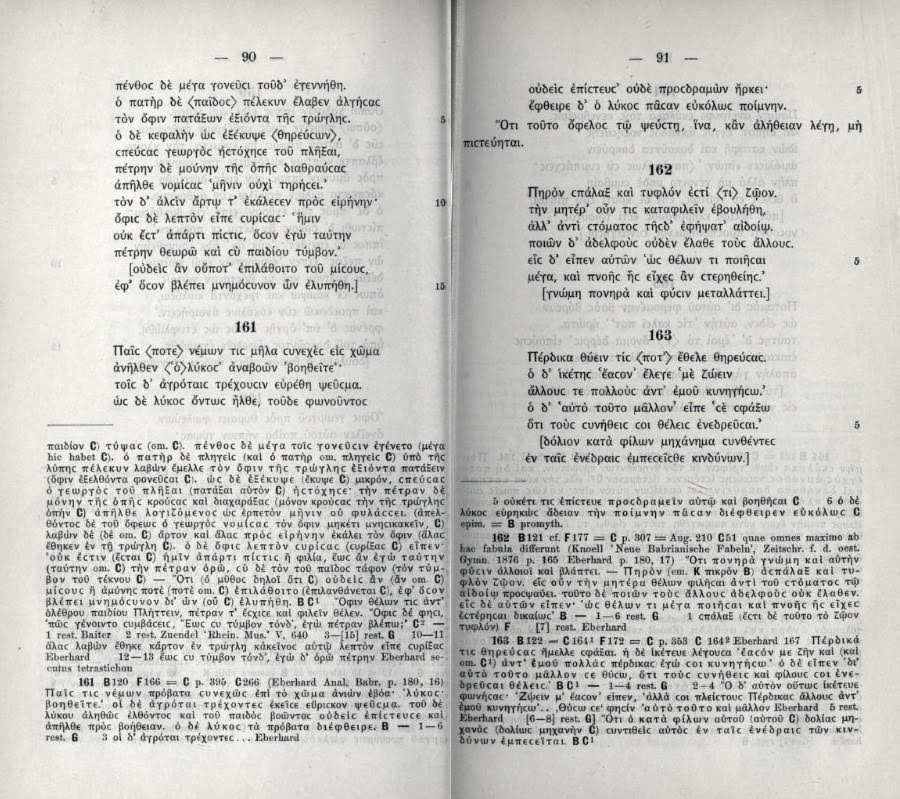

161 (literal auto-translation).

Παῖς νέμων τις μῆλα cυνεχὲς εἰς χῶμα

You play | when it rains | you put [throw?] the apples in [on?] the ground

ἀνῆλθεν δλύκος’ ἀναβοῶν ‘βοηθεῖτε’.

A rising [cry of] “wolf” | A loud noise of noises | Please “help me”!

τοῖς δ’ ἀγρόταις τρέχουειν εὑρέθη ψεῦεμα.

among the four farmers running, falsehood was found.

ὡς δὲ λύκος ὄντως ἦλθε, τοῦδε φωνοῦντος

But then the wolf did indeed come, they did not [heed the?] cry

οὐδεὶς ἐπίετευς’ οὐδὲ προςδραμὼν ἤρκει’

no aggressors, no countermeasures, it found

ἔφθειρε δ’ ὃ λύκος πᾶςαν εὐκόλως ποίμνην.

and he destroyed every wolf [sheep-dog?] who helped the shepherd.

   [ Ὅτι τοῦτο ὄφελος τῷ ψεύςτῃ, ἵνα, κἂν ἀλήθειαν λέγῃ, μὴ πιςτεύηται. ]

   [ That this is a benefit to the liar, so that, even if he tells the truth, he is not believed. ]


From which I take, for sense and story:

THE BOY WHO CRIED WOLF

A lone shepherd boy played a prank, because it rained and his apples were all eaten.

This laughing liar bobbed up on the valley ridge to cry “Wolf!”. Then loudly yelled “Help me!”.

Three times he played his prank. Farmers came running up, only to find a pack of lies.

Then one day the wolf did indeed come, but the sullen farmers came not.

Frantic cries went unheeded. The wolf found no men with long forks and sharp hooks,

And he destroyed every sheep-dog, the good friends who had helped the young shepherd.

   [ This is how the liar is paid back for his lies. Even if he later tells the truth, he is not believed. ]
New and local on Archive.org

New and local on Archive.org…

* Dandelions: poems.

* The Journals of Arnold Bennett (1954).

* Missuses and Mouldrunners: an oral history of women pottery-workers at work and at home.

* The Shorter connection (collection of the products of local potteries).

* Boote’s tiles: selections of the newest designs for tiling (Burslem tilery catalogue, 1906).

* A. N. Wilson’s acclaimed novel The Potter’s Hand.

* James Brindley and the early engineers.

* James Brindley: an illustrated life.

* Mysterious Cheshire. (An ‘earth mysteries’ booklet, 1980, with much to say about the Bridestones and Alderley Edge).

* Ancient Monuments: East Anglia and the Midlands (1955) (pictures of Arbour Low, Croxden and others).

* Recent Developments in the Archaeology of the Peak District (1991).

* Guide to the Cheshire Record Office (1991).

* The Place-names of Cheshire Vol I and Vol III (of five volumes).

* Old Midlands recipes. (Get yur sum “Tipton Eel Stew”. Yum, fresh from the canal! No mention of North Staffordshire Oatcakes).

* Midland Red North (post-war bus history).

* North Midlands trains in the thirties (pre-war railways).

* North Staffordshire Railway in LMS days: Vol. 2.

* White Peak walks.

* The Peak District: the rivers’ way (Ilam to Edale, long-distance footpath guide, 1986)

* The Peak District: Regional Wildlife (1995)

* The Birds of Cheshire (1962)

* Flora of Derbyshire (1969)

* Caroline Hillier’s Paladin paperback A Journey to the Heart of England. Originally 1978, and here with a new foreword after a re-visit to the West Midlands ten years later. Encompasses the proper West Midlands including the counties.

Back o’ Barrow’s

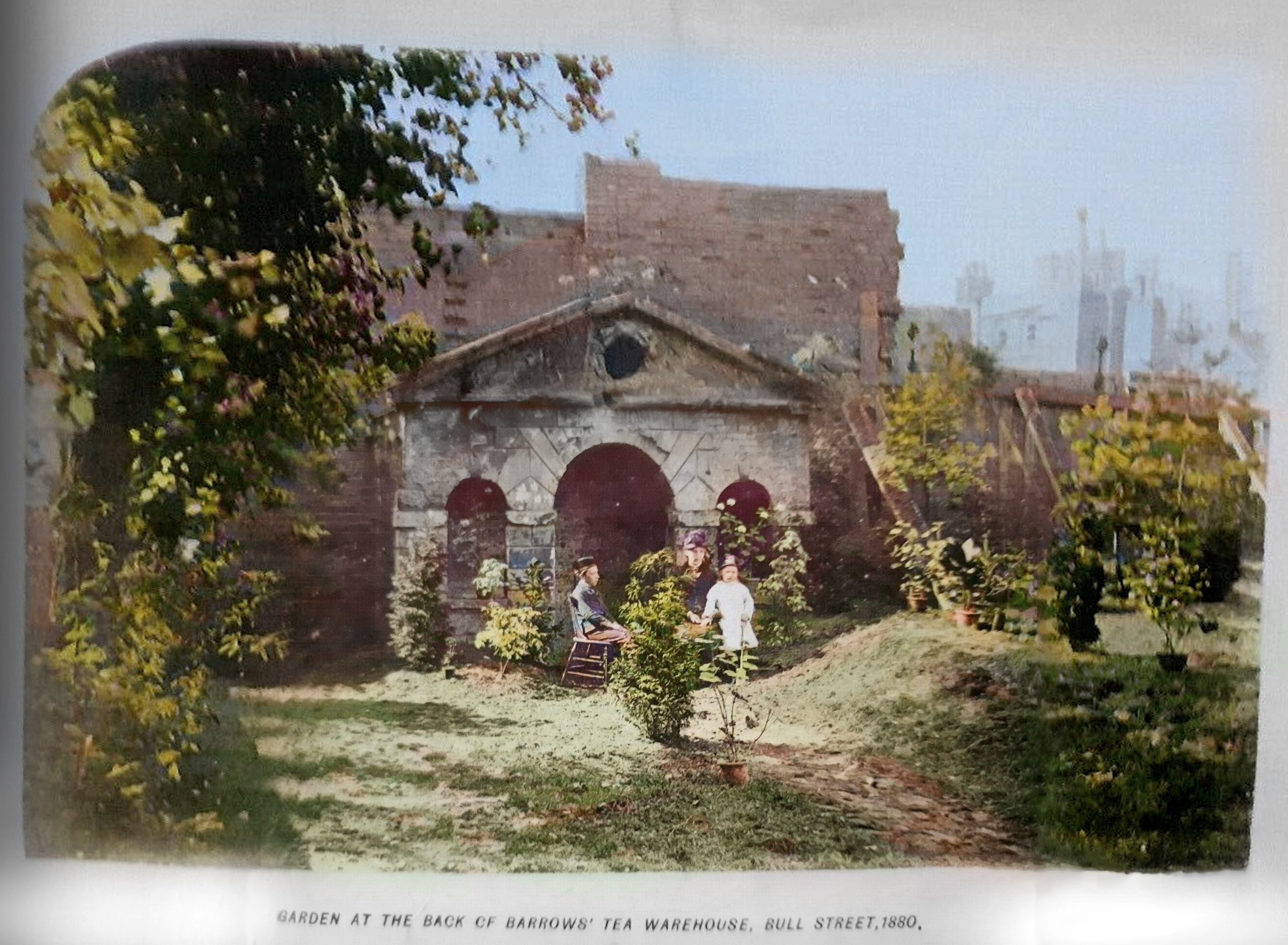
Tolkien’s favourite Barrow’s had a back garden. Or at least, it did in 1880, when a tea warehouse. If the garden was still there nearly thirty years later, and available to customers of the first-floor Tea-Rooms in circa 1909-11, is unknown. Possibly not. But commercial tea-rooms would usually be loathe to give up such a thing, if they can use it for customers.

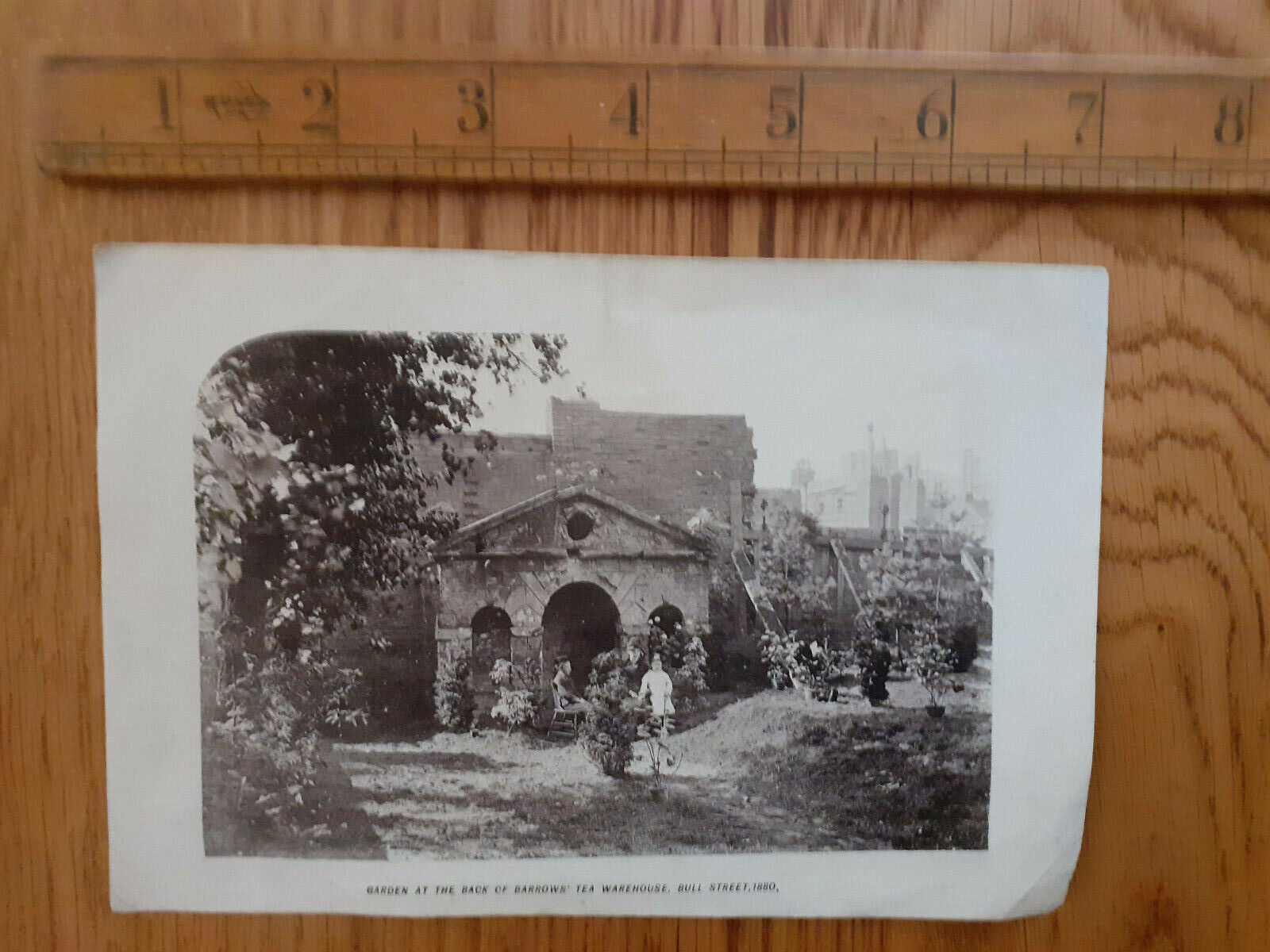
Restored and colourised from eBay.

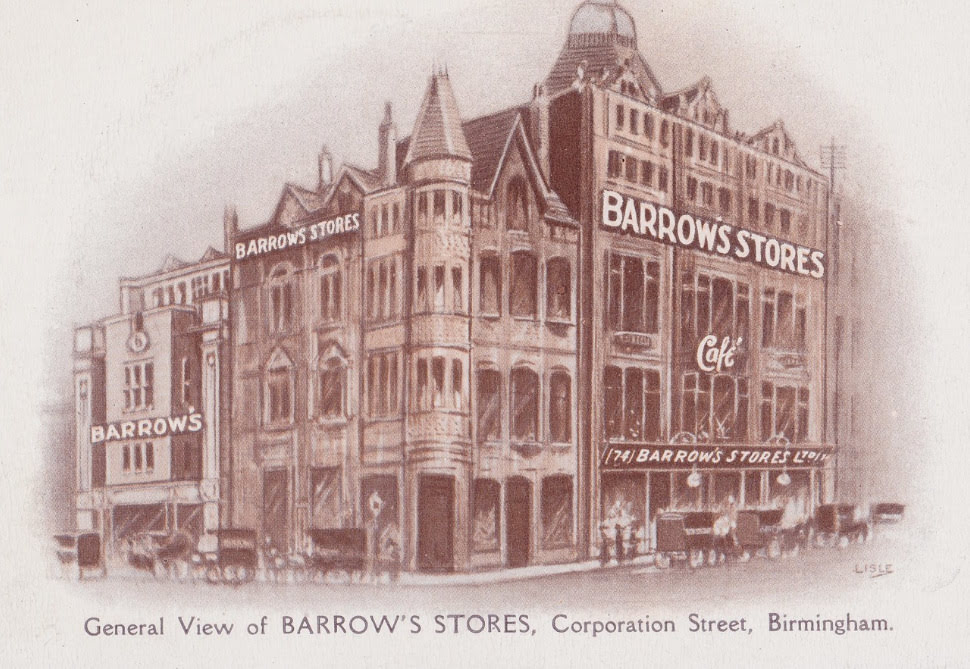
I’m assuming here the Barrow’s Stores was inter-connected with the older Warehouse, in an L-shape, on that Bull St. / Corporation St. corner. Which is does appear to have been on the map and also on this later picture which illustrates the L-shape…

Bull St. on the left, Corporation St. on the right.

I guess a really good large-scale deeds/sale map might give an indication, and perhaps show how long the garden existed, and if it made it into the Corporation St. era. 93 Bull St. is the target, according to this 1887 advert.

Apparently 93 Bull St. was Cadbury’s original shop/home, back in the 1830s. So even if this garden picture is not a Tolkien item then it would be a Cadbury item.

The early years of Jodrell Bank Radio Telescope – in colour

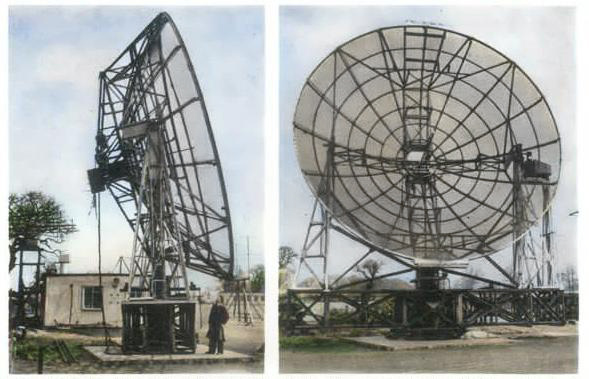
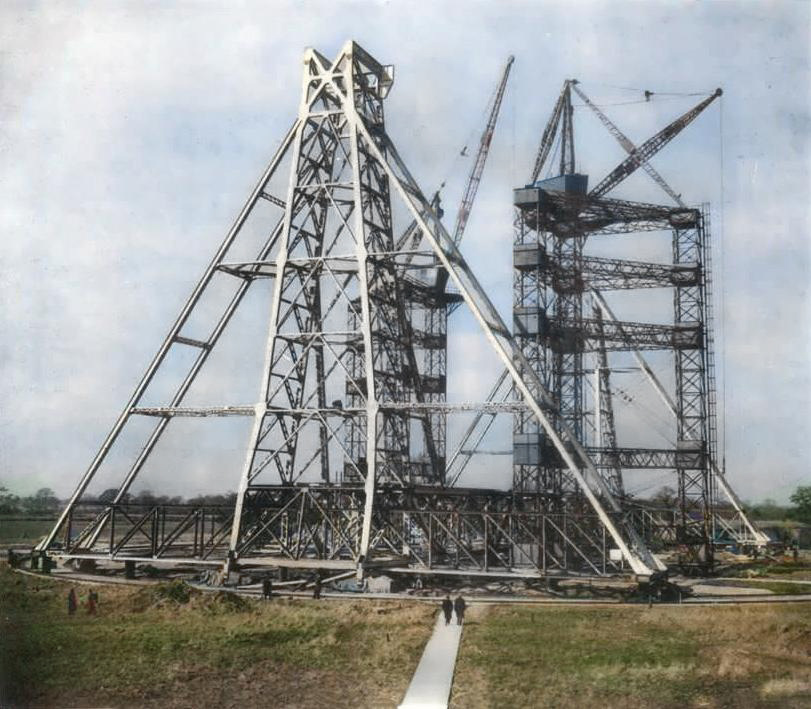
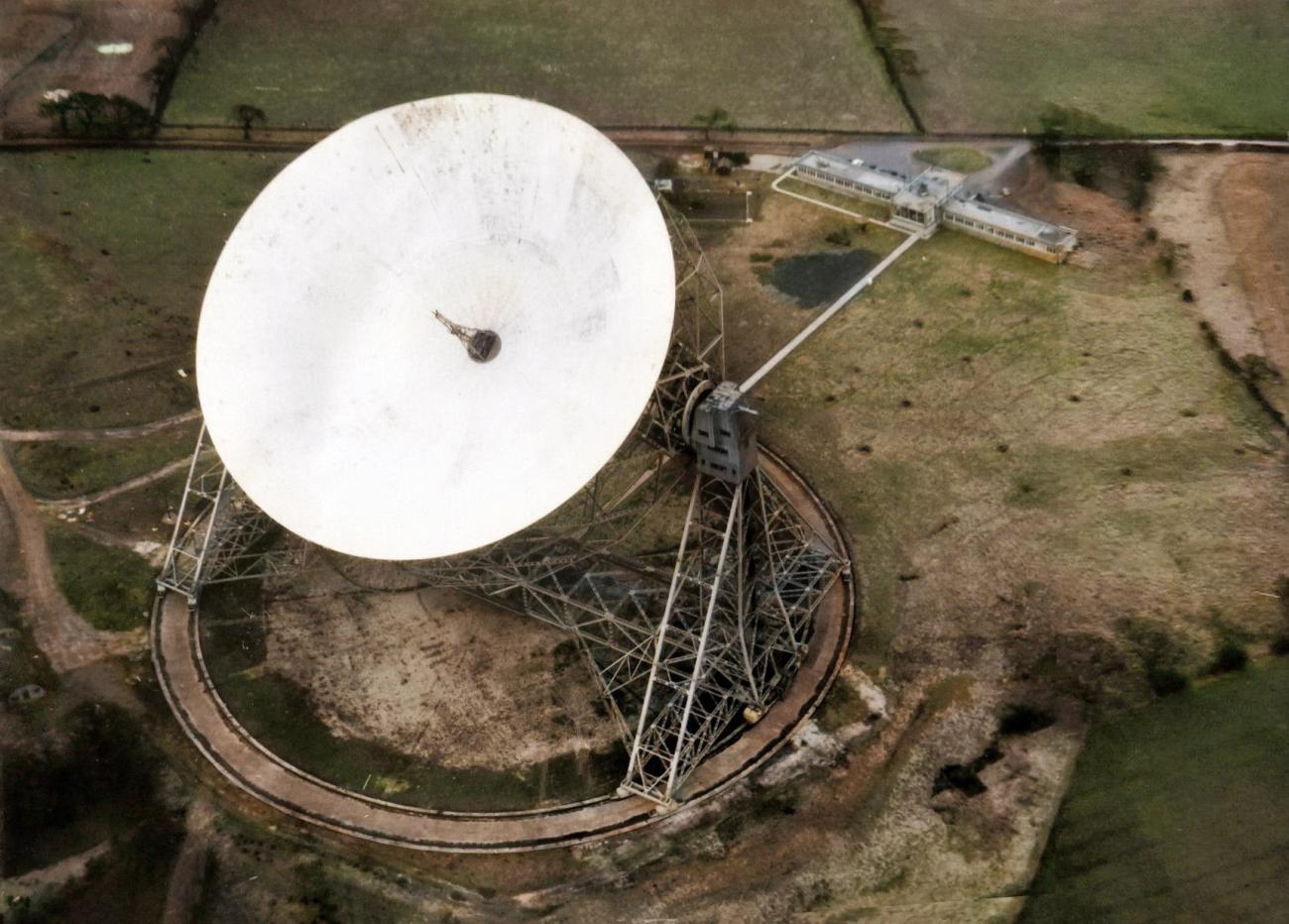
The early prototype for the steerable ‘big dish’ telescope, possibly circa 1950.

Building the tower-arms, early 1950s.

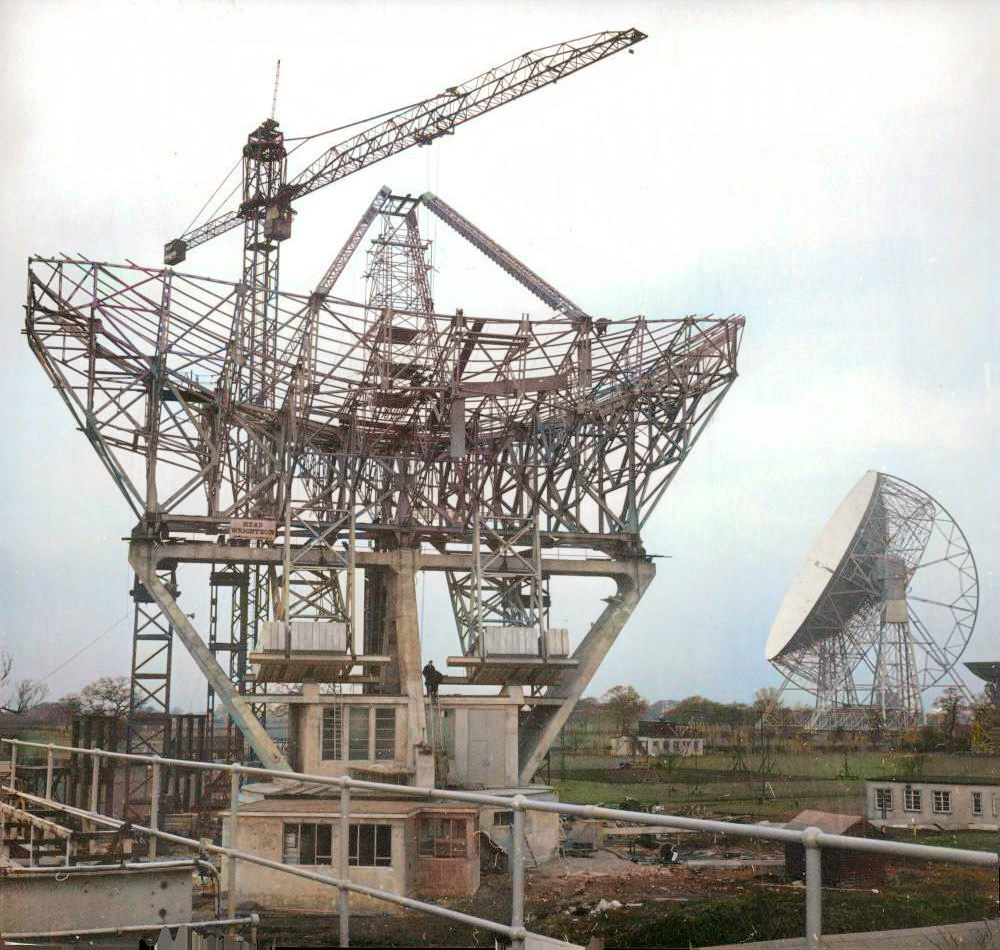
The telescope under early construction, mid 1950s.

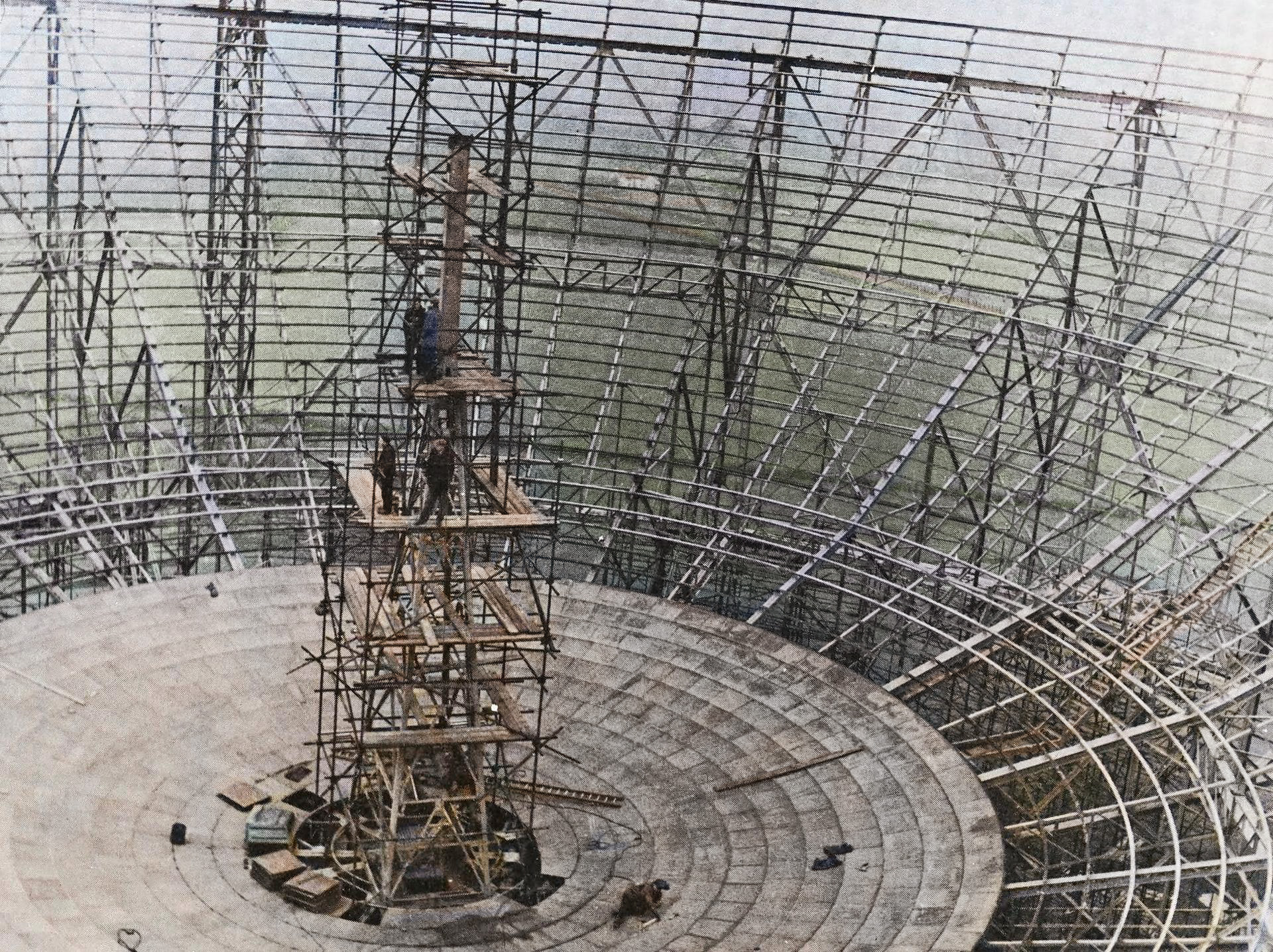
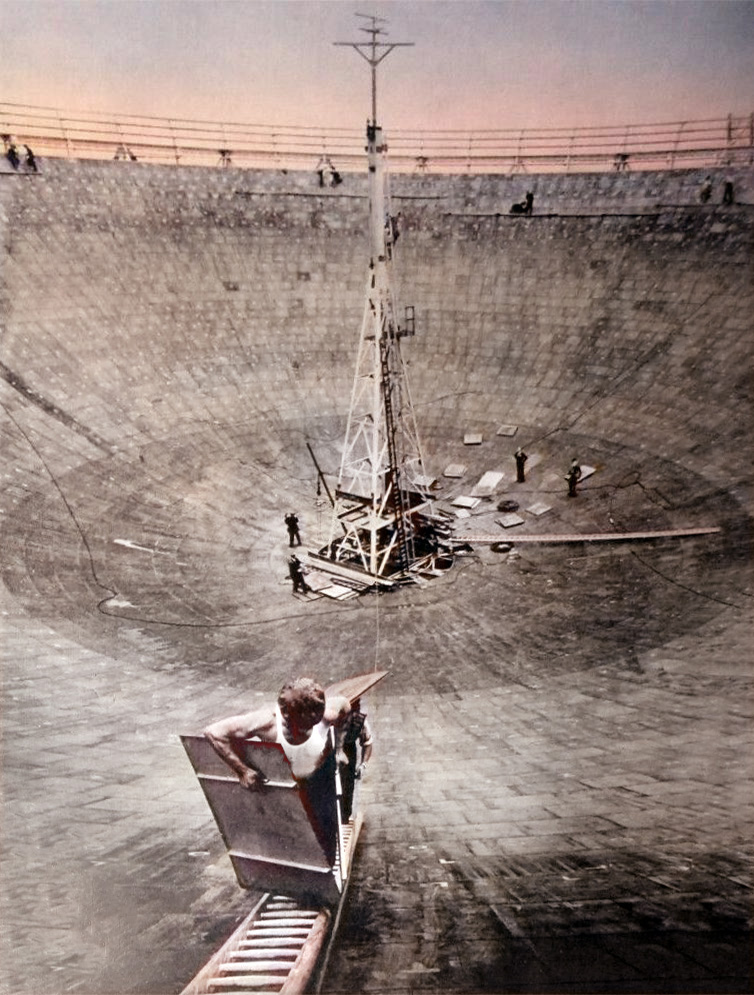
The telescope dish under construction, mid 1950s.

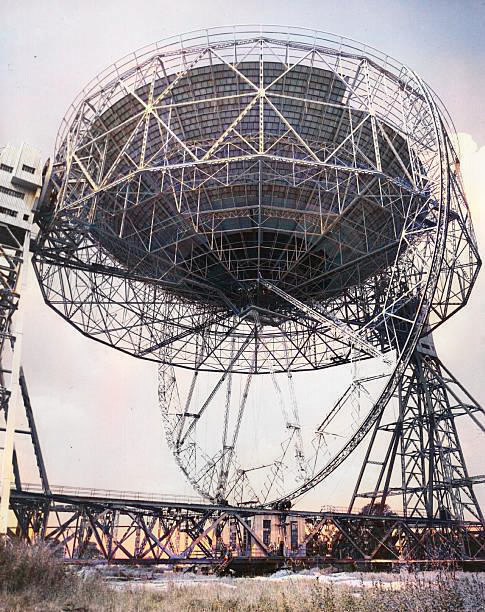
The telescope frame and dish begins to take shape, though still under construction.

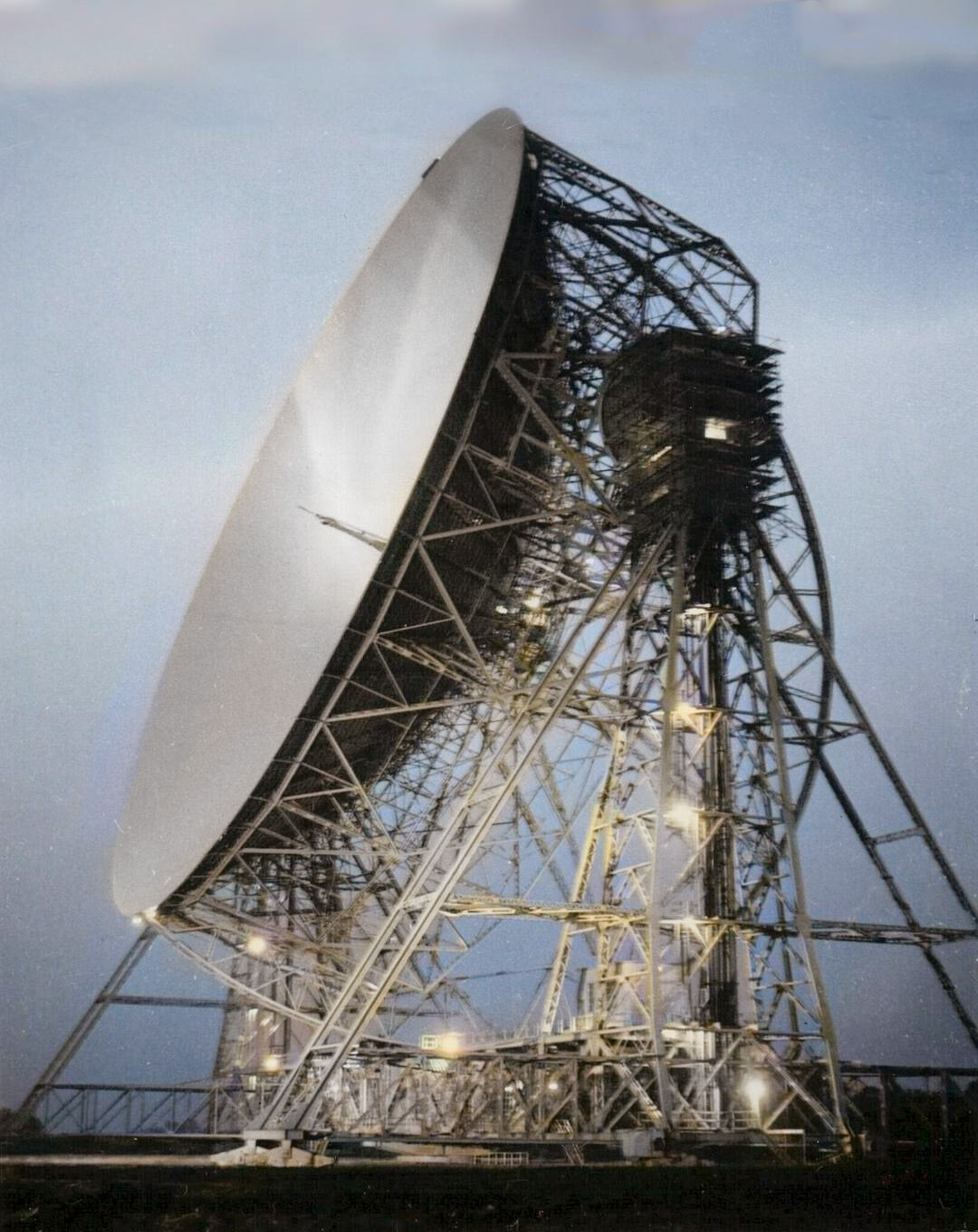
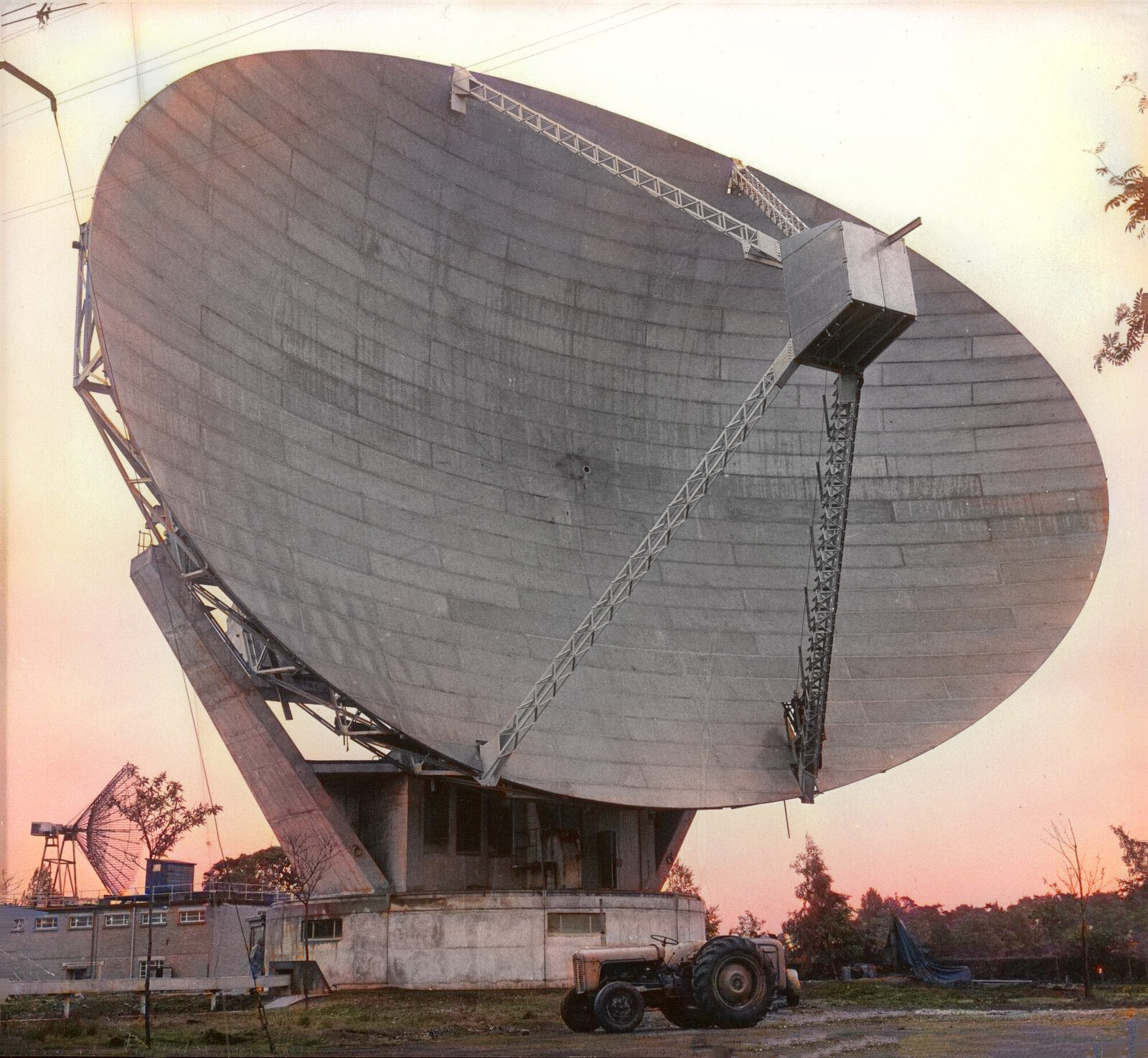
The completed telescope stands ready at dusk.

Sir Bernard Lovell, the project’s master-mind, turns on the power.

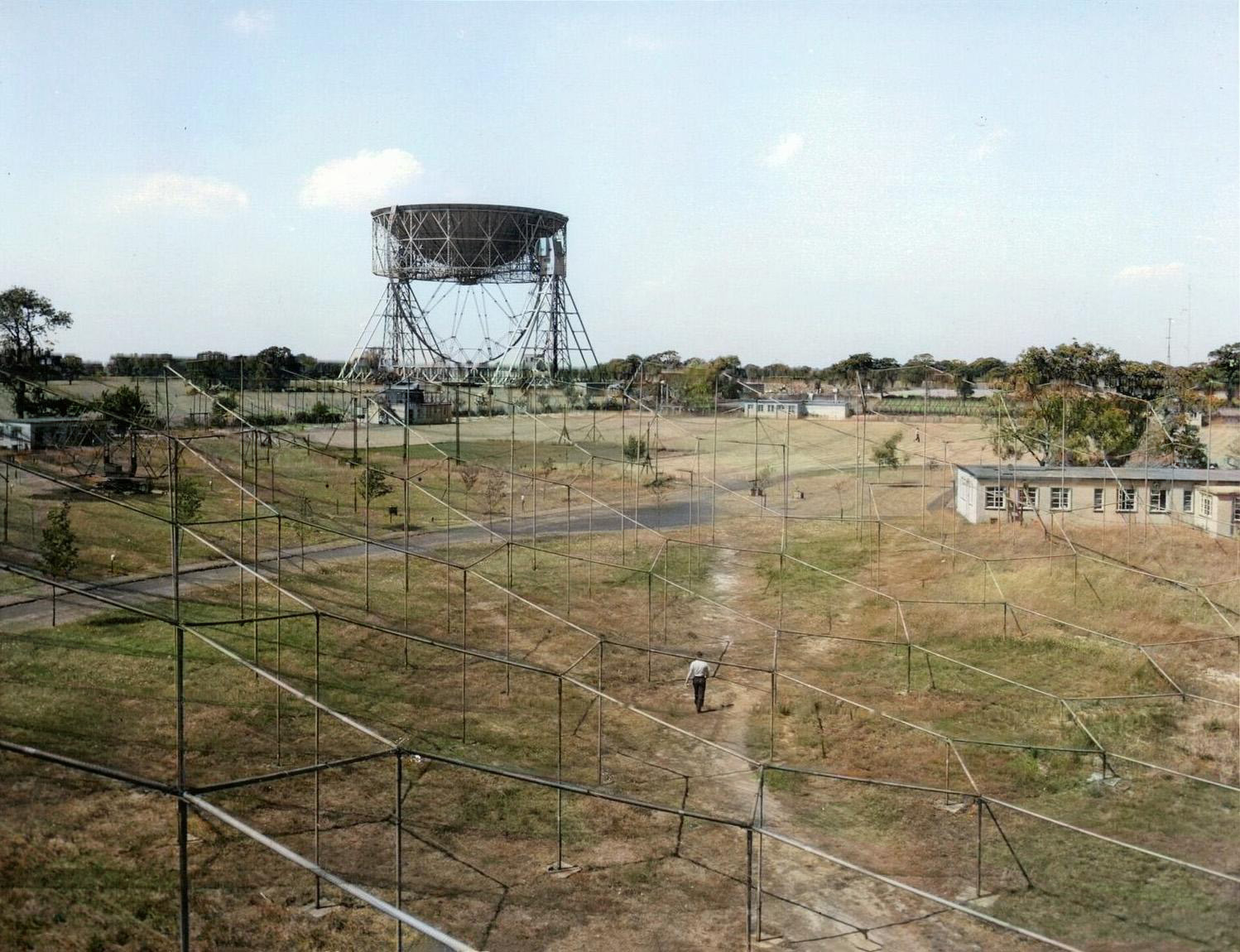
A growing advanced-research station on the Cheshire Plain, by the late 1950s.

Sir Bernard Lovell, head of the project.

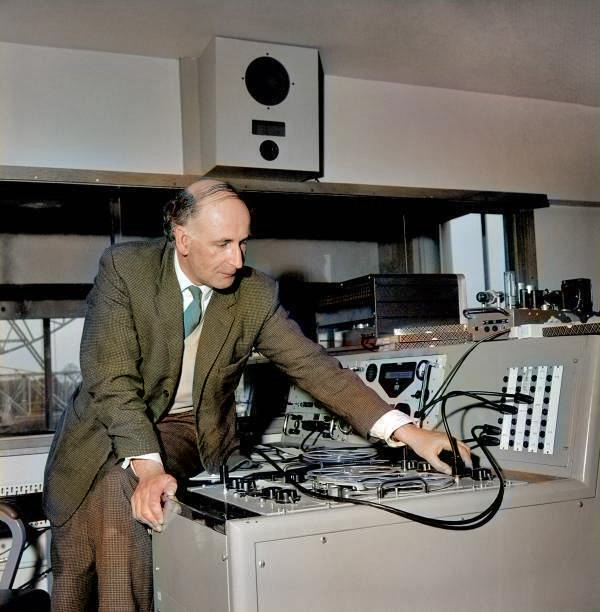
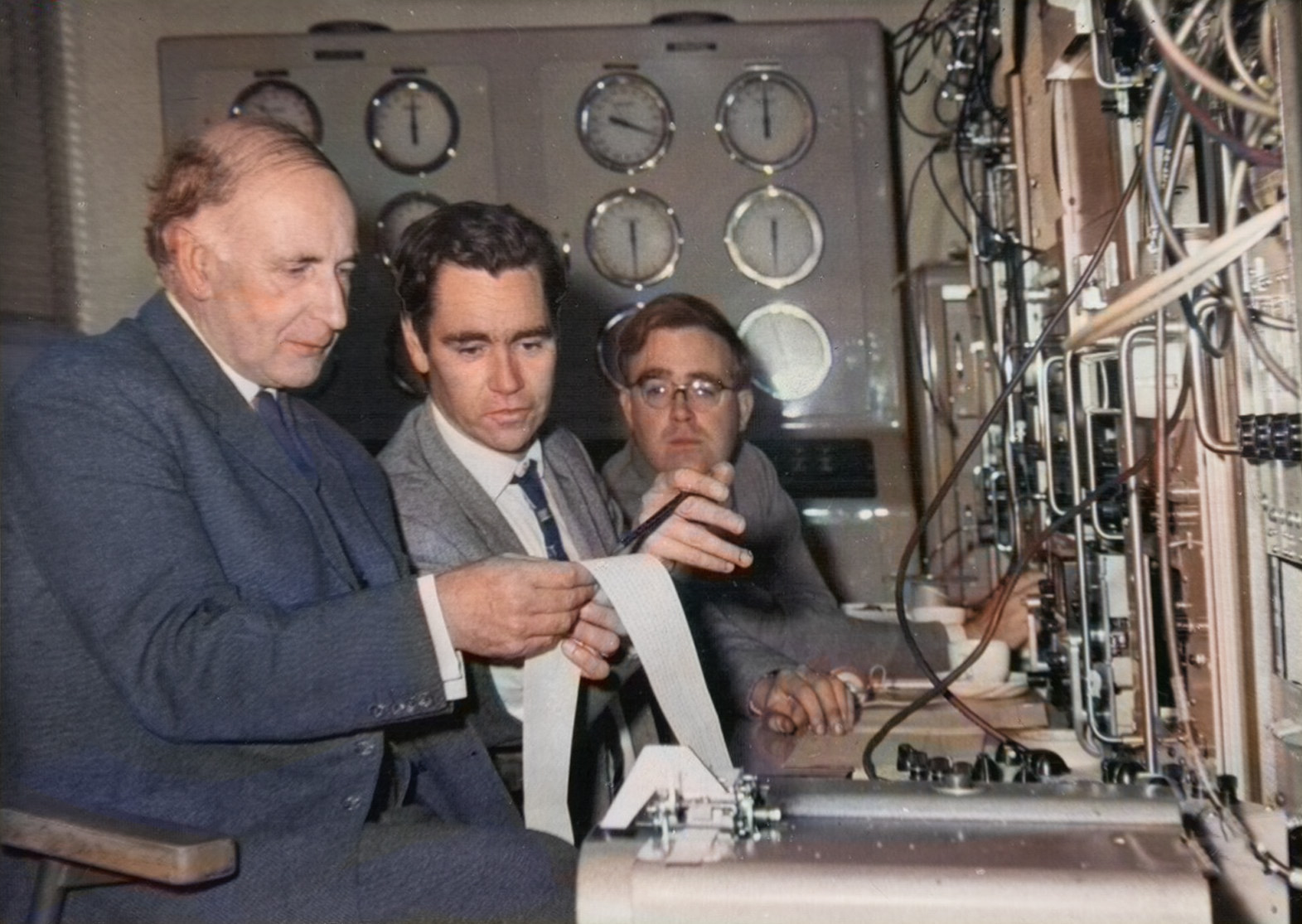
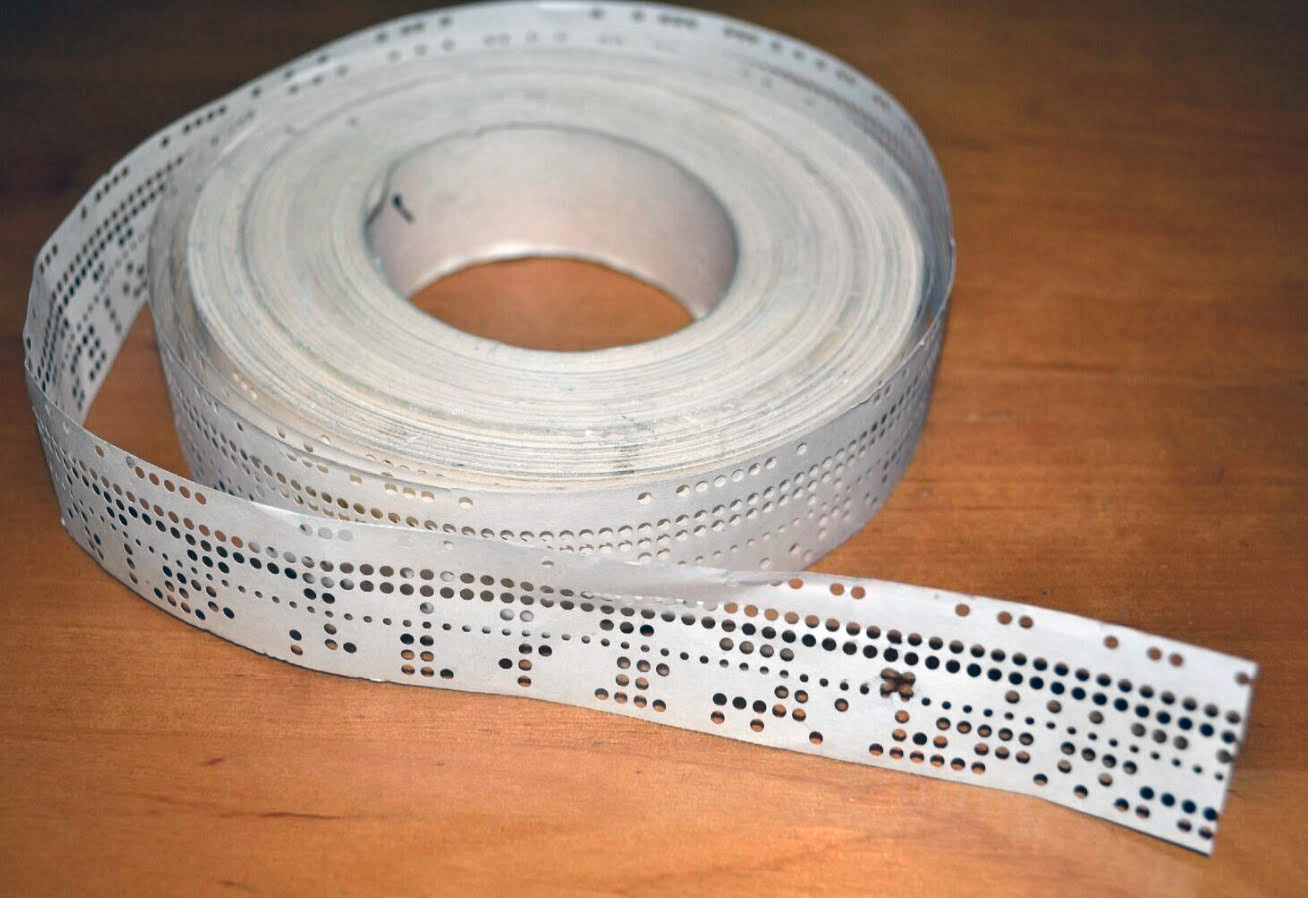
Sir Bernard Lovell, examining data on paper tape. In those days punched and graphed paper-tape was the most efficient way to stream and record massive amounts of data from the stars. Possibly mid 1960s.

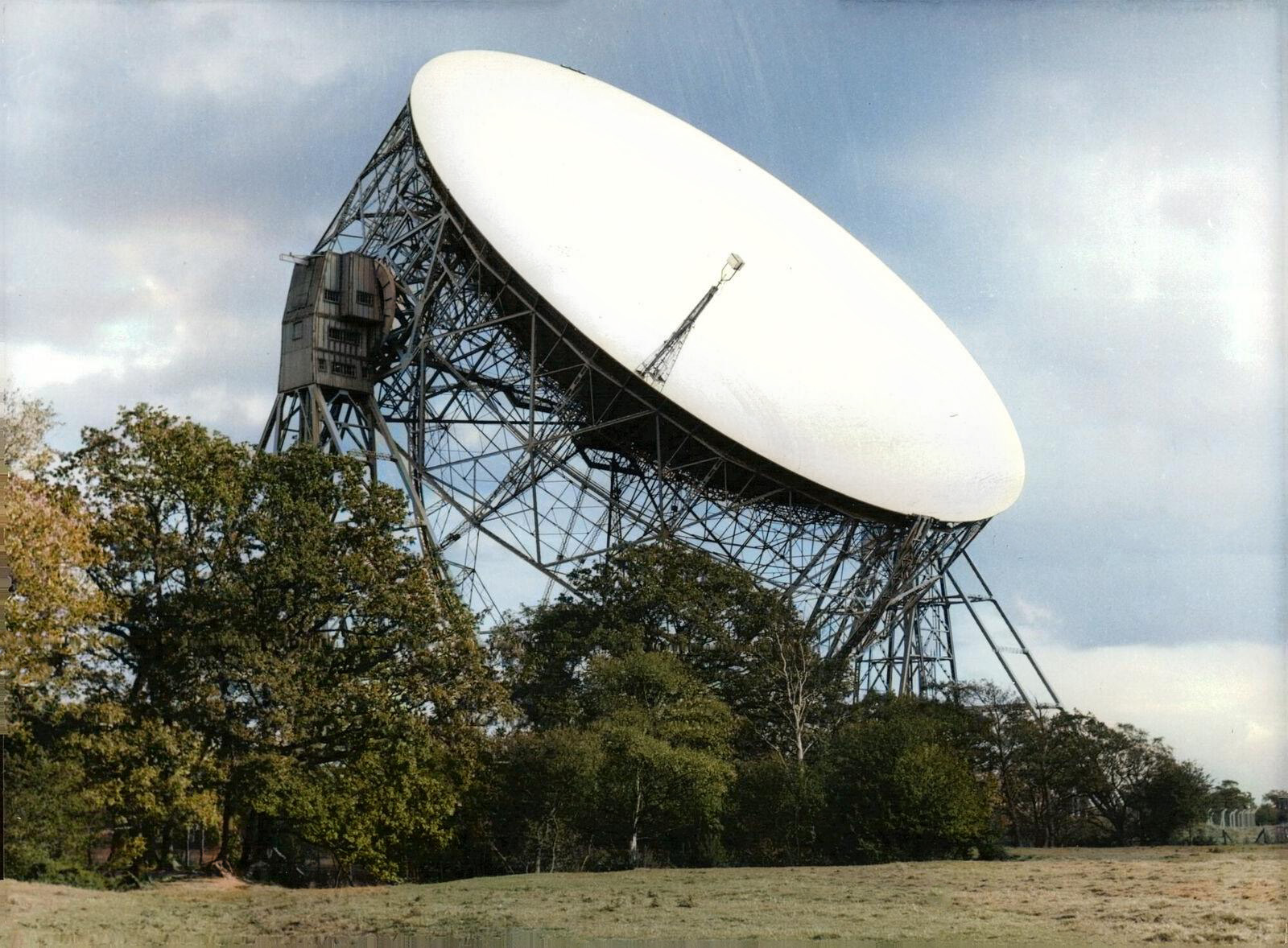
The giant dish becomes a local landmark in the countryside.

In the 1960s, new additional telescopes.

In the 1960s, new additional advanced radio telescopes.

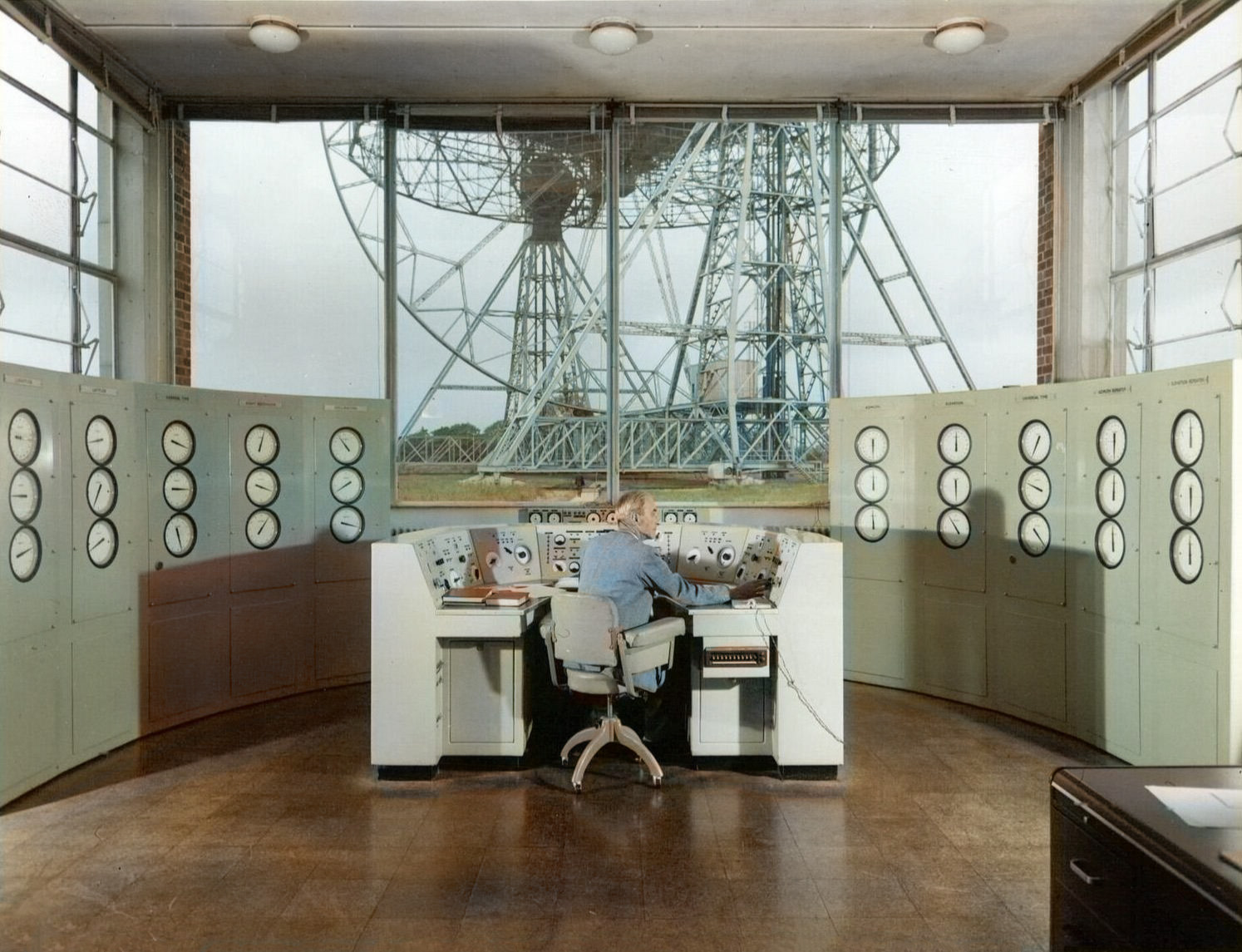
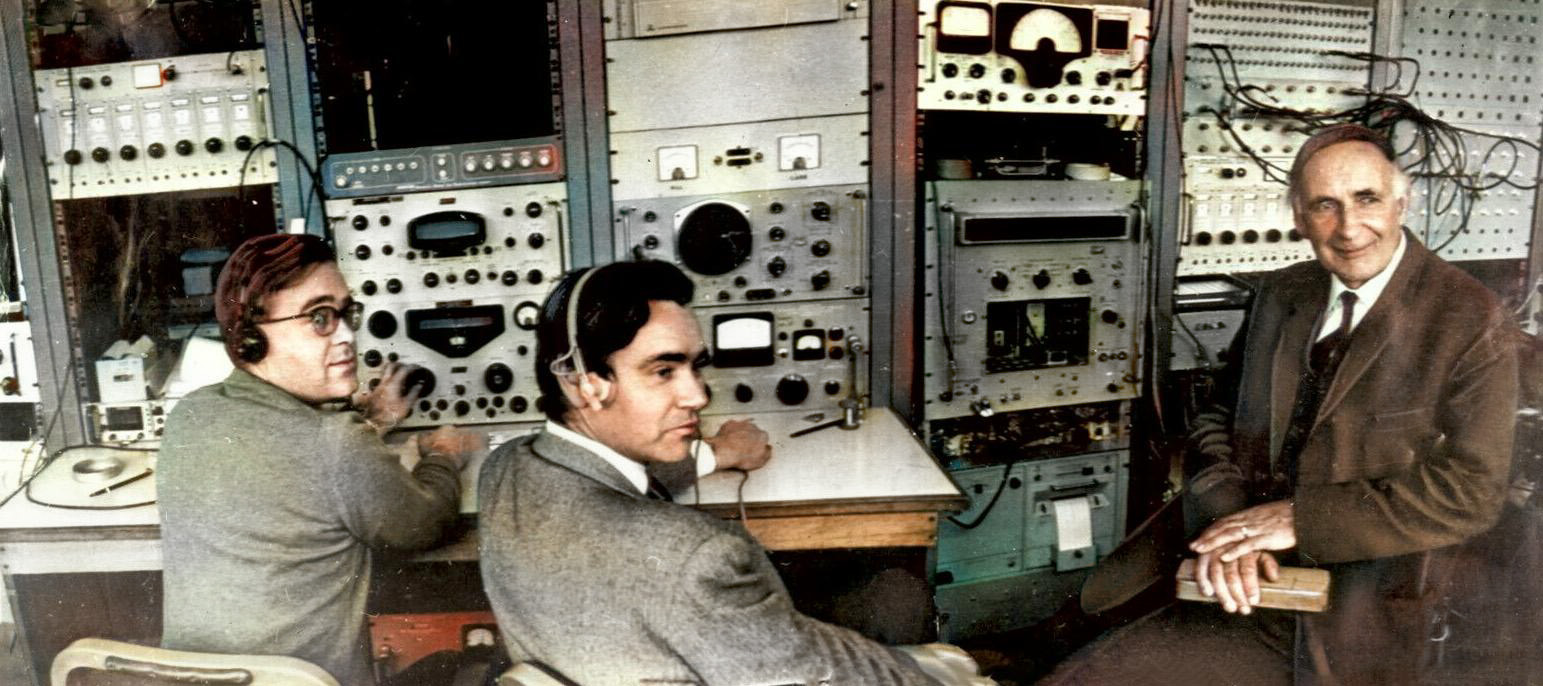
An older Sir Bernard Lovell and others, listening for messages from a Venus probe in the 1960s. Even aged in his 90s, he was still going into Jodrell every work day.

Early layout with control buildings. Very little fencing (pre IRA terrorists) or cars.

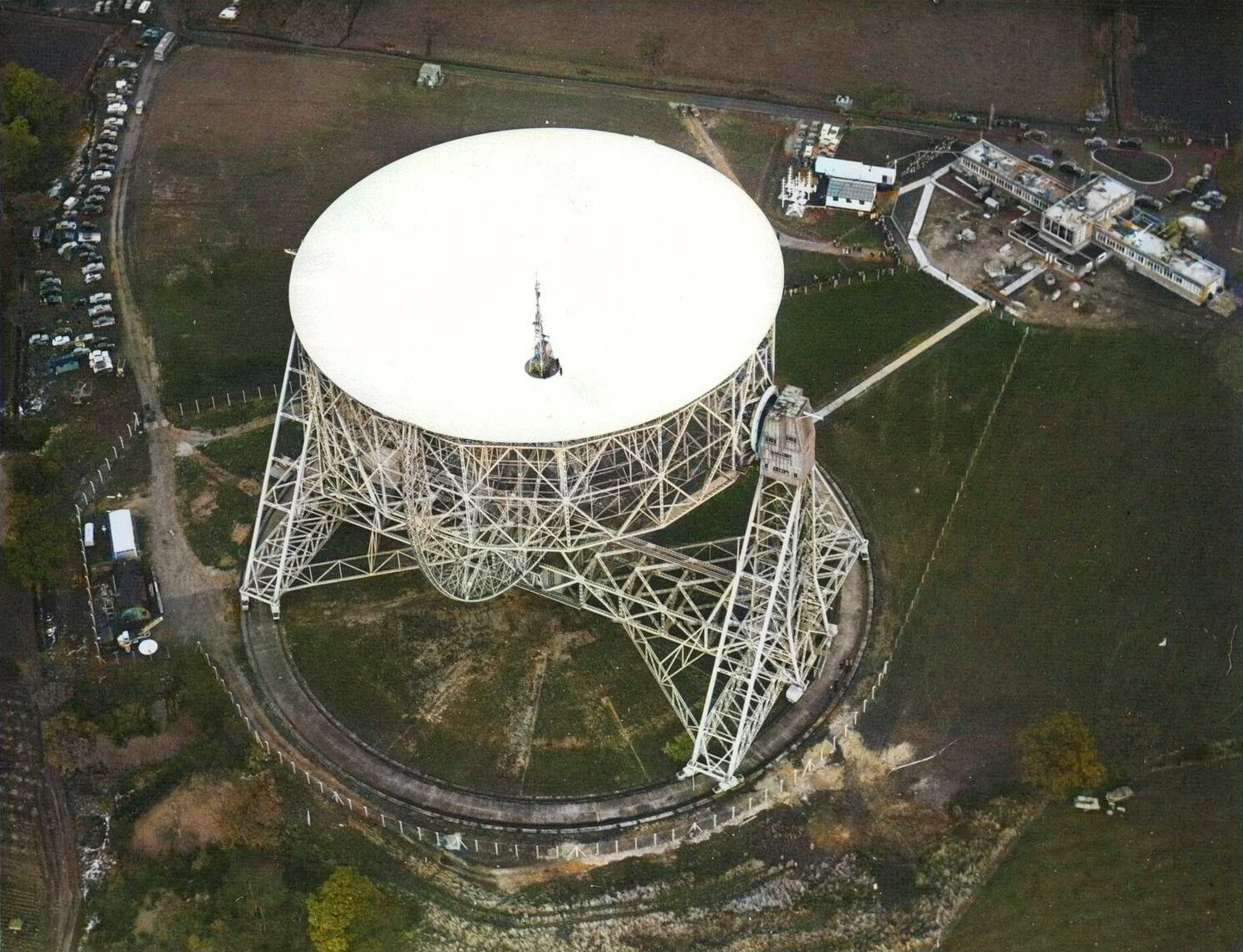
Later layout. By the late 1960s, with the first Space Race well underway, the place was becoming something of a tourist destination as well as a growing and widening research centre stretching out around the giant telescope. This mix continues today, in public events such as the sci-art Blue Dot Festival which returns in summer 2023.

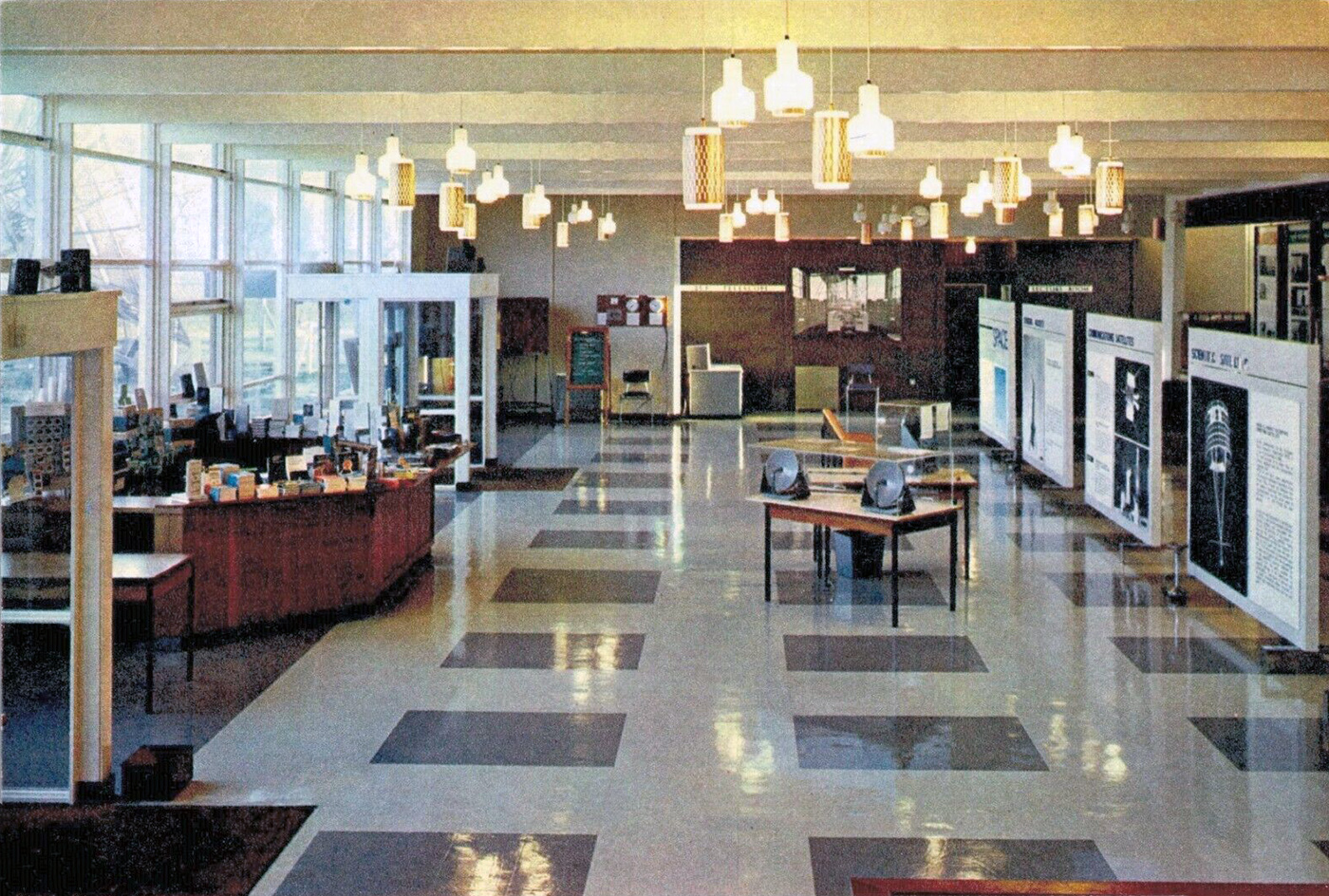
Throughout the late 1960s and into the 70s, the small but fascinating visitor centre helped to enthuse the new young ‘Space Race’ generation — who were already well enthused by the manned Moon missions and by humanity’s pioneering exploration of the Solar System. In 1971 a new Planetarium was added. I remember the visit well, and especially the reels of punched data-tape — some of which interested children were allowed to take home.

Secret messages from the stars!

Today Jodrell Bank is home to one of the most powerful telescope arrays in the world, created by linking together all the UK’s seven radio telescopes to work as one. Jodrell Bank is also home to the HQ for the Square Kilometre Array, an even larger multi radio telescope project that will do the same for sites in Africa and Australia.


Further reading:

Sir Bernard Lovell’s accessible book on the early history is The Story of Jodrell Bank (1968), and this was revised as Voice of the Universe: Building the Jodrell Bank Telescope; Revised and Updated (1983). The Out of the Zenith: Jodrell Bank, 1957-70 (1973) is a more technical book for astronomers, from Oxford University Press. The technical aspects of the telescopes themselves were later covered in the book The Jodrell Bank Telescopes (1985). All these are now on Archive.org.

Children’s publisher Corgi/Carousel also appears to have issued the Story of Jodrell Bank (1972) for children in middle-childhood, and this can still be found used in paper form on eBay and Amazon. At a guess, this is perhaps Lovell’s accessible 1968 book heavily adapted, condensed and illustrated for intelligent children? Surprisingly, there appears to have been no subsequent children’s book on the topic. Time for a graphic novel?

Sir Bernard Lovell also appears to have had at least three book-length biographies.

There appears to be no large modern coffee-table history book on the history of Jodrell Bank, but there is likely room in the market for one — perhaps even in conjunction with a new Ken Burns-style documentary film. In the meanwhile there’s a two-hour YouTube Playlist of available documentaries.

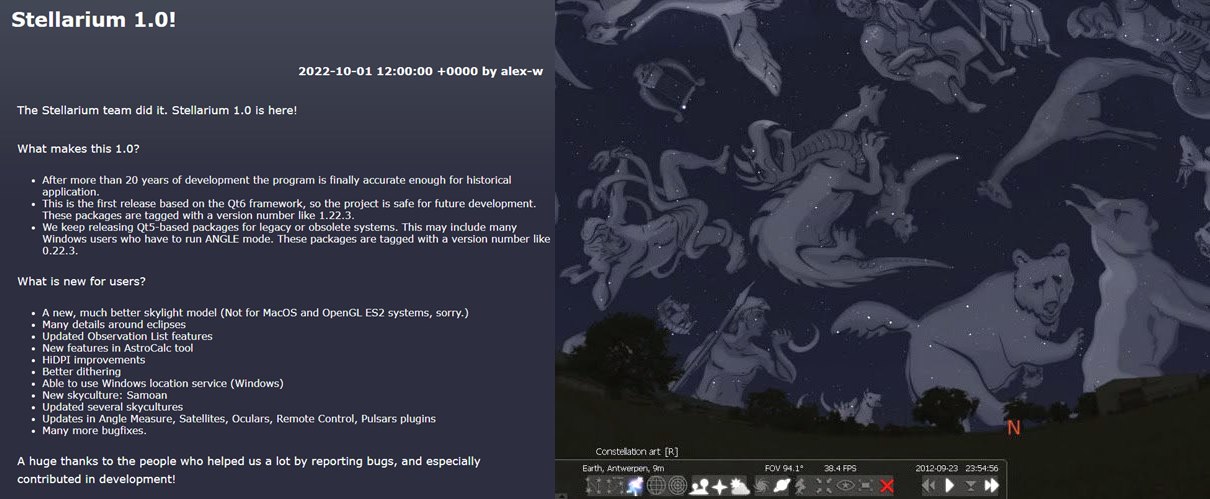
Stellarium 1.0

After many decades in beta, the excellent free Stellarium desktop software is finally in a stable version 1.0. Useful for casual astronomers and night-sky watchers, and its time-travel function also makes it useful for historical researchers and writers of historical fiction.

Slightly confusingly, 1.0 stable is officially 0.22.3 for Windows 7, and 1.22.3 for other lesser Windows OS’s.

Staffordshire soup kitchens

A timely new PhD thesis, in part a study of post-medieval soup kitchens in Staffordshire including around five pages in total relating to the Potteries. Public and available for download.

Also reveals the origins of the well-known Soup Kitchen, in Stafford town centre…

Thomas Salt, a banker, founded Stafford’s soup kitchen as part of a ‘house of charity’ that provided lodging, clothing, and food to the poor, with an area to sit and eat. Salt’s son, Sir Thomas Salt MP, handed the institution over to a committee in 1865 which then ran the institution on a subscription basis [i.e. local people undertook a sort of early crowd-funding to sustain the service]. In 1868 it limited its ambition to soup. It opened all year unlike most other soup kitchens; its premises remain in use today as a restaurant called The Soup Kitchen.

I’m fairly sure it’s also still run by a charitable body.

From Waterloo to Vindaloo

Not a bad local idea, and apparently backed with £2m of private money from a Cobridge businessman…

“the Burslem end of Waterloo Road” could become “Stoke-on-Trent’s very own ‘curry mile'” of curry houses.”

The Burslem end of the road is just down-a-bit from the town centre. Ideally you’d have Burslem town centre itself for such a thing. But I guess the business rates, car parking, and the Council’s retail use-zoning / liquor licensing / policing worries are all probably against such a notion. So far as I know Burslem is not about to become one of the new Investment Zones and sweep away such restrictions on trade.

So down on the Waterloo Road looks a good and probably cheap location. Perhaps the shop-fronts could also be nicely restored, so the road would not look like a wall of garish plastic tat. The adjacent olde church might even take in any spare food each night, and feed the homeless with it.

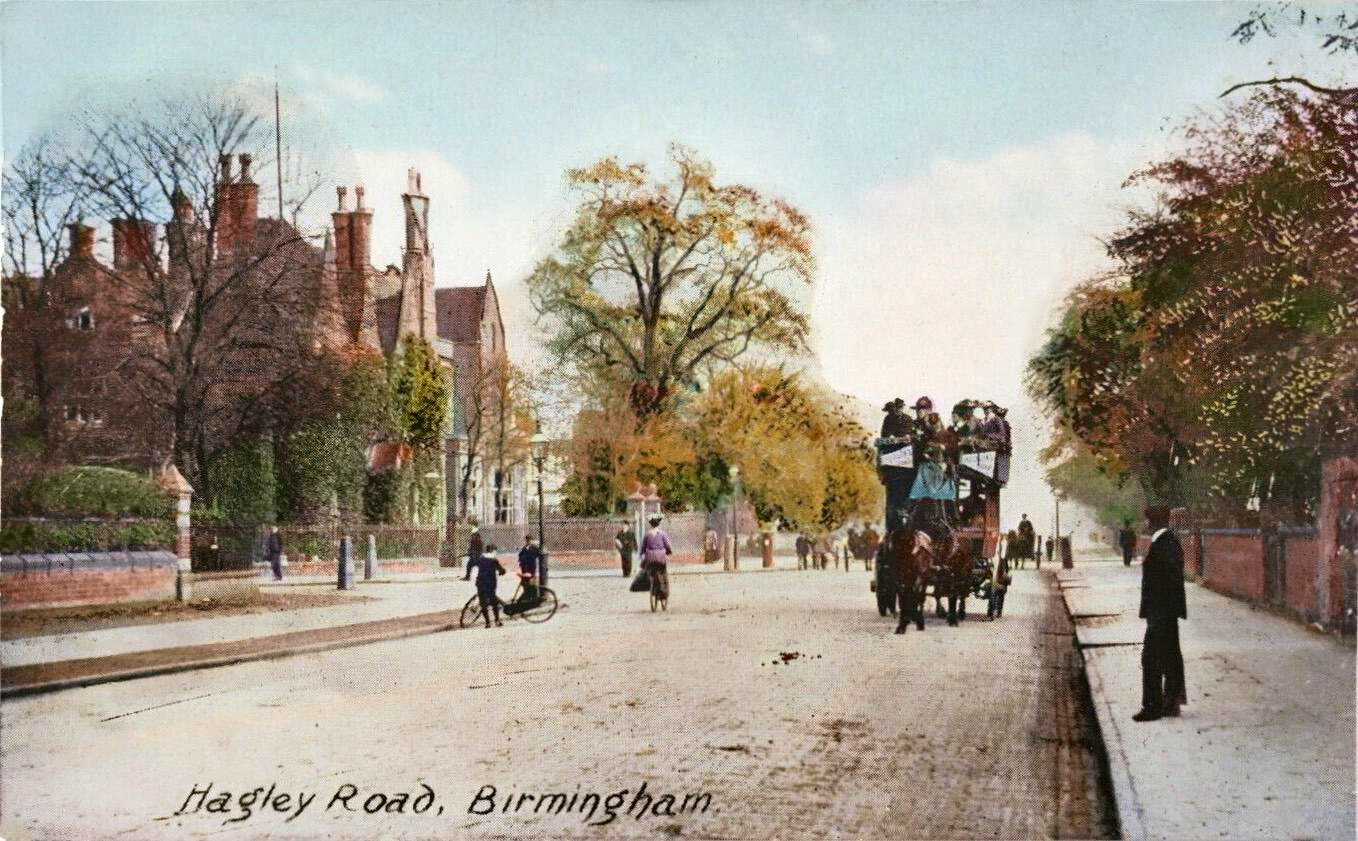
Old picture of this bit of the road, leading up to the town centre, circa the 1910s…