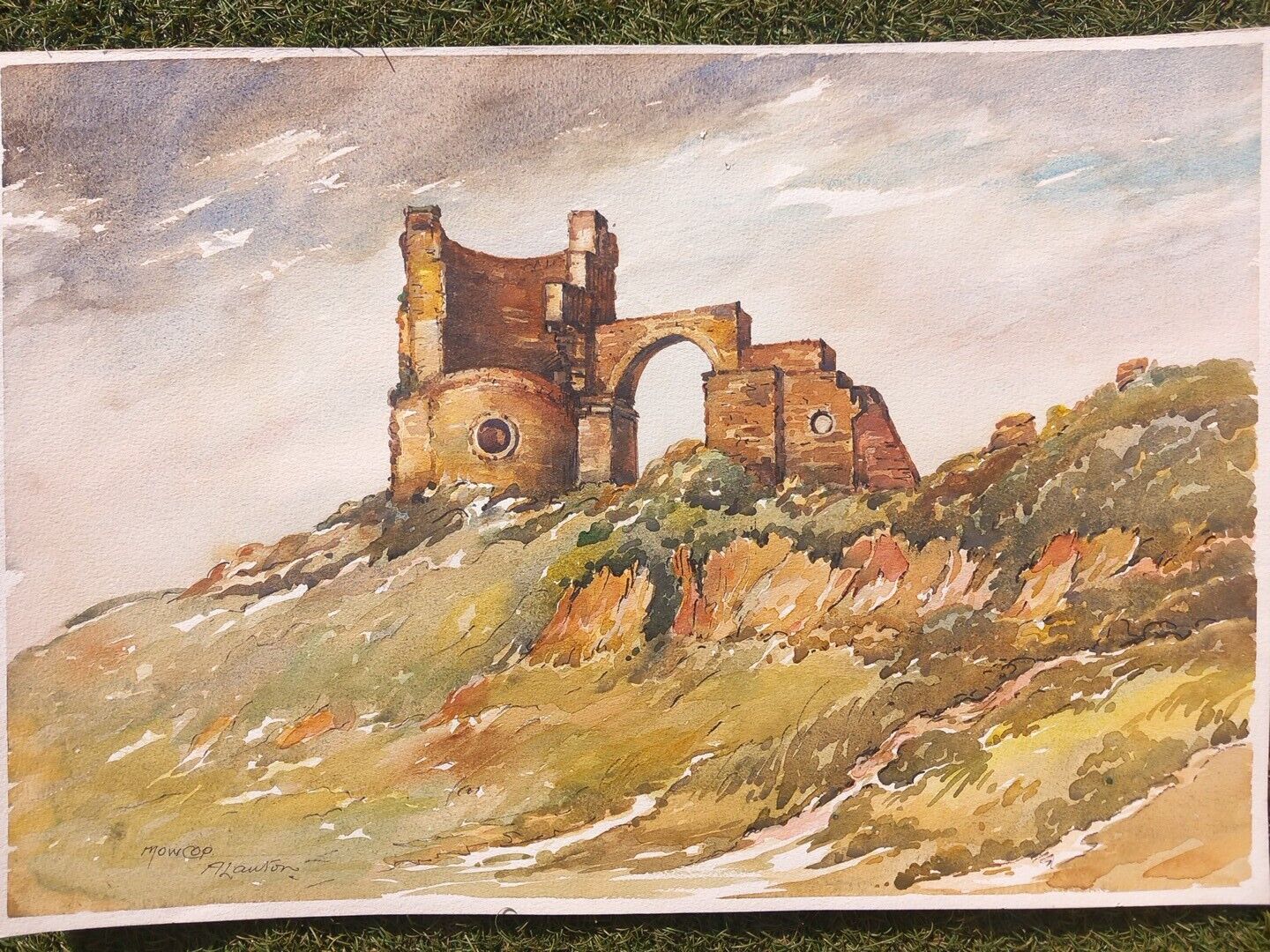
Mow Cop in water

Currently on eBay (not from me) is a simple but pleasing lively watercolour of the summit of Mow Cop. Seemingly unique, vintage, and by “Lawton”.

Regrettably laid on grass for the eBay picture. Which probably means the back of it has now been seeded with millions of potential mould spores.

Seeing the oak for trees

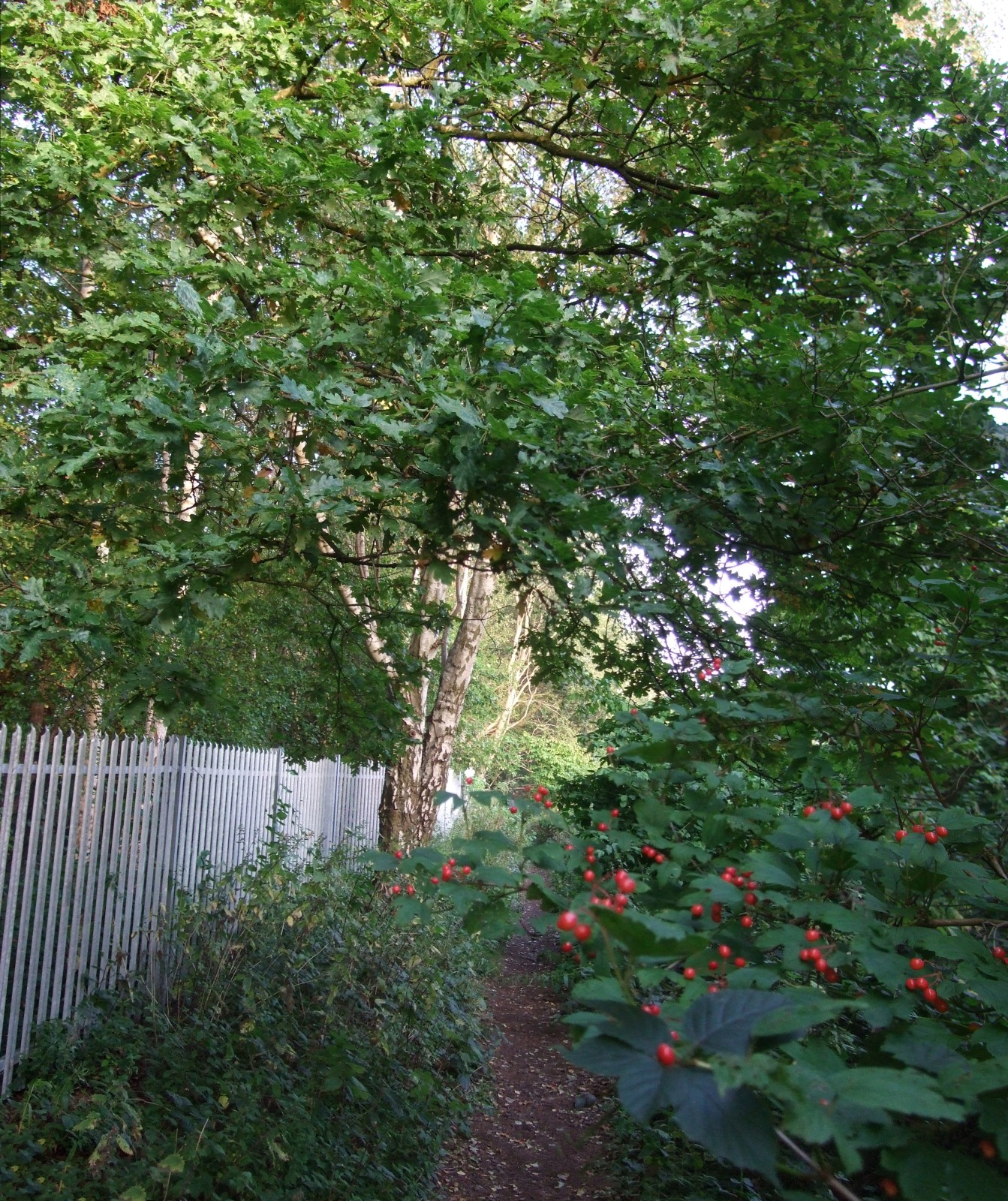
It sometimes pays to be looking downwards, which I do when litter-picking. On a walk to M&S, along the canal and via the new valley-spanning Wolstanton link-road, I spotted an oak sprig fallen on the path. “Now where’s that come from?” I wondered. There had once been a little oak sapling on the path, which circa 2005 I had occasionally protected. I had several times cut back the lesser shrubs that were attempting to swamp it, letting sunlight into its nook in the hedge. But in recent years I had been unable to re-discover it as I passed by. “Swamped and died”, I thought.

But there was an oak sprig, fallen on the path in front of me. I looked up. Spreading high above me was a fine healthy young oak tree. In the same place as before, but the shrubs had thickened and grown outward onto the path, while the oak had grown upward to the light. That was why I couldn’t find it again. I was looking for a struggling and scrawny sapling on the edge of the path, but it’s now a proper tree growing up from the centre of the hedge.

One also finds other things. The M&S walk was to get new ‘maximum’ Merino-wool thermals, before the cold damp weather arrives and they suddenly sell out. I had wanted Amazon’s Damart, but Amazon seemingly couldn’t deliver to any of the many Amazon lockers in Stoke (always “full”, which one can prove is a complete lie by ordering other items). Thus an early morning walk to M&S was called for instead. M&S’s Damart equivalent is HeatGen (£56 for a top and bottom combo). I’d also idly looked at the M&S sunglasses online, needing a new pair. But I couldn’t afford them at £20-£30. The HeatGen thermals are being paid for by a kind benefactor who doesn’t want me shivering again this winter, but sunglasses are not on offer.

So… what did I also find while litter-picking the route to M&S? You guessed it. A nice and perfectly good pair of men’s sunglasses. Free. And also the M&S brand. Strange, when that sort of thing happens. But it does, and surprisingly often. Not long ago I went to litter-pick and snip back the greening-up of an old disused railway-line path. With secateurs. On the way there I found a perfectly good pair of wooden-handled hedge shears, discarded with some other ‘builder and decorator’ fly-tipping and with a bit of dried paint on the handles… but un-rusted, still nice and sharp. What are the odds?

Amazon is full

Every single Amazon locker in central Stoke-on-Trent is full and accepting no new orders…

“This location is temporarily unavailable because it’s full.”

All of them. Even the big one at the main Post Office and the city’s main shopping centre. How can this be? It’s the same for a tiny cheap item or a larger expensive item, so size or price are not the problems. Nor can it be that it’s an item that’s somehow ‘hazardous’ or ‘fragile’.

All lockers have been full for about five days now. Did a chunk of the population just win the Lottery, or something? Or perhaps students are returning, flush with new loan cash?

How are Amazon going to cope at Christmas, if they can’t cope at the start of September?


Update: Still all “full”. Easier to go to M&S at Wolstanton, and cheaper too!

Get lost, Guardian…

The Guardian newspaper makes a flying visit to Stoke today…

Frontier towns are bypassed, forgotten, often forlorn, occasionally vicious in the old sense of the word: full of vice. Seediness inhabits their edges, and edges are what they mainly are.

Thanks. The visitor from the Guardian comes away dizzied by the place-names and the many-towns -ness of the place…

… to this madness of nomenclature [names] and borough fragmentation, we can add the fact that the five, or six, towns merge into Newcastle-under-Lyme to the west, making the latter’s contours and clamour indistinguishable from Stoke’s. No green belt has curbed this coalescence.

No… the writer has overlooked the steep valley ridge. From the woods behind The Villas, through the Richmond St. allotments and adjacent Park, along the ridge into the very long Hartshill Park above the school, then across the recreation ground and to the woods above PotClays, then into the start of the Bradwell Woods alongside the A500, and then along the woodland ridge toward the north and the cross-over tunnel to Bathpool and Kidsgrove. It’s not official Green Belt, and is occasionally nibbled at by the Council for new housing (e.g. the new fill-in-estate above the south end of Hartshill Park, on the old primary school site), but the valley ridge serves much the same purpose in providing a belt of greenery between Stoke and ‘Castle. All very narrow and fragile (e.g. Newcastle’s mad plan to build on the Bradwell Crematorium recreation grounds) admittedly, but it’s there.

The Guardian, presumably visiting from London, was confused not just by Stoke but the whole of the Midlands…

Arguably, the whole of the Midlands could be construed as a region intended to confuse and defy

Yes, it must be strange to visit a place that most southerners believe doesn’t really exist. For many who rarely venture north of the Watford Gap, England is just ‘the south’ and ‘the north’, with nothing possible in-between. Just the stalwart manufacturing powerhouse of the nation. ‘Nothing to see here, move along now.’

High on disorientation, I drove around like a J.G. Ballard cipher.

Ballard was a 1970s science-fiction writer known for his tales of isolation, disorientation and quiet despair in post-apocalyptic landscapes. Even the Guardian’s uber SatNav has problems…

I plugged Wedgwood into the satnav and was sent to purgatory – a weird semi-private estate

Oh, the horror… ‘unprepared Guardian journo accidentally finds somewhere quite nice in Stoke’. But isn’t it actually rather nice to live in a place which so delightfully bamboozles and confounds so many visitors? And yet which is all perfectly obvious to locals. Especially walkers and cyclists, who know a totally different and far greener city than the grotty ‘main roads city’ that the car-bound know, including all the semi-secret ‘little ways through’ like the old Market Drayton line.

Ye Olde Market Drayton railway line

Apparently we only have two key attractions for Guardian readers. The Potteries Museum, and…

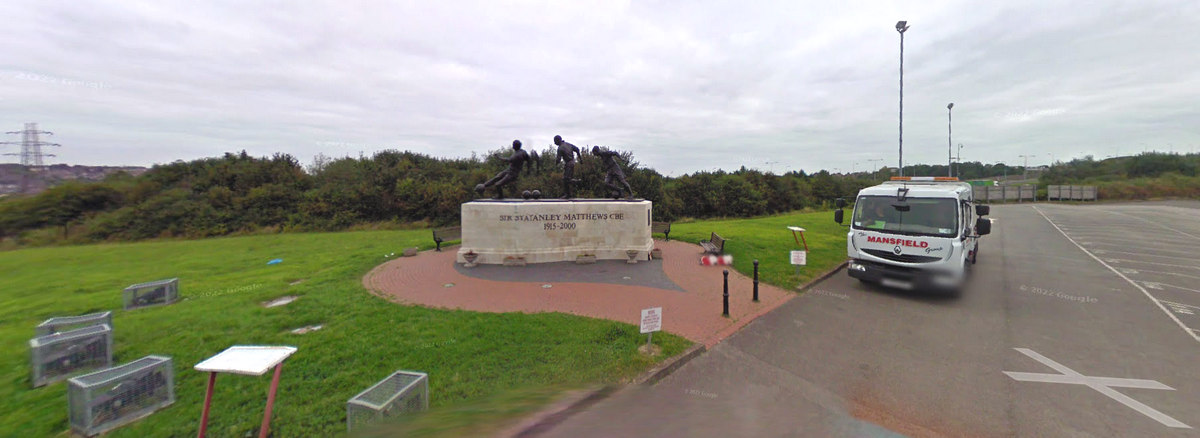
the Stanley Matthews statue at Stoke City stadium

Well, yes… I guess if you’re a football historian. Though it’s in the car-park at the back and then around to the north, which is not open to casual visitors or walk-throughs (the lower walk-up gates are often shut, unless there’s a match or Job Fair etc). Good luck getting permission to visit/photograph when it’s not a match day, and even then you might have trouble with the stewards. A first-time football historian visitor to the city might however want to visit the Stanley Matthews ‘ceramic shrine’, in the Minster churchyard, I’d suggest.

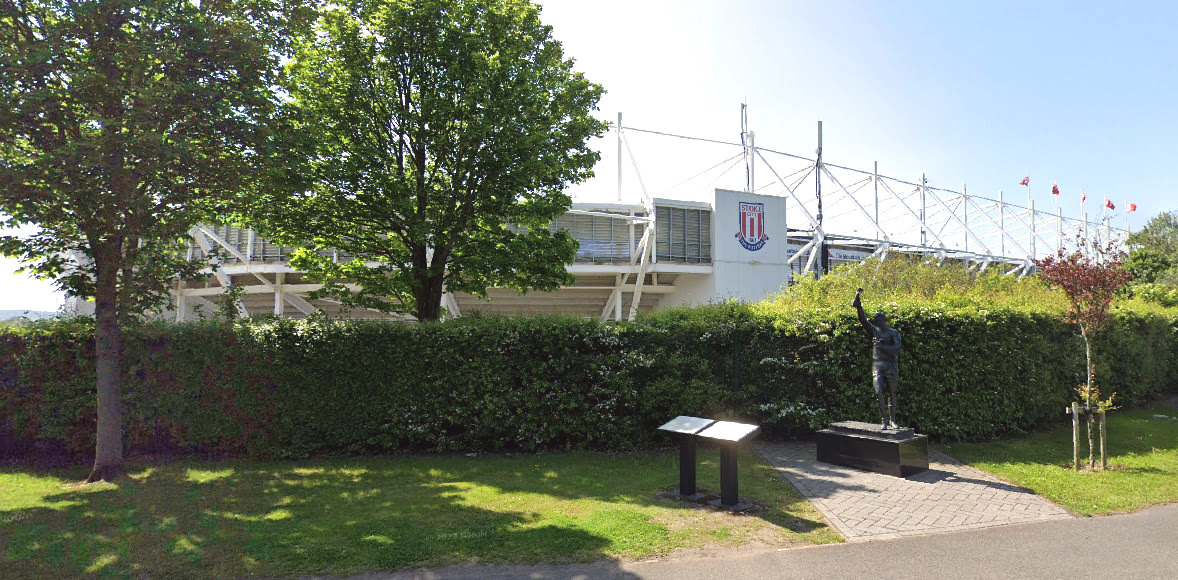
But if the newspaper’s readers do ever visit the Stadium, they should note there’s also a Gordon Banks statue out by the roadside and publicly accessible.

Den Siegertsz returns

Good to hear that local radio presenter Den Siegertsz is back, with a weekly Sunday lunchtime show on the non-profit Churnet Sound, sponsored by the local maker of Staffordshire oatcakes.

“Den’s new show will be on DAB in north Staffordshire and South Cheshire every Sunday from noon.”

No debut date yet, but coming soon. Churnet Sound broadcast from Biddulph Town Hall. It seems they also stream online, which is good for those for whom the DAB signal is ‘bubbling mud’.

The Haunting of Stoke-on-Trent

Always good to find a supernatural tale about Stoke-on-Trent. New to me is The Haunting of Stoke-on-Trent (2017) by Julian Middleton. 58 pages in paper (says eBay), 89 pages in paper (says Amazon UK) or 33 pages (says the Kindle ebook store). The back cover of the paperback on Amazon suggests the reason for the expanded page count… an added “special bonus story”. So my guess is it’s perhaps 15,000 words for the main tale.

The blurb suggests a children’s book…

When an earth tremor creates a gaping fissure in the middle of his street, Tom Hughes is horrified to witness a group of ghostly miners emerge from it. As a terrifying apparition looms over the distant hill of Mow Cop, and the miners create a path of destruction on their way to join it, it’s up to Tom and his sister Jen to save Stoke-On-Trent from certain doom…

And an Amazon reviews confirms. It’s a short children’s book, and is apparently written for easy comprehension by those in early middle childhood (Amazon suggests ages 7-9) who may not be regular book readers yet.

Taking the goose

New on eBay (not from me), Goose going shopping. Via Getty, so you’re not also buying further usage-rights with the print. Unless you can find Getty’s source and establish that it’s now public domain.

“3rd April 1937: Mrs Lockyer from Stoke-on-Trent takes her pet goose out shopping. The bird has been taught to accept pennies, and has collected a large sum for charity.”

Here newly colorised. Another for a hypothetical “Surreal Stoke” exhibition.

New and local on Archive.org

Some new and local items for free on Archive.org:

The Two Universities Way: a green route to walk from Staffordshire University to Keele University (2012).

Mountain Bike Guide: Midlands (1994).

The Technique of Pottery (1962).

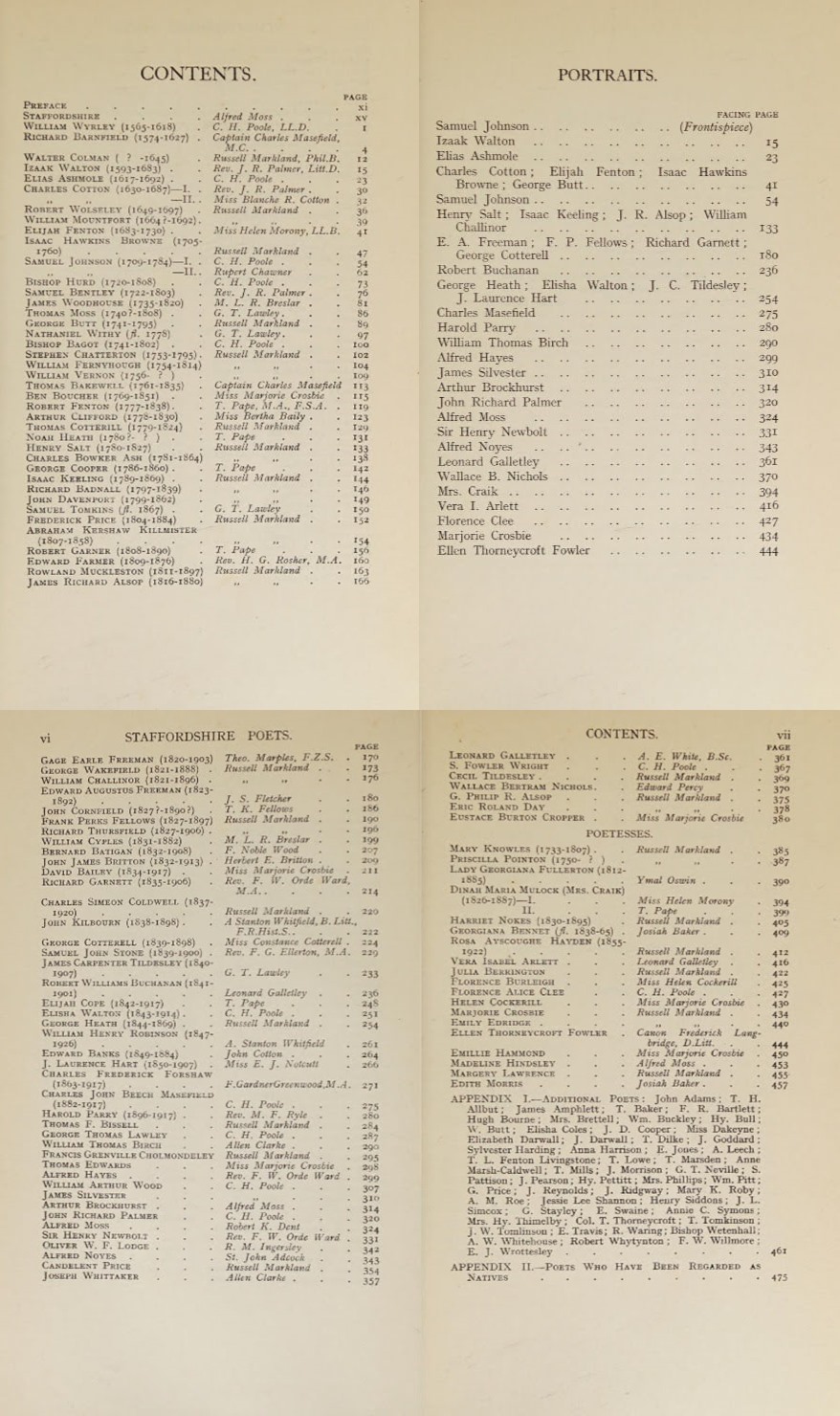
Staffordshire Poets (1928) (Poets of the Shires series).

Anglo-Saxon burial mounds : princely burial in the 6th & 7th centuries (partly a survey of Midlands mounds).

And I also found this commentary by the writer A.S. Byatt, recalling her Stoke great-aunt, and possibly also a Stoke headmistress…

“I made a story, ‘Racine and the Tablecloth’. It was written partly to defend Racine and ‘the gods in the blood’ against the schoolteachers who were encouraging my ambitious daughter to ‘be a gardener, if she wanted to’. She didn’t. She wanted to learn enough French to read Racine and go to university, but they wanted to persuade her that ambition was bad, competition was bad, French was for railway stations […] Into my story of my wrath and despair [at this attitude…] I wove an image of my great-aunt Thirza, who was photographed when she was over eighty, in her house in Stoke-on-Trent amongst her exquisitely bright tablecloths and cushions, embroidered on ivory satin, of the kind sold for wedding dresses. She was a mythical figure. my great-aunt Thirza. ‘She had blonde hair so long she could sit on it’ my aunt would always say. I believe that as well as following the linear shadowed ‘transfers’ (like neo-Platonic ‘forms’) [in her embroidery] she sometimes invented her own fruit and flowers, boughs and garlands. I have several of the cushions still. The silks are still bright. In my story my great-aunt Thirza stood for my ordinary origins, and her own bright work, for women making things in snatched time. But she was not allied with my levelling, ladylike headmistress, who haunts my dreams still: the nay-sayer, the antagonist, the fairy godmother who turned gold threads back into dull straw.” (Ovid metamorphosed).

Also on early education in the Potteries…

[In the early part of the Industrial Revolution affordable books for spelling, reading and writing – and their associated small paid-for single-teacher ‘dame’ or ‘penny’ schools – served] “a rapidly expanding middle class market, but they were so cheap and published in such numbers that it was not difficult for a working-class parent to get hold of something like Mayor’s English Spelling Book. The local newspapers in the Potteries for instance, regularly carried bookseller’s advertisements in the 1830s and 1840s for manuals on reading and writing at prices from sixpence to two shillings.” (Silences & images : the social history of the classroom).

Finding a Wright’s ‘Coal Tar’ Soap alternative

I was annoyed this week to find that Wright’s Coal Tar soap bars have switched down from 125g to 100g (though still 80 pence, at supermarket prices).
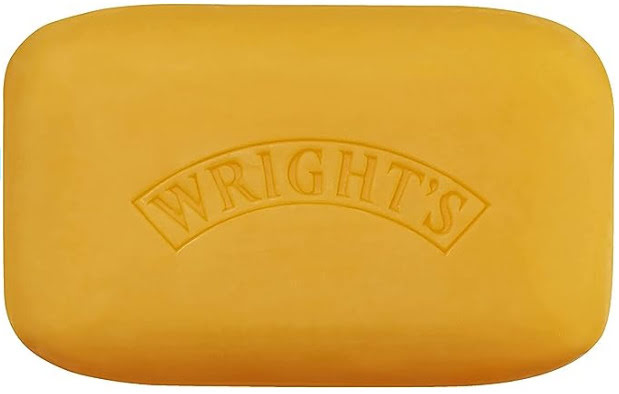
On researching this I was further annoyed to find that it’s no longer even Wright’s Coal Tar soap. The EU blocked proper coal tar soap from open sale from around 2012. Wright’s is now merely billed as ‘traditional soap with coal tar fragrance’. And not so much of the old ‘coal tar’ fragrance at that, since the smell is now emulated via a blend of other scents. Quite a toned-down smell, and quite variable from bar to bar. Sometimes hardly even noticeable, I’ve been finding. I put this variability of ‘the coal tar smell’ (which I like and find pleasant) down to the lockdowns and supply problems, and gave the company the benefit of the doubt. But I now discover the horrible truth about this much-loved ‘heritage’ brand.

Wright’s soap is now said to be made in Turkey at the behest of a brand owner in Solihull, near Birmingham. The old original Wright’s firm having sold out at the end of the 1960s. The active antiseptic ingredient is now the cheap and ubiquitous ‘tea oil’, rather than coal tar (aka liquor carbonis).

Even the vintage “Original” Wright’s bars, occasionally for sale on eBay, show by their wrapping that the smell was being reduced before the EU ban…
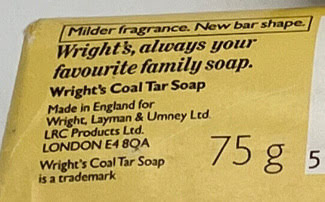
Note the “milder fragrance” claim. It’s definitely not a smell loved by all, and some (especially women who have to live with it on their men) hate it.

Ok, so are there alternatives in 2023 that have real coal tar and the proper smell? I took a look. ‘Kind of’ is the answer.

First, avoid a Russian seller on eBay. There’s a Russian ‘pine tar’ soap which a canny Russian seller passes off as ‘coal tar’, banking that the clueless buyer won’t know the difference. But pine tar is not coal tar.

The only genuine coal tar soap of any reputation in the UK seems to be Cosalic soap made by Salvia of India (aka Coslic or Cosilc on eBay). 3% coal tar. Possibly this is branded as Bistar in India, since Bistar has the same distinctive bar shape and colour as Coslic. They actively play on the “coal” idea, by making it look like a shaped lump of black coal. Nice idea, and delightfully politically incorrect.
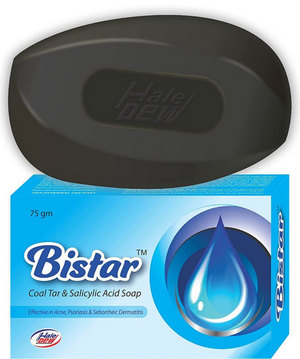
Regrettably though it’s very expensive either way. Even a 6-pack on Amazon UK will cost £3.88 a bar. That’s £3 a bar more than Wright’s! The India Bistar version seems to be even more expensive, probably due to shipping hiding in the ‘free shipping’ price.

I also found some U.S. sellers on eBay, from expensive back-room hand-made soap makers to the slick and incredibly expensive U.S. Dermabon brand (£28 a bar!).

It seems that part of the cost problem is that the equipment needed to get coal tar can only be used for coal tar extraction, not multi-use for other products. And that complying with health regulations for the extraction workers is now quite costly for the manufacturer. Once extracted the crude tar material (‘coal tar BP’) is flammable and thus presumably needs guards and a fire extinguisher system. Trade papers also report post-lockdown shortages (summer 2022) of the items needed to then make the raw coal tar into a retail consumer product.

Thus, while Cosalic soap is freely available in the UK via Amazon… it is only barely a replacement for Wright’s due to cost… and also because Cosalic’s soap appears to disguise the smell with all sorts of other things. Still, it may be worth trying. Like I said, it’s openly sold on Amazon UK.

I also found the trusted and UK-made Polytar Scalp Coal Tar Shampoo 150ml, also freely sold in the UK by Amazon. Under £10 for a 150ml bottle. Has 4% coal tar. It’s better value than the competing 2% Neutrogena T/Gel Therapeutic Shampoo 250ml, also freely sold (Tesco and Morrisons also have T/Gel on open shelves). Note that the UK’s official body NICE offers public advice on coal tar shampoo use… “applied once a week, left on for one hour and then shampooed off”. I’m not qualified to offer medical advice here, but this top-level official tip seems useful. It’s evidently best left on for a time, rather than washed off after three minutes.

Anyway, Polytar is by all accounts great for the coal tar smell, and the NICE advice means the shampoo can be left on for much of one’s bath-time. Thus it seems to me that the way to get the authentic olde 1960s ‘Coal Tar’ experience would be to apply your Polytar shampoo shortly after entering a bath, while also sparingly using a very expensive bar of Cosalic. Perhaps also have Wright’s cheapo ersatz 80p bar on hand too, to make the soap go a bit further.

Update: No Polytar at Morrisons or Tesco, but apparently Superdrug, Lloyds Pharmacy and Boots carry it on their shelves in the UK.


Interestingly in America they don’t care about EU nonsense, at least for dogs. I was amused to discover that their “PPP Tar-ific Skin Relief Dog Shampoo” sells over the counter, and by the gallon(!) and with 2% coal tar.


Also, I see that the EU has banned Zinc Pyrithione as well, from March 2022. If you were wondering why your anti-dandruff shampoo no longer works half as well as it used to, now you know. So far as I can tell the EU’s reasoning on such things is: it’s safe, but there may be ‘suitable alternatives’, thus it must be banned. That’s how the EU’s bizarre logic works. Of course, in time the ‘suitable alternatives’ may turn out to be… unsuitable. As such I’d rather stick with what’s been proven to be safe for over 50 years and billions of real-world human uses.

Update: Discovered Sudocrem. Amazing stuff! After decades of E45 with little result, I tried Sudocrem instead and… eczema clears up in 48 hours! Get it in the baby aisle of the supermarket (it’s in heavy demand for nappy-rash), at around £2.50 per pot. Cheap and easily available and… works. What’s not to like? The zinc in it, I guess, and I’d be willing to bet the government would ban it (see note on the zinc shampoo ban, above), if they thought there would not be a mother’s uprising that would sweep them out of power within a week.
September Heritage Days

The annual September Heritage Days are coming up. Some local places of interest…

* A chance to don a builder’s hard-hat and get inside the refurbishing St. Marks in upper Shelton. Saturday 9th September 2023, 11am to 3pm, no booking. Heavy restoration is still going on, replacing the roof trusses and more.

* Our Lady of the Angels and St. Peter in Chains, the large Catholic Church on the edge of Hartshill, Stoke-on-Trent. 16th-17th September 2023, noon to 5pm, no booking. Of tangential Tolkien interest. The adjacent Convent Pools, where the Catholic Convent school-girls did Botany studies, can be visited at any time in the adjacent Hartshill Park, and the pools and their walkways were restored about a decade ago.

* The Milton Building opposite Sainsbury’s in Stoke town. Formerly the city’s first School of Art, more recently as NHS offices, and today it’s what appears to be a centre run by an evangelical church. Note the “talks include Phil Rowley’s presentation on the Schools of Art in Stoke-on-Trent”. Saturday 16th September, 2023, 11am to 4pm, no booking.

I seem to recall from the past that the annual list may expand a bit in the next few weeks, with last-minute additions.