Nano Banana test – Moreton Old Hall

After signing up a few weeks ago, I got around to doing a quick test of Google’s Nano Banana 2 AI in the free ComfyUI cloud. Their Cloud now offers an easy-access free-tier with 400 free credits a month (no rollover). Nano Banana 2 is currently one of the free options.

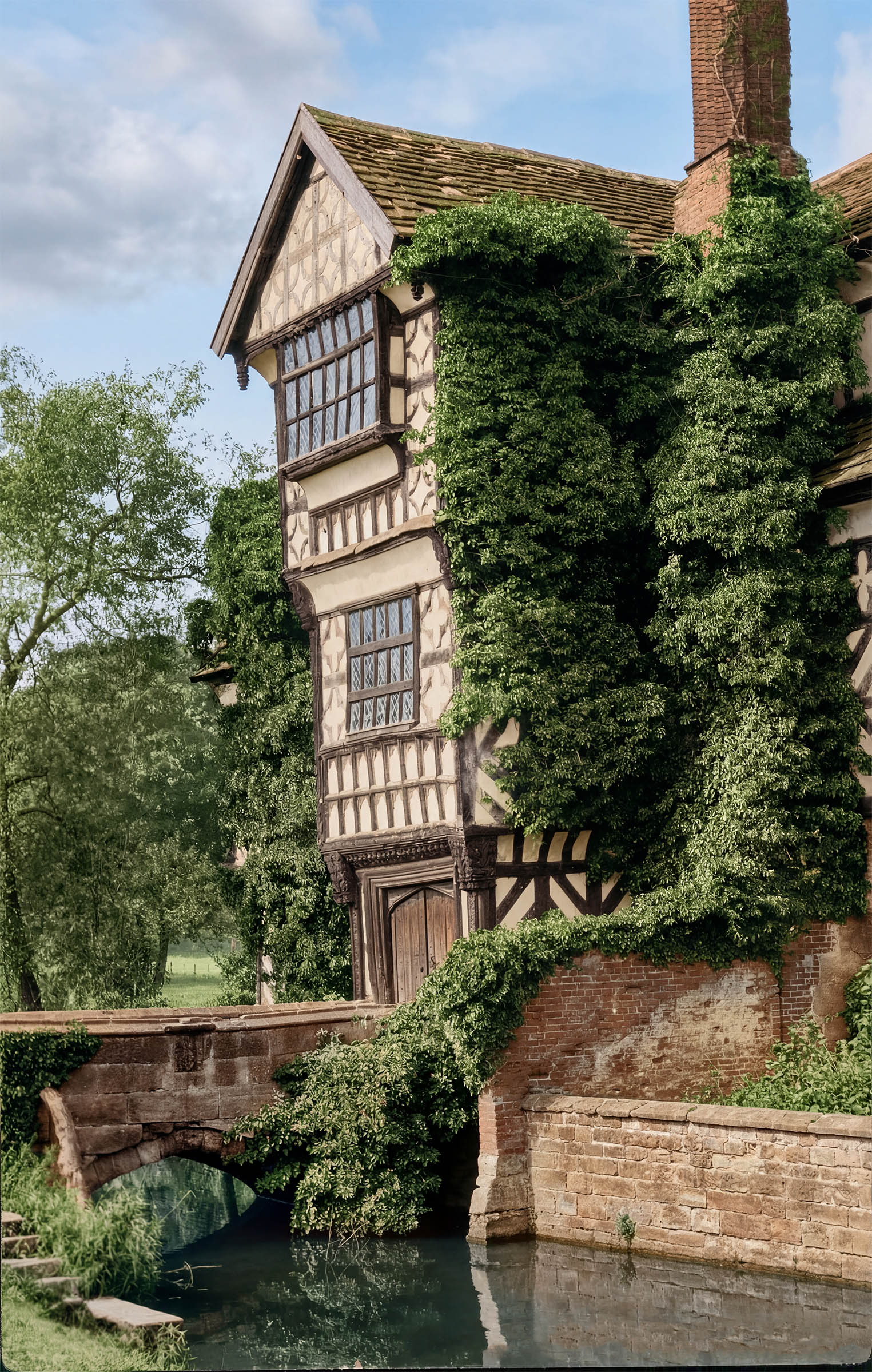
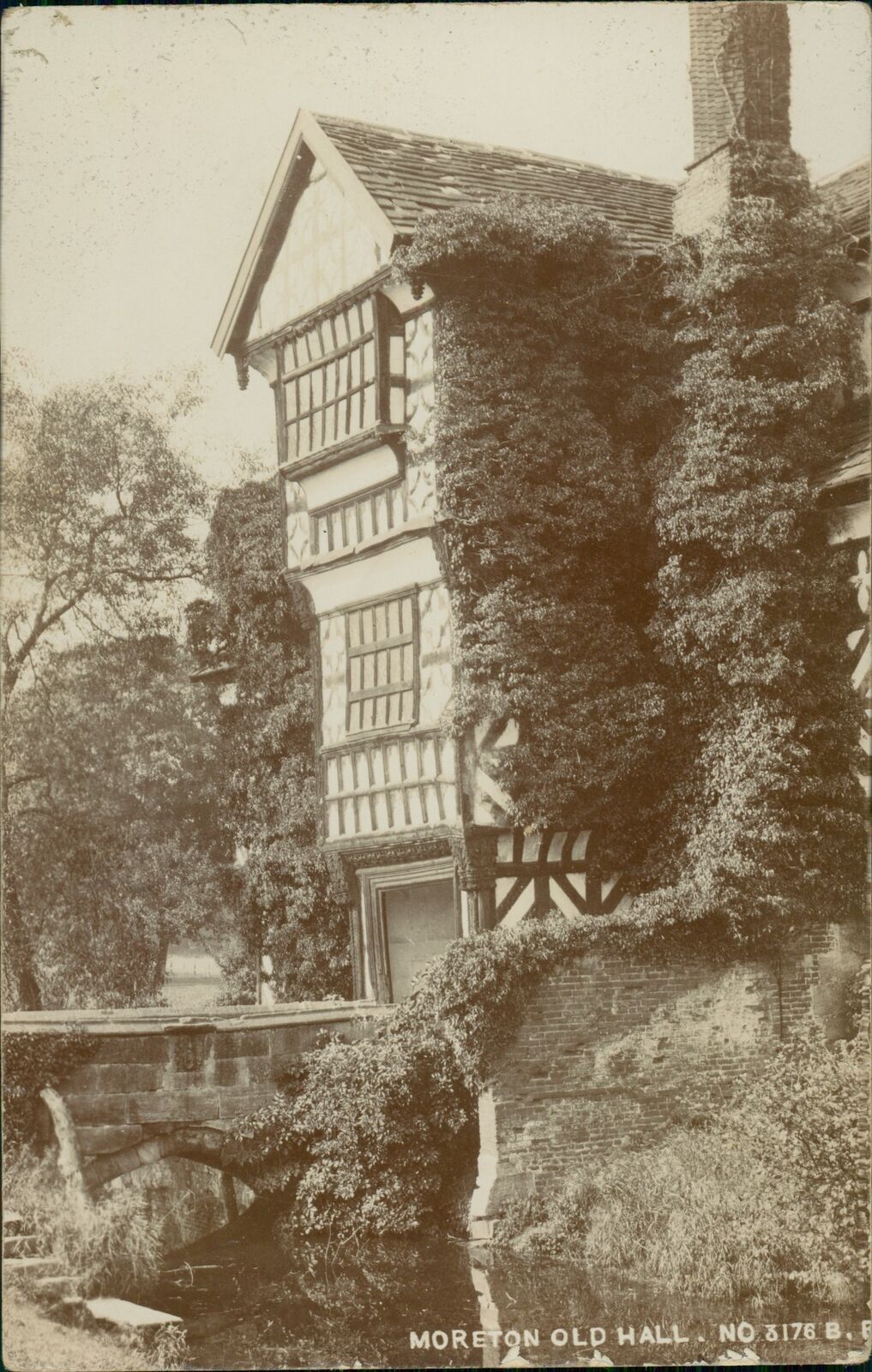
The image shows the frontage of the local Moreton Old Hall, near Stoke-on-Trent. This cost 32 credits for a huge 5300px 30Mb .PNG output (here resized back to a manageable .JPG). So, at 32 credits for a 5K image restore, you’re looking at maybe 10 images a month with some credits left over for other things.

Good enough for an occasional local history blog, with some manual correction of its colourizing mis-fires and inevitable tendency towards neon oranges (a problem which all colorizers seem to share). Plus a careful consideration of what has been invented by the AI. For instance, here on the original we can see the AI has invented the closed door (open and not visible in the original) and also the stone wall on the right (the grass falls down to the water, in the original). Ideally one would also show the original with the restoration, for articles where details are historically important.
Note that Google Gemini can also do this restoration free, and a lot faster than the Comfy Cloud, but i) there’s only basic control over the image ratio, ii) there’s a discreet watermark, and iii) there are also usage limits. Comfy cloud is slower but appears to gives users a 1:1 ratio-match with the original, no watermark, and .PNG output. Users do however, have to be familiar with the ComfyUI interface, which for the Cloud is simply reproduced online.

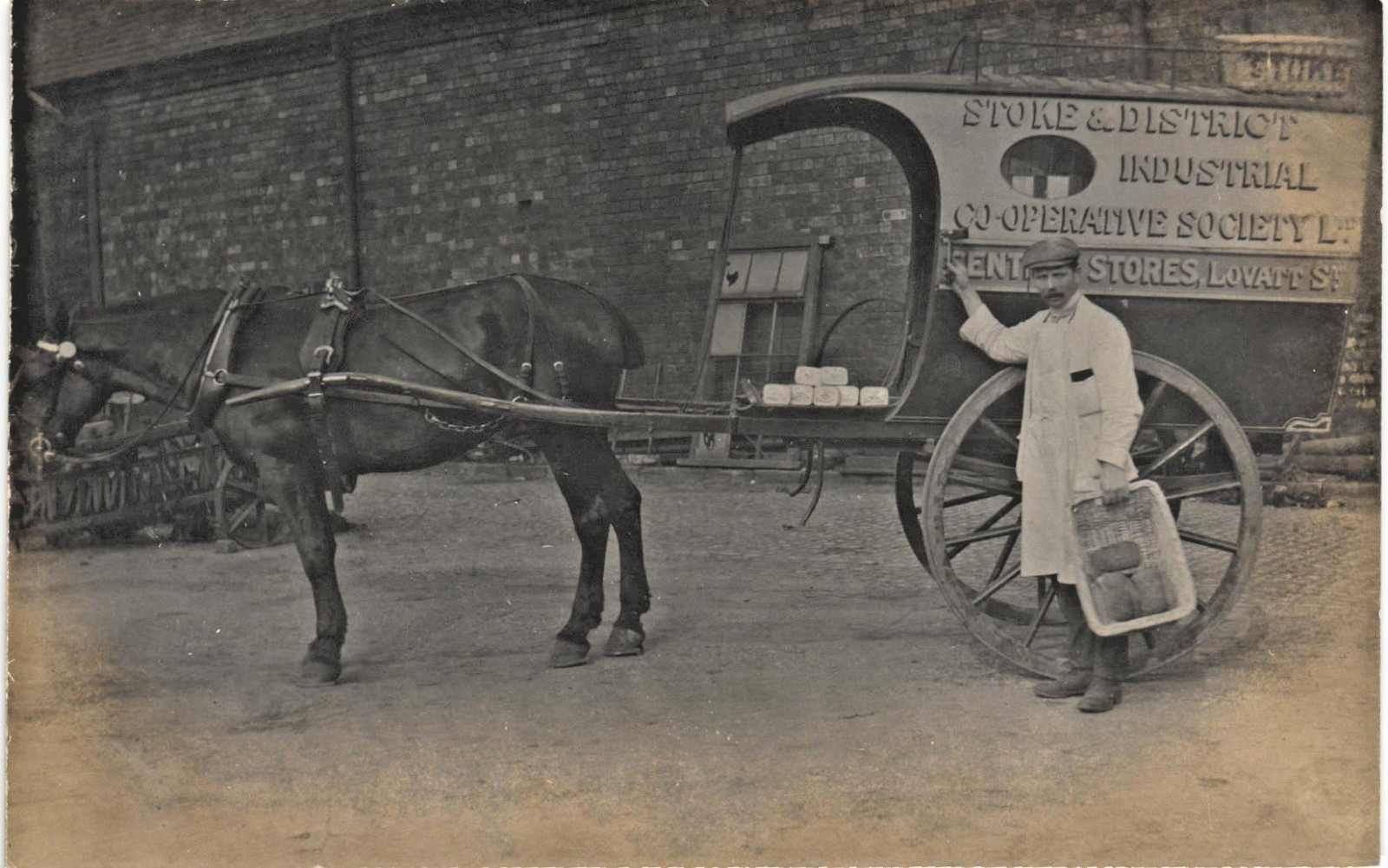
Note that subtle expressions in smaller faces are often also lost, and thus character insights are lost. Telling it to retain facial proportions and features makes no difference. It can be a fine tool for pictures of landscapes and architecture/vehicles, if you do a second run and prompt it to correct the hallucinations it made in the first run. But it seems historically questionable when dealing with small faces (and also text) in a not-so-great source image. This is the sort of image it will struggle with, small face and lots of typography…
Tolkien Gleanings #397

Tolkien Gleanings #397

* The forthcoming Leeds International Medieval Congress 2026, set for July 2026, now has paper abstracts freely available online. A wealth of Tolkien papers are to be presented. Including “Philological Play across Time: Humour and Language in Tolkien’s Lesser-Known Poetry”. The abstract for this paper names seven poems, so anyone with the Collected Poems can pick them out for reading.

* Elfenomeno has “The Equatorie of the Planetis: The Dual Investigation of Tolkien and Andoni Cossio into the ‘Holy Grail’ of Chaucer”. Many are familiar with Tolkien’s contribution as philological ‘consultant detective’ on the Nodens name, but in this article one learns about a similar 1952 job…

“For Price, Tolkien was not merely another consultant but the ultimate “detective”. He needed someone capable of conducting a forensic linguistic analysis, and Tolkien was exceptionally well qualified. […] if anyone could distinguish an authentic Chaucerian text from the work of a later scribe, it was Tolkien.”

* Heritage Auctions is auctioning off ‘The David Aronovitz Collection of Important Science Fiction and Fantasy’. First editions, along with Edith and Pricilla Tolkien: A collection of 41 letters, and an “apparently unpublished” 1955 letter by Tolkien. Although its key item of data is already known…

“the Index of Names […] proved impossible to include [in LoTR]. The labour of compiling one even as far as the middle of Vol II [was done but] was great, and largely responsible for the delay in the appearance of Vol III”.

* The American Spectator magazine has the new article “Tolkien and the Power of Fantasy”. Freely available online.

* The Reformed Journal has the new long article “Oft Hope is Born When All is Forlorn”, on Tolkien and despair/hope. Freely available online.

* Signum University now has its online-short-course listing for June 2026. Among others, “Many Voices, One Song: Leadership in Tolkien’s Middle-earth”, and “The Dark Zone: Caves, Myths & Meaning in Medieval English Literature” (on “the rich subterranean imagination of Old and Middle English literature, tracing caves, hollows, and underground spaces from the tenth through the sixteenth century”).

* Trinity College (USA) has a new video of Joseph Loconte giving a talk about his new book, The War for Middle-earth: J.R.R. Tolkien and C.S. Lewis Confront the Gathering Storm, 1933–1945 (2025). I’ve now found time to read the book, and am about three-quarters through. I’m enjoying its unfolding story and vivid anecdotes, and I will likely review it. The book is made all the more enjoyable due to occasional hilarious Americanisms, such as having C.S. Lewis… “traveling by train across the English countryside through villages such as Perthshire, Shrewsbury, and Cumberland”.

* The Tolkien tapestries exhibition has travelled to Angers (a city about 200 miles SW of Paris), and will be on show there from 10th April – 8th November 2026. Also of note in France, Paris has a substantial exhibition on Imaginary Maps, 24th March – 19th July 2026.

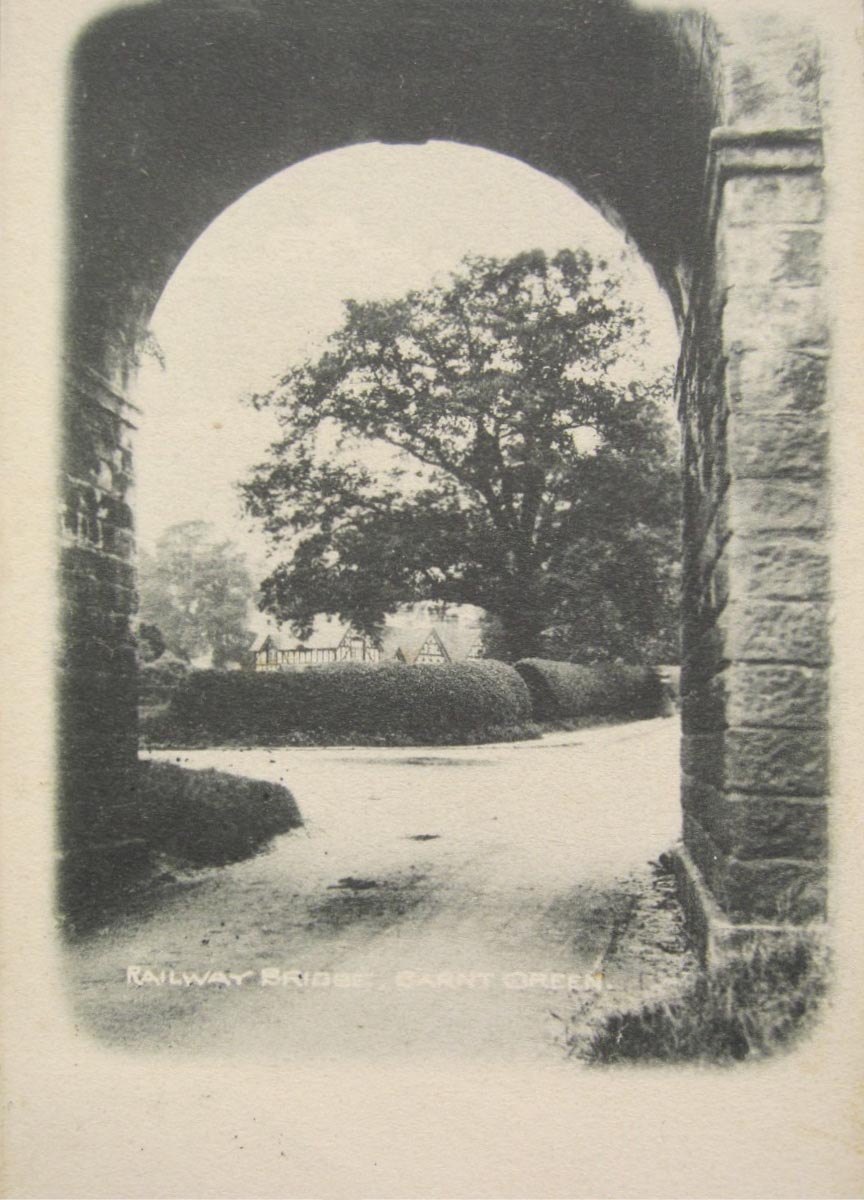
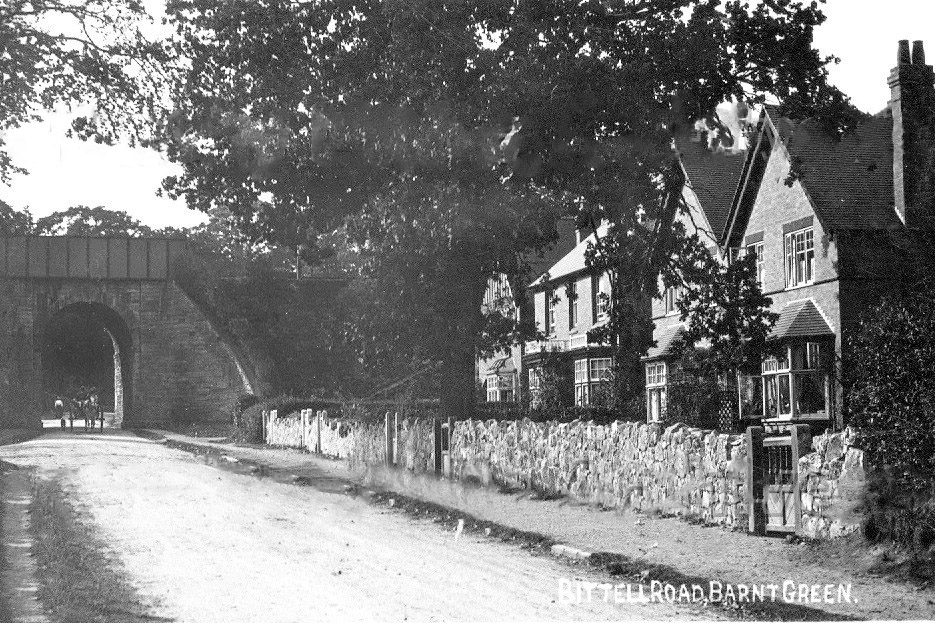
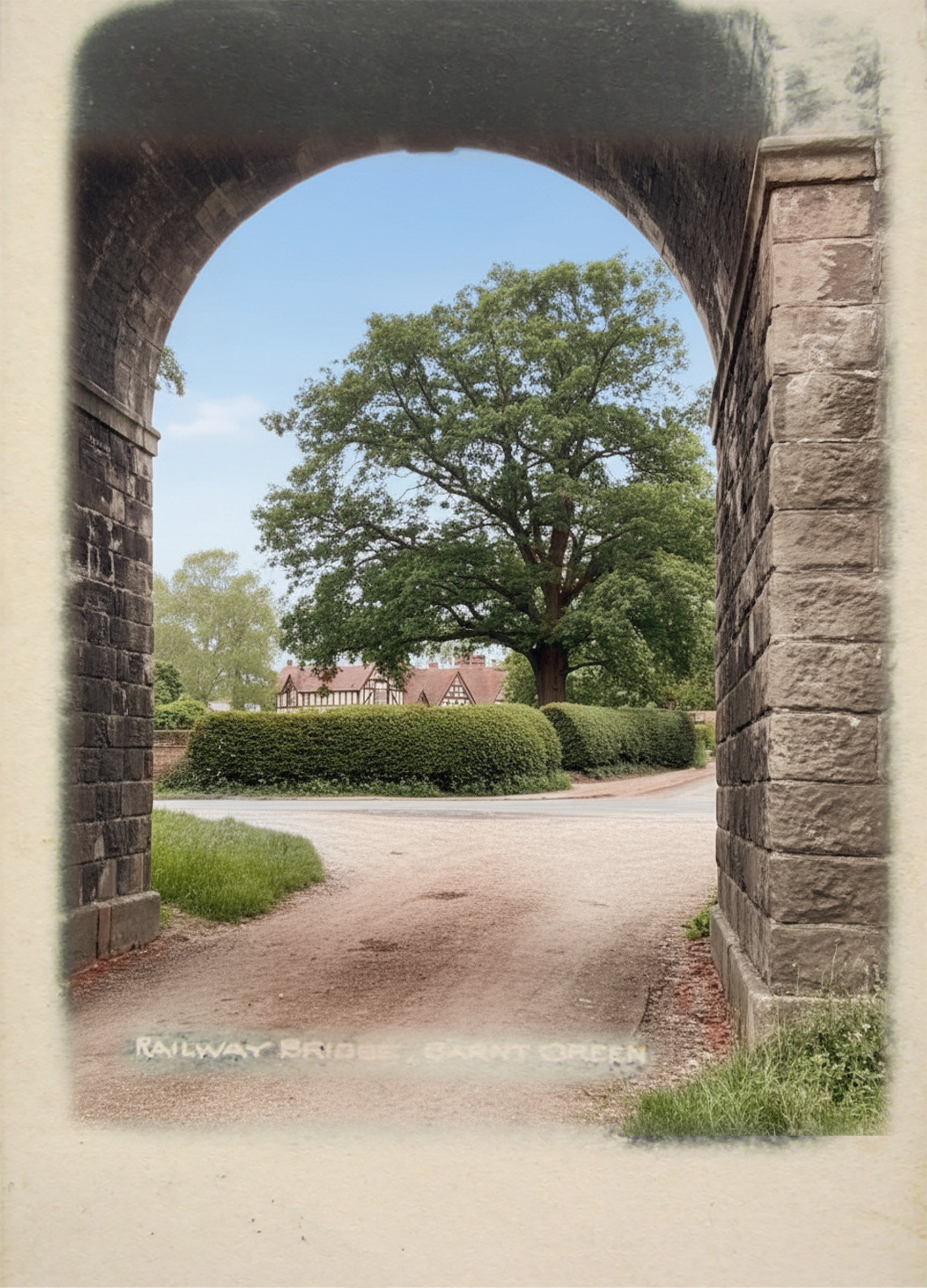
* And finally, further to my earlier notion that the distinctive railway/road bridge at Tolkien’s Barnt Green could have for a moment seemed a sort of forbidding door to a dark underworld (when seen in the dark on the way to/from the railway station) and thus akin to the Moria gate in LoTR. It could have formed a key entrance to the village for Tolkien and his brother, when visiting their cousins. I’ve now found a card which suggests this arch was perhaps of some importance to the village, at least important enough to feature in its own right in a postcard.

Restoration:

Original eBay scan:

Wider context:

Tolkien Gleanings #396

Tolkien Gleanings #396

* A new edition of VII: Journal of the Marion E. Wade Center at Wheaton College. Volume 41 (2025) was released in February 2026, and has the theme of “intellectual friendship, understood as a kinship of thought, values, and mission”. The issue is online but partly paywalled ($20). Among the open-access contents are…

   – “More Things in Heaven and Earth: C.S. Lewis on Elementary Spirits”.
   – Book review of Tolkien on Chaucer, 1913-1959.

* Three events at The Wade Center, Wheaton College, for spring 2026. Recordings will appear on YouTube after the events.

   – “Magic, Science, Poetry: C.S. Lewis and the Battle for the Modern Soul”.
   – “C.S. Lewis: A Mentor by Mail”.
   – “Under a Northern Sky: Early Medieval Influences on Tolkien’s The Children of Hurin”.

“This lecture will consider the ways in which Tolkien was inspired by different stories from what he calls the ‘nameless North’, suggesting that the legends of Sigurd and the Volsungs can deepen our appreciation of the tale of Turin and tell us something about Tolkien as a reader of early medieval literature.”

* Tolkien: Medieval and Modern has new essay-posts on “Great Tales Never End: The Reality of Tolkien’s Middle-earth”; “Death and Decline” (and its inevitability in LoTR); “What Remains: Language, Dreams, and the Fragmentary World of Tolkien”; and “The Same Tale Still: What We Gain From Imagining Tolkien as History”

“Tolkien’s trick of linking the world of LoTR to our modern one means that LoTR is neither strictly Secondary World nor Primary/Real World history. We are both inside the story and outside of it, participants and spectators to this tale.”

* The Shortlist for the Tolkien Society Awards 2025, including previews of the candidate artworks. Sadly I can’t vote, as I’m having to skip membership for at least a year to save money. In the age of AI you might think that cleaning toilets in Stoke-on-Trent would be a secure job. But my hours have been trimmed back to make savings for the company due to the minimum wage-rise, which has left me significantly worse off (despite the slight rise in the hourly rate). Thus there’s a knock-on effect on my memberships and book-purchases.

* New to me, the book The Fairy Way of Writing: Shakespeare to Tolkien (2013, Johns Hopkins University Press). The last chapter is about Tolkien. The book…

“recovers a distinctive aspect of English literary culture from across the entire early modern era and beyond, one that has been studied in the context of individual periods and writers but is only now explored in relation to the history of European nationalism and the creation of the modern literary system. […] argues that the fairy way of writing not only sets the stage for the fairy tale, the Gothic novel, and children’s literature but also informs genres beyond the English canon, including painting, twentieth-century fantasy fiction, and French fairy tales.”

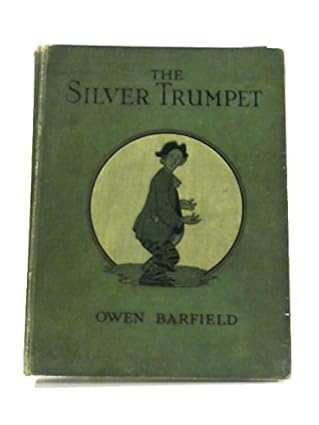
* Talking of fairy tales, I read that Owen Barfield’s children’s book The Silver Trumpet was republished last summer. Written in 1924, and first in the shops in Oct or Nov 1925 (according to the pre-Christmas book trade publications of the time, which vary). It can now be had as an affordable centenary paperback, with new illustrations. According to the Barfield Estate blog there was a free version, previously officially on their website, but this has been taken down with the advent of the paperback. Apparently that free version had a few OCR errors, which have been corrected for the new print edition. Note that, despite its publication date of 1925, it appears not to have been published in the USA in 1925. Therefore it is presumably not in the U.S. public domain. Barfield also lived a very long life, to age 99, and so there’s no copyright release there either.

* And finally, a picture of the front board of the first edition of Barfield’s The Silver Trumpet, without the paper dustjacket. The book was an instant favorite of the Tolkien children on publication, apparently having been lent to them by C.S. Lewis. In the firelight (Tolkien them told stories standing, with his back to the warm fireplace), I wonder if one might even mis-see the figure on the book’s boards as having… large furry feet? There is also a certain very vague resemblance to a rabbit in the stance and the huge behind. A proto-hobbit?

Tolkien Gleanings #395

Tolkien Gleanings #395

* The Tolkien Society has released YouTube videos from Westmoot 2025 (9th-11th May 2025). Too many to list here, but among others they include…

    – Tolkien’s War from Cannock Chase to the Somme and Little Haywood.
    – The Tolkien Brothers in World War I.

    – Freedom From History in Tolkien (on little kingdoms, hidden kingdoms, and middle kingdoms in Middle-earth).
    – Hallowed Ground: Naturally Santified Earth in Tolkien’s Legendarium.

    – Tolkien’s Myth-making and Dreams of Earendil (chronological survey of various appearances of Earendil in Tolkien’s work).
    – Collecting Sir Gawain and the Green Knight: Tolkien’s life-long passion (starts at 2:30 mins, the second half steps through the editions in detail).

* Miriam Ellis was asked to make the logo for the forthcoming Oxonmoot 2026.

* The Tolkien Society is to bring back the Sarehole Festival in 2026. Sarehole Mill is in south Birmingham, and its surroundings were a key childhood place for the young Tolkien brothers. Volunteers, traders and food vendors are all wanted for the event. I’m guessing they might consider sponsors offering little bags of dragon-gold, as well? The date is two months away, on 30th to 31st May 2026.

* Artist Matej Cadil’s new article on “Gardens in Middle‑earth”, accompanied by his painted illustrations. (Substack, but free).

* On YouTube, a quick broadcast TV interview about a new Italian film about Tolkien, titled From Middle-earth to Italy, an Unexpected Journey. This is a…

“documentary about Tolkien, directed by Nicola De Toma and Raffaele Rago, available on RaiPlay. In the TV studio, Oronzo Cilli, President of the Italian Tolkien Collectors, discusses the documentary, the connection between Tolkien and Dante, and how their works are similar.”

RaiPlay has the film for Italian subscribers…

“Exclusive […] A journey into the emotions and words of those who have read, loved and studied it: journalists, translators, art historians, essayists, Franciscan friars, songwriters, theologians and passionate readers. Directors: Nicola De Toma, Raffaele Rago.”

Other sources reveal it was partly funded by Italy’s Ministry of Culture, and that the finished film is 52 minutes and has been available online since 25th March on RaiPlay. The documentary is apparently accurate on the facts, both of Tolkien’s life and the reception of his work in Italy. It evidently attempts to cover a lot of ground, but visually it takes advantage of Tolkien’s 1955 visit to Venice and Assisi. It is apparently partly informed by Oronzo Cilli’s book Il mio viaggio in Italia. Tolkien e l’Italia (2016) (‘My trip to Italy: Tolkien and Italy’). Reports are conflicted about if the documentary makes comparisons to Dante or not. One source says yes, another says no.

* Elfenomeno interviews Martin Simonson

“I would like to continue transforming academic content into engaging essays for the average reader, presenting them in beautiful editions accompanied by artistic expressions such as illustrations, music, creative graphic design, cartographic works, etc. Making books in some way full of enchantment. Right now, I am working on several projects of this type: one linked to the forces of nature in The Hobbit, and another to the echoes of Norse mythology in Tolkien’s legendarium.”

* The Church Times newspaper concludes its Lent / Inklings series of articles, with “How fantasy can enrich reality”. Freely available online.

* And finally, Malcolm Guite on YouTube, on Sir Gawain and the Tolkien Fireplace.