Tolkien Gleanings #397
* The forthcoming Leeds International Medieval Congress 2026, set for July 2026, now has paper abstracts freely available online. A wealth of Tolkien papers are to be presented. Including “Philological Play across Time: Humour and Language in Tolkien’s Lesser-Known Poetry”. The abstract for this paper names seven poems, so anyone with the Collected Poems can pick them out for reading.
* Elfenomeno has “The Equatorie of the Planetis: The Dual Investigation of Tolkien and Andoni Cossio into the ‘Holy Grail’ of Chaucer”. Many are familiar with Tolkien’s contribution as philological ‘consultant detective’ on the Nodens name, but in this article one learns about a similar 1952 job…
“For Price, Tolkien was not merely another consultant but the ultimate “detective”. He needed someone capable of conducting a forensic linguistic analysis, and Tolkien was exceptionally well qualified. […] if anyone could distinguish an authentic Chaucerian text from the work of a later scribe, it was Tolkien.”
* Heritage Auctions is auctioning off ‘The David Aronovitz Collection of Important Science Fiction and Fantasy’. First editions, along with Edith and Pricilla Tolkien: A collection of 41 letters, and an “apparently unpublished” 1955 letter by Tolkien. Although its key item of data is already known…
“the Index of Names […] proved impossible to include [in LoTR]. The labour of compiling one even as far as the middle of Vol II [was done but] was great, and largely responsible for the delay in the appearance of Vol III”.
* The American Spectator magazine has the new article “Tolkien and the Power of Fantasy”. Freely available online.
* The Reformed Journal has the new long article “Oft Hope is Born When All is Forlorn”, on Tolkien and despair/hope. Freely available online.
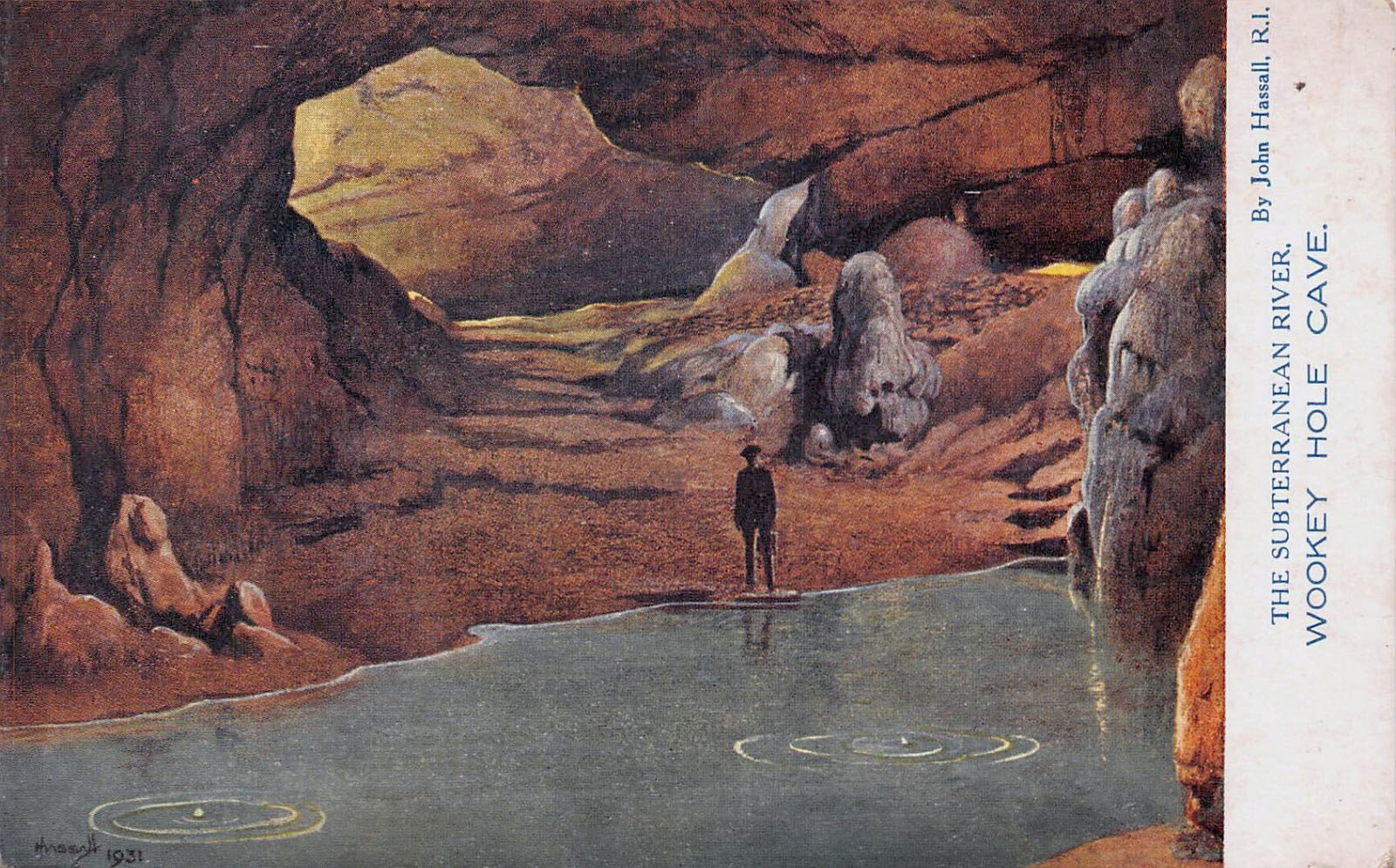
* Signum University now has its online-short-course listing for June 2026. Among others, “Many Voices, One Song: Leadership in Tolkien’s Middle-earth”, and “The Dark Zone: Caves, Myths & Meaning in Medieval English Literature” (on “the rich subterranean imagination of Old and Middle English literature, tracing caves, hollows, and underground spaces from the tenth through the sixteenth century”.
* Trinity College (USA) has a new video of Joseph Loconte giving a talk about his new book, The War for Middle-earth: J.R.R. Tolkien and C.S. Lewis Confront the Gathering Storm, 1933–1945 (2025). I’ve now found time to read the book, and am about three-quarters through. I’m enjoying its unfolding story and vivid anecdotes, and I will likely review it. The book is made all the more enjoyable due to occasional hilarious Americanisms, such as having C.S. Lewis… “traveling by train across the English countryside through villages such as Perthshire, Shrewsbury, and Cumberland”.
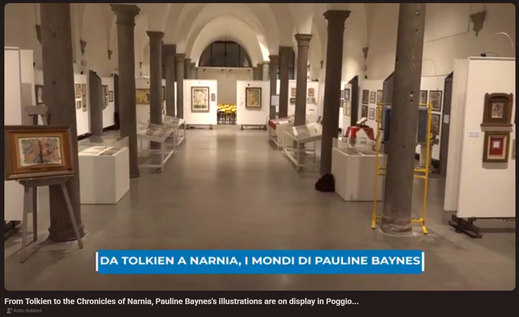
* The Tolkien tapestries exhibition has travelled to Angers (a city about 200 miles SW of Paris), and will be on show there from 10th April – 8th November 2026. Also of note in France, Paris has a substantial exhibition on Imaginary Maps, 24th March – 19th July 2026.
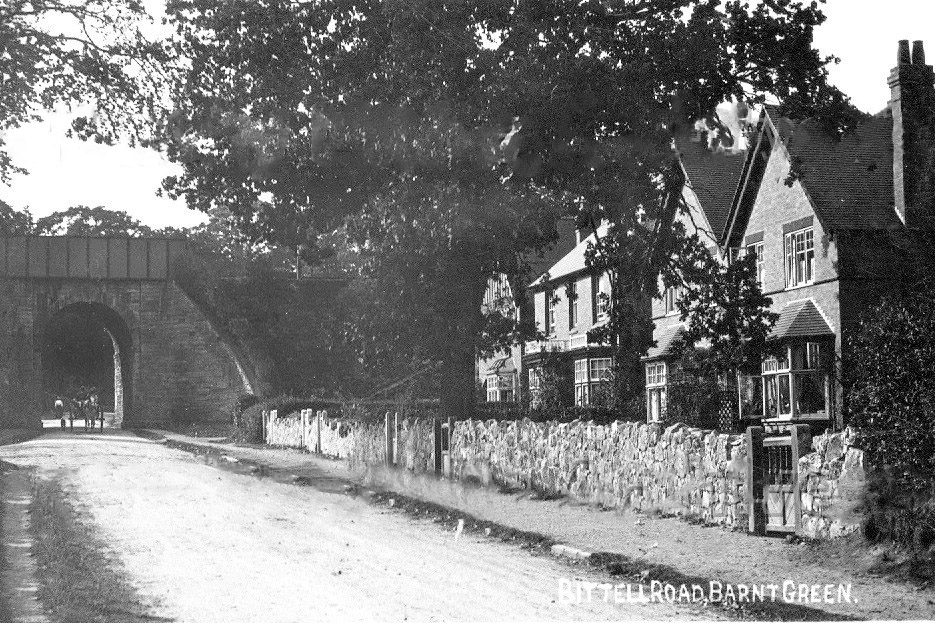
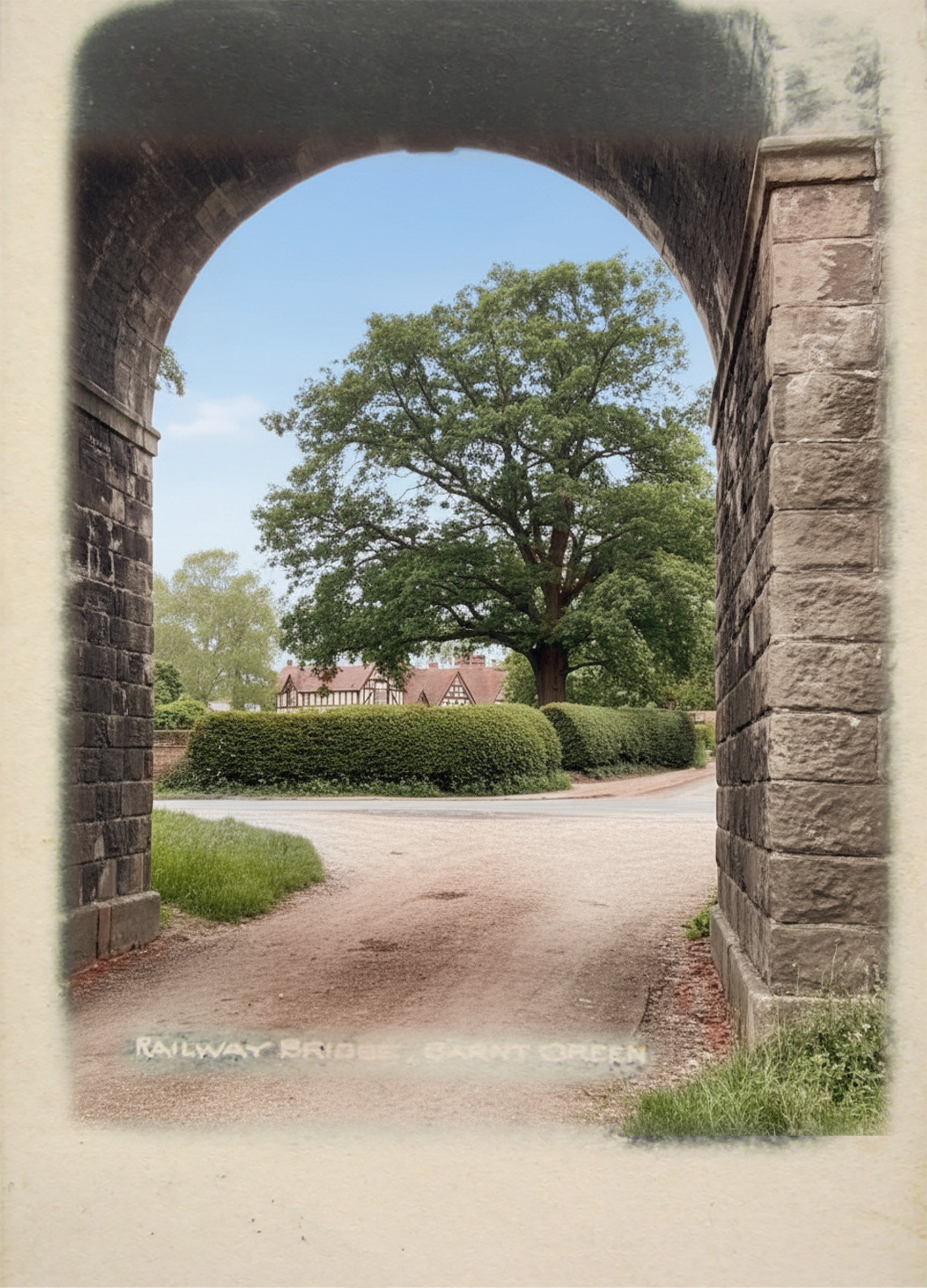
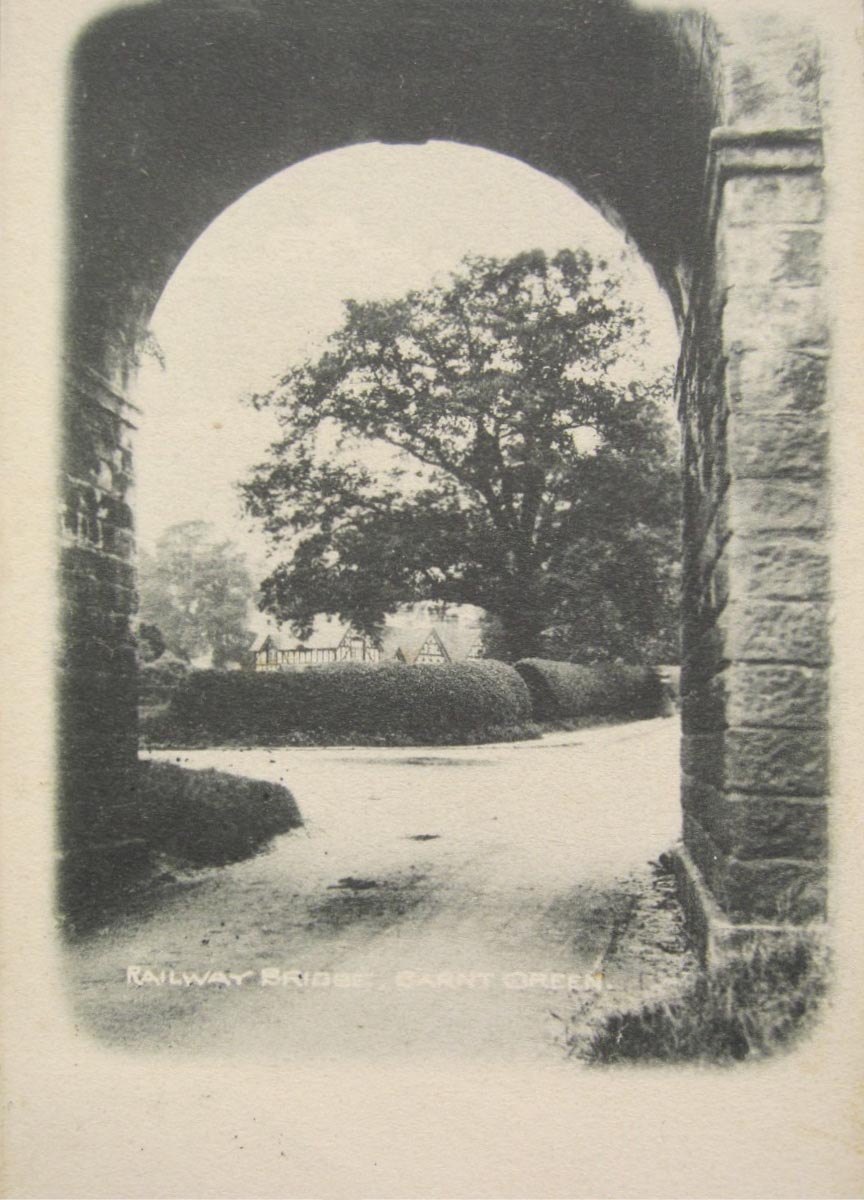
* And finally, further to my earlier notion that the distinctive railway/road bridge at Tolkien’s Barnt Green could have for a moment seemed a sort of forbidding door to a dark underworld (when seen in the dark on the way to/from the railway station) and thus akin to the Moria gate in LoTR. It could have formed a key entrance to the village for Tolkien and his brother, when visiting their cousins. I’ve now found a card which suggests this arch was perhaps of some importance to the village, at least important enough to feature in its own right in a postcard.
Restoration:
Original eBay scan:
Wider context: